Insights from recent episode analysis
Audience Interest
Podcast Focus
Publishing Consistency
Platform Reach
Insights are generated by CastFox AI using publicly available data, episode content, and proprietary models.
Most discussed topics
Brands & references
Total monthly reach
Estimated from 1 chart position in 1 market.
By chart position
- 🇨🇭CH · Entrepreneurship#192500 to 3K
- Per-Episode Audience
Est. listeners per new episode within ~30 days
150 to 900🎙 Daily cadence·160 episodes·Last published today - Monthly Reach
Unique listeners across all episodes (30 days)
500 to 3K🇨🇭100% - Active Followers
Loyal subscribers who consistently listen
200 to 1.2K
Market Insights
Platform Distribution
Reach across major podcast platforms, updated hourly
Total Followers
—
Total Plays
—
Total Reviews
—
* Data sourced directly from platform APIs and aggregated hourly across all major podcast directories.
On the show
From 20 epsHost
Recent guests
Recent episodes
How Lium turns physical-world data into answers
Jun 24, 2026
19m 49s
The janitor, the professor, and the meaning of success
Jun 22, 2026
28m 12s
WorkClaw wants to build an AI team for your team
Jun 17, 2026
14m 52s
How to move from the corporate world into a startup
Jun 10, 2026
14m 36s
Creative people adapt
Jun 8, 2026
33m 24s
Social Links & Contact
Official channels & resources
Official Website
Login
RSS Feed
Login
| Date | Episode | Topics | Guests | Brands | Places | Keywords | Sponsor | Length | |
|---|---|---|---|---|---|---|---|---|---|
| 6/24/26 | ![]() How Lium turns physical-world data into answers | Josh Knutson and Ryan Thill are building Lium for a problem that sits just outside the usual AI demo.Most AI tools are very good at text, code, and spreadsheets. Lium is focused on the messier stuff, the huge physical-world data sets that sit inside farms, climate labs, energy systems, logistics networks, and other operations where the answers are buried under terabytes of data.Knutson, the CEO and co-founder, describes Lium as an “agent harness” or a cloud operating system for agents. The idea is to give language models the tools they need to work over large, complex data sets that they cannot handle well out of the box. Instead of asking a data scientist to build a pipeline every time someone has a question, Lium lets subject matter experts ask questions in natural language and then builds the tools and workflows needed to answer them.Thill, co-founder and president, said the core user is often not a software engineer. It is the person who knows the domain, knows the data matters, and knows there are answers inside it, but cannot easily get them out. He gave the example of a farm operator working with soil reports, NOAA data, tractor data, and crop performance information. The operator may know something is off, but does not have the time or technical skill to combine all those sources into a useful answer.That is where Lium is meant to fit. A user can describe what they want to know, and the system builds repeatable workflows around the data. Once those workflows exist, other people inside the organization can use them too. An analyst can build the tool, and a CEO can later ask a simple question that relies on the analyst’s work in the background.That shared layer is one of the more interesting parts of the product. Knutson described work with the North Carolina Institute for Climate Studies, where scientists and researchers built tools inside Lium, then on-screen meteorologists could ask questions and get answers using the right climate data without needing to understand every data source underneath.The company’s bet is not that AI replaces the expert. It is that AI needs the expert. Knutson said Lium is built around human-in-the-loop workflows because language models do not have enough training data to understand all the hidden patterns and details inside many physical-world data sets. The system has to know when to stop, ask the human for domain knowledge, and then turn that knowledge into a tool the system can use again.That point matters because the obvious fear is job loss. If a person’s job is to build reports, what happens when anyone can ask Lium for the same report? Knutson and Thill argue that the expert becomes more valuable, not less, because the tool captures and scales their knowledge. Thill compared it to software engineers using AI coding tools. The tools make people more productive, and that can create demand for more work that was not worth doing before.Lium is still early, but the founders say they are seeing strong interest. During private beta, around 50 groups worked in the platform. Now that it is public, the challenge is different. Instead of onboarding users by hand, the company has to explain the product clearly enough that people can find it, understand it, and get value without a sales call.That is not easy, because Knutson and Thill say many potential users do not know this kind of system is possible. For Lium, the main competitor is not another startup. It is the belief that this kind of data is too hard to work with.Fundraising followed a similar path. Knutson said early investors were skeptical because he and Thill did not have the usual Silicon Valley AI profile. They had startup experience, but not the standard AI pedigree. The company raised a smaller pre-seed round than it wanted, then came back after showing it could build things people did not think it could build. That proof changed the conversation.The company spent roughly 18 months learning and building before going public. Knutson said this was not the kind of product where you can ship a tiny version and see what happens. If someone brings a terabyte of data, the system has to work. That meant building alongside design partners until the product was strong enough to handle real use.Now the work is public. Lium is learning from users, tightening the funnel, and building around what people actually do with the product. The name, by the way, comes from language plus the suffix of physical elements, a nod to the company’s goal of connecting language to the physical world. This is a public episode. If you'd like to discuss this with other subscribers or get access to bonus episodes, visit www.keepgoingpod.com/subscribe | 19m 49s | ||||||
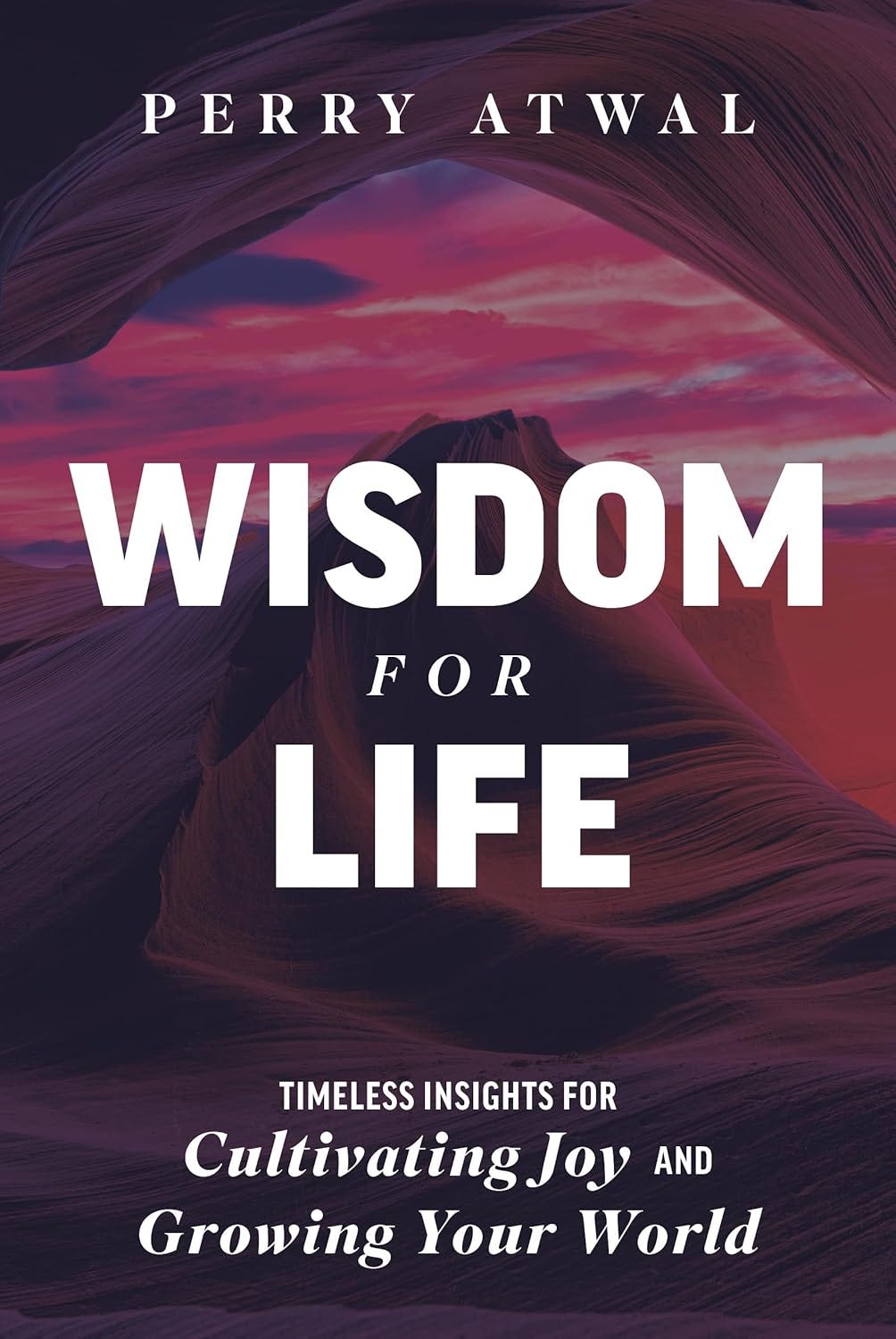
| 6/22/26 | ![]() The janitor, the professor, and the meaning of success | Most of us spend a lot of time thinking about what we want. A better job. More money. A nicer house. More freedom. Less stress.Very few of us spend much time thinking about what a successful life actually looks like.That question came up during a conversation with Perry Atwal, a lecturer at the University of British Columbia and author of the upcoming book Wisdom for Life. After teaching more than 20,000 students around the world, Atwal has spent years looking for patterns in the people who thrive and the people who struggle.One of the most interesting things he said was that most of us are aiming too low.He asked a simple question: when you have no reason to feel anything, where is your energy level? On a scale from one to ten, are you ready to go back to bed, or are you bouncing off the walls?Most people, he said, live around a five or six.His argument is that we should be trying to live closer to a nine or ten.That idea stuck with me.A lot of us assume that energy comes from success. Atwal sees it the other way around. Energy creates success. The people who excel are often the people who bring more than what is asked of them. If an assignment calls for three things, they deliver five. They are curious. They stay engaged. They keep moving.His prescription is surprisingly simple.Take care of your health. Walk more. Spend time outside. Do work you genuinely enjoy.“I walk for two or three hours every day,” he told me. “Virtually every great thought I’ve had in the last twenty years has been on that walk.”That sounds almost too simple in a world obsessed with optimisation, AI, and productivity hacks. But perhaps that is the point.The most powerful part of our conversation came when we started talking about work and purpose.Many people feel trapped. They sit in offices wondering whether this is all there is. They worry they picked the wrong career. They worry they missed their chance.Atwal argues that the pressure to find the perfect path is largely self-imposed.Previous generations might have held two or three jobs during a lifetime. Today’s workers may have ten or twelve jobs and move across multiple industries. The first job does not have to be the perfect job. It only has to be the next step.He also believes we underestimate the power of perspective.One example from the interview has stayed with me.He talked about cleaners.Some people might look at a cleaning job and see failure. The happiest cleaners he knows see something completely different.They see buildings that people want to enter because of the work they do. They see value created. They see contribution.The job is the same. The story they tell themselves is different.That idea feels especially important right now.We live in a moment where every headline seems designed to convince us that the future is bleak. Economic uncertainty. Political conflict. AI replacing jobs. Constant disruption.Atwal’s response is not to ignore reality. It is to choose where to focus your attention.“The only constant really is change,” he said.That may be the closest thing to a universal truth.The people who flourish are rarely the people who predict the future correctly. They are the people who adapt. They keep learning. They develop skills that transfer from one job to another. They stay curious.They also let go.Let go of old habits. Let go of old assumptions. Let go of the idea that your life must follow a script.Atwal even applies that philosophy to his closet. If he hasn’t worn something in two years, it’s gone.The same rule probably applies to a lot more than clothes.If there was one lesson I took from our conversation, it was this:Success is not a destination. It is a way of moving through the world.Take care of your health. Do work that matters to you. Surround yourself with positive people. Focus on your strengths. Help others when you can.The details of your career will change.The technology will change.The world will change.The question is whether you will keep going. This is a public episode. If you'd like to discuss this with other subscribers or get access to bonus episodes, visit www.keepgoingpod.com/subscribe | 28m 12s | ||||||
| 6/17/26 | ![]() WorkClaw wants to build an AI team for your team | Everybody has heard the promise by now. AI is going to save time, reduce costs, and help businesses get more done. The problem is that most people still don’t know where to start.That’s the challenge Will Ruben is trying to solve with WorkClaw, a new product from Workmate Labs that turns AI agents into something closer to digital employees.Ruben describes WorkClaw as “an AI team for your team.” Instead of asking users to learn prompt engineering or build complicated workflows, the platform lets them create AI teammates with specific jobs. A florist could train an AI to process invoices. A marketer could create a content assistant. An engineer could build a coding partner. The goal is not to replace workers, but to give every company access to the sort of specialised support that was once available only to large organisations.The idea grew naturally out of Workmate, Ruben’s first product. Workmate focuses on scheduling, one of the most common tasks handled by executive assistants. After building an AI that could manage meetings and calendars, the company began looking at what else an AI teammate might be able to do. Recent advances in large language models made that expansion possible.One of the most interesting parts of our discussion centred on a problem many AI founders rarely talk about. Traditional software is predictable. AI is not.Ask a database the same question twice and you get the same answer. Ask an AI system twice and you might get two different responses. That creates challenges for companies trying to build reliable products.Ruben compares the situation to earlier machine learning systems, including the recommendation engines that power social media platforms. The answer, he argues, is measurement, testing, and designing systems that can recover gracefully when things go wrong. If an AI makes a mistake, users need a way to correct it, and the system needs to learn from that correction.That uncertainty also creates cost concerns. During our conversation I joked about running OpenClaw on a Raspberry Pi and accidentally generating a large OpenAI bill because a poorly configured process kept checking my email. Ruben believes those problems will become less significant as companies gain access to cheaper open source models and more efficient infrastructure. His view is that most business tasks do not require the most advanced models available today.Perhaps the biggest challenge facing AI startups now is not technology but distribution.Building software has become dramatically easier. Getting people to use it remains difficult.Ruben said Workmate Labs relies on a mix of product-led growth, advertising, traditional sales, and good old-fashioned conversations with users. One tactic that has worked particularly well is identifying companies that visit the website, understanding who they are, and following up before interest disappears.Looking ahead, Ruben says WorkClaw’s next step is reducing the friction involved in getting started. While the current product removes much of the technical complexity, users still have to decide what kind of AI teammates they want and how those teammates should behave. Future versions will offer ready-made AI roles, including executive assistants, marketers, engineers, salespeople, and operations staff, making it easier for businesses to start seeing value immediately.The broader question is whether people want another tool or whether they want something that feels more like a co-worker.Ruben is betting on the second option.If he’s right, the future of software may not be a collection of apps sitting on a desktop. It may be a collection of digital colleagues working quietly in the background, each trained to do a specific job and each getting a little better over time.That future is still taking shape. But products like WorkClaw suggest it may arrive sooner than many people expect. This is a public episode. If you'd like to discuss this with other subscribers or get access to bonus episodes, visit www.keepgoingpod.com/subscribe | 14m 52s | ||||||
| 6/10/26 | ![]() How to move from the corporate world into a startup✨ | corporate transitionstartups+4 | Andrew Reid | Claer AIComscore | — | supplementsAI+5 | — | 14m 36s | |
| 6/8/26 | ![]() Creative people adapt✨ | creativityinternet evolution+3 | Angelo Sotira | DeviantArtLayer | — | DeviantArtdigital art+5 | — | 33m 24s | |
| 6/3/26 | ![]() The Innovators: This app makes music therapy accessible to everyone✨ | music therapydementia+3 | Rachel Francine | SingFitAARP | — | music therapySingFit+3 | — | 13m 52s | |
| 6/1/26 | ![]() How to break free✨ | abuse recoveryentrepreneurship+3 | Melissa Banks | — | — | abusive marriagesuccess+3 | — | 20m 49s | |
| 5/28/26 | ![]() How to predict the future✨ | entrepreneurshipfear of failure+3 | Daniel Burrus | — | — | futureentrepreneur+5 | — | 27m 00s | |
| 5/27/26 | ![]() The Innovators: Meet the company that is managing the Internet's most precious resource✨ | IP addressesinternet infrastructure+3 | Paulius Judickas | IPXOIBM+2 | — | IPv4 addressesinternet+3 | — | 15m 51s | |
| 5/25/26 | ![]() Keep Going: "No one's going to come save you."✨ | personal growthentrepreneurship+3 | Stephen Gillen | — | IrelandLondon+1 | entrepreneurshippersonal growth+3 | — | 28m 34s | |
Want analysis for the episodes below?Free for Pro Submit a request, we'll have your selected episodes analyzed within an hour. Free, at no cost to you, for Pro users. | |||||||||
| 5/20/26 | ![]() The Innovators: This bracelet helps you remember everything✨ | AIwearable technology+3 | Elisa Lu | Memoket | — | AI systemswearable recording device+3 | — | 13m 00s | |
| 5/18/26 | ![]() Keep Going: How to predict the future✨ | entrepreneurshipfear of regret+4 | Daniel Burrus | — | — | entrepreneurshipfear of failure+6 | — | 27m 00s | |
| 5/13/26 | ![]() The Innovators: This agriculture start up brings water where plants need it most✨ | agricultureirrigation+3 | Arthur Chen | Verdi Agriculture | — | agricultureirrigation+5 | — | 15m 43s | |
| 5/11/26 | ![]() Keep Going: How to survive a war | You keep hearing that success is about vision. That is not wrong, but it misses the harder truth. Vision is easy. Living with the consequences of your decisions is the work.I spoke with Jae Lee, a founder on his eighth startup, and what stayed with me was not the wins. It was the pattern. He did not begin with some grand plan. He saw problems that were right in front of him. A school without a website. A publisher with a bad one. He built something. Then he did it again. And again.That sounds clean when you say it fast. It is not clean when you live it.Four of his companies failed. Not soft failures. Real ones. Money lost. Time gone. Teams broken. And the cause was not market timing or tech. It was people. Bad hires. Missed signals. Ignored warnings. The kind of mistakes that do not show up in pitch decks but end companies all the same.He said something worth sitting with. Feedback is a gift. You do not have to like it. But you should ask who gave it and why. Most founders say they want honesty. Few actually take it when it costs them something.There is also this idea that founders are always right. He believes that. I think he is half right. The founder makes the call. That is the job. But being right in that sense just means you own the outcome. It does not mean the call was good.Then the world steps in.He was building in the Gulf. Deals in motion. Meetings lined up. Real traction. Then conflict hit the region. Plans stopped. Movement slowed. Momentum broke. He was not even in the blast zone, but it did not matter. The system around him changed. That is the part people do not like to admit. You can do everything right and still get knocked sideways.So what do you do when the ground shifts?You adjust. Not in a dramatic way. Not with some heroic pivot story. You narrow the focus. You pick a tighter problem. In his case, from general building management to data centers. Same direction, smaller target. You keep moving.That is the through line here. Not brilliance. Not luck. Endurance with small corrections.I asked him why he keeps doing this. Why not take the safe route. He gave a simple answer. One life. One shot. He wants to leave something behind that shows he helped people move forward in their work. Not money. Not status. Influence in the practical sense.You can agree with that or not. But it explains the behavior.Most people want control. Founders learn, slowly, that control is thin. You do not control markets. You do not control timing. You barely control your own reactions some days. What you control is whether you keep going when the easy path is to stop.That is the job. This is a public episode. If you'd like to discuss this with other subscribers or get access to bonus episodes, visit www.keepgoingpod.com/subscribe | 18m 04s | ||||||
| 5/4/26 | ![]() Keep Going: Are you ready to be an entrepreneur? Here are the traits that will make you successful✨ | entrepreneurshipself-awareness+3 | Stefan Lindstrom | — | — | entrepreneur traitsself-awareness+3 | — | 22m 02s | |
| 4/29/26 | ![]() The Innovators: Building AI into the future of medicine✨ | AI in healthcaretelemedicine+3 | David Silverstein | Amaze HealthAmaze | — | AI healthtelemedicine+3 | — | 21m 17s | |
| 4/20/26 | ![]() Keep Going: How this comedian survived a career in comedy✨ | comedycareer challenges+3 | DC Pearson | — | — | comedycareer+3 | — | 29m 14s | |
| 4/13/26 | ![]() Keep Going: Follow the fun, even when it costs you everything✨ | failureentrepreneurship+3 | Ela Thier | Independent Film School | — | filmmakingfailure+3 | — | 21m 11s | |
| 4/10/26 | ![]() If a job asks you to paste a terminal command, walk away✨ | job scamscybersecurity+3 | — | Runeapes | — | job scamsmalware+3 | — | 4m 19s | |
| 4/6/26 | ![]() Keep Going: Entrepreneur Bobby Mascia on leaving the family business and building something of his own✨ | family businessentrepreneurship+3 | Bobby Mascia | Dunkin’ DonutsBaskin-Robbins | New Jersey | family businessentrepreneurship+5 | — | 26m 17s | |
| 3/30/26 | ![]() Keep Going: Stop numbing yourself and start paying attention✨ | mental healthentrepreneurship+3 | Anne Karber | — | — | griefnumbing+3 | — | 43m 47s | |
| 3/23/26 | ![]() Keep Going: Building a System That Supports Mothers✨ | maternal healthinfant health+4 | Melissa Hanna | Mahmee | United StatesBlack+2 | maternal mortalityinfant mortality+5 | — | 25m 54s | |
| 3/17/26 | ![]() AI Agents, No Hype: A Live OpenClaw Session✨ | AI agentsOpenClaw+4 | — | OpenClawTelegram+2 | Raspberry Pi | AI agentsOpenClaw+5 | — | 3m 00s | |

| 3/16/26 | ![]() Keep Going: Why Work Dread Is Taking Over Our Lives | Work is eating our lives. That much feels obvious. What is less obvious is why we let it happen.I spoke with psychologist and author Guy Winch about his new book Mind Over Grind, which looks at a familiar but poorly understood problem: the slow psychological takeover that happens when work becomes the dominant force in a person’s life. Many of us think we are simply tired or busy. Winch argues that something more corrosive is happening, a kind of sustained dread that alters how we think, how we behave at home, and how we relate to the people around us.The timing is not accidental. The workplace is changing in ways that make people uneasy. The pandemic briefly pushed companies to talk about emotional health and work life balance, but the underlying pressure never really went away. Burnout continued to rise. Now a new layer of uncertainty has appeared in the form of AI, automation, and the constant sense that entire professions may shift under our feet.That uncertainty produces a specific emotional state. Winch calls it dread. It is not simple stress or boredom. It is the heavy anticipation of something bad that may happen but cannot be clearly defined.Psychologists have studied this kind of anticipation in laboratory settings. In one set of experiments people were given a choice between receiving a mild electrical shock later or a stronger one immediately. Many participants chose the stronger shock simply to avoid waiting for the mild one. The anticipation itself was so unpleasant that people preferred to get the pain over with.Work can produce the same effect. When people wake up already dreading the day ahead, the stress does not remain confined to office hours. It bleeds into everything else.A common pattern looks like this. Someone finishes work but cannot mentally leave it behind. They replay conversations with colleagues, worry about tomorrow’s meetings, and anticipate problems that have not yet happened. These thoughts arrive uninvited. They intrude during dinner, while watching television, while trying to fall asleep. The result is hours of unpaid emotional overtime.The damage compounds quickly. Poor sleep makes people more reactive the next day. Emotional withdrawal leads to tension with partners and family members. Hobbies, friendships, and personal interests slowly fall away because the person feels too drained to engage with them. Over time the individual begins to lose parts of themselves that once had nothing to do with work.Winch has seen this pattern repeatedly. He also admits that he has experienced it himself. That admission is important, because the problem is not limited to employees trapped inside rigid corporate structures. It often appears even more strongly among founders, freelancers, and people who run their own businesses.Self employed workers do not have a boss setting limits on how much they can push themselves. If you are ambitious and motivated, there is always more to do. A new client to chase. Another product to ship. Another email to send. The boundary between effort and obsession can disappear without anyone noticing.Technology complicates the picture further. AI systems can now perform many of the small tasks that once filled the workday. Drafting emails, organizing schedules, producing summaries, even generating reports can be handled automatically.In theory this should reduce pressure. In practice it often does the opposite.People rarely use saved time to step away from work. Instead they fill the space with more tasks. At the same time the presence of automation introduces a deeper anxiety. If a machine can handle part of your job today, it may handle the rest tomorrow. Entire professions now operate under that shadow.Even psychologists are not immune. Winch mentioned that some of his clients already consult large language models when he is unavailable. Others bring AI generated advice into therapy sessions and ask whether it matches his recommendations. The implication is obvious. If a machine can simulate the voice of expertise, what happens to the human expert?These questions are still unfolding. Researchers have only begun to examine the psychological consequences of widespread AI interaction. One emerging concern involves emotional attachment to digital agents. Some people now describe their AI assistants as companions or collaborators.Winch views that development cautiously. Emotional attachment to software may signal that other relationships have weakened. When work dominates a person’s attention and energy, connections with family, friends, and communities can erode. In that context it is not surprising that people begin forming attachments in strange places.None of this means that work itself is the enemy. Winch argues that work occupies a central place in human life for understandable reasons.Most people spend more waking hours working than doing anything else. Work provides income, which satisfies basic needs like shelter and food. It also offers social structure, status, identity, and a sense of accomplishment. Much of Maslow’s hierarchy of needs, from security to self esteem, flows through employment.Because of that, threats to work feel existential. Losing a job does not only mean losing income. It can mean losing status, routine, social networks, and a sense of purpose. The unconscious mind interprets those risks as serious dangers, which helps explain why dread becomes such a powerful emotion.The real question is how to prevent work from overwhelming everything else.Winch’s approach is pragmatic rather than philosophical. He focuses on specific behaviors that interrupt the cycle of rumination and anxiety.One of the most common traps involves replaying workplace conflicts or uncertainties long after the workday ends. The brain returns to the same problem repeatedly because it has not identified a resolution. The solution is to convert the worry into a concrete plan.If you are stewing about an argument with a colleague, the task becomes identifying what outcome you want and how you might achieve it. Do you need a conversation to clear the air. Do you need to set boundaries. Do you need to escalate the issue or simply move on. Spending fifteen minutes outlining a response can quiet the brain because the uncertainty has been reduced.In cases where the problem cannot be solved immediately, scheduling time to address it later can have a similar effect. Writing “handle client issue tomorrow at 8:45 a.m.” into a calendar signals to the mind that the concern has not been ignored. The worry is parked for later rather than allowed to circulate endlessly.Another element involves the structure of the workday itself. Many people respond to overwhelming workloads by pushing forward without pause. They move from meeting to meeting, task to task, trying to survive the day.Ironically this behavior reduces productivity. Cognitive performance declines as fatigue accumulates. Creativity, judgment, and executive functioning all deteriorate when the brain remains under continuous strain.Short restorative breaks can interrupt that decline. A few minutes of physical movement, a brief walk outside, or a supportive conversation with a colleague can reset mental resources. What matters is that the break genuinely restores energy rather than adding more stimulation. Doomscrolling through social media or reading the news rarely qualifies.These techniques are modest but practical. They require attention rather than radical lifestyle changes. Most people already spend hours each evening mentally revisiting work problems. Redirecting a fraction of that time toward structured reflection can produce a noticeable difference.The deeper question that emerged during our conversation concerns the future of work itself. If automation eventually provides widespread basic income and eliminates many traditional jobs, what replaces the psychological role of employment?Winch does not pretend to know the answer. Work provides purpose, competition, creativity, and social structure. If those elements disappear, people will almost certainly invent new forms of aspiration to fill the gap. Humans rarely remain idle for long.The shape of those aspirations remains unclear. They might emerge in artistic communities, local organizations, scientific exploration, or forms of competition that do not yet exist. What matters is that the underlying psychological drive toward goals and progress will remain.For now the immediate challenge is simpler. Work has always demanded effort and attention. What has changed is the degree to which it invades the rest of life. Phones keep us connected to the office at all hours. Global competition raises expectations. AI adds uncertainty about what the future holds.The result is a quiet epidemic of dread that many people treat as normal.It is not normal. It is a signal that the balance between effort and recovery has collapsed.Rebuilding that balance does not require abandoning ambition or disengaging from work. It requires noticing how the mind responds to pressure and intervening before the grind becomes the only thing left. This is a public episode. If you'd like to discuss this with other subscribers or get access to bonus episodes, visit www.keepgoingpod.com/subscribe | 46m 05s | ||||||
| 3/9/26 | ![]() Keep Going: Identity Collapse in the Age of AI | On this week’s episode of Keep Going, I spoke with Patricia Martin, writer, researcher, and author of Will the Future Like You? She has spent a decade studying what happens when failure is not just professional but personal. The kind that makes you wake up and ask, who am I now?Patricia calls it identity-threatening failure. Not every setback qualifies. Missing a target or losing a client stings. But when your business is your baby, when your persona is fused to your public presence, when your work becomes your self, a collapse can feel like rejection at the level of love. The brain codes it that way. Cortisol rises. Adrenaline spikes. Dopamine drops. Executive function weakens. You feel empty, hypervigilant, unmoored.Entrepreneurs are especially vulnerable. We are taught to invest identity in what we build. In the attention economy, we perform ourselves across platforms, post after post, video after video. The persona gets muscular. The inner self gets quiet. Patricia calls the result “persona fog.” We externalize the self so thoroughly that when something breaks, we do not know what remains.What struck me was how physical this all is. This is not motivational poster talk. There is a somatic reaction to identity collapse. A rewiring. Some people pivot sharply. A tech founder goes back to the family farm. A software executive returns to the factory floor. Not because they failed, but because they need ground again.So what do you do if you cannot escape to a dairy farm?Patricia argues there is no hack. There is practice.First, discernment. Identity failure scrambles executive function. You lose clarity. You must relearn how to hear yourself.Second, reflection. We have lost the muscle of self-reflection. There is no app for the inner world. You have to sit with the question: what is this doing to me?Third, confirmation and witness. Own what is happening. Say it out loud. Find someone who can remind you who you were before the fog rolled in.As we talked, the conversation turned to AI, to coders who fear obsolescence, to journalists wondering what work remains. Patricia’s answer was not comfort. It was responsibility. You must know who you are. You must identify what you bring that cannot be replicated. Creativity. Imagination. Sentience. The ability to feel and transmit meaning.Machines can perform. They can flatter. They can automate. They cannot enact being.We are entering what she calls an age of hyper reinvention. Pivots will not be rare events. They will be routine. That means resilience can no longer be grit alone. It has to include an active relationship with the unconscious, with creativity, with reflection.There is a line Patricia shared that I keep returning to. Every defeat of the ego is a victory for the unconscious.In a culture built on dominance and performance, that feels radical.The question is not whether the future will like you. The question is whether you can hear yourself clearly enough to survive it.TranscriptWelcome back to Keep Going, a podcast about success and failure. I’m John Biggs. Today we have Patricia Martin. She’s a writer, she’s a podcaster, she’s a researcher, and she’s recently wrote a book. It’s coming out soon, Will the Future Like You? Which I’m afraid to hear the answer for, so welcome, Patricia.Patricia (01:26.852)It’s a pleasure to be here, John.John Biggs (01:28.942)So you’re an old hat at podcasting. You’ve been doing this for quite a while. A million views on your stuff. I want you to welcome to mine. And I’m actually really happy you’re here because this book sounds fascinating. Why don’t you just give us a quick recap about what you wrote.Patricia (01:45.167)So I researched this material in the book for 10 years. And I entered into the research originally to understand the impact of the digital age on the human psyche. And I encountered not only a variety of people and their stories, and then also, you know, as an entrepreneur myself.I underwent a massive change in my life and in my business. And I woke up one morning asking the age old question, who am I? And that is when my research took a fresh direction. And I began focusing on what it means to lose and rebuild identity in the digital age.John Biggs (02:34.144)Mm-hmm. So you were talking earlier about the identity destroying failure. I guess reducing failure, right? A failure so poignant that it changes essentially your entire life. So tell me about that.Patricia (02:49.378)So not every failure that we have affects us at an identity level. What tends to happen though with entrepreneurs, and I would say this is generally a cultural issue for Americans, is that we invest a lot of identity in what we do. Entrepreneurs more so because it’s your baby, it’s your creation. You’re doing something, usually it can be out of a passion or you’re addressing a need in the marketplace.But it is something that you have spotted and you internalize as part of yourself. So what happens when we fail at an identity level, especially in the attention economy, is that we begin to recruit differently from the interior world of ourselves. So let’s say, for instance, you have somebody who has built an online business and they’re an influencer.That is persona heavy identity. And the persona is the weakest part of the psyche. It has never been, it was never designed to undergo the garrulous rigors of online life, right? And yet we’re pounding it day after day, post after post, video after video. And so when something goes awry there, there are some specific things that start to happen.when we tip that into an identity problem. So first of all, it’s a social neural pain. We treat that failure as a rejection, just like we would treat it as a love rejection. And that’s how the brain codes it and the body feels it. The other thing that happens is it’s probably not a surprise that we get a cortisol rush from that kind of failure, but it has a lingering effect.Probably I think the most intriguing thing that came out of the neuroscience is the amount of adrenaline that courses through the body during a failure that is specific to the loss of identity. So it’s as if we are now hyper vigilant to find our sense of self again and we begin the search to recruit back the sense of who we are.Patricia (05:10.536)And so that has an effect that is, you know, and your dopamine goes low. So now you’re operating on cortisol, adrenaline, and low dopamine. So it’s kind of a perfect storm for feeling really empty, lost, stuck, disconnected. So, you know, you’ll talk to people who have had a failure like that. And it requires in the attention economy more than just grit.Because it’s moving so fast, you’re not just, you know, pulling yourself back up by your bootstraps and standing back on your feet. Back on what? What ground? The territory is moving so fast. So this is where you find people tend to tumble out. You’ll also find people at this point sometimes will take a sharp pivot. I talked to people who went fromrunning software companies to working in their father’s box factory. One woman was in a tech startup that got really big. She sold it, and she went back to running the family dairy farm. So it was kind of like they needed an antidote to kind of clear themselves. some of these were success stories. But what was interesting is that some of them didn’t go back to the hurly burly and the grind of something that was as intense.as an online business.John Biggs (06:38.67)So I love that you’re able to codify this and describe it in a very clear way. think a lot of people have that. I mean, first off, a lot of people have that fantasy, right? I think that every single Hallmark movie is about that, where you go back to the small town and you become a dairy farmer after having a hard business, like a hard charging business life. So I think the primary question is, you’re in that mode, once you end up failing out of it,out of an entrepreneurial situation, you described the persona being destroyed to a degree. from a layperson’s point of view, the persona would be just, I don’t know, just my day to day happy-go-lucky whatever. But it sounds like you’re talking about something a lot deeper here. what happens when that identity is destroyed? And how do we get it back, aside from working at a dairy farm?Patricia (07:30.989)Well, here’s the thing. Yeah, because we can’t all do that, right? And some people genuinely like to learn and ladder up. Failure, success, failure, success. I think, though, what’s important to understand about the difference between a more linear type of set of milestones in one’s career and the matrix of what we’re experiencing now.So pivots and turning points happen more frequently. I think we’re going to see with the rise of AI, that is going to become an annual event for people. I’m just putting a pin in that. We’re going to be pivoting more and more and more. And so I think the problem with the internet age is it has made us externalize the self.So, you know, there’s no app for the inner world. We are always out there. We’re always on. We’re always pushing content. And we’re dividing our sense of self across multiple platforms and multiple personas. So when we’re externalized like this, we’re vulnerable. We’re vulnerable to the kind of change.the kind of failure that we’re talking about that have real bodily consequences and psychological consequences. So I would say the plague of our time is something I identify in the book as persona fog. And what happens is that when this gap opens between the true self and the externalized self, we’re no longer in search for the self.We’re performing a self. That’s a very different proposition. The self is at arm’s length to begin with, also making us vulnerable. And so when we take a loss and we’re in this fogged state already, first of all, it’s very hard to hear the signals from the self. I’m a Jungian, right? People fall into, are you?John Biggs (09:53.484)You don’t look it.Patricia (09:54.222)Are you a Freudian or a Jungian? And I’m a Jungian. And Carl Jung’s definition of the self is that it is actually an ever active resource in our lives and it will give us symptoms that are signals. And these signals will continue, they will persist.plasticity in the self. And the trouble with persona fog is that when we identify so much with our external self, you know, we’re, there’s a noise floor we’re hitting so that we can’t hear the signals. So we prolong our pain and suffering. so, you know, part of what the mission of the book was is to help people understand how to hear those signals first and then what to do about them. So I think theAntidote is like a three-part process and the first requires discernment and that is tough because another thing that goes offline when we have an identity failure, you know, when our failure is an identity failure is we lose, this has been proven, we lose loss of executive function. So some of what makes us feel competent and like you have a handle on this, this is lost to you and thatJohn Biggs (11:16.11)Mm-hmm.Patricia (11:23.507)also means a loss of discernment. having to tune into yourself becomes a practice. It’s not a hack, it’s a practice. You have to get good at listening to the signals of the self so that you pull yourself up off the noise floor. The second thing you can do is, this is so simple and this sounds a little self-helpy, John, but we’re losing this ability to reflect. I mean, you could talk to anybody in psychotherapy.And they will tell you what the one primary skill is, self-reflection. We’re so out there, we found it hard to get back in here. And the myth of the digital age is that what we put out there has no effect, right? About what’s going on inside. Like that is the biggest myth we need to shatter. So, know, reflection is like, okay, I failed.How is this making me feel? What’s going on inside there right now? Just asking ourself a simple inventory of questions. And then I think the third thing is to confirm. Confirm with yourself. Own it. This is what’s happening to me. This is how I’m reacting to this psychologically and physically. And then to seek a witness. To seek.someone to talk to, someone who can reflect with you and remind you, well, this is how I see you. This is how I’ve always seen you. You can’t, I can’t state this enough. And it’s part of what made me seek out psychology because as I was interviewing some of these entrepreneurs, they were kind of turning me into their therapist. And I thought it was in over my head, you know, like I’m a researcher and I’m a writer. I am, I’m really not qualified.John Biggs (13:14.656)Mm-hmm.Patricia (13:20.436)So that’s what kind of turned me into a Jungian.John Biggs (13:24.898)mean, that’s literally why I did this podcast, right? So I was a hard charging journalist weirdo for TechCrunch. I would get pitched at urinals. I had a million friends around the world, a million friends around the world, but if I was in a pinch, not a single one of them pick up the phone, right? So that was the depression aspect. And I also met so many entrepreneurs that were clinically depressed and some of them who died. I knew...Patricia (13:34.225)my God.John Biggs (13:50.382)quite a few folks who just couldn’t handle it. And I think this is so vital. mean, those three things that you just described are just the self-reflection, I think, is the other thing. I would also argue that in this day and age, those entrepreneurs are going to like mushroom retreats or whatever to get their self-reflection. Is that an alternative? Is that a way to go? Or should it just be sober reflection in a dark room?Patricia (14:14.592)Well, I think it’s interesting that people are trying to ingest consciousness.John Biggs (14:20.736)Mm Exactly. That’s I mean, that’s the answer, right? It’s like you said you said there’s no app for for self for the self. But to a degree, a couple of mushrooms are kind of like that. It’s like it’s like it’s like Matrix Neo in the Matrix.Patricia (14:22.785)Yep.Patricia (14:34.6)Right. And so, I mean, this is the danger of my work all the time. You’ve been asking me good, deep questions, but, you know, often people just want the set of 10 hacks, you know, the listicle. And that’s not what this is. I mean, I’m really asking people to take a hard look at what’s happening to them and how they’re losing their sense of self and what the costs are. And you’re right about the cost because, you know,John Biggs (14:46.039)Mm-hmm.Patricia (15:01.458)One of the people that I had in the research study attempted suicide. mean, the costs are very real. so what you’re really talking about though is rich because, you know, Carl Jung was a big believer that much of what makes us who we are lives in the unconscious. It’s not a fish, it’s a whale we’re riding on. And so to access that.is vital in restoring your sense of self. And so it doesn’t surprise me that people are taking hallucinogenics and people are ketamine and people are trying to get there however they can. I have never done it myself. So I’ve looked at some of the science on it. I can’t poo poo it, but I certainly can’t proclaim it either. I think the more opportunities you have toraise the unconscious and make it conscious, the better you’re going to be. So keep in mind the persona is attached to the ego. And Carl Jung said, every defeat of the ego is a victory for the unconscious. And so the more you confuse the two, the more you fuse the two, the more resilient you’re going to be. So this is like keeping just a simple dream notebook.John Biggs (16:15.822)Mm-hmm.Yeah.Patricia (16:28.574)Next to your dream. mean, one of the things that I found is that some of the entrepreneurs I interviewed were so strung out, they weren’t dreaming anymore. And this is a, this is a signal. This is a signal from the self that you’re starting to lose your attachment to the unconscious. So anything you can do to tap into the unconscious meditation, walking, re embodying yourself.I mean, we live such disembodied lives in the digital culture that even reconnecting to your senses by walking outdoors has a huge impact on your inner world.John Biggs (17:14.958)I like from a Jungian standpoint, we could argue that some of the self-medication and some of like raves and all that other good stuff, the group activities, et cetera, that these folks are Burning Man or whatever, they’re trying their damnedest to hit those notes and try to bring that unconscious up. What does it mean in a normal sense? Explain to me the idea of...dissolving ego and connecting to the unconscious.Patricia (17:48.748)So the ego serves a function. That’s where your executive function emanates from. The ego plays a role. The ego is there for a reason. The ego will keep you safe. The problem is that the ego is hungry. And it will turn everything you do in your life into a project of the ego if you’re not attuned to that. And so this is whereYou know, sometimes for an entrepreneur, the ego will be, will get, you know, you hear phrases like, you’re getting in your own way. That is typically the ego wanting to try to protect you from taking risks. So being able to monitor the ego is, valuable. especially for people who are reaching high strivers, entrepreneurs, but, but I would also say that we’re not trying to dissolve the ego.John Biggs (18:31.47)Mm-hmm.Patricia (18:47.295)What we’re trying to do is raise what is in the unconscious to bolster the other parts of the self, right? The ego is only one part of the self. And so it gets very muscular, especially in American culture. And you’re seeing this play out in politics and business, right? And everything else gets atrophied. So you’re trying to bring things into balance.John Biggs (19:09.688)Sure, sure, sure.John Biggs (19:16.846)So the suggestion is that the ego doesn’t allow for, I don’t know, obviously reflection and obviously maybe kindness to a degree. mean, if we look at the current political state, it’s all ego, right? It’s all bluster. And it’s all just the assumption you being right constantly is what’s polarizing us. So the question I have, especially related to the book, is how do we survive these next?this next decade, right? So I was speaking to a guy just now who is, literally he’s been a coder all his life. He’s probably one of the best coders I know. And he says he’s going to be obsolete in half a year, basically because of AI. he can, the bosses who are full of ego say to themselves, we can replace this guy with a couple Claude instances and we’ve saved $200,000 or whatever this guy wants for his contract.How are we even not the hard chargers? How does mental management survive this? How do the folks who are eking out a living being journalists and media creators?Patricia (20:25.429)of what you have to answer is number one, who are you? And really understand that and know that. number two, what you bring to this that makes you unique that Claude or Chachi B.T. cannot replicate. So I think where...John Biggs (20:44.482)Mm-hmm.Patricia (20:50.097)human contribution is going to be most valuable is in some of the ways that we as humans connect to each other and in some of the ways that we are sentient beings so that we receive messages and send them out to other human beings. So one of the things that fascinates me, John, is just how much the new platforms for AI have learned fromyou know, years and years and years of internet success. And one of the things I’m really tuned into is how my robot wants to love Bummy. Right? I’m a genius.John Biggs (21:30.318)Mm-hmm.Patricia (21:32.971)And I have to tell you, if you talk to my robot, you know, he would tell you all kinds of things about just how special I am. What is at the root of that? They are coded in these early phases of public engagement to build trust that then can be leveraged and...John Biggs (21:33.432)Yeah.Patricia (21:56.554)you know, the en-shitification is coming, but it will learn as much as it can about us by love bombing us. And so...awareness that we’re in this moment. I mean, we’ve been here before, right? Especially people like you and you and me, we were there in the early days. If you were writing for TechCrunch, you’ve been around. So we’ve been here before and understanding that this is the moment we’re at and really digging in and doing some work to understand who we are.John Biggs (22:17.582)Mm-hmm.Patricia (22:32.651)There was a case study that I wrote about in the book, Janet. She was a coder at a very young age. She went to a STEM school. And she was great at online gaming, massive multiplayer games. She was great at blogging. She was on every single platform at the time that was available to her. And she was 17. And around.18, she was getting ready to apply for colleges and she was like, said, this was her phrase to me, I felt empty. She didn’t know who she was. So she actually disciplined herself to write a paragraph in her notebook describing herself to herself.John Biggs (23:10.382)Mm-hmm.Patricia (23:21.771)And then she went out to every single one of those platforms where she had a persona that was active and she ignored how many clicks. She ignored how popular it was. She ignored the places where she was trolled. And she said, is that me? Does that align with this paragraph? And if it did, she kept that voice. And if it didn’t, she, she self-regulated. And it was 18 years old. And I thought, what a lesson.John Biggs (23:35.278)Mm-hmm.John Biggs (23:40.28)Wow.John Biggs (23:47.694)at 18 too, which is wild.John Biggs (23:56.312)So this is heartening, Usually these things end up as not being so chipper. But I’m trying to find a historical corollary for where we are right now. we’re talking about, I always think about this scene in American Splendor where Paul Giamatti is working in a hospital. And this is the 70s. He’s working in hospital where there’s paper files everywhere, all over the place.like in a few years, those paper files would have been gone. But at that point, he was as Harvey Picar was like in a in a room full of paper. And he was perfectly fine. He was perfectly happy. He was he was the kind of guy who would who wanted to be alone in this room. But when all that went over to computer, when all that went automated, what changed, he no longer had a place. So who gets who loses that who loses that that that position who loses that their persona when we go fromessentially dumb machines to machines that are either constantly like complimenting us or are doing most of our work for us and we no longer have that thing. How do we rebuild that persona in this case?Patricia (25:07.848)Well, that’s a huge question, OK? And listen, I’m still figuring some of this out myself. I realize that I have stumbled on territory that a lot of neuroscientists are also still trying to figure out, and psychologists. And the other thing about this, this is interdisciplinary work. And science has gotten so specified.John Biggs (25:12.056)Mm-hmm.John Biggs (25:17.239)Mm-hmm.Patricia (25:35.752)that we’re starting to behave now more like humanities departments, where there’s a guy in history and a woman in sociology and somebody else in art and culture. And we’re now starting to have conversations about how do we get back to a humanity that is resilient, has something to offer, and what is core to the human identity thatcannot be replicated. And some of that is actually has to do with getting back to what is creative about us. Creativity, imagination, that cannot be replicated by a machine. What the machine can do, just like love bombing, is it can give the performance of that, but it can’t enact it. And so I wrote a book in 2008,which was called the Ren Gen, the rise of the Renaissance generation. And it talked about that in every, what are the conditions that precede a Renaissance? And it is always the same through history. Death comes first. The civilization is wiped out. A seed bed is created and something new emerges and it emerges from human contribution of creativity. So I think what we’re seeing now,John Biggs (26:40.611)Mm-hmm.Patricia (27:04.828)is we’re seeing how bankrupt this dominance and aggression script is. And what it’s doing, it’s very good at destroying, but it’s not creating anything. And so there is going to be an equal and opposite drive that will be toward creativity. And I can see the wheels of this starting to crank up. And so...John Biggs (27:12.238)Mm-hmm.Patricia (27:33.876)The future is yet to be seen, but the people who can tie into that part of themselves have a future.John Biggs (27:43.854)That’s amazing. I’m glad you said that. I think that’s vital to hear. think there’s plenty of people who just aren’t hearing that, right?Patricia (27:50.792)Well, that’s the noise floor. They can’t hear it. It doesn’t resonate with them. And dominance, when you look at the dark emotions that rule dominance, they’re constrictive for a reason, because that’s how dominance stays dominant. So people who wriggle out from underneath that, like if you saw the halftime show.John Biggs (27:53.39)Mm-hmm.Patricia (28:19.642)at the Super Bowl. You know, you see how people wriggle out from underneath that. And it resonates with a massive amount of other people. This is what I mean by humans being sentient. We pick up the signals across the culture from each other. And this is what will save us.John Biggs (28:19.758)Mm-hmm.John Biggs (28:44.834)Patricia, thank you for this. This has been amazing. When is your book coming out?Patricia (28:49.726)March 5th, launches, it’s in pre-order now. It’s called, again, Will the Future Like You? And it’s about this age of hyper reinvention when we’re having to pivot and pivot and pivot and reinvent ourselves, what it’s doing to us and what we can do about it.John Biggs (29:05.998)We’ve made a lot of people like me happy because I have like, on my LinkedIn, I think it’s like two or three pages of just like doing different things almost every year, which I think is, that makes me an early adopter of this future, right? It’s scary, but it’s fun.Patricia (29:17.704)Yes. It’s scary, but it’s fun. And you’re going to figure out like what keeps you resilient. The recipe is a little different for everybody. But the fact that you’re asking questions and you’re curious, the self always knows what it’s doing.John Biggs (29:39.316)Wonderful. Well, thank you for this. It’s been amazing.Patricia (29:41.546)Thank you. Pleasure.John Biggs (29:43.79)This has been Keep Going. I’m John Biggs. We’ll see you next week. This is a public episode. If you'd like to discuss this with other subscribers or get access to bonus episodes, visit www.keepgoingpod.com/subscribe | 25m 18s | ||||||
Showing 25 of 178
Sponsor Intelligence
Sign in to see which brands sponsor this podcast, their ad offers, and promo codes.
Chart Positions
1 placement across 1 market.
Chart Positions
1 placement across 1 market.