
Knowing Animals
Knowing Animals is a regular 20 minutes podcast about all things related to animals and ethics; animals and the law; animals and politics; and animal advocacy. It features interviews with academic and animal advocates. I...
Insights from recent episode analysis
On the show
- Nathan Poirier2 eps
- Marcy Norton1 ep
- Jin Qian1 ep
Also: Eze Paez, Pablo Magaña, Claire Parkinson, Zara-Louise Stubbs, Walter Veit, Dustin Crummett, Doris Schneeberger
Audience Interest
Podcast Focus
Publishing Consistency
Insights are generated by CastFox AI using publicly available data, episode content, and proprietary models.
Most discussed topics
Brands & references
Total monthly reach
Based on the show's feed history.
Built from
By chart position
- 🇵🇹Portugal · Society & Culture#906.3K to 57K
- Per-Episode Audience
Est. listeners per new episode within ~30 days
6.3K to 57K🎙 Monthly cadence·310 episodes·Last published 1mo ago - Monthly Reach
Unique listeners across all episodes (30 days)
7K to 63K🇺🇸71%🇵🇹29% - Active Followers
Loyal subscribers who consistently listen
2.8K to 25K
Market Insights
Platform Distribution
Reach across major podcast platforms, updated hourly
Total Followers
—
Total Plays
—
Total Reviews
—
* Data sourced directly from platform APIs and aggregated hourly across all major podcast directories.
| Date | Episode | Topics | Guests | Brands | Places | Keywords | Sponsor | Length | |
|---|---|---|---|---|---|---|---|---|---|
| 9/7/26 |  Episode 253: Animal rights films with Nicolai Skiveren | Today's guest is Dr Nicolai Skiveren. Nicolai is a postdoctoral fellow in the Department of English at Aarhus University in Denmark, where he is working on a project called The Afterlives of Stories: Exploring the Long-term Impact of Environmental Narrative. His research addresses media studies, environmental communication, and audience reception. And that's exactly what we discuss in the episode; in particular, we explore Nicolai's recent paper 'Persuasion or Polarization? Investigating the Reception of Vegan Advocacy Film', which was published in 2026 in the Oxford University Press 'Intersections' volume Environmental Change and Human Experience, edited by Georgina Endfield and Poul Holm. The people/works that Nicolai mentioned in his answers to the regular questions are: 'Conspiratorial storytelling and environmental crisis', which Nicolai co-wrote iwth Magnus Andersen and published in the journal Green Letters in 2024. https://www.tandfonline.com/doi/full/10.1080/14688417.2024.241625 Derek Bousé's 2000 book Wildlife Film, published by the University of Pennsylvania Press. https://www.jstor.org/stable/j.ctt3fhgg4 Randy Malamud's 2010 paper 'Animals on film: The ethics of the human gaze', in the journal Spring. There is a PDF accessible here: https://web.archive.org/web/20220106002120/https://english.gsu.edu/files/2015/06/Spring.pdf Philip Armstrong, from the University of Cantebury in New Zealand https://philiparmstrong.org/ Knowing Animals is proudly sponsored by the Animal Politics book series from Sydney University Press. Please note that this episode uses a modified version of the poster of Milked for its 'cover' because Milked is the subject of Nicolai's research project; there's no link between Milked and Knowing Animals. | 36m 49s | ||||||
| 8/3/26 |  Episode 252: Industrial food systems with Jan Dutkiewicz | Dr Jan Dutkiewicz is an Assistant Professor of Political Science in the Department of Social Science and Cultural Studies at the Pratt Institute in New York. Much of his research focuses on the political economy of food; in addition to publishing research on this topic in academic journals, he's the author of many popular pieces in publications like The New York Times, Vox, and The New Republic, where he is a contributing editor. In this episode, we talk about his book Feed The People! Why Industrial Food is Good and How to Make it Even Better, which was co-authored with Gabriel N. Rosenberg. Feed the People was published by Basic Books in 2026. This episode is proudly sponsored by the Animal Politics book series at Sydney University Press. In his answers to the regular questions, Jan mentioned Peter Singer's Animal Liberation and the work of Dinesh Wadiwel. Jan's website is here: https://www.jandutkiewicz.com/ | 39m 10s | ||||||
| 7/6/26 | historyearly modern Atlantic+3 | Marcy Norton | University of PennsylvaniaJournal of the British Academy+6 | — | Marcy Nortonearly modern Atlantic+4 | — | 47m 37s | ||
| 6/1/26 | environmental governancewildlife+4 | Jin Qian | Wageningen University and ResearchJournal of Rural Studies+2 | — | Chinaforest frogs+3 | — | 42m 44s | ||
| 5/4/26 | veganarchafeminismcritical animal studies+4 | Nathan Poirier | Lansing Community CollegeEmerging New Voices in Critical Animal Studies: Vegan Studies for Total Liberation+7 | — | veganarchafeminismcritical animal studies+5 | — | 39m 54s | ||
| 4/6/26 | sentientismpolitical philosophy+3 | Eze PaezPablo Magaña | Pompeu Fabra UniversityTrinity College Dublin+3 | BarcelonaDublin | sentientismpolitical liberalism+5 | Animal Politics book series | 36m 07s | ||
| 3/2/26 | animal activismfilm studies+3 | Claire Parkinson | Edge Hill UniversityCentre for Human Animal Studies+4 | — | animal activismfilm+5 | Sydney University Press | 34m 03s | ||
| 2/2/26 | foodgender+3 | Zara-Louise Stubbs | University of YorkBritish Library Publishing+2 | — | gastronomywomen's literature+4 | Animal Politics | 28m 10s | ||
| 1/5/26 | animal consciousnessphilosophy of science+3 | Walter Veit | University of ReadingRoutledge+1 | — | animal consciousnessphilosophy+5 | Animal Politics | 36m 48s | ||
| 12/1/25 | insect farmingfood system+3 | Dustin Crummett | University of Washington TacomaInsect Institute+2 | — | insect farmingfood system+3 | Animal Politics book series | 36m 38s | ||
Want analysis for the episodes below?Free for Pro Submit a request, we'll have your selected episodes analyzed within an hour. Free, at no cost to you, for Pro users. | |||||||||
| 11/3/25 | animal rightsanimal ethics+3 | Doris Schneeberger | Vienna University of Economics and BusinessEnvisioning a Better Future for Nonhuman Animals: Towards Future Animal Rights Declarations | — | animal rightsDoris Schneeberger+3 | — | 31m 20s | ||
| 10/6/25 | 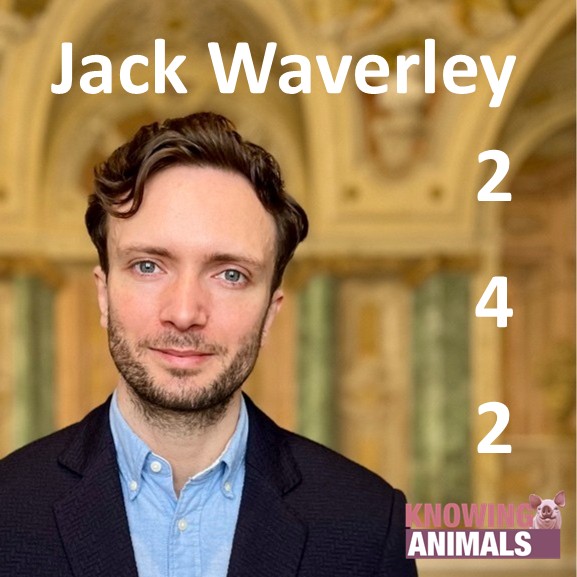 Episode 242: Animals and DEI with Jack Waverley | This episode's guest is Dr Jack Waverley, a Senior Lecturer in Fashion Marketing in the Department of Materials at the University of Manchester in the UK. His academic background is in marketing and consumer research, and he's interested in exploring how these disciplines can promote the interests of all animals, and not just humans. In this episode, we discuss his article 'Organs or bodies? Toward an equitable, embodied, and animal-inclusive diversity, equity, and inclusion agenda', which appeared open access in the journal Consumption Markets & Culture in 2024. This episode is proudly sponsored by the Animal Politics book series, from Sydney University Press. In his answers to the quick questions, Jack mentioned Peter Singer's Animal Liberation and Tom Regan's Case for Animal Rights, as well as the 2008 article 'Figuring companion-species consumption: A multi-site ethnography of the post-canine Afghan hound', by Shona Bettany and Rory Daly. | 47m 21s | ||||||
| 9/1/25 | 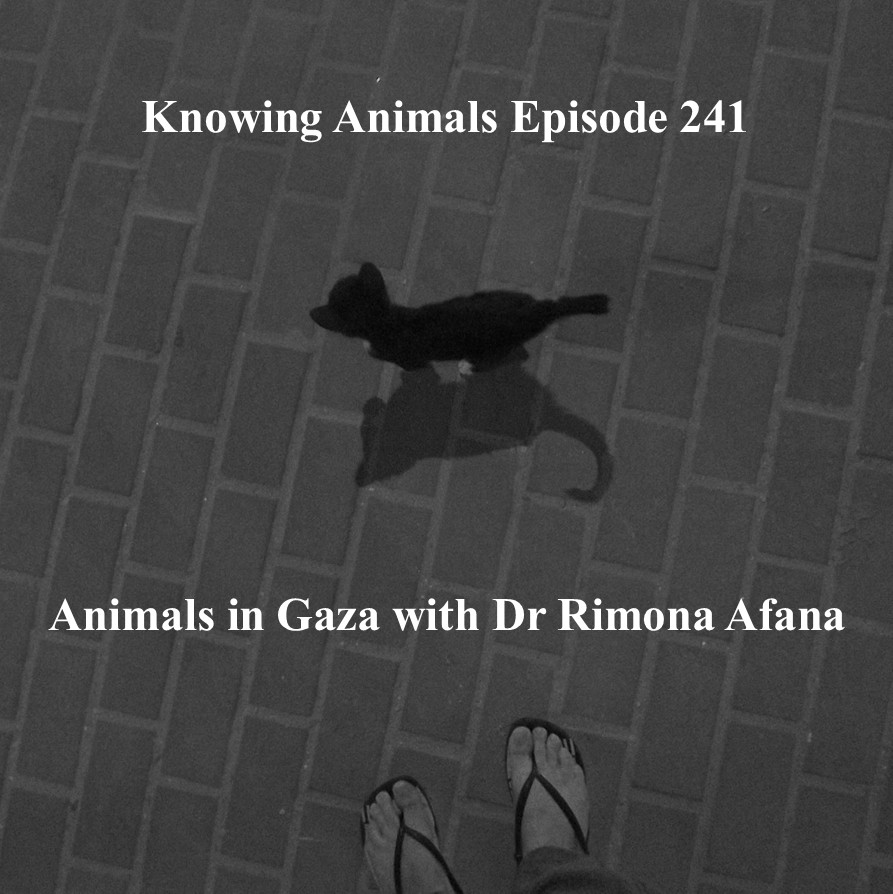 Episode 241: Animals in Gaza with Rimona Afana | This episode's guest is Dr Rimona Afana. Rimona is a Romanian-Palestinian academic, as well as an activist and multimedia artist. Her research addresses war crimes, crimes against humanity, crimes against nature, and crimes against nonhuman animals. Her work has taken her to various institutions, including Emory University School of Law and Kennesaw State University in the US, where she was an Assistant Professor of Peace Studies. Among her other research projects, she is working on a book with the working title Ecocide/Speciesism: Rethinking Interdependence in the Anthropocene. In this episode, however, we discuss her forthcoming paper 'The Invisible Victims of Israel's Genocide/Ecocide on Gaza: Crimes Against Nature and Nonhuman Animals', which is an invited contribution to the De Gruyter Handbook of Conflict Resolution and Peace. Listeners interested in reading the paper are invited to email Rimona for a copy. This will also allow them to check the sources for the facts and figures that Rimona mentions during the interview. The cover image is by Rimona, and features a homeless kitten in Rafah, Gaza. In response to the quick questions, Rimona mentioned: The work of Richard Falk (https://doi.org/10.1177/096701067300400105) and Polly Higgins (https://shepheardwalwyn.com/product/eradicating-ecocide-second-edition/) on ecocide. The work of Richard Ryder (https://en.wikipedia.org/wiki/Richard_D._Ryder), Steve Sapontzis (https://en.wikipedia.org/wiki/Steve_F._Sapontzis), Steven Wise (https://en.wikipedia.org/wiki/Steven_M._Wise), and Piers Beirne (https://usm.maine.edu/directories/people/piers-beirne/) on animals. Her own work on ecocide (https://link.springer.com/rwe/10.1007/978-981-15-3877-3_33-1) and theriocide (https://vernonpress.com/book/1852). You can find Rimona/Rimona's work on LinkedIn (https://linkedin.com/in/rimonaafana/), ORCID (https://orcid.org/0009-0007-0871-3530), X (https://x.com/rimona_afana), and BSky (https://bsky.app/profile/rimona-afana.bsky.social). You can follow her Ecocide/Speciesism project on Facebook at http://www.facebook.com/ecocide.speciesism. Knowing Animals is proudly sponsored by the Animal Politics book series, from Sydney University Press. For more information about the series, see https://sydneyuniversitypress.com/collections/series-animal-politics. | 40m 58s | ||||||
| 8/4/25 | 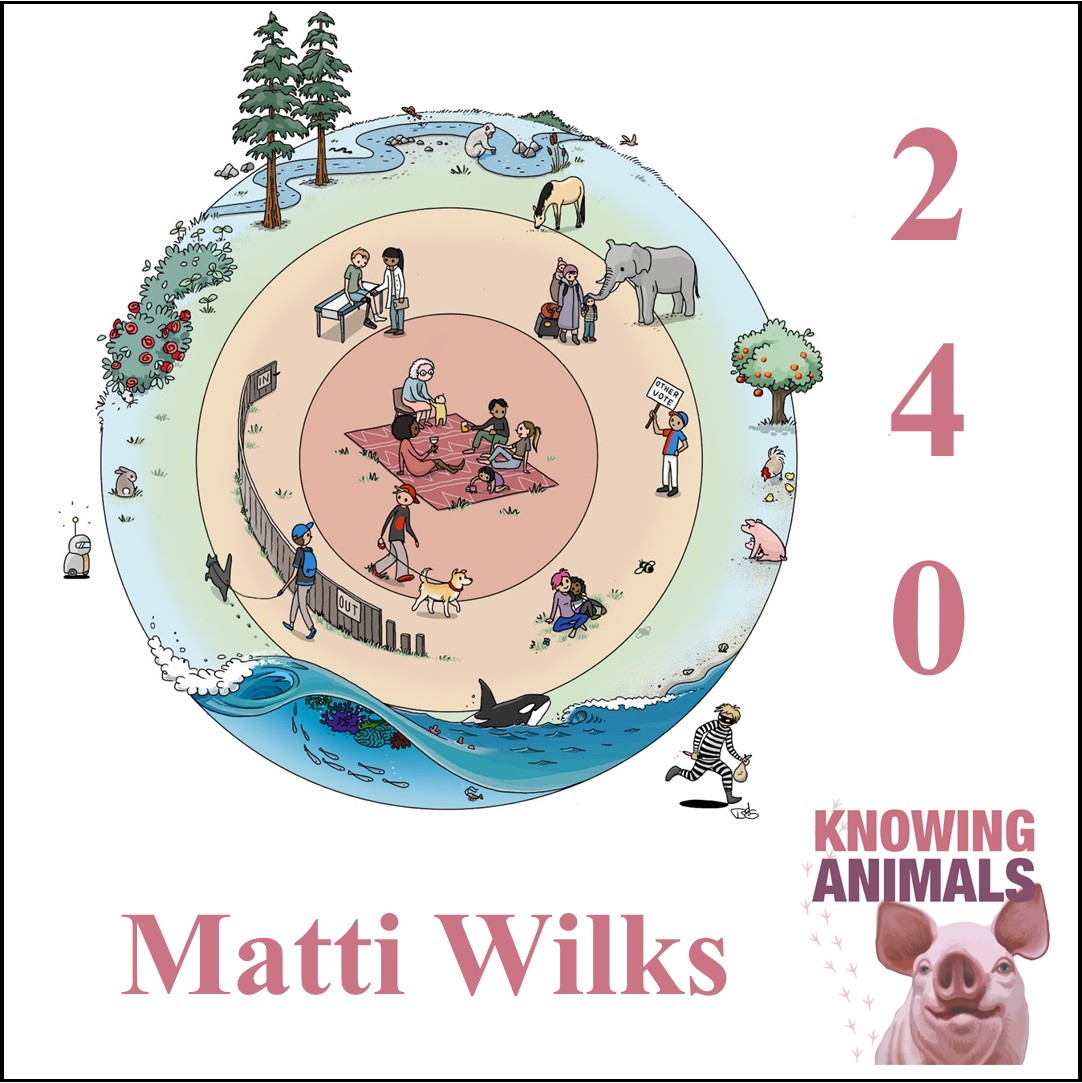 Episode 240: Children's moral circles with Matti Wilks | Dr Matti Wilks is a social and developmental psychologist who is a reader in psychology at the University of Edinburgh. Her work explores people's moral motivation and actions. This includes lots of work that will be of interest to listeners, including research addressing the psychology of moral concern for animals and research addressing attitudes towards cultivated meat. In this episode, we talk about her 2025 paper 'When development constricts our moral circle', which was co-authored with Julia Marshall, Lucius Caviola, and Karri Neldner, and published in Nature Human Behaviour. Knowing Animals is proudly sponsored by the Animal Politics book series, from Sydney University Press. And thanks to Brenda de Groot, who designed the moral circle image used as part of this episode's cover. In her answers to the regular questions, Matti mentioned The Ethics of What We Eat by Peter Singer and Jim Mason (https://archive.org/details/ethicsofwhatweea00pete), her paper on attitudes to cultivated meat (https://journals.plos.org/plosone/article?id=10.1371/journal.pone.0171904), and the work of Steve Loughnan and Brock Bastian on the meat paradox (e.g., https://journals.sagepub.com/doi/abs/10.1177/0963721414525781). | 34m 49s | ||||||
| 7/7/25 | 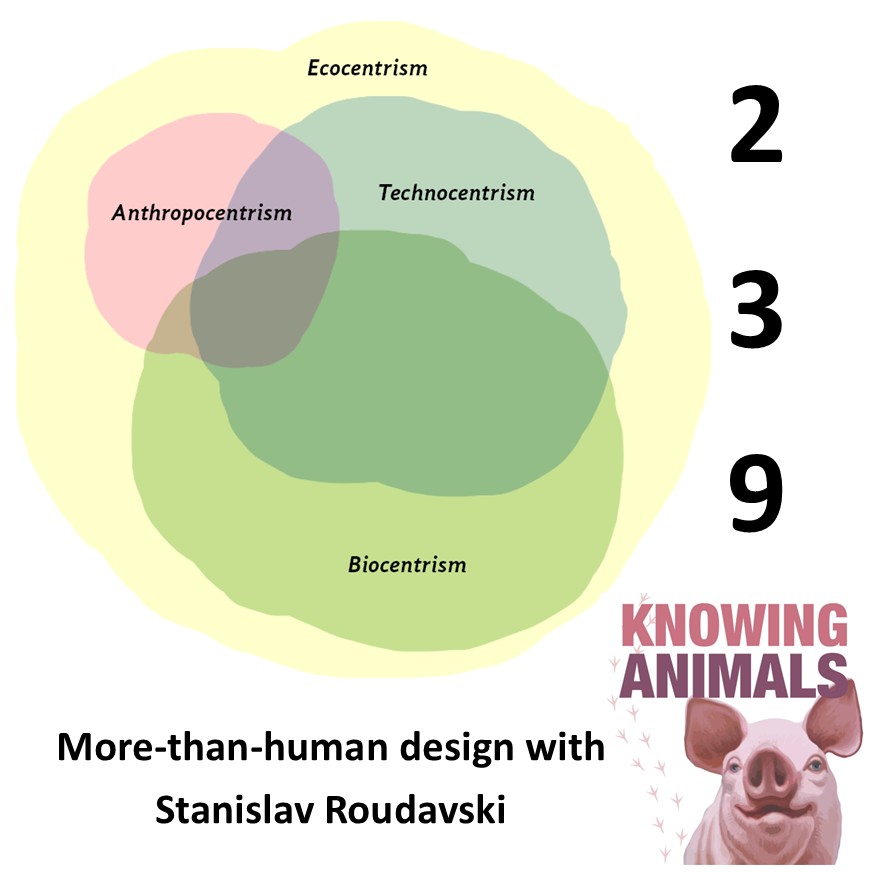 Episode 239: More-than-human design with Stanislav Roudavski | This episode's guest is Dr Stanislav Roudavski, who is a designer and academic. He leads Deep Design Lab, a research and creative collective that focuses on design for and with nonhuman beings. He is also a Senior Lecturer in Digital Architectural Design at the University of Melbourne. His research develops theories and practices that engage with nonhumans, including animals, plants, and ecosystems, but also artificial agents such as AI. In this episode, he talks about his recent article 'From Dingoes to AI: Who Makes Decisions in More-than-Human Worlds?', which was published in the open access journal TRACE ∴ Journal for Human-Animal Studies in 2025 and was co-authored with Douglas Brock. In his answers to the regular questions, Stanislav mentions the following works: "Kholstomer", a short story by Leo Tolstoy (https://en.wikipedia.org/wiki/Kholstomer) Vladimir Vernadsky's 1926 book The Biosphere (1998 English translation: https://link.springer.com/book/10.1007/978-1-4612-1750-3) Peter Kropotkin's 1902 collection Mutual Aid (http://en.wikipedia.org/wiki/Mutual_Aid:_A_Factor_of_Evolution) His own 2016 presentation 'Building Like Animals: Using Autonomous Robots to Search, Evaluate and Build' (https://isea-archives.siggraph.org/presentation/building-like-animals-using-autonomous-robots-to-search-evaluate-and-build/) John Odling-Smee's open access 2024 book Niche Construction (https://direct.mit.edu/books/oa-monograph/5822/Niche-ConstructionHow-Life-Contributes-to-Its-Own) His own Google Scholar profile: https://scholar.google.com/citations?user=4J_lRh4AAAAJ&hl=en His own Academia.edu profile: https://unimelb.academia.edu/StanislavRoudavski And the Deep Design Lab wiki: https://wiki.deepdesignlab.online/. | 26m 37s | ||||||
| 6/2/25 | 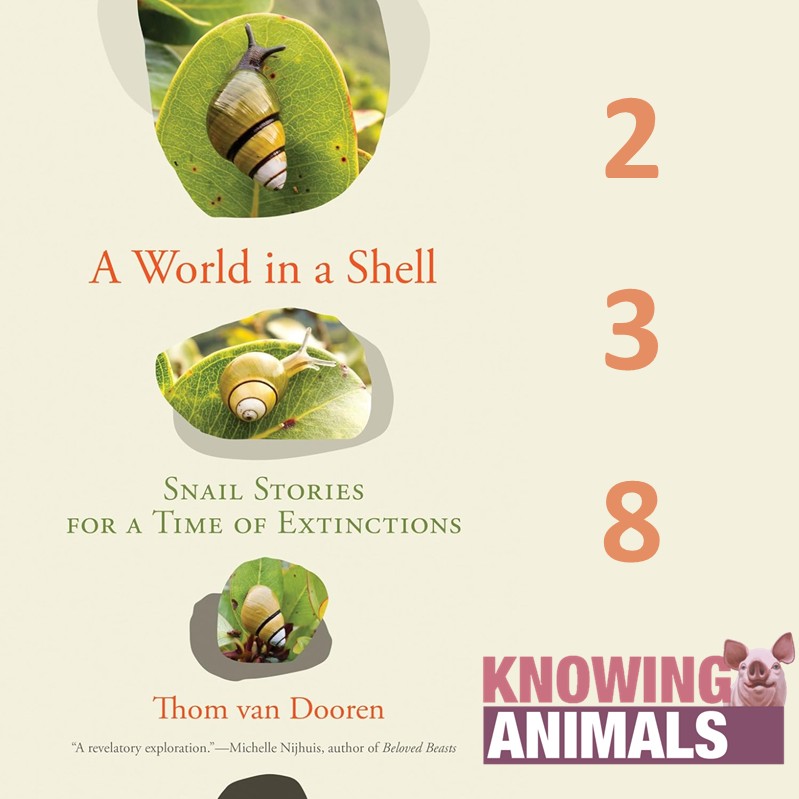 Episode 238: Snail stories with Thom Van Dooren | Today's guest is Thom van Dooren. Thom is a Professor of Environmental Humanities and the Deputy Director of the Sydney Environment Institute at the University of Sydney. He summarizes his own interdisciplinary work as being about understanding and caring for the dead and the dying, including humans and animals, and including individuals, populations, and kinds. He will be known to lots of listeners for his contributions to 'extinction studies'. His publications include the 2014 book Flight Ways: Life and Loss at the End of Extinction and the 2019 book The Wake of Crows: Living and Dying in Shared Worlds, both from Columbia University Press. In this episode, we talk about his 2022 MIT Press book A World in a Shell: Snail Stories for a Time of Extinctions. Knowing Animals is proudly sponsored by the Animal Politics book series at Sydney University Press. | 28m 18s | ||||||
| 5/5/25 | 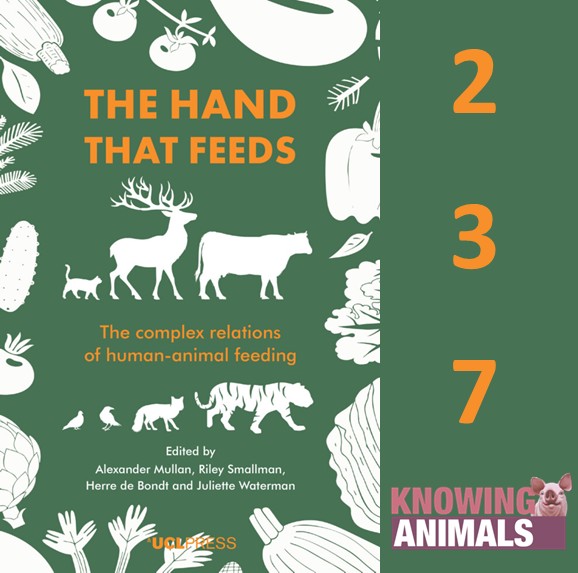 Episode 237: The history of red kites in Britain with Juliette Waterman | Today's guest is Dr Juliette Waterman. Juliette is a zooarchaeologist with a particular interest in the archaeology of wild animals in Britain, and especially in birds. She is currently a postdoctoral researcher in the Department of Geography and Environmental Science at the University of Reading in the UK, where she co-coordinates the International Council for Archaeozoology Stable Isotope Working Group. Today, we're going to talk about her paper 'Human-raptor relationships in urban spaces: the history of red kites (Milvus milvus) and human food in Britian'. This paper was published in The Hand That Feeds: The Complex Relations of Human-Animal Feeding from UCL Press in 2025. Juliette co-edited the volume with Alexander Mullan, Riley Smallman, and Herre de Bondt. The volume is open access, so you can freely and legally download the book wherever you are in the world, from 13 May. Knowing Animals is proudly sponsored by the Animal Politics book series from Sydney University Press. | 26m 42s | ||||||
| 4/7/25 | 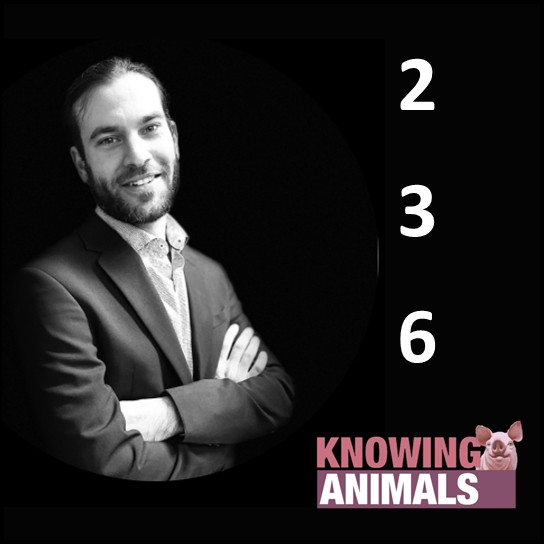 Episode 236: The Fabric of Zoodemocracy with Pablo Castello | On this episode, we speak to Dr Pablo P. Castello, currently a Research Fellow of the Animal Law and Policy Program at Harvard Law School. Pablo is an interdisciplinary political theorist whose work has appeared in such diverse locations as the American Political Science Review, Biological Conservation, and the feminist philosophy journal Hypatia. On this episode, however, we focus on his recent article 'The fabric of zoodemocracy: a systemic approach to deliberative zoodemocracy', which was published in the Critical Review in International Social and Political Philosophy, or CRISPP. Knowing Animals is proudly sponsored by the Animal Politics book series, published by Sydney University Press. | 42m 23s | ||||||
| 3/3/25 | 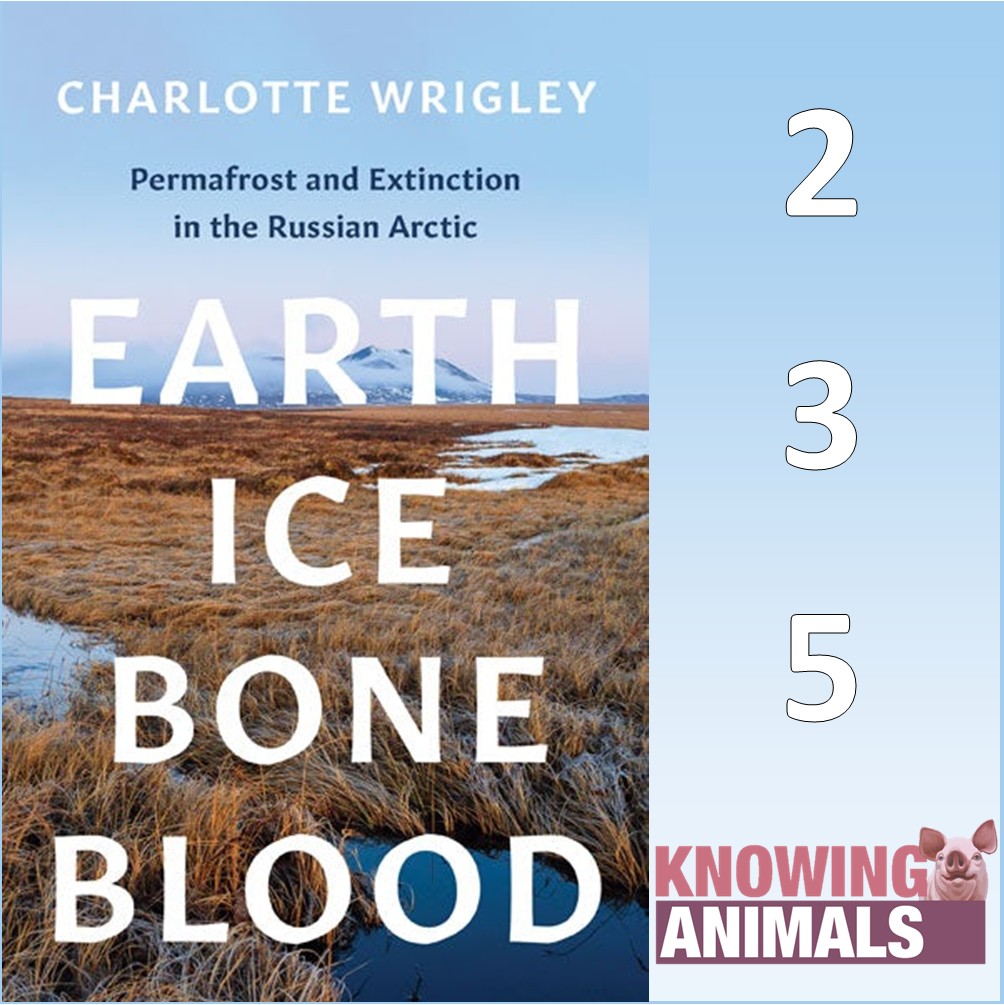 Episode 235: Mammoth Blood with Charlotte Wrigley | This week's guest is Dr Charlotte Wrigley, who is a postdoctoral researcher at the Greenhouse Centre for Environmental Humanities at the University of Stavanger in Norway. She has a mixed academic background, but her PhD (at Queen Mary University in London) was in human geography. Her research expertise concerns the arctic, extinction, and climate change. We talk about mammoths, and especially Charlotte's beautifully named book Earth, Ice, Bone, Blood: Permafrost and Extinction in the Russian Arctic, which was released in 2023 by University of Minnesota Press. This episode is brought to you by the Animal Politics book series, from Sydney University Press. | 34m 44s | ||||||
| 2/3/25 | 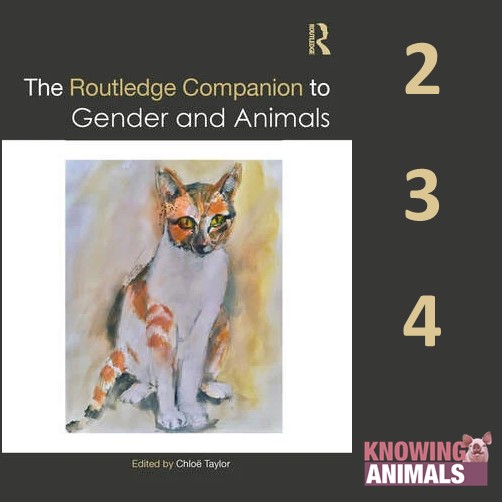 Episode 234: Gender and animals with Chloë Taylor | This episode's guest is Professor Chloë Taylor, a scholar of gender studies and critical animal studies at the University of Alberta, as well as one of the editors of the Animal Politics book series at Sydney University Press, who are sponsors of Knowing Animals. We explore the 2024 Routledge Companion to Gender and Animals, which Chloë edited. | 34m 08s | ||||||
| 1/6/25 | 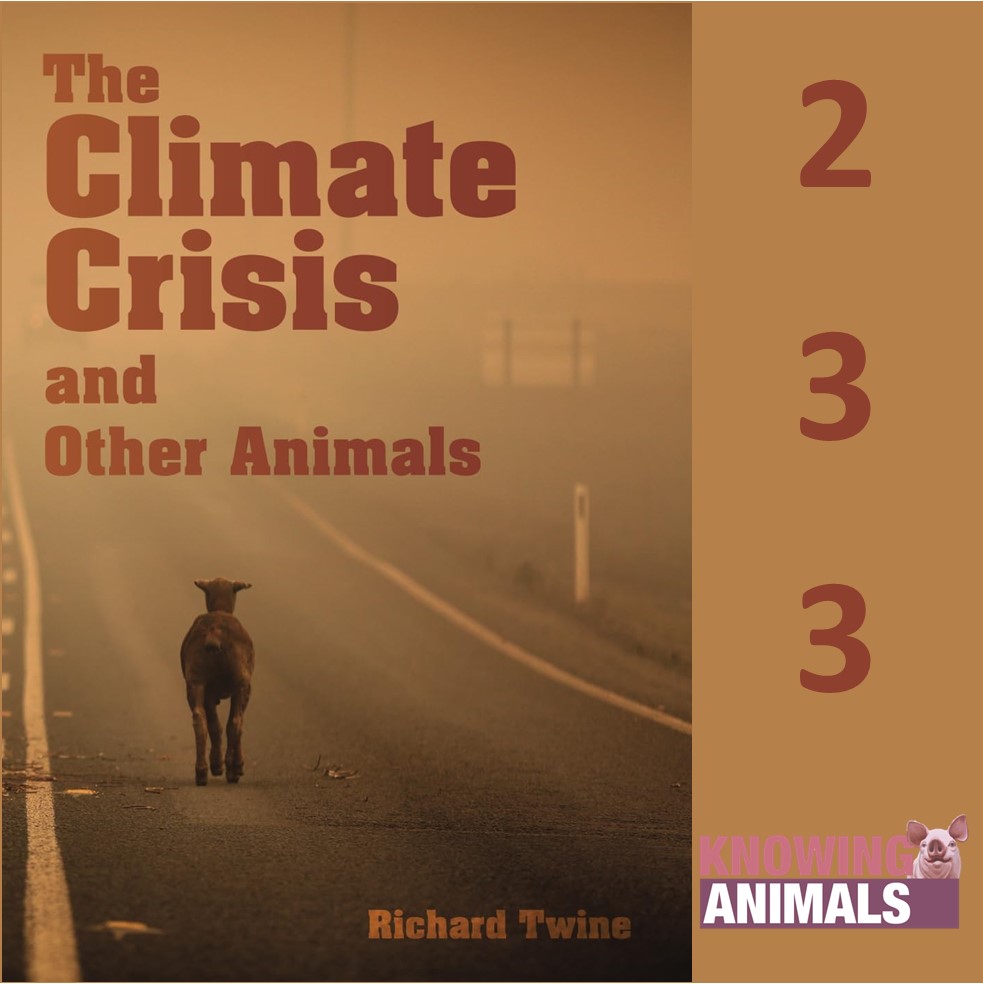 Episode 233: Animals and the climate crisis with Richard Twine | This episode features a returning guest: someone who first appeared on Knowing Animals nearly nine years ago, in February 2016. Dr Richard Twine is a Reader in Sociology at Edge Hill University in the UK. He'll be well-known to lots of regular listeners of this podcast for the work he's done championing the discipline of critical animal studies. His books include 2010's Animals as Biotechnology, which I've seen described as the first book entirely devoted to critical animal studies, and the 2014 collection The Rise of Critical Animal Studies, co-edited with Nik Taylor. On this episode, however, we talk about his 2024 Sydney University Press book The Climate Crisis and Other Animals, published as part of the Animal Politics book series. We're particularly pleased to feature this book as the Animal Politics series at Sydney University Press is a sponsor of this podcast. | 35m 40s | ||||||
| 12/2/24 |  Episode 232: Postanimal companion species with Liza Bauer | Dr Liza Bauer is the scientific manager of the Panel on Planetary Thinking project at the University of Giessen in Germany, having recently completed a PhD on literary animal studies at the same institution. In this episode, we discuss her book Livestock and Literature: Reimagining Postanimal Companion Species, which was published by Palgrave Macmillan as part of their series Palgrave Studies in Animals and Literature in 2024. This episode is brought to you by the Animal Politics book series at Sydney University Press. | 37m 25s | ||||||
| 11/4/24 | 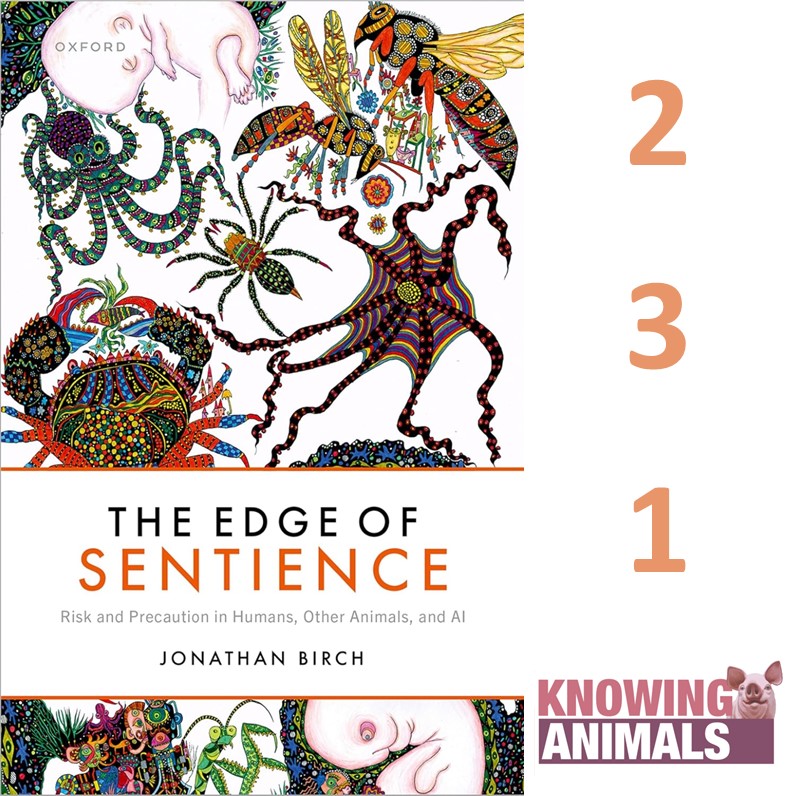 Episode 231: The edge of sentience with Jonathan Birch | This episode features Professor Jonathan Birch of the Department of Philosophy, Logic, and Scientific Method at the London School of Economics and Political Science. Jonathan is a philosopher of science who will be best known to an animal studies audience for his work on the science of sentience. This includes his 2021 report Review of the Evidence of Sentience in Cephalopod Molluscs and Decapod Crustaceans, which led to cephalopods and decapods being recognized as sentient beings in UK law. He was also one of the lead signatories of the New York Declaration on Animal Consciousness. In this episode, we talk about his 2024 Oxford University Press book The Edge of Sentience: Risk and Precaution in Humans, Other Animals, and AI. This is an open access book, meaning that all listeners can read and download it for free entirely legally. This episode is brought to you by the Animal Politics book series, from Sydney University Press. This is a collection of scholarly books about animal studies. As well as recently changing names, the series also has new editors: Danielle Celermajer, Rick De Vos, Chloë Taylor, and Katie Woolaston. If you're currently working on a book about animal studies, you should consider reaching out to them to see if the series would be a good fit – and we'll get a chance to ask some of these new editors about the Animal Politics series in upcoming episodes of Knowing Animals. | 36m 00s | ||||||
| 10/7/24 | 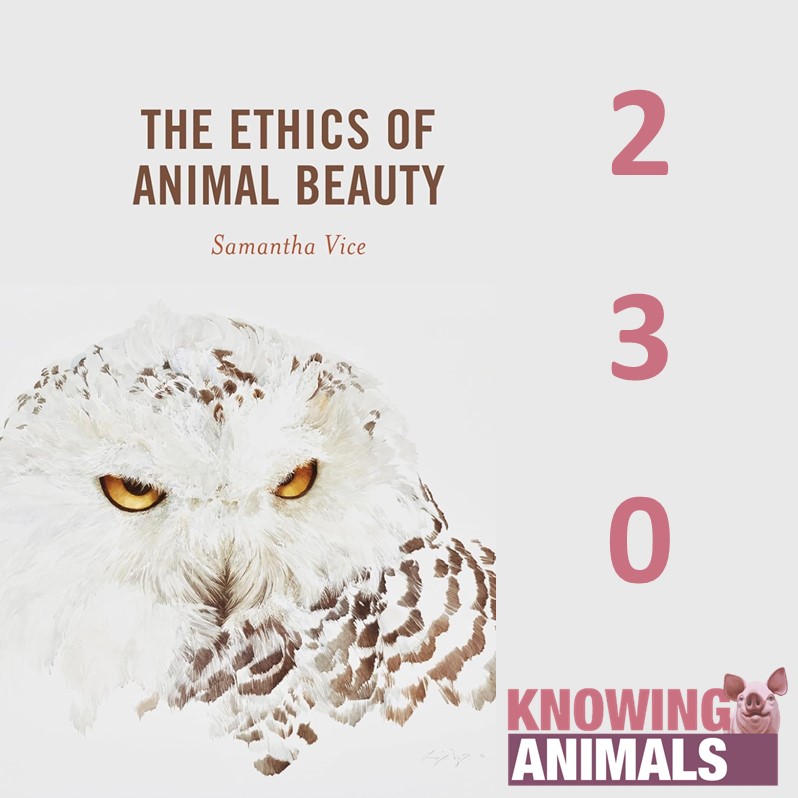 Episode 230: Animal Beauty with Samantha Vice | Knowing Animals is back! This episode features Professor Samantha Vice, a distinguished professor of philosophy at Wits University in Johannesburg, South Africa. Samantha is probably best known for her work in the philosophy of race, including her paper 'How Do I Live in This Strange Place?', which explores white privilege, and has been widely discussed. In this episode, however, explore her 2023 book The Ethics of Animal Beauty, which was published by Lexington. Knowing Animals is proudly sponsored by Sydney University Press. Their Animal Publics book series has been renamed to the Animal Politics book series. Earlier this year, they published Richard Twine's book The Climate Crisis and Other Animals, which is available in both paperback and hardback. The paperback edition, in particular, is very reasonably priced – academic books are often very expensive, but Sydney University Press bucks that trend. | 26m 34s | ||||||


Showing 24 of 310
Pitch Fit is a Pro feature
See how bookable this show is for guests, which brands already advertise, the per-episode ad value, and the best-fit guest and sponsor profile. The numbers are blurred on the free plan.
How readily this show books outside guests like you.
How proven this show is for host-read sponsorships.
For Guests
ProFor Advertisers
ProUpgrade to Pro to unlock guest cadence, sponsor categories, fit scores, and per-episode ad value for this show.
Chart history for Knowing Animals
Peaked at #90 in PT, currently #90 in PT.
| Market | Genre | Peak | Current | Trend |
|---|---|---|---|---|
| PT | — | #90 | #90 | — |
Chart Positions
1 placement across 1 market.
Chart Positions
1 placement across 1 market.