Insights from recent episode analysis
Audience Interest
Podcast Focus
Publishing Consistency
Platform Reach
Insights are generated by CastFox AI using publicly available data, episode content, and proprietary models.
Most discussed topics
Brands & references
Total monthly reach
Estimated from 11 chart positions in 11 markets.
By chart position
- 🇺🇸US · Science#1735K to 30K
- 🇳🇱NL · Science#1551K to 10K
- 🇵🇹PT · Science#3910K to 30K
- 🇵🇱PL · Science#583K to 10K
- 🇸🇬SG · Science#843K to 10K
- Per-Episode Audience
Est. listeners per new episode within ~30 days
13K to 54K🎙 ~2x weekly·150 episodes·Last published today - Monthly Reach
Unique listeners across all episodes (30 days)
25K to 108K🇺🇸28%🇵🇹28%🇳🇱9%+8 more - Active Followers
Loyal subscribers who consistently listen
10K to 43K
Market Insights
Platform Distribution
Reach across major podcast platforms, updated hourly
Total Followers
—
Total Plays
—
Total Reviews
—
* Data sourced directly from platform APIs and aggregated hourly across all major podcast directories.
On the show
From 15 epsHosts
Recent guests
Recent episodes
Best Of: The Woman Who Demonstrated the Greenhouse Effect
Jun 25, 2026
Unknown duration
La mujer que demostró el efecto invernadero
Jun 25, 2026
Unknown duration
Tilly Edinger: The Paleoneurologist Saved By Her Science
Jun 11, 2026
31m 12s
Kamala Sohonie: The Chemist who Wanted to Feed a Nation
May 28, 2026
42m 11s
Sharla Boehm: The Programmer Whose Code Underpins the Internet
May 14, 2026
26m 35s
Social Links & Contact
Official channels & resources
Official Website
Login
RSS Feed
Login
| Date | Episode | Topics | Guests | Brands | Places | Keywords | Sponsor | Length | |
|---|---|---|---|---|---|---|---|---|---|
| 6/25/26 | ![]() Best Of: The Woman Who Demonstrated the Greenhouse Effect | In 1856, decades before the term “greenhouse gas” was coined, Eunice Newton Foote demonstrated the greenhouse effect in her home laboratory. She placed a glass cylinder full of carbon dioxide in the sun, and found that it heated up much faster than a cylinder of ordinary air. Her conclusion: more carbon dioxide in the atmosphere results in a warmer planet. Several years later, a British scientist named John Tyndall conducted a far more complicated experiment that demonstrated the same effect and revealed how it worked. Today, he’s widely known as the man who discovered the greenhouse gas effect. There’s even a crater on the moon named for him! Eunice Newton Foote, meanwhile, was lost to history—until an amateur historian stumbled on her story. Learn about your ad choices: dovetail.prx.org/ad-choices | — | ||||||
| 6/25/26 | ![]() La mujer que demostró el efecto invernadero | En 1856, décadas antes de que se acuñara el término “gas de efecto invernadero”, Eunice Newton Foote demostró el efecto invernadero en su laboratorio casero. Colocó un cilindro de vidrio lleno de dióxido de carbono al sol y observó que se calentaba mucho más rápido que un cilindro con aire común. Su conclusión: más dióxido de carbono en la atmósfera da lugar a un planeta más cálido. Años más tarde, un científico británico llamado John Tyndall realizó un experimento mucho más complejo que demostró el mismo efecto y explicó su funcionamiento. Hoy en día, Tyndall es ampliamente reconocido como el hombre que descubrió el efecto invernadero. ¡Incluso hay un cráter en la luna que lleva su nombre! Mientras que Eunice Newton Foote fue olvidada por la historia… hasta que un historiador aficionado redescubrió su legado. Learn about your ad choices: dovetail.prx.org/ad-choices | — | ||||||
| 6/11/26 | ![]() Tilly Edinger: The Paleoneurologist Saved By Her Science✨ | paleontologyneuroscience+4 | Tilly Edinger | Nazi Germanypaleoneurology | — | Tilly Edingerpaleoneurology+5 | — | 31m 12s | |
| 5/28/26 | ![]() Kamala Sohonie: The Chemist who Wanted to Feed a Nation✨ | women in sciencebiochemistry+4 | — | Royal Institute of Science | India | Kamala Baghvatbiochemistry+5 | — | 42m 11s | |
| 5/14/26 | ![]() Sharla Boehm: The Programmer Whose Code Underpins the Internet✨ | computer programmingmilitary communications+3 | Sharla Boehm | Rand Corporation | UCLA | Sharla Boehmcomputer programming+4 | — | 26m 35s | |
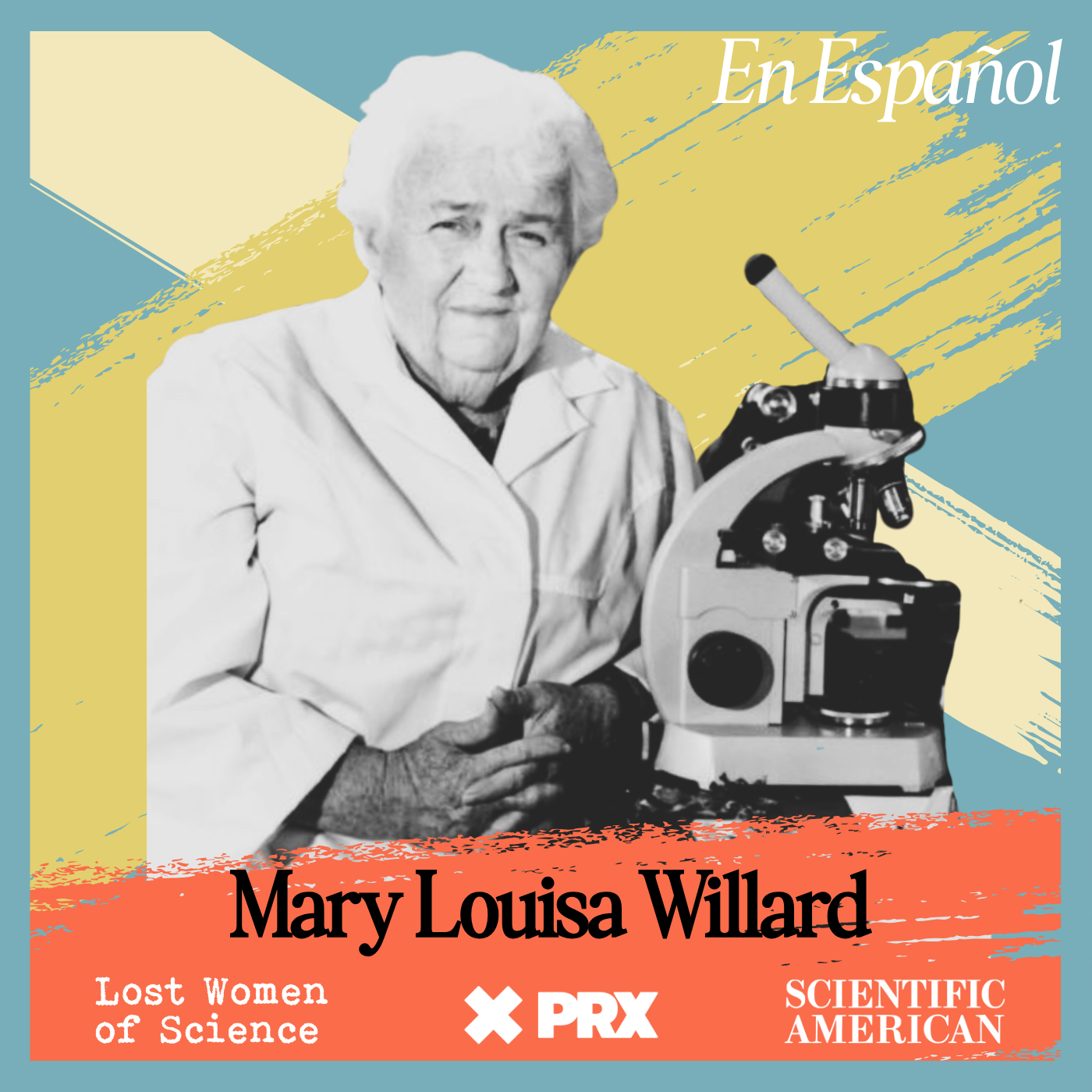
| 4/30/26 | ![]() Best Of: Chemistry Professor and Crime Buster: The Remarkable Life of Mary Louisa Willard✨ | chemistrycrime solving+3 | — | Pennsylvania State University | State College, Pennsylvania | Mary Louisa Willardchemistry professor+3 | — | 30m 45s | |
| 4/30/26 | ![]() Profesora de química y caza criminales: La extraordinaria vida de Mary Louisa Willard✨ | chemistrycrime solving+3 | — | Universidad Estatal de Pensilvania | State CollegePensilvania | Mary Louisa Willardchemistry+3 | — | 31m 13s | |
| 4/16/26 | ![]() Elizabeth Roboz Einstein: The Determined Genius Behind a Multiple Sclerosis Breakthrough✨ | bioorganic chemistryneurochemistry+3 | Elizabeth Roboz Einstein | University of Viennamultiple sclerosis | HungaryU.S. | Elizabeth Roboz Einsteinneurochemistry+3 | — | 38m 45s | |
| 4/2/26 | ![]() Conversation: If I Am Right, and I Know I Am: Inge Lehmann, the Woman Who Discovered Earth’s Innermost Secret✨ | Inge Lehmannseismology+4 | Hanne Strager | Lost Women of Sciencegeophysics | — | Inge Lehmannseismologist+5 | — | 36m 23s | |
| 3/19/26 | ![]() BONUS: Agnes Pockels and the Kitchen Sink Myth✨ | surface sciencewomen in science+4 | — | DistillationsScience History Institute | — | Agnes Pockelssurface science+5 | — | 37m 26s | |
Want analysis for the episodes below?Free for Pro Submit a request, we'll have your selected episodes analyzed within an hour. Free, at no cost to you, for Pro users. | |||||||||
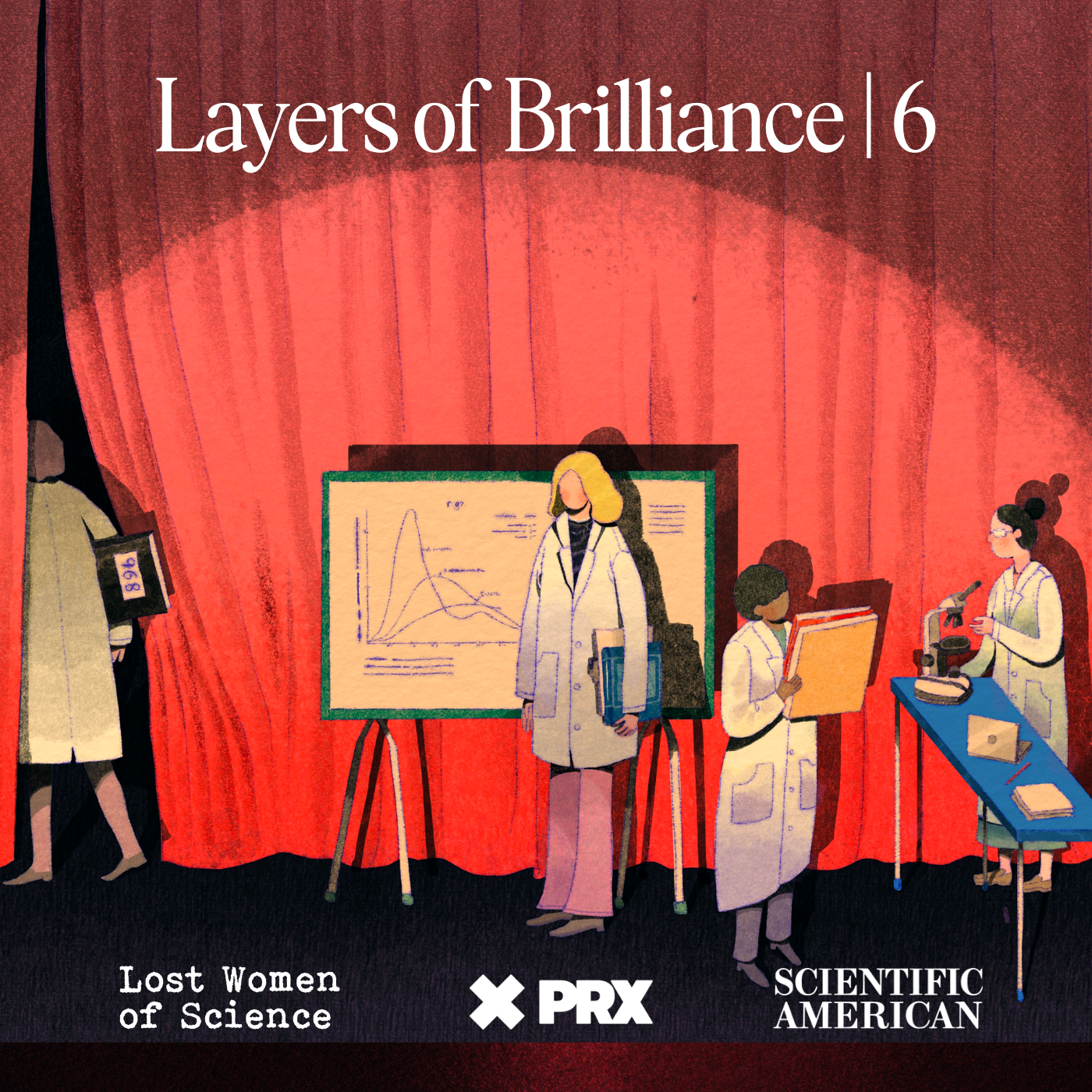
| 3/12/26 | ![]() Layers of Brilliance: Vanishing Act -- Episode Six✨ | legacyscience+3 | — | — | — | legacyIrving Langmuir+5 | — | 37m 32s | |
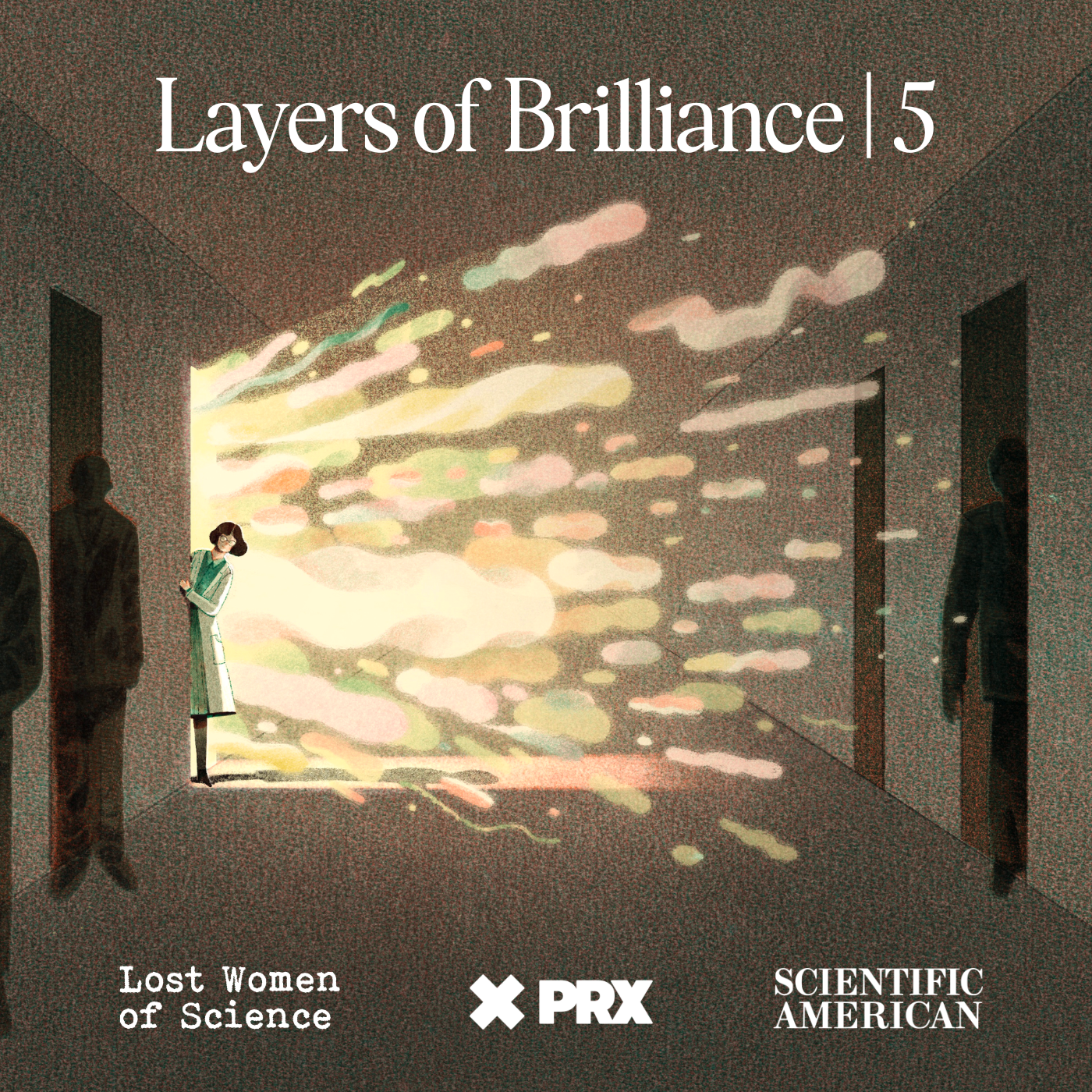
| 3/5/26 | ![]() Layers of Brilliance: The Self You Have to Live With - Episode Five✨ | historylaboratory+3 | — | Lost Women of Science | — | Katharinescience history+3 | — | 29m 55s | |
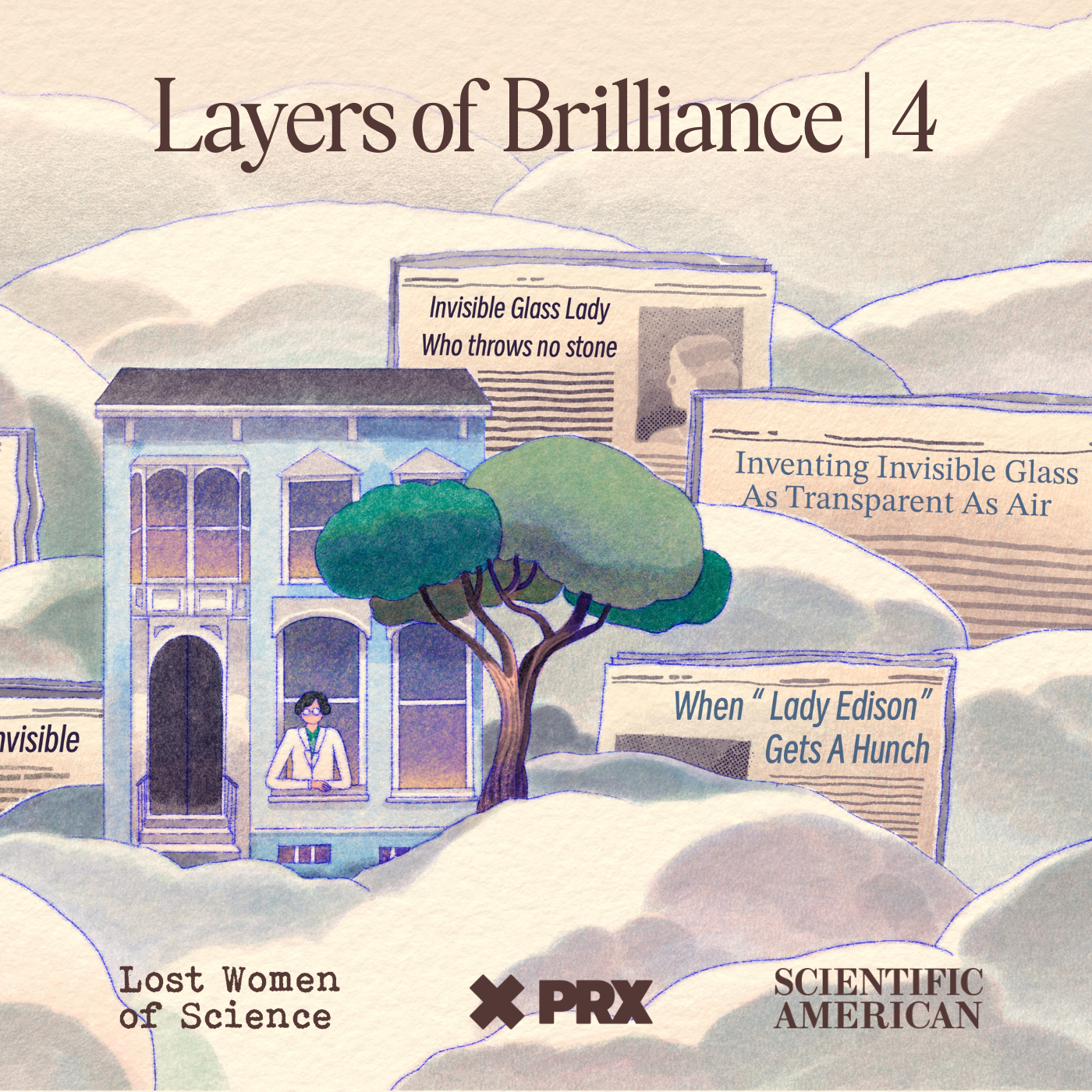
| 2/26/26 | ![]() Layers of Brilliance: The Breakthrough - Episode Four✨ | scientific breakthroughswomen in science+3 | — | The General Electric Company | — | Katharine Burr BlodgettIrving Langmuir+3 | — | 25m 59s | |
| 2/12/26 | ![]() Layers of Brilliance: The Air She Breathed -- Episode Three✨ | women in sciencepartnership+4 | — | The General Electric Company | SchenectadyUniversity of Cambridge | Katharine Burr BlodgettIrving Langmuir+5 | — | 39m 40s | |
| 2/5/26 | ![]() Layers of Brilliance: The 'House of Magic' -- Episode Two✨ | women in sciencematerials science+4 | Katharine Burr Blodgett | The General Electric CompanyGeneral Electric Company | Schenectady, New York | Katharine Burr BlodgettIrving Langmuir+5 | — | 41m 07s | |
| 1/29/26 | ![]() Layers of Brilliance: The Chemical Genius of Katharine Burr Blodgett - Episode One✨ | scientific educationwomen in science+3 | — | General Electric CompanyUniversity of Chicago | New YorkBryn Mawr | Katharine Burr BlodgettGeneral Electric+3 | — | 34m 34s | |
| 1/15/26 | ![]() Layers of Brilliance✨ | materials sciencewomen in science+3 | — | General Electric Company | Schenectady, New York | Katharine Burr BlodgettIrving Langmuir+3 | — | 2m 04s | |
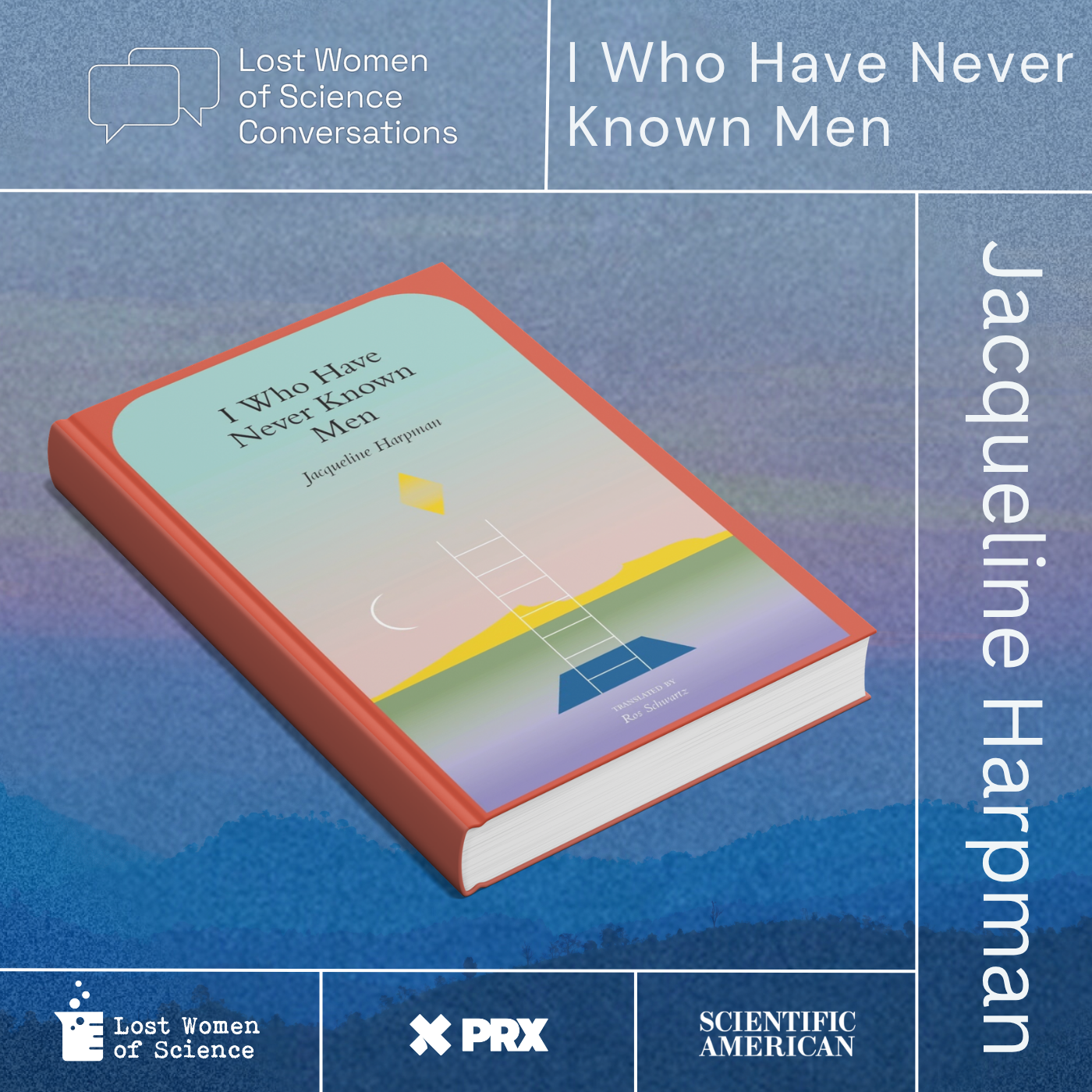
| 12/4/25 | ![]() The Lost Women of Science - Our Book for Young Readers | The Lost Women of Science by Melina Gerosa Bellows and Katie Hafner is an exciting book for young readers that brings to life the stories of ten remarkable women who changed the world of science but have been forgotten, or written out of history completely. Published by Penguin Random House’s Bright Matter imprint, the book transforms podcast episodes into a collection of inspiring biographies written for middle school readers. In this Lost Women of Science Conversation, Melina and Katie talk about their favorite female scientists and why their grit and determination can help inspire curiosity in the next generation of young female (and male) scientists. For parents, teachers or grandparents looking to spark a love of science in the young people in their lives, look no further than this book this holiday season. Learn about your ad choices: dovetail.prx.org/ad-choices | — | ||||||
| 11/20/25 | ![]() For Susan | In 2022, Susan Wojcicki was on top of the world—CEO of YouTube, parent to five kids, and running a few miles a day—when she received a shocking diagnosis: metastatic lung cancer. She soon resigned from YouTube and dedicated herself to fighting the disease and looking for answers. Why does the leading cause of cancer deaths receive less funding than some less lethal cancers? How could her lung cancer have progressed so far undetected? And how did Susan get lung cancer, when she had never smoked? This episode is dedicated to her. Learn about your ad choices: dovetail.prx.org/ad-choices | — | ||||||
| 11/13/25 | ![]() The Mouse Lady | In the 1910s, a relatively unknown cancer researcher named Maud Slye announced the first results of a study with the loftiest ambitions: to identify what causes cancer. To answer that question, the University of Chicago geneticist had bred tens of thousands of mice, enough to fill a three-story building. She carefully documented their ancestry and their morbidities and performed autopsies. And to Slye, her findings were clear: vulnerability to cancer was hereditary. If we wanted to, we could eliminate it. But Slye made some crucial mistakes along the way—and a number of enemies. Learn about your ad choices: dovetail.prx.org/ad-choices | — | ||||||
| 11/6/25 | ![]() Lost Women of Science Conversations: Rosalind - The Opera | Composer Peter Hugh White and librettist Clare Heath join host Rosie Millard in front of a London audience to explore why the story of chemist and x-ray crystallographer Rosalind Franklin and the race to uncover the structure of DNA makes such a compelling subject for an opera.We hear excerpts that capture the contrasting personalities at the centre of this scientific drama — James Watson, the brash young researcher at the University of Cambridge; Francis Crick, his more measured collaborator; and Maurice Wilkins, an anxious biophysicist uneasy about being outshone by his brilliant colleague, Franklin.It’s a story of ambition, rivalry, and betrayal: Franklin’s departure from King’s College London and the subsequent publication of the double helix model by Watson and Crick, which was built on insights from her work — yet without giving her due recognition. Learn about your ad choices: dovetail.prx.org/ad-choices | — | ||||||
| 10/16/25 | ![]() Best Of: Finding Dora Richardson: The Forgotten Developer of Tamoxifen, a Lifesaving Breast Cancer Therapy - Episode Two | Although initial clinical trials of tamoxifen as a treatment of breast cancer were positive, Imperial Chemical Industries (ICI) did not believe this market would be commercially viable. The company had hoped for a contraceptive pill – tamoxifen didn’t work for that – not a cancer treatment. In 1972 the higher-ups at ICI decided to cancel the research.But Dora Richardson, the chemist who had originally synthesized the compound, and her boss, Arthur Walpole, were convinced they were on to something important, something that could save lives. They continued the research in secret. Tamoxifen was eventually launched in 1973 and went on to become a global success, saving hundreds of thousands of lives. Dora Richardson’s role in its development, however, was overshadowed by her a male colleague and all but forgotten.This Best Of episode first aired in October 2024 to coincide with Breast Cancer Awareness month. It is now also available in a Spanish adaptation, narrated by Laura Gómez. Learn about your ad choices: dovetail.prx.org/ad-choices | — | ||||||
| 10/16/25 | ![]() Encontrando a Dora Richardson – La desarrolladora olvidada del tamoxifeno, una terapia vital contra el cáncer de mama | Aunque los ensayos clínicos iniciales del tamoxifeno como tratamiento del cáncer de mama fueron positivos, Imperial Chemical Industries (ICI) no creía que este mercado fuera comercialmente viable. La compañía esperaba una píldora anticonceptiva (el tamoxifeno no funcionó para eso), no un tratamiento contra el cáncer. En 1972, los superiores del ICI decidieron cancelar la investigación. Pero Dora Richardson, la química que originalmente había sintetizado el compuesto, y su jefe, Arthur Walpole, estaban convencidos de que estaban en algo importante, algo que podría salvar vidas. Continuaron la investigación en secreto. El tamoxifeno se lanzó finalmente en 1973 y se convirtió en un éxito mundial, salvando cientos de miles de vidas. El papel de Dora Richardson en su desarrollo, sin embargo, fue eclipsado por su colega masculino y casi olvidado. Learn about your ad choices: dovetail.prx.org/ad-choices | — | ||||||
| 10/9/25 | ![]() Best Of: Finding Dora Richardson, The Forgotten Developer of Tamoxifen, a Lifesaving Breast Cancer Therapy - Episode One | In the early 1960s, Dr. Dora Richardson synthesized a chemical compound that became one of the most important drugs to treat breast cancer: tamoxifen. Although her name is on the original patent, her contributions have been lost to history.In the first episode of this two-part podcast, Katie Couric introduces us to Dora’s story, and we show how Lost Women of Science producer Marcy Thompson tracked down Dora’s firsthand account of the history of the drug’s development. This document, lost for decades, tells the story of how the compound was made and how Imperial Chemical Industries, where Richardson worked, almost terminated the project because the company was hoping to produce a contraceptive, not a cancer therapy.This Best Of episode first aired in October 2024 to coincide with Breast Cancer Awareness month. It is now also available in a Spanish adaptation, narrated by Laura Gómez. Learn about your ad choices: dovetail.prx.org/ad-choices | — | ||||||
| 10/9/25 | ![]() Encontrando a Dora Richardson – Episodio 1 | A principios de la década de los sesenta, la Dra. Dora Richardson sintetizó un compuesto químico que se convirtió en uno de los medicamentos más importantes para tratar el cáncer de mama: el tamoxifeno. Aunque su nombre aparece en la patente original, sus contribuciones fueron olvidadas por la historia. En el primer episodio de este podcast de dos partes, les contamos la historia de Dora y de cómo Marcy Thompson, productora de Lost Women of Science, rastreó su relato en primera persona sobre el desarrollo del medicamento. Este documento, perdido durante décadas, narra cómo se creó el compuesto y cómo la empresa Imperial Chemical Industries, donde trabajaba Richardson, estuvo a punto de cancelar el proyecto porque buscaba desarrollar un anticonceptivo, no una terapia contra el cáncer. Learn about your ad choices: dovetail.prx.org/ad-choices | — | ||||||
Showing 25 of 157
Pitch Fit is a Pro feature
See how bookable this show is for guests, which brands already advertise, the per-episode ad value, and the best-fit guest and sponsor profile. The numbers are blurred on the free plan.
How readily this show books outside guests like you.
How proven this show is for host-read sponsorships.
For Guests
ProFor Advertisers
ProUpgrade to Pro to unlock guest cadence, sponsor categories, fit scores, and per-episode ad value for this show.
Similar Audience Demographics
Podcasts that attract a similar listener profile
Chart Positions
11 placements across 11 markets.
Chart Positions
11 placements across 11 markets.