Open Country
by BBC Radio 4
Is this your podcast?On the show
From 10 epsHosts
Recent guests
Recent episodes
Walter Scott country
Oct 1, 2026
24m 28s
Whitwell Bird Ringers
Sep 24, 2026
23m 50s
Kate Stables and Winchester
Sep 17, 2026
25m 57s
Saving the Rare Plants of Eryri
Sep 10, 2026
23m 49s
Bramble Bank Cricket Match
Sep 3, 2026
23m 48s
Insights from recent episode analysis
Audience Interest
Podcast Focus
Publishing Consistency
Platform Reach
Insights are generated by CastFox AI using publicly available data, episode content, and proprietary models.
Most discussed topics
Brands & references
Total monthly reach
Blended from 1 signal.
Built from
By chart position
- 🇬🇧United Kingdom · NatureHOME#726K to 162K
- 🇲🇽Mexico · Nature#114.5K to 28K
- 🇮🇹Italy · Nature#93.0K to 19K
- 🇺🇸United States · Nature#1333.0K to 19K
- 🇧🇷Brazil · Nature#541.5K to 9.4K
- Per-Episode Audience
Est. listeners per new episode within ~30 days
50K to 313K🎙 Daily cadence·465 episodes·Last published 2w ago - Monthly Reach
Unique listeners across all episodes (30 days)
167K to 1.0M🇬🇧52%🇲🇽9%🇮🇹6%+18 more - Active Followers
Loyal subscribers who consistently listen
67K to 417K
Market Insights
Platform Distribution
Reach across major podcast platforms, updated hourly
Total Followers
—
Total Plays
—
Total Reviews
—
* Data sourced directly from platform APIs and aggregated hourly across all major podcast directories.
Social Links & Contact
Official channels & resources
Official Website
Login
RSS Feed
Login
| Date | Episode | Topics | Guests | Brands | Places | Keywords | Sponsor | Length | |
|---|---|---|---|---|---|---|---|---|---|
| 10/1/26 | Walter Scott country | Martha Kearney visits Walter Scott country. She traces the writer's footsteps through the Scottish countryside, visiting Abbotsford House near Melrose, where he built his Scottish baronial dream. Scott was the best-selling author of his generation, with Waverley station in Edinburgh named after one of his books. As Martha finds out, his writing explores Scotland’s environmental history, including deforestation, land use changes, and the human-nature relationship. He incorporates ecological themes in his novels, using landscapes as active components of storytelling and reflecting the Romantic view of nature as something to be revered. Scott advocated for the restoration of native woodlands and foresaw the potential for natural regeneration. His love of nature is expressed not only in the landscapes of his novels, but also in his personal passion for tree planting. Producer: Mary Ward-Lowery | 24m 28s | ||||||
| 9/24/26 | Whitwell Bird Ringers | Brett Westwood goes to meet ornithologist Jack Baddams and his fellow bird ringers in his home village Whitwell in Derbyshire, to find out how the practice of ringing has been passed down the generations there, and learns about the impact it has on nature conservation more widely.Most people know Jack as the young ornithologist who reports for BBC Springwatch. He’s also a bird ringer, licenced by the British Trust for Ornithology to catch and ring wild birds so we can learn more about their lives. His passion for birds started young, and as a teenager Jack was introduced to a group of bird ringers around Whitwell, where he was taught by Eleanor Wilkins who has been training the next generation.Brett goes to meet Jack and Eleanor early in the morning at one of the Whitwell group's favourite spots to see what turns up in the nets, and hear how the data they collect on bird populations and migrations contributes to conservation. Brett also hears the story of the remarkable history of this group and its members, whose personal records of local bird observations go back decades.Producer: Sophie Anton for BBC Audio in Bristol | 23m 50s | ||||||
| 9/17/26 | Kate Stables and Winchester | Musician Kate Stables visits her favourite spots in Winchester to find out more about the area that she used to call home. From St Catherine's Hill you can see across the whole city. It's where Kate flew kites, and celebrated her wedding - and with the help of archaeologist David Ashby she finds out about the iron-age settlement and medieval chapel that once adorned the landscape. Dropping down to the River Itchen, Kate and conservationist Rachel Remnant dip their toes into chalk streams, before heading to Cowslip Field to find out how the ancient skill of scything can feel like dancing. She was still at school when the protests against the building of a section of the M3 motorway took place, but campaigner Chris Gillham joins Kate on Twyford Down to share his memories of the camps that sprang up in an attempt to prevent the road being built. Chris describes the personal cost of being involved in that action. Kate's day finishes atop Winchester Cathedral, gazing back across the city.Producer: Toby FieldSpecial thanks to Ross Lovett, Winchester Cathedral and Rozi Plain. | 25m 57s | ||||||
| 9/10/26 | conservationrare plants+5 | Robbie Blackhall-MilesTwm Elias | PlantlifeNational Trust+3 | EryriSnowdonia+1 | Eryrirare plants+5 | — | 23m 49s | ||
| 9/3/26 | cricketsailing+4 | Norman CowansSir Robin Knox-Johnston | BBC Radio 4 | Isle of WightHamble+2 | Bramble Bankcricket match+5 | — | 23m 48s | ||
| 8/27/26 | pilgrimageenvironment+4 | — | Friends of the River MedwayBritish Pilgrimage Trust | KentRiver Medway+2 | river pilgrimageRiver Medway+4 | — | 24m 12s | ||
| 8/20/26 | ancient skillshands-on education+3 | — | Ancient Technology Centre | DorsetEarthouse+4 | forgingflint knapping+3 | — | 23m 25s | ||
| 5/14/26 | historyengineering+4 | — | Bluebird K7 | Coniston WaterCumbria | Bluebird K7Donald Campbell+5 | — | 24m 30s | ||
| 5/7/26 | wildlifeart+3 | Harriet MeadDarren Woodhead+1 | Society of Wildlife Artists | NorfolkMassingham Heath | wildlife artistsMassingham Heath+3 | — | 23m 40s | ||
| 4/30/26 | roadside vergesbiodiversity+3 | Nessie Ramm | PlantlifeReduce Speed Now | East Sussex | roadside vergesplant species+5 | — | 24m 25s | ||
Want analysis for the episodes below?Free for Pro Submit a request, we'll have your selected episodes analyzed within an hour. Free, at no cost to you, for Pro users. | |||||||||
| 4/16/26 | deer populationhunting+3 | — | — | BritainEssex | deer stalkingwild meat+3 | — | 24m 08s | ||
| 4/9/26 | environmental restorationbiodiversity+3 | — | BBC Radio 4 | Southern ScotlandCarrifran Wildwood+2 | Carrifran Wildwoodenvironmental restoration+5 | — | 23m 56s | ||
| 4/2/26 | daffodilsgardening+3 | Paul Earnshaw | Royal Horticultural Society | ThriplowCambridgeshire+1 | daffodilThriplow Daffodil Weekend+6 | — | 24m 22s | ||
| 3/26/26 | Restoring Wallasea's Wild Coast | Martha Kearney visits Wallasea Island in Essex, the largest manmade coastal nature reserve in Europe. It was created from the 3 million tonnes of London clay that were excavated in the digging out of the Elizabeth Line. The RSPB project used soil from the Crossrail scheme to raise the land, and flood almost 170 hectares of arable land to create saltmarsh, mudflats and lagoons. This was to mitigate for land loss as sea levels rise and it’s the only place that has raised land in order to bring the sea back. It’s the largest complex of saline lagoons in the UK. The project tells an unusually positive story about adapting to climate change and coastal erosion before it happens, for the benefit of nature. Martha goes to see the waders and waterbirds that now over-winter there.Producer: Beth O'Dea | 23m 27s | ||||||
| 3/19/26 | Stroudwater's missing mile | The Stroudwater canal in Gloucestershire was built in the 1770s. It brought coal to the mills along the Stroud valleys, which had become an important centre for the manufacture of woollen cloth, but the arrival of the railways in the mid 19th century led to the canal's decline and eventual abandonment. A mile-long section of it was filled in when the M5 motorway was built in the 1960s, cutting the canal off from the rest of the inland waterways network. Now ambitious multi-million plans are underway to restore and re-open the "missing mile" and reconnect the canal.Martha Kearney visits the Stroudwater canal to see how the work is going. She talks to volunteers, and finds out what difference the work will make to the canal - as a local amenity, as a tourist attraction and as a wildlife corridor.Producer: Emma Campbell | 24m 10s | ||||||
| 3/12/26 | The Rock Houses of Staffordshire | Martha Kearney visits the unique cave dwellings at Kinver Edge that were lived in until the 1960s. Cosy cottages were built into the soft red sandstone with windows and doors and families lived in them for generations. Martha looks around a cottage which has been restored as it was when it was lived in and hears about the family that lived there. She also finds out about the heathland restoration project which is bringing rare wildlife back to this valuable sandscape. And she meets Brett Westwood to try and track some of it down.Producer Beth O'Deahttps://www.nationaltrust.org.uk/visit/shropshire-staffordshire/kinver-edge-and-the-rock-houses | 23m 40s | ||||||
| 3/5/26 | Hedgerow havens | Hedges are such a traditional part of the British landscape that most of us don't give them a second thought. They're usually associated with the enclosures of the 17th-19th centuries, when the medieval farming system gave way to enclosed fields surrounded by hedges - designed to keep sheep in and people out. But, as Martha Kearney finds out, many hedges are far older than that - going back thousands of years in some cases. In this programme, Martha explores the history and future of the hedge. She learns that there are an estimated 400,000 miles of hedgerow in Britain, despite the fact that many hedges were grubbed up and destroyed in the years since the Second World War. She talks to a wildlife expert, who explains why hedges are so important for wildlife and outlines the vital role they have to play in the ecosystem. Martha visits a hedge-laying course in Devon, where trainees are learning this ancient skill, and tries her hand at the craft using a billhook. She discovers that Devon has a hedge style all of its own.Producer: Emma Campbell | 24m 43s | ||||||
| 3/2/26 | Savernake Forest | It's an ancient hunting ground with thousands of 'veteran' trees. Henry VIII visited often as it was the seat of the Seymour Family at nearby Wolfhall. Martha visits the forest to learn about its past as well as how ecologist Andy Harris and forester Nikki Morgans manage this special site and aim to 'future proof' it protecting the ancient trees and wildlife for the next thousand years. Historian Graham Bathe helps her measure one of the thousand year old trees and Emma Heard who produces the Weird Wiltshire blog recounts tales of hauntings from the forest.Producer: Maggie Ayre | 23m 47s | ||||||
| 2/20/26 | The Mourne Mountain Fires | The Mourne Mountains in County Down are home to Northern Ireland’s highest and most dramatic peaks - a landscape often shrouded in cloud and rain. Yet in recent years thousands of fires have broken out across the range, the majority believed to have been started deliberately. Dry weather and hotter summers linked to climate change have made conditions even more hazardous, alongside the degradation of peat bogs and increased soil erosion.Martha Kearney visits County Down to hear how local people have been affected, including farmer Sam McConnell and mountain rescue volunteers Neville Watson and Alwynne Shannon. She also discovers what is being done to mitigate the devastation, meeting lead ranger James Fisher and wildfire recovery ranger Linus Voksepp from the National Trust to learn about their vital restoration work.Producer: Eliza Lomas | 23m 34s | ||||||
| 10/2/25 | Black Poplars: How to Save a Tree | Have you ever heard of a black poplar? You've probably seen one, at least in a painting, even if you didn't recognise it as such. The black poplar is Britain's most endangered tree, and features in Constable's famous work, The Hay Wain. Martha Kearney is in Suffolk to see black poplars at Flatford Mill, the location in the painting, and to talk to botanical artist Ruth Wharrier about painting from nature. With tree wardens David Appleton and Fe Morris, Martha surveys new trees on the riverbank nearby. She finishes by visiting a new clone bank of trees at Jimmy's Farm, which are thriving between the wolves and polar bears. Without active support, this native British tree could disappear from our countryside altogether. Suffolk Tree Warden Network: https://www.suffolktreewardens.org.ukhttps://ruthwharrier.comhttps://www.suffolkwildlifetrust.org/adult-learning/botanical-artProducer: Beth O'Dea | 23m 21s | ||||||
| 9/25/25 | The Stones of Snuff Mills | Tucked away in a wooded valley on the outskirts of Bristol is a magical woodland nature reserve, Snuff Mills. Helen Mark discovers what lies beneath the trees, a now peaceful place with a history of heavy industry, where milling and stone quarrying has left behind a stunning playground for walkers and climbers. Local residents John, Beryl and Margaret grew up next to the quarry and witnessed its transformation from their secret playground to a busy public park. Engineer Geoff Wallis helped to literally unearth a fascinating piece of industrial history, and Steve England shows Helen the natural secrets of the valley. Following the stones of the quarry Helen crosses the river and finds the grounds of what was once Bristol’s asylum and – Helen hears from volunteer Anwyl Cooper-Willis - a landscape carefully designed to be therapeutic for patients and speed their recovery. But where does the name Snuff Mills come from? Is it really one of the most haunted places in Bristol? And which Hollywood star has a connection with the Asylum's story?Presented by Helen Mark Produced by Beth Sagar-Fenton Assistant production by Ellie Richold Series Producer: Emma Campbell | 23m 36s | ||||||
| 9/18/25 | Fair Isle | Halfway between Orkney and Shetland, Fair Isle is one of Britain’s most isolated inhabited islands. It's famous for knitting and birds, and those still form the basis of the island's economy, as Martha Kearney discovers.As an inviting rock in the North Atlantic it’s a magnet for migratory birds, with exhausted individuals blown off course regularly adding to a long list of unusual species recorded by the local bird observatory. Martha joins the island’s Head of Ornithology, Alex Penn, to ring some visitors and sit for a while with Britain’s friendliest colonies of puffin.French knitwear designer, Marie Brahat introduces Martha to her flock of sheep and gives her a lesson in turning their wool into the unique designs of Fair Isle knitwear. School teacher Jonathan Pye is the newest arrival on the island, currently dealing with a school roll of just two pupils - brothers Luca and Anders.Producer: Alasdair Cross | 28m 29s | ||||||
| 9/11/25 | The Menai Strait | Martha Kearney visits the Menai Strait - the stretch of water which separates Ynys Môn or Anglesey from mainland Wales. She learns about its treacherous tides and hears about the history of its two bridges, both built in the 19th century to improve travel between London and Ireland. The Menai Suspension Bridge was designed by Thomas Telford and will celebrate its 200th anniversary at the start of 2026. The newer Britannia Bridge had to be completely rebuilt after a disastrous fire in 1970. Martha meets an academic from Bangor University who explains how ocean physics make the waters of the Strait so dangerous. At low tide she braves the pouring rain to go rock-pooling with a wildlife expert, who explains why the Strait is such a special habitat for marine life. She also visits Church Island - a tiny island in the middle of the Strait which is home to an ancient church - and meets the people who look after it.Producer: Emma Campbell | 24m 29s | ||||||
| 9/4/25 | Pingos and Pool Frogs | Martha Kearney discovers the Ice Age ponds in Norfolk, called pingos, which are being brought back to life, and provide a home for the Northern Pool Frog. It's the UK's rarest amphibian and had become extinct in this country, but it's now breeding there again and Martha is keen to see one. With 400 pingos, Thompson Common is the most important site for pond wildlife in the country and also holds a precious store of seeds.Norfolk Wildlife Trust: https://www.norfolkwildlifetrust.org.uk/ThompsonCommonFind out more about The Pingo Trail Walk: https://www.explorenorfolkuk.co.uk/pingo-trail.htmlWork supported by Natural England’s Species Recovery Programme.Producer: Beth O'Dea | 23m 53s | ||||||
| 8/28/25 | 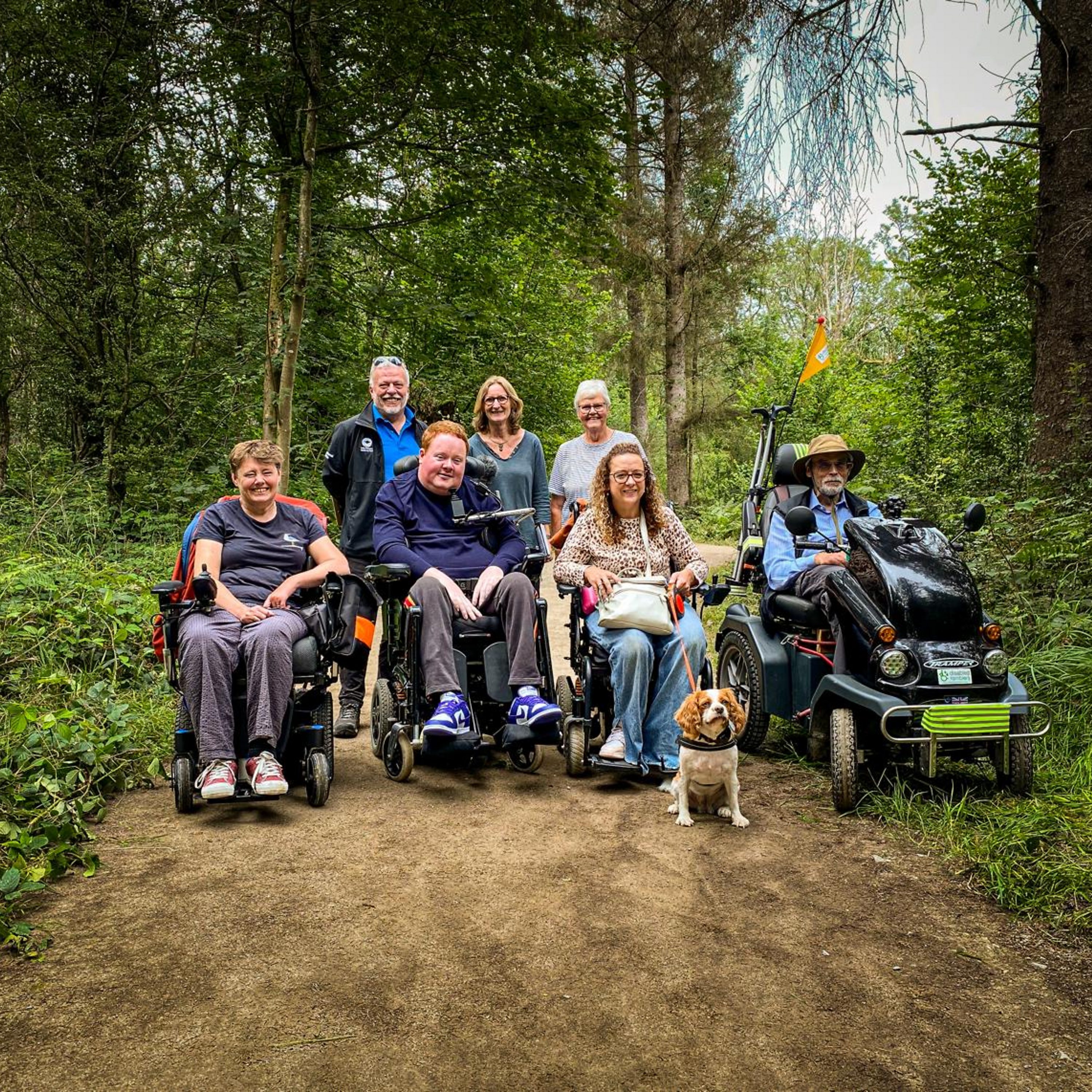 Exploring the Lakes by wheelchair | Caz Graham tries out Miles without Stiles, a scheme which helps disabled people access the Lake District. She joins a group of people in a fleet of mobility vehicles on a route from Sizergh Castle near Kendal, and visits the Keswick to Threlkeld path which was rebuilt after Storm Desmond but attracted controversy when it was surfaced with tarmac. Will Clark explains how the scheme helps him continue to enjoy the countryside after a mountain biking accident left him paralysed from the neck down. He explores the lakes and fells using a power chair which he operates with his chin.Produced for BBC Audio Bristol by Sally Heaven | 23m 46s | ||||||
Showing 25 of 465
Pitch Fit is a Pro feature
See how bookable this show is for guests, which brands already advertise, the per-episode ad value, and the best-fit guest and sponsor profile. The numbers are blurred on the free plan.
How readily this show books outside guests like you.
How proven this show is for host-read sponsorships.
For Guests
ProFor Advertisers
ProUpgrade to Pro to unlock guest cadence, sponsor categories, fit scores, and per-episode ad value for this show.
Similar Audience Demographics
Podcasts that attract a similar listener profile




Chart history for Open Country
Peaked at #5 in New Zealand, top 10 in 3 of 44 tracked markets, currently #5 in New Zealand.
| Market | Genre | Peak | Current | Trend |
|---|---|---|---|---|
| New Zealand | — | #5 | #5 | — |
| United Kingdom | — | #7 | #7 | — |
| Italy | — | #9 | #9 | — |
| HK | — | #11 | #11 | — |
| Mexico | — | #11 | #11 | — |
| AR | — | #14 | #14 | — |
| PE | — | #15 | #15 | — |
| TH | — | #17 | #17 | — |
| Spain | — | #25 | #25 | — |
| VN | — | #26 | #26 | — |
| BE | — | #30 | #30 | — |
| PH | — | #30 | #30 | — |
| MY | — | #31 | #31 | — |
| SG | — | #33 | #33 | — |
| ID | — | #34 | #34 | — |
| IL | — | #36 | #36 | — |
| AE | — | #40 | #40 | — |
| United Kingdom | — | #41 | #41 | — |
| IS | — | #42 | #42 | — |
| New Zealand | — | #45 | #45 | — |
Chart Positions
44 placements across 38 markets.
Chart Positions
44 placements across 38 markets.