

Insights from recent episode analysis
Audience Interest
Podcast Focus
Publishing Consistency
Platform Reach
Insights are generated by CastFox AI using publicly available data, episode content, and proprietary models.
Total monthly reach
Estimated from 1 chart position in 1 market.
By chart position
- 🇦🇺AU · Medicine#1675K to 30K
- Per-Episode Audience
Est. listeners per new episode within ~30 days
3.5K to 21K🎙 Biweekly cadence·92 episodes·Long inactive - Monthly Reach
Unique listeners across all episodes (30 days)
5K to 30K🇦🇺100% - Active Followers
Loyal subscribers who consistently listen
1.5K to 9K
Market Insights
Platform Distribution
Reach across major podcast platforms, updated hourly
Total Followers
—
Total Plays
—
Total Reviews
—
* Data sourced directly from platform APIs and aggregated hourly across all major podcast directories.
On the show
Recent episodes
#92. Is Physical Therapy, The Panacea of Chronic Pain?
Jan 12, 2023
Unknown duration
#91. Mental Health and Pediatric Pain; Chicken or the Egg?
Jan 3, 2023
Unknown duration
#90. Can We Prevent Pain from Becoming Chronic?
Jan 20, 2022
Unknown duration
#89. The Pain of Being a Redhead
Dec 4, 2021
Unknown duration
#88. Pharmacovigilance to Evaluate Efficacy and Net Clinical Benefit in Pediatric Pain Medicine
Nov 16, 2021
Unknown duration
Social Links & Contact
Official channels & resources
Official Website
Login
RSS Feed
Login
| Date | Episode | Description | Length | ||||||
|---|---|---|---|---|---|---|---|---|---|
| 1/12/23 |  #92. Is Physical Therapy, The Panacea of Chronic Pain? | Have you ever had any of your patients say that they don't think physical therapy helps their pain? Or that the physical therapy made their pain worse? It would certainly not surprise me, if you said yes. And in that case, this is definitely is the episode you want to listen to carefully. And if your answer to my question was no, this is an episode for you too, my friend. Because sooner or later you too will join this elite club with rest of us. However, this episode will give you the framework and tools to change that in your practice. Learn it from our guest who magically rehabilitates patients debilitated by pain . Kathleen Lynch, DPT joins us to share how she motivates her patients to do physical therapy and be fully engaged with it. She also shares strategies and tools that can be used in assessing patients if they are in need of physical therapy. Kathleen's goal is to discharge physiotherapist patients to self care by educating more healthcare professionals and patients. Worry no more about patients who do not go to their physical therapy session, as you will learn so much from Kathleen that will make your patients fully engaged. Listen now! Takeaways In This Episode: How Kathleen become interested in physiotherapy. Her guide to approaching, assuring, and educating patients who are afraid to do physiotherapy. How any healthcare professionals can convey the value of including physical therapy in their treatment plan. When to incorporate physiotherapy for pain management. Physical activity and therapy strategies pertinent to different diagnoses. Engaging a child and their family in self management of their pain using physical activity and therapy. what type(s) of physiotherapy or occupational therapy is optimal for different conditions Role(s) a physiotherapist plays in pain management and how it may be different than an occupational therapist. The optimal duration for physiotherapy How to overcome the barriers to access as it relates to physiotherapy. Links Clinicians Pain Evaluation Toolkit Proactive Pain Solutions Physicians Academy About the Guest Speaker: Kathleen Lynch, DPT Kathleen Lynch completed her Master's of Science in Physiotherapy in 2009 at the Dalhousie University and her Bachelors of Arts with Honors at McGill University in 2005. She's fluently bilingual both in French and English and has worked in a variety of pediatric environments including acute care, rehabilitation settings, school and home based settings. She's a physiotherapist at the Thames Valley Children's Center and Children's Hospital (TVCC) at London Health Science Centre Kathleen is a doctor specialized in physical treatment of children to help reduce pain, restore mobility, rehabilitate an injury, or increase movement and overall function. As a physical therapist, Dr. Lynch can treat multiple conditions with exercises, ultrasound, electrical stimulation, joint mobilization, heat, ice, massage, laser or light therapy and more. Dr. Lynch will create a treatment plan based on the child's specific injury, disease or condition, and might target a specific body part or body system based on the individual. She is also the pediatric lead in the Ontario chronic pain network as Operations Manager for the executive committee representing all the publicly funded chronic pain programs in Ontario, Canada. Pedia Pain Focus Podcast is hosted by Dr. Anjana Kundu, it's the 1st podcast dedicated to pediatric pain, providing education and tools for all healthcare professionals dealing with children's pain issues. If you're a pediatric healthcare provider, this one's for YOU! The podcast brings you renowned experts from the field of pediatric pain, healthcare technology and business, policy makers, healthcare advocates and more to share their innovations, expertise, and experience in the field. | — | ||||||
| 1/3/23 | 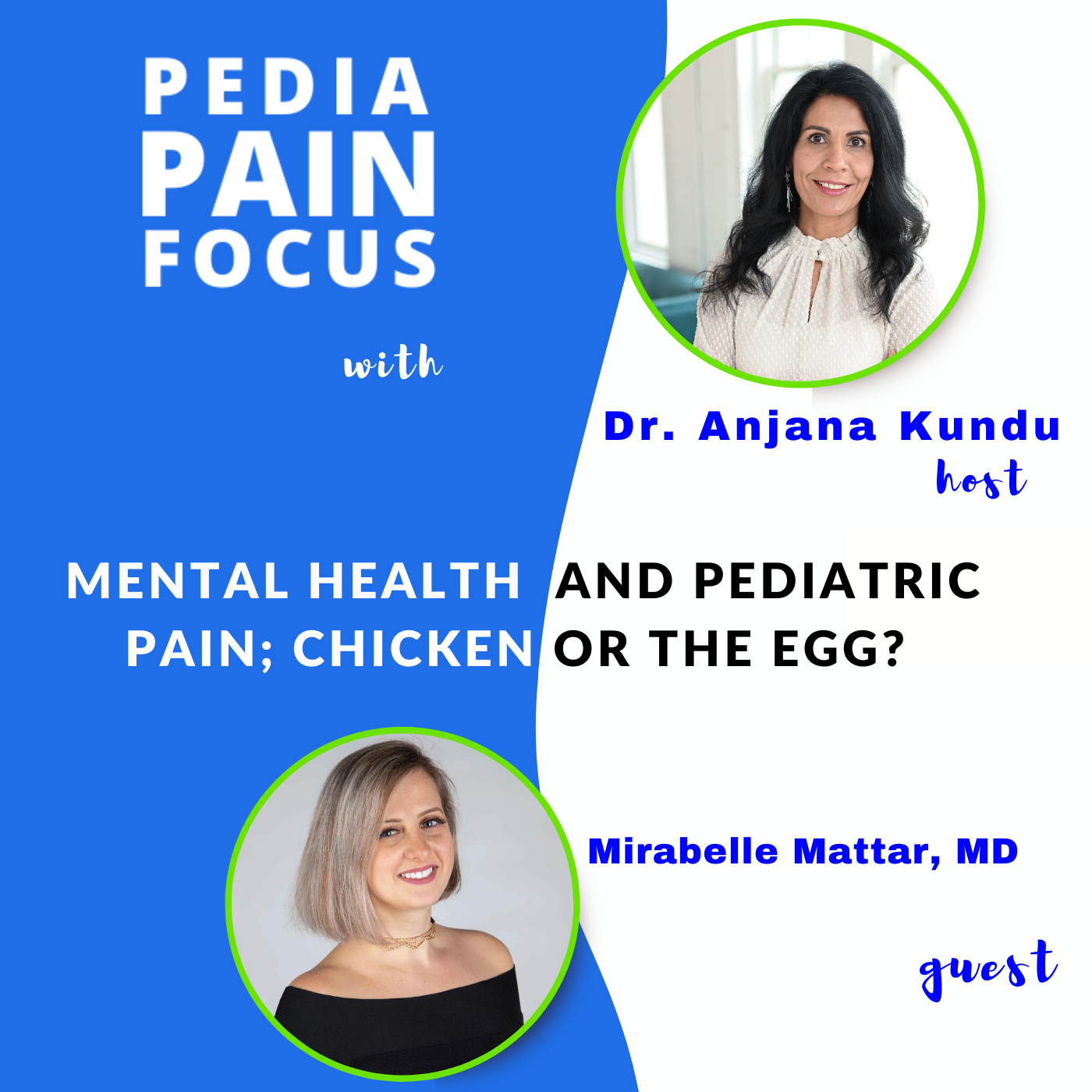 #91. Mental Health and Pediatric Pain; Chicken or the Egg? | Pain and mental illnesses coexist, often more than any of other illnesses. Both of them have a profound effect on a child's child's quality of life, individually. Now imagine the magnitude of impact when they co-exist. In this episode, Dr. Anjana Kundu, with guest speaker Dr. Mirabelle Mattar, a child, and adolescent psychiatrist, discusses the intricate and dynamic relationship between pediatric pain and mental health, likely cause or affect and prognosis for a child with pain in the setting of mental health issues or vice-versa. They also discussed the factors which may predispose a child to a higher risk of chronic pain and mental problems, role of trauma, PTSD and other adverse events on pediatric pain. Takeaways In This Episode: How Dr. Mattar became interested and her journey to the intersection of pediatric mental health and pain Some unexpected discovery during this journey among children with chronic pain Importance of understanding the effects of chronic pain on mental health in children. What is the sequence of occurrence when pain and mental health issues co-exist and how does it matter. What should the focus of treatment entail Impact of regaining function and improving mental health Common chronic pain conditions associated with mental illnesses and vice versa Influence of trauma, ACES and PTSD on children's pain When to consult a mental health professional for a child with pain issues Diagnosing conversion disorder Ways to work with the entire family unit especially when mental health and physical health issues are tangled. A Message to YOU from Dr. Mattar Links Mirabelle Mattar, MD Clinicians' Pain Evaluation Toolkit Proactive Pain Solutions About the Guest Speaker Mirabelle Mattar, MD | — | ||||||
| 1/20/22 | #90. Can We Prevent Pain from Becoming Chronic? | Acute pain may be a protective and adaptive phenomenon, but chronic pain is nothing but damaging and a burden in every way possible and for all involved directly or indirectly. So how do we reduce or can we reduce burden? Join me in this episode to learn the factors that contribute to chronicity of pain and whether we can prevent it. Takeaways in This Episode Complexities of pain and its impact for the individuals and the society What differentiates acute from chronic pain and why that is important Various factors contributing to pain and its chronicity Modifiable vs. Non-modifiable factors How demographic factors contribute to chronic pain and what if anything can be done to stop their contribution to chronic pain Which lifestyle factors might have the most impact on chronicity of pain Genetic and epigenetic factors involved with chronic pain Family, social and cultural factors influencing pain and progression to chronic pain Clinical and biological factors involved with chronic of pain Your role in reducing the burden of pain Links Other Related and Helpful Episode to Listen to: Episode #80. Stop treating pain like a symptom. Episode #10. Disparities in pediatric pain Episode #50. Stepping up pain care efforts for African American patients Episode# 85. Pain amongst children with Autism Spectrum Disorder Episodes #76 and #77. Impact of pediatric pain rehabilitation program Part 1 and 2. Episode # 27. Interdisciplinary pain education is necessary to change the face of pediatric pain management. Episode #60. Influence of sleep on peri-operative pain among children. Episode #25. Role of epigenetics in chronic post surgical pain Episode #89. The pain of being a Redhead Proactive Pain Solutions | — | ||||||
| 12/4/21 | #89. The Pain of Being a Redhead | Did you know that redheads can tolerate more spicy foods than those with dark hair? This is supported by biology and genetics. Ask any anesthesiologist or a dentist and they'll tell you - often with a sigh, I might add - that taking care of redhead is can be challenging! The issue of pain perception, tolerance, response to pain and response to different classes of medications is a complicated and murky one when it comes to people with natural red hair. Join me in this episode to learn about the evidence we have for complexity of pain and its management in redheads, recent emerging evidence that explains why and more importantly how to effectively navigate this complexity, ensuring safe and effective care of these patients. Takeaways in This Episode When an anesthesiologist or a dentist see a redhead Why redheads have more dental problems and toothaches Why redheads sometimes need more pain medications and at other times need less Variability in pain responses amongst redheads The redhead gene and its implications Do redhead really tolerate more spicy foods than others? Do they bleed more compared to others with darker hair? Recent study providing insights about the genetics and reasons for differences in their pain perception, responses and treatments What do Melanocortin, MC1R, MC4R have to do with pain How you reconcile the different, complex and sometimes murky findings and provide safe and effective pain care for redheads Links Proactive Pain Solutions Other Helpful Episodes on Opioid Safety Episode#30 . Ensuring Opioid Safety for Children and Teens with Rita Agarwal, MD Episode# 29. Opioid Stewardship: Responsible Pediatric Pain Care! with Benjamin Lee, MD Proactive Pain Solutions Physicians Academy Clinicians Pain Evaluation Toolkit | — | ||||||
| 11/16/21 |  #88. Pharmacovigilance to Evaluate Efficacy and Net Clinical Benefit in Pediatric Pain Medicine | Pediatric pain management is fraught with reasons that make it feel like we are operating blindfolded. Many treatments are used without clear indications or evidence specifically in this population. What if you had a way to study what you do in pediatric pain management, while you do it, would you embrace it? In this episode, Dr. Drake Ross, a specialty pediatrician at Starship Children's Health in Auckland, New Zealand with training in pediatric pain and palliative care, shares with us the features, goals and outcomes of their Rapid pharmacovigilance program, a multi institutional collaborative clinical research endeavor. This program provides real-time evaluation of net clinical benefit of what we do in our day to day clinical practice, while we do it! Takeaways In This Episode What got Dr. Drake's to transition from general pediatrics into palliative care and pediatric pain medicine How he get interested in pharmacovigilance and how he initiated that for pediatric pain medicine as the RAPID multi-institutional, international endeavor What Rapid is? Findings of their research thus far and what's on the horizon How you can participate in this research endeavor while carrying out your daily clinical work and the benefits it offers as collaborators How they determine their protocol numbers and demographics What Dr. Drake hopes for Rapid to achieve Unique benefits of this collaborative research compared with other databases based research (Hint: the ability of foresight and hindsight simultaneously!) The biggest takeaways and his message to the audience Links Ross Drake, MB ChB, FRACP, FAChPM, FFPMANZCA Rapid Program Get involved with Rapid program Alternate Contact Attend the International Symposium on Pediatric Pain 2022 Clinicians' Pain Evaluation Toolkit Proactive Pain Solutions About the Guest: Ross Drake, MB ChB, FRACP, FAChPM, FFPMANZCA Dr. Drake is a Pediatrician who specializes in Pain Medicine and Palliative Care for children having gained fellowships in Paediatrics, Palliative Medicine and Pain Medicine after he completed specialist training at Great Ormond Street Hospital in London and The Children's Hospital at Westmead in Sydney. Ross is Clinical Lead of the Paediatric Palliative Care and Complex Pain Services at Starship Children's Hospital; both being the only specialist services of their type in New Zealand. Amongst his clinical duties he strives to improve the recognition and support of children/tamariki & young adults/rangitahi and their families/whānau requiring palliative care and the management of chronic pain. He remains very involved in developing a national approach to both disciplines and works to improve resourcing to enable equitable access and service delivery for all New Zealand children in need. Dr Drake also regularly presents and teaches on various topics in children's pain medicine and palliative care. More recently, he has been involved with establishing an international pharmacovigilance research collaborative (The RAPID Program) looking at the effectiveness and adverse effects of medications and other interventions commonly used in palliative care and pain management. | — | ||||||
| 11/7/21 | 87. Shifting the Paradigm in Pediatric Pain Medicine | How is it that when 1 in 3 school age children reports chronic or recurrent pain, yet we fail to ensure that there is adequate help available for these children? That our system ensure at least basic level of pain medicine training for healthcare professionals? These are a few of the questions we discuss in this episode, but more importantly we talk about how we CAN make a difference from wherever we are today, rather than waiting for someone else to invoke change and for something else to happen first. This episode is about increasing awareness, believing and investing in yourself. This is about taking charge and making the change rather than waiting for change to happen! Believing and investing in yourself is the best way to shift your thinking from a paradigm of excuses to one of solutions. It's time to shift the paradigm in pediatric pain medicine and it all starts with awareness, knowledge and priority! Join me in this episode as Dr. Asha Padmanabhan, MD FASA sits me down in the guest seat in this episode of my own podcast, and I share the state of pediatric pain medicine. We discuss the challenges, barriers and way forward to evoke change. It's not just a theoretical concept, but how I have lived and by example to evolve with and be the change. Takeaways in This Episode My path to medicine and pediatric pain medicine Role of support system and visionaries in your life Your grit and self belief What leadership means and looks like to me Finding support and steps forward in every situation What proactive pain solutions mean and do The current state of pain medicine for children The challenges and barriers to adequate pain care for children The path forward Links Proactive Pain Solutions Proactive Pain Solutions Academy Clinicians' Pain Evaluation Toolkit Asha Padmanabhan, MD FASA Listen to these other helpful episodes - Episode #61. Getting out of your own way to success with Dr. Asha Padmanabhan Episode #1. Pediatric Pain: A team sport in need of transformation Episode #2. Three areas every healthcare provider can influence to improve children's pain care | — | ||||||
| 10/29/21 | #86. Essential Elements of a Successful Patient Encounter | Time pressure in today's healthcare visits is a reality. Increasingly there is more emphasis on value and efficiency in clinical care delivery. Meanwhile changing factors in healthcare delivery with shorter visit times, increasing amounts of required documentation for compliance, and the perceived quality and time spent with your patient and their family have added to the challenges that physicians and healthcare professionals face daily. Though it may not be possible to have the luxury of more time to conduct thorough clinical care encounters necessary for complex conditions like pain, but some elements, if incorporated in our daily clinical work can most definitely lead to safe, smooth, and efficient healthcare encounters with improved outcomes and increased satisfaction for both patients and healthcare professionals. Join me in this episode to discover these essential elements which will help you shine in the quality of your encounters with your patients. Takeaways in This Episode Factors influencing the perceived quality of healthcare delivery What's common between a flight and a clinical care visit Elements of a successful and high quality, efficient clinical care encounter How a healthcare professional can stay on time and influence the timely delivery of healthcare visit even in a complex system. The role engagement plays in healthcare delivery and outcome and how to achieve that How to achieve mindfulness and being present during every clinical encounter What does intentional listening look like in a clinical acre visit Draw the most useful information out of your patients without interrupting them What are transitional phrases in healthcare encounters and what purpose do they serve How to reconcile the differences between your patients goals and your goals for them. Creating a beautiful wrap up for the clinical encounter and the Lollipop Effect Links Other recommended and helpful episodes - Episode #62. Metaphors for Better Pediatric Pain Management Episode #40. Owning your role as a physician leader in today's healthcare Episode #82. Chronic Pediatric Pain in 2021: US Pain Foundation Report. Episode #26. Manage Memory, Manage Pain! with Melanie Noel, PhD Episode #37. What authenticity in healthcare looks like. | — | ||||||
| 10/20/21 | #85. Pain Amongst Children with Autism Spectrum Disorder | How does one reconcile the facts that DSM diagnostic criteria for Autism Spectrum Disorder includes pain insensitivity and a high pain threshold, while these children report that their clothes feel like sand paper and their fingers while shampooing feel like sharp metal? Join me in this episode to look at where the truth lies, with emerging evidence that helps us better understand the relationship between pain and ASD, what if anything is different about pain among children with ASD, and how we should approach pain issues amongst these children! Takeaways in This Episode What constitutes Autism Spectrum Disorder Prevalence of ASD Historical beliefs around ASD and pain, and contributing factors for those beliefs Current and emerging literature around ASD and pain What Stimulus over-reactivity is and how that plays out in ASD Genetics evidence around ASD and pain Summarizing ASD and pain among children and considerations for accurate assessment and effective treatment Links Listen to other helpful and related podcast episodes - Episode #84. Post-Concussive headache and Symptom Management in Children with Dr. Windsor Episode #63. Integrative Pediatric Pain Management with Dr. Lonnie Zeltzer Episode #81. How to Choose the Right Pain Treatments Episode #72. Real vs. Fake: The Look of Pain Episode #75. Role of Gut-Brain Axis in Pediatric Pain Proactive Pain Solutions Physicians Academy Clinicians Pain Evaluation Toolkit Proactive Pain Solutions | — | ||||||
| 10/13/21 |  #84. Post-Concussive Headache and Symptom Management in Children | In this episode, Blake Windsor, MD a pediatrician with a subspecialty in training for pediatric pain medicine, and a board certified headache specialist discusses post concussive headaches and unique challenges it poses. Headache is the most common post traumatic or post concussive symptom. Even when a child is given the appropriate care, in many cases we find that they still experience post-concussive pain long after we expect them to recover. He points that often there is much confusion and debate around what people refer to as Post-Concussive Syndrome, when in reality there seem to be somewhat arbitrary lines surrounding the term. Dr. Windsor also believes that pediatric pain medicine should be as common as other specialties, because it makes the work of other specialties much more streamline and accessible to patients. Listen in on this episode as Dr. Windsor walks us through the uniqueness of post-concussive headaches, various stages, risk factors, identification and treatment! Takeaways In This Episode How Dr. Windsor's experience with sickle cell patients in an inner city hospital led to his pursuit of a career in pediatric pain medicine What makes post-concussive headaches so unique Factors that result in a headache manifesting after traumatic brain injury Other risk factors to keep in mind while testing and which groups are more vulnerable to them Signs specific to post-concussive syndrome to look out for When is the right time for a pain specialist to be involved in post-concussive care? Treatments options to be considered after identifying their symptom cluster based on deficits exhibited His advice to the audience Links R. Blake Windsor, MD Connect with Dr. Windsor Other Helpful Podcast Episodes Episode #80. Stop treating Pain Like a Symptom! Post-Concussion Symptom Scale Clinicians' Pain Evaluation Toolkit Proactive Pain Solutions About the Guest Dr. R. Blake Windsor, M.D. He is the Chief of Primas Health Pediatric Pain Medicine in the Upstate. He is a pediatrician with subspecialty training in pediatric pain medicine and is both a board-certified headache specialist and medical acupuncturist in South Carolina. He attended the University of Georgia followed by Mercer University School of Medicine where he subsequently worked in a combined post-graduate training program between Harvard Medical School and Boston University School of Medicine. In 2018, he joined Prisma Health University of South Carolina School of Medicine in Greenville to launch the Carolinas' first comprehensive pediatric pain and headache program. It is the first comprehensive program of its kind in the Carolinas, and he leads a multidisciplinary group of pain specialists from medicine, nursing, psychology, and physical therapy. The team uses a multidisciplinary and holistic approach to complex medical diagnoses and symptoms, resulting in a comprehensive treatment plan that meets children and their families where they are and helps them break the cycle of pain. | — | ||||||
| 10/5/21 |  #83. Reengineering Pediatric Perioperative Care for Optimal Outcomes | This conversation with Marjorie Gloff, MD and Renee Robinson, DNP, APRN makes me convinced that the expression "Preparation is half the battle won" must have been coined with the idea of perioperative medicine and perioperative surgical home (PSH) in mind! They are the co-directors of the Center for Perioperative Medicine and Medicine in the Department of Anesthesiology and Perioperative Medicine at the University of Rochester School of Medicine and Dentistry. In this episode, they share how to desilo the care of pediatric patients especially around the perioperative period, how an informal conversation triggered a grassroots level effort which subsequently resulted in a well-organized multidisciplinary team that provides comprehensive, coordinated and team based care for children in need of surgical procedures, developed a comprehensive screening tool or the PSH. They also share the steps involved in the development of periop medicine and PSH programs that employs a biopsychosocial model to optimize systems and individualized best practices in the care of a complex child with multiple and/or complex needs. Takeaways In This Episode What perioperative medicine entails and how it fits into their roles Healthcare professionals that form their perioperative surgical home-based team The minimum elements of perioperative surgical home that can be incorporated by anyone in any setting to provide optimal perioperative outcomes Components of a perioperative surgical home Objective criteria to determine if a child patient's optimized health Diagnoses and procedures that lend themselves to this kind of care model How they determine what role each member of their team plays Elements of their program and the steps they took to develop their program and educate their fellow peers Why should a PSH model be considered and the expenses related to such a program Standardization vs. individualized care in perioperative medicine Distinction between PSH, perioperative medicine and Enhanced Recovery after Surgery (ERAS) models. Links Other Related Episode(s) - Episode 58. ERAS - Enhanced Recovery (but not just)After Surgery Clinicians' Pain Evaluation Toolkit Proactive Pain Solutions Proactive Pain Solutions Physicians Academy About the Guests Marjorie S. Gloff, M.D. Dr Gloff is an anesthesiologist currently practicing at the University of Rochester in Rochester, New York. Bearing a passion for pediatric perioperative medicine, she is the Director of the Center for Perioperative Medicine and the Associate Chair of Perioperative Medicine in the Department of Anesthesiology and Perioperative Medicine at the University of Rochester. She is also the Associate Chief Medical Officer for Patient Safety and Loss Prevention at the same university. In 2004, She graduated with a Bachelor of Science in Cell and Developmental Biology at the University of Rochester and accomplished her Medical Degree in Medicine and Dentistry in 2008. She received her internship in anesthesiology at the University of Rochester Medical Center from 2008-2009 and went on to finish her residency at the same medical center from 2009-2012. Renee Lynn Robinson, DNP, APRN She has obtained a Doctorate of Nursing and is an advanced practice Registered Nurse with a specialty in family health currently practicing at the University of Rochester in, Rochester New York. She is the Associate Director of the Center for Perioperative Medicine. She is the recipient of awards such as the Medical Center Board Excellence Award APP in 2019 from URMC and the Quality Recognition: Perioperative Services COVID Management in 2021. She graduated from the University of Rochester School of Nursing in 1996 and became a licensed nurse practitioner in 2001. In 2020, she received her Doctorate in Nursing Practice. She and Dr. Gloff share the same passion for pediatric perioperative medicine and for the past six years, the duo has been spearheading a new program dedicated to improving and optimizing the process of pediatric care. | — | ||||||
Want analysis for the episodes below?Free for Pro Submit a request, we'll have your selected episodes analyzed within an hour. Free, at no cost to you, for Pro users. | |||||||||
| 9/29/21 | 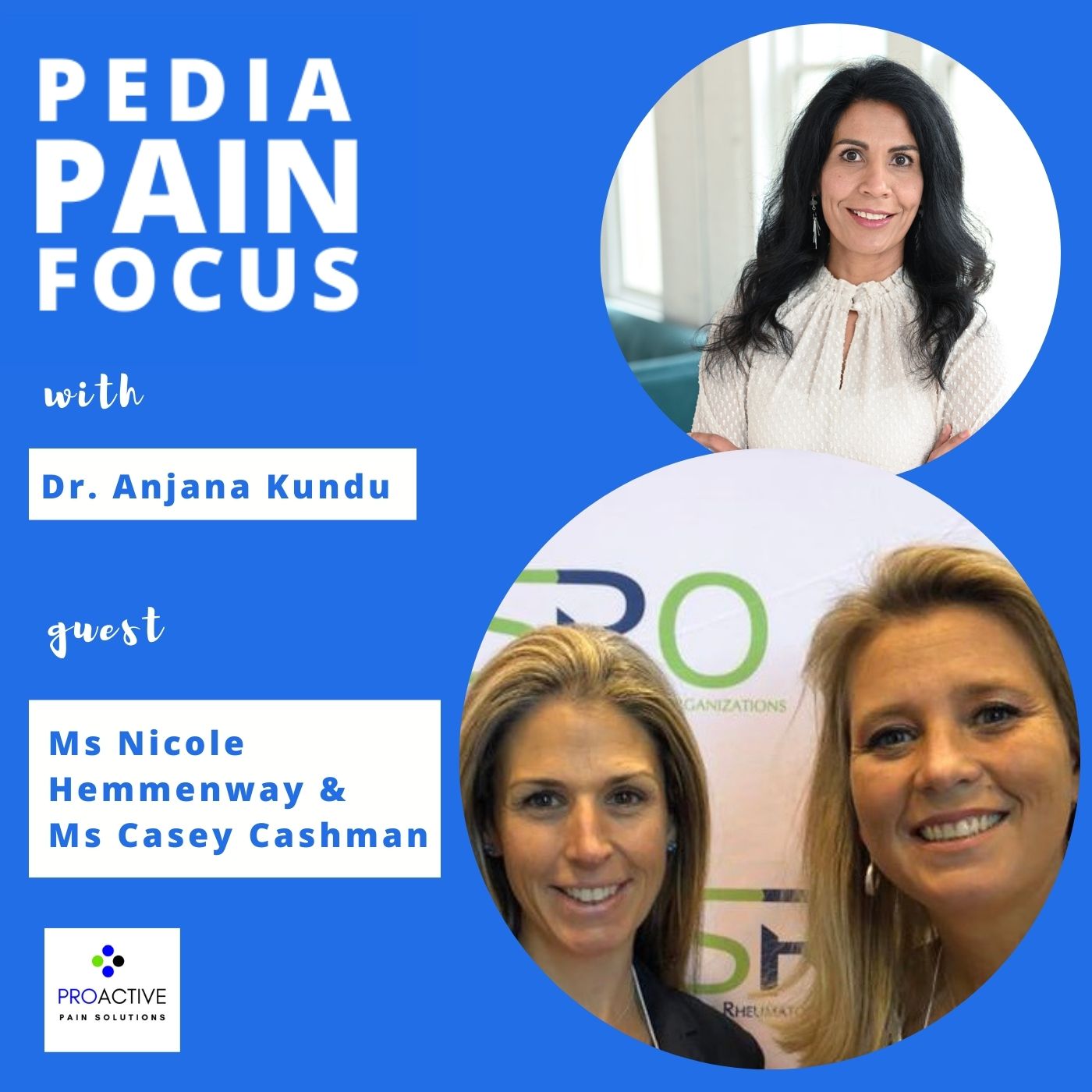 #82. Chronic Pediatric Pain in 2021: US Pain Foundation Report | Chronic pain is often overlooked, and when it comes to children, it is even more so. The continued neglect of children's pain affects the ability to truly evaluate the extent of the problem and challenges these kids and their families face. The United States Pain Foundation, a pain advocacy organization, conducted a survey to assess how children with a pain diagnosis and their families experience chronic pain, what challenges and barriers they face and what they hope for in their pain care. In this episode, I'm joined by Nicole Hemmenway, the current CEO of the US Pain Foundation and the Founder of the INvisible Project and Casey Cashman, Director of Fundraising and the Pediatric Pain Warrior Program part of the US Pain Foundation. They are strong advocates for pediatric pain, inspired by their own pain experiences. They discuss the findings of this survey, share their experiences with the pediatric pain patients and families that they support through their programs. They also share their hopes and some possible directions to address some of the challenges identified in this survey. As healthcare professionals and clinicians, these findings are eye opening and a call for action to collectively invoke change in the care of pediatric chronic pain. Takeaways In This Episode Chronic pain is frequently overlooked due to its subjective nature Why Ms. Hemmenway and Ms. Cashman got involved in the pediatric pain work, US Pain Foundation and the Pediatric Pain Warrior program The reason(s) that prompted this survey Survey findings How much focus should be on the number rating of the pain and how meaningful, helpful that is. Valuable way to assess and inquire about chronic pain and a patient's progress Psychological impact, extent of mental health issues including self-harm, suicidal thoughts, ideation and attempts amongst pediatric chronic pain patients Burden of disease on the family - financial and psychosocial What therapies do patients and families wish were emphasized more - (Hint: Medications were at the bottom of the wishlist!) Barriers to chronic pain care Psychological toll of having to evaluate whether you can afford a therapy and how it may be/ to address it. Best ways for parents to discuss these barriers with their child's physician Nicole and Casey's message to the listeners Links Nicole Hemmenway Casey Cashman Connect with Nicole Hemmenway and Casey Cashman US Pain Foundation-Pediatric Pain Report 2021 Pediatric Pain Warrior Support Groups U.S. Pain Foundation Pediatric Pain Warrior Register for upcoming Pediatric Pain Warrior Support Group Clinicians' Pain Evaluation Toolkit Proactive Pain Solutions About the Speakers Nicole Hemmenway Currently serves as CEO of the U.S. Pain Foundation, and directs the INvisible Project, an online and print magazine that highlights the experiences of people living with pain. Nicole is also an author and motivational speaker. Her book, No, It Is NOT in My Head: The Journey of a Chronic Pain Survivor from Wheelchair to Marathon, details her struggles and triumphs in dealing with complex regional pain syndrome, a debilitating neurological disorder. In September 2015, Nicole was featured in a campaign in USA Today in recognition of her role as an advocate for those living with chronic pain; and in 2017, she received the Unsung Hero Award for her work in the pain community. Nicole lives in the Bay Area with her husband and three young sons. Casey Cashman Serves as the Director of Fundraising and the Pediatric Pain Warrior Program. Casey Cashman uses her voice to fight passionately for the rights of people with pain, especially children. She has lived most of her life with multiple, serious health conditions, including reflex sympathetic dystrophy/CRPS and Ehlers-Danlos syndrome, among others. Over the years, she began to connect more with patient organizations and realized she had a passion for helping others like her. In 2015, she was featured as a participant in the INvisible Project, which led to her joining the U.S. Pain Foundation as a staff member. Before U.S. Pain Foundation, Casey spent many years working in Human Resources. She brings this knowledge and experience to the table in her role as director of the Pediatric Pain Warriors Program, where she provides compassionate support to kids with pain and their families as they travel along their pain journeys. Casey also spearheads U.S. Pain's fundraising efforts, and has helped create various programs and collaborations designed to support the organization's free programs and services Her son, Tyler, is also a budding advocate for the pain community. In honor of his mom, he founded Points for Pain, a fundraising program that has raised more than $100,000 for pediatric patients. | — | ||||||
| 9/22/21 | #81. How to Choose the Right Pain Treatments? | Treatment of pain is challenging to say the least. For one it is difficult to understand the complexity of the pain experience. This episode explains the components of nociception and the pain experience. It also examines the targets for pain control and thus provides comprehensive framework for choosing the right analgesic treatments! Takeaways in This Episode Components of Nociception How a noxious injury becomes a pain impulse The pain perception pathways Interpretation of pain Modulation of pain Peripheral and central targets for pain control How various pain treatments work and at what levels 3 Unique features of pain - Wind-Up Phenomenon, Hyperesthesia, Central Sensitization Links Other Helpful Episodes: Episode 80. Stop Treating Pain Like a Symptom Episode 79. Pain Amongst Neonates, Infants and Young Children with Dr. Kanwaljeet "Sunny" Anand Proactive Pain Solutions Physicians Academy Clinicians Pain Evaluation Toolkit | — | ||||||
| 9/17/21 | #80. Stop Treating Pain Like a Symptom! | Pain isn't simply a symptom of another disease or a result of another noxious or traumatic event. It's an independent entity in itself in majority of the situations. It's time we stopped approaching it with the Cartesian model framework. Join me in this episode to learn about how and when a pain can be considered a symptom and when it needs to be treated like any other independent chronic diagnosis, and why that is important. Takeaways in This Episode The reason(s) I am even talking about this The biggest misconception about pain Why this misconception get propagated Classification of pain and why that is important What I mean by "not all pain is created equal" There's more to chronic pain than just "chronic pain" - classification of chronic pain as defined by IASP task force and the WHO Major differences between acute and chronic pain Mechanisms at play in acute and chronic pain The benefits of understanding these distinctions and classifications Links International Association for the Study of Pain (IASP) Other Relevant Episodes: Episode #56. Making Pediatric Pain Matter.... with Dr Christopher Eccleston Episode #78. Remodeling Pediatric Pain Management in Emergency Rooms with Dr. Samina Ali Episode #62. Metaphors for Better Pediatric Pain Management Episode #25 . Role of Epigenetics in Chronic Post-Surgical Pain with Dr. Vidya Chidambaran Proactive Pain Solutions Physicians Academy Clinicians Pain Evaluation Toolkit | — | ||||||
| 9/9/21 |  #79. Pain Amongst Neonates, Infants and Young Children | There's no better way to kick off September as the Pain Awareness Month than bringing you a conversation with Dr. Kanwaljeet S. Anand, whose research took the medical world by storm, even risking his license, as he sought out to answer the question of; what if we give children anesthesia and analgesia? I truly believe that he is the reason why my career as a pediatric pain and palliative care physician exists today and serves as an available path for many healthcare professionals. In this episode, Dr. Anand, a professor of Pediatrics, Anesthesiology, Perioperative, and Pain Medicine at Stanford University School of Medicine, describes his groundbreaking research back in the 80s, when a popular held belief was that babies don't feel pain! With the findings and intervention offered in his RCT, they were able to cut down the infant mortality rates by half. It is the work of doctors like him that paved the path for someone like me to practice pediatric pain management as a specialty-- hoping to save and improve the lives of many more children by debunking the fallacies that still surround children's pain and its management. Takeaways In This Episode What fueled Dr. Anand's desire to research perioperative care for infants His hypothesis around morbidity and mortality of neonates and infants undergoing surgeries, relationship to anesthetic management Conducting the randomized controlled trial study and its results that changed the history and trajectory of childrens pain and perioperative management Sometimes it's worth picking the fights How his study gained momentum and changed how the healthcare world approaches pain management for children and infants When and how infants develop the ability to feel pain The long-term consequences of poorly or inadequately managing children's pain Changing the minds of colleagues who perpetuate the belief that children are "hardy" and will "get over it" Dr. Anand's message to the audience Links Connect with Dr. Kanwaljeet S. Anand: Stanford Profile LinkedIn Love, Pain, and Intensive Care. K.J.S. Anand, Richard W. Hall Clinicians' Pain Evaluation Toolkit Proactive Pain Solutions About the Guest Kanwaljeet S. Anand, MBBS, MD, D Phil, FRCCM He is currently the professor of Pediatrics, Anesthesiology, Perioperative, and Pain Medicine at Stanford University School of Medicine. He directs the pain and stress neurobiology lab, the Jackson Vaughan Critical Care Research Fund, and he serves as the Editor of the journal Pediatric Research and is the Division Chief for Pediatric Critical Care at the Department of Pediatrics at Standford School of Medicine. He graduated from M.G.M. Medical College, Indore (India). He received the D.Phil. degree as a Rhodes Scholar at the University of Oxford, followed by a post-doctoral fellowship at Harvard Medical School, a categorical Pediatrics residency training at Boston Children's Hospital, and a Critical Care Medicine fellowship at Massachusetts General Hospital in Boston. He is the recipient of innumerable awards, including the Dr. Michael Blacow Award from the British Pediatric Association in 1986, the Pediatric Resident Research Award from the American Academy of Pediatrics, the inaugural Young Investigator Award in Pediatric Pain from the International Association for Study of Pain in 1994, the Jeffrey Lawson Award for advocacy of children's pain relief, the highest recognition in pediatric pain medicine in the United States. He's also been awarded many awards across Europe in many countries such as the Nils Rosén von Rosenstein Award from the Swedish Academy of Medicine and the 2015 Journées Nationales de Néonatologie Address at The Pasteur Institute to name a few. For his dedication and work in the field of pediatric pain management, he is considered a world authority on pain and stress in newborns and pain management in infants. | — | ||||||
| 9/1/21 |  #78. Remodeling Pediatric Pain Management in the Emergency Rooms | When the gold standard for pain assessment is verbal report, children's pain assessment and management requires specific knowledge and understanding. Children at these important stages of growth create key memories-- and the last thing we need is a whole generation of children that associate getting medical attention with pain. Globally, when children come in to the emergency room, pain is a component of their presentation 50 to 80% of the time. As medical practitioners, prioritizing the critical elements of a child's illness should be the main concern-- but we also must ease their pain and suffering related to their health condition and prioritize minimizing their procedural pain. In this episode, Samina Ali, MD, a pediatric emergency medicine physician and pain expert at the Stollery Children's Hospital and University of Alberta, Canada shares her clinical and research experience in pediatric pain. Realizing that emergency room visits and procedures may have just as much capability to distress and traumatize a child beyond their presenting condition, she has dedicated her work to researching how she and fellow medical practitioners can make children and their families feel safe and empowered through institutional culture change as well as effective knowledge translation and mobilization. In creating an ER or any healthcare setting that caters to patient comfortability beyond just treating symptoms and illnesses, we can harbor a safer and more welcoming environment which can improve children's experiences with receiving medical care, minimizing anxiety for future encounters, improving quality, safety, efficiency of and satisfaction with the work healthcare professionals perform. Takeaways In This Episode What motivated Dr. Samina to research pediatric pain and implement effective pain prevention and treatment strategies. Common pain presentation in the emergency department and how it may impact the work. Top reasons why pediatric pain may not get the needed priority and how practitioners handle competing priorities among patients in the emergency room What the big leap of faith in pediatric healthcare is and how that affects pediatric pain. Successful approaches she has spearheaded within her institution and beyond for better pediatric pain care Helpful steps to help other practitioners engage in pain care efforts Factors that result in or lead to disparities in pediatric pain care The two main benefits of prioritizing pediatric pain care Her view on advanced technology-based interventions and their roles The common barriers in emergency rooms and how can they be addressed Engaging administration to facilitate a top-down approach Leveraging patients and their families voices to invoke change Dr. Samina Ali's message to the listeners Connect with Dr. Samina Ali: Website Twitter Links Ep 64: Prevention and Management of Procedural and Needle Pain and Anxiety Among Children Solutions for Kids in Pain (SKIP) Translating Emergency Knowledge for Kids - Procedural Pain Translating Emergency Knowledge for Kids - Pain Treatment Commitment to Comfort Clinicians' Pain Evaluation Toolkit Proactive Pain Solutions About the Guest Samina Ali, MD She is a professor of Pediatrics and Emergency Medicine at the School of Medicine and Dentistry at the University of Alberta in Edmonton, Canada. She is also the research director at Pediatric Emergency Department Medicine. She holds provincial and national funding for the study of children's acute care and emergencies and pain in the country and supervises many learners with both clinical and research backgrounds. She has served as the director for pediatric emergency medicine from 2003-2008 and again, from 2010-2013. She was also the Director of Professionalism for the University of Alberta from 2010-2013, and also serves as the Assistant Dean for Professionalism for the Faculty of Medicine and Dentistry. As a practicing pediatric emergency physician, she is witness to the pain children experience from illnesses, injuries, and emergency room procedures. She has created a research program focused on improving children's pain and distress, mainly related to emergency department visits and procedures, and she shares many of those ways to improve pain experiences for the children, both in the hospital and in the community. In addition, she has been recently involved in the Canadian large effort for knowledge mobilization and knowledge translation in relation to her efforts in alleviating children's distress and empower them and their families. | — | ||||||
| 8/24/21 |  #77. Impact of Pediatric Pain Rehabilitation Program Part 2 | Chronic pain in children can be a really serious condition and many of them may have a long journey to get where they need to be! Says Julia Wager, PhD, an accomplished pediatric pain psychologist and head of research department, at the German Paediatric Pain Center, Children's and Adolescents' Hospital Datteln, Germany. Join me for part 2 of my conversation with Dr. Wager to learn about the short and long term outcomes of intensive interdisciplinary pain rehabilitation program for pediatric chronic pain. She discussed their short term and longitudinal data (8 years) from intensive pain rehabilitation program for pediatric chronic pain management. As Dr. Wager says - We want them to be a child again and not a chronic pain patient for life! Discover what these surprising findings are and what impact they have on short and long term management of these children! Takeaways in This Episode The immediate, short and long term outcomes from the intensive interdisciplinary pain treatment of children's chronic pain Outcomes for the parents, caregivers and family Mental health and emotional outcomes and implication of these outcomes What findings surprised them amongst these children with chronic pain. The implications of the these outcomes on management of these children's pain Unique vulnerabilities of children with chronic pain 3 top instructions and type of awareness that is important for patients (children and their families) to know and be vigilant about. What the after-care upon completion of the intensive pain rehabilitation program should include Barriers to intensive pain rehabilitation program Predictors of success for these patients Financial outcomes and implications of intensive pain rehabilitation program Dr. Wager's message to healthcare professionals Links Julia Wager, PhD German Paediatric Pain Centre Related articles by Dr Wager: Long term outcomes of children with severe chronic pain Impact of Pediatric Pain Rehabilitation Program Part 1. Epi #76 List of Pediatric Pain Clinics Proactive Pain Solutions Clinicians Pain Evaluation Toolkit | — | ||||||
| 8/18/21 |  #76. Impact of Pediatric Pain Rehabilitation Program Part 1 | In society and healthcare, people understand that kids with cancer do suffer pain, but people did not understand that children without an obvious somatic condition could suffer pain that really need treatment; says Julia Wager, PhD, an accomplished pediatric pain psychologist and head of research department, at the German Paediatric Pain Center, Children's and Adolescents' Hospital Datteln, Germany. Join me in conversation with Dr. Wager to hear about the necessity and impact of intensive interdisciplinary pain rehabilitation program for pediatric chronic pain. This is a 2 part episodeIn this episode we discuss the nuts and bolts of a pediatric pain rehabilitation program, who it is appropriate for, the approaches, team make up, fiscal considerations, unique offerings of the program and why they are important, while part two (episode 77) will cover the short and long term outcomes with longitudinal data from intensive pain rehabilitation program for pediatric pain management. As Dr. Wager says - It's often the small things that make a big impact for a given child and the family. Discover what these small things are! Takeaways in This Episode How Dr. Julia Wager became interested in pediatric pain and intensive interdisciplinary pain treatment of children's pain The indications for an intensive pain rehabilitation program for pediatric pain Types of patients who are appropriate or not a good fit for this model of care The team make up Structure of the program Patient and family evaluation and treatment approaches for each Approaches for patient and family engagement in the treatment program Reimbursement and approval for intensive pain rehabilitation treatment for pediatric pain and ways to support justification when needed. Links Julia Wager, PhD German Paediatric Pain Centre Related articles by Dr Wager: Long term outcomes of children with severe chronic pain List of Pediatric Pain Clinics Proactive Pain Solutions Clinicians Pain Evaluation Toolkit | — | ||||||
| 8/10/21 | #75. Role of the Gut-Brain Axis in Pediatric Pain | Research in the past decade has demonstrated a complex, bidirectional communication between the central nervous system and the enteric nervous system; the Gut-Brain Axis (GBA). This knowledge has provided much more clarity on many of the chronic pain conditions which previously had been mislabeled, misdiagnosed and mismanaged for sure, often being relegated to the category of "in their head", like the Irritable Bowel Syndrome, Functional Abdominal Pain and many more! More importantly, it allows us to identify the underlying etiopathophysiology for these condition as well as the targets for treatments. The concept of the GBA surely gives a whole new meaning and explanation to the expressions "gut feeling" and "butterflies in the stomach"! Join me in this episode to learn what exactly is the GBA, how it plays a role in the pediatric chronic pain syndrome including and beyond abdominal pain and how to manage these conditions more effectively. Takeaways in This Episode What Gut-Brain Axis is Components of GBA How does the gut influence the cognitive, emotional and nociceptive functions of the brain How the Gut Microbiota influences the GBA Role of GBA in pediatric pain conditions Modulating the GBA Targets for pain management Foods that regulate the GBA Links Other Related and helpful Episodes to Listen to - Episode# 73. Nutrition Supplements and Pediatric Pain Episode# 74. Asset or Liability: What You Need to Know about Herbs for Pediatric Pain Management Episode #71. Acupuncture Rocks for Managing Pediatric Pain management and Beyond with Clara Cohen Proactive Pain Solutions Clinicians Pain Evaluation Toolkit | — | ||||||
| 8/4/21 |  #74. Asset or Liability? What you Need to Know about Herbs for Pediatric Pain Management | Dr. Dhanu Sant, an integrative pediatrician and trained herbal and plant medicine specialist returns to discuss herbs for pain management to stress management, to their role as adaptogens and beyond. She discusses safe use of herbs for a variety of health conditions but specifically for pain management, along with misconceptions, caution and . She has dedicated her work to learning more about plant medicine and herbs to enhance the quality of care that she's providing for her pediatric patients. She says - I was using a lot of diet and lifestyle remedies, and this felt like a natural adjunct to that. Takeaways in This Episode The reason for Dr Sant to pursue further training herbal and plant medicine in addition to her traditional training as a pediatrician. Unique aspects of herbs, spices and plants used as medicine Safety issues around some of the commonly used herbs and how to navigate them Impact of gut health on pain and immune system and herbs that modulate them Herbs for various pain conditions from neonatal period to young adults Adaptogens and the role they play in pain and overall health Most effective forms to use different herbs Caution, safety issues and considerations for when to use herbs Resources to learn more about herbs to advance your knowledge, broaden your toolkit or to guide your patients and their families when they use herbs. Dr Sant's message to healthcare professionals Links Dhanu Sant, MD Connect with Dr. Sant Twitter Linkedin Facebook WholeKids Pediatrics ThriveWell Pediatrics Episode #33 Critical Role of Primary Care in Pediatric Pain Management Episode #73 Nutrition, Supplements and Pediatric Pain Dr. Aviva Romm Tieraona Low Dog Proactive Pain Solutions Resources for Herbal Safety: Consumer Lab https://www.nal.usda.gov/fnic/herbal-information https://medlineplus.gov/druginfo/herb_All.html https://www.nccih.nih.gov/health/herbsataglance About the Guest Dhanu Sant, MD Dr. Sant attended medical school at The Ohio State University. She completed her residency at Nationwide Children's Hospital. Prior to starting WholeKids Pediatrics, Dr. Sant was in a private practice for 10 years with a large pediatric group. Dr. Sant is a primary care pediatrician who has sought out additional training in integrative medicine. Her interest in establishing an integrative practice was spurred by her concern about the increased use and side effects of many medications and her deepening respect for the body's natural healing capabilities. Continuing education in complementary therapies has allowed Dr. Sant to broaden her treatment options for both preventative and illness care. Dr. Sant is a yoga teacher having finished yoga and prenatal yoga teacher training. In addition, she loves teaching infant massage. Dr. Sant now lives in Jacksonville, FL with her husband, John and her father. With the loss of her mother in January 2021, Dr. Sant is honored to continue to be able to care for her father. Dr. Sant and John are parents to 3 adult daughters who are finding their way through new ventures in Ohio and Michigan. They visit sunny Florida often! Dr. Sant is a Columbus native and is a huge fan of Buckeye football. Dr. Sant loves to travel and her bucket list includes a safari in Africa and a trip to New Zealand. In addition, she loves reading, especially about food, eating great food, cooking and yoga. | — | ||||||
| 7/24/21 |  #73. Nutrition, Supplements and Pediatric Pain | Ask Ashley Koff, RD, what she recommends as a healthy diet. Her answer? It's always personal. When it comes to pediatric pain management, nutrition is both challenging and essential for our patients. And the idea of nutrition can be overwhelming, and contradictory, for healthcare professionals as well. My guest, an award winning expert dietician, is also a master at taking big, complex and overwhelming concepts and turning them into simple, bite sized pieces that are easy to understand and put into practice. Nutritional advice has become a fact sheet based afterthought of our medical practice. Most of us didn't receive the proper training that we need to provide useful guidance to patients, and we only realize this when we need to apply that advice to our own lives and family members. What's worse, in this era of social media, there is so much emphasis on selling yourself as a physician that the baseline of our oath gets lost. As Ms. Koff puts it beautifully - We don't need to advertise what we can do. We have the tools and knowledge to help people, we need to dig deeper and share how it applies to each individual patients' lifestyles, instead of defaulting to a one size fits all answer. How many times have you said sugar is inflammatory without considering the diet of that season that the patient might be eating? Does the patient even have access to healthy options at home? A natural marketer, Ms. Ashley Koff had an interest in selling from a young age and studied marketing at Duke prior to her dietetics and nutrition degree. During her own health journey, she herself tried fad and even self-described crazy diets and exercises, but never felt healthy, until a integrative gastroenterologist changed her life simply asking her the questions and showing her a better way to make better and appropriate choices. That started her on her current journey as one of the most respected and sought after Dieticians in the country. In this episode, we discuss the mistakes we are all guilty of making when it comes to nutritional advice. She shares her best practices and free nutritional resources for you and your patients to use. And she specifically relates that to pain management, especially for children and how we can best support our patients and empower them to make better choices. Takeaways What nutrition truly means Popsicle for breakfast anyone? How a breakfast popsicle might be what a pain patient needs! What personalization in nutrition means and how it can and should be tailored to our own and our patients' bodies? What our medical training lacks when it comes to nutrition and how the focus of practice today is skewed towards selling ourselves and gaining followers. How to turn that around! Pain and nutrition especially when it comes to children How nutritional considerations for pediatric pain patients differ from consideration for a healthier life style What Gamifying nutrition for kids looks like and the results it yields. What is the rainbow evaluation and how you can you do it and how often Debunking the myths of nutrients vs. nutrition, good and bad foods. Role of supplements vs. natural intake. Food sourced nutrients vs. supplements and isollette nutrients Role sweeteners and sugars play in our body and in pain (Hint: It's not as bad as the rap it gets) Her message to healthcare professionals (Hint: Show not tell!) Links Ashley Koff RD Free Resources: https://thebetternutritionprogram.com/free-resources-from-the-better-nutrition-program/ Episode 50: Stepping Up Pain Care Efforts for African American Patients Episode 26: Manage Memory, Manage Pain! Episode 10: Disparities in Pediatric Pain Care Proactive Pain Solutions Physicians Academy Proactive Pain Solutions Clinicians Pain Evaluation Toolkit About the Guest Ashley Koff RD An award-winning nutrition expert, Ashley helps lead the national conversation on better nutrition as a speaker, author, media and industry expert. Selected among CNN's Top 100 health makers, recognized in the Top 10 Social Health Makers in Nutrition (Sharecare.com) and among the top "50 Natural Influencers" in health and nutrition to follow on Twitter (NewHope360 and Shape.com), Koff was also selected for the first list of Top 10 Registered Dietitians in the US by Today's Dietitian Magazine. Beyond running a thriving integrative nutrition practice working with top entertainment and national leaders, Koff's a highly sought after strategic nutrition consultant for companies like Procter & Gamble, Califia Farms, Nature's Path, Westin, SmartyPants and was appointed the California state representative for the Let's Move campaign. She's currently an advisor for Victress Capital, the Partnership for a Healthier America and Tufts University Friedman School of Nutrition's Entrepreneurship Program and a partner at BeyondBrands. | — | ||||||
| 7/20/21 | #72. Real vs. Fake: The Look of Pain! | What does pain look like? In today's episode, I discuss different ways in which our biases and experiences can often overshadow the experience of the patient, impact clinician-patient encounters and the importance of context in every situation. Is there a specific look to pain? Have you ever wondered if a patient is exaggerating their pain? It is common for chronic pain sufferers to hear comments like, "But you look so normal, you can't be in that much pain." These comments can be especially detrimental coming from a physician. I also discuss the "Catch 22 of pain" where we emphasize improvement in function over reduction in pain scores for the optimal outcomes, and also undermine patient's pain intensity watching them follow that advice! Takeaways in This Episode The automatic assumptions about pain When should you believe the self report of pain. How accurate is the statement "When someone says they're in pain, they're in pain" ? Considering the context of the situation, the patients' previous experiences and other influences on pain experience and pain behaviors Impact of bias on pain {Hint: It's not just the patients/families!} "Catch 22 of pain" - Patients can receive contradictory and diverse messages Stop considering pain solely as a symptom of some other illness and give it the due recognition as a disease process in itself, even in cases of acute pain Finding out what is driving your patient's behaviors, their illnesses; understanding what is underneath Links Managing Disagreement and Misalignment of Opinions in Pediatric Pain Care Episode 41 Manage Memory, Manage Pain! Episode 26 Disparities in Pediatric Pain Care Episode 10 Dr. Hans Killian's book, Facies Dolorosa Proactive Pain Solutions Academy Proactive Pain Solutions Clinicians Pain Evaluation Toolkit | — | ||||||
| 7/13/21 |  #71 Acupuncture Rocks for Managing Pediatric Pain and Beyond with Clara Cohen! | Dr. Clara Cohen experienced the magic of acupuncture from a young age when she was able to recover from scoliosis related pain as a child. She initially worked as a personal trainer, but felt a strong desire to help her clients in an even more impactful way. That's when she discovered acupuncture. Now a doctorate of Traditional Chinese Medicine and in practice for 18 years, she offers the introduction to acupuncture as something that doesn't cure or treat anything! Her abundant passion for natural medicine and harnessing the body's healing ability drives her practice. Dr. Cohen says, "I'm an acupuncturist by day, but I'm a naturopathic doctor-wannabe by night." In this episode, Dr. Cohen shares some incredible stories of success from her pediatric patients over the years. We explore the use of acupuncture for pain management, her best practices for treating children, how she promotes healing at all ages and what healthcare professionals need to know about acupuncture and counseling their patients around its use for pain management and in the broader health and wellness context. Takeaways in This Episode What acupuncture is and what it does for our bodies. She discusses the 3 R's of acupuncture: Reset, Restart, and Regulate. What needs to be and what she emphasizes as the goal with her patients; optimal health, and what it takes to achieve (Hint: It's more than acupuncture, it takes efforts from the patients!) What conditions, ages and types of patients can and should Acupuncture be used for; acute vs. chronic, babies vs. older children vs. adults. Specific acupuncture techniques for babies and children including non needle methods, and acupressure What things should your patients consider and how you can advice your patients to find the right acupuncturist What conditions should acupuncture be considered for and what factors influence the effectiveness of acupuncture therapy Setting the right expectations for acupuncture or any treatment modality for that matter. Using acupuncture for pediatric patients Different modalities of acupuncture and non-needle options Contraindications and caution around use of acupuncture therapy Dr. Cohen's advice for healthcare professionals Links Clara Cohen B.Sc, L.Ac, DTCM Connect with Clara Cohen to find more helpful resources: Website Facebook Instagram YouTube Proactive Pain Solutions Academy Proactive Pain Solutions Clinicians Pain Evaluation Toolkit About the Guest Clara Cohen is a graduate of the International College of Traditional Chinese Medicine of Vancouver, where she completed a 5 year program as the Doctor of Traditional Chinese Medicine level. She has been a B.C. registered Acupuncturist with CTCMA since 2003, and focuses mainly in gynecology and mental health. She has been part of the Port Moody & Coquitlam Acupuncture community for many years. She has successfully treated uterus cancer, ovarian cysts & fibroids, dysmenorrhea, fertility issues, anxiety, depression, insomnia, as well as assisted many patients with IVF and IUI support. Clara Cohen has been a professor at the Boucher Institute of Naturopathic Medicine in New Westminster, since 2008 and enjoys every minute of it. She also keeps taking seminars and workshops on Chinese medicine & natural health to further improve her knowledge and to help her patients with their healing process. Over the years, she has taken extensive training under well-known specialists such as Sharon Weizenbaum, Jane Littleton and Robert Chu. Clara has been a presenter and speaker at many conferences. She spoke at the 2011 & 2013 BCNA conference in Vancouver, about Chinese medicine and fertility, and acupuncture during pregnancy. She was also a speaker at the first Cancer Symposium presented by the Boucher Institute in February 2011, about the benefits of Chinese medicine as part of cancer treatments. Clara originally comes from the French Alps, where her family used Chiropractic, Acupuncture, Homeopathy, Physiotherapy and Massage as their main healing sources. She graduated from Grenoble University with a Bachelor in Applied Nutrition. When she moved to Canada she became a Personal Trainer, and managed 2 fitness clubs in Vancouver and West Vancouver for 8 years. She has extensive training in exercise physiology, sports nutrition and weight issues. She has appeared on Breakfast Television twice, and has conducted countless workshops on natural health for many corporations, schools and community centers. | — | ||||||
| 7/7/21 |  #70. Smoothing the Wrinkles of Pediatric Migraine and Botox | We all know of Botox use to reduce signs of aging. Approved in 2010 to treat migraines in adults, it's now also being explored (as an off-label treatment) for management of pediatric migraines. In this episode, Dr. Shalini Shah, MD, MBA, the Vice-Chair for the Department of Anesthesiology & Perioperative Care and Enterprise Director of Pain Services at UC Irvine Health, shares their clinical and reseach findings, as well as the indications, caution, nuances, and protocol for use of botox in pediatric migraine. Her work on the effectiveness of Botox in pediatric patients experiencing migraines has been published in peer reviewed journals and been featured in Time Magazine and on NBC Nightly News. We discuss her landmark work, the results of her study, protocols, indications and how you can best advocate for your patients to receive the same treatment. Takeaways in This Episode How Dr. Shah became interested in use of botox for pediatric headaches. Findings of her pediatric study including longitudnal data for Botox treatments in pediatric migraine. Dosage and protocol for Botox injection for peditaric migraine (Hint: You'll be surprisedby the dosage used in kids!) FDA's stance on Botox for children's migrainesand how to navigate the approval of this off label treatment with insurance companies. Indications, contraindications and precautions when using OnabotulinumtoxinA for headaches. (Hint: No allergy butuse of caution in certain conditions is crucial!) Outcomes and patients' response after the treatment with botox; improvement in all spheres. Strategies for preauthorization or approval by the insurance company. Dr Shah's message to healthcare professionals treating pediatric headaches Links Shalini Shah, MD, MBA Connect with Dr. Shah - Twitter Linkedin Dr. Shah's articles on Botox - Effectiveness of Botox in Pediatric Migraines Botox for Prophylactic Treatment of Pediatric Migraines Proactive Pain Solutions Academy Proactive Pain Solutions Clinicians Pain Evaluation Toolkit Recommended Listening: Pedia Pain Focus Episode #21: How to Counsel Your Patients on Off-Label Medication Use Other Recommended Reading: PREEMPT Trial 1 PREEMPT Trial 2 About the Guest Shalini Shah, MD, MBA, Associate Professor is Vice-Chair for the Department of Anesthesiology & Perioperative Care and Enterprise Director of Pain Services for University of California Irvine Health. Dr. Shah completed her residency in anesthesiology from Cornell University and a combined fellowship in adult and pediatric chronic pain at Harvard Medical School. She is the founder of the Pediatric Pain Program at UC Irvine and has previously served as Associate Program Director for the Pain medicine fellowship. Dr. Shah is the recipient of the ASRA Chronic Pain Grant Award in 2017 for her landmark work in onabotulinumtoxinA (Botox) use in pediatric migraine pain. She has been featured in Time Magazine, The Doctors, NBC Nightly News, Business Insider and is a frequent guest on NPR on the topic of safe pain care options. Dr. Shah is an internationally invited lecturer and leads several industry and peer-reviewed NIH funded clinical trials in pediatric and adult pain medicine. Dr. Shah currently serves as the Founding Chair, Committee of Pain Medicine at the California Society of Anesthesiologists (CSA) and President-Elect, CA Society of Interventional Pain Physicians (CALSIPP). Dr. Shah is strongly committed to pain advocacy and healthcare regulatory reform both in the state of California and nationally to improve healthcare experiences for patients. | — | ||||||
| 6/29/21 |  #69. Changing the Culture of Pediatric Pain at Institutional Level | Pediatric pain has been left on the back burner for decades now-- where many clinicians 30 years ago thought that infants did not feel pain. With the progress made, both in pain management and technology, it's about time that we call institutions to shift the culture, so we can work towards making pain visible-- so we can provide comfort to children patients that they desire and deserve. In this episode, I've brought back Dr. Neil Schechter, to discuss his endeavor, ChildKind International. This passion project of his aims to have an open-access library to serve as a clearinghouse for information on pediatric pain research, and can serve as a reference to improve children's pain management. ChildKind offers a certification for hospitals based on their commitment to and availability of certain measures to address pediatric pain and comfort adequately. Being certified, fosters trust from parents, promoting a positive experience for both patient and parent. In addition, with a pain management system throughout the institution contributes to higher staff retention and lower healthcare provider burnout. With this huge step forward in creating accessible pain care, it's up to us as clinicians to offer the same amount of care for our patients regardless of where they present for their care -- because it is not only the pain team or service's responsibility. It is all our responsibility. Takeaways In This Episode The current practices of handling pediatric pain What Childkind International is and what led to its creation How to enact change within the institution ChildKind's mission and 5 Principles ChildKind's role in promoting change and its benefits The importance of change from the top-down and bottom-up Pediatric pain is everyone's responsibility Dr. Schechter's hopes for ChildKind and all healthcare institutions Links Neil Schechter MD ChildKind International Connect with ChildKind International: Facebook Instagram LinkedIn Pedia Pain Focus Epi # 53. Are you making the most of your "Golden Half-Hour" with your pain patients? Proactive Pain Solutions Physicians Academy Clinicians' Pain Evaluation Toolkit Proactive Pain Solutions About the Guest Neil Schechter, MD He is the President and CEO of ChildKind, an international organization dedicated to improving the quality of pediatric care. Currently, he directs the Chronic Pain Program at Boston Children's Hospital and is an Associate Professor of Anesthesia at Harvard Medical School. Dr. Schechter graduated with a medical degree and completed pediatric training at the University of Connecticut. He also did his fellowships at Children's Hospital and Harvard University in Boston. His research initially focused on documenting the under-treatment of pain in children and issues of pain that are associated with chronic disease. His research, later on, shifted to the common pains connected to pediatric practice and to create procedures to improve pain-related practice patterns in health care providers and institutions. Dr. Schechter is a passionate advocate for the betterment of pediatric pain care which allowed him to serve as a member of editorial boards and experts committees including the World Health Organization Committee and Palliative Care and the Task Force on Chronic Pain in Children of American Pain Society. He has also been the recipient of the Jeffrey Lawson Award for Advocacy in Children's Pain Relief from the American Pain Society. | — | ||||||
| 6/24/21 | #68 Advances in Management of Sickle Cell Disease | pain is the most common and devastating symptom of Sickle Cell Disease. Despite the slow and elusive developement of therapeutic intervention in Sickle cell disease that would halt the vasocclusive crisis and the related pain, last few decades have brought about good progress with successful hemopoetic stem cell transplant as well as several therapeutic agents targeting various aspect of teh pathophysiliogy of SCD. In this episode, I review the 4 major targets in the pathophysiology of SCD and approved therapeutic interventions and agents as well as those that are further along clinical trial with very promising results. Takeaways in This Episode What prompted me to do this update How this episode is different from and how it complements the earlier published episode about sickle cell disease The challenges presented by sickle cell disease The major presentation and impact of sickle cell disease 4 main therapeutic targets with advances and ongoing trials Newer FDA approved agents in management of vasocclusive crisis and pain The success and challenges of stem cell transplant for SCD Links Pedia Pain Focus Episode #12. Master Your Sickle Cell Pain Care Skills Pedia Pain Focus Episode #62. Metaphors for Better Pediatric Pain Management Pedia Pain Focus Episode #21. How to Counsel your Patients on Off-Label Medication Use Proactive Pain Solutions Physicians Academy Proactive Pain Solutions | — | ||||||
Showing 25 of 92
Sponsor Intelligence
Sign in to see which brands sponsor this podcast, their ad offers, and promo codes.
Chart Positions
1 placement across 1 market.
Chart Positions
1 placement across 1 market.