
People Solve Problems
by Jamie Flinchbaugh
Is this your podcast?Insights from recent episode analysis
Audience Interest
Podcast Focus
Publishing Consistency
Platform Reach
Insights are generated by CastFox AI using publicly available data, episode content, and proprietary models.
Most discussed topics
Brands & references
Total monthly reach
Estimated from 1 chart position in 1 market.
By chart position
- 🇨🇦CA · Management#1565K to 30K
- Per-Episode Audience
Est. listeners per new episode within ~30 days
2.5K to 15K🎙 ~2x weekly·72 episodes·Last published yesterday - Monthly Reach
Unique listeners across all episodes (30 days)
5K to 30K🇨🇦100% - Active Followers
Loyal subscribers who consistently listen
1.5K to 9K
Market Insights
Platform Distribution
Reach across major podcast platforms, updated hourly
Total Followers
—
Total Plays
—
Total Reviews
—
* Data sourced directly from platform APIs and aggregated hourly across all major podcast directories.
On the show
From 16 epsHost
Recent guests
Recent episodes
Bob Rogers, Chairman, BRC Imagination Arts: Why Your Message Is the Wrong Place to Start
Sep 2, 2026
26m 11s
Jamie Flinchbaugh, Solo Episode: Why Pulling Big Levers Rarely Solves Big Problems
Jul 22, 2026
19m 46s
Renee Kaspar of Renee Kaspar Labs: The Skill That Keeps You Steady When Everything Changes
Jul 8, 2026
23m 41s
Brittany Irwin, AI Engineering Manager, NFI Industries: Why Your AI Rollout Isn't Really About AI
Jun 24, 2026
23m 07s
Joan Tafoya, Former Director at Meta, Intel & Sandia: Why Swarming Every Problem Slows Teams
Jun 10, 2026
22m 51s
Social Links & Contact
Official channels & resources
Official Website
Login
RSS Feed
Login
| Date | Episode | Topics | Guests | Brands | Places | Keywords | Sponsor | Length | |
|---|---|---|---|---|---|---|---|---|---|
| 9/2/26 |  Bob Rogers, Chairman, BRC Imagination Arts: Why Your Message Is the Wrong Place to Start | On this episode of People Solve Problems, host Jamie Flinchbaugh welcomes Bob Rogers, Founder and Chairman of BRC Imagination Arts and author of the new book Deep Story: A Complete Guide to Creating Transformational Visitor Attractions. Bob has spent five decades building visitor experiences for some of the world's best-known brands and museums, work that has earned more than five hundred international awards. It started somewhere smaller. At eighteen, he performed magic in the Magic Shop at Disneyland, where the job was to amaze people and then sell them the trick while they were still amazed. The lesson that stuck came after a customer bought a trick, read the instructions, and returned to expose him. A senior magician he admired told him the shop was not a temple built to display his skill. People came not to admire him, but hoping he would help them find some magic in themselves. Bob has treated that ever since as the foundation of selling, of hospitality, and of any attempt to communicate. This is where he believes most business communication goes wrong. Organizations decide what they want to say and build outward from the message, but wanting to say something does not create anyone's desire to hear it. Deep story runs the other direction. You look far into the audience for an emotional truth that already moves them, and far into the brand for the same thing, and the part people miss is that you are not looking for two triggers. You want the one that already exists in both. He frames it with a formula he admits sounds silly for creative work. An audience, A, enters a triangle, the delta symbol of change, and comes out as A prime. A prime minus A is the whole assignment, and that difference is almost always a change of heart, not a change in what people know. The Johnnie Walker experience in Edinburgh shows what that looks like in practice. It runs nine stories, and most guests arrive believing they do not like whiskey. Rather than teaching them the correct way to drink it, the experience asks what flavors they enjoy and builds a first cocktail to match. Bob reports net promoter scores in the low to mid eighties and a brand conversion score of ninety-one. Bartenders are trained never to push their own tastes. When the Milwaukee Brewers wanted an experience honoring founder Bud Selig, the team passed over his complicated public record for something smaller. Selig fell in love with baseball because his mother took him to games, which is how much of the crowd came to the sport too. That, Bob says, is the trigger you cannot manufacture, only find. For listeners whose reach extends to rearranging conference room chairs rather than commissioning a building, Bob suggests finding someone who will guide the process rather than decorate it, and starting with the heart rather than the technology. Fifty years have convinced him that people settle on emotion first and arrange the facts to fit afterward. To learn more about Bob's work, visit BRC Imagination Arts Connect with him on LinkedIn You can also follow BRC Imagination Arts on LinkedIn and Instagram, and find the book at deep-story.com. | 26m 11s | ||||||
| 7/22/26 |  Jamie Flinchbaugh, Solo Episode: Why Pulling Big Levers Rarely Solves Big Problems | In this episode of People Solve Problems, Jamie Flinchbaugh steps up to the microphone without a guest to talk about a pattern he keeps seeing in organizations: leaders trying to solve big problems by pulling big levers. Whether the problem shows up first and the lever follows, or the lever is pulled in hopes of solving something, Jamie states the result is usually the same. The connection between cause and effect gets lost. Jamie starts with a distinction that frames the whole episode. Most big problems are not really single problems at all. A budget problem, he explains, is actually a thousand small budget problems: overspending here, under-earning there, all adding up to something that looks like one giant issue. That aggregate is a theme, not a problem, and themes cannot be solved with one sweeping move. Real progress comes from understanding the details underneath. The first big lever Jamie examines is AI, a topic he recently explored in his blog article titled “AI Fragility: Why I’m Not Pro-AI or Anti-AI, but Pro-Thoughtfulness.” He uses AI regularly and never presents its work as his own, but he sees organizations rushing into adoption without a clear problem statement. When he asks what problem an AI strategy is meant to solve, the honest answer is often fear of missing out. He points to Starbucks pulling out an inventory control AI after nine months of building, deploying, and training as an example of what happens when the lever comes before the problem. His counsel is reassuring: it is very hard to be truly left behind, the tools keep improving, and there is plenty of time to catch up. What matters is being specific about what each deployment is meant to accomplish and whether you can evaluate the result. The second lever is organizational design. Jamie offers two truths that apply every time. First, an org change is never the only way to solve a problem; process design, culture and behaviors, or new capabilities can usually address the same issue, and often better. Second, every org design creates new problems. He calls it the shell game: waste gets moved around rather than removed. Solid lines on an org chart do not equal control, and leadership and culture still have to do the real work after the boxes move. The third lever is the return-to-office policy. Jamie describes it as a generic solution to a generically defined problem, usually labeled culture. Bringing people back may make culture easier to observe, but it does not fix it. When employees commute in only to sit through a full day of video meetings, the experience undermines the policy. He points to the book “The Year Without Pants” as an example of a fully remote company that was deliberate about how people spent time together in person. Jamie closes with three questions worth asking before any big lever gets pulled: What problem are you fundamentally trying to solve? Are there other pathways to that result? What new problems will this solution create? The details, he reminds us, are where the work is done and where the results are found. Read Jamie's AI Fragility article at https://www.jflinch.com/ai-fragility-why-im-not-pro-ai-or-anti-ai-but-pro-thoughtfulness/ and learn more about his work at https://www.jflinch.com. Check out the book Jamie was referencing in this episode | 19m 46s | ||||||
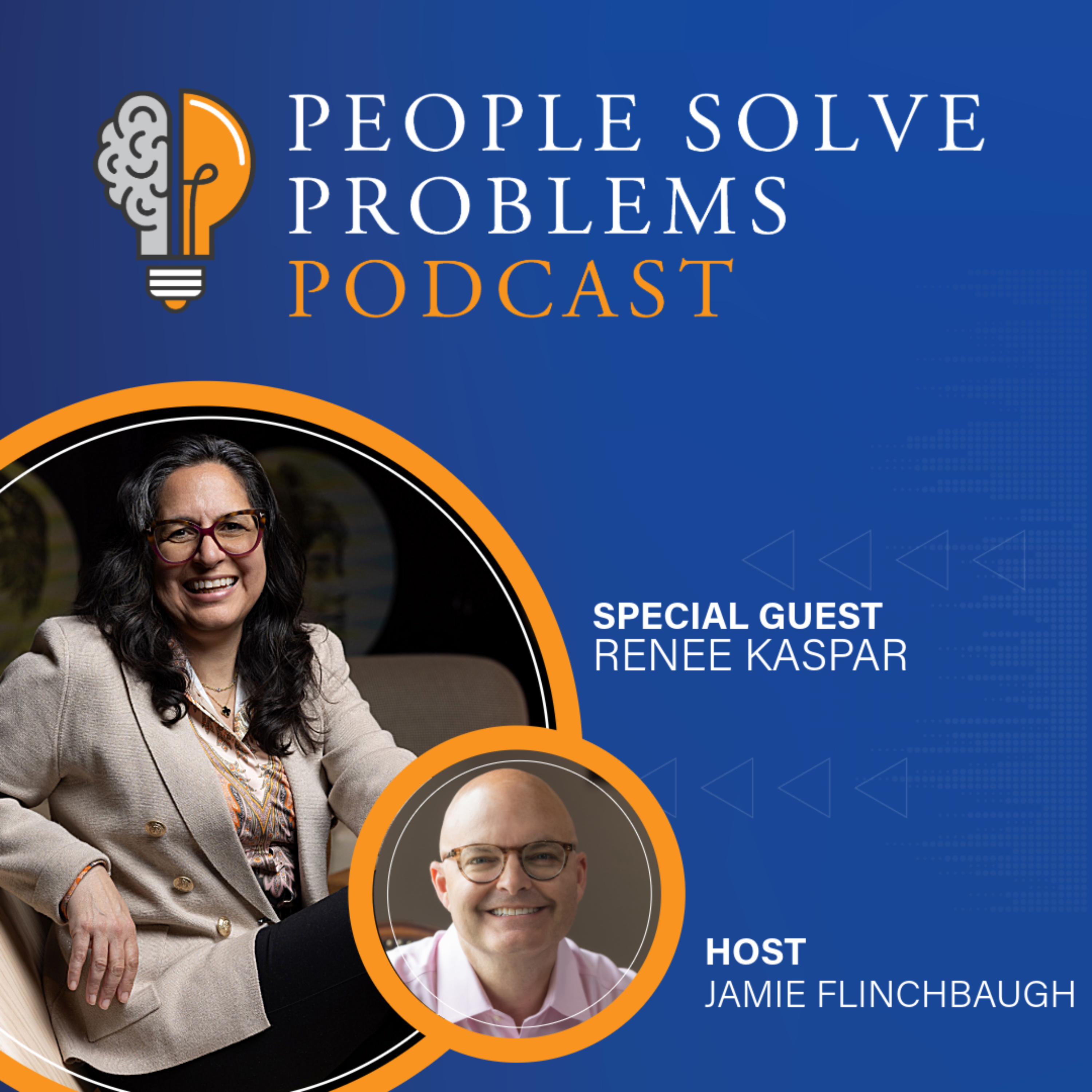
| 7/8/26 | The Great Transitionworkplace strategy+3 | Renee Kaspar | Renee Kaspar LabsHR Confidential | — | Great Transitionworkplace+5 | — | 23m 41s | ||
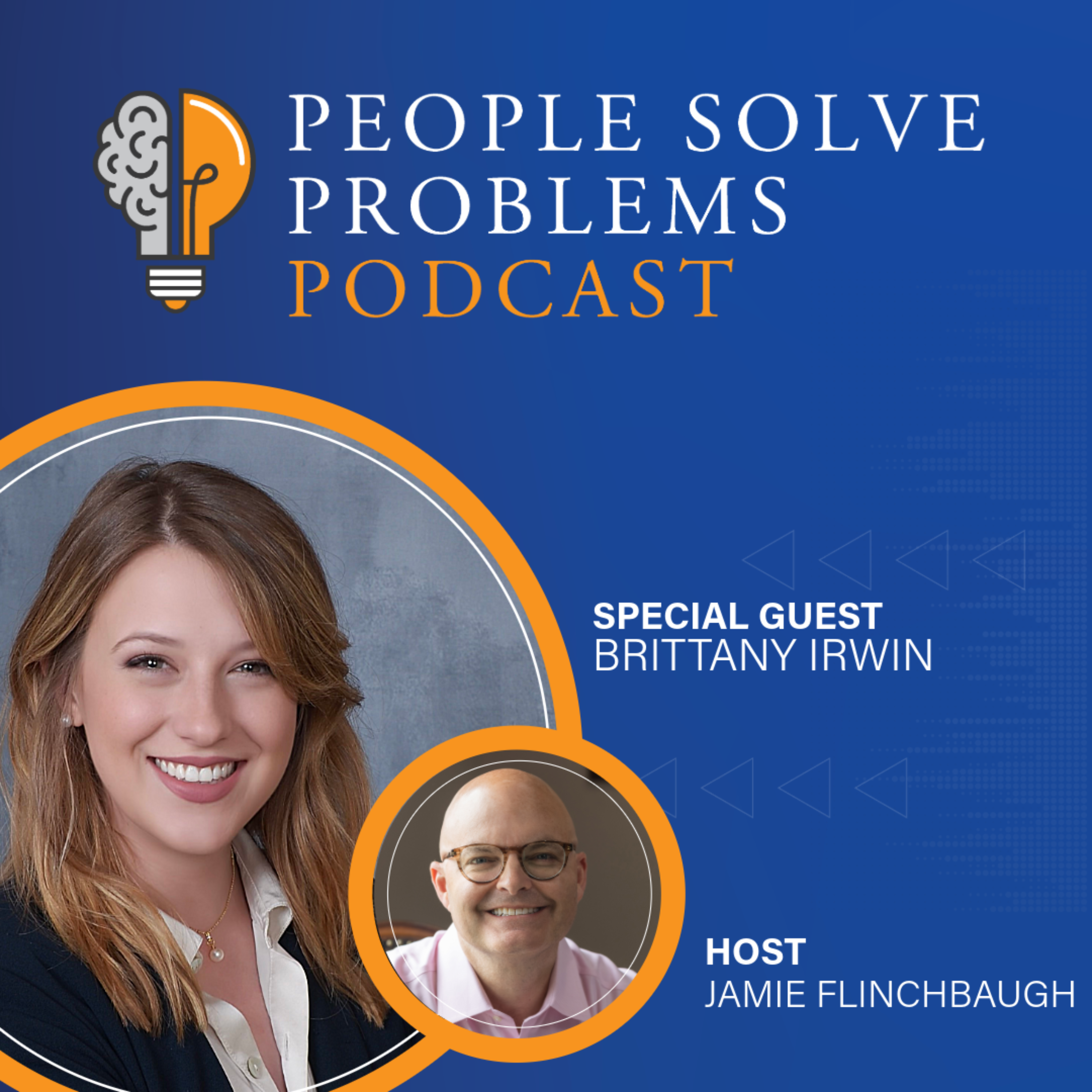
| 6/24/26 | AI implementationlogistics+4 | Brittany Irwin | NFI IndustriesUniversity of Pittsburgh | — | AI rolloutautomation challenges+5 | — | 23m 07s | ||
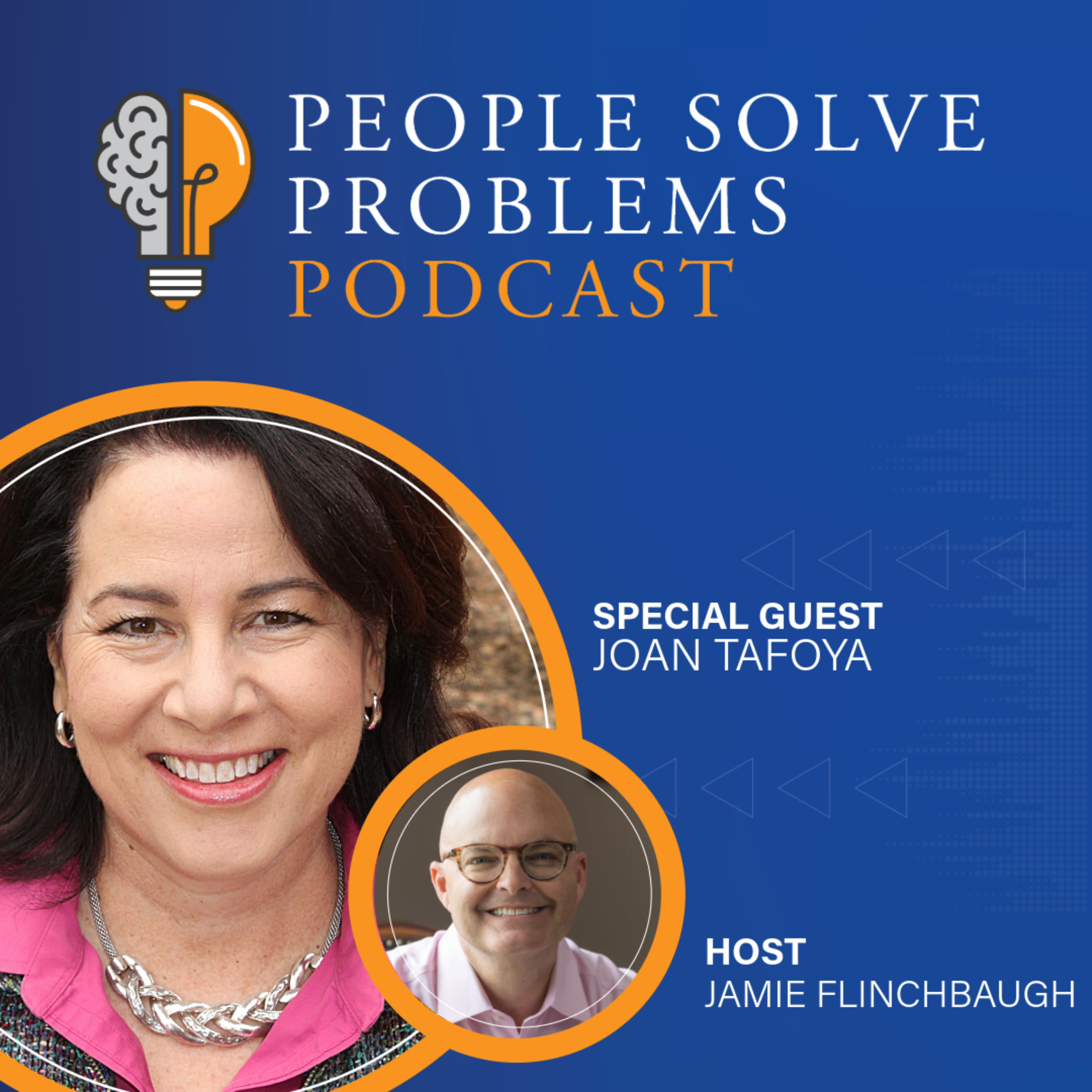
| 6/10/26 | coachingproblem solving+3 | Joan Tafoya | MetaIntel+1 | — | coachingproblem solving+3 | — | 22m 51s | ||
| 5/27/26 | problem solvingmethodology+4 | Eric Harding | Republic ServicesIntel+2 | — | methodologyproblem solving+5 | — | 23m 29s | ||
| 5/13/26 | problem-solvingoperational leadership+4 | Laudy Allan | Crayola LLC | — | problem-solvingoperational leadership+5 | — | 23m 38s | ||
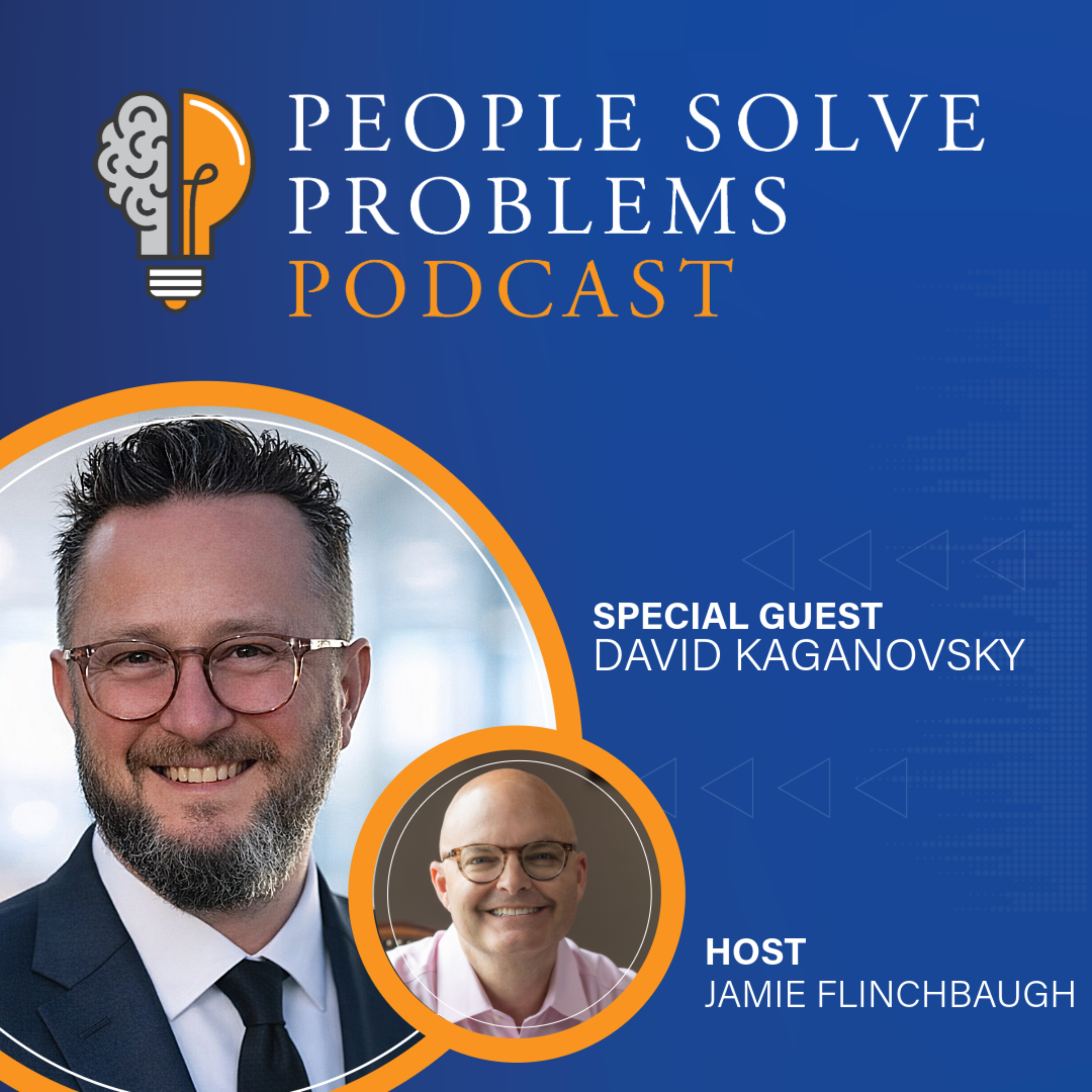
| 4/29/26 | problem-solvingbrand strategy+4 | David Kaganovsky | WPPPWC+5 | — | problem behind the problemcustomer experience+5 | — | 24m 23s | ||
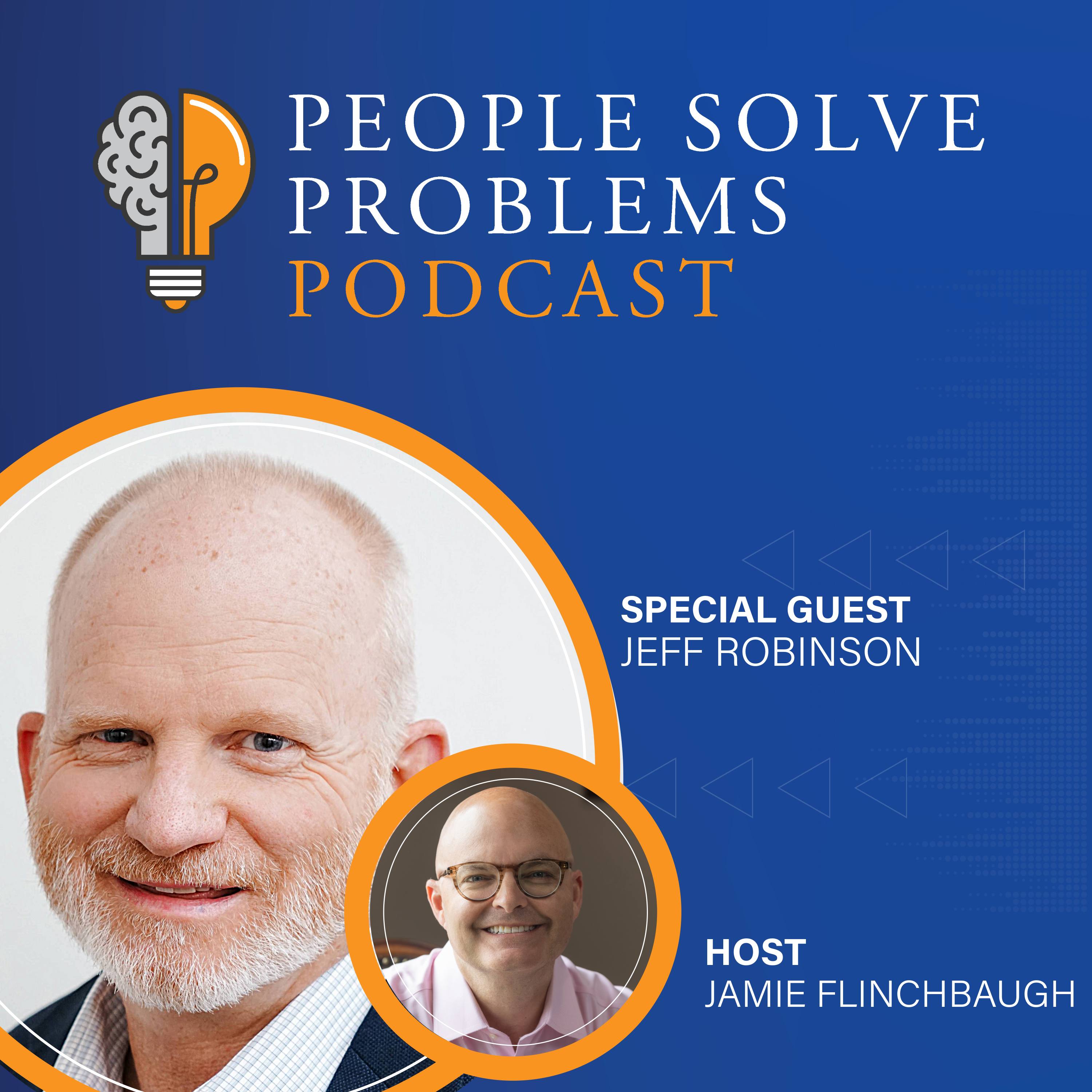
| 4/15/26 | leadershipconfidence+4 | Jeff Robinson | Foundational Leadership LLCLeadership SUCCESS: Expand Your Presence, Build Trust, and Increase Your Influence | — | leadershipconfidence gap+5 | — | 23m 33s | ||
| 4/1/26 | technology implementationhealthcare+3 | Grace Bourke | Baker TillySutter Health+1 | — | technologyhealthcare+4 | — | 22m 19s | ||
Want analysis for the episodes below?Free for Pro Submit a request, we'll have your selected episodes analyzed within an hour. Free, at no cost to you, for Pro users. | |||||||||
| 3/18/26 | healthcareleadership+3 | Skip Steward | Baptist Memorial Health Care CorporationGetting the Right Things Done | — | healthcareleadership+5 | — | 25m 47s | ||
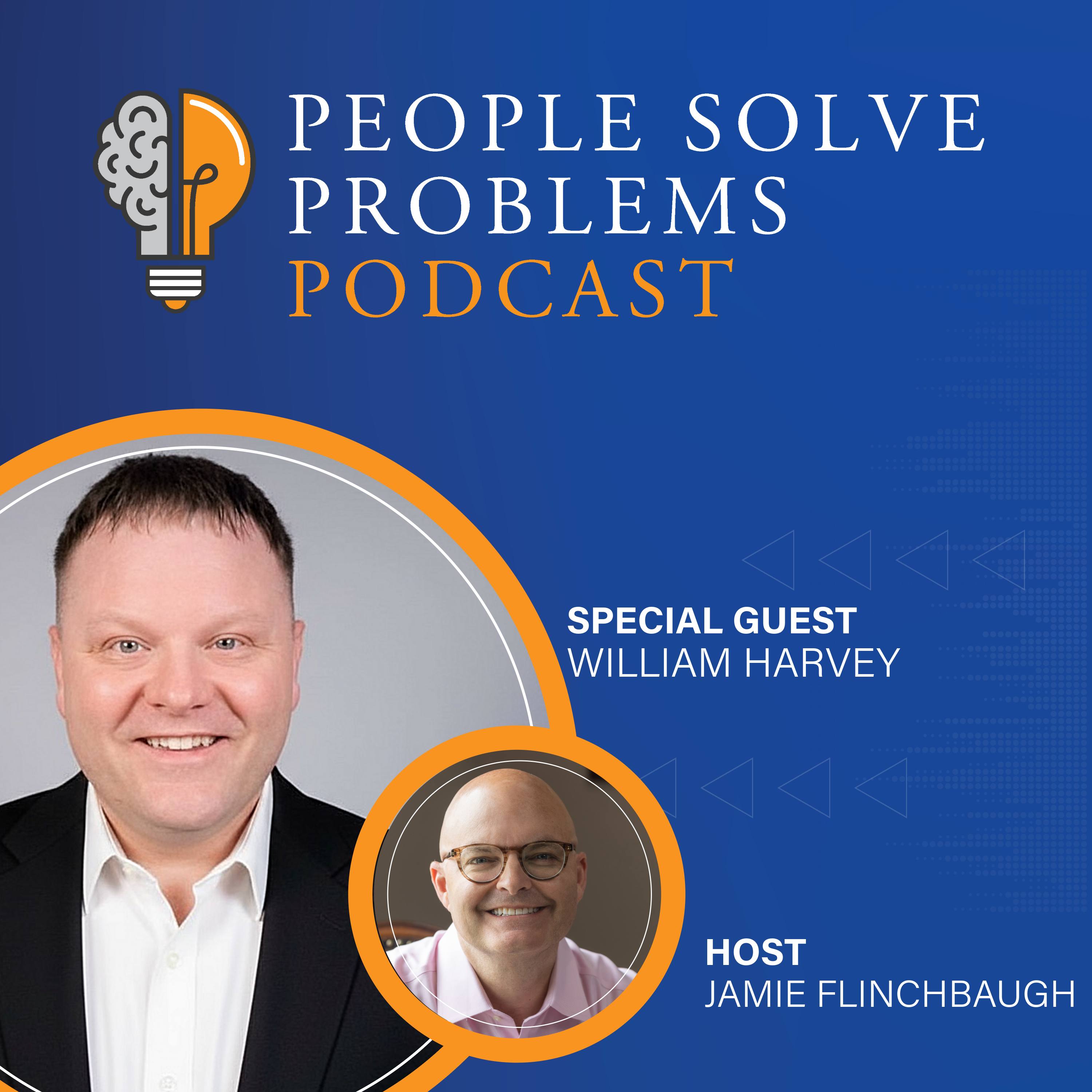
| 3/4/26 | leadershipproblem-solving+3 | William Harvey | Marine Corpsmanufacturing+2 | — | leadershipproblem-solving+6 | — | 21m 37s | ||
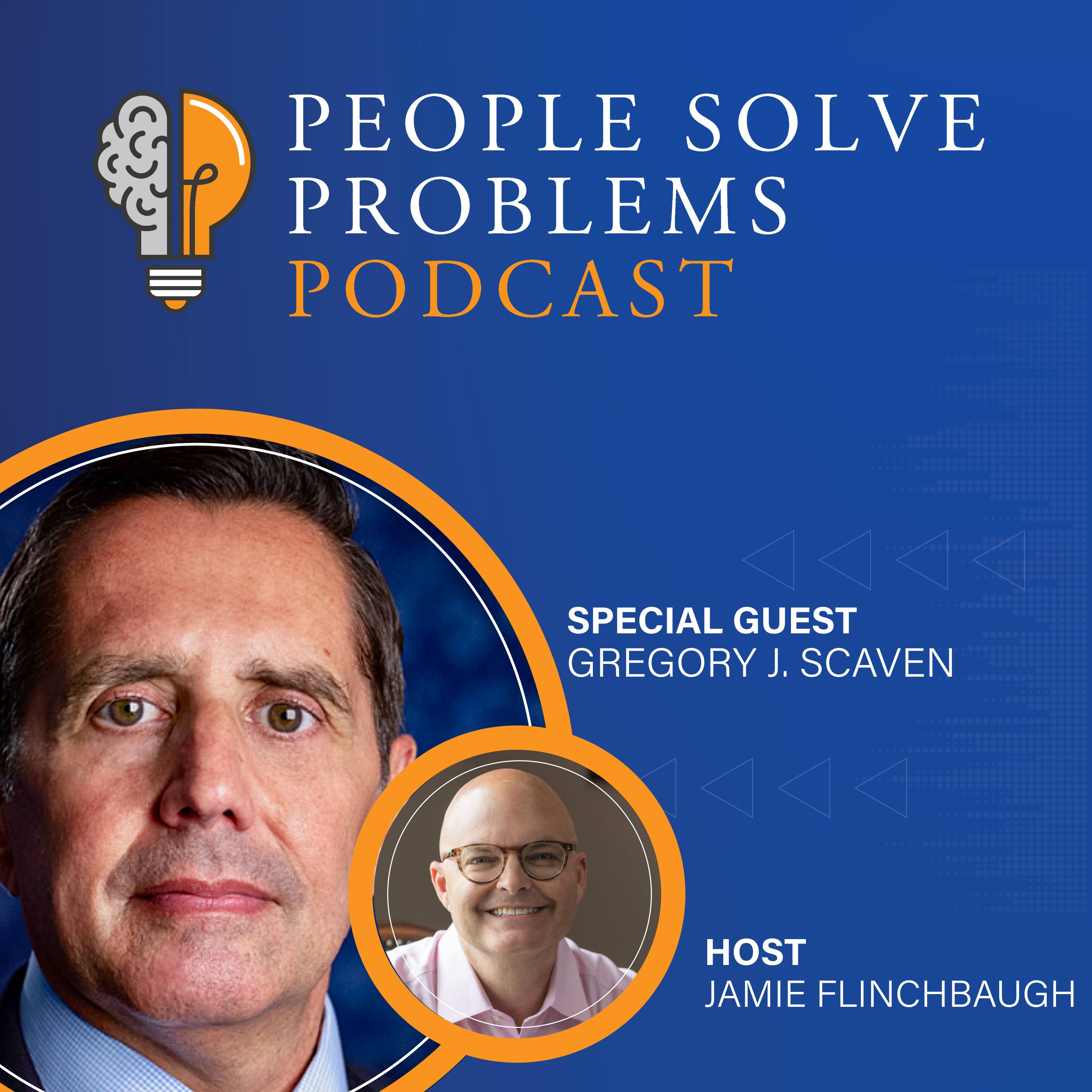
| 2/18/26 | problem-solvingleadership+3 | Gregory J. Scaven | Scaven Enterprises, LLCDanaher Business System | — | problem-solvingengineering+5 | — | 23m 03s | ||
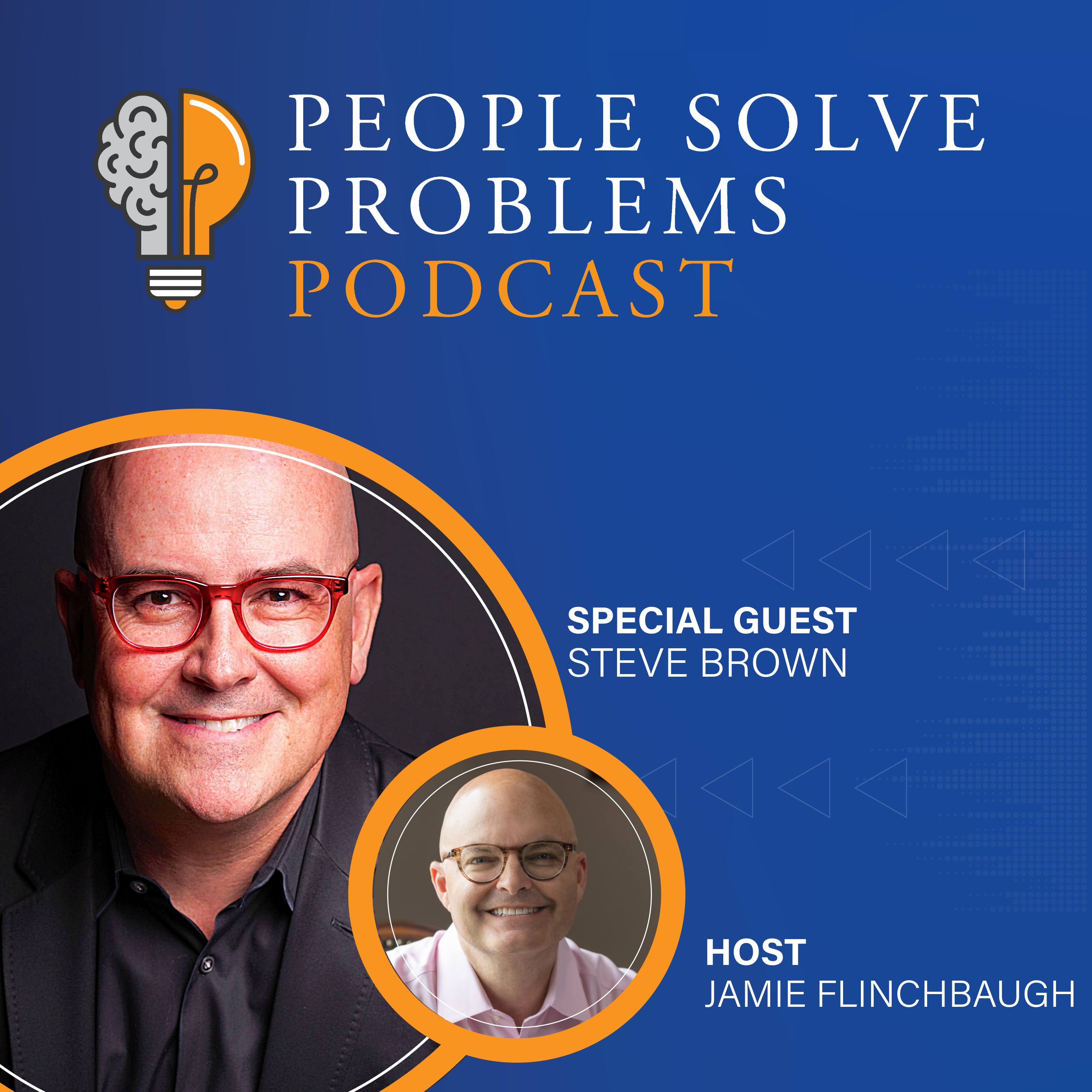
| 2/4/26 | AI transformationleadership+3 | Steve Brown | Google DeepMindIntel Labs | — | AIleadership+5 | — | 27m 13s | ||
| 1/21/26 | failurepersonal growth+4 | Dr. Melisa Buie | Coherent, Inc.University of Michigan+1 | — | failurepersonal development+5 | — | 23m 20s | ||
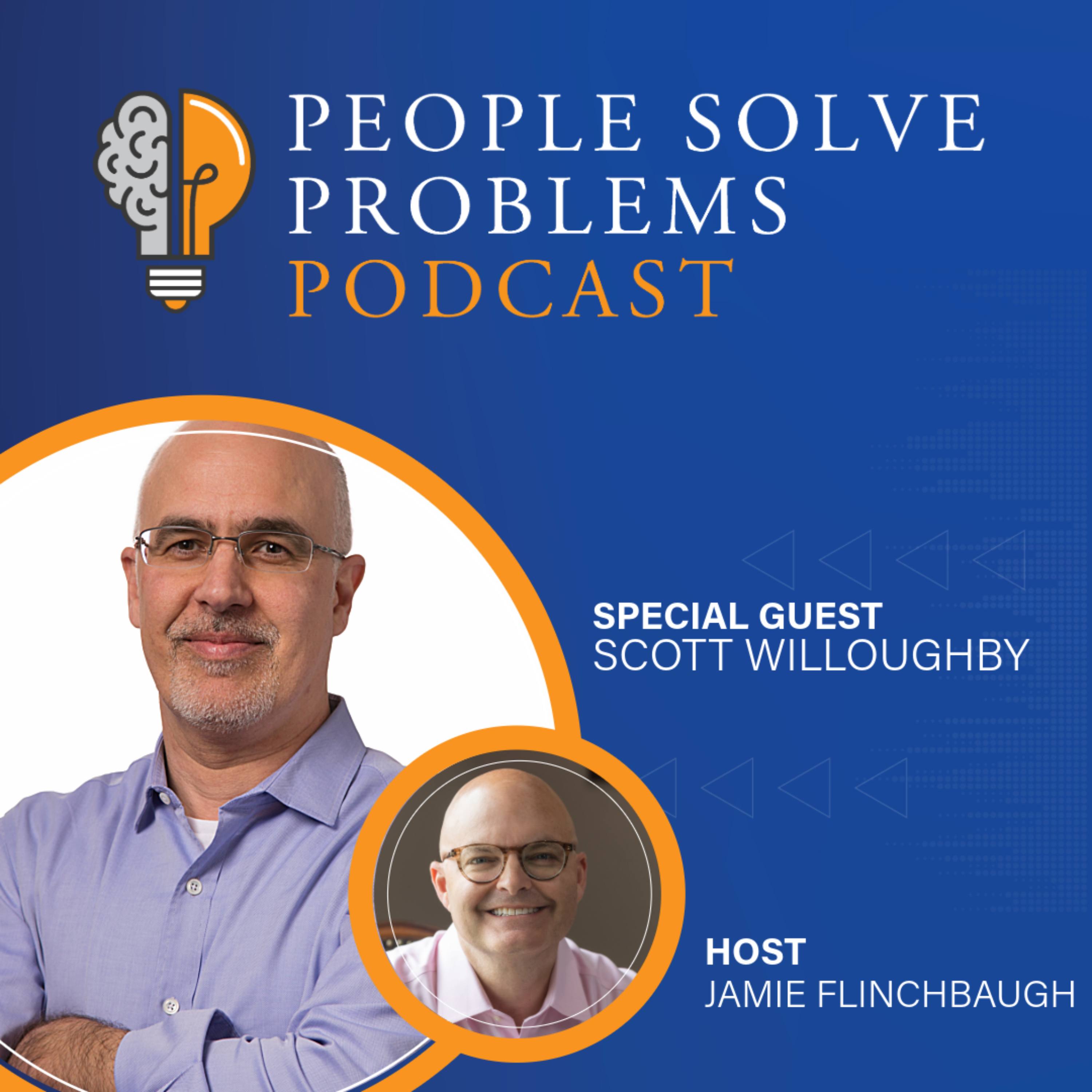
| 1/7/26 | NASAprogram management+3 | Scott Willoughby | Northrop GrummanNASA+3 | — | NASAJames Webb Space Telescope+5 | — | 27m 11s | ||
| 12/10/25 | product developmentknowledge gaps+3 | Rick Pedersen | Old Norse Consulting | — | product developmentknowledge gaps+3 | — | 21m 49s | ||
| 11/26/25 | creative problem solvingtransformational leadership+3 | Jason Trujillo | Stanley Black & DeckerIBM+2 | School of the Art Institute of Chicago | creative processconstraints+3 | — | 23m 43s | ||
| 11/12/25 |  Norbert Majerus: Breaking Out of the Box in Design Creativity | In this episode of People Solve Problems, host Jamie Flinchbaugh welcomes Norbert Majerus, a creative problem solver at Norbert Majerus Consulting. With 45 years in industrial creativity and 60 US patents to his name, Norbert brings deep expertise from his years implementing lean product development at Goodyear's global innovation centers. Norbert draws a clear distinction between creativity and innovation that cuts through the confusion around these terms. Creativity, he explains, is about generating new ideas and creating something new. Innovation happens when those creative ideas are brought to market and generate value. Not every creative idea becomes an innovation—only a select few make that leap—but creativity remains essential across all problem-solving contexts, whether the immediate goal involves profit or not. The conversation turns to a pressing challenge: many organizations find themselves trapped in a box of their own making, unable to think beyond established patterns. Norbert identifies several significant obstacles to industrial creativity. Fear stands as the most formidable barrier. He shares a personal story of nearly being fired by a vice president who refused to allow risky new ideas, illustrating how leaders focused on protecting their careers create cultures where people avoid taking chances. When the perceived risk of failure outweighs the potential for success in someone's mind, creativity withers. Beyond fear, Norbert points to the physical environment as a surprisingly important factor. He contrasts his experience visiting Google—where the environment changed dramatically every 50 steps, with bikes and stimulating spaces—against his own workplace, which was redesigned with uniform white walls and strict prohibitions on personalization. Environment shapes culture, and culture shapes creativity. Norbert emphasizes that today's complex problems cannot be solved within narrow functional boundaries. True creativity requires collaboration across disciplines and departments, bringing together different perspectives. Yet many companies inadvertently educate their people to work against each other rather than together. Breaking down these silos requires intentional cultural work. To foster collaboration, Norbert developed a powerful exercise involving teams solving five interconnected puzzles. Participants initially approach the task individually, trying to solve their own puzzle first. They consistently fail until they realize they can only succeed by helping each other. Even resistant leaders eventually grasp the lesson. Norbert stresses that behaviors must come before beliefs—lecturing about collaboration doesn't work, but creating experiences that demonstrate its value does. For managers who want to move in this direction without the authority to change company culture, Norbert offers practical advice. First, find a sponsor or supporter who can help break down walls and provide air cover. Second, and critically, start with something significant. Rather than working on countless tiny projects that never make a visible impact, tackle a problem big enough that solving it will bring others to your door, asking how you did it. Success with meaningful challenges builds momentum far more effectively than incremental wins on trivial matters. Throughout his career, Norbert learned that subtle approaches work better than direct mandates. Taking teams to visit other companies nearby, exposing them to different ways of working, proved transformative. Within six months, teams that initially fought and blamed each other were asking, "How can I help you?" when problems arose. For more insights on lean-driven innovation and creative problem-solving, visit Norbert's website at leandriveninnovation.com or connect with him on LinkedIn at https://www.linkedin.com/in/norbert-majerus-5a746235/. You can find Norbert’s books here: Winning Innovation and Lean-Driven Innovation | 23m 08s | ||||||
| 10/29/25 |  Building Trust and Testing to Learn with Moe Rinkunas, Rock Health Advisory | In this episode of People Solve Problems, host Jamie Flinchbaugh speaks with Maureen (Moe) Rinkunas, Director of Insights Membership at Rock Health Advisory. Moe brings over 20 years of experience spanning corporate innovation, venture studios, and advisory leadership at organizations including DuPont, Accenture, Dreamit Ventures, and Redesign Health. Moe opens the conversation by sharing her fundamental belief that everyone possesses problem-solving capabilities, shaped by evolution itself. However, she emphasizes that people bring different strengths to the table. When working with teams, she takes time to understand individual styles and leverages them strategically throughout the innovation process. Moe explains how naturally optimistic team members excel at generating ideas and maintaining energy during brainstorming sessions, while more skeptical individuals prove invaluable when narrowing options and making final decisions. By understanding these diverse strengths, she creates environments where different personalities contribute at the right moments. The conversation shifts to collaboration and the messy nature of innovation work. Moe stresses that psychological safety forms the foundation of effective problem-solving. She explains that trust must be built over time, creating a reserve that teams can draw upon when facing uncomfortable challenges. She shares a powerful example from her time at DuPont, where leaders instituted a "Dead Project Day" on the Day of the Dead, encouraging people at all levels to share their failures. Initially met with skepticism, this practice became an annual tradition that normalized risk-taking and built lasting trust within the organization. When discussing innovation leadership, Moe introduces the concept of leaders as snowplows. She describes how innovation leaders must clear paths for their teams by navigating organizational politics, communicating effectively with senior leadership, and helping others understand that innovative projects require different metrics and timelines than traditional initiatives. This protective role helps create safe spaces where teams can do their best work, even when external pressures threaten psychological safety. Moe advocates strongly for test-and-learn approaches in innovation work. She emphasizes developing minimal viable solutions paired with "what must be true" statements that guide testing priorities. Her teams create learning plans with clear testing commitments, specific metrics, and defined timeframes. Moe suggests framing decisions around manageable increments, asking what information teams need to decide whether to continue, pivot, or stop after six weeks rather than demanding absolute certainty. This approach makes testing feel achievable and keeps teams moving forward with practical confidence. Looking at healthcare innovation specifically, Moe identifies significant opportunities in an industry facing mounting pressures around staffing shortages and affordability challenges. She notes that while many innovators develop point solutions addressing specific problems, the real opportunity lies in creating connections between these innovations. She encourages entrepreneurs to think about integrated, holistic healthcare experiences that reflect how people actually live with and experience their health. Throughout the conversation, Moe demonstrates how thoughtful attention to team dynamics, psychological safety, and structured learning processes enables innovation work to flourish. Her insights offer practical guidance for anyone leading creative problem-solving efforts in complex organizational environments. To learn more about Moe's work, visit Rock Health Advisory at https://rockhealth.com/advisory/ or connect with her on LinkedIn at https://www.linkedin.com/in/mwrinkunas/. | 21m 06s | ||||||
| 10/15/25 |  Systems Dynamics: Moving Beyond Supply Chain Optimization with scmBLOX's J. Chris White | J. Chris White, Co-Founder and CEO of scmBLOX, joined host Jamie Flinchbaugh to explore the critical differences between systems thinking and systems dynamics, and how these approaches can transform supply chain management. As a systems dynamics modeler with 30 years of experience covering operations and supply chains, Chris brought deep expertise to this conversation about solving complex business problems. Chris explained that while many people embrace systems thinking after reading Peter Senge's "The Fifth Discipline," they often miss that Senge was actually a systems dynamicist trained by Jay Forrester, who created systems dynamics. According to Chris, systems thinking provides valuable guidance, but when it comes to actually solving problems, you need the rigor of systems dynamics modeling and simulation. He described systems thinking as appreciating the use of data in decision making, while systems dynamics is doing all the math to generate that data. The conversation revealed how he views systems dynamics as another tool in the problem-solving toolbox. He emphasized that it works best for larger, interconnected problems where you need to see the whole system view. He explained that systems are collections of parts that are interrelated and interconnected, all working together to achieve a goal. As systems become more complex, the relationships between parts begin to dominate, which is where systems dynamics shines. When discussing supply chain management specifically, Chris highlighted how traditional "end-to-end" approaches are actually quite limited. Most companies only track orders from their immediate suppliers to customer delivery, but he pointed out that COVID-19 revealed how interconnected supply chains really are. The disruptions, bullwhip effects, and shortages that dominated news cycles showed that problems happening several tiers upstream can significantly impact your business. Chris used a tree analogy to illustrate this point: there's little value in optimizing the leaves when you should have been on a different branch strategically to begin with. He emphasized that resilience is more of a system phenomenon than an individual company trait, and that understanding supply chains as systems gives you more power to change the future. One of the biggest surprises he encounters when working with clients is how little data they actually need to get started. Unlike statistical models that rely heavily on data, systems dynamics focuses on causal connections and structure. He explained that if you know what you're making and have a bill of materials, your supply chain usually mirrors that structure. This allows companies to begin modeling without perfect visibility into every supplier's capacity or inventory levels. Chris emphasized that when companies optimize only their individual parts of the supply chain, they often create unintended effects that come back to hurt them later. What seems beneficial in the short term can actually cause problems in the long term. The goal is to help companies understand how their decisions impact the entire supply chain system, not just their immediate operations. Throughout the discussion, Chris demonstrated how systems dynamics provides a scientific approach to understanding supply chain vulnerabilities before disruptions occur, whether they're global events like the Suez Canal blockage or local issues like supplier bankruptcies. To learn more about Chris White's work in systems dynamics and supply chain management, visit scmblox.com or connect with him on LinkedIn. | 20m 51s | ||||||
| 10/1/25 |  Jim Benson of Modus Institute: Building Confidence Through Visual Collaboration | Jim Benson joined host Jamie Flinchbaugh on People Solve Problems to discuss his approach to collaboration and visual management as the foundation for successful Lean and Agile implementations. As Inquisitor at Modus Institute and creator of Personal Kanban, Jim brings a unique perspective on how organizations can remove workplace toxicity while dramatically improving effectiveness. Jim defines collaboration simply yet powerfully: two or more people working toward a common goal with systems in place that allow everyone to act with confidence. This definition cuts through the confusion often created when collaboration gets mixed up with consensus-building or other diluted interpretations. The key insight Jim shared is that confidence drives everything in business, just as consumer confidence drives the free market economy. Jim illustrated this concept through the story of a young procurement agent at Turner Construction who was responsible for purchasing everything from structural steel to toilet paper for a billion-dollar construction project in New York. Initially working from spreadsheets, he had to justify every decision to three levels of management, creating a cycle of criticism and second-guessing that undermined his confidence. When Jim helped implement an obeya with visual controls, everything changed. He could display his work transparently, allowing managers to see when projects were on track, in trouble but manageable, or requiring their expertise. The transformation was remarkable. Instead of commenting on everything he did, managers could now apply their expertise strategically when needed. He could act with confidence, knowing that everyone had visibility into his work and could provide help when necessary rather than criticism after the fact. Jim emphasized that this visual management approach removes toxicity from the workplace by creating clarity around roles, responsibilities, and when intervention is needed. Jim challenged the current trend of CEOs instituting longer work weeks while people are already working at 300% capacity, but only 25% effectiveness. He argued that most knowledge workers are operating far beyond sustainable levels, and the solution isn't more hours but better systems. By creating a better understanding of what people can handle and properly defining work upfront, organizations can increase effective throughput by 200-300% while making work easier and more enjoyable. The conversation touched on problem-solving approaches, where Jim distinguished between everyday operational issues and strategic thinking opportunities. He noted that most bottlenecks in modern business are actually collaborative opportunities that get addressed through non-collaborative means like new software or individual assignments. Instead, these issues often stem from information flowing between people in the wrong formats, which can be fixed simply by understanding what each person in the value stream actually needs. Jim offered a provocative alternative to traditional strategic planning, where leadership teams retreat to develop strategy in isolation. He suggested that companies have exponential strategic value equal to the number of employees raised to the power of the number of employees. Rather than excluding people from strategic planning, Jim advocates for involving everyone in developing strategies, tactics, and measures collaboratively. When people understand how their daily tasks connect to broader strategic goals, achieving corporate objectives becomes much easier. The underlying theme throughout Jim's insights is that most workplace dysfunction stems from people wanting to contribute meaningfully but lacking the systems and clarity to do so effectively. By implementing visual management and collaborative approaches, organizations can tap into this existing motivation while removing the barriers that create frustration and inefficiency. Jim’s work can be explored further at modusinstitute.com, and he can be found on LinkedIn at linkedin.com/in/jimbenson. | 21m 32s | ||||||
| 9/17/25 | 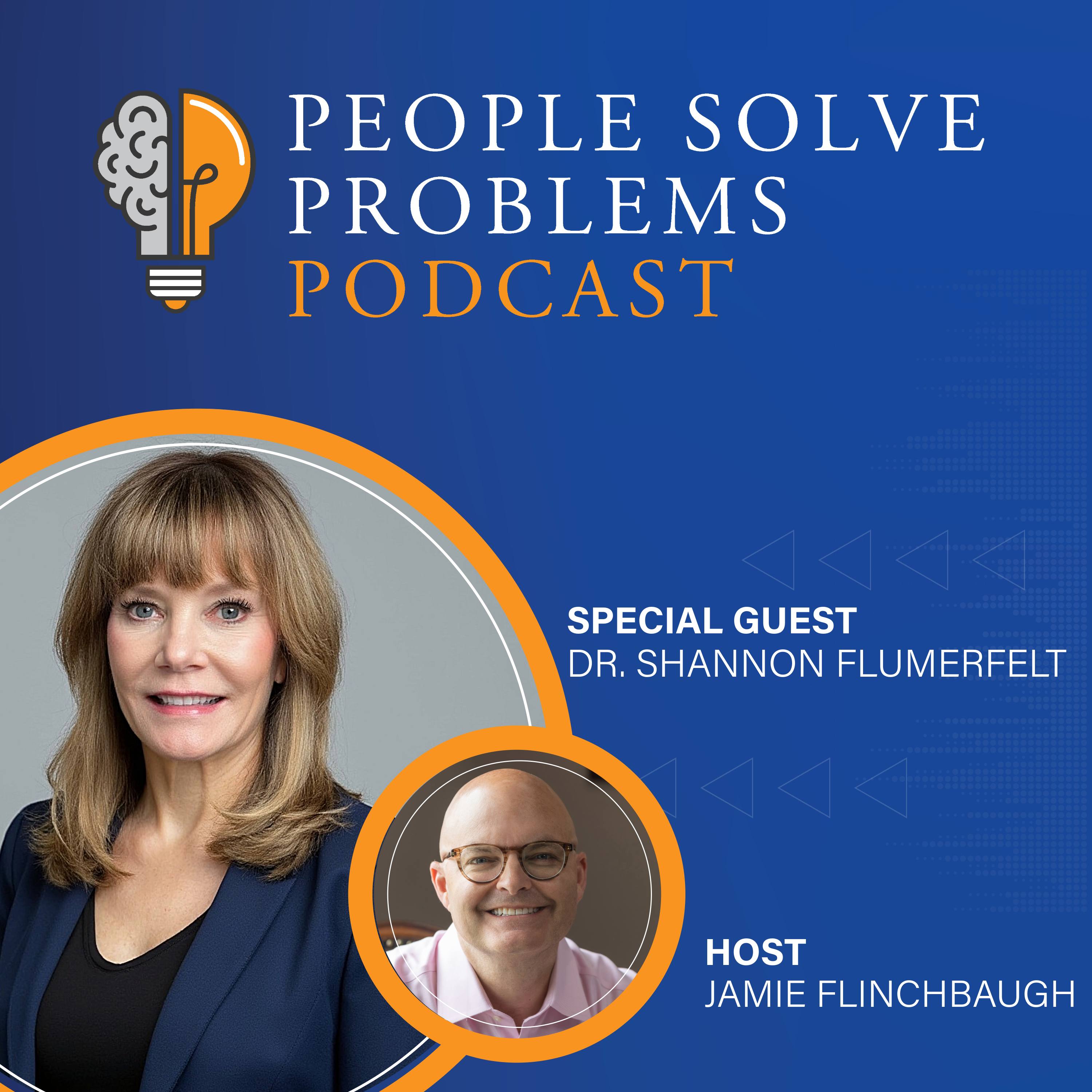 Dr. Shannon Flumerfelt on Coaching Through Difficult Situations with Lean Tools | Dr. Shannon Flumerfelt, Founder of Charactership Lean Consulting and Endowed Professor of Lean at Oakland University, joined host Jamie Flinchbaugh to discuss her systematic approach to coaching leaders through difficult situations and complex problem-solving challenges. Dr. Flumerfelt shared her framework for handling difficult coaching situations, which begins with understanding whether the challenge stems from external factors or internal issues. She explains that external problems—such as skill gaps or training needs—are often easier to address through coaching and mentoring. However, internal challenges require a deeper analysis using what she calls the "head, heart, and hands" approach: examining a person's knowledge, disposition, and actual capabilities. When faced with complex situations, Dr. Flumerfelt advocates for creating an Ishikawa diagram to break down all contributing factors. She emphasizes the power of co-creating these visual tools with clients, noting that self-reflection becomes most powerful when people can see their challenges mapped out concretely. This approach helps remove emotional drama from the situation and enables more logical, analytical thinking while still respecting people's feelings and perspectives. Regarding prioritization when multiple problems exist, she stresses that the approach must be organic and context-dependent, true to lean principles. She suggests several methods for determining where to start: ensuring strategic alignment with organizational goals through Hoshin Kanri planning, conducting quality function deployment analysis to understand customer requirements, or using Pareto analysis to tackle the most significant causes first. However, she cautions that sometimes the biggest problems are beyond an individual's scope of influence, requiring a more realistic assessment of what can be accomplished. Dr. Flumerfelt also recommends using interrelationship diagrams to identify which issues have the most connections to other problems, as addressing these can create the greatest ripple effect of positive change. The key is understanding your level of power, influence, and authority within the organization and working within those realistic boundaries. When discussing how to tap into people's intuition alongside analytical tools, she acknowledges that lean thinking often appears heavily engineering-focused and black-and-white. However, she emphasizes that successful lean implementation requires understanding the complete framework of lean thinking, not just selecting individual tools. She advocates for using personality assessments like Myers-Briggs to understand team members' strengths and whether they tend toward intuitive or logical approaches. She highlights the concept of social capital as a competitive advantage, referencing Michael Porter's work. She believes organizations drastically underutilize their human potential, comparing it to how individuals only use a small percentage of their brain capacity. When you multiply underutilized brains across an entire organization, the untapped potential becomes enormous. This perspective drives her approach to individualizing and customizing development for each person, recognizing that people aren't robots and have unique strengths and weaknesses that deserve respect. Throughout the conversation, the importance of visual management tools and moving beyond just thinking or journaling to drawing out and visualizing problems and solutions was emphasized. This structured approach helps transform messy, complex situations into manageable challenges that can be systematically addressed. For those interested in experiencing her approach firsthand, Dr. Flumerfelt offers consulting services through Charactership Lean Consulting and teaches in Oakland University's graduate Lean Leadership program—a rare opportunity in higher education. To learn more about Dr. Flumerfelt's work, visit charactershiplean.org or connect with her on LinkedIn | 21m 28s | ||||||
| 9/3/25 |  Dynamic Work Design with Nelson Repenning & Don Kieffer | Nelson Repenning and Don Kieffer joined host Jamie Flinchbaugh to discuss their collaborative book "There's Got to Be a Better Way" and their approach to dynamic work design. Nelson Repenning is the School of Management Distinguished Professor at the MIT Sloan School of Management, while Don Kieffer is a senior lecturer in operations management at MIT Sloan and founder of ShiftGear Work Design. Their partnership represents a unique blend of academic rigor and practical factory floor experience spanning nearly three decades. The conversation began with personal connections, as Jamie noted his long history working with Don during transformation efforts at companies like Harley-Davidson, and his experience as one of Nelson's first students in systems dynamics at MIT. Don shared how Jamie helped translate complex manufacturing concepts into accessible language during their work at Harley-Davidson. The guests explained how their five core principles evolved through years of teaching and practical application. Nelson compared their development process to a stand-up comedian perfecting their act, starting with rough material and refining it through constant testing. The five principles they developed are: solve the right problem, structure for discovery, connect the human chain, regulate for flow, and visualize the work. When discussing the challenge of solving the right problem, Nelson referenced Daniel Kahneman's work on conscious versus automatic thinking. He explained how people often revert to automatic processing under pressure, making structured problem-solving methods essential. Don emphasized how experienced problem solvers can jump to solutions too quickly, bypassing the crucial step of properly defining the problem. The principle of structuring for discovery addresses why organizations should welcome more visible problems rather than hiding them. Don explained that problems reveal weaknesses in systems and create opportunities for innovation and stability. Nelson added that instead of helping people understand complex environments, they focus on structuring environments to be cleaner and more manageable. Regarding connecting the human chain, Nelson emphasized that humans excel at processing uncertainty and ambiguity, particularly in face-to-face communication. He criticized how many organizations use long PowerPoint meetings for information sharing while handling uncertainty through digital messages. Don illustrated this with the frustration of call center scripts that cannot handle unique problems, explaining their concept of "huddles" versus "handoffs" in work design. The discussion of visualizing work highlighted the particular challenges of knowledge work. Don explained that unlike manufacturing, where broken equipment is obvious, knowledge work problems remain hidden. People can be continuously interrupted and overloaded without visible signs. Nelson shared a striking example from Harley-Davidson where the average time to solve problems equaled the months remaining until product launch, regardless of when problems were discovered. Don noted that while executives can easily draw organizational charts, they struggle to map how work actually flows through their organizations. The guests emphasized that simple visualization techniques can yield enormous gains in knowledge work because the dysfunction costs are typically hidden and accepted as normal. Throughout the conversation, both guests stressed the importance of leaders staying connected to actual work rather than remaining distant from operational realities. They advocate for methods that make work visible and create structures that support both stability and continuous innovation. For more information about Nelson Repenning and Don Kieffer's work, visit ShiftGear.com Find their book "There's Got to Be a Better Way" Nelson can be found on LinkedIn at https://www.linkedin.com/in/nelson-repenning/ | 27m 05s | ||||||
| 8/20/25 |  Transforming Intel’s Culture Through Problem Solving with Melinda Manente | Melinda Manente, Process Improvement Coach & Facilitator at GBMP Consulting Group, joins Jamie Flinchbaugh on the People Solve Problems podcast to share her extensive experience in creating transformational change within organizations. With over 30 years of experience at global Fortune 100 companies including Cisco, Parker Hannifin, Intel, and General Electric, Melinda brings valuable insights into developing problem-solving cultures that engage employees at all levels. Melinda emphasizes that meaningful transformation requires both a clear vision and what she calls a "burning platform" - a compelling reason for change that motivates people to step out of their comfort zones. She explains how organizations can benefit from redefining what constitutes a problem, shifting from focusing solely on large, dramatic issues to addressing smaller, daily challenges. This perspective change allows companies to tap into their most valuable resource - their people - by making problem solving part of everyone's daily job content. Throughout the conversation, Melinda shares practical strategies for implementing simple yet effective problem-solving methods that showcase learning, build transparency, and foster team collaboration. She advocates for creating systems that encourage experimentation and rapid learning through a "fail fast" approach, allowing teams to iterate quickly and apply their learnings immediately. Her methodology balances the need for action with thoughtful reflection, creating a culture where problems become opportunities for growth rather than sources of stress. A central theme in Melinda's approach is how the principle of “Respect for People” serves as the foundation for effective problem-solving. She demonstrates how common lean tools like direct observation and 5S become significantly more impactful when implemented within a framework of genuine respect. She shares real-world examples of how this respect-centered approach has transformed organizations she's worked with, creating sustainable change that continues long after formal improvement initiatives end. The conversation concludes with Melinda's insights on the "inside-out" approach to leading organizational change, emphasizing that transformational leaders must first transform themselves before they can effectively guide others. Jamie and Melinda discuss how this self-awareness and personal growth create the authenticity needed to inspire lasting change across an organization. For listeners interested in learning more about Melinda Manente's work on problem-solving and the Respect for People approach, they can visit the GBMP website at https://www.gbmp.org and explore the Respect for People Roadmap, or connect with her on LinkedIn at www.linkedin.com/in/melindamanente. | 21m 19s | ||||||







Showing 25 of 80
Pitch Fit is a Pro feature
See how bookable this show is for guests, which brands already advertise, the per-episode ad value, and the best-fit guest and sponsor profile. The numbers are blurred on the free plan.
How readily this show books outside guests like you.
How proven this show is for host-read sponsorships.
For Guests
ProFor Advertisers
ProUpgrade to Pro to unlock guest cadence, sponsor categories, fit scores, and per-episode ad value for this show.
Chart history for People Solve Problems
Peaked at #156 in Canada, currently #156 in Canada.
| Market | Genre | Peak | Current | Trend |
|---|---|---|---|---|
| Canada | — | #156 | #156 | — |
Chart Positions
1 placement across 1 market.
Chart Positions
1 placement across 1 market.