

Insights from recent episode analysis
Audience Interest
Podcast Focus
Publishing Consistency
Platform Reach
Insights are generated by CastFox AI using publicly available data, episode content, and proprietary models.
Most discussed topics
Brands & references
Total monthly reach
Estimated from 17 chart positions in 17 markets.
By chart position
- 🇦🇺AU · Medicine#1265K to 30K
- 🇧🇷BR · Medicine#1421K to 10K
- 🇫🇷FR · Medicine#1491K to 10K
- 🇹🇷TR · Medicine#4100K to 300K
- 🇹🇼TW · Medicine#3210K to 30K
- Per-Episode Audience
Est. listeners per new episode within ~30 days
71K to 236K🎙 Weekly cadence·175 episodes·Last published 3mo ago - Monthly Reach
Unique listeners across all episodes (30 days)
143K to 471K🇹🇷64%🇦🇺6%🇹🇼6%+14 more - Active Followers
Loyal subscribers who consistently listen
43K to 141K
Market Insights
Platform Distribution
Reach across major podcast platforms, updated hourly
Total Followers
—
Total Plays
—
Total Reviews
—
* Data sourced directly from platform APIs and aggregated hourly across all major podcast directories.
On the show
From 10 epsHost
Recent guests
Recent episodes
176. Neck-driven shoulder pain - 5 common misunderstandings. Physio Edge Shoulder Success podcast with Jo Gibson
Mar 4, 2026
11m 46s
175. Tendinopathy treatment: Your guide to isometrics, isotonics & plyometrics with Dr Ebonie Rio
Feb 18, 2026
53m 50s
174. ACJ - The hidden culprit behind stubborn shoulder pain? Physio Edge Shoulder Success podcast with Jo Gibson
Sep 4, 2025
17m 14s
173. Hip flexor pain in runners: Diagnosis, myths, and rehab. Physio Edge Track record: Running repairs podcast with Tom Goom
Aug 6, 2025
19m 46s
172. Shoulder pain assessment & clinical reasoning. Physio Edge Shoulder Success podcast with Jo Gibson
Jul 16, 2025
24m 13s
Social Links & Contact
Official channels & resources
Official Website
Login
RSS Feed
Login
| Date | Episode | Topics | Guests | Brands | Places | Keywords | Sponsor | Length | |
|---|---|---|---|---|---|---|---|---|---|
| 3/4/26 |  176. Neck-driven shoulder pain - 5 common misunderstandings. Physio Edge Shoulder Success podcast with Jo Gibson✨ | shoulder paincervical spine+3 | Jo Gibson | Clinical Edge | — | shoulder painneck pain+3 | — | 11m 46s | |
| 2/18/26 |  175. Tendinopathy treatment: Your guide to isometrics, isotonics & plyometrics with Dr Ebonie Rio✨ | tendinopathy treatmentisometrics+5 | Dr Ebonie Rio | La Trobe University | — | tendinopathyisometric exercises+5 | — | 53m 50s | |
| 9/4/25 |  174. ACJ - The hidden culprit behind stubborn shoulder pain? Physio Edge Shoulder Success podcast with Jo Gibson✨ | shoulder painacromioclavicular joint+4 | Jo Gibson | Clinical Edge | — | shoulder painACJ+5 | — | 17m 14s | |
| 8/6/25 |  173. Hip flexor pain in runners: Diagnosis, myths, and rehab. Physio Edge Track record: Running repairs podcast with Tom Goom✨ | hip flexor painrunners+3 | Tom Goom | Running Physio | — | hip flexor tendinopathyanterior hip pain+3 | — | 19m 46s | |
| 7/16/25 |  172. Shoulder pain assessment & clinical reasoning. Physio Edge Shoulder Success podcast with Jo Gibson✨ | shoulder painclinical reasoning+3 | Jo Gibson | — | — | shoulder painrotator cuff+5 | — | 24m 13s | |
| 7/8/25 | 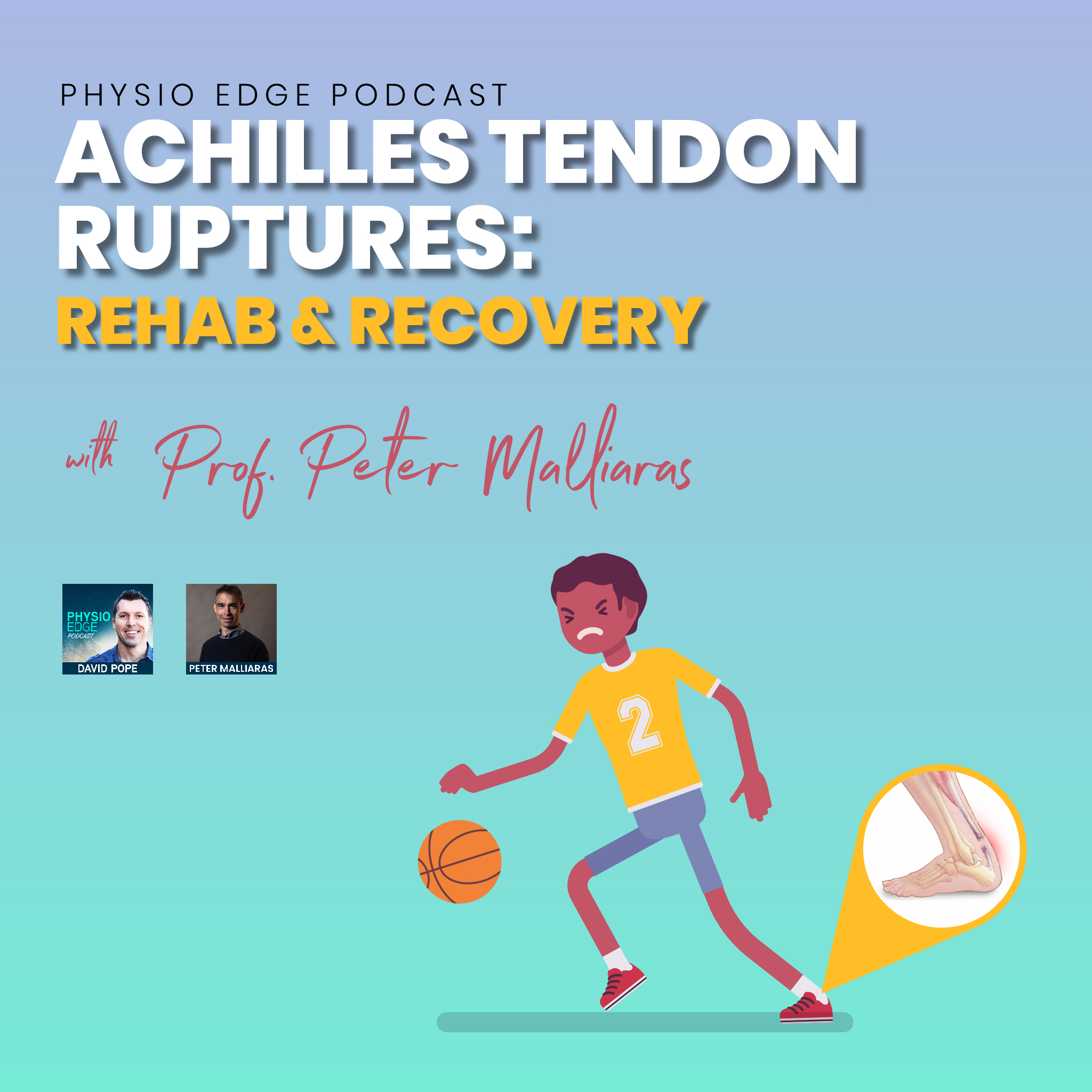 171. Achilles tendon ruptures: Rehab & recovery with Prof. Peter Malliaras✨ | Achilles tendon rupturerehabilitation+3 | Prof. Peter Malliaras | APAFACP | — | Achilles tendonrupture+5 | — | 1h 27m 25s | |
| 4/8/25 |  170. Brazilian Jiu Jitsu (BJJ) injuries with Dr Lachlan Giles✨ | BJJ injuriesrehabilitation+3 | Dr Lachlan Giles | IBJJFADCC | — | Brazilian Jiu-JitsuBJJ injuries+7 | — | 1h 11m 48s | |
| 3/29/25 |  169. Beyond stretching: How to create lasting flexibility. Physio Edge Running repairs podcast with Tom Goom✨ | flexibilitystatic stretching+4 | Tom Goom | Running Physioclinicaledge.co+1 | — | flexibilitystatic stretching+4 | — | 14m 50s | |
| 2/20/25 |  168. How to explain shoulder pain to patients. Physio Edge Shoulder Success podcast with Jo Gibson✨ | shoulder painpatient communication+3 | Jo Gibson | Physio EdgeUpper Limb Rehabilitation Specialist Physio | — | shoulder painpatient communication+3 | — | 24m 27s | |
| 11/29/24 |  167. Bones, them strong bones: How to use bone loading programs. Physio Edge Running repairs podcast with Tom Goom✨ | bone strengthbone loading programs+3 | Tom Goom | Physio EdgeRunning Physio | — | bone strengthbone density+5 | — | 21m 36s | |
Want analysis for the episodes below?Free for Pro Submit a request, we'll have your selected episodes analyzed within an hour. Free, at no cost to you, for Pro users. | |||||||||
| 11/20/24 |  166. To tape or not to tape? Physio Edge Shoulder Success podcast with Jo Gibson | Taping: does it really help patients with shoulder pain, or is it just a brightly coloured placebo? In this thought-provoking episode of the Physio Edge Shoulder Success Podcast, Jo Gibson, upper limb rehab specialist at Rehab for Performance, unpacks the complexities of taping in shoulder rehabilitation. Drawing from the latest evidence and her extensive experience with shoulder pain, Jo shares two compelling case studies and whether taping was useful in the treatment of: Volleyball player post-stabilisation surgery – Despite passing all return-to-play criteria, this patient struggled with fear of re-injury in specific positions. C/Sp referred shoulder pain – Severe neck and shoulder pain with difficulty sleeping left this patient guarding every movement. Learn whether taping played a role in this patient's rehab. Jo examines the evidence behind taping, addressing key questions: Does tape improve biomechanics, or are the effects purely psychological? How do sensory input and contextual factors influence patient outcomes? Can taping be a useful temporary tool, or is it overrated? You'll also gain insights into: The importance of clinical reasoning when choosing adjuncts like taping. How to manage patient beliefs and expectations around interventions. Practical applications of taping to improve confidence and support movement strategies. With a blend of evidence, clinical expertise, and practical examples, this episode offers a balanced view on the role of taping in physiotherapy. Whether you're a seasoned clinician or early in your career, you'll come away with fresh perspectives on using taping effectively in your practice. 🎧 Tune in now to discover when, why, and how to use taping to support your patients' shoulder rehab success! Click on an image below to access these free resources from Jo Gibson and Clinical Edge The handout for this podcast consists of a transcript associated with this podcast. Click here for the free webinar with Jo Gibson "Rotator cuff revealed! Rehab & reasoning". Shoulder: Steps to Success online course with Jo Gibson Improve your assessment and treatment of shoulder pain with the Shoulder: Steps to Success online course with Jo Gibson, now available for enrolment at clinicaledge.co/shouldersuccess Free trial Clinical Edge membership Use a fresh approach to your musculoskeletal and sports injury treatment with a free trial Clinical Edge membership at clinicaledge.co/freetrial Links associated with this episode: Free webinar - Rotator cuff revealed: Rehab & reasoning with Jo Gibson Get your access to the free video series "Frozen shoulder assessment & treatment" with Jo Gibson Improve your shoulder assessment & treatment with the Shoulder: Steps to Success online course with Jo Gibson Improve your confidence and clinical reasoning with a free trial Clinical Edge membership Join Jo Gibson live on Facebook & ask your shoulder related questions every Monday Download and subscribe to the podcast on iTunes Download the podcast now using the best podcast app currently in existence - Overcast Listen to the podcast on Spotify Jo Gibson on Twitter Let David know what you liked about this podcast on Twitter Review the podcast on iTunes Infographics by Clinical Edge Chapters: 03:36 - Patient 1 - Taping for volleyball post shoulder stabilisation surgery 06:26 - Patient 2 - Neck driven shoulder pain 07:04 - What's the evidence for and against tape? 13:09 - Applying the evidence around taping 18:15 - Back to the case studies 21:47 - Question - Can tape stimulate mechanoreceptors to give somatosensory feedback to the brain? | — | ||||||
| 11/5/24 | 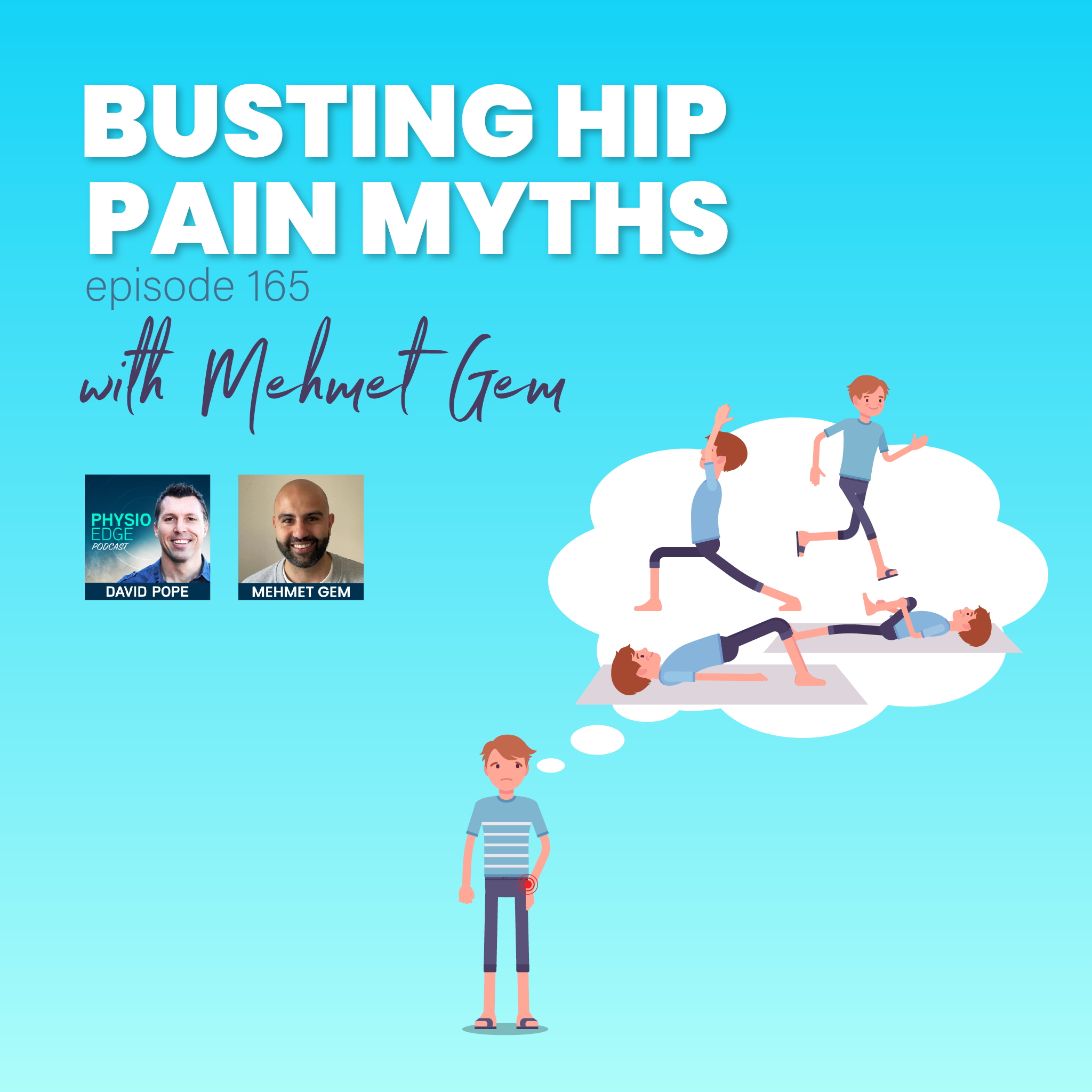 165. Busting hip pain myths with Mehmet Gem | Join hosts David Pope and The Hip Physio - Mehmet Gem as they dive deep into the myths and misconceptions surrounding hip and groin pain. This podcast explores common myths about glutes and hip flexors, effective rehab exercises, and how to accurately assess and treat various hip conditions. Get free access to the "Tricky tendons" infographic series Unlock the secrets of successful tendinopathy assessment and treatment with this free infographic series for therapists. Links Improve your musculoskeletal and sports injury assessment & treatment results with a free trial Clinical Edge membership LEAP Trial Click here to register and receive immediate access to the Tricky tendons infographic series Free Achilles tendinopathy video series with Tom Goom David Pope at Clinical Edge Download and subscribe to the podcast on iTunes Download the podcast in Overcast Listen to the podcast on Spotify Mehmet Gem David Pope on Twitter David Pope & why I started Clinical Edge Review the podcast on iTunes Infographics by Clinical Edge Chapter markes: 00:00 Intro 00:27 Getting to know Mehmet 03:11 Glute myths and misconceptions - Can patients have "gluteal amnesia" or "switched off glutes"? 08:54 When and how to test & improve glute strength 12:58 Functional glute testing 14:49 Mehmet's favourite glute exercises 19:22 Greater trochanteric pain syndrome/gluteal tendinopathy 23:04 Stretches for lateral hip pain? 25:52 Should patients perform hip mobility exercises? 29:07 Improving hip range of movement 36:48 When to test hip range of movement 39:40 Differentiating hip osteoarthritis (OA) from GTPS 44:24 Hip objective assessment - OA vs GTPS 46:51 GTPS diagnosis 49:44 Return to running with hip dysplasia 52:37 Hip flexors - what are they responsible for? 53:42 Do hip flexors get tight from sitting? 54:39 Hip flexors - objective assessment 57:43 Hip rehab exercises | — | ||||||
| 7/18/24 | 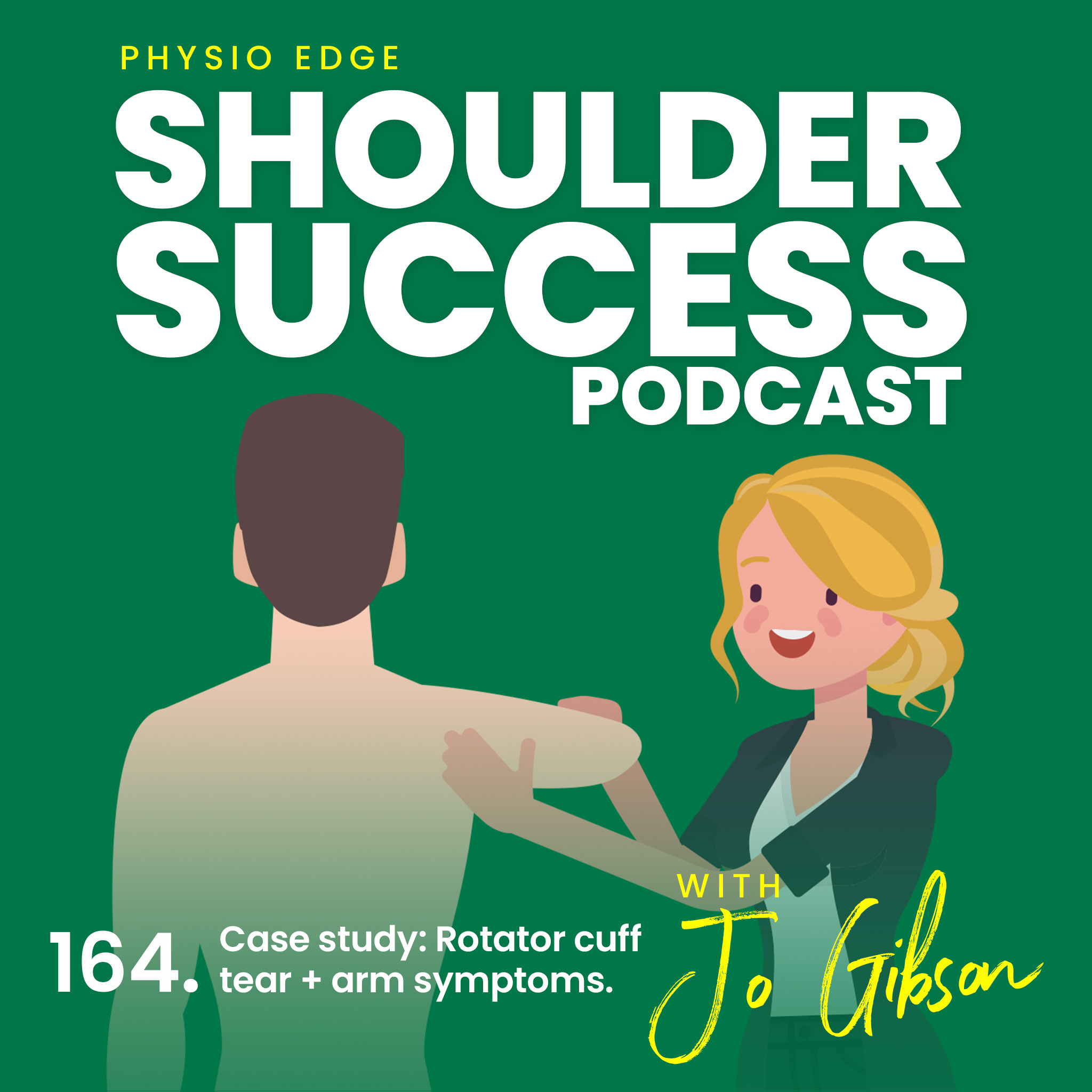 164. Case study: Rotator cuff tear + arm symptoms. Physio Edge Shoulder Success podcast with Jo Gibson | Upper Limb Rehabilitation Specialist Jo Gibson explores an intriguing case of an 84-year-old man with a massive rotator cuff tear of the supraspinatus and partial subscapularis tear. Despite his long history of shoulder issues, he's improving, but constant pain and intermittent numbness in his posterior arm and into his hand complicate the situation. In this podcast, you'll explore: What a massive rotator cuff tear (MRCT) is Common pain patterns with rotator cuff tears Why the Suprascapular nerve can be affected in MRCT's How to set realistic expectations with patients about their recovery Common causes of pain into the posterior arm, wrist and hand How to differentially diagnose shoulder, arm and hand pain Assessment tests to identify and exclude cervical involvement When nerve conduction tests or EMG should be performed Rehabilitation ideas for this patient Listen to this podcast now to improve your rehabilitation of shoulder & arm pain and rotator cuff tears. Free shoulder assessment infographic series Click here to access the free shoulder infographic series and learn how to easily assess shoulder pain patients with this simple 6-step shoulder assessment from Jo Gibson The handout for this podcast consists of a transcript and research articles referenced in this podcast. Click here for the free webinar with Jo Gibson "Rotator cuff revealed! Rehab & reasoning". Free video series "Frozen shoulder assessment & treatment" with Jo Gibson Improve your frozen shoulder assessment and treatment now with Jo Gibson's free video series at clinicaledge.co/shoulder Shoulder: Steps to Success online course with Jo Gibson Improve your assessment and treatment of shoulder pain with the Shoulder: Steps to Success online course with Jo Gibson, now available for enrolment at clinicaledge.co/shouldersuccess Free trial Clinical Edge membership Use a fresh approach to your musculoskeletal and sports injury treatment with a free trial Clinical Edge membership at clinicaledge.co/freetrial Links associated with this episode: Free shoulder assessment infographic series with Jo Gibson Free webinar - Rotator cuff revealed: Rehab & reasoning with Jo Gibson Get your access to the free video series "Frozen shoulder assessment & treatment" with Jo Gibson Improve your shoulder assessment & treatment with the Shoulder: Steps to Success online course with Jo Gibson Improve your confidence and clinical reasoning with a free trial Clinical Edge membership Join Jo Gibson live on Facebook & ask your shoulder related questions every Monday Download and subscribe to the podcast on iTunes Download the podcast now using the best podcast app currently in existence - Overcast Listen to the podcast on Spotify Jo Gibson on Twitter Let David know what you liked about this podcast on Twitter Review the podcast on iTunes Infographics by Clinical Edge | — | ||||||
| 4/17/24 | 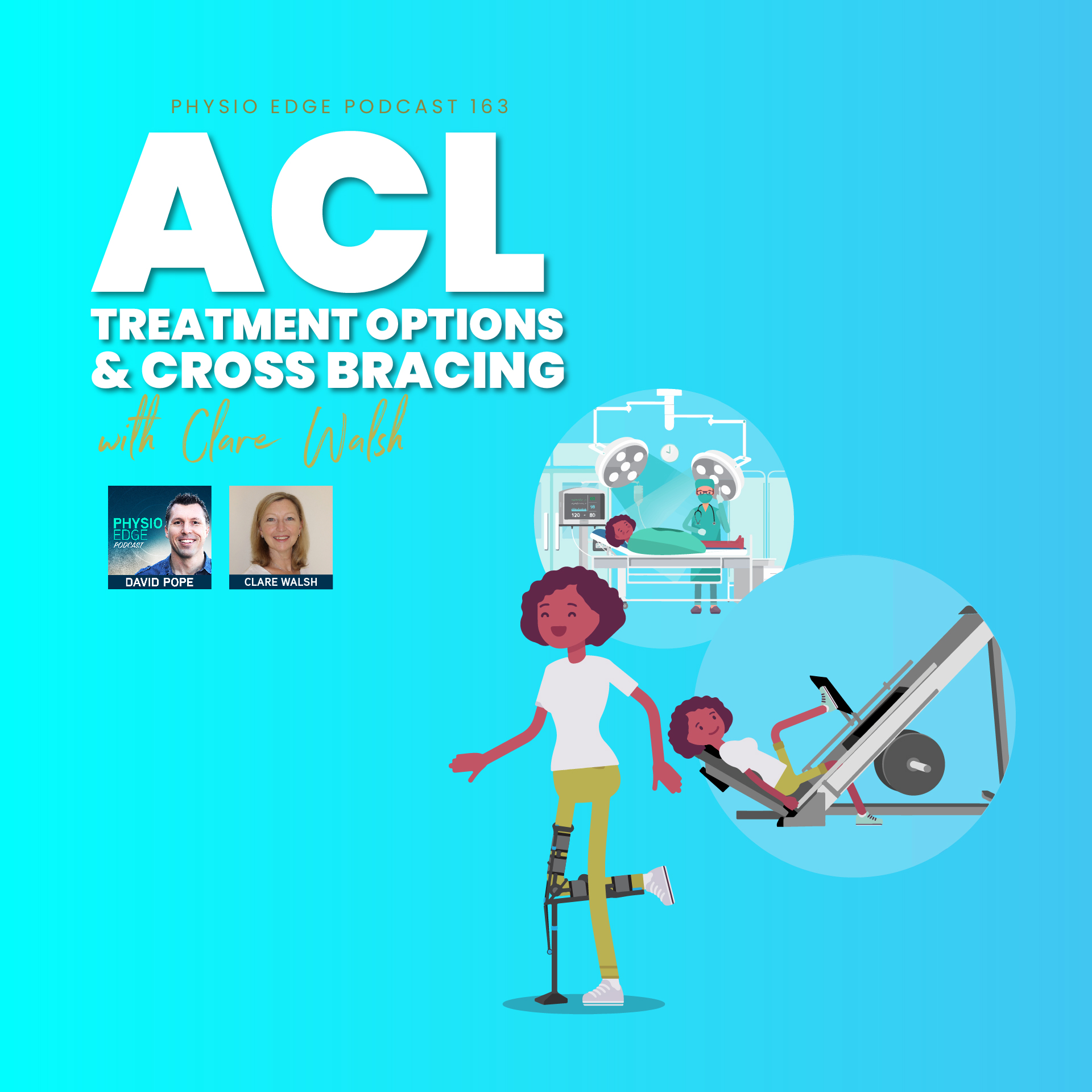 163. ACL treatment options and cross-bracing with Clare Walsh | ACL injuries result in significant time away from sport and distress for patients. The variety of management options, from surgical intervention to non-surgical management and rehabilitation protocols, often makes us uncertain when educating and helping patients choose the most appropriate care for their needs and goals. Recently, a new non-operative ACL injury management pathway called the "Cross bracing protocol" has been pioneered and developed by Dr Tom Cross and Tom's father (the late Orthopaedic surgeon) Dr Merv Cross. This protocol offers a promising alternative for patients with ACL injuries who are suitable for non-surgical intervention, where the ACL injury may heal or repair itself. Not all patients with an ACL injury are suitable for the Cross bracing protocol or non-surgical management, so how can you identify whether your patient is suitable, and which treatment options are best for each patient? In this insightful podcast episode, we discuss the complex challenge of ACL injury management and Cross bracing with Clare Walsh (Specialist Sports & Exercise Physiotherapist, FACP). Clare treats a lot of patients with ACL injuries with prehabilitation, post-op rehabilitation, or non-surgical management including Cross bracing. Clare works alongside Dr Tom Cross and other Sports Medicine Doctors, Orthopaedic surgeons (including the late Dr Merv Cross) and leading Sports Physiotherapists at Stadium Sports Physiotherapy and The Stadium Clinic. Clare teaches on the Cross bracing course conducted in Australia for Physiotherapists and health professionals, and is a Senior Educator & Presenter here at Clinical Edge. In this podcast we explore: Cross bracing What it is and how it developed. What research has been performed to date, and what it shows about the chances of ACL healing with the Cross bracing protocol. Assessment tests & specific imaging that are used to assess patient suitability. Why patients might opt for Cross bracing rather than surgery. Who isn't suitable for Cross bracing. Potential negative outcomes of Cross bracing. Which patients are more likely to be suitable and successful with Cross bracing - eg. injury type, age, level of sport, goals, psychosocial factors. Medical factors that impact suitability. Psychosocial factors that impact whether a patient can undergo the protocol. Which leg (right or left) is better suited to bracing and why. Which type of braces are commonly used. How soon the protocol needs to commence after injury to be successful. Which concomitant injuries can still heal in a brace and which need surgery e.g. meniscus injuries, bucket handle tears of the meniscus, MCL tears. How long patients remain in a brace. Exercises and activities that can and should be performed throughout Cross bracing. How patients can move or walk around throughout the Cross bracing period. How Cross bracing has changed and evolved. Whether the ACL is at increased risk of re-rupture following the protocol. Essential medical management during the protocol. Whether therapists can put a patient in a brace, or manage the protocol independently. What to you do if you think a patient may be suitable for Cross bracing. How to refer patients for Cross bracing Followup imaging at the end of the protocol. Functional assessment tests used at the end of the protocol. Return to training (RTT) and return to play (RTP) following the protocol. Which patients require surgery instead of conservative management. Early surgery vs delayed surgery. Spontaneous ACL healing - what the research says. How to use patient-centred decision-making to guide patients into the most suitable recovery pathway - surgery, bracing or non-surgical management. Case studies and comparisons of patients that underwent either Cross bracing or ACL reconstruction. This podcast is packed full of great information on this emerging ACL injury treatment. You'll finish this podcast with a deeper understanding of ACL injury management and Cross bracing plus practical knowledge, solutions and insights you can apply into your practice. Links Improve your musculoskeletal and sports injury assessment & treatment results with a free trial Clinical Edge membership Free Achilles tendinopathy video series with Tom Goom David Pope at Clinical Edge Download and subscribe to the podcast on iTunes Download the podcast in Overcast Listen to the podcast on Spotify Clare Walsh on Twitter David Pope on Twitter David Pope & why I started Clinical Edge Review the podcast on iTunes Infographics by Clinical Edge | — | ||||||
| 4/5/24 |  162. Three top tips for treating runners with a meniscal injury. Physio Edge Track record: Running repairs podcast with Tom Goom | How can you treat patients who experience knee pain and swelling during and after running? If you suspect their symptoms are caused by a meniscal injury, how can you rehab and return these patients to running without surgery? In this Physio Edge: Running repairs podcast with Tom Goom, you'll explore meniscal injuries in runners, recent research on runners with meniscal tears, and how to provide effective non-surgical management. You'll discover: Initial steps for managing pain and swelling in affected runners. Techniques to restore and maintain range of movement. Strategies for rebuilding strength in key muscle groups. Approaches to improve impact control and tolerance, preparing runners for a gradual return to their sport. When to manage these patients non-surgically, and when to refer for a surgical opinion. Tom explores the physical aspects of recovery, along with the impact of general health, weight management, and gait retraining on knee health. With a realistic timeline for recovery and a focus on individualised treatment plans, this podcast is a must-listen for therapists who treat runners. 🔗 Free Webinar Alert! Don't miss out on our free webinars for therapists on shin pain and Achilles tendinopathy in runners. Check the links below for more information. Free running injury assessment & treatment video series available now Improve running injury assessment & treatment now with the Running Repairs Online course with Tom Goom at clinicaledge.co/runningrepairs. Links associated with this episode: Free Achilles tendinopathy videos Discover the simple secrets to successfully treat tendon pain in this free three part video series with Tom Goom Improve your confidence and clinical reasoning with a free trial Clinical Edge membership Join Tom live on Facebook & ask your shoulder related questions every Friday Download and subscribe to the podcast on iTunes Download the podcast now using the best podcast app currently in existence - Overcast Listen to the podcast on Spotify Tom Goom on Twitter Tom Goom's website David Pope - Twitter David Pope & why I started Clinical Edge Review the podcast on iTunes Infographics by Clinical Edge Chapters: 03:36 - Recent research 05:17 - Management 09:26 - Restore ROM 10:42 - Rebuild muscle strength 12:07 - Return to sport 17:03 - Surgical & non-surgical management | — | ||||||
| 3/14/24 |  161. Overcoming persistent shoulder pain in tennis players with Jo Gibson | Jo Gibson (Upper Limb Rehabilitation Specialist Physio) discusses the keys to successfully treat persistent anterior shoulder pain in two tennis players who had not recovered despite previous extensive rehab. In this podcast Jo explores what to include in your rehab of sportspeople who place large demands on their shoulders, elements commonly overlooked in shoulder rehab and how to address patients' psychosocial factors, fears and beliefs to successfully treat persistent shoulder pain. Click here for the free webinar with Jo Gibson "Rotator cuff revealed! Rehab & reasoning". The handout for this podcast consists of a transcript and research articles referenced in this podcast. Free video series "Frozen shoulder assessment & treatment" with Jo Gibson Improve your frozen shoulder assessment and treatment now with Jo Gibson's free video series at clinicaledge.co/shoulder Shoulder: Steps to Success online course with Jo Gibson Improve your assessment and treatment of shoulder pain with the Shoulder: Steps to Success online course with Jo Gibson, now available for enrolment at clinicaledge.co/shouldersuccess Free trial Clinical Edge membership Use a fresh approach to your musculoskeletal and sports injury treatment with a free trial Clinical Edge membership at clinicaledge.co/freetrial Links associated with this episode: Free webinar - Rotator cuff revealed: Rehab & reasoning with Jo Gibson Get your access to the free video series "Frozen shoulder assessment & treatment" with Jo Gibson Improve your shoulder assessment & treatment with the Shoulder: Steps to Success online course with Jo Gibson Improve your confidence and clinical reasoning with a free trial Clinical Edge membership Join Jo Gibson live on Facebook & ask your shoulder related questions every Monday Download and subscribe to the podcast on iTunes Download the podcast now using the best podcast app currently in existence - Overcast Listen to the podcast on Spotify Jo Gibson on Twitter Let David know what you liked about this podcast on Twitter Review the podcast on iTunes Infographics by Clinical Edge Articles associated with this episode: CLICK HERE to download the articles associated with this podcast Lluch-Girbés E, Requejo-Salinas N, Fernández-Matías R, Revert E, Mejías MV, Camargo PR, Jaggi A, Sciascia A, Horsley I, Pontillo M, Gibson J. Kinetic chain revisited: Consensus expert opinion on terminology, clinical reasoning, examination and treatment in people with shoulder pain. Journal of shoulder and elbow surgery. 2023 Feb 15.t McMullen J, Uhl TL. A kinetic chain approach for shoulder rehabilitation. Journal of athletic training. 2000 Jul;35(3):329.t Ellenbecker TS, Aoki R. Step by step guide to understanding the kinetic chain concept in the overhead athlete. Current reviews in musculoskeletal medicine. 2020 Apr;13:155-63.t Podcast chapters: 02:30 - Case studies: 2 tennis players 03:14 - Kinetic chain definition 04:18 - When to consider the kinetic chain 07:07 - Screening tests 10:17 - Objective measures | — | ||||||
| 2/8/24 | 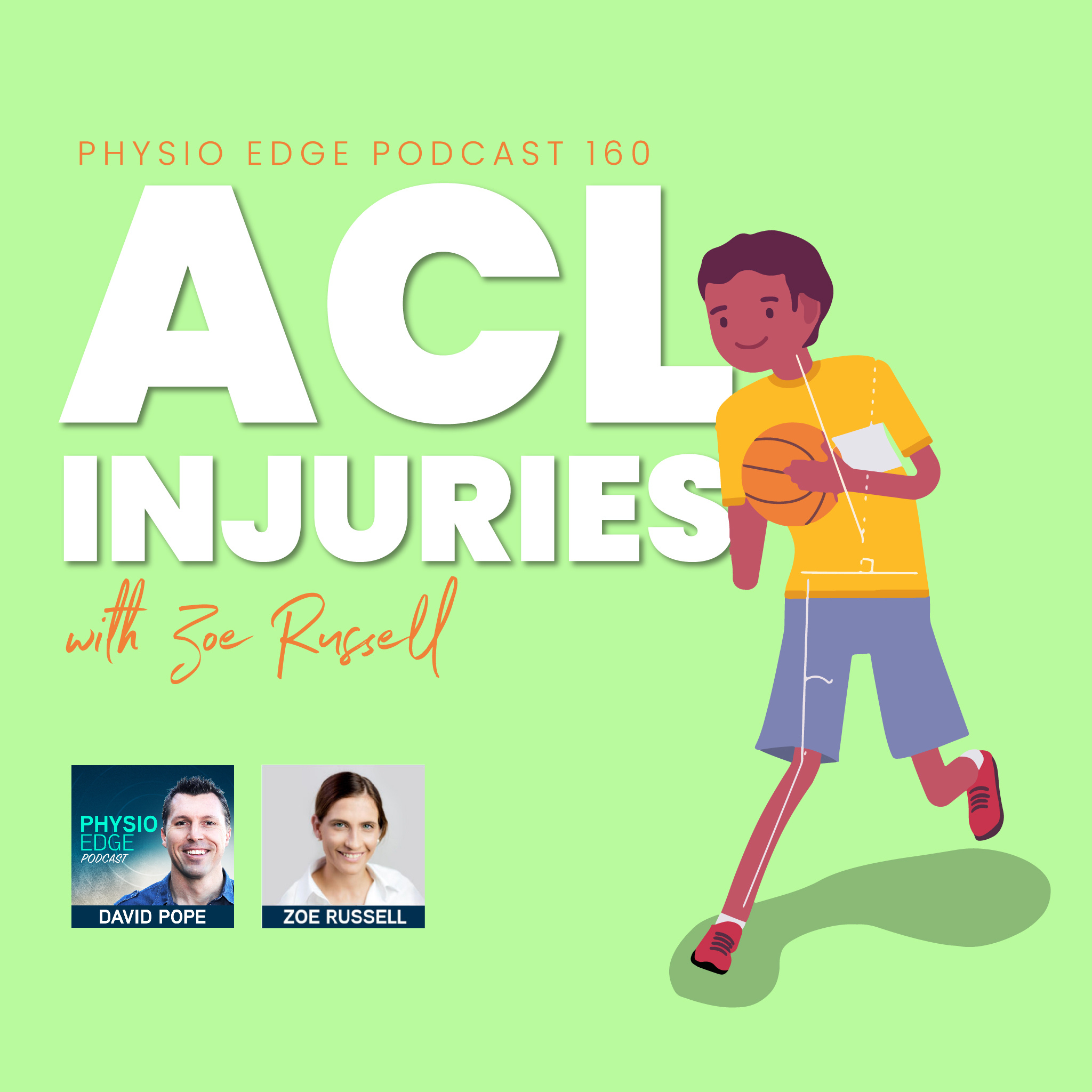 160. ACL injuries with Zoe Russell | Join David Pope (APA Titled Musculoskeletal and Sports & Exercise Physio) and Zoe Russell (Specialist Sports Physiotherapist, FACP; APA Titled Musculoskeletal Physio) in the Physio Edge podcast as they explore how to assess, treat, and manage patients suffering from ACL injuries or suspected ACL injuries. You'll discover how to assess a patient with a suspected ACL injury, and criteria you can use to identify whether a patient may be suited to non-surgical management or is likely to require surgery. You'll also understand when immediate or delayed surgery is the best option, and how to guide patients through the decision-making process and different phases of rehab. Listen in to provide your ACL injury patients with the best treatment options. Links associated with this podcast Improve your musculoskeletal and sports injury assessment & treatment results with a free trial Clinical Edge membership Free Achilles tendinopathy video series with Tom Goom David Pope at Clinical Edge Download and subscribe to the podcast on iTunes Download the podcast in Overcast Listen to the podcast on Spotify Zoe Russell on Twitter David Pope on Twitter David Pope & why I started Clinical Edge Review the podcast on iTunes Infographics by Clinical Edge Click here or on the image below for podcast 163. ACL treatment options & Cross bracing with Clare Walsh | — | ||||||
| 8/24/23 |  159. Rotator cuff tear arthropathy & subscapularis tears. Physio Edge Shoulder Success podcast with Jo Gibson | Rotator cuff tear arthropathy (RCTA) is a pattern of glenohumeral joint degenerative changes following rotator cuff tears, causing shoulder pain and stiffness. Subscapularis tears can also be involved in RCTA, or a significant cause of shoulder pain and disability. How can you identify RCTA and subscap tears in your shoulder pain patients? How can they be treated, and do these patients respond well to non-surgical management? Find out in this podcast with Jo Gibson (Upper Limb Rehabilitation Specialist Physio). The handout for this podcast consists of a transcript and research articles referenced in this podcast. Free trial Clinical Edge membership Use a fresh approach to your musculoskeletal and sports injury treatment with a free trial Clinical Edge membership at clinicaledge.co/freetrial Links associated with this episode: Improve your confidence and clinical reasoning with a free trial Clinical Edge membership Join Jo Gibson live on Facebook & ask your shoulder related questions every Monday Download and subscribe to the podcast on iTunes Download the podcast now using the best podcast app currently in existence - Overcast Listen to the podcast on Spotify Jo Gibson on Twitter Let David know what you liked about this podcast on Twitter Review the podcast on iTunes Infographics by Clinical Edge Articles associated with this episode: Download the handout above to receive the following articles Conaire EÓ, Delaney R, Lädermann A, Schwank A, Struyf F. Massive Irreparable Rotator Cuff Tears: Which Patients Will Benefit from Physiotherapy Exercise Programs? A Narrative Review. International Journal of Environmental Research and Public Health. 2023 Mar 23;20(7):5242. Fahy K, Galvin R, Lewis J, Mc Creesh K. Exercise as effective as surgery in improving quality of life, disability, and pain for large to massive rotator cuff tears: A systematic review & meta-analysis. Musculoskeletal Science and Practice. 2022 Jun 10:102597. Chapters: 03:25 - What is cuff arthropathy? 05:35 - Contributing factors 07:33 - Patient history 08:37 - Subscapularis tendon tears 12:29 - Common mechanisms of injury 13:46 - Assessment tests 16:51 - Rotator cuff related shoulder pain | — | ||||||
| 8/21/23 |  158. Hip dysplasia treatment. Physio Edge Track record: Running repairs podcast with Tom Goom | How can you successfully treat hip pain and instability associated with your patients' hip dysplasia? Find out the eight critical steps to excellent results with hip dysplasia in this podcast, which is part 3 in this three-part podcast series with Tom Goom (Running Physio). Free running injury assessment & treatment video series available now Links associated with this episode: Physio Edge podcast 154 - Part 1 of 3 - Hip dysplasia key signs & symptoms with Tom Goom Physio Edge podcast 156 - Part 2 of 3 - 3 Types of hip dysplasia and how to identify them Improve your clinical skills, reasoning & results with a free trial Clinical Edge membership Download and subscribe to the podcast on iTunes Download the podcast in Overcast Listen to the podcast on Spotify Tom Goom on Twitter Tom Goom's website David Pope - Twitter David Pope & why I started Clinical Edge Review the podcast on iTunes Infographics by Clinical Edge Articles associated with this episode: Download the following article associated with this podcast Wilkin GP, Ibrahim MM, Smit KM, Beaulé PE. A contemporary definition of hip dysplasia and structural instability: toward a comprehensive classification for acetabular dysplasia. The Journal of arthroplasty. 2017 Sep 1;32(9):S20-7. Chapters: 05:36 - Step 1: Assessment 07:10 - Step 2: Investigations 08:35 - Step 3: Patient education 10:07 - Step 4: Settling symptoms 16:25 - Step 5: Strength 18:15 - Step 6: Control and proprioception 20:08 - Step 7: Co-existing pathology 21:09 - Step 8: General health 22:32 - Key points | — | ||||||
| 8/17/23 |  157. Case study: Frozen shoulder or misdiagnosis? Physio Edge Shoulder Success podcast with Jo Gibson | When a patient presents with a potential frozen shoulder, what other differential diagnoses must be considered? Find out in this podcast with Jo Gibson (Upper Limb Rehabilitation Specialist Physio), exploring the case study of a patient diagnosed with "frozen shoulder" with symptoms that don't quite match a typical frozen shoulder. What's the diagnosis of this patient's stiff shoulder? You'll also discover whether an X-ray or imaging is required when a patient presents with a stiff or frozen shoulder. Click here for the free webinar with Jo Gibson "Rotator cuff revealed! Rehab & reasoning". The handout for this podcast is the transcript associated with this podcast. Free trial Clinical Edge membership Use a fresh approach to your musculoskeletal and sports injury treatment with a free trial Clinical Edge membership at clinicaledge.co/freetrial Links associated with this episode: Get your access to the free webinar with Jo Gibson "Rotator cuff revealed! Rehab & reasoning". Improve your confidence and clinical reasoning with a free trial Clinical Edge membership Join Jo Gibson live on Facebook & ask your shoulder related questions every Monday Download and subscribe to the podcast on iTunes Download the podcast now using the best podcast app currently in existence - Overcast Listen to the podcast on Spotify Jo Gibson on Twitter Let David know what you liked about this podcast on Twitter Review the podcast on iTunes Infographics by Clinical Edge Chapters: 04:03 - Case study 07:23 - Frozen shoulder or misdiagnosis? 10:21 - Screening tests 10:58 - Risk factors 17:14 - Key points | — | ||||||
| 6/12/23 |  156. 3 types of hip dysplasia and how to identify them. Physio Edge Track record: Running repairs podcast with Tom Goom | Hip dysplasia is a commonly missed cause of hip and groin pain. In this podcast, which is part 2 in the 3 part series with Tom Goom (Running Physio), you'll discover three types of hip dysplasia that will cause different symptoms and need different treatment (based on Wilkins et al. 2017), how to identify each type, and common exercises and a treatment approach that may be stirring up your patients hip and groin pain. Improve running injury assessment & treatment now with the Running Repairs Online course with Tom Goom at clinicaledge.co/runningrepairs Free running injury assessment & treatment video series available now Links associated with this episode: Physio Edge podcast 154 - Part 1 of 3 - Hip dysplasia key signs & symptoms with Tom Goom Improve your confidence and clinical reasoning with a free trial Clinical Edge membership Join Tom live on Facebook & ask your shoulder related questions every Friday Download and subscribe to the podcast on iTunes Download the podcast now using the best podcast app currently in existence - Overcast Listen to the podcast on Spotify Tom Goom on Twitter Tom Goom's website David Pope - Twitter David Pope & why I started Clinical Edge Review the podcast on iTunes Infographics by Clinical Edge Article associated with this episode: Download the podcast handout to receive the article associated with this podcast. Wilkin GP, Ibrahim MM, Smit KM, Beaulé PE. A contemporary definition of hip dysplasia and structural instability: toward a comprehensive classification for acetabular dysplasia. The Journal of arthroplasty. 2017 Sep 1;32(9):S20-7. Chapters: 03:12 - Signs & symptoms 06:05 - Assessment 08:05 - 3 types of hip dysplasia 08:28 - Anterior instability 09:58 - Posterior instability 11:42 - Lateral/global instability 13:29 - Key takeaways | — | ||||||
| 6/2/23 |  155. Stingers, burners & shoulder instability in sport. Physio Edge Shoulder Success podcast with Jo Gibson | Stingers or burners are a burning or stinging pain, often with some paraesthesia and occasionally weakness, often occurring in impact sports such as rugby or American football. When your patients present with neck and arm symptoms, how can you differentiate a stinger or burner from a C/sp fracture, discogenic symptoms or nerve root compression, which all require very different treatment? How should you manage patients with one-off or repeated stingers or burners? Find out in this podcast with Jo Gibson (Upper Limb Rehabilitation Specialist Physio). The handout for this podcast consists of a transcript, summary and articles referenced in the podcast. Click here for the free webinar with Jo Gibson "Rotator cuff revealed! Rehab & reasoning". Free trial Clinical Edge membership Use a fresh approach to your musculoskeletal and sports injury treatment with a free trial Clinical Edge membership at clinicaledge.co/freetrial Links associated with this episode: Free webinar - Rotator cuff revealed: Rehab & reasoning with Jo Gibson Improve your confidence and clinical reasoning with a free trial Clinical Edge membership Join Jo Gibson live on Facebook & ask your shoulder related questions every Monday Download and subscribe to the podcast on iTunes Download the podcast now using the best podcast app currently in existence - Overcast Listen to the podcast on Spotify Jo Gibson on Twitter Let David know what you liked about this podcast on Twitter Review the podcast on iTunes Infographics by Clinical Edge Articles associated with this episode: Download the podcast handout to receive the articles associated with this podcast. Bowles DR, Canseco JA, Alexander TD, Schroeder GD, Hecht AC, Vaccaro AR. The prevalence and management of stingers in college and professional collision athletes. Current reviews in musculoskeletal medicine. 2020 Dec;13:651-62. Sobue S, Kawasaki T, Hasegawa Y, Shiota Y, Ota C, Yoneda T, Tahara S, Maki N, Matsuura T, Sekiguchi M, Itoigawa Y. Tackler's head position relative to the ball carrier is highly correlated with head and neck injuries in rugby. British journal of sports medicine. 2018 Mar 1;52(6):353-8. Swiatek PR, Nandurkar TS, Maroon JC, Cantu RC, Feuer H, Bailes JE, Hsu WK. Return to play guidelines after cervical spine injuries in American football athletes: a literature-based review. Spine. 2021 Jul 1;46(13):886-92. Chapters: 03:56 - What are stingers or burners? 08:13 - 3 key mechanisms 14:36 - Signs & symptoms 15:36 - Management guidelines 18:46 - Shoulder instability treatment | — | ||||||
| 5/19/23 |  154. Hip dysplasia key signs and symptoms. Physio Edge Track record: Running repairs podcast with Tom Goom | Hip dysplasia is a commonly missed cause of hip and groin pain, catching, clicking, locking or popping, resulting from lack of coverage of the femoral head by the acetabulum. How can you identify hip dysplasia in your hip or groin pain patients, and avoid misdiagnosing it as iliopsoas or adductor related groin pain? What signs and symptoms will your patients reveal in their subjective history that'll help you identify this condition? Find out the key signs and symptoms of hip dysplasia in this podcast with Tom Goom (Running Physio). Improve running injury assessment & treatment now with the Running Repairs Online course with Tom Goom at clinicaledge.co/runningrepairs Free running injury assessment & treatment video series available now Links associated with this episode: Improve your confidence and clinical reasoning with a free trial Clinical Edge membership Join Tom live on Facebook & ask your shoulder related questions every Friday Download and subscribe to the podcast on iTunes Download the podcast now using the best podcast app currently in existence - Overcast Listen to the podcast on Spotify Tom Goom on Twitter Tom Goom's website David Pope - Twitter David Pope & why I started Clinical Edge Review the podcast on iTunes Infographics by Clinical Edge Articles associated with this episode: Download the podcast handout to receive the articles associated with this podcast. Jacobsen JS, Søballe K, Thorborg K, Bolvig L, Storgaard Jakobsen S, Hölmich P, Mechlenburg I. Patient-reported outcome and muscle–tendon pain after periacetabular osteotomy are related: 1-year follow-up in 82 patients with hip dysplasia. Acta orthopaedica. 2019 Jan 2;90(1):40-5. Nunley RM, Prather H, Hunt D, Schoenecker PL, Clohisy JC. Clinical presentation of symptomatic acetabular dysplasia in skeletally mature patients. JBJS. 2011 May 4;93(Supplement_2):17-21. O'Brien MJ, Jacobsen JS, Semciw AI, Mechlenburg I, Tønning LU, Stewart CJ, Heerey J, Kemp JL. Physical impairments in Adults with Developmental Dysplasia of the Hip (DDH) undergoing Periacetabular osteotomy (PAO): A Systematic Review and Meta-Analysis. International Journal of Sports Physical Therapy. 2022 Oct 1;17(6):988-1001. Reiman MP, Décary S, Mathew B, Reiman CK. Accuracy of clinical and imaging tests for the diagnosis of hip dysplasia and instability: a systematic review. journal of orthopaedic & sports physical therapy. 2019 Feb;49(2):87-97. Chapters: 03:43 - Who develops hip dysplasia? 06:35 - Objective tests 09:11 - Hip dysplasia vs gluteal tendinopathy 10:45 - Hip dysplasia vs femoral neck stress structure 14:13 - Key takeaways | — | ||||||
| 4/20/23 |  153. Posterior shoulder instability assessment, surgery & rehab. Physio Edge Shoulder Success podcast with Jo Gibson | Posterior shoulder instability can occur after a fall onto an outstretched arm, or diving and hitting the ground with your arm (like diving to score a try in rugby), injuring the posterior labrum and/or the glenohumeral joint. Unlike anterior shoulder instability, patients with posterior shoulder instability may not have a feeling of instability, but may just experience pain, fatigue and weakness. How can you identify posterior shoulder instability in your shoulder pain patients? What does your rehab for posterior shoulder instability need to include? Find out in this podcast with Jo Gibson (Upper Limb Rehabilitation Specialist Physio). The handout for this podcast consists of a transcript, a summary and articles referenced in the podcast. Click here for the free webinar with Jo Gibson "Rotator cuff revealed! Rehab & reasoning". Free trial Clinical Edge membership Use a fresh approach to your musculoskeletal and sports injury treatment with a free trial Clinical Edge membership at clinicaledge.co/freetrial Links associated with this episode: Free webinar - Rotator cuff revealed: Rehab & reasoning with Jo Gibson Improve your confidence and clinical reasoning with a free trial Clinical Edge membership Join Jo Gibson live on Facebook & ask your shoulder related questions every Monday Download and subscribe to the podcast on iTunes Download the podcast now using the best podcast app currently in existence - Overcast Listen to the podcast on Spotify Jo Gibson on Twitter Let David know what you liked about this podcast on Twitter Review the podcast on iTunes Infographics by Clinical Edge Articles associated with this episode: Download the podcast handout to receive the articles associated with this podcast. Brelin A, Dickens JF. Posterior shoulder instability. Sports Medicine and Arthroscopy Review. 2017 Sep 1;25(3):136-43. Gutkowska O, Martynkiewicz J, Urban M, Gosk J. Brachial plexus injury after shoulder dislocation: a literature review. Neurosurgical review. 2020 Apr;43:407-23. Longo UG, Ciuffreda M, Locher J, Casciaro C, Mannering N, Maffulli N, Denaro V. Posterior shoulder instability: a systematic review. British Medical Bulletin. 2020 Jul 9. Sadi J, Torchia E, Faber KJ, MacDermid J, Lalonde C, Watson L, Weber M, Wu N. Posterior shoulder instability classification, assessment, and management: an international Delphi study. Journal of Orthopaedic & Sports Physical Therapy. 2020 Jul;50(7):373-80. Chapters: 03:17 - Case study 06:57 - Assessment tests 13:17 - Rehab 15:32 - Other treatment options 16:10 - Recovery 17:43 - Scapular dyskinesis 21:59 - Barriers to recovery | — | ||||||
| 3/13/23 |  152. When should patients permanently stop running? Physio Edge Track record: Running repairs podcast with Tom Goom | After injury or surgery, a lot of runners are told to stop running for different reasons. How can you answer patients that ask if they need to give up running for good? When should patients consider permanently stopping running? Find out in this podcast with Tom Goom (Running Physio). Free running injury assessment & treatment video series available now Links associated with this episode: Improve your confidence and clinical reasoning with a free trial Clinical Edge membership Join Tom live on Facebook & ask your shoulder related questions every Friday Download and subscribe to the podcast on iTunes Download the podcast now using the best podcast app currently in existence - Overcast Listen to the podcast on Spotify Tom Goom on Twitter Tom Goom's website David Pope - Twitter David Pope & why I started Clinical Edge Review the podcast on iTunes Infographics by Clinical Edge Chapters: 03:25 - Stop running permanently 8:15 - Safe to continue running? 10:05 - Post ACL surgery 11:22 - Knee OA 13:27 - Running rehab plan 16:44 - Key takeaways | — | ||||||
Showing 25 of 175
Pitch Fit is a Pro feature
See how bookable this show is for guests, which brands already advertise, the per-episode ad value, and the best-fit guest and sponsor profile. The numbers are blurred on the free plan.
How readily this show books outside guests like you.
How proven this show is for host-read sponsorships.
For Guests
ProFor Advertisers
ProUpgrade to Pro to unlock guest cadence, sponsor categories, fit scores, and per-episode ad value for this show.
Chart Positions
18 placements across 17 markets.
Chart Positions
18 placements across 17 markets.