

Insights from recent episode analysis
Audience Interest
Podcast Focus
Publishing Consistency
Platform Reach
Insights are generated by CastFox AI using publicly available data, episode content, and proprietary models.
Most discussed topics
Brands & references
No brand mentions extracted.
Total monthly reach
Estimated from 2 chart positions in 2 markets.
By chart position
- 🇬🇧GB · Mental Health#1165K to 30K
- 🇮🇳IN · Mental Health#1751K to 10K
- Per-Episode Audience
Est. listeners per new episode within ~30 days
3K to 20K🎙 ~2x weekly·299 episodes·Last published 6d ago - Monthly Reach
Unique listeners across all episodes (30 days)
6K to 40K🇬🇧75%🇮🇳25% - Active Followers
Loyal subscribers who consistently listen
2.4K to 16K
Market Insights
Platform Distribution
Reach across major podcast platforms, updated hourly
Total Followers
—
Total Plays
—
Total Reviews
—
* Data sourced directly from platform APIs and aggregated hourly across all major podcast directories.
On the show
From 10 epsHost
Recent guests
No guests detected in recent episodes.
Recent episodes
298 Thunderstorm over sonorous rural woodland (warning - sudden shock thunderclaps)
Jun 20, 2026
1h 32m 35s
297 Sonorous rural woodland before an approaching storm
Jun 2, 2026
1h 01m 48s
296 Looking out on Portland Harbour part 2
May 11, 2026
44m 50s
295 Low tide on the causeway - part II (sleep safe with occasional herring gulls and oyster catchers)
Apr 16, 2026
1h 01m 59s
294 Dawn in Shelve Wood Shropshire with cuckoo
Mar 21, 2026
1h 01m 54s
Social Links & Contact
Official channels & resources
Official Website
Login
RSS Feed
Login
| Date | Episode | Topics | Guests | Brands | Places | Keywords | Sponsor | Length | |
|---|---|---|---|---|---|---|---|---|---|
| 6/20/26 |  298 Thunderstorm over sonorous rural woodland (warning - sudden shock thunderclaps) | Last month on the evening of 26 May a huge lightning storm centred over a remote wooded area on the Leicestershire-Rutland border where we had left the Lento box alone to record. From where we were staying about three quarters of a mile away we could see fork lightning. We were worried that our equipment might not survive. In our last episode (297) we shared the hour before the tumult began. Now in episode 298, we’re sharing a 92 minute segment of what it sounded like to be within the uninhabited forest as the storm passed directly overhead*. When we were in the woodland looking for a good spot for the mics, the sky was pure blue and the sun was shining down brightly. Soft breezes flowed between the trees carrying scents of cow parsley and sweet smelling vegetation. A perfect early summer's day. As we tied the Lento box to the trunk of an ash tree we had no hint of the weather to come. Torrential rain. Constant rolling thunder. Many overhead lightning strikes. A deluged forest streaming with water but whose resident wildlife rapidly springs back into song. If you like the thrill of sudden shock thunderclaps this is probably the episode for you but as a general note to all listeners please be aware there are some extremely loud and sudden thunderclaps as well as various other sound quality glitches. This is definitely NOT sleep safe. Please treat this episode as being a sound witness to extreme weather conditions in a remote rural woodland. It's also an opportunity to hear how wildlife sounds change during and after storm conditions. * This episode contains some shock thunderclaps (most intense at 50m 22s). The soundscape integrity is temporarily degraded when the mics overload. There is also a physical problem with the box itself, a 30 minute long period where the torrential rain gathers high up in the tree and begins to stream down the trunk some of which drips on top of the box itself. The dripping does eventually ease off and the forest returns with all its deluged wateriness back to rich sonorous song. ** For obvious reasons we don't have a photo of the storm in the forest. The image is from the same storm as it headed towards the area where the box was recording. | 1h 32m 35s | ||||||
| 6/2/26 |  297 Sonorous rural woodland before an approaching storm✨ | natural soundscapesrural woodland+3 | — | — | LeicestershireRutland | soundscapethunder+6 | — | 1h 01m 48s | |
| 5/11/26 | 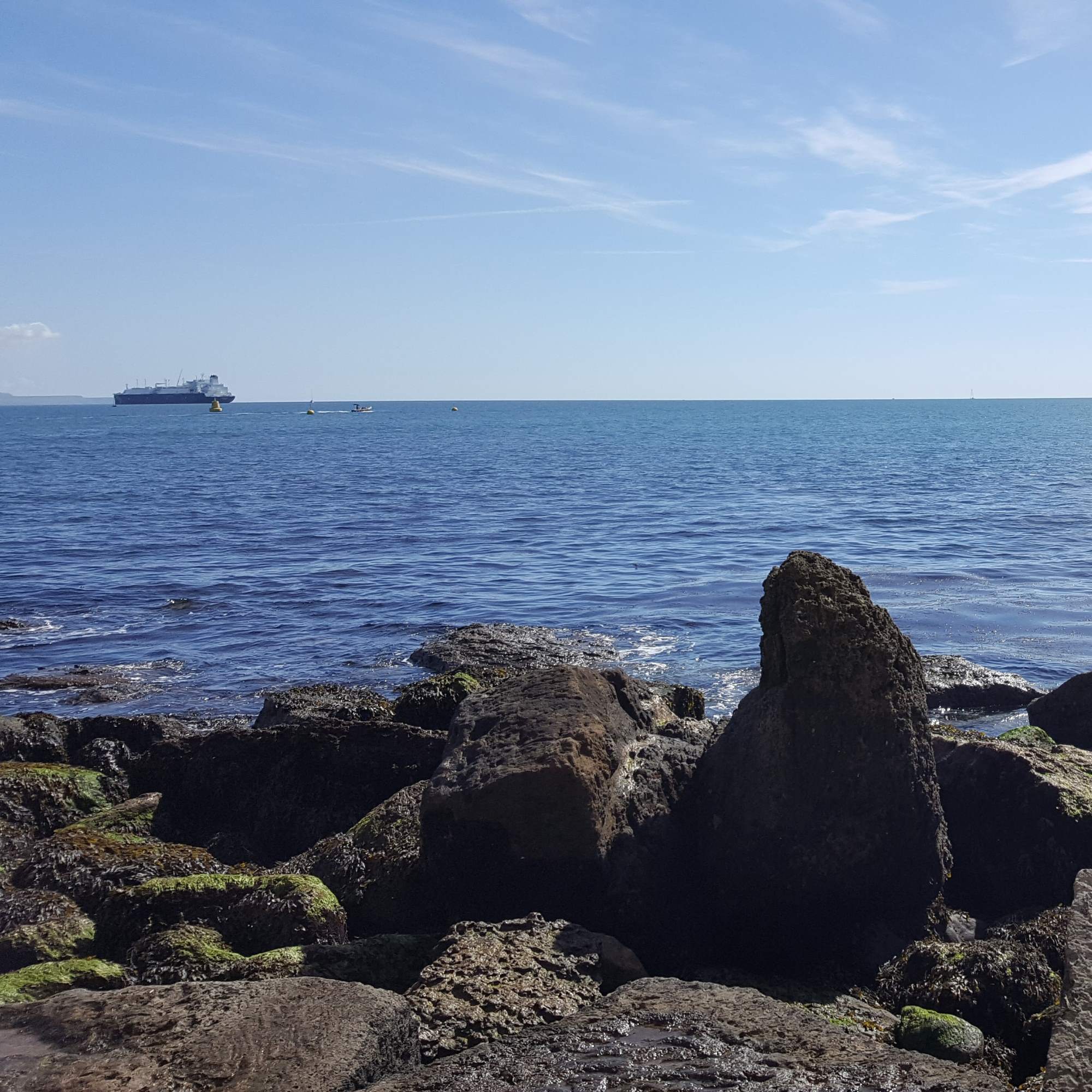 296 Looking out on Portland Harbour part 2✨ | naturepeace+4 | — | — | Portland HarbourNothe Fort+3 | Portland HarbourNothe Fort+6 | — | 44m 50s | |
| 4/16/26 |  295 Low tide on the causeway - part II (sleep safe with occasional herring gulls and oyster catchers)✨ | soundscapeisland+4 | — | — | Burgh IslandDevon+2 | soundsceneBurgh Island+5 | — | 1h 01m 59s | |
| 3/21/26 |  294 Dawn in Shelve Wood Shropshire with cuckoo✨ | naturesound recording+3 | — | — | Shelve WoodShropshire | dawn chorusShelve Wood+3 | — | 1h 01m 54s | |
| 3/2/26 |  293 Pools of Rye Harbour (sleep safe)✨ | nature soundssleep+4 | — | — | Rye Harbour Nature ReserveEast Sussex+1 | Rye Harbournature sounds+5 | — | 1h 00m 20s | |
| 2/12/26 |  292 Moorland trees in December gales - Derbyshire (sleep safe after owls at start)✨ | nature soundsoutdoor experience+3 | — | — | Derbyshire | moorlandtrees+6 | — | 1h 00m 04s | |
| 2/1/26 | 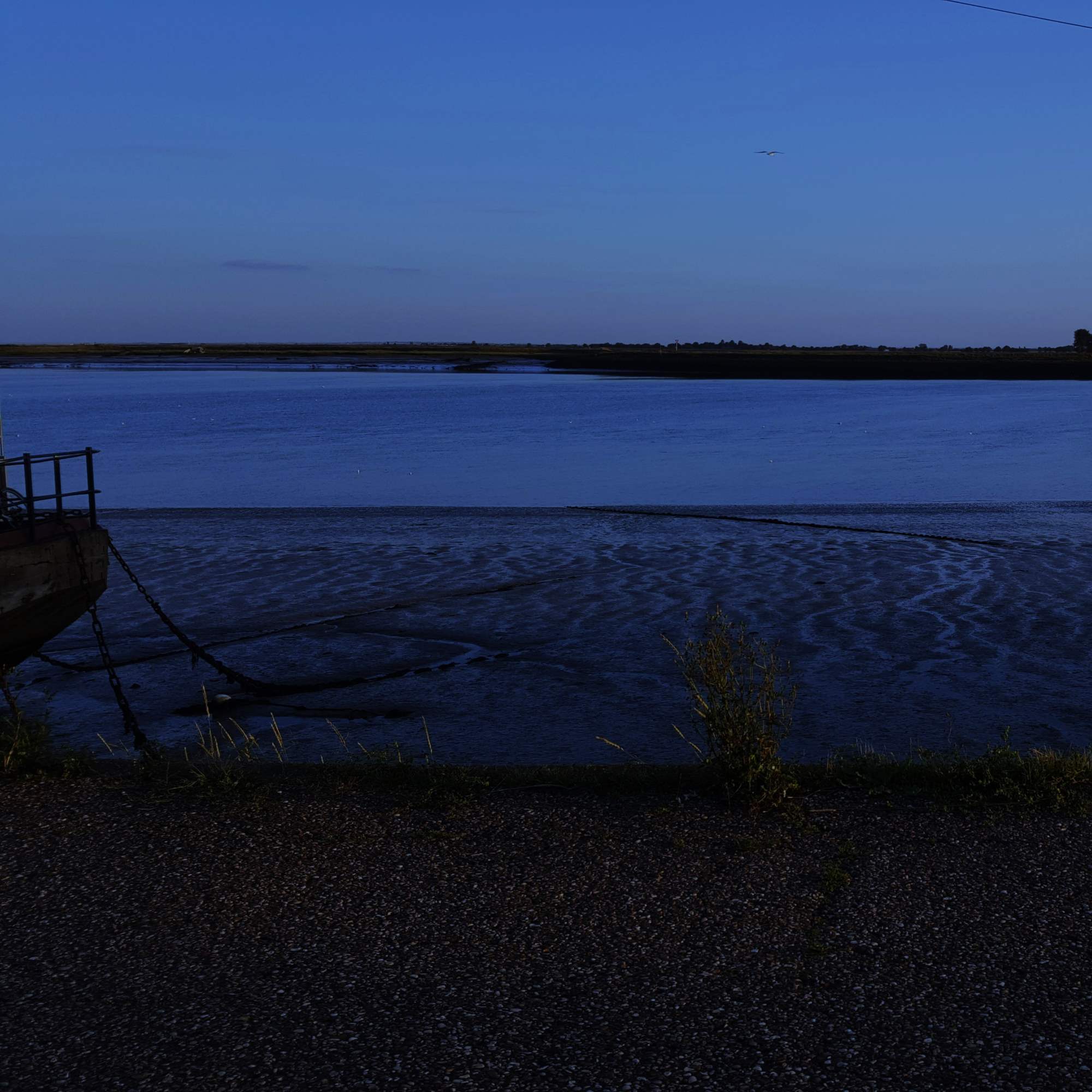 291 High tide turning - the Crouch Estuary in Essex (sleep safe)✨ | soundscapeestuary+4 | — | — | Crouch EstuaryEssex+1 | Crouch EstuaryEssex+6 | — | 49m 24s | |
| 1/18/26 |  290 Night rain in the Pyrenees (sleep safe)✨ | sleepnature sounds+3 | — | — | Sant Llorence de la MugaPyrenees | sleeprain+5 | — | 1h 02m 33s | |
| 1/7/26 |  289 Dawn birds of rural Shropshire✨ | nature soundsrural landscapes+3 | — | — | ShropshirePoles Coppice+1 | soundscapenature reserve+3 | — | 1h 15m 24s | |
Want analysis for the episodes below?Free for Pro Submit a request, we'll have your selected episodes analyzed within an hour. Free, at no cost to you, for Pro users. | |||||||||
| 12/13/25 |  288 Tidal estuary at night (sleep safe with plane at 23m)✨ | nature soundssleep+4 | — | — | Burnham-on-CrouchEssex+3 | tidenight sounds+4 | — | 30m 04s | |
| 12/2/25 |  287 Dusk on Boggle Hole beach - North Yorkshire coast | The still luminous sky above the sheer rock cliffs was turning an even deeper shade of blue, as we stepped down onto the wet sand of the beach at Boggle Hole. For a moment we just had to stand. Take it all in. Wide stretches of undulating sand. Half submerged boulders like sleeping elephants. Towering rock faces so vertical and so angled that they catch and reflect every breaking wave, every calling bird, every clack of a dislodged stone, back into your ears, so you hear them for a second time. The tide's been receding for several hours. We turn right, and walk to find a good spot to record. We follow the band of newly exposed sand along the tidal zone, dodging pools of stranded water. See sea birds swooping, then landing, momentarily. Snatch up a morsel. Then they're up and flying again. Herring gulls circle high overhead. Black headed gulls pass like projectiles, screeching for the empty air in front of them to get out of the way. Their bold cries caught, and reflected, by the plummeting cliffs of sheer vertical rock. This we know, we hear, we see, we feel, is a rarified place. A landscape of exceptional quality. It doesn't matter how many hundreds of miles we have to go to find places like this, it's always worth it. Environments where extreme quiet and extreme spatialness coexist, together, for hours. Undisturbed. Uninterrupted. Unspoiled. We found a spot, then left the Lento box on a tripod to record the scene alone, in the gathering dark. * We made this recording, or more accurately we took this sound photograph of Boggle Hole beach one evening last August whilst staying at the Youth Hostel. It's one of the most spatial sound captures we've made this year. Listen with headphones in a quiet place, and let yourself settle into the passage of time, to let your ears adjust and get the full spatial effect. | 45m 07s | ||||||
| 11/16/25 |  286 Night crickets of the Kent coast (long sleep safe + some soft overflying planes) | Capturing the sound-feel of real night quiet is special. It requires a lot of time and a location where quiet naturally occurs in more than just a fleeting way. Quiet is not silence. Silence is the absence of sound, whereas quiet happens when everything in the landscape is still audible. Just softer, and slower. Night brings quiet to natural and edgeland places. It enables us to better hear an environment's true spatialness and blend of sound signatures. By tying the Lento box to a tree looking down over the Warren on the Kent coast and exposing the microphones for over 50 hours non-stop, long periods of naturally occurring quiet were captured that serve as a true impression of this place. In this 90-minute passage of time taken from the dead of night on the second day of the recording, the sea can be heard distantly crashing onto the beach at the foot of the Warren. It surges and retreats, in slow unfurling rhythms. Close to the microphones, in the leaf litter around the tree, crickets call to each other in regular patterns, like naturally occurring clocks. Banks of wind blow in from time to time, gently ruffling leaves from left to right of scene. Sounds of indistinct origin sometimes echo across the valley, revealing the true width and depth of the space and far cries of seagulls, high flying in the vastness of the night sky. Of course this is England, and only a short distance from France. The headlights of French cars are sometimes visible from this very point. The Strait of Dover is one of the busiest shipping lanes in the world, and a flight path runs directly over this area. Despite these mechanisms of human life, the planes that do overfly during this passage of time are quite gentle in the way they traverse the sky. It is the night quiet, and the sea, and the crickets that speak for themselves, and mean we just have to share this recording so everyone can be a sound-witness to the quiet of this place. * We made this recording back in August 2024. We didn't actually intend to leave the Lento box out recording for so long (into a third day) but we're glad we did. | 1h 31m 30s | ||||||
| 10/31/25 |  285 Late October on Chesil Beach (sleep safe) | The making of this high-definition sound photograph of Chesil Beach began thanks to the number 1 bus from Weymouth to Portland. As we stepped aboard, the sky felt low. Folded and layered with grey October cloud. Rain was in the forecast so we'd taken raincoats. After twenty minutes and the final stretch across the exposed coastal road, the bus pulled into our stop. On the way the views of Portland had struck an impressive sight, pointed bravely out to sea. It felt blowy off the bus as it always does here, but no rain, yet. We crossed the road, then up and over the largest shingle berm of any coastal area we know. Dropping down more berms, scrunching over more acres of perfectly rounded pebbles, we and the Lento box finally arrived at the shoreline. Here is a soundscape that's beyond description. It takes a few minutes to acclimatise. Aural textures and flows wash around and through us, folding and layering like the clouds above. We'd forgotten how everything about this place engages the senses. Redefines what's normal. Resizes us into what we are. Tiny individuals, standing upon billions of even tinier stones. The rain never came. Instead windows of blue opened and closed between the folds above. As the mics captured the scene The onshore breeze remained steady, letting the Lento box record every spatial and textural detail of the Chesil waves, only light winds buffeting. The sea glowed turquois blue against the ruffled grey sky. Each rolling wave then turned pure white, as it broke over the beach of rich brown pebbles. The shore here stretches as far as the eye can see. To left of scene. To right of scene. Turquois. White. Brown. A unique place, with a unique soundscape, crystal clear, free of interfering noise thanks to the giant shingle berm. * We made this on-location recording on Chesil Beach in Dorset just after 1pm on Wednesday this week. Special thanks to our friends and Lento supporters who live in Weymouth. They gave us a lovely welcome and a warm tea stop on our travels to make this recording. We feel it's one of the best sound captures we've made so far of Chesil Beach. further segments to follow in future episodes from this same location. | 31m 55s | ||||||
| 10/21/25 |  284 The wind of Long Mynd | Reaching the top of Long Mynd in rural Shropshire requires a good steady climb. The rocky footpath winds up and up, and so must you, if you want to get to the top. Most people do, as much for that sense of physical achievement gained over an hour or two, as the views. 360 degree panoramic views of all that makes this whole area so special. But before you get to those views, there are many other fascinating sights to be had on the way up. And not only for the eyes. Long Mynd is both a wild place and an area only lightly impacted by overflights. Once you are within the dramatic contours of this ancient landscape it is likely you'll encounter periods of near pristine quiet. Pristine quiet activates something fascinating in us, something we normally can't engage. Heightened aural awareness. Heightened aural awareness lets us fully connect with the landscape via our sense of hearing. Hearing is a kind of touch sense. While we can feel the wind as it buffits against our faces and bodies, we are thanks to the wind, able to perceive trees and grasses even though they may be a hundred yards away. Wind presses through their physical shapes and structures producing sound vibrations that then physically land on our eardrums. It's like we are touching them, even though they are beyond the reach of our hands. The higher you go up Long Mynd, the more you and the landscape are exposed to the elements. The wind surges stronger and stronger. Where the narrow and very steep footpath threads along the edge of rocks and a plummeting drop, the wind cannot be ignored. It is physical, and it is enlivening. It enlivens us, and it enlivens the trees and grasses. the birds. The hardy sheep as they graze the upland pasture. The tiny grasshoppers and crickets, only heard when the wind drops. * We made this recording up on Long Mynd back in August. It's perhaps our most precipitous recording location so far! We carefully attached the box to a dramatic hawthorn tree overhanging one of the many sheer drops, just off the footpath. Hikers can be heard passing up and down the stony path. Right of scene the wild landscape slopes steeply up. Left of scene slopes steeply down into the valley below. Centre scene are trees on the opposite side of the cleft. Sheep graze on steep ground below the tree for a while, and a raven or large crow briefly passes. We think there's a stonechat there too. It's very difficult to capture sound landscapes in the face of such powerful wind gusts, but the wind really is the very essence of this wild place, and so we've made an extra effort to sonically balance the hugely varying loudness levels in this recording and share what we hope is a listenable sound view of Long Mynd in beautiful Shropshire. | 31m 56s | ||||||
| 10/9/25 |  283 Night trees of Boggle Hole (sleep safe) | Robin Hood's Bay on the North Yorkshire coast feels remote for England. It lies at the bottom of a very steep road that descends down from the road between Whitby and Scarborough. The sign at the top of the village warns sightseers interested in a look not even to try driving down. With virtually no traffic noise and the whole area under a quiet sky, we knew this was a good place for the Lento microphones. The lane (we walked, obviously) winds very steeply down, passes a few little shops, a pub, a grocery shop with a jar part filled with fizzy drink to catch the wasps, and ends in a ramp onto the beach. Perfect waves break. Perfect because every detail can be heard cleanly, and precisely. No road or plane noise to get in the way. Robin Hood's Bay was not actually our final resting point. For this we needed to walk about a quarter of a mile over the sand to the Youth Hostel at Boggle Hole. Delightfully named. Perfectly located. Access across the beach is only possible when the tide is out. You know you're close when you reach a rocky stream that flows down from the cliffs. The last stretch, harder work. The stream is not walking boots friendly, uneven stepping stones look fun but need a confidence to use. The Youth Hostel is tranquil. It really has the most peaceful surroundings of anywhere we've ever stayed. Above the hostel is a wooded area rich with rustling trees. As night approached we followed a tiny footpath up in between the trees. They swayed and hushed in the onshore breeze flowing up from the beach. We found a tree with a good trunk and tied the Lento box on to capture the sound of the night. * This section of time is captured in the woods above the Youth Hostel. It's from 3am, early August. Weather conditions are warm and dry, with moderate winds gusting to strong. Dark bush crickets live amongst the trees. They can be heard all through the night. They can, if you feel like it, provide something nice to count, like sheep, to help you get to sleep. | 50m 49s | ||||||
| 9/27/25 |  282 Night train to Paris (sleep safe if you like trains) | The environment within the cabin of a sleeper train is, well, unusual. Quite contradictory. It feels empty when you first step in, but full seconds later. It has a dead quiet feel, whilst also being noisy. It affords little physical space to move about in, yet anything you accidentally drop ends up out of reach. It would feel claustrophobic too if it weren't also strangely spatial when the lights are out. It has bareness and simplicity that somehow affords comfort. And the cabin often rocks about, as do you. The sound-feel within the cabin is unusual too. To start with there's rumble. Rumblings that roll constantly while the train is in motion. Sudden low frequency thuds and judders, as the carriages roll over joints and points in the track. There are regular pressure bumps in the internal air caused by trains passing close by in the opposite direction, and multiple strong humming sounds from the air conditioning and electric motors operating the train. Delicate sounds too. Tiny creaks and subtle shiftings in the fabrics and panelling that line the cabin, especially the ceiling which is made of flexible sound-absorbing slats. To be conducive to sleep you'd have thought the cabin ideally needs none of this. Yet there is an intense stillness. And during your considerable time in the cabin, twelve hours and more, these aural qualities interact, and form into their own rhythms. The mental chemistry of it all reacts to produce soporific calm. Set against my knees (as I slept) and the side wall of the cabin, with no inches to spare and bed clothes pushed up all around which would normally scupper any spatial recording, the Lento box recorded as the "night" began. Sleeping on a sleeper train is not like any normal night of course. The whole world around you is moving, rocking, as is everything in the soundscape. And yet you get your head into the comfortable hinged pillow (the back half goes up forming a bump protector) and you enter into a long aurally enhanced doze, that may, if you are lucky, become proper sleep. Listening back the Lento box captured a true impression of being in a sleeper train cabin. Including occasional bed covers shifting and one of us popping out of the cabin briefly which is all part and parcel of the sound experience. This passage of time is somewhere between 3am and 4am. The train is speeding steadily across France, passing through lamplit towns and cities as it rolls on through the night. (It's hard to resist sleeping with the window blind part rolled up so you can witness these truly marvellous scenes.) The journey on this SNCF service is over 850km, departing Cerbere station on the extreme southern coast of France at 1850hrs, arriving Paris Gare d'Austerlitz at breakfast time the next morning. >> We've just shared three minutes of video of the train gliding through the night. Watch on our YouTube. | 51m 22s | ||||||
| 9/15/25 |  281 Night rain in the Pyrenees (sleep safe with chimes) | Beside the only road leading out of Sant Llorenc de la Muga we found a small group of trees. We didn't have much time. The sky was pitch black and the ground beneath our feet was streaming with water that'd all come down a few minutes ago in a deluge with simultaneous flashes of forked lightening so powerful, so bright, they'd temporarily frozen us to the spot. We shone our torch from tree to tree, searching for a suitable trunk that might provide some shelter for the Lento box. The road was deserted. Traffic was not an issue. Only one more village lay beyond, where the road literally ended. A patch of bare trunk came into view between rain soaked leaves. Around us every thing glistened. And dripped. Every shrub. Every branch. Every leaf. To the eyes and to the ears it was a rich sparkling sensory experience, that seemed interchangeable. Reaching through we tied the Lento box onto the trunk, angled it onto the wide landscape scene, and left it to record alone through the night. This segment of time was captured from just before 3am to just after 4am. Heavy rain falls and the sky periodically grumbles with thunder, but eventually it eases off. To the right of scene one and sometimes more tiny beeps can be heard from time to time. We aren't sure what creatures make these delicately fleeting sounds. Frogs perhaps, lizards, or insects? The sounds are both soft and yet very distinguishable in the soundscape, and comforting for some curious reason. The medieval clock on the church of Sant Llorenc strikes the quarters and the hours through the night. Ancient bells seem even more enchanting when heard in the dead of night, and through crystal clear rain. | 1h 04m 52s | ||||||
| 9/4/25 |  280 Pyrenees thunder above watery valley | Our friends told us that in Sant Llorenc the weather changes towards the end of August. Endless days of thick summer heat gives way to something altogether more dramatic. Ominous black clouds the size of cities. Rain drops like translucent grapes. Fork lightening like you see at the cinema. Thunder, that carves open the sky, like unimaginably huge boulders crashing downwards from the high mountain peaks. We followed the river Muga out of Sant Llorenc, into the valley beyond. Our aim was to reach a reservoir which we thought may be a good place to leave the Lento box to make an overnight recording. Eventually, along rough tracks surrounded by dense trees and noisy cicadas, we reached the water. Our way however was blocked. Two white horses. Impressive creatures. Standing astride the track. They had their backs towards us. We stopped, and watched, and kept our distance. Despite facing the other way the horses knew we were there. In low voices we shared ideas on what to do, whilst continuing to watch. Both stood firm. They were expressing only the smallest of movements through their tails. Some time passed. It felt like they were communicating something to us. But what? The valley with all its assorted cicadas seemed, somehow, to have fallen silent. We decided not to try to pass them. Something perhaps in the way they moved their tails said turn back. So we turned back. Returning along the track we entered an area of the valley where the shallow river sounded unusually sonorous. The way the water tumbled over the rocks. the depth, and the particular arrangement of the trees. Just off the track a tree looked down into the gorge, so we tied the lento box to it. It was the perfect place for it to record. Perhaps, if we could have read the tails of the horses, this was what they were trying to say. Record back where you've come. Where it's sheltered. And where the river wrills. There's a storm. Coming. | 44m 34s | ||||||
| 8/20/25 |  279 Lento Long - Kielder Collection (180 minutes) | For this second August intermission we've once again brought together multiple recordings made across a location to share as one very long non-stop piece. This episode is our second ever "Lento Long". Three hours of spatial sound landscape captured from the Kielder Forest in Northumberland in the North East of England near to the Scottish border. It may all be sleep safe, depending on your own personal sensitivities to bird song which is prominent throughout the first 90 minutes. The latter 90 minutes is captured quiet from the night. Here's a guide to what you'll hear. - The episode opens with a daytime sound-view from an avenue of tall firs situated east of the giant Kielder reservoir. Banks of fresh morning air is pressing through the firs in soft hushing undulations, and bright birds are singing from everywhere. - At 49 minutes you seamlessly travel over the water by five miles to the south west of the reservoir, to a densely forested area just below the Kielder Observatory. It's afternoon. The woodland ambience is alive with a white noise haze created by a clean rushing stream, countless willow warblers, and gentle surges of rich brown noise created as banks of wind filter through Grandis Firs some tall as 15 storey buildings. - At 1 hour 36 minutes this Kielder day becomes Kielder night. Returning to the same peaceful location you were east of the reservoir, this time to experience the sound-view of the reservoir at night. Those pristine hours before dawn, when only owls and echoes roam the spaces between the trees, velvety hushes of rich brown noise waft down from avenues of tall fir trees, and nocturnal geese can be heard flying far out over the ink black water. The episodes we blended together to make this Lento Long are 257, 247, 222 and 240, where you can read in detail about each location. * Lento resumes a weekly service of captured quiet from new places in September. We have some gorgeous new locations to share with you! Thanks to everyone for listening. | 3h 00m 46s | ||||||
| 8/12/25 |  278 Lento Long - Quantocks collection (180 minutes) | It's August intermission time! This year we've decided to bring together recordings from more than one location in a specific geographic area and share them as a long non-stop episode. This is our first ever "Lento Long" at 3 hours. A chance to aurally travel across a geographic area and experience it from different perspectives. Depending on your own personal sensitivities to human made sound, it may be sleep safe. Children can distantly be heard playing on the beaches, and at just over an hour a microlight gradually drones over. For us this creates a wonderful sense of beach-time, where nothing in the world feels urgent anymore, but not everyone may respond in the same way so we haven't officially labelled this Lento Long as *sleep safe*. Here's a guide to what you'll hear. - The first hour is from the edge of the rocky beach at Lilstock in West Somerset, your back lent against a comfortable tree as the waves wash left to right with the longshore drift. - At one hour this blends into the rarified ambience of Kilve beach at low tide, a soundscape carried into awareness with the gradual progression of a little microlight that slowly drones over high above.- At one hour thirty, day becomes night. A weatherfront is passing over a remote cottage half way up West Quantoxhead. Fresh currents of Somerset air press freely through a bank of trees behind the cottage, setting their leaves and branches swaying, and hushing in richly undulating white noise. - At just after two hours thirty, you invisibly reappear, sitting beside a secluded stream farther up the hill. You're listening to the pristine sound of water flowing off the top of West Quantoxhead, with the gentle company of two resting sheep nearby. The episodes we blended together to make this Lento Long are 244, 254, 248, 255 and 249, where you can read in detail about each location. They were all recorded in late October 2024. We'll release another Lento Long next week and resume the weekly service from the start of September. Thanks to everyone for listening. | 3h 03m 54s | ||||||
| 7/31/25 |  277 Emptiness within Shelve Wood at night - part II (sleep safe) | This week we're returning to Shelve Wood in Shropshire to witness another hour from the unaccompanied overnight capture we made in June. This section of time includes the effects of a strong weather front. It sweeps over the dense woodland, creating rich spatial waves of naturally occurring white, brown and grey noise. Because the Lento box spent the whole night alone immersed within the forest, recording in high definition binaural sound, by listening back with headphones or Airpods we're able to aurally locate ourselves within Shelve Wood itself. Become aural witnesses. Hearing as if we are there, how time passed, surrounded by the trees. the sense of space. How each tree responds in its own unique way to the wind. And the rain drops, that find their way all the way down through the thick firs, to land on the forest floor. * This section of time is from the early hours of the morning. The fir tree that held the Lento box was impressively tall. The Lento box captures the acoustical space of the forest facing outwards from the trunk, five feet (human height) above the ground. It's a vast reverberant zone that apart from the tree trunks, is essentially an empty space between the soft cushion of the forest floor and the ceiling of dense fir needles twenty feet above. In this zone the natural noises of the forest travel over long distances. | 1h 02m 07s | ||||||
| 7/22/25 |  276 First rain after drought (high definition spatial sound) | It's not often we record from the back garden. The spot is suburban. Grassy and full of tangled shrubs yes, and encircled by a sprawling wisteria too that visually at least gives a verdantly self contained feel. But foliage while beguiling the eye does not strain out the roads and street sounds of the city. Or the sky. Flight paved, plane lined, jet rumbled. No, quiet is never in abundance here. At the end of last week, after a long run of bone dry conditions, the day came when rain was forecast. As day turned to dusk, the sky that'd been different shades of blue for so long, turned an opaque grey. The dark did not bring cool. If anything the air gained heat. As we set up the Lento box to record, the air moved around our bare arms and legs like warm weightless water. We could almost feel with our skin how the rain was starting to form. We left the box alone on the grass, by the wisteria, to record all night. A night of half conscious dreams of rain, pounding on the roof. Of liberally flowing water. Of a loudly chortling drain. Of dawn birds singing through aural mists of green things dripping. Listening back, witnessing the passage of time when the first rain began to fall, what struck us most was how delicious the first rain felt. Perhaps it's joy. The plants at last are having a drink. As time passes, other feelings come about. This is good rain. Heavy rain. Quenching rain. The birds will be able to bathe in shallow puddles gathered between roofs, and the world will sparkle, clean, when the light comes. But what we also gained from a long listen to this section of time, was the transition. How different the environment sounds and feels towards the end. Echoes and a pleasant sheen of aural silkyness. And endless things dripping. And what we didn't expect to hear, bees starting their days from the very first rays of daylight. And hints of swifts screaming overhead. | 32m 59s | ||||||
| 7/13/25 |  275 Dawn in an apple tree - Derbyshire hills | A bright April day has dawned in Derbyshire earlier in the spring. The air is unusually still for this time of year and this upland location. At just under a thousand feet barely a breeze is ruffling the trees surrounding the mics. These are the same trees that can be heard so powerfully in episode 250 - Moorland trees in mid-winter gales. Far across the valley, stretching from far left to far right of scene, a country road threads its way over the moors. It links the small Derbyshire town of Whaley Bridge to the busier Cheshire town of Macclesfield about seven miles away. Due to a major land slip and road closure on the next valley, there is less traffic, though you can hear occasional cars threading the tarmac way through the landscape from time to time. Mid left down the field, a woodpecker. In the same copse, a song thrush. From different points in the mid-distance seesawing great tits. Wrens too, and wood pigeons, and a chif chaf, and a pheasant. Deep in the valley, geese can be heard over the reservoir. What made this segment of the overnight recording feel special though was the blackbird. As time passes the blackbird lands on a branch of the apple tree directly above the Lento box, and sings so sonorously. And then does it again, as if it knows how special it is to witness a singing blackbird so close. | 44m 07s | ||||||
| 7/3/25 |  274 Burgh Island midnight tide (sleep safe) | (pronounced Birr Island) This long, slow Devon day, is drawing softly to a close. Looking out to sea, the sky beyond has already fallen velvet black. It's midnight. Scattered lamps shine on Burgh Island. It looks from here more like a dark thicket, afloat on a vast water field. With glow worms, hiding. The tide's in now. Closed around the island. Encircled it, with rich undulating sound. Filled up the wide sandy beach, for as far as the eye can see, with swirling shallows. Ankle deep. As the sea meets itself coming in across the causeway, it splashes up fingers of crisp white spray. Some gulls are still aloft. High wheeling, but mostly quiet. Silently weaving between the stars. Riding on the diurnal winds. the off-shore breeze, or land breeze, created by the land-sea temperature contrast that happens at this time of night. * As with all Lento episodes it can take several minutes for your listening brain to properly switch into the soundscape. This one hour segment is from an overnight recording we made in April. The Lento box is perched on a second floor balcony looking straight down the causeway towards Burgh island, which is only about 200 yards from the box. Due to the topography of the beach and how it contours around the island, the sound-shape of the sea is interestingly different to other coastal locations we've captured. The breakers form and gather spatially, often very slowly, with long periods of swirling eddies in between. High tide is reached towards the end of this segment. Moderately strong wind gusts sometimes buffer the microphones. As a recording location it is exposed. We've applied some spot rumble reduction when this happens just to improve the experience for headphone / Airpod listeners. | 1h 01m 56s | ||||||
Showing 25 of 300
Pitch Fit is a Pro feature
See how bookable this show is for guests, which brands already advertise, the per-episode ad value, and the best-fit guest and sponsor profile. The numbers are blurred on the free plan.
How readily this show books outside guests like you.
How proven this show is for host-read sponsorships.
For Guests
ProFor Advertisers
ProUpgrade to Pro to unlock guest cadence, sponsor categories, fit scores, and per-episode ad value for this show.
Chart Positions
2 placements across 2 markets.
Chart Positions
2 placements across 2 markets.