
Rapid Synthesis: My KM Pipeline, keeps me mobile and learning!
This podcast series serves as my personal, on-the-go learning notebook. It's a space where I share my syntheses and explorations of artificial intelligence topics, among other subjects. These episodes are produced using ...
Insights from recent episode analysis
On the show
- Benjamin Alloul10 eps
Audience Interest
Podcast Focus
Publishing Consistency
Insights are generated by CastFox AI using publicly available data, episode content, and proprietary models.
Most discussed topics
Brands & references
Total monthly reach
Based on the show's feed history.
Built from
By chart position
- 🇬🇷GR · Technology#1666K to 54K
- Per-Episode Audience
Est. listeners per new episode within ~30 days
6K to 54K🎙 Monthly cadence·249 episodes·Last published 1w ago - Monthly Reach
Unique listeners across all episodes (30 days)
6.7K to 60K🇺🇸71%🇬🇷29% - Active Followers
Loyal subscribers who consistently listen
2.7K to 24K
Market Insights
Platform Distribution
Reach across major podcast platforms, updated hourly
Total Followers
—
Total Plays
—
Total Reviews
—
* Data sourced directly from platform APIs and aggregated hourly across all major podcast directories.
| Date | Episode | Topics | Guests | Brands | Places | Keywords | Sponsor | Length | |
|---|---|---|---|---|---|---|---|---|---|
| 10/14/26 |  Unlimited OCR, Limited Reach | The most-hyped open OCR model of 2026 is not the best one. Baidu's Unlimited-OCR made a splash by reading an entire multi-page PDF in a single pass. This episode unpacks what that one-shot trick costs, and who should actually use it.We explain the constant-memory attention design that keeps throughput flat across dozens of pages, then look at the catch. To fit a whole document into one pass, the model drops to a downscaled Base mode of about 256 visual tokens per page, and fine footnotes, dense tables and small type start to slip. We walk the scoreboard on OmniDocBench and olmOCR-Bench, where PaddleOCR-VL, olmOCR-2, DeepSeek-OCR 2 and MonkeyOCRv2 each win a slice. We examine the disputed 5,580 tokens-per-second claim, which is Baidu's own single-source figure, and the flat decoding latency that does hold up. Then we cover the deployment reality: dedicated Docker images, a mandatory custom logits processor, and no GGUF or llama.cpp support.The verdict is that Unlimited-OCR is a specialist engine for long, unchunked, text-heavy documents, not a general default. If you run a document pipeline, this episode tells you when to reach for it, and when to reach for something else. | 1h 03m 06s | ||||||
| 10/2/26 |  The Rulebook AI Can't Compile | More than 80 percent of the technicians who service Western commercial aircraft are non-native English speakers, and that single number is why aviation built ASD-STE100: a controlled language of 53 writing rules and about 875 to 900 approved words, run on one axiom — one word, one part of speech, one meaning. Issue 9, published in January 2025, turned it into an international standard.This episode asks what happens when engineers point that 1986 rulebook at language models, and the answer is deflationary. It is genuinely useful as a prompt heuristic that strips filler and hedging, and as a way to normalise training corpora — but it is not a formal grammar. It has no context-free grammar, its technical nouns and verbs are open-class, and checking a word's part of speech needs a real parse, so it cannot drive logit-level constrained decoding.Along the way: where the standard came from, why it is free but still proprietary, the 1990s evidence that it works, what adoption costs, and how it compares with Boeing Simplified English, Caterpillar Technical English, Attempto Controlled English and plain language. A 1986 aviation standard, and the limits of constraining machine language. | 49m 28s | ||||||
| 9/20/26 |  Skip the Generation - Logit-Readout Architectures and OpenJEV | Explores a shift in AI architecture toward logit-readout paradigms, often referred to as "System One" decision models, which prioritize speed and structure over conversational text generation. By analyzing the Typesafe Jev hosted baseline alongside several open-source implementations like OpenJEV and mini-JEV, the sources demonstrate how reading raw token probabilities in a single forward pass can reduce latency by 3x to 7x compared to traditional grammar-constrained generation. While these methods effectively eliminate JSON syntax errors and provide high accuracy for categorical routing, the documentation notes that they struggle with probabilistic calibration and long-context efficiency. The sources ultimately distinguish between four divergent OpenJEV repositories, ranging from MLX-based scorers for Apple Silicon to cross-encoders capable of playing video games. This overview serves as a technical guide for developers choosing between low-latency logit extraction for discrete choices and generative decoding for complex, multi-field outputs. | 42m 17s | ||||||
| 9/20/26 |  Dify Solo Self-Hosting | Dify Community Edition requires a shift in perspective, as the platform operates as a complex enterprise-grade microservices architecture rather than a simple developer tool. While official guides suggest lower requirements, empirical data confirms a stable deployment needs at least 8 GiB of RAM and 4 vCPUs to handle its sixteen interconnected containers and resource-intensive background tasks. Successful management for a solo operator involves using Docker Compose on a native Linux filesystem to avoid the performance and permission issues typical of Windows environments. Security is a paramount concern, as a critical race condition exists during initial installation that could allow unauthorized users to claim administrative control if the server is exposed prematurely. Furthermore, operators must maintain stringent backup routines that include both database records and disk-bound encryption keys to prevent the permanent loss of model credentials. Ultimately, the documentation highlights that while Dify offers powerful RAG and agentic workflow capabilities, it demands a high level of operational discipline and specific hardware thresholds to function reliably. | 51m 58s | ||||||
| 9/20/26 |  Kestra 2.0 Self-Hosting Strategy and Architecture | Evaluates the optimal self-hosting strategies for Kestra 2.0, specifically recommending a Docker Compose standalone deployment backed by PostgreSQL for individual operators. It warns against using the unstable embedded H2 database for anything beyond brief testing and rejects split-component architectures due to their excessive memory demands. The analysis details critical technical requirements, such as mounting the Docker socket for containerized task execution and aligning host paths to ensure seamless script performance. Additionally, the guide identifies Linux as the premier host environment while highlighting specific pitfalls for Windows WSL2, NAS appliances, and Apple Silicon hardware. Finally, it contrasts Kestra with alternative automation tools like n8n and Windmill, concluding that Kestra is best suited for declarative, container-isolated workflows rather than simple event relays. | 45m 13s | ||||||
| 9/19/26 | 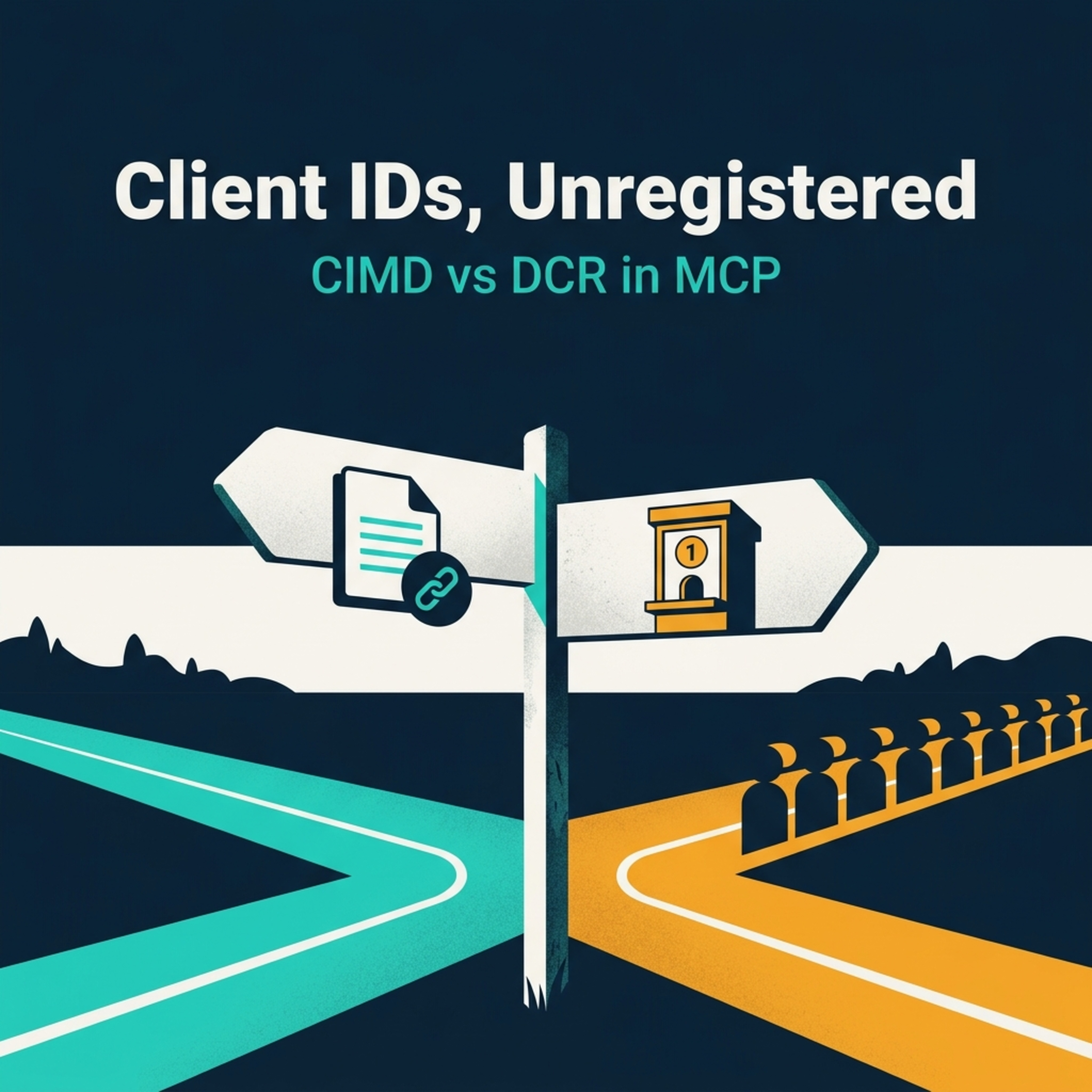 CIMD and DCR: Decentralized Architectures for OAuth Registration | Outline the transition from Dynamic Client Registration (DCR) to OAuth Client ID Metadata Documents (CIMD) within decentralized AI architectures like the Model Context Protocol (MCP). While DCR traditionally allows applications to register with a server at runtime, it creates significant operational burdens including database bloat and security vulnerabilities like phishing. In contrast, CIMD allows a client to use a stable HTTPS URL as its identifier, shifting the responsibility of hosting metadata to the client and enabling servers to stay stateless. This architectural shift enhances security and portability by anchoring application identity to verified domains rather than server-issued opaque strings. Currently, major identity providers and agent frameworks are adopting this model to facilitate more scalable, secure, and automated onboarding across diverse software ecosystems. Under modern MCP specifications, CIMD is now the preferred method for identification, relegating older registration protocols to backward compatibility roles. | 46m 23s | ||||||
| 9/17/26 | 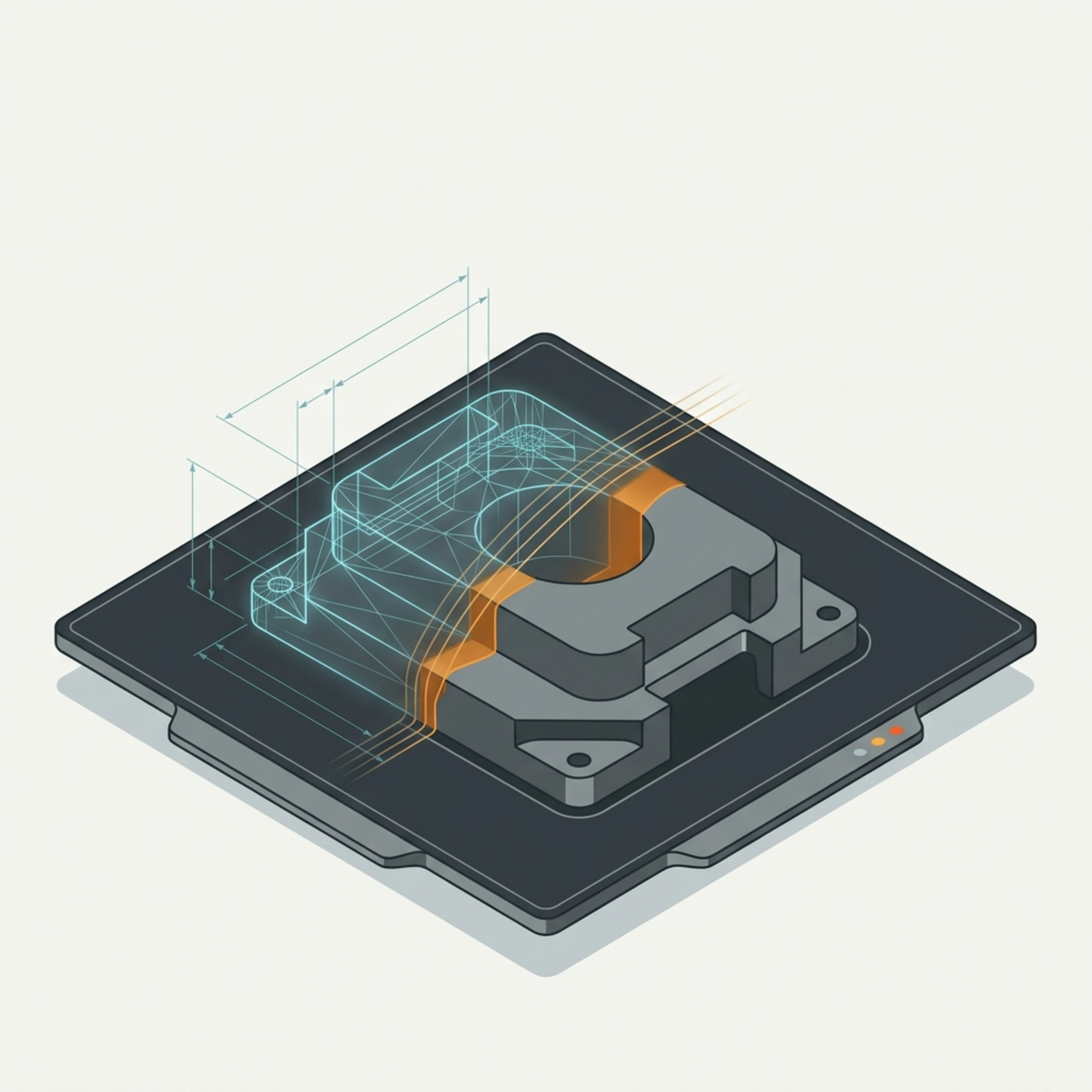 AI Agents in Physical Fabrication | Current state of artificial intelligence agents within physical fabrication and lightweight robotics from mid-2024 to mid-2026. The text highlights a major divide between shipped, deterministic software, such as code-mediated CAD engines and automated slicing pipelines, and experimental demonstrations like autonomous robot control and multi-part assembly. While tools for instant manufacturing quotes and visual print defect detection are technically mature, more complex tasks remain hindered by geometric ambiguity and physical unreliability. Consequently, the analysis emphasizes that human validation is still mandatory across most fabrication stages to ensure mechanical precision and safety. Emerging trends suggest a future shift toward direct neural modeling of solid geometry and more standardized robotic communication protocols. | 43m 43s | ||||||
| 9/17/26 | 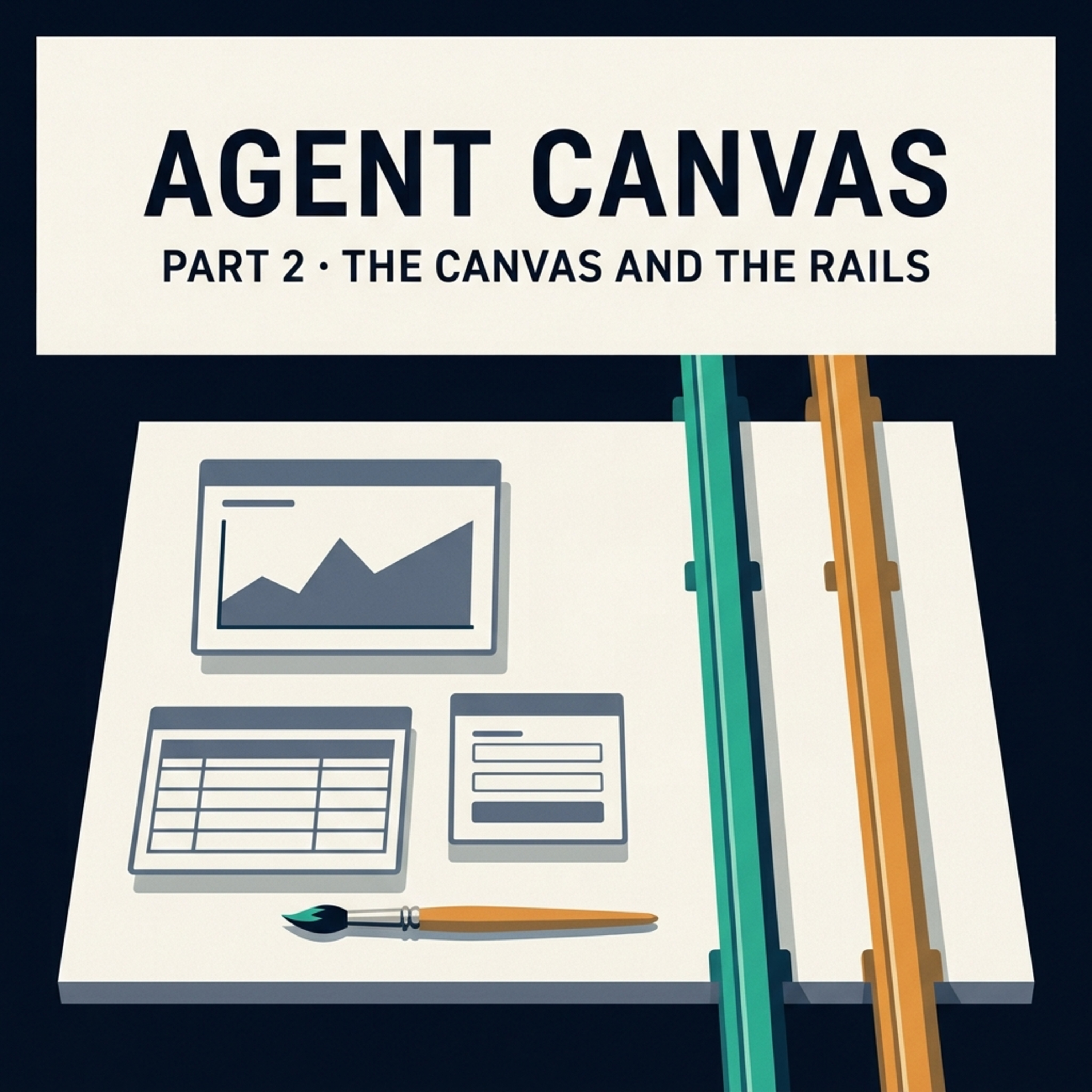 Agent Canvas - Part 2 - The Canvas and the Rails | Evaluates two primary architectural frameworks for creating agent-driven user interfaces in enterprise systems: MCP Apps and Google’s A2UI. MCP Apps prioritizes flexibility by allowing servers to deliver complete, sandboxed web applications, though this can obscure visibility for security audits. In contrast, A2UI uses a declarative, data-centric approach that ensures high security and visual consistency by utilizing the host's native components. The sources suggest that a hybrid model is the most effective strategy, employing A2UI for regulated, high-stakes core functions while reserving MCP Apps for complex third-party tools. This dual-lane system is managed by a centralized governance gateway to maintain strict compliance and transactional integrity. Ultimately, the analysis helps architects navigate the trade-offs between developer expressiveness and corporate liability in generative AI environments. | 48m 47s | ||||||
| 9/17/26 |  Agent Canvas - Part 1 - Who holds the brush? | Evaluates two primary architectural frameworks for creating agent-driven user interfaces in enterprise systems: MCP Apps and Google’s A2UI. MCP Apps prioritizes flexibility by allowing servers to deliver complete, sandboxed web applications, though this can obscure visibility for security audits. In contrast, A2UI uses a declarative, data-centric approach that ensures high security and visual consistency by utilizing the host's native components. The sources suggest that a hybrid model is the most effective strategy, employing A2UI for regulated, high-stakes core functions while reserving MCP Apps for complex third-party tools. This dual-lane system is managed by a centralized governance gateway to maintain strict compliance and transactional integrity. Ultimately, the analysis helps architects navigate the trade-offs between developer expressiveness and corporate liability in generative AI environments. | 32m 22s | ||||||
| 9/14/26 |  Unsloth: Engineering Accelerated LLM Fine-Tuning on Consumer Hardware | Unsloth is an open-source library designed to accelerate the fine-tuning of large language models while significantly decreasing VRAM requirements through specialized Triton kernels. By manually optimizing mathematical operations, the framework prevents the buildup of memory-heavy intermediate states, allowing high-performance training on consumer-grade GPUs and free cloud environments. The software has recently expanded to support complex architectures like Mixture-of-Experts (MoE) and memory-efficient reinforcement learning via its "Standby" architecture. While it offers substantial speed and efficiency gains over standard tools, the project relies on aggressive monkey-patching and features a dual-licensing structure that splits core routines from its high-level interface. Ultimately, Unsloth serves as a vital tool for individual practitioners and researchers who need to maximize the potential of limited hardware for modern AI development. | 53m 17s | ||||||
Want analysis for the episodes below?Free for Pro Submit a request, we'll have your selected episodes analyzed within an hour. Free, at no cost to you, for Pro users. | |||||||||
| 9/14/26 | 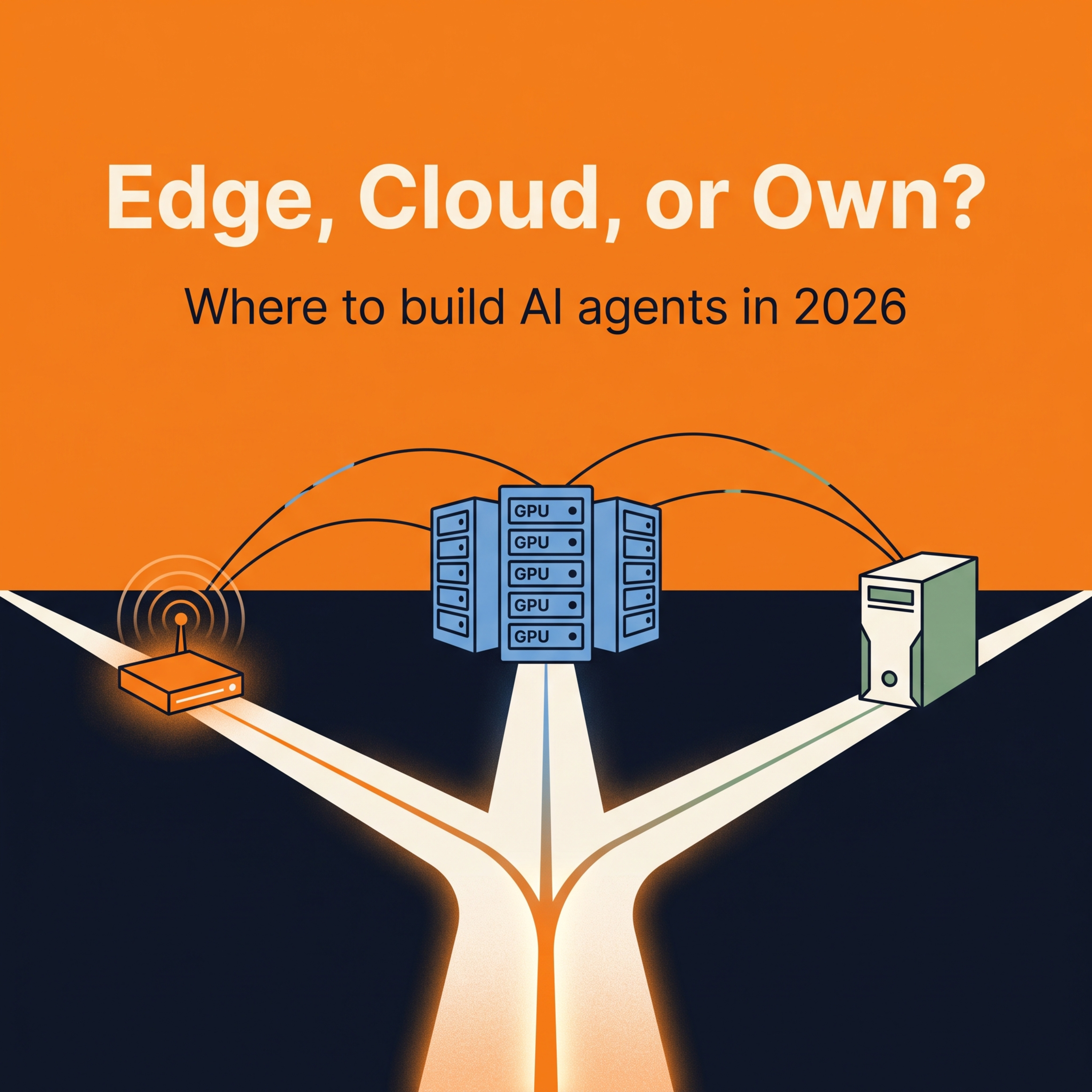 Cloudflare AI Hosting and Architectural Alternatives | Cloudflare AI platform alongside competing architectures from AWS Bedrock, developer-focused stacks like Vercel, and self-hosted GPU environments. The documentation highlights Cloudflare’s edge-native advantage, specifically its ability to maintain persistent state and execute sandboxed code with lower latency and cost than centralized hyperscalers. While AWS is noted for its superior enterprise compliance and access to proprietary models, Cloudflare is recommended for interactive agents and retrieval-augmented generation due to its integrated developer experience. The comparison also includes a detailed Total Cost of Ownership analysis, revealing that Cloudflare is most economical for low-to-medium traffic, whereas self-hosted vLLM stacks become the most cost-effective at massive scales. Ultimately, the sources provide a strategic framework for engineering teams to select infrastructure based on scaling limits, security requirements, and operational complexity. | 21m 32s | ||||||
| 9/13/26 |  Hard-Wired Silicon: AMD's Taalas Acquisition | AMD’s acquisition of Taalas, a semiconductor startup that develops specialized silicon for Large Language Model inference. Unlike traditional GPUs that load data from external memory, the Taalas architecture physically integrates neural network weights into the chip’s hard-wired circuitry through a unique manufacturing process. This "Hard Coded Inference" approach enables massive gains in speed and energy efficiency for single-user tasks by eliminating the need to move data between processors and memory. However, this method results in model immutability, meaning any software updates require manufacturing a new physical chip. Consequently, AMD plans to use these accelerators for ultra-low-latency decoding alongside more flexible hardware rather than replacing general-purpose GPUs entirely. The sources conclude that while Taalas excels in conversational and real-time AI, it remains limited by small memory capacities and a lack of architectural flexibility. | 21m 36s | ||||||
| 9/12/26 |  DeepSeek-V4.1-Flash Architecture Analysis | DeepSeek-V4.1-Flash architecture, a high-scale language model designed to optimize the technical and economic challenges of long-context workloads. By utilizing an asymmetric Causal Encoder-Decoder structure and MXFP4 cache compression, the model significantly reduces computational waste and memory demands during data ingestion. These innovations allow for a massive 748-billion-parameter scale while maintaining efficiency through a Mixture-of-Experts backbone and advanced memory hierarchy. Furthermore, the model features native multimodal integration, unifying text and visual processing into a single foundational framework. Its extreme operational efficiency enables a disruptive asymmetric pricing model, offering substantially lower costs compared to industry competitors. Ultimately, the source describes how these algorithmic breakthroughs minimize hardware bottlenecks and reshape the financial landscape of Large Language Model deployment. | 45m 40s | ||||||
| 9/12/26 |  The Sovereign Architect: OpenCode and the Autonomous Agent Frontier | Examines the OpenCode and OpenWork ecosystems, which offer an open-source, model-agnostic framework for autonomous AI agents. OpenCode serves as a technical foundation for software development, utilizing a client-server architecture and specialized protocols to execute code and manage file systems.OpenWork builds upon this by providing a collaborative workspace that enables teams to automate diverse business tasks, such as data analysis and browser orchestration, across numerous AI providers. The analysis compares these tools against proprietary competitors like Claude Code and Google Antigravity, highlighting trade-offs between sovereign data control and operational speed. Ultimately, the sources suggest a shift toward modular harnesses that decouple AI reasoning from specific execution environments to ensure enterprise flexibility. | 50m 11s | ||||||
| 9/11/26 |  Detecting and Countering AI Misuse: September 2026 Report | Source : https://www.anthropic.com/threat-intelligence-report-september-2026This Anthropic threat intelligence report from September 2026 details the evolving ways malicious actors attempt to exploit Claude AI models for harmful activities. The documentation highlights a shift toward autonomous cyber operations, where state-sponsored groups and criminals use AI to automate the entire cyber kill chain, from reconnaissance to data exfiltration. Notable case studies include a Russian espionage group that used AI to dynamically retool malware to evade detection and opportunistic hackers who accelerated mass data theft through automated credential harvesting. Anthropic emphasizes that AI has significantly lowered the barrier to entry for sophisticated attacks, allowing individual operators to perform at the level of well-resourced organizations. To combat these emerging threats, the company shares indicators of compromise and technical workflows to help the broader security community strengthen collective defenses. | 55m 46s | ||||||
| 5/29/26 | multimodal modelsmachine learning+4 | — | Gemini Embedding 2Matryoshka Representation Learning | — | multimodal fusionbidirectional attention+5 | — | 55m 02s | ||
| 5/28/26 | protein foldingartificial intelligence+4 | — | ESMFoldAlphaFold2+1 | — | protein structuresESMFold+5 | — | 54m 41s | ||
| 5/26/26 | AI orchestrationsoftware engineering+3 | — | ConductorClaude+2 | macOS | AI agentstask execution+3 | — | 44m 44s | ||
| 5/26/26 | AI developmentcoding agents+4 | — | grepBM25+1 | — | AIcoding agents+6 | — | 45m 48s | ||
| 5/26/26 | AI R&D AutomationMachine Learning+4 | — | InferenceBenchSMAC3+4 | — | InferenceBenchAI agents+5 | — | 50m 37s | ||
| 5/26/26 | generative architecturessemantic video synthesis+4 | — | Aleph 2.0MIGA+4 | — | video synthesisartificial intelligence+4 | — | 50m 26s | ||
| 5/26/26 | computer visionimage generation+3 | — | RAEv2DINOv3+1 | — | RAEv2DINOv3+5 | — | 56m 51s | ||
| 5/26/26 | AI agentstechnology startups+3 | — | Agent LabsOpenAI+1 | — | AI agentsAgent Labs+5 | — | 41m 41s | ||
| 5/26/26 | data stackartificial intelligence+3 | — | TurbopufferExa+1 | — | postmodern data stackAI infrastructure+5 | — | 49m 09s | ||
| 5/19/26 | Developer ExperienceAgent Experience+5 | — | OpenAPIModel Context Protocol (MCP)+2 | — | Developer ExperienceAgent Experience+6 | — | 1h 05m 39s | ||




Showing 25 of 249
Pitch Fit is a Pro feature
See how bookable this show is for guests, which brands already advertise, the per-episode ad value, and the best-fit guest and sponsor profile. The numbers are blurred on the free plan.
How readily this show books outside guests like you.
How proven this show is for host-read sponsorships.
For Guests
ProFor Advertisers
ProUpgrade to Pro to unlock guest cadence, sponsor categories, fit scores, and per-episode ad value for this show.
Chart history for Rapid Synthesis: My KM Pipeline, keeps me mobile and learning!
Peaked at #166 in GR, currently #166 in GR.
| Market | Genre | Peak | Current | Trend |
|---|---|---|---|---|
| GR | — | #166 | #166 | — |
Chart Positions
1 placement across 1 market.
Chart Positions
1 placement across 1 market.