Insights from recent episode analysis
Audience Interest
Podcast Focus
Publishing Consistency
Platform Reach
Insights are generated by CastFox AI using publicly available data, episode content, and proprietary models.
Most discussed topics
Brands & references
Total monthly reach
Estimated from 3 chart positions in 3 markets.
By chart position
- 🇺🇸US · Marketing#1595K to 30K
- 🇿🇦ZA · Marketing#1430K to 100K
- 🇳🇬NG · Marketing#110500 to 3K
- Per-Episode Audience
Est. listeners per new episode within ~30 days
11K to 40K🎙 Daily cadence·302 episodes·Last published 4d ago - Monthly Reach
Unique listeners across all episodes (30 days)
36K to 133K🇿🇦75%🇺🇸23%🇳🇬2% - Active Followers
Loyal subscribers who consistently listen
14K to 53K
Market Insights
Platform Distribution
Reach across major podcast platforms, updated hourly
Total Followers
—
Total Plays
—
Total Reviews
—
* Data sourced directly from platform APIs and aggregated hourly across all major podcast directories.
On the show
From 10 epsHost
Recent guests
Recent episodes
I'd Stop 80% of Church Marketing Tomorrow (Here's Why)
May 28, 2026
47m 46s
67% of Pastors Are Burning Out (Here's What Nobody's Saying)
May 21, 2026
48m 40s
1 in 3 People Trust AI More Than Their Pastor
May 14, 2026
42m 27s
The Church Trends Worth Watching Closely Right Now
May 7, 2026
49m 30s
Which Social Media Platforms Are Actually Worth a Church's Time?
Apr 30, 2026
49m 53s
Social Links & Contact
Official channels & resources
Official Website
Login
RSS Feed
Login
| Date | Episode | Topics | Guests | Brands | Places | Keywords | Sponsor | Length | |
|---|---|---|---|---|---|---|---|---|---|
| 5/28/26 | ![]() I'd Stop 80% of Church Marketing Tomorrow (Here's Why) | Most church marketing teams are working hard and getting almost nothing back for it. In this episode Thomas and Shiloh apply the 80/20 principle directly to church marketing and get specific about what to stop, what to keep, and what the handful of high-leverage moves actually look like for churches in 2026. From the death of organic social reach to the untapped power of Google Business Profiles, weekly email, and authentic short-form video, this episode gives church leaders a clear and honest framework for cutting the busywork and investing in the things that actually drive first-time visits, real engagement, and sustainable growth. The closing question alone is worth the listen. | 47m 46s | ||||||
| 5/21/26 | ![]() 67% of Pastors Are Burning Out (Here's What Nobody's Saying) | We have been having the pastoral burnout conversation for years and it keeps getting worse. That is because we have been talking about the wrong thing. This episode is not about workload, time management, or self-care tips for tired pastors. It is about the loneliness and isolation crisis that is actually driving the burnout numbers to levels the church has never seen before. Pastoral loneliness has jumped from 42% to 65% in seven years. Peer support has dropped from 37% to 22% in the same period. 18% of pastors report thoughts of self-harm in the past year. Thomas and Shiloh bring the data, name the parts of this conversation most people avoid, and issue a direct challenge to church boards, elder teams, and congregations to stop placing all the responsibility on the pastor and start owning the system that is producing these outcomes. | 48m 40s | ||||||
| 5/14/26 | ![]() 1 in 3 People Trust AI More Than Their Pastor | A third of practicing Christians now trust spiritual advice from AI just as much as advice from their pastor. For Gen Z and millennials that number is closer to 40%. Four in ten Christians say AI has already helped them with prayer, Bible study, or spiritual growth. This is not a future trend to prepare for. It is a present reality happening inside your congregation right now. In this episode Thomas and Shiloh unpack the Barna data, dig into why people are choosing a chatbot over their pastor, identify what AI gets dangerously wrong in spiritual conversations, and give church leaders specific and practical steps they can take this week to close the trust and access gap before it gets any wider. This is not an episode about demonizing technology. It is about the church waking up to an opportunity it cannot afford to keep ignoring. | 42m 27s | ||||||
| 5/7/26 | ![]() The Church Trends Worth Watching Closely Right Now | There is a lot of noise about what churches should be doing digitally and most of it is just distraction dressed up as strategy. In this episode Thomas and Shiloh cut through the noise and focus on the trends that are actually moving the needle for churches right now, starting with one that almost nobody in the church world is paying attention to yet. AI search tools like ChatGPT and Perplexity are already being used to find churches and the churches showing up in those results have a growing advantage that is only going to get bigger. This episode also covers AI content multiplication, the maturation of short-form video, the quiet death of the church app, the SMS renaissance, and why sermon podcasts are still one of the most underused free reach strategies available to any church regardless of size or budget. | 49m 30s | ||||||
| 4/30/26 | ![]() Which Social Media Platforms Are Actually Worth a Church's Time? | Most churches are spread across every social media platform imaginable and doing none of them well. In this episode Thomas and Shiloh go platform by platform and have the honest conversation most church leaders have never had about where churches should actually be spending their time and energy online. From Facebook and Instagram to YouTube, TikTok, X, and even LinkedIn, every major platform gets evaluated through one simple filter: who is on it, can churches realistically reach new people there, and is the effort actually worth the return. This is a practical and direct episode that will help any church leader stop feeling guilty about every platform they are not on and start doing the right ones really well. | 49m 53s | ||||||
| 4/23/26 | ![]() What a Great Church Website Actually Needs in 2026✨ | church websitehomepage design+4 | — | website design toolsphotography services+1 | — | website designuser experience+2 | — | 39m 36s | |
| 4/16/26 | ![]() The Biggest Shifts in How People Are Finding Churches Today✨ | church discoverydigital age+2 | — | Instagram | — | Googlesermon clips+2 | — | 39m 20s | |
| 4/9/26 | ![]() Ed Stetzer's Warning to Pastors Using AI for Sermons✨ | AI in churchchurch decline+2 | Ed StetzerCorey Alderin | Sermon ShotsTalbot School of Theology+3 | America | sermonstechnology+2 | — | 56m 21s | |
| 4/2/26 | ![]() What Churches Are Getting Wrong About AI Right Now✨ | AIchurch leadership+4 | — | — | — | artificial intelligencestrategy+3 | — | 30m 25s | |
| 3/26/26 | ![]() The Church Tech Trends Worth Your Attention (And the Ones That Aren't)✨ | church technologyministry+2 | — | church management softwarestreaming services+1 | — | technology trendschurch leaders+2 | — | 30m 32s | |
Want analysis for the episodes below?Free for Pro Submit a request, we'll have your selected episodes analyzed within an hour. Free, at no cost to you, for Pro users. | |||||||||
| 3/19/26 | ![]() The New Outreach Playbook Growing Churches Are Using Right Now✨ | church outreachgrowth strategies+2 | — | — | — | outreachchurch growth+2 | — | 20m 14s | |
| 3/12/26 | ![]() Why Your Church Staff Is Burned Out (And What to Do About It)✨ | burnoutchurch staff+2 | — | — | — | pastorschurch teams+2 | — | 25m 25s | |
| 3/5/26 | ![]() The Most Overrated Church Marketing Strategies (And the Ones That Actually Work)✨ | church marketingstrategies+2 | — | Church Marketing ReviewApple Podcasts | — | marketing tacticschurch growth+1 | — | 34m 09s | |
| 2/26/26 | ![]() Why Your Church’s Social Media Strategy Feels Stuck✨ | social media strategychurch marketing+4 | — | Sermon SlingReachRight | — | churchsocial media+4 | — | 24m 12s | |
| 2/19/26 | ![]() The #1 Reason People Don’t Come Back to Church After Visiting✨ | church attendancevisitor follow-up+2 | — | — | — | churchvisitors+3 | — | 16m 51s | |
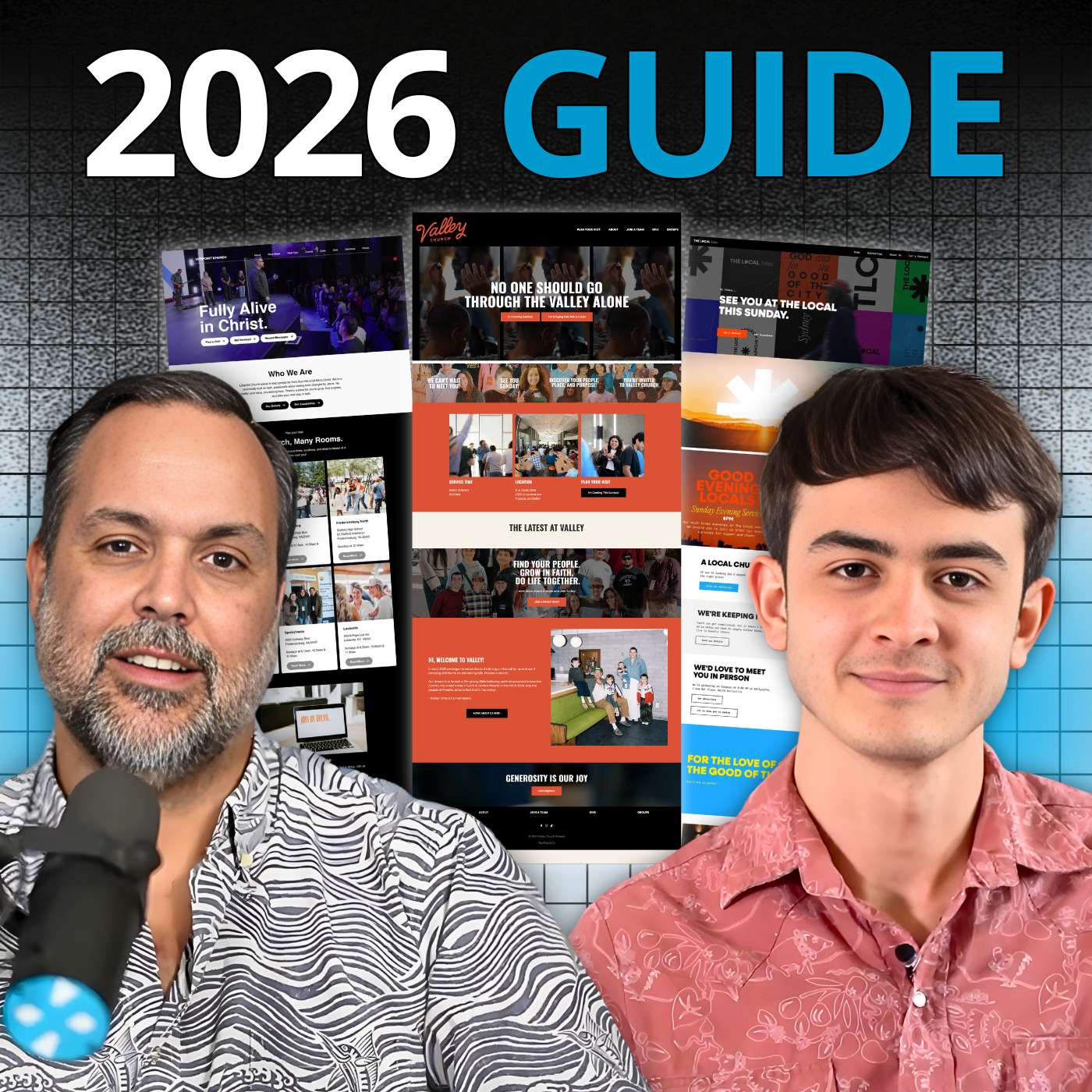
| 2/12/26 | ![]() The Most Overlooked Opportunities for Church Growth in 2026 | Every year, churches ask the same question in a hundred different ways: “How do we grow?” And in 2026, the answer might look different from what it did just a few years ago. The pandemic forced churches to adapt. New technologies have emerged. Generational shifts have changed the way people think about community and faith. But some principles have not changed at all. The local church still exists to bring glory to God, to equip believers for ministry, and to make disciples in the name of Jesus Christ. Yet even with all of that in mind, many churches are still looking in the wrong places for growth. They chase trends, copy other churches, or simply wait for new visitors to show up on their own. But real, sustainable church growth in 2026 is happening in places most church leaders are still overlooking. Let’s talk about where to look next. Estimated reading time: 8 minutes Table of contentsYou’re Looking in the Wrong Direction6 Church Growth Opportunities You’re Probably Overlooking1. The Follow-Up Funnel2. Family Ministry with a Purpose3. Midweek Micro-Communities4. Optimizing for AI Search5. Measuring What Actually Matters6. Updated Church WebsiteWhat the Fastest-Growing Churches UnderstandWhere Growth BeginsMore Resources on Church Growth You’re Looking in the Wrong Direction If the only thing your team is doing to drive growth is planning better Sunday services, you’re likely missing the bigger picture. Yes, your weekend gathering matters. It’s a chance to preach Christ, invite people to salvation, and encourage the saints. But most people are not evaluating your church just by what happens on Sunday. They are also watching what your church values throughout the week. They are looking for connection, for purpose, and for something real. And they are making decisions quickly. A growing church in 2026 must focus not just on attracting people, but on forming them. You cannot just get people in the door. You need to help them become fully alive in Jesus. Here are six church growth opportunities that healthy churches are using right now. These may not show up in a flashy ad or get you viral clicks, but they will help your church grow the right way. 6 Church Growth Opportunities You’re Probably Overlooking This list is not about gimmicks or trends. It is about areas... | 22m 15s | ||||||
| 2/5/26 | ![]() How AI Is Changing the Way People Search for Churches | The way people find a new church is changing fast. It used to be all about word of mouth, road signs, or searching “church near me” on Google. But in 2026, the landscape looks different. Artificial intelligence is playing a major role in how people search for spiritual communities. Whether someone is relocating to a new city or simply feeling the tug to reconnect with their faith, they are likely starting their search online. And more often than not, that search is being filtered through some form of AI. The question church leaders need to be asking is not just “Are we on Google?” but “Are we findable through AI?” The churches that answer that well are the ones that will grow. Estimated reading time: 7 minutes Table of contentsSearch Is More Than Google5 Ways AI Is Shaping Church Discovery1. AI Answers Questions, Not Just Searches2. Your Website Needs to Be AI-Friendly3. Local Search Is Influenced by Digital Signals4. Sermons and Videos Are Now Searchable5. The Churches That Will Be Found Are the Ones That ServeWhat Church Leaders Should Do NextA New Era of SearchMore Resources on Church AI Search Is More Than Google Google is still a major player, but the way people interact with it has evolved. Instead of typing in short phrases, users now ask full questions and expect a conversational answer. This is the influence of AI systems like Google’s Search Generative Experience and tools like ChatGPT. Someone searching for a church might not just type “church in Dallas” anymore. They might ask, “What’s a welcoming church in Dallas with strong kids’ programs and contemporary worship?” AI can now deliver personalized, context-aware answers. That means your church needs to be discoverable not just through traditional keywords but through AI-generated responses that highlight what people really want to know. 5 Ways AI Is Shaping Church Discovery AI is not just changing the tools people use. It is changing what they expect from those tools. Below are five major shifts every church should understand. 1. AI Answers Questions, Not Just Sear... | 20m 01s | ||||||
| 1/29/26 | ![]() How Churches Should Think About YouTube in 2026 (ReachRight Mailbag) | In this ReachRight Mailbag, we’re unpacking some of the most relevant (and sometimes overlooked) questions churches are asking right now. From how to get started on YouTube, to whether AI poses a spiritual risk, to what prayer software churches are using in 2026, we’re diving into it all. Plus, we tackle a simple but surprisingly common question: If you cut down your church announcements on Sunday mornings, how do you get the word out about the rest? Let’s get into it. Estimated reading time: 6 minutes Table of contentsHow Should Churches Get Started on YouTube?Could AI Harm Spiritual Connection?What’s the Best Tool for Handling Prayer Requests?How Do You Share Announcements Without Overwhelming People?Is the Google Ad Grant Still Worth It?Tools Don’t Replace CallingMore Resources How Should Churches Get Started on YouTube? One listener asked:“What are some best practices for churches starting out, wanting to succeed on YouTube?” There’s never been a better time to start. YouTube is where people go when they’re asking real questions. But if your church only posts full Sunday services with a title like “December 17, 2025,” you’re not going to reach them. Here’s how to start strong: 1. Lead with short-form content. Full services are great for your members, but short sermon clips, Q&A videos, or testimony highlights are what attract new people. Post those in addition to your livestreams. 2. Your first 10 seconds matter. If the video opens with a countdown or a bumper, most people scroll away. Start with a strong quote or a tension-filled question. 3. Thumbnails and titles are everything. Use high-contrast graphics, big text, and human faces with emotion. Don’t label your sermon “Week 3 – Rooted.” Call it something that gets a click, like “What To Do When God Feels Distant.” 4. Think like a missionary. This is the real one. Your YouTube isn’t just for your congregation. It’s for the parent searching “how to pray for my kid,” or the teen asking “does God hate me?” If your church wants to grow online, YouTube is a mission field. Treat it that way. Could AI Harm Spiritual Connection? A listener asked:“Could AI pose a threat to people connecting with God and each other?” That’s a real concern. And it depends... | 28m 40s | ||||||
| 1/22/26 | ![]() Why Your Church Website Still Feels Outdated in 2026 | Church websites are not just digital bulletin boards anymore. They are front doors to your church, spiritual hubs, and key tools for outreach and discipleship. Yet even in 2026, too many church websites still feel stuck in the past. An outdated site can make your church look disconnected or disorganized. It can confuse first-time visitors, frustrate members looking for basic info, and fail to reflect your church’s heart and mission. A fresh coat of digital paint is not enough. Let’s talk about what really makes a modern church website work. Estimated reading time: 7 minutes Table of contentsIt’s Not Just About a New Theme Anymore6 Reasons Your Website Still Feels Outdated1. Your Homepage Tries to Say Too Much2. Your Site Is Not Optimized for Mobile3. You’re Not Answering the Right Questions4. You Still Use Stock Photos or Staged Poses5. There’s No Clear Path for a First-Time Guest6. Your Content Rarely Gets UpdatedWhat a Modern Church Website Should Actually DoWhat’s Next?More Resources on Church Websites It’s Not Just About a New Theme Anymore Swapping out your church website theme or logo is easy. But surface-level changes do not fix a deeper disconnect. Your website is often the first place people go before they ever set foot on your campus. It has to do more than look good. It has to communicate clearly and serve people well. The best church websites today are purpose-built. They help people find service times, submit prayer requests, stream past sermons, and take next steps. They answer questions before anyone has to ask them. And they tell a consistent story that reflects your values, your vision, and your community involvement. If your church website still feels outdated, it is time to dig a little deeper. 6 Reasons Your Website Still Feels Outdated Even churches that put effort into their website often miss the deeper issues. These are some of the most common reasons your site still feels stuck. 1. Your Homepage Tries to Say Too Much Too many church websites overload their homepage with every ministry, every announcement, and every event. Instead of welcoming guests, it overwhelms them. Your homepage is not the place to tell... | 29m 11s | ||||||
| 1/15/26 | ![]() Six Shocking Church Statistics For 2026 | Every year, we kick off the season with one of our favorite traditions: the stats episode. We go through dozens of recent church statistics, pick the ones that made our jaws drop, and share our top six on the podcast. These stats help church leaders understand the cultural shifts happening right now and how to respond with purpose and strategy. Some are encouraging. Some are convicting. All of them will make you think twice about how we do ministry in 2026. Let’s get into it. Estimated reading time: 6 minutes Table of contentsGen Z Churchgoers Are Showing Up More Than Any Other GenerationOnly 20% of Americans Attend Church WeeklyThe Gender Gap in Faith Is Shrinking (But Not the Way You Think)Young Adults Still Want Faith That MattersThe Tithing Gap Between What We Say and What We Actually GiveMillennials Are the Most Faithful Weekly AttendersWhat Surprised You?More Resources on Church Stats Gen Z Churchgoers Are Showing Up More Than Any Other Generation Thomas kicked us off with a stat from Barna that caused some serious conversation this year. According to the data, Gen Z churchgoers are attending services more frequently than any other generation. On average, Gen Z churchgoers attend 1.9 times per month, compared to: Millennials: 1.8 Gen X: 1.6 Boomers: 1.4 Now, this stat often gets misunderstood. Some people have claimed Gen Z is now the most Christian generation, but that’s not what the numbers say. The study specifically refers to churchgoers, not the entire generation. What it does show is that those in Gen Z who follow Jesus are deeply committed. And that’s worth celebrating. Churches should be encouraged by this hunger and think seriously about how to disciple Gen Z with purpose and intentionality. Only 20% of Americans Attend Church Weekly Ian followed up with a stat that feels all too real: just 20% of Americans attend church every week. That’s a major drop from what many pastors used to expect from a “committed” church member. In today’s world, twice-a-month attendance is... | 23m 32s | ||||||
| 1/8/26 | ![]() The Most Valuable Metrics for Your Church to Measure in 2026 | Most churches know they should be measuring something. But knowing what to measure and why is an entirely different conversation. It is easy to get caught up in vanity metrics or track data that has little to do with your church’s mission. The truth is, churches that consistently measure the right things are the ones that grow in health, not just size. And in 2026, with better tools and more access to data than ever before, it is time to get serious about what matters. So let’s break down the most valuable metrics your church should be measuring right now. Not everything that can be counted counts, but what counts can absolutely be counted. Estimated reading time: 8 minutes Table of contentsNot All Metrics Are Created EqualThe Metrics That Matter Most1. First-Time Guest Follow-Up Rate2. Group Participation Rate3. Giving Consistency, Not Just Amount4. Prayer and Spiritual Practice Engagement5. Online Engagement That Leads to In-Person Connection6. Retention After Major Events7. Staff Health and Burnout Indicators8. Next Step Conversion Rate9. Volunteer Participation and Follow-ThroughYour Next StepMore Resources on Church Metrics Not All Metrics Are Created Equal Here’s the thing: not all data leads to transformation. Some metrics can distract from the real goals of ministry. Tracking how many views your sermon received is nice, but if it does not lead to deeper discipleship or community engagement, it is not moving the mission forward. Church leaders need to avoid the trap of tracking numbers just for the sake of tracking. A great church management software can give you beautiful dashboards, but it is up to you to connect that data to real-world impact. The question is not just “Can we measure this?” but “Does measuring this help us implement targeted initiatives that actually serve our people?” So let’s focus on the ones that do. The Metrics That Matter Most The best church metrics are not just numbers. They are indicators of health, growth, and spiritual movement. The ones that matter help you understand how committed church members really are, and how well your church is serving them. Each metric below is tied to som... | 23m 20s | ||||||
| 1/2/26 | ![]() How to Reach Gen Alpha in 2026 (What Most Churches Miss) | Most churches are still focused on Gen Z. And while that matters, they may be missing the generation that is already sitting in their kids’ ministry, their middle schools, and their youth groups. Gen Alpha is no longer the “next” generation. They are the now generation. And churches that want to stay connected to the future must learn how to reach, disciple, and empower them today. Estimated reading time: 7 minutes Table of contentsGen Alpha is Already HereWhat Most Churches Get WrongHow to Actually Reach Gen Alpha1. Give Them Leadership Roles2. Focus on Family Discipleship3. Respect Their Culture and Slang4. Combine Digital and Tactile5. Empower Their Questions and Faith6. Share Stories and Testimonies7. Stop Treating Them Like They’re Too YoungYour Next StepMore Resources on the Next Generations Gen Alpha is Already Here Gen Alpha is the generation born roughly between 2010 and 2025. That means the oldest members are in high school, while the youngest are still toddlers. But here’s the key point most church leaders are missing: Gen Alpha now makes up most of the school-aged population. They are growing up in a world where screens are everywhere, school is increasingly hybrid, and questions about life, identity, and truth come faster and earlier than ever before. And even though they are digital natives, they are still human beings who long for connection, meaning, and faith. What Most Churches Get Wrong Many churches still see Gen Alpha as too young to reach or too distracted to disciple. But that view underestimates their capacity for faith, focus, and leadership. Gen Alpha is growing up fast, and they are more spiritually aware than we often realize. If churches keep waiting until these kids “grow up” before investing in them, they will already be gone. Now is the time to disciple them intentionally, listen to them sincerely, and invite them into something bigger than themselves. How to Actually Reach Gen Alpha You do not need to throw away everything that worked for Gen... | 25m 27s | ||||||
| 12/26/25 | ![]() Ranking Church AI Trends for 2026 | AI is not just coming for the future of the church. It is already here, bringing with it the promise of transformative potential for ministry and outreach. From sermon prep tools to automated follow-up, artificial intelligence is changing how churches communicate, create, and care for their people. Still, not every trend is worth following blindly. Church leaders need to understand what is useful, what is overhyped, and what still needs more clarity. In a world full of new features, tools, and promises, we need discernment more than ever. In this episode, we rank 8 different church AI trends to determine if each is a must-use tool or a critical compromise. Estimated reading time: 7 minutes Table of contentsRanking SystemAI Trends Ranked1. Personalized Communication2. Sermon Research Tools3. Visual Media and Graphics4. Autonomous Assistants5. Analytics for Ministry Strategy6. Voice Cloning for Sermon Dubs7. Predictive AI for Church Growth8. Church Policies on AI UseThe Future of AI and the ChurchMore Resources on Church AI Ranking System To help cut through the noise, we’ve ranked the top church AI trends for 2026 using three categories, based on the idea of thoughtful evaluation and planning to ensure responsible and effective adoption: Must-Use Tools: These are the game changers. Every church should be paying attention to these and implementing them where possible. Worth a Look: These trends have strong potential, especially for certain contexts. They may not be for everyone yet, but they’re worth exploring. Wait and See: These might be helpful someday, but for now, they raise too many ethical questions or lack clear use cases in the church world. AI Trends Ranked Before we get into the list, it is worth acknowledging that not all church tech and technologies are created equal. Some tools and technologies streamline operations, while others sound exciting but do little to advance ministry work. Our goal is to help you see where the real ministry impact lies by selecting and implementing the right technologies. 1. Personalized Communication If you want to connect with people in 2026, you need to speak directly to them. AI-powered personalization tools allow churches to tailor emails, text messages, and website experiences based on individual interests and behaviors.<... | 28m 13s | ||||||
| 12/11/25 | ![]() Why Your Church Newsletter Isn’t Reaching Anyone | Church newsletters used to be one of the most reliable ways to communicate with your congregation. Whether it was a printed handout in the Sunday bulletin or an email sent out once a month, it kept people informed, inspired, and involved. But something has changed. Now, church leaders are starting to realize that their monthly newsletter is getting ignored. People do not open it. They do not read it. They do not click on anything. And they definitely do not share it with other members. So what happened? Let’s dig into the real reasons your church newsletter is not working and what church leadership can do to fix it fast. Estimated reading time: 9 minutes Table of contentsThe Real Problem7 Reasons No One is Reading Your Church Newsletter1. You’re Sending the Wrong Content2. It’s Too Long3. Your Subject Line is Boring4. You’re Not Mobile Friendly5. You Never Change It Up6. You’re Not Using Clear CTAs7. You’re Sending It to the Wrong PeopleWhat the Best Churches Are DoingExample Church NewsletterYour Next StepMore Resources on Church Newsletters The Real Problem It is not that newsletters are a bad idea. In fact, when done right, a church newsletter can be one of the most powerful ways to keep your church community connected, informed, and encouraged. But today’s audience is different. They are overwhelmed with content, flooded with emails, and quick to delete anything that does not grab their attention in the first few seconds. That means church newsletters cannot just be a recycled list of announcements. They need to provide real value, connect with real life, and support the church’s mission in a fresh and engaging way. Church leaders need to rethink the purpose of their newsletter and treat it less like a bulletin board and more like a tool for ministry. 7 Reasons No One is Reading Your Church Newsletter Before we jump to solutions, let’s break down why your church email newsletters may not be getting through to people. These are the seven most common problems we see, and they are easier to fix than you might think. ... | 27m 51s | ||||||
| 12/4/25 | ![]() Should Pastors Be Using ChatGPT for Sermon Prep? | AI tools are changing the way people work, think, and communicate. And now they are showing up in the last place many expected: the pulpit. Some pastors are using tools like ChatGPT to help with their sermon writing process. Others are warning that this is the beginning of the end for biblical preaching. So what should church leaders do? Is using AI sermon prep tools a smart way to save time or a dangerous shortcut that replaces the Holy Spirit? Let’s break it down. Estimated reading time: 7 minutes Table of contentsThe Real Debate6 Ways ChatGPT Can Help (Without Replacing the Holy Spirit)1. Brainstorming Ideas and Outlines2. Finding Related Bible Verses3. Illustrating Big Ideas4. Simplifying Complex Concepts5. Organizing Research and Notes6. Creating Supplemental ContentYour Next StepMore Resources on Church AI The Real Debate The real issue is not whether ChatGPT can write a sermon. It can. The real issue is whether it should. Critics argue that using a tool like this will lead to shallow sermons, theological inaccuracies, or even full-blown plagiarism. Some worry that pastors will outsource their calling to a chatbot instead of seeking wisdom through prayer, study, and the Holy Spirit. On the other hand, many church leaders are finding helpful ways to use AI without compromising biblical integrity. They are not using it to replace the sermon prep process, but to support it. And they are using clear boundaries and discernment to make sure the main voice behind every sermon remains their own. Let’s look at how ChatGPT and other AI sermon generators can actually enhance your preaching, not hijack it. 6 Ways ChatGPT Can Help (Without Replacing the Holy Spirit) AI tools are not replacements for your prayer life or personal study, but they can supplement your sermon resources and streamline the way you prepare each message. Here are six ways pastors are using AI in their sermon prep process, while still relying on the Spirit for the final word. 1. Brainstorming Ideas and Outlines Every preacher has faced that blank page moment. You know you need to start your sermon prep, but you are not sure what the main point should be or how to organize your thoughts. This is where a tool like ChatGPT can help. By inputting a general sermon topic or biblical passage, pastors can quickly get a list of outline options or ser... | 23m 07s | ||||||
Showing 25 of 308
Sponsor Intelligence
Sign in to see which brands sponsor this podcast, their ad offers, and promo codes.
Chart Positions
3 placements across 3 markets.
Chart Positions
3 placements across 3 markets.