Recording & Mixing
by Sound On Sound
Is this your podcast?Insights from recent episode analysis
Audience Interest
Podcast Focus
Publishing Consistency
Platform Reach
Insights are generated by CastFox AI using publicly available data, episode content, and proprietary models.
Most discussed topics
Brands & references
Total monthly reach
Estimated from 2 chart positions in 2 markets.
By chart position
- 🇳🇱NL · Technology#1181K to 10K
- 🇷🇴RO · Technology#174500 to 3K
- Per-Episode Audience
Est. listeners per new episode within ~30 days
750 to 6.5K🎙 Weekly cadence·71 episodes·Last published 2w ago - Monthly Reach
Unique listeners across all episodes (30 days)
1.5K to 13K🇳🇱77%🇷🇴23% - Active Followers
Loyal subscribers who consistently listen
450 to 3.9K
Market Insights
Platform Distribution
Reach across major podcast platforms, updated hourly
Total Followers
—
Total Plays
—
Total Reviews
—
* Data sourced directly from platform APIs and aggregated hourly across all major podcast directories.
On the show
From 10 epsHosts
Recent guests
Recent episodes
Guerilla Recording - Performance-First Techniques
Aug 21, 2026
42m 44s
Advanced Effects
Jul 29, 2026
31m 51s
Advanced EQ Tips
May 19, 2026
26m 12s
Hardware in a Modern Hybrid Studio
Mar 17, 2026
46m 00s
Advanced DAW Automation
Feb 12, 2026
20m 55s
Social Links & Contact
Official channels & resources
Official Website
Login
RSS Feed
Login
| Date | Episode | Topics | Guests | Brands | Places | Keywords | Sponsor | Length | |
|---|---|---|---|---|---|---|---|---|---|
| 8/21/26 | 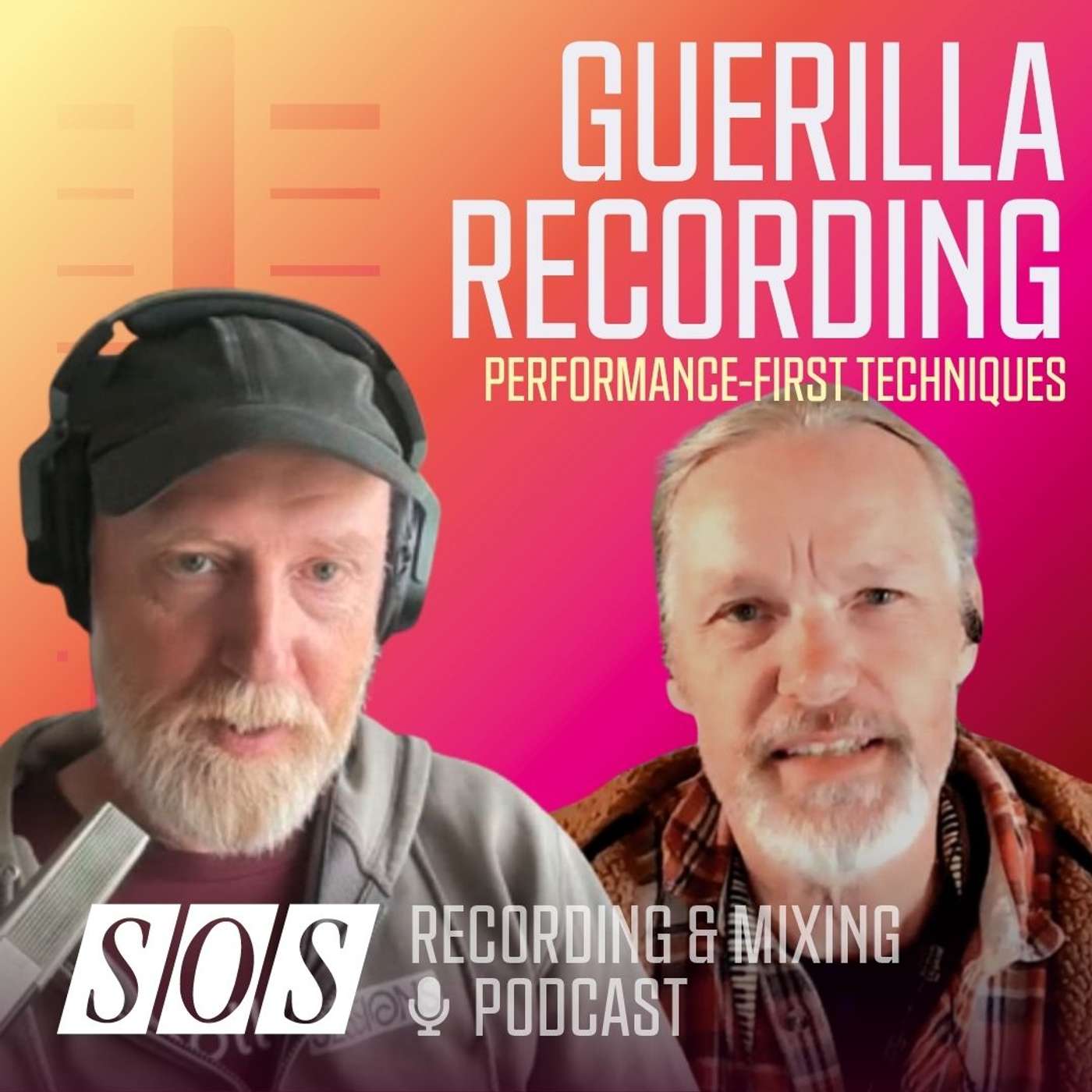 Guerilla Recording - Performance-First Techniques | Lincoln Grounds joins Julian Rodgers to discuss guerrilla recording techniques, exploring how a focus on authentic performances, unconventional spaces and adaptability can matter more than technology and complex setups when creating compelling recordings.Chapters00:00 - Introduction01:09 - Definition Of Guerilla Recording05:59 - Not Over-Indulging In Tech11:14 - Getting A Good Performance Quickly16:18 - Recording Bands In Their Own Element19:50 - Working With Spill30:18 - Headphones And Clicks Where Needed33:10 - Post Production Techniques#BozDigital #ProTools #FabFilter #NoiseWorks #iZotope #WavesLincoln Grounds BiogLincoln Grounds is a composer, producer, recording engineer and owner of Maverick Music. His work spans production music for TV, film and advertising, alongside live performance and recording projects with artists including Sister Sledge, Cockney Rebel and Kid Creole. He has worked in a wide variety of recording environments, from improvised setups to world-renowned studios including Abbey Road and Blackbird Studio in Nashville.https://x.com/lincolngroundsJulian Rodgers BiogJulian Rodgers is a freelance writer and audio engineer with a background in live sound. After many years working in education introducing new users to Pro Tools, he now lives by the sea in West Cornwall, where he plays keyboards in a couple of bands. He also plays bass and guitar equally badly, and remains an enthusiastic collector of microphones and opinions about all things audio.https://www.linkedin.com/in/julian-rodgers-04621926Catch more shows on our other podcast channels: https://www.soundonsound.com/sos-podcasts | 42m 44s | ||||||
| 7/29/26 |  Advanced Effects | Eddie Bazil explores a range of advanced effects techniques, using practical audio examples to demonstrate how creative combinations of delays, reverbs, harmonisers, flangers and phasers can add depth, movement and texture to your productions.Chapters00:00 - Introduction02:43 - Example 1: Multi-Tap Delay05:43 - Example 2: Granular Resynthesis08:10 - Example 3: Wrapping Reverbs12:21 - Example 4: Adding Frequencies With A Harmoniser16:10 - Example 5: Flangers For 3D Motion20:43 - Example 6: Flanger, Phaser and Reverb#EventideUltraTap #SoundtoysCrystallizer #IKMultimediaCSRPlateReverb #AcusticaAudioRICE #EventideH949Harmonizer #BlueCatFlanger #InitialAudio808Studio2 #SoundtoysPhaseMistress #GForceM-tronProIV #EventideBlackholeEddie Bazil BiogEddie Bazil launched his music industry career at the age of 17 as a synth programmer for a range of Electro / New Wave bands, including Art Of Noise, Spandau Ballet, Pet Shop Boys, Bobin, Paul Dee, DJ Krush, DJ Shadow, Jets Orchestra, and many more. By his 20s, he was working as a sound designer for Akai, Roland, Emu/Ensoniq, eventually signing on exclusively with the latter. Later, due to a growing demand for software instruments and libraries, Eddie began developing libraries for various software manufacturers, including Native Instruments, Kiesel, Sound Effects Library, Rob Papen, Arturia, and Propellerheads.During this time, he trained in music production. He soon gained several prominent contracts working with some notable artistes such as Busta Rhymes, Greensleeves, 9 Bar, SFP, Sleeveless, Chris Campbell and Gam Productions. He contracted to Island Records and Chrysalis as a producer and remixer, and was commissioned to write the score for Macbeth that ran at 2 Way Mirror at Alexander Palace for the Cambridge Shakespeare Company. This led to him offering educational workshops and classes, and becoming a contributing creator and Forum moderator for Sound On Sound.Recently, he was invited by the Recording Academy to become a professional member, approved educator, and mentor for their member base. Eddie now concentrates on providing private sound design and mixing/production tuition, and creating content for Sound On Sound magazine.https://eddiebazil.co.uk/Catch more shows on our other podcast channels: https://www.soundonsound.com/sos-podcasts | 31m 51s | ||||||
| 5/19/26 | EQ techniquesmixing+3 | — | Sound On SoundPuppet+1 | — | EQmixing+3 | — | 26m 12s | ||
| 3/17/26 | hybrid studiomusic production+4 | Chevy OneGareth Young | IKEACube recording studios+2 | — | hybrid studiomusic production+5 | — | 46m 00s | ||
| 2/12/26 | DAW AutomationMusic Production+3 | Eddie Bazil | ARP MovementMIDI CC+13 | — | DAWautomation+3 | — | 20m 55s | ||
| 1/22/26 | AI in musicmusic technology+5 | Helmuts Bems | SonarworksSound On Sound | Riga, Latvia | AI surveymusic technology+5 | — | 44m 35s | ||
| 11/21/25 | gear reviewaudio equipment+3 | Hugh Robjohns | Cranborne Audio Brick Lane CompressorSoundtoys SpaceBlender+13 | — | gear of the yearaudio equipment+4 | — | 23m 31s | ||
| 10/10/25 | home studio recordingproduction advice+4 | Hugh Robjohns | AKGC414NeumannU87+6 | — | home studiorecording tips+5 | — | 23m 31s | ||
| 9/16/25 | vocal processingaudio mixing+4 | — | SSLVocalStripFabFilterProDS+6 | — | vocal processingsibilance+5 | — | 34m 49s | ||
| 7/17/25 | samplingfound sounds+3 | — | Sound On SoundCydonia Collective+1 | — | samplingfound sounds+5 | — | 16m 33s | ||
Want analysis for the episodes below?Free for Pro Submit a request, we'll have your selected episodes analyzed within an hour. Free, at no cost to you, for Pro users. | |||||||||
| 6/17/25 | studio monitorsmixing decisions+4 | — | Yamaha NS-10MSound On Sound+3 | — | Yamaha NS-10Mstudio monitors+5 | — | 21m 38s | ||
| 5/15/25 | microphone techniquesstereo sound+3 | — | Royal Opera HouseBBC's Horizon+2 | — | microphonestereo recording+3 | — | 31m 48s | ||
| 4/10/25 |  Creating A Filter Pan Effect | David Mellor discusses how to create custom effects in a DAW without relying on expensive plug-ins. Here he demonstrates his approach to creating a filter pan effect using an EQ with high-pass and low-pass filters, highlighting how custom effects can help give your music a unique edge.Chapters00:00 - Introduction02:05 - Pan Effect03:02 - Mono Pan04:30 - Static Pan06:21 - Music Track06:42 - Creative Pan Effect09:00 - Pan Effect Using A Low-Pass Filter 13:23 - Crossfading Using Filters17:15 - Effecting Individual Instruments #slatedigital #infinityeq #protoolsDavid Mellor BiogDavid Mellor got his start in pro audio through the Tonmeister course at Surrey University studying music, piano performance, acoustics, electronics, electro-acoustics and recording.He went on to work at London's Royal Opera House, with responsibilities including sound design, front-of-house operation, stage monitoring and electronic design satisfying the likes of Luciano Pavarotti, Placido Domingo, Dame Kiri Te Kanawa and Karlheinz Stockhausen. David has also had over 600 works published in the field of production music. Notable uses of his music include the BBC's Horizon, Fahrenheit 911, and the Oprah Winfrey Show.David has been actively involved in Audio Education since 1986, teaching students of City of Westminster College and Westminster University, also returning to guest lecture at Surrey University. From 2001 until recently David has offered courses in audio online with Audio Masterclass. David now enjoys making YouTube videos for his 84,000 subscribers and releasing music on streaming services and Bandcamp for his dozen or so listeners.YouTube - https://www.youtube.com/@audiomasterclassSpotify - https://open.spotify.com/artist/6OkaDx4vB4O2ssUA5p4M8gBandcamp - https://davidmellor.bandcamp.com/Catch more shows on our other podcast channels: https://www.soundonsound.com/sos-podcasts | 20m 29s | ||||||
| 3/13/25 |  Using Tube And Tape Plug-Ins | In this episode, sound-designer Eddie Bazil looks at ways of enhancing a variety of individual tracks and full mixes using plug-ins that are designed to achieve the retro warmth and cohesion of tapes and valves.Chapters00:00 - Introduction01:32 - What Is Harmonic Distortion02:32 - Advances In Music Production Quality04:47 - The Introduction Of CD05:59 - Triodes And Pentodes Vacuum Tubes06:47 - Analysing Harmonic Content07:56 - Example 1: TR-808 Sub Bass10:35 - Example 2: Affecting A Whole Mix*12:39 - Example 3: Adding Saturation15:07 - The Benefits Of Tape17:26 - Example 4: Applying Tape Effects To A Bassline*20:59 - Example 5: Adding Tape To Beats23:47 - Example 6: Enhancing A Piano Track26:56 - Summary* Demonstration track ‘Puppet’ (Examples 2 and 4), written, performed and recorded by John Walden. Vocals sung by Yvonne McKeown.#voxengospan #SummitAudio #T-RackS #Kraftur #Aphex #SSLEddie Bazil BiogEddie Bazil launched his music industry career at the age of 17 as a synth programmer for a range of Electro / New Wave bands including Art of Noise, Spandau Ballet, Pet Shop Boys, Bobin, Paul Dee, DJ Krush, DJ Shadow, Jets Orchestra. By his 20s he was working as a sound designer for Akai, Roland Emu/Ensoniq, eventually signing on exclusively with the latter. Later, due to a growing demand for software instruments and libraries, Eddie started to develop libraries for various software manufacturers, including Native Instruments, Kiesel, Sound Effects Library, Arturia and Propellerheads. A meeting with Phil Allen, a Capital Radio DJ, resulted in the company Samplecraze, which Eddie has spent 20 years developing as an educational resource. At this time he trained in music production and soon gained a number of prominent contracts working with some notable artistes such as Busta Rhymes, Greensleeves, 9 Bar, SFP, Sleeveless, Chris Campbell and Gam Productions. He contracted to Island Records and Chrysalis as a producer and remixer, plus was commissioned to write the score for Macbeth that ran at 2 Way Mirror at Alexander Palace for the Cambridge Shakespeare Company. His ongoing development of Samplecraze has led to him offering educational workshops and classes, releasing four books via PC Publishing and becoming a contributor and forum moderator for Sound On Sound. Recently he has established The Audio Production Hub for online education and been invited by the Recording Academy to become a Grammy judge.https://eddiebazil.co.uk/https://samplecraze.com/Catch more shows on our other podcast channels: https://www.soundonsound.com/sos-podcasts | 28m 22s | ||||||
| 2/18/25 |  Introduction to Guitar & Amp Modelling | Paul White delves into the fun world of modelled guitars, amps and cabs, that cannot only make your songwriting and studio sessions more creative and unique, but can also greatly assist with streamlining live performances.Chapters00:00 - Introduction00:12 - Techniques For Modelling Amps And Cabs04:22 - Amplifier Cloning05:49 - Compression To Improve Tonal Quality07:58 - Adding Room Ambience09:41 - Cleaning Up The Sound With EQ10:51 - Guitar Modelling Options13:05 - Why We Have Split Pickups16:24 - Non-Guitar Sounds At Your Fingertips18:12 - Modelled Bass Guitars#BossVG800 #MODOBass2Paul White BiogPaul White initially trained in electronics at The Royal Radar Establishment in Malvern then went on to work with Malvern Instruments, a company specialising in laser analysis equipment, before moving into technical writing. He joined the Sound On Sound team in 1991 where he became Editor In Chief, a position he held for many years before recently becoming Executive Editor. Paul has written more than 20 recording and music technology textbooks, the latest being The Producer’s Manual.Having established his own multitrack home studio in the 1980s he’s worked with many notable names including Bert Jansch and Gordon Giltrap. He’s played in various bands over the years and currently collaborates with Malvern musician Mark Soden, under the name of Cydonia Collective. Paul still performs live claiming that as he has suffered for his music he doesn’t see why everyone else shouldn’t too!http://www.cydoniacollective.co.uk/ | 20m 45s | ||||||
| 1/21/25 |  Creative Ways To Manipulate DAW Effects | In this episode, Paul White looks at some creative ways that you can manipulate the standard plug-ins found in your DAW, using them alone or in combination with one another, to create some unique sounds, effects and rhythms. Chapters00:00 - Introduction00:08 - Hard Tune Effect01:39 - Processing Speech03:15 - Fast Pitch Processing04:04 - Using Match EQ On Guitars06:07 - Distortion And Reverb07:14 - Adding In Pitch Shift07:41 - Reverb And Distortion 09:07 - Adding More Reverb And Delay10:02 - Using Distortion On Drums11:30 - Using A Rotary Speaker On Drums12:43 - Using An Impulse Response With Convolution ReverbPaul White BiogPaul White initially trained in electronics at The Royal Radar Establishment in Malvern then went on to work with Malvern Instruments, a company specialising in laser analysis equipment, before moving into technical writing. He joined the Sound On Sound team in 1991 where he became Editor In Chief, a position he held for many years before recently becoming Executive Editor. Paul has written more than 20 recording and music technology textbooks, the latest being The Producer’s Manual.Having established his own multitrack home studio in the 1980s he’s worked with many notable names including Bert Jansch and Gordon Giltrap. He’s played in various bands over the years and currently collaborates with Malvern musician Mark Soden, under the name of Cydonia Collective. Paul still performs live claiming that as he has suffered for his music he doesn’t see why everyone else shouldn’t too!http://www.cydoniacollective.co.uk/Catch more shows on our other podcast channels: https://www.soundonsound.com/sos-podcasts | 15m 27s | ||||||
| 12/12/24 |  Gear Of The Year 2024 | Paul White and Hugh Robjohns pick their software and hardware highlights from the gear they've reviewed in the last 12 months.Chapters00:00 - Introduction00:24 - Lynx Hilo 202:49 - Blackstar Polar 2 / Polar 403:39 - AEA TRP 3 Preamp 05:40 - Logic Pro 1107:24 - RME Fireface UFX III09:57 - Dreamtonics Vocoflex 11:33 - Hum Audio LAAL Limiter13:43 - FireSonic FireSpacer14:54 - Crookwood VU Meter17:03 - Nektar Panorama CS1217:42 - IK Multimedia Tonex One18:23 - Sound Particles inDelay19:19 - Sonnect SoundWire InterfacePaul White BiogPaul White initially trained in electronics at The Royal Radar Establishment in Malvern then went on to work with Malvern Instruments, a company specialising in laser analysis equipment, before moving into technical writing. He joined the Sound On Sound team in 1991 where he became Editor In Chief, a position he held for many years before recently becoming Executive Editor. Paul has written more than 20 recording and music technology textbooks, the latest being The Producer’s Manual.Having established his own multitrack home studio in the 1980s he’s worked with many notable names including Bert Jansch and Gordon Giltrap. He’s played in various bands over the years and currently collaborates with Malvern musician Mark Soden, under the name of Cydonia Collective. Paul still performs live claiming that as he has suffered for his music he doesn’t see why everyone else shouldn’t too!http://www.cydoniacollective.co.uk/Hugh Robjohns BiogHugh Robjohns has been Sound On Sound´s Technical Editor since 1997. Prior to that he worked in a variety of (mostly) sound-related roles in BBC Television, ending up as a Sound Operations Lecturer at the BBC´s technical training centre. He continues to provide audio consultancy and bespoke broadcast audio training services all over the world, lectures at professional and public conventions, and occasionally records and masters acoustic and classical music too!Catch more shows on our other podcast channels: https://www.soundonsound.com/sos-podcasts | 23m 01s | ||||||
| 11/20/24 |  Creating Musical Snippets | For musicians and producers that struggle to finish tracks, Eddie Bazil explains the benefits of creating musical snippets and gives us some examples as to how we can tap into different moods, use sound design techniques to create something unique that becomes a useable addition to our musical catalogues and create pieces that stand the test of time.“Snippets and the creating of, serve to strengthen sound ideas, hone mixing and production skills, help to understand timing and flow, act as a testbed for song structuring ideas and are the playground for testing and mastering all manner of plug-ins”.Chapters00:00 - Introduction00:19 - What Is A Snippet?01:53 - The Benefits Of Creating Snippets04:26 - Planning Your Snippets06:07 - Sound Design06:53 - Example 1: Phased Pad17:33 - Example 2: Happy, Mood-Lifting 22:01 - Example 3: Drama And Tension#SoundtoysPhaseMistress #FabFilterTimeless2 #EventideBlackhole #SteinbergGrooveagent #GforceimpOSCar3 #WavesOvoxVocoder #SteinbergHalionTrip #RobPapenAlbino #Kontakt #NIMaschine2 #AirHybrid3Eddie Bazil BiogEddie Bazil launched his music industry career at the age of 17 as a synth programmer for a range of Electro / New Wave bands including Art of Noise, Spandau Ballet, Pet Shop Boys, Bobin, Paul Dee, DJ Krush, DJ Shadow, Jets Orchestra. By his 20s he was working as a sound designer for Akai, Roland Emu/Ensoniq, eventually signing on exclusively with the latter. Later, due to a growing demand for software instruments and libraries, Eddie started to develop libraries for various software manufacturers, including Native Instruments, Kiesel, Sound Effects Library, Arturia and Propellerheads. A meeting with Phil Allen, a Capital Radio DJ, resulted in the company Samplecraze, which Eddie has spent 20 years developing as an educational resource. At this time he trained in music production and soon gained a number of prominent contracts working with some notable artistes such as Busta Rhymes, Greensleeves, 9 Bar, SFP, Sleeveless, Chris Campbell and Gam Productions. He contracted to Island Records and Chrysalis as a producer and remixer, plus was commissioned to write the score for Macbeth that ran at 2 Way Mirror at Alexander Palace for the Cambridge Shakespeare Company. His ongoing development of Samplecraze has led to him offering educational workshops and classes, releasing four books via PC Publishing and becoming a contributor and forum moderator for Sound On Sound. Recently he has established The Audio Production Hub for online education and been invited by the Recording Academy to become a Grammy judge.https://eddiebazil.co.uk/https://samplecraze.com/Catch more shows on our other podcast channels: https://www.soundonsound.com/sos-podcasts | 28m 18s | ||||||
| 10/14/24 |  Essential Studio Effects and Processors | Paul White and Hugh Robjohns talk us through four essential studio effects that every music producer or mix engineer needs to know for creating an effective mix, placing them in order of importance and giving an insight into how they can be used effectively.Chapters00:00 - Introduction00:21 - Effect 1: Reverb02:11 - Convolution Reverb04:28 - Reverb Controls05:53 - Using Aux Sends08:00 - Effect 2: EQ08:57 - EQ Filters11:44 - The Shelving Filter13:40 - Parametric EQ14:17 - Cutting Vs Boosting15:26 - Effect 3: Delay16:21 - Where To Use Delay17:40 - Effect 4: Compression18:43 - Setting Threshold and Ratio19:51 - Soft-Knee Compression20:33 - Tweaking Presets22:08 - Other Controls26:02 - Parallel Compression30:11 - Creative Modulation Effects30:58 - Using Effects SparinglyPaul White BiogPaul White initially trained in electronics at The Royal Radar Establishment in Malvern then went on to work with Malvern Instruments, a company specialising in laser analysis equipment, before moving into technical writing. He joined the Sound On Sound team in 1991 where he became Editor In Chief, a position he held for many years before recently becoming Executive Editor. Paul has written more than 20 recording and music technology textbooks, the latest being The Producer’s Manual.Having established his own multitrack home studio in the 1980s he’s worked with many notable names including Bert Jansch and Gordon Giltrap. He’s played in various bands over the years and currently collaborates with Malvern musician Mark Soden, under the name of Cydonia Collective. Paul still performs live claiming that as he has suffered for his music he doesn’t see why everyone else shouldn’t too!http://www.cydoniacollective.co.uk/Hugh Robjohns BiogHugh Robjohns has been Sound On Sound´s Technical Editor since 1997. Prior to that he worked in a variety of (mostly) sound-related roles in BBC Television, ending up as a Sound Operations Lecturer at the BBC´s technical training centre. He continues to provide audio consultancy and bespoke broadcast audio training services all over the world, lectures at professional and public conventions, and occasionally records and masters acoustic and classical music too!Catch more shows on our other podcast channels: https://www.soundonsound.com/sos-podcasts | 33m 33s | ||||||
| 9/17/24 |  Andy Bereza - Creator Of The Portastudio | Pro Audio Design Engineer Andy Bereza summarises his impressive career in a chat with Paul Gilby. Andy founded Allen & Heath Mixers before working for TEAC/Tascam, where he conceived the TEAC Portastudio the portable multitrack cassette tape recorder that revolutionised the home recording market in the 1980s. He then co-founded Bandive-Turnkey where he developed a range of budget signal processors and the famous Great British Spring reverb to sell to the rapidly expanding Home Studio Recording market. At the same time, he was a consultant for the Fostex X15 multitrack cassette as well as helping to steer further product designs. Chapters00:00 - Introduction00:34 - Getting Into Electronics01:45 - Building Custom Desks04:09 - Allen & Heath Mixers06:07 - The Minimixer08:54 - The Pink Floyd Desks12:24 - Allen & Heath Mod II Mixer13:20 - Expanding The Company15:23 - Moving To Tascam 16:58 - Constructing The Portastudio 21:57 - Setting Up Bandive / Turnkey24:55 - Creating Products For The Home Studio 29:03 - Fostex Releases in the 80s30:48 - Bandive Seck Mixers32:08 - Expanding Turnkey35:14 - Selling To Harman38:38 - Launching Digital Postcards41:07 - A Brief Career Summary42:13 - Proudest Career MomentAndy Bereza BiogAndy Bereza started his career as a Audio Design Engineer after moving to London in 1967 to study Electronics at Chelsea University. A chance encounter with Siggy Jackson in Tin Pan Alley gave him his first custom commission and many more soon followed, with Andy building mixers for Bill Shepherd (producer of the Bee Gees), Alan Price, Maurice Gibb and also a location recording mixer for the Clockwork Orange movie.In 1970 Andy became the Founder of Allen & Heath, where he initially developed the black range of mixers, then their first mass market product the Minimix. At the same time he creating custom quadraphonic live desks for The Who along with Pink Floyd's Pompeii and Dark Side Of The Moon touring desks.In 1975, Andy joined TEAC America and was employed to introduce Tascam into Europe. Then in 1976 he was contracted directly with TEAC Japan where he developed the iconic Portastudio that changed the face of the home recording industry. In 1977 he became one of the founders of Bandive Ltd and helped to develop further products for the home recording market and created the popular Turnkey By Mail catalogue during the late 1970s to mid 80s. Bandive then opened the Turnkey retail store in central London.Following the sale of Bandive / Turnkey to Harman UK in 1987, he briefly became their Marketing Director, before signing up to become Managing Director of Fostex in 1991. Later in the 90s Andy left the Pro Audio industry and turned his attention to multimedia where he developed interactive product catalogues on CD-ROM.Paul Gilby BiogPaul Gilby is the co-founder, along with his brother Ian, of Sound On Sound magazine in 1985. Having written many product reviews and interviews over the years he now heads up the Digital Media side of the business managing the team that looks after the SOS website as well as the video and podcast productions.Catch more shows on our other podcast channels: https://www.soundonsound.com/sos-podcasts | 43m 32s | ||||||
| 8/9/24 |  Setting Up A Home Studio | Paul White and Hugh Robjohns discuss the basics of a good home studio setup, including choosing the right equipment and setting up your space correctly for achieving the best recording and mixing results.Chapters00:00 - Introduction00:14 - Minimum Equipment00:54 - Audio Interfaces02:46 - Headphones and Speakers03:21 - Choosing A Microphone08:55 - Additional Accessories12:27 - Desks And Monitor Stands16:21 - Speakers And Acoustic Treatment21:06 - Choosing Studio Monitors22:35 - Subwoofers And Bass Traps26:16 - Cutting Reflections For Vocals28:48 - Recaphttps://www.soundonsound.com/techniques/studio-sos-making-small-room-sound-goodPaul White BiogPaul White initially trained in electronics at The Royal Radar Establishment in Malvern then went on to work with Malvern Instruments, a company specialising in laser analysis equipment, before moving into technical writing. He joined the Sound On Sound team in 1991 where he became Editor In Chief, a position he held for many years before recently becoming Executive Editor. Paul has written more than 20 recording and music technology textbooks, the latest being The Producer’s Manual.Having established his own multitrack home studio in the 1980s he’s worked with many notable names including Bert Jansch and Gordon Giltrap. He’s played in various bands over the years and currently collaborates with Malvern musician Mark Soden, under the name of Cydonia Collective. Paul still performs live claiming that as he has suffered for his music he doesn’t see why everyone else shouldn’t too!http://www.cydoniacollective.co.uk/Hugh Robjohns BiogHugh Robjohns has been Sound On Sound´s Technical Editor since 1997. Prior to that he worked in a variety of (mostly) sound-related roles in BBC Television, ending up as a Sound Operations Lecturer at the BBC´s technical training centre. He continues to provide audio consultancy and bespoke broadcast audio training services all over the world, lectures at professional and public conventions, and occasionally records and masters acoustic and classical music too!Catch more shows on our other podcast channels: https://www.soundonsound.com/sos-podcasts | 30m 45s | ||||||
| 7/9/24 |  How To Remove Studio Hum | Not everyone has access to a professional studio with bespoke wiring. Here, Paul White and Hugh Robjohns discuss the best practises for avoiding and eliminating electrical noise interference in your home studio.Chapters00:00 - Introduction00:21 - Arranging Plugboards In A Home Studio02:09 - Uninterruptible Power Supplies03:59 - Grounding Issues In Laptop Systems07:19 - Radiated Interference08:54 - Isolated Power Supplies11:10 - Procedure For Eliminating Noise12:38 - Breaking The Ground Pathhttps://www.groundology.co.uk/https://artproaudio.com/Paul White BiogPaul White initially trained in electronics at The Royal Radar Establishment in Malvern then went on to work with Malvern Instruments, a company specialising in laser analysis equipment, before moving into technical writing. He joined the Sound On Sound team in 1991 where he became Editor In Chief, a position he held for many years before recently becoming Executive Editor. Paul has written more than 20 recording and music technology textbooks, the latest being The Producer’s Manual.Having established his own multitrack home studio in the 1980s he’s worked with many notable names including Bert Jansch and Gordon Giltrap. He’s played in various bands over the years and currently collaborates with Malvern musician Mark Soden, under the name of Cydonia Collective. Paul still performs live claiming that as he has suffered for his music he doesn’t see why everyone else shouldn’t too!http://www.cydoniacollective.co.uk/Hugh Robjohns BiogHugh Robjohns has been Sound On Sound´s Technical Editor since 1997. Prior to that he worked in a variety of (mostly) sound-related roles in BBC Television, ending up as a Sound Operations Lecturer at the BBC´s technical training centre. He continues to provide audio consultancy and bespoke broadcast audio training services all over the world, lectures at professional and public conventions, and occasionally records and masters acoustic and classical music too! Catch more shows on our other podcast channels: https://www.soundonsound.com/sos-podcasts | 16m 57s | ||||||
| 6/13/24 |  Drum Beat Construction - Part 2 | Eddie Bazil gives us more pointers on constructing beats, incorporating useful tools such as Drum Replacement Software and pre-constructed Loops, then adding enhancements using timing, pitch and other processing tips.Chapters00:00 - Introduction00:33 - Drum Replacement Software01:41 - Example 1: Using Hit'n'Mix RipX DAW 05:41 - Example 2: Making Loops Your Own11:36 - Example 3: Enhancing A Kick With Pitch And Timing Track credit for example 1: Ice Box featuring Omarion, produced by Timbaland - https://en.wikipedia.org/wiki/Ice_Box_(song)Eddie Bazil BiogEddie Bazil launched his music industry career at the age of 17 as a synth programmer for a range of Electro / New Wave bands including Art of Noise, Spandau Ballet, Pet Shop Boys, Bobin, Paul Dee, DJ Krush, DJ Shadow, Jets Orchestra. By his 20s he was working as a sound designer for Akai, Roland Emu/Ensoniq, eventually signing on exclusively with the latter. Later, due to a growing demand for software instruments and libraries, Eddie started to develop libraries for various software manufacturers, including Native Instruments, Kiesel, Sound Effects Library, Arturia and Propellerheads. A meeting with Phil Allen, a Capital Radio DJ, resulted in the company Samplecraze, which Eddie has spent 20 years developing as an educational resource. At this time he trained in music production and soon gained a number of prominent contracts working with some notable artistes such as Busta Rhymes, Greensleeves, 9 Bar, SFP, Sleeveless, Chris Campbell and Gam Productions. He contracted to Island Records and Chrysalis as a producer and remixer, plus was commissioned to write the score for Macbeth that ran at 2 Way Mirror at Alexander Palace for the Cambridge Shakespeare Company. His ongoing development of Samplecraze has led to him offering educational workshops and classes, releasing four books via PC Publishing and becoming a contributor and forum moderator for Sound On Sound. Recently he has established The Audio Production Hub for online education and been invited by the Recording Academy to become a Grammy judge.https://eddiebazil.co.uk/https://samplecraze.com/Catch more shows on our other podcast channels: https://www.soundonsound.com/sos-podcasts | 18m 54s | ||||||
| 5/16/24 |  Realistic Orchestras From Sample Libraries | An introduction to using sample libraries focusing on the string section. Composer and Producer Sam Boydell talks us through selecting an orchestral sound library, creating a simple string motif and incorporating more realism into the finished piece by using a range of techniques, including articulations, dynamics and panning.Chapters00:00 - Introduction01:18 - The Tools Of The Trade03:13 - Choosing Your Sound Library06:01 - Starting With A String Motif10:39 - Allocating Orchestral Positions11:58 - Humanising The Performance14:57 - Fine-Tuning Velocity And Timing17:15 - Adding MIDI Automation19:56 - Placing The Orchestra In A Space22:17 - Incorporating Articulations24:39 - Creating More Dynamics27:46 - Mixing And MasteringSam Boydell BiogLearning his craft by working in studios with the likes of Gareth Young (Sugababes), Stephen Lipson (Hans Zimmer) and Mark Hill (Craig David), Sam has grown into being credited for Composing many award-winning Commercials and Documentaries such as drift-racing’s, ‘Clipping Point’ (2022) rated at 9.3/10 on IMDb, as well as, prestigious TV shows like, Match of the Day (BBC).Sam is also considered one of the premiere Sound Recordists & Commercial Mixers in the UK, having worked with the likes of David Beckham, ITV and Ferrari.Further enterprises include the music label 60hz with Mark Hill and Neil Simpson, which works to nurture talent such as Nat Slater & Kyi in the past. And, Education, where he works with local universities and schools.https://boyde.tv/Catch more shows on our other podcast channels: https://www.soundonsound.com/sos-podcasts | 31m 42s | ||||||
| 4/11/24 |  Drum Beat Construction - Part 1 | In the first of a two-part series, Eddie Bazil explains how some simple adjustments in your DAW will help you to achieve more bounce in your drum beats, by adding syncopation, swing and dynamism.Chapters00:00 - Introduction00:20 - A Quick History Of Beat Production01:07 - Early Programmable Drum Machines04:33 - Defining A Good Beat05:15 - Example 1: Shifting The Snare To Drive A Beat07:55 - Example 2: Altering Dynamics And Note Durations10:51 - Example 3: Adding Urgency With A Backbeat 12:37 - Example 4: Creating Swing With The Hi-Hats Eddie Bazil BiogEddie Bazil launched his music industry career at the age of 17 as a synth programmer for a range of Electro / New Wave bands including Art of Noise, Spandau Ballet, Pet Shop Boys, Bobin, Paul Dee, DJ Krush, DJ Shadow, Jets Orchestra. By his 20s he was working as a sound designer for Akai, Roland Emu/Ensoniq, eventually signing on exclusively with the latter. Later, due to a growing demand for software instruments and libraries, Eddie started to develop libraries for various software manufacturers, including Native Instruments, Kiesel, Sound Effects Library, Arturia and Propellerheads. A meeting with Phil Allen, a Capital Radio DJ, resulted in the company Samplecraze, which Eddie has spent 20 years developing as an educational resource. At this time he trained in music production and soon gained a number of prominent contracts working with some notable artistes such as Busta Rhymes, Greensleeves, 9 Bar, SFP, Sleeveless, Chris Campbell and Gam Productions. He contracted to Island Records and Chrysalis as a producer and remixer, plus was commissioned to write the score for Macbeth that ran at 2 Way Mirror at Alexander Palace for the Cambridge Shakespeare Company. His ongoing development of Samplecraze has led to him offering educational workshops and classes, releasing four books via PC Publishing and becoming a contributor and forum moderator for Sound On Sound. Recently he has established The Audio Production Hub for online education and been invited by the Recording Academy to become a Grammy judge.https://eddiebazil.co.uk/https://samplecraze.com/Catch more shows on our other podcast channels: https://www.soundonsound.com/sos-podcasts | 15m 46s | ||||||

Showing 25 of 74
Pitch Fit is a Pro feature
See how bookable this show is for guests, which brands already advertise, the per-episode ad value, and the best-fit guest and sponsor profile. The numbers are blurred on the free plan.
How readily this show books outside guests like you.
How proven this show is for host-read sponsorships.
For Guests
ProFor Advertisers
ProUpgrade to Pro to unlock guest cadence, sponsor categories, fit scores, and per-episode ad value for this show.
Chart history for Recording & Mixing
Peaked at #118 in Netherlands, currently #118 in Netherlands.
| Market | Genre | Peak | Current | Trend |
|---|---|---|---|---|
| Netherlands | — | #118 | #118 | — |
| RO | — | #174 | #174 | — |
Chart Positions
2 placements across 2 markets.
Chart Positions
2 placements across 2 markets.