Insights from recent episode analysis
Audience Interest
Podcast Focus
Publishing Consistency
Platform Reach
Insights are generated by CastFox AI using publicly available data, episode content, and proprietary models.
Most discussed topics
Brands & references
Est. Listeners
Insufficient chart data. Estimates will improve as the show charts.
- Per-Episode Audience
Est. listeners per new episode within ~30 days
N/A🎙 ~2x weekly·100 episodes·Last published 5d ago - Monthly Reach
Unique listeners across all episodes (30 days)
N/A - Active Followers
Loyal subscribers who consistently listen
N/A
Market Insights
Platform Distribution
Reach across major podcast platforms, updated hourly
Total Followers
—
Total Plays
—
Total Reviews
—
* Data sourced directly from platform APIs and aggregated hourly across all major podcast directories.
On the show
From 18 epsHost
Recent guests
No guests detected in recent episodes.
Recent episodes
Attention Economy vs. Mental Health: Reclaiming Focus in a Distracted World
Jun 19, 2026
Unknown duration
Daily Habits of Emotionally Resilient People: Building Emotional Fitness That Lasts
Jun 12, 2026
11m 20s
Difference Between Necessary Pain and the Mental Loops
Jun 5, 2026
19m 12s
Affirm Your Way to Success: The Power of Positive Statements
May 30, 2026
16m 01s
Stop Taking Things Personally
May 24, 2026
12m 45s
Social Links & Contact
Official channels & resources
Official Website
Login
RSS Feed
Login
| Date | Episode | Topics | Guests | Brands | Places | Keywords | Sponsor | Length | |
|---|---|---|---|---|---|---|---|---|---|
| 6/19/26 | ![]() Attention Economy vs. Mental Health: Reclaiming Focus in a Distracted World | How to Protect Your Attention, Reduce Digital Overload, and Build Greater Mental Resilience We live in a world where every notification, headline, app, and algorithm is competing for one thing—our attention. While technology has created incredible opportunities for connection, learning, and convenience, it has also introduced a new challenge: chronic distraction. In this episode of Resilience Across Borders, I explore the growing impact of the attention economy on our mental health and why protecting your focus has become one of the most important resilience skills of our time. Your attention influences your thoughts, your emotions, your behaviors, and ultimately the quality of your life. Yet many of us unknowingly allow external distractions to dictate where our energy goes each day. I share practical, realistic strategies for reclaiming your focus without abandoning technology. From auditing your attention habits and reducing notifications to creating device-free zones and scheduling intentional digital detoxes, this episode provides a simple roadmap for taking back control of your mind. Whether you're looking to improve productivity, strengthen relationships, reduce stress, or simply feel more present in your daily life, these tools can help you become more intentional with one of your most valuable resources—your attention. 🎓 What You'll Learn in This Episode: Understanding the Attention Economy: Learn how social media platforms, apps, advertisers, and digital services are designed to compete for your focus and keep you engaged for longer periods. The Mental Health Cost of Constant Distraction: Discover how interruptions, notifications, and endless scrolling contribute to stress, anxiety, mental fatigue, and reduced productivity. The Attention Audit Method: A practical approach to identifying where your time and focus are currently being spent and recognizing habits that no longer serve you. Building Attention-Friendly Environments: How simple changes to your surroundings can significantly improve concentration and reduce the urge to constantly check your devices. The Power of Single-Tasking: Why multitasking drains mental energy and how focusing on one task at a time improves both effectiveness and well-being. Creating Healthy Digital Boundaries: Strategies for implementing digital sabbaths, phone-free mornings, and intentional technology use without feeling disconnected. Reclaiming Boredom and Creativity: Why moments of stillness and boredom are essential for creativity, reflection, problem-solving, and mental clarity. 💡 Key Takeaways: Your attention is one of your most valuable assets in today's world. Every notification competes with your current priorities and pulls energy away from what matters most. Mental resilience requires intentional focus, not perfect discipline. Technology is not the problem; unconscious technology use is. Small daily habits can dramatically improve your ability to concentrate and stay present. Device-free moments strengthen relationships and deepen meaningful conversations. Boredom often creates the space where creativity, reflection, and problem-solving emerge. The quality of your attention directly influences the quality of your life. 🧘 Practical Reflections How many times do you pick up your phone each day without a specific purpose? Which apps consume the most of your time, and do they truly improve your life? What notifications can you disable today to create more mental space? Where could you create a device-free zone in your home or workplace? When was the last time you spent time without a screen, simply observing your surroundings? What would change if you protected the first and last 15 minutes of your day from digital distractions? 💬 Quotes from the Episode "In today's digital world, your attention has become one of the most valuable commodities on the planet." "The challenge isn't technology itself. The challenge is using technology without allowing it to use us." "Protecting your attention is no longer simply a productivity strategy. It has become a mental health necessity." "Your attention is more than a resource. It is your time. It is your energy. It is your relationships. It is your future." "The quality of your attention shapes the quality of your life." "One of the most powerful acts of resilience is deciding what deserves your focus." Featured Tool The EMO Gym Journal (Emotional Gym) A guided workbook designed to help you gain clarity, stay focused on your priorities, build better habits, and track both growth and rest. Resources & Links 📘 EMO Gym Journal — Available on Amazon 🌐 Blog & Episodes: atresilience.com 🎧 Resilience Across Borders Podcast — New episodes weekly If this episode resonated with you, please: Share it with someone who needs permission to pause Leave a review to help others find the podcast Subscribe so you don't miss future episodes Remember: be kind to yourself, be kind to others—and stay resilient. 🌊✨ | — | ||||||
| 6/12/26 | ![]() Daily Habits of Emotionally Resilient People: Building Emotional Fitness That Lasts✨ | emotional resiliencedaily habits+3 | — | — | — | resilienceemotional strength+5 | — | 11m 20s | |
| 6/5/26 | ![]() Difference Between Necessary Pain and the Mental Loops✨ | emotional resiliencemental loops+5 | — | — | — | emotional well-beingpain processing+5 | — | 19m 12s | |
| 5/30/26 | ![]() Affirm Your Way to Success: The Power of Positive Statements✨ | emotional patternshealthy love+4 | — | — | — | emotional blueprintsrelationship choices+6 | — | 16m 01s | |
| 5/24/26 | ![]() Stop Taking Things Personally✨ | emotional freedomprojection+4 | — | — | — | emotional exhaustionself-awareness+4 | — | 12m 45s | |
| 5/15/26 | ![]() Emotional Independence vs. Emotional Isolation✨ | emotional independenceemotional isolation+4 | — | — | — | emotional independenceemotional isolation+5 | — | 10m 31s | |
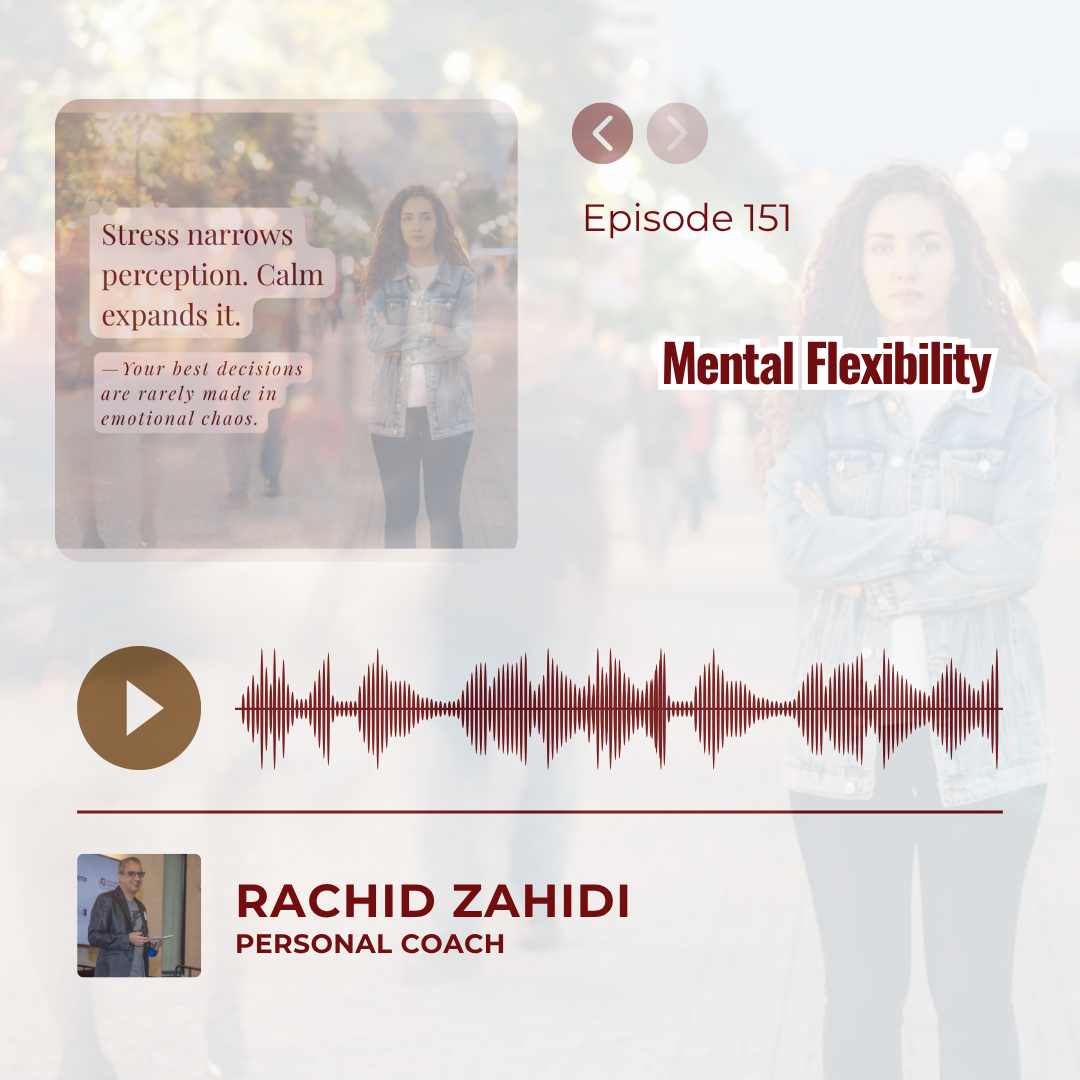
| 5/9/26 | ![]() Mental Flexibility✨ | mental flexibilityadaptability+4 | — | — | — | mental flexibilityadaptability+7 | — | 16m 38s | |
| 4/30/26 | ![]() Self-Talk That Builds Inner Strength✨ | self-talkmental resilience+4 | — | — | — | self-talkmental resilience+5 | — | 13m 28s | |
| 4/24/26 | ![]() Why Overthinking Feels Productive (But Isn't)✨ | overthinkingmental habits+4 | — | — | — | overthinkingproductivity+6 | — | 11m 43s | |
| 4/20/26 | ![]() Reframe Fear as Fuel✨ | fearanxiety+4 | — | AmazonResilience Across Borders Podcast | — | regulate nervous systemcognitive reframing+2 | — | 15m 59s | |
Want analysis for the episodes below?Free for Pro Submit a request, we'll have your selected episodes analyzed within an hour. Free, at no cost to you, for Pro users. | |||||||||
| 4/11/26 | ![]() Stop Relying on Motivation✨ | motivationconsistency+3 | — | AmazonResilience Across Borders Podcast | — | fail-safe systemsemotional negotiation+2 | — | 12m 26s | |
| 4/4/26 | ![]() From Ambition to Alignment✨ | successalignment+3 | — | AmazonResilience Across Borders Podcast+2 | — | high-performing individualsexternal validation+2 | — | 12m 24s | |
| 3/28/26 | ![]() Outgrowing Your Environment: A Practical Framework✨ | personal evolutionenvironment+3 | — | The EMO Gym JournalEmotional Gym+4 | — | expansiondiscomfort+3 | — | 12m 18s | |
| 3/22/26 | ![]() Rebuilding Trust: A Practical Framework✨ | trustemotional strength+3 | — | AmazonResilience Across Borders Podcast+1 | — | emotional confidencevulnerability+3 | — | 16m 45s | |
| 3/14/26 | ![]() The Psychology of Letting Go✨ | letting gopsychology+4 | — | EMO Gym JournalAmazon+3 | — | attachmentpast identity+3 | — | 17m 03s | |
| 3/7/26 | ![]() Resilience vs. Resistance✨ | resiliencemental flexibility+3 | — | AmazonResilience Across Borders Podcast+1 | — | mental healthleadership+2 | — | 16m 29s | |
| 2/27/26 | ![]() The Difference Between Healing and Avoiding Pain✨ | healingpain avoidance+3 | — | Resilience Across BordersAmazon+2 | — | 90-Second Ruleemotional charge+2 | — | 9m 29s | |
| 2/20/26 | ![]() The Next Version of You✨ | identity renewallife changes+3 | — | Resilience Across BordersAmazon+1 | — | career transitionrelationship ending+3 | — | 9m 29s | |
| 2/13/26 | ![]() Brave Enough to Restart✨ | reinventionresilience+3 | — | The EMO Gym JournalEmotional Gym+4 | — | letting gomicro-reinventions+2 | — | 10m 08s | |
| 2/6/26 | ![]() Seasons of the Soul: When to Push, When to Pause Respecting Your Rhythm | Life doesn't move in a straight line—and neither do we. In this episode of Resilience Across Borders, Rachid Zahidi explores the idea of inner seasons and how honoring your natural rhythm can lead to deeper resilience, clarity, and balance. Drawing inspiration from nature, Rachid explains the difference between seasons of expansion and seasons of rest—what he calls the winter push and the winter pause. Instead of forcing productivity or fighting low-energy phases, this episode invites you to recognize what each season is asking of you and respond with wisdom rather than pressure. This conversation is a reminder that rest is not weakness, pausing is not falling behind, and true growth happens when effort and recovery work together. 🎓 What You'll Learn in This Episode: Why life unfolds in seasons of growth, stillness, and renewal How to recognize your current internal season The difference between acting from energy vs. acting from ego Why rest is a critical part of productivity and resilience How pausing can prepare you for clarity, creativity, and strength Ways to trust timing instead of rushing the process Simple rituals to help you realign with your natural rhythm 💡 Key Takeaways: Resilience is rhythmic, not relentless Pushing works best during seasons of energy and clarity Pausing allows insight, healing, and renewal to take root Productivity includes rest, reflection, and recovery What's meant for you cannot miss you. 🧘 Practical Reflections Ask yourself: Am I moving from inspiration or obligation? Notice when your energy feels expansive vs. contracted Journal not only what you achieve, but when you rest and what you learn Create weekly check-ins to adjust your pace based on your energy 💬 Quotes from the Episode "Respecting your rhythm is not a sign of weakness, but of wisdom." "True resilience isn't constant motion—it's harmony with your own cycle." "Rest is not wasted time; it's where clarity and strength are restored." Featured Tool The EMO Gym Journal (Emotional Gym) A guided workbook designed to help you gain clarity, stay focused on your priorities, build better habits, and track both growth and rest. Resources & Links 📘 EMO Gym Journal — Available on Amazon 🌐 Blog & Episodes: resilienceacrossborders.com 🎧 Resilience Across Borders Podcast — New episodes weekly If this episode resonated with you, please: Share it with someone who needs permission to pause Leave a review to help others find the podcast Subscribe so you don't miss future episodes Remember: be kind to yourself, be kind to others—and stay resilient. 🌊✨ | — | ||||||
| 1/30/26 | ![]() Audit Your Beliefs: Identify What's Holding You Back | In this episode, we explore how beliefs shape the way we see ourselves, interpret the world, and decide what's possible in our lives. Beliefs act like invisible lenses; some empower us to grow and take action, while others quietly limit our potential, keeping us stuck in familiar patterns. You'll learn how to evaluate your beliefs by asking whether they make you feel stronger or smaller, and whether they encourage action or avoidance. Through practical examples, we discuss how to replace limiting beliefs with growth-aligned ones that feel believable and actionable such as shifting from "I'm not lovable unless I achieve" to "I am worthy of love as I am; achievements are a bonus." This episode also introduces the Belief Outcome Test, a simple but powerful tool to help you imagine the long-term impact of holding a belief for years. If a belief leads to a future you don't want, it's time to rewrite it. We apply this process to common relationship beliefs, transforming "Relationships always end badly" into "Healthy relationships exist, and I am learning how to build one." By the end of this episode, you'll be encouraged to regularly audit your beliefs, release the ones that no longer serve you, and consciously choose beliefs that support growth, connection, and fulfillment. 🗺️ Episode Roadmap 🏁 Introduction: The Power of Beliefs ⚖️ Empowering vs. Limiting Beliefs 🔍 Auditing Your Beliefs ✍️ Rewriting Limiting Beliefs 🧬 Identity Shifts Through Small Belief Changes 📅 The Weekly Belief Audit Practice 🧪 The Belief Outcome Test 🤝 Transforming Relationship Beliefs 📖 Closing Reflection: Rewriting the Hero's Story 🎓 What You'll Learn in This Episode: The "Invisible Lens" Effect: How your subconscious beliefs act as filters that dictate what you believe is possible for your life and career. The Empowerment Audit: A simple framework to evaluate your thoughts by asking if they make you feel "stronger or smaller" and whether they lead to action or avoidance. How to Bridge the Belief Gap: The technique for shifting from a limiting thought to a "growth-aligned" one that actually feels believable and actionable (e.g., decoupling your worth from your achievements). The Belief Outcome Test: A powerful mental tool to help you visualize the long-term "destination" of your current mindset—and how to course-correct if you don't like where it's heading. Rewriting Relationship Narratives: Practical examples of how to transform "doom-loop" thinking (like "relationships always end badly") into a mindset of active learning and healthy connection. The Practice of the Belief Audit: Why mindset work isn't a one-time event, but a regular habit for maintaining growth and fulfillment. 💡 Key Takeaways: Beliefs are stories, not facts—and they can be rewritten Empowering beliefs encourage action; limiting beliefs create avoidance Small, believable belief shifts lead to long-term identity change Regular belief audits build awareness and personal evolution You can choose beliefs that expand your future instead of shrinking it 🧘 Practical Reflections The "Stronger or Smaller" Audit: Pick one major belief you have about your career or a relationship. When you say it out loud, do you feel a sense of expansion and strength, or does your chest tighten and make you feel smaller? If it makes you feel smaller, it is likely a limiting belief, not a fact. The Five-Year Fast-Forward (The Belief Outcome Test): If you continue to believe [Insert Current Belief] for the next five years, what will your life look like? Who will you have become? What opportunities will you have missed? What is the "cost" of keeping this belief? The "Bridge" Belief: Think of a goal you feel "stuck" on. Instead of jumping to a giant positive affirmation you don't believe yet, what is a "bridge" belief you can adopt today? Example: Instead of "I am a world-class leader," try "I am a person who is capable of learning one new leadership skill this week." The Worthiness Check: Identify one area where you feel you must "earn" your value. How would your daily stress levels change if you shifted that belief to: "I am worthy as I am; my achievements are just the cherry on top"? Featured Tool The EMO Gym Journal (Emotional Gym) A guided workbook designed to help you gain clarity, stay focused on your priorities, build better habits, and track both growth and rest. Resources & Links 📘 EMO Gym Journal — Available on Amazon 🌐 Blog & Episodes: resilienceacrossborders.com 🎧 Resilience Across Borders Podcast — New episodes weekly If this episode resonated with you, please: Share it with someone who needs permission to pause Leave a review to help others find the podcast Subscribe so you don't miss future episodes Remember: be kind to yourself, be kind to others—and stay resilient. 🌊✨ | — | ||||||
| 1/23/26 | ![]() You'll Be Forgotten And That's Exactly Why You Should Live Boldly | In this episode of Resilience Across Borders, host Rachid Zahidi explores a powerful and liberating truth: we will all eventually be forgotten—and that reality can free us to live more authentically, courageously, and meaningfully. Rather than viewing impermanence as discouraging, Rachid reframes it as an invitation to release fear, comparison, and the pressure to be remembered. When we stop chasing validation or legacy, we gain the freedom to contribute sincerely, create honestly, and live fully in the present moment. ⏳ Episode Chapters 00:19 — The Liberating Truth About Legacy 01:19 — Letting Go of Eternal Significance 02:30 — Freeing Yourself from Fear of Failure and Judgment 03:33 — Contribution Over Comparison 04:26 — Living Fully in the Present 05:22 — Creating Without an Audience 🎓 What You'll Learn in This Episode: The Permission Slip of Impermanence: We often stay small to avoid judgment. Realizing that everyone eventually "forgets" is the ultimate freedom to take risks, fail, and try again without a lasting social "stain." Presence Over Legacy: Shift your focus from being remembered to being helpful. Real impact isn't found in a future monument; it's found in the sincerity of your current contribution. The "Invisible Audience" Myth: We paralyze our creativity by performing for an audience that is actually just as worried about themselves as we are. True freedom is creating for the sake of the work itself. The Integrity Metric: Stop measuring success by external recognition (which is temporary). Instead, measure it by your internal alignment—did you show up as the person you intended to be today? From Comparison to Contribution: You cannot feel "less than" someone else when your primary focus is "How can I be of service right now?" This shift instantly dissolves the anxiety of not being "enough." 💡 Key Takeaways: Being forgotten does not mean being insignificant—it means being human. When we let go of the need to be remembered forever, we finally permit ourselves to live fully now. 🧘 Practical Reflections The "Social Spotlight" Audit: Think of a project, a conversation, or a bold move you've been avoiding because you're afraid of looking foolish. If you were guaranteed that every person involved would completely forget the event in five years, would you do it today? Legacy vs. Sincerity: Are you currently making a major life decision based on how it will "look" to others in the future, or how it feels to your integrity right now? The "Invisible Audience" Check: Close your eyes and imagine yourself creating something (a piece of writing, a business plan, a craft) in a world where no one would ever see it but you. Does your approach to the work change when the "need for an audience" is removed? The 100-Year Perspective: Imagine a stranger 100 years from now looking at your current biggest "problem." Would they see it as a tragedy, or as a small, human moment in a much larger story? Use that perspective to shrink your current stress down to its true size. 💬 Quotes from the Episode "You will be forgotten, and that's exactly why you should live boldly." "Accepting that you will eventually be forgotten helps you stop chasing immortality and start focusing on impact over image." "The goal isn't to outshine others; it's to add your unique note to the symphony of humanity." "Measure success not by applause or followers, but by the integrity of what you create and the sincerity behind your actions." "When you stop trying to preserve life like a museum exhibit, you begin to experience it as art in motion." "Being forgotten doesn't mean being insignificant; it means being human." Featured Tool The EMO Gym Journal (Emotional Gym) A guided workbook designed to help you gain clarity, stay focused on your priorities, build better habits, and track both growth and rest. Resources & Links 📘 EMO Gym Journal — Available on Amazon 🌐 Blog & Episodes: resilienceacrossborders.com 🎧 Resilience Across Borders Podcast — New episodes weekly If this episode resonated with you, please: Share it with someone who needs permission to pause Leave a review to help others find the podcast Subscribe so you don't miss future episodes Remember: be kind to yourself, be kind to others—and stay resilient. 🌊✨ | — | ||||||
| 1/16/26 | ![]() Why New Year's Resolutions Don't Work — and What to Do Instead | Every January, millions of people set New Year's resolutions only to abandon them weeks later. In this episode of Resilience Across Borders, host Rachid Zahidi, author of the EMO Gym Journal, explains why resolutions fail and shares a proven, psychology-based approach to building lasting habits and real personal change. Instead of relying on motivation and willpower, this episode focuses on identity-based change, emotional regulation, and small, consistent systems that support long-term growth. If you want sustainable self-improvement that lasts beyond January, this episode will change how you approach goals forever. 🎓 What You'll Learn in This Episode: Why New Year's resolutions don't stick The difference between outcome-based goals and identity-based habits How motivation fails under stress—and what works instead The role of the nervous system in habit formation How micro-commitments create momentum Why emotional awareness prevents self-sabotage How to overcome the all-or-nothing mindset What resilience really looks like in everyday life 💡 Key Takeaways: Real change starts with who you're becoming, not what you're forcing Systems and environment matter more than motivation Nervous system regulation makes change possible Consistency beats intensity Progress comes from returning, not perfection 🧘 Practical Reflections Identity-based journaling prompts Nervous system regulation techniques Habit-building through environmental design Micro-habits for emotional resilience Daily emotional awareness check-ins 💬 Quotes from the Episode "A resolution is a statement of what you want; a habit is a statement of who you are." "We don't fail our resolutions; our resolutions fail us because they aren't built for the reality of our daily lives." "Stop waiting for January 1st to be the person you're capable of being on October 14th." "The secret to lasting change isn't a massive burst of willpower—it's the quiet consistency of small, repeatable actions." "If you want to change your results, you have to stop focusing on the goal and start focusing on the system." "Motivation gets you started, but systems keep you going when the excitement of the 'New Year' fades away." Featured Tool The EMO Gym Journal (Emotional Gym) A guided workbook designed to help you gain clarity, stay focused on your priorities, build better habits, and track both growth and rest. Resources & Links 📘 EMO Gym Journal — Available on Amazon 🌐 Blog & Episodes: resilienceacrossborders.com 🎧 Resilience Across Borders Podcast — New episodes weekly If this episode resonated with you, please: Share it with someone who needs permission to pause Leave a review to help others find the podcast Subscribe so you don't miss future episodes Remember: be kind to yourself, be kind to others—and stay resilient. 🌊✨ | — | ||||||
| 1/5/26 | ![]() From Fault-Finding to Fulfillment | How to Train Your Mind to Notice Goodness as Easily as Imperfection In this episode of Resilience Across Borders, host Rachid Zahidi explores why we tend to focus on flaws and how to retrain our perception to see the full picture instead of just what's wrong. Our minds are wired with a negativity bias designed for survival, but in modern life, this habit often leads to stress, strained relationships, and dissatisfaction. Learning to stop looking for flaws doesn't mean ignoring reality; it means developing balanced awareness and emotional resilience. 🎓 What You'll Learn in This Episode: Why fault-finding is a natural survival response and how it backfires today The difference between judgment-based thinking and growth-based curiosity How perception shapes emotional reactions and relationships Why perfectionism is often disguised as flaw-finding 💡 Key Takeaways: The goal isn't to become blind to flaws, it's to stop fixating on them. When you train your perception to see nuance, effort, and beauty alongside imperfection, you cultivate peace, resilience, and genuine connection. 🧘 Practical Reflections Practice "Both/And" Thinking Learn to see both strengths and imperfections simultaneously, rather than labeling situations as all good or all bad. Shift from Judgment to Curiosity Replace assumptions with questions to build empathy and understanding. Retrain Attention Through Gratitude Actively notice what's working to balance the brain's negativity bias. Replace Self-Criticism with Self-Compassion Learn how softer self-talk reduces shame and increases growth. Use the Zoom-Out Perspective Step back to see progress, effort, and intention—not just isolated flaws. Reframe Perfectionism as Progress Let go of "perfect" and define what "good enough" looks like. Recognize the Emotional Root of Criticism Understand how fear, control, and insecurity fuel flaw-finding. 💬 Quotes from the Episode "Fault-finding is a survival instinct, but fulfillment is a conscious choice." "The goal isn't to become blind to flaws; it's to stop fixating on them." "When you train your perception to see nuance, effort, and beauty alongside imperfection, you cultivate peace." "Perfectionism is often just flaw-finding in a better-looking suit." "We are wired for negativity to survive, but we must practice gratitude to thrive." "Replace judgment-based thinking with growth-based curiosity." Featured Tool The EMO Gym Journal (Emotional Gym) A guided workbook designed to help you gain clarity, stay focused on your priorities, build better habits, and track both growth and rest. Resources & Links 📘 EMO Gym Journal — Available on Amazon 🌐 Blog & Episodes: resilienceacrossborders.com 🎧 Resilience Across Borders Podcast — New episodes weekly If this episode resonated with you, please: Share it with someone who needs permission to pause Leave a review to help others find the podcast Subscribe so you don't miss future episodes Remember: be kind to yourself, be kind to others—and stay resilient. 🌊✨ | — | ||||||
| 12/22/25 | ![]() Are You Charging or Draining Yourself? | Learn to spot what fills your tank—and what empties it. In this episode of the 'Resilience Across Borders' podcast, host Rachid Zahidi discusses the critical impact of actions on personal energy levels. Key strategies highlighted include monitoring physical inputs, noticing emotional investments, guarding mental focus, honoring rest, and aligning actions with personal values. By making conscious choices, listeners can maintain a full energy tank, move through their days with vitality, focus, and peace of mind. The episode also encourages listeners to be mindful of the effects of their activities on energy and provides practical examples to implement these strategies effectively. 🎓 What You'll Learn in This Episode: The Energy Audit: How to identify the specific activities, people, and environments that either replenish or deplete your "internal battery". The Five Pillars of Personal Energy: Strategies for monitoring physical inputs, emotional investments, mental focus, rest, and value-alignment. Proactive vs. Reactive Living: How to move from simply surviving your day to navigating it with vitality, focus, and peace of mind. The Cost of "Leaky" Focus: Understanding how unguarded mental energy and misaligned emotional investments can lead to burnout. 💡 Key Takeaways: Energy is Your Greatest Currency: Every action you take either adds to your energy reserves or drains them. Rest is a Strategic Necessity: Honoring rest and recovery is essential for maintaining a full energy tank and long-term resilience. Alignment Provides Power: Aligning your daily actions with your purpose and personal values provides a sustainable source of energy. Energy Management > Time Management: Focusing on how an action affects your "tank" is more effective for preventing burnout than simply managing your schedule. 🧘 Practical Reflections The "Fuel vs. Drain" Check: Throughout your day, pause and ask yourself: "Is this action charging me or is this action draining me?" Input Audit: Reflect on your physical inputs (sleep, nutrition) and emotional investments. Which one currently needs more "guarding" to prevent unnecessary energy loss?. Identifying Busy Work: Notice where you might be spending energy on "busy work" that doesn't move you closer to your goals, as this is a primary source of depletion. 💬 Quotes from the Episode "Boosting the tank instead of running on empty—every action we take either adds to our energy and energy reserves or drains them." "Energy management isn't just about doing less; it's about choosing actions that sustain you rather than the ones that deplete you." "Notice, is this action charging me, or is this action draining me over time?" "This awareness helps you design a life where your tank stays full, and burnout becomes far less likely." "Energy management is about keeping your tank full so you can move through your days with vitality and focus." Featured Tool The EMO Gym Journal (Emotional Gym) A guided workbook designed to help you gain clarity, stay focused on your priorities, build better habits, and track both growth and rest. Resources & Links 📘 EMO Gym Journal — Available on Amazon 🌐 Blog & Episodes: resilienceacrossborders.com 🎧 Resilience Across Borders Podcast — New episodes weekly If this episode resonated with you, please: Share it with someone who needs permission to pause Leave a review to help others find the podcast Subscribe so you don't miss future episodes Remember: be kind to yourself, be kind to others—and stay resilient. 🌊✨ | — | ||||||
Showing 25 of 100
Sponsor Intelligence
Sign in to see which brands sponsor this podcast, their ad offers, and promo codes.