Rewired
The Rewired Podcast is a podcast for people struggling with eating disorders. Meg and Safia draw on their own lived experiences, personal reflections, and have guests providing expert insights to help listeners rewire th...
Insights from recent episode analysis
On the show
- Safia2 eps
- Gerome Breen1 ep
- Julia Trehane1 ep
Audience Interest
Podcast Focus
Publishing Consistency
Insights are generated by CastFox AI using publicly available data, episode content, and proprietary models.
Most discussed topics
Brands & references
Total monthly reach
Based on 1 signal.
Built from
By chart position
- 🇬🇧United Kingdom · Mental Health#761.9K to 10K
- Per-Episode Audience
Est. listeners per new episode within ~30 days
1.9K to 10K🎙 ~2x weekly·65 episodes·Last published 1w ago - Monthly Reach
Unique listeners across all episodes (30 days)
3.9K to 21K🇺🇸71%🇬🇧29% - Active Followers
Loyal subscribers who consistently listen
2.1K to 11K
Market Insights
Platform Distribution
Reach across major podcast platforms, updated hourly
Total Followers
—
Total Plays
—
Total Reviews
—
* Data sourced directly from platform APIs and aggregated hourly across all major podcast directories.
| Date | Episode | Topics | Guests | Brands | Places | Keywords | Sponsor | Length | |
|---|---|---|---|---|---|---|---|---|---|
| 10/16/26 |  Rewired Community Testimonials | JOIN THE REWIRED IN ACTION COMMUNITY: www.rewiredinaction.com/In today’s community testimonials episode, we hear from our wonderful Rewired in Action members about their experiences and what being part of the community has brought to their recovery. They share how the regular sessions, practical tools and accountability have helped them move from wanting to make changes to taking action, even when it feels difficult.We also talk about the value of consistent support and having a space where recovery can look different for everyone. A huge thank you to the featured members for being so open about their experiences and helping others understand what the community is like!Topics covered:Putting recovery into actionPractical tools and goal settingAccountability and consistent supportLearning from lived experienceRecovery without comparisonMaking change through discomfortConnect with us:MegInstagram: @megsy_recoveryYouTube: Megsy RecoveryTikTok: megsy recoverySafiaInstagram: @safia_edrecoverycoachEmail: [email protected]: www.safiaed.comEm (copywriter & editor)Instagram: @em_schoneTallulah Self (podcast editor)Instagram: @tallulahselfDisclaimerPlease keep in mind we're not medical professionals, and the podcast content reflects our own experiences and opinions, so it shouldn't be taken as medical advice. If you're struggling with an eating disorder or disordered eating, please reach out to a medical professional to discuss your own situation and get professional help that's right for you. | 42m 40s | ||||||
| 10/9/26 |  Meg’s Story Part 2 | JOIN THE REWIRED IN ACTION COMMUNITY: www.rewiredinaction.com/ In Part 2 of Meg’s story, we pick up with what recovery actually looked like once she started working with our wonderful psychologist. We’ll be talking about the practical side of treatment and how she managed to keep taking steps forward when recovery felt incredibly uncomfortable (understatement!).We also get into weight gain and the space left behind when the ED starts to loosen its grip. Plus, we’ll go through some of the tips, tricks and tools we both continue to use to this day, alongside what recovery has changed for Meg beyond “just” the food. Topics covered:Treatment and food challengesThe reality of weight gainLearning to act despite discomfortSupport from partners and other people around youFinding your own self-permission in recoveryThe “pie chart of life” and rebuilding your worldTools we still use todayWhat recovery has changed for Meg beyond foodFor more information or to join the Rewired Community: www.rewiredinaction.com/Connect with us:MegInstagram: @megsy_recoveryYouTube: Megsy RecoveryTikTok: megsy recoverySafiaInstagram: @safia_edrecoverycoachEmail: [email protected]: www.safiaed.comEm (copywriter & editor)Instagram: @em_schoneTallulah Self (podcast editor)Instagram: @tallulahselfDisclaimerPlease keep in mind we're not medical professionals, and the podcast content reflects our own experiences and opinions, so it shouldn't be taken as medical advice. If you're struggling with an eating disorder or disordered eating, please reach out to a medical professional to discuss your own situation and get professional help that's right for you. | 1h 00m 42s | ||||||
| 10/2/26 |  Meg’s Story Part 1 | JOIN THE REWIRED IN ACTION COMMUNITY: www.rewiredinaction.com/Following Safia’s story, today, Meg shares her recovery experience — where her ED started, how things developed over the years, and what happened as she moved through different stages of treatment.It wasn’t a straightforward timeline (recovery timelines rarely are!). There were periods of getting better, moving countries, starting again and relapsing. We also explore the moment when Meg realised that looking healthier and eating in a certain way didn’t necessarily mean she was recovered, and how working with someone who understood eating disorders helped her recognise the rules that were still running her life.Topics covered:How Meg’s eating disorder beganEarly treatment and hospitalisationMoving abroad and changes in recoveryRelapse and returning to old patternsThe difference between looking better and being recoveredHidden rules Finding specialised eating disorder supportThe point when recovery started to feel differentFor more information or to join the Rewired Community: www.rewiredinaction.com/Connect with us:MegInstagram: @megsy_recoveryYouTube: Megsy RecoveryTikTok: megsy recoverySafiaInstagram: @safia_edrecoverycoachEmail: [email protected]: www.safiaed.comEm (copywriter & editor)Instagram: @em_schoneTallulah Self (podcast editor)Instagram: @tallulahselfDisclaimerPlease keep in mind we're not medical professionals, and the podcast content reflects our own experiences and opinions, so it shouldn't be taken as medical advice. If you're struggling with an eating disorder or disordered eating, please reach out to a medical professional to discuss your own situation and get professional help that's right for you. | 55m 39s | ||||||
| 9/25/26 |  Eating Disorder Mind Games | JOIN THE REWIRED IN ACTION COMMUNITY: www.rewiredinaction.com/Eating disorders can be incredibly convincing; it’s why so many of us stay unwell for so long. In this episode, we look at some of the common “mind games” that can keep you stuck – everything from being told you “look well” or that your blood results are fine, to comparing yourself with someone who seems to be struggling more.We talk about why these thoughts can be so difficult to challenge, and come back to a bigger question: what kind of life are you able to live when the eating disorder is making the decisions?Topics covered:Common ED “mind games”Questioning whether you’re struggling “enough”Medical reassurance and recoveryComparing yourself with othersAppearance and eating disorder recoveryHunger cues and recoveryLooking beyond being “well enough” to functionFor more information or to join the Rewired Community: www.rewiredinaction.com/Connect with us:MegInstagram: @megsy_recoveryYouTube: Megsy RecoveryTikTok: megsy recoverySafiaInstagram: @safia_edrecoverycoachEmail: [email protected]: www.safiaed.comEm (copywriter & editor)Instagram: @em_schoneTallulah Self (podcast editor)Instagram: @tallulahselfDisclaimerPlease keep in mind we're not medical professionals, and the podcast content reflects our own experiences and opinions, so it shouldn't be taken as medical advice. If you're struggling with an eating disorder or disordered eating, please reach out to a medical professional to discuss your own situation and get professional help that's right for you. | 51m 39s | ||||||
| 9/18/26 |  The Hunger Paradox | JOIN THE REWIRED IN ACTION COMMUNITY: www.rewiredinaction.com/Have you ever been scared of hunger, but also wished you had the cues? In this episode, we get into the strange contradiction of wanting to feel hungry enough before eating, while also spending so much time worrying about hunger itself…We also take a closer look at what happens when we turn sensations into judgements, and why eating doesn’t have to depend on getting those signals “right”. Especially in recovery, hunger can be unpredictable! Sometimes structure is more helpful than waiting to feel ready. You can eat when you’re hungry, when you’re not sure, or even when you still feel a bit full – without needing to work out exactly what your hunger is telling you first.Topics covered:The contradiction of wanting and fearing hungerTrying to achieve the “perfect” amount of hungerBody-scanning and constantly monitoring hungerWhy hunger can become another thing to controlThe difference between a sensation and the judgement attached to itFear of fullness and what it can mean in recoveryEating for reasons beyond hungerWhy hunger and fullness can be unpredictable in recoveryMental hunger and the role of structurePractising eating without perfect conditionsFor more information or to join the Rewired Community: www.rewiredinaction.com/Connect with us:MegInstagram: @megsy_recoveryYouTube: Megsy RecoveryTikTok: megsy recoverySafiaInstagram: @safia_edrecoverycoachEmail: [email protected]: www.safiaed.comEm (copywriter & editor)Instagram: @em_schoneTallulah Self (podcast editor)Instagram: @tallulahselfDisclaimerPlease keep in mind we're not medical professionals, and the podcast content reflects our own experiences and opinions, so it shouldn't be taken as medical advice. If you're struggling with an eating disorder or disordered eating, please reach out to a medical professional to discuss your own situation and get professional help that's right for you. | 43m 04s | ||||||
| 9/11/26 |  Somatic Compassion | JOIN THE REWIRED IN ACTION COMMUNITY: www.rewiredinaction.com/This week, we’re joined by Dr Ann Saffi Biasetti to talk about somatic compassion and what it means to build a relationship with your body, both in recovery and beyond. We get into what happens when you know something intellectually, but still feel completely different about (and differently in) your physical self. Dr Ann also talks through some common themes we see in our work as coaches: grief, the fear of not liking your recovered appearance, some of the ways loved ones can make things harder without meaning to — and why recovery doesn’t have to mean loving the way your body looks.Topics covered:What “your body never meant you any harm” really meansThe gap between knowing and feelingMoving away from fighting the bodyFear of not liking your recovered appearanceHow somatic work can aid eating disorder recoveryA simple somatic practice for difficult momentsHow support can unintentionally reinforce ED fearsMaking space for grief in recoveryBeginning to relate to your body differentlyFor more information or to join the Rewired Community:www.rewiredinaction.com/Resources mentioned: Your Body Never Meant You Any Harm: A Somatic Guide to Forgiving and Healing Your Relationship with Your BodyConnect with us:Dr Ann Saffi BiasettiWebsite: www.anembodiedlife.comInstagram: @anembodiedlifeMegInstagram: @megsy_recoveryYouTube: Megsy RecoveryTikTok: megsy recoverySafiaInstagram: @safia_edrecoverycoachEmail: [email protected]: www.safiaed.comEm (copywriter & editor)Instagram: @em_schoneTallulah Self (podcast editor)Instagram: @tallulahselfDisclaimerPlease keep in mind we're not medical professionals, and the podcast content reflects our own experiences and opinions, so it shouldn't be taken as medical advice. If you're struggling with an eating disorder or disordered eating, please reach out to a medical professional to discuss your own situation and get professional help that's right for you. | 56m 39s | ||||||
| 9/4/26 | Recovery processChallenging food rules+5 | Safia | RewiredRewired in Action Community+4 | — | recoveryeating disorder+6 | — | 57m 52s | ||
| 8/28/26 | eating disorder recoverybody image+4 | Safia | Rewired | — | eating disorderrecovery+5 | — | 45m 04s | ||
| 8/21/26 | recoveryeating disorders+4 | — | RewiredRewired in Action+4 | — | recoveryeating disorders+4 | — | 40m 32s | ||
| 8/14/26 | genetic component of eating disordersresearch on eating disorders+3 | Gerome Breen | King's College LondonUK Eating Disorders Genetics Initiative (EDGI-UK)+1 | — | eating disordersgenetics+5 | — | 47m 45s | ||
Want analysis for the episodes below?Free for Pro Submit a request, we'll have your selected episodes analyzed within an hour. Free, at no cost to you, for Pro users. | |||||||||
| 8/6/26 | eating disorderstime management+4 | — | Rewired CommunityRewired | — | eating disorderrecovery+5 | — | 42m 50s | ||
| 7/30/26 | exercise in recoveryeating disorder+4 | Julia Trehane | RewiredEating Disorder Recovery Circle+2 | — | exercise addictioneating disorder recovery+5 | — | 55m 15s | ||
| 7/23/26 | eating disordersmental health+4 | — | — | — | eating disorderrecovery+5 | — | 34m 09s | ||
| 7/16/26 | honestyeating disorders+4 | — | Rewired CommunityRewired | — | eating disordershonesty+6 | — | 33m 33s | ||
| 7/9/26 | food paralysiseating disorders+4 | — | RewiredRewired Community+5 | — | food choiceseating disorders+5 | — | 48m 39s | ||
| 7/3/26 | comparisoneating disorders+4 | — | Rewired CommunityRewired | — | comparison trapeating disorder+5 | — | 46m 20s | ||
| 6/26/26 |  10 Recovery Game-changers: Meg | 10 Recovery Game-changers: MegFollowing on from last week's episode, today Meg shares ten recovery game-changers of her own. Things like letting go of control, allowing herself to feel frustrated, learning not to engage with every eating disorder thought – and, crucially, accepting that different bodies are on different paths. We also share more about our upcoming Rewired Workshop: Taking Action – a session designed to help bridge the gap between intention and practice, especially when motivation is low or fear is loud.Rewired Workshop: Taking ActionA 60-minute workshop exploring practical tools to help you move from intention to action in your eating disorder recovery.Sign up here: https://buy.stripe.com/fZu4gB2tH2DC902ak057W0qTopics covered: • Letting go of control and certainty • Recovery rules • Blocking ED thoughts • Feeling frustration and discomfort without giving up • “Different bodies, different paths” • Radical acceptance • Curating online and offline spaces • Soundbites and value alignment For more info or to sign up to the Rewired Community: https://rewiredinaction2.carrd.co/Connect with us:Meg Instagram: @megsy_recovery YouTube: Megsy Recovery TikTok: megsy recoverySafia Instagram: @safia_edrecoverycoach Email: [email protected] Website: https://www.safiaed.comEm (copywriter & editor) Instagram: @em_schoneTallulah Self (podcast editor) Instagram: @tallulahself[DISCLAIMER]We’re not medical professionals, and the podcast content reflects our own experiences and opinions. If you’re struggling with an eating disorder or disordered eating, please reach out to a medical professional for personalised support. | 45m 31s | ||||||
| 6/24/26 |  Heatwaves and ED Recovery | Heatwaves and ED RecoveryHot weather can throw up challenges that people don't always expect in recovery. Appetite might feel different, for one. Plus being more tired and irritable, or blaming your body for feeling uncomfortable (when actually, you're just too hot) against a backdrop of triggering media messages… All of these factors can make summer especially tough when you’re in eating disorder recovery. This week, we discuss the realities of recovery during the hotter months. Be that eating despite unreliable hunger cues, dealing with body image, navigating travel, or simply fielding unhelpful narratives online: we reflect on what we personally gained from letting go of those pressures, and how recovery can open the door to a very different experience of summer altogether.Topics covered: • Why heat can make recovery feel harder • Appetite changes, fatigue and food • Summer body culture and relapse thoughts • Body image when wearing less clothing • Feeling uncomfortable in your body vs feeling uncomfortable because you're hot • Heat, movement and compulsive exercise • Eating regularly when hunger cues feel different • Ice cream, BBQs, holidays, and seasonal food fears • Travel and disrupted routines • The nervous system impact of heat • Reclaiming summer from the eating disorderUpcoming workshop: Rewired Workshop: Taking Action A £2, 60-minute workshop exploring practical tools to help you move from intention to action in your eating disorder recovery.Sign up here: https://buy.stripe.com/fZu4gB2tH2DC902ak057W0qFor more info or to sign up to the Rewired Community: https://rewiredinaction2.carrd.co/Connect with us:Meg Instagram: @megsy_recovery YouTube: Megsy Recovery TikTok: megsy recoverySafia Instagram: @safia_edrecoverycoach Email: [email protected] Website: https://www.safiaed.comEm (copywriter & editor) Instagram: @em_schoneTallulah Self (podcast editor) Instagram: @tallulahself[DISCLAIMER]We’re not medical professionals, and the podcast content reflects our own experiences and opinions. If you’re struggling with an eating disorder or disordered eating, please reach out to a medical professional for personalised support. | 43m 16s | ||||||
| 6/19/26 |  10 Recovery Game-changers: Safia | 10 Recovery Game-changers: SafiaIn this personal episode, Safia shares ten of the biggest game-changers from her own recovery. Some were practical, like getting rid of scales or buying clothes that fit her changing body. Others were mindset shifts: being more honest with the people around her, outing hidden rules, and staying focused on her own recovery to limit comparison. We also discuss why consistency mattered far more than motivation, along with some of the tools that helped recovery feel doable along the way. With that said, we’re proud to share our upcoming Rewired Workshop: Taking Action, to help you bridge the gap between wanting recovery and putting it into practice day to day.Rewired Workshop: Taking ActionA 60-minute workshop exploring practical tools to help you move from intention to action in your eating disorder recovery.Sign up here: https://buy.stripe.com/fZu4gB2tH2DC902ak057W0qTopics covered: • Opening up to others • Challenging the hidden rules • Staying focused on your own path • Values, regret, and building a life bigger than your ED • Letting go of perfectionism • Creating an environment that supports change • Self-compassion and understanding your body's needs • Navigating body changes • Taking stock of recovery wins along the way • Why consistency matters more than mood or motivationFor more info or to sign up to the Rewired Community: https://rewiredinaction2.carrd.co/Connect with us:Meg Instagram: @megsy_recovery YouTube: Megsy Recovery TikTok: megsy recoverySafia Instagram: @safia_edrecoverycoach Email: [email protected] Website: https://www.safiaed.comEm (copywriter & editor) Instagram: @em_schoneTallulah Self (podcast editor) Instagram: @tallulahself[DISCLAIMER]We’re not medical professionals, and the podcast content reflects our own experiences and opinions. If you’re struggling with an eating disorder or disordered eating, please reach out to a medical professional for personalised support. | 49m 33s | ||||||
| 6/12/26 |  Rigidity & Routine | Rigidity & RoutineOne of the things we see time and time again – both in ourselves and in the people we work with – is just how overwhelmingly rigid routines take over life when you’re struggling with an ED.With this in mind, this week, we’re exploring the many ways rigidity can show up in an eating disorder: safe foods, strict timings, movement routines, rituals, certainty-seeking, and the feeling that everything has to be done in a particular way. We look at why this happens, including the impact of starvation on the brain, and how even the most concrete rigidities can soften with adequate nourishment. Most importantly, we talk about the freedom that comes when life no longer has to revolve around rules, routines, and getting everything “right”.Topics covered: • What rigidity can look like in eating disorders • How starvation and energy deficit affect cognitive flexibility • Safe foods, food rules, brands, timings, and meal routines • Rigidity around movement and exercise • Certainty-seeking and needing things done a particular way • The role of personality, temperament, and neurodivergence • Why rigidity can feel safe even when it’s causing harm • Challenging rigidity in recovery • The concept of recovery momentum and neural pathways • The freedom that comes from expanding life beyond the eating disorderFor more info or to sign up to the Rewired Community: https://rewiredinaction2.carrd.co/Connect with us:Meg Instagram: @megsy_recovery YouTube: Megsy Recovery TikTok: megsy recoverySafia Instagram: @safia_edrecoverycoach Email: [email protected] Website: https://www.safiaed.comEm (copywriter & editor) Instagram: @em_schoneTallulah Self (podcast editor) Instagram: @tallulahself[DISCLAIMER]We’re not medical professionals, and the podcast content reflects our own experiences and opinions. If you’re struggling with an eating disorder or disordered eating, please reach out to a medical professional for personalised support. | 50m 06s | ||||||
| 6/5/26 | 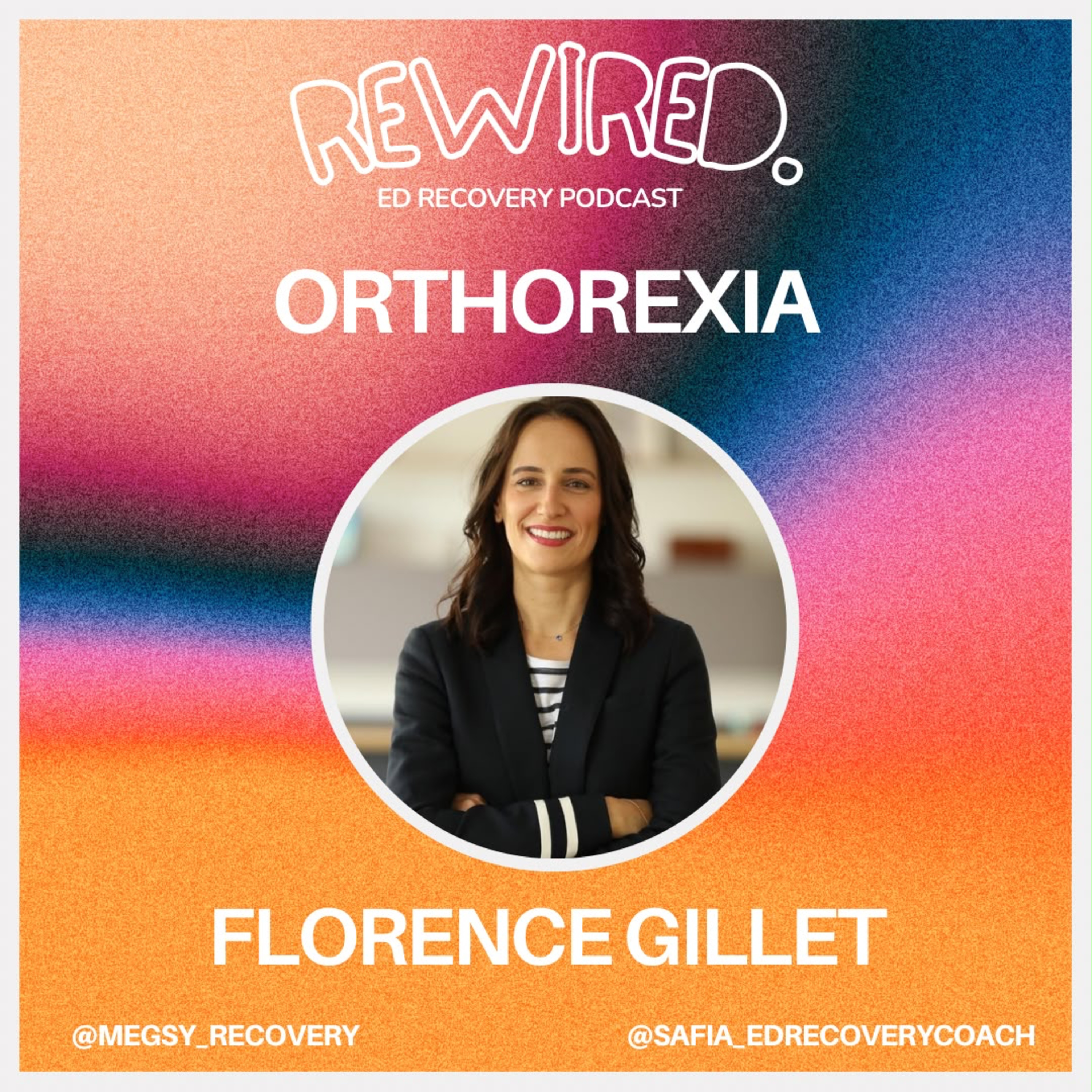 Orthorexia with Florence Gillet | Orthorexia with Florence GilletFor many people, orthorexia begins with a genuine wish to feel better, improve health, manage symptoms, or solve a problem. But when food rules become rigid and anxiety around eating grows, it can become difficult to see where self-care ends and obsession begins.This week, we’re joined by Florence Gillet, Certified Eating Psychology Coach and founder of Beyond Body Image. Florence shares her personal experience of developing orthorexia after changing her diet to improve her skin, and reflects on how behaviours that appeared healthy from the outside gradually became restrictive and all-consuming. We also explore the overlap between wellness culture and EDs — including the impact of elimination diets — and why rebuilding trust in your body can be the most health-affirming choice of all. Topics covered: * Florence’s background and the work she does today • When self-care becomes rigidity and obsession • Spotting orthorexia red flags • The impact of restriction on hunger, fullness, and social eating • Letting go of food rules during recovery • Restriction in the name of gut health or clear skin • Challenging fears around inflammation, toxins, and "bad" foods • The role of black-and-white thinking in orthorexia • Considerations for healthcare professionalsFor more info or to sign up to the Rewired Community: https://rewiredinaction2.carrd.co/Connect with us:Florence Gillet Instagram: @beyond.bodyimage Website: https://www.beyondbodyimage.com/about/Meg Instagram: @megsy_recovery YouTube: Megsy Recovery TikTok: megsy recoverySafia Instagram: @safia_edrecoverycoach Email: [email protected] Website: https://www.safiaed.comEm (copywriter & editor) Instagram: @em_schoneTallulah Self (podcast editor) Instagram: @tallulahself[DISCLAIMER]We’re not medical professionals, and the podcast content reflects our own experiences and opinions, as well as that of our guests, so it shouldn’t be taken as medical advice. If you’re struggling with an eating disorder or disordered eating, please reach out to a medical professional to discuss your own situation and get professional help with your own unique recovery. | 55m 17s | ||||||
| 5/29/26 |  Pregnancy & ED Recovery | Pregnancy & ED RecoveryEating disorders aside, pregnancy can bring up all sorts of feelings and challenges for people. However, in this episode, we talk about why this stage of life can feel particularly complex when your relationship with food, weight, and body has been difficult in the past.Drawing on our own experiences, we unpack some of the things that did, or can, feel hard: body changes, weight gain, medical appointments, food and movement advice, or just the uncertainty that comes with your body doing something you can’t fully control. We also look at how ED thoughts can resurface during pregnancy, alongside some practical tools and tips to combat them.And finally, we’ll be reflecting on how pregnancy can strengthen recovery — offering an opportunity to practise trust and self-advocacy — as well as modelling the relationship with food and body image you want for your child.Topics covered: * Why pregnancy can feel triggering in ED recovery • Body changes, weight gain, and navigating medical weigh-ins • The fear of losing control over your body • Food rules, nutrition messaging and advice • Movement during pregnancy • Recognising signs that pregnancy may be triggering old patterns • Advocating for yourself with healthcare professionals • Recovery tools and tips • How becoming a parent can strengthen recovery motivation • Why struggling with triggers doesn’t mean recovery is “going wrong”For more info or to sign up to the Rewired Community: https://rewiredinaction2.carrd.co/Connect with us:Meg Instagram: @megsy_recovery YouTube: Megsy Recovery TikTok: megsy recoverySafia Instagram: @safia_edrecoverycoach Email: [email protected] Website: https://www.safiaed.comEm (copywriter & editor) Instagram: @em_schoneTallulah Self (podcast editor) Instagram: @tallulahself[DISCLAIMER]We’re not medical professionals, and the podcast content reflects our own experiences and opinions. If you’re struggling with an eating disorder or disordered eating, please reach out to a medical professional for personalised support. | 50m 06s | ||||||
| 5/23/26 |  Rewired in Action Community: May Testimonials | Rewired in Action Community: May TestimonialsEach month, we’ll be sharing episodes featuring voices from the Rewired in Action Community — giving members the chance to talk about what’s been helpful, and what recovery can look like alongside the Community.We discuss the impact of shared experience and realising you’re not the only one thinking or struggling in a certain way. Whether you’re laying foundations, working towards bigger “sparkly” goals, or simply wanting a consistent recovery top-up, the Rewired in Action Community offers members a safe, supportive space and tools to help make change possible — no matter your age, recovery stage, or goals.Topics covered:* What the Rewired in Action Community offers* Hearing others’ experiences and not feeling alone* The impact of shared questions and lived experience* Tools, Q&As, and applying things in real time* Support alongside therapy or dietetic work* Building belief and making changes that felt out of reach* Why a consistent, safe space mattersFor more info or to sign up to the Rewired Community: https://rewiredinaction2.carrd.co/Connect with us:MegInstagram: @megsy_recoveryYouTube: Megsy RecoveryTikTok: megsy recoverySafiaInstagram: @safia_edrecoverycoachEmail: [email protected]: https://www.safiaed.comEm (copywriter & editor)Instagram: @em_schoneTallulah Self (podcast editor)Instagram: @tallulahself[DISCLAIMER]We’re not medical professionals, and the podcast content reflects our own experiences and opinions. If you’re struggling with an eating disorder or disordered eating, please reach out to a medical professional for personalised support. | 54m 39s | ||||||
| 5/15/26 |  Extreme Hunger with Amalie Lee | Extreme Hunger with Amalie LeeExtreme hunger can be one of the most frightening, confusing, and misunderstood parts of ED recovery. As coaches, we hear so many clients say they’re scared they’ve suddenly lost control — especially in a culture that constantly pathologises hunger and appetite.To help challenge this, we’re joined by fellow recovery coach, podcast host, and founder of Let’s Recover, Amalie Lee, to unpack what extreme hunger actually is, including how restriction — even subtle or mental restriction — can keep it going. Drawing on both her professional work and lived experience of anorexia recovery, Amalie shares a compassionate, evidence-based insight into the biology of starvation, rebuilding trust with your body, and why this phase is far more common than people realise.Topics covered: * What extreme hunger is and why it happens in recovery • The difference between extreme hunger and binge eating • Fear of “never stopping” or feeling out of control • Rebuilding trust with your body after restriction • How mental and physical restriction can prolong hunger • Amalie’s personal experience of extreme hunger • Doubting the recovery process and what helped her keep going • Why extreme hunger can fluctuate during recovery • What hunger and fullness can look like long-term after recoveryFor more info or to sign up to the Rewired Community: https://rewiredinaction2.carrd.co/Connect with us: Amalie Lee Instagram: @amalielee Instagram: @letsrecover.co.uk Website: https://www.letsrecover.co.ukMeg Instagram: @megsy_recovery YouTube: Megsy Recovery TikTok: megsy recoverySafia Instagram: @safia_edrecoverycoach Email: [email protected] Website: https://www.safiaed.comEm (copywriter & editor) Instagram: @em_schoneTallulah Self (podcast editor) Instagram: @tallulahself[DISCLAIMER]Please keep in mind we’re not medical professionals, and the podcast content reflects our own experiences and opinions, as well as that of our guests, so it shouldn’t be taken as medical advice. If you’re struggling with an eating disorder or disordered eating, please reach out to a medical professional to discuss your own situation and get professional help with your own unique recovery. | 41m 38s | ||||||
| 5/8/26 |  Rewired in Action Community: Testimonials | Rewired in Action Community: Testimonials This episode’s a little bit different. We’re sharing more about our Rewired in Action Community — alongside three wonderful members, who tell us about their experience of being part of it.We’ll discuss what’s actually been helpful: having a space where you’re not the only one thinking or struggling in a certain way, hearing other people’s questions and recognising yourself in them, and having access to tools that can be applied in real time.Whether it’s laying down the foundations, pushing for “sparkly” goals, or simply a weekly recovery top-up, we’ll also look at how the community can sit alongside other support — and help you take those steps towards a fuller, freer life. Topics covered: * What the Rewired in Action Community offers • Hearing others’ experiences and not feeling alone • The impact of shared questions and lived experience • Tools, Q&As, and applying things in real time • Support alongside therapy or dietetic work • Building belief and making changes that felt out of reach • Why a consistent, safe space mattersFor more info or to sign up to the Rewired Community: https://rewiredinaction2.carrd.co/Connect with us:Meg Instagram: @megsy_recovery YouTube: Megsy Recovery TikTok: megsy recoverySafia Instagram: @safia_edrecoverycoach Email: [email protected] Website: https://www.safiaed.comEm (copywriter & editor) Instagram: @em_schoneTallulah Self (podcast editor) Instagram: @tallulahself[DISCLAIMER] We’re not medical professionals, and the podcast content reflects our own experiences and opinions. If you’re struggling with an eating disorder or disordered eating, please reach out to a medical professional for personalised support. | 43m 21s | ||||||
Showing 25 of 65
Pitch Fit is a Pro feature
See how bookable this show is for guests, which brands already advertise, the per-episode ad value, and the best-fit guest and sponsor profile. The numbers are blurred on the free plan.
How readily this show books outside guests like you.
How proven this show is for host-read sponsorships.
For Guests
ProFor Advertisers
ProUpgrade to Pro to unlock guest cadence, sponsor categories, fit scores, and per-episode ad value for this show.
Similar Audience Demographics
Podcasts that attract a similar listener profile

Beyond Body
Beyond Body

Unrestrict-ED
Emily and Han

Recovery Talk
Amalie Lee (MSc, GMBPsS)

Recovering with Danie | Eating Disorder Recovery Podcast
Danie van Kay | Licensed eating disorder recovery coach

Real Health Radio
Real Health Radio

Food Is Food
Talia Cecchele

Recover To Flourish | Eating Disorder Recovery Podcast
Ciandra Birnbaum
Chart history for Rewired
Peaked at #76 in United Kingdom, currently #76 in United Kingdom.
| Market | Genre | Peak | Current | Trend |
|---|---|---|---|---|
| United Kingdom | — | #76 | #76 | — |
Chart Positions
1 placement across 1 market.
Chart Positions
1 placement across 1 market.