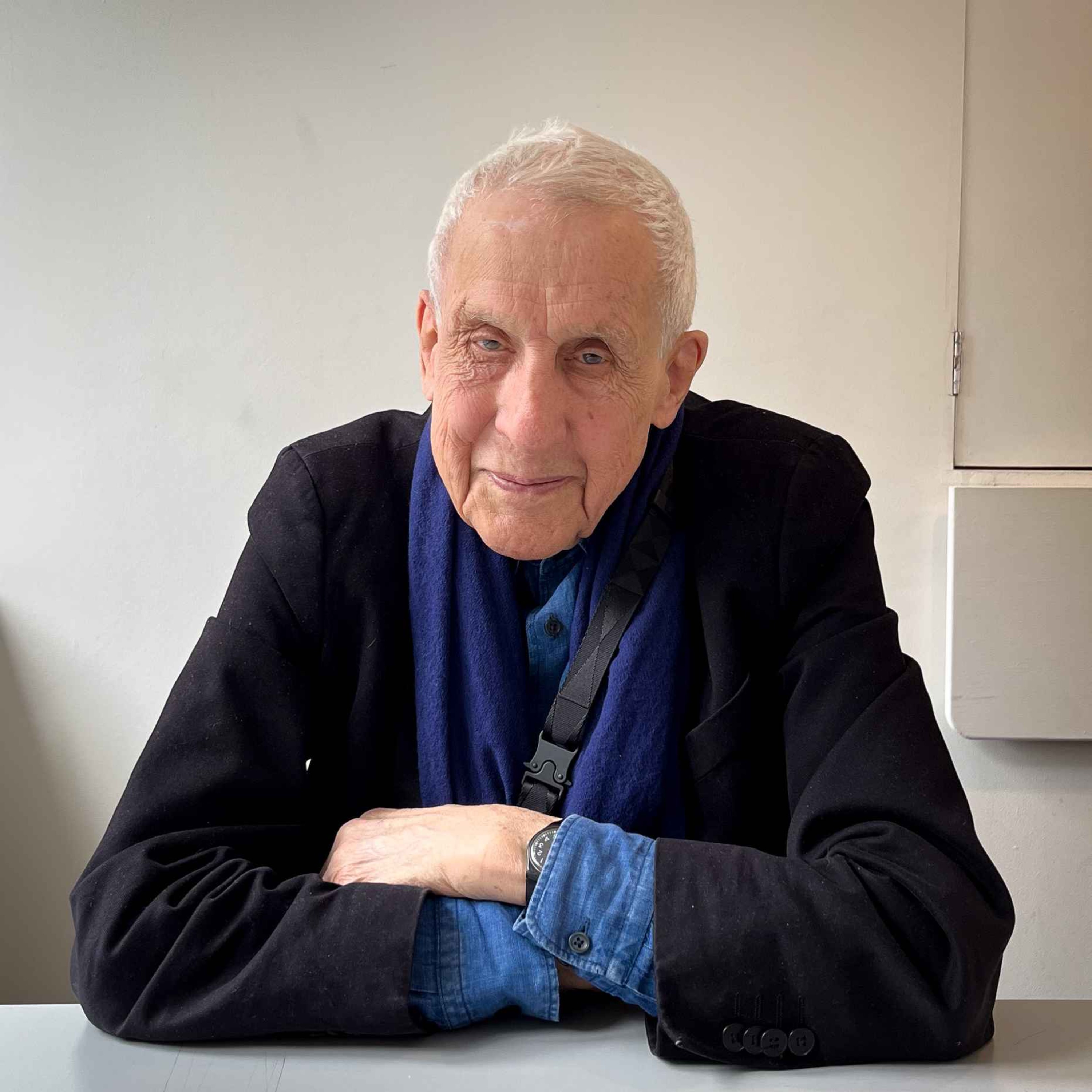
Kenneth Frampton
About this episode
Kenneth Frampton discusses his political awakening and the intersection of architecture and politics in his work.
Architectural historian Kenneth Frampton remembers the exact moment of his political awakening. Arriving in the United States in 1965, flying over the blazing island of Manhattan and suddenly grasping the visibility of capitalist power there—“a ferocious panorama” of light, cars and consumption that stood in stark contrast to what he calls the “concealed” capitalism of mid-century Britain. From that moment, his architectural writing became inseparable from politics: shaped by Hannah Arendt’s idea of the space of appearance , by phenomenology’s insistence on embodied experience, and by a Marxist attention to exploitation, power and the global neoliberal order. In this first episode of a two-part interview, Kenneth Frampton, arguably the most celebrated and influential architectural thinker of the past half century, looks back over nearly six decades of his writing and teaching. In the first half of the conversation he addresses the idea critical regionalism as “an architecture of resistance” to commodification, connects phenomenology to political agency rather than aesthetic escapism, and defends his own “operative” criticism—writing that openly aims to influence how architects…
People in this episode
Host: The Architecture Foundation
Guest: Kenneth Frampton
Topics covered
- architectural history
- political awakening
- critical regionalism
- phenomenology
- architectural education
- capitalism
Keywords
- architectural writing
- politics
- capitalism
- social justice
- construction
- craft
- neoliberal order
More episodes of Scaffold
- Morgan Day (Part 1)
- Jaakko Pallasvuo (Avocado Ibuprofen)
- Vincenzo Latronico
- How Three Leading Architecture Practices Are Using AI Today
- Daryan Knoblauch
- Remembering John Morgan
Explore listener stats, chart rankings, contacts and more on the Scaffold podcast page.