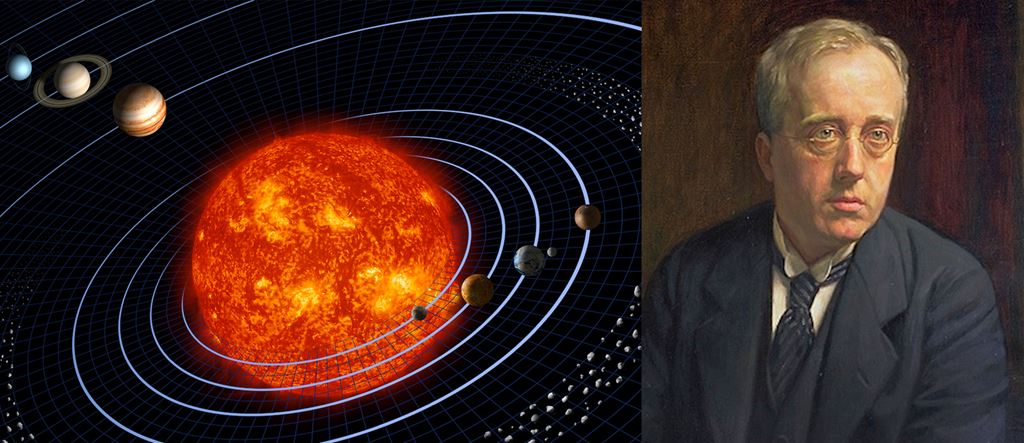
Gustav Holst: The Planets
About this episode
This episode explores Gustav Holst's iconic suite 'The Planets' and its significance in the classical music world.
Mr. Holst, wherever you are, I apologize in advance for what I'm about to say. From my research, I know you resented this fact, but unfortunately, I think it's true. Here it is: despite the large catalogue of music Gustav Holst composed, much of it wonderful, he is essentially a one-hit wonder in the classical music world, à la Pachelbel, Dukas, Mascagni, and others. His one hit is a big one, though: an epic, seven-movement suite entitled The Planets . As I said, Holst was not happy about this in the slightest. He was a prolific composer and someone who devoted himself fully to his subjects. He considered other works he wrote better than The Planets , and yet, in the end, we hear very little of his other music, though since the 1980s some of it has been performed more frequently, particularly in the UK. But The Planets is truly a hit: the reason we know Holst's name today, and one of the most frequently performed pieces in the entire Western classical canon. Holst took a novel approach to his depiction of the planets. They are not ordered by their astronomical distance, but by musical cohesiveness. Nor do they depict the planets in a scientific sense; instead, they present a…
People in this episode
Host: Joshua Weilerstein
Topics covered
- Gustav Holst
- The Planets
- classical music
- orchestration
- astrology
- music analysis
Keywords
- Gustav Holst
- The Planets
- classical music
- orchestration
- astrological interpretation
- music analysis
Mentioned in this episode
Books & works: The Planets
More episodes of Sticky Notes: The Classical Music Podcast
- Lili Boulanger: Psalm 130
- Tchaikovsky Symphony No. 6 (Part 2)
- Tchaikovsky Symphony No. 6 (Part 1)
- Beethoven String Quartet, Op. 59, No.2
- Brahms Symphony No. 2 LIVE w/ The Aalborg Symphony
- Zemlinsky: The Mermaid
Explore listener stats, chart rankings, contacts and more on the Sticky Notes: The Classical Music Podcast podcast page.