Insights from recent episode analysis
Audience Interest
Podcast Focus
Publishing Consistency
Platform Reach
Insights are generated by CastFox AI using publicly available data, episode content, and proprietary models.
Most discussed topics
Brands & references
Total monthly reach
Estimated from 4 chart positions in 4 markets.
By chart position
- 🇸🇪SE · Spirituality#1451K to 10K
- 🇮🇪IE · Spirituality#930K to 100K
- 🇭🇺HU · Spirituality#753K to 10K
- 🇬🇷GR · Spirituality#192500 to 3K
- Per-Episode Audience
Est. listeners per new episode within ~30 days
10K to 37K🎙 Daily cadence·164 episodes·Last published 1w ago - Monthly Reach
Unique listeners across all episodes (30 days)
35K to 123K🇮🇪81%🇸🇪8%🇭🇺8%+1 more - Active Followers
Loyal subscribers who consistently listen
14K to 49K
Market Insights
Platform Distribution
Reach across major podcast platforms, updated hourly
Total Followers
—
Total Plays
—
Total Reviews
—
* Data sourced directly from platform APIs and aggregated hourly across all major podcast directories.
On the show
From 10 epsHost
Recent guests
No guests detected in recent episodes.
Recent episodes
The Mind That Will Not Be Quiet
Jun 18, 2026
Unknown duration
Giving Space: Love Without Taking Over
Jun 7, 2026
Unknown duration
The First 30 Seconds: Why Every Feeling Is a Gift
May 31, 2026
16m 14s
Waking Up to Body Betrayal: How to Find Peace in the Pain
May 17, 2026
16m 19s
"I'm Fine": When It's Armour, When It's Honest, and How to Tell
May 3, 2026
21m 38s
Social Links & Contact
Official channels & resources
Official Website
Login
RSS Feed
Login
| Date | Episode | Topics | Guests | Brands | Places | Keywords | Sponsor | Length | |
|---|---|---|---|---|---|---|---|---|---|
| 6/18/26 | ![]() The Mind That Will Not Be Quiet | You have somewhere between thirty and forty thoughts a minute, and you never asked for a single one of them. So why do we lie there at three in the morning treating our own mind like it has done something wrong?This one is for the overthinker, the one who cannot find the off switch. The shift that changes everything is small and easy to miss. You are not the thought, you are the one who hears it. There is the thought, and there is the one who notices the thought, and they are not the same.Steven uses the image of a quiet railway station. Every thought is a train pulling in. Some are loud, some are quiet, some you have ridden a hundred times out of habit. The bit we forget is that you do not have to get on. You can stay on the bench and watch it roll out again.He also names the trap the spiritual crowd fall into. Watching your thoughts is not going cold, and it is not pretending nothing touches you. The one who watches still feels it. You can notice the storm and still be stood out in the weather getting soaked.At the heart of it is the gap. The tiny space between a thought arriving and you reacting to it. That gap is where your whole life actually happens, and widening it is what meditation is really for.So tonight, when the first train pulls in, try one sentence. Ah, there is a thought. That is it. You are already back on the bench.Companion meditationA short meditation goes with this episode, over on Inner Peace Meditations. Sit with it once or twice this week. It will do more than any amount of talking about it.Become the Watcher: A Meditation to Quiet an Overthinking Mind https://innerpeacemeditations.com/episode/become-the-watcher-a-meditation-to-quiet-an-overthinking-mindLinksReach Steven, the newsletter and everything else: stevenwebb.uk Inner Peace Meditations: innerpeacemeditations.com Leave a review on Apple or Spotify. It helps more people find a bit of calm in a hard week. Keep the podcast advert free: buymeacoffee.com/stevenwebbWith gratitude toAddie, Darren, Alice, Caroline and My Herb for keeping the show advert free this week, and to Sin, Annie, Laura, Adam, Dominique and Senga. A special thank you to Stuart, who hits two years as a monthly supporter this month. That is not a small thing. | — | ||||||
| 6/7/26 | ![]() Giving Space: Love Without Taking Over | Links to Steven Webb's podcast and how you can support his work.Donate paypal.me/stevenwebb or Coffee stevenwebb.ukSteven's courses, podcasts and links: stevenwebb.ukSometimes the most loving thing we can do is stay close without stepping in too quickly.This week I want to talk about one of the hardest forms of love: giving someone space. Not walking away. Not going cold. Not pretending we do not care. But staying close without taking over.It came up for me while talking with my daughter, noticing how quickly I wanted to jump in with answers, advice, solutions and opinions. And I could see the same thing in myself, in council meetings, in family conversations, and even in the way I meet my own thoughts and feelings. Something arises and I want to fix it before I have really heard it.But space is not neglect. Real space says: I am here. I trust you. Take your time.In this episode, I explore why the instinct to help is not wrong, but why fixing too quickly can sometimes be about easing our own discomfort. We look at the small pause after a feeling appears, the gap between notes in music, the three seconds before we answer, and the strange wisdom that often appears when we stop crowding the moment.Key topics:Why giving space is not the same as walking awayThe urge to fix the people we love, especially our childrenHow a few seconds of pause can let wisdom appearThoughts, feelings and body sensations that do not need an instant storyThe gap between the notes, and why space gives life meaningCouncil meetings, family tables, and the need to prove we know somethingAsking whether we are helping or reducing our own discomfortThe three second rule for conversations, emotions and difficult momentsCompanion meditation: IPM 105, Giving Space. A gentle Zen influenced meditation using the image of a closed shed and an open field to feel the difference between being crowded by what arises and giving it room to be seen clearly.If this episode meant something to you, please share it, leave a review, or treat me to a coffee: stevenwebb.ukWith thanks this week to: Cheryl, Nitya, Yvonne, Eleanor and Ryan, Karen, Lani, Jess and Stuart.And thank you to the kind anonymous souls and everyone who supports the work quietly in the background. You keep this podcast advert-free. Thank you. | — | ||||||
| 5/31/26 | ![]() The First 30 Seconds: Why Every Feeling Is a Gift✨ | fear responseanxiety+3 | — | — | — | fearanxiety+5 | — | 16m 14s | |
| 5/17/26 | ![]() Waking Up to Body Betrayal: How to Find Peace in the Pain✨ | body painself-acceptance+4 | — | — | — | body betrayalpain+5 | — | 16m 19s | |
| 5/3/26 | ![]() "I'm Fine": When It's Armour, When It's Honest, and How to Tell✨ | emotional honestyself-reflection+3 | — | AmazonZen master story | — | I'm fineemotional armor+5 | — | 21m 38s | |
| 4/26/26 | ![]() 8 Billion Minds. Why Meditation Doesn't Work for Everyone (And What You Can Do About It)✨ | meditationADHD+3 | — | As a Man Thinketh | — | meditationADHD+5 | — | 22m 49s | |
| 4/18/26 | ![]() Demystifying Meditation: What You Need to Know✨ | meditationmyths about meditation+3 | — | paypal.meCoffee+2 | — | meditationmindfulness+5 | — | 29m 52s | |
| 4/11/26 | ![]() The Dignity of Being Tired: Give Yourself a Break✨ | tirednessexhaustion+4 | — | paypal.mestevenwebb.uk+1 | — | tirednessexhaustion+7 | — | 16m 21s | |
| 4/5/26 | ![]() What Rises When You Stop Pushing✨ | renewalspirituality+3 | — | — | — | renewalEaster+5 | — | 20m 30s | |
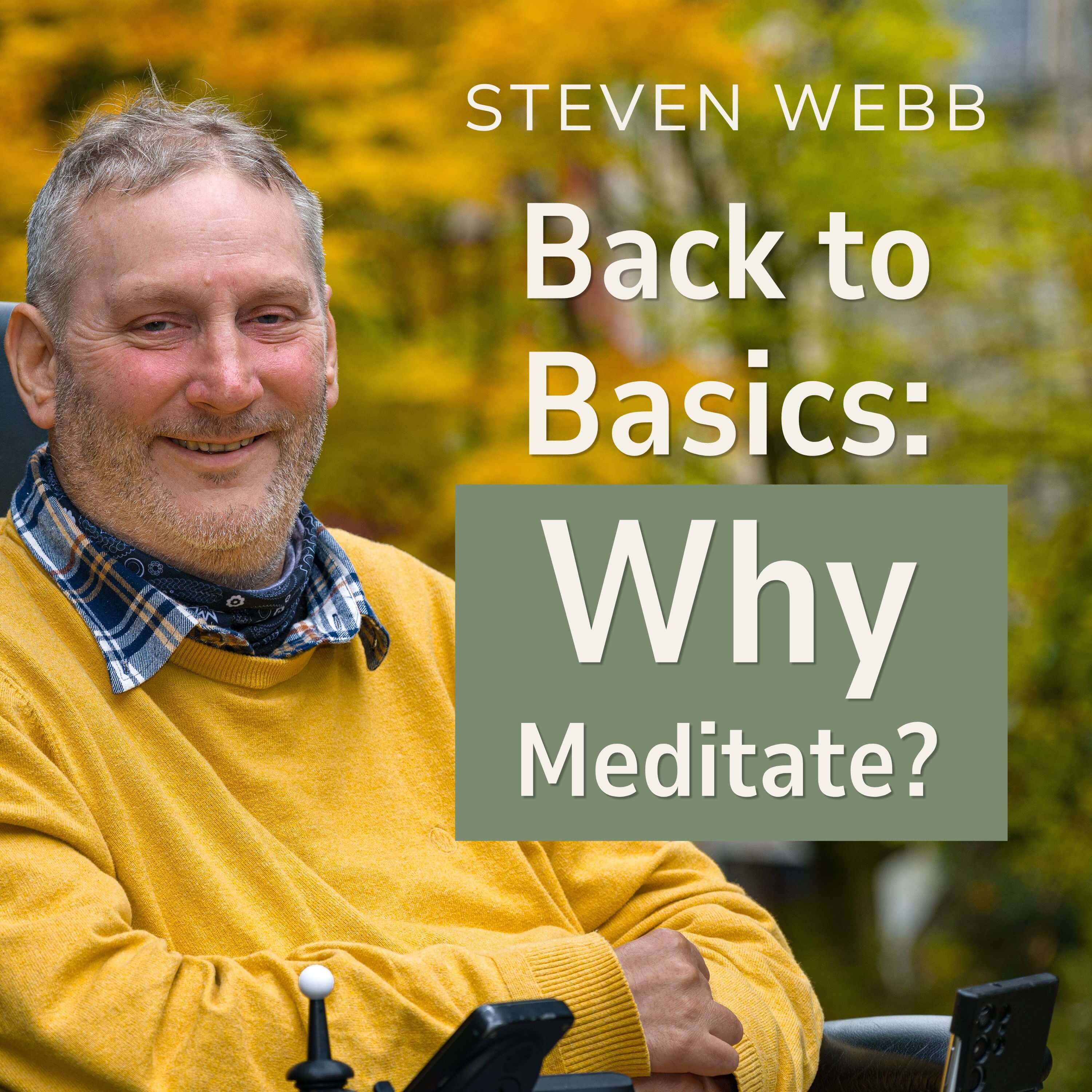
| 3/29/26 | ![]() Finding Inner Peace: Do You Need to Be a Buddhist?✨ | inner peaceBuddhism+4 | — | — | — | inner peaceBuddhism+5 | — | 19m 48s | |
Want analysis for the episodes below?Free for Pro Submit a request, we'll have your selected episodes analyzed within an hour. Free, at no cost to you, for Pro users. | |||||||||
| 3/15/26 | ![]() "Is This All There Is?" Answering the Quiet Question in Your Heart✨ | existential questionspersonal growth+3 | — | — | — | life questionswonder+3 | — | 23m 13s | |
| 3/6/26 | ![]() When Letting Go Feels Impossible, Try This Instead✨ | letting goacceptance+4 | — | paypal.meCoffee+1 | — | letting goacceptance+4 | — | 20m 33s | |
| 2/26/26 | ![]() Who Are You When No One Needs Anything? | Links to Steven Webb's podcast and how you can support his work.Donate paypal.me/stevenwebb or Coffee stevenwebb.ukSteven's courses, podcasts and links: stevenwebb.ukEpisode DescriptionFor years, you've been the go to person. The mother, the partner, the colleague, the carer. Your whole identity is wrapped up in what you do for others. But what happens when the kids leave, or the career changes, or you just stop long enough to ask… who am I underneath all of that?In this episode, Steven shares a personal story from his time as Mayor of Truro, where former mayors warned him about the strange emptiness that comes when a defining role ends. He explores why losing a role can feel like grief, why that "who am I now?" question is not a sign of ingratitude but an invitation to go deeper, and how you can start the quiet, beautiful process of meeting yourself again.If you've ever felt lost in the space between who you were and who you're becoming, this one is for you.In This EpisodeSteven talks about the identity we build from doing things for others and what happens when those roles shift or fade. He explores why this transition hurts so much and why grief and gratitude can exist side by side. He shares wisdom on sitting in the uncomfortable "in between" space rather than rushing to fill it. And he offers a simple five minute practice you can try today to begin reconnecting with who you really are beneath the roles.Key ThemesIdentity and midlife transitions. The grief of losing a role. Empty nest and changing family dynamics. Finding stillness in the not knowing. Meeting yourself again after decades of caring for others.Memorable Moment"You are not your roles. You never were. The mother, the carer, the professional, the person everyone depends on: those are things you do, and you do them beautifully. But they are not who you are. Who you are is the one who remains when all of that falls away. And she is still there. She's been waiting for you."Try This TodayFind five minutes of quiet. Sit with a cup of tea, go for a short walk, or sit somewhere peaceful. Ask yourself: "What would I do today if nobody needed anything from me?" Don't judge the answer. Just notice what comes up. That's a thread. Keep pulling gently on it and it will lead you back to yourself.Support This PodcastStillness in the Storms is completely free with no adverts and no sponsors. It exists because of the kind people who treat Steven to a coffee. Every contribution helps pay for the podcast and supports all of Steven's work.A huge thank you to this episode's supporters: Tiffany, Fran, Kay, Caroline, Ruth, Mazdak, Cara, Suja, and several generous anonymous donors, along with supporters on Insight Timer.If this episode helped you, please consider buying Steven a coffee. Even one makes a difference.About Steven WebbSteven Webb is a meditation teacher, former Mayor of Truro, and C5 tetraplegic. He has spent decades learning what it means to find peace in the most difficult circumstances. Through Stillness in the Storms, he offers honest, warm conversations to help people navigate life's hardest moments.Find out more and explore all of Steven's work at stevenwebb.ukConnectWebsite: https://stevenwebb.ukListen, subscribe, and leave a review on your favourite podcast app. Sharing this episode with someone who needs to hear it is one of the best ways to support the show. | — | ||||||
| 1/17/26 | ![]() Apricity and the Calm After the Storm | Links to Steven Webb's podcast and how you can support his work.Donate paypal.me/stevenwebb or Coffee stevenwebb.ukSteven's courses, podcasts and links: stevenwebb.ukEpisode DescriptionIn this episode, Steven shares a personal update following the record-breaking winds of Storm Goretti in Cornwall. After the chaos of the storm, a chance encounter with a lady named Joanne reminds him of the beauty of "apricity"—the warmth of the sun on a cold winter's day.Join Steven for a gentle conversation about finding calm in a noisy world. He explores why we often "doom scroll," the relief of realising how little we are actually in control of, and why slowing down might be the best way to handle uncertain times.Key HighlightsThe Calm After the Chaos: How quickly things change from 100mph winds to a beautiful, spring-like day, reminding us that nothing is permanent.Word of the Day: Steven shares his favourite word, apricity, and why we need to appreciate those moments of warmth during life’s winters.The Illusion of Control: Why realising we aren't in control of 99.9% of things (including world leaders or the weather) can actually be a huge relief.Simple Wisdom: A reminder that knitting, walking, or just taking a breath at a traffic light can be as powerful as formal meditation.Memorable Quotes"Apricity... it means to feel the warmth of the sun on a cold day." "Once we realize we're not in control of 99.9% of the stuff that happens to us... you can look at it as, 'Thank Christ for that.' I wouldn't wanna be in control of all this anyway." "Just rest your mind. Give your mind something else to do than scrolling your phone." Links & SupportWebsite: stevenwebb.uk Support the Show: Treat Steven to a coffee at his website to help keep the podcast ad-free.Inner Peace Meditations: Listen to Steven's meditation podcast for more ways to slow down. | — | ||||||
| 1/3/26 | ![]() Forget Resolutions: Why One Word Is All You Need This Year | Links to Steven Webb's podcast and how you can support his work.Donate paypal.me/stevenwebb or Coffee stevenwebb.ukSteven's courses, podcasts and links: stevenwebb.ukForget Resolutions: Why One Word Is All You Need This YearHappy New Year to you all! It is great to be back recording after a tough few weeks battling a severe chest infection. Before we dive into today’s episode, I want to say a massive thank you to everyone who supported me and donated over Christmas.Your kindness keeps this podcast ad-free and helps cover the editing and admin costs which allows me to keep going. A special shout out to Jessica, Laura, Catherine, Joan, Ulysses, Lisa, Kerry, and Audra. And wow, thank you to Joan and Ulysses for the 40 coffees! You are all absolutely brilliant.In this episode:I share a bit about my recent battle with "man flu" and the complications of dealing with a chest infection while being paralyzed. It was a stark reminder of how fragile things can be, leading to an ambulance visit and plenty of steroids.But this experience led me to my focus for this year. Instead of setting strict resolutions that we often break, I am inviting you to choose just one word for the year. My word is Simplify.We explore what it means to strip life down to its simplest form to remove obstacles and reduce suffering. Whether it is closing tabs on a browser or just sitting in silence, simplifying is about finding peace in the moment.We also talk about:Why I chose "Simplify" as my word for the year.The spiritual journey of reducing suffering and attachment.How to handle emotions like anxiety and overwhelm by listening to what they are teaching us.Examples of words you might choose, such as Acceptance, Trust, release, or Curiosity.What is your word for the year? I would love to hear it.Links and Contact: If you want to get in touch, share your word, or just say hello, you can message me directly at:https://stevenwebb.ukThank you for listening and for your continued support. | — | ||||||
| 11/16/25 | ![]() When Jesus and the Buddha Sit at the Same Table | Links to Steven Webb's podcast and how you can support his work.Donate paypal.me/stevenwebb or Coffee stevenwebb.ukSteven's courses, podcasts and links: stevenwebb.ukIn this episode I explore a question many people quietly carry. Can you love Jesus and still practise awareness. Can the comfort of Christian faith sit alongside the clarity of Buddhist teaching. Do you have to choose one path or can they both live in the same heart.This conversation begins with the famous poem Footprints in the Sand and widens into a look at what truly carries us when life cracks open. I talk about Sunday school, my favourite childhood hymn, the years when I tried to get rid of all religion, and how awareness eventually softened everything.We touch on the sermon on the Mount, the beauty held in Corinthians thirteen, the voice of the Buddha, and the simple human truth that all wisdom traditions point toward compassion and presence. The episode is really about how to build a spiritual toolbox that actually works, without throwing away the tools that once held you through the hardest nights.If you have ever wondered whether your Christian faith can live peacefully beside meditation and Buddhist ideas, this episode will speak to you.Quotes from the episode“Anything that opens your heart and brings less suffering into the world is worth keeping.”“You do not need to choose between Jesus and awareness. You can hold both. The presence beneath them is the same.”“We suffer when we cling. We grow when we include.”“Whatever carries you in the storms, honour it. Add more tools if they help. Nothing precious needs to be thrown away.”“You can sit with Jesus and the Buddha at the same table. Trust me, they would get along.”Listen to my guided meditationsInner Peace Meditations is linked on the websiteSupport the podcast or buy me a coffeeAll links are at https://stevenwebb.ukTakeaways: In this episode, I explore the intersections between Jesus, Buddhism, and the Bible, sharing my personal journey with spirituality. I reflect on pivotal moments in my life that challenged my beliefs and how I came to appreciate different teachings. The idea that many religious teachings are not new but rather reinterpretations of universal truths is a central theme of my discussion. I emphasize the importance of community and support during difficult times, regardless of religious affiliation or beliefs. Compassion is key, whether in Christianity or Buddhism, and recognizing our shared humanity helps reduce suffering. I encourage listeners to embrace a diverse toolbox of beliefs, integrating various teachings that resonate personally. | — | ||||||
| 10/30/25 | ![]() The Truth About Inner Peace: 5 Myths Debunked | Links to Steven Webb's podcast and how you can support his work.Donate paypal.me/stevenwebb or Coffee stevenwebb.ukSteven's courses, podcasts and links: stevenwebb.ukToday, we're diving into the topic of inner peace and what it truly means. I share my personal journey of finding peace, especially after a life-changing injury that left me paralyzed. It’s not about always feeling good or avoiding pain; instead, it’s about recognizing that peace is always there beneath the chaos of life. I also unpack five common myths about inner peace that I used to believe, which held me back from truly understanding it. By the end of this episode, I hope to help you see how to tap into that inner calm, even when life gets tough. If you're curious to learn more, check out my website at https://stevenwebb.uk.In this episode of Stillness in the Storms, host Steven Webb shares his personal journey of finding inner peace after being paralyzed from the neck down. He offers practical wisdom and debunks common myths about what it means to be at peace, revealing that it's a state that is always accessible, even in the midst of life's greatest challenges.Benefits of Listening:Learn how to find inner peace, regardless of your external circumstances.Discover why you don't need to control your thoughts to be at peace.Understand that inner peace is not a permanent state, but a practice.Learn how to be fully present and engaged with life, without clinging or grasping.Be inspired by Stephen's story of resilience and hope.Key Quotes:"We are at peace when we're not suffering, or when we're doing something we enjoy.""Inner peace is always there. It's always present. A peaceful, quiet world is always present, even in the most dire circumstances.""You cannot wait until life calms down. You won't be able to have peace once life's sorted.""Peace means being fully present. It means without clinging and without that grasping."The Five Myths of Inner Peace:Inner peace means never feeling pain or discomfort.You must control your thoughts to be at peace.You find peace once life calms down.Inner peace is a permanent state.Peace means detachment from life. | — | ||||||
| 9/20/25 | ![]() In a Hard World, Your Softest Skills Are Your Strongest Asset | Links to Steven Webb's podcast and how you can support his work.Donate paypal.me/stevenwebb or Coffee stevenwebb.ukSteven's courses, podcasts and links: stevenwebb.ukIn a Hard World, Your Softest Skills Are Your Strongest Asset"We cannot change the cards we are dealt, just how we play the hand." – Randy PauschIn a world that often feels chaotic and overwhelming, it's easy to feel like we're holding a losing hand. We're constantly handed challenges we didn't ask for, from personal struggles to global uncertainties. But what if our greatest strength isn't in getting new cards, but in learning how to play the ones we already have?In this episode, I explore the profound power of our 'soft skills' – the very human qualities that are often overlooked but are more crucial now than ever. We'll discuss how empathy, patience, kindness, and self-awareness are not weaknesses, but incredible assets that allow us to navigate life's toughest moments with grace and strength.Join me as we reframe our perspective, learning to see the immense value in our innate human goodness and discovering how to use these skills to not only survive the storms but to find stillness within them.In this episode, you will learn:How to shift your focus from the cards you're dealt to how you choose to play them.Why soft skills like empathy and kindness are essential tools for resilience.How to recognise and cultivate your own inner strengths, even when you feel powerless.A new perspective on navigating a world that seems to reward harshness over compassion.Thank you for being here and for being part of the Stillness in the Storms community. Your presence makes a difference.Resources & Connecting:Weekly Calm Newsletter & Blog: For more reflections, guided meditations, and updates, visit my website and sign up for my newsletter.Visit: stevenwebb.co.ukLeave a Review: If this episode resonated with you, please consider leaving a review on your favourite podcast platform. It truly helps others find the show. | — | ||||||
| 9/5/25 | ![]() How to Be Your Own Loving Parent | Links to Steven Webb's podcast and how you can support his work.Donate paypal.me/stevenwebb or Coffee stevenwebb.ukSteven's courses, podcasts and links: stevenwebb.uk Episode DescriptionHave you ever felt adrift, wishing you had a wise and unconditionally loving guide to help you navigate life's storms? What if that guide was already inside you, waiting to be discovered?In this episode of Stillness in the Storms, Steven explores the transformative concept of "self-parenting," inspired by the work of Gabor Maté. This isn't about harsh discipline or re-living your childhood; it’s about learning to trade your harsh inner critic for a compassionate, wise, and loving inner parent.Discover how to identify the areas in your life—from procrastination and setting boundaries to health and self-talk—where this gentle inner guidance can bring more peace, accountability, and profound kindness. This episode is your invitation to cultivate the most supportive and empowering relationship you will ever have: the one with yourself.In This Episode, You Will Learn:What it truly means to "parent yourself" and why it's a powerful tool for personal growth and mental wellness.How to recognize the everyday moments where a kind, internal parent can help you make better choices (like getting out the door on time!).The crucial difference between self-criticism, which stifles growth, and self-acceptance, which creates the space for positive change.Practical areas where you can apply self-parenting today: managing your time, making healthier choices, and balancing work, life, and play.The most important role of your inner parent: offering yourself the unconditional love and reassurance you deserve, especially when you're struggling.Resources MentionedSupport the Podcast & Find More from Steven: Discover courses, meditations, and ways to support the show at https://stevenwebb.uk.Companion Meditations: Listen to guided meditations that accompany the podcast episodes on the Inner Peace Meditations podcast.Upcoming Course: Stay tuned for Steven's new 7-day audio course, "How to Find Peace in Busy Times." | — | ||||||
| 8/5/25 | ![]() Empathy vs. Compassion: What's the Real Difference? | Links to Steven Webb's podcast and how you can support his work.Donate paypal.me/stevenwebb or Coffee stevenwebb.ukSteven's courses, podcasts and links: stevenwebb.ukCompassion is at the heart of our discussion today, so let’s dive right into it. We explore how compassion serves as a cosmic wink that connects us all, as Alan Watts puts it. This episode unpacks the differences between compassion, empathy, and judgment, and how understanding these can help us navigate our lives better. We’re all just players in this game called life, and recognizing each other’s struggles is key to becoming whole. Join me, Steven Webb, as we unravel what it really means to practice compassion in our daily interactions and why it matters more than ever.Compassion is a fascinating topic, and in this episode, I dive deep into what it really means. I start by reflecting on Alan Watts' idea that compassion is like a cosmic wink, a warm acknowledgment that we see each other as fellow players in this game of life. I also explore the thoughts of Ken Wilber, who suggests that true judgment comes from a place of compassion. This leads me to ponder the differences between judgment, empathy, and compassion. Judgment often comes with a personal lens, where we see the world through our own experiences, and this can lead to negative assessments of others. Empathy, on the other hand, lets us feel what others feel, but it can sometimes become self-centered, drawing us away from the person in need. Compassion, however, is about genuinely being present for someone without the need to turn the spotlight back onto ourselves. It's about opening our hearts and really seeing others for who they are, not just for their struggles but as whole beings. Throughout this episode, I share personal stories and insights that highlight the importance of compassion in our lives, especially during tough times. I encourage listeners to practice small acts of kindness and to approach each interaction with an open heart, allowing us to become whole together.Takeaways: Compassion is recognized as the cosmic wink acknowledging our shared human experience. It connects us all. Empathy and judgment differ significantly, where empathy often centers around our own feelings and experiences. True compassion requires us to open our hearts to others rather than projecting our own experiences onto them. To foster compassion, we need to embrace both our weaknesses and strengths, allowing us to become whole. Compassion is action-oriented, encouraging us to care for others without turning the focus back to ourselves. Practicing small acts of kindness daily can help cultivate a more compassionate mindset in our lives. | — | ||||||
| 7/27/25 | ![]() Attachment Isn’t the Enemy. The Struggle to Let Go Is | Links to Steven Webb's podcast and how you can support his work.Donate paypal.me/stevenwebb or Coffee stevenwebb.ukSteven's courses, podcasts and links: stevenwebb.uk🧘 Episode SummaryIn this episode of Stillness in the Storms, I talk about attachment. It's one of the biggest causes of suffering, but I'm not here to tell you to let go. I think that advice is nonsense. What if instead of trying to let go, we simply allowed things to be as they are?I share what attachment has looked like in my life. From cigarettes to identity to the future I imagined that never arrived. You'll also hear from members of my WhatsApp group who told me what they find hardest to let go of. We cover nostalgia, self-worth, change, and why trying so hard is often the problem.This is not about giving everything up. It’s about loosening the grip, opening your hand, and allowing what comes and goes to just be.🎧 Why ListenYou are struggling to let go and nothing seems to workYou are attached to a past version of yourself or a future that never cameYou want a down-to-earth take on mindfulness and Buddhist teachings that make sense in real lifeYou are tired of chasing happiness and need space to breathe🌟 Quotes from the Episode“Letting go is pants. It doesn’t work. Just open your hand and let it be.”“You don’t have to give something up forever. Just give it up for one hour.”“You’re not a smoker who gave up. You’re just someone who didn’t smoke this hour.”“The minute you stop trying to be better, the better version of you starts to show up.”“Buddhism doesn’t say don’t love. It says don’t cling.”“Enjoy the moment but don’t become attached to it. Let it come and go.”☕ Thank YouThis podcast is free and always will be because of the people who support it. I do not run adverts. That’s a choice I make so you can tune in and hear what I have to say without interruption.Huge thanks toSenga – your five coffees came in just as I hit recordMichael, Dominique, Ulysses – yes, you bought 34 coffees, you legendNick, Julie, and Anne – thank you so muchAnd to all my monthly supporters – I see you and I’m deeply gratefulIf you want to support the show and keep it advert-free, the link is in the notes. Supporters also get access to the private WhatsApp group where I share new meditations and episodes first, and where we talk honestly about the stuff that matters. | — | ||||||
| 7/6/25 | ![]() Forgiveness Begins When the Heart Breaks Open | Links to Steven Webb's podcast and how you can support his work.Donate paypal.me/stevenwebb or Coffee stevenwebb.ukSteven's courses, podcasts and links: stevenwebb.uk🎙 Episode Title: Forgiveness Begins When the Heart Breaks OpenForgiveness Meditation: Forgiveness for Your Freedom 🧘 Host: Steven Webb | Stillness in the Storms🎧 Episode Summary:In this honest and raw episode, I talk about my own journey through heartbreak, betrayal and real forgiveness. Not the kind where you say the right words to move on. The kind that comes slowly. Quietly. The kind that has nothing to do with the other person.I share the story of being cheated on. The numbness. The anger. The questions I never asked. And the moment, years later, when a single text made me realise I had already forgiven her.This is not about forgetting. It is not about being okay with what happened. It is about breaking the grip that the past has on your heart. It is about grieving the life you thought you were going to live. It is about reclaiming your peace.If someone has hurt you or left you, or if you are stuck in a story that replays over and over, this episode is for you.🛠 In This Episode:Why "forgive and forget" is a mythHow I navigated betrayal while living with paralysisThe day I realised I had truly forgivenWhy we grieve the imagined life more than the personHow to let go when there are no answersA simple practice to begin your own path to forgiveness🧘 Forgiveness Practice and Affirmations:Find a quiet space. Sit comfortably. Bring to mind the person or situation that caused the pain. Let it sit without story. Just feel what is there. Then say inwardly:I remember the harm that was done.I may not be ready to forgive, but I am willing to try.May I find peace in my heart.May I be free from the pain that caused you to hurt me.I release myself from the burden of this hurt.You do not have to rush. You do not have to think about it every day. Just let the practice do its work. And when the mind brings it up again, simply say, I forgave them. Let it pass. And over time, the weight softens.💬 Listener Support:If this episode speaks to you, share it with someone who needs it. And if you can, help keep the podcast going by visiting stevenwebb.uk | — | ||||||
| 6/8/25 | ![]() Overthinking Is Not Your Fault (But Here's How to Stop) | Links to Steven Webb's podcast and how you can support his work.Donate paypal.me/stevenwebb or Coffee stevenwebb.ukSteven's courses, podcasts and links: stevenwebb.ukMeditation that goes with this podcast: A Dharma Meditation Beyond OverthinkingOverthinking Is Not Your Fault (But Here's How to Stop)In this episode of 'Stillness in the Storms', host Steven Webb explores the concept that we are not our thoughts. He discusses how thoughts arise from the subconscious mind and how we can learn to observe them without attachment. Through personal anecdotes and insights into meditation, he emphasizes the importance of awareness in managing overthinking and anxiety. The episode encourages listeners to become observers of their thoughts and to choose which thoughts to engage with, ultimately leading to a more peaceful and mindful existence.TakeawaysYou are not your thoughts; you have thoughts, but they do not define you.The subconscious mind generates thoughts that can be observed without attachment.Meditation helps in recognizing the distinction between thoughts and awareness.Negative thoughts are a natural part of human experience and survival.Choosing which thoughts to engage with can change your mental trajectory.Awareness of thoughts allows for greater control over emotional responses.Thoughts often originate from external influences, not just personal experiences.You can smile at your thoughts and not take them seriously.The journey to awareness often involves exploring different spiritual practices.Your subconscious mind is designed to support you and bring forth thoughts that align with your desires. | — | ||||||
| 6/1/25 | ![]() The Truth About Anxiety & Imposter Syndrome | Links to Steven Webb's podcast and how you can support his work.Donate paypal.me/stevenwebb or Coffee stevenwebb.ukSteven's courses, podcasts and links: stevenwebb.ukEpisode 147: The Truth About Anxiety & Imposter SyndromeWelcome to Stillness in the Storms with your host, Steven Webb. In this deeply personal and insightful episode, Steven tackles two of the most common yet misunderstood challenges: anxiety and imposter syndrome.He argues that these feelings themselves are not the problem. The real issue? Our belief that we shouldn't be experiencing them. Steven shares his own vulnerable journey, from council meetings feeling unqualified, to navigating high-pressure Q&A panels, and the everyday internal dialogues that come with stepping up.Key Themes & Takeaways:Reframing the "Problem": Anxiety and imposter syndrome are natural human experiences, not flaws to be eradicated. The real struggle comes from resisting them.The Power of Listening (Not Obeying): Our minds are full of voices – some fearful, some critical, some brave. The skill is in acknowledging them all, like a chairperson listening to a committee, without letting any single voice dictate your actions.Authenticity in Vulnerability: Sharing your doubts and fears doesn't make you weak; it makes you relatable and authentic. Steven would rather be in a room with people who acknowledge their imposter syndrome than those who deny it.Showing Up Anyway: True courage isn't the absence of fear, but acting despite it. Your unique 1% of knowledge or perspective might be exactly what someone else needs to hear.Personal Anecdotes of Resilience:Feeling like an outsider in professional council meetings.The "climate change conference" Q&A panel where a simple, honest answer resonated most.Being a charity trustee (Community Energy Plus) and doubting his contribution.The internal battle when asked to apply for a vice-chair role.The physical manifestations of anxiety before important events.It Doesn't Go Away, It Becomes Part of the Dialogue: These feelings may not disappear, but our relationship with them can change. They can become familiar (if sometimes annoying) companions rather than paralyzing enemies.Food for Thought:What if your anxiety and imposter syndrome are simply signals, not stop signs?How can you "chair" the committee of voices in your own head more effectively?Remember: "Confidence isn't the absence of self-doubt; it's showing up anyway."Support Stillness in the Storms:This podcast is ad-free thanks to listeners like you! If you find value in these conversations, please consider supporting the show with a donation (like buying Steven a coffee!). https://stevenwebb.uk | — | ||||||
| 5/19/25 | ![]() Self Acceptance – The Zen Way | Links to Steven Webb's podcast and how you can support his work.Donate paypal.me/stevenwebb or Coffee stevenwebb.ukSteven's courses, podcasts and links: stevenwebb.ukSelf-acceptance is key, and today we dive into how Zen teaches us to stop needing to fix our lives. We explore what Zen really means and how we can apply it to our daily routines without it just being some trendy catchphrase. Through this episode, we challenge the idea that our lives are broken and discuss the importance of embracing the present moment as it is. I share personal stories and insights on how Zen can help us find peace amidst chaos. So, let’s sit back, relax, and learn how to just be in our moments without the urge to change everything around us.Self acceptance is a journey we all navigate, and in this episode, Steven Webb dives deep into the concept of Zen and how it relates to our everyday lives. He shares a powerful quote: "Zen doesn't fix your life; it stops you needing to." This sets the stage for a conversation about what Zen truly means. It's not just a trendy phrase or a meme we see online; it's about embracing the present moment and realizing that life is not broken, but rather, we often feel the urge to fix things that don't need fixing. Steven invites listeners to explore how to incorporate Zen into their lives, focusing on being present and accepting ourselves as we are. He emphasizes that life is full of challenges, but rather than trying to change everything, we can learn to sit with our experiences and recognize that suffering is part of being human. By adopting a Zen mindset, we can find peace in the chaos and appreciate the beauty of the moment without the constant need for improvement.Takeaways: Zen doesn't fix your life but helps you stop needing to fix it. Being present in the moment allows you to accept life as it is right now. The desire to always fix things can lead to never-ending dissatisfaction in life. Happiness is not an achievement but an experience that happens in the mundane. | — | ||||||
Showing 25 of 170
Pitch Fit is a Pro feature
See how bookable this show is for guests, which brands already advertise, the per-episode ad value, and the best-fit guest and sponsor profile. The numbers are blurred on the free plan.
How readily this show books outside guests like you.
How proven this show is for host-read sponsorships.
For Guests
ProFor Advertisers
ProUpgrade to Pro to unlock guest cadence, sponsor categories, fit scores, and per-episode ad value for this show.
Chart Positions
5 placements across 4 markets.
Chart Positions
5 placements across 4 markets.