TechSurge: Deep Tech Podcast
by Celesta Capital | Deep Tech Venture Capital Firm
Is this your podcast?Insights from recent episode analysis
Audience Interest
Podcast Focus
Publishing Consistency
Platform Reach
Insights are generated by CastFox AI using publicly available data, episode content, and proprietary models.
Most discussed topics
Brands & references
Total monthly reach
Estimated from 3 chart positions in 3 markets.
By chart position
- 🇺🇸US · Technology#42100K to 300K
- 🇮🇳IN · Technology#1781K to 10K
- 🇸🇬SG · Technology#743K to 10K
- Per-Episode Audience
Est. listeners per new episode within ~30 days
31K to 96K🎙 Daily cadence·32 episodes·Last published 1w ago - Monthly Reach
Unique listeners across all episodes (30 days)
104K to 320K🇺🇸94%🇮🇳3%🇸🇬3% - Active Followers
Loyal subscribers who consistently listen
42K to 128K
Market Insights
Platform Distribution
Reach across major podcast platforms, updated hourly
Total Followers
—
Total Plays
—
Total Reviews
—
* Data sourced directly from platform APIs and aggregated hourly across all major podcast directories.
On the show
From 11 epsHosts
Recent guests
Recent episodes
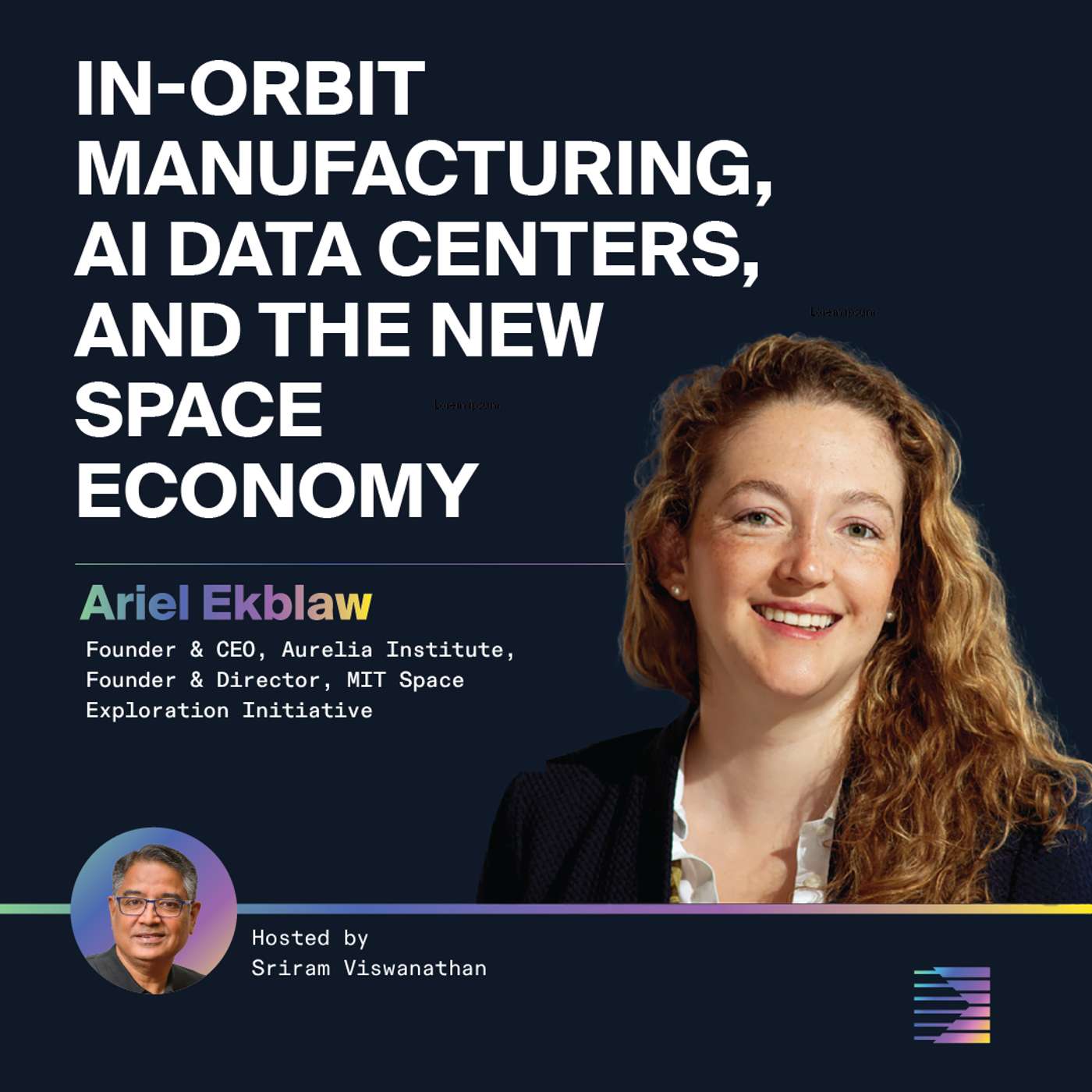
In-Orbit Manufacturing, AI Data Centers, and the New Space Economy with MIT’s Ariel Ekblaw
Jun 2, 2026
1h 28m 53s
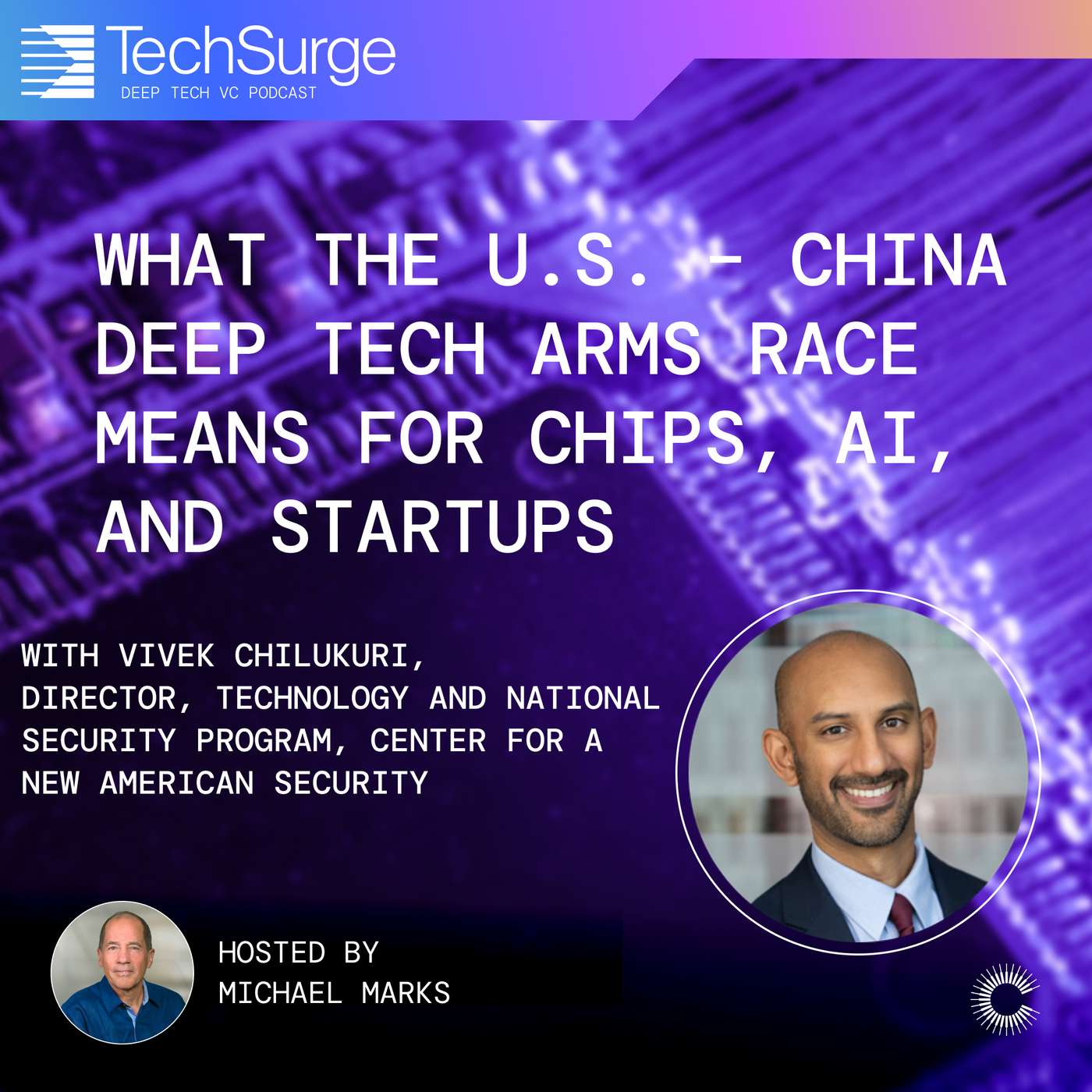
The U.S. – China Deep Tech Arms Race
May 21, 2026
47m 32s
Rare Earth Rush: Strategic Minerals and Tech's New Resource Wars
May 7, 2026
57m 00s
The US Crypto Awakening
Apr 16, 2026
56m 41s
Pixels to Intelligence: The Next Era of Imaging
Apr 7, 2026
51m 12s
Social Links & Contact
Official channels & resources
Official Website
Login
RSS Feed
Login
| Date | Episode | Topics | Guests | Brands | Places | Keywords | Sponsor | Length | |
|---|---|---|---|---|---|---|---|---|---|
| 6/2/26 | ![]() In-Orbit Manufacturing, AI Data Centers, and the New Space Economy with MIT’s Ariel Ekblaw | For most of human history, space has been a place we visited. The next chapter may be about building there.For decades, space was the domain of governments, astronauts, and science fiction. Today, falling launch costs, reusable rockets, and a new generation of ambitious founders are turning orbit into something else entirely: a place to build. The question is no longer whether humanity can construct large-scale infrastructure in space, but what we should build first—and why.In this episode of TechSurge, host Sriram Vishwanath speaks with Dr. Ariel Ekblaw, Founder and CEO of Aurelia Institute, Research Affiliate at MIT’s Space Exploration Initiative, and founder of Rendezvous Robotics. Ariel has spent her career exploring one of the most fundamental challenges of the emerging space economy: how to build structures in orbit that are far larger than anything that can fit inside a rocket.Ariel explains the origins of TESSERAE, her pioneering work on autonomous self-assembling space architecture, and how ideas borrowed from biology, swarm intelligence, and modular construction could unlock a future of massive solar arrays, communications infrastructure, orbital laboratories, and eventually human habitats in space.The conversation explores the rapidly emerging market for in-orbit infrastructure, including AI data centers in space, space-based solar power, and the technologies needed to support a permanent industrial presence beyond Earth. Ariel breaks down the engineering realities behind these ideas—why cooling data centers in space is harder than most people assume, how autonomous assembly could solve the scale problem, and why the future of orbital infrastructure may look more like a business park than a collection of standalone satellites.Sriram and Ariel also discuss the broader implications of humanity’s return to space: the economics unlocked by reusable launch systems, the opportunities created by dramatically lower transportation costs, and the second-order innovations that may emerge from building an industrial ecosystem in orbit. Along the way, they examine space debris, stewardship of the orbital commons, artificial gravity, and what it will take to make long-term human habitation in space viable.At the heart of the discussion is Ariel’s belief that space is not an escape from Earth’s problems, but a tool for solving them. Whether through advanced manufacturing, new energy systems, biotechnology research, or entirely new industries, she argues that the next era of space exploration should be focused on improving life here at home.Sign up for our newsletter at techsurgepodcast.com for updates on upcoming TechSurge Live Summits and future episodes.Links:Ariel Ekblaw on LinkedIn:https://www.linkedin.com/in/arielekblawAurelia Institute:https://www.aureliainstitute.orgRendezvous Robotics:https://www.rdvrobotics.comMIT Space Exploration Initiative:https://www.media.mit.edu/groups/space-exploration/overview/How Aurelia is Designing Self-Assembling Space Stations: https://www.fastcompany.com/91242689/how-the-aurelia-institute-is-designing-a-self-assembling-space-stationOverview Energy (Space-Based Solar Power): https://www.overviewenergy.comStarCatcher Industries (Space-to-Space Power Transmission): https://www.starcatcherindustries.comImpulse Space (Orbital Transportation): https://www.impulsespace.comReferences Mentioned During the DiscussionEarthrise - The Apollo 8 Photograph: https://www.nasa.gov/image-article/apollo-8-earthrise/Carl Sagan’s “Pale Blue Dot”: https://www.planetary.org/worlds/pale-blue-dotBuckminster Fuller Institute: https://www.bfi.orgWatch Ariel’s Talks & InterviewsAurelia Institute YouTube Channel: https://www.youtube.com/@AureliaInstituteAriel’s TED Talk: https://youtu.be/IHrGK3Mu5K4?si=QwGHq1BEoB-QMUjkSpace Business Podcast - Self-Assembling Space Habitats with Ariel Ekblaw: https://spacebusiness.podbean.com/e/137-self-assembling-space-habitats-ariel-ekblaw-founder-ceo-aurelia-institute/Further ReadingNASA’s Artemis Program: https://www.nasa.gov/artemisInternational Space Station (ISS): https://www.nasa.gov/international-space-stationAurelia Institute’s Vision for Humanity’s Future in Space: https://www.aureliainstitute.orgMIT News: Supporting Mission-Driven Space Innovation: https://news.mit.edu/2025/supporting-mission-driven-space-innovation-aurelia-institute-0710Timestamps:[00:00] Highlights[00:34] Welcome to the Episode[02:33] The New Space Race Begins[04:10] Meet Dr. Ariel Ekblaw[06:30] Why We Explore Space? [12:53] How She Discovered Self-Assembly at MIT [17:10] How TESSERAE Tiles Build Themselves[20:14] How the Tiles Coordinate Like a Swarm[24:47] Repairing and Reconfiguring Structures in Orbit[28:32] Why the Space Industry Is Exploding Now[34:25] The Case for AI Data Centers in Space[45:21] How Much Compute Will Move to Space?[48:40] Why This Space Era Is Different[52:24] The Growing Problem of Space Debris[55:14] Building the Next SpaceX[57:27] What Could Go Wrong in Space?[59:33 ] How Many Hours of Gravity Do Humans Need?[01:00:38] Why We Should Build in Low Earth Orbit First[01:05:09] Should We Really Colonize Mars?[01:11:27] Could You Commute to Space for Work?[01:13:50] Who Makes the Rules in Space?[01:22:30] What's Overhyped and Underhyped in Space[01:26:57]What's the Real Story in Space? | 1h 28m 53s | ||||||
| 5/21/26 | ![]() The U.S. – China Deep Tech Arms Race | For years, the United States told itself a reassuring story: China could manufacture and copy, but it couldn't innovate. That story is no longer credible. From DeepSeek's compute-efficient AI model to BYD's dominance of the global EV market, China is producing both volume and quality across sectors that matter. The question is no longer whether China can compete — it's whether the United States is playing its own hand well.In this episode of TechSurge, host Michael Marks speaks with Vivek Chilukuri, Senior Fellow at CNAS, where he focuses on U.S.–China technology competition, AI policy, and digital geopolitics. Vivek's path from counter-terrorism work at the State Department to tech policy in the Senate gives him an unusually grounded perspective on how government actually functions — and where it keeps failing itself.Vivek and Michael work through the full competitive landscape: the wake-up moments that shifted Washington's focus from manufacturing to technology dominance, why the dual-use nature of advanced technology has pulled the national security community into conversations once left to industry, and what Made in China 2025 actually achieved — and where it fell short.The conversation goes deep on America's policy toolkit: what the CHIPS Act accomplished and why it wasn't enough, how export controls on advanced semiconductors are working and what they're missing, and why Washington is far too weighted toward restriction at the expense of the "run faster" side of the equation. Vivek is also candid about what DeepSeek really tells us — not just about Chinese innovation, but about the gap between building a model and deploying AI at scale.They also explore the global dimension: China's "easy button" approach to technology exports, what the U.S. AI exports program is trying to do in response, the rise of "AI sovereignty" movements from Brussels to Delhi, and why the talent and immigration decisions of the past year amount to a serious self-inflicted wound.The United States still holds the best hand in the world for this competition. The question Vivek keeps returning to is whether we're playing it well — and right now, his honest answer is no.Sign up for our newsletter at techsurgepodcast.com for updates on upcoming TechSurge Live Summits and future Season 2 episodes.Episode Links:Connect with Vivek: https://www.linkedin.com/in/vivekchilukuri/Learn more about CNAS: https://www.cnas.orgTimestamps:[02:11] Wake-Up Calls: Chips & 5G[04:17] Atoms vs Bits in AI[07:27] China's Innovation Surge[10:57] Systems Capital vs Planning[14:14] Made in China 2025 Scorecard[17:23] US Tools: Chips & Controls[24:12] DeepSeek & Compute Scarcity[26:47] Energy Constraints & Scaling[29:01] AI Exports & the Easy Button[32:43] Allies & AI Sovereignty[36:13] Talent Flows & Immigration[39:04] Beyond AI: The Biotech Frontier[43:30] Founder Advice: Global South[45:20] Wrap-Up & Key Takeaways | 47m 32s | ||||||
| 5/7/26 | ![]() Rare Earth Rush: Strategic Minerals and Tech's New Resource Wars✨ | rare earth mineralssupply chain security+3 | Dr. Gracelin Baskaran | electric vehiclessemiconductors+3 | United StatesChina+4 | rare earth mineralsChina+5 | — | 57m 00s | |
| 4/16/26 | ![]() The US Crypto Awakening✨ | crypto policydigital assets+4 | Hester Peirce | U.S. Securities and Exchange CommissionSEC | — | cryptoregulation+6 | — | 56m 41s | |
| 4/7/26 | ![]() Pixels to Intelligence: The Next Era of Imaging✨ | digital imagingCMOS technology+3 | Dr. Eric Fossum | NASAPhotobit+1 | — | digital imagingCMOS+7 | — | 51m 12s | |
| 3/19/26 | ![]() Sovereign AI Stacks: The New Strategic National Resource✨ | artificial intelligencegovernance+4 | Helen Toner | Center for Security and Emerging TechnologyGeorgetown+1 | — | sovereign AIAI governance+3 | — | 1h 00m 36s | |
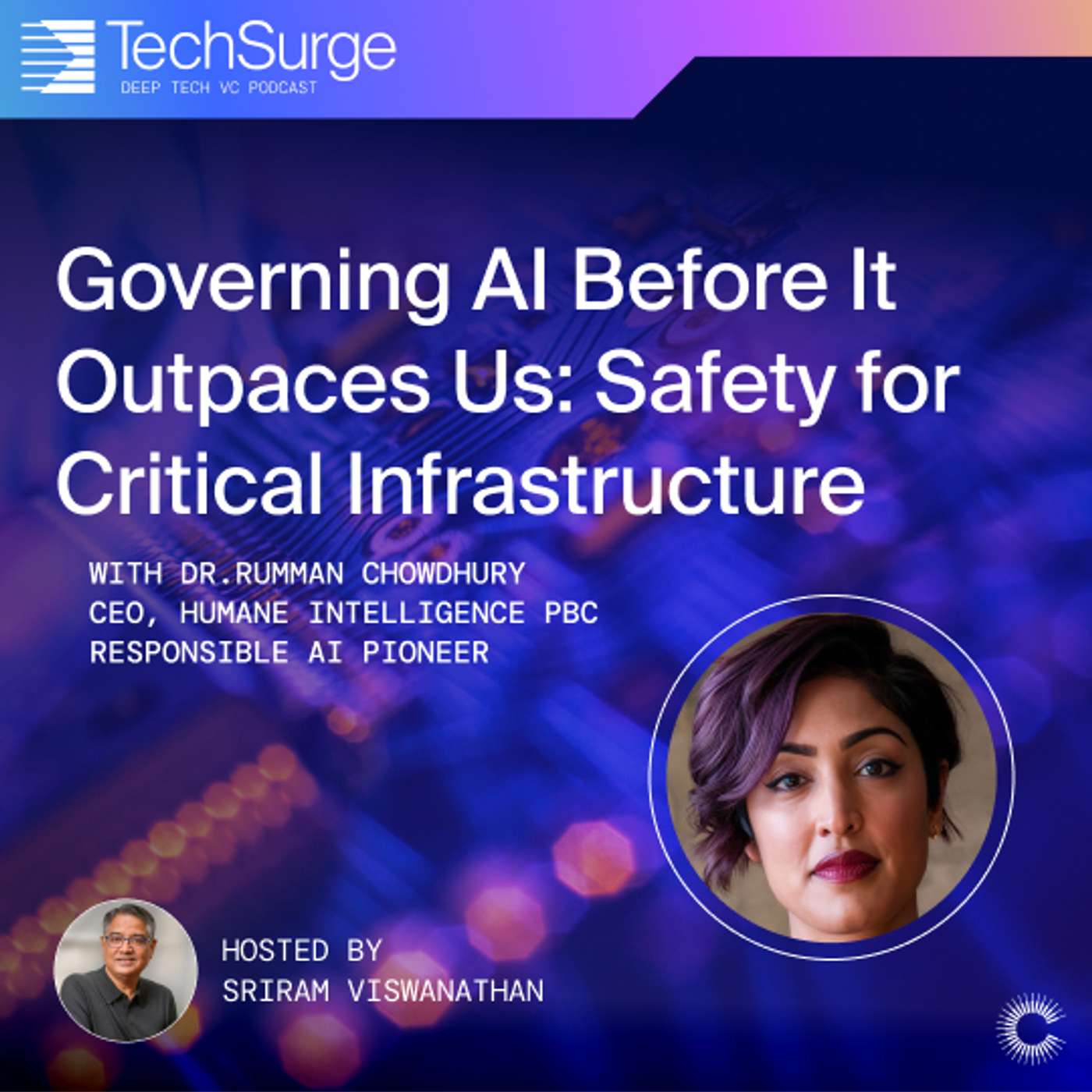
| 3/5/26 | ![]() Governing AI Before It Outpaces Us: Safety for Critical Infrastructure✨ | AI safetygovernance+4 | Dr. Rumman Chowdhury | Humane Intelligence PBCTwitter | — | AI governancesafety+5 | — | 57m 41s | |
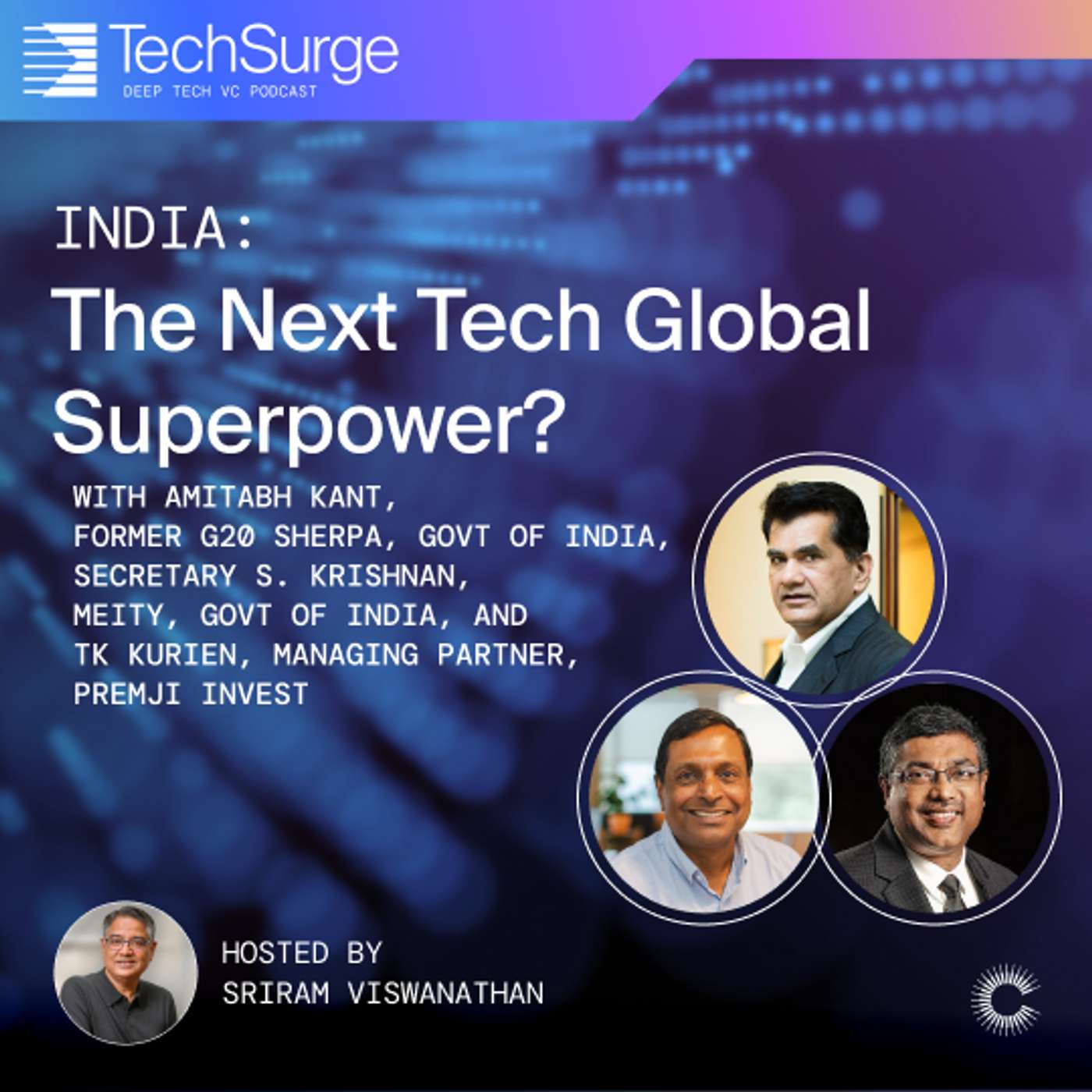
| 2/19/26 | ![]() India: The Next Tech Global Superpower?✨ | Indiadeep tech+4 | S. KrishnanAmitabh Kant+1 | India’s Ministry of Electronics and Information TechnologyPremji Inves | — | Indiadeep tech superpower+4 | — | 1h 20m 19s | |
| 2/12/26 | ![]() TechSurge: Season 2 Trailer✨ | deep techemerging technology+5 | — | Celesta CapitalSilicon Valley+3 | — | deep techinnovation+6 | — | 1m 33s | |
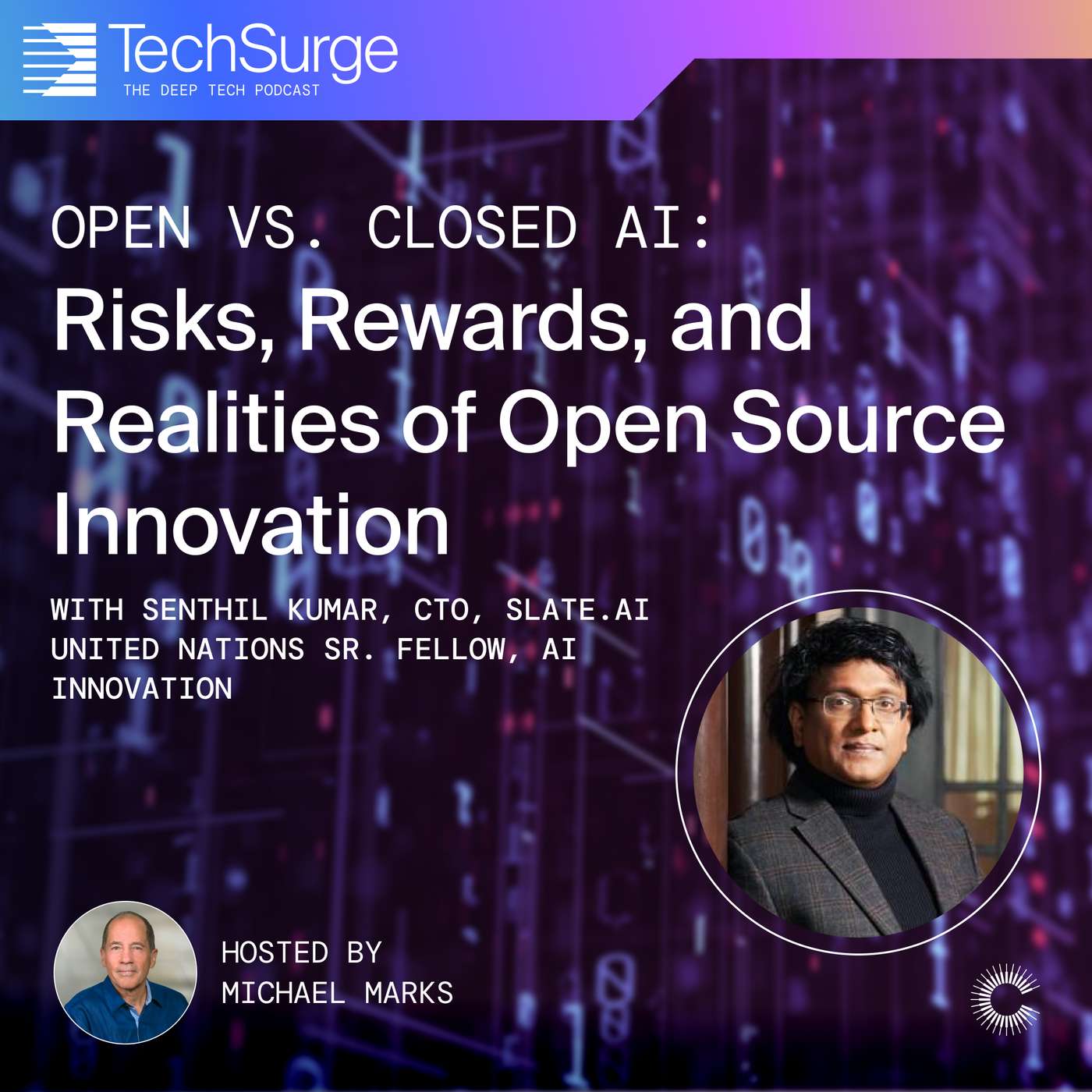
| 7/1/25 | ![]() Season 1 Finale: Risks, Rewards, and Realities of Open vs. Closed AI✨ | AI developmentopen source vs closed AI+5 | Senthil Kumar | DeepSeekMeta+2 | — | AIopen source+8 | — | 26m 16s | |
Want analysis for the episodes below?Free for Pro Submit a request, we'll have your selected episodes analyzed within an hour. Free, at no cost to you, for Pro users. | |||||||||
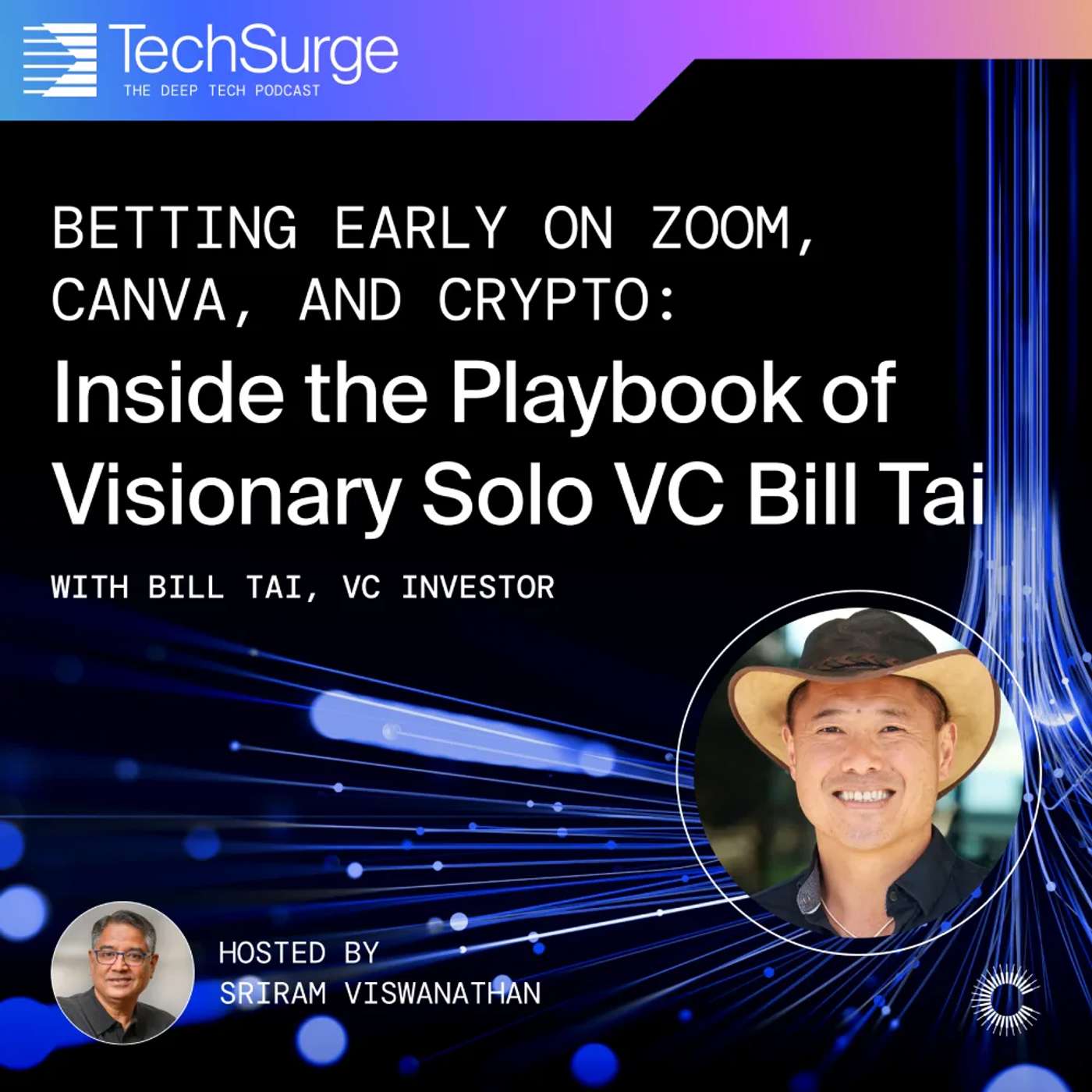
| 6/18/25 | ![]() Betting Early on Zoom, Canva, and Crypto: Inside the Playbook of Visionary Solo VC Bill Tai✨ | venture capitaltechnology investment+4 | Bill Tai | BitcoinTSMC+6 | — | Bill TaiZoom+6 | — | 1h 02m 22s | |
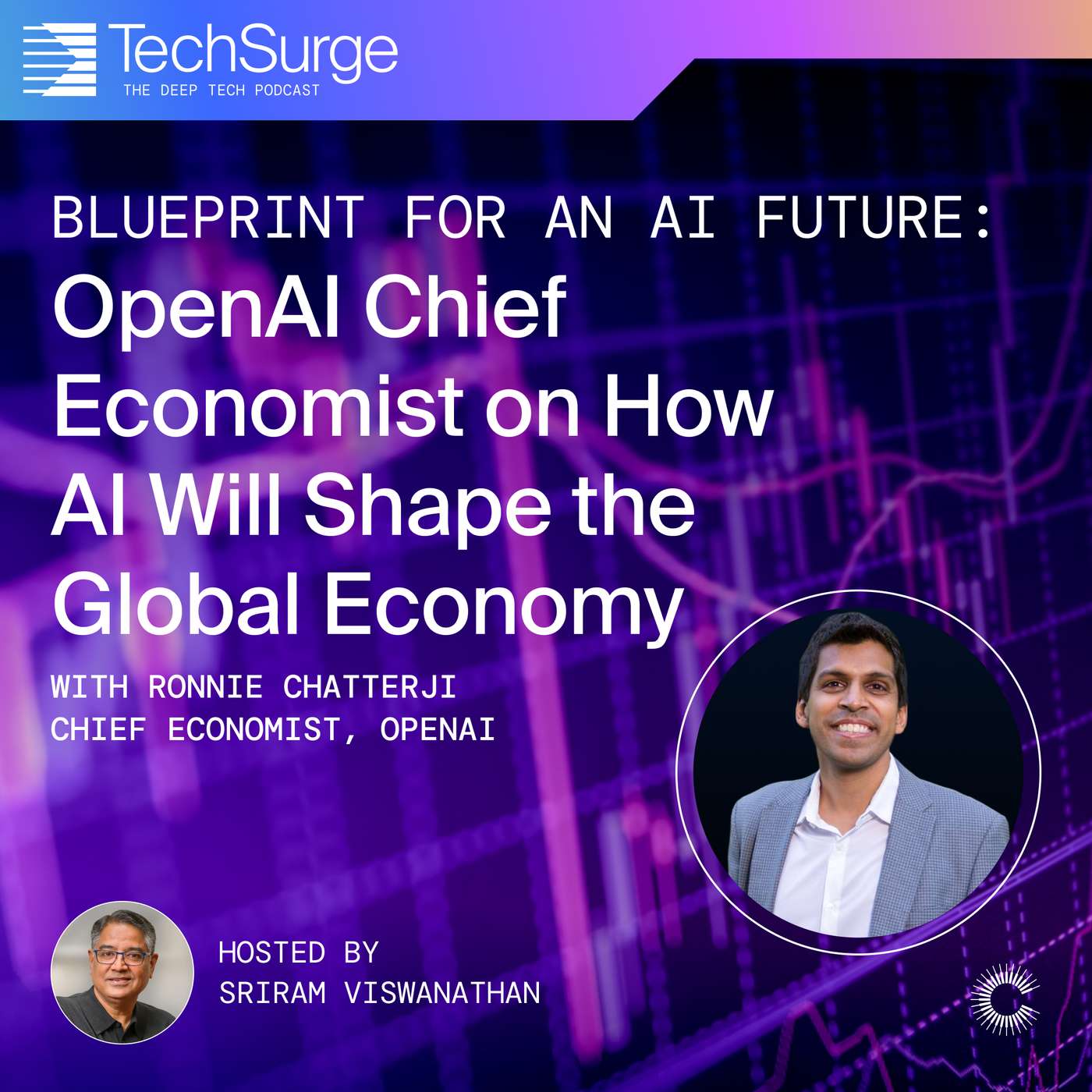
| 6/5/25 | ![]() Blueprint for an AI Future: OpenAI Chief Economist on How AI Will Shape the Global Economy✨ | AI impact on economyjob market transformation+4 | Ronnie Chatterji | OpenAIObama administration+4 | — | AIeconomy+6 | — | 52m 18s | |
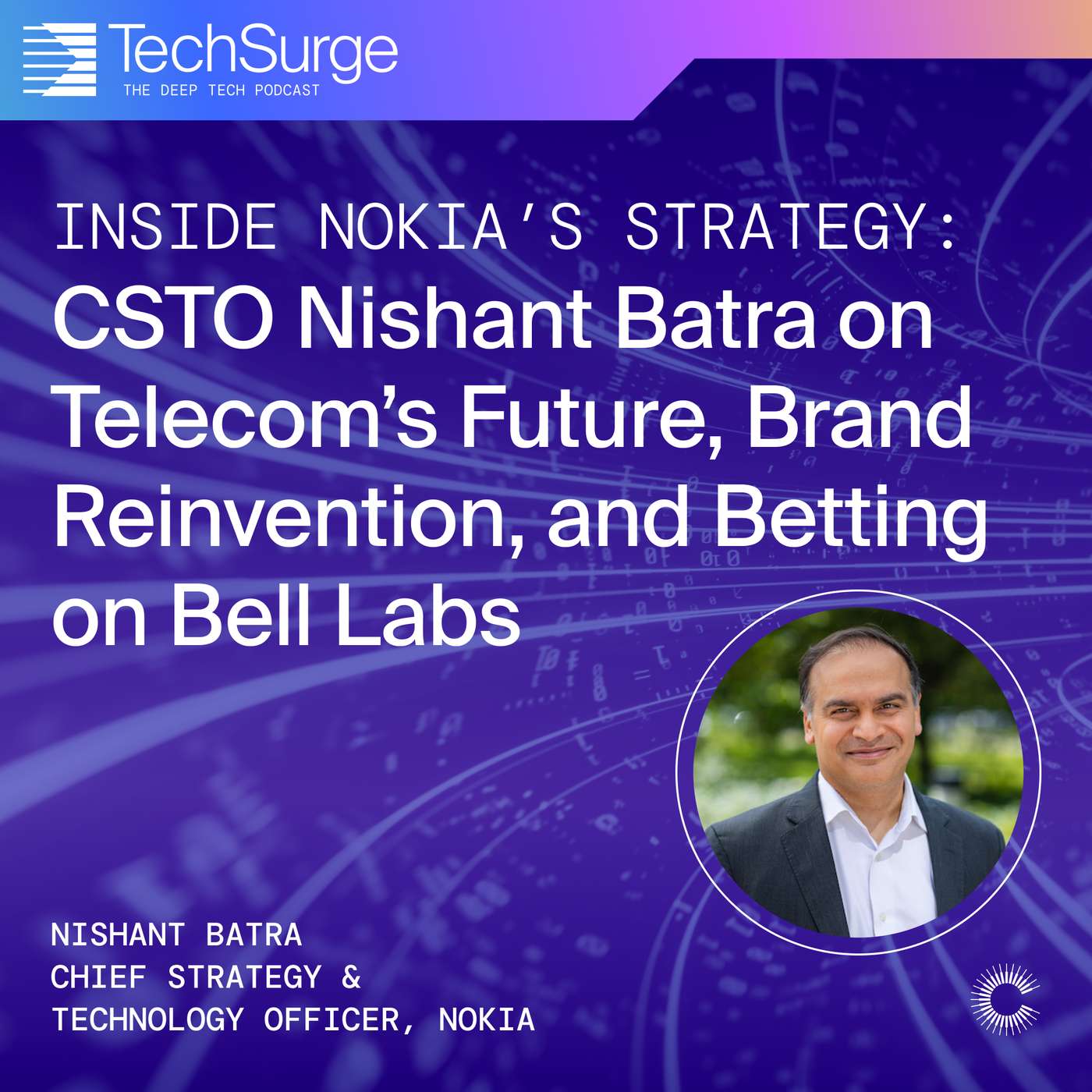
| 5/22/25 | ![]() Inside Nokia’s Strategy: CSTO Nishant Batra on Telecom’s Future, Brand Reinvention, and Betting on Bell Labs✨ | telecomwireless technology+4 | Nishant Batra | NokiaBell Labs+2 | — | NokiaBell Labs+6 | — | 47m 31s | |
| 5/8/25 | ![]() Leading Through Chaos: John Chambers on Tariffs, Cyber Threats, & the AI Supercycle | Competition, growth, tariffs, hacks, AI – what does it take to be an effective leader today? John Chambers, former CEO and Executive Chairman of Cisco and founder of JC2 Ventures, joins TechSurge host Sriram Viswanathan to share valuable wisdom on leading and growing businesses through times of significant change. As a leader who has transitioned from the c-suite to venture capital and now mentoring founders in emerging technology sectors, John has seen it all. He shares lessons from his time leading one of the world’s most influential networking companies at Cisco (the most valuable company in the world at the time), revealing what he learned while growing it from a challenger networking company into a $50 billion tech powerhouse, sharing how Cisco achieved and maintained its market leadership, particularly his bold M&A strategies. John offers hard‑won insights on navigating major technology shifts in AI, cloud, security, and more. Today’s founders and executives will find practical frameworks, real‑world war stories, and counterintuitive advice to help survive and thrive in an era of continual disruption. If you enjoy this episode, please subscribe and leave us a review on your favorite podcast platform. Sign up for our newsletter at techsurgepodcast.com for exclusive insights and updates on upcoming TechSurge Live Summits.Links:Explore John Chambers' family office and venture firm at JC2 VenturesRead John Chambers' book “Connecting the Dots” on AmazonDiscover the organization John chaired for eight years US-India Strategic Partnership ForumLearn about the company John and Sriram have invested in together at ParkourSCFind out about the deep fake detection company Pin DropLearn about the cybersecurity company Rubrik (00:00) - Navigating the AI Revolution (03:03) - The Genesis of JC2 Ventures (05:45) - Investment Philosophy and Market Transitions (09:08) - The Role of Customer Feedback in Innovation (11:54) - Building Companies for IPO vs. Acquisition (15:04) - The Importance of Management and Culture (17:51) - AI's Impact on Business and Society (20:54) - Global Economic Trends and Strategic Partnerships (24:08) - Cybersecurity in the Age of AI (27:00) - The Future of AI and Global Cooperation (30:10) - Challenges and Opportunities in the Tech Landscape (32:45) - Key Traits of Successful Tech Leaders | 39m 37s | ||||||
| 4/24/25 | ![]() China, Funding Cuts, & Campus Controversy: Is U.S. Tech Leadership Falling Behind? | MIT President Emeritus Dr. Rafael Reif joins host Michael Marks for a discussion about the state of U.S. competitiveness in technology, university research funding, current immigration policy, and more. Reif explains why universities remain the innovation engines of economies, educating top talent and generating the foundational research that powers emerging tech and creates new industries. He candidly assesses U.S.-China competition, warns that Chinese research output is rapidly outpacing our own, and urges renewed federal investment. The discussion explores how restrictive immigration policies threaten the flow of global talent into the U.S and his own impression of current policies as an immigrant from Venezuela himself. As a TSMC board member, Reif also touches on the strategic need for domestic semiconductor fabs, Intel’s path forward, and TSMC’s edge in advancing cutting-edge nodes. Lastly, he addresses gaps in the venture capital funding space and why he created MIT’s The Engine incubator model to fund “tough tech” startups, which helped launch breakthroughs like Commonwealth Fusion Systems.If you enjoy this episode, please subscribe and leave us a review on your favorite podcast platform. Sign up for our newsletter at techsurgepodcast.com for exclusive insights and updates on upcoming TechSurge Live Summits.Connect with Rafael Reif on LinkedIn https://www.linkedin.com/in/l-rafael-rief-b8977b231Dive deeper into Reif’s career, publications, and awards. Read his full biography https://reif.mit.edu/biography Read Rafael's recent op-ed about government R&D funding: https://www.bostonglobe.com/2025/02/17/opinion/science-technology-research-development/Read Rafael's speech about the role of universities in building a strong U.S. economy: https://reif.mit.edu/speeches-writing/strong-universities-make-strong-united-statesExplore how MIT’s Engine incubator is fueling “tough tech” startups like fusion power. Learn about The Engine https://engine.xyz/Watch Commonwealth Fusion Systems’ plan to deliver commercial fusion energy. Discover CFS https://cfs.energy/Understand the roadmap to a 400 MW fusion pilot plant. Read the MIT News report https://news.mit.edu/2024/commonwealth-fusion-systems-unveils-worlds-first-fusion-power-plant-1217 | 42m 07s | ||||||
| 4/10/25 | ![]() Inside Microsoft's Trillion Dollar Playbook with Chief Strategy Officer Bobby Yerramilli-Rao | Bobby Yerramilli-Rao, Chief Strategy Officer at Microsoft, joins TechSurge host Sriram Viswanathan to offer a rare glimpse into the strategic playbook of one of the world’s most powerful tech companies. Bobby shares how the company navigates today’s biggest technology paradigm shifts, placing bets with trillion-dollar implications. Touching on Microsoft’s AI strategy, OpenAI partnership, quantum computing, its approach to acquisitions, and much more, this candid and wide-ranging conversation is not to be missed. If you enjoy this episode, please subscribe and leave us a review on your favorite podcast platform. Sign up for our newsletter at techsurgepodcast.com for exclusive insights and updates on upcoming TechSurge Live Summits. (00:00) - The Nature of Technology and AI's Economic Impact (03:01) - Strategic Priorities at Microsoft (05:45) - Strategic Inflection Points and Microsoft's History (09:03) - The Importance of Timing in Strategic Decisions (11:48) - Gaming and Content Strategy (14:57) - Acquisition Successes and Failures (17:50) - Leveraging LinkedIn and GitHub (20:50) - AI's Potential Economic Impact (23:52) - Monetizing AI Innovations in Microsoft Office (25:59) - Investing in AI: The New CAPEX Landscape (31:01) - Quantum Computing: Hype vs. Reality (37:44) - The Future of AI and Quantum Integration (39:18) - The Semiconductor Landscape: Lessons from the Past (43:30) - Genomics and Life Sciences: Opportunities Ahead (45:50) - Autonomous Driving: The Future of Mobility | 47m 32s | ||||||
| 4/1/25 | ![]() Scaling the AI Era: Next-Gen Data Storage Solutions with Pure Storage CEO Charlie Giancarlo | In this episode of TechSurge, host Sriram Viswanathan sits down with Charlie Giancarlo, Chairman and CEO of Pure Storage, to discuss the evolution and future of data storage in the digital age. Charlie shares insights from his career spanning his pivotal role in Cisco's success as a networking pioneer, to his leadership in transforming Pure Storage into a leader in innovative storage solutions.They explore the evolution of data center infrastructure, and the critical role of storage architecture in enabling AI and cloud technologies. Charlie also explains how Pure Storage's software-driven approach is creating new efficiencies and opportunities for enterprises, offering a compelling vision for a unified "data cloud" that breaks down data silos and unlocks new insights.This episode delves into the intersections of networking, compute, storage, and AI, providing an essential perspective for anyone interested in the future of technology infrastructure.If you enjoy this episode, please subscribe and leave us a review on your favorite podcast platform. Sign up for our newsletter at techsurgepodcast.com for exclusive insights and updates on upcoming TechSurge Live Summits.Links:Pure Storage Official Website: Explore Pure Storage's innovative data storage solutions. Pure Storage DataCharlie Giancarlo's Biography: Learn more about Charlie Giancarlo, Chairman and CEO of Pure Storage. Charlie GiancarloPortworx by Pure Storage: Discover Portworx, the Kubernetes data services platform acquired by Pure Storage. Wikipedia Portworx ASBIS – IT DistributorFlashBlade//EXA Announcement: Read about Pure Storage's FlashBlade//EXA, designed for high-performance computing and AI workloads. FlashBlade//EXA: The Future of AI and HPC Storage Performance | 59m 05s | ||||||
| 3/13/25 | ![]() Why AI Isn't Ready to Make Medicines | Many in venture capital and biopharma are anointing artificial intelligence the savior of drug discovery—but what can AI actually do?In this eye-opening episode, Michael Marks sits down with Mike Nohaile, CEO of Prellis Biologics, to explore the hype versus reality in AI-enabled drug discovery. Mike details why, despite significant breakthroughs like AlphaFold and recent Nobel Prize win for computational protein design, fully AI-generated medicines still present challenges. He also discusses why we urgently need more effective medicines and details Prellis’ unique system which combines laser printed human organoids and an externalized human immune system with AI, enabling the discovery of fully human antibodies. If you enjoy this episode, please subscribe and leave us a review on your favorite podcast platform. Sign up for our newsletter at techsurgepodcast.com for exclusive insights and updates on upcoming TechSurge Live Summits.Links:Explore Prellis Biologicshttps://prellisbio.com/Understand AlphaFold, DeepMind’s AI model for predicting protein structureshttps://deepmind.google/alphafoldRead about the 2024 Nobel Prize in Chemistry https://www.nobelprize.org/prizes/chemistry/2024/press-release/ (00:00) - The Reality of AI in Drug Discovery (03:05) - The Need for Better Medicines (06:05) - Evolution of Pharmaceutical Therapies (08:55) - Challenges in Protein Drug Discovery (12:13) - AI's Role in Protein Design (14:46) - Limitations of AI in Drug Development (17:58) - Understanding Protein Structures (20:54) - The Future of AI in Medicine (22:36) - The Challenges of Drug Development (29:44) - Innovations in Antibody Production (35:01) - Advancements in Obesity Treatments (39:54) - The Future of Drug Discovery | 41m 44s | ||||||
| 2/27/25 | ![]() Understanding the Elegant Math Behind Modern Machine Learning | Artificial intelligence is evolving at an unprecedented pace—what does that mean for the future of technology, venture capital, business, and even our understanding of ourselves? Award-winning journalist and writer Anil Ananthaswamy joins us for our latest episode to discuss his latest book Why Machines Learn: The Elegant Math Behind Modern AI.Anil helps us explore the journey and many breakthroughs that have propelled machine learning from simple perceptrons to the sophisticated algorithms shaping today’s AI revolution, powering GPT and other models. The discussion aims to demystify some of the underlying mathematical concepts that power modern machine learning, to help everyone grasp this technology impacting our lives–even if your last math class was in high school. Anil walks us through the power of scaling laws, the shift from training to inference optimization, and the debate among AI’s pioneers about the road to AGI—should we be concerned, or are we still missing key pieces of the puzzle? The conversation also delves into AI’s philosophical implications—could understanding how machines learn help us better understand ourselves? And what challenges remain before AI systems can truly operate with agency?If you enjoy this episode, please subscribe and leave us a review on your favorite podcast platform. Sign up for our newsletter at techsurgepodcast.com for exclusive insights and updates on upcoming TechSurge Live Summits.Links:Read Why Machines Learn, Anil’s latest book on the math behind AIhttps://www.amazon.com/Why-Machines-Learn-Elegant-Behind/dp/0593185749Learn more about Anil Ananthaswamy’s work and writinghttps://anilananthaswamy.com/Watch Anil Ananthaswamy’s TED Talk on AI and intelligencehttps://www.ted.com/speakers/anil_ananthaswamyDiscover the MIT Knight Science Journalism Fellowship that shaped Anil’s AI researchhttps://ksj.mit.edu/Understand the Perceptron, the foundation of neural networkshttps://en.wikipedia.org/wiki/PerceptronRead about the Perceptron Convergence Theorem and its significancehttps://www.nature.com/articles/323533a0 (00:00) - The Future of AI: Agency and Exponential Growth (01:03) - Introduction to Machine Learning and AI Concepts (04:50) - The Journey of Writing 'Why Machines Learn' (10:07) - Understanding the Perceptron and Its Significance (13:40) - The Evolution of Neural Networks and AI Winters (19:35) - Backpropagation: The Game Changer in Neural Networks (29:51) - Convolutional Neural Networks: Advancements in Image Recognition (35:20) - The Impact of Large Datasets on Machine Learning (38:12) - Understanding Perceptrons and SVMs (41:39) - The Impact of ImageNet on Machine Learning (44:44) - The Evolution of GPUs in AI (48:09) - Transformers: A New Era in Neural Networks (54:21) - The Exponential Growth of AI Models (01:01:21) - Diverging Views on AGI: Hinton vs. LeCun (01:05:08) - The Common Thread in Anil's Work (01:09:40) - Future Disruptions in AI and Machine Learning | 1h 14m 43s | ||||||
| 2/13/25 | ![]() 21st Century Warfare: The Nexus of Technology, Economy, & National Security | With global economic alliances shifting and new threats emerging, will the U.S. maintain its dominance in an increasingly complex world? From chips to cyberterrorist threats to cryptocurrency, battles for global dominance are no longer only fought on the battlefield—they're playing out in markets, boardrooms, and cyberspace. In this episode, we sit down with Juan Zarate, a key member of the post-9/11 Bush Administration team who architected how we combat terrorist financing and think about modern financial warfare.We explore how the U.S. has used its economic dominance as a powerful weapon—and whether countries like China and Russia are now using the same playbook to push back. Juan shares insights on the weaponization of the dollar, how financial crime networks are evolving in the digital age, and why strategies around cryptocurrency could either threaten or reinforce U.S. economic power.The conversation dives into the intersection of technology, economic, and national security strategy, tackling key issues like cyber threats, semiconductor supply chains, and the growing role of AI in financial security. Juan also introduces his latest venture, Consilient, which is pioneering federated AI to revolutionize the fight against financial crime.If you enjoy this episode, please subscribe and leave us a review on your favorite podcast platform. Sign up for our newsletter at techsurgepodcast.com for exclusive insights and information about upcoming TechSurge Live Summits.Links:Check out our video episodes on YouTubeFollow Celesta Capital on LinkedIn and XDiscover how K2 Integrity is shaping the future of financial crime prevention and cybersecurityhttps://www.k2integrity.comRead Juan Zarate’s Treasury’s War to explore the rise of financial warfare in global securityhttps://www.amazon.com/Treasurys-War-Unleashing-Financial-Warfare/dp/1610391152Explore Consilient’s groundbreaking approach to financial crime detection using federated AIhttps://www.consilient.comLearn how Coinbase is driving the future of cryptocurrency and digital financehttps://www.coinbase.com | 45m 22s | ||||||
| 1/30/25 | ![]() Adapting to AI & Geopolitical Disruption with Global Head of McKinsey Bob Sternfels | The world is evolving faster than ever – how will we keep up?From AI breakthroughs to global supply chain disruptions, the forces shaping business and technology today are relentless. In this episode of the TechSurge Deep Tech VC Podcast, we sit down with Bob Sternfels, Global Managing Partner of McKinsey & Company, the global consulting firm who has been on the frontlines of helping businesses and industries navigate relentless change for the past 100 years.We explore the shifting landscape of venture capital and opportunities for VCs, startups, and consultancies to explore new partnership models. Bob shares his view on shifting global supply chain strategies, why full economic decoupling between the U.S. and China is a dangerous and difficult proposition, and how India may be on track to become the economic powerhouse of the twenty-first century. The discussion digs into the complexities of housing affordability and why the future of housing insurance is at risk – could our homes of the future soon be uninsurable due to climate change?Bob helps us dive into the evolving demands of 21st-century leadership, where resilience, adaptability, and even humor are becoming essential CEO traits. Bob explains why today’s leaders must rethink their approach to disruption, risk, and innovation – or risk being left behind.If you enjoy this episode, please subscribe and leave us a review on your favorite podcast platform. Sign up for our newsletter at techsurgepodcast.com for exclusive insights and information about upcoming TechSurge Live Summits.Links:Check out our video episodes on YouTubeFollow Celesta Capital on LinkedIn and XLearn more about Bob Sternfels’ leadership at McKinsey & Companyhttps://www.mckinsey.com/our-people/bob-sternfelsExplore McKinsey’s insights on AI and economic disruptionhttps://www.mckinsey.com/capabilities/mckinsey-digital/our-insights/the-economic-potential-of-generative-ai-the-next-productivity-frontierLearn how climate change is affecting insurance marketshttps://www.mckinsey.com/capabilities/risk-and-resilience/our-insights/navigating-shifting-risks-in-the-insurance-industryLearn about India’s digital transformation through UPI and Aadhaarhttps://www.npci.org.in/what-we-do/upi/product-overviewhttps://uidai.gov.in/ (00:00) - Introduction to Bob Sternfeld and McKinsey's Vision (06:49) - The Transformative Power of AI in Business (12:52) - Navigating the Complexities of Cloud and On-Prem Solutions (18:03) - Geopolitical Impacts on Global Supply Chains (23:18) - India's Economic Potential and Future Growth (24:13) - India's Rapid Digitization and Economic Transformation (28:20) - The Housing Crisis: Understanding Affordability and Community (38:13) - 21st Century Leadership: Evolving Traits and Challenges | 50m 37s | ||||||
| 1/16/25 | ![]() The Future of Wireless, Academia, & Intel: A Conversation With Dr. Andrea Goldsmith | The future of wireless technology is unfolding, are you ready for what's next? How can Intel regain market dominance? How will AI and IOT shape the next generation of wireless? What are the challenges in transitioning to 5G, NextG, and beyond? How will academia and the startup world intersect in the 21st century economy? We explore these questions and more in our latest episode of the TechSurge Deep Tech VC Podcast, as we sit down with Dr. Andrea Goldsmith, Dean of Princeton University’s School of Engineering and Applied Science and a pioneer in wireless communication. Dr. Goldsmith shares insights from her groundbreaking research in multi-antenna systems, the evolution of wireless networks, and the future of cellular technology. We explore her journey as a successful entrepreneur behind Quantenna and Plume WiFi, and her current leadership role as Dean working to build a vibrant engineering and startup ecosystem around Princeton. Dr. Goldsmith also shares her thoughts on the future of Intel, the strategic choices that lie ahead, and its important role within the U.S. tech economy, as well as the broader geopolitical landscape.Enjoyed this conversation? Subscribe now and leave a review to help us grow! Join our newsletter for exclusive insights and upcoming TechSurge Live Summits at techsurgepodcast.com. Links: Check out our video episodes on YouTube Follow Celesta Capital on LinkedIn and X Learn more about Dr. Goldsmith’s pioneering research at Princeton: https://ece.princeton.edu/people/andrea-goldsmith Discover Intel's latest innovations: https://www.intel.com/ Explore how Plume WiFi is redefining smart home connectivity: https://www.plume.com/ See how Medtronic is shaping the future of healthcare innovation: https://www.medtronic.com/ Experience the future of autonomous mobility with Zoox: https://zoox.com/ | 53m 16s | ||||||
| 12/12/24 | ![]() How AI Is Fueling the Transformation of Medical Imaging | In this episode, host Michael Marks dives into the transformative role of artificial intelligence in healthcare. Michael is joined by Dr. Alex Sardiña of WhiteRabbit.ai and Kalyan Sivasilam of 5C Network, two early adopters bringing AI to medicine through sharply contrasting market models in the U.S. and India, respectively. The discussion unpacks how AI is revolutionizing diagnostics, helping to address labor shortages, and improving patient experiences. Learn about breakthroughs in cancer detection, radiology efficiency, regulatory challenges, and the global potential of AI-driven solutions in medicine. Chapters 00:00 Introduction to AI in Healthcare 02:01 AI Applications in Cancer Detection 04:56 Addressing Radiologist Shortages with AI 07:47 The Reality of AI in Medical Imaging 12:06 Data Acquisition and Its Challenges 16:25 The Future of Radiologists in an AI World 22:00 Improving Accuracy in Medical Imaging with AI 23:25 AI in Diagnostic Imaging 25:18 Building vs. Partnering in AI Healthcare 29:40 Navigating Regulatory Environments 34:23 The Role of Insurance in AI Adoption 39:39 Overcoming Hurdles for AI Acceptance 43:56 Competition and Innovation in AI Links https://www.5cnetwork.com/ https://www.whiterabbit.ai/ Keywords AI, healthcare, medical imaging, cancer detection, radiology, diagnostics, technology, healthcare investment, patient care, data acquisition, AI, healthcare, diagnostic imaging, regulatory environment, insurance, competition, innovation, technology, partnerships, patient care | 46m 20s | ||||||
| 11/26/24 | ![]() The Tech CEO Playbook: Strategies for Success | Host Sriram Viswanathan sits down with Qualcomm Chairman Mark McLaughlin, the former CEO of Palo Alto Networks and Verisign and a trailblazer in technology and cybersecurity. Mark shares his remarkable transition from West Point to the heights of the tech industry, drawing on the many powerful leadership lessons developed throughout his career. Mark shares advice on balancing family priorities and career choices, offering a deeply human perspective on leadership told through his unique experience of stepping down from Palo Alto Networks at the height of his prime as CEO. The discussion touches on the shifting terrain of cybersecurity, the growing influence of AI, and the complexities of board leadership during periods of CEO transition. This episode is packed with practical insights for anyone looking to navigate a c-suite career in tech. Chapters 00:00 Introduction to Mark McLaughlin 01:53 Mark's Journey from Military to Technology 06:13 The Evolution of Cybersecurity and Mark's Insights 12:02 The Five T's of Business Success 17:54 Leadership Lessons from West Point 24:11 Transitioning from CEO to Family Life 30:01 Board Dynamics and Leadership Transitions 36:12 The Intersection of AI and Cybersecurity 41:59 Personal Philosophy and Leadership Inspiration Links Qualcomm Snowflake Rubrik Snorkel Palo Alto Networks Keywords Mark McLaughlin, cybersecurity, technology, leadership, AI, venture capital, family, business success, board dynamics, personal philosophy | 45m 11s | ||||||
| 11/14/24 | ![]() Customer Experience x AI: Industries at the Intersection Series | Host Sriram Viswanathan speaks with Andy Lee and Anand Chandrasekaran from Crescendo AI about the transformative impact of AI on the customer service and call center industry. The conversation covers Crescendo's unique approach to integrating AI in business process outsourcing, the dynamics of the sector, and the potential future of human-AI collaboration. Discover how AI is poised to disrupt and enhance the BPO industry, and why Crescendo AI is at the forefront of this technological revolution. Chapters 00:00 Introduction to AI in Customer Service 02:48 Dynamics of the Contact Center Industry 06:09 Crescendo AI: Founders and Vision 08:58 AI's Impact on Customer Interactions 11:54 Technical Architecture of Crescendo AI 15:06 Market Strategy and Customer Experience 17:56 Scaling and Growth of Crescendo AI 21:03 Future of AI in Customer Service 24:00 Conclusion and Future Outlook Links https://crescendo.ai/ https://www.alorica.com/ https://www.generalcatalyst.com/ | 45m 11s | ||||||
Showing 25 of 35
Sponsor Intelligence
Sign in to see which brands sponsor this podcast, their ad offers, and promo codes.
Similar Audience Demographics
Podcasts that attract a similar listener profile
Chart Positions
3 placements across 3 markets.
Chart Positions
3 placements across 3 markets.