On the show
From 32 epsHosts
Recent guests
Recent episodes
How to trust public media again with Jessica Malaty Rivera
Oct 13, 2026
33m 45s
All the lonely people | from Corner Piece
Oct 6, 2026
33m 23s
What is pain? with Rachel Zoffness
Sep 29, 2026
36m 33s
The Myth of Normal (1/5): The brain science of obesity | Mads Tang-Christensen
Sep 24, 2026
12m 19s
The Myth of Normal (2/5): Why autism is often missed in women and girls | Kate Kahle
Sep 24, 2026
16m 27s
Insights from recent episode analysis
Audience Interest
Podcast Focus
Publishing Consistency
Platform Reach
Insights are generated by CastFox AI using publicly available data, episode content, and proprietary models.
Most discussed topics
Brands & references
Total monthly reach
Based on 1 signal.
Built from
By chart position
- 🇺🇸United States · Health & FitnessHOME#1546.5K to 34K
- 🇹🇭TH · Health & Fitness#113.0K to 16K
- 🇯🇵Japan · Health & Fitness#362.4K to 13K
- 🇰🇷South Korea · Health & Fitness#332.2K to 11K
- 🇮🇳India · Health & Fitness#811.2K to 6.5K
- Per-Episode Audience
Est. listeners per new episode within ~30 days
23K to 123K🎙 ~2x weekly·331 episodes·Last published 1w ago - Monthly Reach
Unique listeners across all episodes (30 days)
46K to 245K🇺🇸28%🇹🇭13%🇯🇵10%+19 more - Active Followers
Loyal subscribers who consistently listen
26K to 135K
Market Insights
Platform Distribution
Reach across major podcast platforms, updated hourly
Total Followers
—
Total Plays
—
Total Reviews
—
* Data sourced directly from platform APIs and aggregated hourly across all major podcast directories.
Social Links & Contact
Official channels & resources
Official Website
Login
RSS Feed
Login
| Date | Episode | Topics | Guests | Brands | Places | Keywords | Sponsor | Length | |
|---|---|---|---|---|---|---|---|---|---|
| 10/13/26 | How to trust public media again with Jessica Malaty Rivera | In this special episode recorded at Aspen Ideas Health, Shoshana interviews Jessica Malaty Rivera, an epidemiologist and science communicator, on how trust in healthcare systems are cultivated—and easily broken down—in times of crisis. Then after their conversation, Shoshana shares a talk from Hamish McKenzie, the cofounder of Substack, on the different media systems emerging and how independent creators are changing the way people receive their news. Talk featuredThis is what the future of media looks like | Hamish McKenzieThis episode was filmed at Aspen Ideas: Health Hosted on Acast. See acast.com/privacy for more information. | 33m 45s | ||||||
| 10/6/26 |  All the lonely people | from Corner Piece | From group chats to video calls, technology should make social connection easier than ever. So, why is everyone so lonely?In this episode, Sabrina sets out to investigate the "loneliness epidemic" that is sweeping the globe and impacting her friends and cohosts. She interviews Professor Fay Bound-Alberti, author of "A Biography of Loneliness: The History of an Emotion" to understand what loneliness is, where it comes from, and whether there is a "cure". In the process, Taha and Melissa challenge Sabrina to tackle her own loneliness through a sidequest that reveals just how hard connection can be in modern life.Hear more episodes of Corner Piece on your favorite podcast app or here: https://link.mgln.ai/L3EFz6 Hosted on Acast. See acast.com/privacy for more information. | 33m 23s | ||||||
| 9/29/26 | What is pain? with Rachel Zoffness | Where does pain originate? According to Rachel Zoffness, a scientist and psychologist who studies pain, research shows that pain originates in the brain. In this episode Rachel joins Shoshana to talk about how stress and anxiety can amplify pain. They also discuss the ways medical programs fall short when they don’t teach biopsychosocial pain education and how understanding pain can help you regain power over your body. Hosted on Acast. See acast.com/privacy for more information. | 36m 33s | ||||||
| 9/24/26 |  The Myth of Normal (1/5): The brain science of obesity | Mads Tang-Christensen | Your belly and your brain speak to each other, says obesity researcher Mads Tang-Christensen. Offering scientific proof that obesity is a disease influenced by genetics and the environment, he introduces a molecule discovered in both the brain and gut that helps control appetite -- and which could be engineered to promote healthy weight loss for those living with obesity. Hosted on Acast. See acast.com/privacy for more information. | 12m 19s | ||||||
| 9/24/26 |  The Myth of Normal (2/5): Why autism is often missed in women and girls | Kate Kahle | Women and girls with autism spectrum disorder often don’t display the behaviors people typically associate with neurodivergence, greatly impacting when, how -- and if -- they are diagnosed. Autism acceptance advocate Kate Kahle makes the case for more research into this gender discrepancy, sharing her personal experience with masking, being diagnosed as a teenager and how it allowed her to better understand herself. “Autism is not a disease, and it doesn’t need to be cured,” she says. “It’s just a different way some brains can work.” Hosted on Acast. See acast.com/privacy for more information. | 16m 27s | ||||||
| 9/24/26 |  The Myth of Normal (3/5): Blindness isn't a tragic binary -- it's a rich spectrum | Andrew Leland | When does vision loss become blindness? Writer, audio producer and editor Andrew Leland explains how his gradual loss of vision revealed a paradoxical truth about blindness -- and shows why it might have implications for how all of us see the world. Hosted on Acast. See acast.com/privacy for more information. | 9m 36s | ||||||
| 9/24/26 |  The Myth of Normal (4/5): How to hack your brain when you're in pain | Amy Baxter | Have we misunderstood pain? Researcher and physician Amy Baxter unravels the symphony of connections that send pain from your body to your brain, explaining practical neuroscience hacks to quickly block those signals. Her groundbreaking research offers alternatives for immediate pain relief -- without the need for addictive opioids. (Followed by a Q&A with TED current affairs curator Whitney Pennington Rodgers) Hosted on Acast. See acast.com/privacy for more information. | 19m 22s | ||||||
| 9/24/26 |  The Myth of Normal (5/5): How to do laundry when you're depressed | KC Davis | Ever had a hard time doing daily household tasks -- cooking, cleaning, laundry -- and felt like a terrible person for struggling in the first place? Therapist KC Davis is here to flip that negative internalized script with a simple yet perspective-shifting fact that may change your approach to life. Learn a gentler, more practical approach to mental health as Davis shares hard-won wisdom and helpful shortcuts on how to get by when you feel like you've barely got it together. Hosted on Acast. See acast.com/privacy for more information. | 16m 19s | ||||||
| 9/22/26 | The human cell is wildly complex. Can AI decode it? | Silvana Konermann | Silvana Konermann and the team at Arc Institute are trying to crack one of science's most difficult problems: why complex diseases like Alzheimer's and cancer remain so stubbornly unsolvable, even as research advances. Her solution is a universal “virtual cell” — an AI model trained on a billion biological experiments that can read the language of human cells, predict what's going wrong and reveal how to fix it. In conversation with TED’s Chris Anderson, Konermann explores how this work could fundamentally change the way we discover drugs and treat disease. (This ambitious idea is part of The Audacious Project, TED’s initiative to inspire and fund global change.) Hosted on Acast. See acast.com/privacy for more information. | 20m 49s | ||||||
| 9/15/26 | The benefits of nontraditional healthcare with Dr. Charles Moore | When Dr. Charles Moore, professor in the Otolaryngology or ENT department (Ear, Nose, and Throat), saw patients coming in with undiagnosed late-stage diseases, he decided to do something about it. Dr. Moore got into his car and drove directly to neighborhoods to administer care. In this episode. Dr. Moore joins Shoshana to talk about the various programs he implemented, including the “Walk With a Doc” program where patients can go on walks with doctors and ask questions outside traditional healthcare locations such as hospitals and clinics. Hosted on Acast. See acast.com/privacy for more information. | 27m 42s | ||||||
Want analysis for the episodes below?Free for Pro Submit a request, we'll have your selected episodes analyzed within an hour. Free, at no cost to you, for Pro users. | |||||||||
| 9/8/26 | live musichearing health+3 | Jim Hudspeth | TEDThe beautiful, mysterious science of how you hear+1 | — | concert experiencehearing+3 | — | 36m 11s | ||
| 9/1/26 | Parkinson's diseasescent detection+3 | Joy Milne | TEDAcast | — | Parkinson'sscent+5 | — | 20m 54s | ||
| 8/27/26 | agingmenopause+3 | Stacy London | — | — | agingmenopause+5 | — | 53m 44s | ||
| 8/27/26 | anger managementpsychology+3 | Jennifer Parlamis | TED | — | angerventing+5 | — | 23m 39s | ||
| 8/27/26 | fitnessexercise routine+3 | — | TED Health | — | fitness journeyexercise routine+3 | — | 15m 44s | ||
| 8/27/26 | fulfillmentsuccess+4 | Ira Bedzow | TED | — | meaningful lifeachievement+4 | — | 26m 47s | ||
| 8/27/26 | deathpalliative care+3 | Kathryn Mannix | endwellproject.org | — | deathpalliative care+5 | — | 24m 51s | ||
| 8/25/26 | eye healthtechnology and vision+3 | Rupa Wong | Acast | — | eye healthvision+3 | — | 33m 46s | ||
| 8/18/26 | braintaste+4 | Camilla Arndal Andersen | TED | — | tastebrain scans+3 | — | 17m 32s | ||
| 8/11/26 | brain plasticitytouch+3 | David Eagleman | TED | — | neurosciencesenses+3 | — | 26m 43s | ||
| 8/4/26 | 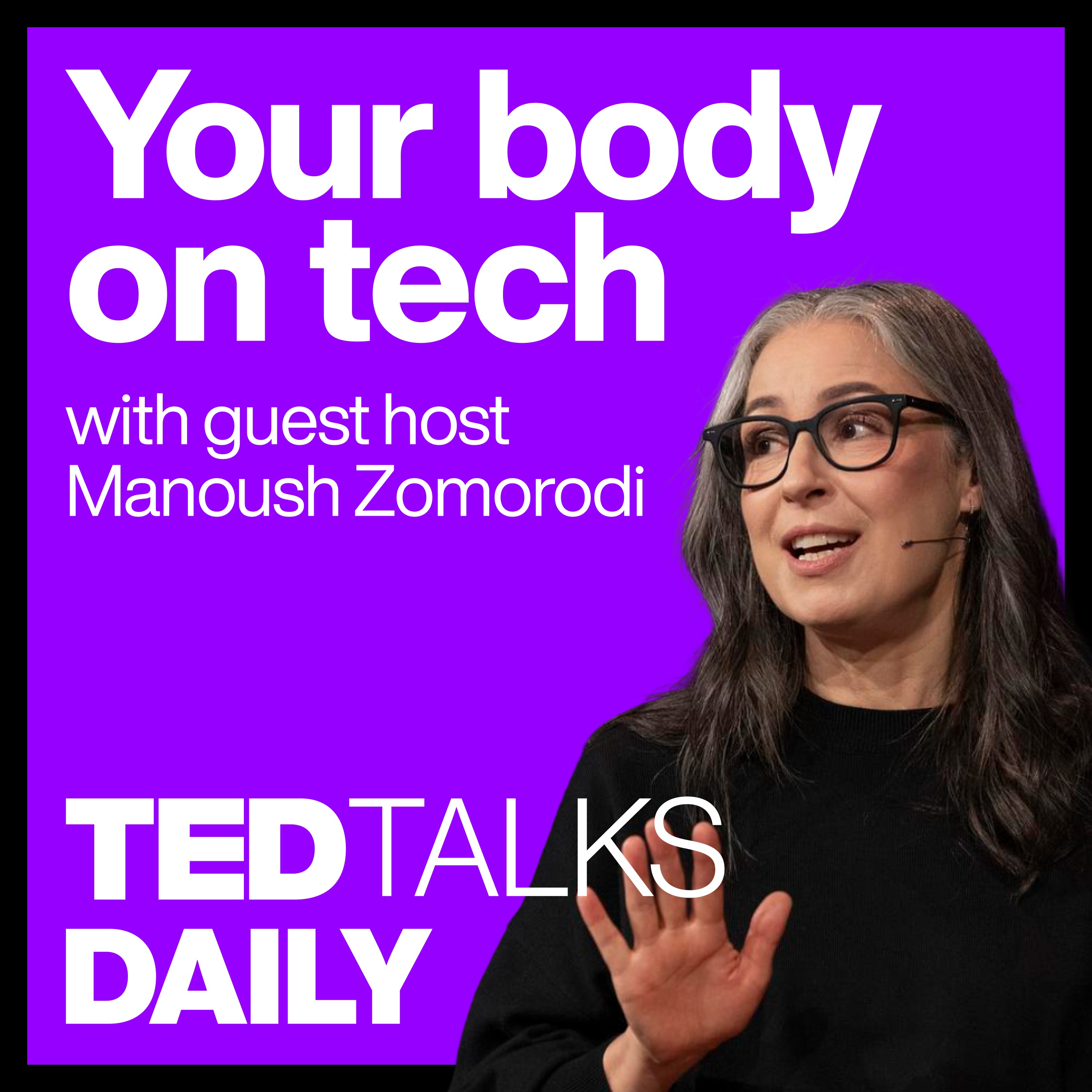 What we're getting wrong about teens and tech | Candice Odgers | Your Body on Tech | Trigger warning - this episode contains mention of suicide and severe depression.For years, the warning has been: smartphones are destroying a generation. But developmental psychologist Candice Odgers says that decades of data on teens tells a different story — violence, alcohol use and pregnancy are at historic lows, and research shows social media may not actually be the culprit for mental health problems. Hear her analysis of what’s really troubling kids these days, and why banning them from online spaces may make things worse. And stick around after her talk for a deep dive conversation with our guest host for the week, author and podcaster Manoush Zomorodi, into the ideas she shared on stage and beyond.This is episode two of a seven-part series airing this week on TED Talks Daily, where Manoush — and the seven speakers she curated for TED2026 — explore how you can live a healthier life in our high-tech era.To hear more from Manoush, listen to TED Radio Hour wherever you get your podcasts. Check out her new book, Body Electric, to learn more about the hidden health costs of the digital age. Hosted on Acast. See acast.com/privacy for more information. | 54m 24s | ||||||
| 7/30/26 |  Shoshana's Summer Playlist (1/5): How to stop feeling tired all the time with Dr. Alexandra Crosswell | Why do we feel exhausted all the time? We’ll get through the workday, collapse on the couch, scroll for a while, and go to bed… but wake up still feeling depleted. In this episode, Shoshana seeks to understand the concept of“deep rest.” She speaks to psychologist Dr. Alexandra Crosswell on the role stress plays in our daily lives and what safety has to do with bodily repair and restoration.Talk featuredWhat’s the best position to sleep in? | Rachel Marie E. Salas Hosted on Acast. See acast.com/privacy for more information. | 40m 11s | ||||||
| 7/30/26 |  Shoshana's Summer Playlist (2/5): What happens to your brain without any social contact? with Dr. Vivek Murthy | In this episode, Shoshana invites Dr. Vivek Murthy, the 19th and 21st Surgeon General of the United States, to discuss the ongoing loneliness epidemic.After the interview, Shoshana shares a TED-Ed talk from Terry Kupers, "What happens to your brain without social contact?" Everyone needs time to themselves, and peaceful solitude has stress-relieving benefits. But when being alone is forced upon you, the effects can be surprisingly extensive. And though different people experience distinct effects, symptoms tend to become more severe and persistent the longer they're isolated. So, how exactly does isolation affect your body and brain? Terry Kupers investigates. [Directed by Camille Bovey, narrated by Addison Anderson, music by Stephen LaRosa].tid156465tid Hosted on Acast. See acast.com/privacy for more information. | 38m 39s | ||||||
| 7/30/26 |  Shoshana's Summer Playlist (3/5): The secrets to aging well with Zeke Emanuel | When has healthcare advice become so complicated? And how should we be thinking about long-term wellness? Zeke Emanuel is an oncologist and bioethnicist whose latest book, Eat Your Ice Cream, might sound paradoxical against modern health trends and wellness noise. Zeke joins Shoshana to discuss what healthy aging looks like and why it’s never too late to practice health habits.Talk featuredTED-Ed: The 3 best predictors of how well you’ll age | Juulia Jylhavatid163157tid Hosted on Acast. See acast.com/privacy for more information. | 34m 48s | ||||||
| 7/30/26 |  Shoshana's Summer Playlist (4/5): Your gut’s guide to a happier microbiome | Megan Rossi | In this episode, Shoshana sits down with Dr. Megan Rossi, aka The Gut Health Doctor. As a leading scientist, registered dietitian, and nutritionist, Dr. Rossi reveals the crucial link between digestion and general health. She debunks common myths about the microbes that help (or harm) us, and shares accessible, evidence-based nutrition strategies to help you transform your diet for a happier, balanced gut microbiome. Hosted on Acast. See acast.com/privacy for more information. | 25m 16s | ||||||
| 7/21/26 | brain healthAlzheimer's+3 | Dr. Ayesha SherzaiDean Sherzai | Acast | — | brain healthAlzheimer's+5 | — | 33m 07s | ||
| 7/14/26 | gratitudehappiness+3 | Sonja Lyubomirsky | TEDTED Ed+1 | — | gratitudehappiness+5 | — | 17m 43s | ||
| 7/7/26 | rare diseaselifesaving drug+3 | David Fajgenbaum | Every CureTED+1 | — | rare diseaselifesaving drug+5 | — | 19m 05s | ||
| 6/30/26 | autismparenting+3 | Quentin Mezetin | The Centers for Disease Control and Prevention | — | autismparenting+3 | — | 24m 03s | ||
| 6/23/26 | data centersenvironmental health+4 | Dr. Jacoby Wilson | TED Tech | — | data centersenvironment+5 | — | 27m 22s | ||
| 6/16/26 | health care disparitiesrace in medicine+3 | Joel Bervell | TEDThe Doctor Is In | — | health carerace+5 | — | 28m 27s | ||
| 6/9/26 | concussionssports safety+3 | Ben Jones | TED | — | concussionsathletes+5 | — | 20m 35s | ||
| 6/2/26 | cancer treatmentimmunotherapy+3 | Dr. Alicia Zhou | Cancer Research Institute | — | cancerimmunotherapy+4 | — | 29m 36s | ||
| 5/26/26 | perceptionmental imagery+4 | Alex RosenthalSusan G. Wardle | — | — | brainmind+6 | — | 18m 59s | ||
| 5/19/26 | exhaustiondeep rest+3 | Dr. Alexandra Crosswell | Acast | — | tirednessstress+3 | — | 39m 15s | ||
| 5/12/26 | silencemindfulness+3 | Pico Iyer | TEDMarty Supreme | — | silencemindfulness+5 | — | 30m 30s | ||
| 5/5/26 | allergiesimmunology+4 | Dr. Zachary Rubin | TEDAcast | — | allergieslocal honey+6 | — | 30m 35s | ||
| 4/28/26 | exposure therapychild development+3 | Kathryn Hecht | TED | — | childrenfears+5 | — | 20m 53s | ||
| 4/21/26 | forgivenesspsychology+3 | Michael McCullough | UC San DiegoTED | — | forgivenesspsychology+4 | — | 30m 15s | ||
| 4/14/26 | aginghealthcare advice+4 | Zeke Emanuel | TED-EdEat Your Ice Cream | — | aging wellhealth trends+5 | — | 33m 52s | ||
| 4/7/26 | medical dramasdeath+4 | Katherine LaNasaTembi Locke+1 | Grey’s AnatomyThe Pitt+2 | — | medical dramasdeath+5 | — | 32m 23s | ||
| 3/31/26 | health careSouth Sudan+3 | Yohanis Riek | TED Fellows programUSAID | South Sudanremote communities+1 | health careSouth Sudan+5 | — | 29m 36s | ||
| 3/24/26 | food safetyfood poisoning+4 | Emma BryceNicola Twilley | TED | — | food poisoningcookie dough+5 | — | 22m 33s | ||
| 3/17/26 | DNAcancer treatments+3 | Linda Chelico | TED | — | DNAbiological life+3 | — | 19m 58s | ||
| 3/10/26 | gene sequencinggenomics+4 | Dr. Eric Green | Human Genome ProjectTED | — | gene sequencingDNA+4 | — | 35m 06s | ||
| 3/3/26 | AIcommunication barriers+3 | Adam Munder | OmniBridgeTED | American Sign Language | AIDeaf+5 | — | 7m 06s | ||
| 2/24/26 | adolescencebrain development+3 | Jennifer Pfeifer | TED | — | adolescent brainsbehavior+4 | — | 20m 14s | ||





Showing 47 of 331
Pitch Fit is a Pro feature
See how bookable this show is for guests, which brands already advertise, the per-episode ad value, and the best-fit guest and sponsor profile. The numbers are blurred on the free plan.
How readily this show books outside guests like you.
How proven this show is for host-read sponsorships.
For Guests
ProFor Advertisers
ProUpgrade to Pro to unlock guest cadence, sponsor categories, fit scores, and per-episode ad value for this show.
Similar Audience Demographics
Podcasts that attract a similar listener profile




Chart history for TED Health
Peaked at #11 in TH, currently #11 in TH.
| Market | Genre | Peak | Current | Trend |
|---|---|---|---|---|
| TH | — | #11 | #11 | — |
| HU | — | #23 | #23 | — |
| VN | — | #24 | #24 | — |
| HK | — | #25 | #25 | — |
| South Korea | — | #33 | #33 | — |
| Japan | — | #36 | #36 | — |
| PL | — | #49 | #49 | — |
| TR | — | #54 | #54 | — |
| PH | — | #54 | #54 | — |
| MY | — | #55 | #55 | — |
| CO | — | #60 | #60 | — |
| South Africa | — | #64 | #64 | — |
| TW | — | #76 | #76 | — |
| BE | — | #80 | #80 | — |
| India | — | #81 | #81 | — |
| New Zealand | — | #83 | #83 | — |
| NG | — | #87 | #87 | — |
| ID | — | #95 | #95 | — |
| United Kingdom | — | #101 | #101 | — |
| SG | — | #104 | #104 | — |
Chart Positions
27 placements across 27 markets.
Chart Positions
27 placements across 27 markets.