

Insights from recent episode analysis
Audience Interest
Podcast Focus
Publishing Consistency
Platform Reach
Insights are generated by CastFox AI using publicly available data, episode content, and proprietary models.
Total monthly reach
Estimated from 1 chart position in 1 market.
By chart position
- 🇨🇦CA · How To#1415K to 30K
- Per-Episode Audience
Est. listeners per new episode within ~30 days
2.5K to 15K🎙 ~2x weekly·44 episodes·Last published 6d ago - Monthly Reach
Unique listeners across all episodes (30 days)
5K to 30K🇨🇦100% - Active Followers
Loyal subscribers who consistently listen
2K to 12K
Market Insights
Platform Distribution
Reach across major podcast platforms, updated hourly
Total Followers
—
Total Plays
—
Total Reviews
—
* Data sourced directly from platform APIs and aggregated hourly across all major podcast directories.
On the show
Recent episodes
When Your Body Says No: Chronic Pain, Stress & the Pressure to Keep Going
Jun 18, 2026
Unknown duration
Chronic Pain And Sex: Why Desire Changes—and How to Rebuild Connection
Apr 6, 2026
Unknown duration
"What Kind Of Pain Do I Have?"
Mar 27, 2026
Unknown duration
Living Fully With a Rare Condition: A Story of CPT2 Deficiency
Jan 23, 2026
Unknown duration
Part 3 – How to Reduce Stubborn Chronic Pain: A Practical, Science-Backed Roadmap
Aug 20, 2025
Unknown duration
Social Links & Contact
Official channels & resources
Official Website
Login
RSS Feed
Login
| Date | Episode | Description | Length | ||||||
|---|---|---|---|---|---|---|---|---|---|
| 6/18/26 |  When Your Body Says No: Chronic Pain, Stress & the Pressure to Keep Going | If you're tired of feeling like you have to keep it all together while silently struggling with chronic pain or illness, this episode is for you. Join us as we explore a different way forward—one built on self-trust, boundaries, and redefining what strength really means. | — | ||||||
| 4/6/26 |  Chronic Pain And Sex: Why Desire Changes—and How to Rebuild Connection | No description provided. | — | ||||||
| 3/27/26 |  "What Kind Of Pain Do I Have?" | No description provided. | — | ||||||
| 1/23/26 |  Living Fully With a Rare Condition: A Story of CPT2 Deficiency | No description provided. | — | ||||||
| 8/20/25 |  Part 3 – How to Reduce Stubborn Chronic Pain: A Practical, Science-Backed Roadmap | If you’ve been searching for ways to reduce chronic pain and feel like you’ve tried everything—medication, procedures, therapies—but the relief never lasts, this guide is for you. In the final episode of a three-part series from Pain 2 Possibilities, I will walk through why pain becomes stubborn and, more importantly, what you can do about it. Below I’ll summarize and expand on this evidence-based approach so you have a clear, practical plan to reduce chronic pain and reclaim more of your life. 1) Why this matters: chronic pain is not just about tissue Many people assume ongoing pain equals ongoing tissue damage. That’s not always true. To reduce chronic pain we need to understand that pain can be a multi-system problem: structural/mechanical, nervous system sensitization, and psychological/social factors. When treatments only address one area, especially just the structural side, pain often persists.  I see many treatments help briefly but not change the long-term trajectory. This is common and points toward nervous system sensitization as a major contributor to stubborn pain. 2) What changes when pain becomes chronic Decades of research show living with chronic pain changes the body in measurable ways. These are not “in your head” in a dismissive sense; they are changes in neurobiology, perception, and regulation. Here are some examples to watch for if you want to reduce chronic pain: Altered brain maps: People with chronic pain often struggle to rapidly identify left vs. right side or to draw a limb accurately (common in complex regional pain syndrome). Sensory perception shifts: Body parts can feel “different” to the brain—bigger, smaller, fuzzier—because the brain’s representation has shifted. Regulatory dysfunction: Immune, autonomic, and pain systems become overactive producing unpredictable symptoms. Changed movement patterns: Pain and pain anticipation change how you move. The brain learns protective patterns that can reinforce pain long-term.Recognizing these patterns helps you and your clinician decide if the focus should be on retraining the nervous system to reduce chronic pain—not just fixing tissue or reducing immediate intensity. 3) Why many treatments don’t give lasting relief To reduce chronic pain you must understand which part of the problem a given treatment actually addresses. I break these into four categories: treatments that change pain intensity, treatments that address structure/mechanics, mind-body approaches, and nervous-system-specific interventions. Pain intensity tools: Analgesics, injections, nerve blocks, TENS. These can lower the immediate volume of pain—like turning down a stereo—but often don’t fix the faulty wiring causing the noise to return. Structural/mechanical treatments: Physiotherapy for joint stability, chiropractic alignment, surgery, weight loss. Essential when the problem is structural—but not sufficient when sensitization drives pain. Mind-body methods: CBT, meditation, journaling, apps like Curable. Useful for addressing thinking, fear, and stress, but alone can fall short when pain pathways are overactive. Nervous system retraining: Education + graded, neuroscience-based drills that directly target the altered neurobiology of chronic pain. 4) Evidence-backed treatments that target the nervous system When the nervous system is involved, evidence-based interventions focus on changing how the brain processes body signals. These methods are designed to rewire and desensitize the nervous system progressively and safely: Pain education: Understanding pain reduces threat and fear. Knowledge changes perception; when you know what is happening and why, your brain can reduce defensive responses. Graded motor imagery (GMI): A sequence of interventions (left-right discrimination, motor imagery, mirror therapy) proven useful in conditions like complex regional pain syndrome and other sensitized states. Sensory discrimination training: Peripheral “bottom-up” work that refines sensory maps—touch labelling, texture recognition, and precise sensory tasks. Motor retraining: Gentle graded exposure to feared movements, broken down into micro-steps to rebuild confidence. Mirror therapy: Visual feedback to re-align brain representation with actual movement and reduce perceived threat. Top-down approaches: Imagery, visualization, and cognitive tasks that change brain expectation and cortical processing. Combining bottom-up and top-down approaches is more powerful than either alone. The nervous system learns from both peripheral input and central expectation—so to reduce chronic pain we must retrain both directions. 5) What recovery actually looks like Recovery is individual. To reduce chronic pain successfully you should plan for a process, not a quick fix. Outcomes vary—some people become pain-free, others find pain becomes background noise, and many regain function and confidence even while some symptoms persist. Common recovery milestones include: Less fear around movement and activities More predictable day-to-day pain intensity Improved sleep and energy Increased ability to work and participate in valued roles A toolkit you can use for flare-ups for life Change requires time, patience, and daily practice—often only minutes per day. The brain didn’t rewire overnight; it won’t undo overnight either. But consistent, incremental practice creates new neural pathways that reduce chronic pain over weeks and months. 6) The recovery formula: the components you need to change pain longterm Based on the latest research,  The 16 Week Change Pain Academy pulls together these components to form a practical formula to reduce chronic pain: Precursors: Rule out red flags and clarify the type of pain (acute damage vs. chronic sensitization). Pain education: Learn what pain is and why it acts the way it does. Building Your Foundations: Sleep, stress, daily routines, pacing, and a flare plan. Retraining (bottom-up + top-down): Graded motor imagery, sensory discrimination, mirror therapy, and movement reassociation. Coaching: Guidance, accountability, and help tailoring the steps to your unique pain experience. Support & community: People who understand chronic pain and can give and receive help. Accountability: Small, regular check-ins to keep you advancing. All of these pieces together create an ecosystem where recovery can happen. Missing one piece makes the process slower or less effective. To reduce chronic pain, you don’t need every possible therapy—you need the right combination for your situation, applied consistently. 7) Precursors: what to check first Before starting a nervous-system-focused program to reduce chronic pain, make sure you’ve addressed the basics: See a physician to rule out red flags (serious pathology requiring immediate care). Confirm whether imaging or structural problems explain the pain. Before you begin on any pain recovery plan it is wise to ensure you are living/working in a safe environment.  Clarify your goals: what do you want life to look like when your pain improves? Only once those precursors are clear can you safely and effectively focus on retraining to reduce chronic pain. 8) Coaching and community: why they matter Coaching is not a luxury; it’s an active ingredient in many successful recoveries. A skilled coach helps you turn knowledge into daily practice, asks powerful questions, and holds you accountable. Community reduces isolation and provides practical tips, empathy, and the chance to learn from others who have reduced chronic pain. Support—whether from family, clinicians, or peers—affects outcomes. If you feel dismissed by your healthcare team, find supportive people who understand the biopsychosocial model of pain. 9) What to expect from a structured program A well-designed, evidence-informed program to reduce chronic pain will typically be: Structured and incremental—lessons and drills build slowly. Multimodal—education, retraining, sleep and stress foundations, pacing. Interactive—live coaching or group sessions plus peer support. Practical—daily, short brain retraining exercises that fit into real life. The 16 week Change Pain Academy is designed around these principles: science-first, practical, and supportive. They’re not a quick fix but a methodical path that gives you skills to reduce chronic pain long term. 10) Common obstacles and how to overcome them Two common traps slow recovery: “boom and bust” activity cycles and perfectionism. Boom-and-bust creates flare cycles—overdo one day, crash the next. Perfectionism leads to avoidance or all-or-nothing thinking. Both amplify pain by reinforcing threat beliefs and limiting gradual gains. To reduce chronic pain, replace extremes with pacing and compassionate persistence: set small goals, measure progress, and accept that incremental change compounds into meaningful improvements. 11) When to seek professional help If your pain is changing quickly, progressing, or accompanied by red-flag symptoms (significant weakness, sudden weight loss, fever, loss of bowel/bladder control), seek immediate medical care. Once red flags are excluded and pain is chronic or unexplained, consider a program or clinicians versed in pain neuroscience to reduce chronic pain effectively such as The 16 Week Change Pain Academy. 12) Final thoughts: hope + persistence Stubborn pain feels isolating, but the science is clear: nervous systems are adaptable. Even long-standing pain can change through targeted education, graded practice, and supportive coaching. My message—and this practical guide—is about understanding the biology, building daily habits that retrain the brain, and creating a support system that helps you persist. Recovery is a process, and each small, consistent practice rewires your nervous system toward safety and function. You can reduce chronic pain and build a life you enjoy again. | — | ||||||
| 6/3/25 |  Part 2 – Why Is My Pain Getting Worse? | Living with chronic pain can feel overwhelming and isolating, especially when despite your best efforts, your pain seems to be getting worse instead of better. If you’ve ever asked yourself, “Why is my pain getting worse?” you’re not alone. There are many factors at play that can keep you stuck in a cycle of pain, and understanding these is the first step to reclaiming control over your life. In this article, inspired by insights from pain recovery coach Deana Tsiapalis of Pain 2 Possibilities, we’ll explore why chronic pain can persist and worsen, the gaps in our current healthcare system, the biological changes in your nervous system, and the often overlooked concept of sensitization. Most importantly, we’ll shed light on how you can begin to navigate your path to recovery with clarity and hope. Why Am I Not Getting Better? The Gaps in Chronic Pain Care One of the biggest reasons chronic pain lingers is due to significant gaps in the way chronic pain is currently understood and treated. Often, the healthcare system focuses heavily on structural or mechanical issues—injuries, tissue damage, or anatomical abnormalities. While these are important, they only represent a fraction of what chronic pain is. Many people with chronic pain find themselves overwhelmed by numerous appointments, feeling unheard by providers, and frustrated by a lack of clear answers or support. This can lead to a sense that something must be terribly wrong if recovery isn’t happening, or even fear that pain will be a lifelong sentence. Unfortunately, pain education among healthcare providers is minimal—physicians typically receive only 5 to 10 hours of training on pain management during their entire education. This lack of comprehensive training leads to a medical model that often treats symptoms rather than addressing the root causes of chronic pain. Insurance policies and healthcare systems are also slow to adapt, frequently covering treatments suited for acute pain but not those targeting complex, chronic pain conditions. The Limitations of a Reductionist Model The traditional medical approach is reductionist, meaning it treats symptoms as isolated issues. While this can be effective for acute injuries or clear physical problems, chronic pain is often the result of more complex, overlapping systems. When pain becomes chronic, it may no longer be tied to a single injury but rather involve changes in the nervous system, emotional health, and social environment. Changes in the Nervous System: What Happens with Chronic Pain? When pain persists over time, profound changes occur in your nervous system that can make recovery feel impossible. These changes include: Impaired Sensory Processing: Your nervous system may struggle to accurately sense pressure, temperature, or touch. This disconnect between brain and body can cause confusion and heightened pain responses. Overactivation of the Brain: Chronic pain lights up multiple areas of the brain simultaneously, leading to increased energy use and symptoms like fatigue, brain fog, anxiety, and depression. Difficulty Controlling Pain Signals: Instead of blocking or reducing pain signals from the spinal cord, the brain may amplify them, making pain feel more intense. Hardwired Pain Pathways: Similar to how practicing a skill strengthens neural pathways, chronic pain can create reinforced “pain pathways” in the nervous system that become hard to break. These changes affect multiple body systems including muscular, endocrine, immune, sympathetic, and parasympathetic systems, which all contribute to the chronic pain experience. Obstacles That Sabotage Your Recovery Beyond biological changes, several external and internal obstacles can keep you trapped in pain: Unsafe Environments: Living or working in emotionally or physically unsafe settings can prevent progress. Lack of Support: Feeling unheard by healthcare providers, family, or community can erode motivation and hope. Narrow Treatment Focus: Addressing only biological or only psychological factors limits recovery. Chronic pain requires a holistic approach. Lack of Information: Without clear guidance and understanding, recovery can feel like guessing or “throwing spaghetti at the wall.” Medical System Barriers: Long wait times for specialists and an overemphasis on symptom treatment rather than root causes. Deconditioned Body and Fear of Movement: Pain makes movement difficult, but inactivity worsens pain. Fear around movement can create a vicious cycle. Boom and Bust Cycle: Pushing through pain on good days followed by days of incapacitation creates setbacks. Belief That Only Doctors Can Help: Recovery often requires addressing psychological and social factors alongside biological ones. Financial and Capacity Challenges: Pain reduces mental and physical capacity, making it hard to engage consistently in recovery. Understanding Sensitization: The Underlying Cause of Many Chronic Conditions Sensitization is a key concept in chronic pain that explains why pain worsens and spreads beyond the original injury. It refers to changes in the central and peripheral nervous systems that cause the brain to overreact to normally harmless stimuli, producing intense and widespread pain. Think of sensitization as the nervous system “learning” to be overly protective. Just as learning a new skill involves creating strong neural pathways, chronic pain creates reinforced pathways that amplify pain signals. This process is not your fault—it is a natural but maladaptive response of the nervous system. Examples of Sensitization in Action Watching someone else move in a way that causes you pain can trigger your own pain. Pain that moves around your body rather than staying localized. Feeling pain when thinking about it or anticipating it. Experiencing multiple diagnoses without clear physical causes. Temporary relief from treatments without lasting improvement. Symptoms Associated with Sensitization Digestive issues Sleep disturbances Depressed mood, anxiety, irritability Fatigue and decreased exercise tolerance Memory and concentration difficulties Changes in reproductive health Sensitization plays a role in many chronic pain conditions such as fibromyalgia, osteoarthritis, rheumatoid arthritis, chronic regional pain syndrome (CRPS), migraines, chronic fatigue syndrome, and more. The Biopsychosocial Model: Treating the Whole Pain Experience Chronic pain is not just a biological issue—it is the product of complex interactions between biological, psychological, and social factors. This is known as the biopsychosocial model of pain: Biological: Structural, mechanical, and nervous system changes. Psychological: Thoughts, beliefs, emotions, memories, trauma, and coping behaviors. Social: Access to care, culture, work environment, family, and societal stressors. Effective chronic pain recovery addresses all three dimensions. Focusing solely on biological treatments misses key drivers of pain and limits your chances of long-term healing. Key Takeaways: Moving Forward with Hope and Clarity Understanding why your pain is not improving is empowering. Here are the most important points to remember: There are significant gaps in our current chronic pain care system, especially around education and treatment approaches. Chronic pain causes changes in your nervous system that amplify pain signals and make recovery more complex. Obstacles such as lack of support, unsafe environments, and misinformation can sabotage your progress. Sensitization is a common underlying cause of many chronic pain conditions and involves an overactive nervous system. The biopsychosocial model highlights the importance of treating biological, psychological, and social aspects of pain together. You are highly adaptable and bioplastic—your nervous system can change for the better with the right strategies. Remember, chronic pain is a complex experience but not a life sentence. With understanding, support, and a comprehensive approach, you can begin to reclaim your life and reduce your pain. If you suspect that sensitization or nervous system changes are contributing to your chronic pain, seeking guidance from knowledgeable professionals and educating yourself about pain science can make all the difference on your recovery journey. | — | ||||||
| 12/17/24 |  Chronic Pain, Insurance Coverage And The Death OF A CEO | In this episode of the Chronic Pain Experience Podcast, host and Chronic Pain Recovery Coach, Deana Tsiapalis, delves into the complexities of chronic pain recovery and the systemic barriers faced by patients. Following the tragic death of United Healthcare CEO Brian Thompson, Deana explores the frustrations many feel toward the healthcare system, particularly issues like outdated treatment models, high rates of claim denials, and prolonged wait times for coverage approvals. Deana also discusses the importance of patient education and self-advocacy, unveiling the top five challenges chronic pain warriors face in securing insurance coverage and offering resources and strategies for navigating these hurdles. 00:00 Introduction to the Chronic Pain Experience 00:43 The Impact of Insurance on Chronic Pain 02:15 Top Challenges in Securing Coverage 02:40 Outdated Insurance Models and Their Consequences 07:50 High Rates of Claim Denials 12:58 Prolonged Wait Times for Approvals 16:54 Limited Coverage for Non-Pharmacological Treatments 19:46 The Financial Toll on Patients and Families 21:59 Empowering Yourself Through Education 22:56 Conclusion and Call to Action Find our free resources Looking for more free resources? Click here to join our unique free community exclusively for chronic pain warriors, access our sought after ‘A Healing Night’s Sleep For Chronic Pain + Checklist’ and more by clicking HERE. Rate, Review, & Follow on Apple Podcasts “I love Deana’s message inside The Chronic Pain Experience Podcast” <– If that sounds like you, please consider rating and reviewing my show! This helps me support more people — just like you — move toward a life well lived despite the pain. Click here, scroll to the bottom, tap to rate with five stars, and select “Write a Review.” Then be sure to let me know what you loved most about the episode!Have your say! Complete our brief (3 min) survey to help me improve our growing podcast! You can do so HERE. | — | ||||||
| 12/13/24 |  Chronic Pain And Fascia – What’s The Connection? | In the relentless pursuit of relief from chronic pain, fascia—a vast, connective tissue network—often goes unnoticed. Yet, symptoms like deep aches, stiffness, and tender, sensitive areas may all stem from fascial dysfunction. By understanding how pain works and how our biology responds to it, we can uncover strategies to shift pain patterns and foster healing. In this episode, we explore the profound connection between fascia and chronic pain, while sharing practical techniques to improve fascial health at home. Tune in to learn how understanding your body can be the first step toward reclaiming your life from pain. Find our free resourcesLooking for more free resources? Click here to join our unique free community exclusively for chronic pain warriors, access our sought after ‘A Healing Nights Sleep For Chronic Pain’ and more by clicking HERE.Rate, Review, & Follow on Apple Podcasts“I love Deana’s message inside The Chronic Pain Experience Podcast” <– If that sounds like you, please consider rating and reviewing my show! This helps me support more people — just like you — move toward a life well lived despite the pain. Click here, scroll to the bottom, tap to rate with five stars, and select “Write a Review.” Then be sure to let me know what you loved most about the episode!Have your say! Complete our brief (3 min) survey to help me improve our growing podcast! You can do so HERE. | — | ||||||
| 10/24/24 | 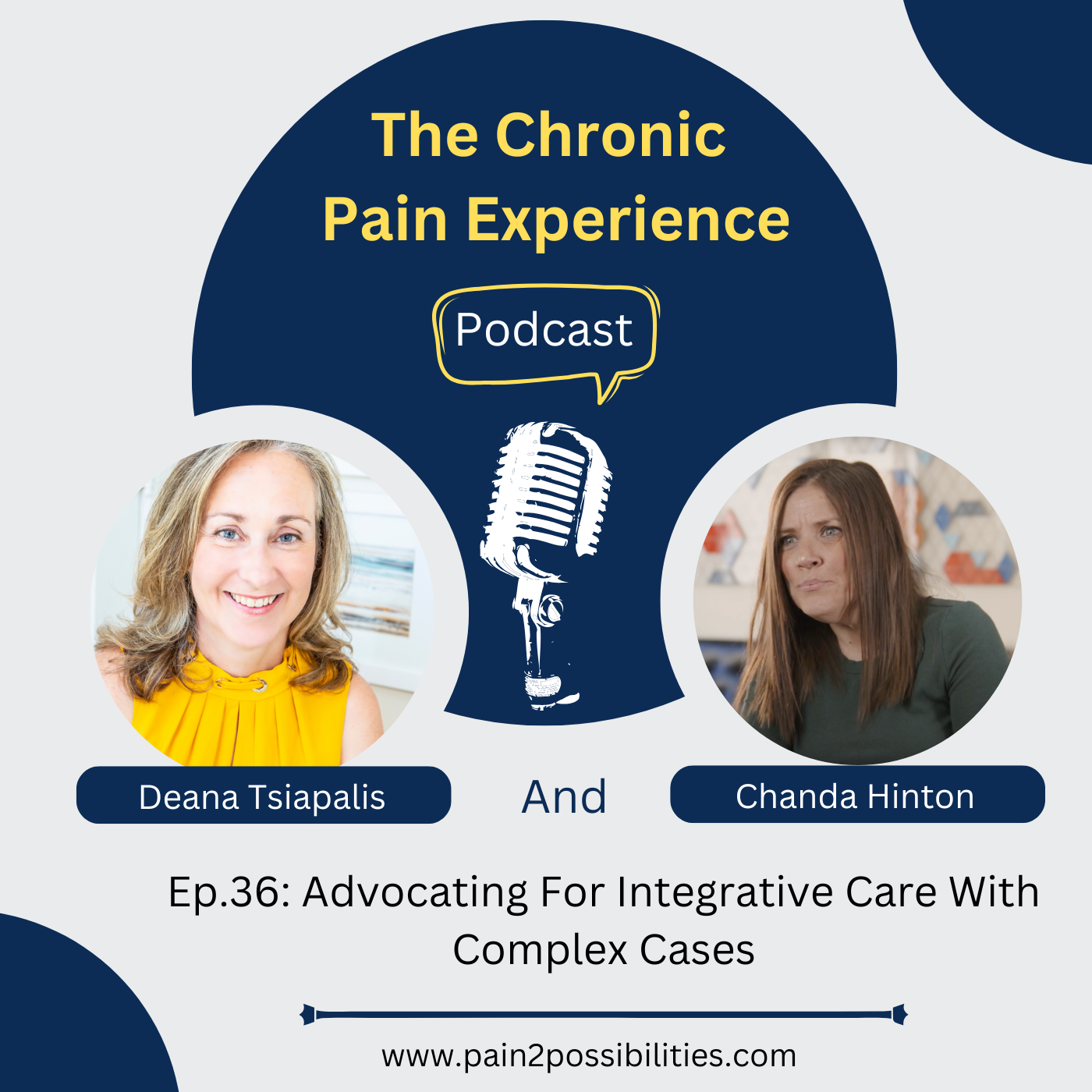 Advocating For Integrative Care With Complex Cases | After a catastrophic injury we rely on the brilliance of our allopathic model. When the condition becomes chronic or in the case of a life long disability, our allopathic model falls short. Join Chanda Hinton and myself as we discuss the Chanda Center in Colorado and the amazing work her centre is doing to make integrative care more accessible to those living with spinal injuries, Multiple Sclerosis, chronic conditions and so much more! You can learn more about Chanda and all the amazing work she is doing at chandacenter.org. Find our free resources:Click HERE  for more free resources or to join our community exclusively for chronic pain warriors. You can also rate, review, & follow on Apple Podcasts. “I love Deana’s message inside The Chronic Pain Experience Podcast” <– If that sounds like you, please consider rating and reviewing my show! This helps me support more people — just like you — move toward a life well lived despite the pain. Click here, scroll to the bottom, tap to rate with five stars, and select “Write a Review.” Then be sure to let me know what you loved most about the episode!Have your say! Complete our brief (3 min) survey to help me improve our growing podcast! You can do so HERE. | — | ||||||
| 9/3/24 |  The Chronic Pain Project – Illuminating The Invisible | Chronic Headache & Migraine, Alexandria Levin Living with the invisible reality of chronic pain is a challenge many struggle to articulate. Janna Kimel and her team at The Chronic Pain Project are amplifying these voices, using art and storytelling to bring the hidden stories of chronic pain to light. This powerful journey offers deep insights, not just for those enduring the pain, but also for those who wish to understand it on a more profound level. For more information, visit www.chronicpainproject.org. Find our free resourcesLooking for more free resources? Click the link to join our unique free community exclusively for chronic pain warriors, access our sought after ‘A chronic pain warriors guide to better Doctor’s visits’ and more by clicking HERE.Rate, Review, & Follow on Apple Podcasts“I love Deana’s message inside The Chronic Pain Experience Podcast” <– If that sounds like you, please consider rating and reviewing my show! This helps me support more people — just like you — move toward a life well lived despite the pain. Click here, scroll to the bottom, tap to rate with five stars, and select “Write a Review.” Then be sure to let me know what you loved most about the episode!Have your say! Complete our brief (3 min) survey to help me improve our growing podcast! You can do so HERE. | — | ||||||
Want analysis for the episodes below?Free for Pro Submit a request, we'll have your selected episodes analyzed within an hour. Free, at no cost to you, for Pro users. | |||||||||
| 6/13/24 |  Chronic Pain Care Is Broken | In this episode I discuss how our current model of chronic pain care is struggling to keep up with the new science of pain. Where chronic pain warriors are stuck in a model of care that is outdated and ineffective for chronic pain specifically (but great for acute care). From the lack of mandatory chronic pain curriculum for our physicians to insurance policies locked on the old science of pain, we have some work to do. Find our free resources:Looking for more free resources? Click the link to join our unique free community exclusively for chronic pain warriors, access our sought after ‘A chronic pain warriors guide to better Doctor’s visits’ and more by clicking HERE. Rate, Review, & Follow on Apple Podcasts“I love Deana’s message inside The Chronic Pain Experience Podcast” <– If that sounds like you, please consider rating and reviewing my show! This helps me support more people — just like you — move toward a life well lived despite the pain. Click here, scroll to the bottom, tap to rate with five stars, and select “Write a Review.” Then be sure to let me know what you loved most about the episode! Have your say Complete our brief (3 min) survey to help me improve our growing podcast! You can do so HERE. | — | ||||||
| 4/19/24 | Chronic Pain – You Are Not Broken | Ecology concept. Rising sprout on dry ground. Life with chronic pain often leads to a rabbit hole of seeking new treatments, new doctors and any sense of hope that life will get better. Live with pain long enough and that rabbit hole becomes deep and wide, where the belief of self and of your capabilities diminishes..to the point of believing that you and the body you live in, are truly broken. In this episode I am joined by Chana Studley to discuss some key pain facts related to improving pain: A) All injuries healB) We live in a thought created world 100% of the time, andC) We don’t need to do anything to fix our thinking You are not broken and you are innately proficient in changing your pain you just need a little guidance to help get you there. Next steps: Connect with me for a free 20 minute exploration of what you’re doing right now and what next steps could be by clicking HERE. Join our free community exclusively for chronic pain warriors (for warriors by warriors) by clicking HERE. If you enjoyed this podcast, please consider leaving a 5 star review on Apple Podcasts by clicking HERE (it would help spread the message to those who could really use it!). | — | ||||||
| 3/11/24 |  Chronic Pain, Touch Starvation & The Nervous System | Isolation that comes from Chronic pain can come in different forms such as isolation from others, disconnectedness from ourselves and touch starvation. In this episode I sit down with Kat Anna to talk about the biological, psychological and social implications of touch starvation, chronic pain and it’s impact on the nervous system. More importantly we discuss the important work to help you move through it all. Touch releases oxytocin which helps to ease us into more of a relaxed state which ultimately helps to bring us out of fight/flight or freeze, block the pain signals thereby helping you to manage the pain. Visit this link for free content and to join our amazing free community for those living with pain 👉 linktr.ee/pain2possibilities. | — | ||||||
| 2/28/24 |  Chronic Pain And Community Breaking Down The Isolation | Living with chronic pain can often be an isolating journey, but research consistently highlights the transformative power of community in improving the quality of life for individuals facing this challenge. The latest studies underscore the vital role that a culture of safety and connectedness plays in positively influencing the lived experience of chronic pain. By fostering a supportive community, we not only share the weight of our individual struggles but also amplify our collective strength. The sense of belonging and understanding within a community can significantly reduce feelings of isolation, anxiety, and depression associated with chronic pain. Creating a culture of safety within this community is paramount. It provides a space where individuals can openly express their challenges, triumphs, and vulnerabilities without judgment. This culture of safety becomes a foundation for trust, empathy, and collaboration, essential elements in navigating the complexities of chronic pain. Join Our Free Community If you’d like to join us inside our Free Cwtch community, simply click HERE to be taken to the ‘Heartbeat Chat’ App. Rate, Review, & Follow on Apple Podcasts “I love Deana’s message inside The Chronic Pain Experience Podcast” <– If that sounds like you, please consider rating and reviewing my show! This helps me support more people — just like you — move toward a life well lived despite the pain. Click here, scroll to the bottom, tap to rate with five stars, and select “Write a Review.” Then be sure to let me know what you loved most about the episode! If you’d like a copy of our FREE Chronic pain warrior’s guide to better doctor appointments click HERE. Have your say! Complete our brief (3 min) survey to help me improve our growing podcast! You can do so HERE. | — | ||||||
| 2/4/24 | Opioid Induced Constipation – The Stigma And The Solutions | Opioid induced constipation coupled with chronic pain can make life both unbearable and unpredictable. Join me as I sit down with Nicole Hemmenway from the Us Pain Foundation and Megan Filloramo to talk about opioid induced constipation, the stigma and the solutions as a part of the International Opioid Constipation Awareness Day. Join Our Free Community Looking for a unique community to create meaningful connections with others who are experiencing much the same as you are inside a safe space away from the confines of Facebook? Click HERE to join our Free Cwtch Community. Rate, Review, & Follow on Apple Podcasts “I love Deana’s message inside The Chronic Pain Experience Podcast” <– If that sounds like you, please consider rating and reviewing my show! This helps me support more people — just like you — move toward a life well lived despite the pain. Click here, scroll to the bottom, tap to rate with five stars, and select “Write a Review.” Then be sure to let me know what you loved most about the episode! If you’d like a copy of our FREE Chronic pain warrior’s guide to better doctor appointments click HERE. Have your say! Complete our brief (3 min) survey to help me improve our growing podcast! You can do so HERE. | — | ||||||
| 11/11/23 |  Grow Your Confidence Despite Pain | Ecology concept. Rising sprout on dry ground. In today’s episode we are talking about restoring confidence for a life well lived despite the relentless grip of chronic pain. This pain extends beyond the physical, shaping an enduring emotional battle. It gradually wears away at your self-esteem, causing you to question your value and your capacity to lead a gratifying life. We’ll explore how restoring your confidence can be one of the keys to unlocking a life of purpose, connection, and joy. We’ll address the common obstacles and challenges faced by those who live with pain, and we’ll challenge the beliefs that hold you back from embracing a life well lived, despite the pain. Today I am joined by a friend and former colleague, Ann Deluca, author and a Women’s Confidence Coach with a coaching certification through the Co-ActiveTraining Institute (CTI), a Neurolinguistic Programming (NLP) Master Practitioner and Certified Resilience Coach with The Leadership Wellness Group. If you would like more information about what we do at Pain 2 Possibilities and The Change Pain Academy, you can learn more HERE. If you’d like a copy of our FREE Chronic pain warrior’s guide to better doctor appointments click HERE. Have your say! Complete our brief (3 min) survey to help me improve our growing podcast! You can do so HERE. | — | ||||||
| 10/11/23 |  Reframing The Pain Narrative | Pain is a universal human experience, whether it’s physical, emotional, or social. It can be all-encompassing, overwhelming, and at times, seem insurmountable often leading to a narrative of suffering. But what if we could change the narrative on how we perceive pain? Pain Research and countless stories from individuals who have faced extraordinary challenges, battled pain in its many forms, and emerged on the other side is showing us that perspective matters. In this episode, I’m joined by Fraser Brown, a chronic pain warrior, podcaster, and advocate. Together, we’ll explore Fraser’s journey through pain and how he maintains a resilient and positive outlook as a part of his pain management strategy. Rate, Review, & Follow on Apple Podcasts “I love The Chronic Pain Experience Podcast” <– If that sounds like you, please consider rating and reviewing my show! This helps me support more people — just like you — move toward living well alongside pain rather than under it’s crushing weight. Click here, scroll to the bottom, tap to rate with five stars, and select “Write a Review.” Then be sure to let me know what you loved most about the episode! You can also leave your comments about our podcast HERE. Your anonymous answers will be used to make The Chronic Pain Experience podcast even better! | — | ||||||
| 9/25/23 |  Dignity In Chronic Pain Care – Valuable Lessons From Palliative | In this episode I sit down with the esteemed Dr. Harvey Chochinov to discuss dignity and person centered care for both end of life and for the lived experience with pain. Join us as we explore the human experience, the importance of perception, purpose, meaning, and hope in maintaining dignity in care. If you would like to learn more about what we do at The Change Pain Academy you can do so HERE. If you would like to access the Chronic Pain Warrior’s Guide To Better Doctors Appointments’ Click HERE for your FREE copy. And finally, have your say! Our podcast is growing and I would love to hear your input! Please complete this short questionnaire by clicking HERE. | — | ||||||
| 9/5/23 | 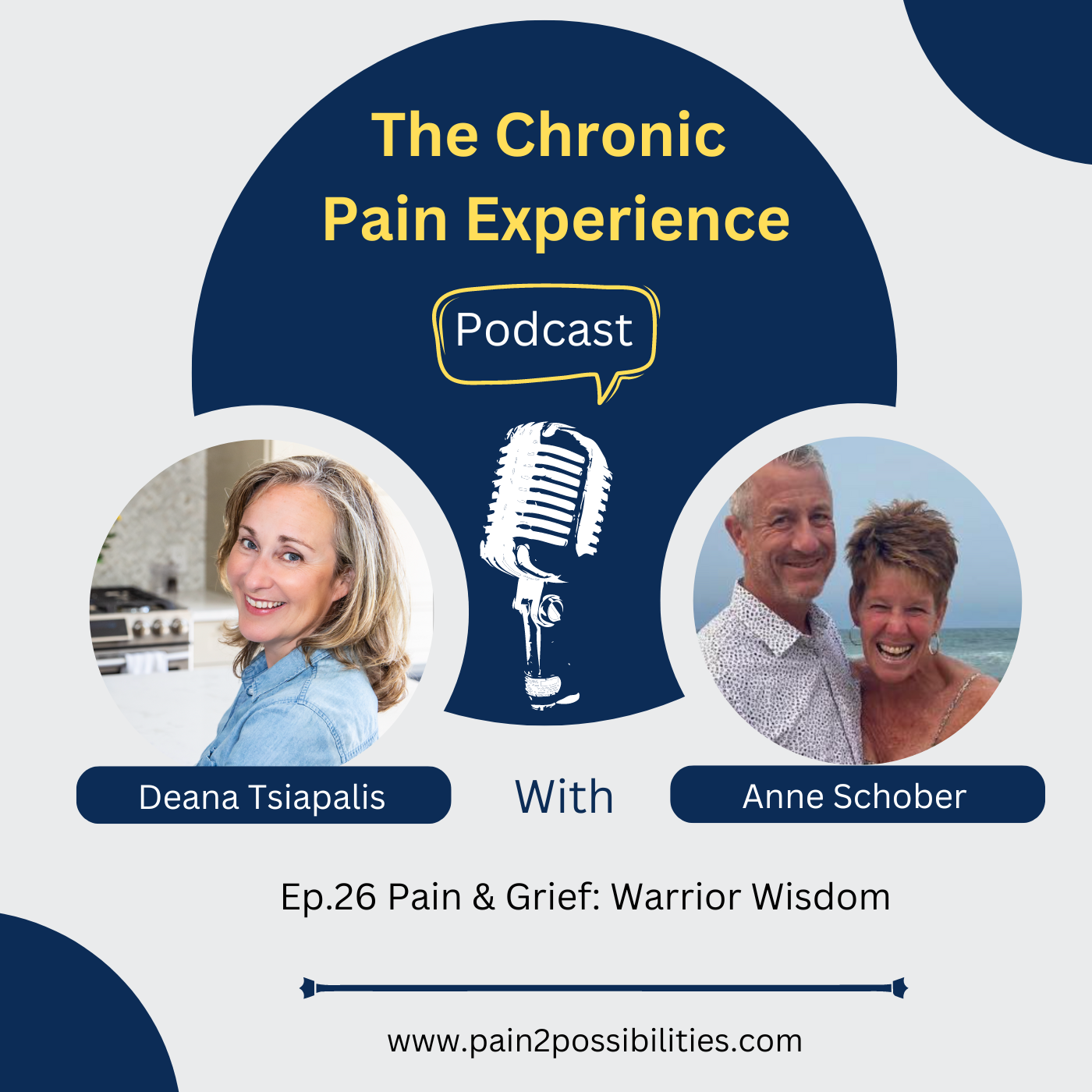 Pain And Grief – Warrior Wisdom | Join Anne Schober and myself as we discuss her latest book she co-authored called ‘Invincible – Finding the Light Beyond the Darkness of Chronic Illness.‘ We explore Anne’s experience with pain and living with an invisible illness along with her inspiration in writing the book. If you are curious to learn more about chronic pain and how to find your way back to living well despite the pain, check out how we can support you at www.pain2possibilities.com Have your say! To help this podcast grow I would love your feedback inside our short survey here. | — | ||||||
| 7/13/23 |  Pain And Executive Functioning – How To Get Things Done | A decline in our executive functioning (aka getting stuff done) is a direct result of where and how our pain is processed. In this episode Carrie Bonnett and I explore some of the tips and tools to help you get things done even when your brain and the pain are suggesting otherwise. Join us as we do a deeper dive into chronic pain science, strategies and skills to help you better manage the pain inside The Change Pain Academy. | — | ||||||
| 7/6/23 |  A Pain Warriors Perspective on Trauma & Pain | During our annual Willow Tree Summit, our chronic pain warriors sit down with me in ‘Conversations from the couch’ to talk about the information shared inside the summit. Our Summits aim to hear from a variety of experts…those who live with pain and those that serve them. | — | ||||||
| 7/5/23 | 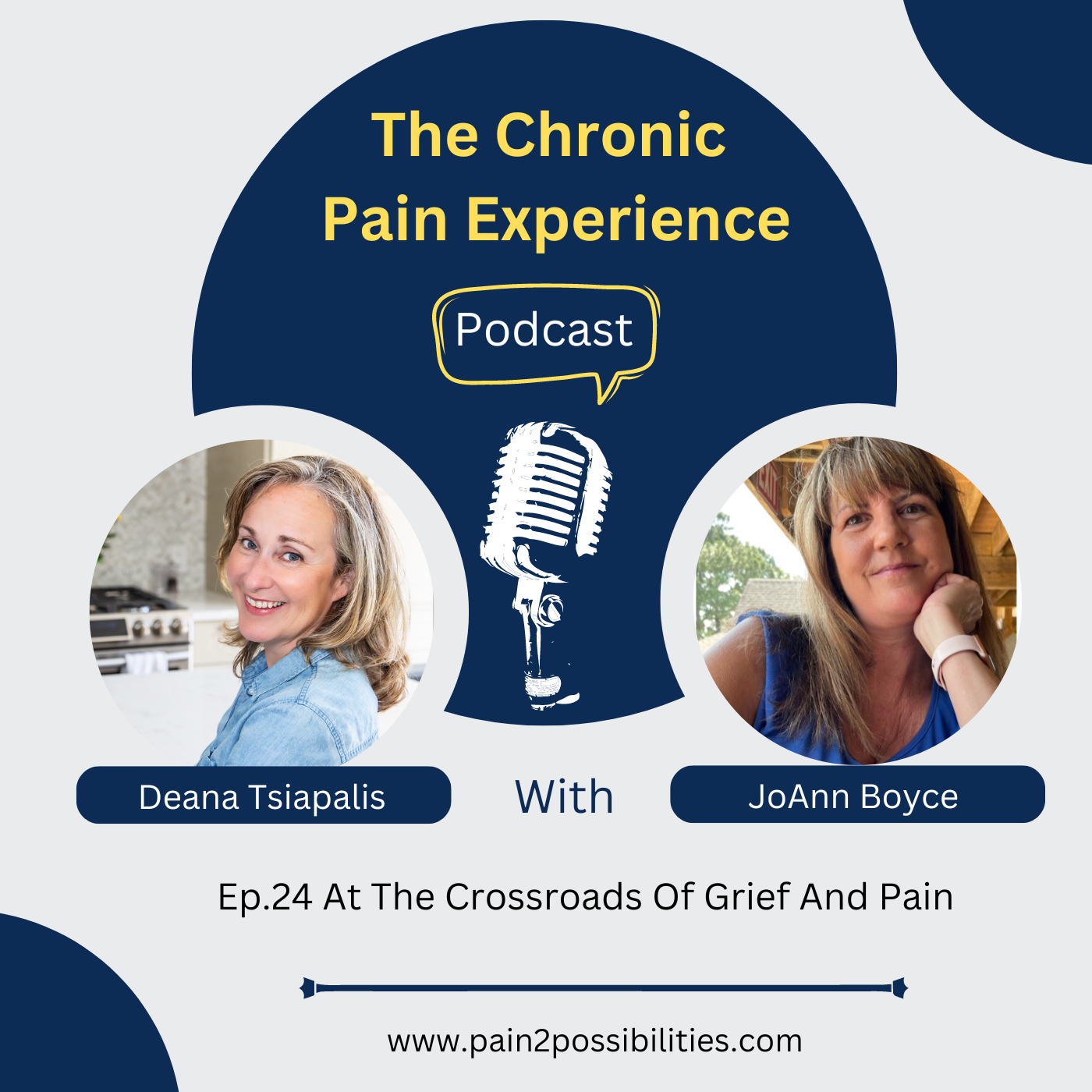 At The Crossroads Of Grief And Pain | Life with chronic pain often leaves you with a deep sense of grief though the loss of limb or the loss of the life you once had, having to relearn as you navigate the world around you while adapting to the changes you are left to deal with often with little to no guidance. In this episode we’ll delve into the key components of grief as it relates to the chronic pain experience. Join us as we explore the interconnections and commonalities between the two as we offer insights and tools to inspire those who are doing their very best to navigate the crossroads of chronic pain and grief. For more information on how we can help you address grief brought about by the loss of life you once knew, click here for more information. | — | ||||||
| 6/7/23 |  You Are A Symphony | When you get a chronic diagnosis, the positive messaging (and the hope) goes out the window and leaves the warrior feeling unsure of what’s to come. In this episode, I offer a different perspective on your capabilities and how impressive (and complicated) your body and brain truly are. | — | ||||||
| 5/18/23 |  Should I Stay Or Should I Go Now? | One of the biggest questions we get inside The Change Pain Academy is when my pain gets worse, how do I know if I should go to the Doctor or if I can work through it at home? It can be really difficult differentiating between pain from an acute injury or pain that comes from the chronic state. In this episode I give a brief explanation of the questions you can ask yourself to help determine if you stay or if you should go…to see the Doctor (thank you to The Clash for these words). | — | ||||||
| 5/16/23 | Shame In The Trauma And Chronic Pain Experience | In this episode I sit down with Kyira Wackett, Therapist and Trauma survivor, to discuss Shame and it’s impact on the lived experience of pain and trauma. This conversation comes from our Willow Tree Trauma And Chronic Pain Summit in 2023. | — | ||||||
Showing 25 of 43
Sponsor Intelligence
Sign in to see which brands sponsor this podcast, their ad offers, and promo codes.
Chart Positions
1 placement across 1 market.
Chart Positions
1 placement across 1 market.