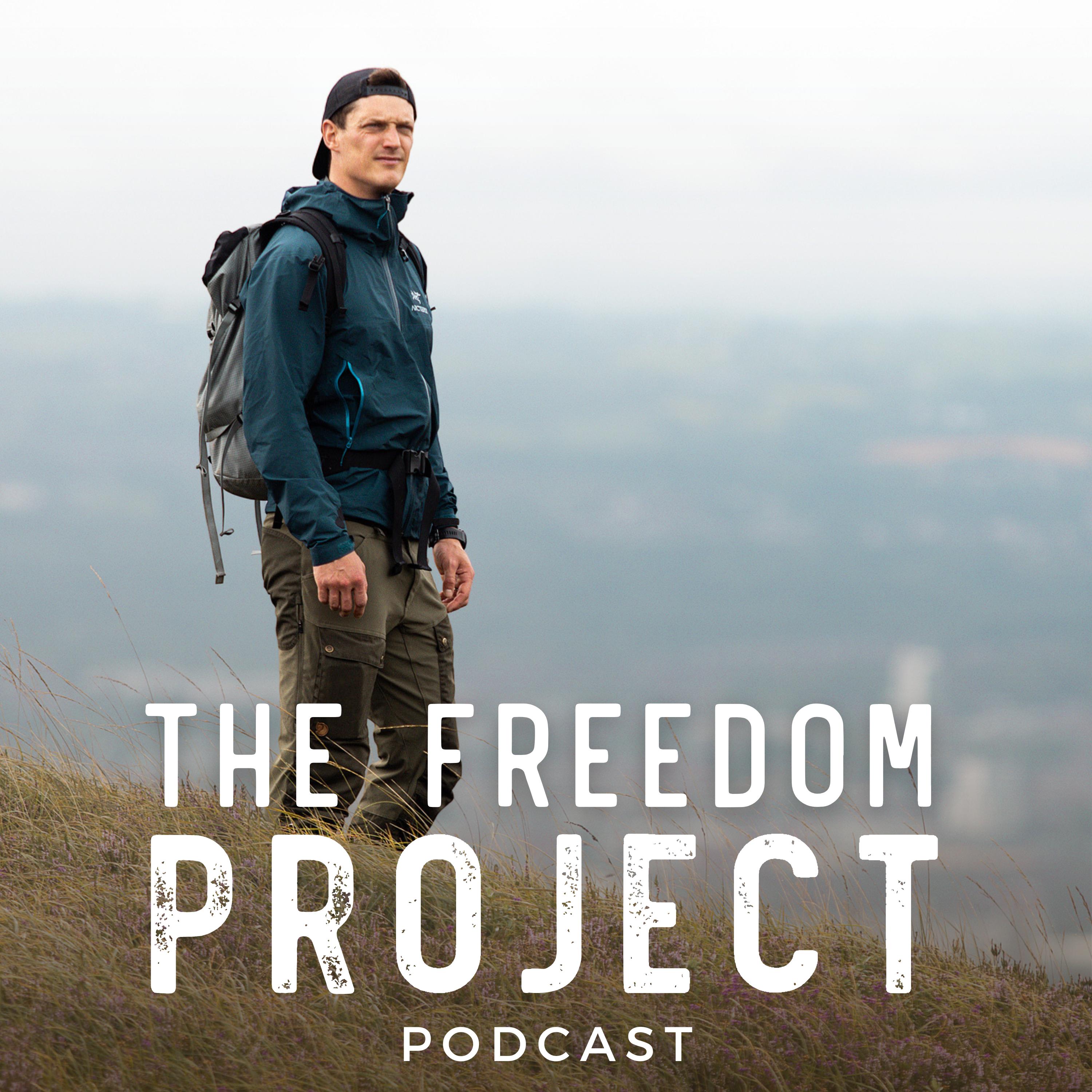
The Freedom Project
by Tom Foxley, Mental Fitness Coach for Business Owners
Is this your podcast?Insights from recent episode analysis
Audience Interest
Podcast Focus
Publishing Consistency
Platform Reach
Insights are generated by CastFox AI using publicly available data, episode content, and proprietary models.
Most discussed topics
Brands & references
Total monthly reach
Estimated from 1 chart position in 1 market.
By chart position
- 🇦🇹AT · Entrepreneurship#122500 to 3K
- Per-Episode Audience
Est. listeners per new episode within ~30 days
150 to 900🎙 Daily cadence·353 episodes·Last published 4w ago - Monthly Reach
Unique listeners across all episodes (30 days)
500 to 3K🇦🇹100% - Active Followers
Loyal subscribers who consistently listen
150 to 900
Market Insights
Platform Distribution
Reach across major podcast platforms, updated hourly
Total Followers
—
Total Plays
—
Total Reviews
—
* Data sourced directly from platform APIs and aggregated hourly across all major podcast directories.
On the show
From 14 epsHost
Recent guests
No guests detected in recent episodes.
Recent episodes
5 quotes to live your life by (if you care about rapid growth)
Aug 4, 2026
13m 39s
An AI Confession
Jul 31, 2026
8m 19s
You'll Call It Fate
Jul 21, 2026
29m 02s
Junk Volume: Why 16 Hour Days Produce 8 Hours of Work
Jul 13, 2026
7m 17s
The Business Owner Who Couldn't Stop Doing Everyone Else's Job
Jul 8, 2026
5m 33s
Social Links & Contact
Official channels & resources
Official Website
Login
RSS Feed
Login
| Date | Episode | Topics | Guests | Brands | Places | Keywords | Sponsor | Length | |
|---|---|---|---|---|---|---|---|---|---|
| 8/4/26 | 5 quotes to live your life by (if you care about rapid growth) | Today I share 5 quotes that will radically improve the quality of your life if you implement them (plus 2 bonus quotes that came into my head whilst recording) | 13m 39s | ||||||
| 7/31/26 | An AI Confession | No description provided. | 8m 19s | ||||||
| 7/21/26 | self-awarenessmental fitness+4 | — | The Freedom Project | — | self-awarenessbusiness+5 | — | 29m 02s | ||
| 7/13/26 | work efficiencymental fitness+3 | — | — | — | junk volumeproductivity+3 | — | 7m 17s | ||
| 7/8/26 | busyness as identityleadership+3 | — | — | — | busynessleadership+3 | — | 5m 33s | ||
| 5/11/26 | business problem solvingmental fitness+3 | — | mouthwashmedication+3 | — | business ownersproblem solving+3 | — | 8m 11s | ||
| 5/8/26 | resiliencemental fitness+3 | — | — | — | resiliencemental fitness+5 | — | 6m 51s | ||
| 5/6/26 | emotional intelligencedecision making+3 | — | — | Yorkshire Dales | emotionsdata+5 | — | 7m 19s | ||
| 5/4/26 | presencemental fitness+4 | — | — | — | mental fitnesspresence+5 | — | 5m 47s | ||
| 5/2/26 | mountaineering stylebusiness operators+4 | — | — | Hindu Kush | businessentrepreneurship+5 | — | 7m 45s | ||
Want analysis for the episodes below?Free for Pro Submit a request, we'll have your selected episodes analyzed within an hour. Free, at no cost to you, for Pro users. | |||||||||
| 4/30/26 | money beliefsbusiness patterns+3 | — | — | — | money mindsetbusiness owner patterns+3 | — | 5m 41s | ||
| 4/26/26 | business coachingself-knowledge+4 | — | — | — | business mentorgrowth strategies+5 | — | 5m 18s | ||
| 4/25/26 | trustdelegation+4 | — | his teama gym | — | business ownersmicromanagement+5 | — | 4m 25s | ||
| 4/24/26 | emotional capacitybusiness performance+4 | — | Royal Marines | — | heart surgeryemotional training+5 | — | 5m 25s | ||
| 4/20/26 | business developmentmental fitness+4 | — | SAS | Brecon Beacons | business ownersmental fitness+4 | — | 10m 30s | ||
| 4/17/26 | business growthpost-traumatic growth+4 | — | — | — | business ownersgrowth mechanisms+5 | — | 21m 34s | ||
| 4/15/26 | Sprinting in Every Direction and Going Nowhere — What Hustle Fragility Actually Looks Like | You're not lazy. You're not lacking effort. You're sprinting in every direction — and going nowhere. In this episode, Tom Foxley breaks down a real coaching case — a business owner who arrived at a session already running on empty. Financial pressure building in the background. A key relationship at home temporarily disconnected. Publicly called out in a group coaching environment for not having done something sooner. A staff situation unresolved. All of it hitting at once. The surface diagnosis was stress. The real diagnosis was hustle fragility — a system built for output that has no mechanism for handling load. Drawing on Nassim Taleb's anti-fragility framework and the Biosphere 2 experiment, Tom makes the case that resilience — just pushing through, staying tough, not letting it affect you — is the wrong goal. The strongest systems in nature don't survive stress. They get stronger because of it. That's what this episode is about. Not how to reduce the pressure. How to build the kind of operator who can be still inside it. Topics covered: - Why hustle builds the business and then breaks the operator - Fragile, resilient, anti-fragile — and where most business owners are actually sitting - The Biosphere 2 trees — what perfect conditions without stress actually produce - Stillness in the storm — the skill underneath every high performer who operates well under load - One question to ask this week when the pressure stacks up | 10m 24s | ||||||
| 4/13/26 | Learning to Love the Fear — What It Takes to Break Through Your Next Ceiling | A client called me a week out from launching a brand new business. Facility fitted out. Money committed. No going back. And for the first time in years, he wanted to go out and properly drink that weekend. Not to celebrate. To numb. He'd also started telling himself the outcome didn't really matter — that the money wasn't important to him. When Tom pushed on it, it collapsed immediately. It mattered enormously. The detachment was the avoidance. In this episode, Tom breaks down what happens at the threshold of every real breakthrough — and why the instinct to escape the pressure is the exact mechanism that keeps the ceiling where it is. Drawing on the Arnie pump analogy, the barbell as a metaphor for business load, and the science of voluntary exposure from OCD treatment, trauma therapy and addiction recovery, Tom makes the case that discomfort isn't the obstacle to growth. It's the condition for it. The line that underpins everything: you grow in direct proportion to the amount of uncomfortable emotion you are willing to tolerate. Topics covered:- Why business owners numb out at the threshold of their biggest moments- The barbell analogy — what to do when the load has never been heavier- Why voluntary exposure to discomfort is the growth mechanism in every domain of human performance- What learning to love the fear actually looks like in practice- One thing to do differently this week | 7m 40s | ||||||
| 3/30/26 | What Mental Fitness Actually Does to a Business — A Client's Honest Take | He knew he was the bottleneck. He could see himself drifting back to the coaching floor, sitting on decisions, staying too hands-on. He just didn't know how to stop. In this episode, Tom sits down with a gym owner he's been working with for an honest conversation about what brought him to mental performance coaching, what surprised him when he got there, and what's actually changed in his business, his leadership, and his life since. This isn't a highlight reel. It's a real account of what it looks like to go from self-doubt and anxiety-driven decision-making to clarity, capacity, and a business that's performing at its best. Including the moment he realised freedom was something he'd always wanted and never let himself admit — and how becoming a father for the first time made that impossible to ignore. Topics covered:- What was really going on before they started working together- Why the strategy was never the problem — and when he realised that- The shift from coach identity to business owner identity- What changed in his leadership, his team, and his own mental load- What he'd say to anyone who knows they're capable of more but can't access it | 16m 13s | ||||||
| 3/23/26 | Why Resilience Isn't Enough — The Case for Becoming Anti-Fragile | Most business owners think resilience is the goal. It isn't. In this episode, Tom Foxley opens with a story from the Biosphere 2 project in 1990s Arizona — a sealed, controlled environment designed to create perfect conditions for growth. The trees grew faster than anything in the wild. They also fell over before reaching maturity. The reason: no wind. No stress. No stress wood. Without resistance, the trees never developed the structural density they needed to stand on their own. Drawing on Nassim Taleb's three-level framework — fragile, resilient, anti-fragile — Tom makes the case that the business owners who plateau aren't the ones who face too much stress. They're the ones who've spent years trying to insulate themselves from it. Resilience means you can absorb the hit. Anti-fragility means the hit makes you stronger. That's the goal — and it requires a fundamentally different relationship with hardship, pressure, and discomfort. Topics covered:- The Biosphere 2 experiment and what it reveals about performance under pressure- Fragile vs resilient vs anti-fragile — and why most owners are stuck at level two- Why stress is not the enemy of growth — it's the mechanism of it- What dosing yourself with the right stress actually looks like- One question to ask yourself this week | 5m 42s | ||||||
| 3/18/26 | Dan Holder on The Flexible Mindset: Why Mental Toughness Is the Wrong Goal | Most high performers are chasing the wrong thing. Not more discipline. Not a tougher mindset. Dan Holder — Royal Marines veteran, Bronze Star recipient, Arctic Spine finisher — would argue the thing that keeps you going isn't strength at all. It's flexibility. We cover PTSD recovery, leaving special forces, surviving extreme endurance, and why the parts of yourself you'd rather not look at are where your real capacity lives. | 57m 32s | ||||||
| 3/12/26 | The Identity That Built Your Business Is Now the Ceiling On It | Most business owners who are stuck think they have a team problem. They don't. They have an identity problem. In this episode, Tom Foxley breaks down a real coaching case — a business owner with his finger in every pie, always overworked, always the one everyone defaulted to. His team weren't taking ownership. He assumed they weren't good enough. When they looked under the hood, they found something different entirely. He was manufacturing the dependency. His need to be seen as important, competent, in control — his self-image — was the system producing the exact behaviour he resented. He'd never cut the umbilical cord, because cutting it would mean no longer being the hero. And here's the trap: it had worked. That identity — the hustler, the person who does everything, the one the business can't run without — got him to a genuinely successful level. The same identity was now the cap on everything he was trying to build next. Tom unpacks the pattern, the three-step process for catching it in real time, and the principle that runs underneath every plateau he sees in high-performing business owners: we all have a skin that once kept us safe — and at some point, we have to shed it. Topics covered:- The self-image trap and how it manufactures team dependency- Why hustle and urgency are fragility in disguise- How the same identity that builds the business becomes the ceiling on it- The snake shedding its skin — and why it's meant to be uncomfortable- One action this week: write down the identity that got you here | 7m 13s | ||||||
| 3/11/26 | Why You're Training Your Team to Underperform (And How to Stop) | Most leaders think their team has a performance problem. They don't. They have a reinforcement problem. In this episode, Tom Foxley breaks down a real coaching case — a business owner whose team kept falling short of the standards he expected. Tasks not done. Gym floor not cleaned. Google reviews not chased. And every time, he stepped in and picked up the slack. What looked like a team problem was actually a system problem. And he'd built the system. Tom unpacks the Child Effects Model — the psychological loop that explains how leadership cultures form without anyone consciously choosing them — and makes the case for why the halftime team talk style of leadership actively suppresses the performance it's trying to produce. He also shares two stories that reframe how most leaders think about recognition: one from a weightlifting gym, and one from a military stalking exercise — both of which show why public praise is one of the most underused performance tools in business. Topics covered:- The Child Effects Model — how you accidentally trained your team to underperform- Why criticism suppresses performance and praise compounds it- The shaping principle — rewarding steps toward the standard, not just the standard- Criticise privately. Praise publicly. What that actually looks like.- One thing to hand back to your team this week — and not pick back up | 10m 59s | ||||||
| 3/9/26 | The Protection Racket: Why the Part of You Avoiding Decisions Thinks It's Helping | Most business owners think indecision is a confidence problem. It isn't. In this episode, Tom Foxley breaks down a real coaching case — a business owner stalling on decisions he already knew how to make. Not because he lacked knowledge. Not because the decisions were unclear. But because a part of him was actively blocking action to protect something more important to it than progress: his image. Knowledgeable. Trustworthy. A leader people respect. That's what it was trying to preserve. And its logic was airtight — if you make a wrong call, people see you differently. So don't make the call. The cruel irony: by protecting the image of a decisive leader, it was making him less of one. Tom unpacks the psychological mechanism underneath chronic indecision, the hidden belief that keeps high performers paralysed, and the two tools he used in the session to move from stalling to a clear decision in real time — including Fear Setting and the Decision Journal. Topics covered:- The protection mechanism underneath indecision — and why it made sense once- The belief "I need to feel confident to decide well" — and why it's backwards- Fear Setting — how to make a clear call when you're stuck in your head- The Decision Journal — building the track record that teaches you to trust yourself- One daily rep to start building the decisiveness muscle | 8m 48s | ||||||
| 3/6/26 | The Identity Ceiling: Why the Thing That Built Your Business Is Now Holding It Back | Most business owners assume plateaus are strategy problems. Wrong market. Wrong model. Wrong team. Wrong timing. But the most common plateau Tom Foxley sees in high-performing business owners has nothing to do with strategy. It's an identity problem — and it's one of the hardest to see, because the identity causing the ceiling is the same one that built the business in the first place. In this episode, Tom breaks down a real coaching case — a business owner coming off his best month ever, who kept finding himself drawn back to the work he'd built his identity around, even as the business needed something different from him entirely. The craftsman who needs to become the CEO. The coach who needs to become the leader. The expert who needs to step back and orchestrate instead of play. It's not a promotion. It's a death and a rebirth. And most people avoid it. Tom unpacks the three layers underneath the pattern, introduces a research-backed tool for navigating identity-level transitions, and closes with the one question every business owner needs to sit with when growth stalls. Topics covered: - Why identity plateaus are more stubborn than strategy plateaus - The hidden grief underneath every major business transition - The military 30,000 foot view — leading from elevation, not from the weeds - Expressive writing — what it is, why it works, and when to use it - One action this week to start identifying your own ceiling | 11m 01s | ||||||
Showing 25 of 368
Pitch Fit is a Pro feature
See how bookable this show is for guests, which brands already advertise, the per-episode ad value, and the best-fit guest and sponsor profile. The numbers are blurred on the free plan.
How readily this show books outside guests like you.
How proven this show is for host-read sponsorships.
For Guests
ProFor Advertisers
ProUpgrade to Pro to unlock guest cadence, sponsor categories, fit scores, and per-episode ad value for this show.
Chart history for The Freedom Project
Peaked at #122 in AT, currently #122 in AT.
| Market | Genre | Peak | Current | Trend |
|---|---|---|---|---|
| AT | — | #122 | #122 | — |
Chart Positions
1 placement across 1 market.
Chart Positions
1 placement across 1 market.