
The Healthcare Policy Podcast ® Produced by David Introcaso
by David Introcaso, Ph.D.
Is this your podcast?Insights from recent episode analysis
Audience Interest
Podcast Focus
Publishing Consistency
Platform Reach
Insights are generated by CastFox AI using publicly available data, episode content, and proprietary models.
Most discussed topics
Brands & references
Est. Listeners
Insufficient chart data. Estimates will improve as the show charts.
- Per-Episode Audience
Est. listeners per new episode within ~30 days
N/A🎙 Weekly cadence·333 episodes·Last published 2w ago - Monthly Reach
Unique listeners across all episodes (30 days)
N/A - Active Followers
Loyal subscribers who consistently listen
N/A
Market Insights
Platform Distribution
Reach across major podcast platforms, updated hourly
Total Followers
—
Total Plays
—
Total Reviews
—
* Data sourced directly from platform APIs and aggregated hourly across all major podcast directories.
On the show
From 14 epsHosts
Recent guests
Recent episodes
Ms. Jessica Forden Discusses Dr. Teresa Ghilarducci's Recently-Published Book, "Work, Retire, Repeat, The Uncertainty of Retirement in the New Economy"
Jun 6, 2026
41m 41s
Tufts Professor William Masters Discusses Food Affordability and Food Production Stability in the Age of Climate Denial
May 12, 2026
40m 22s
Mr. Robert Andrews Discusses Self-Insured Employer Health Plan Efforts to Address Healthcare Affordability
May 7, 2026
36m 24s
Mike Meno Discusses the Recently-Introduced Senate "Stop Climate Shakedowns Act"
Apr 30, 2026
33m 30s
Dr. Adam Cunningham Discusses Medical Tourism
Apr 7, 2026
41m 38s
Social Links & Contact
Official channels & resources
Official Website
Login
RSS Feed
Login
| Date | Episode | Topics | Guests | Brands | Places | Keywords | Sponsor | Length | |
|---|---|---|---|---|---|---|---|---|---|
| 6/6/26 |  Ms. Jessica Forden Discusses Dr. Teresa Ghilarducci's Recently-Published Book, "Work, Retire, Repeat, The Uncertainty of Retirement in the New Economy"✨ | healthcare policyretirement+4 | Jessica Forden | New SchoolSchwartz Center for Economic Policy Analysis+3 | — | retirementhealthcare+5 | — | 41m 41s | |
| 5/12/26 |  Tufts Professor William Masters Discusses Food Affordability and Food Production Stability in the Age of Climate Denial✨ | food affordabilityfood production stability+4 | William Masters | SNAPFriedman School of Nutrition Science and Policy+2 | Iran | nutritionpublic health+6 | — | 40m 22s | |
| 5/7/26 |  Mr. Robert Andrews Discusses Self-Insured Employer Health Plan Efforts to Address Healthcare Affordability✨ | healthcare affordabilityself-insured employer health plans+5 | Mr. Robert Andrews | Health Transformation AllianceAmerican Express+3 | United States | healthcare costsinsurance premiums+6 | — | 36m 24s | |
| 4/30/26 |  Mike Meno Discusses the Recently-Introduced Senate "Stop Climate Shakedowns Act"✨ | climate changelegislation+4 | Mike Meno | The Center for Climate IntegrityHeritage Foundation+1 | Texas | climate liabilityStop Climate Shakedown Act+4 | — | 33m 30s | |
| 4/7/26 |  Dr. Adam Cunningham Discusses Medical Tourism✨ | medical tourismhealthcare affordability+3 | Dr. Adam Cunningham | Princeton | United States | medical tourismhealthcare costs+5 | — | 41m 38s | |
| 3/7/26 |  Georgetown's Professor Katie Keith Unpacks HHS's Recent Proposed Affordable Care Act Rule✨ | Affordable Care Acthealth policy+3 | Katie Keith | GeorgetownHHS+2 | — | Affordable Care ActHHS+4 | — | 39m 36s | |
| 3/3/26 |  Professor Shannon Mussett Discusses Entropic Philosophy's Relevance to Our Health and Health Care✨ | entropic philosophyhealthcare industry+4 | Shannon Mussett | US healthcareMedicare+3 | United States | healthcareentropic philosophy+5 | — | 40m 55s | |
| 2/21/26 |  Attorney Alissa Smith Discusses Delivering Healthcare in the Face of (ICE) Immigration Enforcement✨ | immigration enforcementhealthcare access+4 | Alissa Smith | KaiserJAMA+1 | MinneapolisUnited States | ICEhealthcare+7 | — | 27m 46s | |
| 1/27/26 |  Resources for the Future Senior Fellow (and Former EPA Official) Dr. Bryan Hubbell Discusses the EPA's Assault on Clean Air✨ | environmental policygreenhouse gas regulations+4 | Dr. Bryan Hubbell | EPASabin Center on Climate Change Law+4 | United States | EPAgreenhouse gases+6 | — | 37m 21s | |
| 1/13/26 |  Prof. John Abraham Discusses the Ongoing and Outrageous Rise in Ocean Heat Content✨ | ocean heat contentclimate change+4 | John Abraham | University of St. ThomasAdvances in Atmospheric Sciences | — | ocean heat contentclimate change+5 | — | 38m 02s | |
Want analysis for the episodes below?Free for Pro Submit a request, we'll have your selected episodes analyzed within an hour. Free, at no cost to you, for Pro users. | |||||||||
| 12/4/25 |  Child Psychiatrist Frank Putnam Discusses His Soon-To-Be-Published book, "Old Before Their Time, A Scientific Life Investigating How Maltreatment Harms Children and the Adults They Become"✨ | childhood sexual abusemental health+4 | Frank Putnam | Department of JusticeOffice of Violence Against Women+2 | United StatesNorth Carolina | child abusemental illness+5 | — | 40m 42s | |
| 11/25/25 |  Harvard Professor Eram Alam Discusses Her Just-Published Book, "The Care of Foreigners, How Immigrant Physicians Changed US Healthcare"✨ | physician shortageimmigrant physicians+4 | Eram Alam | AMAHRSA+1 | United StatesSoutheast Asia+1 | physician workforceforeign medical graduates+5 | — | 34m 32s | |
| 11/18/25 |  Georgetown Professor Linda Blumberg Discusses Commercial Health Insurance "Middlemen"✨ | health insurancethird-party administrators+4 | Linda Blumberg | Georgetown Center for Health Insurance ReformCHIR+2 | — | health insurancemiddlemen+5 | — | 43m 09s | |
| 11/6/25 |  Prof. Troy Brennan Discusses His Just-Published, "Wonderful and Broken, The Complex Reality of Primary Care in the US"✨ | primary carehealthcare access+4 | Prof. Troy Brennan | National Academy of MedicineHRSA+2 | United States | primary carehealthcare equity+5 | — | 40m 53s | |
| 10/22/25 |  Dr. Sachin Jain Discusses Ethical Erosion in Healthcare | Because healthcare today can be increasingly defined as commodified, expedient, financialized, myopic, reductionist and failing to transcend politics, the question of healthcare’s ethics or the roll ethics plays should play is increasingly begged. For example, last October Health Affairs launched an “Ethics and Health Systems Change” series that to date has simply complained about private equity and corporate medicine, federal immigration and gender care policies and de-professionalization. What fidelity does healthcare have to normative ethics when, for example, 27 million Americans and counting are uninsured, over 100 million lack a primary care provider and over 90 million cannot afford care if they needed today. Dr. Jain, President and CEO of the SCAN Group and SCAN Health Plan, discusses the causes of healthcare’s ethical erosion and how begged ethical issues or questions can be addressed. The two Forbes articles authored by Dr Jain and discussed during this interview are at: https://www.forbes.com/sites/sachinjain/2025/09/22/ethical-erosion-how-good-people-lose-their-way-in-healthcare/ and https://www.forbes.com/sites/sachinjain/2025/01/21/who-me-ethical-erosion-and-the-deafening-silence-of-americas-healthcare-leaders/. This is a public episode. If you would like to discuss this with other subscribers or get access to bonus episodes, visit www.thehealthcarepolicypodcast.com | 33m 26s | ||||||
| 10/18/25 |  Drs. Michael Liu and Rishi Wadhera Discuss CMS's WISeR Medicare Demonstration | This past summer CMS, more specifically CMMI, announced a six-year Medicare Part A demonstration that would require hospitals in six states to submit claims for prior authorization (PA) approval by non-medical, CMS-contracted, 3rd party entities using enhanced technologies, i.e., AI, for 17 medical items and services. Private/commercial Medicare or Part C Medicare Advantage plans have for years extensively used PAs though data suggests Medicare Advantage PA use has been excessive, e.g., a very high percentage of PA denials are reversed upon appeal) and widely viewed as a tool to enhance profit taking. CMMI-contracted tech/AI companies will be compensated based on a share the money saved from PAs contractors’ deny though subject to meeting quality criteria. The WISeR demo has attached a fair amount of criticism, e.g., 12 Senate Democrats and 17 House Democrats each wrote letters to HHS/CMMI noting their concerns that include the demo will present patient roadblocks, cause some patients to abandon care, risk denying necessary care, inflict substantial administrative burden on clinicians, perversely incent AI contractors and they argued Americans do not want AI involved in their healthcare decisions. The July 1 Federal Register WISeR notice is at: https://www.govinfo.gov/content/pkg/FR-2025-07-01/pdf/2025-12195.pdf.The CMS/CMMI WISeR website is at: https://www.cms.gov/priorities/innovation/innovation-models/wiser.Liu and Wadhera’s NEJM Perspective essay re: the WISeR demo is at: https://www.nejm.org/doi/abs/10.1056/NEJMp2510451. Don Berwick and Andrea Ducas’s STAT opinion essay re: the WISeR demo is at: https://www.statnews.com/2025/07/25/medicare-advantage-prior-authorization-cms-innovation-center-wiser-project/. This is a public episode. If you would like to discuss this with other subscribers or get access to bonus episodes, visit www.thehealthcarepolicypodcast.com | 37m 48s | ||||||
| 10/16/25 |  Mr. Michael Millenson Discusses the (Tragic) State of Patient Safety | The World Health Organization (WHO) defines patient safety as “a framework of organized activities to reduce risks, lower the occurrence of avoidable harm, make errors less likely, and minimize their impact when they occur.” Over this past summer the HHS Office of the Inspector General (OIG) published three patient-safety reports. (Since 2008 the OIG has published at least 24 related studies.) One published in July found hospitals failed to capture half of harm events that occurred among hospitalized Medicare patients, few were investigated and even fewer led to hospitals making PS improvements. These findings were sadly unsurprising since the OIG previously found in 2008 that 27% of Medicare patients experienced harm during hospital stays, a decade later, or in 2018, still 25% experienced harm. In an July 24 OIG letter to CMS Administrator, Dr. Mehmet Oz, the OIG noted in part that while CMS and states require hospitals to publicly report just 15 of 94 harm events, hospitals reported only 5 of 15, or 5% of all 94 harm events. HHS has yet to publicly respond to the OIG’s recent reports much less recognize them. Dedicated podcast listeners may recall I’ve previously discussed patient safety in 2015, 2017 and in 2020.A summary of the HHS OIG’s adverse events/patient safety work with a list of its publications can be found at: https://oig.hhs.gov/reports/featured/adverse-events/. Information regarding Mr. Millenson is at: https://millenson.com/.Mr. Millenson’s recent medical errors essay in Forbes is at: https://www.forbes.com/sites/michaelmillenson/2025/09/12/lessons-from-the-medical-error-that-orphaned-a-cabinet-secretary/. This is a public episode. If you would like to discuss this with other subscribers or get access to bonus episodes, visit www.thehealthcarepolicypodcast.com | 40m 38s | ||||||
| 10/7/25 |  Prof. Elizabeth Wrigley-Field Discusses Excess Deaths | Recently published research by Prof. Wrigley-Field and her colleagues found that between 1980 and 2023 the total number of US excess deaths equaled 14.7 million. Between 2010 and 2023 excess deaths ranged between 120% and 130% higher compared to other HIC (High Income Countries). Possibly more disturbing the authors found US excess deaths were moreover among working-age adults, for example, in 2023 excess deaths among US adults aged 25-44 were 2.6 times higher than in other HIC. That same year excess deaths remarkably made up almost 23% of all deaths and 46% of excess deaths were among people younger than 65 years. The causes of excess deaths since 1980 have on balance largely been the result of preventable cardiometabolic causes and drug overdoses. About these findings, Prof Wrigley-Field’s coauthor, Prof. Jacob Bor, commented, “if the US simply performed at the average of our peers, one out of every two US deaths under 65 years is likely avoidable. Our failure to address this is a national scandal.” Prof. Wrigley-Fields writings discussed during this podcast are at: https://jamanetwork.com/journals/jama-health-forum/fullarticle/2834281https://jamanetwork.com/journals/jamanetworkopen/fullarticle/2829783https://www.annualreviews.org/content/journals/10.1146/annurev-soc-031021-105213 This is a public episode. If you would like to discuss this with other subscribers or get access to bonus episodes, visit www.thehealthcarepolicypodcast.com | 36m 57s | ||||||
| 9/2/25 | 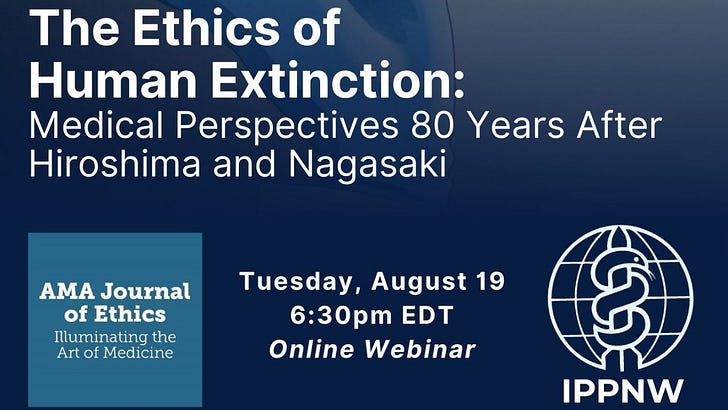 Devin Kellis Argues for Extinction Medicine as a Medical Specialty | The greatest threat to human health is us. Humans are the only species capable of self-annihilation. For at least the past 30 years it has been acknowledged that the earth is presently experiencing its sixth mass extinction entirely caused by anthropogenic GHG emissions. Per research published in 2023, current generic extinction rates are 35 times higher than expected background rates prevailing in the last million years under the absence of human impacts. Research published in Proceedings, the National Academy of Sciences (PNAS) in 2022 concluded, “There is ample evidence that climate change could be catastrophic. We could enter such “endgames” at even modest levels of warming.” “Facing a future of accelerating climate change while blind to worst-case scenarios is naïve risk management at best and fatally foolish at worst.”Mr. Kellis’s August article (and related podcast), “Why Should Extinction Medicine Be a Specialty?” appears in the recent AMA Journal of Ethics special issue on extinction medicine, at: https://journalofethics.ama-assn.org/issue/existential-health-care-ethicsThe recent SSRN pre-print on extinction medicine is at: https://papers.ssrn.com/sol3/papers.cfm?abstract_id=5109482The recent IPPNW-AMA Journal of Ethics webinar on the ethics of human extinctions: To sign up for the Extinction Medicine Reading Group, a new IPPNW Medical Student Movement initiative that will promote international, intergenerational, and interdisciplinary discussion on writings on the science, ethics, and medicalization of human extinction, go to: https://forms.gle/pLspc5URhu9VcuS37Mr. Kellis can be reached via : www.devinkellis.com This is a public episode. If you would like to discuss this with other subscribers or get access to bonus episodes, visit www.thehealthcarepolicypodcast.com | 46m 31s | ||||||
| 8/20/25 |  The Sabin Climate Law Center's Dr. Maria Antonia Tigre Discusses the ICJ's Recent Climate Advisory Opinion | On July 23rd the United Nations’ International Court of Justice (ICJ) announced its highly-anticipated climate advisory opinion. The opinion represents a watershed moment because the court ruled states or countries are accountable for contributing to anthropogenic warming or for their GHG emissions. Consequently, the ICJ concluded countries are legally obligated to ensure the climate is protected from GHG emission, if not, countries - and private actors such as healthcare - can be held culpable for failing to do so. Though an advisory opinion the ICJ ruling has significant implications for US healthcare largely because US healthcare annually accounts for a massive amount of GHG emissions at over 600 MMT of CO2e and the federal government has neither enacted legislation nor promulgated regulations that require healthcare mitigate its GHG emissions. Not surprisingly, healthcare has ignored the 2023 UN resolution that requested the ICJ opinion and now the opinion. The ICJ opinion is at: https://www.icj-cij.org/case/187/advisory-opinionsThe Columbia University Sabin Center’s Climate Change Law Blog ICJ symposium writings are at: https://blogs.law.columbia.edu/climatechange/category/blog-series/ This is a public episode. If you would like to discuss this with other subscribers or get access to bonus episodes, visit www.thehealthcarepolicypodcast.com | 34m 53s | ||||||
| 7/17/25 |  Stanford's Mark Jacobson Discusses the Likely Climate Effects of the OBBBA & the Current Status of Renewable Energy Development | The climate crisis is not a tragedy. It’s a crime. The July 4 signing of HR1, is the latest if not the greatest climate crime considering the current state of the earth’s energy imbalance or the ever-increasing amount of atmospheric GHG emissions that trap infrared radiation (heat) causing planetary warming. It’s estimated the OBBBA will over just the next five years add an extra seven billion tons of GHG emissions into the atmosphere - equal to more than one-years’ worth of total annual US carbon emissions. While it had been projected the US would reduce GHG emissions this decade by upwards of 43%, or get close us to a 50-52% reduction to align with the 2015 Paris Accord, the OBBBA will now reduce carbon emissions this decade by just 17%. The legislation rescinds virtually all IRA renewable energy tax credits while further subsidizing fossil fuels. Prof. Jacobson’s considerable contribution to understanding and addressing climate breakdown can be found at: https://web.stanford.edu/group/efmh/jacobson/. Information regarding his most recent book, “No Miracles Needed” (U. of Cambridge Press, 2023), is at: https://web.stanford.edu/group/efmh/jacobson/WWSNoMN/NoMiracles.html. Prof. Jacobson’s LinkeIn page is at: https://www.linkedin.com/in/mark-jacobson-1b58b38/. This is a public episode. If you would like to discuss this with other subscribers or get access to bonus episodes, visit www.thehealthcarepolicypodcast.com | 28m 09s | ||||||
| 7/12/25 |  The Institute for New Economic Thinking's Thomas Ferguson Discusses Congressional Realities That Explain Passage of the "One Big Beautiful Bill Act" | Last week’s signing of the OBBBA serves as federal policymakers’ latest reverse Robin Hood effort, or to redistribute wealth from the poor to the rich. Per a February RAND report, over the past 50 years $79 trillion in wealth has been redistributed from the bottom 90% of Americans to the top 1%. The 2017 Trump tax cult left billionaires $6 trillion richer and the OBBBA, otherwise termed the Bill for Billionaires Act, is expected to achieve similar of not greater results largely because the number of billionaires has dramatically increased to nearly 2,000 over the past decade. The legislation is (partially) offset moreover by cutting Medicaid spending by upwards of $1 trillion that is expected to lower Medicaid enrollment by 11 million and cause 17,000 premature deaths annually. SNAP spending will be reduced $300 billion leaving three million even more hungry. The bill will add an estimated 3.8 trillion to the deficit, atop the $8.4 trillion left by the first Trump administration. Financing the deficit that approximates $1 trillion annually represents more than the DoD’s budget or money that could be spent on other things - like healthcare. Largely because of increasingly regressive tax policies and unaffordable healthcare, studies conclude the bottom 60% of US households by income are unable to achieve what is s defined as a "minimal quality of life" or one in which families can afford adequate housing, healthcare, child care and food. See these two related research efforts by Prof. Ferguson, “Political Investments” at: https://www.phenomenalworld.org/interviews/thomas-ferguson/ and Ferguson, et al., “How Much Can the US Congress Resist Political Money?” at: https://papers.ssrn.com/sol3/papers.cfm?abstract_id=3593916. This is a public episode. If you would like to discuss this with other subscribers or get access to bonus episodes, visit www.thehealthcarepolicypodcast.com | 52m 52s | ||||||
| 6/17/25 |  The World Council of Churches' Ms. Frederique Seidel Discusses the WCC's Recently-Published Handbook, "Hope for Children Through Climate Justice, Legal Tools to Hold Financiers Accountable" | Anthropocentric warming, the greatest threat to human health and survival, disproportionately threatens children. Children pay the greatest climate penalty. Per the World Health Organization, children suffer more than 80% of climate crisis-related injuries, illnesses & deaths being more vulnerable to carbon-polluted air, extreme heat, drought and innumerable other climate-charged disasters and diseases. Nevertheless, the US healthcare accounts for an ever-increasing amount of carbon pollution and refuses to divest in fossil fuels. As for federal policymakers, the White House and Congressional Republicans remain intent on committing ecocide. To the surprise of no one, in late May Our Children’s Trust, on behalf of 22 plaintiffs age 7 to 25, sued President Trump and five administrative offices and departments arguing in part several White House Executive Orders will increase fossil fuel use and dismantle climate research, warnings and response infrastructure. The lead plaintiff in Lighthiser v Trump stated White House policy amounts to a “death sentence for my generation.” The WCC handbook available at: https://www.oikoumene.org/news/wcc-publishes-resource-on-legal-tools-for-climate-justice. The Lighthiser v Trump complaint is at: https://climatecasechart.com/case/lighthiser-v-trump/.Among related discussions, I interviewed the Michael Burger at Columbia University’s Sabin Center for Climate Change Law in May 2020 and again in June 2024 and Andrea Rodgers with Our Children’s Trust this past January. This is a public episode. If you would like to discuss this with other subscribers or get access to bonus episodes, visit www.thehealthcarepolicypodcast.com | 36m 55s | ||||||
| 5/29/25 |  Eneration's Jeff Rich and Laura Olson Discuss Their Efforts to Vastly Improve Healthcare Energy Efficiency and Sustainability | Frequent listeners of this podcast are well aware healthcare emits an immense amount of carbon pollution at over 600 million metric tons annually. This is substantially due to energy waste or inefficiency. For example, hospitals, that account roughly 35% of the industry’s GHG emissions, loses or forgoes tens billions in annual revenue or explicit and implicit lost opportunity costs. Healthcare pays in several ways for its energy inefficiency. Among other reasons, though one of the world’s most high tech sectors, healthcare still largely consumes electricity produced by burning fossil fuels. Heat-generated electricity is significantly less efficient than use of renewable energy technology that avoids converting heat to electricity or work. Renewable energy is increasingly more price efficient (that explains why 92% of new electricity produced in 2024 was via renewables). Healthcare utilization or demand is increased as a result of healthcare’s carbon pollution and hospitals already face market headwinds, moreover the fact inflation-adjusted payment rates have been stagnant to negative for several years. Information on Eneration can be found at: https://www.eneration.com This is a public episode. If you would like to discuss this with other subscribers or get access to bonus episodes, visit www.thehealthcarepolicypodcast.com | 37m 08s | ||||||
| 5/22/25 |  Stanford's Dr. Chris Callahan Discusses Attribution Science & His Recently Related Article Published in "Nature" | Due to the federal government’s ongoing failure to effectively address the climate crisis, over 50 subnational entities have been taking increasingly aggressive steps to mitigate carbon pollution. Recently, Vermont (VT) and New York (NY) passed legislation to hold the oil and gas industry financial responsible for extreme weather events supercharged by their greenhouse gas (GHG) emissions. (Eleven other states are presently working to do the same.) The VT law tallies up the financial damage and then determines proportional responsibility; NY identifies in advance a damage amount and then proportionally bills responsible fossil fuel companies. VT and NY’s legislation is based attribution science. Simply explained, the methodology attempts to measure to what extent anthropocentric warming caused by fossil fuel use of specific entities supercharges extreme weather events. Last month, Stanford’s Dr. Christopher Callahan and Dartmouth’s Dr. Justin Makin published, “Carbon Majors and the Scientific Case for Climate Liability in the journal “Nature.” The authors calculated the trillions of dollars in economic losses attributable to the extreme heat caused by emissions from individual companies or carbon majors. For example, emissions attributable to Chevron caused between $791 billion and $3.6 trillion in heat-related losses between 1991 and 2020. Drs. Callahan and Mankin’s April 24 “Nature” article is at: https://www.nature.com/articles/s41586-025-08751-3 (subscription is required).A summary of the article is freely available via “The Guardian,” at: https://www.theguardian.com/environment/2025/may/05/cost-of-emissions-from-five-major-australian-resource-companies-more-than-900bn-study-finds. Info on Dr. Callahan is at: https://profiles.stanford.edu/326897 and for Dr. Mankin, at: https://geography.dartmouth.edu/people/justin-s-mankin. This is a public episode. If you would like to discuss this with other subscribers or get access to bonus episodes, visit www.thehealthcarepolicypodcast.com | 25m 30s | ||||||
Showing 25 of 337
Pitch Fit is a Pro feature
See how bookable this show is for guests, which brands already advertise, the per-episode ad value, and the best-fit guest and sponsor profile. The numbers are blurred on the free plan.
How readily this show books outside guests like you.
How proven this show is for host-read sponsorships.
For Guests
ProFor Advertisers
ProUpgrade to Pro to unlock guest cadence, sponsor categories, fit scores, and per-episode ad value for this show.