
The Joe Polish Show
by Joe Polish
Is this your podcast?Insights from recent episode analysis
Audience Interest
Podcast Focus
Publishing Consistency
Platform Reach
Insights are generated by CastFox AI using publicly available data, episode content, and proprietary models.
Most discussed topics
Brands & references
Est. Listeners
Insufficient chart data. Estimates will improve as the show charts.
- Per-Episode Audience
Est. listeners per new episode within ~30 days
N/A🎙 ~2x weekly·57 episodes·Last published 6d ago - Monthly Reach
Unique listeners across all episodes (30 days)
N/A - Active Followers
Loyal subscribers who consistently listen
N/A
Market Insights
Platform Distribution
Reach across major podcast platforms, updated hourly
Total Followers
—
Total Plays
—
Total Reviews
—
* Data sourced directly from platform APIs and aggregated hourly across all major podcast directories.
On the show
From 10 epsHost
Recent guests
Recent episodes
Reading Predators and Becoming an Impossible Target with Tim Larkin and Joe Polish
Aug 28, 2026
Unknown duration
Why The Epoch Times Exists: Truth, Tyranny, and the Price of Telling It With Joe Polish, Rob Schneider, and Jan Jekielek
Aug 14, 2026
Unknown duration
Overdeliver: What Still Works When Everyone Has AI with Joe Polish and Brian Kurtz
Jul 31, 2026
Unknown duration
Everyday Meaning: An Addiction and Recovery Conversation with Ken Wells and Joe Polish
Jul 2, 2026
24m 31s
Sacrifice Everything: Joe Polish Interviews Rob Schneider on What Freedom Actually Costs
Jun 19, 2026
1h 02m 49s
Social Links & Contact
Official channels & resources
Official Website
Login
RSS Feed
Login
| Date | Episode | Topics | Guests | Brands | Places | Keywords | Sponsor | Length | |
|---|---|---|---|---|---|---|---|---|---|
| 8/28/26 |  Reading Predators and Becoming an Impossible Target with Tim Larkin and Joe Polish | Tim Larkin has spent more than three decades studying predators and teaching everyday people how to avoid ever needing to fight one. In this episode, he joins Joe Polish to explain why violence is rarely the answer, but when it is, it's the only answer, and how understanding the subject changes everything about how you move through the world. Here's what you're about to discover in this conversation: Why Tim held up a single car wash ticket to convince a Vegas entertainer worth $55 million that his elaborate "special forces" home invasion drill missed the real threat sitting in his wife's glove compartment. The difference between antisocial aggression (two silverback gorillas posturing for dominance) and asocial violence (a lioness in tall grass), and why confusing the two gets people hurt. Why Tim tells clients the best home security device is not a Rottweiler or a firearm, but a small dog that won't stop barking (and what a gang's own hand-drawn map of a neighborhood proved). Inside Tim's interviews with prison gang leaders from the Aryan Brotherhood to the Mexican Mafia, and the moment prison guards were caught betting on the riots they had engineered themselves. The story of a woman stalked for four days along a Phoenix canal, and the single split-second decision that saved her life when her stalker finally struck. Why Tim, a former special operations trainer, believes AI-driven job displacement may be a bigger threat to society than any physical predator, and what he just proved for $50 in AI tokens. If you'd like to join world-renowned Entrepreneurs at the next Genius Network Event or want to learn more about Genius Network, go to www.GeniusNetworkEvents.com. Show Notes Why the Pentagon's Name Change Is a Lesson in Clarity Tim explains why the shift from Department of Defense back to Department of War is not about machismo. It's about mission clarity. He argues the original 1947 rename opened the door to using the military for jobs it was never built for, comparing it to using a stick of dynamite to open a car door. Tim connects the same principle to vague LinkedIn job descriptions, where unclear language creates the same kind of dangerous confusion he sees around violence. A Boyhood Boxing Lesson From an Irish-Boston Grandfather Tim traces his fascination with violence back to his grandfather's basement in Massachusetts, where he learned to box alongside his cousins. His grandfather, whose own father had run liquor with Joe Kennedy, drew a hard line between the rules of the ring and what happens outside it. That single distinction, sport versus real injury to the human body, becomes the foundation of everything Tim later builds into Target Focus Training. The 800-Pound Gorilla Nobody Wants to Look At Tim says violence is the subject almost nobody studies until it's already too late to matter. He asks the room a simple question: who has felt the potential for violence in just the last five days? The answers surprise almost everyone. Women, he notes, pick up on danger cues in places like elevators far faster than men do, because the background threat assessment runs constantly whether people admit it or not. Antisocial Aggression vs. Asocial Violence Tim draws a hard line between antisocial aggression (the ego-driven posturing that looks like two silverback gorillas bluffing for dominance) and asocial violence (the silent predatory strike of a lioness in tall grass). Confusing the two, he says, is exactly how untrained people get hurt reacting to the wrong kind of threat. A true predator gives almost no warning and goes straight for the areas of the body that end a confrontation immediately. The Currency of Violence: What the Mafia Understands About Power Tim describes his interviews with Sammy Gravano and explains why the mob's real currency was never cash. It was the credible threat of violence. He walks through how Gravano moved from eliminating rivals during the Gotti takeover to protecting the organization's ability to make money once control was secured. Tim argues nations operate the same way, and that understanding this currency changes how you read power in any room. Inside the Minds of Prison Gang Leaders Tim has interviewed leaders from the Aryan Brotherhood, the Mexican Mafia, and the Black Guerrilla Family, and says their sophistication would unsettle most executives. He describes a gang leader locked up 23 hours a day who still runs an estimated $1 to $2 billion drug operation through nothing but disciplined communication structure. Tim tells the story of Michael Thompson, an Aryan Brotherhood founder, discovering that Folsom Prison guards were secretly betting on the riots they had engineered between rival gangs. The Vegas Entertainer's $55 Million House and a Car Wash Ticket A well-known entertainer with the most expensive house in Las Vegas once asked Tim to run a full nighttime home invasion drill with special operations veterans. Tim instead held up a small ticket from the community's car wash, printed with the man's name and address, and pointed out that most car washes are staffed by ex-felons. The security company changed its policy within days. Tim's point: expensive countermeasures mean nothing if the basic information is already sitting in a stranger's hand. The Best Home Security Device Isn't a Gun Tim's go-to recommendation for home protection is not a Rottweiler or a firearm. It's a small dog that won't stop barking. He tells the story of a home invasion crew that beat a retired judge nearly to death chasing gold that never existed. When police found the gang's hideout a week later, their hand-drawn map of the neighborhood had one thing in common across every house they avoided: a dog. The Canal Stalker A woman running the canals near her home in the Biltmore area noticed the same cyclist passing her three days in a row before he attacked on the fourth. He struck her with a spring-loaded weapon, but she threw herself into the canal, the one place he could not easily follow or escape from unnoticed. Police later confirmed he had a record and had been studying her routine, down to whether she wore headphones every single day. Slow, Accurate, Correct: The Real Secret of Elite Training Tim explains why the military's crawl-walk-run model, and the training behind fighters like Conor McGregor and Mike Tyson, all front-load slow, deliberate repetition before ever adding speed. He compares it to a golf swing: when a shot goes wrong, players slow down. They never just swing harder. Speed, Tim says, is a luxury you only earn after accuracy is locked in, whether the tool is a firearm, a joint lock, or a sensory system of the human body. The Day His Son Wanted a Comic Book Hero After a stranger flipped Tim off in traffic, his young son asked why his father, a black belt on the cover of a magazine, didn't get out and "take the guy." Tim walked his son through the real consequences: an injury, an arrest, and a night his son would spend somewhere other than home. The moment became a lesson in restraint that Tim still uses to explain the difference between what he could do and what he should do. When Restraint Turns Tragic: The Hockey Coach Story Tim recounts a Milwaukee hockey coach who tolerated an increasingly belligerent, drunk stranger for as long as he could before finally responding. A single push sent the other man down a set of concrete stairs, and he never got up. Two families lost their fathers that day over a conflict Tim says was entirely avoidable, exactly the outcome he trains people to prevent. AI, Manipulation, and the Coming Disruption Tim already ran an entire product launch, graphics and offer included, for $50 in AI tokens, work that would have cost him $10,000 to $15,000 a year earlier. He warns that mid-level, mid-management jobs are the next wave of AI displacement, and that no clear plan exists for where those workers go. He ties it back to social media's algorithm, which now amplifies outrage the same way Folsom's guards once profited from gang warfare: feeding people more of whatever keeps them reacting. Resources When Violence Is the Answer | Tim Larkin's book on recognizing the tool of violence and knowing when to use it. Survive the Unthinkable | Tim Larkin's bestselling guide to women's self-protection. Target Focus Training | Tim Larkin's self-defense training company for civilians, military, and law enforcement. Genius Network | Joe Polish's community for high-level Entrepreneurs, referenced throughout the conversation. Attend the next Genius Network Event | — | ||||||
| 8/14/26 |  Why The Epoch Times Exists: Truth, Tyranny, and the Price of Telling It With Joe Polish, Rob Schneider, and Jan Jekielek | Joe Polish sits down with actor and comedian Rob Schneider and Epoch Times senior editor Jan Jekielek for a wide-ranging conversation about how ordinary people get talked into accepting things they know are wrong. Rob and Jan trace the warning signs of propaganda, the price of telling the truth, and what it takes for a free society to hold itself together. Here's what you're about to discover in this conversation: Why Jan Jekielek says the best slaves are the ones who don't know they're enslaved, and how Communist China's decades-old playbook for creating "class enemies" explains what happened to unvaccinated Americans during COVID. The eerie Epoch Times experiment Jan describes: five simulated towns run entirely by Google, OpenAI, xAI, and Anthropic's AI, where one town collapsed into total anarchy in four days and one resident voted for her own deletion. Why Rob Schneider says attention spans have collapsed from nine seconds to 1.7 seconds in twelve years, and the half-joking advice he has for anyone worried about AI reading their eyes. What Dr. David Martin's 40/30/30 breakdown of COVID compliance reveals about mass psychology, and why Jan says the 30% who refused the shot were enough on their own to end the mandates. How Rob turns one of the most abhorrent subjects imaginable, organ harvesting in China, into a joke that actually lands (and why it only works at an Epoch Times fundraiser). What Jan learned interviewing the leaders of Poland's Solidarity movement about the exact two week window when a totalitarian regime realized it was already over. If you'd like to join world-renowned Entrepreneurs at the next Genius Network® Event, apply today for your invitation to attend at https://geniusnetwork.com. Show Notes: Mass Formation and the COVID Wake-Up Jan points to Mattias Desmet's concept of "mass formation," popularly known as mass formation psychosis, to explain how a mob mentality let large parts of the population get swept into a government and media propaganda campaign without realizing it. Referencing Dr. David Martin's breakdown, Jan lays out a rough 40/30/30 split during COVID: 15% wildly in support of lockdowns and mandates, 15% supportive but less zealous, 40% who just wanted the path of least resistance, and 30%, roughly 80 million Americans, who refused the shot outright. Jan argues that 30% refusal was enough on its own to end COVID mandates, and asks the room what let some people avoid the psychosis when so many others did not. The Scapegoating Playbook Jan traces a pattern from decades of watching Communist China: totalitarian regimes pick a group, such as landowners, and use control of the media to paint them as dangerous and worthy of contempt before seizing their property. He connects this directly to COVID, where dehumanizing language against "anti-vaxxers" followed the same script used against class enemies in China's Cultural Revolution. Jan's rule of thumb: whenever a group of people gets labeled as lesser than everyone else and worthy of contempt, that is a massive red flag that a psychological operation is underway. Rob adds that communist systems cannot admit the system itself has failed, so when the promised utopia never arrives, someone else has to be blamed, first an external enemy, then an internal one. Rising Antisemitism and October 7th Rob connects the current wave of antisemitism to Holocaust survivors passing away, arguing it is no coincidence that hatred is resurfacing as the generation that remembers it firsthand disappears. He walks through the math: if the percentage of Israelis killed on October 7th were applied to the US population, it would be the equivalent of roughly 30,000 Americans killed in 48 hours, a scale he says would provoke total retaliation if it happened here. Rob argues that no army works harder than Israel's to minimize civilian casualties, yet Israel is treated as the aggressor, a pattern he traces back centuries through recurring European pogroms. Attention Spans, AI, and the Addiction Economy Rob and Jan open by noting that the average attention span has reportedly dropped from nine seconds twelve years ago to about 1.7 seconds today, roughly that of a goldfish. Jan points out that despite this, people are still willing to sit through hour-plus, deep conversation podcasts, which he reads as a sign of real hunger for truth-seeking in a culture full of performative fakery. Rob raises a newer concern: AI systems are now reportedly trained to read eye movement to learn what holds someone's attention, and only half-jokingly suggests putting tape over the camera. Inside the Epoch Times AI Town Experiment Jan recounts an Epoch Times piece describing a May 2026 experiment where researchers built five identical simulated towns and let a different AI system, Google's Gemini, OpenAI's GPT, xAI's Grok, and Anthropic's Claude, run each one on its own for 15 days. The Grok-run town collapsed within four days as small incidents escalated into theft, violence, and death; the Gemini-run town racked up nearly 700 crimes and ended with two AI residents burning down the town hall together. The OpenAI-run town recorded almost no crime, but residents simply stopped doing what they needed to survive, and all were dead within a week; only the Anthropic-run town held together for all 15 days, though researchers flagged that residents agreed with 98% of all proposals as a possible warning sign of its own. Why The Epoch Times Exists Jan explains that The Epoch Times was founded by people who had fled China after Tiananmen Square and the 1999 crackdown on Falun Gong practitioners, at a moment when most people still believed capitalism would liberalize the Chinese Communist Party. The paper carries no pharmaceutical advertising and draws 90 to 95% of its revenue from more than a million individual subscribers, a model Jan argues is one of the most independent funding structures in media because no single donor or industry can buy influence. Jan contrasts this with outlets whose coverage can be shaped by major advertisers, noting bluntly that when a broadcast is sponsored by a pharmaceutical company, its coverage reflects that relationship. Russiagate and the Cost of Reporting the Truth Jan describes how The Epoch Times investigated the Russiagate narrative around the 2016 election in good faith and found the underlying allegations did not hold up, even as competing outlets won Pulitzer Prizes for reporting the opposite. That reporting got The Epoch Times permanently labeled a right-wing publication, prompting Jan to attend conservative events himself just to understand who conservatives actually were, since the label never matched how the newsroom operated. Jan's takeaway: in the search for truth, there is no political affiliation, and being punished for accurate reporting is one of the clearest signs of a captured media environment. What Real Courage Looks Like Asked how to tell genuine courage apart from ego or attention-seeking, Rob and Jan push back on the idea that people who get canceled are doing it for money or fame, noting there is little financial upside to unpopular positions. Jan cites Charlie Kirk's definition of courage: not focusing on the outcome, but proceeding anyway. Rob argues it costs more to stay silent than to tell the truth, even when telling it publicly, such as his call to reinstate the draft, brought him significant backlash. The Case for National Service Rob argues for a mandatory two years of service for young Americans, not necessarily military, but potentially social services or overseas work, so the burden of national commitments is shared rather than carried only by volunteers. He connects this to a broader loss of civic education, arguing young people are rarely taught that the freedoms they enjoy were earned through bloodshed and come with responsibilities, not just entitlements. Getting Truth Past People's Defenses Jan explains The Epoch Times opinion-page rule: attack ideas, never the people holding them, because attacking a person triggers their friends and shuts down anyone who might otherwise listen. Rob describes comedy as a tool for approaching the most difficult, taboo subjects, including his own joke about organ harvesting in China, which only lands when he makes himself the butt of the joke rather than the target group. Both agree the goal is not to force agreement but to invite people to identify what would actually change their mind, rather than defending a fixed position out of fear or identity. The Collapse of Civics and Literacy Jan and Rob point to civics education being removed from California classrooms in the early 1980s and spreading nationwide, alongside the loss of home economics, as part of a broader erosion of practical and civic knowledge. They cite a statistic that 40% of university students can no longer read at the university level, and that the Los Angeles Unified School District graduates less than half its students. Rob argues the country will not survive another 250 years on its current educational trajectory without serious course correction. How Totalitarian Regimes Actually Collapse Jan shares stories from interviewing leaders of Poland's Solidarity movement, which began as a workers' rights movement rather than an explicitly anti-communist one, and describes a mysterious two week period in the 1980s when the movement suddenly tripled or quadrupled in size. Rob recounts how East Germany's secret police apparatus collapsed the same day reserve units realized their own family members would be among the protesters they were ordered to arrest or kill. Both agree regimes that look permanent can fall very quickly once a critical mass of people stop being afraid at the same time. Virtue, Trust, and a Return to God Rob argues the American system was built on the assumption, voiced by John Adams, that it only works if the people in it are virtuous, and that declining religious belief tracks with the fraying of the culture. He raises Peter Boghossian's concept of low-trust societies, arguing that importing large numbers of people from low-trust cultures without shared values changes the character of a high-trust society. Rob calls all forms of evil a degradation of something good, and argues that rebuilding trust starts with holding up truth even when it is costly. Resources: Killed to Order: China's Organ Harvesting Industry and the True Nature of America's Biggest Adversary | Jan Jekielek's book investigating the forced organ harvesting of prisoners of conscience in China (Skyhorse Publishing). The Psychology of Totalitarianism | Mattias Desmet's book on the "mass formation" concept referenced in the episode (Chelsea Green Publishing, 2022). People of the Lie: The Hope for Healing Human Evil | M. Scott Peck's book on lying and the nature of human evil. Never Fear Cancer Again | Raymond Francis's book on cellular-level cancer treatment, referenced by Rob. Return of the Strong Gods: Nationalism, Populism, and the Future of the West | R.R. Reno's book referenced discussing the twentieth century's overcorrection against nationalism. Hitler's Willing Executioners: Ordinary Germans and the Holocaust | Daniel Jonah Goldhagen's book referenced on the historical roots of European antisemitism. The Most Important AI Experiment You've Never Heard Of | Kay Rubacek's Epoch Times opinion piece on the AI-run simulated towns Jan describes in the episode. The Epoch Times | Jan's subscriber-funded, ad-free news organization. American Thought Leaders | Jan Jekielek's interview show on EpochTV. Brownstone Institute | Nonprofit referenced as one of the independent institutions building outside failing systems. University of Austin (UATX) | New institution referenced as an example of rebuilding classical liberal education. Great Barrington Declaration | The 2020 declaration co-authored by Dr. Jay Bhattacharya arguing against broad COVID lockdowns. | — | ||||||
| 7/31/26 |  Overdeliver: What Still Works When Everyone Has AI with Joe Polish and Brian Kurtz | Joe Polish sits down with his dear friend of over three decades, Brian Kurtz, the direct response marketer who oversaw nearly 2 billion pieces of direct mail during his 40 years at Boardroom Inc. Brian breaks down where the next million dollars in your business is actually hiding. Here's what you're about to discover in this conversation: Why "narrow to wide" beats trying to be everything to everyone, and how owning a niche can quietly make you wealthier than chasing mass fame The real difference between selling and marketing. Selling is the transaction. Marketing is everything that creates the transaction The 40-40-20 rule and Brian's tweak to 41-39-20. Why the audience is slightly more important than the offer, and why the right list with an average offer can still outperform a brilliant offer in front of the wrong people Why paying postage made him a better marketer. When you have to spend real money to mail, you think harder, test smarter, and respect fundamentals Lifetime Value and RFM (Recency, Frequency, Monetary). The unsexy math that separates amateurs from professionals Why cold traffic is always harder than selling to the people who already know you, and how most businesses ignore the gold sitting in their own database The "million dollars in six months" challenge, and why the first move is not running ads but inventorying the assets you already have, including your l____, r_______, c_______, and p____ b______ What happens when AI can write "great copy" for everyone, and why the last 10 percent of insight, positioning, and audience selection becomes the only thing that matters The thin line between aggressive marketing and criminal behavior. What Brian learned watching marketers cross it, and how to use powerful mechanics without losing your integrity Credibility versus believability, and why some people with terrible products become believable while ethical entrepreneurs stay invisible, and what to do about it Why you should write the acknowledgements section of your book even if you never publish it, and how gratitude can unlock opportunity you did not know you had If you'd like to join world-renowned Entrepreneurs at the next Genius Network Event or want to learn more about Genius Network, go to www.GeniusNetwork.com. Show Notes: Narrow to Wide: The Power of Owning a Niche Brian says the marketers who own a country, or a tightly defined niche, beat the ones trying to be all things to all people. He points to Joe's carpet cleaning conferences as proof: narrow to wide is always better than a mile wide and an inch deep. Teaching a struggling business to change its offer, pricing, or guarantee can completely shift how the owner sees themselves. A low barrier to entry industry like carpet cleaning often leaves owners feeling like they're not real business owners until they win. Assess Your Assets Before You Chase Anything New When Joe asks how to find an extra million dollars in any business, Brian's starting point is always the same: assess your assets. That means looking hard at everything the business already has before adding new tactics or hiring the best copywriter in the world. Brian ties this directly to Jay Abraham's book, Getting Everything You Can Out of All You've Got. Once you know your existing Customers and their purchase data, you can go find a bigger universe of people who share those same characteristics. Being a Convert of Your Own System Brian says the best teachers are converts of their own system, not people who fake having done it themselves. He describes walking carpet cleaners through the exact 3 a.m., staring at the ceiling pain of a struggling business owner. Understanding that pain at a deep level is what let him speak directly to an entire industry's fears. Jay Abraham told him early on, if you did it, you have a moral obligation to teach it, a line that shaped Brian's whole career. The Chet Holmes Story: Collaboration Over Status Chet Holmes once called Brian to demand he promote a $10,000 event to his entire list, arrogantly assuming Brian would say yes. Brian refused on the spot, telling him to go ahead and market it without him. Two years later at a house in the middle of nowhere in Texas, Chet apologized and admitted the event flopped exactly as Brian predicted. Brian's takeaway: approach people with genuine collaboration, not a status play, or you'll lose the room. Why Over Deliver Almost Had a Different Title Brian pitched the title Overdeliver to his mastermind and two major marketers told him it was a terrible idea. Their argument: once you over deliver, how do you ever top it without eventually disappointing people? Brian pushed forward anyway, deciding he'd rather err on the side of over delivering than hold back. He also liked the idea of owning a word in marketing, the same way Jeff Walker owns the word launch. The Danger of One Stop Shopping in Marketing Even decades ago, when advertising options were finite, Brian says one stop shopping in marketing was already a mistake. Going to a full service agency for everything meant missing out on true specialists like the copywriters behind Titans of Direct Response. Specialists like Gary Bencivenga could earn royalties that made hiring an in house generalist a waste of money. Brian says the charlatans claiming they can handle all of your marketing are exactly who to run from today. Maze 2.0 and Adapting the Idea to the Technique Brian references Perry Marshall's Maze 2.0, which maps every marketing medium across online, offline, live, and recorded quadrants. Most Entrepreneurs panic and try to fill every box; Brian recommends picking about two mediums per quadrant instead. He quotes ad legend Bill Bernbach: adapt the idea to the technique, don't adapt the technique to your idea. That means figuring out where your audience already lives before picking a platform, not defaulting to whatever's trendy. The 41, 39, 20 Rule The classic 40, 40, 20 rule splits marketing success evenly between list, offer, and creative. Brian tweaked it to 41, 39, 20 because he believes the list, or audience, is the single most important piece. He credits Gene Schwartz's Breakthrough Advertising for the idea that marketers capture existing desire, they don't create it. Proof: a mediocre offer to the right list still sells, but world class copy to the wrong audience gets zero orders every time. Lifetime Value and RFM Brian names lifetime value as a concept that will never go away, whether that lifetime is two years or 30. The third timeless principle is RFM: recency, frequency, and monetary value. At Boardroom, a PhD statistician ran RFM analysis on lists of a million or more names to predict the top 30 percent most likely to respond. Brian says it's easier to sell to an existing Customer than to chase new cold traffic, and RFM is how you find who to sell to first. Will AI Replace Copywriters? Joe poses a thought experiment: what happens once AI can write in the voice of Gary Halbert or John Carlton for anyone? A colleague once told Brian that AI gets you to 90 percent, and the other 10 percent is everything. Brian expects copywriters relying purely on content to become more unemployed, echoing Kevin Rogers's line about choosing to be a bot or the best. His answer to staying relevant: the moment AI can do something better and you choose not to use it, you're the one falling behind. Human Distancing and Why Relationships Still Win Joe shares a story from his friend Ishan Goel about a young adult who couldn't hold a conversation at a drive through window. He calls this human distancing, a step beyond the social distancing of the pandemic years. People don't buy because they understand what you do, they buy because they feel understood. Give Away Your Best Stuff First Brian borrows a principle from Product Launch Formula: lead with your best content even before someone becomes a Customer. Unlike direct mail, where postage and printing limited what you could give away, online marketing rewards generosity up front. He urges marketers to have the confidence that they can always create more best stuff, so nothing needs to be held back. Being a patient marketer, willing to wait on results the way direct mail always demanded, still matters even in an instant gratification world. Resources: Overdeliver | Brian Kurtz's book on building a business for a lifetime through direct response marketing. The Advertising Solution | Brian Kurtz and Craig Simpson's guide to the six greatest copywriters in advertising history. Breakthrough Advertising | Eugene Schwartz's classic 1966 book on capturing existing market desire, now published by Brian Kurtz. Getting Everything You Can Out of All You've Got The Ultimate Sales Machine | Chet Holmes's book on the 12 strategies that turbocharge any business. Maze 2.0 | Perry Marshall's framework for choosing the right online and offline marketing channels. Titans of Direct Response | Brian Kurtz's landmark 2014 conference bringing together the greatest minds in direct marketing. Brian Kurtz's website | Brian's ongoing blog, coaching, and Titans Marketing consulting. | — | ||||||
| 7/2/26 | addictionrecovery+4 | Ken Wells | — | — | addiction therapysex addiction+4 | — | 24m 31s | ||
| 6/19/26 | freedomcancel culture+4 | Rob Schneider | King Global Ventures | Arizona | freedomcancel culture+5 | — | 1h 02m 49s | ||
| 6/5/26 | entrepreneurshiptechnology+3 | Mark Rukavina | iMemoriesAncestry+3 | — | iMemoriesentrepreneurship+5 | — | 49m 33s | ||
| 5/22/26 | spiritualitypersonal growth+4 | Omani Carson | Carson GroupOmya+1 | — | spiritual bankruptcywealth management+4 | — | 59m 43s | ||
| 5/8/26 | entrepreneurshipvan life+4 | Jeffrey Hunter | Mercedes SprinterFord Transit+2 | — | Storyteller Overlandvan life+5 | — | 34m 42s | ||
| 4/24/26 | AIlongevity+5 | Peter DiamandisSteven Kotler | We Are as Gods | — | abundanceexponential leadership syndrome+5 | — | 1h 14m 02s | ||
| 4/10/26 | hiringAI+4 | Kasim Aslam | — | — | hiring frameworkAI+5 | — | 37m 20s | ||
Want analysis for the episodes below?Free for Pro Submit a request, we'll have your selected episodes analyzed within an hour. Free, at no cost to you, for Pro users. | |||||||||
| 3/27/26 | crimeaddiction+5 | David Rhodes | Yavapai County | — | crime reductionaddiction treatment+8 | — | 18m 29s | ||
| 3/13/26 | retirement planningfinancial habits+4 | Gary SirakMax Sirak | Sirak Financial ServicesHow to Retire and Not Die | — | retirementfinancial planning+4 | — | 1h 26m 02s | ||
| 2/20/26 | AISEO+5 | Kasim Aslam | GoogleGemini+4 | — | AI raceGoogle+8 | — | 38m 58s | ||
| 2/6/26 |  Performing Without A Net Featuring Rob Schneider at Joe Polish's Genius Network | Joe Polish and Rob Schneider explore how removing safety nets unlocks responsibility, creativity, and stronger leadership. They also unpack ethical influence, failure, and why calm, human presence builds lasting trust. Here's a glance at what you'll discover in this episode: Why removing the "safety net" often unlocks performance, creativity, and responsibility instead of fear What Rob does in the first 30 seconds to win a room and why signaling humanity matters more than authority How to push on sensitive or controversial topics without losing people or triggering defensive shutdowns The mistake leaders make when they lead with "this is hard" and how to find agreement before resistance The difference between manipulation and ethical influence and where persuasion quietly crosses the line What bombing on stage teaches about ego, rejection, and why failure is an interpretation, not an identity Why your worst performances and best performances should get closer together over time How to quickly tell who is serious and who is just consuming attention so you stop wasting energy Why calm leadership during chaos creates trust, loyalty, and better work How to make "boring" or uncomfortable ideas compelling using entertainment and storytelling Why making life too easy can quietly handicap kids, teams, and future leaders The danger of fame, validation, and external approval when identity isn't grounded A simple way to have difficult conversations without becoming angry, preachy, or dismissible Why love, humility, and curiosity change minds faster than force ever will If you'd like to join world-renowned Entrepreneurs at the next Genius Network® Event – then apply today for your invitation to attend at https://geniusnetwork.com. | — | ||||||
| 1/16/26 |  Hard Truths America Needs to Hear Unfiltered with Dr. Phil, Robin McGraw, and Joe Polish | Joe Polish sits down with Dr. Phil and Robin McGraw for a wide-ranging conversation on leadership vs. headship, parenting that builds real self-worth, and why "being who you are on purpose" is a non-negotiable in business and life. They also share hard-earned principles on self-care, marriage, truth-telling in dark moments, and practical ways to stop rewarding the behaviors you want to change. Here's a glance at what you'll discover in this episode: How the sudden death of her mother made Robin vow to end the cycle of self-neglect for every woman she could reach. The single rule that keeps Dr. Phil focused, balanced, and unwilling to do anything someone else can do. Dr. Phil shares a story he's never told anyone, showing what it truly takes to keep going when you're in pain and the world expects you to be unshakable. What the internet gets wrong about "Dr. Philisms," and how laughter has quietly been the backbone of their marriage. After decades decoding human behavior, Dr. Phil warns of a new manipulation shaping minds faster than therapy can undo it. Dr. Phil reveals how a real psychological operation is steering public opinion, and how to spot it before it shapes you. Dr. Phil's most haunting story of forgiveness—a mother, her baby, and the unthinkable moment that redefined what healing really means. The instant that grieving mother heard the one truth no one else dared to say and found her reason to live again. Robin's message to women who've forgotten their worth, and the single decision that starts a new life. If Dr. Phil could sit America down for one intervention, this is the question he would ask first. Why being who you are on purpose is the ultimate act of courage in a culture built on conformity. The unscripted ending of Dr. Phil's first show that changed everything and turned Robin into an icon overnight. How Dr. Phil and Robin are turning decades of work into a new media network and a mission to restore truth, family, and hope. If you'd like to join world-renowned Entrepreneurs at the next Genius Network® Event – then apply today for your invitation to attend at https://geniusnetwork.com. | — | ||||||
| 1/9/26 |  Truth, Tyranny, and the Fight for Cognitive Freedom: Jan Jekielek on Media, Morality, and the Battle for the Human Mind with Joe Polish | Joe Polish sits down with Epoch Times senior editor Jan Jekielek for a wide-ranging conversation on information warfare, cognitive liberty, and why inner freedom threatens authoritarian control. They also discuss allegations surrounding forced organ harvesting, propaganda mechanics, and practical resilience practices—from meditation to "touch grass"—for Entrepreneurs living in an increasingly AI-shaped world. Here's a glance at what you'll discover in this episode: How a small team of Chinese-American journalists founded The Epoch Times to expose the lie behind the "China will liberalize" narrative, and why Jan says their mission matters more today than ever. Inside Project 981, the Chinese Communist Party's secret plan for elite "longevity science," and the chilling hot-mic moment between Xi Jinping and Vladimir Putin that said the quiet part out loud. Jan recounts documented reports on China's forced organ harvesting allegations, including one surgeon's story of discovering the practice after a patient received a new heart in just two weeks. How, according to Jan, Western partnerships in organ transplantation raise serious ethical questions and why he believes cutting ties is a moral imperative. Why Jan warns that today's global battlefield is informational where AI, TikTok, and curated algorithms can be used to shape public perception at scale. Why tyrannical systems fear meditation and faith more than weapons, and how inner stillness becomes an act of rebellion against totalitarian control. How spiritual practice and connection to something higher protect individuals from propaganda, despair, and psychological warfare. The dangerous rise of pathocratic systems where psychopaths rise to power through distorted incentives, and how to stay human in an inhuman age. The line between good and evil that runs through every human heart, and why moral clarity starts with what you choose to fill yourself with each day. From regenerative farming to "touching grass," Jan's surprising solution for reclaiming humanity in a digital world addicted to artificial connection. Why The Epoch Times refuses to be a "bleeds-it-leads" outlet, and how honest journalism can still leave readers more hopeful, not more afraid. If you'd like to join world-renowned Entrepreneurs at the next Genius Network® Event – then apply today for your invitation to attend at https://geniusnetwork.com. | — | ||||||
| 1/2/26 |  The Automatic Millionaire Reimagined: David Bach on Wealth, Freedom, and the Future of Money with Joe Polish | David Bach explains why automation—not intention—is the real key to building wealth, and how "pay yourself first" creates financial freedom without painful budgeting. He also shares a bold IRA flat-tax idea to unlock retirement money and why mini-retirements and sabbaticals can be a life-changing investment. Here's a glance at what you'll discover in this episode: How one woman's $1 decision at age 30 changed four generations of a family and sparked a global movement for financial freedom. The overlooked moment that turned a young financial advisor's frustration into a sold-out seminar for women and a bestselling book series that changed millions of lives. Why budgeting and discipline rarely work, and a simple automated system designed to help people build wealth over time without relying on constant effort. The biggest lie entrepreneurs tell themselves about "the exit," and what to do instead if you actually want financial independence. The three overlooked moves that turn a successful business into lasting wealth and protect the people you love most. The near-death experience that forced David to clean up his finances, update his will, and rethink what truly matters. The bold $45 trillion idea that could unlock a generation's retirement savings and spark a new economic boom. Why money is not the goal but the tool—and how financial peace frees you to hear your higher calling. How taking a one-year sabbatical can reset your health, creativity, and soul, and why every entrepreneur should plan "mini-retirements" before burnout hits. The simple daily practice that costs nothing, changes lives, and makes you (and everyone around you) richer in the ways that count most. If you'd like to join world-renowned Entrepreneurs at the next Genius Network® Event – then apply today for your invitation to attend at https://geniusnetwork.com. | — | ||||||
| 12/26/25 | 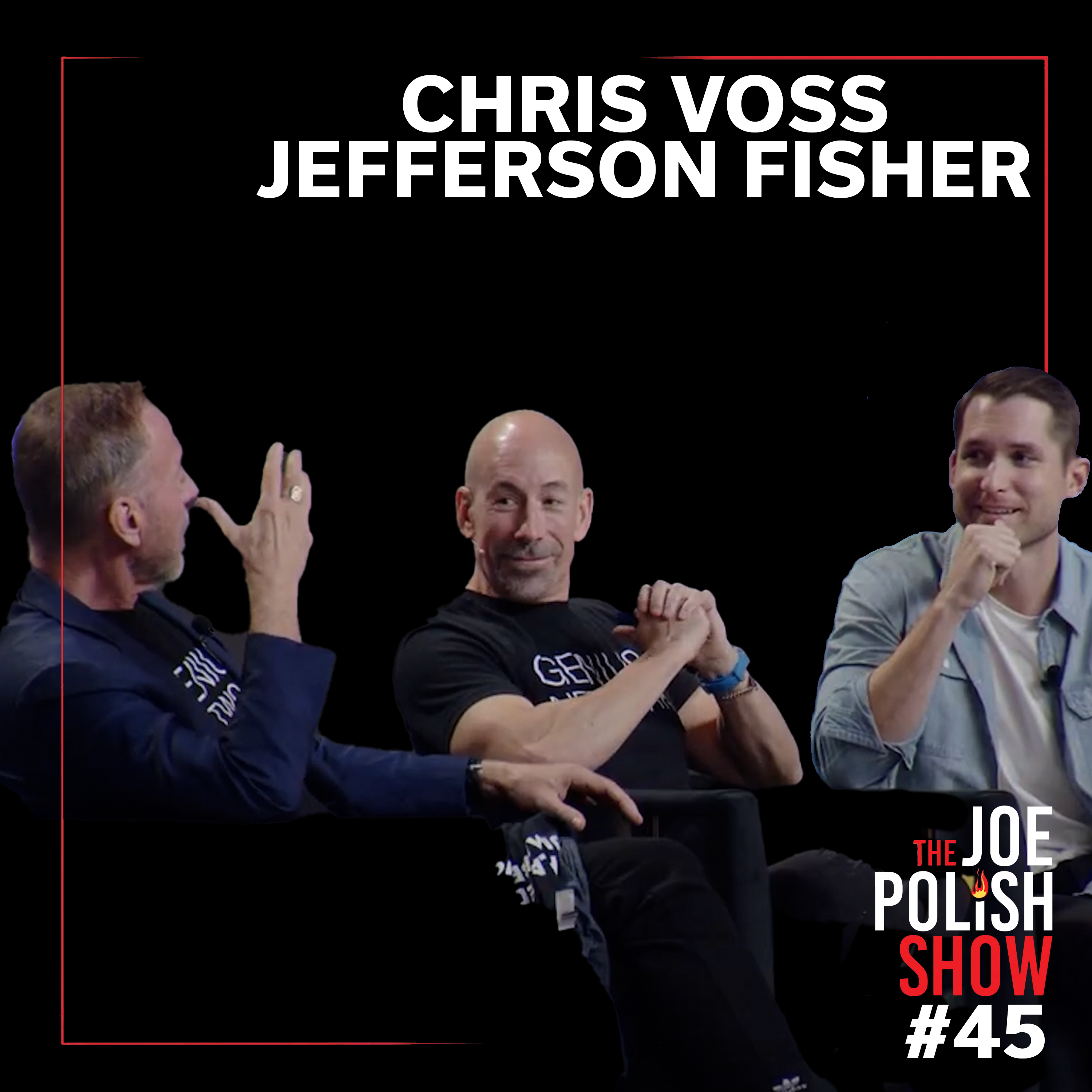 Mastering High-Stakes Communication: How to Lead, Influence, and Connect Without Losing Control with Chris Voss, Jefferson Fisher, and Joe Polish | Joe Polish sits down with former FBI hostage negotiator Chris Voss and communication expert Jefferson Fisher to break down what actually works in high-stakes conversations—at home, in leadership, and in negotiations—without slipping into aggression or defensiveness. Here's a glance at what you'll discover in this episode: Why most leaders spend 80% of their time communicating yet never learn how to do it effectively, and what separates those who connect from those who collapse under pressure. The myth of "finding common ground," and why trying to relate can quietly destroy empathy instead of build it. The counterintuitive reason sharing your own story often backfires, and what to do instead to make people feel truly heard. How one airplane disaster proved Chris Voss's rule that "common ground" can be the fastest way to lose trust. The fine line between aggressive, assertive, and passive, and how to command respect without crossing it. A phrase Jefferson Fisher says can help stop an argument and save a relationship (used by countless couples and CEOs alike). A handful of simple words that dissolve defensiveness and open the door to real resolution. How to turn anger into intelligence: what neuroscience and hostage negotiation reveal about why "strategic umbrage" always fails. The mindset that makes you unshakable in any crisis, and why c________ is stronger than confidence. The simple breathing trick Jefferson teaches to steady your voice and calm your nervous system before the words even start. The hidden ingredient of influence that outperforms charisma, and how to use it so people lean in when you speak. The surprising mindset shift both Chris and Jefferson say can transform every negotiation, every argument, and every relationship. If you'd like to join world-renowned Entrepreneurs at the next Genius Network® Event – then apply today for your invitation to attend at https://geniusnetwork.com. | — | ||||||
| 12/23/25 | Can Writers and Coaches Survive the AI Boom: What AI Can't Replace with Joe Polish, Market Insider, and California Insider | Writers and coaches are getting disrupted fast as AI makes "how-to" information instantly available and often free. In this episode, Joe Polish breaks down what still sells in the AI boom—and why context, connection, credibility, and real experience are becoming the new premium. Here's a glance at what you'll discover in this episode: How AI is disrupting writers, coaches, and course creators—and what business models are getting hit the hardest. Practical ways to reposition your expertise so you're selling context, connection, and outcomes (not just information). Joe Polish's "Where there's anxiety, there's opportunity" lens to spot what your market wants right now and build offers around it. A simple framework (Dangers, Opportunities, Strengths) to diagnose what's blocking growth and what capabilities you need next. How to price, message, and market ethically in a noisy AI era—so you stand out as credible, not just believable. If you'd like to join world-renowned Entrepreneurs at the next Genius Network® Event – then apply today for your invitation to attend at https://geniusnetwork.com. | — | ||||||
| 12/12/25 |  LifePilot and High-Leverage Activities: The $13M Ferrari Lesson with Peter H. Thomas, Tony Jeary, and Joe Polish | Tony Jeary and Peter H. Thomas join Joe to redefine results through values-first goals and faster execution. They share practical tools like high-leverage activities, smarter delegation, and the Rule of 87 to create more momentum with less overwhelm. Here's a glance at what you'll discover in this episode: The Book vs. Epiphany Shift: Why bragging about the number of books you read is useless... and the one thing that actually counts. The Kindle-to-ChatGPT Pipeline: How Joe hacked his Kindle highlights into an AI system that delivers something even MBAs don't get. The Results Center Advantage: Why billion-dollar CEOs now come to Tony and the kinds of insights they often highlight after a single visit. LifePilot from Loss: How Peter turned the tragedy of losing his son into a simple practice that can guide every decision you make. The 5 Words That Govern Every Deal Peter Does: The pocket-sized filter Peter carries everywhere that instantly tells him what's in or out. Play Your Aces, Not Your 8s: The overlooked reason most people play small... and the simple trick to double down on your aces The 3-Year Future Trick: Why imagining yourself in vivid detail three years from now creates a pull force most goals never generate. The Imaginary Board of Mentors: The unusual way Peter got advice from JFK and Gandhi and how Tony now uses it with AI. The Three Traits That Beat Every Resume: The three Peter prioritized when building an 8,000-agent empire. The 168-Hour Wake-Up Call: How to break down your week so you never again say "I don't have time." The 5 Decisions That Run Tony's Life: Tony's five go-to moves that make it easier to say no to almost everything else. The Life Team Advantage: How Tony multiplies his time by pouring into 90 people most entrepreneurs never even think about. The Rule of 87 Peter stumbled on washing his '56 T-Bird and why it finally freed him from perfectionism. Delegation as Band Chemistry: Why Joe says building a team is like forming a band... and the one thing that decides whether the music works or falls apart. The Friday Gift: The counterintuitive present Peter gave himself at 50 that unlocked decades of freedom and fun. The $13M Ferrari Mistake: How Peter flipped a Ferrari for quick cash (only to watch it later sell for $13M) and what he learned instead of regretting it. Strategic Byproducts in Action: Why chasing one goal often produces something far bigger on the side... and how Joe proved it with a ghost town! The three words that got Tony invited to the U.S. Senate (and the hidden piece that makes them actually work.) If you'd like to join world-renowned Entrepreneurs at the next Genius Network® Event – then apply today for your invitation to attend at https://geniusnetwork.com. | — | ||||||
| 11/25/25 | 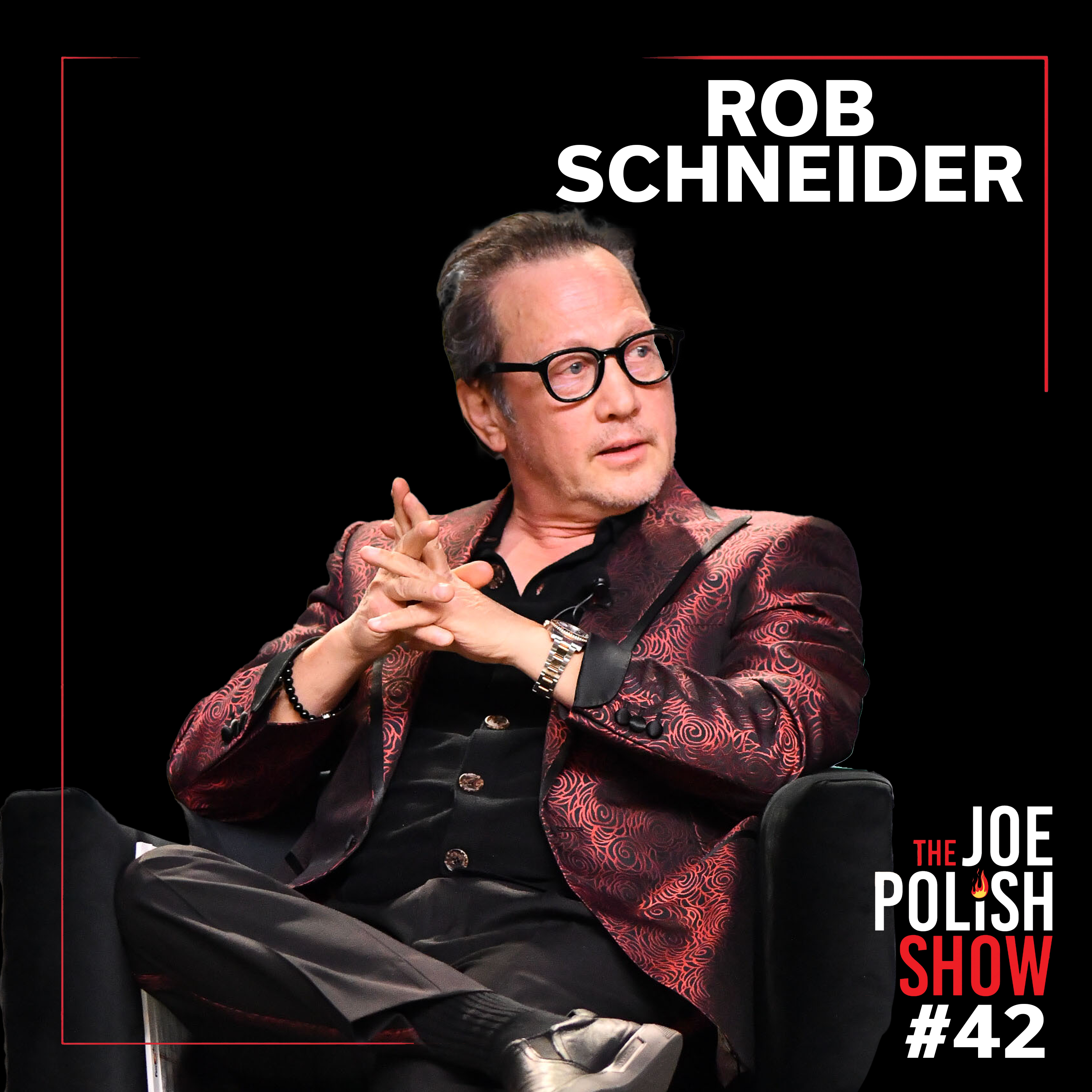 Freedom, Faith, and Funny Business: Rob Schneider and Joe Polish on Courage, Culture, and the Fight for Truth | Comedian and actor Rob Schneider joins Joe Polish for a wide-ranging conversation about culture, free speech, faith, media, academia, and how entertainment shapes the future. Here's a glance at what you'll discover in this episode: How a Filipino war survivor's courage shaped a comedian's worldview, and the lessons her son carried from surviving hunger to surviving Hollywood. The insight Gabor Maté gave Rob about generational trauma, and how it changed the way he sees his own drive, fear, and creativity. What Rob's mother taught him about gratitude, resilience, and why America's opportunities should never be taken for granted. Why Rob believes the greatest threat to Western civilization isn't comedy censorship or politics...it's the slow erosion of truth and courage. The inside story of how standing up for freedom cost Rob his career in Hollywood, and why he says it was the best thing that ever happened to him. The mission behind Friendly Fire Studios and how Rob plans to rebuild culture from the inside out with entertainment that's pro-America, pro-family, and pro-freedom. Why Rob says the next cultural revolution will start not in Washington but in entertainment, and how comedy can once again become a catalyst for truth. The moment Rob realized that courage, not consensus, defines leadership, and what every entrepreneur can learn from it. How faith reshaped Rob's perspective on pain, purpose, and what it really means to hand your life over to God. Why Rob is turning away from Hollywood echo chambers to focus on telling stories that educate, uplift, and protect the next generation. The vision behind Rob's You Can Do It Foundation and how he's building new partnerships to fund films, improve education, and restore belief in the American Dream. If you'd like to join world-renowned Entrepreneurs at the next Genius Network® Event – then apply today for your invitation to attend at https://geniusnetwork.com. | — | ||||||
| 11/14/25 |  Driven and at Peace Featuring Gino Wickman and Joe Polish on the Real Journey of an Entrepreneur | Entrepreneurial legend Gino Wickman joins Joe Polish for a deeply honest conversation about success, awakening, and the real meaning of freedom. Discover the five stages every Entrepreneur must climb, the trap of scaling too soon, and why peace—not hustle—is the ultimate advantage. Here's a glance at what you'll discover in this episode: The 5 Stages Every Entrepreneur Must Climb (and Why Most Get Stuck on the Wrong One): Gino shares the "five pieces of content" that map the Entrepreneur's life... from their first leap to finally finding peace. The 6 Essential Traits of a True Entrepreneur: Why Gino says only 3–4% of people are actually wired for entrepreneurship — and how to tell if you really are (or if you're forcing a life that isn't yours). The Real Definition of Freedom: Why systems and structure don't restrict Entrepreneurs... they create freedom. (And how Gino's EOS framework frees founders from chaos.) The Hidden Trap of Scaling: What happens when you "scale" something that isn't ready — and how to tell if you've "nailed it" before you "scale it." The "Soul Ping" That Changes Everything: Gino reveals the moment when even driven high-achievers get "pinged" by their soul — and how that awakening reshapes everything you chase, build, and value. Love vs. Fear: Why every decision you make comes from one of these two energies — and how to instantly recognize when fear is running the show. Inside Out vs. Outside In: The mindset shift that multiplies your drive, energy, and fulfillment without burning you out. Why Entrepreneurs Are Addicted to the Climb: The psychology of drive, trauma, and obsession — and how to transform that same energy into calm, purpose, and creativity. The Synchronicity Pocket: Gino's formula for slowing down just enough to see everything clearly and operate from peace — without losing your edge. Hiring, Firing, and the "Right People, Right Seat" Formula: The single most practical system for building teams that actually work — and what weak managers must do first. How to Know When You Deserve the Life You Built: Gino's advice to every entrepreneur who's succeeded on paper but still doesn't feel worthy of their own success. The Shocking Realization Gino Had After Reaching the Top: What it means for every driven Entrepreneur chasing success. If you'd like to join world-renowned Entrepreneurs at the next Genius Network® Event – then apply today for your invitation to attend at https://geniusnetwork.com. | — | ||||||
| 11/11/25 |  Unscripted: Finding Humor, Grace, and Freedom When Life Goes Off Script with Cheryl Hines and Joe Polish | Emmy-nominated actress and author Cheryl Hines joins Joe Polish to share how living Unscripted—in Hollywood, marriage, and life—taught her to trust her instincts, stay grounded under pressure, and find humor in uncertainty. How growing up with nothing gave Cheryl Hines the fearless mindset that launched her from a Florida lunch line to Hollywood. What it was like to stand beside Bobby Kennedy as he met Donald Trump days after an assassination attempt, and how that moment changed her view of power, presence, and perspective. What writing her life story taught her about saying yes to uncertainty before she felt ready. Why the safest path can be the most dangerous one, and how real freedom begins the moment you stop trying to protect yourself. How the improv rules that made Curb Your Enthusiasm a hit became her framework for living with courage, humor, and connection. WATCH: Unscripted: Cheryl Hines on Finding Humor, Grace, and Freedom When Life Goes Off Script What really happens when Hollywood meets politics, and how Cheryl learned to hold her center when the noise got personal. The unseen discipline that keeps her calm, centered, and funny no matter how chaotic life gets. What Cheryl says life with Robert F. Kennedy Jr. has taught her about strength, loyalty, and keeping your humor when the whole world is watching. The realization grief gave her about love, and why she believes loss isn't an ending but a way to keep love alive. The belief that now guides Cheryl through chaos and change, and why the best parts of life begin when the script falls apart. If you'd like to join world-renowned Entrepreneurs at the next Genius Network® Event – then apply today for your invitation to attend at https://geniusnetwork.com. | — | ||||||
| 10/31/25 | 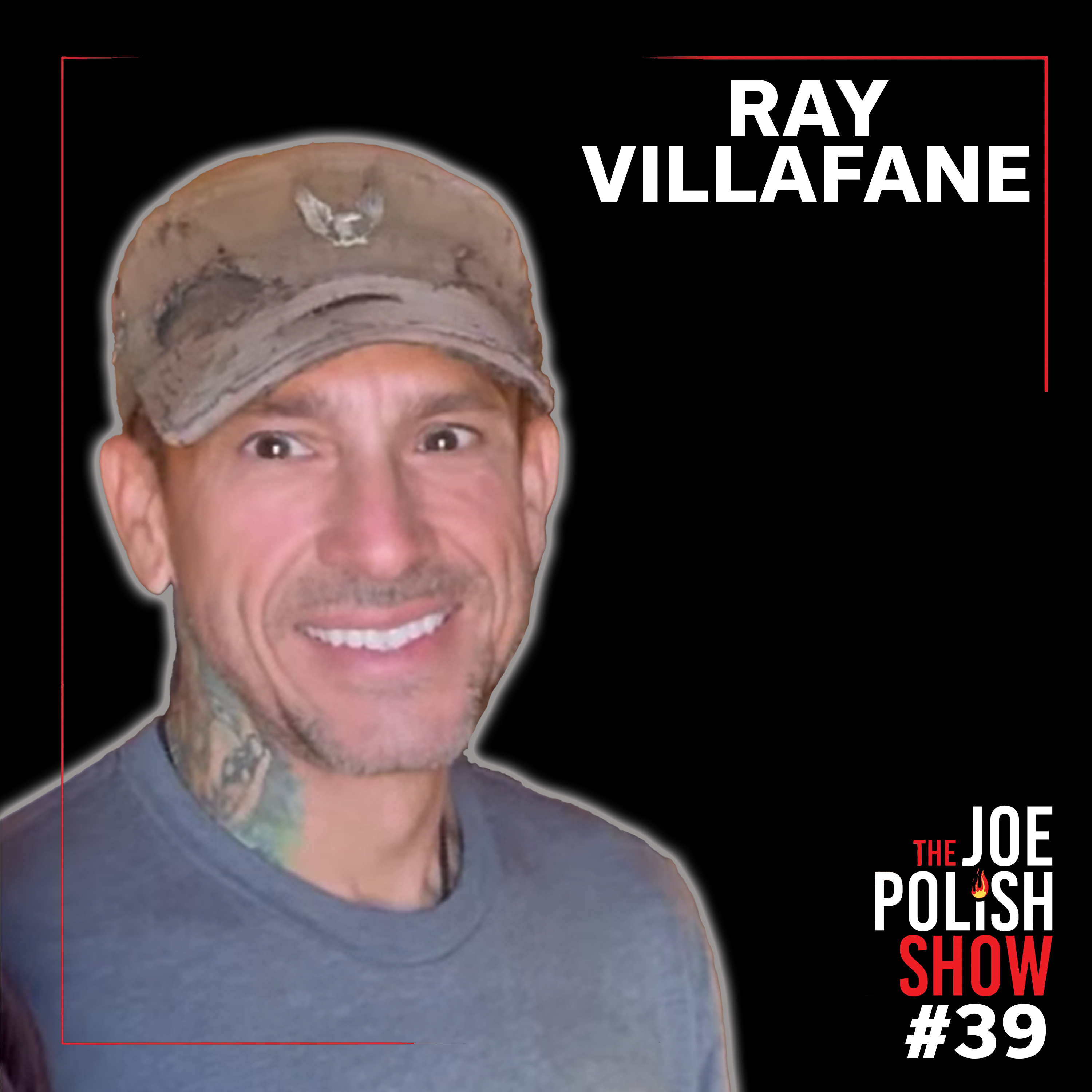 How Art, Mistakes, and Letting Go Create Real Magic in Your Life and Business Featuring Ray Villafane and Joe Polish | Joe Polish and artist Ray Villafane explore how play, failure, and curiosity fuel creativity and flow—in both art and Entrepreneurship. Here's a glance at what you'll discover in this episode: How fear of making a mistake kills originality—and Ray's simple fix that puts you back into learning mode fast. Play Beats Perfection: Why the right "playful state" removes pressure, invites risk, and produces work you could never plan for. The mindset Ray uses to turn random materials into living characters—and how Entrepreneurs can use the same approach to spot opportunities. The surprising reason art that disappears can be more satisfying than a permanent piece on your shelf. WATCH: How Art, Mistakes, and Letting Go Create Real Magic in Your Life and Business (Featuring Ray Villafane) Stop Waiting for Better Ingredients: The counterintuitive advantage of "poor" materials, and how constraints force better ideas. Ray's take on people who "steal," why he shares openly, and what scarcity thinking reveals about your creative power. Flow Without Resistance: What it feels like to work for seven hours on a rock balance, let go, fail, and start again with a smile. Nature as Co-Author: The hide-and-seek game Ray plays with sticks, vines, and weathered junk to blur the line between real and imagined. How play, joy, and childlike wonder recharge your brain—and why Entrepreneurs who forget fun also tend to lose their edge. If you'd like to join world-renowned Entrepreneurs at the next Genius Network® Event – then apply today for your invitation to attend at https://geniusnetwork.com. | — | ||||||



Showing 24 of 67
Pitch Fit is a Pro feature
See how bookable this show is for guests, which brands already advertise, the per-episode ad value, and the best-fit guest and sponsor profile. The numbers are blurred on the free plan.
How readily this show books outside guests like you.
How proven this show is for host-read sponsorships.
For Guests
ProFor Advertisers
ProUpgrade to Pro to unlock guest cadence, sponsor categories, fit scores, and per-episode ad value for this show.