The Kármán Line
Interested in the business of space? Dr Alice Bunn, former-international director of UK Space Agency and now president of UKspace, helps you identify investment opportunities, cut through policy and regulation, assemble ...
AI overview.Haymarket Media Group Ltd is a prominent media company known for its focus on specialized content across various sectors, including business and government. The…
Insights from recent episode analysis
On the show
- Alice Bunn4 eps
- Melissa Quinn2 eps
- Hetti Barkworth-Nanton1 ep
Also: John Abbott, Ross Hulbert, Dave Moody, Andrew Stanniland, Anatolii Papulov, Dr Alice Bunn OBE FIMechE FRAeS CEng, John Hudson, Caitlin Gould, Ian Taylor, Andrew Bacon
Audience Interest
- business of space exploration
- investment opportunities in space
Podcast Focus
- insights from space industry experts
- interviews with space leaders
Publishing Consistency
- 6 episodes released
- active for 1 year
Insights are generated by CastFox AI using publicly available data, episode content, and proprietary models.
Most discussed topics
Brands & references
Total monthly reach
Based on 1 signal.
Built from
- Per-Episode Audience
Est. listeners per new episode within ~30 days
951 to 5.0K🎙 ~2x weekly·24 episodes·Last published 3d ago - Monthly Reach
Unique listeners across all episodes (30 days)
1.9K to 10K🇬🇧100% - Active Followers
Loyal subscribers who consistently listen
1.0K to 5.5K175 real followers tracked across platforms
Market Insights
Platform Distribution
Reach across major podcast platforms, updated hourly
Total Followers
—
Total Plays
—
Total Reviews
—
* Data sourced directly from platform APIs and aggregated hourly across all major podcast directories.
| Date | Episode | Topics | Guests | Brands | Places | Keywords | Sponsor | Length | |
|---|---|---|---|---|---|---|---|---|---|
| 11/6/26 |  Prof. Kate Robson-Brown: How science will bridge the gap to industry | In a fight for space resources, industry and defence are winning. Is there still a bright future for space-based science?Space academic extraordinaire Prof. Kate Robson-Brown tells the full story of what it means to do science in space, and how to bridge the gap to industry: “There’s never been more opportunity for science to engage in space programmes than now.”Are nano-satellites made of wood possible? What’s the next big thing in microgravity innovation? How can the boundaries between academia and business be made as porous as possible? How can academics develop business skills? How can pathways for impact from academia to business be identified? How can academic experts present the latest evidence to the government? How will access to space change in an increasingly privatised space world?Key topics:MicrogravityInternational Space StationSpaceWooden satellitesAcademiaProfessor Kate Robson-Brown:UCD Vice-President for Research, Innovation and ImpactPresident of the European Low Gravity Research Association (ELGRA).Previous co-chair of the Space Academic Network & Member of the Space Partnership Board. Hosted on Acast. See acast.com/privacy for more information. | 47m 01s | ||||||
| 10/30/26 | 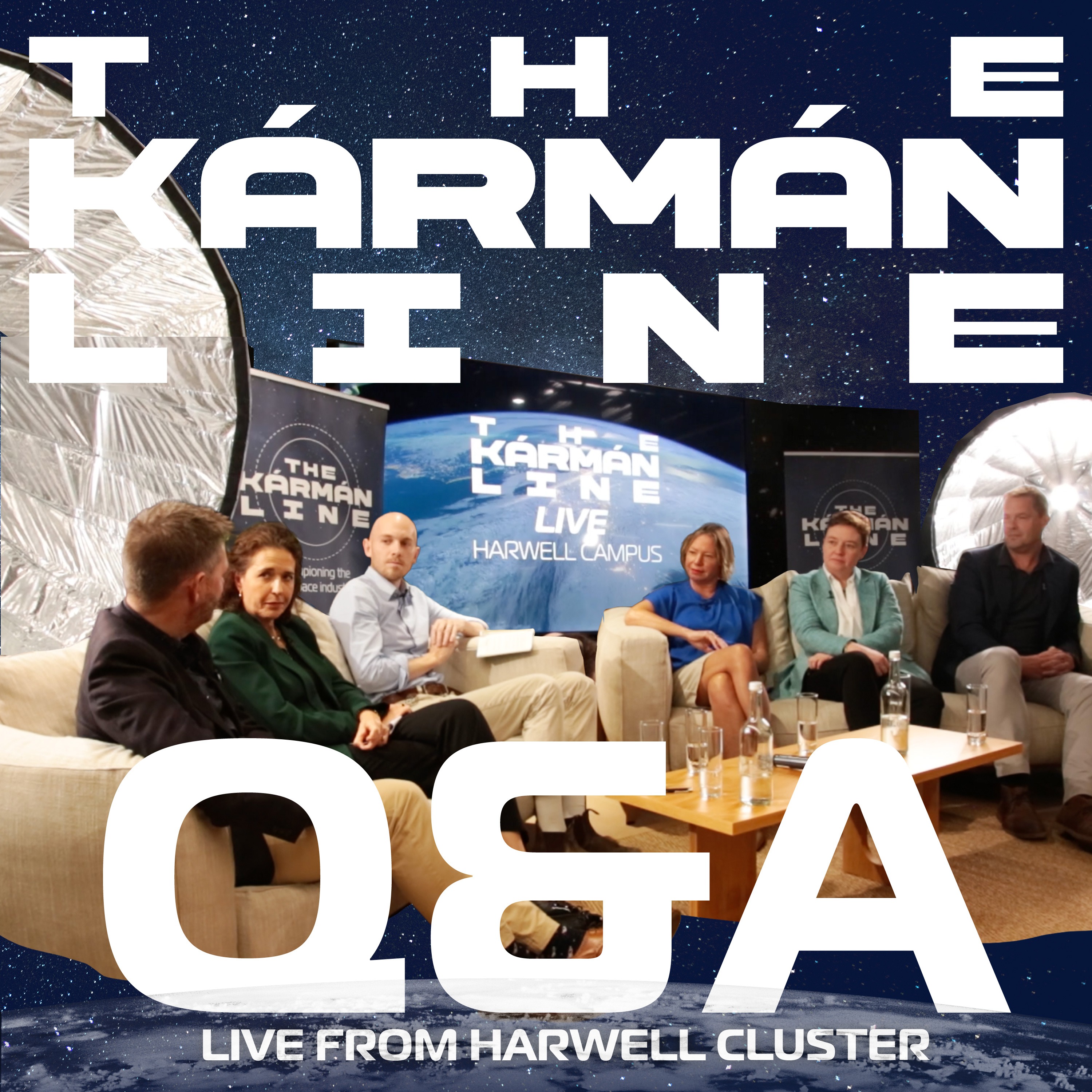 Q&A Harwell: It's time to translate chat into action | What is the ultimate vision for the UK space sector? What skills do you need to succeed in space? Which international partners should the UK prioritise? How can industry help make the markets that the government has picked?In this exclusive Kármán Line Q&A, a heavyweight panel takes industry questions. No filter, no fluff, pure exchange from the industry for the industry.Contributors:Dr Alice Bunn, Co-Director, UK Space AgencySam Adlen, Co-CEO, Space SolarAndrew Stanniland, Managing Director, MDA Space UKDr Barbara Ghinelli, Director of Innovation Clusters & Harwell CampusDr Sarah Beardsley, Director, RAL SpaceJonathan Davies, The Kármán Line Hosted on Acast. See acast.com/privacy for more information. | 31m 03s | ||||||
| 10/23/26 | 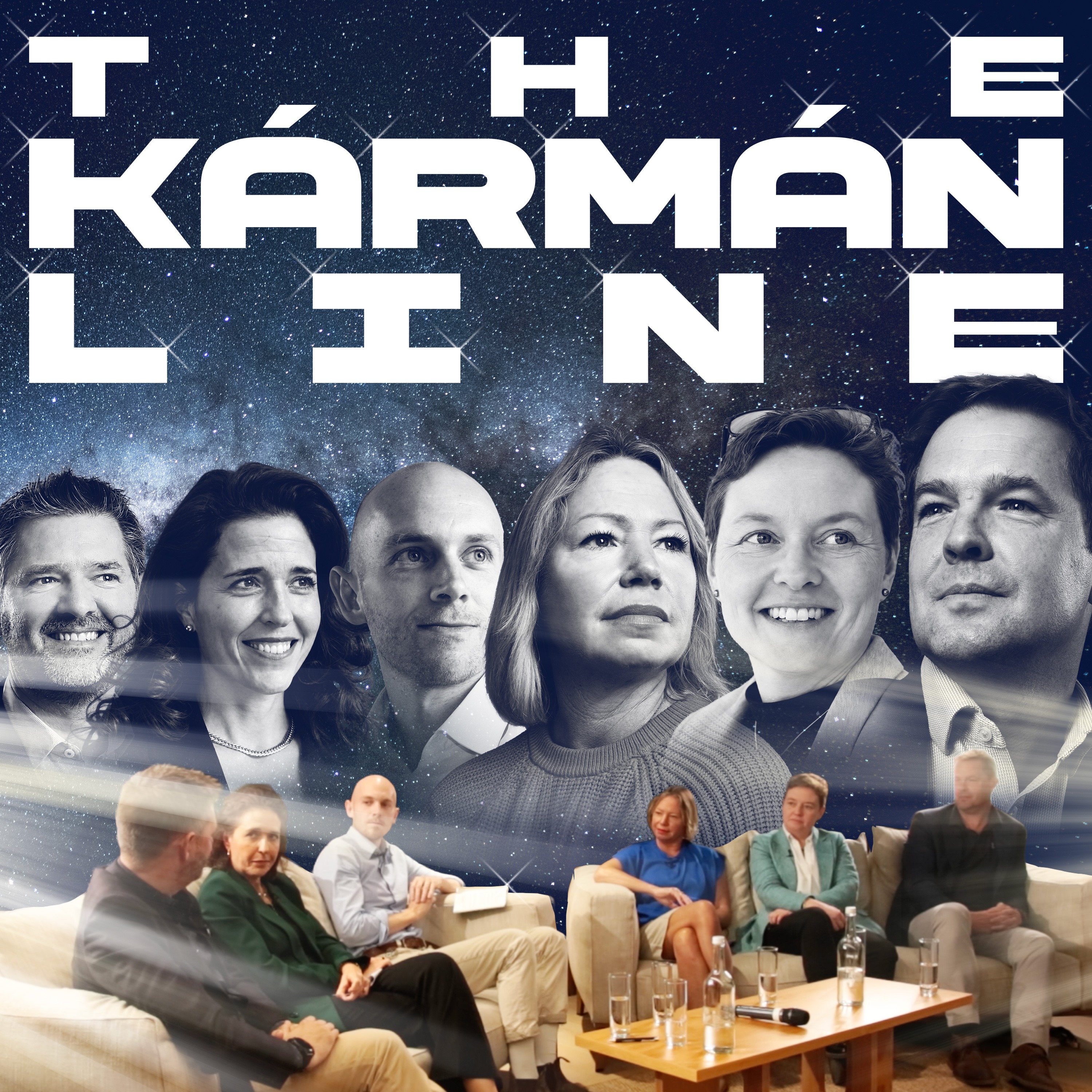 Live at Harwell: Is the UK space industry fit for purpose and how can it win? | A blockbuster cast of industry leaders debate the UK’s new space strategy with invited guests live at the Harwell Campus. What do they all think about the government as a procurer and facilitator of private growth capital? Why does Sam Adlen argue that the strategy lacks forward-looking economic ambition? What are the real benefits of alignment between DSIT, MOD and UKSA, as well as the explicit decision to prioritise four capability pillars – Satcoms, space domain awareness (SDA), ISAM and launch?Join Jonners and his guests as they debate how Government procurement, private capital and a “one-sector” coalition can turn strategic intent into binding contracts and global scale-ups. Contributors:Dr Alice Bunn, Co-Director, UK Space AgencySam Adlen, Co-CEO, Space SolarAndrew Stanniland, Managing Director, MDA Space UKDr Barbara Ghinelli, Director of Innovation Clusters & Harwell CampusDr Sarah Beardsley, Director, RAL SpaceJonathan Davies, The Kármán Line Key topics covered:Live panel reaction to the UK Space Strategy at Harwell CampusState of the Space Nation 2026 reportOne Government approach vs One Sector executionPrioritising the four capability pillarsEconomic growth logicRebooting execution: Contracts, anchor customers, and £7.8B committed spendUK Space and Defence Gateway launch & Investor CouncilDiscovery science vs. short-term applied research (RAL Space / UKRI)Taking a VC portfolio approach to deep-tech risks & scaling Hosted on Acast. See acast.com/privacy for more information. | 50m 06s | ||||||
| 10/16/26 |  Debris removal: “The largest single national contract the UK Space Agency has ever awarded” | How does winning the UK Space Agency's Active Debris Removal (UK ADR) contract position ClearSpace to capture defunct satellites? How do their multi-arm robotics and advanced machine-learning algorithms match up to the task? How does active debris removal establish a long-term national capability and commercial service layer in space? And what does a transition from R&D grants to major anchor contracts mean for hyper-scaling UK In-Orbit Servicing, Assembly, and Manufacturing (ISAM)?Join Jonners as he talks with Rob Atchison, Managing Director of ClearSpace UK, about active debris capture, cross-domain defence resilience, and setting firm foundations for ISAM across Europe. Contributors:Jonathan Davies, The Karman LineJonathan Davies | LinkedInThe Karman Line | WebsiteRob Atchison, Managing Director, ClearSpace UKRob Atchison | LinkedInClearSpace UK | LinkedIn Key topics covered:The UK Active Debris Removal (UK ADR) missionRobotic multi-arm capture of non-cooperative, defunct satellitesIn-orbit inspection, station-keeping, hardware replacement, and deorbitingTransitioning from R&D grants to government anchor procurement contractsIn-Orbit Servicing, Assembly, and Manufacturing (ISAM)Unlocking institutional private capital & venture hyper-scalingOrbital resilience for essential terrestrial infrastructure (maritime, healthcare)Cross-domain space defence (UK Space Command) & soft powerDesigning future satellites for modularity, servicing, and recycling Hosted on Acast. See acast.com/privacy for more information. | 29m 15s | ||||||
| 10/9/26 |  Metalysis: How lunar life support, deep space refuelling and 3D-printed infrastructure will transform space exploration | How does Metalysis strip oxygen as a captured gas from metal oxides and convert the oxide into pure metal alloys? How will this help us to supply life support for lunar bases or create rocket propellant for deep-space refuelling? Once the oxygen is stripped away how can the remaining metal alloys be repurposed for 3D-printed infrastructure, landing pads or road surfaces? And how can Metalysis’ research help regolith inks to print electronic components directly in space?Join Jonners as he talks with Nitesh Shah, Director CEO, and Ian Mellor, Managing Director of Metalysis, about the extraction of lunar oxygen, high-performance engine alloys and domestic supply chain resilience. Find out how a UK company is pioneering technologies that will allow future exploration missions to “live off the land”. Contributors:Jonathan Davies, The Karman LineJonathan Davies | LinkedInThe Karman Line | WebsiteNitesh Shah, Director CEO, MetalysisNitesh Shah | LinkedInMetalysis | LinkedInIan Mellor, Managing Director, MetalysisIan Mellor | LinkedInMetalysis | LinkedIn Key topics covered:Solid-state Cambridge FFC process & electrochemical oxide reductionIn-situ resource utilization (ISRU) on the MoonExtracting ~95% oxygen yield from aluminosilicate lunar regolithRegolith metal byproducts for lunar roads, landing pads, and constructionAI and machine-learning-driven alloy discoverySovereign production of C-103 (niobium-hafnium) rocket engine alloyClean, energy-efficient domestic titanium production vs. traditional Kroll processingIn-space 3D printing, conductive regolith inks, and electronics manufacturingTransitioning from R&D to commercial midstream manufacturing Hosted on Acast. See acast.com/privacy for more information. | 29m 15s | ||||||
| 10/2/26 |  Space debris: 130 million “poppy seed bullets flying around, punching holes in things” | Does sub-centimetre, non-trackable space debris pose an existential threat to satellites and orbital infrastructure? How can ultra-lightweight "black box" sensors turn a spacecraft's surface into an impact detector to diagnose anomalies? What do satellite operators need to unlock affordable, named-peril collision insurance through Lloyd's of London? And how can a "neighbourhood watch" network of sensor-equipped satellites build live space domain awareness to protect the space economy?Join Jonners as he talks with Dan Terrett, Co-Founder and COO of Odin Space, about the 130 million rogue “poppy seed bullets” flying around, punching holes in satellites and the challenge this presents to insuring a market that is moving from frontier to real economy at an incredible pace. Contributors:Jonathan Davies, The Karman LineJonathan Davies | LinkedIn The Karman Line | WebsiteDan Terrett, Co-Founder & COO, Odin SpaceDan Terrett | LinkedInOdin Space | LinkedIn Key topics covered:Lethal, non-trackable sub-centimetre orbital debrisOdin Space "black box" impact sensing & diagnosticsInstant failure attribution vs. unexplained spacecraft anomaliesLloyd's of London & named-peril collision insuranceSpace Domain Awareness (SDA) & "Neighbourhood Watch" network alertsTransitioning from seed venture risk to mature institutional capitalCommercial space platforms & hosted payload risk management (D-Orbit)Space sustainability & the Astra CartaTransatlantic synergy: US satellite ecosystem & UK financial/insurance markets Hosted on Acast. See acast.com/privacy for more information. | 26m 17s | ||||||
| 9/25/26 |  Tim Peake: "Put a human and our best robot with AI on Mars today... and a human will still do more." | What is the true balance between human spaceflight and robotic exploration when it comes to science, inspiration, and decision-making capabilities? How is space transitioning from a niche frontier to an everyday commercial workplace? What role do regulatory frameworks, such as the United Nations, the Artemis Accords, and the Astra Carta, play in keeping orbit and the lunar surface safe and sustainable? And how can the UK Government act as an "anchor customer" to bridge the commercial "valley of death" for domestic space startups?Join Alice and Jonners in this special episode recorded in Chichester Marina with British astronaut Tim Peake as he shares insights on space adaptation syndrome, commercial space stations, lunar research bases, global space traffic management, and the future of human exploration to Mars.Contributors:Alice Bunn, President of UKspaceDr Alice Bunn OBE FIMechE FRAeS CEng | LinkedInUKspace: Overview | LinkedInJonathan Davies, The Karman LineJonathan Davies | LinkedInThe Karman Line | LinkedInTim Peake, AstronautTim Peake | LinkedInKey topics covered:Human spaceflight vs. robotic explorationSpace Adaptation Syndrome (nausea & gravity adjustment)Normalising space as a commercial workplaceTransition from space stations to commercial Low Earth Orbit (LEO)Artemis programme & sustainable lunar research basesAstronaut selection mindsets, psychological profiles, and stress testingInternational space cooperation & soft power (ISS legacy)Governance, leaseholds, and regulatory frameworks on the MoonThe Astra Carta & space sustainabilityHuman exploration of MarsGovernment as “anchor customers Hosted on Acast. See acast.com/privacy for more information. | 29m 31s | ||||||
| 9/18/26 |  Alisha Fuller-Armah: A story so sensational it made Alice Bunn cry | How can a malleable, plant-based bio-leather grown off-grid in Scotland transform under extreme heat into an RF-transparent, rock-like ceramic shield? What does Draconite mean for the economics of spacecraft re-entry and thermal protection systems? How does self-taught material science disrupt traditional "old space" gatekeeping and university lab paradigms? What are the dual-use applications of biomimetic thermal shields across space re-entry, defence satellite protection, and terrestrial wildfire mitigation?Join Alice and Jonners as they talk with the astonishing Alisha Fuller-Armah, CEO and founder of Draconite, about her journey from scaling a Caribbean wedding venue to inventing a self-vitrifying, plastic-free thermal protection material and proving it works by pointing a blow torch at her own hand!Contributors:Alice Bunn, President of UKspace Dr Alice Bunn OBE FIMechE FRAeS CEng | LinkedInUKspace: Overview | LinkedIn Jonathan Davies, The Karman LineJonathan Davies | LinkedInThe Karman Line | LinkedInAlisha Fuller-Armah, CEO & Founder, DraconiteAlisha Fuller-Armah | LinkedInKey topics covered:Draconite bio-based thermal shield technologySelf-vitrification and heat-soak insulation vs. traditional ablationRF transparency during re-entry communicationsOff-grid, low-cost cellulose fermentation & sovereign manufacturingUK Space Agency Accelerator & scaling deep techDefence applications (anti-laser satellite shrouds)Overcoming academic gatekeeping through self-taught sciencePFAS-free, traceless, and non-toxic space materialsTerrestrial wildfire and passive fire protection Hosted on Acast. See acast.com/privacy for more information. | 30m 06s | ||||||
| 9/11/26 |  The UK National Space Strategy: Groundbreaking Government commitment but no new money | Does the Government's latest space strategy properly connect defence, civil policy and commercial space growth? How will the MOD and DSIT merge procurement approaches? What are the specific outcomes targeted across the four core focus areas: Satcoms, Space Domain Awareness, Launch, and In-Orbit Servicing, Assembly, and Manufacturing? How do freedom of action and assured access balance sovereign UK capabilities with NATO and ESA alliances? And what major regulatory, insurance, and procurement changes are coming down the line?Join Jonners and Stephanie Ayres, Head of Policy at UKspace, as they debate whether the machinery of Government is fully backing a practical blueprint for picking winners and driving national security and economic growth or delivering just another false dawn.Contributors:Jonathan Davies, The Karman LineJonathan Davies | LinkedIn The Karman Line | WebsiteStephanie Ayres, Head of Policy UKspaceStephanie Ayres | LinkedIn UKspace: Overview | LinkedInKey topics covered:New National Space Strategy overviewMOD and DSIT procurement alignmentGovernment as an "anchor customer"Four core capability pillars (Satcoms, SDA, Launch, ISAM)Sovereign ISR and Space ControlFreedom of action vs. Allied integration (NATO/ESA)Assured launch (SaxaVord & Spaceport Cornwall)"Picking winners" and targeted funding awardsRegulatory and insurance sandboxes (City of London)Enterprise Category Management and cross-departmental governance Hosted on Acast. See acast.com/privacy for more information. | 23m 37s | ||||||
| 9/3/26 | Commercialising defence R&DPloughshare's mission+4 | Hetti Barkworth-Nanton | PloughshareTechnology and Growth Alliance+2 | — | defence technologycommercialization+6 | — | 34m 47s | ||
Want analysis for the episodes below?Free for Pro Submit a request, we'll have your selected episodes analyzed within an hour. Free, at no cost to you, for Pro users. | |||||||||
| 8/27/26 | Satellite Applications Catapultspace ventures+4 | John Abbott | Satellite Applications CatapultUKspace+2 | — | space startupscommercial matchmaking+4 | — | 32m 04s | ||
| 8/20/26 | Spaceport operationsVirgin Orbit launch+4 | Alice BunnRoss Hulbert | UKspaceSpaceport Cornwall+1 | Cornwall | Spaceport CornwallVirgin Orbit+5 | — | 30m 47s | ||
| 8/13/26 | dual-use technologyspace technology+3 | Alice BunnDave Moody | Skynet satellite systemNorthumbria University+3 | — | dual-usespace technology+6 | — | 43m 14s | ||
| 8/6/26 | spaceportsUK launch industry+4 | Alice BunnMelissa Quinn | UKspaceMaritime Launch Services | CornwallUK+1 | spaceportsUK launch+5 | — | 30m 06s | ||
| 7/30/26 | UK space sector skillstalent pipelines+3 | Andrew Stanniland | MDA Space UKDepartment for Science, Innovation and Technology+3 | — | UK space strategyskill requirements+3 | — | 44m 40s | ||
| 7/23/26 | Very Low Earth Orbit (VLEO)Earth observation+5 | Anatolii Papulov | New OrbitUKspace+1 | — | VLEOsatellite platforms+5 | — | 27m 13s | ||
| 7/14/26 | geopoliticslaunch operations+4 | Alice BunnDr Alice Bunn OBE FIMechE FRAeS CEng+3 | UKspaceTECwomen+3 | UK | geopoliticslaunch operations+5 | — | 36m 50s | ||
| 7/9/26 | satellite protectiongovernment procurement+4 | Ian Taylor | UKspaceHaymarket Media Group Ltd | UK | satellitesgovernment funding+5 | — | 33m 59s | ||
| 7/3/26 | in-orbit manufacturingcommercial space production+3 | Andrew Bacon | Space ForgeUKspace | — | in-orbit manufacturingcommercial paradigm shift+5 | — | 44m 44s | ||
| 7/2/26 |  The UK Defence Investment Plan (DIP) and its impact on space | What are the critical sovereign capabilities that DIP will be funding? Does DIP do enough to acknowledge the role of space as national infrastructure that underpins the UK defence stack? How will geospatial imagery and ISR data translate into active frontline capabilities? Can the UK securely guarantee that its international systems can operate without external interference? And why are “responsive launch” and assured access to space missing from the DIP? Join Jonners and the Head of Policy at UKspace, Stephanie Ayres, as they discuss the DIP not as a “final outcome” but as a “blueprint” for a long-term journey. Contributors:Jonathan Daves, The Karman LineJonathan Daves | LinkedIn The Karman Line | WebsiteStephanie Ayres, Head of Policy UKspaceStephanie Ayres | LinkedIn UKspace: Overview | LinkedIn Key topics covered:UK Defence Investment Plan (DIP)Sovereign capabilitiesIntelligence, Surveillance, Reconnaissance (ISR)Deep space radarOrbital asset protectionFoundational infrastructureLaunch capabilitiesEarth observation (EO)Position, Navigation, Timing (PNT)Freedom of action Hosted on Acast. See acast.com/privacy for more information. | 17m 11s | ||||||
| 6/25/26 |  The UK space economy: Government pivot, launch prospects and new alliances | Did you know that the UK space industry is roughly the same size as the UK music and video games industries? And that beyond direct revenue, nearly £1 in every £5 of UK GDP is supported or enabled by satellite services? Or that, because the UK public sector budget is 0.2% of GDP compared with 0.8% for the EU, our market is more commercially driven and innovative? So how to get to the next level? Should the UK Government pivot its role from grant provider to “anchor customer”? Should the UK build more strategic, resilient partnerships, for example with the Nordic and Baltic nations, with Germany, Japan and Southeast Asia? Will the SpaceX IPO crowd new capital into competing launch vehicles that, if regulation can be stripped back, will “grease the wheels” for facilities like SaxaVord to succeed? And why, in five years or less, will regular landings on the moon become normalised and “boring”? Contributors:Alice Bunn, President of UKspace Dr Alice Bunn OBE FIMechE FRAeS CEng | LinkedInUKspace: Overview | LinkedIn Doug Liddle, Chair of UKSpaceDoug Liddle | LinkedIn Greg Sadlier, Co-founder and director of know.spaceGreg Sadlier | LinkedInknow.space | LinkedIn Key topics covered:SpaceX IPOUK space industrySovereign characteristicsGeopolitical partnershipsFive-year outlookDomain awarenessOrbital inspections and defenceAsteroid miningSaxaVord Hosted on Acast. See acast.com/privacy for more information. | 46m 47s | ||||||
| 6/18/26 |  Orbital Data Centres: Why reality might not match the hype | What are orbital data centres (ODCs) and how do they differ from orbital edge computing? How do they solve the bottleneck of transmitting massive volumes of data from space to Earth? How believable is the central premise of the SpaceX IPO, that because space offers unlimited real estate, solar energy and natural radiative cooling it is therefore the future of Earth’s AI computing needs? Why are some experts sceptical and is there a danger that while AI demand is real, the infrastructure market could be a bubble waiting to happen? And why is developing sovereign ODC capabilities so “critical”?Join Alice and Jason Aspiotis, CEO and co-founder for a European space startup, as they talk about the “net present value” and future potential of ODCs, the lack of a “conviction to pursue something big” in Europe, and the terrifying or intriguing prospect of neuromorphic computing chips that mimic the low-power, high efficiency processing of the human brain.For more explanation, insight and expert opinions about the big issues shaping the future of space in the UK and beyond, register now for The Karman Line. https://www.thekarmanline.co.uk/Contributors:Alice Bunn, President of UKspace Dr Alice Bunn OBE FIMechE FRAeS CEng | LinkedInUKspace: Overview | LinkedInJason Aspiotis, CEO and co-founder for a European space startupJason Aspiotis | LinkedInKey topics covered:Orbital edge computingOrbital data centres (ODCs)Data bottlenecksODCs as infrastructureUK and European sovereign capabilityISAM (in-space servicing, assembly and manufacturing)Neuromorphic computing Hosted on Acast. See acast.com/privacy for more information. | 40m 19s | ||||||
| 6/11/26 |  Lord Heseltine: "You’re just playing in toy town” | Lord Heseltine tells the story of the birth of the European Space Agency. Why post-Apollo, when the US was spending £1.2 billion a year on space, the whole of Europe was spending just £200 million. Why the birth of ESA was driven by the self-interest of three major countries. Why the US general with a $29 billion budget for the Star Wars project wanted to invest in Heriot-Watt University in Edinburgh. Why, the idea that Britain could compete alone with the technologies that were accumulated and available to the American capitalist system was “simply laughable”. Why “being European is not selling out British interests”. And why Margaret Thatcher told him: “If you want to get on and put your budget into this, you can, but you're not getting any of mine." Join Alice and Lord Heseltine as they pick apart the negotiating contrivances and the wheeling and dealing to circumnavigate “turkeys not voting for Christmas” that ultimately put European space on the map.Contributors:Alice Bunn, President of UKspace Dr Alice Bunn OBE FIMechE FRAeS CEng | LinkedInUKspace: Overview | LinkedIn Lord Heseltine, Member of the House of LordsKey topics covered:Creation of the European Space Agency (ESA)US "Star Wars" program and brain drainGeopolitical case for European R&D collaborationImpact of Brexit on science and technology Hosted on Acast. See acast.com/privacy for more information. | 16m 00s | ||||||
| 6/3/26 |  Space sustainability: Turning orbital debris into a national niche | The idea of 14,000 satellites in low earth orbit sounds pretty scary but in context there’s over a million cars on the road in the UK alone and low earth orbit is a really big 3D space. So, should people be worried about space sustainability? Shouldn’t they just relax and remember there’s loads and loads of space out there? Or should they still be scared? What happens when satellites do cross paths? If they’re all part of the SpaceX Starlink constellation they’ll talk to each other instantaneously and get out of the way. But what if the contact is with a satellite from another country? Is it fair to say they’re on the equivalent of email or telephone? And what if they do collide? Will it be like the experiment in 2007 when the Chinese fired a missile at a defunct weather satellite? On the one hand, “great shot lads, you’ve hit something moving at 4km per second” but on the other, “you’ve probably caused a millennia worth of debris problems”.If it’s within our capabilities to move bikes and cars and trains and planes around the world in an ordered fashion, shouldn’t it be well within human capabilities to extend the use of space? Is there a role for the UK in being “the AA” of space and is the UK-New Zealand debris removal agreement a useful step down this road? Join Alice and Jonners as they talk to Phil Buckley, partner at the Public Service Consultants and a specialist in space sustainability, about the perils and pitfalls of satellite traffic jams and an opportunity that the UK “could be absolutely brilliant at”.Contributors:Alice Bunn, President of UKspace Dr Alice Bunn OBE FIMechE FRAeS CEng | LinkedInUKspace: Overview | LinkedIn Jonathan Daves, The Karman LineJonathan Daves | LinkedInPhil Buckley, Partner at the PSCPhil Buckley | LinkedInKey topics covered:Space sustainabilityThe Kessler effectSpace debrisStarlinkUK-New Zealand agreementSpace trafficThe Fengyun weather satelliteRefuellingServicing Hosted on Acast. See acast.com/privacy for more information. | 32m 05s | ||||||
| 5/18/26 |  Space comms: why rockets really aren’t the story | Why do people in the space sector think they have a comms problem and yet the public at large think space is sexy? Should we stop evangelising about the technology that gets stuff into space rather than the core marketing message? After all, KFC is about the chicken not the trucks that deliver it.What are the leadership opportunities in the UK from launch in Scotland and what is the “environmental conscience” behind that endeavour? And how did we end up with kids in St Austell working on global lunar space missions on the back of a famous “failure”?Join Alice, Jess Ratty from Halo Global and John Harrington UK editor of PR Week, as they confront the introspection of space and figure out better ways of confounding British understatement and amazing a world of would-be investors.Contributors:Alice Bunn, President of UKspace Dr Alice Bunn OBE FIMechE FRAeS CEng | LinkedInUKspace: Overview | LinkedIn Jess Ratty, Founder and Leader, Halo GlobalJess Ratty | LinkedInJohn Harrington, UK Editor, PR WeekJohn Harrington | LinkedInPR Week UKKey topics covered:CommunicationsMarketingLeadership opportunitiesSaxa Vord launchEnvironmentSpaceport CornwallVirgin Orbit’s “Start me Up” mission Hosted on Acast. See acast.com/privacy for more information. | 35m 12s | ||||||


Showing 25 of 24
Pitch Fit is a Pro feature
See how bookable this show is for guests, which brands already advertise, the per-episode ad value, and the best-fit guest and sponsor profile. The numbers are blurred on the free plan.
How readily this show books outside guests like you.
How proven this show is for host-read sponsorships.
For Guests
ProFor Advertisers
ProUpgrade to Pro to unlock guest cadence, sponsor categories, fit scores, and per-episode ad value for this show.
Similar Audience Demographics
Podcasts that attract a similar listener profile



Distribution & Reach
About the show, platforms, and key insights.
Distribution & Reach
About the show, platforms, and key insights.
Haymarket Media Group Ltd is a prominent media company known for its focus on specialized content across various sectors, including business and government. They leverage their industry expertise to create engaging and informative media, making them a credible host for "The Kármán Line." The podcast offers a unique perspective on the business of space, hosted by Dr. Alice Bunn, a seasoned expert who previously served as the international director of the UK Space Agency. With a focus on investment opportunities, policy navigation, and supply chain assembly, the show combines elements of business, government, science, and astronomy, appealing to professionals and enthusiasts alike. Listeners are drawn to "The Kármán Line" for its actionable insights and expert guidance in the rapidly evolving space industry. The podcast serves as a valuable resource for those looking to understand and capitalize on the complexities of space commerce, making it particularly relevant for investors, policymakers, and industry stakeholders.
By the numbers
- Total followers: 175
Platforms
TuneIn
- Followers: 173
Castbox
- Followers: 1
Podcast Republic
- Followers: 1
Audience
adults, professionals
Key insights
What the show covers
- insights from space industry experts
- interviews with space leaders
- analysis of space market trends
- exploration of government space initiatives
Audience interests
- business of space exploration
- investment opportunities in space
- space policy and regulation
- supply chain assembly in aerospace
Platform reach
- hosted on Acast
- no other platforms detected
- limited distribution information
- unknown follower count
Publishing consistency
- 6 episodes released
- active for 1 year
- weekly episode cadence
- regular content updates
Estimated Audience
Who listens to The Kármán Line, estimated by CastFox AI.
Estimated Audience
Who listens to The Kármán Line, estimated by CastFox AI.
Listeners are typically professionals interested in the business side of space. They seek insights on investment and policy in the aerospace sector.
- space exploration
- investment
- aerospace
- policy
- technology
Full demographic breakdown (age, gender, income, countries) is available in the Audience tab. Estimated from chart performance, episode topics, and platform reach. Not measured listener data.
Chart history for The Kármán Line
Peaked at #197 in BE, currently #197 in BE.
| Market | Genre | Peak | Current | Trend |
|---|---|---|---|---|
| BE | — | #197 | #197 | — |
Chart Positions
1 placement across 1 market.
Chart Positions
1 placement across 1 market.