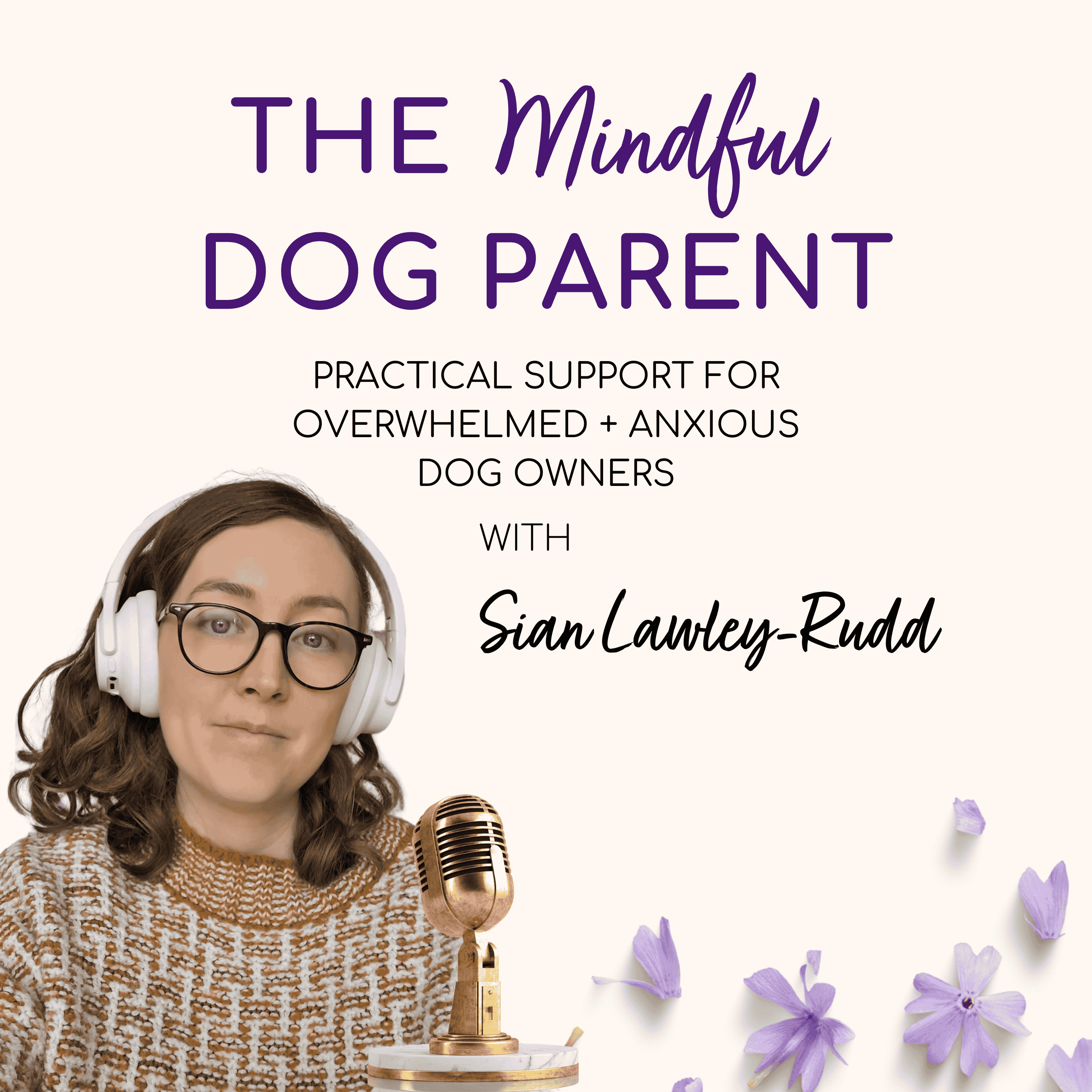
The Mindful Dog Parent: Dog Training Advice & Calm Support for Overwhelmed Owners
by Sian Lawley-Rudd - Lavender Garden Animal Services
Is this your podcast?Insights from recent episode analysis
Audience Interest
Podcast Focus
Publishing Consistency
Platform Reach
Insights are generated by CastFox AI using publicly available data, episode content, and proprietary models.
Most discussed topics
Brands & references
Total monthly reach
Estimated from 3 chart positions in 3 markets.
By chart position
- 🇬🇧GB · Pets & Animals#1205K to 30K
- 🇦🇺AU · Pets & Animals#1385K to 30K
- 🇮🇪IE · Pets & Animals#150500 to 3K
- Per-Episode Audience
Est. listeners per new episode within ~30 days
5.3K to 32K🎙 ~2x weekly·43 episodes·Last published yesterday - Monthly Reach
Unique listeners across all episodes (30 days)
11K to 63K🇬🇧48%🇦🇺48%🇮🇪5% - Active Followers
Loyal subscribers who consistently listen
4.2K to 25K
Market Insights
Platform Distribution
Reach across major podcast platforms, updated hourly
Total Followers
—
Total Plays
—
Total Reviews
—
* Data sourced directly from platform APIs and aggregated hourly across all major podcast directories.
On the show
From 15 epsHosts
Recent guests
No guests detected in recent episodes.
Recent episodes
When You Lose Your Patience With Your Dog (And the Guilt That Comes After)
Jun 23, 2026
Unknown duration
The Five Things to Do in the 24 Hours After a Really Hard Walk
Jun 9, 2026
29m 31s
You’re Not Too Sensitive. You’re a Dog Parent Who Cares Too Much - And There’s a Difference
Jun 2, 2026
22m 54s
Why Your Dog Is Fine at Home but Falls Apart on Walks: What’s Actually Happening
May 26, 2026
27m 30s
The Dog Walk Dread: When Going Out Feels Like the Hardest Part of Your Day
May 19, 2026
19m 36s
Social Links & Contact
Official channels & resources
Official Website
Login
RSS Feed
Login
| Date | Episode | Topics | Guests | Brands | Places | Keywords | Sponsor | Length | |
|---|---|---|---|---|---|---|---|---|---|
| 6/23/26 | ![]() When You Lose Your Patience With Your Dog (And the Guilt That Comes After) | If you've ever lost your patience with your dog, shouted, snapped, yanked the lead harder than you meant to, and spent hours afterwards feeling guilty, this episode is for you. Today we're talking about what's actually happening physiologically when you lose your patience, why the guilt that follows is often disproportionate to what happened, and what to do with both the moment itself and the aftermath. In Episode 52 of The Mindful Dog Parent, I share a moment of losing my patience with Bonnie that I wasn't proud of, and explain why losing patience is a nervous system event, not a character flaw. This episode also covers repair: what actually helps after a moment like this, for you and for your dog. This episode isn't about excusing the behaviour. It's about understanding it accurately, so the guilt doesn't outweigh what actually happened.Main TopicsWhat losing patience actually isLosing patience is a nervous system event, not a moral failure. Sustained stress moves your own nervous system closer to its threshold. Near threshold, the prefrontal cortex (responsible for patient, regulated responses) goes quieter and faster, more reactive responses take over. This is the same mechanism explained for dogs throughout the podcast — just in you, looking different.Why the guilt is so disproportionateThe moment feels like confirmation of pre-existing guilt about being a 'good enough' dog parent. Your dog can't reassure you afterwards, so your brain fills the silence with the worst story. If part of your identity is 'the calm one,' a moment of losing patience threatens that identity directly, making the guilt about more than the ten seconds themselves.The reframeLosing patience sometimes is not evidence of being a bad dog parent — it's evidence of a stretched nervous system. This doesn't erase the patient work done the rest of the time. At the same time, repair matters: a calm, settled presence afterwards does more good than hours of internal guilt.Four practical stepsKnow your own early warning signs (tight jaw, shallow breathing, rising irritation)Build in an exit before you need one (shorter routes, permission to turn back early)Repair quickly and simply (settled presence, not over-apologising)Talk to yourself the way you'd talk to a friend (accurate, not harshest possible account)Key TakeawayLosing your patience sometimes is not evidence that you're a bad dog parent. It's evidence that you're a human nervous system under sustained pressure. The goal isn't perfection, it's managing your threshold better and repairing well when it happens.Free ResourceThe One-Minute Reset — free from The Dog Parent Path™: https://sianlawleyrudd.myflodesk.com/one-minute-reset-toolMentioned in This EpisodeThreshold concept (previously applied to dogs, now applied to the dog parent)Nervous-System Aware Dog Parenting™ frameworkThe Dog Parent Path™ — lavendergardenanimalservices.co.ukFree private podcast series — lavendergardenanimalservices.myflodesk.com/private-podcast-seriesBonnie — personal story throughoutRelated EpisodesYou're Not a Bad Dog Parent — You're a Shamed One — Episode 39You're Not Too Sensitive — Episode 50Why You and Your Dog Wind Each Other Up — Episode 47The Five Things to Do in the 24 Hours After a Really Hard Walk — Episode 51Apple Podcasts Review AskIf The Mindful Dog Parent has helped you, the most useful thing you can do is leave a review on Apple Podcasts. It takes two minutes and it's how other overwhelmed dog parents find the show. Search The Mindful Dog Parent on Apple Podcasts, scroll down, and leave a rating and review. Thank you so much.Calls to ActionDownload the free One-Minute Reset: https://sianlawleyrudd.myflodesk.com/one-minute-reset-tool Share this episode with a dog parent quietly carrying guilt over a moment that doesn't define themLeave a review on Apple Podcasts — search The Mindful Dog Parent, scroll downFind out more about The Dog Parent Path™: thedogparentpath.com | — | ||||||
| 6/9/26 | ![]() The Five Things to Do in the 24 Hours After a Really Hard Walk✨ | dog trainingreactive dogs+3 | — | — | — | hard walkdog behavior+3 | — | 29m 31s | |
| 6/2/26 | ![]() You’re Not Too Sensitive. You’re a Dog Parent Who Cares Too Much - And There’s a Difference✨ | sensitivity in dog parentingemotional support for dog parents+3 | — | — | — | sensitive dog parentdog training+3 | — | 22m 54s | |
| 5/26/26 | ![]() Why Your Dog Is Fine at Home but Falls Apart on Walks: What’s Actually Happening✨ | dog behaviornervous system+3 | — | — | — | dog trainingreactive dogs+3 | — | 27m 30s | |
| 5/19/26 | ![]() The Dog Walk Dread: When Going Out Feels Like the Hardest Part of Your Day✨ | dog walkinganticipatory anxiety+3 | — | — | — | dog walk dreadanticipatory anxiety+5 | — | 19m 36s | |
| 5/12/26 | ![]() Why You and Your Dog Wind Each Other Up (And What to Do About It)✨ | co-regulationnervous system+3 | — | Queen’s University Belfast | — | anxietynervous system+6 | — | 38m 26s | |
| 5/5/26 | ![]() Why Your Dog Behaves Differently on Different Days: What’s Actually Going On (And Why It’s Not What You Think)✨ | dog behaviorstress bucket+3 | — | — | — | dog behaviorstress bucket+3 | — | 31m 56s | |
| 4/28/26 | ![]() You Became a Dog Parent. When Did You Last Just Be Their Person?✨ | dog parentingconnection+3 | — | The Mindful Dog Parent | — | dog parentconnection+5 | — | 25m 25s | |
| 4/21/26 | ![]() What to Do in the Moments Before Your Dog Reacts: How to Use the Window Most Dog Parents Miss✨ | reactive dogsdog training+4 | — | — | — | reactive dogdog training advice+5 | — | 27m 46s | |
| 4/14/26 | ![]() The Comparison Trap: Why You Keep Measuring Your Dog Against Every Other Dog (and How to Stop)✨ | comparison trapdog behavior+4 | — | — | — | dog parentingcomparison trap+5 | — | 26m 53s | |
Want analysis for the episodes below?Free for Pro Submit a request, we'll have your selected episodes analyzed within an hour. Free, at no cost to you, for Pro users. | |||||||||
| 4/7/26 | ![]() When You’re Waiting for Your Dog's Behaviour to Get Better (And It’s Taking So Long)✨ | dog trainingreactive dogs+3 | — | — | — | dog behaviortraining progress+3 | — | 32m 23s | |
| 3/31/26 | ![]() You’re Doing Better Than You Think: The Evidence You Keep Ignoring✨ | dog parentingself-assessment+3 | — | — | — | dog trainingoverwhelmed dog parents+3 | — | 31m 59s | |
| 3/24/26 | ![]() When the Walk Goes Wrong: A Simple Way to Reset Before It Ruins Your Day (My 5 minute de-brief)✨ | dog walkingnervous system reset+3 | — | — | — | dog trainingFive-Minute Debrief+5 | — | 30m 44s | |
| 3/17/26 | ![]() You’re Not a Bad Dog Parent: Why Shame Keeps You Stuck (and How to Finally Let It Go)✨ | shameguilt+4 | — | Lavender Garden Animal Services | — | dog parent guiltshame vs guilt+4 | — | 24m 05s | |
| 3/10/26 | ![]() Grieving the Dog Experience You Thought You’d Have (And Finding Peace With the One You Do)✨ | dog parenting griefpsychological discomfort+3 | — | — | — | dog parentinggrief+5 | — | 22m 20s | |
| 3/3/26 | ![]() Dog Training Anxiety: When You’re Holding It All Together and Feeling the Pressure✨ | dog training anxietynervous system+4 | — | — | — | dog traininganxiety+6 | — | 28m 39s | |
| 2/24/26 | ![]() When You Feel Judged on Walks: Why Shame Makes Everything Harder (and How to Stay Steady) | If you’ve been searching for dog training advice because you feel embarrassed by your dog in public, you’re not alone. Calm dog training becomes much harder for overwhelmed dog parents when shame and nervous system stress take over on walks.That moment when your dog reacts, someone looks… And suddenly you feel not good enough.In this episode of The Mindful Dog Parent, we explore how public embarrassment activates your nervous system, why that makes dog behaviour harder to manage, and how to steady yourself without pretending you don’t care.You’ll learn:Why feeling judged on walks triggers a threat responseHow shame affects your body and your dog’s behaviourThe science behind social stress and nervous system activationWhy embarrassment can escalate reactivityPractical ways to regulate yourself in real timeHow to rebuild confidence as an anxious dog ownerDogs are highly sensitive to micro changes in posture, breathing, and tension. When shame tightens your body, your dog often feels that pressure too. Understanding this loop helps you respond with awareness rather than self-blame.If you’ve ever thought:“Everyone is watching me.”“I should be better at this.”“Why does this only happen to us?”This episode will help you understand what’s happening beneath the surface — and how to interrupt the cycle gently.💜 Download the free strategies for overwhelmed dog parents: HERE 📩 Join the email list for nervous-system aware dog training support: HERE 🎙 New episodes every Tuesday.Related EpisodesWhy Your Dog Isn’t Learning OutsideWhen You Feel Behind With Your DogWhy Staying Calm Feels Impossible in Dog TrainingTakeaways:Experiencing judgment from others can trigger a physiological threat response in our bodies, creating feelings of shame and "not enough enough".Dogs are highly sensitive to their persons' emotional statesShame is not a productive training tool; it often narrows our perspective and leads to a cycle of judgment and tension.Recognising our physiological shifts during moments of perceived judgment can help interrupt the shame loop and promote a calmer environment. | — | ||||||
| 2/17/26 | ![]() Why Your Dog Isn’t Learning Outside: Calm Dog Training & Thresholds Explained | If you’re searching for dog training advice because your dog listens perfectly at home but struggles outside, you’re not alone. Calm dog training in real-world environments can feel impossible for overwhelmed dog parents when threshold and nervous system capacity aren’t understood.In this episode of The Mindful Dog Parent, we explore why your dog isn’t “forgetting” their training outdoors, and how reactive dog help, rescue dog support and puppy or teenage dog training starts with understanding environment, stress load, and learning capacity.You’ll learn:• Why dogs struggle to learn outside even when home training goes well• What threshold really means in calm dog training• How cognitive load affects your dog’s behaviour• Why pushing through overwhelm can backfire• How to build real-world calm without flooding your dog• Nervous-system aware ways to increase capacity safelyIf you’ve ever thought:“Why isn’t my dog learning outside?”“Why does everything fall apart on walks?”“Why does my dog ignore me outdoors?”This episode will help you understand what’s happening in your dog’s brain, and how to respond with clarity rather than pressure.🎙 New episodes every Tuesday.💜 Download the free calm reset guide here: HERE📩 Join the email list for nervous-system aware dog training support: HERE | — | ||||||
| 2/10/26 | ![]() You’re Allowed to Train Your Dog in Your Own Way: Setting Boundaries With Opinions and Family | Feeling judged, questioned, or pressured about how you train your dog can quietly undermine your confidence. Many overwhelmed dog parents find that the hardest part of dog training isn’t their dog’s behaviour, but navigating other people’s opinions, from family members, friends, and other dog owners.In this episode of The Mindful Dog Parent, ethical dog trainer and trauma-informed coach Siân Lawley-Rudd explores what it means to train your dog in your own way, without constantly explaining yourself or managing other people’s expectations.Blending personal experience with nervous-system and psychological research, this episode looks at why setting boundaries can feel uncomfortable, especially for thoughtful or people-pleasing dog parents, and how confidence grows when you stop performing your training choices for others.✨ In this episode, you’ll hear about:Why opinions from family and other dog people feel so drainingHow people-pleasing and social pressure affect your nervous systemThe link between boundaries, emotional regulation, and calm dog trainingWhy confidence often grows quietly, without confrontationHow your dog responds when you feel steadier and less self-consciousLetting go of the need to be understood by everyoneThis episode offers reassurance for anxious dog owners who want to train ethically, calmly, and in a way that feels aligned, even when others don’t agree.🐾 Related episodes you may find helpful:Why Carrying Dog Training Alone Can Quietly Wear You DownWhen Dog Training Feels Like Too Much: 3 Ways to Bring Back Calm and ConfidenceThe One-Minute Reset: A Simple Way to Regulate Your Dog (and Yourself)New episodes every Tuesday 💜 Subscribe for calm dog training advice, nervous-system support, and compassionate guidance for overwhelmed dog parents.Takeaways:The most challenging aspect of dog training can often stem from external pressures rather than the dog's behaviour itself.It's essential to recognise that training should focus primarily on the dog’s needs, not the opinions of observers.Setting boundaries can induce discomfort due to our inherent desire for social acceptance and approval from others.Empowerment in dog training manifests quietly through consistent decisions rather than through loud assertions or confrontations. | — | ||||||
| 2/3/26 | ![]() Why Carrying Dog Training Alone Can Quietly Wear You Down | Takeaways:Dog parents often face overwhelming responsibilities without support, leading to emotional fatigue.Reflecting on our own responses to dog behaviour is common yet can lead to self-doubt.Having a supportive space to discuss dog training experiences alleviates emotional burdens significantly.Shared responsibility in dog training enhances clarity of thought and emotional regulation.It is essential to recognise that struggling in dog parenting doesn't mean disengagement but rather deep investment.The absence of a supportive environment can lead to a constant state of mild activation within the nervous system. | — | ||||||
| 1/27/26 | ![]() When You Start Trusting Yourself Again With Your Dog (Even If Nothing Looks Fixed Yet) | Trusting yourself again with your dog can feel confusing, especially when nothing looks “fixed” yet.For overwhelmed dog parents, progress often shows up internally before behaviour changes become visible, and that’s where self-doubt can creep back in.In this episode of The Mindful Dog Parent, Siân Lawley-Rudd explores what happens when your nervous system starts to settle, but your confidence hasn’t caught up yet. Through a personal story about Bonnie and a trauma-informed lens on dog training, this episode gently reframes what real progress looks like when you’re rebuilding calm, trust, and emotional capacity.Rather than pushing for results or perfection, this conversation focuses on recognising the quieter signs of growth, the ones that matter most for anxious dog owners and their dogs.✨ In this episode, you’ll explore:Why trusting yourself again can feel unsettling with dog trainingHow nervous system regulation affects confidence and decision-makingWhy progress often feels neutral before it feels positiveWhat co-regulation really looks like between you and your dogHow self-trust supports calm dog training more than consistency aloneWhy “not doing more” can actually create safer behaviour changeThis episode is a reminder that dog training doesn’t start with fixing behaviour, it starts with feeling steady enough to stay present.🐾 Related episodes you may find helpful:When You Can’t Bring Yourself to Train Your Dog: Why Your Motivation Disappears (And How to Get It Back)When Dog Training Feels Like Too Much: 3 Ways to Bring Back Calm and ConfidenceThe One-Minute Reset: A Simple Way to Regulate Your Dog (and Yourself)New episodes every Tuesday 💜 Subscribe for calm dog training advice, nervous-system support, and compassionate guidance for overwhelmed dog parents.Takeaways:The pivotal moment in dog training occurs when internal shifts happen before visible changes in your dog's behaviour.Self-trust often develops in the absence of observable progress, marking a crucial phase in training.The nervous system's regulation is essential for effective dog training and co-regulation between the dog parent and dog.Recognising subtle internal progress is vital, as it creates a platform for further development in both dog and dog parent. | — | ||||||
| 1/20/26 | ![]() Your Dog’s “Bad Day” Doesn’t Mean You’ve Gone Backwards: A Calm Reframe for Reactive Moments | Your Dog’s “Bad Day” Doesn’t Mean You’ve Gone BackwardsHave you ever come home from a walk feeling like all your progress has disappeared?Your dog reacts, your body tightens, and suddenly your mind is telling you that you’ve failed, that something is wrong, or that you’re back at the beginning again.In this episode of The Mindful Dog Parent Podcast, Siân Lawley-Rudd shares a calm, nervous-system-aware reframe for those moments, including a personal story about her own dog, Bonnie, and how a “bad walk” changed the way she understood progress.You’ll learn why reactive moments don’t mean regression, how stress affects both your dog’s nervous system and your own, and what actually helps you both recover faster after a hard day.This episode is especially supportive if:your dog has reactivity or emotional outburstsyou feel discouraged after difficult walksyou tend to blame yourself when things go wrongyou want a calmer, kinder way to measure progressIn this episode, we explore:Why progress in dog training isn’t linearWhat’s really happening in your nervous system after a hard walkHow stress and safety affect reactivityWhy “bad days” are part of real healingA gentle reframe to stop the self-blame spiralHow to support both you and your dog after reactive moments🐾 Helpful episodes to listen to next:When You Feel Like You’re Failing With Your Dog: The Growth You Can’t See YetWhen Staying Calm Feels Impossible: Why You Keep Losing It (And How to Come Back Faster)When You’re Tired of Dog Training: Why Taking a Break Helps You Make Real ProgressIf this episode brought you a sense of relief, you’re not alone, and you’re not doing this wrong.🎧 New episodes every Tuesday 💜 Subscribe for calm dog training, nervous-system support, and emotional guidance for overwhelmed dog parents.Takeaways:After a challenging walk, it is crucial to understand that feelings of regression do not indicate actual setbacks in progress with your dog.Both your nervous system and your dog's nervous system react simultaneously to stressful situations, influencing each other's responses.Real progress in dog training is characterised by shorter recovery times and the ability to return to a baseline state after a reaction.Instead of self-blame following a difficult moment, cultivate curiosity by asking what factors may have made the situation harder today. | — | ||||||
| 1/13/26 | ![]() Why Calm Keeps Slipping Away (And How to Stop Starting Over With Your Dog) | If you’re an overwhelmed dog parent who keeps finding calm… only to lose it again, this episode is for you. In this episode of The Mindful Dog Parent, ethical dog trainer Siân Lawley-Rudd shares calm dog training advice and nervous-system-aware support to explain why calm doesn’t always stick, and how anxious dog owners can stop feeling like they’re starting over every time things wobble.In this episode, we explore:Why calm can feel fragile even when you’re doing “everything right”How nervous system states affect consistency and behaviourWhy it feels like progress disappears (even when it hasn’t)The difference between holding calm and returning to calmWhy pressure makes regulation harder for you and your dogHow to stabilise calm without forcing motivationWhat actually builds safety and confidence over timeThis episode is especially supportive if you’re experiencing:Dog training burnoutFeeling behind with your dogAnxiety around behaviour inconsistencySelf-blame when calm doesn’t lastExhaustion from “starting again”A gentle invitationIf something in this episode resonated, you’re welcome to message me just one word that describes where calm sits for you right now. No explanation required.And if listening quietly is all you have capacity for, that’s enough.Related episodes you may find helpful🎧 You Didn’t Fail Over Christmas: A Gentle Reset for You and Your Dog🎧 When You Feel Behind With Your Dog: How to Reset Without Shame🎧 When You’re Tired of Dog Training: Why Taking a Break Helps You Make Real ProgressTakeaways:Calm is not a static state, but rather a dynamic rhythm that ebbs and flows throughout our lives.The feeling of calm may recede not due to personal failure, but as a natural response of our nervous system to stressors.When seeking to regain calm, it is crucial to approach oneself with kindness and understanding rather than self-blame.Supporting our dogs in achieving calm requires us to first regulate our own emotional states and nervous systems, as they are attuned to us.The cycle of improvement followed by regression is common in dog training, and returning to foundational practices can be an effective strategy.Recognizing that progress is not linear and that small victories contribute to long-term stability is essential for both dog owners and their pets.About the podcastThe Mindful Dog Parent offers calm dog training advice and emotional support for overwhelmed and anxious dog owners. Each episode blends ethical dog behaviour guidance with nervous system regulation to help both ends of the lead feel safer, steadier, and more connected.🎙️ New episodes every Tuesday. | — | ||||||
| 1/6/26 | ![]() You Didn’t Fail Over Christmas: A Gentle Reset for You and Your Dog | If you’re an overwhelmed dog parent entering January feeling behind, exhausted, or worried that your dog’s behaviour has slipped over Christmas, this episode is for you. In this episode of The Mindful Dog Parent, ethical dog trainer Siân Lawley-Rudd shares calm dog training advice and nervous-system-aware support to help anxious dog owners gently reset after Christmas, without shame, pressure, or trying to “fix” everything at once.In this episode, we explore:Why January often feels harder than Christmas for overwhelmed dog parentsHow stress and nervous system overload affect dog behaviourWhy it can feel like your dog’s training has gone backwards (even when it hasn’t)How calm dog training starts with safety, not motivationA gentle way to reset after Christmas without pressure or guiltWhat helps anxious dog owners rebuild confidence and connectionWhy nothing is broken, in you or your dogIf you’re struggling with:Dog training burnoutFeeling behind with your dogLoss of motivation after the holidaysGuilt or self-blame about your dog’s behaviourWanting calm dog training that actually feels sustainable…this episode offers relief, reassurance, and a grounded place to begin again.A gentle invitationIf something in this episode landed for you, you’re welcome to message me just one word, something like “relief” or “still tired.”No explanation needed, and no pressure to start a conversation.And if listening quietly is all you have capacity for right now, that’s enough too.Start here if you’re newIf this is your first time listening, a supportive next episode to try is:🎧 When You Feel Behind With Your Dog: How to Reset Without Shame🎧 When Your Dog’s Behaviour Feels Overwhelming: How to Break the SpiralAbout the podcastThe Mindful Dog Parent offers calm dog training advice and emotional support for overwhelmed and anxious dog owners. Each episode blends ethical dog behaviour expertise with nervous system regulation to help both ends of the lead feel safer, steadier, and more connected.New episodes every Tuesday. | — | ||||||
| 12/16/25 | ![]() When Christmas Feels Like Too Much: How to Protect Your Calm (and Your Dog’s) | Christmas can feel overwhelming, especially for anxious, exhausted dog parents already carrying stress, guilt, and pressure around dog training.If you’re an overwhelmed dog parent struggling to stay calm during the holidays, this episode offers gentle, nervous-system aware support to help you and your dog feel safer and more settled without forcing routines or behaviour.In this episode of The Mindful Dog Parent, Siân Lawley-Rudd explores why Christmas is such a challenging time for both humans and dogs, and why feeling overwhelmed doesn’t mean you’re failing at dog training.You’ll learn how seasonal pressure, disrupted routines, and emotional load affect your nervous system and your dog’s behaviour, and why calm dog training starts with protecting capacity, not pushing through.Rather than offering more “things to do,” this episode focuses on emotional regulation, permission, and realistic expectations, so you can move through Christmas with more steadiness, compassion, and connection.This episode is especially supportive if:Dog training feels like too much right nowYour dog seems more unsettled, reactive, or clingyYou’re worried about losing progress over the holidaysYou’re carrying dog parent guilt or burnoutYou want calm dog training without pressureWhat you’ll learn:Why Christmas overwhelms both human and canine nervous systemsHow stress and overstimulation affect dog behaviourWhy calm dog training looks different during the holidaysHow to protect your own calm without adding more workGentle ways to support your dog through disruptionWhy progress doesn’t disappear during hard seasons🎧 Listen next:When You Can’t Feel Joy With Your Dog (Even Though You Love Them Deeply)When You’re Tired of Dog Training: Why Taking a Break Helps You Make Real ProgressWhen You Feel Behind With Your Dog (And Start Blaming Yourself)If this episode helped you feel a little steadier, consider sharing it with another dog parent who might need reassurance this Christmas.New episodes of The Mindful Dog Parent are released every Tuesday. | — | ||||||
Showing 25 of 52
Sponsor Intelligence
Sign in to see which brands sponsor this podcast, their ad offers, and promo codes.
Chart Positions
3 placements across 3 markets.
Chart Positions
3 placements across 3 markets.

