
Insights from recent episode analysis
Audience Interest
Podcast Focus
Publishing Consistency
Platform Reach
Insights are generated by CastFox AI using publicly available data, episode content, and proprietary models.
Most discussed topics
Brands & references
Total monthly reach
Estimated from 1 chart position in 1 market.
By chart position
- 🇬🇧GB · Medicine#1975K to 30K
- Per-Episode Audience
Est. listeners per new episode within ~30 days
2.5K to 15K🎙 ~2x weekly·14 episodes·Last published 1mo ago - Monthly Reach
Unique listeners across all episodes (30 days)
5K to 30K🇬🇧100% - Active Followers
Loyal subscribers who consistently listen
2K to 12K
Market Insights
Platform Distribution
Reach across major podcast platforms, updated hourly
Total Followers
—
Total Plays
—
Total Reviews
—
* Data sourced directly from platform APIs and aggregated hourly across all major podcast directories.
On the show
From 11 epsHosts
Recent guests
No guests detected in recent episodes.
Recent episodes
AI Can't Replace Your Doctor: Why the Headlines Are Lying to You
May 23, 2026
10m 06s
The Limits of Chatbots in Clinical Decision‑Making
May 7, 2026
8m 12s
Viral AI-Beats-Doctors Study
May 4, 2026
8m 29s
Medical Education Must Teach AI Differently
Apr 14, 2026
36m 52s
The Overfitting Trap
Apr 2, 2026
23m 23s
Social Links & Contact
Official channels & resources
Official Website
Login
RSS Feed
Login
| Date | Episode | Topics | Guests | Brands | Places | Keywords | Sponsor | Length | |
|---|---|---|---|---|---|---|---|---|---|
| 5/23/26 | AI Can't Replace Your Doctor: Why the Headlines Are Lying to You✨ | AI in medicinediagnostic reasoning+4 | — | ChatGPTScience+1 | — | AIdoctors+5 | — | 10m 06s | |
| 5/7/26 | 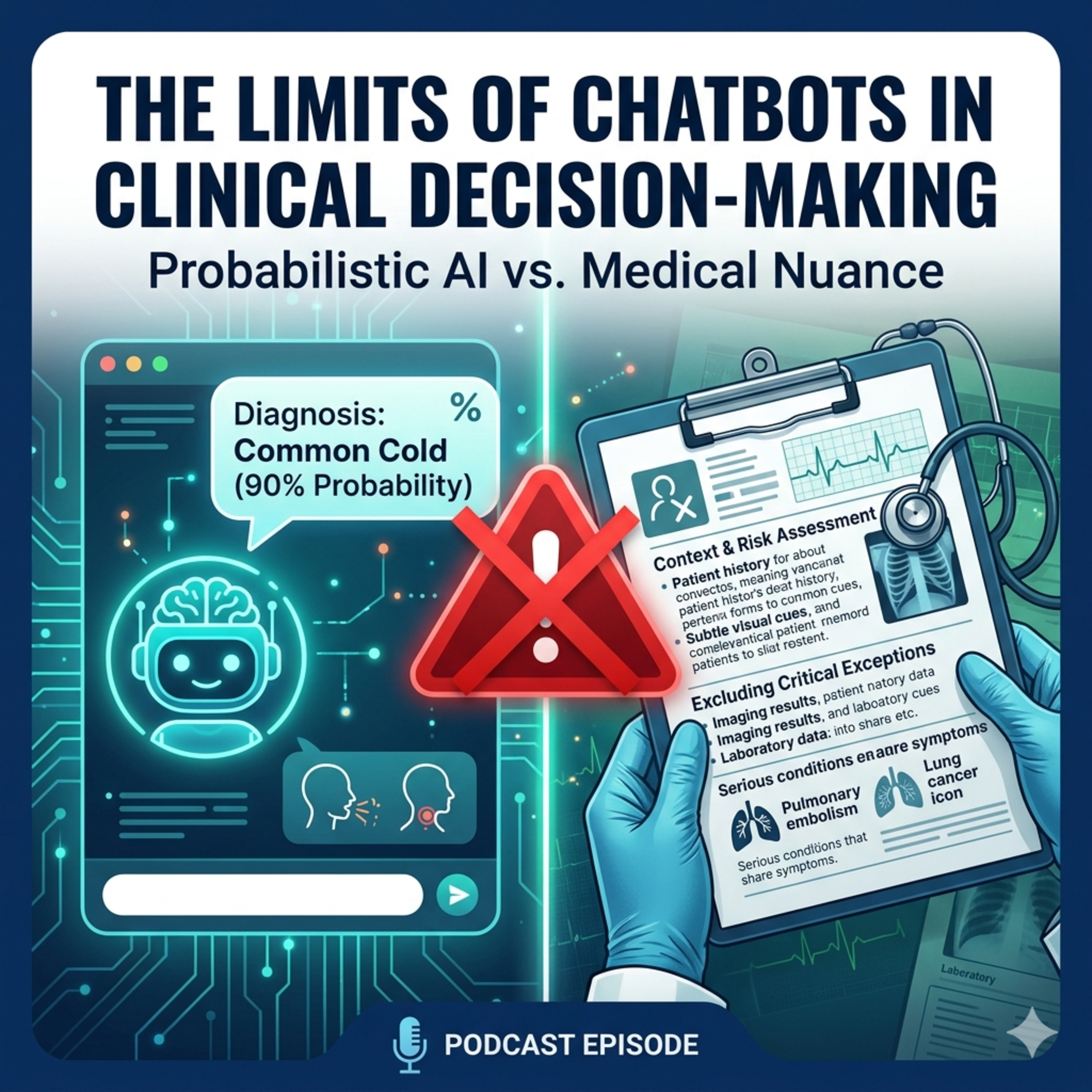 The Limits of Chatbots in Clinical Decision‑Making✨ | chatbotsclinical decision-making+4 | — | ChatbotsAI systems+3 | — | chatbotsAI+5 | — | 8m 12s | |
| 5/4/26 | 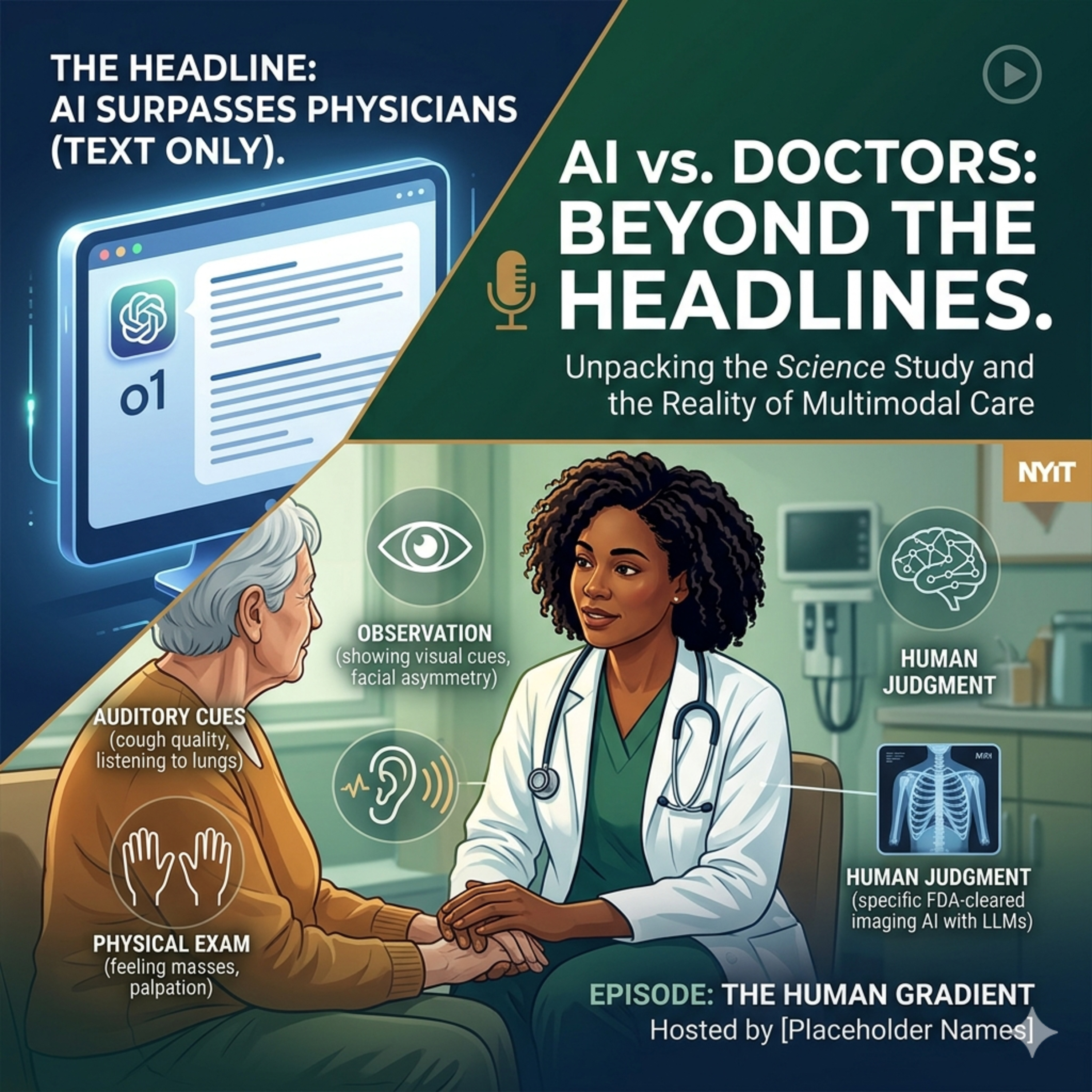 Viral AI-Beats-Doctors Study✨ | AI in medicinediagnostic reasoning+4 | — | OpenAIHarvard+3 | — | AIphysicians+5 | — | 8m 29s | |
| 4/14/26 |  Medical Education Must Teach AI Differently✨ | artificial intelligencemedical education+4 | — | — | — | artificial intelligencehealthcare+5 | — | 36m 52s | |
| 4/2/26 |  The Overfitting Trap✨ | medical educationmachine learning+3 | — | New England Journal of MedicineMedical AI | — | overfittingmedical AI+3 | — | 23m 23s | |
| 3/18/26 |  Understanding the Trust Gap in Medical AI✨ | medical AItrust in healthcare+4 | — | NYIT College of Osteopathic Medicine | — | medical AItrust gap+5 | — | 8m 59s | |
| 3/13/26 | 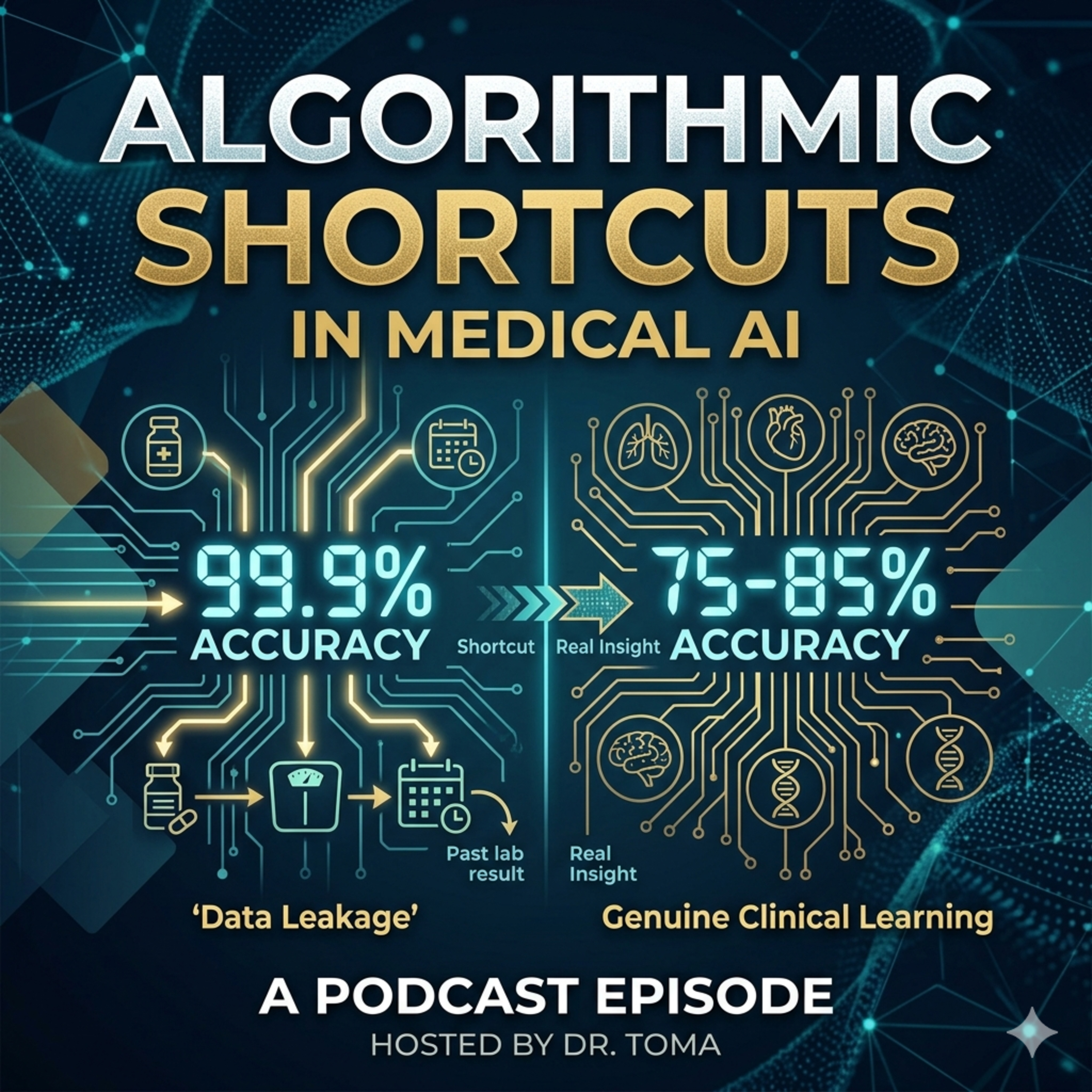 Algorithmic Shortcuts That Undermine Medical AI✨ | medical AIalgorithmic shortcuts+3 | — | — | — | AIobesity+3 | — | 18m 19s | |
| 3/9/26 |  The Accuracy Trap✨ | accuracy paradoxmedical AI+4 | — | AImedical artificial intelligence+4 | medicine | accuracyAI+6 | — | 11m 35s | |
| 11/20/25 |  A Clinical Guide to AI in Medical Diagnostics✨ | AI in healthcaremedical diagnostics+4 | — | AIColonoscopy | — | AI diagnosticsmedical professionals+5 | — | 17m 08s | |
| 11/16/25 |  AI in Today's Business Landscape✨ | AIbusiness+4 | — | — | — | artificial intelligencetechnology+5 | — | 12m 50s | |
Want analysis for the episodes below?Free for Pro Submit a request, we'll have your selected episodes analyzed within an hour. Free, at no cost to you, for Pro users. | |||||||||
| 10/28/25 | 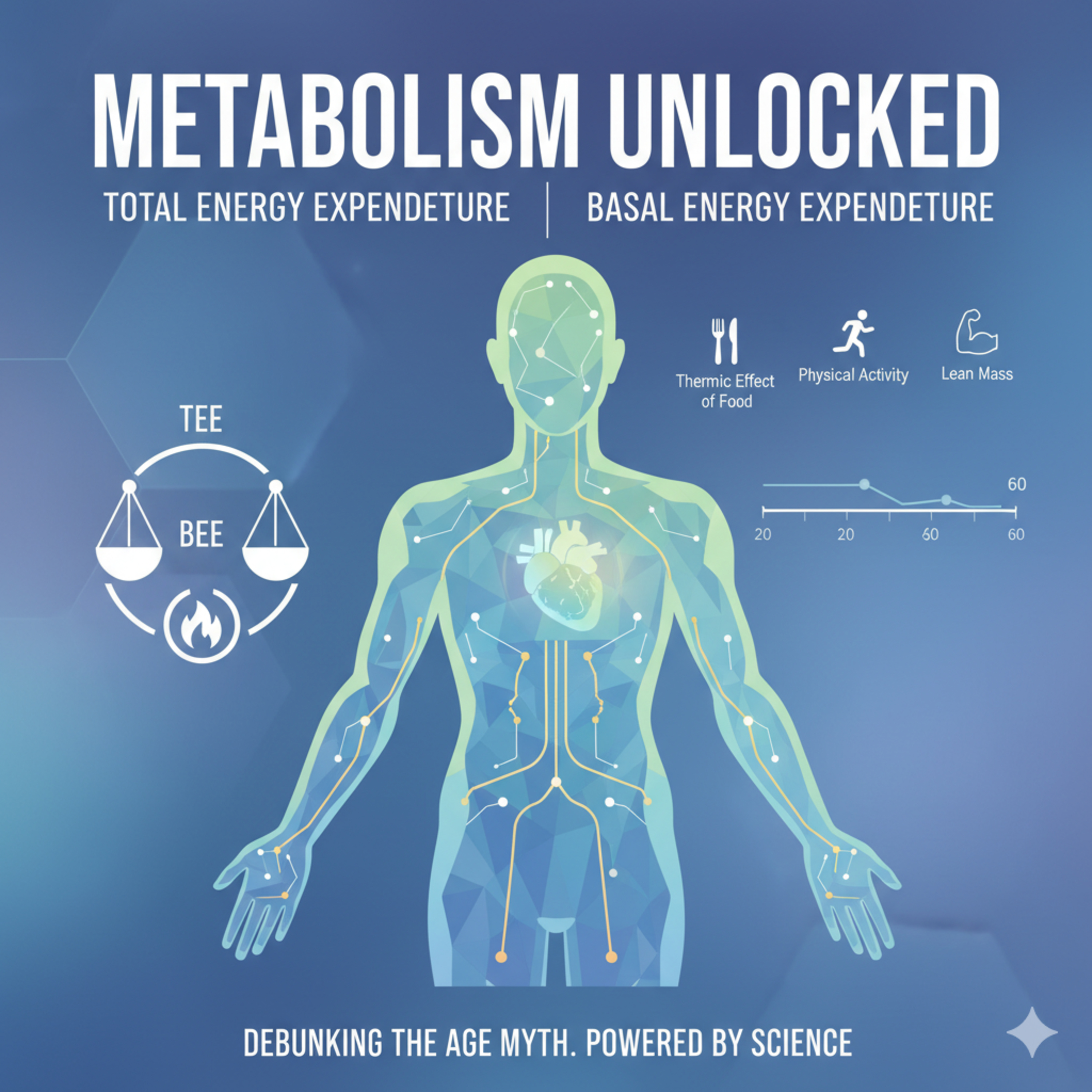 How We Burn Energy✨ | Total Energy ExpenditureBasal Energy Expenditure+4 | — | Daily energy expenditure through the human life courseScience | — | energy expendituremetabolism+4 | — | 16m 14s | |
| 10/27/25 |  Yo-Yo Dieting | This episode challenges the common belief that weight gain in middle age is caused by a slowing metabolism, asserting that adult metabolism generally remains stable until after age sixty. Instead, it explains that weight gain is primarily driven by lifestyle factors, such as reduced physical activity and increased caloric intake. It details how the body mounts a powerful biological defense against weight loss, interpreting caloric restriction as a threat and triggering adaptive thermogenesis, which suppresses metabolism and increases hunger. Consequently, repeated cycles of weight loss and regain, known as weight cycling, become progressively more difficult and may disrupt metabolic health. The episode concludes that the most effective strategy for lifelong weight management is preventing weight gain through consistent lifestyle adjustments rather than relying on restrictive dieting after weight has accumulated.Sources:Herman Pontzer, Yosuke Yamada, Hiroyuki Sagayama, Philip N. Ainslie, Lene F. Andersen, Liam J. Anderson, Lenore Arab, Issaad Baddou, Kweku Bedu-Addo, Ellen E. Blaak, Stephane Blanc, Alberto G. Bonomi, Carlijn V.C. Bouten, Pascal Bovet, Maciej S. Buchowski, Nancy F. Butte, Stefan G. Camps, Graeme L. Close, Jamie A. Cooper, Richard Cooper, et al. Daily energy expenditure through the human life course. Science, 373(6556):808–812, 2021. doi:10.1126/science. abe5017.Allyson K. Palmer and Michael D. Jensen. Metabolic changes in aging humans: current evidence and therapeutic strategies. The Journal of Clinical Investigation, 132(16):e158451, 2022. doi:10.1172/JCI158451.Xiaotao Shen, Chuchu Wang, Xin Zhou, Wenyu Zhou, Daniel Hornburg, Si Wu, and Michael P. Snyder. Nonlinear dynamics of multi-omics profiles during human aging. Nature Aging, 4:1619–1634, 2024. doi:10.1038/s43587-024-00692-2.Paul S. MacLean, Audrey Bergouignan, Marc-Andre Cornier, and Matthew R. Jackman. Biology’s response to dieting: the impetus for weight regain. Amer- ican Journal of Physiology-Regulatory, Integrative and Comparative Physiology, 301(3):R581–R600, September 2011. doi:10.1152/ajpregu.00755.2010. | — | ||||||
| 10/26/25 | 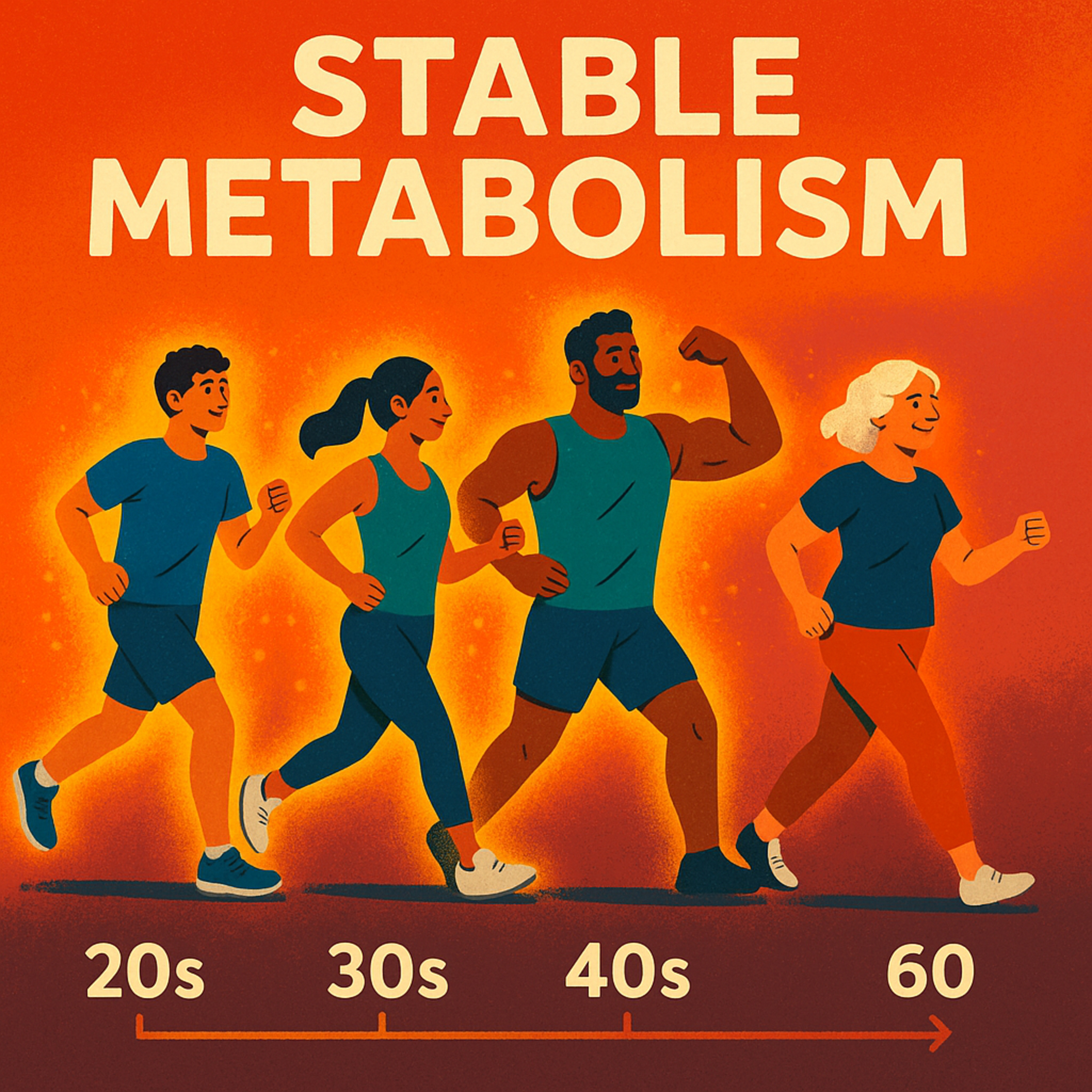 Midlife Metabolism: Fact vs. Fiction | This episode fundamentally challenges the popular belief that human metabolism slows down during midlife, asserting instead that total energy expenditure remains stable between the ages of 20 and 60, only declining after age 60. Using gold-standard measurements, the text explains that the weight gain many adults experience is not due to a slowing metabolism but rather to changes in body composition, specifically the loss of lean muscle mass and the accumulation of fat. Furthermore, this episode highlights that aging and metabolic decline occur nonlinearly, with major molecular and functional transitions occurring around ages 44 and 60, which correspond to accelerated risks for age-related diseases. Consequently, this episode suggests that effective weight management strategies must focus on preserving muscle mass, promoting physical activity, and timing interventions to align with these critical metabolic inflection points.Based on:Herman Pontzer, Yosuke Yamada, Hiroyuki Sagayama, Philip N. Ainslie, Lene F. Andersen, Liam J. Anderson, Lenore Arab, Issaad Baddou, Kweku Bedu-Addo, Ellen E. Blaak, Stephane Blanc, Alberto G. Bonomi, Carlijn V.C. Bouten, Pascal Bovet, Maciej S. Buchowski, Nancy F. Butte, Stefan G. Camps, Graeme L. Close, Jamie A. Cooper, Richard Cooper, et al. Daily energy expenditure through the human life course. Science, 373(6556):808–812, 2021. doi:10.1126/science. abe5017.Allyson K. Palmer and Michael D. Jensen. Metabolic changes in aging humans: current evidence and therapeutic strategies. The Journal of Clinical Investigation, 132(16):e158451, 2022. doi:10.1172/JCI158451.Xiaotao Shen, Chuchu Wang, Xin Zhou, Wenyu Zhou, Daniel Hornburg, Si Wu, and Michael P. Snyder. Nonlinear dynamics of multi-omics profiles during human aging. Nature Aging, 4:1619–1634, 2024. doi:10.1038/s43587-024-00692-2. | — | ||||||
| 10/25/25 |  Underreporting Bias in Obesity Research | This episode provides an overview of the significant challenge of dietary underreporting bias in nutrition research, especially concerning individuals with obesity. It explains how some people with higher body mass index (BMI) systematically and substantially under-report their true food and calorie consumption, often by 700 to 850 kcal per day, which is far more than their lean counterparts. The episode highlights that doubly labeled water (DLW) is the objective "gold standard" method for measuring actual calorie expenditure, and studies using DLW consistently validate the extent of this underreporting. This systematic inaccuracy, often driven by factors like social desirability bias, renders self-reported data from national surveys like NHANES largely unreliable for accurately assessing true calorie intake or its link to obesity trends. Ultimately, the episode cautions researchers to use objective measures and not rely solely on self-reported data when studying obesity.Source on which the episode is based: | — | ||||||
| 10/24/25 | 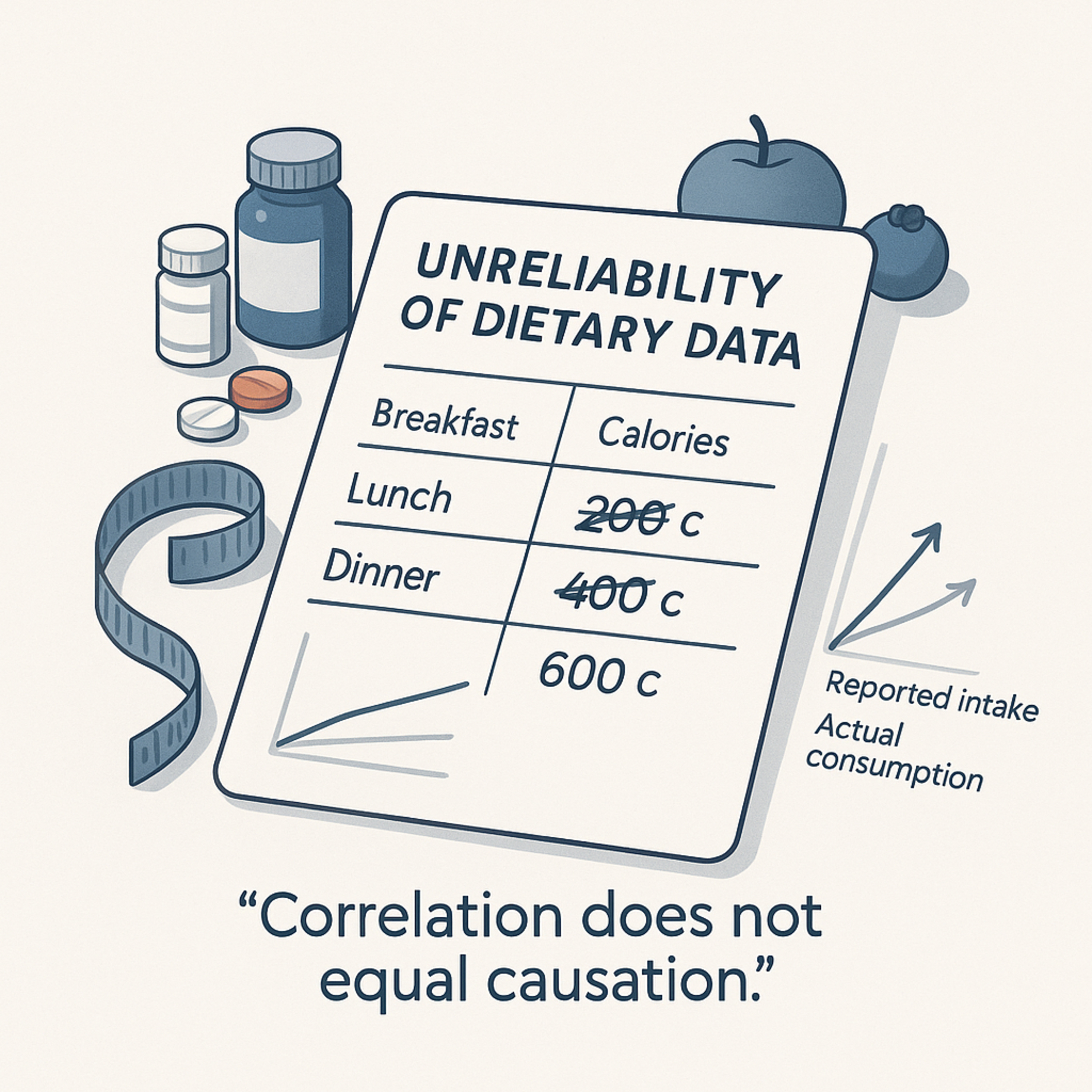 Dietary Trends, Reporting Bias, and the Obesity Epidemic | This episode provides an extensive critique of the reliability of self-reported dietary surveillance data, arguing that simple correlations between dietary trends (like increased calories or changes in macronutrients) and the rise in U.S. obesity rates are misleading. The episode emphasizes that correlation does not equal causation and highlights the significant problem of systematic underreporting of calorie intake, particularly among individuals with higher body mass index. Furthermore, I assert that observed increases in reported calorie intake over time may actually reflect changes in survey methodology rather than real shifts in eating behavior. Finally, I note that despite increasing use of dietary supplements, most Americans still fail to meet recommended intakes for several key micronutrients, underscoring that overall dietary quality remains suboptimal.The studies on which this episode was based:Chery lD. Fryar, Jacqueline D. Wright, Mark S. Eberhardt, and Bruce A. Dye. Trends in nutrient intakes and chronic health conditions among mexican-american adults, a 25-year profile: United states, 1982–2006. Technical Report 50, National Center for Health Statistics, Hyattsville, MD, 2012. URL: https://www.cdc.gov/nchs/data/nhsr/nhsr050.pdf.Edward Archer, Gregory A. Hand, and Steven N. Blair. Validity of u.s. nutritional surveillance: National health and nutrition examination survey caloric energy intake data, 1971–2010. PLoS ONE, 8(10):e76632, 2013. doi:10.1371/journal.pone.0076632.Marjorie R. Freedman, Victor L. Fulgoni, and Harris R. Lieberman. Temporal changes in micronutrient intake among united states adults, NHANES 2003 through 2018: A cross-sectional study. The American Journal of Clinical Nutrition, 119(6):1309–1320, 2024. doi:10.1016/j.ajcnut.2024.02.007.Alexandra E. Cowan, Janet A. Tooze, Jaime J. Gahche, Heather A. Eicher-Miller, Patricia M. Guenther, Johanna T. Dwyer, Nancy Potischman, Anindya Bhadra, Raymond J. Carroll, and Regan L. Bailey. Trends in overall and micronutrient-containing dietary supplement use in us adults and children, NHANES 2007–2018. The Journal of Nutrition, 152(12):2789– 2801, 2022. doi:10.1093/jn/nxac168. | — | ||||||
| 10/23/25 | 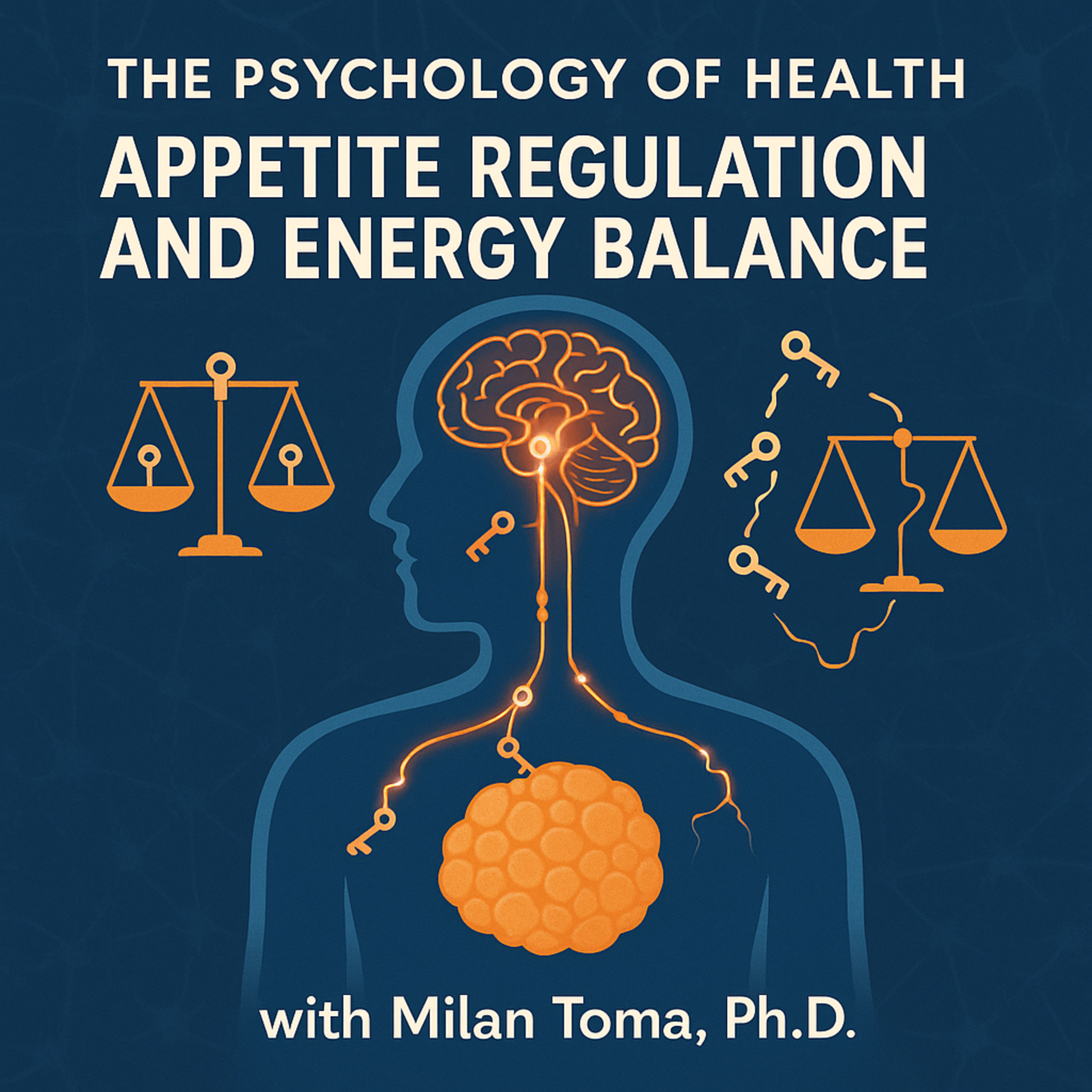 The Biology of Appetite Regulation | This episode provides an extensive overview of the complex biological regulation of appetite and energy balance, moving beyond the simple "calories in, calories out" model. It establishes that fat tissue is an active endocrine organ that produces hormones crucial for signaling the brain about the body's energy status. The episode highlights the central role of the hormone leptin, explaining that it suppresses hunger when fat stores are adequate and drives eating when stores are low. I contrast leptin deficiency, which causes unrelenting hunger and metabolic disease that is treatable with hormone replacement, with the more common condition of leptin resistance seen in obesity, where the brain fails to respond to high leptin levels, thereby promoting continued hunger and weight gain. Ultimately, this episode argues that appetite and weight regulation are governed by hormonal feedback systems that often override conscious control, underscoring the biological challenge of managing weight.Studies on which this episode was based:Dr. Shilpa Balaji Asegaonkar. Insights into role of adipose tissue as endocrine organ. International Journal of Diabetes Research, 1(1):01–04, January 2019. doi:10.33545/26648822.2019.v1.i1a.1.Alexandros Vegiopoulos, Maria Rohm, and Stephan Herzig. Adipose tissue: between the extremes. The EMBO Journal, 36(14):1999–2017, June 2017. doi:10.15252/embj.201696206.F. Lonnqvist. The obese (OB) gene and its product leptin–a new route toward obesity treatment in man? QJM, 89(5):327–332, May 1996. doi: 10.1093/qjmed/89.5.327.Julie A. Chowen and Jesu ́s Argente. Leptin and the brain. HMBCI, 7(2):351–360, August 2011. doi:10.1515/hmbci.2011.113.Jeffrey S Flier and Eleftheria Maratos-Flier. Obesity and the hypothalamus: Novel peptides for new pathways. Cell, 92(4):437–440, February 1998. doi:10.1016/s0092- 8674(00)80937- x.Milen Hristov. Leptin signaling in the hypothalamus: Cellular insights and therapeutic perspectives in obesity. Endocrines, 6(3):42, August 2025. doi:10.3390/endocrines6030042.Jiarui Liu, Futing Lai, Yujia Hou, and Ruimao Zheng. Leptin signaling and leptin resistance. Medical Review, 2(4):363–384, August 2022. doi: 10.1515/mr-2022- 0017. | — | ||||||
| 10/22/25 | 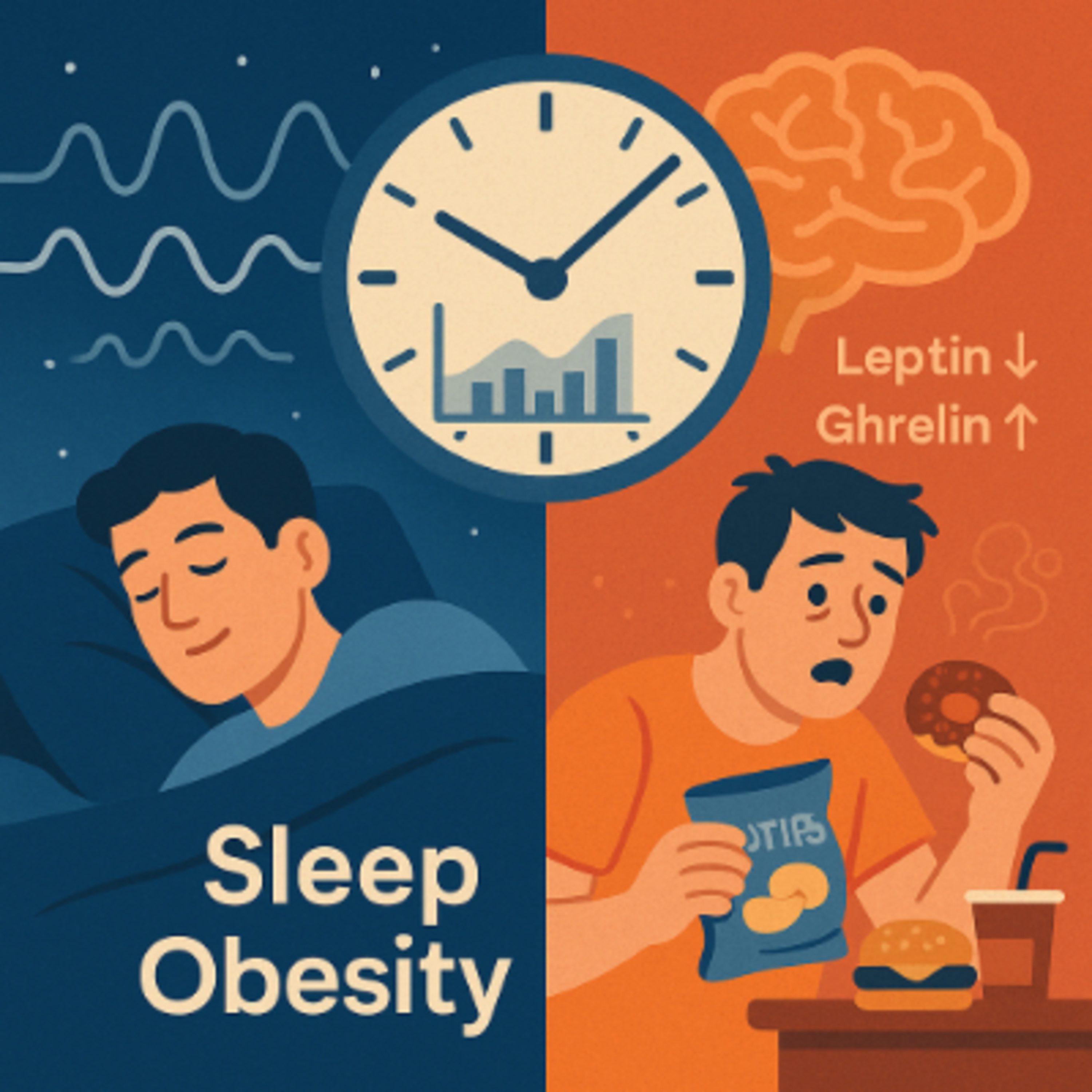 Sleep's Influence on Weight Gain | This episode provides an extensive overview of the strong relationship between insufficient sleep and the increased risk of weight gain and metabolic dysfunction. It emphasizes that epidemiological data consistently identify short sleep duration as an independent risk factor for obesity, particularly in younger populations. Mechanistically, sleep deprivation is shown to disrupt appetite-regulating hormones, specifically by decreasing the satiety hormone leptin and increasing the hunger hormone ghrelin, while also impairing glucose metabolism and promoting insulin resistance. Furthermore, experimental studies confirm that restricted sleep leads to increased caloric intake, predominantly from snacks consumed during extended evening hours, resulting in a positive energy balance that favors fat storage. The episode concludes that because the relationship between sleep and obesity is bidirectional, addressing sleep health represents a crucial and modifiable public health strategy for managing metabolic risk.The sources:Sanjay R Patel and Frank B Hu. Short sleep duration and weight gain: a systematic review. Obesity, 16(3):643–653, 2008. doi:10.1038/oby.2007.118.Shahrad Taheri, Ling Lin, Diane Austin, Terry Young, and Emmanuel Mignot. Short sleep duration is associated with reduced leptin, elevated ghrelin, and increased body mass index. PLoS Medicine, 1(3):e62, 2004. doi:10.1371/journal.pmed.0010062.Karine Spiegel, Esra Tasali, Plamen Penev, and Eve Van Cauter. Sleep curtailment in healthy young men is associated with decreased leptin levels, elevated ghrelin levels, and increased hunger and appetite. Annals of Internal Medicine, 141(11):846–850, 2004. doi:10.7326/0003-4819-141- 11- 200412070-00008.Esra Tasali, Rachel Leproult, and Karine Spiegel. Reduced sleep duration or quality: relationships with insulin resistance and type 2 diabetes. Progress in Cardiovascular Diseases, 51(5):381–391, 2009. doi:10.1016/j.pcad.2008.10.002.Arlet V Nedeltcheva, Jennifer M Kilkus, Jacqueline Imperial, Kristen Kasza, Dale A Schoeller, and Plamen D Penev. Sleep curtailment is accompanied by increased intake of calories from snacks. American Journal of Clinical Nutrition, 89:126–133, 2009. doi:10.3945/ajcn.2008.26574. | — | ||||||
Showing 17 of 14
Pitch Fit is a Pro feature
See how bookable this show is for guests, which brands already advertise, the per-episode ad value, and the best-fit guest and sponsor profile. The numbers are blurred on the free plan.
How readily this show books outside guests like you.
How proven this show is for host-read sponsorships.
For Guests
ProFor Advertisers
ProUpgrade to Pro to unlock guest cadence, sponsor categories, fit scores, and per-episode ad value for this show.
Chart Positions
1 placement across 1 market.
Chart Positions
1 placement across 1 market.