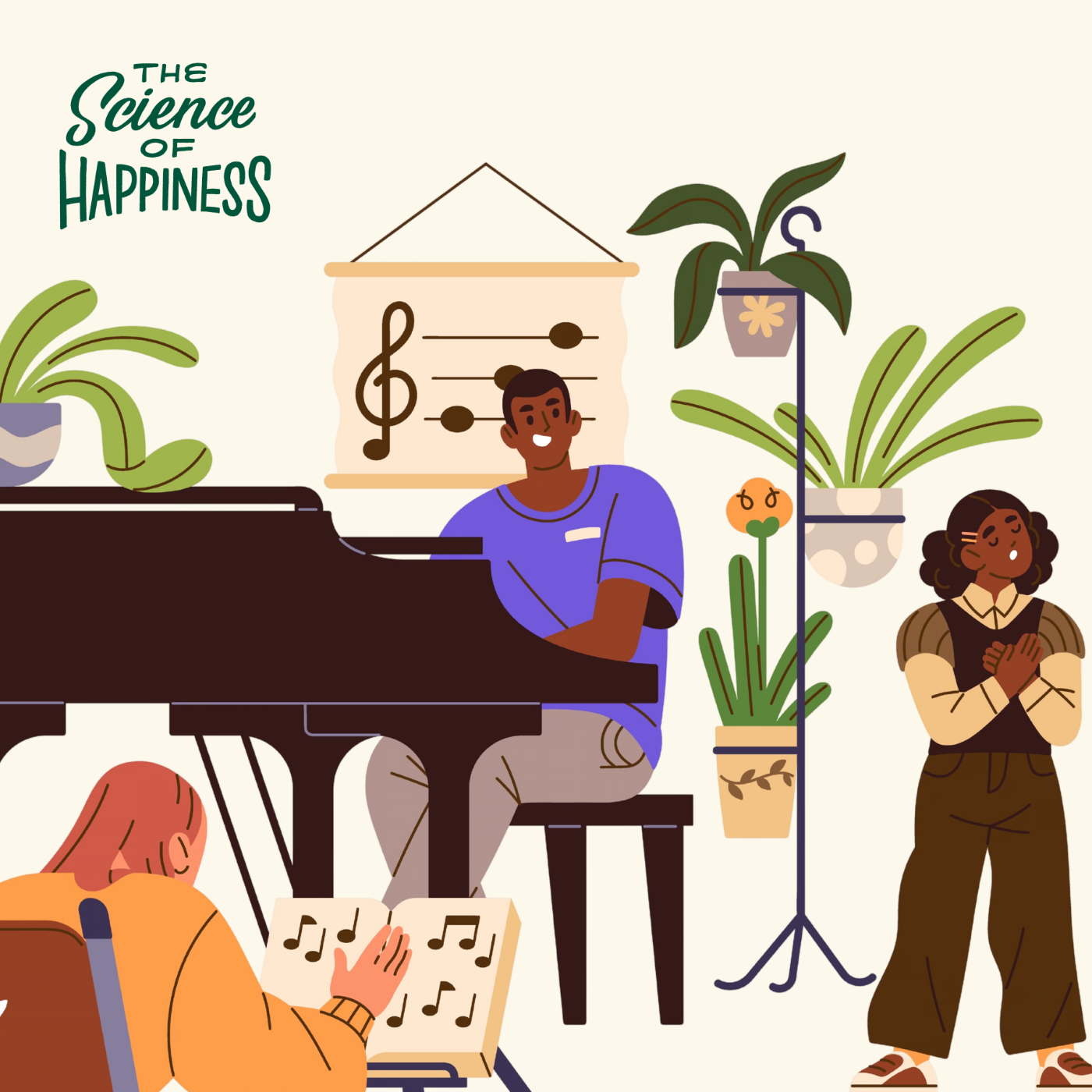
What Happens in the Brain When We Improvise
About this episode
This episode explores the neuroscience of musical improvisation and its implications for creativity.
Explore the neuroscience behind musical improvisation—and what it reveals about our natural capacity for creativity. Summary: Creativity may be more natural than we think. Research on musicians and children improvising at the piano suggests that improvisation can quiet the brain’s inner critic while engaging networks linked to exploration, play, and reward. In this episode of The Science of Happiness , we look at the neuroscience of improvisation—and what a “beginner’s mind” can teach us about opening up creativity in everyday life. How To Do This Practice: Choose a simple starting point: Begin with something familiar—a simple melody, rhythm, phrase, movement, or creative prompt. It could be notes on a keyboard, a beat you tap on the table, a few lines of writing, or even a movement with your body. Change one small thing: Experiment by altering a single element, like the speed, mood, rhythm, or key. Small changes help spark creativity without feeling overwhelming. Let go of judgment: Remind yourself there are no mistakes in improvisation, only possibilities. If something sounds unexpected, treat it as part of the exploration rather than something to fix. Follow your curiosity…
More episodes of The Science of Happiness
- An Awe Walk Through History and Possibility
- Happiness Break: A Loving-Kindness Practice for Yourself
- How Cities Can Make Space for Awe
- Happiness Break: Make Uncertainty Part of the Process
- Happiness Break: How Poetry Helps Us Feel and Heal
- Why Work Feels Better Together
Explore listener stats, chart rankings, contacts and more on the The Science of Happiness podcast page.