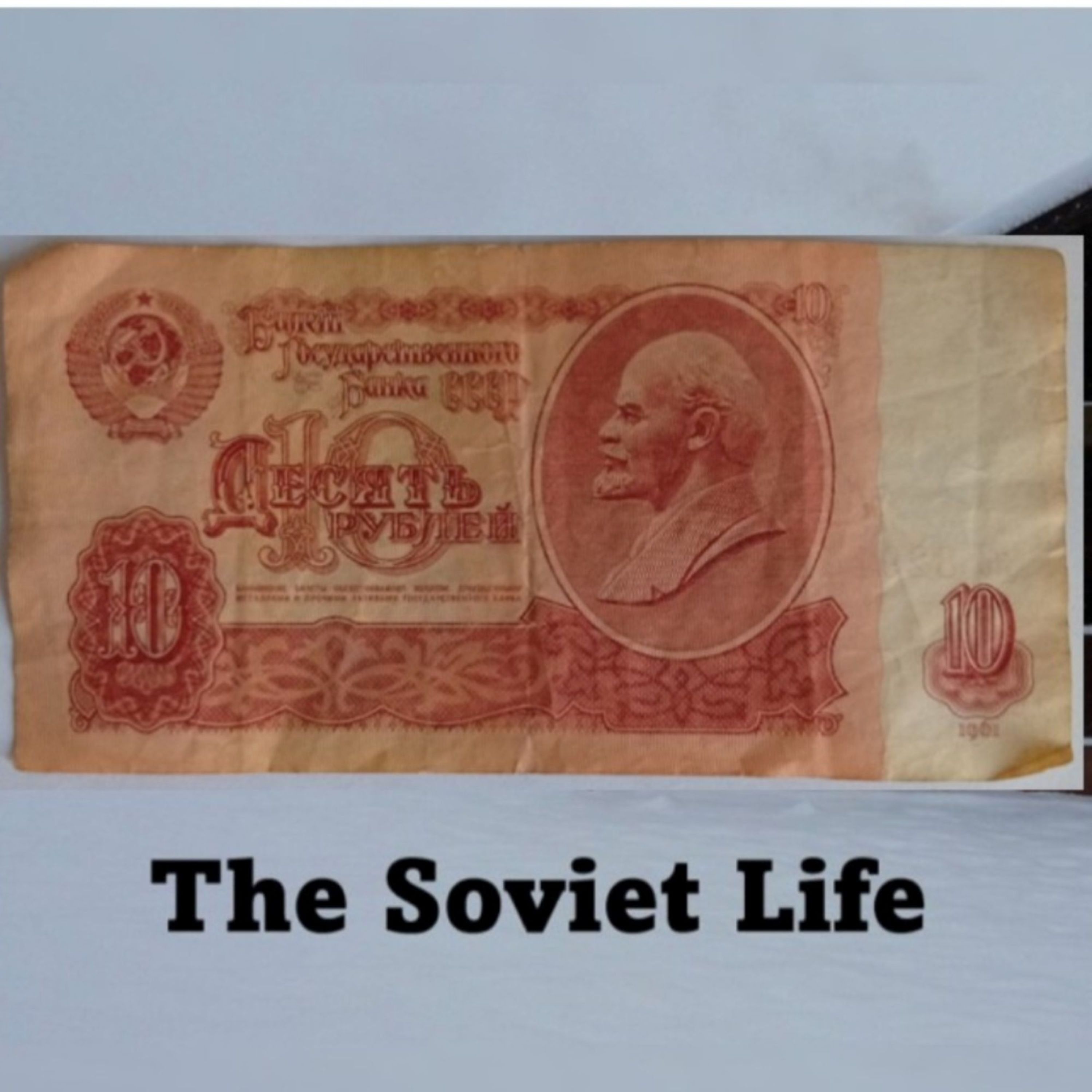
16: How Money Worked in the USSR - From Rubles to Survival
From The Soviet Life by Kate Saba
March 29, 2026 · 46 min · Season 1 · Episode 17
About this episode
Kate Saba explores the unique economic system of the USSR, where money often couldn't buy essential goods and relationships became the most valuable currency.
In this episode of The Soviet Life, host Kate Saba takes you inside a world where money didn’t work the way we expect - it existed and often couldn’t buy what people actually needed. With personal insight and historical perspective, she explores a system where salaries were stable, yet shelves were empty, where long lines and shortages defined daily life, and where the most valuable currency wasn’t rubles, but relationships. From controlled prices and state banking to black markets and the sudden collapse that wiped out savings overnight, Kate reveals how an entire society learned to survive - and even thrive - when money alone wasn’t enough. Key Takeaways Money didn’t equal access. In the USSR, you could have a steady salary - but still struggle to find basic goods on store shelves. The economy was controlled, not driven by demand. Prices and production were set by the state through central planning, not by what people actually needed. Shortages shaped everyday life. Long lines, limited choices, and waiting became a normal part of survival. Relationships were the real currency. The blat system - using personal connections - often mattered more than rubles when it came to getting…
People in this episode
Host: Kate Saba
Topics covered
- economy
- money
- USSR
- survival
- relationships
- shortages
Keywords
- USSR
- rubles
- economy
- shortages
- relationships
- blat system
- state banking
Mentioned in this episode
Places: USSR
More episodes of The Soviet Life
- 19: Alex Tokmin: Books, Freedom, and Life Beyond the USSR · June 7, 2026 · 1h 4m
- 18: Victory Day: Not Just History, But Memory · May 9, 2026 · 25 min
- 17: Money and Economy after the Fall of the USSR - From Rubles to Chaos · April 21, 2026 · 28 min
- 15: Growing up in Soviet Moldova - Anna’s Story · March 5, 2026 · 45 min
- 14: More Than Medals - The Soviet Olympic Machine · February 19, 2026 · 26 min
- 13: Red Echoes: The Soviet Legacy in Venezuela · February 9, 2026 · 29 min
Explore listener stats, chart rankings, contacts and more on the The Soviet Life podcast page.