
Insights from recent episode analysis
Audience Interest
Podcast Focus
Publishing Consistency
Platform Reach
Insights are generated by CastFox AI using publicly available data, episode content, and proprietary models.
Est. Listeners
Based on iTunes & Spotify (publisher stats).
- Per-Episode Audience
Est. listeners per new episode within ~30 days
1 - 1,000 - Monthly Reach
Unique listeners across all episodes (30 days)
1 - 5,000 - Active Followers
Loyal subscribers who consistently listen
1 - 500
Market Insights
Platform Distribution
Reach across major podcast platforms, updated hourly
Total Followers
—
Total Plays
—
Total Reviews
—
* Data sourced directly from platform APIs and aggregated hourly across all major podcast directories.
On the show
Recent episodes
The Wrecking Crew
May 1, 2026
27m 13s
The Surf Guitar Wave
Apr 24, 2026
30m 17s
From Skiffle to Beatlemania
Apr 17, 2026
36m 12s
The Rise of Rockabilly
Apr 10, 2026
27m 31s
From Live Capture to Multitrack
Apr 3, 2026
30m 44s
Social Links & Contact
Official channels & resources
Official Website
Login
RSS Feed
Login
| Date | Episode | Description | Length | |
|---|---|---|---|---|
| 5/1/26 | 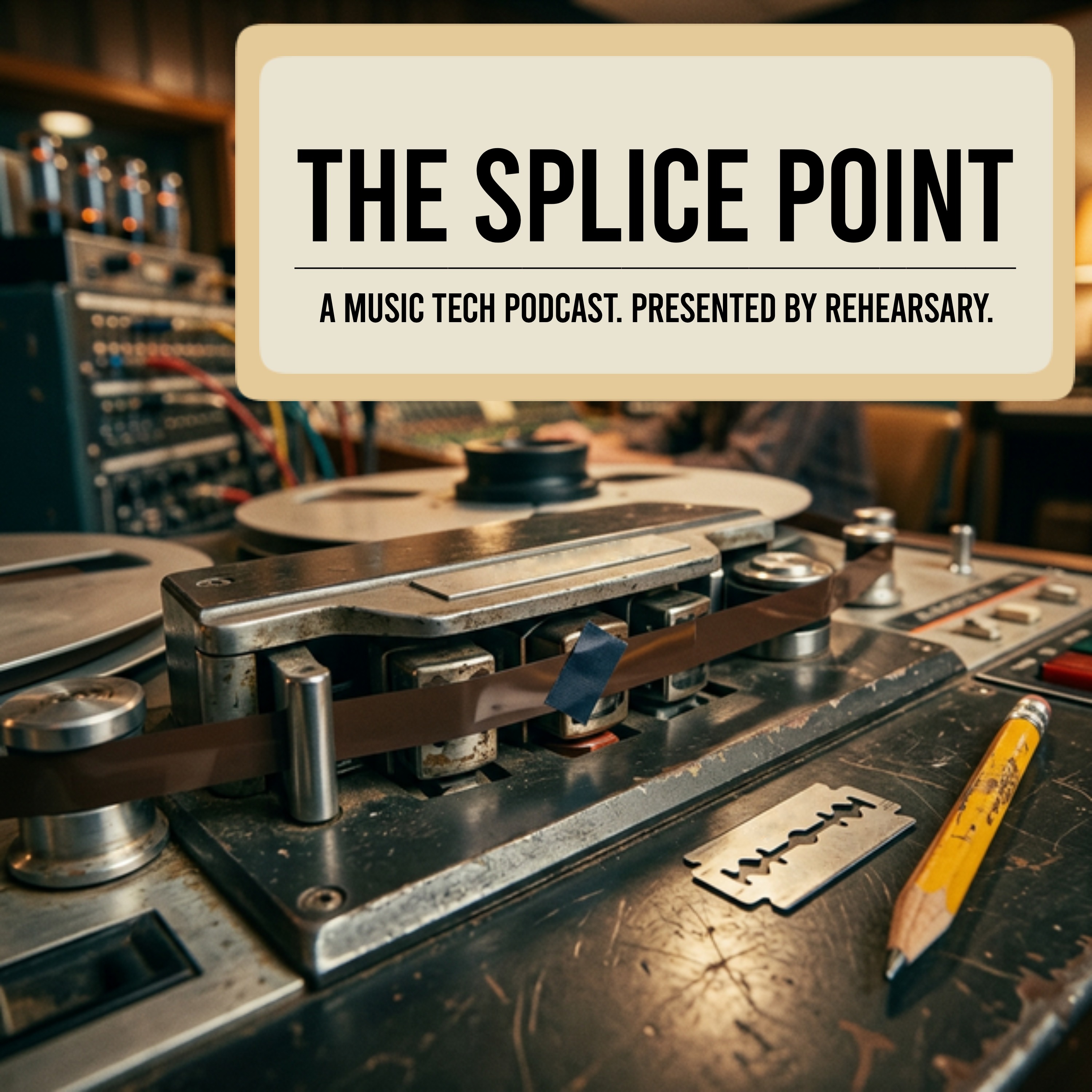 The Wrecking Crew The Wrecking Crew | This episode explores the hidden architecture of the 1960s Los Angeles recording scene and the elite group of session musicians known as the Wrecking Crew. It examines how the limitations of three-track recording and the high cost of studio time forced producers to sideline young rock bands in favor of reliable professionals who could deliver perfect takes on command.We follow the journey of the Wrecking Crew from the industrial efficiency of The Byrds' "Mr. Tambourine Man" sessions to the Wagnerian "Wall of Sound" at Gold Star Studios. The narrative covers the technical evolution of the studio as an instrument, the creative intuition that birthed hits like "California Dreamin'," and the eventual obsolescence of the session-player model due to the rise of sixteen-track technology and the rock authenticity movement.---Connect with UsPresented by Rehearsary.comSubscribe to The Splice Point on Apple / SpotifyFollow Rehearsary on TikTok / Instagram / Rehearsary.com---Sources and Further ReadingFeatured Articles & Interviews- "The wrecking crew - the greatest band you've never heard of." The Vinyl Historian, March 6, 2026.- "Larry Levine" Tape Op Magazine.- "The Wrecking Crew." American Heritage, Feb/March 2007 (Vol 58, Issue 1).- "Classic Tracks: The Ronettes 'Be My Baby'." Sound on Sound, April 2007.- Hartman, Kent. The Wrecking Crew: The Inside Story of Rock and Roll's Best-Kept Secret. St. Martin's Press, 2012.- "The Wrecking Crew." Denny Tedesco, 2008. | 27m 13s | |
| 4/24/26 | The Surf Guitar Wave | In the late 1950s, electric guitar amplifiers were designed for jazz ensembles and small clubs. They were low-wattage and bone-dry, lacking the power to fill large venues or the atmospheric texture to make notes sustain. This episode explores how the mechanical spring reverb tank, originally developed to simulate acoustics for church organs, was hacked to solve this problem. The result was the loud, percussive, and reverb-drenched guitar tone that defined the surf rock genre and changed American popular music.We follow guitarist Dick Dale as he attempts to push a guitar to its physical limits inside the massive Rendezvous Ballroom in Southern California. The episode covers his collaboration with Fender and JBL to build the 100-watt Showman amplifier and the standalone 6G15 Fender Reverb unit. We track the timeline from Dale destroying low-wattage amplifiers with heavy string gauges, to his discovery of the tube-driven reverb tank, and finally to the widespread adoption of the surf sound by bands like The Beach Boys and the early developers of hard rock.---Connect with UsPresented by Rehearsary.comSubscribe to The Splice Point on Apple / SpotifyFollow Rehearsary on TikTok / Instagram / Rehearsary.com---Sources and Further ReadingFeatured Articles & Interviews- "Before the 100-Watt Marshall Stack There Was the Mighty Fender Showman." GuitarPlayer, January 6, 2023.- "The Fender Showman." Vintage Guitar Magazine, September 23, 2013.- "The History of Spring Reverb." Pulsar Audio, April 9, 2024.- "The Rendezvous Ballroom Reunion: Surf Rock and the Righteous Brothers." PBS SoCal, July 25, 2014.- "How Dick Dale Teamed Up with Fender to Create a Sound Like No Other." Happy Mag, March 18, 2019. | 30m 17s | |
| 4/17/26 | From Skiffle to Beatlemania | This episode explores the transition of British pop music from the acoustic skiffle craze of the 1950s to the electric dominance of the British Invasion. Constrained by post-war import bans and financial limits, working-class teenagers constructed homemade instruments like tea-chest basses and washboards to play rhythm-heavy folk. As these young musicians sought to emulate American rock and roll, they outgrew their acoustic roots, adopting electric guitars and demanding ever-louder amplification, ultimately changing the sonic landscape of modern music.We follow the early days of The Quarrymen, tracing John Lennon and Paul McCartney's first meeting at a church fete and their grueling, electrically fueled residencies in Hamburg. The episode unpacks how Vox's Dick Denney developed the AC30 amplifier and its signature Top Boost circuit to meet bands' demands for more volume and treble. From Lonnie Donegan’s DIY hit to The Beatles' marathon recording sessions and stadium-sized logistical challenges, we examine how raw necessity created the foundations of the modern rock band.Connect with UsPresented by Rehearsary.comSubscribe to The Splice Point on Apple / SpotifyFollow Rehearsary on TikTok / Instagram / Rehearsary.com---Sources and Further ReadingFeatured Articles & Interviews- "When Paul McCartney met John Lennon." National Museums Liverpool, July 6, 2017.- "Skiffle Music Guide: 3 Characteristics of Skiffle Music." MasterClass, December 13, 2022.- "Lonnie Donegan: The King of Skiffle Who Sparked a Revolution." Pure Effect Music, October 17, 2025.- "Used by The Beatles and Brian May, the Vox AC30 is one of the all-time great amps." Guitar.com / Yahoo, May 23, 2024. | 36m 12s | |
| 4/10/26 | The Rise of Rockabilly | This episode examines the transition from the dry, direct sound of early 1950s country music to the rhythmic, spacious sound of rockabilly. For years, country music recording prioritized capturing a clean, unadorned performance. The introduction of tape delay fundamentally altered this approach, allowing small bands to sound massive and adding a propulsive, percussive energy to the music that appealed to a new youth market.We follow Sam Phillips in Memphis as he purchases two Ampex 350 tape machines and discovers how to route a live signal between them to create a 134-millisecond delay. We trace how this specific "slapback" echo was utilized by artists like Elvis Presley, Scotty Moore, and Carl Perkins during their sessions at Sun Studio. Finally, we look at how the major labels attempted to replicate this sound, and how Phillips' experimentation established the recording studio as a compositional space where equipment actively participated in the music.Connect with UsPresented by Rehearsary.comSubscribe to The Splice Point on Apple / SpotifyFollow Rehearsary on TikTok / Instagram / Rehearsary.com---Sources and Further ReadingFeatured Articles & Interviews- Blitz, Matt. "How Sam Phillips Invented the Sound of Rock and Roll." Popular Mechanics, June 8, 2017.- Halmrast, Tor. "Sam Phillips’ Slap Back Echo; Luckily in Mono." Art of Record Production Conference, 2019.- Romain. "Using a slapback echo to fatten your tone." Guitar Tone Overload, May 10, 2010.- Music Guy Mixing. "Slapback Delay – How to Use it In Your Mix." Music Guy Mixing.- Sun Records. "Sam Phillips Biography." *Sun Records*.- Blank, Christopher. "Sun Studio's Matt Ross-Spang Rediscovers a Vintage Sound." WKNO FM / NPR, July 22, 2014. | 27m 31s | |
| 4/3/26 | From Live Capture to Multitrack | In the first half of the 20th century, recording music meant capturing one live take from start to finish. What you played was what you got. This episode covers how that changed, tracing the path from the fragile acetate disc to magnetic tape, and from tape to the invention of multi-track recording.The story runs through Jack Mullin, the Army Signal Corps officer who found German Magnetophon tape machines in 1945 and shipped them home; Bing Crosby, who funded Ampex to build the first commercial reel-to-reel so he could pre-record his radio show; and Les Paul, who modified an Ampex machine in his garage to layer separate performances onto a single tape. We also look at how that idea spread through the industry, from Phil Spector's Wall of Sound to the Beatles recording Sgt. Pepper's on four tracks at Abbey Road.Connect with UsPresented by Rehearsary.comSubscribe to The Splice Point on Apple / SpotifyFollow Rehearsary on TikTok / Instagram / Rehearsary.com---Sources and Further ReadingFeatured Articles & Interviews- Mix Online. "John T. Mullin: The Man Who Put Bing Crosby on Tape." Mix, 1999.- Hammar, Peter and Wilson, Bob. "Welcome to Ampex History: Technical Achievement." Ampex History.- McQuade, Martin. "The Incredible Story of Les Paul's 'Lover' – the Breakthrough Multitrack Recording That Changed the World, Part 2." Guitar Player, 2023.Documentaries & Videos- "Les Paul and Mary Ford Show Alistair Cooke How They Record Multi-Track Songs Live on Television in 1953." Omnibus, CBS / Laughing Squid, 1953.- "Chasing Sound." (Featuring interviews with Al Schmitt and Phil Ramone), 2007. | 30m 44s |
Showing 5 of 5
Sponsor Intelligence
Sign in to see which brands sponsor this podcast, their ad offers, and promo codes.
Chart Positions
2 placements across 2 markets.
Chart Positions
2 placements across 2 markets.