

Insights from recent episode analysis
Audience Interest
Podcast Focus
Publishing Consistency
Platform Reach
Insights are generated by CastFox AI using publicly available data, episode content, and proprietary models.
Most discussed topics
Brands & references
Total monthly reach
Estimated from 1 chart position in 1 market.
By chart position
- 🇸🇪SE · How To#9110K to 30K
- Per-Episode Audience
Est. listeners per new episode within ~30 days
5K to 15K🎙 ~2x weekly·20 episodes·Last published 2mo ago - Monthly Reach
Unique listeners across all episodes (30 days)
10K to 30K🇸🇪100% - Active Followers
Loyal subscribers who consistently listen
4K to 12K
Market Insights
Platform Distribution
Reach across major podcast platforms, updated hourly
Total Followers
—
Total Plays
—
Total Reviews
—
* Data sourced directly from platform APIs and aggregated hourly across all major podcast directories.
On the show
From 10 epsHost
Recent guests
No guests detected in recent episodes.
Recent episodes
Shelter Before Fire (Why You’ve Been Prioritizing It Wrong) | Episode 610
Apr 15, 2026
14m 31s
What’s Actually Wrong With Me (And Why It Matters for Survival) | Episode 609
Apr 2, 2026
27m 19s
Fire Starting Under Real Conditions | Episode 608
Mar 31, 2026
20m 54s
You’re Not Broke — You’re Leaking Money Everywhere | Episode 607
Mar 24, 2026
17m 52s
Prepping Is Mostly Procrastination | Episode 606
Mar 23, 2026
23m 38s
Social Links & Contact
Official channels & resources
Official Website
Login
RSS Feed
Login
| Date | Episode | Topics | Guests | Brands | Places | Keywords | Sponsor | Length | |
|---|---|---|---|---|---|---|---|---|---|
| 4/15/26 | 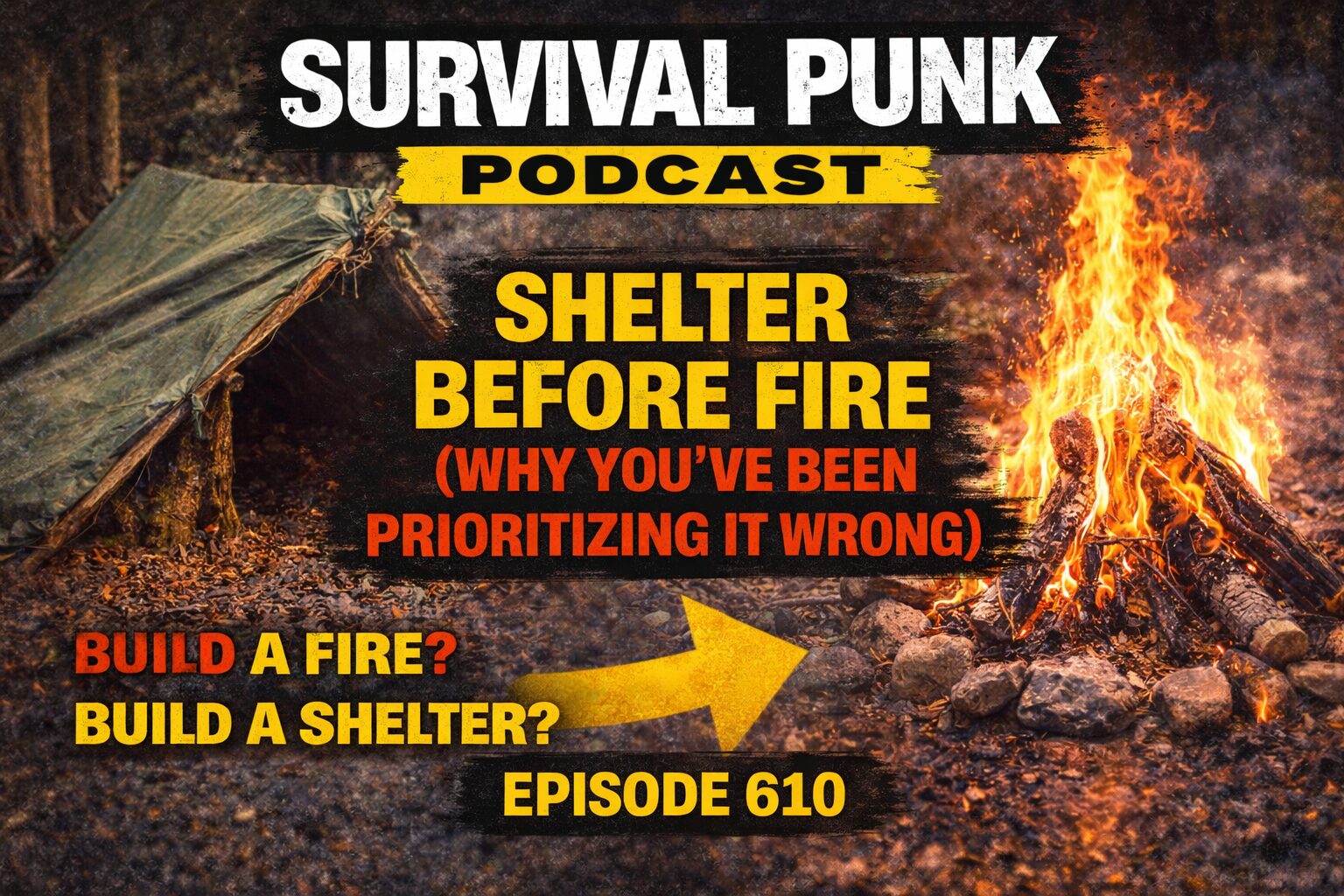 Shelter Before Fire (Why You’ve Been Prioritizing It Wrong) | Episode 610✨ | survival skillsshelter importance+3 | — | — | — | survivalshelter+4 | — | 14m 31s | |
| 4/2/26 |  What’s Actually Wrong With Me (And Why It Matters for Survival) | Episode 609✨ | healthdiagnosis+3 | — | rheumatologist | — | fatiguehealth+5 | — | 27m 19s | |
| 3/31/26 |  Fire Starting Under Real Conditions | Episode 608✨ | fire startingsurvival skills+4 | — | — | Tennessee | fire startingsurvival+5 | — | 20m 54s | |
| 3/24/26 |  You’re Not Broke — You’re Leaking Money Everywhere | Episode 607✨ | budgetingpersonal finance+3 | — | — | — | budget bleedingfinancial tracking+3 | — | 17m 52s | |
| 3/23/26 |  Prepping Is Mostly Procrastination | Episode 606✨ | preppingprocrastination+3 | — | — | — | preppingprocrastination+4 | — | 23m 38s | |
| 3/20/26 | 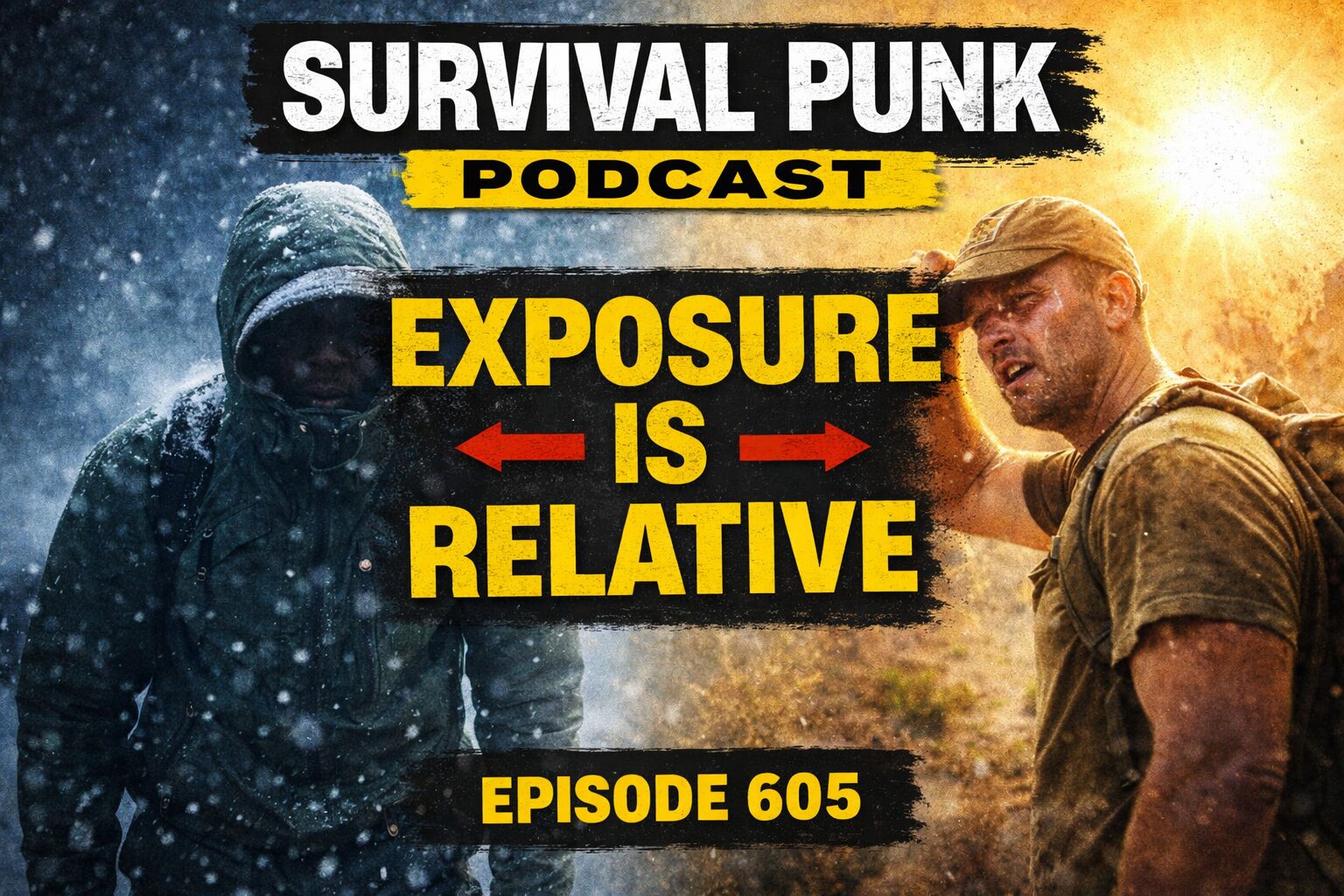 Exposure Is Relative | Episode 605✨ | exposuretemperature+4 | — | — | — | exposuretemperature+3 | — | 22m 23s | |
| 3/16/26 |  Fitness Myths That Need to Die | Episode 604✨ | fitness mythsweight loss+3 | — | — | — | fitness mythsweight loss+5 | — | 25m 33s | |
| 3/13/26 | 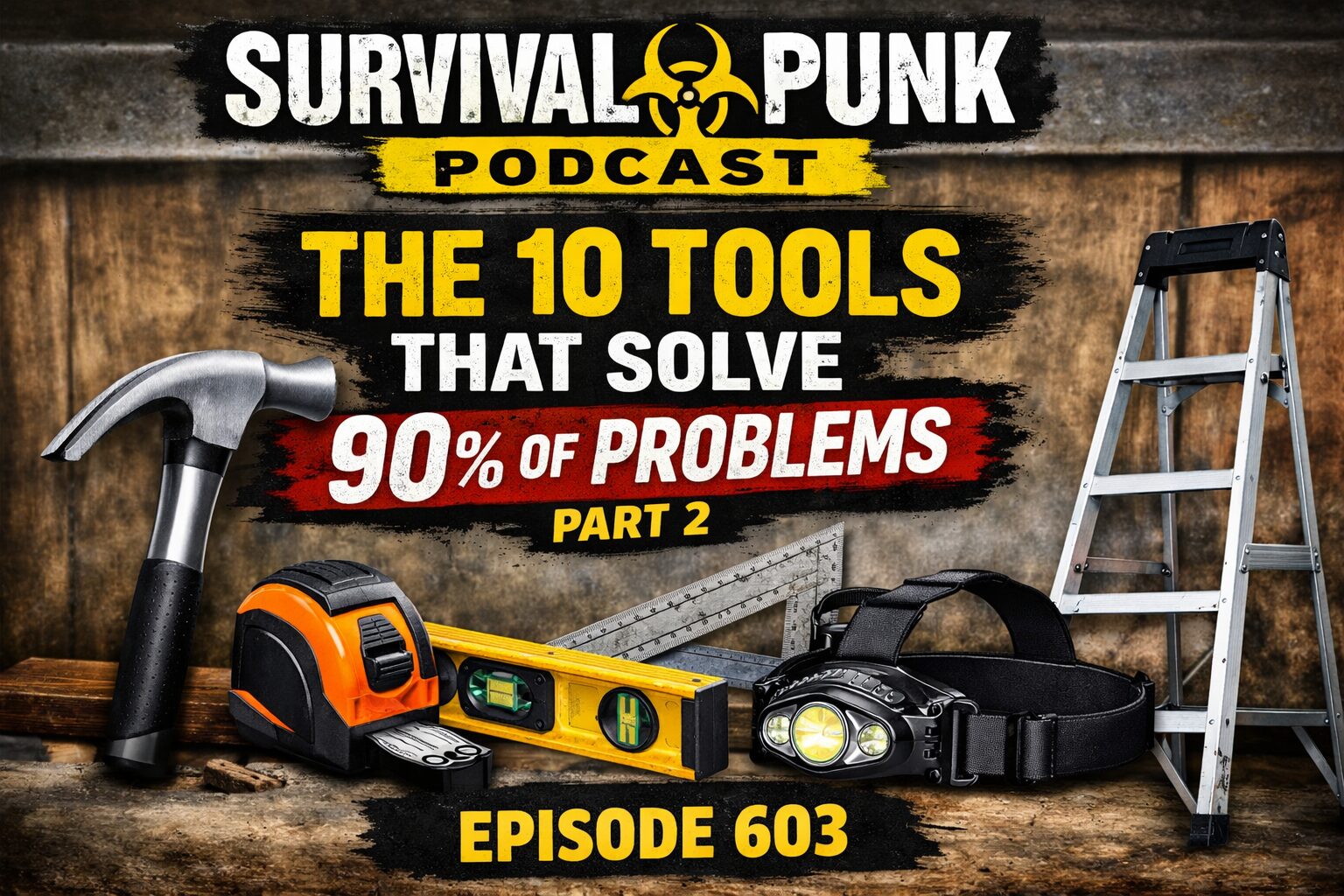 The 10 Tools That Solve 90% of Problems (Part 2) | Episode 603✨ | toolshome repair+3 | — | claw hammerFacebook Marketplace | — | home repair toolsclaw hammer+3 | — | 22m 56s | |
| 3/11/26 |  10 Tools That Solve 90% of Your Problems (Part 1) | Episode 602✨ | toolshome repair+3 | — | — | — | cordless drillmulti-bit screwdriver+3 | — | 22m 36s | |
| 3/10/26 |  Plant Once, Harvest for Life | Episode 601✨ | perennialsfood security+3 | — | Fruit Treesapples+8 | — | perennialsfruit trees+3 | — | 22m 34s | |
Want analysis for the episodes below?Free for Pro Submit a request, we'll have your selected episodes analyzed within an hour. Free, at no cost to you, for Pro users. | |||||||||
| 3/9/26 | 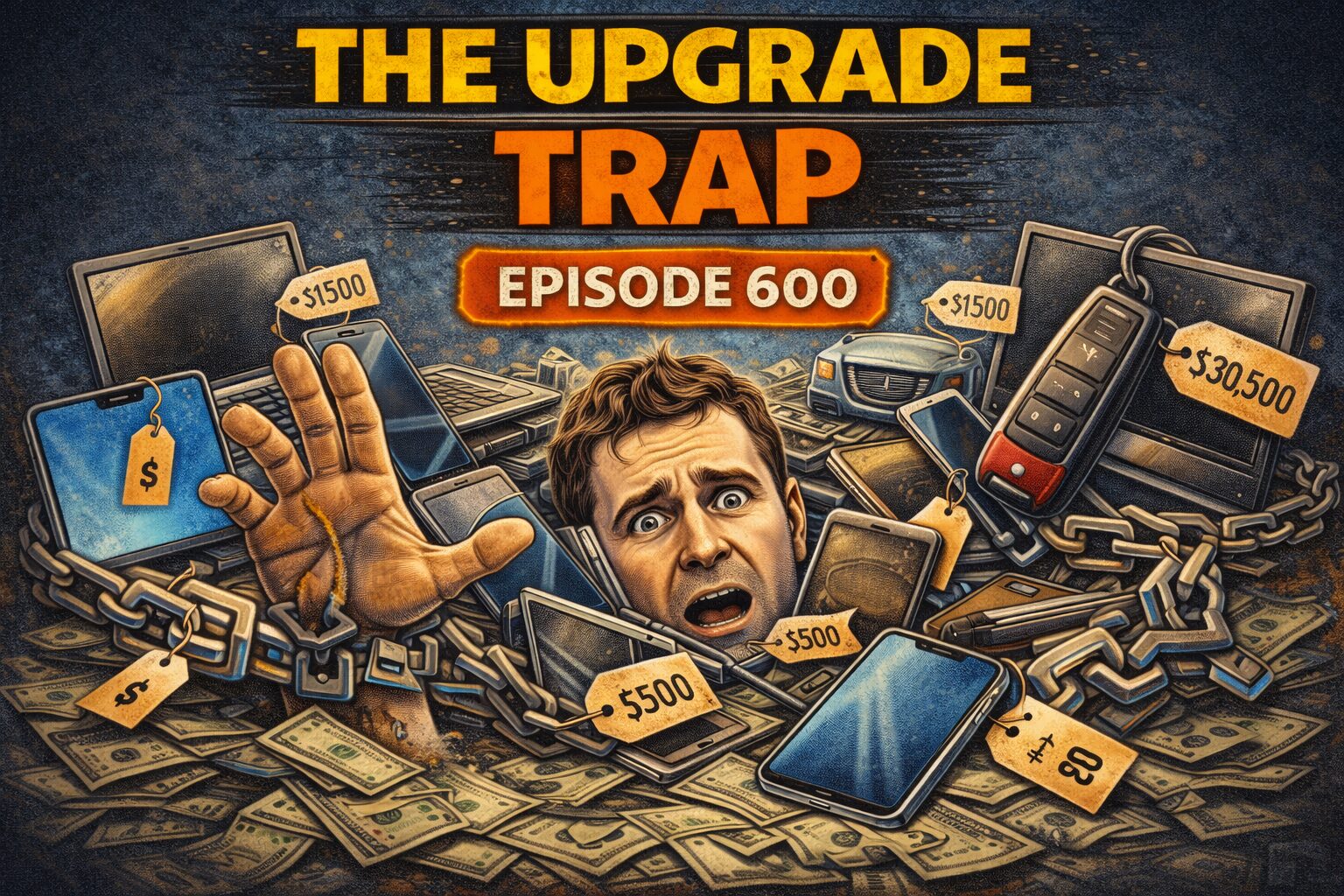 The Upgrade Trap | Episode 600 | upgrade life The Upgrade Trap | Episode 600 It’s incredibly easy to fall into what I call the upgrade trap. Phones, laptops, TVs, cars — companies are constantly pushing the newest version of everything. The marketing tells you your current gear is outdated, slow, or missing the latest features. So people upgrade every year or two without really thinking about the long-term cost. Today we’re talking about how this trap works, why it’s so effective, and how you can break free from it. The Phone Upgrade Cycle Smartphones are probably the most obvious example of the upgrade trap. Every year there’s a new iPhone. Every year there’s a new Android flagship. Folding phones, bigger cameras, faster processors — and most of the time people are paying more for features they barely use. For years I fell into this trap myself. Back when the first Android phone came out — the T-Mobile G1 with the flip-out keyboard — I jumped on it immediately. After that I kept upgrading every couple of years. And phone companies make it easy to do. They’ll happily “upgrade” your phone while quietly adding another $20–$30 per month to your bill for the next couple years. If you’re doing that for every device in your family, you might be adding $100 or more every month just to keep chasing the newest gadgets. That’s money that never stops leaving your pocket. A Smarter Way to Handle Phones These days I take a completely different approach. First, I stopped paying for phone insurance. That alone saves around $18 or more every month. If you take that same money and just set it aside, you’ll have enough to buy a replacement phone every year if something goes wrong. When my phone breaks, I simply go to eBay and buy a model that’s a couple years old. Usually I can get one for around $100–$200. Then I sell my old phone — even if it’s damaged — and recover some of the cost. People buy broken phones all the time to repair and flip them. So instead of paying monthly fees forever, I just replace devices when I actually need to. It’s simple and it saves a ton of money. Planned Obsolescence Everywhere Phones aren’t the only place this happens. Software companies do it too. Microsoft recently caused a lot of backlash by ending support for a bunch of devices that aren’t even that old. Suddenly perfectly functional computers are considered “obsolete.” Laptop manufacturers have also leaned heavily into planned obsolescence. Cheap laptops in the $300 range often seem designed to last only a couple years before something fails. Hard drives die. Performance slows down. Parts wear out. For years I would just buy a new laptop every few years because it seemed easier than fixing the problem. Eventually I stopped doing that. Now I’m still using a desktop that isn’t perfect, but it works. Sometimes a simple upgrade — like adding RAM or doing a fresh operating system install — can breathe new life into a machine. Companies want you replacing devices constantly. But most of the time you don’t actually need to. The Worst Upgrade Trap: Cars Phones and laptops are expensive enough, but the worst upgrade trap is cars. The average car payment today is around $400 per month — and many people are paying far more than that. I’ve seen car payments pushing $900 a month. That’s basically a second mortgage. And people get stuck in this cycle where they trade in a car every few years and start the payment clock all over again. Personally, I’ve almost always bought used cars. It’s not glamorous, but it works. The better approach would be saving money in a high-yield savings account and paying cash when you need a replacement. Even if you don’t do that perfectly, buying used vehicles can save you an enormous amount of money compared to constantly financing new ones. Yes, the used car market has been weird lately. But if you’re patient and willing to look around, you can still find good deals. Don’t Keep Up With the Joneses At the end of the day, the upgrade trap is really about keeping up with the Joneses. People want the newest phone. The newest car. The newest everything. But every upgrade comes with hidden costs: higher bills, more debt, and less financial freedom. Breaking the cycle means asking a simple question before upgrading anything: Do I actually need this? Most of the time the answer is no. Keep your gear longer. Buy used when possible. Repair things instead of replacing them. Your wallet — and your long-term resilience — will thank you. Final Thoughts The upgrade trap is everywhere in modern life, and companies are counting on you falling into it. But once you see it, you can start making smarter choices. Delay upgrades. Buy used. Fix things when you can. That mindset doesn’t just save money — it builds the kind of independence that survival is really about. Amazon Item of the Day A great tool to help avoid the upgrade trap is being able to repair things yourself instead of replacing them. iFixit Pro Tech Toolkit – Electronics, Smartphone, Computer & Tablet Repair Kit This toolkit has everything you need to repair electronics like phones, laptops, game consoles, and small gadgets. Instead of tossing something and buying the newest version, you can often replace a battery, screen, or small component and keep the device running for years longer. Learning basic repair skills is one of those quiet survival skills that saves money and reduces your dependence on constant upgrades. Think this post was worth 20 cents? Consider joining The Survivalpunk Army and get access to exclusive content and discounts! Don’t forget to join in on the road to 1k! Help James Survivalpunk Beat Couch Potato Mike to 1k subscribers on Youtube Want To help make sure there is a podcast Each and every week? Join us on Patreon Subscribe to the Survival Punk Survival Podcast. The most electrifying podcast on survival entertainment. Itunes Pandora RSS Spotify Like this post? Consider signing up for my email list here > Subscribe Join Our Exciting Facebook Group and get involved Survival Punk Punk’s The post The Upgrade Trap | Episode 600 appeared first on Survivalpunk. | — | ||||||
| 3/4/26 |  What Happens When Replacement Parts Disappear? | Episode 599 | replacement parts What Happens When Replacement Parts Disappear? | Episode 599 Good morning, this is James from SurvivalPunk.com. Today we’re talking about something that most people don’t think about until it’s too late. What happens when something breaks… and you can’t get the replacement part anymore? Planned obsolescence. And what you can actually do about it. Planned Obsolescence When I first learned about planned obsolescence, it pissed me off. The idea that companies intentionally design products to fail after a few years so you have to buy another one. Your phone getting slower after a couple years. Appliances dying earlier than they should. Meanwhile your grandparents had a refrigerator from the 1950s that ran forever. The difference? It wasn’t designed to die. Modern products often are. The Repair Problem Even if something can be repaired, that doesn’t mean you’ll be able to. Repairmen aren’t nearly as common as they used to be. And a lot of things aren’t built to be repaired anymore. Cars are a perfect example. Older vehicles were simple. You could practically climb inside the engine bay and remove parts comfortably. Newer cars? To replace a starter in one car I worked on, I had to remove the front wheel and drop the part out through the wheel well. Ridiculous. And then you’ve got sensors everywhere. A tiny sensor fails and suddenly the whole car refuses to run. The Real Problem: Parts Disappear Even if you know how to fix something, there’s another issue. Replacement parts eventually stop being made. Say you have a washer — the JamesCo Washer 2000. For years, replacement parts exist. OEM parts. Aftermarket parts. Repair manuals. But eventually the manufacturer stops making them. Suppliers stop stocking them. And suddenly your washer becomes unrepairable — not because the repair is impossible, but because the part doesn’t exist anymore. Strategy #1: Stock Common Failure Parts If you’ve got the space and money, this is a powerful strategy. Find out what parts fail most often. Examples: Ignition coils Fuel pumps Sensors Belts Filters Control boards You don’t need to stock every part. Just the ones most likely to fail. I once suspected my fuel pump might go bad, so I ordered a replacement ahead of time. Turned out the issue was something else… so the pump sat in my garage for months. Then one day the fuel pump actually died. And I already had the part sitting there. Problem solved. Strategy #2: Learn Workarounds Sometimes you don’t need the part. You just need a workaround. Example: catalytic converters. A friend once told me two tricks: One — cut it open and clean it out. Two — if you live somewhere without emissions testing, cut it out and straight pipe it. Not always legal everywhere — but the point is there are often solutions people have discovered that extend the life of equipment. Another time I ran over a rock that punctured my transmission pan. Fluid leaked out everywhere. Instead of replacing the entire pan, I used steel epoxy putty and sealed the hole. Worked perfectly. Sometimes the “temporary fix” lasts forever. Strategy #3: Make Your Own Parts This is where things get really interesting. With modern tools, individuals can manufacture small parts. Two powerful options: 3D printers Small CNC machines These can produce: brackets clips plastic connectors housings mounts small mechanical parts And many of these designs are already shared online. Someone else might have already solved the exact problem you’re facing. Download the file. Print the part. Fix the machine. There’s Also a Business Opportunity Think about this. If a product has a common failure point… And replacement parts are no longer available… Whoever figures out how to make that part can sell it. People do this already. They reproduce discontinued parts for: vehicles appliances electronics tools Sometimes a simple plastic part that costs 50 cents to print can sell for $20 because it solves a real problem. Preparedness Angle From a preparedness standpoint, this matters a lot. If supply chains break down, replacement parts will become extremely hard to find. You won’t be able to just order them online. Being able to: stock parts repair equipment improvise fixes manufacture replacements …is a massive resilience advantage. Final Thoughts Everything breaks eventually. And the modern world is not designed to help you repair things. It’s designed to make you replace them. But if you think ahead… Stock a few parts. Learn some workarounds. And maybe even learn to manufacture simple components. You can keep things running long after everyone else has given up. This is James from SurvivalPunk.com. DIY to survive. Amazon Item of the Day Steel Reinforced Epoxy Putty Stick Steel Epoxy Putty Repair StickPerfect for sealing cracks, holes, and emergency repairs on metal equipment. J-B Weld SteelStik, 1 Hour Cure, Steel Reinforced Epoxy Putty Stick – 2 Pack, Dark Grey (8267-2) Think this post was worth 20 cents? Consider joining The Survivalpunk Army and get access to exclusive content and discounts! Don’t forget to join in on the road to 1k! Help James Survivalpunk Beat Couch Potato Mike to 1k subscribers on Youtube Want To help make sure there is a podcast Each and every week? Join us on Patreon Subscribe to the Survival Punk Survival Podcast. The most electrifying podcast on survival entertainment. Itunes Pandora RSS Spotify Like this post? Consider signing up for my email list here > Subscribe Join Our Exciting Facebook Group and get involved Survival Punk Punk’s The post What Happens When Replacement Parts Disappear? | Episode 599 appeared first on Survivalpunk. | — | ||||||
| 3/3/26 |  Stuck Where You Are? Homestead Anyway. | Episode 597 | homestead where you are Stuck Where You Are? Homestead Anyway. | Episode 597 Good morning, this is James from SurvivalPunk.com. Today we’re talking about something a lot of you are feeling right now. You want land.You want a homestead.You want chickens, a garden, maybe 40 acres and a creek. But you’re in an apartment.Or suburbia.Or stuck in a house you overpaid for. Housing is ridiculous. Rent is ridiculous. Land is ridiculous. So what do you do when you’re stuck where you are? You homestead anyway. Stop Wishing You Bought in 2012 There’s always that “if only” moment. If only you bought that house in 2012.If only you bought Bitcoin at $8.If only you locked in that 3% mortgage. Here’s the truth. Even if you had bought Bitcoin at $8, you probably would’ve sold it at $100 and felt like a genius. Hindsight makes everything look easy. But it doesn’t help you today. What helps you today is controlling spending, increasing income, and stacking cash so you’re ready when opportunity shows up. Because deals still happen — but only for people who are ready. Apartment Prepping Is Real Prepping When I first started prepping, I was in an apartment. No balcony. No land. Just walls and limited square footage. You can still do a lot. If you have a balcony, grow something with high return. Don’t waste space on novelty crops. Herbs and lettuce mixes are powerful. Sprinkle a lettuce mix in a planter box, cover lightly with soil, water it, and cut what you need for salads. It regrows. High ROI. Easy. Cilantro, if you like it, grows fast and heavy. Zucchini? Great yield. Tomatoes? Honestly… sometimes just buy them. (I’ve had the worst tomato luck in history.) The point isn’t perfection. It’s production. Micro-Livestock (Yes, It’s a Thing) You’re not putting a cow on your balcony. Chickens in an apartment? Probably not realistic. But there are small-scale options. Quail are doable in tight spaces. Eggs and meat from a compact footprint. Rabbits? Possible if managed well. Just don’t let the kids name the meat rabbits. Some survivalists even raise meat hamsters. That’s not for everyone. I’m not trying to explain that to my daughter anytime soon. But the lesson is this: Constraints don’t eliminate options. They force creativity. Suburbia Is Not a Prison If you have even a small yard, you’re ahead. You can grow a surprising amount of food on tiny acreage. Look at what micro-homesteaders have done on 1/10th of an acre. Chickens. Vegetables everywhere. Selling surplus. If you’re stuck in an HOA? Learn the rules. Push right up to the line. If they push back, remember — there are creative ways to negotiate. Sometimes all it takes is showing that you’re willing to be more stubborn than they are. Maximize What You Have Whether it’s an apartment, a rental, suburbia, or a house you can’t sell without losing money — maximize it. Use vertical storage. Rotate pantry stock. Build skills. Grow what makes sense. Raise what’s practical. Increase income. Save aggressively. Because when the right opportunity shows up, you want to move fast. Being stuck doesn’t mean being stagnant. It means building quietly. Final Thoughts You don’t need 40 acres to start acting like a homesteader. You need discipline. You need creativity. You need to stop waiting for “perfect conditions.” Maximize where you are. Stack cash. Build skills. When the door opens, you’ll be ready. This is James from SurvivalPunk.com. DIY to survive. Amazon Item OF The Day House Naturals 5 Gallon Plastic Bucket Pail Food Grade with Blue Screw on Lid(Pack of 3) Made in USA Think this post was worth 20 cents? Consider joining The Survivalpunk Army and get access to exclusive content and discounts! Don’t forget to join in on the road to 1k! Help James Survivalpunk Beat Couch Potato Mike to 1k subscribers on Youtube Want To help make sure there is a podcast Each and every week? Join us on Patreon Subscribe to the Survival Punk Survival Podcast. The most electrifying podcast on survival entertainment. Itunes Pandora RSS Spotify Like this post? Consider signing up for my email list here > Subscribe Join Our Exciting Facebook Group and get involved Survival Punk Punk’s The post Stuck Where You Are? Homestead Anyway. | Episode 597 appeared first on Survivalpunk. | — | ||||||
| 2/27/26 |  Sleep Is a Survival Skill | Episode 596 | Sleep health Sleep Is a Survival Skill | Episode 596 Good morning. It’s not 18 degrees today — but if you’re running on four hours of sleep, you might as well be freezing your brain. This is James from SurvivalPunk.com. Today we’re talking about something most preppers ignore while they stockpile ammo and freeze-dried chili. Sleep. Not comfort. Not laziness. Sleep is a linchpin survival prep — and if you’re neglecting it, you’re actively sabotaging your ability to function when things matter. Let’s break this down. Sleep Deprivation Is Slow Self-Destruction If you’re bragging about surviving on four hours a night, you’re not hardcore. You’re deteriorating. Sleep impacts: • Hormones• Immune function• Blood sugar regulation• Body composition• Inflammation• Cognitive performance If you’re obese and “doing everything right,” poor sleep could be wrecking your metabolic health. If you’re on maintenance medication and think it’s unrelated — it’s probably not. Shift work? Brutal. Getting up at 2am for years? That has consequences. You cannot ignore biology and expect performance. Sleep debt compounds. You Make Bad Decisions When You’re Tired This one matters for survival. Sleep deprivation has been studied extensively. After a certain point, your motor skills and decision-making resemble being legally drunk. Drunk. You would not patrol your property hammered. You would not handle firearms hammered. You would not try to make life-or-death calls hammered. Yet plenty of people are doing exactly that cognitively every day because they refuse to sleep. In a real emergency, poor judgment gets you hurt. Sleep isn’t weakness. It’s preparedness. Health Collapses Faster Than You Think Lack of sleep tanks immune function fast. A few nights of poor sleep and you’re more susceptible to illness. Chronic deprivation? You’re digging a long, slow grave. When things go sideways, you need resilience. You can’t be the homestead super soldier if you’re chronically inflamed, insulin resistant, hormonally wrecked, and cognitively foggy. Preparedness starts now — not after collapse. Practical Ways to Improve Sleep This isn’t mystical. It’s environmental and behavioral. Darkness matters. Even small light exposure reduces sleep quality. Sleep mask. Blackout curtains. Kill LED lights. Cold room. Your body must lower core temperature to fall asleep. Cooler rooms help trigger that drop. Cold enough to need a blanket? Good. White noise. Fans. Rain sounds. Consistency helps your nervous system settle. Caffeine cutoff. Stop pounding energy drinks in the afternoon. Magnesium (especially glycinate) can improve relaxation and sleep quality. Melatonin works for many people, though not something to megadose casually. Creatine (around 20g) has shown benefit for sleep disruption and jet lag scenarios. If you absolutely must function short-term after bad sleep, tools exist — but they are tools, not substitutes for recovery. Emergency Sleep vs Chronic Deprivation There’s a difference between: • One rough night because something happened• Living in permanent sleep debt Life happens. But if 80% of your nights aren’t solid, you’re underperforming long-term. Survival isn’t about grinding yourself into the dirt. It’s about sustainability. Sleep is fuel. Ignore it and you will pay the bill later. Final Thoughts You cannot prep your way out of biological reality. You cannot caffeine your way out of sleep debt. You cannot toughness your way past hormone regulation. Sleep is a survival skill. Protect it like you protect your food storage. This is James from SurvivalPunk.com. DIY to survive. Amazon Item OF The Day YIVIEW Sleep Mask for Side Sleeper, Complete Light Blocking 3D Sleeping Eye Mask, Soft Breathable Eye Cover for Women Men, Relaxing Zero Pressure Night Blindfold Think this post was worth 20 cents? Consider joining The Survivalpunk Army and get access to exclusive content and discounts! Don’t forget to join in on the road to 1k! Help James Survivalpunk Beat Couch Potato Mike to 1k subscribers on Youtube Want To help make sure there is a podcast Each and every week? Join us on Patreon Subscribe to the Survival Punk Survival Podcast. The most electrifying podcast on survival entertainment. Itunes Pandora RSS Spotify Like this post? Consider signing up for my email list here > Subscribe Join Our Exciting Facebook Group and get involved Survival Punk Punk’s The post Sleep Is a Survival Skill | Episode 596 appeared first on Survivalpunk. | — | ||||||
| 2/26/26 |  The 5 Skills That Eliminate Most Emergencies | Episode 595 | 5 emergencies The 5 Skills That Eliminate Most Emergencies | Episode 595 Good morning. It’s 18 degrees. Tennessee decided to remind us who’s in charge. This is James from SurvivalPunk.com. Today we’re talking about something that doesn’t get enough credit in prepping circles. Not gear. Not bunker fantasies. Skills. Five specific skills that eliminate most emergencies before they ever become emergencies. Let’s get into it. 1. Preventative Maintenance There are two types of people. The proactive maintenance crowd. And the rest of us. I’ll admit — I’m not perfect at it. But I know better. And knowing better already puts you ahead. Basic maintenance prevents most mechanical disasters: • Oil changes • Cleaning AC units • Replacing spark plugs • Checking filters • Roof inspections • HVAC servicing I clean our window units every year. Pull them out, dismantle them, clean the coils, clear the sludge. Since I started doing that, they’ve lasted years longer. Most people run things until they fail. Failure is expensive. Maintenance is cheap. Same goes for your car. Same goes for your house. Ignore it long enough and you’re buying a new roof instead of patching a leak. Preventative maintenance turns “emergency repair” into “routine upkeep.” 2. Financial Awareness Most “emergencies” are just financial mismanagement. Overdraft fees. Late fees. Impulse spending. Untracked subscriptions. Lifestyle creep. You don’t need to make more money. You need to control the money you already make. When my wife and I started actually tracking spending and living on a budget, we built savings fast. No magic. No lottery. No second job. Just awareness. Turn off overdraft protection so transactions decline instead of charging you $35 to be broke. Set alerts. Call and negotiate fees when they happen. Financial awareness eliminates overdraft emergencies, debt spirals, and panic purchases. Most financial disasters are preventable. 3. Cooking From Basic Ingredients If you can cook from scratch, shortages don’t wreck you. Missing celery? Pivot. No carrots in the store? Make something else. Eggs gone? Mayo works in cornbread. If you rely on recipes as rigid law, you panic. If you understand ingredients and substitutions, you adapt. Cooking skill equals flexibility. Flexibility eliminates food stress. You don’t need a fully stocked gourmet kitchen. You need knowledge. And honestly? AI is great for this. “Hey, I have chicken, rice, and canned tomatoes. What can I make?” Boom. Ideas. Over time, you build your own mental database. That eliminates grocery store drama. 4. Basic Health & First Aid Awareness Don’t ignore your health. Monitor blood pressure. Watch blood sugar. Get basic labs done. Exercise. Eat like an adult. Letting your health degrade until you’re dependent on emergency medicine is the opposite of preparedness. You don’t have to become a biohacker. But you should know your numbers. You should understand symptoms. You should have basic first aid skills. Most long-term “health emergencies” are years in the making. Early action prevents crisis. 5. Calm Problem Solving This one is huge. When something goes wrong: Slow down. Assess. Act deliberately. Panicking compounds problems. Calm thinking: • Avoids dumb decisions • Reduces accidents • Keeps conflict small • Stops mistakes from stacking Most situations aren’t life-or-death. They feel like it because people escalate emotionally. Calm problem solving turns chaos into steps. And steps are manageable. Final Thoughts Most disasters aren’t hurricanes or EMPs. They’re: • Neglected maintenance • Financial sloppiness • Poor health • Inability to cook • Emotional overreaction Master these five skills and you eliminate most emergencies before they begin. Prepping isn’t about hoarding. It’s about competence. This is James from SurvivalPunk.com. DIY to survive. Amazon Item OF The Day Amazon Basics 201-Piece Mechanic’s Socket Tool Set With Case, SAE and Metric Sizes, Chrome-Vanadium Steel, Portable Think this post was worth 20 cents? Consider joining The Survivalpunk Army and get access to exclusive content and discounts! Don’t forget to join in on the road to 1k! Help James Survivalpunk Beat Couch Potato Mike to 1k subscribers on Youtube Want To help make sure there is a podcast Each and every week? Join us on Patreon Subscribe to the Survival Punk Survival Podcast. The most electrifying podcast on survival entertainment. Itunes Pandora RSS Spotify Like this post? Consider signing up for my email list here > Subscribe Join Our Exciting Facebook Group and get involved Survival Punk Punk’s The post The 5 Skills That Eliminate Most Emergencies | Episode 595 appeared first on Survivalpunk. | — | ||||||
| 2/25/26 |  The Subscription Life Trap | Episode 594 | Subscription The Subscription Life Trap | Episode 594 Good morning. This is James from SurvivalPunk.com. It’s 23 degrees in Tennessee. The weather jumped from the 60s to the 20s, like it’s trying to kill morale. My body isn’t thrilled about it. And today we’re talking about something just as irritating. The subscription life. How everything is trying to turn into a recurring payment… and how that slowly drags down your freedom. You Don’t Own Anything Anymore Almost everything is trying to become subscription-based. Apps. Software. Entertainment. Editing tools. AI tools. Streaming platforms. Even stuff that absolutely should be a one-time purchase. You don’t buy things anymore. You rent access. That’s the shift. Back in the day, if you rented a movie from Blockbuster, that made sense. You chose to rent it. It was a known expense. If money was tight, you skipped it that week. Now? It’s $1.99 a month forever. That’s the trap. Subscriptions Are Credit Card Debt With Better Marketing A subscription is basically invisible debt. You’re committing to pay indefinitely for something you can never “finish” paying off. At least with a credit card purchase, there’s an endpoint. With subscriptions? There isn’t one. And companies absolutely count on you forgetting. There’s some nerd somewhere who has calculated exactly how long the average person forgets to cancel. That’s part of the business model. You sign up. You forget. They collect. And because it’s “only” a few dollars a month, your brain doesn’t treat it like real money. That’s psychological warfare at the micro level. You’re At Their Mercy Here’s where it gets worse. You don’t actually own what you “buy.” If you purchase a movie digitally and the service loses the license, you can lose access to it. You paid. Doesn’t matter. You’re renting access to a bookmark. Streaming services rotate content constantly. Licensing agreements change. Regions get restricted. Content disappears. You don’t control it. They do. And in some cases, you’re paying companies that actively push agendas you don’t agree with. Why fund people who openly despise your worldview? That’s worth thinking about. Real Example: The $1.50 HBO Mistake Black Friday deal. $1.50 per month for HBO Max. Cheap enough to ignore. I signed up “just in case” I couldn’t log into my brother’s account. Months later? I haven’t used it once. That’s exactly how this works. Multiply that by 10 subscriptions. Now multiply that by millions of people. That’s a massive wealth drain. The Cure: Own Your Stuff The solution is simple. Own things. Buy physical media. Keep your own music. Build your own digital library. Use alternatives like Plex. Download what you legally own. Back it up. Control your access. Spotify is convenient. So is Pandora. But if you already own thousands of songs on a hard drive, why are you paying someone monthly to shuffle music you don’t even like? Same with audiobooks. If you bought it, make sure you truly have it. Ownership equals independence. Subscriptions equal dependency. Subscription Creep Is Real The real danger isn’t one subscription. It’s the pile. $9.99 here. $12.99 there. $1.50 just in case. Another $7 for something you barely use. Now you’re bleeding $100+ a month for “convenience.” That’s $1,200 a year. That’s prep money. Debt payoff money. Investment money. That’s freedom money. Final Thoughts Subscriptions feel harmless. They’re not. They normalize renting your life instead of owning it. They put you at the mercy of corporations. They count on forgetfulness. They slowly erode independence. Prepping isn’t just about food and water. It’s about reducing dependency. Own your tools. Own your media. Own your capability. This is James from SurvivalPunk.com. DIY to survive. Amazon Item OF The Day Seagate Portable 2TB External Hard Drive HDD — USB 3.0 for PC, Mac, PlayStation, & Xbox -1-Year Rescue Service (STGX2000400) Think this post was worth 20 cents? Consider joining The Survivalpunk Army and get access to exclusive content and discounts! Don’t forget to join in on the road to 1k! Help James Survivalpunk Beat Couch Potato Mike to 1k subscribers on Youtube Want To help make sure there is a podcast Each and every week? Join us on Patreon Subscribe to the Survival Punk Survival Podcast. The most electrifying podcast on survival entertainment. Itunes Pandora RSS Spotify Like this post? Consider signing up for my email list here > Subscribe Join Our Exciting Facebook Group and get involved Survival Punk Punk’s The post The Subscription Life Trap | Episode 594 appeared first on Survivalpunk. | — | ||||||
| 2/24/26 |  California Wants to Ban 3D Printers | Episode 593 | get strong California Wants to Ban 3D Printers | Episode 593 Good morning. This is James from SurvivalPunk.com. It’s 29 degrees. The coffee didn’t start. The breaker tripped. My headphones weren’t charged. My phone was at 9%. I forgot my medicine and had to turn around in the driveway. So yeah — we’re already off to a strong start. And today we’re talking about something equally annoying: California trying to ban certain 3D printers. Not because they’re dangerous. Not because they’re exploding. But because the government is afraid of what people might do with them. Let’s get into it. The Headline Is Clickbait… But Also Not The headline reads something like: “California to Ban 3D Printers.” That’s bombastic. That’s designed to grab attention. But it’s not entirely wrong. What they’re really trying to do is ban non-approved 3D printers, restrict file sharing, and criminalize ways of bypassing those restrictions — all aimed at stopping people from printing “ghost guns.” Ghost guns meaning: firearms printed from polymer without serial numbers. Here’s the issue. This isn’t a widespread crisis. This is government reacting to a hypothetical problem. 3D Printers Are Still in Their Infancy 3D printers right now are like computers in 1992. How many people had one back then? A few. Most of them weren’t doing anything groundbreaking. They were playing Oregon Trail. That’s where 3D printing is right now. If you think of ten people you know, maybe one owns a 3D printer. And of those owners? How many are truly using them to their full potential? Most of them sit there like a treadmill with clothes hanging on it. The narrative being pushed makes it sound like garages across America are mass-producing plastic arsenals. That’s just not reality. Government Overreach Is the Real Pattern This isn’t about safety. It’s about control. We’ve seen this pattern before: Rainwater catchment restrictions.Filter bans.Endless regulatory creep. Every time there’s a new tool that increases individual capability, the instinct is to regulate it before it’s even a measurable threat. And once a government starts restricting hardware, restricting file sharing, and criminalizing workarounds — that’s not about safety anymore. That’s about controlling information and capability. That should concern you whether you own a 3D printer or not. Are 3D Printed Guns Even a Real Issue? Here’s a question: How many major shootings have involved fully 3D-printed firearms? Not hypotheticals. Not headlines. Not fear narratives. Actual confirmed cases. Very, very few — if any. Most violent crime still involves traditional firearms obtained through traditional means. So we’re building legislation around something that’s statistically insignificant. Meanwhile, 3D printers are used to make: ToolsRepair partsAdaptersHobby projectsPrototypesFunctional survival gear But because something could be misused, we’re talking about banning the tool entirely. That’s backwards. If You Live There… You Already Know At some point, you have to ask: Why are you staying in a state that constantly moves the goalposts? You can fight every single regulation. You can try to out-argue lawmakers. Or you can recognize patterns. When governments show you who they are repeatedly, believe them. Sometimes the most strategic move isn’t fighting every skirmish. It’s relocating to ground that isn’t actively hostile to your independence. Freedom isn’t about screaming at politicians. It’s about positioning yourself where you don’t need their permission. Final Thoughts This isn’t about 3D printers. It’s about capability. Every time technology empowers individuals, there will be pressure to restrict it. The question is simple: Do you want a society where tools are allowed unless proven dangerous? Or one where tools are restricted because someone might misuse them? Preppers understand this better than most. Capability equals resilience. Resilience equals freedom. And freedom doesn’t survive well under constant regulation. This is James from SurvivalPunk.com. DIY to survive. Amazon Item OF The Day Creality Ender 3 V3 SE 3D Printer, 250mm/s Faster Print Speed CR Touch Auto Leveling Sprite Direct Extruder Dual Z-Axis Auto Filament Loading Ender 3 Upgrade 3D Printer Print Size 8.66×8.66×9.84 inch Think this post was worth 20 cents? Consider joining The Survivalpunk Army and get access to exclusive content and discounts! Don’t forget to join in on the road to 1k! Help James Survivalpunk Beat Couch Potato Mike to 1k subscribers on Youtube Want To help make sure there is a podcast Each and every week? Join us on Patreon Subscribe to the Survival Punk Survival Podcast. The most electrifying podcast on survival entertainment. Itunes Pandora RSS Spotify Like this post? Consider signing up for my email list here > Subscribe Join Our Exciting Facebook Group and get involved Survival Punk Punk’s The post California Wants to Ban 3D Printers | Episode 593 appeared first on Survivalpunk. | — | ||||||
| 2/23/26 |  Get Strong or Get Left Behind | Episode 592 | get strong Get Strong or Get Left Behind | Episode 592 Good morning. It’s about 60 degrees and not chilly for once. And today we’re talking about something that absolutely belongs in the survival category — strength. Not vibes.Not mindset.Not theory. Physical strength. If general physical preparedness isn’t a prepping principle, I don’t know what is. Strength Is a Survival Skill We love talking about food storage, water filters, and gear. But if you can’t pull yourself up over something, drag weight, or move your own body under stress — that’s a liability. There are real-world, life-or-death scenarios where being strong saves you. Pulling yourself up Lifting something off someone Carrying weight under fatigue Defending yourself You don’t want to be a weak couch potato hoping your gear saves you. Establish Your Baseline Before you get strong, you need to know where you are. Four lifts tell you almost everything about your strength: Push press Back squat Deadlift Bench press Get your one-rep max on each. You don’t need a fancy stat. But those numbers? They’re honest. You can’t improve what you don’t measure. Three Months of Focused Training Here’s the strategy. Not “go to the gym and mess around.”Not “move a little weight and scroll Instagram.” Focused, purposeful training. A three-month strength-building phase. Add weight weekly. Two to five pounds per lift if possible. That’s progressive overload. You can’t just coast forever. But you can: Push hard for 12 weeks Build real strength Maintain it through the year That’s sustainable. Pick a real program. Starting Strength is solid. Don’t invent your own random plan unless you know what you’re doing. Nutrition: The Part Nobody Wants You can’t slam Oreos and Diet Coke and expect muscle. You need: Adequate protein Sufficient calories Consistency For me, maintenance is around 2,800 calories. After eating in a deficit for a long time, ramping up to that is going to feel like work. Gaining strength without gaining fat? That’s the sweet spot. Too skinny and weak? Bad.Overweight and sluggish? Also bad. There’s a bell curve for health and longevity. Moderately strong.Proper hormones.Not obese.Not extreme bodybuilder huge. That’s the lane. Why This Matters for Survival If you pack on strength, you can coast. You won’t keep every pound forever, but you won’t crash either if you maintain properly. Strength: Improves resilience Increases confidence Extends functional life Makes you harder to victimize This isn’t vanity lifting. This is capability. If you had to pull yourself up right now, could you? That’s the question. This is James from SurvivalPunk.com.DIY to survive. Amazon Item OF The Day CAP Barbell 2-Inch Olympic 7 ft Barbell Bars | Multiple Options Think this post was worth 20 cents? Consider joining The Survivalpunk Army and get access to exclusive content and discounts! Don’t forget to join in on the road to 1k! Help James Survivalpunk Beat Couch Potato Mike to 1k subscribers on Youtube Want To help make sure there is a podcast Each and every week? Join us on Patreon Subscribe to the Survival Punk Survival Podcast. The most electrifying podcast on survival entertainment. Itunes Pandora RSS Spotify Like this post? Consider signing up for my email list here > Subscribe Join Our Exciting Facebook Group and get involved Survival Punk Punk’s The post Get Strong or Get Left Behind | Episode 592 appeared first on Survivalpunk. | — | ||||||
| 2/20/26 | Group Buys: The Ultimate Prepper Hack | Episode 591 | group buys Group Buys: The Ultimate Prepper Hack | Episode 591 Good morning. It’s 60 degrees — finally not cold — and today we’re continuing a thought from yesterday’s episode. Group buys. This is something I’ve played with personally. I’ve organized a few. I’ve saved money doing them. But the more I think about it, the more I realize it could be bigger than how I’ve been using it. If you’re serious about reducing costs, building community, and increasing resilience — this is a weapon. Let’s break it down. What Is a Group Buy? It’s exactly what it sounds like. Buying things as a group. There’s a host. That person organizes the buy. They: Source the product Communicate price Collect money Place the order Split and distribute Sometimes there’s profit built in. Sometimes the host just wants the item cheaper and splits shipping. The magic is in shared shipping and bulk pricing. If shipping costs $90 and you split it between five people? Suddenly it’s cheap. If the supplier offers discounts above a certain dollar amount? Now the unit price drops even further. Group buys don’t just split cost. They unlock tiers of pricing you can’t access alone. Transcription(base) Meat Is the Perfect Example Let’s talk steaks. Inflation has wrecked steak prices. Chuck eyes used to be cheap. Not anymore. Transcription(base) But buying a whole chuck roll or ribeye primal? The price per pound drops dramatically. The problem? It’s $100+ up front You need freezer space You need to cut it That’s where a group buy shines. Two to four people split a primal, cut it up, divide it evenly. Now you’re paying near-wholesale pricing without storing 50 pounds of beef alone. Take it further. Quarter cow.Half cow.Whole cow. Yes, it’s a big upfront cost — $1,000+ depending on current pricing. Transcription(base) But split between 8–10 people? Now it’s manageable.Now the price per pound gets very attractive.Now you’re buying local, possibly higher quality meat. This is real-world food security. Bulk Staples and Warehouse Plays It’s not just meat. There are bulk suppliers that deliver pallets or semi loads to parking lots — rice, coconut oil, grains, staples. If you’ve ever priced: 50 lb bags of rice Bulk coconut oil Large quantities of flour You know the price difference is massive compared to grocery shelf packaging. The only barrier is volume and storage. Group buys remove both barriers. Split the pallet.Split the bucket.Split the shipping. Everyone wins. The Hidden Benefit: Community This might be the most important part. Group buys force you to: Build trust Coordinate logistics Meet people locally Exchange value You’re not just saving money. You’re building your survival network. If you’re willing to be the organizer — the person who starts the ball rolling — people will join. Most people don’t want to lead. They just want to participate. That’s opportunity. Run the Numbers (Or Let AI Do It) Here’s the practical advice: Run your math. Factor: Product cost Shipping Packaging supplies Redistribution shipping Payment transfer fees First time I did it, I did rough math and it wasn’t perfect. Now? I feed the numbers into ChatGPT and let it calculate clean pricing tiers. No guessing.No accidentally eating the cost. This is business thinking applied to prepping. Final Thoughts Group buys aren’t new. But they’re massively underused. Meat.Bulk staples.Specialty gear.Hard-to-source items. If you can buy cheaper in volume and split it intelligently, you lower costs and strengthen community. That’s not just frugal. That’s strategic. This is James from SurvivalPunk.com.DIY to survive. Amazon Item OF The Day Meat Slicer, 200W Electric Food Slicer with 2 Removable 7.5″ Stainless Steel Blades and Stainless Steel Tray, Child Lock Protection, Adjustable Thickness, Food Slicer Machine for Meat Cheese Bread Think this post was worth 20 cents? Consider joining The Survivalpunk Army and get access to exclusive content and discounts! Don’t forget to join in on the road to 1k! Help James Survivalpunk Beat Couch Potato Mike to 1k subscribers on Youtube Want To help make sure there is a podcast Each and every week? Join us on Patreon Subscribe to the Survival Punk Survival Podcast. The most electrifying podcast on survival entertainment. Itunes Pandora RSS Spotify Like this post? Consider signing up for my email list here > Subscribe Join Our Exciting Facebook Group and get involved Survival Punk Punk’s The post Group Buys: The Ultimate Prepper Hack | Episode 591 appeared first on Survivalpunk. | — | ||||||
| 2/19/26 |  Shrinkflation Is Robbing You Blind | Episode 590 | shrinkflation Shrinkflation Is Robbing You Blind | Episode 590 Good morning. This is James from SurvivalPunk.com. It’s 46 degrees. I’m cold. I don’t like being cold. But that’s not what we’re talking about today. Today we’re talking about something that affects every single one of us every single week. Shrinkflation. And how companies are quietly screwing you over while pretending nothing changed. Listen now. What Shrinkflation Actually Is Shrinkflation is simple. The bag looks the same.The box looks the same.The price looks the same. But you’re getting less. Your “pound” bag of chips? Not a pound anymore.16 ounces becomes 14.5 ounces.Same packaging. Same shelf space. Same mental price anchor. They don’t raise the price because people notice price increases. They shrink the product because most people never check the weight. That’s the game. Why It Works on Your Brain Everyone has internal price anchors. You know what Coke “should” cost.You know what ground beef “should” cost.You know what eggs “should” cost. When the price jumps too far past that mental number, you hesitate. You buy less. You switch brands. So instead of raising prices aggressively, companies keep the sticker steady and shave ounces off the back end. That’s less likely to trigger your brain. And it works. The Worst Offenders Right Now Chips.Soda.Single-serve snacks. The further you get from bulk, the worse the value gets. A 12-pack of Coke creeping toward $9.97? That’s insane. Run the unit math. If it’s buy 2 get 3 free at Kroger, do the math.Total cost divided by total units. If it comes out to $4 a case? That’s closer to reality. Unit price is king. Always. Same with meat. Ground beef has exploded. But sometimes a 50/50 beef-pork blend at Walmart hits that sweet spot. Closer to ingredients = better value.Closer to convenience = you’re getting wrecked. Ingredients Beat Snacks Every Time Plain oats? Still solid.Rice? Still dependable.Flour? Still cheap. Bulk ingredients have padding built in. They absorb inflation better. Single-serve cookies? Astronomical. Two cookies can cost almost as much as a full bag. And if you run the math on making them from scratch, the ROI is ridiculous. The closer you move toward bulk, the better your survival position gets. That’s not theory. That’s math. Group Buys Might Be the Secret Weapon This might be its own episode. But think about this. Shipping kills value. Whether it’s supplements, bulk meat, or specialty items. Split that shipping with friends? Now the math changes. Split a primal cut of beef.Split bulk orders.Split shipping costs. Suddenly your unit price drops dramatically. We talk prepping all the time. But cost discipline is prep too. Final Thoughts Shrinkflation is real. They’re not just raising prices. They’re reducing value. Your defense is simple: Check weight.Check unit price.Buy bulk.Run the math.Split costs when you can. Stop shopping emotionally.Start shopping strategically. That’s survival in 2026. This is James from SurvivalPunk.com. DIY to survive. Amazon Item OF The Day Food Scale, 11lb Digital Kitchen Scale with 6 Units LCD Display and Tare Function,Compact Design for Baking,Healthy Cooking,Meal Prep, 304 Stainless Steel Think this post was worth 20 cents? Consider joining The Survivalpunk Army and get access to exclusive content and discounts! Don’t forget to join in on the road to 1k! Help James Survivalpunk Beat Couch Potato Mike to 1k subscribers on Youtube Want To help make sure there is a podcast Each and every week? Join us on Patreon Subscribe to the Survival Punk Survival Podcast. The most electrifying podcast on survival entertainment. Itunes Pandora RSS Spotify Like this post? Consider signing up for my email list here > Subscribe Join Our Exciting Facebook Group and get involved Survival Punk Punk’s The post Shrinkflation Is Robbing You Blind | Episode 590 appeared first on Survivalpunk. | — | ||||||
Showing 20 of 20
Pitch Fit is a Pro feature
See how bookable this show is for guests, which brands already advertise, the per-episode ad value, and the best-fit guest and sponsor profile. The numbers are blurred on the free plan.
How readily this show books outside guests like you.
How proven this show is for host-read sponsorships.
For Guests
ProFor Advertisers
ProUpgrade to Pro to unlock guest cadence, sponsor categories, fit scores, and per-episode ad value for this show.
Chart Positions
1 placement across 1 market.
Chart Positions
1 placement across 1 market.