The Why We Build Podcast!
On The Why We Build Podcast, our mission is to empower motivated remodeling & building professionals with valuable insights, practical tips, and inspiring stories. Through engaging discussions and expert interviews, the ...
Insights from recent episode analysis
Audience Interest
Podcast Focus
Publishing Consistency
Platform Reach
Insights are generated by CastFox AI using publicly available data, episode content, and proprietary models.
Total monthly reach
Based on the show's feed history.
Built from
- Per-Episode Audience
Est. listeners per new episode within ~30 days
700 to 6.3K🎙 Biweekly cadence·51 episodes·Last published 1w ago - Monthly Reach
Unique listeners across all episodes (30 days)
1K to 9K🇺🇸100% - Active Followers
Loyal subscribers who consistently listen
400 to 3.6K
Market Insights
Platform Distribution
Reach across major podcast platforms, updated hourly
Total Followers
—
Total Plays
—
Total Reviews
—
* Data sourced directly from platform APIs and aggregated hourly across all major podcast directories.
| Date | Episode | Description | Length | ||||||
|---|---|---|---|---|---|---|---|---|---|
| 11/16/26 |  From Mowing the Owner’s Lawn to Production Manager: Joey Evans on Building a Team That Delivers | Ask five people at a remodeling company what the production manager does and you’ll get five different answers. In most companies the role was never defined, so it fills in with whoever is willing to carry the most weight. That person becomes a hero by accident, and sooner or later they burn out.Joey Evans has watched this from the inside. He started at Fine Custom Construction in Millcreek, Utah at 14, sweeping job sites after mowing the owner’s lawn for a few Saturdays to prove he’d show up. He came back full time in 2013 as a carpenter, spent years as a project manager, and then stepped into a production manager role that didn’t exist until the company needed it. In his first podcast appearance, Joey sits down with Greg Woleck to talk about where the line falls between production manager and project manager, what a team needs to deliver under pressure, and why the best thing any PM can do is work on themselves.In this episodeWhy Fine created the production manager seat, and the project manager departure that made it necessaryWhere Joey draws the line: project managers own the project, and he’s the insuranceThe small fires that eat the week, and why every production manager should step back into a PM’s shoes now and thenThe October 1 to December 29 remodel that tested everything: a clear mission, high trust, accountability, healthy conflict, end-of-day huddles and shared standardsStarting a job with no finalized cabinets, and craning a full granite slab of more than 3,000 pounds into place over a range hoodWhat drives Joey to keep learning, and why the process is the rewardHis advice for any project manager or production manager who wants to get betterWorth remembering“Trust creates speed.”“Being ready eliminates excuses.”“It’s building the treehouse, not necessarily playing in it.”A Jim Rohn line Joey has taken to heart: don’t wish for fewer problems, wish for more skills.About Joey Evans Joey Evans is the production manager at Fine Custom Construction in Millcreek, Utah, and has been with the company full time since 2013. He’s a member of a Remodelers Advantage Production Manager Roundtable. Away from the job site, he’s a husband and father of three who stays active with exercise, time outdoors and power sports.LinksFine Custom Construction: https://buildwithfine.comRemodelers Advantage Production Manager Roundtables: https://www.remodelersadvantage.comMentioned: DISC profiles, Jocko Willink, Jim RohnHave a guest or topic idea? Email Greg at [email protected] into the role with peers who get it If this conversation sounds like your week and you don’t have a group of peers who do this job pushing you to get better at it, look into a Remodelers Advantage Production Manager Roundtable. It brings production managers from non-competing companies together on a regular cadence to work on how to define the role, how to build and lead the team underneath it, and how to learn the hard lessons from each other instead of one at a time. Find out more and see if a group has an opening at remodelersadvantage.com.Know a production manager who needs to hear this? Send them the episode. | 37m 06s | ||||||
| 10/26/26 |  How a Company Grows Up Without Growing Cold | Every remodeling company starts with one person doing everything, and the personal touch that built the company is the thing that eventually holds it back. Bill Cowdin started Cowdin Design + Build in a spare bedroom in 2008 and grew it into a full-service design-build firm in Plymouth, Michigan. He tells Greg what it took to pay for his first hire, the job where he realized he had never met the client, why he hires for the person instead of the resume, and how fully planning every job before construction brought his referral rate back to 37 percent. Plus what a private pilot knows about checklists, and how Cowdin has run a four-day week since coming out of COVID. | 49m 03s | ||||||
| 10/19/26 |  Why AI Search Changes Remodeling Marketing and Why Leadership Still Matters | Why AI Search Is Changing Remodeler Marketing, and Why Leadership Still MattersThis episode looks at how homeowners now research remodelers through AI tools, and why that shift creates a leadership problem as much as a marketing one. Greg Woleck is joined by Varak Balian, founder of Remodelers Peak and a fractional CMO for remodelers and design-build firms, to unpack what has changed in the buyer journey and what still matters most.They discuss how sales, marketing, and production need to work from the same positioning and data, how AI tools evaluate trust signals, and why qualified leads still depend on fundamentals instead of shortcuts.Key topicsHomeowners increasingly arrive with AI-generated answers about budget, scope, and timeline before talking to a remodeler.Varak Balian shares his background in construction, sales, and marketing leadership at a Toronto renovation company.Why sales and marketing are two sides of one coin: marketing sets the promise, and sales helps fulfill it.How disconnected teams can create confusion for designers, estimators, project managers, and lead carpenters.What a fractional CMO does for remodeling companies that need marketing leadership before hiring a full-time executive.Why remodelers may hit a growth ceiling where random marketing tactics stop working and strategy becomes necessary.How AI tools surface recommendations using trust signals such as technical SEO, on-page content, off-page authority, Google reviews, and local mentions.Why SEO, GEO, and AEO are not magic tricks, but rely on a shared foundation of trust, clarity, and discoverability.The difference between being mentioned by AI and generating qualified leads, especially in a zero-click world.A practical way to start: list common homeowner questions, turn them into useful content, and distribute it consistently.Action itemsList the 10 most common homeowner questions your sales team hears.Prioritize questions about cost, scope, and common objections.Turn one question into a helpful piece of content.Publish it in the easiest channel available.Set aside a regular weekly or monthly time block for content.Track qualified opportunities, not just traffic, followers, or clicks.https://www.linkedin.com/in/varak-balian/[email protected] | 41m 34s | ||||||
| 10/5/26 |  Your Gut Can Tell You No, But It Can't Tell You Yes: Fact-Driven Hiring for Remodelers, with Fletcher Wimbush | Most remodeling companies hire on feel. The person shook hands right, knew somebody we knew, and could start Monday. Fletcher Wimbush, CEO of Discovered and creator of the FACT Driven Hiring System, has spent his career on the parts of hiring most of us rush or skip. In this episode he walks Greg through a live demonstration of how to set up a reference check inside the interview, why you should never hire anyone without talking to their previous boss, how a weak candidate can lead you to your next great carpenter, and the 30-minute exercise every company should do before it writes a job ad. Plus a work comp statistic that should change how you onboard. | 29m 11s | ||||||
| 9/28/26 |  The Schedule Is a Promise: Why Remodeling Jobs Slip, and Why Finishing Early Isn’t a Win | A remodeling job gets estimated at 112 working days. It finishes at 368. This spring, production managers in six Remodelers Advantage Production Manager Roundtable (PMRT) groups put their schedule numbers side by side. Inside a single group, one company was slipping about one job in ten. Another was slipping more than half. Same kind of market, same economy. A gap that size comes from how a company runs. In this solo episode, Greg Woleck walks through what the numbers showed about schedule slip (finishing late) and grip (finishing early), and what the best production managers do to hold the date they promised.In this episode: - Why anything more than 2% off the promised duration, in either direction, is a warning sign - Why finishing early isn't the win it feels like - The six reasons jobs slip, and why most of them are preventable - The three-week look-ahead and the job handoff sheet - Why production needs a say before the contract is signed - Why a slipping schedule is often the first sign a PM is struggling "The homeowner doesn't need you to be fast. They need you to be right." Learn more about the Production Manager Roundtables: https://remodelersadvantage.com/membership/production-manager-peer-groups/ To talk about a PMRT seat, email Greg at [email protected] with PMRT in the subject line. Owners, the same email works for a seat for your PM. Have a topic, a guest, or a story from the remodeling world worth sharing? Reach out to Greg at [email protected]. The Why We Build Podcast explores the people, ideas, systems, and stories behind residential remodeling. | 20m 47s | ||||||
| 9/21/26 | 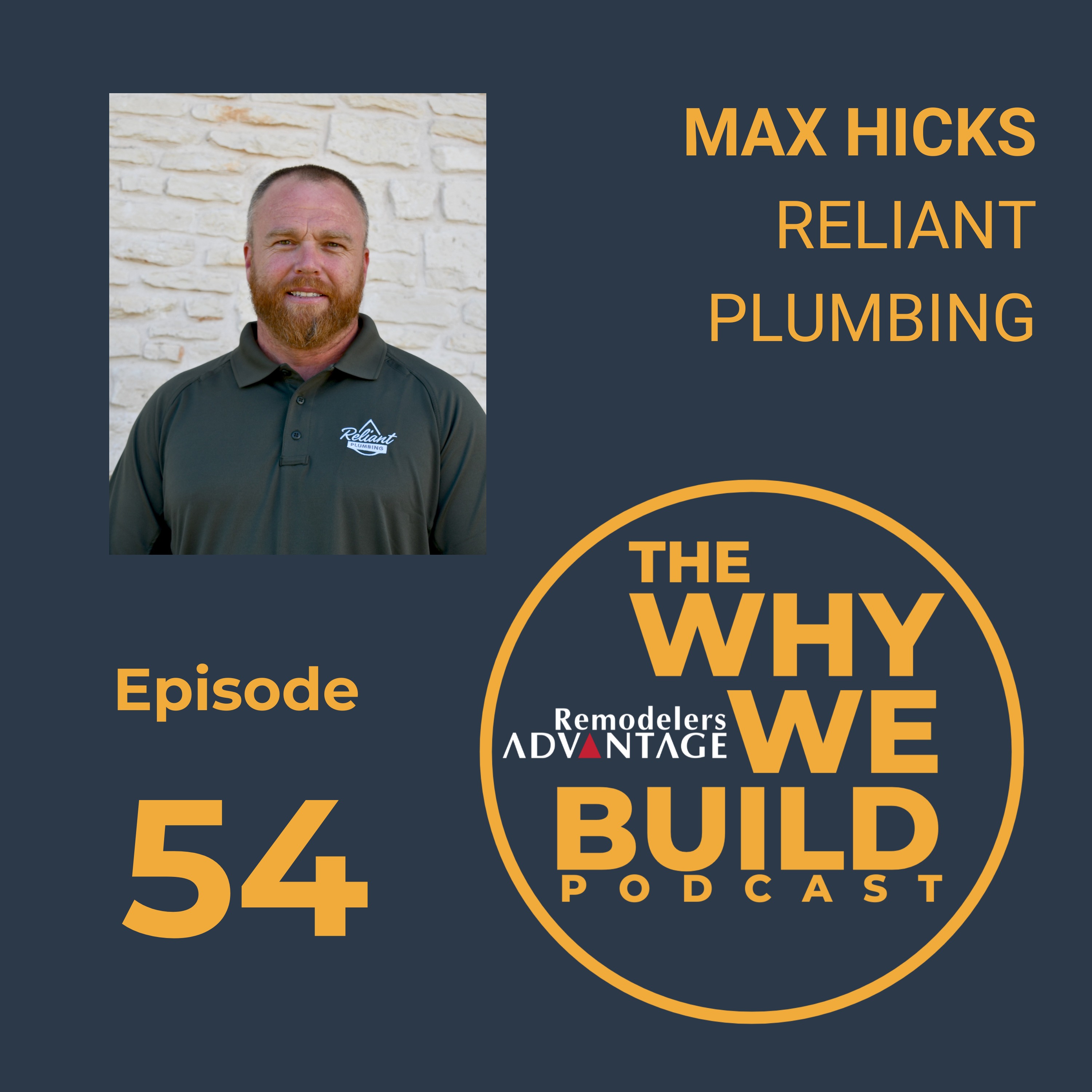 Why Independent Plumbing Still Wins in a Private Equity Market | This episode digs into what it takes for a local plumbing company to compete as private equity money reshapes the trades. Max Hicks, founder of Reliant Plumbing, shares how he went from a teenage work program and union plumbing to building a multi-market company across Texas. We discuss scaling without losing service quality, communicating value when bigger brands dominate the market, and why Max believes staying independent still makes sense for his business.Key topicsMax Hicks shares how his plumbing career started at 16 through a work program after school was not a fit for him.He explains how early experience in new construction and commercial work taught him hard work, but service plumbing is where he found his passion.In this episode, Max breaks down how he started Reliant Plumbing from a borrowed van, a small tool set, and almost no service experience.He describes the mindset of building a business instead of just creating another job for himself, and how that shaped every hiring decision.Max says growth came from filling roles only when the business truly needed them, then training someone else to take over.We discuss how private equity changed the market, especially lead costs, competition, and the pressure to show up with stronger systems and sales.Max shares that scaling across Texas required the right people in the right seats, especially for market expansion into cities like San Antonio.He says one of the hardest parts of growth is financial discipline—wanting to keep more of the money instead of reinvesting everything back into expansion.Max explains why he chose to stay independent: he loves the work, values flexibility, and does not want the identity shift that can come after a sale.He talks about communicating value by focusing on talent, advertising, and honest self-awareness about what the company is and is not best at.Max advises other owners facing private equity interest to think hard about what they want after a sale and to understand why the buyer wants the business.Follow Reliant Plumbing of TikTok @reliantplumbing_txReady to build a stronger, more profitable remodeling business? Visit RemodelersAdvantage.com to discover the resources, coaching, and community designed to help remodelers grow with confidence—without losing what makes their business unique. | 32m 31s | ||||||
| 9/14/26 | 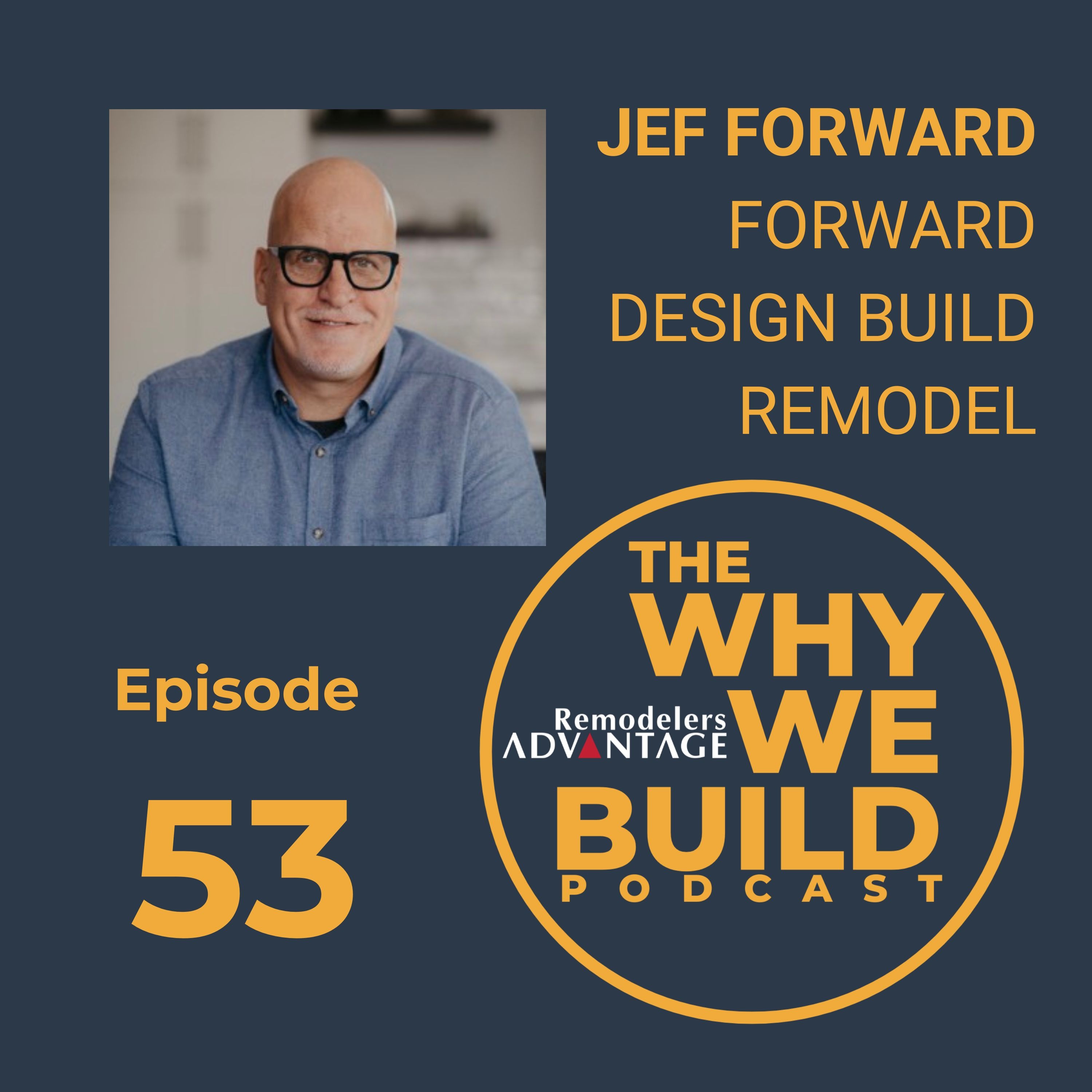 Leadership starts at the top: Jef Forward on self-coaching, AI, and building better teams | Greg Woleck talks with Jef Forward, founder, president, and owner of Forward Design Build Remodel in Ann Arbor, Michigan, about what it really takes to improve leadership from the top down. The conversation centers on self-awareness, vulnerability, and how Jef is using AI and DISC profiles to coach himself and his team in real time.Key topicsIn this episode, Jef explains why leadership development often fails when everyone except the owner gets training, and why change has to begin with the person signing the checks.He describes the shift from doing everything himself to becoming a true head coach, with his role focused on strategy, culture, and helping others lead.Jef shares how peer groups, coaches, and books like The Five Levels of Leadership and Multipliers reshaped his view of leadership.He breaks down Liz Wiseman’s idea of the accidental diminisher and gives examples of how leaders can shut teams down by answering too quickly, monologuing, or flooding a conversation with too many ideas.Jef explains how he uses Claude as an AI coaching board to prepare for meetings, review his communication style, and get feedback based on his own DISC profile and the other person’s profile.Jef says the goal is not scripts, but better thinking, better questions, and more confident conversations with clients and teammates.He outlines how his team is beginning to use AI to reduce administrative friction, including turning transcripts into task updates and creating “what to say” preparation tools for difficult client conversations.He talks candidly about rollout challenges, including team skepticism, fear of replacement, and the need to introduce new systems slowly.He highlights the company’s broader operational goal of creating a single source of truth so sales, design, production, and leadership stay aligned.He closes with a strong leadership principle: be vulnerable, ask for help, and let your team see that you do not have all the answers.Notable quotes“You are not a leader until you have built a leader.”“The number one step you can take to be a better version of yourself as a leader is to be vulnerable.”“What would an honest coach tell me about my own blind spots?”Find out moreLearn more about Jef and Forward Design Build Remodel at planforward.net. Learn more about the remodeling community and resources from Remodelers Advantage at www.remodelersadvantage.com. | 45m 21s | ||||||
| 8/31/26 |  The Most Under-Managed Profit Center in Your Business | EPISODE SUMMARYIf you pulled your last 10 change orders and sorted them into two piles — things you truly couldn't have known, and things the client added or you didn't nail down up front — which pile would be bigger? For most design-build firms, it's the second pile, and Greg opens this episode arguing that's not a field problem. It's a design and sales problem that showed up late.Greg is joined by Will Pritiken, founder of Aforma Design Studio, an embedded design practice built specifically for builders, architects, and developers who need real design capacity without standing up a full in-house team. Will ran construction and did development work before starting his own design-build company in Portland, then built Aforma after fellow Remodelers Advantage roundtable members asked him to bail out their stalled design projects. The conversation covers why design gets treated as a lost leader instead of a profit center, why the 20–30% contingency in your pricing might be covering for decisions that were never made rather than risks nobody could have predicted, and how a structured design partnership protects your client relationship, your brand, and your margin.RESOURCES & LINKSAforma Design Studio: aforma.coEmail Will: [email protected] or [email protected] mentioned: Upstream by Dan HeathRemodelers Advantage: RemodelersAdvantage.comLearn more about Remodelers Advantage Roundtables, production and design manager groups, consulting services, and other programs at RemodelersAdvantage.com. Questions or episode ideas? Email Greg at [email protected]. | 39m 55s | ||||||
| 8/10/26 |  Winning the AI Search Game: How Remodelers Get Found (and Cited) by AI — with Thomas Harpointner | If a homeowner asked an AI assistant, not Google, an actual AI assistant to find the best remodeler in the area, would your company even come up?Homeowners are increasingly skipping the search results page and just asking AI tools like ChatGPT, Google Gemini, and Claude for a recommendation — then calling one of the one or two names they get back. Your site can rank great on Google and still be invisible to that conversation.In this episode, host Greg Wallach talks with Thomas Harpointner, founder and CEO of AIS Media, Inc., a 20-plus-year digital marketing and strategy agency in Atlanta. Thomas breaks down why AI search is the biggest shift in digital marketing he's seen in two decades, why some clients have seen 30–60% drops in organic traffic even as their Google rankings improved, and — most importantly — what a remodeler can do this week to start earning citations and recommendations from AI.You'll learn:Why AI tools act as a new "middleman" between homeowners and remodelers, and how that changes the rules of the gameWhat signals AI systems look for before they'll cite or recommend a business (hint: it's all about authority and trust)Why the opportunity isn't just Google anymore — Reddit, Pinterest, YouTube, and trade publications all feed AI answersA simple, three-step plan to start building AI visibility this week, no big budget requiredWhy traditional SEO isn't dead — and how it still forms the foundation of AI trustNotable quote: "The AI has to know that you exist. Otherwise you are just a magic trick in the dark." — Thomas HarpointnerResources mentioned:AIS Media, Inc.: aismedia.com (free AI search guide available now)Remodelers Advantage: RemodelersAdvantage.comGo ask an AI assistant who the best remodeler is in your area and see what comes back — then share this episode with whoever owns your website and marketing.Learn more about Remodelers Advantage Roundtables, production and design manager groups, consulting services, and other programs at RemodelersAdvantage.com. Questions or episode ideas? Email Greg at [email protected]. | 36m 19s | ||||||
| 7/27/26 |  JASON LANGKAMMERER — THE DESIGN (UN)CERTAINTY CONTINGENCY | EPISODE SUMMARYEvery design-build owner has lived this moment: an early budget gets a client excited, the design gets refined, and the real estimate lands 20–30% higher. Jason Langkammerer, President of AT6 Architecture + Design Build in the San Francisco Bay Area, walks through the system his firm built to close that gap — the “Design (Un)certainty Contingency.” Borrowed from the commercial construction “cone of uncertainty” and sparked by a conversation with Ian Schwandt of TDS Design Build, the approach bakes a shrinking contingency percentage into every budget from the first proposal through final pricing. As the design firms up, the contingency comes down — and the two numbers meet in the middle. Jason and Greg dig into the mechanics, how to present it to clients without sounding like padding, and what it takes to finally stop dreading the final-estimate conversation.GUESTJason Langkammerer, President, AT6 Architecture + Design Build — at6db.comDesign-build runs in Jason's family — his father was both an architect and a contractor. Jason grew up between the Craftsman and Victorian homes of Berkeley and a decade immersed in modern architecture in Los Angeles, a dual perspective that shaped his design philosophy. AT6 started as a design-only practice before Jason brought construction in-house to give clients a smoother, more coordinated path from concept to completion. He still personally guides every project's budget from initial estimate through final pricing.RESOURCES & LINKS• AT6 Architecture + Design Build: at6db.com• Ian Schwandt / TDS Design Build — mentioned for his Substack on production and construction numbers• Remodelers Advantage: remodelersadvantage.com | 44m 03s | ||||||
Want analysis for the episodes below?Free for Pro Submit a request, we'll have your selected episodes analyzed within an hour. Free, at no cost to you, for Pro users. | |||||||||
| 6/29/26 |  The Talent Advantage: Why Great People Choose Great Companies | Episode SummaryFinding great people has become one of the biggest challenges facing remodeling companies today. But what if the real question isn't "How do I find good people?" What if it's "Why would great people choose to work here and stay?"In this episode, Greg sits down with Danielle Russell, President and part owner of Builder Funnel, to explore the future of talent, leadership, and company culture in the remodeling industry. Danielle shares how Builder Funnel has built an award-winning workplace culture while achieving remarkable growth, and why intentional leadership, mentorship, and transparency may be the ultimate competitive advantage.Together, they discuss the widening labor gap, the importance of mission, vision, and core values, how open book management creates ownership, and why mentorship may be the most overlooked leadership responsibility in our industry today.If you're struggling to attract or retain great people, this conversation offers practical ideas you can begin implementing immediately.Key TakeawaysThe real hiring question is not "How do I find good people?" but "Why would a high performer choose to work here and stay?"Company culture is a strategic advantage, not a perks program. Clarity, accountability, and leadership matter more than pizza parties.Mission, vision, and core values only matter when they are actively lived and integrated into everyday operations.Great companies continuously attract talent, even when they are not actively hiring.Open book management can help employees think and act like owners when paired with proper education and training.Mentorship is becoming increasingly important as experienced industry professionals retire faster than new workers enter the trades."Clarity is kindness." Clear expectations and honest conversations are essential to strong leadership.Connect with Danielle RussellLinkedIn: Danielle RussellBuilder Funnel: BuilderFunnel.comAbout Our GuestDanielle Russell is the President and part owner of Builder Funnel, a digital marketing agency dedicated exclusively to helping remodelers and custom home builders grow through strategic digital marketing. During her time at Builder Funnel, Danielle has helped lead the company to significant growth while cultivating an award-winning culture centered around transparency, leadership development, and employee engagement. She is passionate about helping organizations create workplaces where high performers thrive.Connect With The Why We Build PodcastThe Why We Build Podcast explores the people, processes, and purpose behind exceptional remodeling companies. Each episode features conversations with industry leaders who are committed to building better businesses, stronger teams, and more fulfilling careers.Follow, subscribe, and share this episode with someone who is building the future of our industry—one project, one team, and one conversation at a time. | 42m 57s | ||||||
| 6/22/26 |  Upstream Profit Protection: Why Great Projects Start Long Before Construction | Too often in remodeling, profit leaks are blamed on the construction phase. A delayed material order, a missing detail, an indecisive client, or a subcontractor waiting for answers can quickly derail a project.But what if those costly problems actually began long before construction started?In this episode of The Why We Build Podcast, Greg sits down with veteran designer and business coach Betsy Brandenburg to explore the concept of Upstream Profit Protection and why the design phase may be the most powerful risk management tool in your business. Betsy shares how incomplete design, poor communication, and unclear processes create downstream chaos, and how intentional planning can dramatically improve profitability, client experience, and team alignment.In This Episode, You'll Learn:Why incomplete design is one of the biggest causes of lost profit in remodeling projects.How "profit bleed" often starts months before construction begins.The hidden costs of allowances, delayed decisions, and long-lead items.Why fully completed design packages reduce stress for both production teams and clients.How design-build companies can improve collaboration between design and production.The importance of structured handoff meetings and buildability reviews.Why treating design as an investment rather than overhead changes everything.How visible processes build trust and reduce homeowner anxiety. | 43m 21s | ||||||
| 6/15/26 | 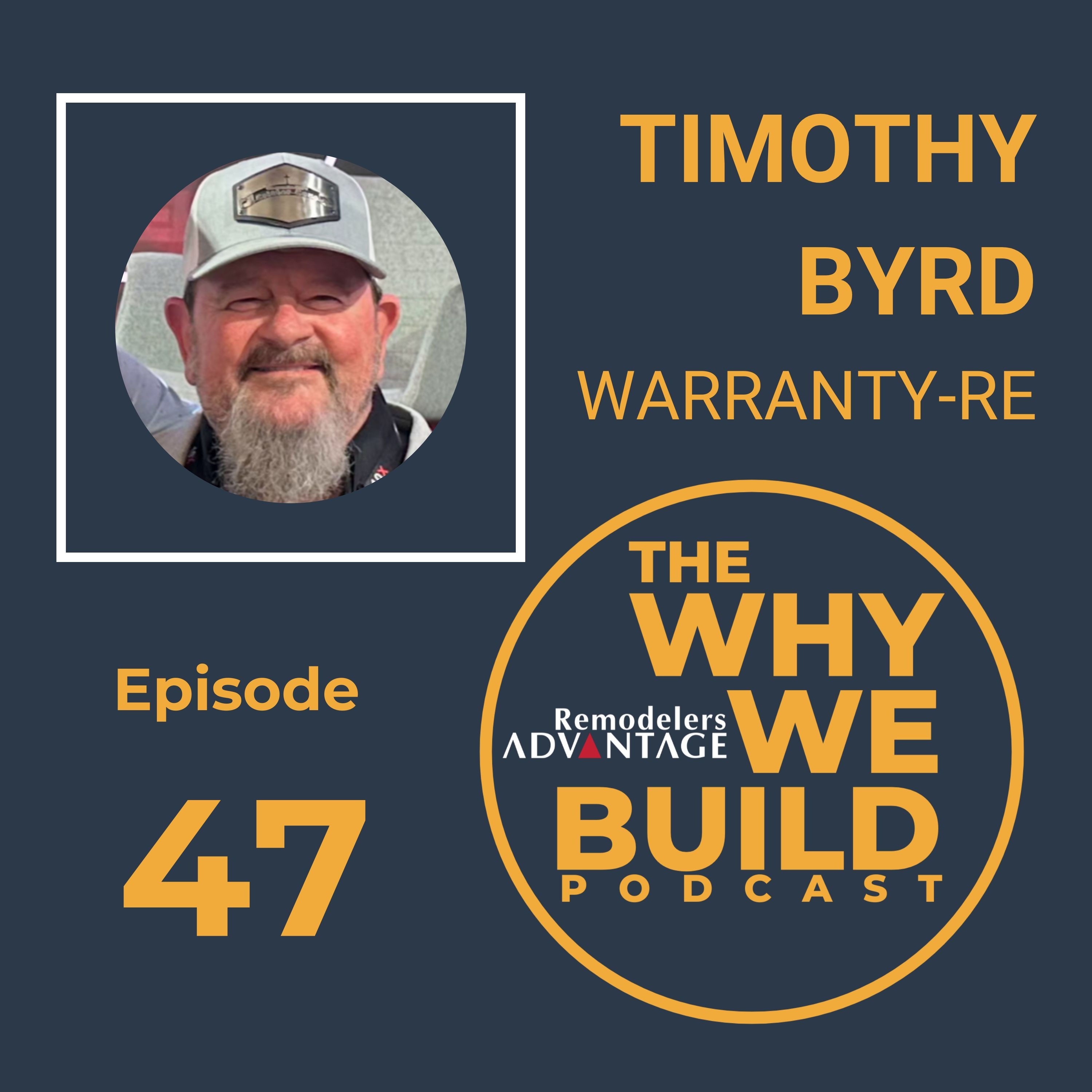 YOUR WARRANTY IS A PROFIT CENTER — YOU JUST DON’T KNOW IT YET | Callbacks and warranty work are a fact of life in remodeling. Something breaks six months after a job closes, you send a crew back on your dime, and chalk it up to the cost of doing business. But what if that cost could actually build wealth instead of drain it? Tim Byrd has spent more than 30 years helping home service businesses do exactly that. As founder and CEO of Warranty RE, he’s brought the concept of captive reinsurance — the same financial engineering large corporations use to manage risk and accumulate capital — to remodelers, HVAC companies, plumbers, electricians, and every trade in between. In this episode, Tim breaks down how you can own your own warranty company, eliminate the third-party middleman, stop paying premiums into someone else’s pocket, and start building a capital resource that grows tax-advantaged inside a company you control. He also gets into succession planning, enterprise value, and the mindset shifts that separate business owners who drift from those who build.Website:warranty-re.com Email: [email protected] | 32m 34s | ||||||
| 6/8/26 |  Building the Future Workforce: Why Shop Class Still Matters with Noah Hughes | In an industry constantly talking about the labor shortage, it's easy to focus on the problem and miss the people creating solutions. This week, Greg sits down with Noah Hughes, a carpentry and Career & Technical Education (CTE) teacher at Caroline High School in Virginia, to discuss the critical role shop classes play in developing the next generation of skilled trades professionals.Noah shares his unconventional journey from framing houses, trim carpentry, and running construction businesses to becoming a high school teacher. Along the way, he discovered a new mission: helping students see the trades as a viable, rewarding career path while creating meaningful connections between classrooms and the construction industry.The conversation explores the misconceptions surrounding the trades, the importance of making shop class visible, and why builders, remodelers, and industry leaders need to play an active role in supporting local CTE programs. Noah also shares practical ways companies can get involved, whether through guest speaking, mentoring, internships, or simply showing students what a successful career in construction can look like.If you've ever wondered where the next generation of builders will come from, this episode offers both hope and a challenge: stop waiting for someone else to solve the workforce problem and become part of the solution.In This EpisodeWhy Noah left contracting to become a high school carpentry teacherHow modern CTE and shop programs are preparing students for real careersThe biggest misconceptions parents and educators still have about the tradesWhy students are eager to learn from industry professionalsThe importance of industry partnerships and community involvementHow social media is helping make shop class visible againLessons learned from building Habitat for Humanity homes with studentsThe role AI may play in the future of construction educationWhy companies that invest in young people today will lead the industry tomorrowPractical ways builders and remodelers can support local trade education programsResources & LinksFollow Noah Hughes on Instagram: @we_learn_buildingListen to the Four Man PodcastLearn more about Career & Technical Education (CTE) programs in your local communityConnect with your local high school's shop or vocational programConnect With The Why We Build PodcastIf you enjoyed this episode, please subscribe, leave a review, and share it with a builder, remodeler, educator, or industry leader who cares about developing the next generation of skilled trades professionals.The future workforce isn't someone else's responsibility. It's ours. And it starts by showing up.#WhyWeBuild #ConstructionLeadership #SkilledTrades #CTE #TradeEducation #WorkforceDevelopment #ConstructionCareers #RemodelingIndustry #ShopClass #FutureBuilders | 44m 09s | ||||||
| 6/1/26 |  The Cost of Keeping the Wrong Person | In this episode of The Why We Build Podcast, Greg tackles one of the hardest leadership decisions in remodeling: knowing when it is time to move on from an underperforming team member.This conversation is not about blame. It is about clarity. Many owners already know the decision they need to make, but fear, timing, sunk cost, and self-doubt keep them stuck. Greg breaks down the real cost of waiting, including lost productivity, management time, team morale, client risk, and cultural damage.In this episode:Why owners delay hard personnel decisionsThe hidden financial cost of keeping the wrong personHow underperformance affects your best peopleWarning signs that the decision has already been madeHow to have the conversation with honesty and dignityWhy moving on cleanly protects your cultureKey Takeaway: The cost of keeping the wrong person is rarely just one salary. It is financial, operational, emotional, and cultural. Strong leaders do not make perfect hires. They recognize when something is not working, act with integrity, and protect the team.Best Quote: “Your standard will only elevate to the worst possible behavior you will tolerate.” | 8m 43s | ||||||
| 5/26/26 |  More Than the Build: The Human Side of Remodeling with Mike Whalen | In this episode of The Why We Build Podcast, Greg sits down with longtime lead carpenter and industry leader Mike Whalen for an honest conversation about what remodeling really demands from the people doing the work.This isn’t just a conversation about tile layouts, production schedules, or project management systems. It’s about the human side of remodeling. The part that often gets overlooked.Mike shares his journey from building tree forts as a kid to working in commercial construction, running his own company, and eventually finding a long-term home at DBS Remodel, where he has spent more than two decades helping shape projects, teams, and company culture.Together, Greg and Mike explore:Why remodeling is as emotional as it is technicalThe importance of communication and empathy on the jobsiteManaging client expectations during stressful projectsThe balance between craftsmanship and customer experienceWhat separates healthy remodeling companies from unhealthy onesHow leadership evolves from “bags on” production to strategic thinkingThe role of organizational culture in long-term successWhy continuing education transformed Mike’s careerThe impact of industry communities like JLC LiveMike also shares practical insight into:Leading monthly production meetingsUsing client feedback to improve communicationReading client personalities and stress levelsManaging trade partner relationshipsHandling recurring project challengesMaintaining craftsmanship while scaling leadership responsibilitiesOne of the biggest themes in this episode is that great remodeling professionals are not just builders. They are guides, communicators, problem-solvers, and leaders helping clients navigate deeply personal experiences inside their homes.This episode is a reminder that success in remodeling is not just about technical excellence. It is about how you show up for people. | 43m 14s | ||||||
| 5/11/26 |  Why Skilled Trades Are the Future: Alvin Townley on Scholarships, Workforce Gaps, and Building a Skilled Nation | In this episode of The Why We Build Podcast, host Greg Woleck talks with Alvin Townley, CEO of Skilled Nation, about the future of skilled trades, workforce development, and why career pathways in the trades deserve more respect, visibility, and support.For years, the common message around success was simple: go to college, get a degree, and follow the traditional path. For some people, that path works. But for many others, it can lead to debt, uncertainty, and work that does not feel meaningful.At the same time, industries like construction, remodeling, manufacturing, transportation, energy, and home services continue to need skilled people who can build, fix, install, create, and solve real problems.Alvin shares how Skilled Nation is working to close that gap by providing scholarships for people pursuing training in high-demand skilled careers. These scholarships help cover more than tuition. They can also help with tools, transportation, childcare, and other real-life barriers that often prevent people from completing training.Greg and Alvin also discuss the perception problem facing the trades. Too often, skilled careers are treated like a backup plan instead of a smart, honorable, and profitable path. But that conversation is beginning to change. More parents, students, educators, and employers are starting to recognize that skilled work offers dignity, stability, purpose, and opportunity.The conversation also explores the impact of AI, the importance of better storytelling, and the responsibility industry leaders have to help build a stronger talent pipeline for the future.Key TakeawaysThe skilled trades are not a backup plan. They are honorable, needed, and often highly rewarding careers.The workforce gap is also an awareness gap. Many people simply do not understand the opportunities available in skilled careers.Scholarships can remove real barriers. For many students, the issue is not motivation. It is affordability and access.Industry has a responsibility to help build the pipeline. Employers, educators, foundations, and trade partners all benefit when more people are trained and connected to meaningful work.Technology will change the trades, but it will not eliminate the need for skilled people. AI may reshape the workforce, but hands-on skilled careers remain essential.Featured GuestAlvin Townley is the CEO of Skilled Nation, an organization focused on expanding access to skilled career training through scholarships and industry partnerships. Alvin is a social entrepreneur, author, fundraising executive, and storyteller who is passionate about helping people discover meaningful opportunities and build better futures through skilled careers.Why This Episode MattersFor those of us in remodeling and construction, this conversation hits close to home. We do not just need more workers. We need more people who can see a future in this work.That means better messaging. Better pathways. Better support. And a stronger commitment from business owners, educators, and industry leaders to tell the story of the trades with the respect it deserves.The future of remodeling depends on the people willing to build, fix, solve, lead, and carry the work forward.Resources MentionedSkilled Nation skilled-nation.orgPartners mentioned include The Home Depot Foundation, 3M, DeWalt, Ford Philanthropy, GE Vernova Foundation, Schneider Electric, Norfolk Southern, PulteGroup, Ball Corporation, and others. | 36m 07s | ||||||
| 5/4/26 |  Building the Future: Gregg Helmich on Trades Education, Mentorship, and the Power of Showing Up | In this episode of The Why We Build Podcast, Greg Woleck talks with Gregg Helmich, Building Trades Associate Professor at North Iowa Area Community College, about trades education, mentorship, industry partnerships, gratitude, and developing the next generation of craftspeople.Gregg shares how his love for building began as a child, working beside his father, tearing down old barns, straightening nails, reusing lumber, and helping build an A-frame cabin with hand tools. Those early experiences gave him a lasting appreciation for craft, usefulness, and the pride that comes from making something with your own hands.He also reflects on the shop teachers who shaped him. They gave him extra time, saw potential in him, and made the shop feel like a place where he belonged. That same spirit now shows up in the way Gregg teaches and mentors his own students.A major thread in the conversation is the challenge and value of trades education today. Gregg talks about the difficulty of measuring hands-on learning, assessing soft skills, and balancing curriculum standards with the real-world nature of job-site training. He also shares his vision for an ideal program: a large facility where students could build full homes indoors, work from permanent mockups, and learn in a more controlled environment.Gregg and Greg also dig into job-site culture. Employers want technical ability, but they also need people who are willing to learn, work safely, clean up, support the team, and bring humility to the job. Gregg models that by working alongside his students, even in the simple tasks.One of the strongest parts of the episode is Gregg’s approach to industry partnerships. He explains how a fun student idea involving a rewritten Brooks & Dunn song led to a major Makita tool donation, and how that moment helped him see the power of intentional relationships. Since then, Gregg has helped build partnerships that have brought more than $1.7 million in equipment and in-kind support to the program.The conversation also touches on social media, generosity, and the importance of giving back. Gregg’s “attitude of gratitude” is clear in how he thanks partners, promotes their work, and continues nurturing relationships long after a donation or event.Key TakeawaysThe next generation does not happen by accident. People enter the trades because someone encouraged them, taught them, and helped them see what was possible.Trades education is about more than technical skill. Students need safety, communication, humility, teamwork, and a willingness to keep learning.Mentorship matters. Gregg was shaped by teachers who saw something in him, and now he is doing the same for others.Partnerships work best when they are relational. The strongest industry partnerships are built on mutual value, trust, gratitude, and long-term connection.Generosity has a ripple effect. When companies invest in students and educators, they help build the future workforce and strengthen the industry.About Gregg HelmichGregg Helmich is a Building Trades Associate Professor at North Iowa Area Community College. Over his career in trades education, he has helped prepare students for careers in construction by combining hands-on skill development, leadership, soft skills, and meaningful industry partnerships. Outside the classroom, Gregg is also a musician, worship leader, woodworker, and custom guitar builder.Closing ThoughtThis conversation is a reminder that the future of remodeling and construction depends on people who are willing to invest before there is an immediate return. The next generation needs skill, but they also need access, encouragement, relationships, and people who care enough to show up. | 35m 47s | ||||||
| 4/27/26 |  From Corporate Comfort to Remodeling Reality with Corey Plourde | In this episode of The Why We Build Podcast, Greg talks with Corey of Core Remodeling Services about leaving a stable corporate career, starting as a handyman business, and growing into a remodeling company.Corey shares the real story behind the leap: the early momentum, the pressure of being underfunded, the challenge of building a team, and the moment he realized he had hit the wall as an owner.The conversation digs into leadership, profitability, peer accountability, learning the numbers, working with family, and what it takes to build a company that can grow beyond the owner.This episode is a great listen for remodelers who are trying to move from survival mode to a more intentional, profitable, and sustainable business.Topics include:Leaving corporate America to start a remodeling businessThe early challenges of building Core Remodeling ServicesHitting the wall as a business ownerLearning what you don’t knowThe value of peer groups and accountabilityBuilding a family businessMoving from revenue growth to real profitabilityConnect with Corey: [email protected] coreremodelingservices.com | 37m 40s | ||||||
| 4/6/26 |  Why More Revenue Is Not Always the Answer with Steve Heintzelman | In this episode of The Why We Build Podcast, Greg sits down with Steve Heintzelman, owner of Odyssey Financial and Accounting Solutions, for a practical conversation about one of the biggest traps in remodeling and construction: assuming more revenue will solve every problem. They dig into what really happens when a business feels busy but still feels tight, and why growth alone cannot fix weak financial systems.Steve shares his path from Ernst & Young to starting Odyssey, along with the influence of growing up around both a family lumber business and entrepreneurship. That background shaped the way he works with owners today, especially in construction, where cash flow, job costing, and financial visibility can make or break the business.A big theme in this conversation is the difference between bookkeeping and financial visibility. Steve explains that clean books are only the beginning. The real value comes when owners and leaders use those numbers to make better decisions, consistently review job performance, and close the feedback loop between operations and finance.Greg and Steve also discuss the warning signs owners should watch for, especially when the P&L says one thing but the bank account tells a different story. They discuss accounts receivable, underbilling, messy invoicing, weak job costing, and why the balance sheet is often the most overlooked but most revealing financial report in the business.The episode also explores what profitable construction firms tend to do differently. Steve points to consistent review rhythms, simplified systems, strong feedback loops, and the discipline to follow the process rather than constantly making exceptions. He makes the case that strong financial systems are not just compliance tools. They are value drivers that improve profitability, reduce stress, and increase the company's long-term value.The conversation wraps with a lighter round of rapid-fire questions covering job costing cadence, common bad habits, lessons from golf and the lumber business, and the financial superpower Steve wishes every owner had. It is a grounded, useful episode for owners, production leaders, and managers who want to run a healthier, more profitable company with less guesswork.About the Guest Steve Heintzelman is the owner of Odyssey Financial and Accounting Solutions. He founded Odyssey in 2022 to help business owners gain the financial support, clarity, and insight they need to run stronger, more profitable businesses. Before launching Odyssey, Steve worked at Ernst & Young, where he earned his CPA and gained experience auditing companies ranging from startups to billion-dollar enterprises. Today, he works closely with construction businesses, especially builders and remodelers, helping them improve job costing, accounting processes, and financial decision-making.Key Takeaways: More revenue is not always the answer when a business is tight on cash. Weak job costing, unclear margins, poor invoicing, and messy financial processes can all hide underneath top-line growth. Steve makes the point that owners need more than bookkeeping. They need clean information, consistent review, and the discipline to use their numbers as a management tool. Greg also highlights two themes that stood out in the conversation: simplification and the feedback loop. Both are essential if companies want to improve profitability and stop repeating the same mistakes from job to job.Connect with Steve. Steve can be found at Odyssey Financial and Accounting Solutions (OdysseyFAS.com) and on LinkedIn, where he spends most of his time. | 42m 31s | ||||||
| 3/30/26 |  When Growth Gets Heavy: Using EOS to Build a Stronger Business with Eliot Wajskol | Episode SummaryGrowth can look good from the outside while creating strain inside the business. More jobs, more people, and more moving parts often still run through the owner. In this episode, Greg talks with Eliot Wajskol, Certified EOS Implementer with EOS Worldwide, about why growth gets harder, where businesses start to break down, and how EOS helps bring more clarity, accountability, and traction.Eliot shares practical insight on leadership teams, right people in the right seats, meeting discipline, and how a stronger operating system can help owners step out of the day to day without losing momentum.In This EpisodeEarly signs growth is outpacing the ownerWhy owners become the bottleneckThe six key EOS componentsHow accountability and culture connectWhy the Level 10 Meeting mattersSelf-implementation versus working with an implementerHow better systems create more freedomAbout the GuestEliot Wajskol is a Certified EOS Implementer with EOS Worldwide and a former founder and operator with more than 25 years of experience. He has built and scaled multiple businesses and now helps leadership teams create stronger structure, clearer accountability, and healthier growth.Key TakeawaysGrowth creates complexity faster than many owners expectEffort alone eventually stops workingThe bottleneck is often at the topCore values only matter if they are truly usedGreat meetings help teams solve real problemsSystems should reduce chaos, not create rigidityResources MentionedEOS WorldwideTractionGet A GripPeopleFight Less, Win MoreConnect with Eliot WajskolEOS Worldwide Implementer Page: https://implementer.eosworldwide.com/eliot-wajskol/LinkedIn: https://www.linkedin.com/in/eliotwajskol/Closing ThoughtIf your company is growing but still depends too heavily on you, this episode offers a practical look at how better structure, clearer roles, and stronger leadership habits can help you scale with less chaos. | 50m 06s | ||||||
| 3/23/26 |  More Leads Is Not the Answer: Better Client Acquisition with Rick Storlie | In this episode of the Why We Build Podcast, Greg Woleck sits down with Rick Storlie, founder of Builder Lead Converter, to talk about a problem many remodelers know all too well: the phone is ringing, leads are coming in, but margins are still tight and too many of the wrong clients are filling the pipeline.Rick brings decades of experience in the building industry, from starting as a framing carpenter in 1988 to serving as a general manager for a large custom home building company, and now helping remodelers improve how they attract, capture, and convert high quality opportunities.The conversation centers on a powerful distinction: lead generation is not the same as client acquisition. Rick explains why simply chasing more leads often creates more waste, more frustration, and more unprofitable work. Instead, remodelers need systems that help them become the builder of choice in their market by building trust, believability, and value before the first serious sales conversation even begins.Greg and Rick discuss how homeowner behavior has changed over the years, especially as online search, AI summaries, reviews, social media, and short form video now shape how prospects research remodeling companies. Rick explains that homeowners are still asking the same three questions they always have:What can I build? How much will it cost? Who can do it for me?The difference today is that they are answering those questions digitally, often long before they ever speak with a remodeler. That means a remodeler’s website, FAQs, blog content, reviews, About page, and video presence all play a major role in developing trust and qualifying prospects.Rick also shares why so many remodelers hurt themselves by staying in a bidding mindset. He makes the case for shifting from being seen as just another contractor to becoming a remodeling advisor. When that shift happens, prospects no longer just ask for price. They begin to trust the process, value the expertise, and ask the much better question: What’s the next step?The episode also explores:Why paid ads are often overvalued by design build remodelersWhy a lead-centric website matters more than a builder-centric oneHow believability helps smaller or newer remodelers move into better projectsWhy repeat and referral business still convert bestHow B2B relationships with architects, interior designers, and realtors can create strong opportunitiesWhy patience and consistency matter in marketing and client acquisitionHow AI search and short form video are changing the future of remodeling marketingOne of the biggest takeaways from this conversation is that builders who want more control, better margins, and less chaos need to stop chasing every lead and start building a system that brings in the right people. Better marketing, better education, better positioning, and better follow-up all lead to better clients.Rick closes with practical advice for the next 30 days: build out your FAQs, strengthen your website content, deepen relationships with referral partners, and stay in regular contact with past clients. Those simple actions can do far more for long term growth than pouring more money into ads without a system behind them.To learn more about Rick Storlie and Builder Lead Converter, visit BuilderLeadConverter.com. | 44m 09s | ||||||
| 3/16/26 |  Bidding Smarter, Building Better: Anthony Hicks on AI, Estimating, and Fixing a Broken Construction Process | In this episode of The Why We Build Podcast, Greg Woleck sits down with contractor and entrepreneur Anthony Hicks to talk about one of the biggest frustrations in construction: the broken bidding and estimating process.After more than 30 years in the field, Anthony has seen firsthand how much time contractors lose chasing unclear opportunities, building estimates that go nowhere, and competing in a system that often lacks transparency for both contractor and client. That frustration led him to create Blue Collar Pro, an AI-powered construction marketplace built to make bidding, estimating, and project communication faster, clearer, and more useful for everyone involved.Greg and Anthony dig into the real-world problems contractors face when scope is unclear, homeowners are comparing inconsistent proposals, and valuable time gets wasted on leads that never turn into work. They also explore how AI can be used in practical ways — not to replace contractor judgment, but to support takeoffs, speed up estimating, improve communication, and help smaller firms compete more effectively.This conversation is grounded, honest, and highly relevant for remodelers, general contractors, and anyone trying to work smarter in an industry that still carries too many outdated habits.In this episode, we cover:Why the traditional residential bidding process is often unfair and inefficientThe challenge of getting true apples-to-apples bids from contractorsHow unclear scope hurts both project owners and contractorsWhy AI should be viewed as a practical tool, not a replacement for experienceHow technology can help contractors save time and bid more opportunitiesThe role of better information in building trust and transparencyWhy early adopters of new systems often gain a major advantageHow freeing up time can improve both revenue and quality of lifehttps://thebluecollarpro.com/ | 30m 34s | ||||||
| 3/2/26 |  AI in Remodeling | keywordsAI, remodeling, business, implementation, ethics, productivity, technology, workforce, chatbots, automation summaryIn this episode of the Why We Build Podcast, host Greg Woleck and guest Jack Borovitz discuss the role of AI in the remodeling industry. They explore common misconceptions about AI, its practical applications, and the ethical considerations that come with its use. Jack emphasizes the importance of starting small with AI implementation, the need for effective prompting, and the mindset required for business owners and employees to embrace AI as a tool for enhancing productivity rather than a threat to jobs. The conversation highlights the potential of AI to serve as a force multiplier in the remodeling business, enabling teams to work more efficiently and effectively. takeawaysAI is a force multiplier that enhances productivity.Demystifying AI is crucial for business owners.Start small when implementing AI in your business.Always fact-check AI responses for accuracy.AI should be viewed as an extra pair of hands, not a replacement.Ethical use of AI is essential, especially in small businesses.Effective prompting leads to better AI responses.AI can help with repetitive tasks, freeing up time for higher-level work.Resistance to AI can be overcome by emphasizing its supportive role.AI is here to stay; learning to use it effectively is vital.TitlesHarnessing AI in Remodeling: A Practical GuideDemystifying AI: What Remodelers Need to Know sound bites"Always fact-check AI responses.""AI is a force multiplier.""AI is not a replacement for people."Chapters00:00 Introduction to AI in Remodeling03:14 Understanding AI: Myths and Realities06:04 Practical Applications of AI for Remodelers10:18 Navigating Risks and Ethical Considerations15:21 Implementing AI: Strategies for Business Owners19:33 Overcoming Resistance to AI Adoption21:18 Starting Points for AI Implementation24:52 The Importance of Effective Prompting28:13 Mindset for Learning AI29:38 Personal AI Use and Insights32:39 Respectful AI Practices34:14 Final Thoughts on AI in Business | 38m 17s | ||||||
| 2/16/26 |  Women in Remodeling Sales: Confidence, Competence & Career Growth | Why We Build PodcastWomen in Remodeling Sales: Confidence, Competence & Career GrowthSales in residential remodeling isn’t just about numbers. It’s about trust.When you walk into someone’s home, you step into their most personal space. That changes the conversation. It requires empathy, clarity, emotional intelligence, and the ability to guide clients toward decisions that matter.In this episode, Greg Woleck sits down with two seasoned sales leaders, Tracy Bullock and Lissa Versteegh, to talk about what real professional development looks like for women in sales — and why competence, confidence, and structure make all the difference.This conversation isn’t about obstacles for the sake of talking about obstacles. It’s about capability. It’s about growth. And it’s about what happens when people are given the tools and support to succeed.Meet the GuestsTracy BullockCEO, Board Developer, Former Sandler Franchise Owner, 30+ Years Leadership Experience (including Procter & Gamble)Tracy brings global business leadership experience and over a decade of hands-on sales and leadership training. Today, she leads long-range strategy and mentors executives while serving as Chairman of the Board for LIFE, a nonprofit supporting mental health for frontline workers.Lissa VersteeghFormer SVP of Sales Strategy & Development, Randstad North America. Former Sandler Franchise Owner (15 Years) 40+ Years in Sales & Sales LeadershipLissa has spent decades helping professionals grow into confident, capable sales leaders. Now semi-retired, she focuses on mentoring and cultivating growth in both people and plants.Women in Construction Sales SeriesTracy and Lissa are leading a Women in Construction Sales Masterclass through Remodelers Advantage. The program focuses on:The foundational structure of the Sandler Selling SystemQualifying by learning how to disqualifyBuilding trust firstClosing with integrityPracticing in a safe, interactive environmentGetting comfortable being uncomfortableLearn more at: https://www.remodelersadvantage.com Or visit the Store page to find the Women in Construction Sales series.You can also connect with Tracy and Lissa on LinkedIn or SellingWithJeff.comAbout Remodelers AdvantageRemodelers Advantage provides immersive consulting, tactical roundtables, and masterclasses for residential remodeling professionals, bringing design, production, estimating, and operations together to build systems that work in the field.Learn more: www.remodelersadvantage.comIf this episode resonated with you, share it with someone on your team.And if you have ideas for future guests or topics, email Greg at [email protected] for listening — and we’ll see you on the next episode of Why We Build. | 35m 10s | ||||||
Showing 25 of 51
Pitch Fit is a Pro feature
See how bookable this show is for guests, which brands already advertise, the per-episode ad value, and the best-fit guest and sponsor profile. The numbers are blurred on the free plan.
How readily this show books outside guests like you.
How proven this show is for host-read sponsorships.
For Guests
ProFor Advertisers
ProUpgrade to Pro to unlock guest cadence, sponsor categories, fit scores, and per-episode ad value for this show.