
Insights from recent episode analysis
Audience Interest
Podcast Focus
Publishing Consistency
Platform Reach
Insights are generated by CastFox AI using publicly available data, episode content, and proprietary models.
Est. Listeners
Based on iTunes & Spotify (publisher stats).
- Per-Episode Audience
Est. listeners per new episode within ~30 days
10,001 - 25,000 - Monthly Reach
Unique listeners across all episodes (30 days)
25,001 - 75,000 - Active Followers
Loyal subscribers who consistently listen
5,001 - 15,000
Market Insights
Platform Distribution
Reach across major podcast platforms, updated hourly
Total Followers
—
Total Plays
—
Total Reviews
—
* Data sourced directly from platform APIs and aggregated hourly across all major podcast directories.
On the show
Recent episodes
Vulvodynia, Desire, and the Diagnostic Odyssey: One Writer's Journey from Shamans to Sex Toys
May 4, 2026
Unknown duration
Vulvodynia, Vaginismus, and Pelvic Pain: Start Here If You're New
Apr 27, 2026
Unknown duration
CBD for Pelvic Pain: Do Suppositories Actually Work for Vulvodynia and Vaginismus?
Apr 21, 2026
Unknown duration
Pudendal Nerve Entrapment Surgery: One Woman's 15-Year Road to the Right Diagnosis
Apr 13, 2026
Unknown duration
Vulvodynia Clinical Trial: The First Drug Being Developed Specifically for This Condition
Apr 6, 2026
Unknown duration
Social Links & Contact
Official channels & resources
Official Website
Login
RSS Feed
Login
| Date | Episode | Description | Length | ||||||
|---|---|---|---|---|---|---|---|---|---|
| 5/4/26 | 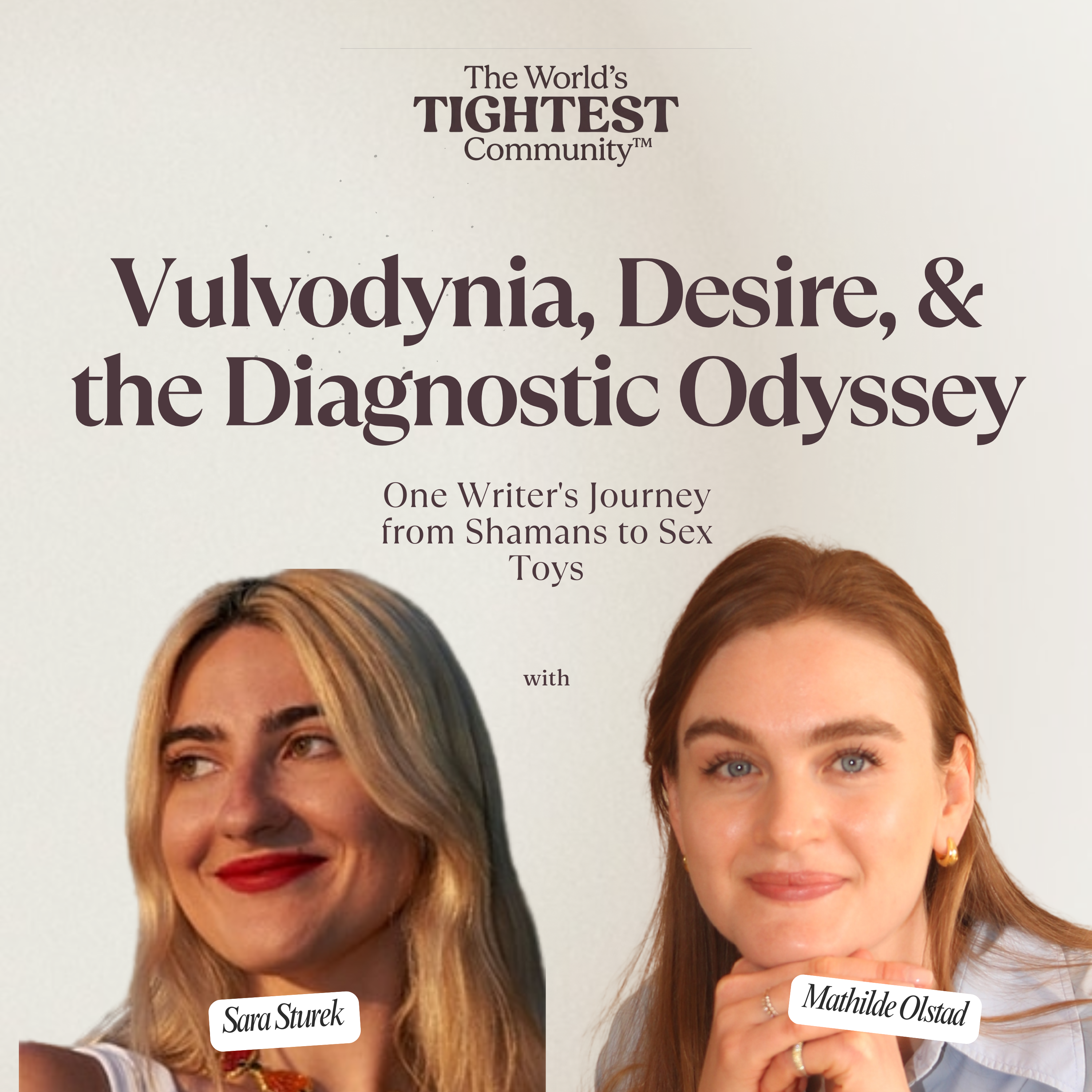 Vulvodynia, Desire, and the Diagnostic Odyssey: One Writer's Journey from Shamans to Sex Toys Vulvodynia, Desire, and the Diagnostic Odyssey: One Writer's Journey from Shamans to Sex Toys | What happens to desire when your body becomes unpredictable?Sara Sturek is a writer and founder of Writing Shamelessly, whose essay "From Shamans to Sex Toys" is published in Women's Health magazine. She has lived with hormonally-mediated vulvodynia since she was 21, and she writes about desire, sexuality, and the diagnostic odyssey with an honesty and literary precision that's rare in this space.In this episode, Sara walks me through her full journey — from the first gynecologist appointment that sent her home with Advil and a bath suggestion, through months of worsening pain she kept trying to push through, to the pelvic floor PT who finally identified a hormonal component. We also cover the long search for answers beyond the physical: the Valium suppositories, the CBD lube, the Reiki, the shaman in New Mexico who told her she was abused in a past life. And we spend real time on what this journey did to her relationship with desire — the fear that slips in before sex, the dissociation during it, the moment she realized she was the only person in the gynecologist's office who cared about her pleasure. A sex therapist helped her find a new framework: starting over, lowering the heat, and extending herself a lot more grace.Whether you're still in the thick of your own odyssey or have been looking for someone to put words to what this does to your sexuality — I think this one will stay with you.In this episode:How Sara's vulvodynia started — and why it took months to realize something was seriously wrongThe hormonal component: going off birth control and what shiftedThe diagnostic odyssey — from Reddit threads to pelvic floor PT to a shaman in New MexicoWhat desire and arousal actually feel like when you live with vulvodyniaThe dissociation that happens during painful sex — and what helped Sara stay presentWhy her gynecologist visits kept glossing over her libidoThe "boiling pot" framework her PT gave her for understanding flaresWhat sex therapy added that physical treatment couldn'tWriting Shamelessly: Sara's creative writing consultancyConnect with Sara Sturek:Instagram: @sassyy_assEssay: "From Shamans to Sex Toys" — Women's Health: https://www.womenshealthmag.com/sex-and-love/a70848271/vulvodynia-sexual-dysfunction-personal-essay/ Website: writingshamelessly.comConnect with Mathilde:Instagram: @theworldstightestcommunity Website: theworldstightestcommunity.com• Email: mathilde@theworldstightestcommunity.com | — | ||||||
| 4/27/26 | 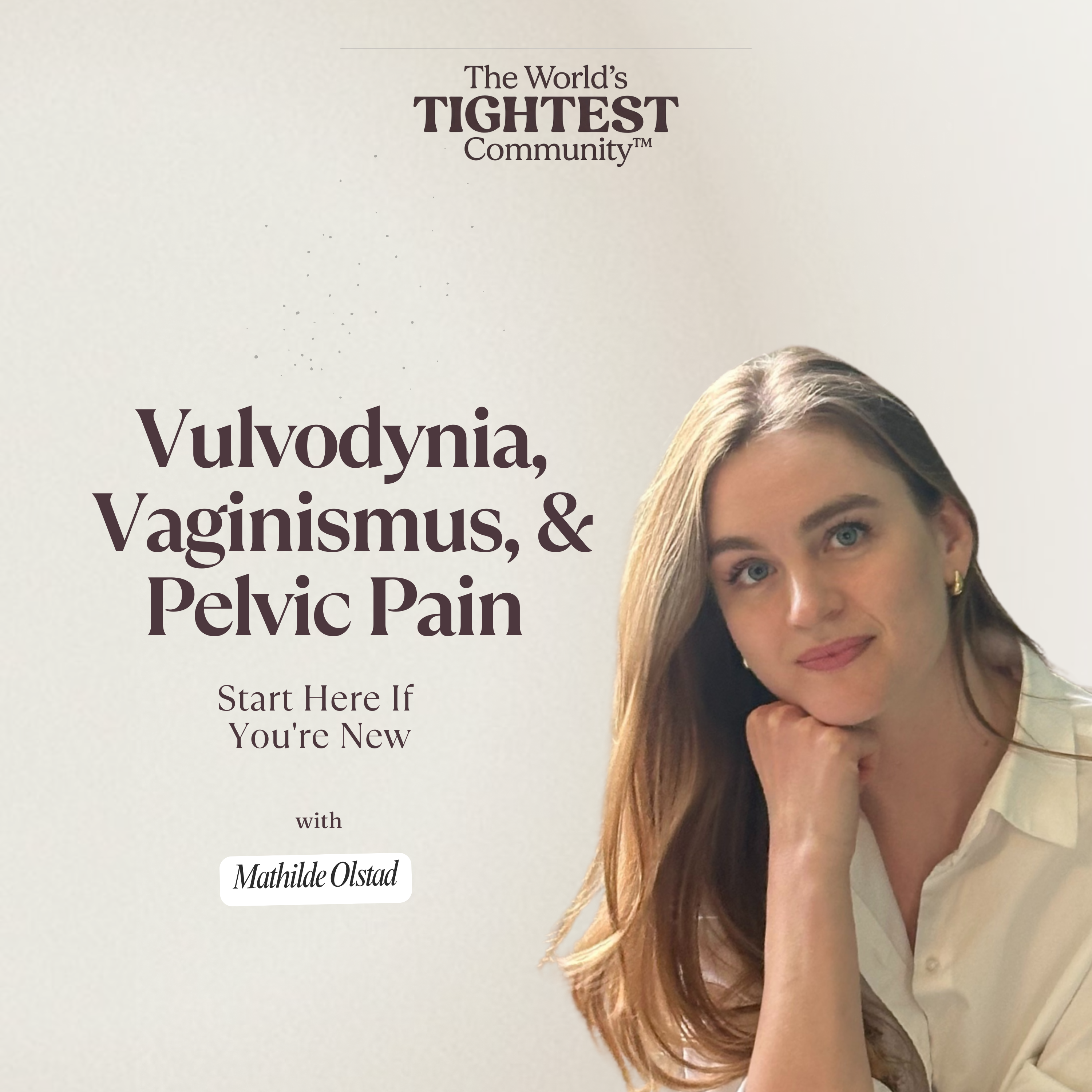 Vulvodynia, Vaginismus, and Pelvic Pain: Start Here If You're New Vulvodynia, Vaginismus, and Pelvic Pain: Start Here If You're New | If you're new to this podcast - hi! I'm so glad you're here.This is the episode I want you to start with. Whether you've just been diagnosed, you've been searching for answers for years, or you typed something into Google at 2am that you've never said out loud to anyone - you're in the right place.In this solo episode, I walk you through the basics of chronic vulvovaginal and pelvic pain - what it is, the conditions that fall under this umbrella (vulvodynia, vaginismus, vestibulodynia, pudendal neuralgia, interstitial cystitis, lichen sclerosus, endometriosis +++), why so many of us go undiagnosed for years, and the one statistic that changed how I see all of this: 1 in 4 people with vulvas will experience pelvic or vulvovaginal pain at some point in their lives.I also share why I started The World's Tightest Community in the first place, what this podcast can be for you as a resource, and the most important thing I can tell you if you're in the thick of it right now: pain down there is not a black box. There are root causes. There are treatments. There are people on the other side of this. And you are nowhere near as alone as you feel.If you're scared, exhausted, or just looking for somewhere to start - this one is for you.Connect with me!Instagram: @theworldstightestcommunityWebsite: theworldstightestcommunity.comEmail: mathilde@theworldstightestcommunity.comIn this episode:The 1 in 4 statistic and why it mattersThe most common chronic vulvovaginal and pelvic pain conditions explainedWhy pain down there is not a black box - and the real root causes behind itWhy most doctors aren't trained in vulvovaginal pain (and what that means for you)How to start advocating for yourself in medical appointmentsWhy "the world's tightest community" - and what this space is really aboutHow to use the podcast as a resource and where to go next• A reminder that people do get better, and what that actually looks like | — | ||||||
| 4/21/26 | 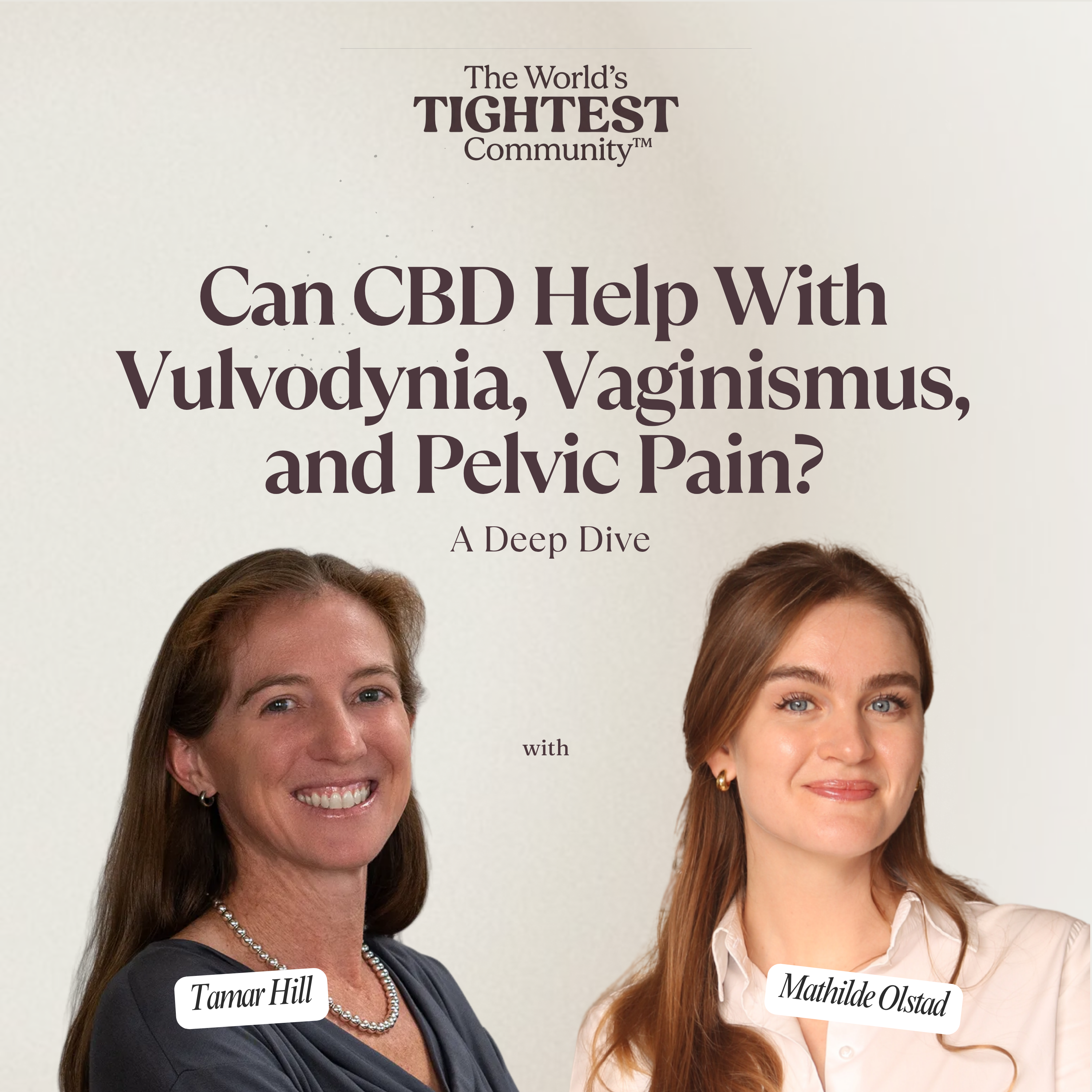 CBD for Pelvic Pain: Do Suppositories Actually Work for Vulvodynia and Vaginismus? CBD for Pelvic Pain: Do Suppositories Actually Work for Vulvodynia and Vaginismus? | Can CBD help with pelvic pain - and if so, how does it actually work?In this episode, I speak with Tamar Hill, co-founder of Medroots, a company making CBD and low-dose THC suppositories for pelvic pain, vulvodynia, vaginismus, dyspareunia, and sexual health. Tamar is a former biology teacher turned entrepreneur, and she brings both the science and hard-won knowledge of navigating the CBD regulatory landscape.We cover the endocannabinoid system and why our bodies have cannabinoid receptors concentrated in reproductive tissue - and what that means for people managing chronic pelvic pain conditions including vulvodynia, vaginismus, endometriosis, interstitial cystitis, and dyspareunia. We talk through how CBD suppositories work, why delivery method matters for pelvic pain specifically, how low-dose THC differs from high-dose, how magnesium supports muscle relaxation alongside CBD, and the research barriers that make formal clinical studies on CBD cost-prohibitive. Tamar also walks through exactly how to evaluate a CBD product - including the one test that separates a quality product from a marketing play. I also share my own experience using Medroots' suppositories for penetrative pain, and what I noticed.Whether you've been curious about CBD suppositories for pelvic pain, tried CBD without much guidance, or want to understand the science before you decide - this one is worth your time.Want to try the Medroots CBD suppositories? Head to this link and use code TWTC20 for 20% off at checkout.In this episode:CBD for pelvic pain - what the evidence actually saysThe endocannabinoid system explained - and why it matters for vulvodynia and vaginismusWhy CBD suppositories may work better for pelvic pain than oils, gummies, or tincturesLow-dose THC for pain and pleasure - why dosage is everythingCBD and vaginismus - how muscle relaxation and anticipatory pain connectMagnesium in CBD suppositories - what it does for hypertonic pelvic floorCBD for endometriosis, interstitial cystitis, dyspareunia, and IBSHow to read a CBD product label - full panel third-party testing explainedFull spectrum vs broad spectrum vs CBD isolate - what the difference means for youThe legal status of CBD and hemp in the US - and what's changingMathilde's personal experience using CBD suppositories for penetrative painConnect with Tamar Hill / Medroots:Website: medroots.comEmail: info@medroots.comInstagram: @medrootscbd Connect with Mathilde:Instagram: @theworldstightestcommunityWebsite: theworldstightestcommunity.com | — | ||||||
| 4/13/26 |  Pudendal Nerve Entrapment Surgery: One Woman's 15-Year Road to the Right Diagnosis Pudendal Nerve Entrapment Surgery: One Woman's 15-Year Road to the Right Diagnosis | What does it mean to do everything right for fifteen years — and still not get to the bottom of your pain?In this episode, I speak with Carli Cutchin, a writer and disability advocate with a background as a comparative literature scholar. Carli has lived with pudendal neuralgia for fifteen years and writes about chronic pain and disability for publications including Ms. Magazine. She is one of the sharpest thinkers I've come across on this topic, and this conversation goes well beyond the personal story.We go into Carli's full fifteen-year journey — from the initial onset of pain, through years of PT, nerve blocks, and conservative treatments that provided only partial relief, to a devastating relapse in 2020 that left her mostly bedridden. We cover the eventual diagnosis of pudendal nerve entrapment, what that actually means and how it differs from pudendal neuralgia, and the decompression surgery with Dr. Hibner that she wishes she'd known about much earlier.We also dig into the ideas underneath all of it — how medicine frames chronic pain, the language it uses for these conditions, and what Carli sees as the specific cost of those frameworks for women. Her constructivist perspective on this is something I found myself thinking about long after we finished recording.Whether you're navigating pudendal neuralgia yourself, wondering whether entrapment might be relevant to your situation, or just someone who likes to think carefully about the bigger picture — I think you'll take a lot away from this one.In this episode:How Carli's pain started and why it took so long to get the right diagnosisThe difference between pudendal neuralgia and pudendal nerve entrapmentWhat decompression surgery involves and what recovery looks likeThe trauma and somatic work Carli did — and why she's clear it didn't cause her painHer critique of how medicine talks about chronic pain in womenWhat she wishes she'd been told in year one• The word "pudendal" — and what it means that it comes from the Latin for shameConnect with Carli Cutchin:Instagram: @carlicutchinWebsite: carlicutchin.comConnect with Mathilde:Instagram: @theworldstightestcommunity• Website: www.theworldstightestcommunity.com | — | ||||||
| 4/6/26 |  Vulvodynia Clinical Trial: The First Drug Being Developed Specifically for This Condition Vulvodynia Clinical Trial: The First Drug Being Developed Specifically for This Condition | There is no medication approved specifically for vulvodynia. Not a single one. John Connell and his team are trying to change that.In this episode, I sit down with John Connell, Chief Scientific Officer at MAC Clinical Research — one of the UK's longest-established contract research organisations. John has spent over 35 years in clinical research, and has been working with Danish biotech Initiator Pharma for the past six or seven years to develop pudafensine: a first-of-its-kind drug being investigated specifically for vulvodynia.Pudafensine works by increasing dopamine levels in the brain — a chemical messenger most people associate with pleasure and reward, but one that also plays a crucial role in pain modulation. Unlike the treatments many of us are already on (think amitriptyline or SNRIs), pudafensine is not repurposed from another condition. It is being specifically developed with this type of pain in mind. Preclinical studies showed early promise, and in a subsequent study on healthy volunteers using a capsaicin pain model, a single dose reduced allodynia more effectively than pregabalin — and with fewer side effects.We get into the science of how the drug works, what the preclinical and early human data is showing, and what it actually looks like to take part in the trial. John also speaks to the bigger picture: why vulvodynia has been so chronically under-researched, why this study is pivotal for the future of drug development in this space, and what it would mean for the field if a positive signal is found.If you're in the UK, aged 18–65, and have experienced vulvar pain for 12 months or more (with or without a formal diagnosis), you may be eligible to take part. Participants can receive up to £1,730 plus reasonable travel expenses. Clinics are in Manchester and Blackpool.Find out more and sign up here: https://researchforyou.co.uk/vulvodynia-clinical-trial-mac212?utm_source=Mathilde_Influencer&utm_medium=Podcast&utm_campaign=MAC212_MathildePodcast_V1_001In paid partnership with @mac_clinicalresearchIn this episode:Why there is still no approved drug for vulvodynia — and why diagnosis can take yearsWhat pudafensine is and how it targets the dopamine system to interrupt pain signallingHow it differs from amitriptyline, SNRIs, and other treatments many listeners are already onThe capsaicin pain model study: what it showed, and why the results were so significantWhat the current clinical trial actually involves, from first contact to final visitWho is eligible to take part and what would exclude someoneWhy this particular study is a pivotal moment for vulvodynia drug developmentWhat it would mean — for patients, for the industry — if this works | — | ||||||
| 3/31/26 |  My Vulvodynia and Vaginismus Story: The Episode I've Been Afraid to Record My Vulvodynia and Vaginismus Story: The Episode I've Been Afraid to Record | For a long time, I've been standing slightly to the side of my own experience on this podcast. Today, I step into the center of it.In this solo episode, I share my full story with vulvodynia and vaginismus for the first time - from the first symptoms five years ago to the rock bottom moment that broke me open, and eventually, to the unexpected thing that gave me the strength to keep going.I talk about what it was like to be dismissed by doctors, to spend years in a treatment rabbit hole trying everything from pelvic floor physiotherapy and nortriptyline to somatic therapy and psychedelic-assisted healing. I share something I've never spoken about publicly before - a trauma history that surfaced at almost exactly the same time as my pain, and how the two were more connected than I understood at the time.I also talk about shame, about the grief of feeling like your body is working against you, about the isolating silence that so often surrounds these conditions - and about the Reddit thread that cracked something open in me and became the unexpected seed of this podcast.And I share something significant: why this podcast now has a new name.This episode doesn't have a clean ending. My story doesn't either - not yet. But if any part of what I've described sounds familiar, this one is for you.In this episode:My first symptoms and the dismissal that delayed everythingA diagnosis of vulvodynia - and what was missing from itThe trauma history I've never spoken about publiclyYears of treatment-hopping and why I couldn't stick to my dilator routineThe rock bottom moment that broke meFinding community on Reddit and what shiftedWhy I started this podcast - and its new nameConnect with me: @theworldstightestcommunity or theworldstightestcommunity.com <3 | — | ||||||
| 3/23/26 |  Botox for Vaginismus and Vulvodynia: Success Rates, Who It's For, and What to Expect | Dr Corey Babb Botox for Vaginismus and Vulvodynia: Success Rates, Who It's For, and What to Expect | Dr Corey Babb | Can Botox really help treat vaginismus and vulvodynia - and if so, how does it actually work?In this episode, I sit down with Dr. Corey Babb, a board-certified gynecologist, ISSWSH fellow, and one of only four providers worldwide trained in the Pacik Multimodal Botox Protocol for vaginismus. Dr. Babb is the founder of Haven Center in Tulsa, Oklahoma, and co-authored the landmark research that established the five-point grading scale for vaginismus, now used internationally.We go deep into how Botox works physiologically, how it relates to the pain-fear-spasm cycle, who is a good candidate for it, and what the treatment and recovery process actually looks like. Dr. Babb also shares the success rates he's seeing at his clinic (around 95% of patients achieving pain-free penetration within three months), how desire is impacted after years of painful sex, and how Botox can also be used for vulvodynia patients with hypertonic pelvic floor dysfunction. We also discuss trauma-informed care and the importance of patient agency when undergoing this type of procedure.This is one of the most detailed and practical conversations on Botox as a treatment for vaginismus and vulvodynia that you'll find anywhere. Whether you're someone navigating one of these conditions, a partner trying to understand, or a clinician - I think you'll take a lot away from this one.Connect with Dr. Corey Babb: Haven Center: https://havencenter.com Instagram: @dr.coreybabb Research paper: Pacik PT, Babb CR, et al. "Case Series: Redefining Severe Grade 5 Vaginismus." Sexual Medicine, 2019 - https://pmc.ncbi.nlm.nih.gov/articles/PMC6963107/Connect with MathildeIG: @theworldstightestcommunity or mathilde@theworldstightestcommunity.comTimestamps:00:00 - Welcome & introduction01:00 - Dr. Babb's origin story (from music theory to sexual medicine)03:09 - The patient case that changed everything04:08 - The 2019 research paper & the five-point vaginismus grading scale07:49 - Walking through grades 1-510:27 - Measuring hypertonicity vs. psychological distress13:11 - How widely adopted is the grading scale?15:05 - The GPPPD debate and why vaginismus deserves its own classification16:36 - What is Botox and what does it do in the body?18:22 - How Botox works for vaginismus (muscles, dilution, injection technique)20:49 - Breaking the pain-fear-spasm cycle23:32 - Success rates and Botox as an "accelerator"25:16 - The missing piece: desire after years of painful sex27:18 - Traditional Botox injections vs. the Pacik protocol34:36 - Trauma-informed care and patient agency during treatment37:34 - The post-procedure protocol (dilators, timelines, what to expect)39:56 - Long-term outcomes: why most patients don't relapse41:51 - Botox for vulvodynia: who it's for and how it differs46:38 - The future of vulvovaginal pain treatment & mast cell activation | — | ||||||
| 3/16/26 |  Women's Health Censorship: Why "Vulvodynia" Gets Flagged and What We're Losing Because of It Women's Health Censorship: Why "Vulvodynia" Gets Flagged and What We're Losing Because of It | Social media platforms are systematically censoring medically accurate women's health content. Words like vulva, vagina, and vulvodynia are being flagged, shadow banned, and suppressed - not because they're explicit, but because the systems designed to moderate content were never built to tell the difference. This is about accurate, life-saving health information being treated as obscene.The problem with this is it is enforcing the deep-rooted societal stigma around topics like menstruation, menopause and sexual wellbeing - the very stigma that advocates, clinicians and educators are working to dismantle.In this episode, I break down what's actually happening: the data behind the censorship, the companies and creators being penalized, the double standards baked into platform advertising policies, and why self-censorship might be the most damaging consequence of all. I also look at the historical context - how shame was literally built into the language of female anatomy centuries ago, and how that legacy is still shaping what we're allowed to say online today.If you've ever wondered why health creators use asterisks in place of vowels or write "s*x" on Instagram, this episode is for you.Connect with MathildeIG: @theworldstightestcommunity or mathilde@theworldstightestcommunity.comReferenced in this episode:Dr. Aziza Sessai - UK-based GP and women's health advocate, founder of the "They Are Not Bad Words" campaignDr. Philippa Kaye - GP and women's health advocateJackie Rotman - Founder of the Center for Intimacy Justice, whose investigation was published in the New York Times (2019) and later cited in US Senate hearingsCensHERship - Coalition focused on the censorship of women's health content, authors of the "Censorship Revealed" white paper and the Women's Health Visibility AllianceRachel E. Gross - Author of "Vagina Obscura"Intimate Rose - Pelvic floor dilator company whose products were classified as adult content by MetaDaye - Diagnostic tampon company for HPV screening whose ads were rejected under adult nudity policiesHanx - Women's libido supplement available in Boots, repeatedly penalized by Meta advertising• Hims, Xseed, Mojo - Men's health companies whose equivalent ads were approved without issue | — | ||||||
| 3/9/26 |  Painful Sex and Vaginismus: The Femtech Device Designed to Change How Treatment Feels Painful Sex and Vaginismus: The Femtech Device Designed to Change How Treatment Feels | What if the answer to painful sex wasn't another dilator - but something genuinely novel? In this episode, Mathilde sits down with Kelley, co-founder of Pelva and a fellow woman with lived-experience who went from primary vaginismus and provoked vestibulodynia to building one of the most innovative femtech products in the vulvovaginal pain space.Kelley breaks down exactly how Pelva's hydrogel vaginal liner works - and why the science of nociception (how pain receptors respond to pressure, friction, and force) is at the heart of its design. Think of it like an insole for your vagina: a plant-based, water-hydrated cushioning barrier that reduces concentrated pressure on the hypersensitive vestibular tissue that so many of us know too well.In this episode:Kelley's personal journey from vaginismus to provoked vestibulodynia - and how her biomedical engineer husband helped build the solutionThe nociceptor science behind Pelva and why cushioning is the key mechanismWho the product works best for: PVD, vaginismus, GSMHow Pelva bridges the gap between dilator therapy and partnered sexWhat beta testing revealed Securing an NIH grant for a sexual health device (yes, really)The honest reality of fundraising in femtech as a female founderWhether you're in active treatment for vulvodynia, vaginismus, or genitopelvic pain - or you're a pelvic health provider looking for new tools - I think you will love this episode.Purchase liners at www.pelva.comSpecial discount code: Baubo10 for 10% off Provider sample signup: here or on the clinician page on our website: https://pelva.com/pages/for-providersConnect on instagram: @pelvahealth @kelleysatoski Connect with MathildeIG: @theworldstightestcommunity or mathilde@theworldstightestcommunity.com | — | ||||||
| 3/2/26 |  Vulvar Pain Recovery: The Nocebo Effect, Medical Dismissal, and What Finally Worked Vulvar Pain Recovery: The Nocebo Effect, Medical Dismissal, and What Finally Worked | In this episode, I'm joined by Heather Coppard - nurse, hypnotherapist, and author. Heather spent years navigating the healthcare system as a patient with persistent vulval pain, experiencing firsthand the dismissal, gaslighting, and harmful messaging that so many of us know all too well. One particularly devastating appointment with a specialist became the turning point that drove her to write her book, set up a vulval pain support group, and dedicate her work to ensuring no other woman walks away from a consultation feeling the way she did that day.In this episode we cover a lot of ground - from the nocebo effect and how the language healthcare providers use can directly worsen pain outcomes, to the biopsychosocial model of persistent pain and why a multidisciplinary approach was the key to Heather's own recovery jigsaw. We also talk openly about hypnotherapy - a modality Heather was initially skeptical of as a clinician - and how it became one of the most powerful tools in her healing process alongside pharmacological intervention, CBT, pelvic floor physiotherapy, and mindfulness-based stress reduction.This is a hopeful episode. Heather recovered, and she has a lot of wisdom to share about what that journey looked like and what she wishes she had known at the start.Show Notes:🔗 Find Heather Coppard: Website: www.heathercoppard.com Instagram: @heather_coppard📖 Heather's Book: Optimising Recovery for Vulval and Vaginal Pain — available globally on Amazon and to order from all major bookstores including Barnes & Noble (US) and Waterstones (UK)🏥 Organisations & Resources Mentioned: The Vulval Pain Society — www.vulvalpainsociety.org The British Society for the Study of Vulval Disease (BSSVD) — www.bssvd.org NICE guidelines on hypnotherapy for IBS — www.nice.org.ukConnect with MathildeIG: @theworldstightestcommunity or mathilde@theworldstightestcommunity.com | — | ||||||
Want analysis for the episodes below?Free for Pro Submit a request, we'll have your selected episodes analyzed within an hour. Free, at no cost to you, for Pro users. | |||||||||
| 2/19/26 |  ISSWSH 2026 Recap: The Vulvodynia and Pelvic Pain Research You Need to Know About ISSWSH 2026 Recap: The Vulvodynia and Pelvic Pain Research You Need to Know About | I just got back from the ISSWSH (International Society for the Study of Women's Sexual Health) annual meeting in Long Beach, California - and I couldn't wait to bring everything I heard straight to you. This solo episode is part conference recap, part deep dive into the research I think matters most for anyone living with vulvovaginal pain, pelvic pain, or sexual pain of any kind.In this episode I cover:What sexual medicine actually is - and why a whole field exists around itVulvodynia subtypes and treatment matching - new data showing that hormonally-driven vulvodynia has a 70% response rate to estrogen/testosterone therapy, and why getting the wrong treatment for the wrong subtype may be why nothing has worked for youEndometriosis and neuroproliferative dyspareunia - a newly validated subtype of deep endo pain that is nerve-driven and needs an entirely different treatment approachPelvic venous disorder (PEVD) - essentially varicose veins inside the pelvis, and why almost no one is being checked for it despite its links to chronic pelvic pain and conditions like POTS, MCAS and hypermobilityThe vaginal estrogen update - why the removal of the black box warning on low-dose vaginal estrogen is such a big deal, and why these symptoms aren't just a menopause issueWhy women's pain is still being dismissed - a powerful presentation on the clinical gaze, pain measurement, gendered bias in medicine, and the feedback loop between underfunding and misdiagnosis. Plus: the dismissal of women's pain is not evenly distributed, and we need to talk about that.Access and equity - new data showing Manhattan has 60x more pelvic floor physios per capita than the Bronx, with only 21% of practices accepting MedicaidI also share something personal about privilege, what it means to be in a room like this, and who I'm really doing this for.Resources & links mentioned:🔗 ISSWSH — International Society for the Study of Women's Sexual Health🔗 @painsdownthere / @ThrushSupport - follow her on Instagram for important work on the link between recurrent thrush and vulvar nerve damage📖 When Sex Hurts: Understanding and Healing Pelvic Pain by Goldstein, Pukall, Goldstein & Krapf - the book on vulvodynia subtypes I recommend bringing to your doctor🔗 My Instagram: @theworldstightestcommunityIf anything in this episode resonated, please reach out - I read every message. And if you're finding this podcast helpful, sharing it with someone who needs it is the biggest thing you can do. | — | ||||||
| 2/9/26 |  From Black Box to Breakthrough: Dr. A. Goldstein on the Golden Era of Vulvodynia Research From Black Box to Breakthrough: Dr. A. Goldstein on the Golden Era of Vulvodynia Research | For decades, vulvodynia was considered a mystery condition with few answers and limited treatment options. That's no longer the case.In this episode, Dr. Andrew Goldstein - Clinical Professor at George Washington University and one of the world's leading experts on vulvar and pelvic pain - explains how 25 years of dedicated research has transformed our understanding of vulvodynia from a "black box" into a condition with identifiable causes and effective treatments.In this episode, you'll learn:Why vulvodynia wasn't part of standard medical training (and what's changing)The real causes behind vulvar pain - from mast cell inflammation to hormonal triggersHow birth control pills can cause vulvodynia in some women (and the genetic reasons why)Why the majority of pelvic pain patients have been gaslit - and the JAMA study that proves itThe truth about vestibulectomy surgery: who needs it (only 7% of patients) and the 97% success rateExciting new treatments on the horizon, including ketotifen for mast cell stabilizationDr. Goldstein, past president of the International Society for the Study of Women's Sexual Health, has published over 170 peer-reviewed articles and co-authored 8 books on female sexual pain. He shares the revolutionary research from the 2023 Vulvodynia Therapeutics Summit and explains why vulvodynia is no longer a mystery condition - it's a solvable problem with tailored treatments.🎧 Topics covered: vulvodynia causes, hormonally mediated vulvodynia, provoked vestibulodynia, vestibulectomy surgery, pelvic floor dysfunction, mast cell activation, birth control and vulvar pain, gaslighting in healthcare, new vulvodynia treatments🔬 WANT TO HELP ADVANCE VULVODYNIA RESEARCH?Dr. Goldstein emphasizes that clinical trials are crucial for developing new treatments. If you're interested in participating in vulvodynia research studies, including trials for ketotifen (mast cell stabilizer), resiniferatoxin (nerve desensitization),and Xeomin (for vulvodynia due to secondary hypertonic pelvic floor muscle dysfunction), reach out to research.cvvd@gmail.com. Your participation could help create the breakthrough treatments of tomorrow.RESOURCES & LINKS:Dr. Andrew Goldstein:Centers for Vulvovaginal Disorders: www.vulvodynia.comOrganizations mentioned:International Society for the Study of Women's Sexual Health (ISSWSH): www.isswsh.orgNational Vulvodynia Association: www.nva.orgTight Lipped (Patient Advocacy): https://www.tightlipped.org/ Dr. Goldstein's Books:When Sex Hurts (2nd edition, 2022)Female Sexual Pain Disorders: Evaluation & Management (2nd edition, 2020)• Reclaiming Desire (2nd edition, 2009)Connect with MathildeIG: @theworldstightestcommunity or mathilde@theworldstightestcommunity.com | — | ||||||
| 2/2/26 |  Red Light Therapy for Pelvic Pain: Can It Help with Vaginismus and Vulvodynia? Red Light Therapy for Pelvic Pain: Can It Help with Vaginismus and Vulvodynia? | If you're dealing with vaginismus or vulvodynia, you know how limited treatment options can feel - and how rarely we see real innovation in this space. That's why I was so intrigued when I discovered light therapy as a potential tool for pelvic pain relief.In this episode, I sit down with Liz Frey, a pelvic health physiotherapist and Women's Health Medical Director at Fringe, to explore how light therapy is being used to treat vaginismus, vulvodynia, and pelvic floor hypertonicity.Liz breaks down the science of photobiomodulation and explains how different wavelengths of light - red, near-infrared, and blue - work at the cellular level to promote tissue healing, reduce inflammation, and support pelvic floor recovery.In this episode, we discuss:What light therapy actually is and how it differs from sunlight exposureThe science behind red light and near-infrared therapy for tissue healingHow light therapy can help with vaginismus, vulvodynia, and pelvic floor hypertonicityBlue light therapy for vaginal microbiome health and bacterial vaginosisThe Fringe Pelvic Wand: combining light therapy with gentle vibrationUse cases for postpartum recovery, menopause, and pelvic atrophyContraindications and safety considerationsHow to integrate light therapy into your pelvic pain treatment planResources mentioned:Fringe website: FringeHeals.comInstagram: @FringeHealsUse discount code BAUBO10 for exclusive savingsConnect with MathildeIG: @theworldstightestcommunity or mathilde@theworldstightestcommunity.com | — | ||||||
| 1/19/26 |  Vaginismus Recovery: The Arousal-First Dilating Routine That Finally Worked After 15 Years Vaginismus Recovery: The Arousal-First Dilating Routine That Finally Worked After 15 Years | After experiencing vaginismus for over 15 years, Lauren found a treatment approach that finally worked - and it looked very different from the clinical, physical therapy-style dilation she'd tried before.In this conversation, Lauren opens up about her journey from her first painful gynecologist visit at age 12 through years of inadequate medical advice ("just relax" and "have a glass of wine"), to discovering what actually helped: an arousal-first approach to dilating that prioritized pleasure over protocol.Lauren shares the practical details of her routine - how she started so slowly she didn't even use dilators at first, why she incorporated audio porn and a magic wand into every session, and how she worked with her husband to build arousal skills before ever attempting penetrative sex together. She also discusses the role that going off birth control played in reconnecting with her libido and menstrual cycle, and how understanding her body's natural rhythms helped her succeed.This episode offers concrete, actionable insights for anyone struggling with vaginismus, while also exploring the emotional and relational impact of living with pain. Lauren's story is a reminder that healing doesn't have to follow a rigid formula - and that sometimes the key is making the process feel less like physical therapy and more like something you actually want to do.Connect with Lauren on instagram @tcsbooksConnect with MathildeIG: @theworldstightestcommunity or mathilde@theworldstightestcommunity.com | — | ||||||
| 1/12/26 |  Vaginismus & Self-Worth: Why You Don't Have to Wait Until You're "Fixed" to Live Fully Vaginismus & Self-Worth: Why You Don't Have to Wait Until You're "Fixed" to Live Fully | This episode isn't just about dating and relationships - though we definitely talk about that. It's about how vaginismus can impact every corner of your life: your confidence at work, whether you feel like an imposter in your career, how you express yourself creatively through movement or dance, your ability to assert yourself in everyday situations, and the mental space it occupies in your mind.Are you postponing not just dating, but living fully until your vaginismus is "fixed"? Do you feel broken, unworthy, or like you're somehow less than because of sexual pain?This episode is your permission slip to stop waiting and start reclaiming your worth NOW.I'm joined by Dr. Janelle Frederick (@vaginarehabdoctor), pelvic floor physical therapist and vaginismus specialist, for what might be the most important conversation you hear this year about self-worth, living fully with vaginismus, and why the narrative of being "broken" needs to end.This isn't just another clinical discussion about pelvic floor dysfunction - this is a raw, honest pep talk about why you're worthy of love RIGHT NOW, how to show up confidently in all areas of your life despite vaginismus, and how healing goes far beyond just being able to have pain-free sex.Dr. Janelle brings her signature bold, refreshing approach - she's unfiltered, empowering, and refuses to let you stay stuck in shame. She shares powerful client transformations, including a dancer who couldn't access her sensual expression because of vaginismus, and medical professionals who felt like imposters despite their expertise.About Dr. Janelle Howell: Dr. Janelle Howell is a Doctor of Physical Therapy who specializes in helping women overcome vaginismus, vulvodynia, and chronic sexual pain through her virtual practice. She combines physical therapy expertise with mindset work, addressing both the body and beliefs that keep women stuck.Resources mentioned:Vaginismus to Vagilicious Challenge (yearly January challenge)Dr. Janelle's Podcast: “The Vagina Rehab Doctor Podcast”Follow Dr. Janelle on IG: @vaginarehabdoctor• MELT Challenge for softening your pelvic floorConnect with MathildeIG: @theworldstightestcommunity or mathilde@theworldstightestcommunity.com | — | ||||||
| 12/22/25 |  Year-End Update: Progress, Gratitude, and What's Coming in 2026 Year-End Update: Progress, Gratitude, and What's Coming in 2026 | As the year closes, I wanted to take a moment to say thank you - to everyone who's listened, shared, and reached out. In this episode, I reflect on the journey so far, share a personal update on my own journey, and talk about about why fact-checking and accountability matter so much when it comes to information about women's bodies.Your feedback shapes this podcast. If you ever want to talk, suggest a topic, or question something you've heard here - I'm listening!Connect with MathildeIG: @theworldstightestcommunity or mathilde@theworldstightestcommunity.com | — | ||||||
| 12/8/25 |  Sex Therapy for Vaginismus: What It Actually Involves and Why Dilators Alone Often Aren't Enough Sex Therapy for Vaginismus: What It Actually Involves and Why Dilators Alone Often Aren't Enough | What happens in sex therapy for vaginismus and vulvodynia? In this conversation with certified holistic sexuality educator and embodied intimacy coach Lauren Elise Rogers, we explore how sex and relationship coaching addresses the root causes of sexual pain - beyond just the physical symptoms.Lauren shares her journey from purity culture to becoming a specialist in treating vaginismus, vulvodynia, and painful sex. We discuss:The "garden metaphor" – three levels of sexual beliefs living in your body (explicit, latent, and body-based)Why your body's "no" to sex might be wisdom, not dysfunctionHow arousal actually dampens pain perception (and why this isn't talked about more)The three-minute game for rebuilding trust and creating new neural pathwaysWhy dilators alone aren't enough without addressing trauma, arousal, and contextPractical timeline exercises you can try at home to uncover hidden sexual beliefsIf you've been told to "just push through" the pain, or feel broken because treatment isn't working, this episode offers a different perspective: your body isn't broken - it's communicating. Lauren explains how sex therapy works alongside pelvic floor physio and medical care to treat the psychological, emotional, and educational gaps that often underlie conditions like vaginismus and vulvodynia.Resources mentioned:The three-minute touch gameSexual timeline exercise (ages 7, 14, 21)Fill-in-the-blank prompts: "Sex is___", "My body belongs to___", "It's a girl's job to__”, "It's a boy’s job to__”, “To stay safe, I___"Connect with Lauren: IG: https://www.instagram.com/sex_ed_for_you/https://sexedforyou.com/Connect with MathildeIG: @theworldstightestcommunity or mathilde@theworldstightestcommunity.comThis is not medical advice. Always work with qualified healthcare providers for diagnosis and treatment of sexual pain conditions. | — | ||||||
| 11/6/25 |  Thrush and Vulvodynia: The Link That Gets Missed and Why It Matters for Chronic Vulvar Pain Thrush and Vulvodynia: The Link That Gets Missed and Why It Matters for Chronic Vulvar Pain | Thrush (aka yeast/candida infections) is common - 75% of women will experience it at some point - but for some women, it can trigger long-term vulvar pain (vulvodynia). In this powerful episode, Mathilde speaks with Philly Baines, a UK-based women’s health advocate, about her journey from repeated thrush infections to developing vulvodynia, and how years of medical dismissal led her to campaign for change.Together they unpack what we do know about the link between thrush and nerve pain, why so many women are dismissed or misdiagnosed, and what warning signs to look out for.Philly also shares how she turned her own experience into Thrush-Support.com , a free evidence-based resource helping women advocate for better care. Listeners will learn how to recognize persistent thrush, understand why it sometimes leads to chronic pain, and what to ask for in medical appointments.This episode is not medical advice.Connect with Philly:@painsdownthere@thrushsupportConnect with MathildeIG: @theworldstightestcommunity or mathilde@theworldstightestcommunity.com | — | ||||||
| 10/24/25 |  Pelvic Floor and Daily Habits: The Small Things Worsening Your Vulvodynia or Vaginismus Pelvic Floor and Daily Habits: The Small Things Worsening Your Vulvodynia or Vaginismus | In this conversation, pelvic floor physical therapist Dr. Julie Sarton shares the small, surprising ways our daily routines - like how we sit, breathe, carry stress, or even pee - can quietly create or maintain pelvic floor tension.We unpack why “just doing Kegels” often backfires, how breath-holding and sucking in your stomach keep your pelvic floor on high alert, and what it really means to release rather than strengthen.Dr. Sarton brings nearly 30 years of experience treating pelvic pain to explain how posture, clothing, exercise cues, and even nervous system regulation all play a role in recovery from vaginismus and vulvodynia.You’ll walk away with simple, practical changes you can make today to support a calmer, healthier pelvic floor. About Dr. Julie Sarton: Founder of Sarton Pelvic Healing in California, Dr. Sarton is a pioneer in pelvic floor physical therapy and international educator on chronic pelvic pain. 💬 Have a question you’d like covered in a future episode? Reach out at mathilde@theworldstightestcommunity.com or send a DM to @theworldstightestcommunity on Instagram. This episode is not medical advice. | — | ||||||
| 10/1/25 |  Vulvodynia Research: How Psychology, Relationships, and Stigma Shape Your Pain Outcomes Vulvodynia Research: How Psychology, Relationships, and Stigma Shape Your Pain Outcomes | What really shapes how we live with vulvodynia, vaginismus and other pelvic pain conditions - biology alone, or also our emotions, thoughts, partner interactions and place in society?In this episode, I sit down with Dr. Claudia Chisari, one of the most cited scientists in vulvodynia research and founder of Bloume Health.Claudia shares her own journey through years of pain and medical dismissal, and how that experience led her to research vulvodynia using the ACT framework and later establish a pelvic pain platform, Bloume Health.We talk about why stigma, mental health, and relationships can influence pain outcomes, what her research reveals about acceptance and injustice, and how she’s now turning these insights into practical tools through her work at Bloume Health. It’s a conversation that blends lived wisdom with groundbreaking science - and it just might shift how you think about pelvic pain care. This episode is not medical advice.I’d love to hear your questions for future episodes - Connect with me onIG: @theworldstightestcommunity or mathilde@theworldstightestcommunity.com | — | ||||||
| 9/12/25 | 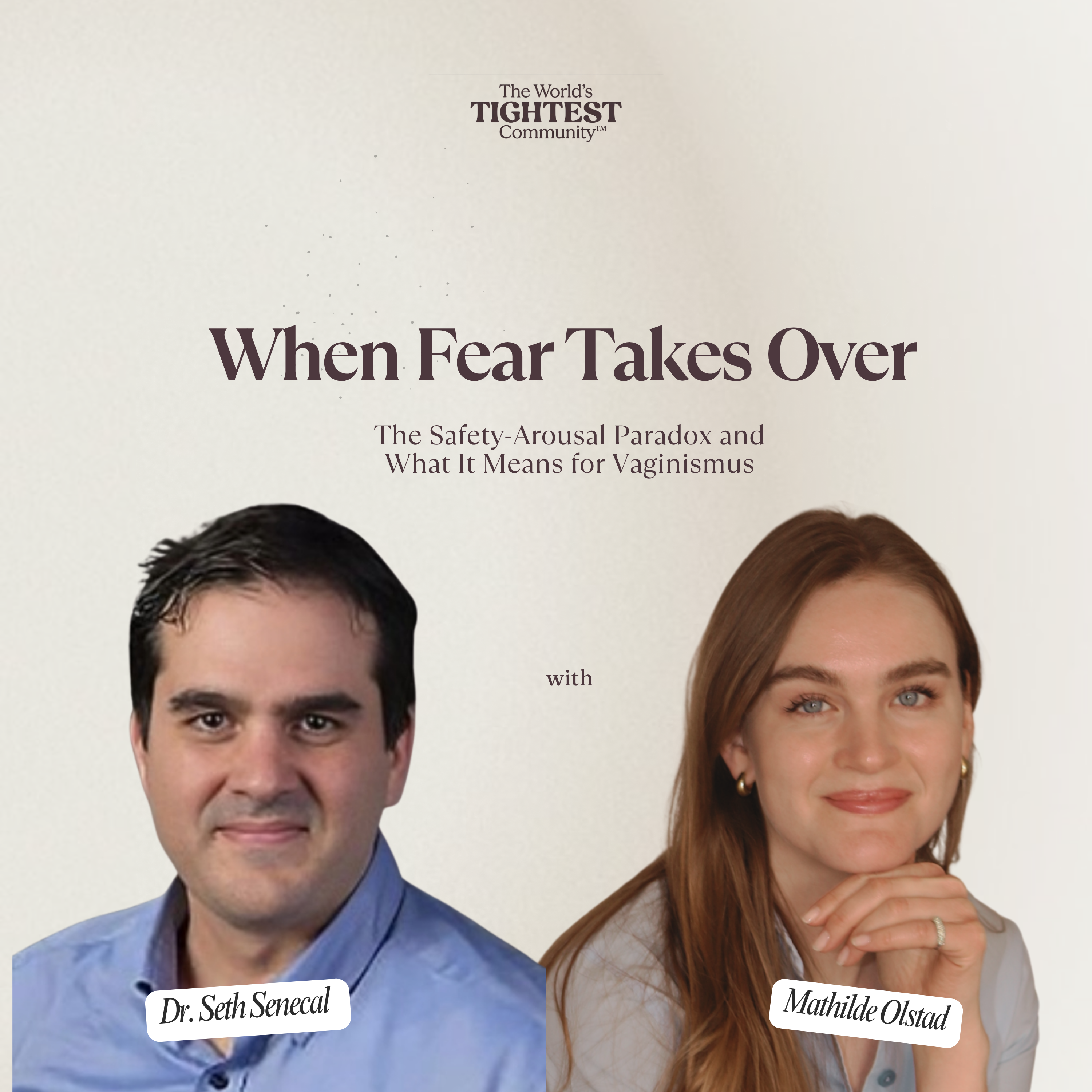 Vaginismus and Fear: How Your Nervous System Creates the Pain Cycle - and How to Break It Vaginismus and Fear: How Your Nervous System Creates the Pain Cycle - and How to Break It | Fear is one of our most powerful instincts - and it often plays a central role in vaginismus. In this episode, psychologist Dr. Seth Senecal explains how fear overrides logic, shapes our nervous system, and keeps our pelvic floor muscles from relaxing.Whether it’s a tiger chasing us or worrying that someone we love might leave, the body responds as if survival is on the line - and that signal can often be hard to mute.Together with host Mathilde, he unpacks why safety is as crucial as arousal, why using dilators alone without addressing emotional factors often fall short, and how shame and anger can be transformed into tools for healing.Listeners will learn how the sympathetic and parasympathetic systems work during sex, why anxiety is a “mood killer,” and what it means to approach vaginismus with curiosity and softness instead of force. Dr. Seth Senecal is a U.S.-based clinical psychologist who works with trauma, anxiety, and chronic pain.For speaking engagements or to connect with Dr. Seth Senecal, reach out at docsenecal@gmail.com Connect with MathildeIG: @theworldstightestcommunity or mathilde@theworldstightestcommunity.com | — | ||||||
| 8/27/25 | 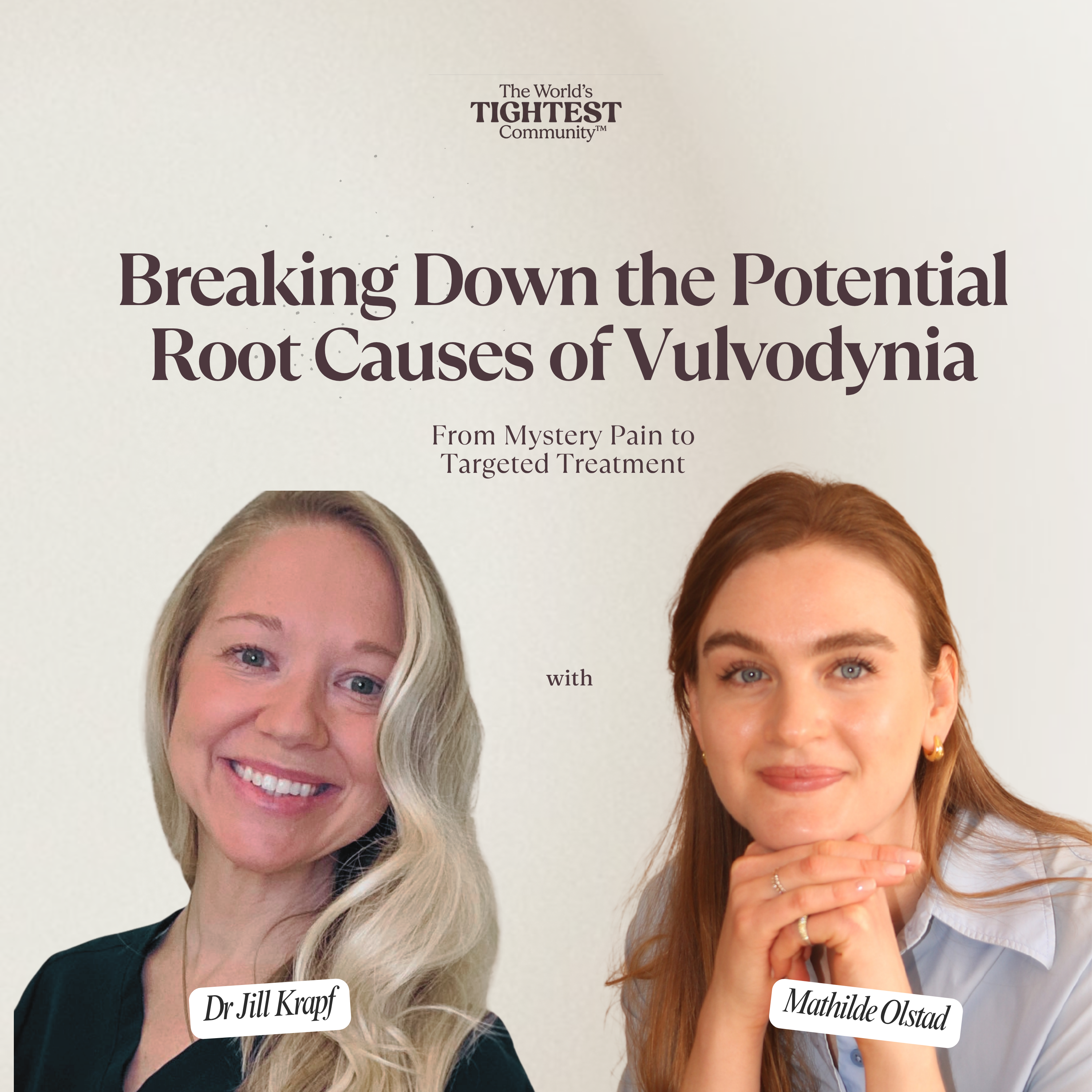 Vulvodynia Root Causes: Hormonal, Muscular, Nerve, and Inflammatory I Dr. Jill Krapf Vulvodynia Root Causes: Hormonal, Muscular, Nerve, and Inflammatory I Dr. Jill Krapf | In this episode, Dr. Jill Krapf joins Mathilde to unpack the four main drivers of vulvar pain - hormonal, muscular, inflammatory, and nerve-related - and why these factors often overlap. She shares why she believes the catch-all term “vulvodynia” will eventually disappear as research continues to uncover specific root causes.We discuss how Dr. Krapf investigates these causes in her practice, from examining glands and muscles to considering hormones and nerve involvement.She outlines practical treatment options - topical hormones, pelvic floor therapy, medications - and when surgery might be appropriate. Dr. Krapf also highlights exciting new research on neuroinflammatory pain.Work with Dr. Jill Krapf: https://jillkrapfmd.com/appointments@jillkrapfmd.com https://www.instagram.com/jillkrapfmd Book: When Sex Hurts https://tinyurl.com/yb9z3vtvThe Centers for Vulvovaginal Disorders: https://vulvodynia.com/Connect with MathildeIG: @theworldstightestcommunity or mathilde@theworldstightestcommunity.comTimestamps: 04:24 – Dr Jill Krapf’s background 06:08 – Why “vulvodynia” is a problematic term 09:53 – The four main root-cause categories (hormonal, muscular, inflammatory/infectious and nerve-related) 14:30 – Hormonal factors and diagnosis 19:30 – Hormonal treatment options 22:42 – Muscular causes and pain cycles 29:05 – Assessing and treating muscle-based pain 31:38 – Inflammatory and infectious causes 34:30 – Treatment approaches for inflammation 35:46 – Nerve-driven pain 38:20 – Treatment options for nerve pain 42:23 – Pudendal and pelvic nerve issues 44:25 – How to find and work with Dr. Jill Krapf | — | ||||||
| 3/18/25 |  Lubricants, Condoms, and Vaginismus: The Intimate Products That Could Be Making Pain Worse Lubricants, Condoms, and Vaginismus: The Intimate Products That Could Be Making Pain Worse | Join us with Sam Evans, intimate health expert and co-owner of Jo Divine, a UK pleasure shop specializing in skin-safe products. Sam shares her personal experience with vaginismus and how intimate products directly contributed to her condition.In this episode, we discuss:* How common ingredients in lubricants, condoms and other intimate health products can trigger vaginal pain* Why "doctor recommended" products might still contain harmful ingredients* How incorporating toys and focusing on pleasure can be beneficial for those experiencing vulvodynia and vaginismusRequest a topic we should address on the podcast via @theworldstightestcommunity.10% discount code for Jo Divine: BAUBO10 (£5 minimum spend on full priced products excluding P&P) ends 30/04/25Recommended products:* Yes Organic Water Based Lubricant https://www.jodivine.com/products/yes-organic-lubricant-water-based* Yes Organic Oil Based Lubricant https://www.jodivine.com/products/yes-organic-lubricant-oil-based* Yes Coco Oil Based Lube Applicators x 6 https://www.jodivine.com/products/yes-coco-oil-based-lube-applicators-x-6* SUTIL Luxe https://www.jodivine.com/products/sutil-luxe* SUTIL Rich https://www.jodivine.com/products/sutil-rich* Immy Vibrator https://www.jodivine.com/products/jo-divine-immy Connect with MathildeIG: @theworldstightestcommunity or mathilde@theworldstightestcommunity.com | — | ||||||
| 2/8/25 | 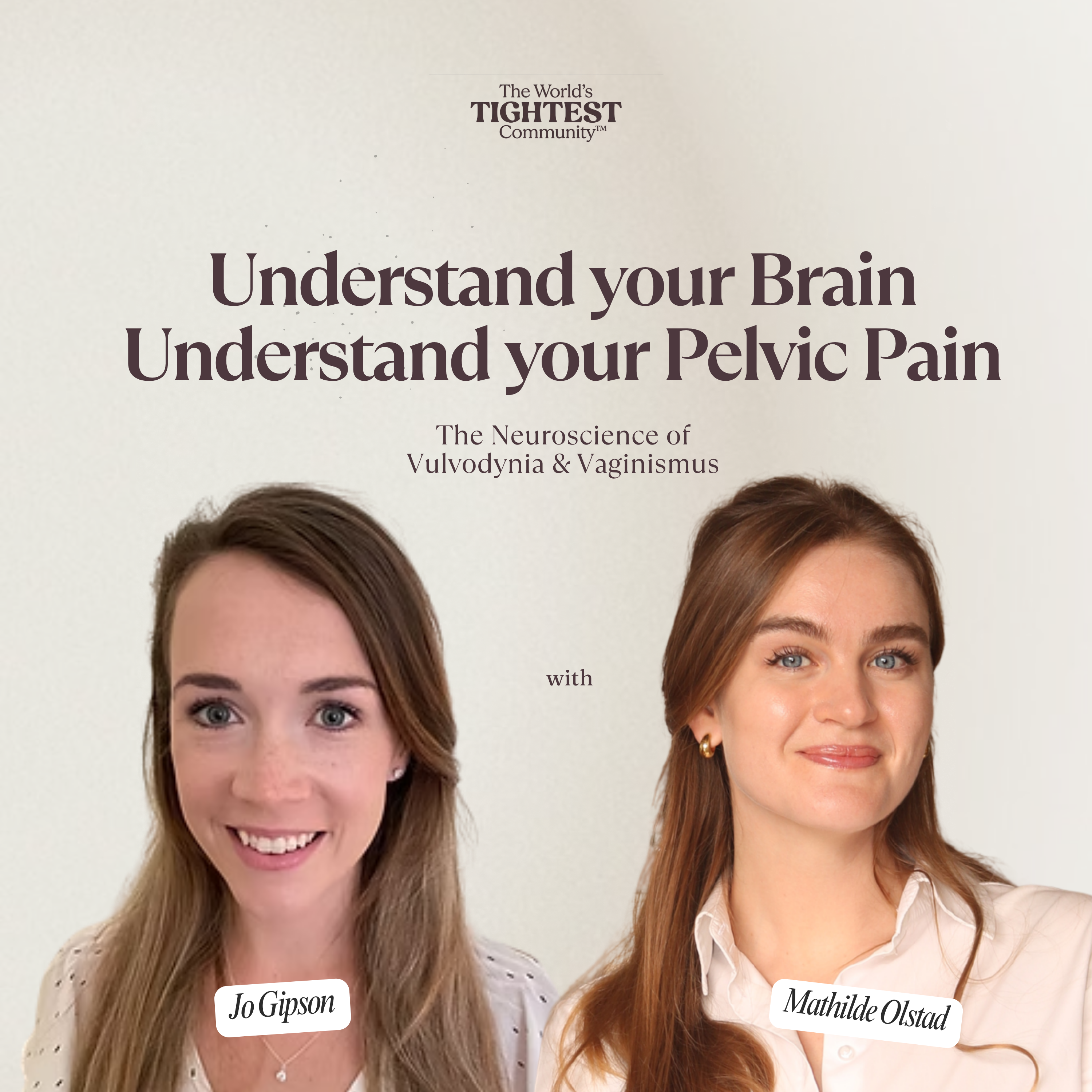 Pelvic Pain Neuroscience: Why Anticipating Pain Makes Vaginismus and Vulvodynia Worse Pelvic Pain Neuroscience: Why Anticipating Pain Makes Vaginismus and Vulvodynia Worse | In part two of our two-part series, we explore the fascinating neuroscience behind pelvic pain with pelvic health physiotherapist Jo Gipson. We cover why pain isn't just physical but a complex response to perceived threat, and how our beliefs and past experiences shape our body's reactions. Jo breaks down how pain cycles can emerge, explains why anticipating pain can make it worse, and reveals why even trusted partners can unknowingly trigger protective responses.Connect with Jo Gipson:Instagram: @jogipsonphysioWebsite: www.jogipsonphysiotherapy.comFor UK-based pelvic health support, visit the Pelvic Pain Network: @pelvicpainnetworkThe Oh nut: https://thepelvicpeople.com/products/ohnut-depth-limiting-ringsConnect with MathildeIG: @theworldstightestcommunity or mathilde@theworldstightestcommunity.com | — | ||||||
| 1/21/25 | 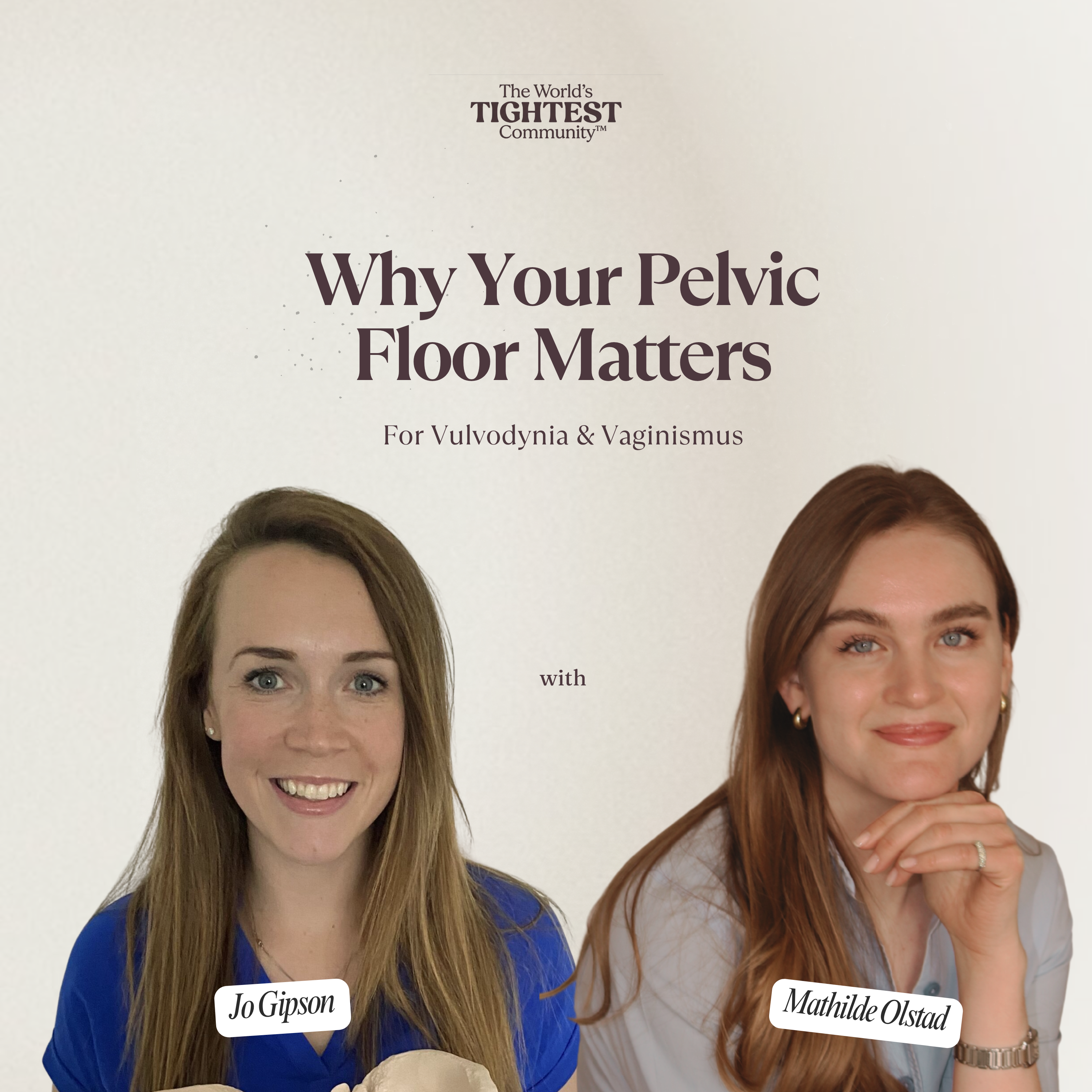 Pelvic Floor PT on Vaginismus and Vulvodynia: What You Actually Need to Know Pelvic Floor PT on Vaginismus and Vulvodynia: What You Actually Need to Know | In part one of our two-part series, pelvic health physiotherapist Jo Gipson explains the basics of pelvic floor anatomy and the relevance for vulvodynia and vaginismus. She challenges common myths about Kegel exercises, explains why both muscle relaxation and strength matter, and shares practical treatment approaches from breath work to dilator use.Connect with Jo Gipson:Instagram: @jogipsonphysioWebsite: www.jogipsonphysiotherapy.comFor UK-based pelvic health support, visit the Pelvic Pain Network: @pelvicpainnetworkConnect with MathildeIG: @theworldstightestcommunity or mathilde@theworldstightestcommunity.com | — | ||||||
Showing 25 of 28
Sponsor Intelligence
Sign in to see which brands sponsor this podcast, their ad offers, and promo codes.
Chart Positions
1 placement across 1 market.
Chart Positions
1 placement across 1 market.