Insights from recent episode analysis
Audience Interest
Podcast Focus
Publishing Consistency
Platform Reach
Insights are generated by CastFox AI using publicly available data, episode content, and proprietary models.
Most discussed topics
Brands & references
Est. Listeners
Based on iTunes & Spotify (publisher stats).
- Per-Episode Audience
Est. listeners per new episode within ~30 days
1,001 - 10,000 - Monthly Reach
Unique listeners across all episodes (30 days)
5,001 - 25,000 - Active Followers
Loyal subscribers who consistently listen
501 - 5,000
Market Insights
Platform Distribution
Reach across major podcast platforms, updated hourly
Total Followers
—
Total Plays
—
Total Reviews
—
* Data sourced directly from platform APIs and aggregated hourly across all major podcast directories.
On the show
From 10 epsHosts
Recent guests
No guests detected in recent episodes.
Recent episodes
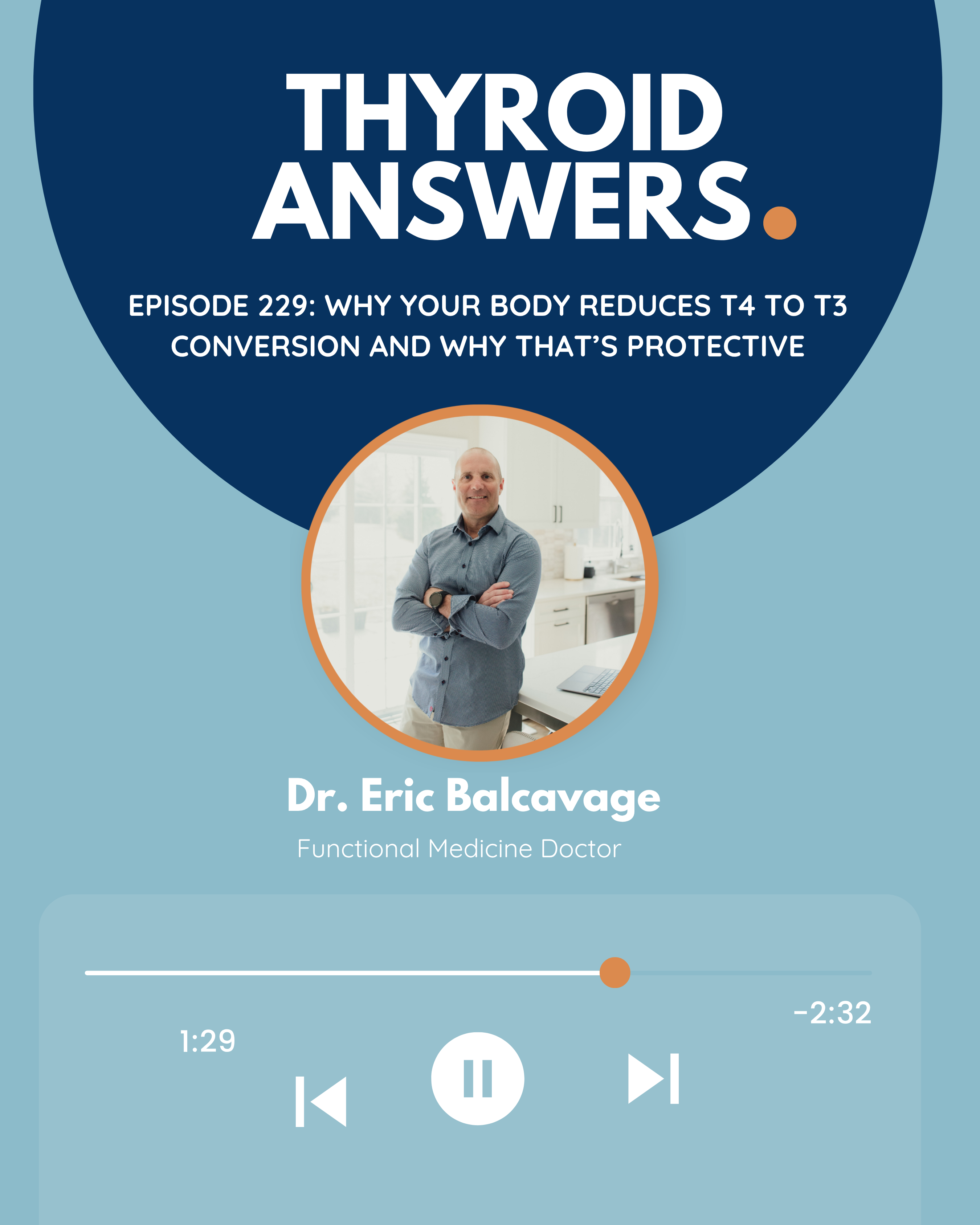
Episode 229: Why Your Body Reduces T4 to T3 Conversion and Why That's Protective
May 5, 2026
1h 24m 30s
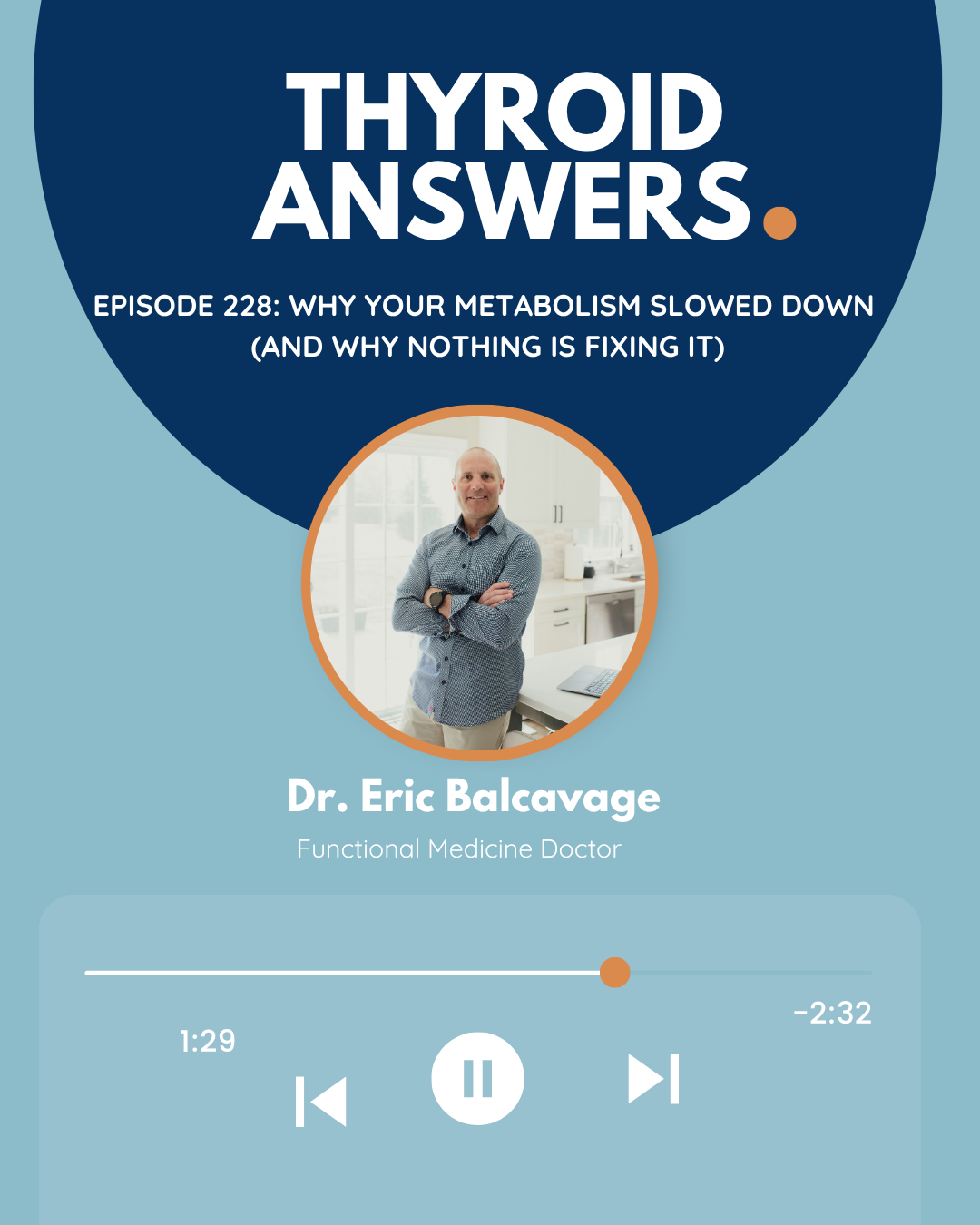
Episode 228: Why Your Metabolism Slowed Down (And Why Nothing Is Fixing It)
Apr 28, 2026
1h 00m 29s
Episode 227: Why Your Metabolism Isn't Broken (And Why You're Still Tired)
Apr 21, 2026
54m 44s
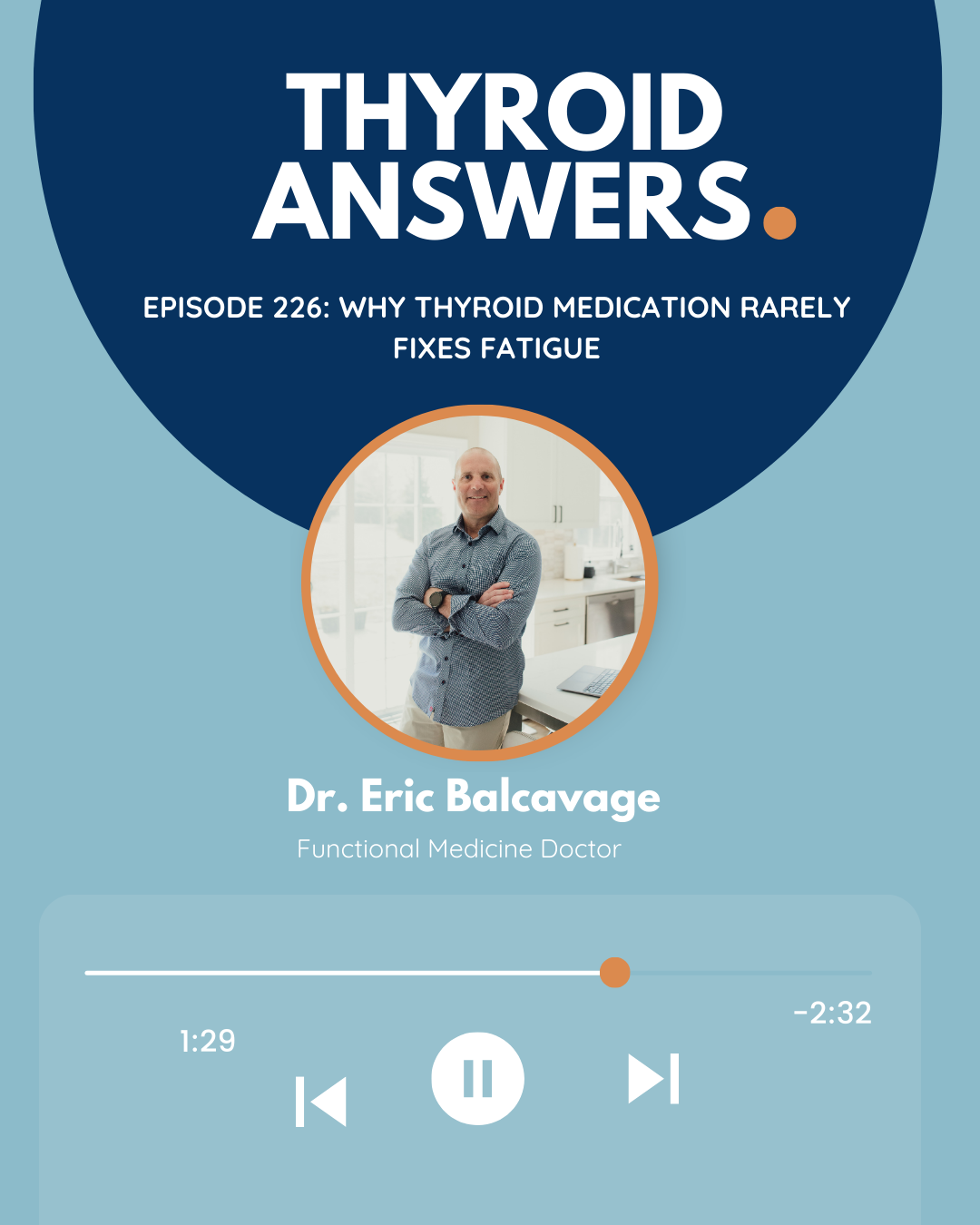
Episode 226: Why Thyroid Medication Rarely Fixes Fatigue
Apr 14, 2026
1h 02m 24s
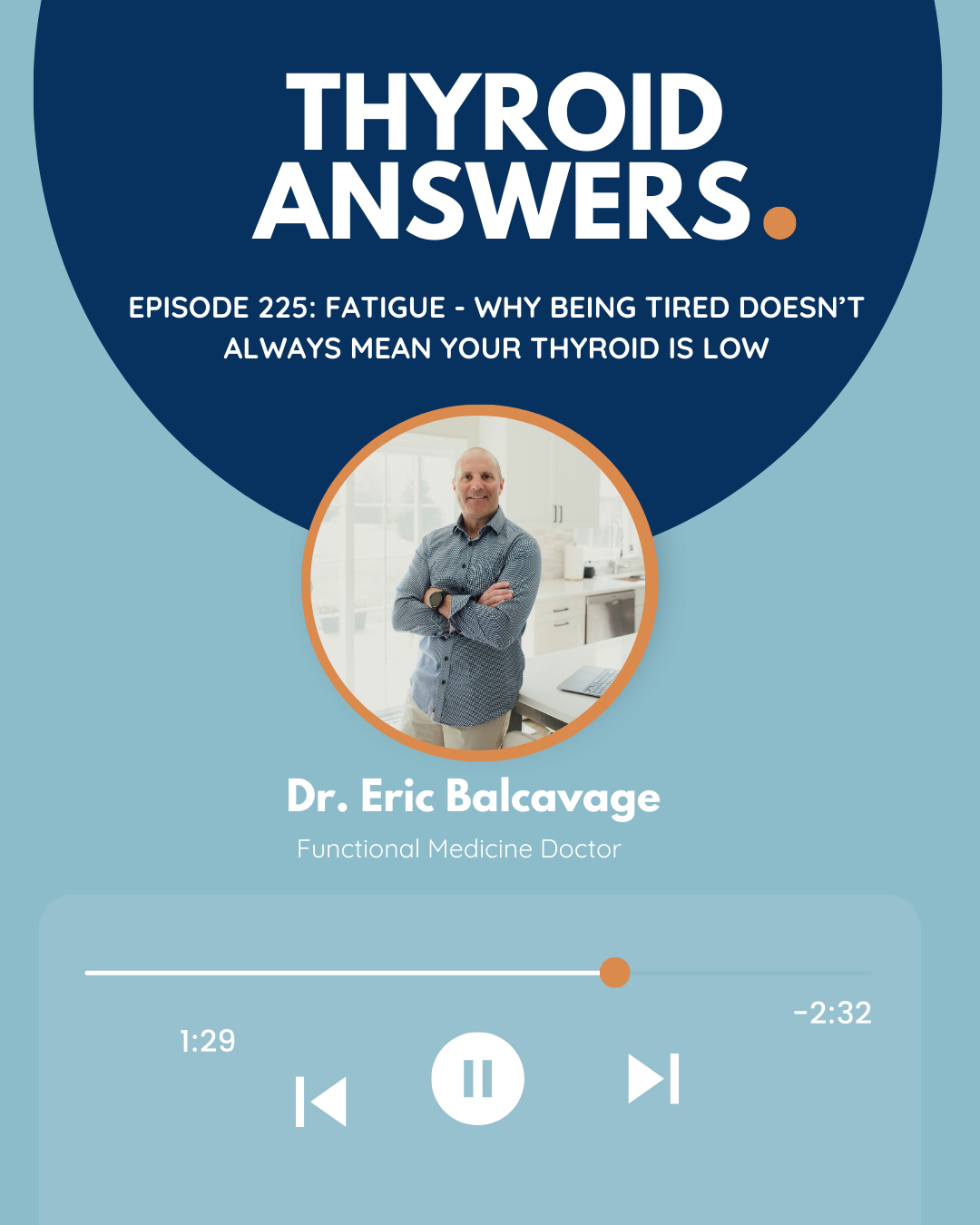
Episode 225: Fatigue - Why Being Tired Doesn't Always Mean Your Thyroid Is Low
Apr 7, 2026
51m 40s
Social Links & Contact
Official channels & resources
Official Website
Login
RSS Feed
Login
| Date | Episode | Topics | Guests | Brands | Places | Keywords | Sponsor | Length | |
|---|---|---|---|---|---|---|---|---|---|
| 5/5/26 | ![]() Episode 229: Why Your Body Reduces T4 to T3 Conversion and Why That's Protective✨ | thyroid hormone conversionlow T3+4 | — | — | — | T4T3+5 | — | 1h 24m 30s | |
| 4/28/26 | ![]() Episode 228: Why Your Metabolism Slowed Down (And Why Nothing Is Fixing It)✨ | metabolismfatigue+4 | — | The Thyroid Debacle | — | metabolismfatigue+5 | — | 1h 00m 29s | |
| 4/21/26 | ![]() Episode 227: Why Your Metabolism Isn't Broken (And Why You're Still Tired)✨ | metabolismfatigue+3 | — | The Thyroid Debacle | — | metabolismfatigue+5 | — | 54m 44s | |
| 4/14/26 | ![]() Episode 226: Why Thyroid Medication Rarely Fixes Fatigue✨ | thyroid medicationfatigue+3 | — | The Thyroid Debacle | — | thyroidfatigue+3 | — | 1h 02m 24s | |
| 4/7/26 | ![]() Episode 225: Fatigue - Why Being Tired Doesn't Always Mean Your Thyroid Is Low✨ | fatiguethyroid health+4 | — | — | — | fatiguethyroid hormone+5 | — | 51m 40s | |
| 3/31/26 | ![]() Episode 224: Iron Deficiency or Defense? Understanding Low Iron and Ferritin✨ | iron deficiencyferritin+4 | — | Thyroid Answers Podcast | — | iron deficiencyferritin+7 | — | 47m 23s | |
| 3/24/26 | ![]() Episode 223: Why Thyroid "Optimization" Often Makes People Worse✨ | thyroid optimizationhealth capacity+4 | — | — | — | thyroidT3+6 | — | 22m 41s | |
| 3/17/26 | ![]() Episode 222: WHY DOING THE RIGHT THINGS DOESN'T WORK✨ | chronic symptomshuman physiology+3 | — | — | — | chronic strainoverload+5 | — | 57m 10s | |
| 3/10/26 | ![]() Episode 221: Why Low Free T3 Often Doesn't Need to Be "Fixed"✨ | T3thyroid care+5 | — | — | — | free T3thyroid+8 | — | 1h 04m 55s | |
| 3/3/26 | ![]() Episode 220: Why Doing More Is Making You Worse — And Why Recovery Usually Starts With Less✨ | thyroid healthrecovery+4 | — | — | — | thyroid symptomsrecovery+5 | — | 57m 26s | |
Want analysis for the episodes below?Free for Pro Submit a request, we'll have your selected episodes analyzed within an hour. Free, at no cost to you, for Pro users. | |||||||||
| 2/24/26 | ![]() Episode 219: T3-Based Thyroid Medication — Mistakes, Misunderstandings, and Miscommunication | T3-based thyroid medications, including desiccated thyroid extract and combination T4/T3 therapy, are some of the most misunderstood and controversial tools in thyroid care. Some patients feel dramatically better. Others feel briefly improved, then crash. Labs often look "optimized," yet long-term recovery stalls. So what's actually happening? In this episode of Thyroid Answers, Dr. Eric Balcavage breaks down the most common mistakes, misunderstandings, and miscommunication surrounding T3-based thyroid therapy — and explains why outcomes vary so widely between patients. You'll learn: Why so many people end up on T3 or desiccated thyroid in the first place The real physiologic arguments clinicians use to justify T3 therapy What a healthy human thyroid gland actually produces — and why that matters Where most of the body's T3 really comes from Why "poor conversion" is often an adaptive response, not a defect Why lowering reverse T3 doesn't necessarily mean recovery Why T3 helps some people and destabilizes others The difference between managing symptoms and restoring physiology This episode reframes T3 therapy through the lens of physiologic state, not just lab values — and explains why adding more thyroid hormone can sometimes push the body further away from recovery. If you've ever wondered whether T3 is helping you, hurting you, or simply masking deeper issues, this conversation will give you a clearer framework for understanding what's really going on. | — | ||||||
| 2/17/26 | ![]() Episode 218: Why T3 Works for Some People — and Hurts Others | Why does T3 feel life-changing for some people — and destabilizing for others? In this episode of Thyroid Answers, Dr. Eric Balcavage explains why the answer isn't about the medication itself, but about the physiologic state of the person receiving it. You'll learn why T3 can support recovery in some cases and create symptom volatility in others, and why labeling T3 as "good" or "bad" misses the real issue entirely. This episode introduces a clear, state-based framework: Resiliency — regeneration and adaptive capacity Chronic strain — long-term repair and compensation Overload — defensive, survival-focused physiology Dr. Balcavage explains how T3 interacts differently in each state, why adding T3 can suppress TSH and reduce T4 reserves, and why labs can look better even as physiology becomes less stable. Topics Covered T3 medication benefits and risks Physiologic state and thyroid response Why T3 works for some but not others TSH suppression and T4 reserve depletion Adaptive vs forced thyroid output Why thyroid research produces mixed results This episode is essential for anyone taking T3, considering T3, or trying to understand why thyroid medication responses vary so dramatically. | — | ||||||
| 2/10/26 | ![]() Episode 217: Why Reduced T4-to-T3 Conversion Is Not the Problem! | One of the most common explanations patients hear when they don't feel well on thyroid medication is this: "You're not converting T4 to T3." In this episode of Thyroid Answers, Dr. Eric Balcavage explains why reduced T4-to-T3 conversion is usually not the problem—and why treating it as a defect often leads to aggressive thyroid medication strategies that stabilize labs but destabilize physiology. You'll learn: What T4-to-T3 "conversion" actually is—and why it's regulated, not broken Why clinicians often label symptoms as "poor conversion" How stress, inflammation, infection, sleep disruption, under-fueling, illness, excess T4, and even aging can intentionally reduce T3 production Why adding T3 often backfires and creates symptom volatility How to interpret thyroid labs in context instead of chasing "optimal" numbers Ande More ... This episode reframes reduced conversion as an adaptive signal, not a failure—and explains why true thyroid recovery depends on changing the conditions the body is responding to, not forcing output with medication. | — | ||||||
| 2/3/26 | ![]() Reverse T3, T3 Uptake, and Thyroid Antibodies - What They Mean, What They Don't | Why do so many people still feel hypothyroid when their labs look "normal"? In this episode of Thyroid Answers, Dr. Eric Balcavage completes the thyroid lab conversation by addressing three of the most misunderstood tests in thyroid care: reverse T3, T3 uptake, and thyroid antibodies. You'll learn: What reverse T3 actually represents—and why it rises or falls Why high reverse T3 does not mean blocked T3 receptors How T3 medication lowers reverse T3 by suppressing T4, not by improving physiology What the T3 uptake test measures and why it still matters Why free T4 and free T3 can be misleading without total hormone levels How binding proteins, estrogen, liver function, inflammation, and medications affect interpretation What thyroid antibodies do—and do not—tell us about thyroid damage and disease activity This episode is essential listening if you've been told your thyroid is "optimized," yet symptoms persist—or if you're trying to understand why thyroid medications work for some people and cause instability for others. This discussion sets the stage for the February series on thyroid medication physiology, including T4-only therapy, T3 therapy, combination therapy, and desiccated thyroid. | — | ||||||
| 1/27/26 | ![]() Episode 215: Total T3 And Free T3 - What They Mean, What They Don't, and Why Treating T3 often backfires | T3 is the most talked-about thyroid hormone — and the most misunderstood. In this episode of the Thyroid Answers Podcast, Dr. Eric Balcavage breaks down Total T3 and Free T3 using a clear, Q&A-style format to address the most common questions, mistakes, and treatment traps patients and clinicians fall into. You'll learn: What T3 actually represents — and what it does not The difference between Total T3 and Free T3 (and why you need both) Why low T3 is often an adaptive response, not a deficiency Why adding T3 medication can help short-term but worsen physiology long-term Why "chasing Free T3" is one of the biggest mistakes in functional medicine How stress, inflammation, illness, dieting, and medications alter T3 levels Why labs can improve while patients feel worse How to interpret T3 correctly within the full thyroid panel This episode is essential listening if: You've been told your T3 is "low-normal" but still feel terrible You feel better on T3 medication at first — then worse Your labs look good, but your symptoms don't match You want to understand thyroid physiology beyond numbers and ranges 🎁 Free Resource: If you want a clear, practical guide to understanding thyroid labs, comment LABS and I'll send you my Thyroid Labs Decoded eBook. | — | ||||||
| 1/20/26 | ![]() Episode 214: Total T4 vs Free T4 - What They Mean, And Why You Need Both! | Most thyroid patients are told their labs are "normal" because their Free T4 is in range, yet they still feel exhausted, cold, foggy, and unwell. In this episode, Dr. Eric Balcavage breaks down one of the most misunderstood areas of thyroid testing: Total T4 vs Free T4, what each test actually measures, why doctors often run only one, and why relying on a single value leaves millions of people stuck without answers. This is a Q&A-style episode, answering the real questions patients ask every day, including: What Total T4 really tells us about thyroid hormone availability Why Free T4 alone can be misleading How stress, inflammation, and adaptation affect these values Why "normal T4" doesn't always mean normal thyroid function When thyroid medication helps — and when it makes things worse If you've been told your thyroid labs look fine, but you don't feel fine, this episode will help you understand what your labs are actually saying, and what they're not. 👉 Want help interpreting your thyroid labs? Comment LABS to receive my free Thyroid Labs Decoded eBook. | — | ||||||
| 1/13/26 | ![]() Episode 213: AI Is Giving Health Advice—But Does It Understand Your Body? | AI is quickly becoming part of health care. Patients are using ChatGPT and other AI tools to interpret symptoms, labs, genetics, and decide what to do next—often before they ever talk to a clinician. But here's the real question: Does AI actually understand the human body—or is it just organizing data without context? In this episode, Dr. Eric Balcavage is joined by Dr. Cam McDonald, a global leader in precision health and AI, and Susan Robbins, an epigenetic human performance coach, to explore the promises, limitations, and hidden assumptions behind AI-driven health advice. Together, they unpack: What AI does well in health care—and where it can go wrong Why more data doesn't always lead to better health decisions How genetics, epigenetics, and body measurements can inform care—but don't tell the whole story The difference between managing numbers and supporting recovery Why optimization isn't always healing When doing less may actually be the most precise approach This conversation is especially important for anyone dealing with chronic symptoms, thyroid issues, anxiety, fatigue, or feeling overwhelmed by conflicting health advice. AI isn't the enemy—but what it assumes about health matters more than most people realize. 🎧 Whether you're a patient trying to make sense of AI health advice or a clinician navigating this new landscape, this episode will help you think more clearly about what true personalized care really means. Guest Information: Dr. CAM MCDONALD BIO: Dr Cam McDonald is a global leader in precision health, AI, and human performance who's redefining how we understand health, wellbeing, and behaviour in the modern world. As the CEO of the Precision Health Alliance and a Fellow of the Australasian Society of Lifestyle Medicine, Dr Cam combines deep scientific expertise with an engaging, down-to-earth communication style that makes complex ideas practical and inspiring. An Accredited Exercise Physiologist, Dietitian, and PhD researcher, Dr Cam has spent over two decades translating the science of epigenetics, AI, and personalised health into real-world systems that improve how people live, learn, and lead. Through platforms like ShaeWellness and Shae Group, his work helps organisations, practitioners, and individuals use technology to unlock human potential, prevent burnout, and create sustainable high performance. He's been featured on ABC Radio, Channel 7 News, and major conferences around the world, sharing the stage with thought leaders including the Dalai Lama and Deepak Chopra. Whether he's speaking to scientists, CEOs, or educators, Dr Cam brings a rare blend of rigour, humour, and humanity, showing how AI and precision health are not the future—they're the tools we can use right now to live and lead better. Website for health professionals - https://precisionhealthalliance.org/contact/ Susan Robbins is a retired law enforcement officer turned certified epigenetic human performance coach and personalized health expert, with over a decade of coaching experience and a specialization in epigenetics since 2019. After facing chronic Lyme disease, autoimmune, and gadolinium deposition disease, she discovered the transformative power of epigenetics—the science of how lifestyle and environment influence genetic expression—and has dedicated her career to helping others optimize their health through a deeply personalized approach. Using DNA testing, the cutting-edge PH360 platform, and epigenetic age testing, Susan guides clients to align every aspect of their lifestyle with their unique genetic and epigenetic blueprint, unlocking sustainable, long-term vitality and wellness. To bring personalized health to the forefront and make this science accessible, she created the podcast Everyday Epigenetics: Raw. Real. Relatable., a platform designed to break down complex epigenetic concepts into practical, relatable conversations that empower listeners to take control of their health journey with clarity and confidence. Website: https://healthyawakening.co Podcast: https://everydayepigenetics.co Instagram: susanrobbins_epigeneticcoach #AIHealth #PrecisionHealth #PersonalizedMedicine #HealthAnxiety #ThyroidHealth #ChronicIllness #FunctionalMedicine #Epigenetics #HealthTechnology #WellnessTruth #HealthData #StressAndHealth #HealingNotHacking #Overwhelmed | — | ||||||
| 1/6/26 | ![]() TSH Explained: 25 Thyroid Questions Your Doctor Never Answered | TSH: The Most Misunderstood Thyroid Lab — 25 Questions, Answered If you've been told your TSH is "normal" but you still feel exhausted, foggy, inflamed, or hypothyroid — this episode is for you. In this deep-dive Q&A episode, Dr. Eric Balcavage answers 25 of the most common and misunderstood questions about TSH, the lab marker most often used — and misused — in thyroid care. You'll learn: What TSH actually measures (and what it doesn't) Why TSH can go up in some stress states and down in others How inflammation, stress, sleep, dieting, and medication timing distort TSH Why "normal" TSH doesn't guarantee healthy thyroid function How to tell true hypothyroidism from adaptive physiology Why chasing TSH often keeps people stuck How thyroid medications affect TSH differently (T4 vs T3) Why tissue hypothyroidism can exist even when labs look "fine" This episode is designed for: Patients frustrated by "normal labs" Clinicians who want better thyroid interpretation Anyone trying to understand thyroid physiology beyond numbers 👉 Free Resource: Comment LABS to receive my Thyroid Labs Decoded eBook, where I break down TSH, T4, T3, reverse T3, ratios, antibodies, and medication timing in plain language. 🎧 Listen now and finally understand what your thyroid labs are really telling you. | — | ||||||
| 12/23/25 | ![]() Is Your Brain Keeping You Stuck in Thyroid Purgatory? | Thyroid Shorts #22 | Is Your Brain Keeping You Stuck in Thyroid Purgatory? | Thyroid Shorts #22 Most people assume persistent hypothyroid symptoms mean their thyroid is failing or their medication is wrong. But what if your thyroid isn't broken at all, and your brain's perception of safety or threat is controlling everything? In this episode, Dr. Eric Balcavage reveals why many people get trapped in Thyroid Purgatory. In this state, thyroid physiology is perfectly adapted to protection, not performance, which is why more T4 or adding T3 often makes symptoms worse, not better. You'll learn how two key cortisol receptors (MR and GR) determine whether your body operates in: 🟢 Safety Physiology → normal thyroid conversion, good sleep, stable mood, strong digestion or 🔴 Danger Physiology → low T3, high rT3, anxiety, insomnia, fatigue, wired-but-tired energy Dr. Eric breaks down the 2024 Molecular Psychiatry paper, "The Cortisol Switch Between Vulnerability and Resilience," and explains how chronic perceived stress desensitizes the GR "off switch," locks you into vigilance physiology, and forces your thyroid to downshift. You'll also learn the top signs you're stuck in Danger Mode, why labs can look "abnormal but appropriate," and the five daily habits that help retrain the brain to recognize safety so your thyroid can finally recover. | — | ||||||
| 12/16/25 | ![]() Is T3 Medication Causing You Anxiety and Insomnia? | Many people start T3 medication hoping for more energy and mental clarity—only to end up feeling wired, anxious, or unable to sleep. In this episode of Thyroid Shorts, Dr. Eric Balcavage explains why too much or too little T3 can both amplify anxiety and insomnia, and how to restore calm by shifting from defense mode to recovery mode. You'll learn how the brain's fear center (the amygdala) interprets stress, how local T3 activity inside the brain differs from global thyroid output, and why "state before hormone" is the key to lasting recovery. Featuring insights from two pivotal papers: Psychoneuroendocrinology (2024): Evidence for thyroid hormone regulation of amygdala-dependent fear relevant memory and plasticity PLoS ONE (2011): Adult-Onset Hypothyroidism Enhances Fear Memory and Up-regulates Mineralocorticoid and Glucocorticoid Receptors in the Amygdala Timestamps: 00:00 – Intro – Is T3 causing your anxiety and insomnia? 02:00 – Input → Interpretation → Response: how the brain reads threat 05:00 – The amygdala as the body's alarm system 08:00 – The Threat Perception Loop and defense physiology 11:00 – Local vs global thyroid adaptation: T3 in the amygdala 13:00 – The T3 Paradox: too little vs too much T3 17:00 – Shifting from defense to recovery mode 19:00 – Key takeaways & how to calm the system before adjusting hormone Key Takeaway: Your thyroid follows your brain's perception of safety. Calming the nervous system restores efficient T3 conversion—without overstimulation. | — | ||||||
| 12/9/25 | ![]() Episode 211: Rewiring the Brain for Thyroid Recovery with Dr. Patrick Porter | Rewiring the Brain for Thyroid Recovery with Dr. Patrick Porter What if you could train your brain to help your thyroid recover? In this episode, Dr. Eric Balcavage sits down with Dr. Patrick Porter, creator of BrainTap®, to explore how brainwave training, stress regulation, and nervous-system balance can unlock your body's natural healing potential. In this conversation: How chronic stress keeps the brain stuck in "danger mode" and blocks thyroid recovery Why the amygdala, HPA axis, and thyroid are part of one continuous feedback loop The role of neuroplasticity and brainwave entrainment in calming the body's stress response Practical tools to shift from survival to safety mode—naturally How BrainTap supports sleep, energy, focus, and overall metabolic balance 🎧 Listen now to understand how "rewiring the brain" can help your thyroid finally respond the way it should. 👉 Learn more or schedule a Discovery Call with Dr. Balcavage at www.drericbalcavage.com 🎥 Watch more episodes on our YouTube channel: youtube.com/@askdreric Dr. Patrick K. Porter is a pioneer in brainwave entrainment and the creator of BrainTap®, a technology used by over 120,000 people and 3,000+ clinics worldwide to restore balance and optimize brain performance. For more than three decades, he's explored how visualization, neuroplasticity, and sound/light stimulation can help people rewire their brains for better sleep, focus, and healing—without pills or guesswork. Featured in The Wall Street Journal, CNN, and The Joe Rogan Experience, Dr. Porter continues to lead a global movement to help people unlock their brain's innate ability to heal, perform, and thrive. Dr Porter's contact info: https://www.youtube.com/@drpatrickporter https://braintap.com/ https://instagram.com/braintaptech | — | ||||||
| 12/2/25 | ![]() TS Epsisode 20: The Real Reason Your TSH Goes Up in Winter | Every winter, TSH rises—but that doesn't mean thyroid failure. Dr Eric Balcavage explains how photoperiod, melatonin, and circannual rhythms alter TRH → TSH → T3 and why seasonal adaptation is often misdiagnosed as hypothyroidism. In this episode, you'll learn: ✅ How shorter days and colder temperatures reset the hypothalamic–pituitary–thyroid axis ✅ Why macro-TSH raises lab TSH without true hypothyroidism ✅ How both conventional and functional models misread winter physiology ✅ Five ways to align with your seasonal thyroid rhythm (light, rest, minerals, movement, patience) | — | ||||||
| 11/25/25 | ![]() TS Epsiode 19: Stress and Holiday Hypothyroidism | Stress and Holiday Hypothyroidism | How Stress Lowers T3 and Raises rT3 | Dr. Eric Balcavage – Thyroid Shorts Ep. 19 The holidays are supposed to be joyful — but for many with hypothyroidism or Hashimoto's, they trigger fatigue, weight gain, brain fog, and anxiety. In this episode, Dr. Eric Balcavage, creator of the Adaptive Thyroid Model™, explains how stress physiology, poor sleep, and inflammation can turn down your thyroid hormone activity — even when your blood tests look "normal." Learn why holiday stress, late nights, sugar spikes, alcohol, and over-training push your body into a reverse T3 (rT3) dominant state — what Dr. Balcavage calls Holiday Hypothyroidism — and how to fix it naturally. In this episode, you'll learn: ✅ What reverse T3 is — and how it shuts down active T3 inside your cells ✅ How cortisol, IL-6, and TNF-α change deiodinase enzyme activity (DIO1/2 ↓, DIO3 ↑) ✅ Why your thyroid "slows down" under stress — it's protection, not failure ✅ The 5-Day rT3 Reset — a practical plan for restoring thyroid balance ✅ How to lower inflammation, improve sleep, and support bile flow during the holidays | — | ||||||
| 11/18/25 | ![]() Do Thyroid Antibodies Tell the Whole Story of Hashimoto's? – Thyroid Shorts Ep 18 | Most people are told: "If you have thyroid antibodies, you have Hashimoto's. If you don't, you don't." In this episode, Dr. Eric Balcavage, creator of the Adaptive Thyroid Model™, revisits that idea and shows why antibodies are only one piece of a much bigger picture. Discover how: ✅ Th1 and Th17 T-cells, CD8 T-cells, and low T-regs drive thyroid inflammation and tissue damage ✅ PAMPs (pathogen signals) and DAMPs (cell-danger signals) can bind to pattern-recognition receptors [PRRs] on thyroid cells, triggering cytokines and interferon activity ✅ Antibodies may confirm Hashimoto's, but their absence doesn't rule it out (seronegative Hashimoto's is real) ✅ Addressing the drivers of immune imbalance — gut permeability, sleep debt, oxidative stress, nutrient deficiencies — can help restore tolerance and thyroid function Dr. Balcavage breaks down the latest research on how inflammation starts inside the thyroid, why the body isn't "attacking" itself, and what a true recovery plan looks like. 🎯 Key Takeaway: Antibodies show the aftermath — not the origin — of thyroid autoimmunity. To heal, identify and remove the stressors that keep the immune system in defense mode. www.drericbalcavage.com | — | ||||||
| 11/11/25 | ![]() Episode 210: Hashimoto's Revisited - A Conversation with Dr. Izabella Wentz | In this episode of Thyroid Answers, Dr. Eric Balcavage sits down with pharmacist and bestselling author Dr. Izabella Wentz to revisit one of the most misunderstood conditions in modern medicine — Hashimoto's thyroiditis. They explore how new research and clinical experience are reshaping what we know about autoimmune thyroid disease, why so many women still struggle with fatigue, weight gain, and brain fog despite "normal" thyroid labs, and what it really takes to recover thyroid function from the inside out. Dr. Wentz and Dr. Balcavage break down the differences between managing Hashimoto's with medication and restoring thyroid health through the Adaptive Thyroid Model™, focusing on root causes suc as gut health, inflammation, hormone balance, and stress physiology. Key Topics: What most doctors miss about Hashimoto's and autoimmune thyroiditis The connection between stress, sleep, gut health, and thyroid autoimmunity Why "normal labs" can hide ongoing thyroid dysfunction How estrogen, cortisol, and inflammation alter thyroid hormone conversion The role of diet, supplements, and lifestyle in reversing Hashimoto's patterns How to know if your low T3 is adaptive — not failure And more ... Dr. Izabella Wentz is a compassionate, innovative, solution-focused integrative pharmacist dedicated to finding the root causes of chronic health conditions. Her passion stems from her own diagnosis with Hashimoto's thyroiditis in 2009, following a decade of debilitating symptoms. As an accomplished author, Dr. Wentz has written several best-selling books, including the New York Times best seller Hashimoto's Thyroiditis: Lifestyle Interventions for Finding and Treating the Root Cause, the protocol-based #1 New York Times best seller Hashimoto's Protocol: A 90-Day Plan for Reversing Thyroid Symptoms and Getting Your Life Back, and the Wall Street Journal best seller Hashimoto's Food Pharmacology: Nutrition Protocols and Healing Recipes to Take Charge of Your Thyroid Health. Her latest book, Adrenal Transformation Protocol, was released on April 18th, 2023. The book focuses on resetting the body's stress response through targeted safety signals and features a 4-week program that has already helped over 3,500 individuals. The program has an impressive success rate, with over 80% of participants improving their brain fog, fatigue, anxiety, irritability, sleep issues, and libido. http://thyroidpharmacist.com/ https://www.instagram.com/izabellawentzpharmd/ https://www.facebook.com/ThyroidLifestyle/ | — | ||||||
Showing 25 of 98
Sponsor Intelligence
Sign in to see which brands sponsor this podcast, their ad offers, and promo codes.
Chart Positions
4 placements across 4 markets.
Chart Positions
4 placements across 4 markets.