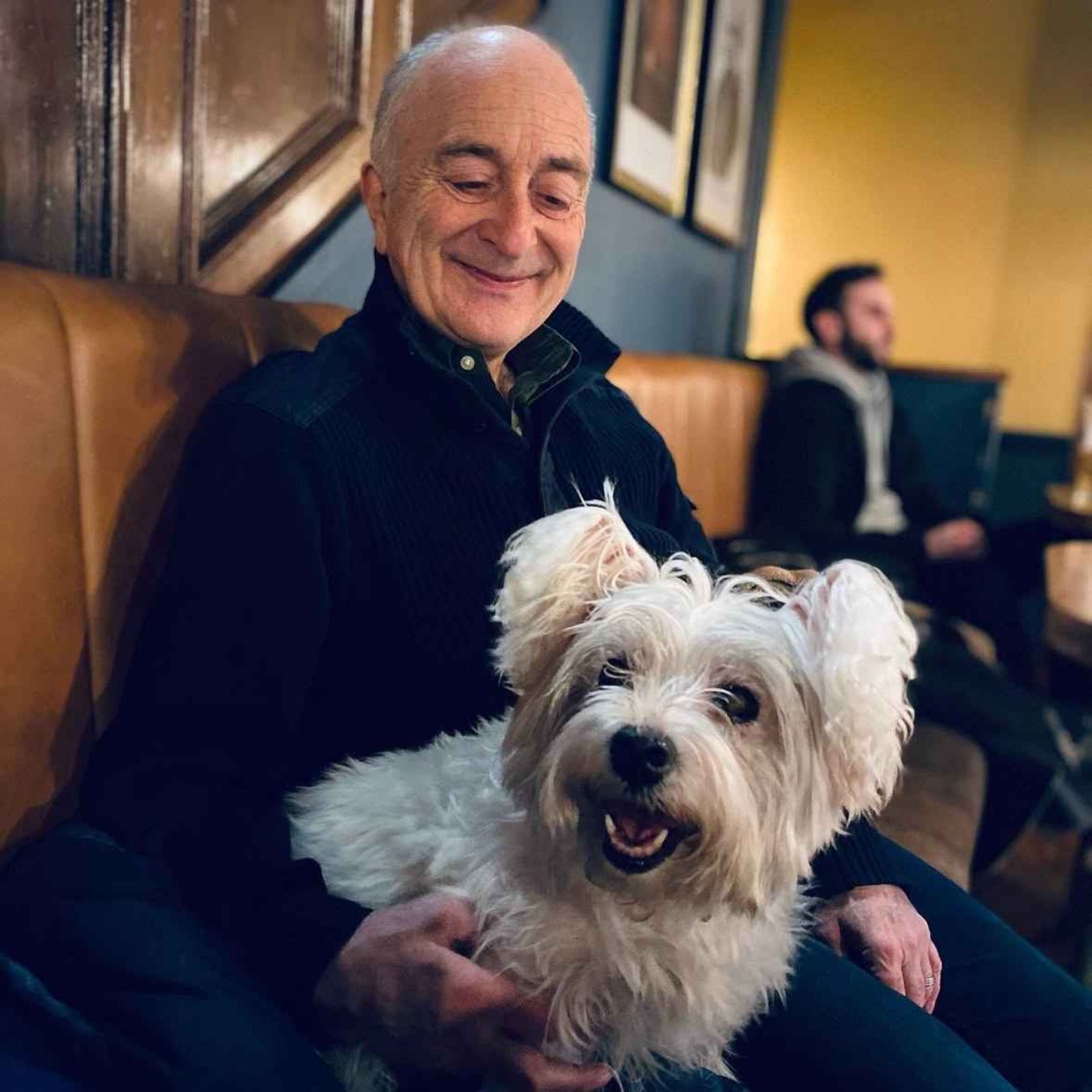
When Did We Start Grieving for Our DOGS?
From Tony Robinson's Cunningcast by Tony Robinson
November 13, 2025 · 24 min · Season 3 · Episode 10
About this episode
Tony Robinson and his guests discuss the evolving attitudes towards dogs and the mourning of their deaths.
In this bonus episode, Tony and his guests the veterinary scientist Daniel Mills and dog historian Stephanie Howard-Smith discuss how our attitudes towards dogs, and mourning their deaths, have evolved. We hear about the dog paintings of Edwin Landseer from Stephanie and how dogs read human emotions and 'love' us in their own way from Daniel. Together they discuss how growing empathy, affluence, and changing culture have transformed our bond with dogs from practical companionship to heartfelt connection, whose loss is deeply felt and openly mourned. As Stephanie says, ‘would it be heaven if your dog wasn’t there?’ Hosted by Sir Tony Robinson | Instagram @sirtonyrobinson Producer: Melissa FitzGerald | X @melissafitzg With Daniel Mills, Professor of Veterinary Behavioural Medicine, University of Lincoln | https://www.lincoln.ac.uk/researchatlincoln/meetourexperts/danielmills/ Daniel Mills is a leading UK-based veterinary behavioural medicine specialist at the University of Lincoln, recognised internationally for his work on companion animal behaviour, cognition, and welfare. He is known for his "psychobiological approach," which integrates…
People in this episode
Host: Tony Robinson
Guests: Daniel Mills, Stephanie Howard-Smith
Topics covered
- grief
- dogs
- human-animal bond
- mourning
- empathy
- cultural attitudes
Keywords
- grieving
- dogs
- empathy
- companion animals
- cultural change
- animal emotions
Mentioned in this episode
Organizations: University of Lincoln
Books & works: dog paintings of Edwin Landseer
More episodes of Tony Robinson's Cunningcast
- Cunningcast S3 BEST BITS · February 12, 2026 · 53 min
- Unravelling The DEAD SEA SCROLLS · December 26, 2025 · 28 min
- Who Wrote the BIBLE? · December 18, 2025 · 1h 4m
- Writing History: THE HOUSE OF WOLF · December 9, 2025 · 41 min
- The BEATLES, John & Paul: Part 3 'The End' · December 4, 2025 · 41 min
- The BEATLES, John & Paul: Part 2 ‘Love Me Do’ · November 27, 2025 · 48 min
Explore listener stats, chart rankings, contacts and more on the Tony Robinson's Cunningcast podcast page.