
Insights from recent episode analysis
Audience Interest
Podcast Focus
Publishing Consistency
Platform Reach
Insights are generated by CastFox AI using publicly available data, episode content, and proprietary models.
Est. Listeners
Based on iTunes & Spotify (publisher stats).
- Per-Episode Audience
Est. listeners per new episode within ~30 days
1 - 1,000 - Monthly Reach
Unique listeners across all episodes (30 days)
1 - 5,000 - Active Followers
Loyal subscribers who consistently listen
1 - 500
Market Insights
Platform Distribution
Reach across major podcast platforms, updated hourly
Total Followers
—
Total Plays
—
Total Reviews
—
* Data sourced directly from platform APIs and aggregated hourly across all major podcast directories.
On the show
Recent episodes
You Were Never Taught How to Recognize Negative Patterns (A Therapist Shows You How)
May 3, 2026
Unknown duration
Your Family Doesn't Celebrate You (A Therapist Explains Why)
Apr 26, 2026
Unknown duration
You Don't Have to Do Life Alone | How To Build A Support System
Apr 19, 2026
Unknown duration
This is what boundaries are really about (and what not having them costs you)
Apr 12, 2026
Unknown duration
The Self-Care Industry Lied to You (Here's What It Actually Is)
Apr 5, 2026
Unknown duration
Social Links & Contact
Official channels & resources
Official Website
Login
RSS Feed
Login
| Date | Episode | Description | Length | ||||||
|---|---|---|---|---|---|---|---|---|---|
| 5/3/26 | 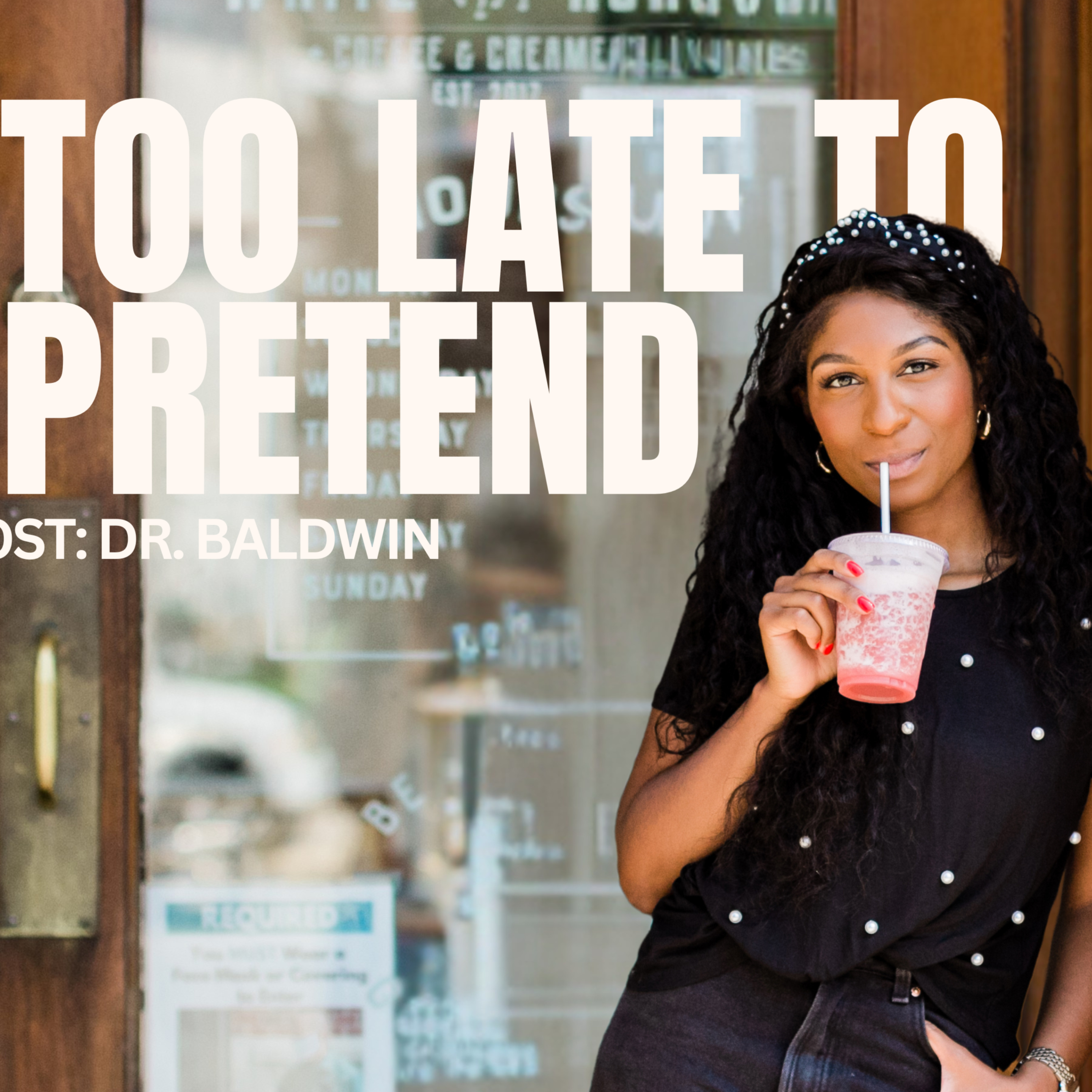 You Were Never Taught How to Recognize Negative Patterns (A Therapist Shows You How) You Were Never Taught How to Recognize Negative Patterns (A Therapist Shows You How) | Nobody ever taught you how to spot a negative pattern while you're inside one. So you keep ending up in the same conversation, the same tension, the same outcome — and wondering why nothing changes.In this episode, Dr. Baldwin breaks down what negative interactional patterns actually are and why so many people spend years experiencing them without ever having the language to name them. Once you can name it, something shifts.→ What a negative interactional pattern actually is (and why you're part of it)→ Why your brain defaults to familiar pain over unfamiliar safety→ The 3-step framework therapists use: See it. Understand it. Respond to it.→ What "building capacity" really means — and why it's the actual goal of healing→ How holding a boundary can literally break the cycleThis one is short and practical. If you have something to write with, grab it.Disclaimer: The content shared on this page is for informational and educational purposes only and does not constitute psychotherapy, counseling, or any form of professional mental health treatment. Viewing, commenting on, or engaging with this content does not establish a therapist-client relationship. The information provided is general in nature and may not apply to your individual circumstances. Please consult a licensed mental health professional for personalized advice and support.Please note that I am unable to respond to direct messages or comments regarding clinical concerns, personal mental health questions, or requests for therapeutic advice. Social media is not a secure or appropriate platform for clinical communication, and any such messages received will not be answered.If you are experiencing a mental health emergency or crisis, please call or text 988 (Suicide & Crisis Lifeline), call 911, or go to your nearest emergency room. | — | ||||||
| 4/26/26 | Your Family Doesn't Celebrate You (A Therapist Explains Why) | Your family loves you. And somehow, every time you share good news, you feel worse after than you did before.That's not a coincidence and it's not your imagination.After Dr. Baldwin's episode on comparative friendships blew up her comment section, the messages that kept pouring in weren't just about friends. They were about mothers. Fathers. Sisters. Brothers. So she recorded this.In this episode, Dr. Baldwin, a formally trained marriage and family therapist who spent the first eight years of her career working with high-conflict families, breaks down what's actually happening when envy lives inside a family system, and why it almost never announces itself honestly.What we get into:→ The difference between jealousy and envy, and why it matters in family dynamics→ Why family envy is almost always rooted in a wound that existed before you did→ How siblings can grow up in the same house and have completely different experiences — and what that does→ Why a parent's unhealed pain can make your success feel like a verdict to them→ What it actually looks like to protect your inner world inside a family that expected full access→ The five concrete things Dr. Baldwin tells her clients to do when they're navigating thisDisclaimer: The content shared on this page is for informational and educational purposes only and does not constitute psychotherapy, counseling, or any form of professional mental health treatment. Viewing, commenting on, or engaging with this content does not establish a therapist-client relationship. The information provided is general in nature and may not apply to your individual circumstances. Please consult a licensed mental health professional for personalized advice and support.Please note that I am unable to respond to direct messages or comments regarding clinical concerns, personal mental health questions, or requests for therapeutic advice. Social media is not a secure or appropriate platform for clinical communication, and any such messages received will not be answered.If you are experiencing a mental health emergency or crisis, please call or text 988 (Suicide & Crisis Lifeline), call 911, or go to your nearest emergency room. | — | ||||||
| 4/19/26 | You Don't Have to Do Life Alone | How To Build A Support System | You're carrying too much alone.Dr. Cecelia Baldwin has spent nearly 20 years as a licensed therapist, and she keeps seeing the same pattern: brilliant, capable, motivated people completely exhausted because they don't have a real support system around them.In this episode, Dr. Baldwin breaks down exactly what a support system is (hint: it's not just having people around you), why your nervous system literally depends on connection to function, and how to start building one, even if your family never gave you that foundation.This is the third pillar in Dr. Baldwin's framework for making life more manageable. If you missed the episodes on self-care and boundaries, check those out too — they all work together.This is for you if you've been feeling overwhelmed, isolated, or like you have to handle everything yourself — and you're ready to stop.Disclaimer: The content shared on this page is for informational and educational purposes only and does not constitute psychotherapy, counseling, or any form of professional mental health treatment. Viewing, commenting on, or engaging with this content does not establish a therapist-client relationship. The information provided is general in nature and may not apply to your individual circumstances. Please consult a licensed mental health professional for personalized advice and support.Please note that I am unable to respond to direct messages or comments regarding clinical concerns, personal mental health questions, or requests for therapeutic advice. Social media is not a secure or appropriate platform for clinical communication, and any such messages received will not be answered.If you are experiencing a mental health emergency or crisis, please call or text 988 (Suicide & Crisis Lifeline), call 911, or go to your nearest emergency room. | — | ||||||
| 4/12/26 | This is what boundaries are really about (and what not having them costs you) | You've heard you need boundaries. But nobody told you what they're actually for — or what it's quietly costing you not to have them.In this episode, Dr. Cecelia breaks down what boundaries really are — and it's not what most people think.→ Why boundaries are protective infrastructure, not just a way to shut people out→ How your nervous system responds when you have no boundaries (hint: constant alert)→ The energy system your body runs on — and how boundaries literally keep it full→ Real examples: your sleep, your lunch, your mental space, your late-night texts→ Why saying "I can't do that" without explaining is one of the hardest practices you'll ever do→ Small, daily boundary actions that actually change your lifeEvery time you say yes when you mean no, you lose a little piece of yourself. This episode is the reminder you needed.Disclaimer: The content shared on this page is for informational and educational purposes only and does not constitute psychotherapy, counseling, or any form of professional mental health treatment. Viewing, commenting on, or engaging with this content does not establish a therapist-client relationship. The information provided is general in nature and may not apply to your individual circumstances. Please consult a licensed mental health professional for personalized advice and support.Please note that I am unable to respond to direct messages or comments regarding clinical concerns, personal mental health questions, or requests for therapeutic advice. Social media is not a secure or appropriate platform for clinical communication, and any such messages received will not be answered.If you are experiencing a mental health emergency or crisis, please call or text 988 (Suicide & Crisis Lifeline), call 911, or go to your nearest emergency room. | — | ||||||
| 4/5/26 | The Self-Care Industry Lied to You (Here's What It Actually Is) | You've been told self-care is a spa day, a candle, a green juice, or a shopping spree. After nearly 20 years as a licensed therapist, Dr. Baldwin is here to tell you: that's not self-care — that's marketing.Self-care is the foundation of your entire life. Your health, your relationships, your ability to show up for the people you love — all of it flows from how well you care for yourself. And the billion-dollar wellness industry depends on you never learning that.In this episode, Dr. Baldwin breaks it all the way down: what "self" actually means (your brain, body, nervous system, and patterns — all working as a system), why real self-care is behavioral and not aesthetic, what your body actually needs to function, and how to start building habits that will transform your life — no supplements required.Disclaimer: The content shared on this page is for informational and educational purposes only and does not constitute psychotherapy, counseling, or any form of professional mental health treatment. Viewing, commenting on, or engaging with this content does not establish a therapist-client relationship. The information provided is general in nature and may not apply to your individual circumstances. Please consult a licensed mental health professional for personalized advice and support.Please note that I am unable to respond to direct messages or comments regarding clinical concerns, personal mental health questions, or requests for therapeutic advice. Social media is not a secure or appropriate platform for clinical communication, and any such messages received will not be answered.If you are experiencing a mental health emergency or crisis, please call or text 988 (Suicide & Crisis Lifeline), call 911, or go to your nearest emergency room. | — | ||||||
| 3/29/26 | Why Does This "Friend" Make You Feel Weird? | How Envy Shows Up in Friendship | You know this person. They're there when things go wrong. They're there when things go right. But being around them always leaves you feeling a little smaller.In this episode, Dr. Baldwin breaks down the psychology of the "frenemy" — what's actually happening beneath the surface of these confusing friendships, why envy looks so different from jealousy, and how to stop managing someone else's unresolved wounds at the cost of your own joy.In this episode:- The difference between jealousy and envy (and why it matters)- What a "comparative relationship" really is — and how to spot one- Why some people are drawn to your energy but quietly resent you for having it- How proximity-based friendships can outlast their expiration date- How to build adult friendships grounded in values, not just vibes- Practical steps: listening to your nervous system, letting people show you who they are, and graceful exitsIf you've ever felt like you had to soften your good news around a certain person, this episode is for you.Disclaimer: The content shared on this page is for informational and educational purposes only and does not constitute psychotherapy, counseling, or any form of professional mental health treatment. Viewing, commenting on, or engaging with this content does not establish a therapist-client relationship. The information provided is general in nature and may not apply to your individual circumstances. Please consult a licensed mental health professional for personalized advice and support.Please note that I am unable to respond to direct messages or comments regarding clinical concerns, personal mental health questions, or requests for therapeutic advice. Social media is not a secure or appropriate platform for clinical communication, and any such messages received will not be answered.If you are experiencing a mental health emergency or crisis, please call or text 988 (Suicide & Crisis Lifeline), call 911, or go to your nearest emergency room. | — | ||||||
| 3/22/26 | Building Capacity: The Part of Anxiety Recovery Nobody Talks About | This is the episode about what happens after you've gotten out of the anxiety spiral when you've done the breathing, you've done the regulation, and you still keep ending up back at square one after a hard week.In this episode, Dr. Cecelia Baldwin introduces the concept of capacity: what it actually means to lower your nervous system's baseline so anxiety has less ground to work with in the first place. This is the foundation underneath all of them.In this episode:→ Why managing anxiety and building resilience are not the same thing — and why you need both→ What your nervous system's "baseline" actually is, and what happens when it's chronically elevated→ The 4 areas that shift your baseline over time: sleep, avoidance, connection, and meaning→ Why avoidance feels like relief but quietly makes anxiety louder — and what to do instead→ What the research shows happens in your brain after even one night of poor sleep→ The one root cause of anxiety that no amount of coping will fixThis is Part 3 of a 3-part series on anxiety. Episode 1 covers what anxiety actually is. Episode 2 covers in-the-moment regulation tools. This episode is the longer game.This episode is for you if you've been doing the work — and you're ready to go deeper.Disclaimer: The content shared on this page is for informational and educational purposes only and does not constitute psychotherapy, counseling, or any form of professional mental health treatment. Viewing, commenting on, or engaging with this content does not establish a therapist-client relationship. The information provided is general in nature and may not apply to your individual circumstances. Please consult a licensed mental health professional for personalized advice and support.Please note that I am unable to respond to direct messages or comments regarding clinical concerns, personal mental health questions, or requests for therapeutic advice. Social media is not a secure or appropriate platform for clinical communication, and any such messages received will not be answered.If you are experiencing a mental health emergency or crisis, please call or text 988 (Suicide & Crisis Lifeline), call 911, or go to your nearest emergency room. | — | ||||||
| 3/15/26 | 5 ways to actually calm your nervous system when you're anxious (not just your thoughts) | If you've ever tried to talk yourself down from anxiety and it just… didn't work — this episode explains why, and what to actually do instead.This is episode two of a three-part series on anxiety with Dr. Cecelia Baldwin, licensed therapist. In episode one, we reframed what anxiety actually is: not a personality flaw or a sign something's broken in you, but a physiological stress response. This episode builds on that foundation and moves into something practical — what regulation actually means, and five research-backed strategies that work at the level of the body, not just the mind.Here's the core idea: anxiety is not just a thought problem. When your nervous system is activated, your heart rate is up, your muscles are tight, your breathing is short, and your brain's threat-detection system is running the show. You cannot think your way out of that physical state. What you can do is give your body what it needs to come back down.Disclaimer: The content shared on this page is for informational and educational purposes only and does not constitute psychotherapy, counseling, or any form of professional mental health treatment. Viewing, commenting on, or engaging with this content does not establish a therapist-client relationship. The information provided is general in nature and may not apply to your individual circumstances. Please consult a licensed mental health professional for personalized advice and support.Please note that I am unable to respond to direct messages or comments regarding clinical concerns, personal mental health questions, or requests for therapeutic advice. Social media is not a secure or appropriate platform for clinical communication, and any such messages received will not be answered.If you are experiencing a mental health emergency or crisis, please call or text 988 (Suicide & Crisis Lifeline), call 911, or go to your nearest emergency room. | — | ||||||
| 3/8/26 | Anxiety is a Response, Not Your Personality | Part 1 of 3 | If you've ever said "I'm just an anxious person" — this episode is for you.Anxiety is one of the most common reasons people seek therapy. But most of us have been thinking about it wrong. We've turned a nervous system response into a personality trait — and that shift in language determines everything: what we avoid, what we attempt, and how much space anxiety gets to take.In this episode, Dr. Cecelia Baldwin breaks down what anxiety actually is — not as a diagnosis or a character flaw, but as a built-in survival mechanism that your body has been using since before you were born. Once you understand what's really happening, you can start working with it instead of being controlled by it.In this episode:→ Why anxiety shows up even when nothing is "wrong"→ The nervous system science behind racing thoughts and physical tension→ Why your body can't tell the difference between a real threat and a worried thought→ The story layer that makes anxiety worse than the original trigger→ 4 practical shifts you can try this weekThis is Part 1 of a 3-part series on anxiety. Episode 2 covers in-the-moment regulation. Episode 3 covers how to build long-term capacity so anxiety stops running the show.This episode is for you if you're just starting to explore why you feel the way you feel — and you're ready to understand, not just cope.Disclaimer: The content shared on this page is for informational and educational purposes only and does not constitute psychotherapy, counseling, or any form of professional mental health treatment. Viewing, commenting on, or engaging with this content does not establish a therapist-client relationship. The information provided is general in nature and may not apply to your individual circumstances. Please consult a licensed mental health professional for personalized advice and support.Please note that I am unable to respond to direct messages or comments regarding clinical concerns, personal mental health questions, or requests for therapeutic advice. Social media is not a secure or appropriate platform for clinical communication, and any such messages received will not be answered.If you are experiencing a mental health emergency or crisis, please call or text 988 (Suicide & Crisis Lifeline), call 911, or go to your nearest emergency room. | — | ||||||
| 3/1/26 | Your Body Remembers What Your Mind Forgot | Trauma & the Nervous System Explained | You've wondered why you shut down. Why you overreact to things that shouldn't bother you. Why you feel anxious even when nothing is "logically" wrong.In this episode of Too Late to Pretend, Dr. Cecelia Baldwin — a certified trauma professional with advanced clinical training — breaks down one of the most misunderstood truths about trauma: it's not about the story. It's about the imprint.Most people believe that if they can't remember something, it didn't affect them. But your nervous system doesn't work that way. Your body records experiences in ways that don't always turn into words — and that stored charge can shape how you feel, react, and relate to people for years without you even knowing why.Disclaimer: The content shared on this page is for informational and educational purposes only and does not constitute psychotherapy, counseling, or any form of professional mental health treatment. Viewing, commenting on, or engaging with this content does not establish a therapist-client relationship. The information provided is general in nature and may not apply to your individual circumstances. Please consult a licensed mental health professional for personalized advice and support.Please note that I am unable to respond to direct messages or comments regarding clinical concerns, personal mental health questions, or requests for therapeutic advice. Social media is not a secure or appropriate platform for clinical communication, and any such messages received will not be answered.If you are experiencing a mental health emergency or crisis, please call or text 988 (Suicide & Crisis Lifeline), call 911, or go to your nearest emergency room. | — | ||||||
Want analysis for the episodes below?Free for Pro Submit a request, we'll have your selected episodes analyzed within an hour. Free, at no cost to you, for Pro users. | |||||||||
| 2/22/26 | If you’re here, you know insight alone doesn't heal you | You're not broken. You're bracing.In Episode 2 of Too Late to Pretend, Dr. Baldwin breaks down one of the most misunderstood truths about trauma. It is not a memory you can just think through. It lives in your body.If you have ever felt like you understand your past but still can't stop reacting to it, this episode explains exactly why.Connect with Dr. Baldwin on Instagram https://www.instagram.com/dr.celia/?hl=enDisclaimer: The content shared on this page is for informational and educational purposes only and does not constitute psychotherapy, counseling, or any form of professional mental health treatment. Viewing, commenting on, or engaging with this content does not establish a therapist-client relationship. The information provided is general in nature and may not apply to your individual circumstances. Please consult a licensed mental health professional for personalized advice and support.Please note that I am unable to respond to direct messages or comments regarding clinical concerns, personal mental health questions, or requests for therapeutic advice. Social media is not a secure or appropriate platform for clinical communication, and any such messages received will not be answered.If you are experiencing a mental health emergency or crisis, please call or text 988 (Suicide & Crisis Lifeline), call 911, or go to your nearest emergency room. | — | ||||||
| 2/15/26 | If you're here, it's because you're tired of pretending | Too Late To Pretend Episode 1 | Welcome to Too Late to Pretend.If you’re here, I’m going to assume something:A part of you is tired. Not tired like “I need a nap.”Tired like… I’m tired of holding it together.Tired of performing.Tired of pretending you’re fine when your body is screaming, and your mind is doing backflips just to get through the day.So let me start by saying this:You’re in the right place.My name is Dr. Baldwin, Licensed Therapist and this is a podcast about mental health, nervous system regulation, relationships, healing, grief, boundaries, and the real work of becoming your most honest self.Connect with me on Instagram: https://www.instagram.com/dr.celia/ | — | ||||||
Showing 12 of 12
Sponsor Intelligence
Sign in to see which brands sponsor this podcast, their ad offers, and promo codes.
Chart Positions
1 placement across 1 market.
Chart Positions
1 placement across 1 market.