Urdunama
Bollywood songs turn us all into Grammy award-winning bathroom singers! But wait, do you know the meaning of every word you sing? Especially the ones in Urdu? On Urdunama, our host Fabeha Syed takes one word at a time an...
Insights from recent episode analysis
On the show
- Fouzia Dastango1 ep
Audience Interest
Podcast Focus
Publishing Consistency
Insights are generated by CastFox AI using publicly available data, episode content, and proprietary models.
Most discussed topics
Brands & references
Total monthly reach
Based on 1 signal.
Built from
By chart position
- 🇮🇳India · ArtsHOME#1923K to 123K
- 🇮🇹Italy · Arts#18280 to 422
- 🇦🇪AE · Arts#11351 to 269
- 🇸🇦SA · Arts#17036 to 193
- Per-Episode Audience
Est. listeners per new episode within ~30 days
23K to 124K🎙 ~2x weekly·271 episodes·Last published 4d ago - Monthly Reach
Unique listeners across all episodes (30 days)
47K to 249K🇮🇳99% - Active Followers
Loyal subscribers who consistently listen
26K to 137K
Market Insights
Platform Distribution
Reach across major podcast platforms, updated hourly
Total Followers
—
Total Plays
—
Total Reviews
—
* Data sourced directly from platform APIs and aggregated hourly across all major podcast directories.
| Date | Episode | Topics | Guests | Brands | Places | Keywords | Sponsor | Length | |
|---|---|---|---|---|---|---|---|---|---|
| 11/14/26 |  Bahr: The Many Meanings of the Ocean in Urdu Poetry | Urdunama | The sea has a way of finding its place in poetry. Sometimes it's calm, sometimes turbulent, and sometimes it becomes a way of talking about the human heart. This week on Urdunama, we're exploring bahr, the Urdu word for the sea or ocean. It can also symbolize vastness and depth. Through the poetry of Allama Iqbal, Mirza Ghalib, Josh Malihabadi and Muneer Niyazi, we look at how poets have used the image of the ocean to talk about everything from restlessness and longing to distance and detachment.Starting with bahr, we're kicking off a mini-series on Urdunama, turning our attention to the world around us and the natural elements we often take for granted. And what better place to begin than the ocean?Tune in as we explore what bahr means, and all that the ocean holds. Learn more about your ad choices. Visit megaphone.fm/adchoices | 12m 24s | ||||||
| 11/9/26 |  Beyond Self-Confidence: Understanding Khudi Through Allama Iqbal | Urdunama | In a world that constantly tells us to find ourselves, be ourselves and believe in ourselves, Allama Iqbal's idea of Khudi offers a rather different perspective. It is not simply about accepting who you are or feeling confident about yourself. It is about cultivating who you can become. One of the central ideas in Iqbal's poetry and philosophy, Khudi is often translated as the self, selfhood or self-consciousness. For Iqbal, it involves recognizing and developing one's potential through discipline, action, purpose and spiritual growth.On Iqbal's birth anniversary, which is also celebrated as World Urdu Day, we revisit some of his poetry to explore this idea more closely. Through selected verses from his ghazals, we look at Khudi as a journey of self-discovery, personal agency, inner transformation and spiritual connection.At a time when technology, AI and changing expectations constantly reshape how we live and see ourselves, Iqbal's thoughts on the self offer an interesting perspective on identity, purpose and the possibilities within us. Tune in. Learn more about your ad choices. Visit megaphone.fm/adchoices | 16m 23s | ||||||
| 11/7/26 |  In the Glow of ‘Roshni’, Every Poem Finds Clarity | Urdunama | From Ghalib to Shakeel Badayuni, Bashir Badr, and Waseem Barelvi, Urdu poetry has long explored the delicate relationship between roshni (light) and tareeki (darkness). Through verses of hope, faith, longing, and resilience, poets remind us that even the faintest light can bring warmth to the darkest moments. In this special Diwali episode of Urdunama, Fabeha Syed delves into how roshni becomes a metaphor for inner strength, humanity, and the courage to keep believing. Discover how the true light we seek is often not around us, but within us. Learn more about your ad choices. Visit megaphone.fm/adchoices | 14m 37s | ||||||
| 10/31/26 |  Vaqaar: Urdu Poetry on Dignity, Grace, and Knowing Your Worth | Urdunama | This week, we turn to 'vaqaar', meaning dignity, grace, and knowing your own worth. Through the poetry of Qateel Shifai, Jaun Elia, and Bashir Badr, we explore the different ways this idea takes shape. From the dignity of the gaze, to the quietness or thoughtful silence we sometimes mistake for grace, to the humility of staying grounded without making ourselves smaller, each poet offers a different way of looking at what it means to carry oneself with 'vaqaar'.Along the way, we ask what dignity looks like beyond appearances, and whether the way we see others might tell us just as much about ourselves. A conversation about Urdu poetry, self-worth, and the small distinctions that make a word like 'vaqaar' so rich. So, tune in. Learn more about your ad choices. Visit megaphone.fm/adchoices | 12m 41s | ||||||
| 10/17/26 |  Bisaat: Knowing Your Place in the Game | Urdunama | From the chessboard of life to the conversation between a mountain and a squirrel, we explore bisaat, a word that speaks to capacity, capability, and our place in the world. But how do we measure our own abilities, and how often do we judge ourselves or others by the same standards? As part of our ongoing exploration of khudi, or our sense of self, this episode looks at what bisaat reveals about our strengths, our limitations, and the space we occupy in relation to others. Through the poetry of Jaun Elia and Allama Iqbal, we unpack the many meanings of bisaat and ask whether we always recognise what we, and those around us, are truly capable of. Tune in. Learn more about your ad choices. Visit megaphone.fm/adchoices | 12m 19s | ||||||
| 10/10/26 |  What Is Mizaaj? Exploring Temperament, Personality and Khudi | What does mizaaj tell us about who we are? In this episode of Urdunama, we explore the Urdu word for temperament and disposition, and its connection to khudi, which is the idea of the idea of selfhood popularised by Allama Iqbal. Through the poetry of Jaun Elia, Habib Jalib and Daagh Dehlvi, we reflect on how our natural tendencies shape us, how life experiences can change the way we express ourselves, and whether we can learn to respond to hardship with greater resilience. Because understanding who we are begins with understanding our own mizaaj. Tune in. Learn more about your ad choices. Visit megaphone.fm/adchoices | 13m 37s | ||||||
| 10/3/26 |  Wujood: What Does It Mean to Be? | Urdunama | What does it mean to exist? Is wujood simply about being or does it also include the presence, influence and meaning that come with being?In this episode of Urdunama, Fabeha Syed explores wujood (وجود) through poetry, unpacking the many ways poets have thought about existence. Sometines as presence, as rootedness, as freedom, and as the forces that shape the way we inhabit the world.From Iqbal’s striking conversation between a tree and a desert bird to his idea of rising beyond the jazb-e-khaak, or the pull of the wordly desires, the episode looks at what it means to be here and what makes that presence matter. Learn more about your ad choices. Visit megaphone.fm/adchoices | 18m 07s | ||||||
| 9/26/26 | 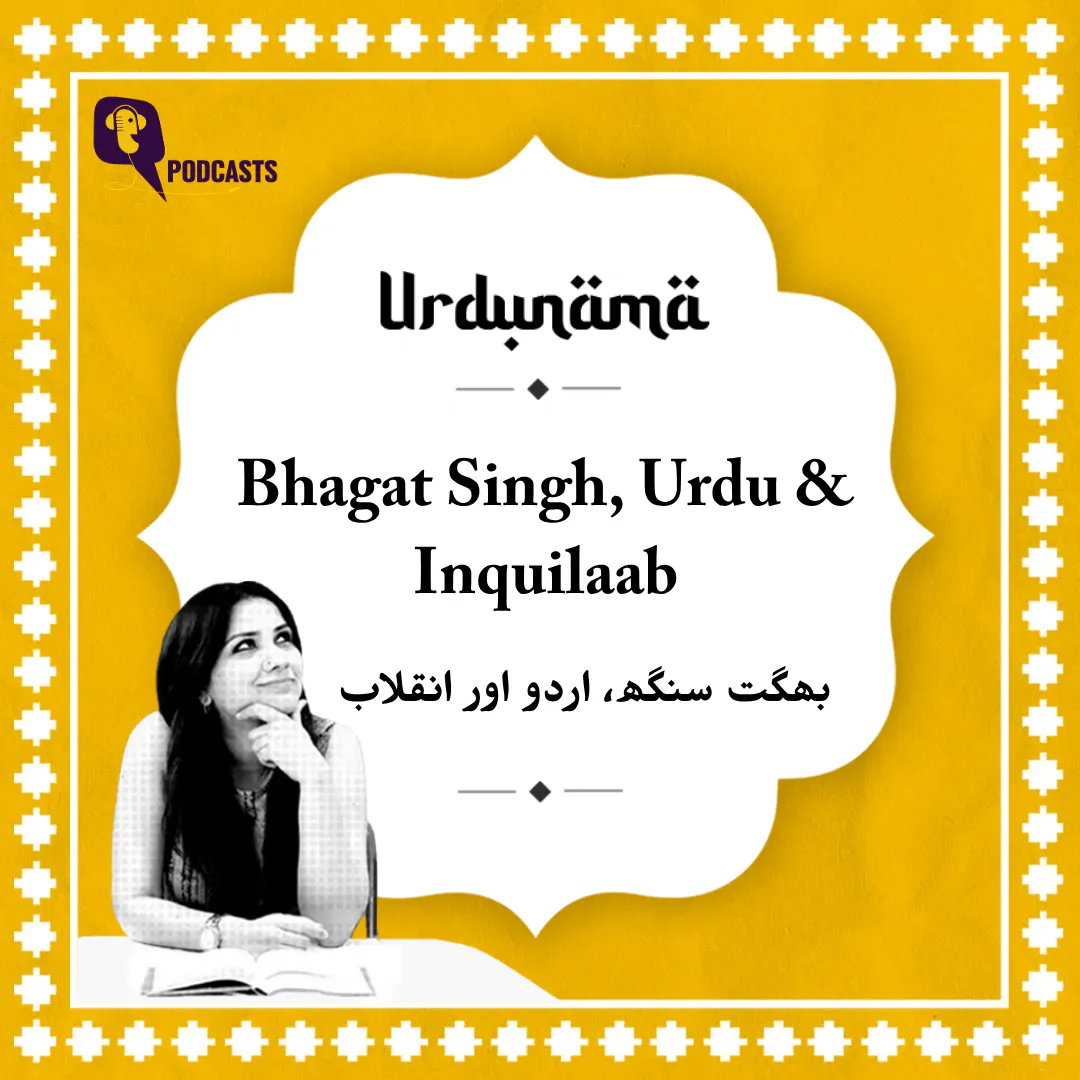 Bhagat Singh, Urdu and Revolution: Understanding His Multilingual World | Ahead of Bhagat Singh’s 119th birth anniversary, Urdunama explores a lesser-known aspect of the revolutionary’s intellectual life: his relationship with the Urdu language and literature.In this episode, Fabeha Syed speaks to Professor Chaman Lal, former Professor and Chairperson of the Centre of Indian Languages at JNU and honorary advisor to the Bhagat Singh Archives & Resource Centre. A scholar and author of over 50 books, Lal has spent years researching Bhagat Singh’s writings, reading and intellectual legacy.While Bhagat Singh did not write extensively in Urdu, the language was part of his early education and wider literary and political environment. From Urdu poetry and literature to the language of revolutionary politics, this conversation explores the place Urdu occupied in Bhagat Singh’s intellectual world. Learn more about your ad choices. Visit megaphone.fm/adchoices | 18m 20s | ||||||
| 9/19/26 |  Gheebat: Gossip, Backbiting and the Art of Gheebat | We all say we hate gossip, but somehow, someone else’s business is always a little too interesting. In this episode of Urdunama, Fabeha Syed takes a closer look at gheebat, meaning the art of talking about people behind their backs. From everyday gossip and the conversations that bring us closer to poetry by Firaq Gorakhpuri and Yagana Changezi, we explore why we love to talk about other people’s lives, what it does to our relationships, and where the line between venting and backbiting really lies. Tune in. Learn more about your ad choices. Visit megaphone.fm/adchoices | 13m 32s | ||||||
| 9/12/26 | acceptancesurrender+4 | — | — | — | tasleemUrdu poetry+7 | — | 13m 48s | ||
Want analysis for the episodes below?Free for Pro Submit a request, we'll have your selected episodes analyzed within an hour. Free, at no cost to you, for Pro users. | |||||||||
| 9/5/26 | Urdu poetrysuffocation+4 | — | — | — | ghutansuffocation+6 | — | 19m 29s | ||
| 8/29/26 | Urdu poetrylove+4 | — | Jugnu | — | Firaq GorakhpuriUrdu poetry+7 | — | 24m 27s | ||
| 8/22/26 | Urdu poetrymarz+5 | — | The Quint | — | marzUrdu poetry+7 | — | 12m 18s | ||
| 8/15/26 | independenceself-governance+4 | — | — | — | khud-mukhtaarindependence+5 | — | 12m 26s | ||
| 8/8/26 | Urdu poetrygumraahi+4 | — | — | — | gumraahUrdu poetry+6 | — | 11m 06s | ||
| 8/1/26 | Urdu poetryloss+4 | — | The Quint | — | gumshudaUrdu poetry+6 | — | 13m 01s | ||
| 7/25/26 | Urdu poetryanonymity+4 | — | — | — | gumnaamanonymous+5 | — | 12m 48s | ||
| 7/18/26 | Urdu languagemeaning of gum+3 | — | The Quint | — | gumUrdu words+4 | — | 13m 29s | ||
| 7/11/26 | Guru DuttIndian cinema+4 | Fouzia Dastango | UrdunamaThe Quint+2 | — | Guru DuttFouzia Dastango+5 | — | 20m 01s | ||
| 7/4/26 |  What Does 'Naseeb' Really Mean? Urdu Poetry on Fate, Destiny and the Things We Can't Explain | Why do two equally qualified people end up with completely different careers? Why does one marriage survive while another falls apart? Why do some people seem to meet the right person at the right time, while others do everything "right" and still don't get the life they hoped for?When we run out of explanations, we often reach for one word: naseebIn this episode of Urdunama, Fabeha Syed explores one of Urdu's most layered words through the poetry of Nida Fazli, Ahmed Faraz and Sudarshan Faakir. More than fate or destiny, naseeb is the language of uncertainty, it is the word we use to make sense of life's unexpected turns, heartbreaks, missed chances and inexplicable blessings. But does naseeb really explain anything, or does it simply help us live with the questions? Tune in. Learn more about your ad choices. Visit megaphone.fm/adchoices | 11m 44s | ||||||
| 6/27/26 |  Why We Fall for Fareb? Urdu Poetry on Deception, Trust and Hope | A salesperson can sell you a dream. Social media can sell you a lifestyle. Sometimes, your own heart sells you hope. That's fareb. Often translated as deception, fareb isn't quite the same as dagha. A stranger can deceive you; only someone you trust can betray you. Through the poetry of Fana Nizami Kanpuri, Mirza Ghalib, Bahadur Shah Zafar and Momin Khan Momin, we explore false promises, self-deception and why the hardest illusions to let go of are often the ones we create ourselves. Tune in. Learn more about your ad choices. Visit megaphone.fm/adchoices | 11m 14s | ||||||
| 6/20/26 |  From Monsoon Daghaa to Human Betrayal: The Many Meanings of Broken Trust in Shayari | Mumbai is halfway through June and still waiting for the monsoon. Every few days the forecast promises rain, and every few days the clouds seem to change their mind. So, it feels like an act of 'daghaa'Often translated as betrayal, 'dagha' is more than just being deceived. It is the hurt that comes when trust is broken. Through the poetry of Shakeel Badayuni and Qateel Shifai, we explore friendship, loyalty, disappointment and the peculiar ways human beings let one another down. What makes betrayal hurt? Why does a friend's failure feel different from a stranger's? And can failing to truly understand, and showing up for the the ones closest to us also become a kind of daghaa?Because a stranger can fool you, but 'dagha' usually comes from someone closer. Tune in for some gems from Shakeel Badayuni and Qateel Shifai on dagha. And fareb? We'll get to that next week. Learn more about your ad choices. Visit megaphone.fm/adchoices | 14m 15s | ||||||
| 6/13/26 |  From Fever to Fire: Exploring Haraarat in Urdu Poetry | As another summer pushes temperatures to record highs, darja-e-haraarat , meaning 'degree of heat', has become part of our daily vocabulary. We hear it in weather reports, worry about it when a child feels warm, and increasingly experience it in a world shaped by climate change.On this week's Urdunama, we explore the Urdu word haraarat. While it literally means heat or temperature, poetry gives the word a far richer and tender life. it can signify warmth, affection, vitality, conviction, and even the spark of resistance.Through verses by Faiz Ahmed Faiz, Muztar Khairabadi and Majaz Lakhnavi, Fabeha Syed traces the many shades of haraarat in Urdu poetry and reflects on how a word associated with heat can also illuminate the warmth that binds, heals and moves us to action. Tune in. Learn more about your ad choices. Visit megaphone.fm/adchoices | 14m 43s | ||||||
| 6/6/26 |  The Poetry of Shajar: Trees, Shade, Roots and the Stories They Carry | World Environment Day may come around once a year, , but the questions it raises remain. As temperatures rise and green spaces shrink, the humble shajar feels less like a poetic image and more like a reminder of what sustains us.On this week's Urdunama, we explore the Urdu word shajar, meaning tree. In poetry, a tree is never merely part of the landscape. It can offer shade to a weary traveller, bear the fruits of patience and perseverance, or remind us of the roots that anchor us to our origins.Through verses by Bashir Badr, Javed Akhtar, Parveen Shakir and Qateel Shifai, Fabeha Syed traces the many meanings of shajar in Urdu poetry and reflects on why, in an age of climate change and environmental anxiety, this timeless symbol feels more relevant than ever. Tune in. Learn more about your ad choices. Visit megaphone.fm/adchoices | 12m 05s | ||||||
| 5/30/26 |  How Bashir Badr Found Poetry in a ‘Zard Shaal’, a ‘Zafraani Pullover’ and Everyday Life | “Ujaale apni yaadon ke hamare saath rehne do,na jaane kis gali mein zindagi ki shaam ho jaaye.” With Bashir Badr sahab’s passing on May 28, Urdu poetry lost one of its warmest and most humane voices. In this episode of Urdunama, we remember the poet who made shayari feel intimate, conversational and deeply personal. From love and loneliness to loss, memory, riots and modern city life, Bashir sahib wrote about ordinary human emotions in a way generations instantly connected with. Fabeha Syed revisits some of his most iconic ghazals and reflects on the quiet grace and resilience that made Bashir Badr’s poetry timeless. Learn more about your ad choices. Visit megaphone.fm/adchoices | 21m 01s | ||||||


Showing 25 of 271
Pitch Fit is a Pro feature
See how bookable this show is for guests, which brands already advertise, the per-episode ad value, and the best-fit guest and sponsor profile. The numbers are blurred on the free plan.
How readily this show books outside guests like you.
How proven this show is for host-read sponsorships.
For Guests
ProFor Advertisers
ProUpgrade to Pro to unlock guest cadence, sponsor categories, fit scores, and per-episode ad value for this show.
Chart history for Urdunama
Peaked at #19 in India, currently #19 in India.
| Market | Genre | Peak | Current | Trend |
|---|---|---|---|---|
| India | — | #19 | #19 | — |
| AE | — | #113 | #113 | — |
| SA | — | #170 | #170 | — |
| Italy | — | #182 | #182 | — |
Chart Positions
4 placements across 4 markets.
Chart Positions
4 placements across 4 markets.