
What Do You Mean By That?
Join multi-ethnic co-hosts Sara + Misasha - two wickedly smart, heart-led, long-distance best friends - as they help folks talk smarter and think deeper about the world around us. Whether it's about science, history, cur...
Insights from recent episode analysis
On the show
- Luke Liss1 ep
- Steve Phillips1 ep
- Megumi Nishikura1 ep
Also: Lily Zheng, Kate Schatz
Audience Interest
Podcast Focus
Publishing Consistency
Insights are generated by CastFox AI using publicly available data, episode content, and proprietary models.
Most discussed topics
Brands & references
Total monthly reach
Based on the show's feed history.
Built from
- Per-Episode Audience
Est. listeners per new episode within ~30 days
350 to 3.1K🎙 Weekly cadence·306 episodes·Last published 5d ago - Monthly Reach
Unique listeners across all episodes (30 days)
700 to 6.3K🇺🇸100% - Active Followers
Loyal subscribers who consistently listen
385 to 3.5K
Market Insights
Platform Distribution
Reach across major podcast platforms, updated hourly
Total Followers
—
Total Plays
—
Total Reviews
—
* Data sourced directly from platform APIs and aggregated hourly across all major podcast directories.
| Date | Episode | Topics | Guests | Brands | Places | Keywords | Sponsor | Length | |
|---|---|---|---|---|---|---|---|---|---|
| 10/20/26 |  37: Breaking Cultures of Silence, with Alex Myers | Get your weekly WDYMBT newsletter here: https://dearwhitewomen.beehiiv.com/subscribe The first openly transgender person Sara ever knew lived down the hall from her, during their first year at Harvard. This was 1996 - in other words, a time when being transgender wasn't a common point of discussion, and most people likely weren't aware if they'd met someone who was transgender. But this classmate didn't just talk about it in the walls of their first-year dorm, he talked about it on national television. And today, after thirty years, they're crossing paths again to discuss his new novel and a question we can't stop thinking about: what happens when we stay silent? Author, educator and transgender rights advocate Alex Myers has spent about 25 years in prep schools, as a student, teacher, coach and now school director. His latest novel, While We Were Silent, imagines what real accountability could look like when the "boys will be boys" explanation no longer holds. In this conversation, we explore why institutions protect their own, and what changes them: Why "that's just tradition" should be a red flag Why who holds leadership, and whether they hold real power, matters more than the title The glass cliff: when women and people of color are handed institutions already on the brink How secrecy and "in-network" hiring let harm move from place to place A hiring approach that draws on many perspectives, not just the future boss's Telling your story in a way that is authentic without being too close to the heart Being an ally when no one from the affected community is in the room When to engage with hateful questions, and when to walk away A fiction-writing exercise for facing your fears About Alex: ALEX MYERS is an award‐winning author, educator, and speaker whose work sits at the intersection of gender, identity, and school culture. As the first openly transgender student at Phillips Exeter Academy and Harvard University, Alex has spent nearly three decades advocating for transgender inclusion while teaching in prep schools across the country. His long career in the classroom has given him a rare, firsthand view of how gender dynamics, power structures, and silence shape student life—insights that deeply inform both his fiction and nonfiction. Alex is the author of several acclaimed novels, including Revolutionary, Continental Divide, and The Story of Silence. His newest novel, While We Were Silent, draws directly from his lived experience as a trans educator navigating the complexities of prep‐school environments—especially during periods of institutional reckoning around past and present misconduct. Through gripping storytelling, Alex explores how communities confront harm, who gets believed, and what it takes to break long‐standing patterns of silence. In addition to his fiction, Alex consults with schools worldwide on gender inclusion and is the author of Supporting Transgender Students, a practical guide for educators and parents. He lives in Vermont with his wife and two cats. | 28m 38s | ||||||
| 10/6/26 |  36: Voter Fraud Myths & Voting Rights Threats (2026 Midterms Update) | Early voting is already underway, and along with it comes the reemergence of age-old election-integrity claims. Let's be 100% clear: there was no systemic voter fraud in 2020. But these claims aren't from a new playbook. "Ballot integrity" campaigns, fraud accusations, and even people saying they were entitled to take over because the elected government wasn't "fit to run" have been around almost as long as the premise that our nation was founded on (that voters have the right to choose their leaders). And yet every decade brings a new challenge to voting rights, culminating in SCOTUS gutting the 1965 Voting Rights Act in the last decade or so. None of what's happening is really new; yet there are new developments that mean turnout and vigilance matter now, more than ever. These include: The USPS mail-ballot rule that, thank goodness, the Supreme Court refused to let take effect The Justice Department's demands for unredacted state voter rolls, and data sharing with Department of Homeland Security - though elections fall under the purview of states, not the federal government The mid-decade redistricting fights that are still working their way through the courts, mere weeks before the elections Civil rights groups' warnings about new ID requirements, mail-voting limits, and federal agents near polling places The courts have mostly held the line so far. But who knows what's yet to come. That's why we recommend voting, voting early, and doing the following: Know your rights. Intimidation of voters at the polls by federal agents, military, or law enforcement is illegal. And know what you can do: volunteer as an election protection volunteer or poll worker, organize a friend voting group text or "voting party," and call your representatives. As a bonus, we're thrilled to include a hope-giving conversation with Anna Chu, Executive Director, We The Action, who offers really easy ways for lawyers and non-lawyers alike to hold the line and make a difference this election cycle, with whatever small amount of time you have to volunteer. About Anna Chu: Anna Chu is the Executive Director of We The Action. For more than 20 years, Anna has worked in the legal, policy, political, and advocacy communities, helping confirm fair judges to the federal bench, advancing gender equity, advocating for economic justice, and protecting civil rights. Anna is a graduate of U.C. Berkeley and the University of Southern California Law School and was formerly an associate at Paul Hastings LLP. Referenced episodes: Colin Seale (critical thinking) and Ad Fontes Media (media bias) | 44m 02s | ||||||
| 9/22/26 |  35: Still (Un)comfortable: Five Years of Dear White Women | Five years ago, Sara and Misasha published Dear White Women: Let's Get (Un)comfortable Talking About Racism - and almost immediately got an email accusing them of being the racist ones for naming it. On this anniversary episode, they finally answer the questions they've never asked each other out loud: What was the hardest feedback they ever received? What's the most quoted, most powerful section of the book? And in a moment of DEI rollbacks and book bans, does the book's message still hold up - or does it hit even harder now? This isn't a nostalgia lap. It's an honest look at what it costs to have these conversations, what changes when the political weather shifts, and why "getting uncomfortable" is still the whole point. And, for the first time, we're going to do time stamps for the show notes - what do you think? Worth keeping these? [00:03] The email that started it all: "Naming our platform 'Dear White Women' was racist" [01:04] Why they called the book what they did - and Misasha reads the passage from the intro that readers ask her to share out loud at every talk [07:13] The hardest feedback in five years: a declined invitation, and the line that stung - "you identified more as white" [08:19] Sara's identity journey: growing up under her Japanese mother's roof, years surrounded by white community in Arizona and Colorado, and the phone call after the Atlanta spa shootings that changed everything [10:54] Misasha on why identity belongs only to the person living it - and why imperfect, honest conversations matter more than perfect ones [14:52] Then vs. now: writing the afterword right after January 6, the hope they had, and what it's like rereading it in 2026 [18:10] What's aged well in the book, and what they'd revise [19:39] Would they still call it Dear White Women? (Spoiler: yes - and why white women's voting power makes the name matter more, not less) [21:15] Why the podcast became What Do You Mean By That? - and what organizations are actually asking for now [25:00] What a first-time reader should walk away with: the Listen | Learn | Act framework [27:33] A word for anyone who's burned out on this work - plus a first look at Sara's new book, Different: The Joyful Survival Guide for Parenting One-of-a-Kind Teens (with Dr. Kelli Harding, March 2027) Mentioned in this episode: Dear White Women: Let's Get (Un)comfortable Talking About Racism by Sara Blanchard & Misasha Suzuki Graham (The Collective Book Studio, October 2021) Want Sara & Misasha to speak at your organization, school, or book club? CONTACT US! | 26m 32s | ||||||
| 9/8/26 |  34: The Sound of Silence: Fascism, Nativism, and What's Happening Right Now in America | Picture a newsroom in Rome under dictator Benito Mussolini's fascist regime in the 1930s. A censor's red pencil moves down a page before it ever reaches a printing press. Now picture a cell phone, right now, tonight: someone typing out a post, reading it back to themselves, and deleting it before they hit send. Two moments, nearly a hundred years apart, but with the same instinct. Silence isn't just what's left when words are cut, or people are quiet. It's something regimes - and sometimes just fear, or habit, or a culture - intentionally manufacture. And that's why we think talking about silence is so important, especially given where we are currently in the United States. Today we're tracing the history of silence across three pivotal moments: the silence embedded in the American nativist movement in the 1800s, the fascist engineering of silence in the 1900s, and how observers today argue silence is being imposed again, with some tips as to how we best fight back (hint: we question. A lot). What to listen for: How a regime manufactures silence: (1) legal suppression; (2) fear and violence; (3) propaganda; (4) mythologized past; (5) erasing inconvenient history… and how we see each of these pieces in today's America. How early American nativists used silence in the mid-1800s - literally, with a party called the Know-Nothings - to quietly advance their agenda against European immigrants The early-1900s Americans who created laws to enforce silence (and fear) And how silence is being weaponized in America in 2026. What can we each do? Speak up. Ask questions. Use your voice - and your voting voice. Be that friend who texts the group chat to make sure everybody's registered to vote and has a plan to get to the polling place. | 36m 01s | ||||||
| 8/25/26 |  33: Redlining Explained: History, Housing Discrimination & the Latest Policy Updates | If you were with us back in our early days, you remember we did a whole episode on redlining: the history of it, the literal red lines drawn on maps in the 1930s to keep Black and immigrant families out of the mortgage market, and how that legacy still shapes segregation and the racial wealth gap today. We're including that full episode, edited slightly for context, in this conversation. What we didn't fully appreciate back in 2019 is that the episode wasn't just a history lesson where we were looking back in time. Rather, it was actually the opening scene of this update you're getting today. A lot happened immediately after we recorded that episode that set the stage for everything that is occurring right now, in this second Trump administration, that directly impacts something that we care a LOT about: community, neighborhoods, and who gets to belong. So we thought we'd revisit redlining as a way to show just how the fight for community itself is shifting over time, and how we're all impacted by federal policy shifts designed to target those of us who are most vulnerable. We hope you listen, share widely, and think about these issues as we head into a contentious midterm season. What to listen for: What redlining was, historically, and how it continues to impact our neighborhoods today Predatory lending practices that harm all of us The problems with gentrification The fight over "disparate impact" (i.e., showing that discrimination exists is enough, and you don't need to prove intent to discriminate) and its impact on equality | 52m 24s | ||||||
| 8/11/26 |  32: The Psychology of Good and Evil: Raising Active Bystanders with Prof. Ervin Staub | Here's your chance to listen to a firsthand account of one of the most horrible parts of our recent human history, and how we stop it from happening again. This episode features a conversation with a psychologist whose life's work sits at the intersection of two of humanity's most extreme capacities: the capacity for cruelty, and the capacity for courage. A survivor of the Holocaust in Hungary, hiding in Budapest as a six-year-old, he became a leading researcher on the psychology of genocide, group violence, and altruism - work that has shaped police training programs on "active bystandership," informed reconciliation efforts in Rwanda, and produced decades of research on what leads ordinary people to help others, even at personal risk. What to Listen for: Small early experiences compound. How children are raised - with warmth, responsiveness, and consistent values - can shape whether they grow toward caring or toward hostility, on both an individual and societal level. Responsibility, not just empathy, drives action. Empathy alone doesn't reliably produce helping behavior - a felt sense of responsibility for someone else's welfare, paired with a belief that you can actually make a difference, is what moves people to act. Bystanders can be trained to become "active bystanders." This isn't just theory - it's the basis of real police and school training programs designed to help people intervene safely when they see harm happening. "Blind patriotism" vs. "constructive patriotism" is a useful lens for understanding how loyalty to a group, a leader, or a country can either enable harm or serve as a check against it. Violence - and caring - escalate gradually. Small unaddressed moments of hostility or dehumanization tend to compound over time, in families, institutions, and nations alike. Personal history and professional work aren't separate. The guest's own childhood experience of hiding from persecution, and the people who risked their lives to protect his family, directly shaped decades of research into what makes rescuers different from bystanders. About Ervin Staub Professor Emeritus of Psychology and founding director of the Psychology of Peace and Violence Program at the University of Massachusetts Amherst. A survivor of the Holocaust in Hungary as a young child, he has spent his career researching the roots of genocide, mass violence, and altruism — including fieldwork in Rwanda, expert witness work related to the Abu Ghraib trials, and the design of active-bystandership training programs now used by police departments across the country. | 55m 11s | ||||||
| 7/28/26 |  31: The Words We Use, The People We Judge: A Conversation on Incarceration with Marcus Bullock | Do you know someone who's been incarcerated? Have you ever actually asked them their story, instead of judging them on that one fact? Because 95% of incarcerated people eventually leave prison and come home. They are our neighbors, our coworkers, our family members. Here's why this is relevant to you today: This administration has made "tough on crime" the centerpiece of its second term - among other things, reviving the federal death penalty, pushing back against cashless bail reform, and pressuring prosecutors nationwide to seek harsher sentences (when, of course, it benefits them and/or the MAGA agenda). The message from Washington is loud and clear: punishment first, everything else second. But here's a question nobody in Washington seems to be asking: what happens after? How we treat people when they come home - whether we see them as people, or permanently as their worst mistake - says as much about us as any policy coming out of Washington. So today we're going straight to a conversation that is one of our favorites, with someone who's lived both sides of this story: Marcus Bullock, CEO of Flikshop, who was incarcerated as a teenager and built a company helping formerly incarcerated people stay connected to their families and rebuild their lives. This is a conversation about what "law and order" actually looks like on the ground and in people - not just in the abstract. What to listen for: Marcus's origin story for Flikshop: how his mother's daily letters and photos during his eight-year sentence became the blueprint for a company that now keeps families connected to incarcerated loved ones The moment Marcus, at 15, stood before a judge and didn't grasp what "concurrent" and "consecutive" sentences meant; he just wanted to know if he'd be home for Christmas. Why Marcus resists the word "felon" (and "inmate" and "convict") What it was like to go through adolescence and puberty inside an adult maximum-security prison, and the moment - a conversation with a friend serving 31 years - that broke him out of denial about his own situation The "class system" Marcus describes inside prison - from commissary money to medical care to solitary confinement - and how closely it mirrors inequities on the outside His reflection on perspective as "better than courage and hope," and how prison reframed what counted as hardship The emotional toll on his mother - isolation, cost, fear - as a reminder that incarceration ripples through entire families Applying to 41 jobs and getting rejected every time before the 42nd said yes - and what that reveals about resilience versus a broken system The real cost of the "have you been convicted of a felony?" checkbox - from job and housing applications to a story about being flagged by TSA at his own construction site How Flikshop Angels grew from a gesture by John Legend into a way for kids with incarcerated parents to send selfies to their moms and dads His challenge to listeners: change the dinner table conversation first - humanizing returning citizens starts there About Marcus: Marcus Bullock is an entrepreneur, justice reform advocate, and TED speaker. Following his 2004 release from prison, he launched a construction business that grew to employ other returning citizens. Bullock is the Founder and CEO of Flikshop, Inc., a software company that builds tools to help incarcerated people stay connected to their families and build community. He also founded the Flikshop School of Business, a program that teaches returning citizens life skills and entrepreneurship via computer coding and software development. Marcus is an inaugural cohort member of Techstars Anywhere 2018 and John Legend's Unlocked Futures business accelerators. He was selected as one of The Root's 2019 100 Most Influential African Americans in the U.S. He is also a member of the Justice Policy Institute's board of directors, Advisory Board member for Princeton University's Prison Teaching Initiative, and serves as an advisor to the Georgetown University McDonough School of Business and Aspen Institute's Opportunity Youth Incentive Fund. Married with two children, Marcus' story has received coverage from Forbes, CNN, Washington Post, Black Enterprise, and NPR. Venture: Flikshop is the tech platform that allows family members to connect easily with their incarcerated loved ones. The Flikshop app is famously known as the Instagram for prisons, allowing users the ability to send personalized pictures and messages delivered as postcards to any person in any cell in the US. Website: http://ww.flikshop.com/ | 1h 14m 45s | ||||||
| 7/14/26 |  30: The Supreme Court Ruled on Transgender Athletes: Here's Who Got Left Out of the Story - Airs 7-14-26 - with Schuyler Bailar | On June 30th, 2026, the Supreme Court ruled that states can bar transgender girls and women from competing on girls' and women's teams. Six to three. It's now the law in over half the country. And however you feel about that ruling, here's what we noticed in the days after it came down: almost none of the coverage actually talked to a transgender kid, or the parent raising one. It was all policy. All abstraction. It is a decision that, on paper, is about Title IX and biological sex and constitutional interpretation. But underneath all that legal language is something much more personal: real kids, real families, real teams, and real decisions about who gets to belong. And let's not forget: argued by people who've never sat across from an eight-year-old who already knows she's going to be treated differently. So we went back into our archive. A while back, we sat down with a remarkable mom, Jaime, raising a transgender daughter in Florida. And more recently, we talked with Schuyler - you might know him as Pink Manta Ray - a multiethnic Korean American trans educator, the first transgender Division 1 athlete on a men's team while at Harvard, and author of He, She, They: How We Talk About Gender and Why It Matters. We're combining pieces of both conversations into one episode, because we think you need both things right now: Jaime's story, to feel it - and Schuyler's clarity, to know what to actually say and not say when it comes up in your own life. These aren't talking points. These are ways to simply see the humanity in each other. Please listen, and share widely. What to listen for: Intersectionality, and Schuyler's own experience growing up biracial The importance of exploring why you are who you are – for ALL of us – when it comes to gender The quick takedown of the arguments from people working to push trans women out of women's sports A bullet-pointed list of what NOT to say to transgender folks How to remind yourself of joy and a sense of thriving in the world, when it gets rough What Schuyler wants cisgender, heterosexual women to do differently, once you listen to the episode About Schuyler: Schuyler Bailar (he/him) is an educator, advocate, and bestselling author who made history as the first transgender athlete to compete in any sport on an NCAA Division 1 men's team. Originally recruited to swim for the Harvard women's team, Schuyler made the difficult choice to transition while potentially giving up the prospect of being a women's NCAA Champion. His story has appeared everywhere from 60 Minutes to The Washington Post and The Ellen Show. Schuyler's tireless advocacy has earned him numerous honors, including Forbes 30 Under 30 and the Out 100. In 2023, Schuyler's critically acclaimed nonfiction bestseller became the preeminent resource on trans inclusion: He/She/They: How We Talk About Gender and Why It Matters. Schuyler's works include his middle-grade novel Obie Is Man Enough, his online gender literacy training LaneChanger.com, and his hit podcast Dear Schuyler, including exclusive interviews with trans icons and allies like Lia Thomos, Dylan Mulvaney, Rafael de la Fuente, and many more. Follow Schuyler on Instagram @pinkmantaray About Jaime: Jaime Jara is a woman who wears many hats. A native New Yorker, she navigates daily life in Florida with her husband, 3 kids, and a plethora of furbabies. She lends her voice and perspective as a parent of a transgender child to shed light on the challenges faced by the trans community. Jaime is an active member of the national LGBTQ organizations that aim to empower and support parents of LGBTQ children. After a long stint in corporate America, Jaime is putting her graduate degree to good use by starting her second career as an educator. She has been a guest speaker at schools, participated in panels and research studies, and appeared on television to advocate for transgender acceptance and inclusion. She has penned numerous essays about her journey with her trans child. Jaime aspires to be signing copies of her bestselling novel one day, when she finally slows down enough to write it. You can follow her journey with her family on Instagram@Jaidonna19. Resources: PFLAG National Mama Dragons National Queer and Trans Therapists of Color Network (NQTTCN) Trans Lifeline - 1-877-565-8860 Human Rights Campaign Stand With Trans Black Trans Advocacy Coalition Trevor Project Lifeline - 1-866-488-7386 GLAAD "I can't even get my kids to eat vegetables, let alone change genders…" - Jaime Jara | 55m 36s | ||||||
| 6/30/26 |  29: The Story They Don't Want You To Know: The REAL Native American Experience In America, with Crystal Echo Hawk | Crystal Echo Hawk's daughter gets asked if she still lives in a teepee. And Crystal's response isn't rage - it's something more unsettling. She gets it. Because 87% of American schools stop teaching about Native peoples after 1900, and 78% of Americans know very little about Native people. So that question, as painful as it is, makes a terrible kind of sense. The last data point most Americans have on Native people is somewhere around third grade. And then nothing. Crystal Echo Hawk is a citizen of the Pawnee Nation of Oklahoma, the former executive director of IllumiNative, a national, native-led, non-profit organization born out of the "Reclaiming Native Truth Project", a research project from 2016-2018, and was the largest public opinion research project ever conducted about native people. She is one of the most important voices in the country on what it actually means to be Native American in America today - not in a history book, not in a Halloween costume aisle, not doing the horrifying tomahawk chop in a stadium. This is a conversation you won't want to miss. "There is no stupid question, as long as it's asked with respect." Crystal What to listen for: Invisibility and erasure of the Native American culture creates bias and fuels racism. 27 states do not mention Native Americans in their curriculum. Representation in TV and film is between 0% and 0.04% of all representation. Within that sliver, the Native American is often shown in a stereotypical fashion. i.e., magical, mystical Indian, drunks, or savages. One study found that when you type the words "Native American" in a search engine, 95% of those images that come up are pre-1900, and are almost always men. YET, there are 573 independent, sovereign nations within this country. Each nation has its own language, its own customs and cultures, and systems of government and elected officials. "Native American", "American Indian", and "Native Peoples" are all terms that are preferred over the word "Indian". Yep, we discuss Christopher Columbus and Thanksgiving and Halloween and the offensive usage of stereotypes in sports, from the Native American perspective. Vote with your dollars: support Native American-owned businesses. There are more than 5 million Native Americans in the US. Take a moment to search and learn about who the traditional Native Peoples in your area were. Recommended Companion Podcast Halloween and Cultural Appropriation About Crystal Echo Hawk Crystal is the founder and President of Indigenous House, powered by Honey Badger Partners. Crystal also founded IllumiNative in 2018 as an outgrowth of the Reclaiming Native Truth (RNT) project, the largest public opinion research and strategy-setting initiative ever conducted by and for Native peoples. Crystal designed and co-led the RNT project as CEO of Echo Hawk Consulting (EHC). Through EHC, Crystal served as a leader of tribal and philanthropic teams that raised and directed the reinvestment of $37 million in Native communities. Crystal previously served as the first Executive Director of the Notah Begay III Foundation and led program design and investment of $9.7 million in Native obesity/diabetes prevention and youth leadership. | 42m 17s | ||||||
| 6/16/26 |  28: Who Gets to Be American? Japanese Internment, Reparations, and the Fight for Constitutional Rights with John Tateishi | Imagine you're six years old. You look out past a barbed wire fence at a highway in the desert, and every single car that passes by is driven by someone white. The teachers who come to your school? White. The guards in the towers above you, also white. And you think to yourself: is this America? Or is America out there? That child was John Tateishi. He was almost three years old when the U.S. government forced his entire family - along with 120,000 other Japanese Americans - from their homes and into concentration camps on American soil. His family ended up at Manzanar. And when the war ended, they were handed $25 and told to find their way home. What John did with that childhood - with that rage, that clarity, that love of country despite everything this country did to him - is an important story in American history, and honestly one that many adults may not have even learned in their history classes growing up. He went on to lead the Japanese American redress campaign, helping secure a formal government apology and reparations. He's the author of Redress: The Inside Story of the Successful Campaign for Japanese American Reparations. He shares a lot about what that fight means today - for the Black reparations movement, for anti-Asian hate, and for the question that sits at the center of all of it: Who gets to be American? As we move towards a celebration of America's birthday, that question sits front and center for many of us, as we're actively being told that we're not American. These stories show us not only how we reject that narrow view, but also how to fight for ourselves and one another while loving our communities, families, and country at the same time. What to listen for: John's personal experience as a young person incarcerated at Manzanar - and what it was like returning to society The makeup of Los Angeles in the post-war period - and how different communities banded together What John sees as the differences between the successful campaign he helped lead for Japanese American reparations and the hurdles facing Black Americans, starting with HR40. About John Tateishi: Incarcerated as a child in one of America's WWII concentration camps, John Tateishi carried that memory with him when he launched the Japanese American reparations campaign in 1978. He directed the public affairs and legislative strategies of the campaign until 1986, two years before the campaign ultimately culminated with the signing of the Civil Liberties Act. Ten years later, he led the JACL's challenge against the Bush administration's policies that targeted Arab and Muslim communities and undermined the civil liberties of all Americans. He is the author of Redress: The Inside Story of the Successful Campaign for Japanese American Reparations (2020). | 1h 13m 41s | ||||||
Want analysis for the episodes below?Free for Pro Submit a request, we'll have your selected episodes analyzed within an hour. Free, at no cost to you, for Pro users. | |||||||||
| 6/2/26 | historyhate groups+3 | — | KKK | Pulaski, Tennessee | KKKhistory of hate+4 | — | 55m 23s | ||
| 5/19/26 | AANHPI Heritage MonthAsian American identity+3 | — | TAAF STAATUS Index | — | Asian AmericanAANHPI Heritage Month+7 | — | 22m 32s | ||
| 5/5/26 | justicementorship+3 | Luke Liss | Stanford Law | — | justicementorship+5 | — | 33m 44s | ||
| 4/21/26 | racepolitics+3 | Steve Phillips | — | — | White menleadership+5 | — | 45m 52s | ||
| 4/7/26 | podcast anniversaryrebranding+3 | — | Dear White WomenWhat Do You Mean By That? | — | podcastrebrand+5 | — | 24m 41s | ||
| 3/24/26 | multi-ethnic identitycitizenship+4 | Megumi Nishikura | Hafu - the mixed race experience | — | multi-ethnic identitycitizenship+5 | — | 32m 29s | ||
| 3/10/26 | DEIworkplace equity+4 | Lily Zheng | — | — | DiversityEquity+5 | — | 45m 27s | ||
| 2/24/26 | historybody autonomy+4 | Kate Schatz | Where The Girls Were | — | body autonomyparenting+5 | — | 30m 59s | ||
| 2/10/26 | Black History MonthAmerican history+4 | — | White Citizens' CouncilKu Klux Klan | — | Black History Monthracism+4 | — | 24m 56s | ||
| 1/27/26 | community safetypolice violence+4 | — | ICEMinneapolis VA hospital | MinneapolisMinnesota+1 | ICEAlex Pretti+6 | — | 45m 47s | ||
| 1/13/26 |  17: New Year of Actions + Why Getting Names Right Matters | If you're a repeat listener to the podcast over the last almost SEVEN years, you know that sometimes, we've done seasonal arcs in which we focus on a topic or theme for the season. (And if you've just found us - hello!) This year, we're doing something different: a year-long focus on action, which is the third pillar of our listen, learn, and act framework. It moves us from "what can I do?" to "here's how I show up." We'll take the things that you've been curious about (but didn't want to ask about, maybe), break down the history behind them, and walk you through why these things matter. And then we'll throw in tips on how, now that you know about them, you can make small changes in your own lives to make a huge impact in your communities and in the fight for all of us. We're in it to win it this year. Hope you'll come along for the journey. Welcome to 2026, and a whole new year of What Do You Mean By That? - the podcast about asking better questions, having deeper conversations, and taking action that helps all of us. Make sure you're signed up for our newsletter to catch all the details in between. What to listen for: What does a name actually carry beyond just identification? The cocktail party effect of perking our brains up, increasing engagement, attention, and memory. Plus, the big answer: belonging. Even to a whole country. Why does mispronouncing or misspelling someone's name — even unintentionally — have an impact? Just ask Miasma… I mean Misasha. AKA "Sasha" in coffee shops. Why do people so often hesitate to ask for help with names? Perfectionism, fear of awkwardness (but isn't it also awkward to get it wrong?!), and the effort it takes to actually listen to and learn someone's name. What happens when people feel pressured to shorten, change, or "Americanize" their names? Sure, study after study proves we are biased against certain names. But is that enough reason to ask folks to erase their heritage, their parent's pride, their sense of identity - so you can call them "Alice"? Getting names right is a simple but powerful practice of belonging. Make the effort. For more like this, listen to our conversation with Mita Mallick (another "get my name right" advocate) on colorism. And this conversation with Naomi Raquel Enright on specific phrasing around identity (i.e., presumed to be White, instead of White-presenting or passing for White) Finally, to read more, check out our book Dear White Women: Let's Get (Un)comfortable Talking About Racism. | 25m 53s | ||||||
| 12/30/25 |  16: Leaving 2025 Behind: What We're Letting Go Of and What We're Taking Into 2026 | We've had rough years before—but 2025? This one hit different. If you've been listening to us for the last six years, you know we're no strangers to hard conversations. DEI. Wellbeing. Systems that don't work the way they should. And this year pushed all of that—from the global to the deeply personal. So what did we learn when everything felt heavier than usual? Let's talk about the biggest lessons this year forced us to learn - what we're leaving behind in 2025, and what we are carrying forward, with purpose, into 2026. What to listen for: Mindsets that we're embracing: There are two things you can control, attitude and effort. Thank you, kids' basketball camp, for teaching us this one. It feels a lot more peaceful to identify and wear one identity at a time, and not feel guilty that you're not being anybody else in that moment. Even if you've got a trillion things on the go, if you need to be mom right now, be a rockstar mom; if you need to get a workout, be an amateur athlete. Some strong truthbombs amidst laughter, including this: Nobody cares. You're giving other people's opinions far more power than they actually have. Everybody's going through something. Tough doesn't look the same; have empathy. What we're bringing into 2026: Relationships and empathy. | 31m 34s | ||||||
| 12/16/25 | 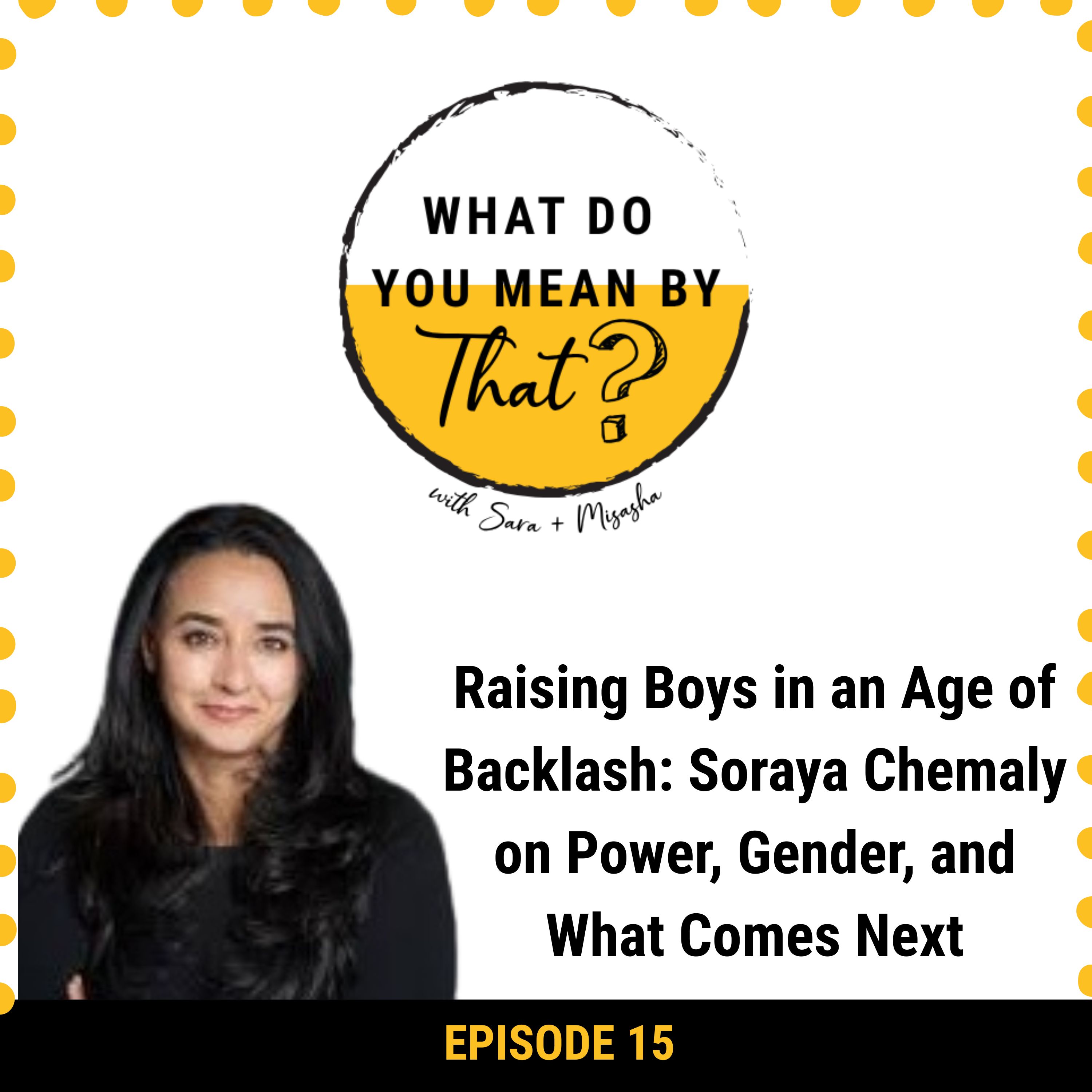 15: Raising Boys in an Age of Backlash: Soraya Chemaly on Power, Gender, and What Comes Next | In today's episode, we sit down with feminist author and activist Soraya Chemaly for a conversation that feels both urgent and deeply grounding. Soraya's new book, All We Want Is Everything, traces how male supremacy shows up everywhere—our politics, our homes, our faith spaces, our workplaces, and especially in the lives of our children. Together, we talk about the rising backlash against women and queer people, the ways boys are being pulled into misogynistic online spaces, and why so many young men are drifting toward anti-democratic movements without even realizing they're being manipulated. Soraya offers a powerful reframe for what we're seeing culturally, along with real, everyday actions that families can take to disrupt old gender scripts—on sports fields, around dinner tables, and in the tiny moments we rarely name but constantly repeat. This conversation is challenging, hopeful, beautifully honest, and filled with the clarity that can actually shift how we move through the world. Let's dive in. What to listen for: What inspired Soraya to write this book, now, beyond the backlash from the presidential elections. The one cultural shift she'd want to see in the next decade: Young men understanding that the anti feminism they are largely accepting and in many cases promulgating is a manipulation. "If boys could understand that they, too, are part of progressive movements in a way that allows them to accept women as equals, and that means also equal competitors, for example, in school, then that's what I would want to see. " Specific actions that hold the line for feminists and womanists, and the roles we have to play What practices we all use to sustain ourselves in challenging times About our guest: Soraya Chemaly is an award-winning author and activist. As a cultural critic, she writes and speaks frequently about gender norms, social justice, free speech, sexualized violence, politics, and technology. The former Executive Director of The Representation Project and Director and co-founder of the Women's Media Center Speech Project, she has long been committed to expanding women's civic and political participation. Soraya's most recently released book, All We Want is Everything: How We Dismantle Male Supremacy, has been called "a potent rallying cry for a beleaguered feminist movement." In it, she challenges dearly held beliefs about gender and equality today, drawing clear lines between the dynamics of intimate inequality and global anti-feminist, anti-democratic backlash and machofascism. Her first book, Rage Becomes Her: The Power of Women's Anger, was recognized as a Best Book of 2018 by the Washington Post, Fast Company, Psychology Today, and NPR, and has been translated into multiple languages. She is a contributor to several anthologies, most recently Free Speech in the Digital Age and Believe Me: How Trusting Women Can Change The World. Soraya is also a co-producer of a WMC #NameItChangeIt PSA highlighting the effects of online harassment on women in politics in America. Her work is widely featured in the media, documentaries, books, and academic research. As an activist, Ms. Chemaly also spearheaded several successful global campaigns challenging corporations to address online hate and harassment, restrictive content moderation and censorship, and institutional biases that undermine equity and negatively affect free speech. Before 2010, Ms. Chemaly spent more than fifteen years as an executive and consultant in the media and data technology industries. | 44m 34s | ||||||
| 12/2/25 | 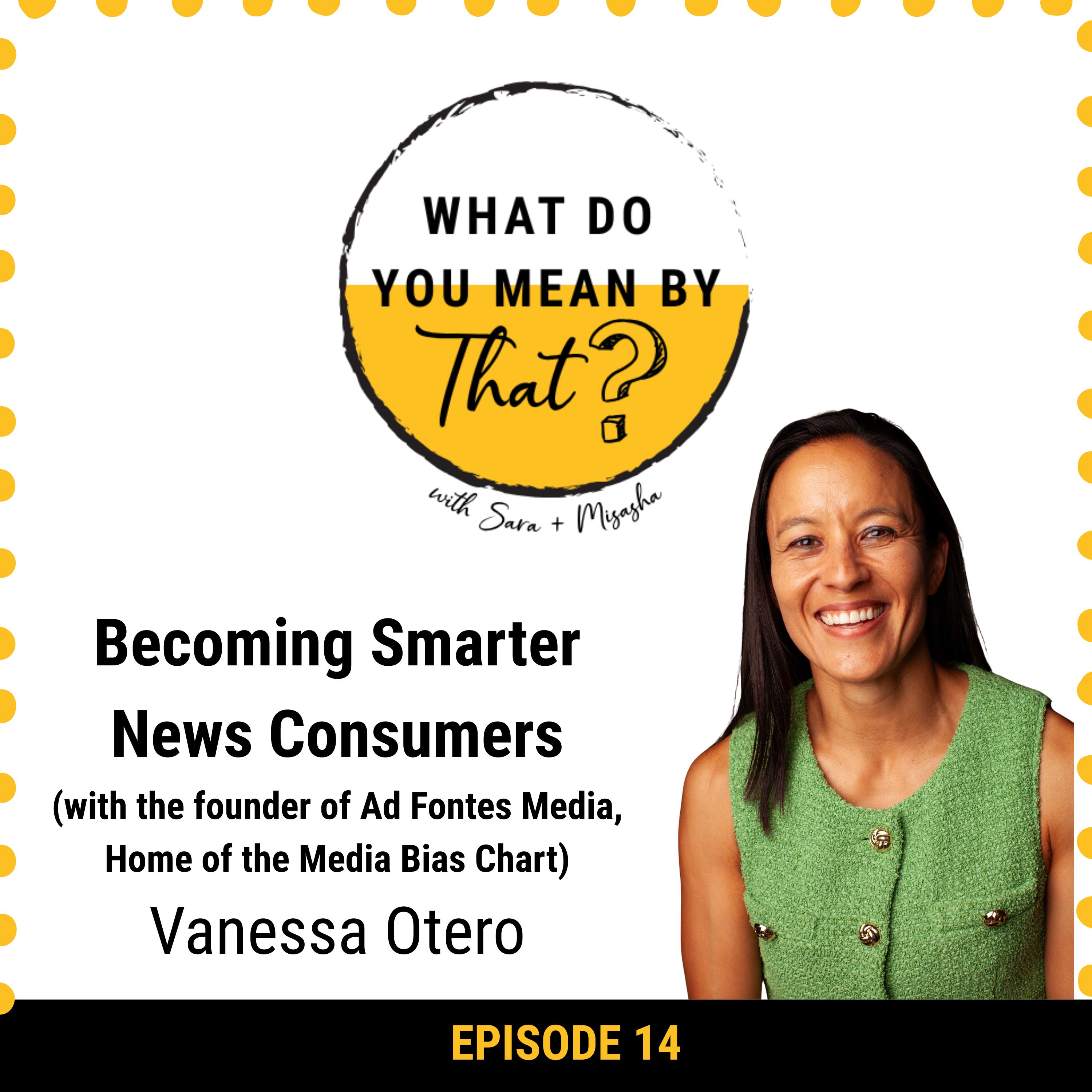 14: Becoming Smarter News Consumers, with the founder of Ad Fontes Media, Home of the Media Bias Chart | In an age where AI can fake a video, social platforms reward outrage, and even the word 'misinformation' means different things to different people, one question rises above the noise: how do we know what to trust? Today, we're joined by Vanessa Otero, the lawyer-turned-media-analyst behind Ad Fontes Media and its well-known Media Bias Chart, to explore exactly that. Vanessa takes us inside the mechanics of bias, the structures driving extreme content, and the habits that actually make us smarter news consumers. This episode is your practical guide to staying informed without getting manipulated. What to listen for: What the Ad Fontes media bias chart looks like, and how to use it: their mission is to rate all the news to positively transform society. Knowing that there's a high correlation between high bias and low reliability Advice for media consumers who are trying to recognize bias without all the tools – including considering disbelieving everything until you can verify it through multiple sources New ways to discuss the media landscape. Example: Instead of saying "fake news" or "misinformation," which are politically charged and open to interpretation, consider using more accurate language like "misleading information" or "inaccurate information." About our guest: Vanessa Otero is the Founder and CEO of Ad Fontes Media, the company that rates news for bias and reliability. Ms. Otero founded Ad Fontes in 2018 with a mission to rate all the news to positively transform society. She created the original Media Bias Chart in 2016, which was the seed idea for creating the company. She is passionate about bringing people together and overcoming the challenges of political polarization in our present environment. Prior to starting Ad Fontes, she practiced as a patent attorney specializing in software. Vanessa holds a B.A. in English from UCLA and a J.D. from the University of Denver. | 39m 51s | ||||||
| 11/18/25 | 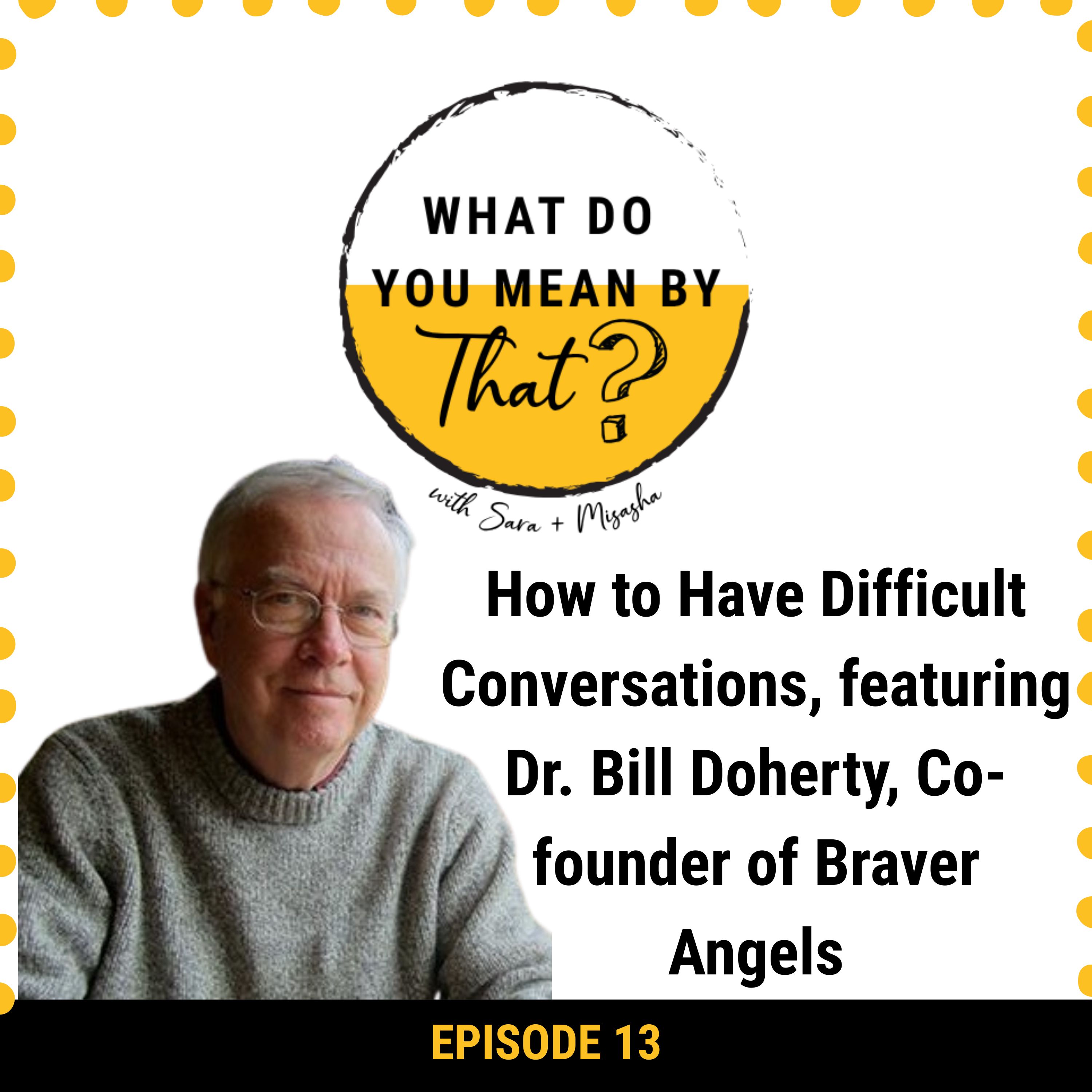 13: How to Have Difficult Conversations, featuring Dr. Bill Doherty, Co-founder of Braver Angels | Are you a little worried about holiday conversations with your relatives and family members in this increasingly polarized political climate? You're not alone. Welcome to something new – a live discussion with our guest, Dr. Bill Doherty, co-founder of Braver Angels and a deeply experienced relationship therapist, coaching one of us (Sara) through how to have difficult conversations, not in theory, but with an actual extended family member who has differing political viewpoints from me. Nowadays, politics is personal. So, as much as it's tempting to bury our heads in the sand, these conversations are skills of democratic living - we can't abandon them at a family level and expect our political leaders to do it for us. You won't want to miss the discomfort, the realizations, the tips and perspectives that can help us ALL have better, more meaningful connections and conversations with the people we love in our lives – even and especially if we don't always agree with them. What to listen for: What are the two types of conversation levels, and what you should do when one or both are challenged by something like a provocative question Why it's important to have difficult conversations like these 1-1, versus in a group How we approach these conversations with a "grownup" mindset, despite what we're seeing these days on a more global scale About our guest: Bill Doherty is a Professor Emeritus in the Department of Family Social Science at the University of Minnesota. As a therapist, he focuses on couples on the brink of divorce and on political stress in relationships. He has authored 14 books for professionals and the public. Following the 2016 U.S. Presidential election, he co-founded Braver Angels, a citizen initiative bringing conservatives and liberals together to counteract political polarization and restore the fraying social fabric in American society. Bill is the chief designer of the Braver Angels workshops and has conducted workshops all over the country, including for state legislatures and Members of Congress. Braver Angels now has volunteers working in all 50 states. Among his awards is the Lifetime Achievement Award from the American Family Therapy Academy. Related episodes: How to have uncomfortable conversations, our primer for holiday seasons How to have compassionate dialogue, with Dr Nancy Dome | 45m 30s | ||||||



Showing 25 of 306
Pitch Fit is a Pro feature
See how bookable this show is for guests, which brands already advertise, the per-episode ad value, and the best-fit guest and sponsor profile. The numbers are blurred on the free plan.
How readily this show books outside guests like you.
How proven this show is for host-read sponsorships.
For Guests
ProFor Advertisers
ProUpgrade to Pro to unlock guest cadence, sponsor categories, fit scores, and per-episode ad value for this show.
Similar Audience Demographics
Podcasts that attract a similar listener profile




Chart history for What Do You Mean By That?
Peaked at #156 in SG, currently #156 in SG.
| Market | Genre | Peak | Current | Trend |
|---|---|---|---|---|
| SG | — | #156 | #156 | — |
Chart Positions
1 placement across 1 market.
Chart Positions
1 placement across 1 market.