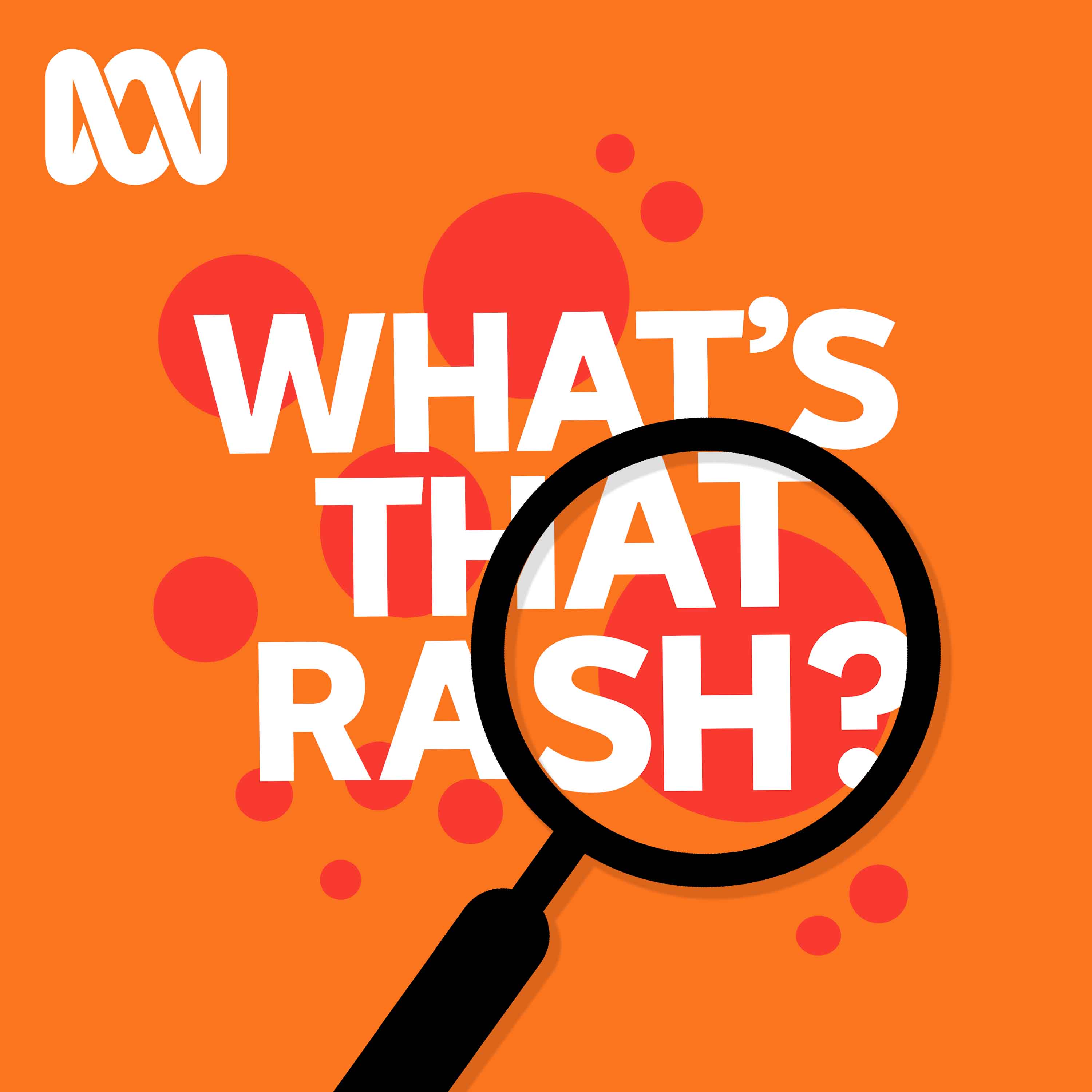
What's That Rash?
by ABC Australia
Is this your podcast?Insights from recent episode analysis
Audience Interest
Podcast Focus
Publishing Consistency
Platform Reach
Insights are generated by CastFox AI using publicly available data, episode content, and proprietary models.
Most discussed topics
Brands & references
Total monthly reach
Estimated from 33 chart positions in 33 markets.
By chart position
- 🇦🇺AU · Medicine#21M to 3M
- 🇬🇧GB · Medicine#5330K to 100K
- 🇨🇦CA · Medicine#5730K to 100K
- 🇯🇵JP · Medicine#14100K to 300K
- 🇰🇷KR · Medicine#18100K to 300K
- Per-Episode Audience
Est. listeners per new episode within ~30 days
479K to 1.5M🎙 Daily cadence·250 episodes·Last published 3d ago - Monthly Reach
Unique listeners across all episodes (30 days)
1.6M to 4.9M🇦🇺61%🇯🇵6%🇰🇷6%+30 more - Active Followers
Loyal subscribers who consistently listen
479K to 1.5M
Market Insights
Platform Distribution
Reach across major podcast platforms, updated hourly
Total Followers
—
Total Plays
—
Total Reviews
—
* Data sourced directly from platform APIs and aggregated hourly across all major podcast directories.
On the show
From 23 epsHosts
Recent guests
Recent episodes
Why wear a continuous glucose monitor?
Sep 1, 2026
Unknown duration
Are rest days from exercise necessary?
Aug 25, 2026
Unknown duration
What has your nose got to do with sleep?
Aug 18, 2026
Unknown duration
Why do we cry?
Aug 11, 2026
Unknown duration
What is ultra-processed food?
Aug 4, 2026
Unknown duration
Social Links & Contact
Official channels & resources
Official Website
Login
RSS Feed
Login
| Date | Episode | Topics | Guests | Brands | Places | Keywords | Sponsor | Length | |
|---|---|---|---|---|---|---|---|---|---|
| 9/1/26 |  Why wear a continuous glucose monitor? | Continuous glucose monitors, or CGMs, have transformed how people with diabetes manage their blood sugar.But in wellness circles, more and more people without diabetes are being encouraged to try these devices.Norman and Tegan get to the bottom of what these devices can actually tell you, and the potential harms.References:The wellness inspired rise of continuous glucose monitors for people without diabetes, including those with metabolic disorders – BMJ featuresContinuous glucose monitoring in non-diabetic populations: a systematic review of observational and interventional studies with meta-analysis Blood glucose monitoring devices: current consideration – Australian Prescriber The Use of Continuous Glucose Monitoring to Diagnose Stage 2 Type 1 DiabetesAssociations of continuous glucose monitor derived time in range and glycaemic variability with diet lifestyle and demographicsDifferent Glucose Variability in Women With Polycystic Ovary Syndrome With and Without Insulin Resistance: A Pilot StudyUnderstanding the benefits and psychological burdens of using continuous glucose monitoring for lifestyle change: A mixed-methods cross-sectional study Unintended Consequences: The Intersection of Diabetes Technology and Disordered Eating Risk If you enjoyed this episode, check these out!Should we all be taking fish oil?Tonsils, appendix, gallbladder: is anything actually useless?Should you wait to swim after eating? | — | ||||||
| 8/25/26 | Are rest days from exercise necessary? | Not many people would argue that rest isn’t important, but how would you define a rest day?For an elite athlete a rest day could be going for a long walk. For your average person it could mean sitting on the couch.Norman and Tegan ask – why is rest important, and do you need it to make progress in the gym?References:'No pain, no gain' debunked: Why post-exercise soreness is not essential for building muscleSkeletal muscle and resistance exercise training; the role of protein synthesis in recovery and remodelingEffects of Different Between Test Rest Intervals in Reproducibility of the 10-Repetition Maximum Load Test: A Pilot Study with Recreationally Resistance Trained MenThe time course for elevated muscle protein synthesis following heavy resistance exercise Recovery and Performance in Sport: Consensus Statement Effects of Consecutive Versus Non-consecutive Days of Resistance Training on Strength, Body Composition, and Red Blood Cells Nonconsecutive versus consecutive-day resistance training in recreationally trained subjects Fatigue, pain, and the recovery of neuromuscular function after consecutive days of full-body resistance exercise in trained men Effects of Consecutive Days of Exercise and Recovery on Muscle Mechanical Function How much is too much? (Part 1) International Olympic Committee consensus statement on load in sport and risk of injury If you enjoyed this episode, check these out!Is retirement bad for you?Do the benefits of creatine go beyond the gym?Diet vs exercise: which is more important? | — | ||||||
| 8/18/26 | What has your nose got to do with sleep? | Have you ever spritzed your pillow with lavender and wondered, is this actually doing anything?There are some surprising ways that smells can affect sleep, and it might have something to do with how our brains work.Norman and Tegan discuss how smells, good and bad, could affect your nightly snooze.References:From antiquity to modern hygiene: the archaeological and medicinal legacy of lavender as a promising antimicrobial agentLavender and sleep: A systematic review of the evidence How Smell Affects Your Sleep – Sleep Foundation Reciprocal relationships between sleep and smell Subjectively intense odor does not affect dream emotions during rapid eye movement sleep Nocturnal exposure to a preferred ambient scent does not affect dream emotionality or post-sleep core affect valence in young adults Olfactory Aversive Conditioning during Sleep Reduces Cigarette-Smoking BehaviorIf you enjoyed this episode, check these out!Is farting a sign your gut microbiome is happy?Is melatonin the answer to a good night's sleep?Is a vibration plate worth the cost? | — | ||||||
| 8/11/26 | Why do we cry? | Do you feel better after a good cry, or do you feel worse than ever?There can be a lot to cry about, good or bad: a break-up, a milestone, a tragedy, a sappy movie.Norman and Tegan discuss why we evolved to cry, and the purpose it serves as we get older.References:The Riddle of Human Emotional Crying: A Challenge for Emotion ResearchersThe neurobiology of human cryingEmotional expression in human and non-human great apesUltra-processed food intake, cognitive function, and dementia risk: A cross-sectional study of middle-aged and older Australian adultsIf you enjoyed this episode, check these out!Butter vs margarine: what's better for you?How much protein do you REALLY need?Why is yawning contagious? | — | ||||||
| 8/4/26 | What is ultra-processed food? | You might be hearing a lot about ultra-processed foods, or UPFs, and how we should all be avoiding them.But you might be struggling with figuring out what exactly IS an ultra-processed food. Sweetened drinks, sure. What about bread? Yoghurt?Norman and Tegan unpack why it isn’t a simple question, and where the evidence stands on the health consequences.*A previous version of this episode may have implied that the Food Standards Australia New Zealand (FSANZ) board is comprised of current food industry representatives that are directly involved in setting food policy. This was edited on 12/08/2026. References:Ultra-Processed Foods and Human Health - The Lancet seriesDiet quality and processed foods – Food Standards Australia and New ZealandMost of the Foods We Eat Are Ultra-Processed. Are They All Unhealthy? - Johns Hopkins Bloomberg School of Public HealthTrends of obesity and underweight in older children and adolescents in the United States, Brazil, China, and RussiaUltra-processed products are becoming dominant in the global food systemThe UN Decade of Nutrition, the NOVA food classification and the trouble with ultra-processingUltra-processed food exposure and adverse health outcomes: umbrella review of epidemiological meta-analysesUltra-Processed Diets Cause Excess Calorie Intake and Weight Gain: An Inpatient Randomized Controlled Trial of Ad Libitum Food IntakeThe collapse of the food matrix: how ultra-processed foods impact satiety and metabolism by altering physical structure beyond nutrient composition If you enjoyed this episode, check these out!Is gluten really the enemy?Why is everyone suddenly talking about seed oils?Why Norman won't shut up about the Mediterranean diet | — | ||||||
| 7/28/26 | Body hair removal: healthy or not? | The modification and removal of body hair has been going on for centuries, but our reasons for it have evolved.Some believe it’s more hygienic to remove, others argue it’s against our nature to be so hairless.Norman and Tegan trim the evidence on body hair: leg, armpit, pubic and even inside your nose.References:Trends in body hair removal as depicted through artGetting plucked: the history of hair removal - ABCEffects of pubic hair grooming on women’s sexual health: a systematic review and meta-analysisBare necessity? Public health implications of removing pubic hairEffect of Physical and Chemical Hair Removal Methods on Skin Barrier Function in vitro: Consequences for a Hydrophilic Model PermeantUsing the Hair Removal Laser in the Axillary Region and its Effect on Normal Microbial FloraShaving of axillary hair has only a transient effect on perceived body odor pleasantnessCadaver research leads to prestigious science award - the Science ShowDoes nasal hair (vibrissae) density affect the risk of developing asthma in patients with seasonal rhinitis?6 ways to remove unwanted hair - American Association of DermatologyIf you enjoyed this episode, check these out!Do the benefits of creatine go beyond the gym?Does magnesium work against muscle cramps?Which hair loss treatments actually work? | — | ||||||
| 7/21/26 | Ashwagandha: what's the evidence? | Ashwagandha supplements are rising in popularity, but the herb has been used for hundreds of years in Ayurvedic medicine.The supposed benefits are broad – from stress to sleep, athletic performance and boosting testosterone.Norman and Tegan explore where the evidence stands, and uncertainties about potential risks.References:An Overview on Ashwagandha: A Rasayana (Rejuvenator) of AyurvedaChemical composition, cytotoxic and pro-inflammatory enzyme inhibitory properties of Withania somnifera (L.) Dunal root extractsChemical Composition, Biological Activity, and Health-Promoting Effects of Withania somnifera for Pharma-Food Industry ApplicationsClinical and Research Information on Drug-Induced Liver InjuryAshwagandha: Is it helpful for stress, anxiety, or sleep?Exploring the efficacy and safety of a novel standardized ashwagandha (Withania somnifera) root extract in adults experiencing high stress and fatigue in a randomized, double-blind, placebo-controlled trialA Randomized, Double-Blind, Placebo-Controlled, Crossover Study Examining the Hormonal and Vitality Effects of Ashwagandha (Withania somnifera) in Aging, Overweight MalesIf you enjoyed this episode, check these out!Vitamin C: can it cure colds and cancer?No-poo: why do we shampoo our hair?Do healthy people need lymphatic treatments? | — | ||||||
| 7/14/26 | chronic stresshealth impact+4 | — | American Psychological AssociationChronic Stress - ScienceDirect+8 | — | chronic stressburnout+5 | — | 22m 00s | ||
| 7/7/26 | motion sicknesssensory conflict theory+4 | — | NatureFederal Aviation Authority+1 | — | motion sicknesssea sickness+5 | — | 23m 00s | ||
| 6/30/26 | cancer riskhealth tips+3 | — | Australian Institute of Health and WelfareCancer Council+1 | — | cancerrisk reduction+4 | — | 21m 00s | ||
| 6/23/26 | calcium supplementsbone health+3 | — | Healthy Bones AustraliaABC Australia | — | calciumsupplements+3 | — | 20m 00s | ||
| 6/16/26 | tappingnervous system+3 | — | Emotional Freedom TechniquesDevil Wears Prada 2 | — | tappingEmotional Freedom Techniques+3 | — | 19m 00s | ||
| 6/9/26 | gut microbiomehealth+3 | — | World Science Festival BrisbaneCSIRO | — | gut healthmicrobiome+4 | — | 18m 00s | ||
| 6/2/26 | coughinginfectious diseases+3 | — | ABC Australia | — | coughinfectious+5 | — | 18m 00s | ||
| 5/26/26 | weather predictionjoint pain+3 | — | Harvard Health | — | joint painweather+3 | — | 19m 00s | ||
| 5/19/26 | full-body MRIhealth screening+3 | — | Cancer Council | — | full-body MRIhealth+4 | — | 22m 00s | ||
| 5/12/26 | progressive exercisetraining benefits+3 | — | Thomas L. DeLorme | — | progressive exercisemuscle strength+3 | — | 22m 00s | ||
| 5/11/26 | hantaviruscruise ship outbreak+3 | — | ABC Australia | MV Hondius | hantavirusMV Hondius+3 | — | 13m 00s | ||
| 5/5/26 | yawningcontagious behavior+3 | — | World Science Festival Brisbane | — | yawningcontagious yawning+3 | — | 17m 00s | ||
| 4/28/26 | vestigial organshuman anatomy+3 | — | JSTOR DailyABC News+1 | — | vestigial organstonsils+5 | — | 20m 00s | ||
| 4/21/26 | fruit consumptionhealth benefits+3 | — | Australian Bureau of StatisticsABC News+1 | — | fruitvegetables+5 | — | 20m 00s | ||
| 4/14/26 | light therapyskincare+4 | Tegan | Sweaty sauna bathing for better healthNear Infrared Photoimmunotherapy: A Review of Recent Progress and Their Target Molecules for Cancer Therapy+8 | — | light therapyskincare+5 | — | 18m 00s | ||
| 4/7/26 | handednessambidextrous+3 | — | World Science Festival BrisbaneA large-scale population study of early life factors influencing left-handedness+6 | — | right-handedleft-handed+5 | — | 19m 00s | ||
| 3/31/26 | headachesmigraine+4 | Tegan | The Science Behind Headaches: What's Really Happening In Your SkullThe vascular theory of migraine—a great story wrecked by the facts+5 | — | headachesmigraine+5 | — | 21m 00s | ||
| 3/24/26 | vibration platespassive exercise+4 | — | Dr Gustav Zander | — | vibration platepassive exercise+5 | — | 23m 00s | ||
Showing 25 of 250
Pitch Fit is a Pro feature
See how bookable this show is for guests, which brands already advertise, the per-episode ad value, and the best-fit guest and sponsor profile. The numbers are blurred on the free plan.
How readily this show books outside guests like you.
How proven this show is for host-read sponsorships.
For Guests
ProFor Advertisers
ProUpgrade to Pro to unlock guest cadence, sponsor categories, fit scores, and per-episode ad value for this show.
Similar Audience Demographics
Podcasts that attract a similar listener profile




Chart history for What's That Rash?
Peaked at #2 in Australia, top 10 in 2 of 41 tracked markets, currently #2 in Australia.
| Market | Genre | Peak | Current | Trend |
|---|---|---|---|---|
| Australia | — | #2 | #2 | — |
| NG | — | #5 | #5 | — |
| Australia | — | #11 | #11 | — |
| VN | — | #12 | #12 | — |
| Japan | — | #14 | #14 | — |
| New Zealand | — | #16 | #16 | — |
| South Korea | — | #18 | #18 | — |
| MY | — | #19 | #19 | — |
| SG | — | #20 | #20 | — |
| ID | — | #28 | #28 | — |
| PH | — | #33 | #33 | — |
| KE | — | #34 | #34 | — |
| Spain | — | #37 | #37 | — |
| TH | — | #38 | #38 | — |
| PT | — | #42 | #42 | — |
| HK | — | #50 | #50 | — |
| United Kingdom | — | #53 | #53 | — |
| Canada | — | #57 | #57 | — |
| Ireland | — | #63 | #63 | — |
| TW | — | #65 | #65 | — |
Chart Positions
41 placements across 33 markets.
Chart Positions
41 placements across 33 markets.