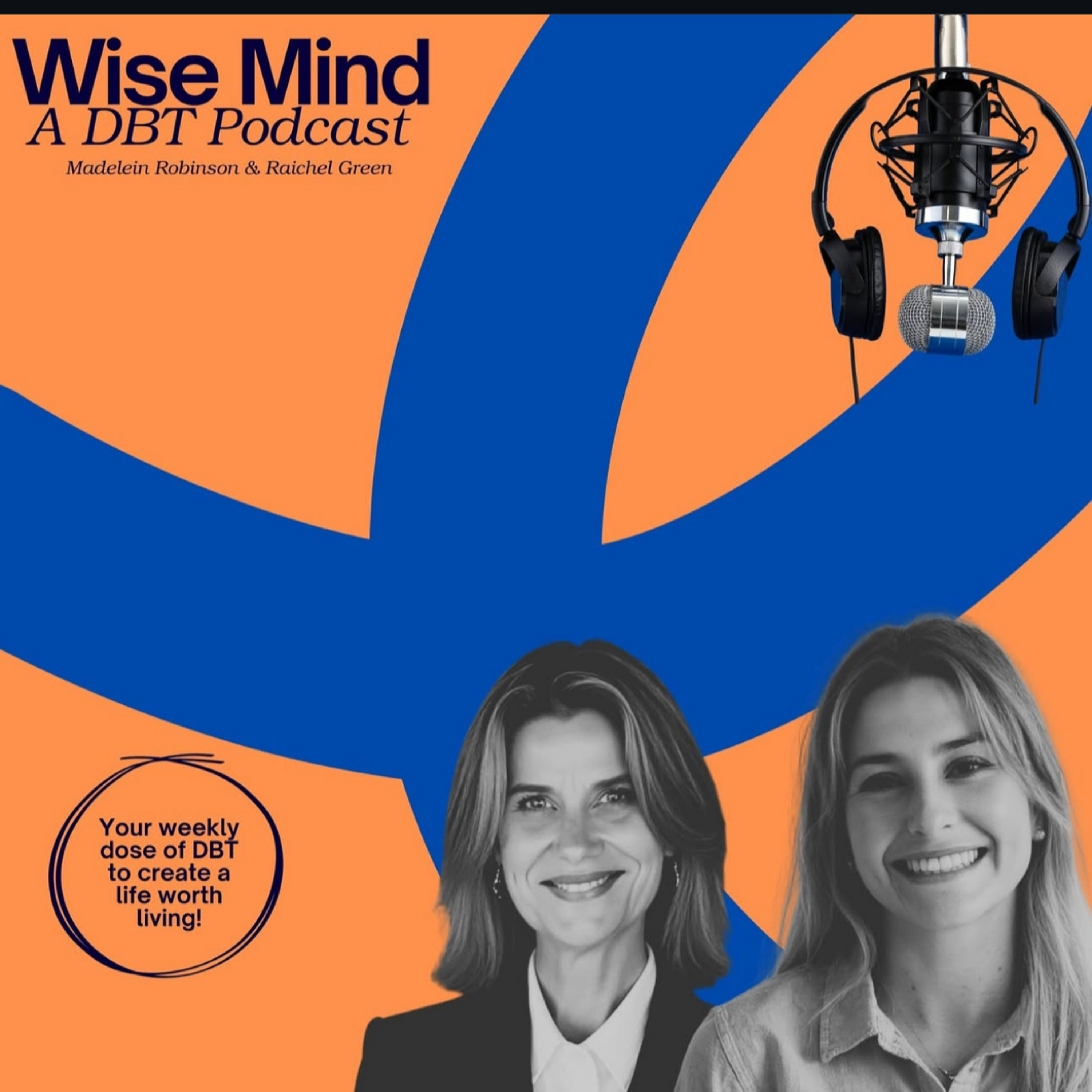
Wise Mind: A DBT Podcast
by Wise Mind: A DBT Podcast
Is this your podcast?On the show
From 10 epsHosts
Recent guests
No guests detected in recent episodes.
Recent episodes
Meeting People Where They’re At
Oct 7, 2026
47m 31s
Why Does It Feel Like Relief? The Brain & Self-Harm
Sep 30, 2026
46m 47s
Small Signals, Bigger Connections
Sep 23, 2026
42m 29s
The Loneliness Epidemic
Sep 16, 2026
40m 38s
Your Brain on Self-Compassion
Sep 9, 2026
50m 51s
Insights from recent episode analysis
Audience Interest
Podcast Focus
Publishing Consistency
Platform Reach
Insights are generated by CastFox AI using publicly available data, episode content, and proprietary models.
Most discussed topics
Brands & references
Total monthly reach
Estimated from 8 chart positions in 8 markets.
By chart position
- 🇦🇺AU · Mental Health#1295K to 30K
- 🇺🇸US · Mental Health#1575K to 30K
- 🇳🇬NG · Mental Health#4110K to 30K
- 🇧🇪BE · Mental Health#573K to 10K
- 🇮🇸IS · Mental Health#623K to 10K
- Per-Episode Audience
Est. listeners per new episode within ~30 days
9.8K to 40K🎙 Daily cadence·61 episodes·Last published 4d ago - Monthly Reach
Unique listeners across all episodes (30 days)
33K to 133K🇦🇺23%🇺🇸23%🇳🇬23%+5 more - Active Followers
Loyal subscribers who consistently listen
13K to 53K
Market Insights
Platform Distribution
Reach across major podcast platforms, updated hourly
Total Followers
—
Total Plays
—
Total Reviews
—
* Data sourced directly from platform APIs and aggregated hourly across all major podcast directories.
Social Links & Contact
Official channels & resources
Official Website
Login
RSS Feed
Login
| Date | Episode | Topics | Guests | Brands | Places | Keywords | Sponsor | Length | |
|---|---|---|---|---|---|---|---|---|---|
| 10/7/26 | Meeting People Where They’re At | In Part 2, Maddy and Raich from Wise Mind are continuing the conversation around self-harm but this time, we’re getting practical. What do we do when someone isn’t ready to stop? We explore harm minimisation, how to support someone without judgement, and why meeting people where they’re at can be an important part of the work. We chat about what helpful support can actually look like, how to have these conversations safely, and how we can stay connected with someone even when they’re not ready to make a change!!If you enjoy the episode, please like, follow, subscribe, leave a review, and share to help support the podcast.Wanting more weekly wise Mind?! For bonus episodes and exclusive resources every week, join us on Patreon, the link via wisemindcollective.com.au.Contact us:www.wisemindcollective.com.auwisemindcollective.com.auInstagram + Facebook + TIK TOK - Wisemind: A DBT PodcastCrisis SupportThis space may include discussions that bring up strong emotions or difficult topics. If you’re feeling overwhelmed, please know you're not alone and support is available.If you or someone you know is in crisis, we encourage you to reach out to:Lifeline – 13 11 14 (24/7)Beyond Blue – 1300 22 463613YARN – 13 92 76 (A 24/7 national support line for Aboriginal and Torres Strait Islander people)Emergency Services – 000 (if you are in immediate danger)26/9Acknowledgment of Dr. Marsha M. Linehan and the Origins of DBTWe honor Dr. Marsha M. Linehan, psychologist and professor who created Dialectical Behavior Therapy.It’s thanks to Dr. Linehan that DBT has become a proven intervention for a range of mental health challenges.Wise Mind A DBT Podcast gratefully acknowledges that DBT is Dr. Linehan’s work, not ours, and we honor her legacy. | 47m 31s | ||||||
| 9/30/26 | Why Does It Feel Like Relief? The Brain & Self-Harm | In this episode, Maddy and Raich from Wise Mind are diving into a topic that can be difficult, misunderstood and sometimes pretty uncomfortable to talk about self-harm (In all its many forms). We chat about what it actually is, why people might turn to it, and what purpose it can serve. We also share how we approach working with self-harm in our clinical practice and why our approach differs slightly from the way Marsha Linehan talks about it in traditional DBT. As always, we’re keeping it real, compassionate and practical because understanding the behaviour is often the first step towards finding a different way through.If you enjoy the episode, please like, follow, subscribe, leave a review, and share to help support the podcast.Wanting more weekly wise Mind?! For bonus episodes and exclusive resources every week, join us on Patreon, the link via wisemindcollective.com.au.Contact us:www.wisemindcollective.com.auwisemindcollective.com.auInstagram + Facebook + TIK TOK - Wisemind: A DBT PodcastCrisis SupportThis space may include discussions that bring up strong emotions or difficult topics. If you’re feeling overwhelmed, please know you're not alone and support is available.If you or someone you know is in crisis, we encourage you to reach out to:Lifeline – 13 11 14 (24/7)Beyond Blue – 1300 22 463613YARN – 13 92 76 (A 24/7 national support line for Aboriginal and Torres Strait Islander people)Emergency Services – 000 (if you are in immediate danger)26/9Acknowledgment of Dr. Marsha M. Linehan and the Origins of DBTWe honor Dr. Marsha M. Linehan, psychologist and professor who created Dialectical Behavior Therapy.It’s thanks to Dr. Linehan that DBT has become a proven intervention for a range of mental health challenges.Wise Mind A DBT Podcast gratefully acknowledges that DBT is Dr. Linehan’s work, not ours, and we honor her legacy. | 46m 47s | ||||||
| 9/23/26 | Small Signals, Bigger Connections | Social Signals & Connection: The Skills That Help Us ConnectWhy can connecting with others sometimes feel so difficult, even when we really want connection? In this episode of Wise Mind, we explore the role of social signalling the small verbal and non-verbal cues we use to communicate warmth, interest and openness to others.We explore the “flat face” and how our facial expressions, body language and tone can unintentionally communicate disinterest or distance, even when we’re feeling anxious or wanting connection. We unpack the fear of rejection that can make us pull back, avoid eye contact, or wait for others to make the first move.Most importantly, we explore practical skills for creating connection, including noticing our social signals, practising warmth and curiosity, showing genuine interest, initiating conversations and tolerating the discomfort that can come with vulnerability.Because connection isn't always about finding the “right” people sometimes it starts with learning how to signal, “I'm open to connecting.”If you enjoy the episode, please like, follow, subscribe, leave a review, and share to help support the podcast.Wanting more weekly wise Mind?! For bonus episodes and exclusive resources every week, join us on Patreon, the link via wisemindcollective.com.au.Contact us:www.wisemindcollective.com.auwisemindcollective.com.auInstagram + Facebook + TIK TOK - Wisemind: A DBT PodcastCrisis SupportThis space may include discussions that bring up strong emotions or difficult topics. If you’re feeling overwhelmed, please know you're not alone and support is available.If you or someone you know is in crisis, we encourage you to reach out to:Lifeline – 13 11 14 (24/7)Beyond Blue – 1300 22 463613YARN – 13 92 76 (A 24/7 national support line for Aboriginal and Torres Strait Islander people)Emergency Services – 000 (if you are in immediate danger)Acknowledgment of Dr. Marsha M. Linehan and the Origins of DBTWe honor Dr. Marsha M. Linehan, psychologist and professor who created Dialectical Behavior Therapy.It’s thanks to Dr. Linehan that DBT has become a proven intervention for a range of mental health challenges.Wise Mind A DBT Podcast gratefully acknowledges that DBT is Dr. Linehan’s work, not ours, and we honor her legacy. | 42m 29s | ||||||
| 9/16/26 | The Loneliness Epidemic | The Loneliness Epidemic: Why We Feel So AloneLoneliness is becoming increasingly recognised as a significant public health concern but what actually happens when we feel disconnected from others? In this episode of Wise Mind, we explore the research behind the loneliness epidemic and why feeling connected is such a fundamental human need.We unpack the difference between being alone and feeling lonely, and explore what research tells us about the impact of chronic loneliness on our emotional wellbeing, stress response, physical health and relationships. We also look at why loneliness can become a cycle: feeling disconnected can lead us to withdraw, which can make meaningful connection even harder to find.From the neuroscience of social connection to the psychology of belonging, we explore what loneliness might be trying to communicate and how we can respond to it more effectively.Because loneliness isn't a personal failure it's a deeply human experience and a signal that connection matters.If you enjoy the episode, please like, follow, subscribe, leave a review, and share to help support the podcast.Wanting more weekly wise Mind?! For bonus episodes and exclusive resources every week, join us on Patreon, the link via wisemindcollective.com.au.Contact us:www.wisemindcollective.com.auwisemindcollective.com.auInstagram + Facebook + TIK TOK - Wisemind: A DBT PodcastCrisis SupportThis space may include discussions that bring up strong emotions or difficult topics. If you’re feeling overwhelmed, please know you're not alone and support is available.If you or someone you know is in crisis, we encourage you to reach out to:Lifeline – 13 11 14 (24/7)Beyond Blue – 1300 22 463613YARN – 13 92 76 (A 24/7 national support line for Aboriginal and Torres Strait Islander people)Emergency Services – 000 (if you are in immediate danger)Acknowledgment of Dr. Marsha M. Linehan and the Origins of DBTWe honor Dr. Marsha M. Linehan, psychologist and professor who created Dialectical Behavior Therapy.It’s thanks to Dr. Linehan that DBT has become a proven intervention for a range of mental health challenges.Wise Mind A DBT Podcast gratefully acknowledges that DBT is Dr. Linehan’s work, not ours, and we honor her legacy. | 40m 38s | ||||||
| 9/9/26 | self-compassionneuroscience+3 | — | — | — | self-compassionneuroscience+5 | — | 50m 51s | ||
| 9/2/26 | self-compassionmental health+3 | — | LifelineBeyond Blue+3 | — | compassionself-compassion+5 | — | 40m 07s | ||
| 8/26/26 | Polyvagal TheoryNervous System States+4 | — | LifelineBeyond Blue+2 | — | Polyvagal TheoryNervous System+5 | — | 42m 52s | ||
| 8/19/26 | Polyvagal Theorynervous system+4 | — | Wise Mind: A DBT Podcast | — | Polyvagal Theorynervous system+6 | — | 42m 34s | ||
| 8/12/26 | mind statesRO-DBT+3 | — | Wise Mind: A DBT PodcastRadically Open DBT | — | Fixed MindFatalistic Mind+5 | — | 43m 05s | ||
| 8/5/26 | psychological flexibilitymental health+4 | — | LifelineBeyond Blue+2 | — | psychological flexibilitymental health+5 | — | 47m 19s | ||
Want analysis for the episodes below?Free for Pro Submit a request, we'll have your selected episodes analyzed within an hour. Free, at no cost to you, for Pro users. | |||||||||
| 7/29/26 | closed-mindednessopenness+5 | — | Wise Mind: A DBT Podcast | — | closed mindopen mind+5 | — | 46m 25s | ||
| 7/22/26 | belongingconnection+5 | — | Wise Mind: A DBT Podcast | — | belongingconnection+8 | — | 50m 20s | ||
| 7/15/26 | overcontrolself-control+5 | — | Radically Open Dialectical Behaviour TherapyDBT | — | overcontrolself-control+8 | — | 59m 27s | ||
| 7/9/26 | disorganised attachmenttrauma+5 | — | LifelineBeyond Blue+3 | — | disorganised attachmenttrauma+5 | — | 48m 30s | ||
| 7/8/26 | Everything You Need to Know Before DBT Group | In this episode of Wise Mind: A DBT Podcast, we're answering one of the biggest questions people have before starting DBT: What actually happens in the pre-group assessment?We take you behind the scenes of the DBT pre-group assessment, exploring what to expect, the questions we ask (and why we ask them), and why this process is so much more than just an intake appointment. We discuss how the assessment helps determine whether DBT is the right fit for you, sets you up for success in the program, and ensures you have the support you need before beginning group.Whether you're considering joining a DBT skills group, have an assessment coming up, or you're simply curious about how the process works, this episode will answer your questions and help take some of the mystery out of getting started.Tune in wherever you get your podcasts, and don't forget to like, follow, subscribe, and share to help more people discover Wise Mind!Find all details and register at: www.wisemindcollective.com.auContact us:wisemindcollective.com.auOrInstagram + Facebook - Wisemind DBT PodcastCrisis SupportThis space may include discussions that bring up strong emotions or difficult topics. If you’re feeling overwhelmed, please know you're not alone and support is available.If you or someone you know is in crisis, we encourage you to reach out to:Lifeline – 13 11 14 (24/7)Beyond Blue – 1300 22 463613YARN – 13 92 76 (A 24/7 national support line for Aboriginal and Torres Strait Islander people)Emergency Services – 000 (if you are in immediate danger)Acknowledgment of Dr. Marsha M. Linehan and the Origins of DBTWe honor Dr. Marsha M. Linehan, psychologist and professor who created Dialectical Behavior Therapy.It’s thanks to Dr. Linehan that DBT has become a proven intervention for a range of mental health challenges.Wise Mind A DBT Podcast gratefully acknowledges that DBT is Dr. Linehan’s work, not ours, and we honor her legacy. | 55m 53s | ||||||
| 6/24/26 | The Walls We Build: Avoidant Attachment | This week we're exploring Avoidant Attachment, one of the three insecure attachment styles. In this episode, we unpack what avoidant attachment is, how it develops, and the ways it can show up in relationships, emotions, and everyday life.We discuss common traits of avoidant attachment, why people may struggle with vulnerability and closeness, and most importantly, how change is possible. We explore practical strategies for building awareness, strengthening relationships, and moving toward a more secure attachment style.Plus, we have a very exciting announcement to share with our Wise Mind community! 🎉If you're interested in attachment theory, personal growth, relationships, or DBT skills, this is an episode you won't want to miss.If you're enjoying the podcast and would like access to additional resources and exclusive content, visit Wise Mind Collective and follow the links to our Patreon community.The best way to support us is to like, follow, rate, share, and leave a comment wherever you listen to your podcasts. Your support helps us continue creating free, evidence-based mental health and DBT content for our listeners.🎧 Tune in now and join the conversation!Find all details and register at: www.wisemindcollective.com.auContact us:wisemindcollective.com.auOrInstagram + Facebook - Wisemind DBT PodcastCrisis SupportThis space may include discussions that bring up strong emotions or difficult topics. If you’re feeling overwhelmed, please know you're not alone and support is available.If you or someone you know is in crisis, we encourage you to reach out to:Lifeline – 13 11 14 (24/7)Beyond Blue – 1300 22 463613YARN – 13 92 76 (A 24/7 national support line for Aboriginal and Torres Strait Islander people)Emergency Services – 000 (if you are in immediate danger)Acknowledgment of Dr. Marsha M. Linehan and the Origins of DBTWe honor Dr. Marsha M. Linehan, psychologist and professor who created Dialectical Behavior Therapy.It’s thanks to Dr. Linehan that DBT has become a proven intervention for a range of mental health challenges.Wise Mind A DBT Podcast gratefully acknowledges that DBT is Dr. Linehan’s work, not ours, and we honor her legacy. | 53m 35s | ||||||
| 6/17/26 | Anxious Attachment: Craving Connection, Fearing Abandonment | In Part 2 of our attachment series, Raichel and Maddy from Wise Mind: A DBT Podcast explore anxious attachment, also known as preoccupied or anxious-preoccupied attachment. This is one of the three insecure attachment styles and is often marked by a strong need for closeness alongside fears of rejection, abandonment, and disconnection.The episode explains how anxious attachment develops through early experiences and relationships, and why patterns that were once protective can become maladaptive in adulthood. Rachel and Maddy discuss the cycle of reassurance-seeking, overthinking, emotional intensity, and relationship anxiety that can unintentionally push loved ones away, creating the very abandonment fears people are trying to avoid.They also connect these patterns to brain pathways, the nervous system, and emotional responses, helping listeners understand why anxious attachment can feel so overwhelming and automatic. The episode explores common traits of anxious attachment and offers practical ways to move towards healthier, more secure relationships including of course where DBT fits in!Most importantly, this episode emphasises a hopeful message: attachment styles are not fixed. With self-awareness, DBT skills, healthy relationships, and intentional healing, it is possible to develop greater security, confidence, and emotional balance in relationships.Not enough Wise Mind in your week? Join us on Patreon for bonus episodes, exclusive content, and extra DBT goodness every week! Your support means the world to us and helps keep the podcast going. Find the link on our website and come join the community! 💛Find all details: www.wisemindcollective.com.auContact us:wisemindcollective.com.auOrInstagram + Facebook - Wisemind: A DBT PodcastCrisis SupportThis space may include discussions that bring up strong emotions or difficult topics. If you’re feeling overwhelmed, please know you're not alone and support is available.If you or someone you know is in crisis, we encourage you to reach out to:Lifeline – 13 11 14 (24/7)Beyond Blue – 1300 22 463613YARN – 13 92 76 (A 24/7 national support line for Aboriginal and Torres Strait Islander people)Emergency Services – 000 (if you are in immediate danger)Acknowledgment of Dr. Marsha M. Linehan and the Origins of DBTWe honor Dr. Marsha M. Linehan, psychologist and professor who created Dialectical Behavior Therapy.It’s thanks to Dr. Linehan that DBT has become a proven intervention for a range of mental health challenges.Wise Mind A DBT Podcast gratefully acknowledges that DBT is Dr. Linehan’s work, not ours, and we honor her legacy. | 55m 12s | ||||||
| 6/9/26 | The Roots of Secure Attachment | Welcome back to Wise Mind: A DBT Podcast. Today, we continue our deep dive into attachment styles by exploring secure attachment — what it is, how it develops, and what it actually looks like in everyday life and relationships. We unpack the foundations of secure attachment, including consistency, emotional attunement, trust, and safety, and discuss how these early experiences shape the way we connect with others throughout adulthood.We also explore the traits commonly associated with secure attachment: healthy communication, emotional regulation, balanced independence, vulnerability, and the ability to navigate conflict without losing connection. Along the way, we compare secure attachment with other attachment patterns and discuss how these dynamics can show up in friendships, romantic relationships, parenting, and even therapy. This is not an episode to miss! If you want MORE head over to our Patreon for bonus content and resources each week! head to our website where you will also find the rego for our 10-week DBT group!Find all details and register at: www.wisemindcollective.com.auContact us:wisemindcollective.com.auOrInstagram + Facebook - Wisemind DBT PodcastCrisis SupportThis space may include discussions that bring up strong emotions or difficult topics. If you’re feeling overwhelmed, please know you're not alone and support is available.If you or someone you know is in crisis, we encourage you to reach out to:Lifeline – 13 11 14 (24/7)Beyond Blue – 1300 22 463613YARN – 13 92 76 (A 24/7 national support line for Aboriginal and Torres Strait Islander people)Emergency Services – 000 (if you are in immediate danger)Acknowledgment of Dr. Marsha M. Linehan and the Origins of DBTWe honor Dr. Marsha M. Linehan, psychologist and professor who created Dialectical Behavior Therapy.It’s thanks to Dr. Linehan that DBT has become a proven intervention for a range of mental health challenges.Wise Mind A DBT Podcast gratefully acknowledges that DBT is Dr. Linehan’s work, not ours, and we honor her legacy. | 46m 16s | ||||||
| 6/2/26 | Attached: Understanding the Bonds That Shape Us | Welcome back to Wise Mind, a DBT podcast, and thank you for joining us for a deep dive into attachment theory and the ways it shapes our relationships and emotional lives. In this episode, we explore what attachment is, where attachment theory comes from, and why the work of John Bowlby continues to influence psychology, therapy, and our understanding of human connection today. We discuss how early relationships and experiences can impact the way we relate to others throughout adulthood, including how we manage closeness, conflict, trust, and emotional regulation. The episode also unpacks different attachment styles and how they may appear in friendships, romantic relationships, parenting, and therapeutic work. Whether you are completely new to attachment theory or already familiar with the concept, this conversation offers a practical and accessible overview of why attachment matters and how greater awareness can support healthier relationships and emotional wellbeing. If you are interested in learning more, joining our 10-week DBT group, or accessing bonus content and resources, visit our website- Wisemindcollective.com.au. Thanks so much for listening and supporting the podcast.Find all details at: www.wisemindcollective.com.auContact us:wisemindcollective.com.auOrInstagram + Facebook - Wisemind DBT PodcastCrisis SupportThis space may include discussions that bring up strong emotions or difficult topics. If you’re feeling overwhelmed, please know you're not alone and support is available.If you or someone you know is in crisis, we encourage you to reach out to:Lifeline – 13 11 14 (24/7)Beyond Blue – 1300 22 463613YARN – 13 92 76 (A 24/7 national support line for Aboriginal and Torres Strait Islander people)Emergency Services – 000 (if you are in immediate danger)Acknowledgment of Dr. Marsha M. Linehan and the Origins of DBTWe honor Dr. Marsha M. Linehan, psychologist and professor who created Dialectical Behavior Therapy.It’s thanks to Dr. Linehan that DBT has become a proven intervention for a range of mental health challenges.Wise Mind A DBT Podcast gratefully acknowledges that DBT is Dr. Linehan’s work, not ours, and we honor her legacy. | 56m 46s | ||||||
| 5/27/26 | Behaviour Shifts: Increasing the Odds | Welcome back to Wise Mind DBT Podcast with Raich and Maddy!In this episode, we explore behaviour what it really is at its core and the theory behind it. We also break down how to increase your chances of making behavioural change for yourself, and even influencing the behaviour of those around you.A huge thank you to all our new Patreon subscribers! If you’d like bonus content and weekly resources, jump onto our Patreon. Otherwise, the best way to support us is by liking, following, and commenting.And yes we’ve actually got our shit together. Our new 10-week online DBT group is now live and open for registration. Head over to Wise Mind Collective, click the group therapy link, and sign up there.We can’t wait to see you in group!Find all details and register at: www.wisemindcollective.com.auContact us:wisemindcollective.com.auOrInstagram + Facebook - Wisemind DBT PodcastCrisis SupportThis space may include discussions that bring up strong emotions or difficult topics. If you’re feeling overwhelmed, please know you're not alone and support is available.If you or someone you know is in crisis, we encourage you to reach out to:Lifeline – 13 11 14 (24/7)Beyond Blue – 1300 22 463613YARN – 13 92 76 (A 24/7 national support line for Aboriginal and Torres Strait Islander people)Emergency Services – 000 (if you are in immediate danger)Acknowledgment of Dr. Marsha M. Linehan and the Origins of DBTWe honor Dr. Marsha M. Linehan, psychologist and professor who created Dialectical Behavior Therapy.It’s thanks to Dr. Linehan that DBT has become a proven intervention for a range of mental health challenges.Wise Mind A DBT Podcast gratefully acknowledges that DBT is Dr. Linehan’s work, not ours, and we honor her legacy. | 55m 50s | ||||||
| 5/20/26 | IMPROVE The Moment! | In this episode of Wise Mind, we explore the DBT distress tolerance skill IMPROVE the Moment and how it can help during emotionally overwhelming situations without making things worse. Following our previous episode on the “4 Horsemen” and relationship patterns, this conversation shifts toward practical skills that support emotional regulation, self-compassion, and healthier responses during conflict or distress. We unpack each part of the IMPROVE acronym and discuss how these strategies can help you slow down, tolerate difficult emotions, and move through painful moments more effectively. For bonus episodes, resources, and extra content, join us on Patreon!Find all details and register at: www.wisemindcollective.com.auContact us:wisemindcollective.com.auOrInstagram + Facebook - Wisemind DBT PodcastCrisis SupportThis space may include discussions that bring up strong emotions or difficult topics. If you’re feeling overwhelmed, please know you're not alone and support is available.If you or someone you know is in crisis, we encourage you to reach out to:Lifeline – 13 11 14 (24/7)Beyond Blue – 1300 22 463613YARN – 13 92 76 (A 24/7 national support line for Aboriginal and Torres Strait Islander people)Emergency Services – 000 (if you are in immediate danger)Acknowledgment of Dr. Marsha M. Linehan and the Origins of DBTWe honor Dr. Marsha M. Linehan, psychologist and professor who created Dialectical Behavior Therapy.It’s thanks to Dr. Linehan that DBT has become a proven intervention for a range of mental health challenges.Wise Mind A DBT Podcast gratefully acknowledges that DBT is Dr. Linehan’s work, not ours, and we honor her legacy. | 51m 49s | ||||||
| 5/13/26 | Four Horsemen of the Apocalypse | Welcome back to another episode of Wise Mind, A DBT podcast with your hosts, Maddy and Raichel! A huge thank you to all our new Patreon subscribers. If you’d like access to extra bonus content each week for your ears and eyes, you can subscribe via the link on our website.In this episode, we explore the “Four Horsemen of the Apocalypse” the relationship patterns identified by the Gottmans that can predict conflict and disconnection in relationships over time. We unpack the four horsemen: criticism, contempt, defensiveness, and stonewalling, and discuss how these behaviours can impact not only romantic relationships, but also friendships, family dynamics, and everyday interactions.We also dive into why the Gottmans’ research is so influential and how it connects with DBT principles, emotional regulation, mindfulness, and effective communication. Most importantly, we explore the antidotes to these patterns and the practical ways we can begin creating healthier, more connected relationships through validation, repair attempts, self-awareness, and intentional communication.This episode is full of insight, reflection, and practical tools to help strengthen your relationships and better understand the patterns that shape connection.Find all details, resources, training, groups at: www.wisemindcollective.com.auContact us:wisemindcollective.com.auOrInstagram + Facebook - Wisemind DBT PodcastCrisis SupportThis space may include discussions that bring up strong emotions or difficult topics. If you’re feeling overwhelmed, please know you're not alone and support is available.If you or someone you know is in crisis, we encourage you to reach out to:Lifeline – 13 11 14 (24/7)Beyond Blue – 1300 22 463613YARN – 13 92 76 (A 24/7 national support line for Aboriginal and Torres Strait Islander people)Emergency Services – 000 (if you are in immediate danger)Acknowledgment of Dr. Marsha M. Linehan and the Origins of DBTWe honor Dr. Marsha M. Linehan, psychologist and professor who created Dialectical Behavior Therapy.It’s thanks to Dr. Linehan that DBT has become a proven intervention for a range of mental health challenges.Wise Mind A DBT Podcast gratefully acknowledges that DBT is Dr. Linehan’s work, not ours, and we honor her legacy. | 53m 23s | ||||||
| 5/6/26 | Neurobiology of Anger Part 2 - When the Alarm Takes Over | This week on Wise Mind: A DBT Podcast, we’re diving into anger… again 🔥Raich and Maddy explore anger through the lens of the neuroscience, what’s actually happening in your brain, and why anger can feel so powerful in the moment. We also unpack practical strategies for managing explosive anger, and what to do if you tend to suppress it instead.Whether your anger feels overwhelming or hard to access, this episode offers insight and tools to help you respond more skillfully.🎧 Tune in now wherever you get your podcasts👍 Like, follow, and comment to keep supporting the show!💡 Want more? Get bonus episodes, extra content, and exclusive resources on Patreon: https://patreon.com/wiseminddbtpodcastContact us:wisemindcollective.com.auOrInstagram + Facebook - Wisemind DBT PodcastCrisis SupportThis space may include discussions that bring up strong emotions or difficult topics. If you’re feeling overwhelmed, please know you're not alone and support is available.If you or someone you know is in crisis, we encourage you to reach out to:Lifeline – 13 11 14 (24/7)Beyond Blue – 1300 22 463613YARN – 13 92 76 (A 24/7 national support line for Aboriginal and Torres Strait Islander people)Emergency Services – 000 (if you are in immediate danger)Acknowledgment of Dr. Marsha M. Linehan and the Origins of DBTWe honor Dr. Marsha M. Linehan, psychologist and professor who created Dialectical Behavior Therapy.It’s thanks to Dr. Linehan that DBT has become a proven intervention for a range of mental health challenges.Wise Mind A DBT Podcast gratefully acknowledges that DBT is Dr. Linehan’s work, not ours, and we honor her legacy. | 55m 20s | ||||||
| 4/29/26 | Anger Is Not the Enemy | Anger is not your enemy , it’s your greatest safety cue and like Raich says, without it… it can be a quick death.In this episode of Wise Mind - A DBT Podcast we take a deep, deep, deep dive into the emotion of anger! Its role, its purpose, and how it protects you. We explore what happens when anger gets suppressed, and the impact of explosive, rageful anger. Of course, we also help you figure out where you sit on the dialectic.If you’re a human being, this episode is for you because we all feel anger. And if you think you don’t… well, guess what? We’ve got some news for you.Tune in now wherever you get your podcasts 🎧Like, comment, and follow to support us and keep the conversation going. If youre wanting more bonus content, conversations and BONUS EPISODES jump over to our PATREON account, we will meet you there!!>>>>https://patreon.com/wiseminddbtpodcast<<<<<<Contact us:wisemindcollective.com.auOrInstagram + Facebook - Wisemind DBT PodcastCrisis SupportThis space may include discussions that bring up strong emotions. If you’re feeling overwhelmed, please know you're not alone and support is available.If you or someone you know is in crisis, we encourage you to reach out to:Lifeline – 13 11 14 (24/7)Beyond Blue – 1300 22 463613YARN – 13 92 76 (A 24/7 national support line for Aboriginal and Torres Strait Islander people)Emergency Services – 000 (if you are in immediate danger)Acknowledgment of Dr. Marsha M. Linehan and the Origins of DBTWe honor Dr. Marsha M. Linehan, psychologist and professor who created Dialectical Behavior Therapy.It’s thanks to Dr. Linehan that DBT has become a proven intervention and the GOLD STANDARD for a range of mental health challenges.Wise Mind A DBT Podcast gratefully acknowledges that DBT is Dr. Linehan’s work, not ours, and we honor her legacy. | 52m 06s | ||||||
| 4/22/26 | Breaking Down Eating Disorders with Maddison Fawdry -Part 2 | Welcome to Part 2 of our conversation with Maddison Fawdry, Accredited Eating Disorder Dietitian with over 10 years of experience.In this episode, we continue our discussion from Part 1 and dive deeper into eating disorders, including specific treatment approaches and what effective support can look like. We also explore how to navigate challenging conversations with medical teams, and how clinicians can best support patients experiencing eating disorders.Maddie shares practical insights and guidance for working in this complex space, making this a valuable follow-on from our previous episode.To keep supporting us, make sure to like, follow, and comment on our social media platforms , it really helps us grow and reach more people.If you’d like even more content, you can subscribe to our Patreon for bonus episodes, resources, and deeper, thought-provoking discussions.Patreon: https://patreon.com/wiseminddbtpodcastContact us:wisemindcollective.com.auOrInstagram + Facebook - Wisemind DBT PodcastContact Maddison Fawdry: https://www.maddisonfawdrydietetics.com/Crisis SupportThis space may include discussions that bring up strong emotions or difficult topics. If you’re feeling overwhelmed, please know you're not alone and support is available.If you or someone you know is in crisis, we encourage you to reach out to:Lifeline – 13 11 14 (24/7)Beyond Blue – 1300 22 463613YARN – 13 92 76 (A 24/7 national support line for Aboriginal and Torres Strait Islander people)Emergency Services – 000 (if you are in immediate danger)Acknowledgment of Dr. Marsha M. Linehan and the Origins of DBTWe honor Dr. Marsha M. Linehan, psychologist and professor who created Dialectical Behavior Therapy.It’s thanks to Dr. Linehan that DBT has become a proven intervention for a range of mental health challenges.Wise Mind A DBT Podcast gratefully acknowledges that DBT is Dr. Linehan’s work, not ours, and we honor her legacy. | 50m 28s | ||||||
Showing 25 of 61
Pitch Fit is a Pro feature
See how bookable this show is for guests, which brands already advertise, the per-episode ad value, and the best-fit guest and sponsor profile. The numbers are blurred on the free plan.
How readily this show books outside guests like you.
How proven this show is for host-read sponsorships.
For Guests
ProFor Advertisers
ProUpgrade to Pro to unlock guest cadence, sponsor categories, fit scores, and per-episode ad value for this show.
Similar Audience Demographics
Podcasts that attract a similar listener profile
Being Well with Forrest Hanson and Dr. Rick Hanson
Rick Hanson, Ph.D., Forrest Hanson
Therapist Uncensored Podcast
Sue Marriott LCSW, CGP & Ann Kelley PhD

Your Anxiety Toolkit - Practical Skills for Anxiety, Panic & Depression
Kimberley Quinlan, LMFT | Anxiety & OCD Specialist
Therapy in a Nutshell
Therapy in a Nutshell -Emma McAdam

Psychologists Off the Clock
Debbie Sorensen, Jill Stoddard, Yael Schonbrun, Michael Herold & Emily Edlynn

Trauma Rewired
Elisabeth Kristof & Jennifer Wallace

DBT and Me
Michelle Henderson and Kate Sherman
Chart history for Wise Mind: A DBT Podcast
Peaked at #41 in NG, currently #41 in NG.
| Market | Genre | Peak | Current | Trend |
|---|---|---|---|---|
| NG | — | #41 | #41 | — |
| BE | — | #57 | #57 | — |
| IS | — | #62 | #62 | — |
| GR | — | #83 | #83 | — |
| NG | — | #85 | #85 | — |
| Denmark | — | #97 | #97 | — |
| Australia | — | #129 | #129 | — |
| New Zealand | — | #154 | #154 | — |
| United States | — | #157 | #157 | — |
| BE | — | #157 | #157 | — |
| IS | — | #161 | #161 | — |
Chart Positions
11 placements across 8 markets.
Chart Positions
11 placements across 8 markets.