
Write Medicine
by Alexandra Howson PhD
Is this your podcast?Insights from recent episode analysis
Audience Interest
Podcast Focus
Publishing Consistency
Platform Reach
Insights are generated by CastFox AI using publicly available data, episode content, and proprietary models.
Most discussed topics
Brands & references
Total monthly reach
Estimated from 4 chart positions in 4 markets.
By chart position
- 🇲🇾MY · How To#2610K to 30K
- 🇦🇷AR · How To#713K to 10K
- 🇫🇮FI · How To#873K to 10K
- 🇳🇬NG · How To#187500 to 3K
- Per-Episode Audience
Est. listeners per new episode within ~30 days
8.3K to 27K🎙 Weekly cadence·156 episodes·Last published 3mo ago - Monthly Reach
Unique listeners across all episodes (30 days)
17K to 53K🇲🇾57%🇦🇷19%🇫🇮19%+1 more - Active Followers
Loyal subscribers who consistently listen
5.0K to 16K
Market Insights
Platform Distribution
Reach across major podcast platforms, updated hourly
Total Followers
—
Total Plays
—
Total Reviews
—
* Data sourced directly from platform APIs and aggregated hourly across all major podcast directories.
On the show
From 12 epsHosts
Recent guests
Recent episodes
Rewrite Your Power: Who This Retreat Is For and What You'll Walk Away With
May 29, 2026
19m 12s
Why Retreats Work: Disconnection, Body Wisdom, and the Science of Letting Go
May 27, 2026
15m 45s
You Don't Have a Workflow. You Have a Habit. AI in CME: Moving from Experimenting to Implementing
Feb 25, 2026
8m 26s
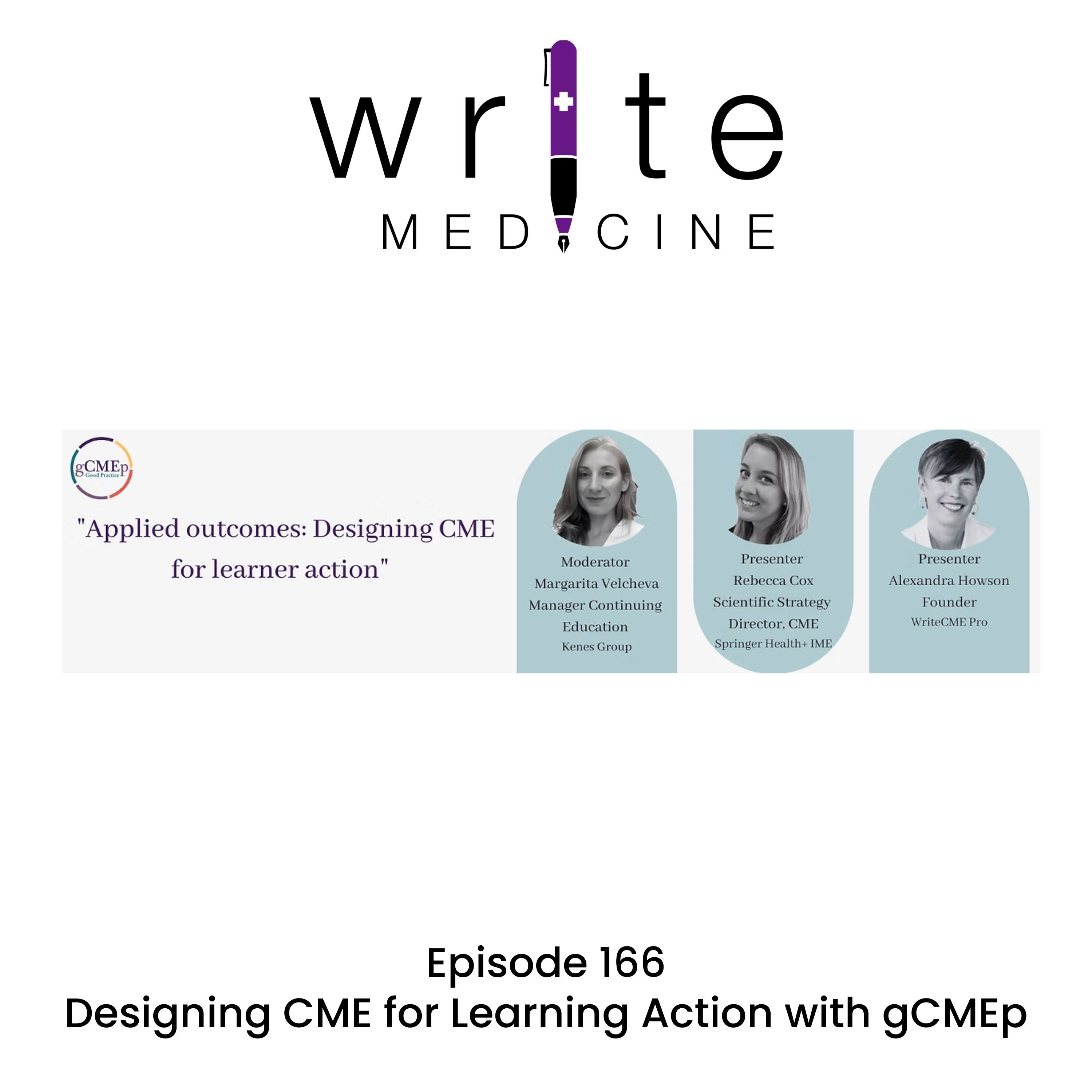
Applied Outcomes: Designing CME for Learner Action
Feb 18, 2026
27m 38s
The CME Writing Skills No One Teaches—but Every Writer Needs
Dec 3, 2025
8m 54s
Social Links & Contact
Official channels & resources
Official Website
Login
RSS Feed
Login
| Date | Episode | Topics | Guests | Brands | Places | Keywords | Sponsor | Length | |
|---|---|---|---|---|---|---|---|---|---|
| 5/29/26 | midlife experienceswomen's retreats+3 | Marybeth Donahoe | Rewild Your Soul RetreatsMB The Yogi+2 | PeruMexico | retreatmidlife+6 | Rewrite Your Power RetreatREWRITERETREAT | 19m 12s | ||
| 5/27/26 | disconnectionbody wisdom+4 | Marybeth Donahoe | Rewild Your Soul RetreatsMB The Yogi+1 | Mexico | retreatsyoga+5 | — | 15m 45s | ||
| 2/25/26 | AI in CMEmedical writing+3 | — | MedComms Freelancing BarometerWrite Questions That Do Their Job: Pre/Post Questions for CME Tests and Outcomes Reporting | — | AI workflowCME+5 | — | 8m 26s | ||
| 2/18/26 | learning objectivesCME design+3 | — | Good CME Practice GroupBloom’s taxonomy+1 | — | CMElearning objectives+3 | — | 27m 38s | ||
| 12/3/25 | CME writingprofessional development+4 | — | WriteCME ProWhy Retreats Work: Disconnection, Body Wisdom, and the Science of Letting Go | — | CME writerswriting skills+5 | — | 8m 54s | ||
| 11/26/25 | CME writingcreativity+3 | — | 12 Days of GivingWhy Retreats Work: Disconnection, Body Wisdom, and the Science of Letting Go | — | CME writingburnout+3 | — | 4m 38s | ||
| 11/19/25 | CME writingcareer pivot+4 | Sarah Jabeen MD | Why Retreats Work: Disconnection, Body Wisdom, and the Science of Letti | — | CME writercareer transition+5 | — | 39m 42s | ||
| 11/12/25 | freelance writingCME writing+3 | Addie Nagy | WriteCME ProThe Creative Professional's Guide to Money | — | freelanceCME+4 | — | 34m 19s | ||
| 11/5/25 | contract negotiationfreelance medical writing+4 | Brionna Ned | The Lawless LawyerLinkedIn+3 | — | contract confidencefreelance writing+6 | — | 31m 33s | ||
| 10/29/25 | educational designneeds assessment+4 | — | LinkedInPodtrac+1 | — | needs assessmenteducational design+5 | — | 13m 41s | ||
Want analysis for the episodes below?Free for Pro Submit a request, we'll have your selected episodes analyzed within an hour. Free, at no cost to you, for Pro users. | |||||||||
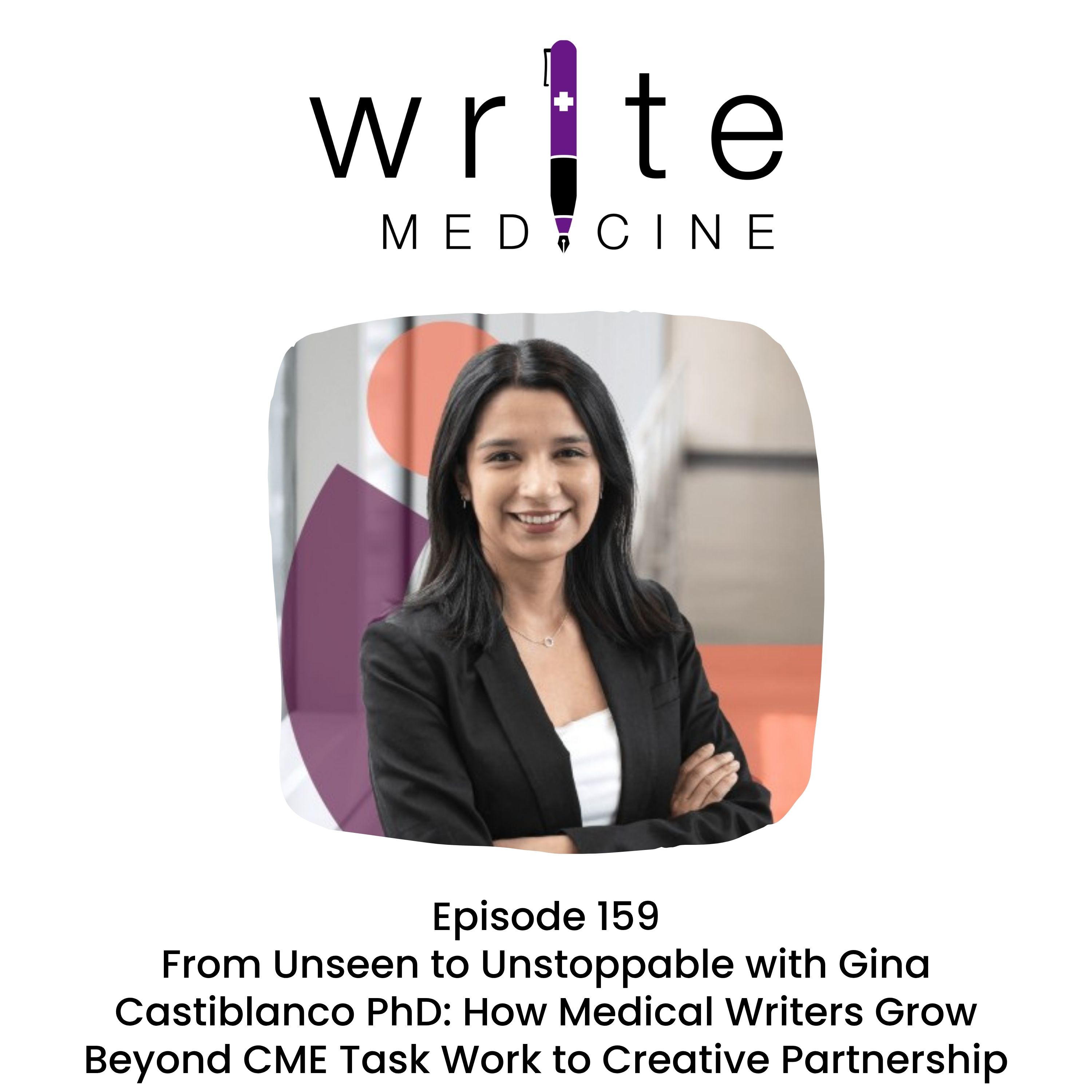
| 10/22/25 | CME writingprofessional visibility+3 | Gina Castiblanco PhD | — | — | CME writersinvisibility+5 | — | 40m 13s | ||
| 10/15/25 | CME writingfreelance medical writing+3 | — | WriteCME ProWrite Medicine Mentor+2 | — | CME writingfreelance writing+3 | — | 23m 10s | ||
| 10/8/25 |  From Needs Assessments to Narrative Impact: Positioning Yourself for CME Content Work | Are you ready to move beyond writing needs assessments and step into the creative, story-driven side of CME—without losing the clients or confidence you’ve already built?Many CME writers start with needs assessments. They’re structured, strategic, and an excellent way to learn the landscape. But what happens when you feel ready for more? When you want to create content that sparks learning, integrates clinical insight, and allows your creativity to shine? In this hot seat coaching episode, we meet Zsuzsa Csik, an anesthesiologist and critical care physician turned CME writer, who’s navigating that exact transition—and learning how to position herself for content work while building a sustainable freelance business.By listening, you’ll discover:How to strategically signal to clients that you’re ready for content creation projects.Practical ways to use your clinical or scientific background as a bridge, not a barrier, to new opportunities.Simple positioning tactics to align your current work with your long-term professional goals.Press play now to learn how to move from analysis to creation, and start shaping the CME writing career you really want.Mentioned in this episode:Fall Back to School SaleWe're running a back-to-school sale September 2 through 12. Standalone CME writing toolkits, business kits, and quarterly WriteCME Pro membership — all at the best pricing we've offered this year. Everything's at www.alexhowson.com. Link's in the show notes.This podcast uses the following third-party services for analysis: Podtrac - https://analytics.podtrac.com/privacy-policy-gdrp | — | ||||||
| 10/1/25 |  Expand Your CME Medical Writing Skills: Dual-Audience Strategies for Patient and Clinician Education | How do you take one complex medical concept and make it clear, accurate, and actionable for both clinicians and patients, without losing credibility?If you’re a CME writer, you know the challenge of translating science into education that actually sticks. But as more CME projects tether clinician education with patient-facing components, the real test is flexing your craft to serve two very different audiences at once. Get this right, and you not only improve learning, you expand your professional scope and impact.In this episode, you’ll discover:How to apply practical frameworks to dual-audience writing.Structural techniques that make content engaging, empathetic, and accessible.A simple 3-sentence exercise to sharpen clarity for patients and precision for clinicians—anytime, anywhere.🎧 Tune in now and learn how to expand your CME writing craft into dual-audience education with one portable tool you can start using today.ResourcesResources to support plain language, readability, and accessibility. https://readable.com/readability/Cognitive accessibilityThe Patient Education Materials Assessment Tool (PEMAT) Informed consent navigator toolPlain Language SummariesPlain Language Checklist for Health Professionals Plain language in biobank consent Plain Language AssociationCognitive accessibilityInformed consent navigator toolEpisodes MentionedEP31: Cultivating a Visual Mindset with Karen Roy and Bhaval ShahEP 41: Nurture Connection-Tell them a Story with Ben RiggsEP109: Crafting Inclusive and Accessible Medical Content with Virginia ChachatiPractice: Explain one complex idea in three sentences, twice—once for patients, once for clinicians.Take one complex concept: SGLT2 inhibitors reduce heart failure hospitalizations.For patients:What it is: “These medicines help your kidneys release extra sugar, which also helps your heart.”Why it matters: “That can mean fewer breathless days and fewer hospital stays.”What to do next: “Ask your doctor if one of these medicines could work for you, and share any kidney issues you’ve had.”For clinicians:Mechanism and trial anchor in one sentence.Link to the guideline.Patient selection + monitoring.Here’s why this exercise matters: most adults in the U.S. read at about an 8th grade level, and nearly 1 in 5 at or below 5th grade. When we condense a complex medical concept into three short sentences—plain, clear, active—we’re not “dumbing down.” We’re writing accessibly, building trust, and giving patients a fair chance to participate in their care.This 3-sentence rule is your portable tool for making health literacy visible in practice. And the bonus? It sharpens your clinician writing too—forcing clarity, precision, and focus on what truly matters.Mentioned in this episode:Write Medicine MentorWrite Medicine Mentor is your private companion podcast designed exclusively for medical writers who want deeper support as they grow in continuing medical education (CME). Each month, you'll receive exclusive content from me to support your business and income growth as well as templates/checklists/swipe files you can use and apply to client projects. In addition to immediate access to a CME writing starter pack, each month you’ll get: * A bonus episode that takes you behind the mic for advanced insights into the craft and business of CME writing. * A ready-to-use template, checklist, or swipe file to make your projects smoother and more effective. * An Ask Me Anything episode, where Alexandra Howson, PhD, answers your questions about writing, clients, CME strategy, and sustainable freelance life. Think of this podcast as your personal, earbud-friendly mentor—practical, honest, and always focused on helping you sharpen your skills, expand your opportunities, and thrive as a CME writer.Fall Back to School SaleWe're running a back-to-school sale September 2 through 12. Standalone CME writing toolkits, business kits, and quarterly WriteCME Pro membership — all at the best pricing we've offered this year. Everything's at www.alexhowson.com. Link's in the show notes.This podcast uses the following third-party services for analysis: Podtrac - https://analytics.podtrac.com/privacy-policy-gdrp | — | ||||||
| 9/24/25 |  How to Overcome Academic Trauma and Build Confidence as a Freelance Medical Writer | What if leaving academia—or another tightly defined professional path—felt less like failure and more like freedom?For many academics, clinicians, and researchers, stepping into freelance medical writing isn’t just a career change—it’s a profound identity shift. Too often, this transition carries grief, shame, or the lingering sense of “not enough.” In this episode, we explore how those feelings show up, why they matter, and how to reframe them as fuel for your writing career.By listening, you’ll discover:Why the transition from academia or clinical practice can feel like trauma—and how to reframe it as strength.Four entrepreneurial habits that can help you thrive as a freelance medical writer while avoiding their shadow sides.Simple, practical practices—like free writing and mindful self-awareness—that help you claim permission, rebuild confidence, and cultivate a sustainable business mindset.Press play now to learn how to navigate identity loss, tap into your natural strengths, and take small steps toward building a medical writing business that feels truly your own.Mentioned in this episode:Fall Back to School SaleWe're running a back-to-school sale September 2 through 12. Standalone CME writing toolkits, business kits, and quarterly WriteCME Pro membership — all at the best pricing we've offered this year. Everything's at www.alexhowson.com. Link's in the show notes.Write Medicine MentorWrite Medicine Mentor is your private companion podcast designed exclusively for medical writers who want deeper support as they grow in continuing medical education (CME). Each month, you'll receive exclusive content from me to support your business and income growth as well as templates/checklists/swipe files you can use and apply to client projects. In addition to immediate access to a CME writing starter pack, each month you’ll get: * A bonus episode that takes you behind the mic for advanced insights into the craft and business of CME writing. * A ready-to-use template, checklist, or swipe file to make your projects smoother and more effective. * An Ask Me Anything episode, where Alexandra Howson, PhD, answers your questions about writing, clients, CME strategy, and sustainable freelance life. Think of this podcast as your personal, earbud-friendly mentor—practical, honest, and always focused on helping you sharpen your skills, expand your opportunities, and thrive as a CME writer.This podcast uses the following third-party services for analysis: Podtrac - https://analytics.podtrac.com/privacy-policy-gdrp | — | ||||||
| 9/17/25 |  Designing CME for Behavior Change: Sarah Atwood on Learning Science in Action | What if the CME you design could do more than deliver knowledge—what if it could actually change clinician behavior and improve patient care?As a CME writer or education professional, you’ve likely felt the frustration of producing content that looks strong on paper but doesn’t translate into meaningful practice change. This episode explores how learning science, human-centered design, and patient co-creation can help you bridge the gap between information and impact.By listening, you will discover:Learning science principles, like Mayer’s multimedia principles, that make education stick.The difference between learning change and behavior change, and why both matter in CME.How aligning clinician and patient education fosters shared decision-making and better healthcare outcomes.Press play now to learn practical strategies you can use to design CME that transforms knowledge into real-world change.Mentioned in this episode:Fall Back to School SaleWe're running a back-to-school sale September 2 through 12. Standalone CME writing toolkits, business kits, and quarterly WriteCME Pro membership — all at the best pricing we've offered this year. Everything's at www.alexhowson.com. Link's in the show notes.This podcast uses the following third-party services for analysis: Podtrac - https://analytics.podtrac.com/privacy-policy-gdrp | — | ||||||
| 9/11/25 |  Craft to Confidence: What's Coming Up in Season 11 | What does it take to move from order-taker to trusted partner in CME writing? That’s the single question driving this new season of Write Medicine. In this 15-minute teaser episode, Alex introduces the season theme—Craft to Confidence: A CME Writer’s Season of Growth—and gives you a preview of what’s ahead. You’ll hear how guest interviews and solo tactical episodes will work together to help you build your skills, expand your visibility, and strengthen your confidence as a CME writer. Whether you’re transitioning from academia, clinical practice, or another writing specialty, this season will give you both the craft tools and the career clarity to thrive in continuing medical education. Episodes to Look Forward To Designing for learning with Sarah Atwood Hot Seat Coaching on attracting content projects and integrating academic skills into CME Leveraging Milkshake Moments with Michelle Skidmore Identity, trauma, and resilience with Hope Lafferty Solo walk-throughs on interviewing SMEs, turning education gaps and needs into activity agendas, publishing manuscripts, and more | — | ||||||
| 7/2/25 | 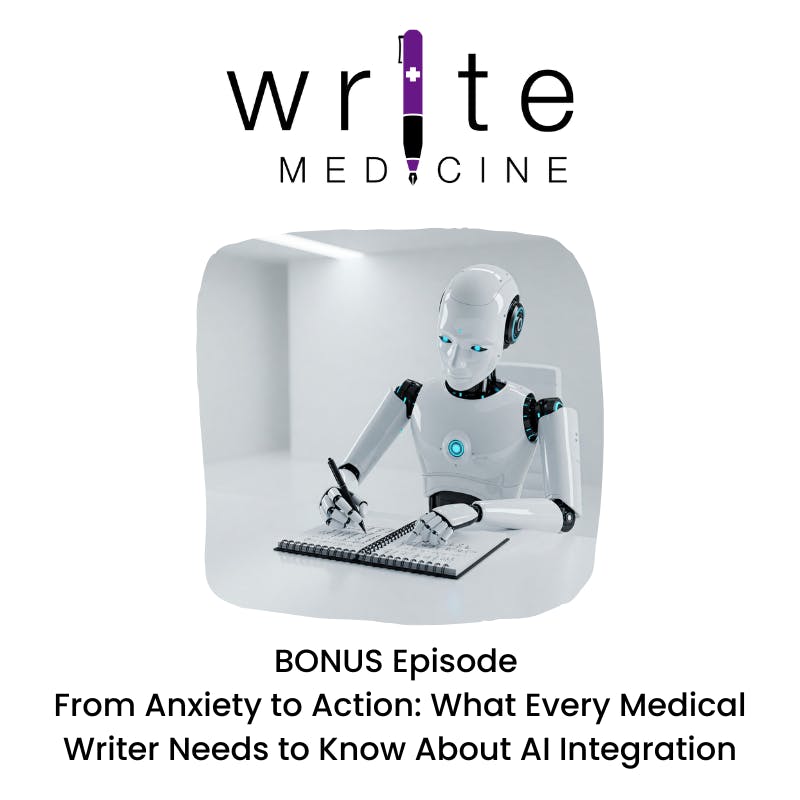 From Anxiety to Action: What Every Medical Writer Needs to Know About AI Integration | If you’re a medical writer today, you're no stranger to tight deadlines, dense source material, and the pressure to deliver educational content that is both engaging and evidence-based. These demands are particularly acute in the world of continuing medical education (CME), where accuracy, clarity, and relevance matter more than ever. As the medical writing landscape evolves, so do the tools that support us. Among the most promising of these is MACg, a generative AI-powered assistant that helps medical writers streamline document analysis, content creation, and research. For writers working in CME or adjacent fields, MACg offers more than convenience—it offers a meaningful shift in how we work. Tune in to learn how I’m using MACg as a collaborative partner in my workflow rather than a replacement for my creative process. Resources Grab your fee trial of MACg Summer Script Camp | — | ||||||
| 6/26/25 |  From Barbershops to Boardrooms: Pioneering CME in Unexpected Spaces | How do you design CME that reaches the communities most affected by HIV—and not just the clinicians who already have access? If you're a CME professional grappling with how to address layered issues like stigma, housing insecurity, or racial disparities, you’re not alone. This episode dives into what it takes to create truly inclusive education—especially when traditional strategies fall short. Whether you’re designing education for clinicians or collaborating with community partners, you’ll find actionable ideas to bring your programming closer to the ground. Specifically, you'll learn: How to build authentic partnerships with community leaders who can serve as trusted bridges between healthcare providers and hard-to-reach populations. The essential infrastructure you need to establish before launching community-based programs, from setting up referral networks that ensure patients don't fall through cracks after screening to tracking both clinical outcomes and demographic data that funders require. A proven framework for developing educational content with cultural humility and how to work with expert faculty who understand nuanced communication challenges. Connect with Dean 🌐 https://DKBMED.COM Resources Signup for Summer Script Camp Get TextExpander | — | ||||||
| 6/18/25 |  From Scattered to Specific: How a Niche Can Save Your Sanity (and Your Business) | Are you a freelance CME writer juggling too many project types and wondering if it’s time to finally “niche down”? In the world of continuing medical education (CME), clarity and focus aren’t just nice to have—they’re essential for sustainable business growth. If you’re feeling stretched thin, jumping between clients and therapeutic areas, this episode explores how finding a niche can reduce overwhelm, streamline your process, and even attract the kinds of clients who value what you do most. Here’s what you’ll gain from this episode: A practical definition of what a niche is—and what it isn’t—so you can stop second-guessing yourself. Examples of how different niches can emerge from your background, preferences, or even your favorite types of client relationships. A step-by-step approach to experimenting your way into a niche, without the pressure to get it “perfect” from the start. Tune in now to learn how niching can simplify your business, supercharge your marketing, and help you find work that truly energizes you. LINKS Grab the Niche Discovery Checklist Signup for Summer Script Camp If you are looking for ongoing CME content strategy tips, tools, and tactics, subscribe to the Write Medicine Insider newsletter. Get TextExpander | — | ||||||
| 5/28/25 | 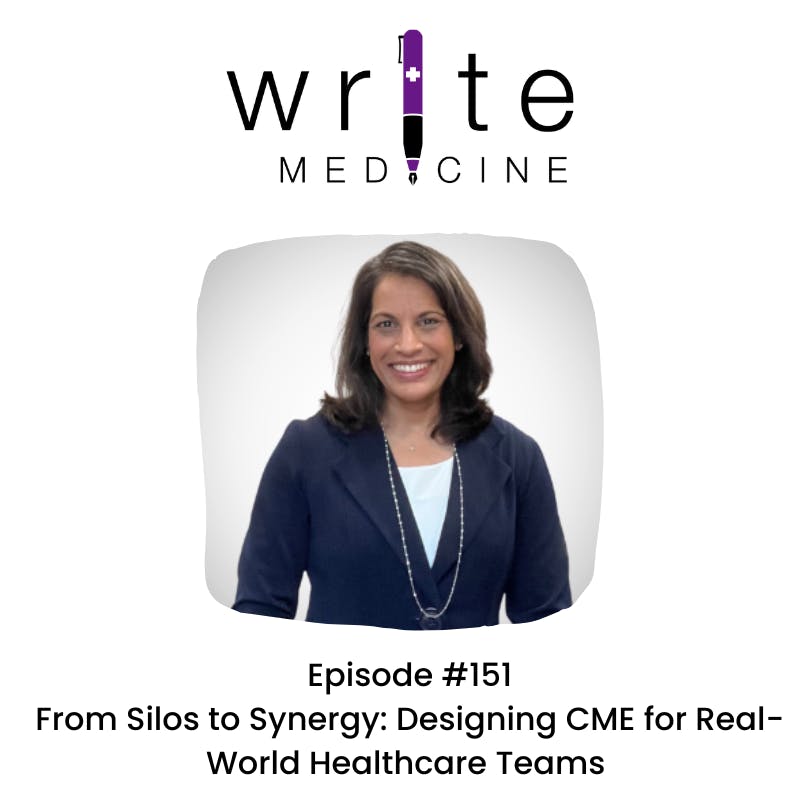 From Silos to Synergy: Designing CME for Real-World Healthcare Teams with Dr. Tina Patel Gunaldo | How can continuing education break down professional silos and foster real collaboration among healthcare teams? If you create CME/CE content, you’ve likely encountered the challenge of writing for “teams” that still operate in silos. This episode with interprofessional education expert Dr. Tina Patel Gunaldo, Founder, Collaborate for Health, reveals why just using the term “team-based care” isn’t enough—and how content creators can more accurately reflect the evolving nature of healthcare collaboration. As patient-centered models expand and asynchronous care becomes the norm, CME professionals need a deeper understanding of roles, language, and practice contexts to design impactful education. Discover the critical differences between interprofessional, interdisciplinary, and multidisciplinary practice—and why it matters for CME writing. Learn how to structure education that empowers team collaboration and respects the unique contributions of each discipline. Understand the growing role of patients, technology, and asynchronous communication in shaping interprofessional collaboration today. And if you’re unsure when to use “interprofessional” vs “multidisciplinary”? We’ve got you covered. We created a one-page Quick Reference Guide to help you use team-based language precisely and avoid common traps in CME writing. It’s perfect for writers, educators, and reviewers who want to level up their clarity. Grab the download in the show notes and keep it handy as you create your next piece of content. Tune in now to learn how you can write CME content that reflects real-world collaboration—and elevates both learner experience and patient care outcomes. Connect with Tina Website: https://collaborateforhealth.com LinkedIn Interprofessional Terms Quick Reference Guide | — | ||||||
| 5/21/25 | 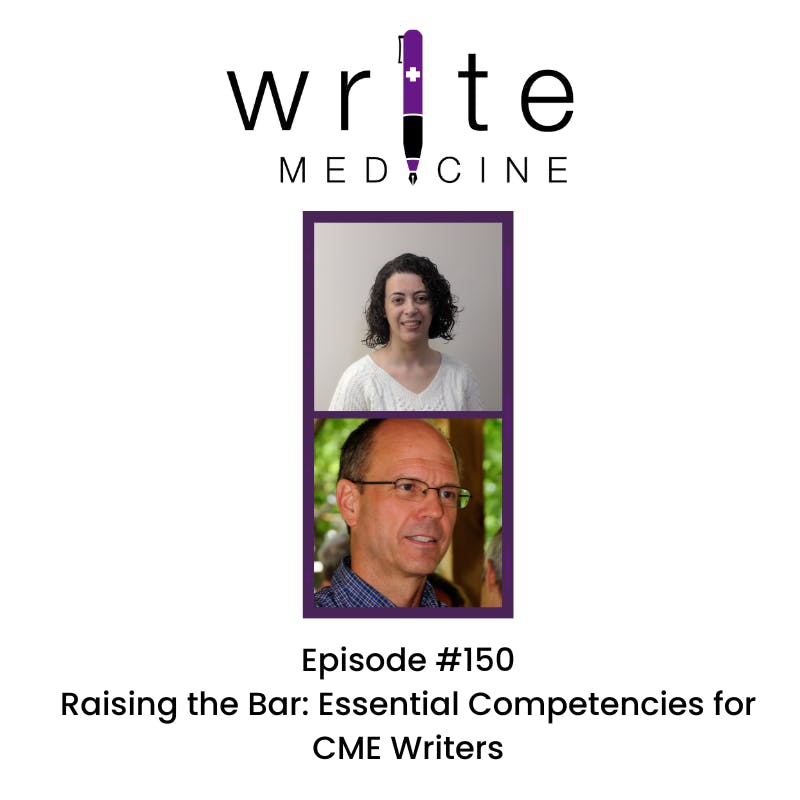 Raising the Bar: Essential Competencies for CME Writers with Haifa Kassis and Don Harting | Are you unsure which skills you need to thrive as a CME writer (or need for your writers)—or how to prove your value in an increasingly competitive field? Many medical writers stumble into CME with strong writing chops but little clarity about what the role truly demands. At the same time, education providers struggle to find writers who are not just capable—but competent. This episode bridges that gap. Don Harting and Haifa Kassis join us to unpack the results of their groundbreaking Delphi study on CME writing competencies, revealing what hiring managers really want and how you can grow your career strategically. In this episode, you’ll learn: The four core competencies every CME writer should master today Which deliverables are in high demand—and which are vanishing How this competency model can support onboarding, training, and upskilling. Press play to learn how to align your writing skills with what the CME industry actually needs—so you can stand out, get hired, and grow with confidence. Resources Kassis, H., & Harting, D. (2024). Medical Writing for Continuing Education in the Health Professions: A Competency Model. Journal of CME, 13(1). https://doi.org/10.1080/28338073.2024.2422709 CME Writers’ Toolbox Delphi Panelists WriteCME Pro: Accelerate your freelance CME writing business growth Timestamps 00:00 Introduction to CME Writing Challenges 00:20 Meet the Researchers: Haifa Kassis and Don Harting 01:19 The Competency Model: Key Findings 02:40 Expert Consensus and Methodology 06:16 Surprising Insights and Real-World Challenges 11:15 Practical Applications and Future Directions 24:35 Emerging Competencies and Industry Trends 28:47 Conclusion and Contact Information | — | ||||||
| 5/14/25 |  From Diagnosis to Advocacy: What Rare Disease Teaches Us About CME | How do we create continuing education that prepares clinicians to deliver life-changing diagnoses with both precision and compassion?In this episode, we explore what happens when the scientist’s role as a communicator intersects with the lived experience of parenting a child with a rare disease. I'm talking with Dr. Jennifer Brown, a geneticist who recently published a memoir, When the Baby is not OK: Hopes and Genes, based on her experience of parenting children diagnosed with PKU through newborn screening. For CME professionals, this episode is a call to rethink how we center narrative, ethics, and emotional intelligence in our content, especially when evidence alone isn’t enough to support meaningful patient care. Learn how outdated narratives and clinical language can alienate patients—and how reframing them can build trust and support retention in care. Hear why integrating lived experience into CME is essential for designing education that resonates beyond the exam room. Discover how personal storytelling, ethical reflection, and patient advocacy can enrich data-driven CME writing. ▶️ Press play to discover how Dr. Jennifer Brown’s dual lens—as a geneticist and parent—can sharpen your skills as a more empathetic, informed CME professional. Connect with Jennifer LinkedIn Goodreads Author Site Bluesky YouTube | — | ||||||
| 4/30/25 | 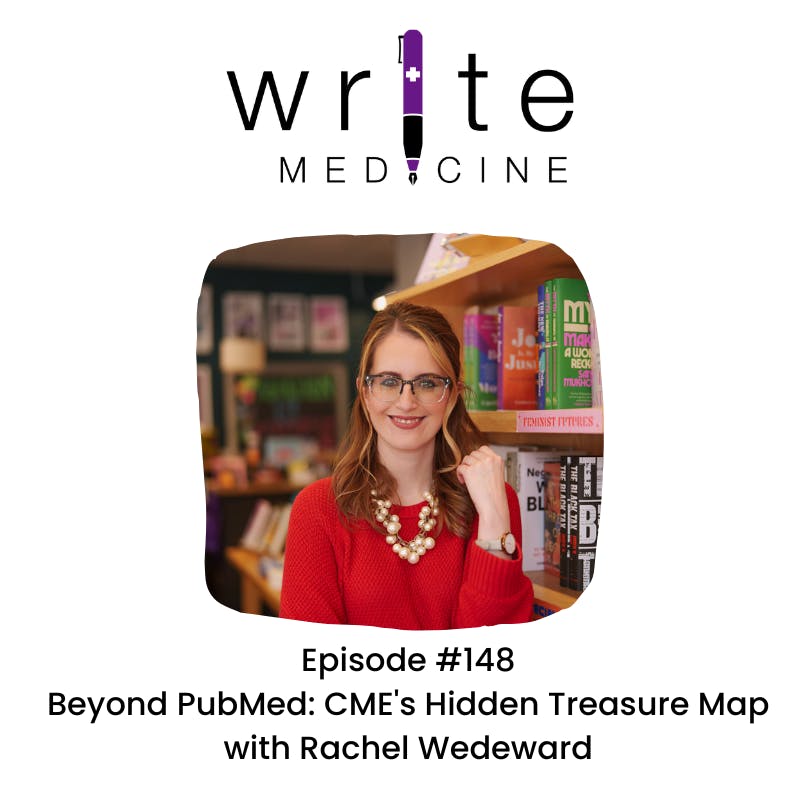 Beyond PubMed: CME's Hidden Treasure Map | CME professionals, medical writers, educators, and researchers - what would you do if PubMed suddenly became less accessible? You depend on this critical resource daily to find evidence-based information that powers your work. But recent funding uncertainties at the NIH have raised questions about its future. You need consistent, reliable access to quality biomedical research to meet deadlines and maintain credibility, but navigating alternatives can feel overwhelming. Where would you even begin if your go-to resource is compromised? Today's episode is your insurance policy. My conversation with medical librarian Rachel Wedeward MLIS, AHIP reveals not only why PubMed matters, but also provides you with practical alternatives, including a downloadable resource sheet, and evaluation strategies to ensure you'll never be left without the research you need - no matter what happens. In this episode, you'll discover: The remarkable infrastructure behind PubMed's indexing system that makes it an indispensable tool for organizing and accessing biomedical research A comprehensive overview of complementary resources, including European PubMed Central and specialized databases that can enhance your research approach Practical wisdom for evaluating evidence quality Listen now to expand your research toolkit with expert knowledge that will help you confidently navigate the evolving landscape of medical information resources. Connect with Rachel Website LinkedIn 📚 Resources PubMed The essential biomedical database maintained by the U.S. National Library of Medicine. A critical starting point for CME writers and medical educators to access peer-reviewed research. European PubMed Central A free database of biomedical and life sciences research literature from Europe. A strong alternative to PubMed. Grey Literature Sources Sometimes the best insights aren’t found in journals. Examples of trusted grey literature repositories include: Kaiser Family Foundation Robert Wood Johnson Foundation Find guides on Rachel's website Alex's Sharable Evidence Bank (>70 sources) | — | ||||||
| 3/12/25 |  Building a Thriving CME Community: Why Networking Isn’t Enough for Career Growth | Do you ever feel like you're navigating your career in CME alone, unsure of where you fit in or how to grow without burning out? Many CME professionals work independently or remotely, which can be both rewarding and isolating. Beyond professional networks, building a true community can provide the support, engagement, and inspiration needed to thrive in this field. In this episode, we explore why community matters in CME, how it enhances career growth and well-being, and practical steps you can take to create meaningful connections. Discover how a strong professional community can boost your career and well-being. Understand the key elements that define a thriving professional community. Learn practical ways to engage in and build a community that supports your growth in CME. Listen now to uncover the power of community in CME and learn how to cultivate meaningful professional connections that will support your long-term success. Timestamps 00:00 Introduction: Navigating the CME Field Alone 00:48 The Importance of Community in CME 01:50 Defining Community and Its Elements 02:38 Personal Experiences of Belonging 03:50 Shared Values and Mutual Support in CME 05:08 Networks vs. Communities 06:29 Benefits of Community for CME Professionals 10:19 Practical Steps to Engage in Community 11:01 Conclusion and Next Steps Next WriteCME Accelerator Cohort is May, 2025. Join the Waitlist. | — | ||||||
Showing 25 of 156
Pitch Fit is a Pro feature
See how bookable this show is for guests, which brands already advertise, the per-episode ad value, and the best-fit guest and sponsor profile. The numbers are blurred on the free plan.
How readily this show books outside guests like you.
How proven this show is for host-read sponsorships.
For Guests
ProFor Advertisers
ProUpgrade to Pro to unlock guest cadence, sponsor categories, fit scores, and per-episode ad value for this show.
Chart history for Write Medicine
Peaked at #26 in MY, currently #26 in MY.
| Market | Genre | Peak | Current | Trend |
|---|---|---|---|---|
| MY | — | #26 | #26 | — |
| AR | — | #71 | #71 | — |
| Finland | — | #87 | #87 | — |
| NG | — | #187 | #187 | — |
Chart Positions
4 placements across 4 markets.
Chart Positions
4 placements across 4 markets.