AJNR Podcast
The American Journal of Neuroradiology (AJNR) is a scholarly, peer-reviewed journal that publishes Original Research and Review Articles relevant to the diagnostic, interventional, and functional imaging of the brain, he...
Insights from recent episode analysis
Audience Interest
Podcast Focus
Publishing Consistency
Platform Reach
Insights are generated by CastFox AI using publicly available data, episode content, and proprietary models.
Total monthly reach
Based on 1 signal.
Built from
By chart position
- 🇧🇷Brazil · Medicine#1421K to 113K
- 🇦🇷AR · Medicine#72307 to 1.6K
- 🇵🇱PL · Medicine#19334 to 178
- 🇨🇿CZ · Medicine#13833 to 176
- 🇨🇱CL · Medicine#19915 to 82
- Per-Episode Audience
Est. listeners per new episode within ~30 days
22K to 115K🎙 Weekly cadence·380 episodes·Last published 5d ago - Monthly Reach
Unique listeners across all episodes (30 days)
43K to 230K🇺🇸71%🇧🇷28% - Active Followers
Loyal subscribers who consistently listen
24K to 126K
Market Insights
Platform Distribution
Reach across major podcast platforms, updated hourly
Total Followers
—
Total Plays
—
Total Reviews
—
* Data sourced directly from platform APIs and aggregated hourly across all major podcast directories.
| Date | Episode | Description | Length | ||||||
|---|---|---|---|---|---|---|---|---|---|
| 10/22/26 | 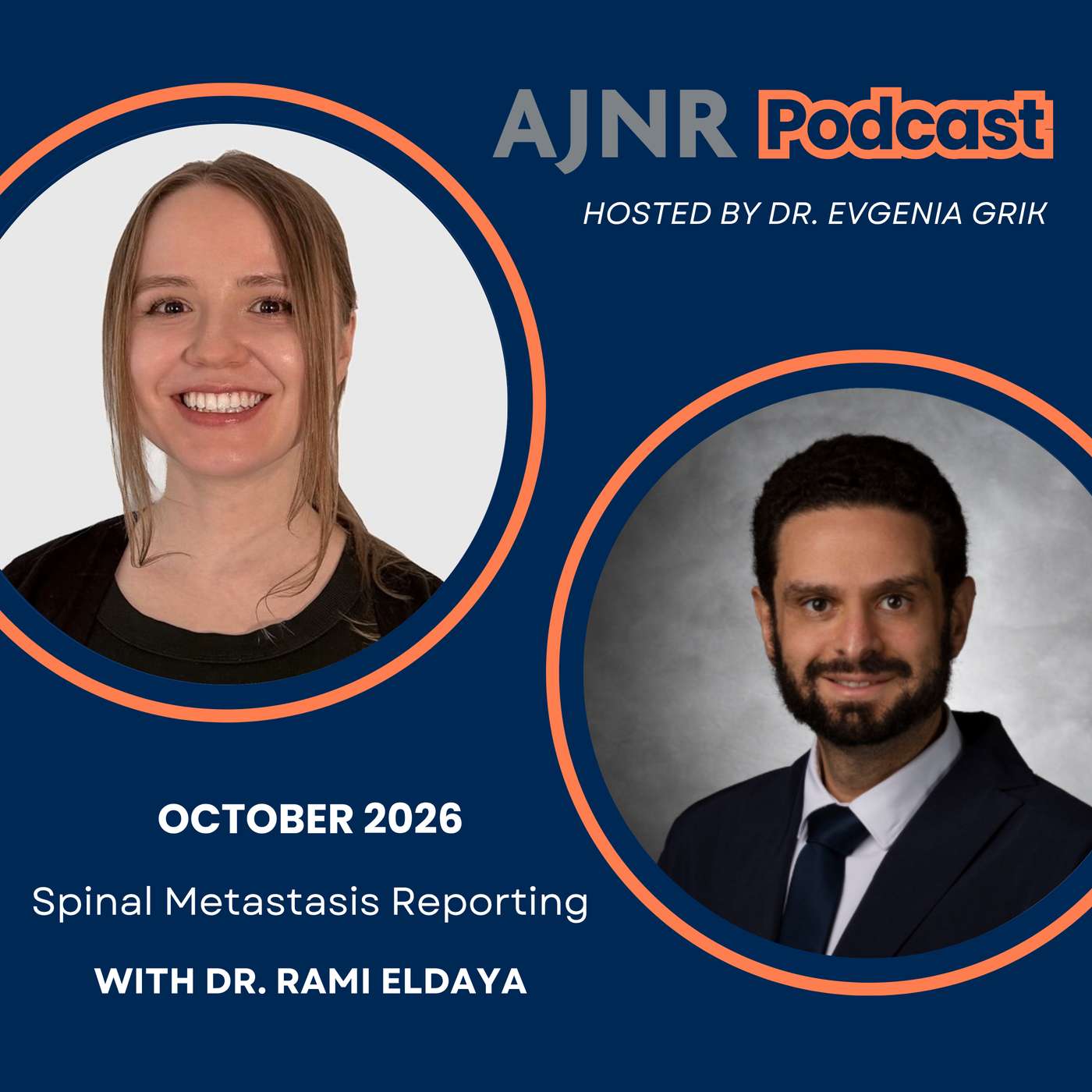 Spinal Metastasis Reporting, feat. Rami Eldaya | In this AJNR author interview episode, Dr. Evgenia Grik speaks with Dr. Rami Eldaya about his recently published ASSR white paper on reporting of spinal metastases with a focus on the contents of the proposed structured system and rationale behind its creation. We discuss what neurosurgeons and radiation oncologists need to know from radiology reports for spinal metastatic disease and walk through an example case.Featured Article: Spinal Metastasis Reporting: Evidence-Based Recommendation on Behalf of the American Society of Spine Radiology Education and Standards Committee | 30m 28s | ||||||
| 10/6/26 | 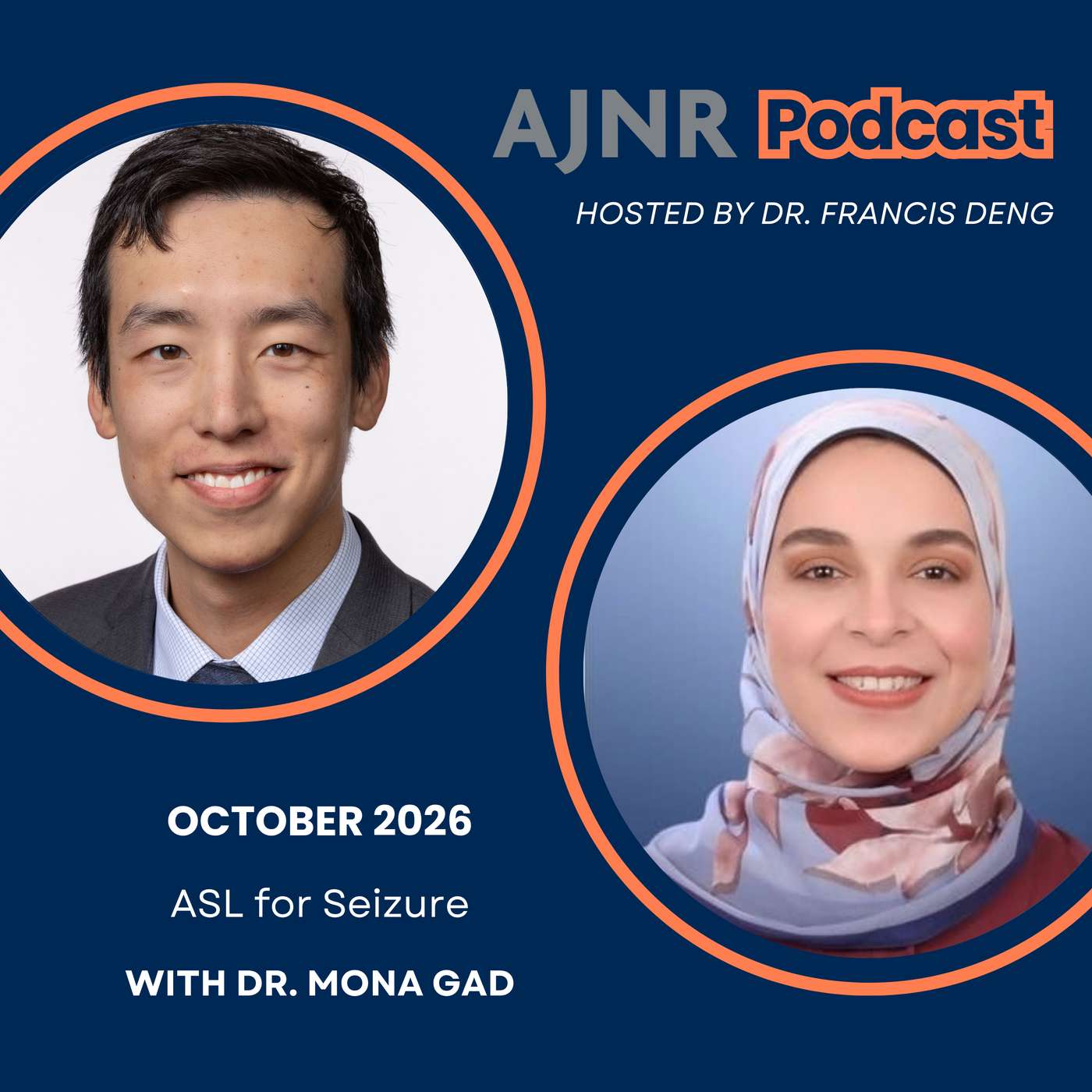 ASL for seizure, feat. Mona Gad | In this AJNR Author Interview episode, Dr. Francis Deng speaks with Dr. Mona Gad about arterial spin labeling in code-stroke patients who actually had seizures. They discuss ASL’s sensitivity, perfusion patterns, concordance with EEG and structural MRI, and cases that illustrate how ASL may complement DWI, FLAIR, and assessment in acute care.Featured article: Diagnostic Utility of Arterial Spin-Labeling MRI in Straight to MRI Code Stroke Patients for Seizure Detection: A Comparison with FLAIR, DWI, and EEG | 17m 36s | ||||||
| 9/22/26 |  Seeing the Difference: Imaging Insights into Cerebral Proliferative Angiopathy | In this podcast episode, Dr. Vilanilam discusses “Cerebral Proliferative Angiopathy: Imaging Spectrum and Diagnostic Insights,” by first author Rai.Cerebral proliferative angiopathy is a rare cerebrovascular malformation that can mimic an arteriovenous malformation but has a fundamentally different vascular architecture and underlying physiology. This comprehensive review of 75 studies and 153 patients highlights its characteristic multimodal imaging features, including a diffuse vascular network intermingled with normal brain, absence of a compact nidus or dominant arterial feeders, frequent transdural recruitment, relatively limited early venous drainage, and evidence of chronic hypoperfusion.Dr. Vilanilam reviews the key CT, MRI, perfusion, and angiographic findings that help distinguish cerebral proliferative angiopathy from conventional arteriovenous malformations and other vascular mimics. Recognizing this distinction is critical because normal functioning brain is incorporated within the abnormal vascular network, substantially influencing treatment decisions and emphasizing the importance of accurate imaging diagnosis.Featured Article: Cerebral Proliferative Angiopathy: Imaging Spectrum and Diagnostic Insights | 13m 06s | ||||||
| 8/18/26 | 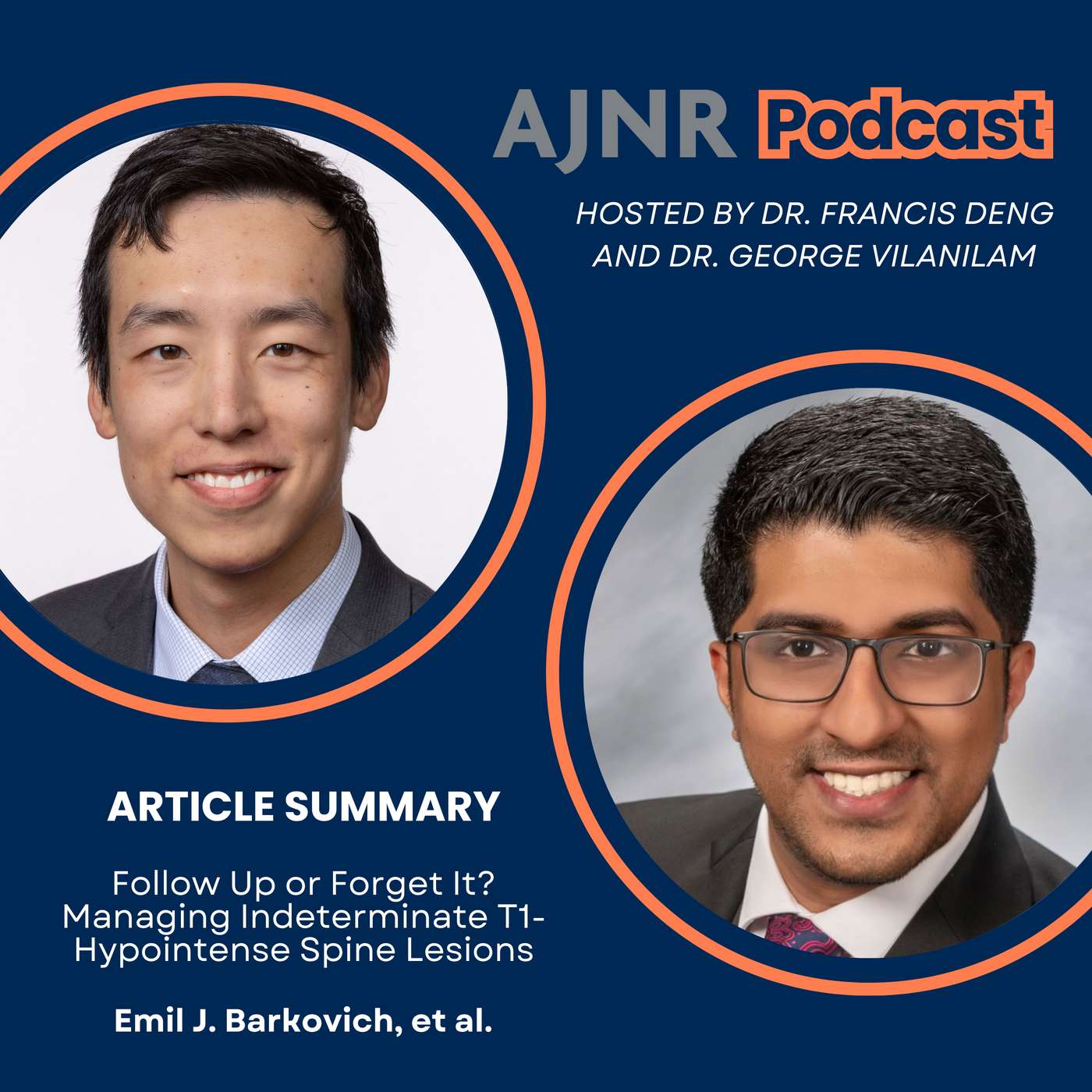 Follow-Up or Forget It? Managing Indeterminate T1-Hypointense Spine Lesions | In this podcast episode, Dr. Vilanilam discusses "Indeterminate T1-Hypointense Spine Lesions: Prevalence of Malignancy in the Absence of Aggressive Imaging Features," by first author Barkovich. Indeterminate low-T1-signal vertebral lesions are commonly encountered on spine MRI, but deciding which lesions require additional imaging or follow-up can be challenging. This study examines the outcomes of 278 such lesions and finds an overall malignancy rate of only 2%, with all malignant lesions representing metastases in patients with known or concurrently diagnosed extraskeletal metastatic disease and no primary malignant bone tumors identified. Dr. Vilanilam reviews the imaging features of these lesions, the importance of incorporating the patient's oncologic history into risk assessment, and the implications for follow-up recommendations. The findings suggest that short-interval imaging may be appropriate when there is meaningful concern for metastatic disease, while follow-up may not be necessary for low-risk patients without aggressive imaging features or extraskeletal metastatic disease. | 10m 11s | ||||||
| 8/12/26 |  Traumatic Hemorrhage Expansion feat. Caline Azzi | In this AJNR Podcast author interview, Dr. Francis Deng speaks with Dr. Caline Azzi about recent studies identifying imaging and clinical predictors of expansion in traumatic subdural, subarachnoid, and intraparenchymal hemorrhage. Hemorrhage size, multicompartment injury, coagulopathy, mass effect, and neurologic status may help determine which patients truly need routine repeat CT. Related Articles: Risk Stratification for Traumatic SAH Enlargement and Surgical Intervention: Guides to Follow-Up Imaging in Patients with Trauma Predictive Factors for Traumatic Intraparenchymal Hemorrhage Expansion and Its Clinical Outcomes Improving the management of acute subdural hematomas; identifying characteristics associated with acute subdural hematoma size and expansion | 15m 56s | ||||||
| 7/2/26 |  Seeing It First: How Recognizing Sinking Flap Syndrome Can Change Patient Outcomes | In this AJNR Article Summary, Dr. George Vilanilam discusses the article, "Sinking Flap Syndrome: Risk Factors, Outcomes, and the Role of Neuroradiology in Cranioplasty Timing." Sinking flap syndrome is a common yet frequently underrecognized complication of decompressive craniectomy, with imaging findings often preceding clinical deterioration. Recognition and reporting of key features - including a markedly sunken flap, ventricular compression, and significant midline shift (8 mm or greater) were associated with a two-fold reduction in time to cranioplasty highlighting the important role neuroradiologists can play in expediting definitive treatment and improving patient care. | 11m 43s | ||||||
| 5/28/26 |  CTA Carotid Plaque-RADS | In this AJNR Article Summary, Dr. Francis Deng reviews CTA-based Carotid Plaque-RADS and its role beyond stenosis grading. He explains the key imaging features that define plaque vulnerability, then highlights two AJNR studies showing that the system is learnable, reproducible, and clinically meaningful for predicting future stroke risk, especially in patients with only mild or moderate carotid stenosis. Visit the website to read the related articles. Carotid Plaque-RADS: Inter- and Intrareader Agreement and Learning Curve Analysis in CTA CTA-Based Carotid Plaque-RADS Classification Improves Risk Stratification for Ischemic Cerebrovascular Events | 17m 33s | ||||||
| 4/14/26 |  Optimizing CSF-Venous Fistula Detection | In this AJNR Article Summary, Dr. George Vilanilam discusses the article, "Maximizing the Conspicuity of Cerebrospinal Fluid–Venous Fistulas on Computed Tomography Myelography: Assessment of Contrast Density and Timing Effects." Contrast density, not just timing, plays the dominant role in detecting CSF-venous fistulas, with higher subarachnoid contrast significantly improving diagnostic confidence. These findings support prioritizing contrast pooling strategies during CT myelography to enhance fistula detection in patients with spontaneous intracranial hypotension. | 9m 50s | ||||||
| 3/31/26 |  Traumatic SAH Risk Stratification | In this AJNR Article Summary, Dr. George Vilanilam discusses the article, "Risk Stratification for Traumatic Subarachnoid Hemorrhage Enlargement and Surgical Intervention: Guides to Follow-Up Imaging in Patients with Trauma." Not all traumatic subarachnoid hemorrhages behave the same - risk factors such as coagulopathy, concurrent intracranial hemorrhage, and low Glasgow Coma Scale scores predict hemorrhage progression and need for intervention. A risk-stratified imaging approach may reduce unnecessary repeat CT scans while focusing surveillance on patients most likely to deteriorate. | 8m 37s | ||||||
| 3/25/26 |  Poststroke Collaterals on MRI feat. Cynthia Greene | In this AJNR Author Interview, Dr. Francis Deng speaks with Dr. Cynthia Greene about her article, "Posttreatment Follow-Up MR Imaging Biomarkers of Collateral Status Are Associated with Short-Term Outcomes in Large-Vessel Acute Ischemic Stroke." In a retrospective study of follow-up MRI after anterior-circulation large-vessel occlusion stroke, a greater burden of FLAIR hyperintense vessels was associated with worse short-term neurologic outcomes, even among successfully reperfused patients, suggesting persistent FLAIR hyperintense vessels may mark ongoing perfusion abnormality or possible no-reflow physiology. | 14m 27s | ||||||
Want analysis for the episodes below?Free for Pro Submit a request, we'll have your selected episodes analyzed within an hour. Free, at no cost to you, for Pro users. | |||||||||
| 3/3/26 |  CTA for Strangulation feat. Jimmy Moon | In this AJNR Author Interview, Dr. Francis Deng speaks with Dr. Jimmy Moon about his article, "Use of CTA in Strangulation Evaluation". In a retrospective review, the yield of CTA neck for blunt cerebrovascular injury in patients who presented after strangulation was 1 in 138 (0.7%), suggesting the broad use of CTAs in this setting may be of low value. | 10m 44s | ||||||
| 2/19/26 |  Menière Disease Associated Vestibular Aqueduct Hypoplasia feat. Amy Juliano | In this AJNR Podcast Author Interview, Dr. Francis Deng and Dr. Amy Juliano discuss how CT can subtype Menière disease by assessing the vestibular aqueduct and adjacent bone. During normal childhood, the angular trajectory of the vestibular aqueduct progressively narrows; an angle greater than 120 degrees after age 12 indicates adult-persistent hypoplasia and thus the hypoplastic endolymphatic sac endotype rather than normal maturation. A retrolabyrinthine bone thickness of at least 1.2 mm serves as a practical surrogate for a mature vestibular aqueduct orientation, reliably excluding the hypoplastic endotype and identifying ears that do not belong to this high-risk subgroup. In contrast, in the degenerative endotype of Menière disease, retrolabyrinthine bone thickness is more variable and does not follow this simple threshold pattern, so CT features must be interpreted in a broader clinical and imaging context. Read the AJNR articles mentioned in this episode: "Postnatal Development of the Vestibular Aqueduct Trajectory on CT: Establishing Age-Specific Norms to Distinguish Normal from Arrested (Hypoplastic) Development" "Retrolabyrinthine Bone Thickness as a Radiologic Marker for the Hypoplastic Endotype in Menière Disease". | 29m 41s | ||||||
| 2/4/26 |  Post-Radiation Carotid Disease | In this AJNR Article Summary, Dr. George Vilanilam discusses the article, "Biphasic Progression of Radiation-Induced Carotid Stenosis: The Predictive Role of Low-Density Plaque". Low‑density carotid plaque on imaging may signal accelerated stenosis progression in post‑radiation patients, highlighting the need for earlier intervention and a shift toward evaluating plaque composition, not just degree of narrowing, to help prevent stroke in this high‑risk group. | 10m 08s | ||||||
| 1/27/26 |  CT Perfusion Timing feat. Amir Khadivi | In this AJNR Fellows' Journal Club article summary, Dr. Francis Deng and Dr. Amir Khadivi discuss the article by Proner et al., "Impact of Clinical and Radiologic Factors on CTP Timing in Acute Ischemic Stroke." They discuss the authors' findings that cardiac arrhythmias and older age are independent predictors of nondiagnostic CTP exams. Specifically, these factors often lead to the truncation of reference vessel time-attenuation curves that fail to reach equilibrium within a 45-second acquisition window. | 16m 07s | ||||||
| 1/7/26 |  Vertebral Artery Injury Grading | Dr. Francis Deng discusses the article by Vankawala et al. entitled "Evaluating the Role of Imaging Markers in Predicting Stroke Risk and Guiding Management after Vertebral Artery Injury: A Retrospective Study." The Biffl grading scale assess blunt cerebrovascular injury severity, but its prognostic validity for vertebral artery injuries with respect to stroke risk remains controversial. | 11m 21s | ||||||
| 12/19/25 |  AI intracranial aneurysm detection feat. Babatunde Akinpelu | In this AJNR Author Interview, Dr. Francis Deng discusses with Dr. Babatunde Akinpelu the article "Assessing the Accuracy of Artificial Intelligence in Detecting Intracranial Aneurysms in a Clinical Setting Relative to Neuroradiologists." Neuroradiologists performed better than a commercial AI program for intracranial aneurysm detection in sensitivity and accuracy, while achieving comparable specificity. Common failure modes are reviewed. | 23m 14s | ||||||
| 11/25/25 |  Sudden Sensorineural Hearing Loss | In this AJNR article summary, Dr. Francis Deng reviews a study, from corresponding author Dr. Katherine Reinshagen, entitled "Retrospective Review of MR Findings in Sudden Sensorineural Hearing Loss and Associated Clinical Features". In this large cohort, the yield of MRI for relevant findings was 5.9%, including tumors in less than 3%. The spectrum of pathology is illustrated | 10m 54s | ||||||
| 11/7/25 |  SIH-RADS: Structured Reporting for CSF Leaks in Dynamic CT Myelography | In this AJNR article summary, Dr. Francis Deng reviews an article by Dr. Andrew Callen and colleagues entitled "Enhancing Clarity in Dynamic Myelography Reporting: Results of a Survey of Patients and Referring Providers Evaluating a Standardized Reporting System in the Myelographic Workup of Patients with Suspected Spontaneous Intracranial Hypotension". The SIH-RADS system provides a structured manner of reporting results of dynamic CT myelography that are clear, actionable, and preferred by both patients and providers. | 12m 32s | ||||||
| 10/31/25 | Sinus CT in Neutropenic Fever feat. Rohini Nadgir | In this AJNR Author Interview, Dr. Francis Deng discusses with Dr. Rohini Nadgir the article "Clinical Impact of Sinus CT Surveillance Imaging among Febrile Neutropenic Patients: A Retrospective Observational Study." CT sinus imaging results, positive or negative, did not directly alter clinical management in this patient population, suggesting that routine sinus CT may be a low-yield examination in the setting of febrile neutropenia. | 17m 34s | ||||||
| 10/14/25 | Ultrasound for Neck NI-RADS 2 Evaluation | Podcast editor Francis Deng explores a recent AJNR article, "Diagnostic Performance of Ultrasound in Neck Node NIRADS Category 2." Bottom line is: Ultrasound, with targeted FNA, can accurately determine tumor recurrence in patients with NI-RADS 2 (low suspicion) lymph node findings during surveillance of head and neck cancer. | 10m 18s | ||||||
| 10/1/25 | Specificity of spontaneous intracranial hypotension MRI scoring feat. Ajay Madhavan | Dr. Francis Deng interviews Dr. Ajay Madhavan about his article "Evaluation of Spontaneous Intracranial Hypotension Probabilistic Brain MRI Scoring Systems in Normal Patients" published in the September issue of AJNR. | 16m 53s | ||||||
| 8/26/25 | PET in Alzheimer Disease feat. Ana Franceschi | In this AJNR Podcast author interview, Dr. Francis Deng is joined by leading expert Dr. Ana Franceschi, lead author of the recent AJNR State of the Practice paper on brain PET for Alzheimer disease. Dr. Franceschi breaks down everything clinicians need to know about this new era of molecular neuroimaging relevant to Alzheimer disease diagnostics and response assessment, from scan interpretation to the practical logistics of scaling up services. | 32m 00s | ||||||
| 8/15/25 | August 2025 Article Summary | New AJNR Podcast Editor Dr. Francis Deng discusses "Frontal Paraventricular Cysts: Refined Definitions and Outcomes" from the August issue of AJNR in this episode. Be sure to visit our website to watch the video version of this podcast. (8:34) | 8m 35s | ||||||
| 7/31/25 | July 2025 Article Summaries | Dr. Hiatt and Dr. Vilanilam discuss four papers from the July issue of AJNR in this episode. Be sure to visit our website to watch the video version of this podcast. (29:42) | 29m 43s | ||||||
| 6/27/25 | June 2025 Author Spotlight | Dr. Hiatt talks with Drs. Dhairya Lakhani and Vivek Yedavalli about their paper The Cortical Vein Opacification Score (COVES) is Independently Associated with Good and Excellent Functional Outcomes at 90 Days in Minor Stroke Patients with Anterior Circulation Large Vessel Occlusion: A Multicenter Study, which will be featured in the August issue of AJNR. (9:54) | 9m 55s | ||||||
Showing 25 of 380
Pitch Fit is a Pro feature
See how bookable this show is for guests, which brands already advertise, the per-episode ad value, and the best-fit guest and sponsor profile. The numbers are blurred on the free plan.
How readily this show books outside guests like you.
How proven this show is for host-read sponsorships.
For Guests
ProFor Advertisers
ProUpgrade to Pro to unlock guest cadence, sponsor categories, fit scores, and per-episode ad value for this show.
Chart history for AJNR Podcast
Peaked at #14 in Brazil, currently #14 in Brazil.
| Market | Genre | Peak | Current | Trend |
|---|---|---|---|---|
| Brazil | — | #14 | #14 | — |
| AR | — | #72 | #72 | — |
| Brazil | — | #73 | #73 | — |
| CZ | — | #138 | #138 | — |
| PL | — | #193 | #193 | — |
| CL | — | #199 | #199 | — |
Chart Positions
6 placements across 5 markets.
Chart Positions
6 placements across 5 markets.