
NTSB News Talk – Aviation Accidents, Safety Investigations & Pilot Lessons
NTSB News Talk is your go-to podcast for in-depth discussions of aircraft accidents, investigations, and the lessons pilots can’t afford to ignore. Hosted by award-winning aviation journalist Rob Mark and Max Trescott, a...
Insights from recent episode analysis
On the show
- Rob Mark18 eps
Audience Interest
Podcast Focus
Publishing Consistency
Insights are generated by CastFox AI using publicly available data, episode content, and proprietary models.
Most discussed topics
Brands & references
Total monthly reach
Based on 1 signal.
Built from
By chart position
- 🇺🇸United States · AviationHOME#11496K to 2.6M
- 🇰🇷South Korea · Aviation#187K to 460K
- 🇧🇷Brazil · Aviation#573K to 386K
- 🇪🇸Spain · Aviation#349K to 259K
- 🇮🇹Italy · Aviation#913K to 67K
- Per-Episode Audience
Est. listeners per new episode within ~30 days
770K to 4.1M🎙 Biweekly cadence·38 episodes·Last published 2w ago - Monthly Reach
Unique listeners across all episodes (30 days)
1.1M to 5.8M🇺🇸64%🇰🇷11%🇧🇷9%+6 more - Active Followers
Loyal subscribers who consistently listen
440K to 2.3M
Market Insights
Platform Distribution
Reach across major podcast platforms, updated hourly
Total Followers
—
Total Plays
—
Total Reviews
—
* Data sourced directly from platform APIs and aggregated hourly across all major podcast directories.
| Date | Episode | Topics | Guests | Brands | Places | Keywords | Sponsor | Length | |
|---|---|---|---|---|---|---|---|---|---|
| 10/7/26 |  Benadryl, Cannabis & the FAA No-Fly List: Fatal Lessons for Pilots | Episode 40 examines a wide range of recent accidents before focusing on a troubling pattern: pilots flying with impairing OTC medications or drugs in their systems.Max Trescott and Rob Mark begin with a fatal nighttime crash of C-GPTX, a Cessna 172 in Saskatchewan and the runway overrun of Eclipse 500 N816KD at Auburn, California. They also discuss Beech Travel Air N529RB, which was flown in repeated low-level circles about 100 feet above the Pacific before crashing into the ocean, raising the possibility of an intentional act.Preliminary reports include Piper Seneca N212ML, lost near the Bahamas in convective weather; C-IFBY, a Para-Ski VX powered parachute carrying three people even though its U.S. operation did not qualify under Part 103; and Lake Amphibian N6185V, which apparently ran out of fuel just miles from Ithaca.Final reports include a fatal VFR-into-IMC accident involving N9626K, a Piper PA-28 and the crash of Ameriflight Beech C99 N130GP after a partial engine-power loss.The episode closes with four fatal-accident reports involving the active ingredients in Benadryl and Zyrtec, or cyclobenzaprine, cannabis, or morphine. The takeaway is simple: “over the counter” does not mean “safe to fly,” and pilots need to understand the FAA’s medication waiting-period guidance. Max also explains why medication effects can undermine a pilot’s own self-assessment. | 36m 43s | ||||||
| 9/23/26 |  Amazon Prime Air Boeing 767 Crash Update: 120-Knot Go-Around Attempt & More Accidents | New information from the NTSB is filling in the final seconds of the Amazon Prime Air Boeing 767 crash in Miami. The agency’s summary of the cockpit voice recorder shows repeated concerns about excessive speed, followed by touchdown and then, 16 seconds later, a call for a go-around. The brakes were released at a ground speed of 120 knots and go-around thrust was applied before the attempt was abandoned. Recorded data showed no indication that the speed brakes or thrust reversers were deployed.Max Trescott also revisits his ADS-B analysis of Flight 7598 and explains why he believes an automation surprise involving the Boeing 767’s vertical modes may have contributed to the airplane becoming high and fast.Then Max and Rob Mark examine the fatal KNBC AS350B2 helicopter crash in Los Angeles, including ADS-B evidence and reports of a possible low-rotor-RPM warning.Other accidents include N734ZK, a Cessna 172N crash at Montgomery-Gibbs Executive Airport, N9485P, a fatal Piper Comanche accident at a short Alaska runway, N93R, a Lockheed 12A that took off with full flaps, a fuel-exhaustion accident involving N413AW, a Pipistrel Alpha, and N188PC, a Pilatus PC-12 loss of control in IMC.The episode closes with a story from the NASA ASRS Callback newsletter about a Cirrus pilot’s successful recovery from a dangerous distraction in instrument conditions. | 43m 26s | ||||||
| 9/6/26 | aviation accidentssafety investigations+4 | — | Boeing 767Amazon Prime Air+1 | Miami International AirportSan Juan | Boeing 767ADS-B data+5 | — | 52m 29s | ||
| 8/25/26 | Aviation safetySpatial disorientation+4 | Rob Mark | — | PhiladelphiaNortheast Philadelphia Airport+2 | Learjet 55spatial disorientation+6 | AVEMCO | 37m 41s | ||
| 8/11/26 | aviation accidentspilot safety+4 | Rob Mark | Stories About Flying | Blackfoot, IdahoBend, Oregon+3 | Cessna 172Cirrus SR22T+6 | AVEMCO | 42m 52s | ||
| 7/28/26 | aviation safetyrunway excursion+4 | Rob Mark | Hawker 900XP | Telluride Regional Airport | Hawker 900XPrunway excursion+5 | — | 42m 16s | ||
| 7/14/26 | fuel emergenciesaviation accidents+4 | Rob Mark | Beechcraft 95-A55 BaronCessna 150L+6 | Arabian SeaLancaster, South Carolina | Boeing 737fuel imbalance+5 | — | 36m 18s | ||
| 6/30/26 | aviation safetyrunway incidents+3 | Rob Mark | Pilatus PC-6/B2-H4 Turbo PorterCessna 208B Grand Caravan EX+7 | Boston LoganMiami+5 | aviation safetyrunway close calls+3 | — | 41m 00s | ||
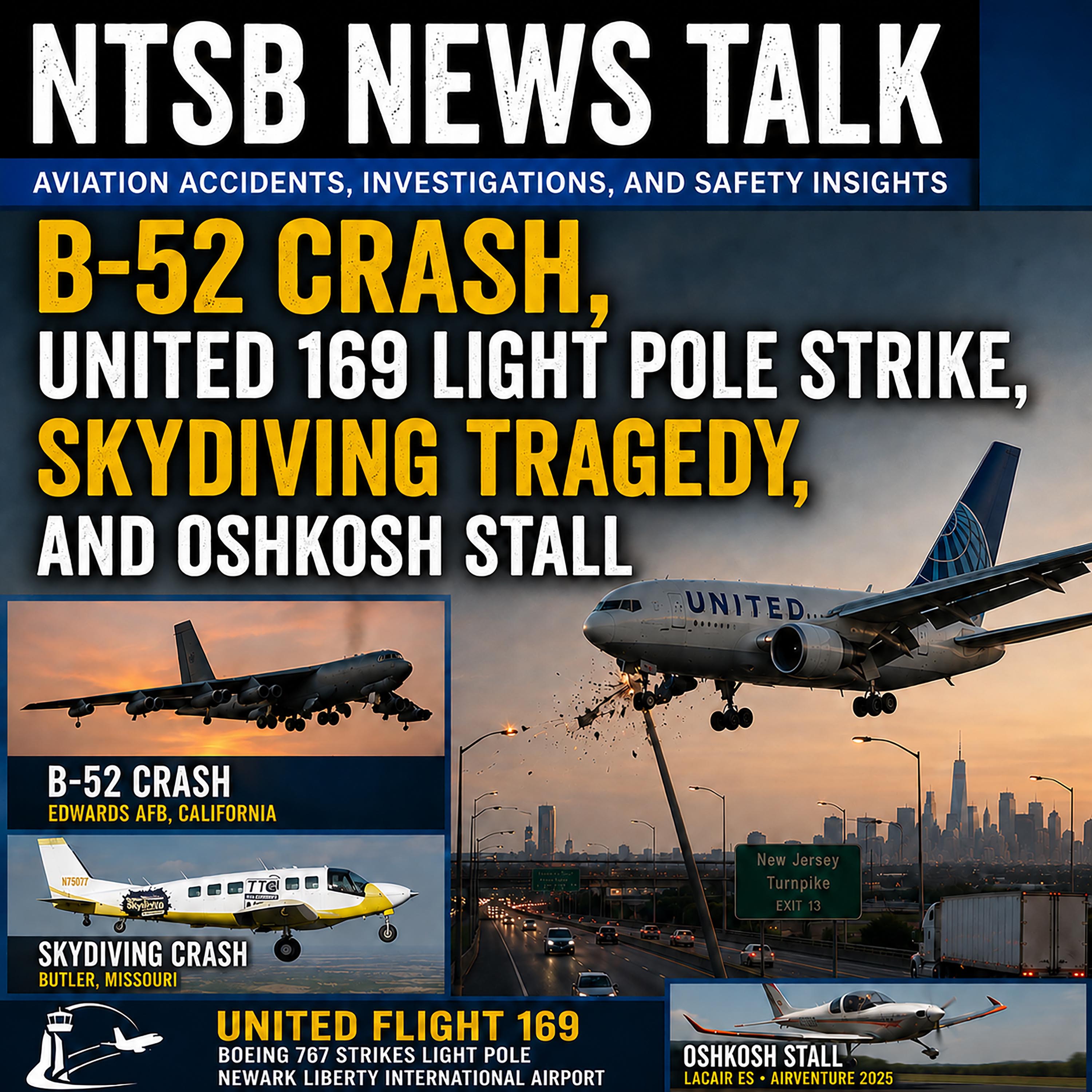
| 6/16/26 | aviation accidentsNTSB reports+4 | Rob Mark | — | CaliforniaButler, Missouri+4 | B-52 crashskydiving accident+6 | AVEMCO | 50m 15s | ||
| 6/3/26 | aviation safetyNTSB reports+4 | Rob Mark | NTSBFAA | Akron-Fulton AirportEmpire, Nevada+5 | Piper PA-46NTSB recommendations+5 | AVEMCO | 49m 54s | ||
Want analysis for the episodes below?Free for Pro Submit a request, we'll have your selected episodes analyzed within an hour. Free, at no cost to you, for Pro users. | |||||||||
| 5/19/26 | aviation accidentsNTSB reports+3 | Rob Mark | Frontier Airlines | Denver International AirportWimberley, Texas | aviation safetyFrontier Airlines+6 | AVEMCO | 30m 07s | ||
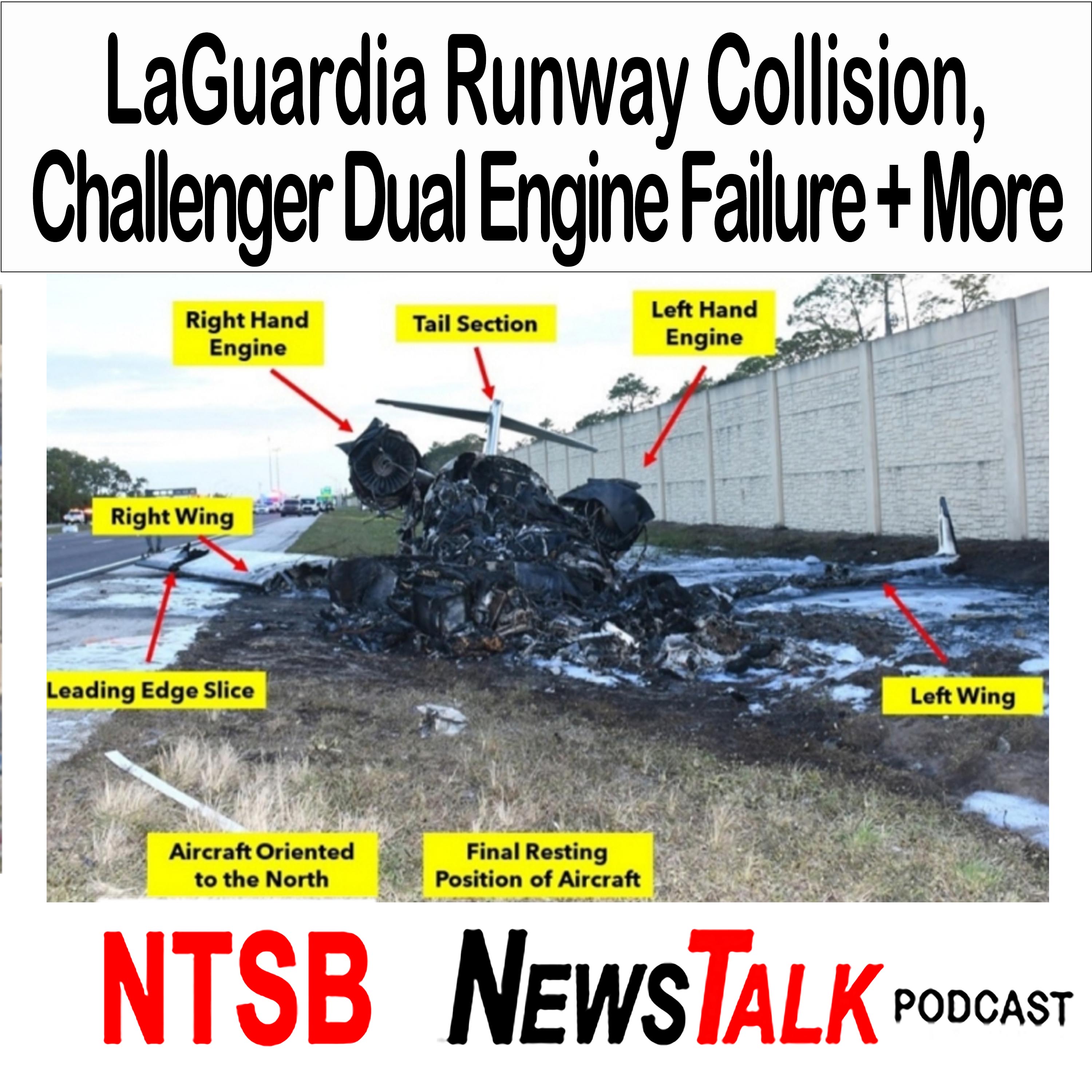
| 5/6/26 | aviation safetyNTSB accident reports+3 | Rob Mark | — | LaGuardiaFlorida+9 | LaGuardiarunway collision+7 | AVEMCO | 45m 39s | ||
| 4/22/26 | aviation accidentssafety investigations+4 | Rob Mark | Piper PA-44 Seminole N595NDCirrus SR22 N124SP+6 | Fort Pierce, FloridaSt. Paul, Minnesota+6 | Piper SeminoleCirrus SR22+5 | AVEMCO | 42m 43s | ||
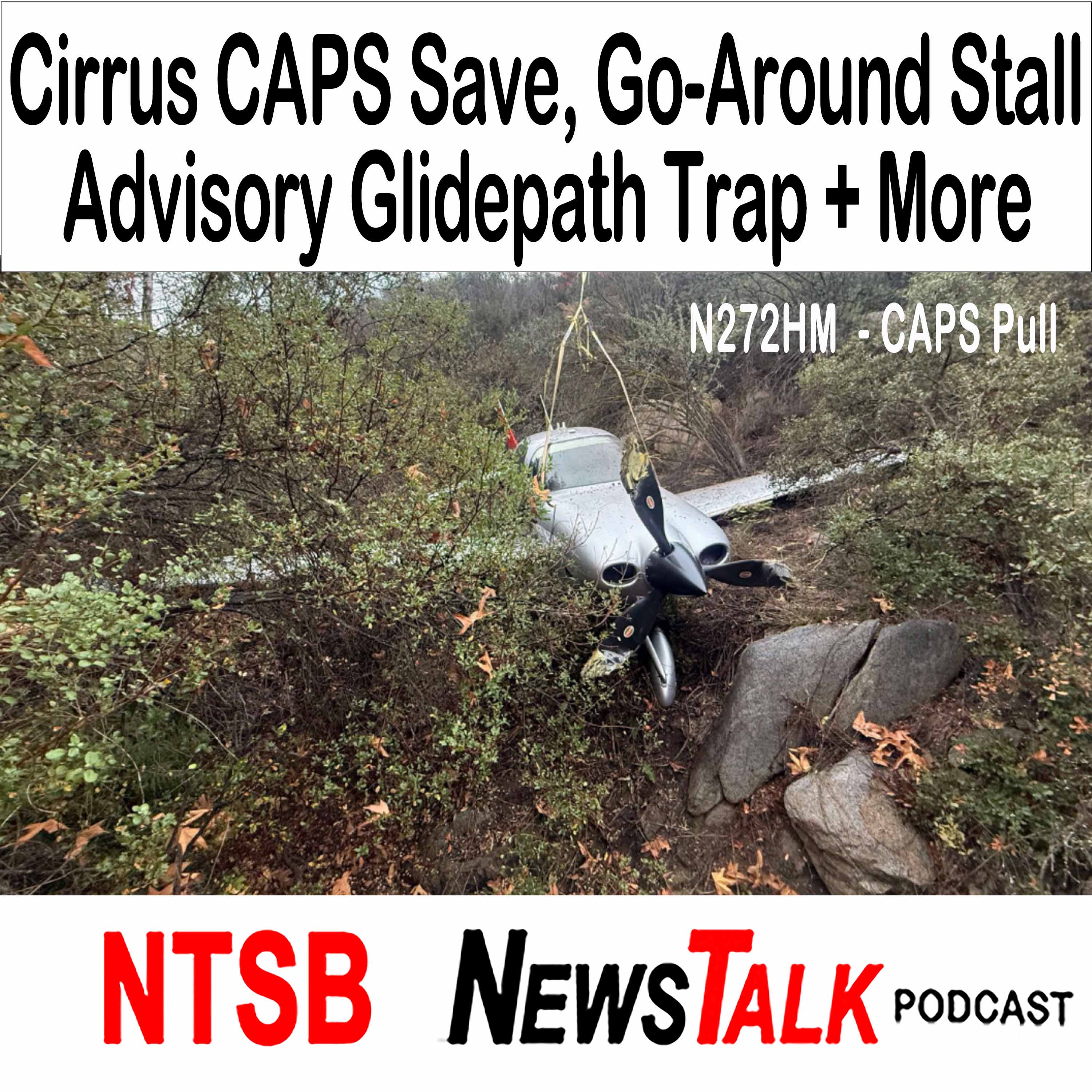
| 4/8/26 | aviation safetyinstrument procedures+5 | Rob Mark | NTSBGarmin | York, PAGulf Shores, Alabama+2 | aviation accidentsgo-around stall+6 | AVEMCO | 41m 01s | ||
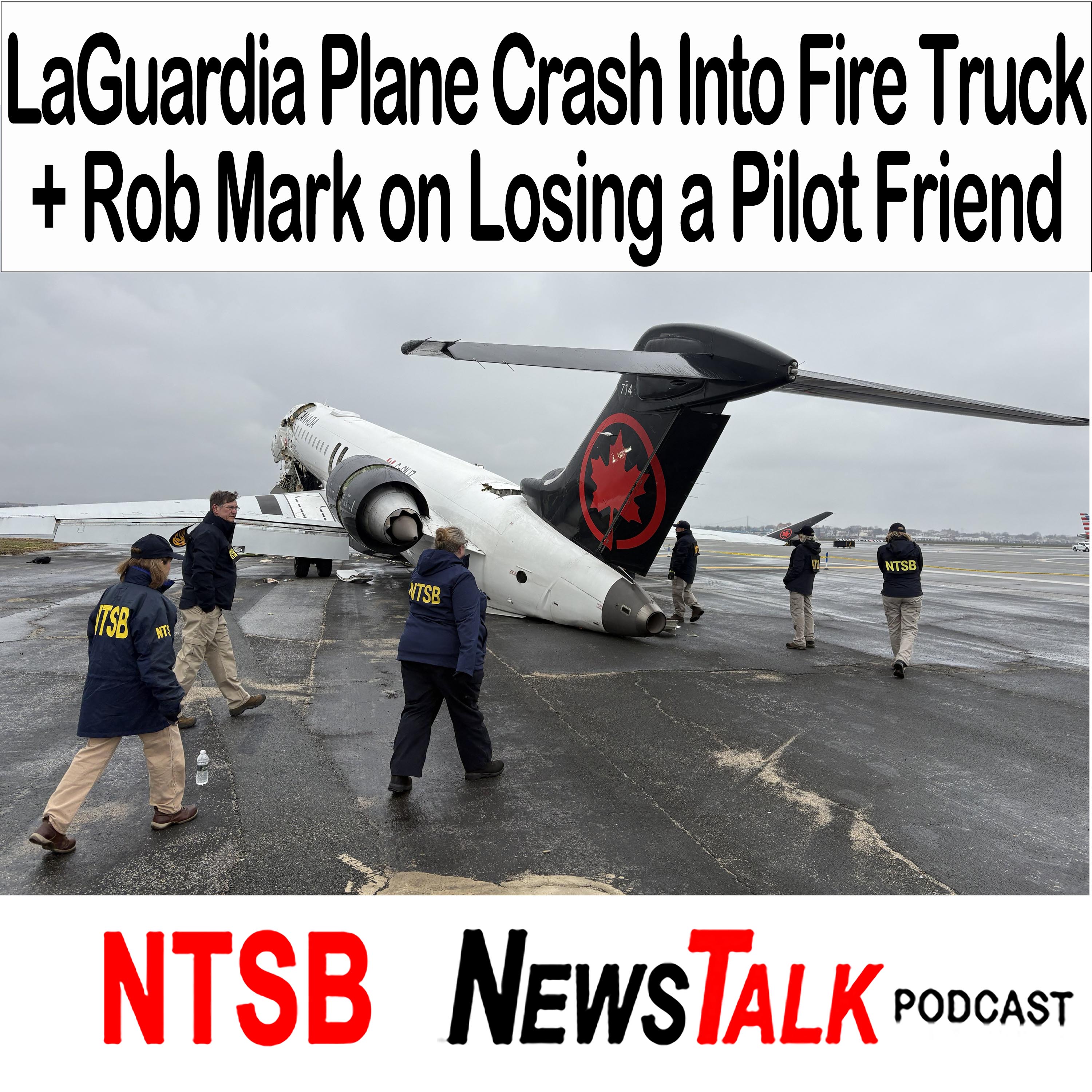
| 3/25/26 | aviation safetyrunway incursions+3 | Rob Mark | — | LaGuardiaChicago Executive Airport | LaGuardia crashfire truck collision+6 | AVEMCO | 47m 18s | ||
| 3/11/26 | aviation accidentsNTSB reports+4 | Rob Mark | — | Montour, IdahoPulaski, Tennessee+2 | NTSBaviation safety+6 | AVEMCO | 36m 22s | ||
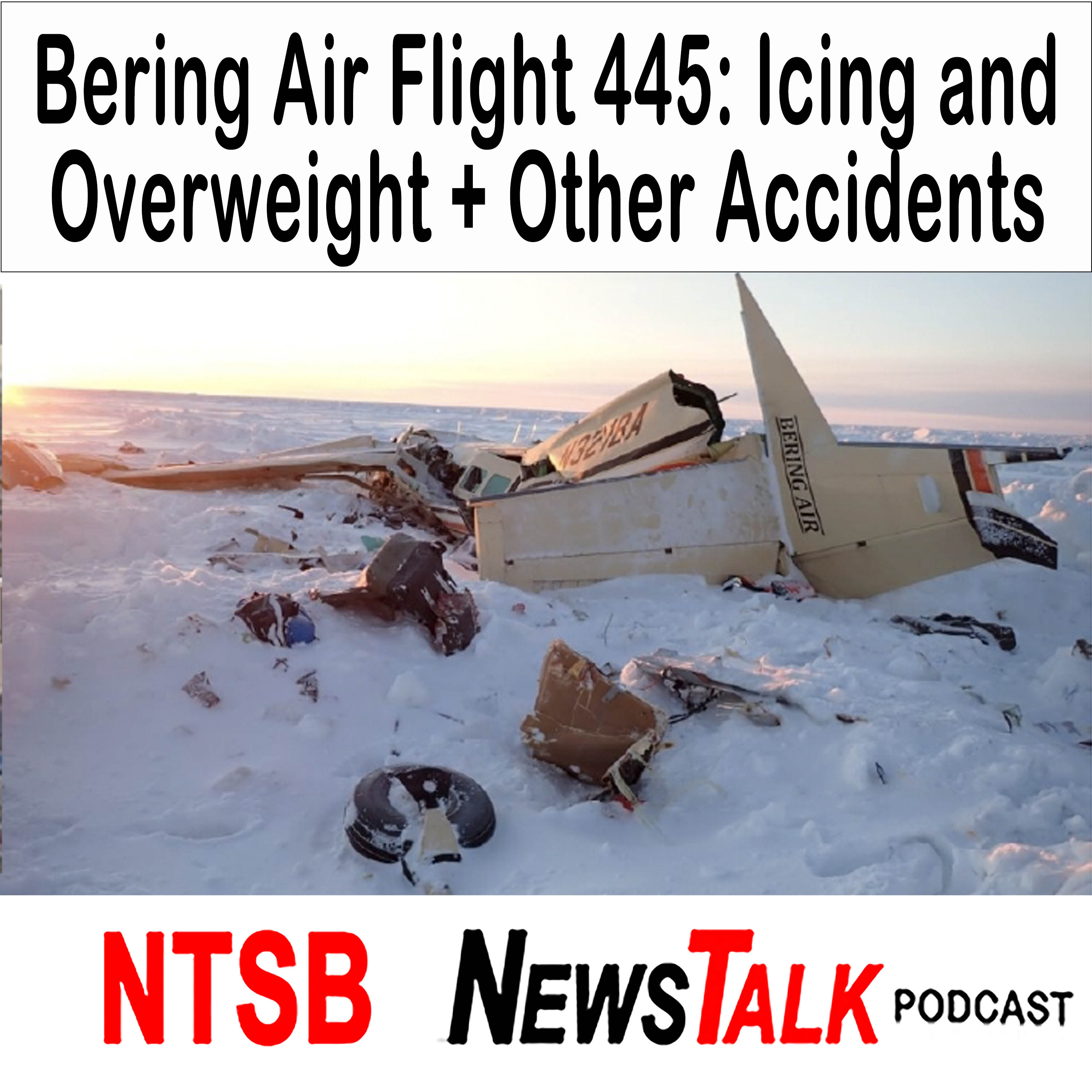
| 2/24/26 | aviation accidentssafety investigations+5 | Rob Mark | Cessna 208B Grand CaravanCessna 182P+2 | Nome, AlaskaSteamboat Springs, Colorado+3 | Bering Air Flight 445Cessna 208B+5 | AVEMCO | 39m 15s | ||
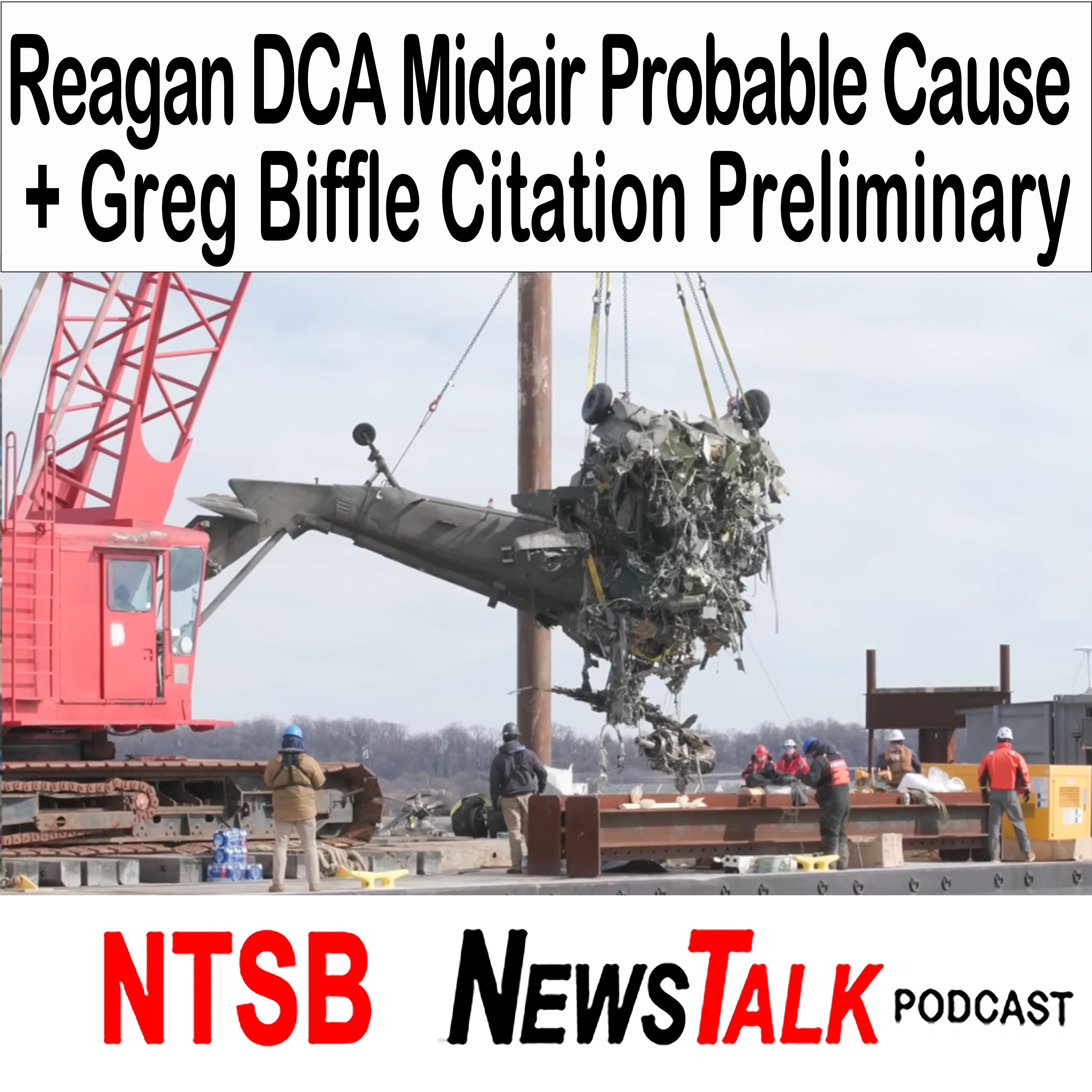
| 2/10/26 | aviation safetyNTSB investigations+5 | Rob Mark | — | Reagan National (DCA)Statesville, North Carolina+5 | NTSBaviation accidents+8 | — | 53m 52s | ||
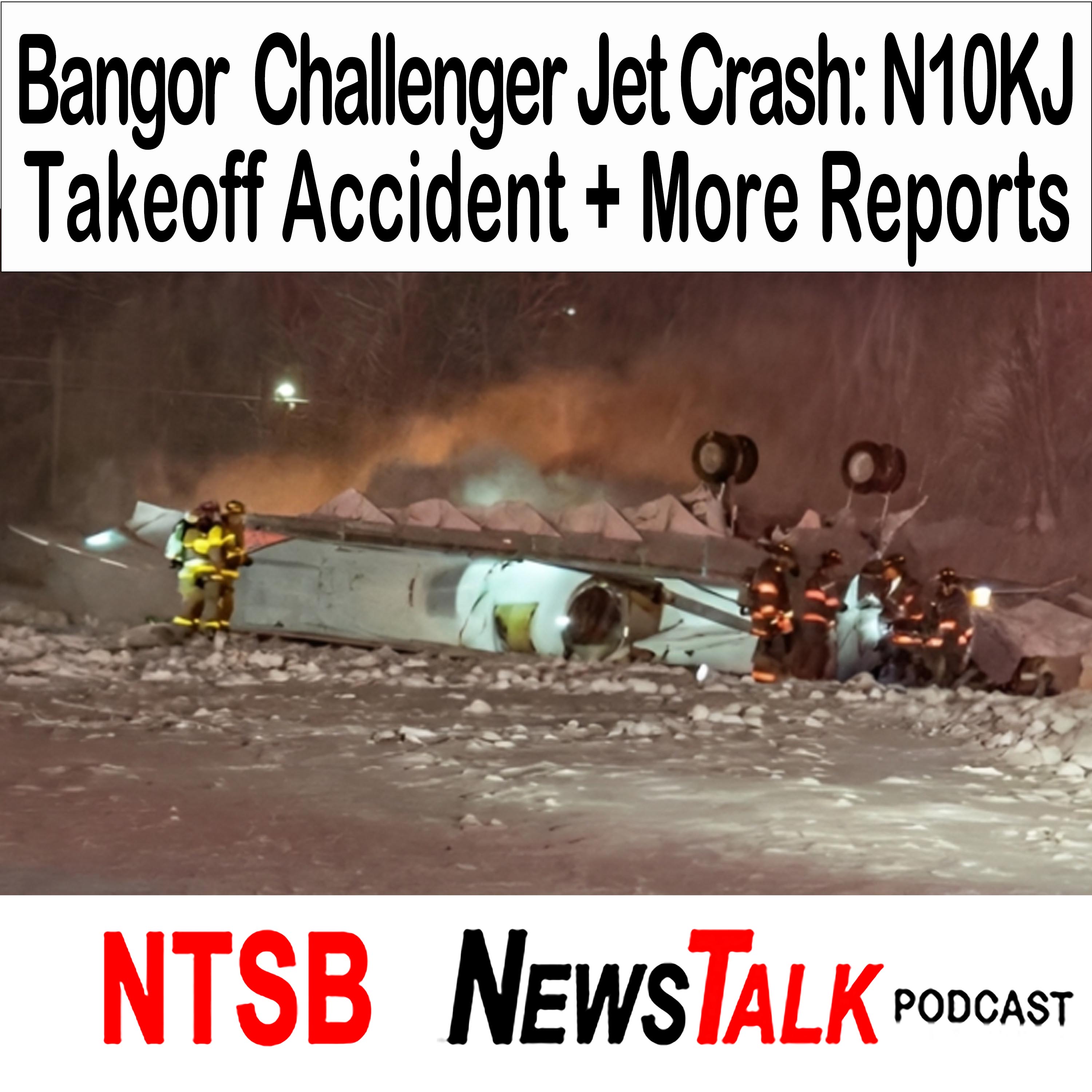
| 1/26/26 | aviation accidentsNTSB investigation+4 | Rob Mark | Bombardier Challenger 650American Aviation AA-1A+7 | Bangor, MaineAlamogordo, NM+6 | Challenger 650 crashNTSB+5 | — | 39m 29s | ||
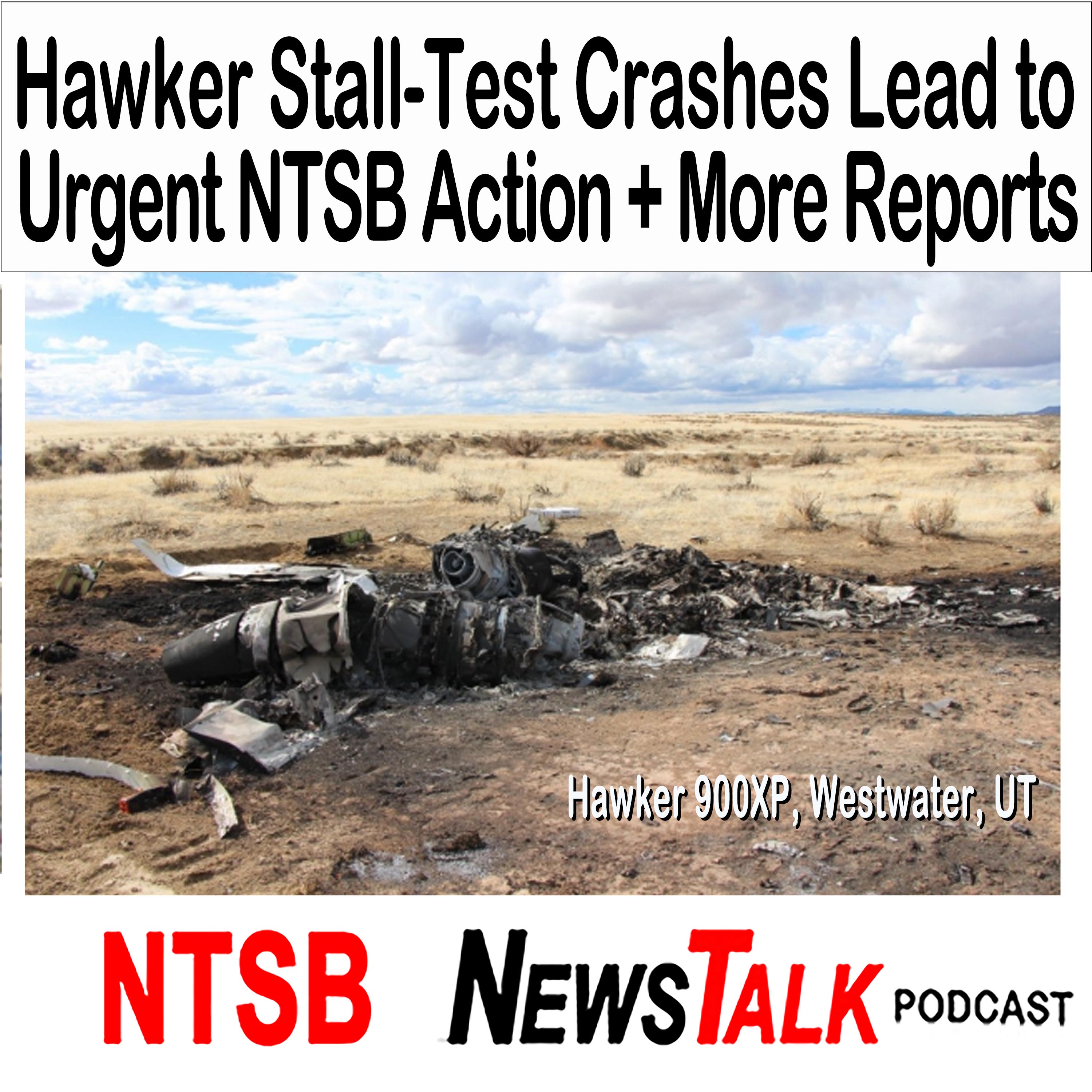
| 1/12/26 | aviation safetystall testing+4 | Rob Mark | NTSBTextron | Potomac RiverReagan National+4 | Hawkerstall test+6 | — | 52m 59s | ||
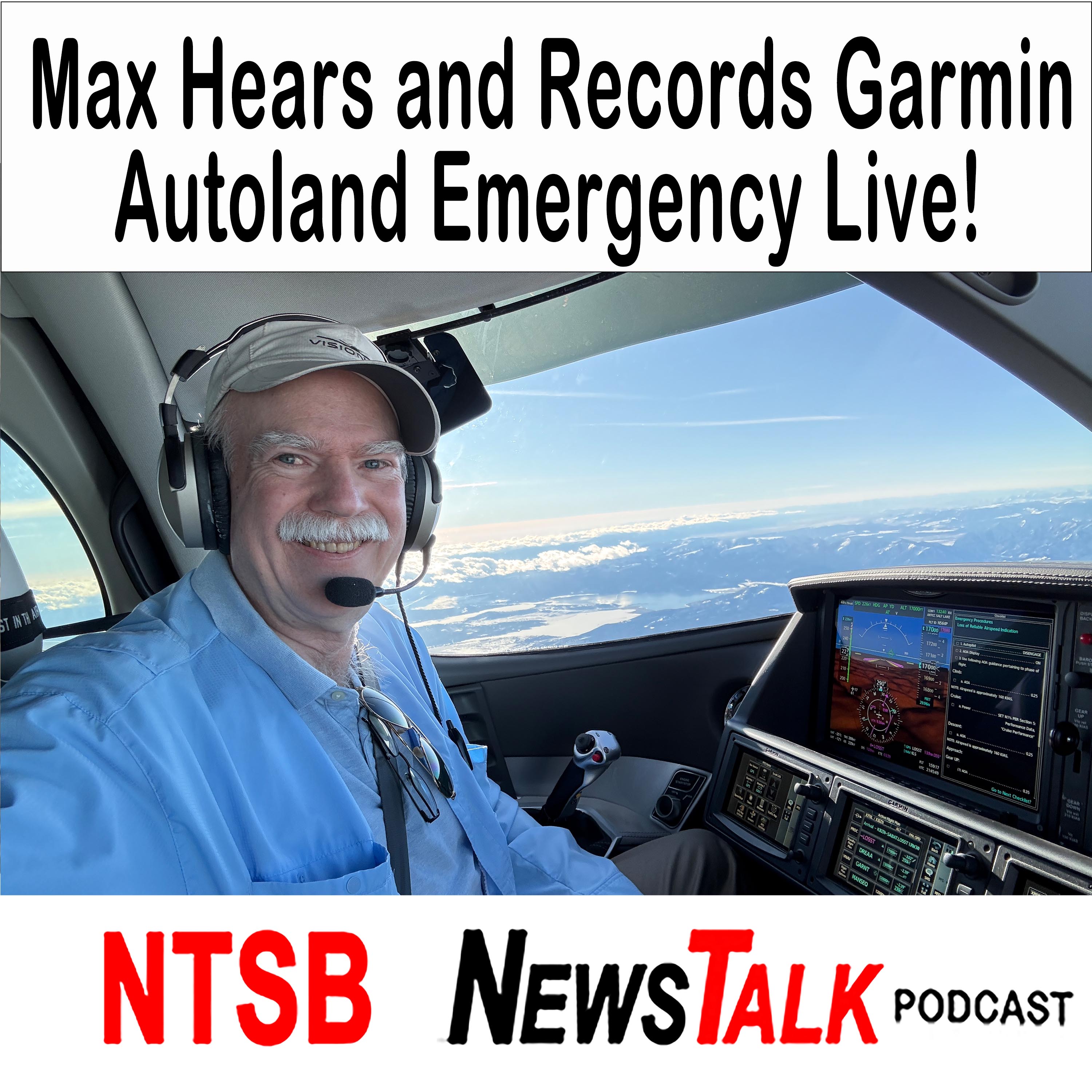
| 12/26/25 | Garmin Autolandemergency landing+4 | — | Garmin AutolandAviation International News+1 | Rocky Mountain Metropolitan AirportBroomfield, Colorado+1 | Garmin AutolandKing Air B200+5 | — | 44m 49s | ||
| 12/18/25 | aviation accidentspilot workload+4 | Rob Mark | — | Statesville NCStatesville Airport | Citation 550aviation tragedy+5 | — | 38m 09s | ||
| 12/1/25 |  Air India 787 Crash Investigation: NTSB–India Standoff, Black Box Battle & Stunning Near Misses | Episode 18 begins with an extraordinary behind-the-scenes dispute surrounding the Air India Boeing 787 crash investigation. Max and Rob open with a Wall Street Journal report describing how U.S. technical experts arrived in Delhi last summer expecting to assist with the black-box analysis, only to be told they would need to board a late-night military flight to a remote facility. NTSB Chair Jennifer Homendy expressed concerns about U.S. personnel and equipment being moved into an area under State Department terrorism advisories, especially given rising tensions in the region. The NTSB pushed instead for data extraction either in Delhi or in Washington, triggering a rapid series of high-level calls involving the U.S. Secretary of Transportation, Boeing, and GE Aerospace.Indian officials insisted they had full capability to download the recorders, yet simultaneously requested more than 30 pieces of specialized equipment from the NTSB, further complicating the diplomatic dynamics. Homendy ultimately issued a 48-hour ultimatum: select Delhi or Washington for the data download, or the U.S. would withdraw from the investigation entirely. India chose Delhi, but the episode highlights how political sensitivities can shape technical investigations—especially when early evidence, as reported, suggested the possibility of intentional fuel-cutoff switch manipulation. The hosts note that pilot-suicide scenarios, though rare, account for more fatal commercial accidents than many pilots realize, citing EgyptAir, Germanwings, Malaysia 370, and other historical cases.From the geopolitical, the episode shifts to more traditional NTSB investigations. A midair collision in Canada between a Cessna 172 and a Piper Seminole resulted in the 172 losing a wing and crashing, while the Seminole landed safely. Max shares the surprising statistic that roughly half of U.S. midair collision victims survive and recounts how a midair experienced by Cirrus co-founder Alan Klapmeier helped inspire the CAPS parachute system.The next story involves a Piper Arrow III that crashed during a nighttime arrival in Pittsfield, Illinois. The pilot had flown nearly five hours from Alabama—an exceptionally long time in that type of aircraft—and arrived as conditions were deteriorating to low visibility and a 300-foot overcast. Max emphasizes the difficulty of recognizing inadvertent IMC at night and discusses how fatigue and lack of instrument proficiency may become factors once more details emerge.A TBM 700 accident in Monroe, Wisconsin offers another sobering look at missed-approach challenges. With visibilities down to a quarter-mile and ceilings around 300 feet, the aircraft attempted a GPS approach to Runway 12, then initiated a missed approach. Instead of climbing outbound on the published track, radar data shows the aircraft turning prematurely, losing airspeed, and entering a stall and loss of control. Max highlights how even experienced instrument pilots often under-practice missed approaches in actual IMC, making it one of the most common fatal accident points in general aviation.The episode then examines a dramatic near-miss involving an Air Arabia Maroc Airbus A320 departing Catania, Italy. A ferry crew failed to load weight-and-balance data into the MCDU, meaning no V-speeds were computed. The aircraft rotated late, climbed shallowly, then descended toward the sea at night, triggering multiple GPWS warnings before the crew recovered at just 41 feet above the water. With moonless, dark-night conditions and no visual horizon, this oversight nearly resulted in a hull loss. Both pilots were highly experienced—proof that skipping basic procedures can endanger even seasoned crews.Next, Max and Rob turn to the UPS MD-11 engine-separation crash in Louisville. New preliminary findings show fatigue cracking in engine-pylon attachment lugs, reminiscent of the American Airlines DC-10 crash in 1979 where a maintenance procedure overstressed the pylon. The MD-11 fleet remains grounded as inspections continue, and Max notes how fortunate it is that inspectors have since found additional cracks on other aircraft. Even with a rapid emergency-response drill completed just weeks earlier, the flight crew had no survivable options the moment the engine detached at rotation.Finally, the hosts analyze new details from the Cirrus SR22 crash in Lincoln, Montana. The pilot, attempting his first-ever night arrival at a mountainous airport with no instrument approach, lined up over a highway before maneuvering at low altitude, with flaps changing configuration and the autopilot still engaged while turning in the pattern. A stall warning sounded, followed by a steep bank and loss of control. Max emphasizes a longstanding teaching point: pilots should avoid first-time nighttime arrivals at unfamiliar mountain airports, especially those without instrument procedures—which often signals surrounding terrain too challenging to support one.Across all these stories, Max and Rob reinforce a common theme: safety is not a static condition but an ongoing behavior. Pilots must maintain awareness, practice critical skills like missed approaches and go-arounds, and respect how quickly conditions or workload can change. The episode offers practical insights for every pilot seeking to build resilience and margin into their flying. | 45m 09s | ||||||
| 11/17/25 | 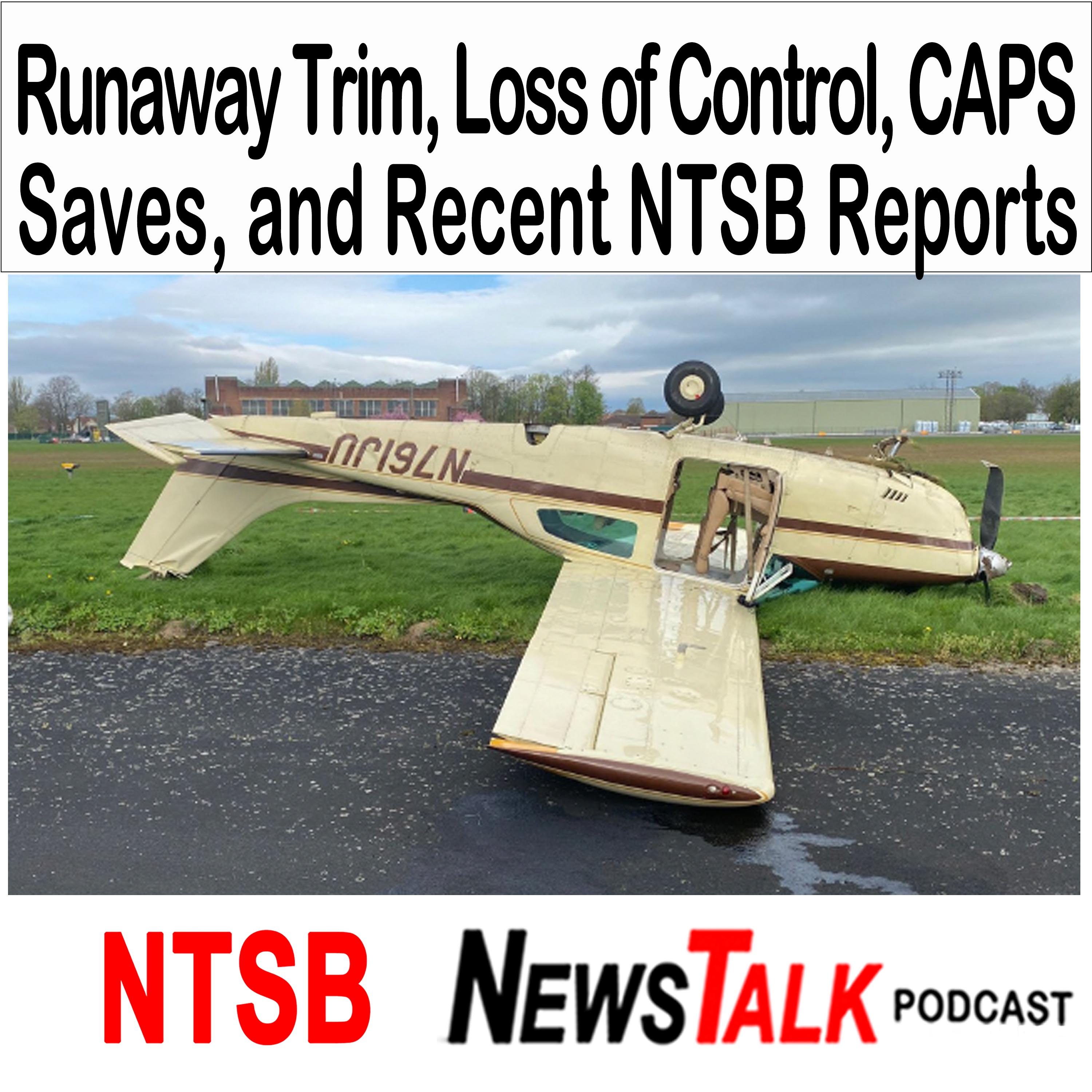 Trim Runaways, CAPS Saves, and Why IFR Pilots Still Lose Control: Lessons from This Week’s NTSB Reports | Episode 17 of NTSB News Talk brings together an unusually rich set of accidents and safety insights, all centered on pilot decision-making, trim system failures, swept-wing stall risks, and the ongoing challenge of hand-flying in IMC when automation misbehaves. In this week’s discussion, hosts Max Trescott and Rob Mark use recent NTSB reports to highlight the mistakes, mechanical failures, and chain-of-events that continue to trap even experienced pilots. For listeners who fly IFR, rely on autopilots, or operate aircraft with electric pitch trim, this episode offers lessons that are immediately relevant.The episode opens on an encouraging note. Max reports that the United States saw three CAPS parachute deployments in three days—Tuesday, Wednesday, and Thursday. These weren’t all Cirrus aircraft, either; one was N163BR, a Lancair Turbine LX7, one of the fastest experimental turbine singles in the fleet. All three incidents involved engine failures on approach, and every person involved walked away uninjured. For Max and Rob, it’s another sign that whole-airframe parachutes continue to save lives and will become increasingly common as the general aviation fleet modernizes.But the tone shifts as the hosts examine the crash of N30HG, a King Air B100 on a humanitarian mission to Jamaica following Hurricane Melissa. Shortly after takeoff from Florida, the aircraft descended rapidly and struck palm trees before crashing into a pond, killing both on board. A similar King Air pilot’s Facebook account of a pitch trim runaway and violent pitch-down event becomes an important point of comparison. While the NTSB has not yet identified the cause, the parallels highlight how aggressive and unexpected trim-related events can be—and how essential it is for pilots to know exactly where the trim and autopilot disconnects are located, especially when operating older turbine aircraft.In the next case, XA-JMR, a Mexican registered Hawker 800XP fatal accident near Battle Creek, Michigan, post-maintenance work required a swept-wing stall test. The Hawker had been down for seven months while technicians inspected the wing’s leading edges for corrosion. Manufacturer guidance requires that a qualified test pilot perform the post-maintenance stall series. But when the crew was unable to schedule one, they elected to fly the test themselves. Moments after entering the test area at 15,000 feet, the crew transmitted in Spanish that they had stalled the aircraft and were attempting to recover—an attempt that ultimately failed. For Rob, a veteran swept-wing pilot, the lesson is clear: pilots must say “no” when a task exceeds their experience or training, especially in high-AOA testing where swept-wing handling characteristics are unforgiving.The episode then examines several loss-of-control accidents during IFR operations. N9627X, a Cessna 210 bound for Jonesboro, Arkansas deviated around convective weather, then began a series of inexplicable turns and large speed changes before crashing in heavy IMC. A separate Cirrus SR22 accident in Louisiana involved a pilot who reported autopilot issues during a go-around, then lost control while hand-flying. Both accidents reinforce how quickly pilots can become disoriented when hand-flying after automation confusion—especially in turbulence or low visibility.The hosts next highlight a N79338, a Mooney M20E, takeoff accident in New York involving a newly purchased aircraft with a history of contaminated fuel. Although the aircraft showed normal fuel samples before takeoff, the engine lost power at 200 feet. The CFI attempted a turn back but quickly realized the aircraft was too low, resulting in a crash into trees. Max emphasizes that turn-backs below a few hundred feet are rarely survivable, even for experienced pilots, and that extensive high-power runups should be mandatory when an aircraft has a known fuel-system issue.Another puzzling case involves C-FETM, a Canadian-registered Beech V35 Bonanza that departed Castlegar, British Columbia, and later crashed near Mount Callahan, Nevada, in IMC at high elevation. The pilot appeared to descend dangerously close to terrain before impact. With no flight plan, no stated purpose, and deteriorating mountain weather, the accident raises unresolved questions about fuel planning, pilot intent, and IMC mountain operations.The first NTSB final report of the episode comes from N860CA, a TBM700, that stalled during an unstable approach in Montana. Despite over 1,200 hours in type, the pilot allowed the aircraft to get high, pulled the power to idle, and ultimately stalled the aircraft at 40 feet. The TBM was destroyed in the resulting ground impact and fire. Max notes that pilots often recover successfully from unstable approaches—until the day they don’t—which is why turbine operations emphasize strict go-around criteria.The last final report is one of the week’s most revealing: N761JU, a Cessna T210 accident in the UK caused by near-full nose-down elevator trim that went undetected before takeoff. A malfunctioning Bendix-King KFC-200 autopilot may have slowly trimmed the aircraft nose-down during taxi without the pilot noticing. With the trim nearly at the forward stop, the airplane became uncontrollable as the takeoff was rejected. The nosewheel collapsed and the airplane flipped, killing the more securely belted passenger. The report reveals poor documentation, older components not aligned with the STC, and a pre-flight test procedure that provided no clear warning to the pilot—all pointing to the importance of thoroughly understanding autopilot and trim systems, especially in legacy aircraft.Episode 17 ultimately reinforces a common theme: pilots must stay ahead of their automation, know their trim systems cold, practice hand-flying often, and speak up when something doesn’t feel right. These accidents—whether involving swept-wing jets, turboprops, or piston singles—illustrate just how common and deadly loss-of-control, trim malfunctions, and automation confusion remain across all levels of aviation. | 40m 39s | ||||||
| 11/5/25 |  Fatal Pilot Errors: How Common Medications Led to Deadly Crashes | Max Trescott and Rob Mark explore one of the most overlooked killers in aviation: common medications that quietly impair pilots and contribute to fatal crashes. While many aviators think over-the-counter or prescription drugs are safe if they “feel fine,” the NTSB’s recent accident reports tell a different story. In case after case, pilots who ignored FAA medication rules—or failed to understand them—lost control of their aircraft, sometimes within seconds of takeoff. Pilots should read the FAA's Over-the-counter (OTC) Medications Reference Guide before taking an OTC medication.The episode opens with a discussion of the NTSB’s recent safety recommendation involving Learjet landing-gear inspections, then pivots to a more personal revelation. While preparing a previous show, Max reviewed several fatal accident reports and realized that three of them, selected at random, shared a common factor: medication use. A fourth involved an untreated medical condition. That chance discovery became the foundation for this episode.The first accident involves N510KC, a Piper Malibu converted to turbine power that crashed shortly after takeoff in Nebraska. Toxicology revealed Ambien (Zolpidem), a powerful sleep aid. The pilot—experienced and well-trained—appeared to rotate normally before the airplane rolled left and hit trees. Rob recalls his own experience with Ambien and how it caused amnesia: “My wife said I was talking and walking before bed, and I had no memory of it.” The NTSB concluded that impairment and overloading likely caused the loss of control.The next accident centers on N915DV, a Cessna Turbo 206 that struck mountainous terrain in Utah. The pilot had taken cetirizine (Zyrtec), an antihistamine many pilots assume is “safe.” Yet studies show that even mild sedation can impair cognitive performance—especially at altitude. The U.S. Navy found that cetirizine increased errors during flight-simulation tests at 10,000 and 15,000 feet. Zyrtec appears on the FAA’s “no-go” list, and pilots must typically wait up to five days after the last dose before flying.In another case, N880A, a Cessna 414 stalled after takeoff when the elevator trim was left in a full-nose-up position. The pilot had taken sertraline (Zoloft), an antidepressant that requires special FAA issuance and strict medical monitoring. He hadn’t reported it on his medical. Investigators also found other red flags: diabetes, unresolved maintenance issues, and a non-functioning tachometer. Rob calls leaving the engines running while stepping out of the aircraft “reckless,” and Max explains how unreported antidepressant use can disqualify a pilot without proper documentation.The final crash involved N4184G, a Nanchang CJ-6A performing a flyover in Colorado. The pilot abruptly pulled into a vertical maneuver, stalled, and spun in. Post-accident analysis revealed uncontrolled diabetes with blood-sugar readings over eight times normal levels. He had previously disclosed diabetes on his FAA medical but failed to list it later—suggesting denial or complacency. Fatigue or blurred vision may have contributed to his erratic control inputs.Across these four crashes, one lesson stands out: pilots often underestimate how medications affect cognition and coordination. Even “safe” drugs can delay reactions, dull alertness, and create false confidence. Worse, some—like Ambien—suppress the very self-awareness needed to recognize impairment. Max and Rob stress that pilots aren’t receiving enough education about FAA medication restrictions; most training programs and BFRs never address them.They also highlight the human factor behind the data. “If you cheat,” Max warns, “the only person you’re cheating is yourself—and your family will pay the price.” Rob adds that instructors should explain not just which drugs are disqualifying, but why they impair performance.The takeaway: check every medication—prescription or over-the-counter—before you fly. Search the FAA’s AME Guide or AOPA’s medication database, and observe all required waiting periods. Pilots pride themselves on discipline and preparation; medication awareness deserves the same rigor.This powerful episode of NTSB News Talk turns four tragic crashes into lifesaving lessons for anyone who flies—or teaches others to fly. | 39m 31s | ||||||









Showing 25 of 38
Pitch Fit is a Pro feature
See how bookable this show is for guests, which brands already advertise, the per-episode ad value, and the best-fit guest and sponsor profile. The numbers are blurred on the free plan.
How readily this show books outside guests like you.
How proven this show is for host-read sponsorships.
For Guests
ProFor Advertisers
ProUpgrade to Pro to unlock guest cadence, sponsor categories, fit scores, and per-episode ad value for this show.
Similar Audience Demographics
Podcasts that attract a similar listener profile
Aviation News Talk – Pilot Stories, Safety Tips & General Aviation News
Max Trescott | Aviation News Talk Network

"There I was..." An Aviation Podcast
AOPA Air Safety Institute

I Learned About Flying From That
Flying Magazine

Pilot's Discretion from Sporty's
Sporty's Pilot Shop

AOPA Never Again
AOPA

Ask the A&Ps
AOPA

Hangar Talk - An Aviation News Podcast
AOPA
Chart history for NTSB News Talk – Aviation Accidents, Safety Investigations & Pilot Lessons
Peaked at #1 in South Korea, top 10 in 6 of 38 tracked markets, currently #1 in South Korea.
| Market | Genre | Peak | Current | Trend |
|---|---|---|---|---|
| South Korea | — | #1 | #1 | — |
| Spain | — | #3 | #3 | — |
| TH | — | #5 | #5 | — |
| Brazil | — | #5 | #5 | — |
| TW | — | #8 | #8 | — |
| Italy | — | #9 | #9 | — |
| United States | — | #11 | #11 | — |
| PE | — | #12 | #12 | — |
| KE | — | #16 | #16 | — |
| New Zealand | — | #18 | #18 | — |
| IL | — | #19 | #19 | — |
| Ireland | — | #20 | #20 | — |
| Denmark | — | #21 | #21 | — |
| Sweden | — | #23 | #23 | — |
| BE | — | #25 | #25 | — |
| SA | — | #25 | #25 | — |
| Mexico | — | #26 | #26 | — |
| VN | — | #28 | #28 | — |
| CZ | — | #30 | #30 | — |
| Norway | — | #31 | #31 | — |
Chart Positions
38 placements across 34 markets.
Chart Positions
38 placements across 34 markets.