Insights from recent episode analysis
Audience Interest
Podcast Focus
Publishing Consistency
Platform Reach
Insights are generated by CastFox AI using publicly available data, episode content, and proprietary models.
Most discussed topics
Brands & references
Total monthly reach
Estimated from 17 chart positions in 17 markets.
By chart position
- 🇬🇧GB · Social Sciences#34100K to 300K
- 🇦🇺AU · Social Sciences#1445K to 30K
- 🇪🇸ES · Social Sciences#7100K to 300K
- 🇲🇽MX · Social Sciences#4430K to 100K
- 🇯🇵JP · Social Sciences#1291K to 10K
- Per-Episode Audience
Est. listeners per new episode within ~30 days
77K to 249K🎙 Daily cadence·366 episodes·Last published 2w ago - Monthly Reach
Unique listeners across all episodes (30 days)
258K to 831K🇬🇧36%🇪🇸36%🇲🇽12%+14 more - Active Followers
Loyal subscribers who consistently listen
103K to 332K
Market Insights
Platform Distribution
Reach across major podcast platforms, updated hourly
Total Followers
—
Total Plays
—
Total Reviews
—
* Data sourced directly from platform APIs and aggregated hourly across all major podcast directories.
On the show
From 13 epsHosts
Recent guests
Recent episodes
Freewheeling on Human Risk with Thomas Ableman
Jun 11, 2026
45m 27s
Jill Wick on The Human Side of Cybersecurity
May 30, 2026
1h 03m 16s
Tobias Sturesson: from cult to corporate culture
May 23, 2026
1h 08m 08s
Will Tarrant on Service: Closing the gap between brand promise and reality
May 8, 2026
1h 00m 59s
Dr Carissa Véliz on Prophecy
Apr 25, 2026
1h 02m 31s
Social Links & Contact
Official channels & resources
Official Website
Login
RSS Feed
Login
| Date | Episode | Topics | Guests | Brands | Places | Keywords | Sponsor | Length | |
|---|---|---|---|---|---|---|---|---|---|
| 6/11/26 | ![]() Freewheeling on Human Risk with Thomas Ableman✨ | human behaviorpublic transport+4 | — | — | — | public transportsocial norms+3 | — | 45m 27s | |
| 5/30/26 | ![]() Jill Wick on The Human Side of Cybersecurity✨ | cybersecurityhuman risk+4 | Jill Wick | Human Risk | — | cybersecurity awarenesshuman challenge+7 | — | 1h 03m 16s | |
| 5/23/26 | ![]() Tobias Sturesson: from cult to corporate culture✨ | organizational culturecults+3 | Tobias Sturesson | You Can Culture | — | cultcorporate culture+3 | — | 1h 08m 08s | |
| 5/8/26 | ![]() Will Tarrant on Service: Closing the gap between brand promise and reality✨ | customer servicebrand promise+3 | Will Tarrant | Freeman Group | — | servicecustomer experience+5 | — | 1h 00m 59s | |
| 4/25/26 | ![]() Dr Carissa Véliz on Prophecy✨ | digital ethicsprivacy+4 | Dr Carissa Véliz | Institute for Ethics in AIHertford College+1 | — | predictiondigital ethics+5 | — | 1h 02m 31s | |
| 4/12/26 | ![]() Dr C Thi Nguyen on How to stop playing someone else's game✨ | metricsscoring systems+4 | Dr. C. Thi Nguyen | University of UtahThe Score: How to Stop Playing Somebody Else’s Game | — | metricsscoring systems+5 | — | 1h 08m 38s | |
| 4/4/26 | ![]() Phil Dobson on Cognitive Leadership✨ | cognitive leadershipneuroscience+5 | Phil Dobson | Brain WorkshopsThe Brain Book | — | cognitive leadershipneuroscience+7 | — | 1h 09m 30s | |
| 3/22/26 | ![]() Professor Mark Stoyle on The Western Rising of 1549✨ | historical eventshuman behavior+4 | Professor Mark Stoyle | Human Risk | Exeter | Western Rising1549+5 | — | 1h 04m 34s | |
| 3/14/26 | ![]() Jeffrey Ludlow on What A Sign Is...✨ | signagewayfinding+3 | Jeffrey Ludlow Saentz | A Sign Is... | — | signagewayfinding+5 | — | 1h 04m 52s | |
| 3/7/26 | ![]() Marc Ross on The Art of The Negroni✨ | curiositycreativity+3 | Marc A Ross | 50 Negronis | — | Negronicuriosity+5 | — | 45m 44s | |
Want analysis for the episodes below?Free for Pro Submit a request, we'll have your selected episodes analyzed within an hour. Free, at no cost to you, for Pro users. | |||||||||
| 2/28/26 | ![]() Tom & Sue Hardin On Wired On Wall Street✨ | mistakes vs bad decisionsinsider trading+5 | Tom HardinSue Hardin | FBIWired on Wall Street | — | insider tradingdecision-making+6 | — | 1h 15m 14s | |
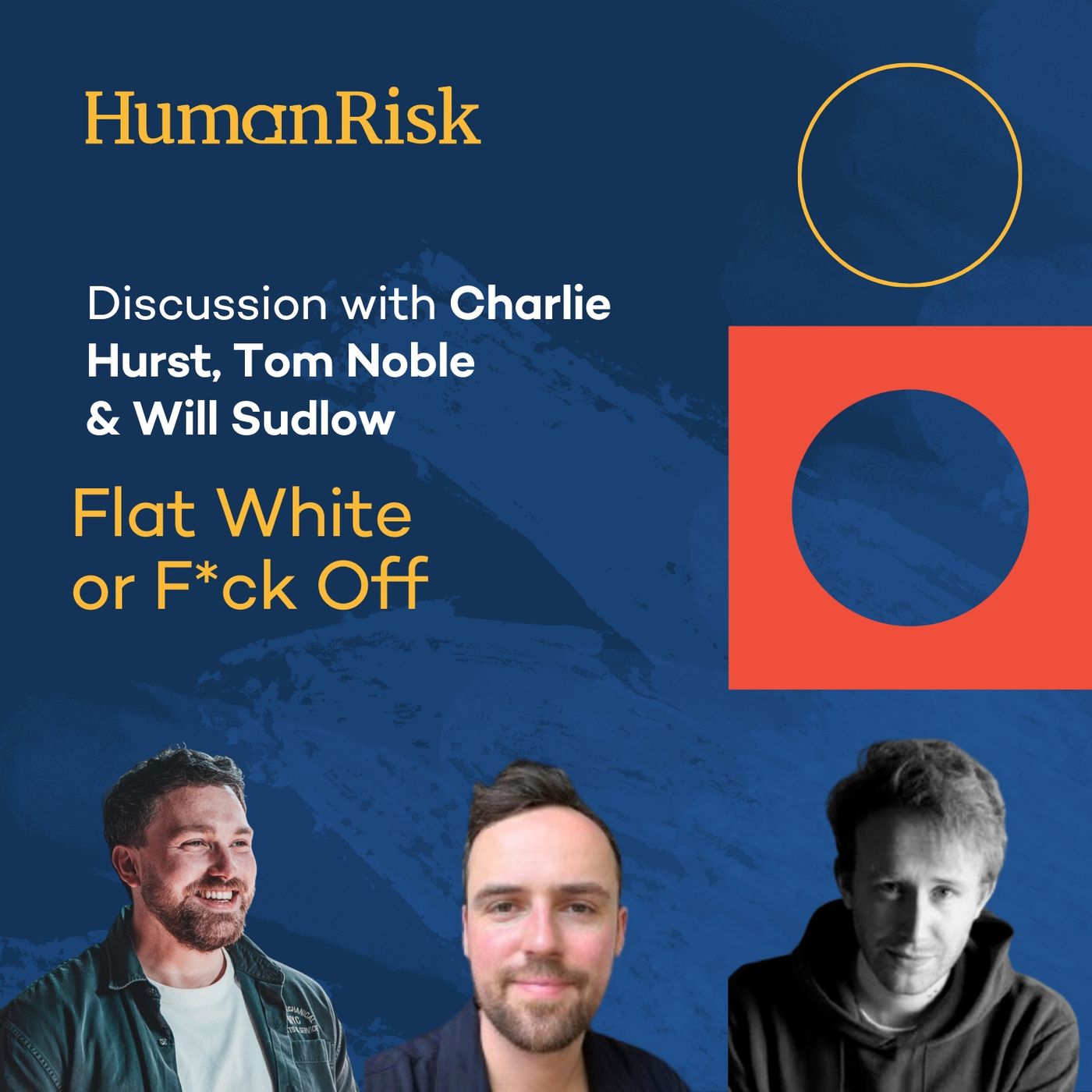
| 2/22/26 | ![]() Charlie Hurst, Tom Noble and Will Sudlow on Flat White or F*ck Off✨ | business ideasbranding+3 | Charlie HurstTom Noble+1 | Jamie Laing’s Great Company podcastFlat White or F*ck Off | — | businesscoffee+5 | — | 1h 15m 39s | |
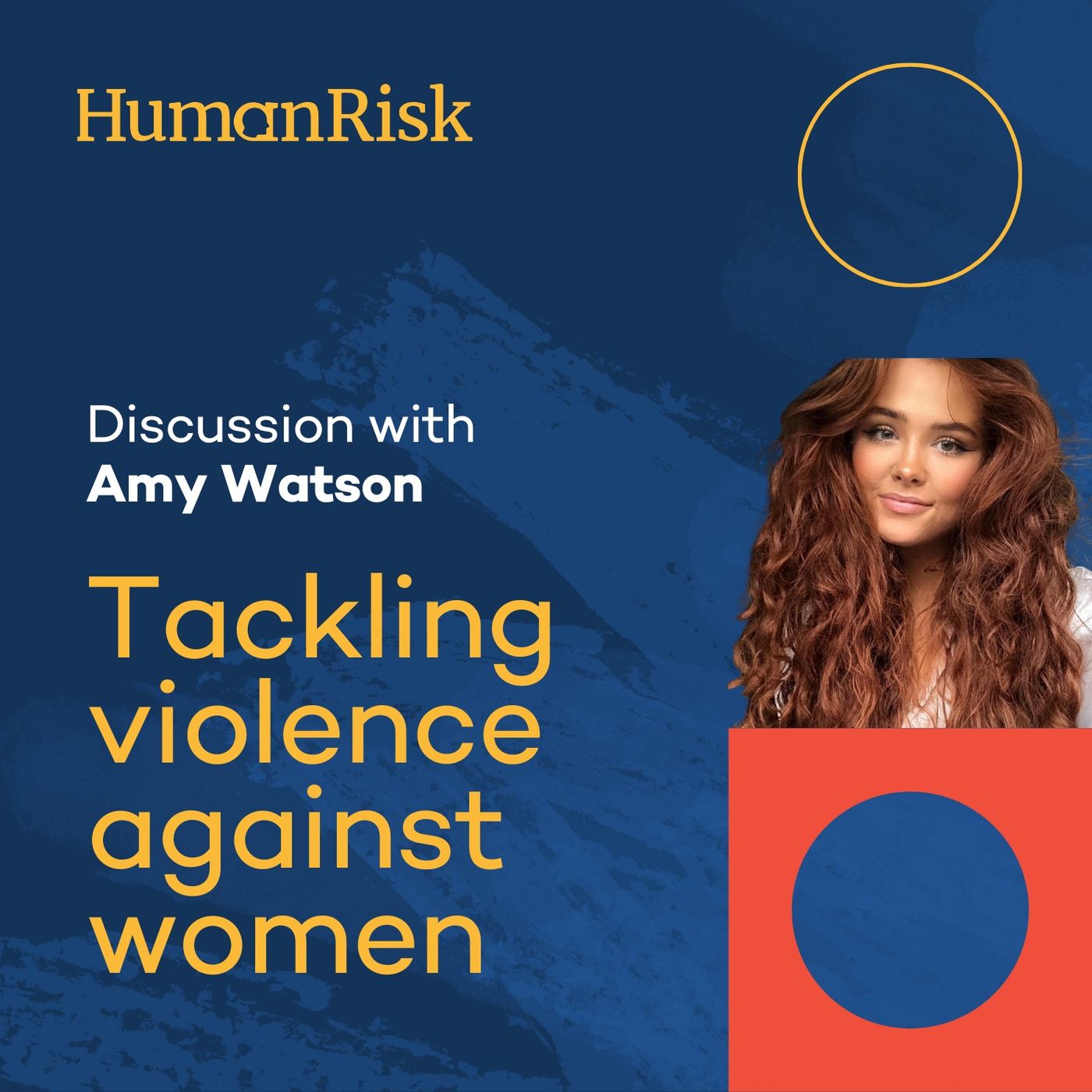
| 2/15/26 | ![]() Amy Watson on Violence Against Women & Girls✨ | violence against womensocial change+3 | Amy Watson | HASSL | — | violencewomen+5 | — | 1h 39m 52s | |
| 2/7/26 | ![]() Professor Veronica Root Martinez on Purpose-Driven Compliance | Who determines what 'good' Compliance actually looks like? The obvious answer is regulators (and in some jurisdictions) prosecutors. But what if it were the regulated Firms themselves? That's the idea behind purpose-driven compliance, which I'm exploring on this episode.Episode Summary To explore this, I'm joined by Veronica Root Martinez, Professor of Law at Duke University School of Law, to explore a deceptively simple but unsettling idea: 100% compliance is impossible. While we often behave as though perfect compliance is the goal — and in some safety-critical domains it must be — most organisational compliance involves humans. And humans make mistakes. Things get missed. Context changes. Stuff goes wrong.So if perfection isn’t realistic, the real question becomes: how do organisations decide what really matters? The traditional answer has been to look outward — to regulators, enforcement authorities, and in some jurisdictions (particularly the US), prosecutors. Their priorities, expressed through sentencing guidelines, enforcement actions, and settlements, end up defining what “good” compliance looks like. Veronica challenges that logic. She argues that this gets things the wrong way round. Instead of letting enforcement priorities dictate behaviour, she makes the case for purpose-driven compliance — where organisations set their own priorities based on their purpose, values, and actual risks, rather than chasing shifting regulatory expectations. Along the way, the conversation explores culture, human judgment, psychological safety, technology, experimentation, and why “best practice” can sometimes make things worse rather than better. This episode is for anyone who writes rules, enforces them — or simply has to live under them.Guest BiographyVeronica Root Martinez is a Professor of Law at Duke University School of Law, where she researches corporate compliance, ethics, and organisational culture. Her work on purpose-driven compliance challenges enforcement-led models and explores how organisations can set priorities based on their own purpose, values, and risks.Before entering academia, Veronica practised as an associate at a large law firm in Washington, DC, where she worked on regulatory and white-collar matters — experience that strongly informs the practical orientation of her research.LinksProfessor Veronica Root Martinez – Faculty Profilehttps://law.duke.edu/fac/martinezVeronica on LinkedInhttps://www.linkedin.com/in/veronica-root-martinez/Purpose-Driven Compliance (paper discussed in the episode)https://papers.ssrn.com/sol3/papers.cfm?abstract_id=6078766AI-Generated Timestamped Summary00:00 – 02:00 | “Because they said so”Christian reframes compliance as a universal human experience — not just a professional discipline — and introduces the problem of rules justified solely by regulatory expectation.02:00 – 05:30 | Why 100% compliance is impossibleVeronica explains why modern organisations cannot realistically achieve perfect compliance when humans are involved — and why pretending otherwise creates problems.05:30 – 10:30 | Tolerated misconduct and cultural driftHow allowing “small” rule-breaking can escalate into bigger issues, drawing on behavioural ethics and real-world corporate failures. 10:30 – 14:30 | Risk, prioritisation, and what really mattersA discussion of risk-based thinking, irrecoverable vs recoverable errors, and why organisations — not regulators — are best placed to set priorities. 14:30 – 18:30 | Enforcement swings and resilienceWhy compliance programmes built around enforcement trends are fragile, expensive, and reactive — and how purpose-driven approaches create stability. 18:30 – 23:30 | Innovation, uncertainty, and guardrailsWhy regulators are always behind innovation — and how values-based guardrails help employees make decisions in uncharted territory.23:30 – 30:30 | Technology, AI, and the human in the loopThe limits of automation, the danger of over-reliance on tech, and why human judgment remains essential.30:30 – 36:30 | Rules, loopholes, and malicious complianceHow overly detailed rulebooks create loopholes — and why purpose and principles offer a better basis for accountability.36:30 – 40:30 | The Costco exampleA powerful illustration of simplicity: four ethical principles that employees can actually understand and use.40:30 – 45:30 | Training, regulators, and unintended consequencesWhy blanket training requirements often miss the mark — and how enforcement agreements can accidentally undermine effectiveness.45:30 – 52:30 | Measuring culture and compliance effectivenessMoving beyond counting inputs to assessing outputs, including psychological safety, Speak Up systems, and cultural indicators.52:30 – 57:30 | Experimentation and learningWhy failed interventions aren’t failure — they’re information — and why compliance should be treated as an evolving experiment.57:30 – End | Reclaiming responsibilityA closing reflection on extrinsic motivation, “because I said so,” and why purpose-driven compliance offers a more human, defensible, and sustainable way forward. | 1h 02m 24s | ||||||
| 1/27/26 | ![]() Professor Tina Weisser on Trusting AI In An Uncertain World | As Artificial Intelligence (AI) gets smarter and tkaes over more tasks, what happens to human dynamics like trust, transparency, leadership and empathy. How can humans and machines wowrk togehter effectively? And how can leaders lead in this new world?Episode Summary AI is often discussed as a technical challenge, but the more interesting question is how it impacts humans and how we will interface with them. As AI becomes part of the world we’re navigating, it raises deeply human questions about trust, transparency, confidence, and how we relate to systems we don’t fully understand.On this episode, I'm joined by Professor Tina Weisser, a leading thinker on human–AI collaboration, systems thinking, and organisational behaviour under uncertainty. Together, we explore why trust isn’t something we can engineer into technology, why uncertainty isn’t a problem to be eliminated, and what AI may be revealing about human behaviour, rather than the other way around. This conversation is less about what AI can do, and more about what it does to us. Guest ProfileProfessor Tina Weisser is a Professor at the Munich University of Applied Sciences and a member of the Munich Center for Digital Sciences and Artificial Intelligence (MUC-DAI). Her work focuses on human–AI collaboration, systems thinking, service design, and how organisations adapt under conditions of complexity and uncertainty. AI-Generated Timestamp Summary00:00 – AI as a human problem, not a technical one04:00 – Tina’s path into human–AI collaboration12:00 – Why uncertainty is unavoidable (and necessary)18:00 – We haven’t mastered work — and now we’re adding AI23:00 – From tools to agents: why this feels different29:00 – Trusting actions, not facts35:00 – Ethics, fear, and human inconsistency42:00 – What this means for students, skills, and learning49:00 – “Let AI handle the data — humans handle the room”55:00 – Being right too early doesn’t help1:01:00 – AI as a mirror of humanityEpisode LinksTina's LinkedIn profile - https://www.linkedin.com/in/tinaweisser/Tina's website - www.tinaweisser.comMunich Center for Digital Sciences & AI (MUC-DAI) - http://mucdai.hm.edu | 1h 09m 06s | ||||||
| 1/21/26 | ![]() Becky Holmes on Romance Scams | What lies behind Romance Fraud? Romance fraud is one of the fastest-growing forms of fraud worldwide, and one of the most emotionally devastating. It’s also one of the most misunderstood.On this episode, I’m speaking to Becky Holmes, author of the bestselling book Keanu Reeves Is Not in Love With You. Becky didn’t become interested in romance fraud through victimhood or research. She stumbled into it during the pandemic after being approached by scammers online — and instead of ignoring them, she decided to wind them up. What began as a joke — sending absurd messages, inventing ridiculous scenarios, and pushing scam scripts to breaking point — turned into something much more serious. Through humour, Becky uncovered the psychological mechanics of romance fraud: how trust is built, how isolation and gaslighting work, and why believing you’re “too smart to fall for it” is often the most dangerous belief of all.In this conversation, we explore why laughing at scammers is not the same as blaming victims, why romance fraud closely mirrors patterns seen in abusive relationships, and why shame — not stupidity — keeps people trapped. We also talk about humour as a gateway to learning, the limits of victim-focused storytelling, and the uncomfortable truth that none of us are immune. This is a funny conversation in places. And then it isn’t. This is not the first time the Human Risk Podcast has explored romance fraud. On a previous episode, I spoke with Anna Rowe, a victim of romance fraud, about the profound emotional and psychological impact of being deceived by someone you believed you loved.In this episode, we discuss:Why romance fraud is a psychological scam, not a technical oneHow humour can expose manipulation without mocking victimsThe striking parallels between romance fraud and abusive relationshipsIsolation, gaslighting, and shame as tools of controlWhy “it would never happen to me” is such a dangerous beliefThe role of AI, deepfakes, and evolving scam tacticsWhy fraud literacy matters — and why people don’t seek it out until it’s too lateThe emotional cost of online exposure and harassmentWhat institutions, platforms, and society still get wrong about fraudGuest ProfileBecky Holmes is an author, speaker, and writer specialising in fraud, online manipulation, and digital harm. Her first book, Keanu Reeves Is Not in Love With You, explores the world of romance fraud through humour, storytelling, and lived experience.Her second book, The Future of Fraud, examines how scams are evolving in a world shaped by AI and digital identity. Links and resourcesBecky’s first book Keanu Reeves Is Not in Love With You - https://share.google/fKQ6qCL1l8Ygl1ey2The Future of Fraud her second (out April 2026) - https://share.google/fKQ6qCL1l8Ygl1ey2Becky on LinkedIn: https://www.linkedin.com/in/beckyholmeshatesspinach/Becky on Instagram: Becky Holmes (@deathtospinach)Becky on Twitter/X: https://x.com/deathtospinach?Becky’s book agent profile: https://www.curtisbrown.co.uk/client/becky-holmesPrevious Human Risk Podcast episode with Anna Rowe on being a victim of romance fraud: https://www.humanriskpodcast.com/anna-rowe-on-romance-scams/AI-Generated Timestamped Summary00:00 – Why romance fraud mattersChristian explains why the podcast is returning to romance fraud, linking this episode to an earlier conversation with victim Anna Rowe (linked in the show notes).02:00 – How Becky Holmes got into romance fraudBecky describes how being approached by scammers during lockdown — and deciding to wind them up — accidentally turned into deep expertise.05:00 – When jokes expose the scriptAbsurd replies, fake crime scenes, and the moment Becky realised scammers weren’t reading messages, just following scripts.09:00 – Laughing at scammers, not victimsWhy humour can highlight manipulation without blaming those who fall victim — and how the book shifts from comedy to something much darker.14:00 – Romance fraud as psychological abuseThe parallels with abusive relationships: isolation, gaslighting, shame, and why people stay, return, or fall again.21:00 – “It would never happen to me”Why believing you’re too smart to fall for romance fraud is often the biggest risk of all.28:00 – What the media gets wrongVictim-focused storytelling, ignored systems, and why AI, deepfakes, and scam scripts matter more than headlines.36:00 – Fraud literacy and preventionWhy people don’t seek out information about fraud until it’s too late — and how humour can be a gateway to awareness.45:00 – The personal cost of online exposureOnline harassment, cyberflashing, and the emotional toll of spending years inside the systems you’re critiquing.55:00 – What’s next for BeckyUpcoming books, speaking work, and where to find her online. | 1h 08m 28s | ||||||
| 1/12/26 | ![]() Amy Kean on Grief | Why do we struggle to talk about grief? Why that matters and what we can do about it, is the subject of this episode.SummaryGrief is something almost all of us will experience, and yet something we still struggle to talk about openly. Not because it’s rare, but because it makes us uncomfortable. We lack a shared language for it, feel uneasy about how long it lasts, and often don’t know how to sit with people who don’t simply “move on”. On this episode, I'm joined by Amy Kean, founder of Good Shout, for a deeply human conversation about grief, work, identity, and what it really means to give people space to be themselves.Amy has been on the podcast before. Since first encountering her work, I have been consistently inspired by her willingness to be unashamedly herself: thoughtful, curious, and open about experiences many of us keep hidden. When she recently shared reflections on grief on LinkedIn, it sparked a desire to invite her back; not for a tightly structured discussion, but for a conversation that could explore the wider dynamics around loss. What follows is an unusual episode. It begins with grief, but moves into related territory: compassionate leave versus compassionate return, what actually helps when someone is struggling, why workplaces are often so bad at dealing with loss, and why talking about difficult things might be one of the most important human skills we have.Rather than offering neat frameworks or tidy conclusions, this conversation creates space; for reflection, for discomfort, and for honesty. If you’ve experienced loss, this episode may offer comfort or recognition. If you haven’t, it may give you insight into how to show up better for others when the time comes. And above all, it helps normalise the idea that grief is not something to be hidden or hurried past, but something we should be able to talk about.The episode is dedicated to Amy’s dad, Lord Terence Kean.Relevant LinksGood Shout, Amy's company — https://goodshoutcommunity.com/Amy on LinkedIn — https://www.linkedin.com/in/amycharlottekean/Amy’s previous appearance on the show talking aboiut Communicating Effectively —https://www.humanriskpodcast.com/amy-kean-on-communicating-effectively/Death of an Ordinary Man by Sarah Perry —https://www.goodreads.com/book/show/60324067-death-of-an-ordinary-manAI-Generated Timestamp Summary01:05 – Why Amy, why now03:40 – Remembering Amy’s dad08:30 – Double grief and anticipatory loss10:40 – Stroke, hope, and uncertainty14:40 – Grief, work, and performance17:35 – Naming emotions out loud22:05 – Talking about grief on LinkedIn27:40 – Compassionate return 30:05 – The cognitive cost of grief33:05 – Why we don’t talk about death35:05 – How to help someone who’s grieving 41:05 – Creativity, curiosity, and grief49:05 – AI, voice, and being human53:05 – Shameless and deathbed economics01:02:00 – Final reflections and dedication | 1h 04m 00s | ||||||
| 12/7/25 | ![]() Dr Guy Champniss on Business, BeSci and AI | Are we losing our ability to think critically as we rely more on AI?Episode SummaryMy guest is social psychologist Dr Guy Champniss to explore the role of behavioural science in business and the emerging challenges of AI in the workplace. We discuss why behaviour change is so hard to sell, the myth that behavioural science is only needed when everything else fails, and how organisations often overlook the human factors in transformation. Guy brings deep insight into how behavioural science is perceived inside organisations—often as a last resort when more traditional methods fail. We examine why that is, and how a better understanding of human behaviour can actually de-risk strategy, improve engagement, and lead to more successful outcomes. We also explore the psychology of AI: how we trust it, how we interact with it, and what we might be losing in the process. From loss of credibility and collaboration among employees, to the risks of over-automation and cognitive offloading, the conversation raises timely questions about what kind of future we're building, and how prepared we really are.You'll hear thoughtful takes on the challenges of selling behavioural science, powerful metaphors to help reframe the debate, and real-world examples from the classroom to the call centre. If you’re curious about the intersection of technology, psychology, and organisational behaviour, this is a must-listen.About Guy Champniss Dr Guy Champniss is a social psychologist and behavioural science practitioner. He teaches at IE Business School in Madrid and consults through Meltwater Consulting. Guy’s current work focuses on how AI is changing human behaviour in organisations—particularly its impact on trust, agency, and critical thinking. He’s also worked extensively in the sustainability space, helping businesses drive lasting behavioural change.AI Generated Timestamp Summary[00:00:00] – Intro to Dr Guy Champniss and sets up the discussion around behavioural science and AI.[00:03:30] – Behavioural Science’s Struggle for AcceptanceWhy it’s often brought in too late and why it needs itself to be sold effectively.[00:10:00] – Organisational Blind SpotsHow businesses resist behaviour-led approaches and prefer short-term fixes.[00:17:30] – From Sustainability to AIGuy’s journey into exploring the psychology of AI at work.[00:24:00] – AI and Human CredibilityWhat happens when AI performs better than people, and how that undermines trust. [00:30:00] – Trust and Bias in AIWhy we trust AI more when it agrees with us and the dangers that brings.[00:38:00] – AI’s Impact on CollaborationHow automation can quietly erode teamwork and critical thinking.[00:45:00] – Students and AIWhat AI use in classrooms reveals about thinking, learning, and shortcuts.[00:52:00] – The Real Future of WorkWhy it’s not AI replacing jobs—but people who know how to use it.[00:56:00] – Language, Labels, and ResponsibilityThe power of how we talk about tech and what it signals.LinksMeltwater Consulting, Guy's firm - https://www.meltwater-consulting.com/drguychampnissGuy on LinkedIn - https://www.linkedin.com/in/guychampniss/His academic profile at IE Business School - https://rhe.ie.edu/speaker/guy-champniss/Guy's research - https://www.researchgate.net/profile/Guy-ChampnissMcKinsey article on AI in Contact Centres - https://www.mckinsey.com/capabilities/operations/our-insights/the-contact-center-crossroads-finding-the-right-mix-of-humans-and-aiOnora O'Neil BBC Reith Lectures on A Question of Trust:Recording: https://www.bbc.co.uk/programmes/p00ghvd8Transcript: https://downloads.bbc.co.uk/rmhttp/radio4/transcripts/20020427_reith.pdfv | 1h 01m 09s | ||||||
| 11/23/25 | ![]() Professor Yuval Feldman on Can The Public Be Trusted? | Why do governments rely on coercion and punishment when voluntary cooperation often produces better, more sustainable outcomes?Episode SummaryOn this episode, I’m joined once again by Professor Yuval Feldman, who returns to explore the core question behind his latest book: Can The Public Be Trusted? Instead of asking how much we trust our governments, Yuval flips the script, asking how much governments trust us, and whether that trust is deserved. Together, we dive into the concept of voluntary compliance, where people follow rules not because they’re forced to, but because they believe in doing the right thing. We unpack the complexity of this idea through real-world examples, from tax compliance to environmental policy to COVID-19 interventions. Yuval explains why people who think they’re ethical can actually be the hardest to regulate, and how misplaced trust can lead to serious regulatory blind spots. We also explore the psychological tension between intrinsic motivation and external enforcement, and why regulators often default to command-and-control, even when trust might offer a better solution. As ever, Yuval makes nuanced, sophisticated ideas feel accessible and immediately relevant. You'll hear about the role of culture, the limits of nudging, why economists might (sometimes!) actually be right about human behaviour and how AI might help policymakers make better decisions. Guest BioProfessor Yuval Feldman is a legal scholar and behavioural scientist at Bar-Ilan University in Israel. A returning guest and the podcast’s very first interviewee, Yuval is internationally renowned for his work at the intersection of law, psychology, and behavioural economics. His new book, Can The Public Be Trusted? The Promise and Perils of Voluntary Compliance is available open-access via Cambridge University Press (link below).AI-Generated Timestamped Summary[00:00:00] Introduction: why this question of “can the public be trusted?” matters for regulation and risk[00:03:42] Yuval’s personal background: how he came into law + psychology and the origin of his VComp lab[00:09:15] Defining voluntary compliance: what it means, how it differs from coercion[00:14:52] Intrinsic motivation vs crowding out: when good intentions are undermined by heavy‑handed regulation[00:21:30] Designing regulatory systems for trust: frameworks and features that support voluntary compliance[00:27:47] Case study: Covid‑19 and public cooperation—what we learned about trust, compliance and enforcement[00:34:10] Tax compliance as a trust test: how citizens respond when they believe the system treats them fairly[00:39:58] Environmental regulation and the limits of voluntary strategies: when culture or technology create barriers[00:45:22] Cross‑cultural & technological dynamics: how digital reputation, culture and platforms impact compliance[00:50:05] The perils of voluntary compliance: when trust can be misplaced, manipulated or simply ineffective[00:55:30] Final reflections: what this means for risk professionals, policymakers and anyone designing systems of human behaviour[01:00:12] Closing: how to reframe regulation to see the public not as a risk but as a resource.LinksYuval's academic profile - https://law.biu.ac.il/en/feldmanHis profile on LinkedIn - https://www.linkedin.com/in/yuval-feldman-21942514/ His open-access book Can the Public Be Trusted? (Cambridge University Press) – https://www.cambridge.org/core/books/can-the-public-be-trusted/B3E11831E3051D4E928B9252B6767A4BYuval’s previous appearances on the show On The Law of Good People or ‘why we should write rules for good people not bad people’ (2019) - https://www.humanriskpodcast.com/professor-yuval-feldman-on-why/ On Trust & Voluntary Compliance (2022) - https://www.humanriskpodcast.com/professor-yuval-feldman-on-trust-compliance? | 1h 05m 19s | ||||||
| 11/16/25 | ![]() Dr Michael Hallsworth on The Hypocrisy Trap | We all intuitively know that hypocrisy is a bad thing. But what if it isn’t a flaw, but a feature? But maybe the real problem isn’t hypocrisy, it’s how we think about it.Episode SummaryOn this episode, I'm talking to Dr Michael Hallsworth, a leading behavioural scientist and the author of The Hypocrisy Trap. We explore a topic that’s instantly recognisable but not often properly understood. Hypocrisy is something we’re quick to spot in others, slow to acknowledge in ourselves, and often design around as if it were avoidable or inherently wrong. What Michael reveals — through personal stories, behavioural experiments, and a careful unpacking of what hypocrisy really means — is that our judgments of hypocrisy say more about us than about the people we’re criticising. In fact, hypocrisy isn’t just common; it’s structurally baked into how we navigate competing priorities, conflicting values and real-world trade-offs. And sometimes, paradoxically, a little hypocrisy might even be useful.That makes it incredibly relevant to human risk. In compliance, ethics, and organisational culture, we tend to assume people should act consistently with what they believe, and we often penalise them when they don’t. But as Michael explains, this assumption can lead us to build systems that are brittle, punitive or out of touch with how people actually behave. This conversation challenges that frame and offers a more human — and more effective — way of thinking about inconsistency, trust and moral judgment.Guest Biography - Michael HallsworthDr Michael Hallsworth is Chief Behavioural Scientist at the Behavioural Insights Team (BIT), where he applies behavioural science to policy, organisational design and real‑world behavioural change. He describes himself as someone “helping people apply behavioural science to real‑world problems” and is the author of The Hypocrisy Trap: How Changing What We Criticise Can Improve Our Lives.At BIT, Michael has led numerous projects spanning government and private sector domains, bridging rigorous academic research with operational behavioural insight. His work is characterised by practical translation of behavioural science and an upfront acknowledgement of human complexity — the grey zones rather than the simple binaries.His new book brings this lens to the topic of hypocrisy, exploring how our judgments of double standards shape behaviour, institutions and trust in counter‑intuitive ways.AI-Generated Timestamp Summary[00:00:00] Intro and framing of hypocrisy as a human behavioural risk[00:01:00] Why hypocrisy runs deeper than just “saying one thing and doing another”[00:02:00] Discussion of how organisations treat moral consistency — and the limitations of that approach[00:03:00] Michael’s background, BIT and the genesis of his book[00:04:00] Defining hypocrisy: the three‑part structure[00:06:00] The two‑fold meaning: false image vs double standards[00:07:00] Michael’s personal story with his daughter + the context of “PartyGate”[00:09:00] Historical roots: Freud’s view on civilisation and hypocrisy[00:11:00] Why hypocrisy is a social judgement rather than purely behavioural[00:13:00] When calling out hypocrisy becomes counterproductive in change efforts[00:15:00] Real‑world examples: politics, business, everyday life[00:17:00] The phenomenon of ‘do‑gooder derogation’ and why consistent people make us uneasy[00:20:00] Hypocrisy as a strategic accusation in social media and organisational life[00:22:00] The behavioural science of induced hypocrisy and what it tells us about change[00:25:00] Honest vs. relatable hypocrisy: shifting the narrative[00:28:00] Michael outlines three categories for navigating hypocrisy[00:30:00] His reflections on writing the book and the surprises he uncovered[00:34:00] Balancing moral integrity with public perception and stakeholder expectations[00:36:00] Hypocrisy in corporate ESG: the tension between expectation and action[00:39:00] Managing contradictions among stakeholders: the inevitable trade‑offs[00:41:00] Experiment results: private hypocrisy and moral judge[00:44:00] The paradox: why we prefer people who are ‘inconsistent but principled’ over ‘consistent and bland’[00:46:00] Authenticity vs inauthentic leadership — and the hypocrisy dimension[00:48:00] Is this a practical manual for “how to do hypocrisy well”?[00:51:00] Final reflections: hypocrisy isn’t always about morality—sometimes it’s about signalling, trust and change[00:54:00] Michael’s hope for what the book can achieve and closing thoughts[00:57:00] Wrap‑up, thanks and behavioural nudge for the listenerLinksMichael's website - https://www.michaelhallsworth.com/The Hypocrisy Trap – https://www.thehypocrisytrap.com/Behavioural Insights Team - https://www.bi.team/Michael's IT profile – https://www.bi.team/people/michael-hallsworth/'Partygate' explainer - https://www.bbc.co.uk/news/uk-politics-59952395 | 58m 29s | ||||||
| 11/9/25 | ![]() James Geary on The Art of The Aphorism | Can a single sentence change the way you see the world? My guest on this episode, James Geary thinks so.Episode SummaryOn this episode, I speak with writer and journalist James, whose lifelong fascination with aphorisms — the world’s shortest literary form — reveals why brevity really is the soul of wit. James explains what makes an aphorism work, shares the five laws that define them, and explores how these concise little sayings have guided human thought from ancient times to social media. We discuss:The difference between aphorisms and proverbsHow short phrases can serve as decision-making tools and emotional signpostsWhy humour and contradiction are central to wisdomHow modern culture, marketing, and even AI continue the aphoristic traditionJames’s book The World in a Phrase and why he chose to update it 20 years after originally publishing itI also ask him whether my friend James Victore's phrase 'what made you weird as a kid, makes you great today' is an aphorism (spoiler alert: it is!).Guest bioJames Geary is a writer, journalist, and Deputy Curator at Harvard’s Nieman Foundation for Journalism. He is the author of 'The World in a Phrase: A Brief History of the Aphorism' and 'Geary’s Guide to the World’s Great Aphorists'.Links to topics James' book The World in a Phrase: A Brief History of the Aphorism (Second Edition) — University of Chicago Press page. University of Chicago PressJames' official website (book + aphorism archive). jamesgeary.com+1Harvard Gazette profile piece (“Brief bursts of wisdom”). Harvard GazetteJames Geary — TED Talk “Metaphorically speaking.” TEDEarlier Human Risk podcast episode with James Victore (where he shares “the things that made you weird…”): The Human Risk PodcastAI-Generated Timestamp Summary[00:00:00] Opening, why short phrases stick; introducing James Geary and my confession about “aphorism” pronunciation and definition.[00:01:00] What aphorisms are; oldest literary form; Reader’s Digest spark at age eight. [00:03:00] First memorable line: “difference between a rut and a grave”; why compressing meaning captivated him. [00:05:00] The five laws: brief, personal, definitive, philosophical, with a twist; applying them to the Victore quote. [00:06:30] Truth vs. usefulness; contradictions (Johnson vs. Bierce) and situational wisdom. [00:08:45] Aphorisms as everyday philosophy; “signposts” and “violin in public” imagery. [00:10:45] Teenage collecting; writing aphorisms on the backs of rock posters. [00:12:45] Joy + darkness; why humour helps memory; “Why can angels fly? Because they take themselves lightly.” [00:16:30] Family sayings; “If you’re not living on the edge, you’re taking up too much space.” [00:17:45] Redundancy story; “treacherous ground” aphorism as psychological footing. [00:19:30] Secular scripture; Pascal’s tennis metaphor; timelessness across traditions. [00:23:00] Originality vs. recurrence; why the twist makes the familiar new. [00:25:15] Beyond greeting-card obviousness; Emerson’s “braver five minutes longer.” [00:27:45] Knowing when to persist vs. bail; relationship aphorism “don’t let someone show you twice.” [00:31:00] Short form ≠ short attention; links to deep, long thinking. [00:33:30] Craft vs. hot takes; how aphorisms provoke contemplation and dialogue. [00:37:00] Ukraine example; “We kneel before heroes, not invaders” and words+images. [00:41:00] Free speech, calm strength, and the form’s defiance of authoritarianism. [00:43:15] Why a history, not a favourites list; posters to book structure. [00:47:00] Rights reversion; why a new edition now; social media context; more aphorists. [00:49:15] Choosing figures: omitting Wilde; championing Stanisław Lec; “No snowflake in an avalanche ever feels responsible.” [00:53:00] Aphorisms everywhere: t-shirts, bumper stickers, ads; “Lick the lid of life.” [00:56:30] Can AI write aphorisms? Yes — but beware “cognitive laziness.” [01:01:00] Prompts for humans vs. prompts for machines; why discomfort matters. [01:02:15] Book details; publisher; where to find it; closing thanks. [01:04:00] Outro: links, review ask, website, and final behavioural nudge on “phrases you live by.” | 1h 04m 50s | ||||||
| 11/1/25 | ![]() Dr Nicholas Wright on How the Brain Shapes War and War Shapes The Brain | What can war teach us about how the human brain really works? And why is human decision-making a more significant factor than military strength in wars?Episode SummaryOn this episode, I'm exploring how the human brain truly manifests in conflict—and what that reveals about everyday decision-making. Dr Nicholas Wright, a neurologist-turned-neuroscientist who advises the Pentagon Joint Staff, joins me to discuss his new book Warhead: How the Brain Shapes War and War Shapes the Brain. In our conversation, Nick explains why fear is functional, how “will to fight” can outweigh superior force, and why democracies remain capable of catastrophic decisions. He also explains how perception operates as a controlled hallucination anchored to reality rather than a simple sensory feed, and why that distinction matters for strategy, leadership, and risk. Moving from fruit flies to front lines, Nick shows how simple neural chemicals regulate aggression, how the brain’s grid cells create literal maps to navigate danger and opportunity, and how both biological and organisational models can mislead when mistaken for reality. The discussion ranges from 1940 France to Kyiv, from Stalingrad to Gaza, and from deception as a vice to deception as a civic virtue.Nick makes a compelling case for metacognition — the ability to think about one’s own thinking— as the conductor of the brain’s internal orchestra and argues that wisdom—not merely cleverness — must be deliberately designed into leaders and into the next generation of artificial intelligence.We end with practical insights: cultivating “better ignorance,” inviting real dissent in the spirit of Churchill, and creating deliberate spaces for reflection like (I'm delighted to report) long train journeys.Guest Biography Dr Nicholas Wright, MRCP, PhD, is a neuroscientist researching the intersections of the brain, technology, and security at University College London, Georgetown University, and the Center for Strategic & International Studies in Washington, DC. He also serves as an adviser to the Pentagon Joint Staff. Beyond academia, Wright leads projects connecting neuroscience, artificial intelligence, and strategy, and has advised the Pentagon Joint Staff for more than a decade.He consults on AI for SAP and edited Artificial Intelligence, China, Russia, and the Global Order (Air University Press, 2019).His latest book, Warhead: How the Brain Shapes War and War Shapes the Brain, is published by St. Martin’s Press (US) and Pan Macmillan (UK).AI_Generated Time-stamped Summary[00:00:00] Introduction [00:01:00] Nick Wright’s journey from neurologist to defense advisor, applying neuroscience to strategy and AI.[00:04:29] How evolution shaped the human brain for survival and combat — we’re “built to win or survive a fight.”[00:05:59] Fear as a vital yet double-edged emotion; anxiety as a side effect of peace.[00:08:26] Origins of the book Warhead and cultural perceptions of its title.[00:09:39] Why war remains relevant; critique of overconfidence in peace and Pinker’s “Better Angels” thesis.[00:12:01] Lessons from France’s WWII defeat — cognition and morale outweigh material strength.[00:14:41] Ukraine’s resistance as an example of will to fight; psychology as a decisive factor.[00:15:42] Creativity and emotion as essential tools in decision-making; the brain as an orchestra balancing logic and instinct.[00:18:10] What fruit flies reveal about aggression and shared neural circuitry with humans.[00:21:13] Structure of Warhead — using neuroscience to reinterpret history and warfare.[00:26:37] Mental models and how the brain simulates reality to guide choices.[00:30:37] Perception vs. reality — the brain generates, not records, the world we see.[00:35:31] The “uncanny valley” and prediction errors — why imperfect mimicry unsettles us.[00:36:17] Moral symmetry in conflict — both sides perceive their cause as just.[00:38:00] Deception and fog of war — manipulating human perception as a timeless weapon.[00:41:00] WWII story of René Carmille — lying as moral resistance.[00:43:59] Social media, attention, and the loss of reflection — the modern “disease of abundance.”[00:45:41] Wisdom versus cleverness — Churchill’s reflective habits and valuing dissent.[00:48:11] “Better ignorance” and intellectual humility as foundations of wise leadership.[00:51:26] Cognitive diversity, AI, and the need to embed wisdom—not just intelligence—into machines.[00:58:28] From WWII to China today — the enduring need for wisdom in navigating global conflict.LinksNick's website - https://www.intelligentbiology.co.uk/WarHead Nick's book - https://www.intelligentbiology.co.uk/booksNick on LinkedIn - https://www.linkedin.com/in/nicholas-d-wright-bba3a065/If you liked this episode, you might also like my discussion with Dr Mike Martin - https://www.humanriskpodcast.com/dr-mike-martin-on-war-politics/ | 1h 02m 24s | ||||||
| 10/25/25 | ![]() Dr Nikolay Kukushkin on Memory | What if your body is learning things your mind doesn’t know? What if memory wasn't just something that our brain has?Episode Summary On this episode, I'm exploring a bold idea with neuroscientist Dr Nikolay Kukushkin: memory doesn’t just live in the brain. It might be a basic property of life itself. We unpack how scientists define memory (behavioural change over time) versus how the rest of us use the word, and why that distinction matters—from sea slugs to kidney cells. I ask the “muscle memory” question we all carry, and we separate the metaphor from the biology: your basal ganglia automate behaviours, but your muscle cells do literally adapt to patterned use.We go deep on “patterns.” Nikolay’s work shows that even non-neural cells can detect minute-scale timing differences—preferring spaced pulses over a single crammed dose. That has huge implications for learning, exercise, nutrition, and even medicine; it suggests timing might be as important as quantity. We also talk about sleep as essential “synaptic housekeeping,” why false memories are an adaptive feature (not a failure), and what it really means to “run out of memory” in our overstimulated world.Finally, we tilt at the big questions: how consciousness might have evolved, why Plato’s model of perception eerily echoes today’s top-down/bottom-up neuroscience, and what AI still lacks—learning patterns in time within an embodied world. If you’ve ever crammed for an exam, worried about forgetting your own name, or wondered what your cells are quietly learning from your daily routines, this one will rewire how you think about memory.Guest Biography — Dr Nikolay KukushkinDr Nikolay Kukushkin is a Clinical Associate Professor at NYU. His book One Hand Clapping: Unraveling the Mystery of the Human Mind traces how consciousness emerged from the natural world; the original Russian edition won the Enlightener (Prosvetitel) Award and the Alexander Belyaev Medal.His recent research (Nature Communications, Nov 2024) showed that non-neural human cells display the classic “spacing effect,” suggesting memory-like temporal patterning beyond the brain.AI-Generated Timestamped Summary [00:00:00] Cold open: reframing memory as cellular, not just neural. [00:01:00] Scientists’ definition of memory vs everyday usage. [00:03:00] From behaviour change to cellular change; beyond “plugging a muscle into a brain.” [00:05:00] All cells have experiences; “pattern matters.” [00:06:00] Muscle memory: basal ganglia automation vs literal muscle adaptation. [00:07:00] Shared molecular machinery: “use it or lose it” in brain and muscle. [00:08:00] Nikolay’s path: from molecules to minds; bottom-up neuroscience. [00:09:00] Protein quality control: molecular barcodes and cellular “conversations.” [00:11:00] Why sea slugs: short path from molecules to behaviour. [00:13:00] Hypothesis leap: if single neurons learn from pulses, could kidney cells? [00:14:00] The experiment: four 3-min pulses vs one 12-min pulse (spacing wins). [00:16:00] What’s uniquely neural: synapses and specific connectivity; where salience arises. [00:19:00] Memory without awareness; non-neural systems can store patterns. [00:20:00] Applications: exercise, diet, medicine; timing as a lever. [00:23:00] The dark mirror: life as obsessive optimisation if we over-pattern. [00:24:00] Personal practice: being mindful of inputs, attention as filter. [00:26:00] Debunking “10% of the brain” and the sleep–memory link. [00:28:00] Sleep weakens synapses; deprivation leads to saturation and hallucinations. [00:30:00] The social-media “soup” analogy for saturated memory. [00:32:00] Names, identity and rehearsal; de-naming as degradation. [00:33:00] Reconsolidation: why false memories are a feature we need. [00:34:00] 9/11/Challenger studies: how memories drift with time. [00:36:00] Ebbinghaus and the spacing effect across species and systems. [00:39:00] Cramming vs spacing: initial strength and decay rates. [00:41:00] The forgetting curve and why “more” can decay slower in memory. [00:42:00] “My whole life is one big experiment on my brain.” [00:43:00] Practical “tip”: fix attention first; follow interest, not force. [00:45:00] Attention economy and selective inputs as memory hygiene. [00:48:00] From smoking to scrolling: a future of information hygiene. [00:50:00] One Hand Clapping: why it feels special to be you. [00:54:00] Plato’s “two fires”: ancient echoes of top-down/bottom-up perception. [00:58:00] Intuition as hidden associations; LLMs as an analogy. [01:00:00] AI: excitement, unease, and the risk of outsourcing humanness. [01:03:00] What AI lacks: learning patterns in time without a body. [01:05:00] Close and thanks. [01:06:00] Outro and calls to action.LinksNikolay's website - https://www.nikolaykukushkin.com/His NYC profile - https://liberalstudies.nyu.edu/about/faculty-listing/nikolay-kukushkin.htmlHis book 'One Hand Clapping' - https://www.nikolaykukushkin.com/press-1'Memory Takes Time': research into how wemory is not confined to a particular location or locations in the brain - https://www.cell.com/neuron/fulltext/S0896-62731730467-1Herman Ebbinghaus - https://en.wikipedia.org/wiki/Hermann_Ebbinghaus and The Ebbinghaus Illusion: https://en.wikipedia.org/wiki/Ebbinghaus_illusion | 1h 06m 34s | ||||||
| 10/18/25 | ![]() Richard Chataway on Designing AI for Humans | What if the biggest AI risk isn’t bias or data, but human behaviour itself? How might AI impact the people using it and what does that mean for how we design solutions and deploy the technology?Episode SummaryOn this episode, I’m joined by a returning guest. Richard Chataway is a behavioural science expert and strategist who joins me to explore how we can design AI systems that truly work for humans. Richard brings a unique lens to the conversation, combining insights from advertising, government policy, and behavioural science to unpack the human drivers that shape how we build and interact with AI. We discuss everything from cognitive biases and persuasive tech to the ethics of design and how these hidden forces influence our relationship with intelligent machines.During our conversation, Richard explains the importance of context and behavioural frameworks in making AI more ethical, effective, and human-centric. We explore real-world examples of effective and ineffective design, examining where intentions diverge from outcomes and what can be done to address these discrepancies. Richard shares fascinating insights from his book "The Behaviour Business" and his experience in both the public and private sectors, offering a practical yet thought-provoking look at what it really means to design for behaviour in the age of AI.Whether you’re an AI sceptic, enthusiast, or simply curious about how technology intersects with human behaviour, this episode offers a compelling exploration of the invisible levers shaping our digital lives. From nudging with intent to avoiding manipulation, Richard helps us understand how behavioural science can make the future of AI more aligned with our values and less prone to unintended consequences.Guest BiographyRichard is a Behavioural Scientist, Author and Podcaster who heads up the Behaviour Change Team at Concentrix, a Fortune 500 global technology and transformation company, working with around 2000 brands globally in over 70 different countries. He is also the founder of Communication Science Group and a former board member of the Association for Business Psychology. His book The Behaviour Business is a bestselling guide to deploying Behavioural Science within organisations to solve a wide range of problems. vAI-Generated Timestamped Summary00:00 – Intro: Designing AI for humans01:25 – Welcome back Richard Chataway03:15 – Behavioural science meets AI05:20 – Why we lie more to bots07:05 – Judgement, distance & dishonesty09:10 – When design invites bad behaviour11:30 – Fraud as a design problem13:40 – The “Computer says no” effect15:25 – When neutrality helps disclosure17:15 – The empathy paradox19:05 – Data bias & unequal outcomes21:30 – When to keep humans in the loop23:40 – Behavioural science as AI insurance26:00 – When efficiency erodes trust28:20 – Friction, fairness & feedback30:05 – AI and the frontline worker33:00 – Redefining jobs, not removing them36:10 – New skills for an AI world39:00 – Beyond efficiency: meaningful work41:45 – Leadership: ask “should we automate?”44:10 – Practical design principles47:30 – The myth of full automation50:20 – Augment, don’t replace53:00 – Case studies from Concentrix56:40 – Making AI ethics actionable59:20 – The next five years of human-centred AI1:02:00 – Closing reflections1:04:30 – Where to find Richard1:06:00 – Outro & related episodesLinksRichard on LinkedIn - https://www.linkedin.com/in/richard-chataway/Richard's book The Behaviour Business - https://behaviourbusiness.com/Richard's previous appearance on the show - https://www.humanriskpodcast.com/richard-chataway-on-the-behaviour/Concentrix - https://www.concentrix.com/Richard at Concentrix - https://www.concentrix.com/contributor/richard-chataway/ | 1h 08m 37s | ||||||
| 10/5/25 | ![]() Tom Hardin On Turning A Crime Into A Calling | What happens when the worst thing you’ve ever done becomes the foundation for your life’s work?Episode SummaryMy guest on this episode is Tom Hardin, otherwise known as Tipper X. He's been on the show before, but this time we're tackling a different angle.If you don’t already know his story, Tom was a rising star in the hedge fund world in his twenties when he became involved in insider trading. Caught by the FBI, he made the decision to cooperate — ultimately becoming one of the most prolific informants in the largest investigation of its kind in U.S. history. His work with the FBI helped secure dozens of convictions, and while his own case remained under seal for years, he eventually chose to speak publicly about what happened — not to excuse it, but to help others understand how good people can make bad decisions.If you haven’t heard Tom’s first appearance on the show, where he tells that extraordinary story in full, I highly recommend listening to it here before diving into this episode.Because this time, we’re not talking about what he did back then; we’re talking about what he’s done since. Tom has built a powerful second act, using his experience to educate organisations about ethics, decision-making and behavioural risk. He’s now delivered over 600 talks, and what fascinates me is how he’s turned that into something both impactful and sustainable.His forthcoming book Wired on Wall Street is due out next year, and he’ll be back on the show to talk about that. But for now, I wanted to explore what it means to build a career from a cautionary tale. In this conversation, we explore:How Tom built a speaking business around his past without glamourising itThe frameworks he’s developed to help companies recognise ethical pressure pointsHow he navigates scepticism, manages reputation, and avoids turning his story into a performanceThe impact he hopes to have, and how he measures itThis is a conversation about vulnerability, professionalism, and doing good with what you’ve learned the hard way. Whether you're in compliance, leadership, education, or just curious about how we turn failure into purpose, this one’s for you.Guest ProfileTom is a former hedge fund analyst turned FBI informant, now a globally recognised speaker and ethics educator. Known as Tipper X, Tom shares his story to help others understand the behavioural drivers of misconduct and the power of accountability. AI Generated Timestamped Summary00:00 – IntroductionChristian shares the origin of this episode, his relationship with Tom, and the context behind the conversation.06:30 – The label “Tipper X” and living with itTom reflects on how it feels to be known by his code name and why he uses it professionally.09:00 – What it’s like to talk about the worst thing you’ve done, repeatedlyThe emotional and psychological toll of speaking publicly about past wrongdoing.13:00 – Keeping it fresh: updating the story and the messageHow Tom avoids becoming performative and ensures audiences always get something valuable.16:40 – Why it’s not entertainmentTom draws the line between education and storytelling-as-performance, and how he avoids glamorising his past.20:50 – The business model behind Tipper XThe practicalities of how Tom has built and sustained a speaking career rooted in his past.26:30 – Frameworks and tools Tom uses in his talksHe discusses behavioural insights and models he shares with audiences to make the message stick.31:00 – The “AI homework” storyA compelling example Tom uses to explain rationalisation and ethical grey areas.36:00 – Over 630 talks: managing the workload and the missionHow Tom tracks his talks and why he keeps going despite the repetition.39:10 – Audience reactions and confessionsWhat people tell Tom after his talks — and what that reveals about corporate culture.42:30 – “Why should we pay someone who committed a crime?”Christian and Tom unpack this ethical tension and why context, intent and delivery matter.48:00 – Building trust with clients and collaboratorsThe importance of transparency, humility and boundaries in how Tom presents himself.53:20 – What success really looks likeTom reflects on purpose, legacy and the long-term impact he hopes to have.57:00 – Looking ahead: the forthcoming book and continuing the conversation. Christian mentions Tom’s upcoming book Wired on Wall Street, and plans for a future episode.LinksPodcast: Tom’s previous appearance on the showTom's website: TipperX.comPre-order Tom's book Wired On Wall Street; https://www.amazon.com/Wired-Wall-Street-Prolific-Informants/dp/1394348878His LinkedIn profile: https://www.linkedin.com/in/tipperx/Tom's Substack Newsletter: https://tipperx.substack.com/ | 55m 14s | ||||||
Showing 25 of 371
Pitch Fit is a Pro feature
See how bookable this show is for guests, which brands already advertise, the per-episode ad value, and the best-fit guest and sponsor profile. The numbers are blurred on the free plan.
How readily this show books outside guests like you.
How proven this show is for host-read sponsorships.
For Guests
ProFor Advertisers
ProUpgrade to Pro to unlock guest cadence, sponsor categories, fit scores, and per-episode ad value for this show.
Chart Positions
18 placements across 17 markets.
Chart Positions
18 placements across 17 markets.