
The James Altucher Show
James Altucher interviews the world's leading peak performers in every area of life. But instead of giving you the typical success story, James digs deeper to find the "Choose Yourself" story - these are the moments we r...
AI overview.James Altucher is an independent podcast creator known for his multifaceted career as an entrepreneur, author, and investor. He has gained recognition for his u…
Insights from recent episode analysis
On the show
- Charles Duhigg1 ep
- Garry Kasparov1 ep
- Frank Miller1 ep
Also: Dr. David Sinclair, Mark Pincus, Robert Cialdini, T. Harv Eker, Ben Mezrich, Gareth Gore, Kareem Abdul-Jabbar, Joseph Moore, Seth Godin, Arianna Huffington, Nancy Cartwright, Mike Massimino, Ray Dalio, Tyra Banks, Carolyn London, Dan Harris, Steven Pressfield
Audience Interest
- personal development stories
- financial independence strategies
Podcast Focus
- interviews with peak performers
- exploring personal reinvention
Publishing Consistency
- 1000 episodes produced
- active for 8 years
Insights are generated by CastFox AI using publicly available data, episode content, and proprietary models.
Most discussed topics
Brands & references
Total monthly reach
Based on 2 signals.
Built from
- Per-Episode Audience
Est. listeners per new episode within ~30 days
101K to 292K🎙 ~2x weekly·1,000 episodes·Last published 5d ago - Monthly Reach
Unique listeners across all episodes (30 days)
202K to 584K🇺🇸100% - Active Followers
Loyal subscribers who consistently listen
111K to 321K32K real followers tracked across platforms
Market Insights
Platform Distribution
Reach across major podcast platforms, updated hourly
Total Followers
—
Total Plays
—
Total Reviews
—
* Data sourced directly from platform APIs and aggregated hourly across all major podcast directories.
| Date | Episode | Topics | Guests | Brands | Places | Keywords | Sponsor | Length | |
|---|---|---|---|---|---|---|---|---|---|
| 11/17/26 | 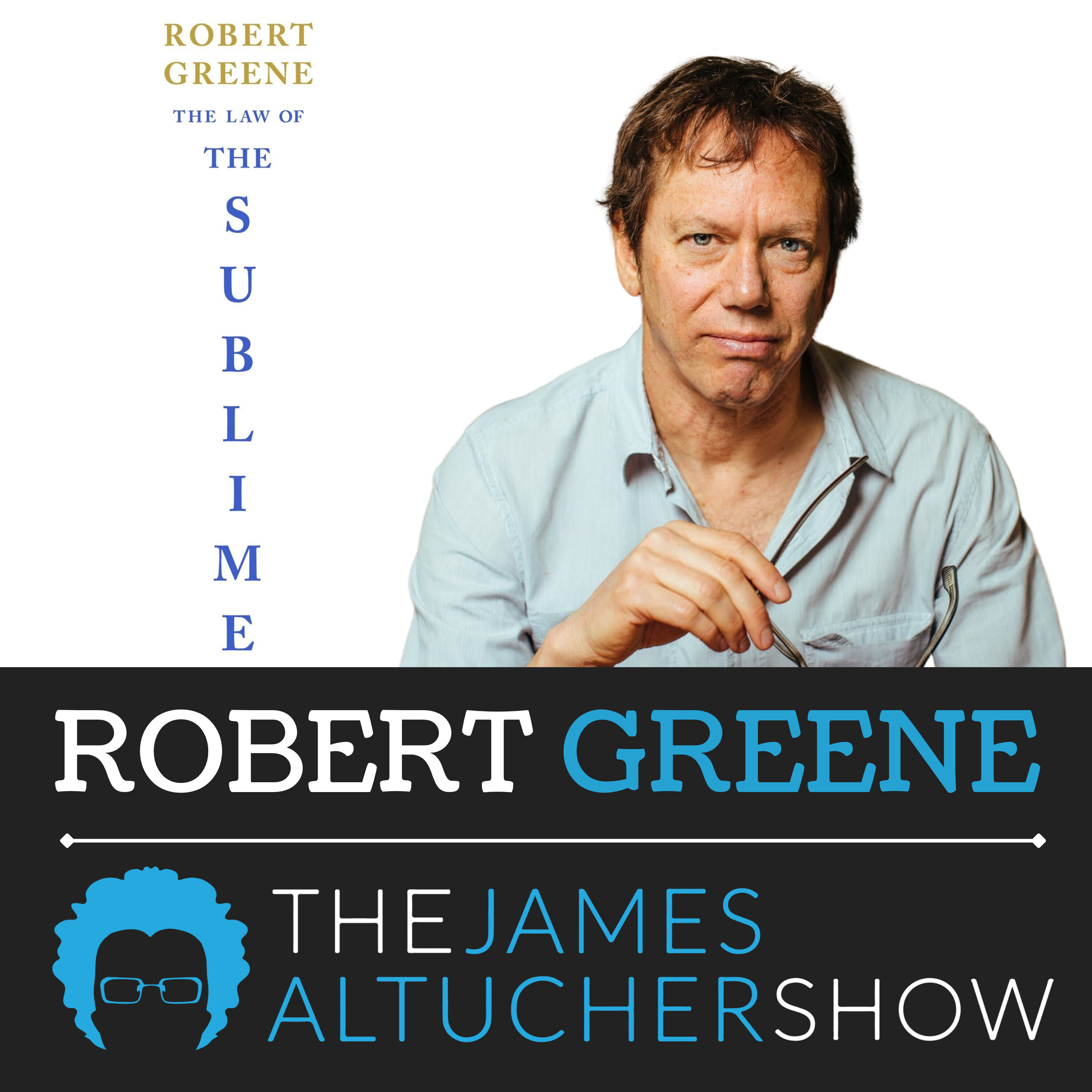 Robert Greene: Finding the Sublime After a Stroke | After the stroke, Greene could barely make it ten steps from his front door, so he went looking for vastness in the ivy on his wall and the night sky.A Note from James:Some of my favorite books are The 48 Laws of Power, Mastery, and The Laws of Human Nature, all written by one of the best writers out there and a good friend, Robert Greene.He’s been on the podcast many times.And if you want to learn storytelling, history, and valuable lessons you can actually use in your life, read those books—or really any of Robert’s books.But now he has a brand-new book, The Law of the Sublime.Robert started thinking about this book before he had a stroke about eight years ago. But after the stroke, he began experiencing the world differently.He began looking for what he calls the sublime.And the idea is that we can do this too.We spend so much of our lives inside our own heads. We obsess about everyday problems, money, work, status, technology, whatever is happening next.And while we’re doing that, we can miss the beauty and strangeness of the universe we’re actually living in.Robert gives exercises for breaking out of that.He tells stories from history. He talks about animals, childhood, death, consciousness, science, love, nature—all of these different ways of seeing beyond the little bubble we normally live inside.The book took him seven years to write.After the stroke, writing itself became much harder.But I think that struggle became part of the book.I would say this podcast changed my life.I hope it changes yours.Here’s Robert Greene, author of The Law of the Sublime.What You’ll Learn:How Robert’s stroke completely changed the book he originally planned to write.Why the sublime is something you feel, not simply an intellectual concept.How language, technology, and routine can narrow the way we experience reality.Why mortality can make life feel more vivid rather than simply more frightening.What animals and other forms of perception can teach us about the limits of human consciousness.How childhood curiosity offers a path back to awe, mystery, and deeper attention.Why surrender and sensitivity are essential to experiencing both love and the sublime.Practical exercises Robert uses to help readers slow down, notice more, and experience the familiar world differently.Timestamped Chapters:[02:46] A Note from JamesJames introduces Robert’s previous books, his stroke, and The Law of the Sublime.[04:26] How the Stroke Changed the BookJames skips the familiar medical story and asks the more interesting question: how did surviving the stroke change Robert’s understanding of the sublime?[05:29] The Book Robert Planned to WriteBefore the stroke, Robert imagined traveling to mountains, deserts, observatories, and remote landscapes in search of extraordinary experiences.[05:57] Finding the Sublime Without Leaving HomeUnable to travel, Robert learns to find intensity in the sky, plants, conversations, and the limited world immediately around him.[07:17] Can You Experience Near-Death Without Nearly Dying?James notices that many of the book’s exercises attempt to disrupt ordinary perception in a way that echoes a near-death experience.[09:05] The Sublime Is a Sensation, Not a ConceptRobert explains why readers must feel the idea rather than merely understand it intellectually.[10:04] Waking Up From the Human-Made WorldRobert argues that language and technology can mesmerize us into treating our constructed reality as reality itself.[11:19] Who Are You Without the Labels?Robert challenges the familiar descriptions—shy, ambitious, spiritual, extroverted—that we use to define ourselves.[12:23] Discovering Your “Second Self”Beneath social labels, Robert believes there is a more mysterious self defined by physiology, sensation, and a unique way of experiencing the world.[13:12] What Is the Practical Benefit of the Sublime?James asks how this philosophy improves a life compared with the clearer goals of books like Mastery.[13:56] The Human Hunger for Something LargerRobert argues that mortality creates a need for meaning, connection, and an experience that transcends the individual self.[15:00] When Your World Shrinks to the Size of a SmartphoneAlgorithms, attention, status, and constant self-focus become what Robert sees as forces working against the sublime.[16:26] The Cosmic SublimeRobert tells the story of a man whose therapy changes when his therapist stops talking and takes him climbing instead.[17:49] Expanding the Mind Instead of Shrinking ItThe vastness of the universe offers an antidote to the repetitive concerns of everyday life.[18:49] Why This Book Was Harder Than The 48 Laws of PowerStrategy can be reduced to patterns and moves. The sublime resists that kind of logical formula.[20:26] Writing the Entire Book by HandAfter losing the use of his left hand, Robert spends seven years handwriting and repeatedly rewriting the manuscript.[21:18] Why Slower Writing Changed His ThinkingThe physical difficulty forces Robert to slow down, revise more deliberately, and think at a different depth.[22:37] Mozart and the StarlingRobert tells the remarkable story of Mozart’s relationship with a bird that could imitate his music.[25:20] Music Written for Another SpeciesA strange Mozart composition takes on new meaning when later starlings appear to respond to it differently from ordinary human listeners.[26:29] Animals Live on a Different Earth Than We DoJames and Robert discuss how other species perceive magnetic fields, heat, sonar, scent, and visual information humans cannot access.[27:14] The Interspecies SublimeScience becomes a route toward wonder as Robert considers what consciousness might look like from inside another animal.[30:20] What Is Consciousness?James asks one of the questions Robert says may be impossible to answer from inside consciousness itself.[31:01] Panpsychism and the Mystery of AwarenessRobert discusses the philosophical idea that consciousness may be a fundamental feature of reality while emphasizing that he does not know whether it is true.[33:00] Language Can’t Describe EverythingJames returns to the problem at the heart of the book: words evolved for practical communication, not necessarily for describing the deepest aspects of experience.[34:04] Dersu Uzala and the Consciousness We LostRobert tells the story of an Indigenous Siberian hunter able to read weather, animals, forests, and landscapes with extraordinary sensitivity.[36:17] Speaking to a Siberian TigerDersu’s encounter with a tiger becomes an example of a relationship with nature radically different from the modern scientific mindset.[38:12] Mortality, Buddhism, and Ramana MaharshiJames connects Robert’s death exercises with religious traditions that deliberately contemplate mortality.[39:26] Death as an Intensifier of LifeRobert explains why awareness of mortality can produce a more intense form of consciousness.[41:29] Childhood as a Doorway Back to the SublimeBefore language and certainty dominate the mind, children encounter the world as strange, new, and mysterious.[42:23] Is Melancholy Sublime?James describes the strange pleasure inside sadness, especially when remembering moments with his daughters that can never return.[42:54] The Sublime Mixes Pain and PleasureRobert connects melancholy with the simultaneous terror and exhilaration of feeling insignificant inside something enormous.[45:26] Technology Is Flattening EmotionRobert argues that modern life reduces both the range of experiences available to us and the emotional depth with which we respond.[46:25] How the Stroke Changed Robert EmotionallyA previously analytical person, Robert found music and emotion almost overwhelmingly intense after the stroke.[48:00] Do We Have Consciousness—or Belong to It?James explores whether consciousness might be something humans participate in rather than something generated entirely by the individual self.[49:37] The Importance of MysteryRobert argues that believing we already understand reality creates a kind of intellectual and emotional deadness.[52:00] The More You Know, the Stranger the World GetsEinstein and Socrates become examples of a form of wisdom grounded in recognizing the limits of knowledge.[53:22] M.C. Escher and the ImpossibleImpossible staircases and infinite visual patterns reveal the tension between what the brain thinks it sees and what can actually exist.[55:34] Escaping the Addiction to Our Own RealityJames sees the book’s exercises as attempts to interrupt our automatic belief that our thoughts accurately describe the world.[56:01] Psychedelics and the Doors of PerceptionRobert reflects on his earlier experiences with LSD, mushrooms, and peyote and how they altered his perception of ordinary things.[57:52] Psychedelics as a Tool, Not a DestinationRobert says altered states can open perception but believes the goal is eventually to access greater sensitivity without relying on substances.[59:11] One Exercise You Can Try TodayJames asks Robert for a practical exercise listeners can use immediately.[59:49] Remember the World Before You Were BornRobert describes an exercise that uses childhood objects, family memories, and imagination to experience the past as something still alive.[01:03:00] Your First DeathThe paradox of imagining the time before your birth becomes a way to challenge the mind’s ordinary conception of linear time.[01:03:54] Seeing Through Ancient EyesRobert explains his fascination with ancient cultures and how radically different worldviews can loosen our assumptions about the present.[01:05:02] What If Everything Were Sacred?An exercise inspired by ancient and Zen traditions asks the reader to reverse ordinary judgments about beauty, ugliness, age, waste, and decay.[01:06:12] The Hidden Story of Harriet TubmanJames asks about Robert’s exploration of Tubman’s spirituality and the African traditions woven into her worldview.[01:07:19] Harriet Tubman’s Inner VoiceRobert examines the powerful guidance Tubman described experiencing after a serious head injury.[01:08:15] The Daemon and the Second SelfRobert connects Tubman’s inner guidance with his broader idea of a deeper self beneath our socially constructed identity.[01:10:36] Surrender and the SublimeJames asks whether accepting circumstances—including Robert’s physical limitations after the stroke—is essential to seeing differently.[01:11:22] Sensitivity Is a Form of SurrenderRobert explains how opening the senses to small differences in sound, color, scent, and texture changes our experience of the world.[01:12:11] Take a Walk Through Pure SoundOne exercise asks the reader to stop interpreting and simply listen to every sound in the environment.[01:12:33] The Love SublimeRobert describes deep love as a surrender in which another person stops feeling like an object outside you and becomes part of your inner world.[01:13:54] Where Robert Finds the Sublime NowJames asks where Robert has felt the greatest sense of awe during the years since his stroke.[01:14:36] When Ordinary Life Became Ordinary AgainThe heightened perception Robert felt in the hospital faded—and its disappearance initially left him depressed.[01:15:00] Writing Became a Way BackResearching the Big Bang, extinction, ancient rituals, animals, and history repeatedly reopened the experience he was trying to describe.[01:16:00] Experiencing the Book From a BicycleRobert takes the exercises into the hills around his home, using a recumbent bike to reconnect the research with physical experience.[01:17:36] How Do You Follow a Book Like This?After seven years on one project, James asks what Robert could possibly write next.[01:18:04] Robert’s Next ObsessionRobert says he is increasingly fascinated by the invisible forces—cultural signals, trends, and barely perceptible changes—that shape the future before most people notice them.[01:20:28] Why These Conversations Matter to JamesJames tells Robert how deeply their conversations continue to affect him years after they end.Additional Resources:The Law of the Sublime — Robert Greene, VikingRobert Greene — Official WebsiteRobert Greene — Official YouTube ChannelMozart’s Starling — Lyanda Lynn HauptGödel, Escher, Bach: An Eternal Golden Braid — Douglas HofstadterThe Tibetan Book of the Dead — Penguin ClassicsSee Privacy Policy at https://art19.com/privacy and California Privacy Notice at https://art19.com/privacy#do-not-sell-my-info. | 1h 22m 16s | ||||||
| 11/14/26 | Wolfgang Puck: Knowing Your Calling Is Step One. Following It Is Step Two [From the Archive] | Episode Description:At 14, Wolfgang Puck left home determined never to return.His stepfather had spent years telling him he would never amount to anything. Wolfgang found an apprenticeship in a restaurant, but about a month later the kitchen ran out of potatoes.The chef blamed him.He was fired.Unable to imagine going home, Wolfgang stood on a bridge over an icy river for an hour considering suicide.Then something changed.He decided to go back to work the next morning.The chef still wanted him gone. Wolfgang refused to leave. Eventually, the restaurant owner found him another kitchen.That decision began a career that would take him from Austria to some of France’s great restaurants, then to Indianapolis, Los Angeles, Spago, CUT, the Oscars, cookbooks, consumer products, catering, television, and a name that became synonymous with the rise of the celebrity chef.But James is less interested in the size of Wolfgang’s business than in the thing underneath it.Why cooking?How did Wolfgang know?His answer isn’t analytical. His entire body and spirit change when he enters a kitchen or walks through a farmers market.He feels alive.That instinct shapes almost everything they discuss.Wolfgang grew up eating what was available in the season. Berries and peas in summer. Apples and pears in fall. Root vegetables in winter. His mother cooked from the garden because that was what the family had.Decades later, the same philosophy still guides his restaurants: find what is best right now, buy the best ingredients possible, and try not to ruin them.James and Wolfgang expand that philosophy into a larger conversation about mastery.Learn the fundamentals. Repeat them until they become instinctive. Study people who are better than you. Then use imagination to create something of your own.Wolfgang also explains why becoming an owner mattered so much to him. He didn’t simply want to cook someone else’s menu. He wanted control over the entire experience—from the food and wine to the art, music, service, and way a guest feels when they walk through the door.As the company grew, that created a different problem: how do you scale something personal?Wolfgang’s answer is to establish the core and then give talented people freedom inside it. A CUT chef knows the restaurant needs great steaks, but Wolfgang still wants that chef going to the market, finding the best fish available, and creating something new.The business scales because the philosophy scales.And perhaps that is the larger lesson of Wolfgang’s career.He never really stopped being the kid who loved cooking with his mother.He simply kept finding bigger ways to express it.Editorial Note:This is a From the Archive episode, originally released as Episode #328: “Knowing Your Calling is Step One. Following It is Step 2 (A Chef’s Journey).”Some details—including restaurant locations, personnel, business scale, the MasterClass launch, and Wolfgang’s references to his sons’ ages and careers—reflect the original recording period.Wolfgang Puck’s culinary organization remains active across fine dining, catering, and consumer businesses. Spago and CUT continue to operate in multiple international locations, and his Wolfgang Puck Teaches Cooking MasterClass remains available.What You’ll Learn:How Wolfgang went from being fired at 14 to building a lifelong career in food.Why seasonal ingredients and simplicity remain central to his cooking philosophy.Why Wolfgang believes mastering the basics matters—but imagination matters even more.How apprenticing with exceptional chefs accelerated his development.Why owning his restaurants gave Wolfgang the freedom to shape the entire customer experience.How he gives chefs creative freedom without losing the core of the Wolfgang Puck brand.Why customer happiness and word of mouth became fundamental to his business strategy.How curiosity, repetition, calculated risk, and genuine passion helped turn one craft into a global business.Timestamped Chapters:[02:00] From “Good for Nothing” to Wolfgang PuckWolfgang previews his childhood, being fired from his first restaurant job, and why passion can eventually turn hours of practice into expertise.[02:54] What Success Means to Wolfgang PuckJames introduces Wolfgang not simply as a celebrity chef, but as someone who kept expanding one lifelong passion in different directions.[03:54] Growing Up in an Unhappy HomeWolfgang describes his relationship with his stepfather and why cooking with his mother became such an important refuge.[04:24] The Food Wolfgang Loved as a KidWiener schnitzel, fried chicken, Sachertorte, Kugelhopf, Palatschinken, and the food memories that still animate him decades later.[05:46] Cook With the Season You’re InJames notices a deeper philosophy in Wolfgang’s cooking: respect what nature is providing right now.[07:04] “Only a Guy Like You Would Eat Strawberries in February”Wolfgang explains why peak ingredients matter and why forcing food out of season usually means sacrificing flavor.[08:11] Can Convenience Food Still Be Good?Wolfgang explains how he tries to apply the same ingredient philosophy to soups, pizzas, frozen foods, and other consumer products.[10:00] Food Is FuelThey discuss organic ingredients, industrial food, seasonality, and why Wolfgang cares deeply about what people put into their bodies.[12:21] Fired Over Potatoes at 14Wolfgang returns to his first apprenticeship and the kitchen mistake that nearly ended his career before it began.[13:29] “I’m Not Going Home”After being fired, Wolfgang walks to a bridge and considers jumping into the icy river.[14:03] Going Back the Next MorningInstead of jumping, Wolfgang returns to the restaurant, refuses to leave, and eventually gets another chance.[15:29] Where Does Perseverance Come From?James asks why Wolfgang stayed with cooking after both his stepfather and his first chef told him he was worthless.[16:10] How Do You Know What You’re Meant to Do?Wolfgang traces his attraction to cooking back to his mother—and admits he never really imagined another life.[18:06] Basics First. Imagination Next.Wolfgang argues that technique matters, but imagination becomes increasingly important once the fundamentals are in place.[18:44] The 72-Year-Old Chef Who Changed Wolfgang’s LifeIn France, Wolfgang meets a restaurant owner whose passion proves it is never necessarily too late to pursue a craft seriously.[21:14] Learn From the Best People You Can FindJames and Wolfgang discuss apprenticeship and why exposure to exceptional practitioners changes what you believe is possible.[22:01] Cooking for PicassoWolfgang remembers Picasso almost sticking his finger into a pot of duck sauce because he was fascinated by its color.[23:09] We Eat With Our Eyes FirstFood should look beautiful without becoming artificial. Wolfgang explains why presentation should reveal the ingredient rather than disguise it.[24:38] Great Seasoning Is Usually SimpleSalt, pepper, lemon—and why freshly toasted and ground pepper can transform a dish.[27:27] When a Chef Becomes an OwnerJames asks when Wolfgang’s desire to control his own destiny began turning him from employee into entrepreneur.[27:59] “This Is What I Was Born to Do”Wolfgang describes the physical feeling he gets in kitchens and farmers markets—and why he never seriously considered leaving cooking.[29:11] Can You Find Your Calling at 50?James asks what someone should do if they discover a passion later in life.[29:50] There Are No ShortcutsWolfgang says passion leads naturally to repetition, and repetition is what develops ability.[31:54] Why Wolfgang Moved From France to IndianapolisA love of auto racing and a misunderstanding about the Indianapolis 500 send him from Monaco to the American Midwest.[33:25] The Well-Done Steak ProblemWolfgang adjusts to American customers—and cooks more well-done steaks in a year than he wants to remember.[34:42] Why Wolfgang Needed to Own the RestaurantAfter conflict at Ma Maison, Wolfgang realizes he wants responsibility for his own decisions and his own destiny.[35:55] Spago and the Complete ExperienceOpening Spago lets Wolfgang combine food, hospitality, service, atmosphere, and his own point of view.[37:00] Why Great Restaurants SurviveCelebrity buzz may get someone through the door once. Wolfgang says longevity requires the entire experience to work.[38:34] Passing the Business to the Next GenerationWolfgang explains why successors need experience away from the family business—and real responsibility when they return.[40:30] Why Pink Floyd Is Playing at CUTOwning the restaurant means Wolfgang can control not only the menu, but the art and music surrounding the meal.[42:23] How to Scale Without MicromanagingWolfgang gives his chefs boundaries, teaches them the philosophy, and then expects them to use their own judgment.[43:29] Buy the Best Ingredients and Don’t Screw Them UpHis operating philosophy becomes almost absurdly simple: start with quality and enhance rather than overpower it.[45:08] The Core of the Wolfgang Puck BrandThe mission is not really about Wolfgang. It is to make customers happy while building a sustainable business.[47:49] How Spago Became the Celebrity RestaurantRelationships formed at Ma Maison bring figures like Billy Wilder, Gregory Peck, Sidney Poitier, and others into Spago.[51:31] Your Customers Become Your PublicistsWolfgang explains why photos, word of mouth, recognition, and hospitality became powerful marketing tools.[53:16] The Kitchen as an OrchestraWolfgang describes the state of total focus required during service, with the chef acting as conductor.[55:00] Another Brick in the WallRestaurants, catering, consumer products, television, and MasterClass are not separate careers to Wolfgang—they are extensions of the same core passion.[56:38] Curiosity, Learning, and Calculated RiskWolfgang identifies curiosity and willingness to keep learning as essential ingredients in mastery and business.[01:01:21] Technique Without ImaginationBeing technically competent is not enough. Wolfgang explains why the next level comes from experimentation and personal taste.[01:02:43] The Accident That Created Smoked Salmon PizzaRunning out of brioche leads Wolfgang to improvise with pizza crust, smoked salmon, dill cream, and caviar—creating one of his signature dishes.[01:04:00] How Wolfgang Built a Catering BusinessHe remembers personally cooking in clients’ homes before training chefs he could trust to deliver the same standard without him.[01:05:29] Why Is Avocado Toast Everywhere?James asks one of the great culinary questions of the era.[01:06:42] Wolfgang’s Ideal BreakfastForget avocado toast: Wolfgang would rather have eggs, white truffles, and a bottle of red wine.[01:07:27] James Tries CookingJames describes nearly setting his oven on fire while making salmon, and Wolfgang gives him a simpler alternative.[01:09:30] Wolfgang Puck’s MasterClassJames recommends Wolfgang’s course, where recipes become a vehicle for understanding technique and philosophy.[01:11:18] The Best Restaurant Is Where They Know YouWolfgang explains why recognition and genuine hospitality can matter as much as the food itself.[01:14:01] Data Should Help You Serve People BetterWolfgang sees customer data as a tool for hospitality—not as the thing that should run the business.[01:14:28] “A Cook?”Wolfgang remembers a woman abandoning him on a dance floor after learning his profession—and reflects on how dramatically the status of chefs has changed.Additional Resources:Wolfgang Puck — Official WebsiteWolfgang Puck — Official BiographyWolfgang Puck RestaurantsSpago Beverly HillsCUT New YorkWolfgang Puck CateringWolfgang Puck Teaches Cooking — MasterClassSee Privacy Policy at https://art19.com/privacy and California Privacy Notice at https://art19.com/privacy#do-not-sell-my-info. | 1h 19m 22s | ||||||
| 11/1/26 | Kamal Ravikant: Maybe a Pilgrimage Can Save Your Life [From the Archive] | Episode Description:Kamal Ravikant did not set out looking for a pilgrimage.His estranged father died. Kamal had promised to take his ashes to the Ganges. He had lost his job, had only a few thousand dollars, and instead of returning home after India, he kept going.He climbed in the Himalayas. Spent time around Tibetan monasteries. Traveled through Europe.Eventually, almost by accident, he found himself walking the Camino de Santiago—a centuries-old pilgrimage stretching hundreds of miles across northern Spain.That journey became the inspiration for his novel Rebirth: A Fable of Love, Forgiveness, and Following Your Heart.In this From the Archive conversation, James and Kamal explore what makes a pilgrimage different from an ordinary trip.You cannot simply arrive at the destination.The transformation comes from walking there.Every day brings physical difficulty, unfamiliar places, strangers, uncertainty, and long stretches of time with your own thoughts. Kamal says those conditions forced him to confront grief he had avoided since childhood, particularly his complicated relationship with his father.That leads to one of the episode’s central ideas: fear can sometimes function as a compass.There are fears that protect us from physical danger. But many of the fears governing everyday life—fear of embarrassment, rejection, failure, difficult conversations, or being judged—may point toward exactly the experiences we need to have.Kamal began treating those fears differently.If something scared him and the danger was not physical, he started asking whether the fear was telling him to move forward rather than retreat.James and Kamal then ask whether someone needs to walk 550 miles across Spain to experience the same kind of transformation.Kamal says no.A pilgrimage can be any deliberate practice that pulls you outside the familiar, makes you confront yourself, and is repeated consistently enough to change you.That might mean meditation. Journaling. Creativity. Talking to strangers. Changing a routine. Facing something you have been avoiding.The consistency matters.Kamal connects that lesson to his daily practices and eventually to the writing of Rebirth itself.The first draft was written years earlier. He rewrote the novel again and again, learned from repeated rejection, studied writers he admired, and eventually received an editorial note that initially seemed impossible: remove most of the characters and dramatically cut the manuscript.Writing the book became another pilgrimage.And underneath both journeys was the same lesson:Step by step.Editorial Note:This is a From the Archive episode, originally released as Episode #202, “Kamal Ravikant: Maybe a Pilgrimage Can Save Your Life,” on January 3, 2017.The episode coincided with the original publication of Kamal’s novel Rebirth: A Fable of Love, Forgiveness, and Following Your Heart. Hachette lists the original digital edition as published January 3, 2017. The novel follows Amit, a character based partly on Kamal’s own experiences, as he carries his estranged father’s ashes to India and eventually walks the Camino de Santiago.The conversation also looks back at the original self-published edition of Love Yourself Like Your Life Depends On It. Kamal later substantially expanded that book for a new edition published in 2020.What You’ll Learn:Why Kamal’s grief over his estranged father eventually sent him traveling for eight months.What makes a pilgrimage fundamentally different from an ordinary vacation.Why Kamal began treating certain kinds of fear as a signal to move forward.How strangers and unfamiliar environments can change the stories we tell about ourselves.Why forgiveness became as much about freeing Kamal as forgiving his father.How small rituals and consistent practices can create an everyday form of pilgrimage.Why hitting bottom does not automatically create transformation—and what can.How years of rejection and rewriting ultimately made Kamal a better writer.Timestamped Chapters:[02:35] Kamal Ravikant ReturnsJames welcomes Kamal back and remembers how Love Yourself Like Your Life Depends On It first took off.[04:30] The 8,000-Word Book Publishers Wouldn’t TouchJames and Kamal discuss self-publishing and why a meaningful book does not have to fit the traditional publishing industry's preferred length.[06:05] RebirthJames introduces Kamal’s first novel and its roots in events from Kamal’s own life.[06:49] The Death of Kamal’s FatherKamal describes growing up separated from an abusive father and reconnecting only after learning he was dying.[08:05] A Deathbed PromiseKamal promises to take his father’s ashes to the Ganges, beginning a journey that will last far longer than planned.[09:08] Eight Months of WanderingWhat begins as a short trip becomes travel through the Himalayas, Tibetan monasteries, Europe, and eventually Spain.[10:30] Discovering the Camino de SantiagoA conversation with a woman in Italy leads Kamal toward the centuries-old pilgrimage route.[10:47] Why a Pilgrimage Isn’t a VacationJames argues that modern travel can be purchased instantly, while a pilgrimage still has to be experienced step by step.[12:08] Who You Become Along the WayKamal explains why the destination matters less than the person created by the journey.[13:17] Compressing Years of Life LessonsIf you want intense personal growth in a short period, Kamal says walking a pilgrimage is one way to do it.[14:12] The Conversations You Never HadKamal talks about unresolved grief and the painful conversations he could no longer have with his father.[15:00] Why People Go on PilgrimagesSome are grieving. Some are stuck. Others simply know something in their lives has to change.[16:42] You May Get Something Different From What You WantedKamal explains why transformation often produces the lesson you need rather than the one you thought you were searching for.[18:19] Everything Becomes New AgainForeign languages, unfamiliar landscapes, and constantly changing surroundings force the pilgrim back into the present.[19:13] The Extraordinary People You MeetKamal remembers the travelers whose stories changed the way he understood his own life.[20:31] Eight Months on $3,500James and Kamal discuss surrendering the idea that time must always be converted into money.[21:20] Fear as a CompassKamal begins explaining why the fear surrounding a meaningful decision can sometimes point toward the direction you should go.[21:51] If It Scares Me, I Have to Do ItPhysical danger is one thing. Fear of judgment, failure, or embarrassment is something else—and Kamal learned to move toward it.[23:41] How Do You Take a Mini-Pilgrimage?James asks how someone with a job, family, and ordinary responsibilities can apply the idea without disappearing across Europe.[24:32] Face Fear and Go WithinKamal reduces pilgrimage to two basic elements: challenge yourself and create enough space to examine what is happening inside.[25:32] Get Outside Your Ordinary LifeSome of the people who most changed Kamal were people he never could have encountered inside his usual social world.[26:09] Why Consistency Creates TransformationWalking one day does not make a pilgrimage. Kamal argues that repetition is what allows the change to happen.[27:08] Kamal’s Morning PracticeMeditation, a short version of morning pages, and poetry become simple rituals for carrying lessons into everyday life.[29:16] Remembering Death to Appreciate LifeKamal discusses mortality, rebirth, and why confronting death can sharpen appreciation for being alive.[30:02] Is There Really Such a Thing as Rock Bottom?James and Kamal examine why some people bounce back after collapse while others continue falling.[31:33] You Don’t Need a 550-Mile WalkThe underlying requirement is an experience that is genuinely yours—not another convenient piece of packaged self-help.[31:58] Has Self-Help Become Too Convenient?James wonders whether endless inspirational quotes and advice have removed the difficult experience that real transformation requires.[32:35] Step by StepA German pilgrim gives Kamal the advice that applies equally to walking, startups, venture funds, and writing novels.[33:08] Sixteen Years Writing RebirthKamal traces the book through repeated rewrites, rejection letters, studying great writers, and slowly improving his craft.[34:16] Cut 70% of the CharactersKamal remembers receiving the brutal editorial assignment that finally transformed the manuscript.[35:58] Becoming Just Another PilgrimLeaving behind his normal identity creates a sense of humility and freedom.[36:56] How Do You Forgive an Abusive Parent?James challenges Kamal directly on forgiveness and whether some experiences should ever be let go.[38:38] The Moment Forgiveness HappenedIn a small church in O Cebreiro, Kamal experiences the emotional tipping point he had been walking toward.[39:00] Paulo Coelho Walked the Same RoadKamal later discovers that an important moment in Paulo Coelho’s The Pilgrimage took place in the same church.[40:29] What Creates the Tipping Point?Fear, physical difficulty, unfamiliarity, strangers, and thousands of individual steps accumulate until something changes.[41:04] Letting GoKamal explains why forgiveness and accepting reality can create movement where resistance creates pain.[41:27] “I Say Yes to All That Happens”A monk gives Kamal a simple answer to the question, “How do you find peace?”[43:09] Stop Asking “Why Me?”Instead, Kamal suggests asking: this happened—now what?[43:21] Coming Home as a Different PersonReturning from a transformational experience can make ordinary conversations and old relationships unexpectedly difficult.[44:35] The Pilgrimage Becomes a Writing PracticeKamal begins writing partly because he wants to preserve what happened and explain it to people who were not there.[44:58] When the Practice Is Half-Assed, Life Is Half-AssedKamal explains why transformation fades unless the lessons become repeatable practices.[46:06] The Speed of the Bounce BackJames and Kamal discuss whether resilience becomes less about avoiding failure and more about recovering faster.[46:50] Why Tell the Story as Fiction?Kamal explains why he believed the lessons of Rebirth would reach readers more deeply through story than direct instruction.[48:44] Writing in the First PersonJames and Kamal discuss vulnerability, perspective, and why the reader needs to travel alongside the character rather than be lectured.[49:28] RebirthJames recommends the novel and reflects on pilgrimage as a timeless version of the hero’s journey.Additional Resources:Rebirth: A Fable of Love, Forgiveness, and Following Your Heart — Hachette Book GroupKamal Ravikant — Official BooksThe Alchemist — Paulo CoelhoCamino de Santiago — Official Tourism InformationSee Privacy Policy at https://art19.com/privacy and California Privacy Notice at https://art19.com/privacy#do-not-sell-my-info. | 53m 21s | ||||||
| 10/31/26 |  Chandler Bolt: How to Make Your Book Stand Out in the AI Era | If AI lets everyone publish a book, what is left to compete on once supply is way up and demand is only slightly up?A Note from James:One weekend I tried to write a vampire novel with AI.And by the end, I felt like I was rewriting almost everything it gave me.So eventually I thought: why did I even use AI?AI is very good at giving you the average answer.And for a lot of things, the average answer is exactly what you want.But with writing, the average answer usually isn’t the interesting answer.Chandler Bolt runs selfpublishing.com. They’ve helped publish thousands of books.And one of the examples he gave me was a book for mobile notaries.Mobile notaries.When they published it, even Chandler thought, “Who is going to read this?”It has something like 1,600 reviews on Amazon.That immediately got me thinking about what the moat is now.Because AI can help almost anyone create a book.But if I write a book on intimacy, somebody can reasonably say, “James, you’re on your third marriage. Why am I listening to you?”No moat.Then Chandler introduced me to something I’d somehow never heard before after writing roughly 25 books:The viral coefficient.How many additional book sales does one reader create?And why would you ever send somebody two copies of your book instead of one?For years, I’ve argued that self-publishing can outperform traditional publishing.Chandler corrected me a little.The average self-published book doesn’t necessarily outperform the average traditionally published book.But the authors making serious money?A lot of them are self-published.So we talked about books, AI, niche markets, distribution, audiobooks, Amazon, how people discover information now, and what still makes a book worth writing when anybody can generate 50,000 words before lunch.Here’s Chandler Bolt.What You’ll Learn:Why Chandler says book demand is holding up even as the number of books being published explodes.Why highly specific nonfiction can outperform broad books on leadership, success, or self-help.How AI changes the economics of writing without eliminating the need for expertise and originality.Why trust, discoverability, and distribution become stronger moats as content gets easier to produce.What Chandler means by a book’s viral coefficient and how authors can increase it.Why changing a reader’s behavior may be more valuable than simply teaching them information.How entrepreneurs can use a book to generate far more value than its royalties.Why Chandler believes books still have a role when AI can answer almost any surface-level question instantly.Timestamped Chapters:[02:47] A Note from JamesJames introduces his failed experiment writing a vampire novel with AI, Chandler’s niche-book strategy, and the concept of the viral coefficient.[03:42] What Changed in Publishing This Year?Chandler gives James an update on selfpublishing.com and explains how AI is changing both publishing and customer acquisition.[04:57] People Are Still Buying BooksChandler argues that demand remains resilient; the bigger change is the enormous increase in supply.[06:04] The Problem With Generic NonfictionJames and Chandler agree that another broad book about success or leadership has a difficult time competing unless it offers something genuinely different.[07:32] What Kinds of Self-Published Books Are Working?Chandler describes the strength of niche prescriptive nonfiction, fiction’s greater upside and risk, and continued audiobook growth.[08:48] The Mobile Notary Book That Took OffSign & Thrive becomes Chandler’s example of how surprisingly narrow subjects can support successful books.[09:04] AI Books, Intimacy, and Narrow NichesChandler gives examples ranging from AI leadership to relationships, real estate, mobile homes, and self-storage.[11:16] Become the King of a Small CategoryInstead of competing in a giant category, Chandler explains why an author can use a specific book to own a much smaller niche.[11:42] What Does selfpublishing.com Actually Do?Chandler explains the company’s coaching, production, publishing, marketing, and ghostwriting model.[12:55] Is Self-Publishing Still the Backup Plan?James and Chandler trace the shift from publishing-industry gatekeepers toward direct access to readers.[13:51] Who Actually Makes More Money?Chandler separates average performance from the economics available to successful self-published authors who retain more of the upside.[15:42] The Economics of Traditional PublishingJames remembers his experience publishing Skip the Line and explains why advances often matter more to authors than royalties.[16:14] Could AI Write The Six Pillars of Intimacy?James asks whether a capable model could research and assemble most of a prescriptive nonfiction book.[17:01] Readers Ultimately Care Whether the Book Is GoodChandler argues that AI assistance itself may matter less over time than whether the finished product actually delivers value.[18:17] The Moat Has MovedIf everybody can create the product, James argues, competitive advantage shifts toward trust, reputation, expertise, and distribution.[19:28] Discoverability vs. DistributionChandler separates getting found when someone is searching from proactively getting the book in front of readers.[20:26] The Viral Coefficient of a BookChandler introduces the idea that every reader can potentially generate additional readers.[21:00] How Do You Make a Book More Viral?Reviews, participation, challenges, team purchases, and social behavior all become mechanisms for turning one reader into more than one sale.[22:30] How James Launched Choose YourselfJames remembers refunding early readers who could demonstrate they had actually read the book, helping generate attention and reviews.[24:37] Behavior Change Is the Best MarketingChandler uses The Miracle Morning to explain why people naturally talk about a book when it changes something they actually do.[26:06] Why You Should Send Two CopiesChandler recommends giving prospects or customers two books with one instruction: pass the second copy to somebody who needs it.[27:10] What Can a Publishing Company Do That AI Can’t?Chandler argues that packaging, positioning, coaching, distribution, and understanding what readers want remain critical.[28:23] The Book Is the Front End, Not the BusinessA business book can generate consulting, training, speaking, leads, investment opportunities, and authority worth far more than its royalties.[29:16] Why James Thinks AI Writing Will PlateauJames explains his theory that generative models are excellent at finding common patterns but struggle when creative work demands unusual choices.[31:12] The AI Vampire Novel ExperimentJames describes spending a weekend trying to co-write fiction with AI—and eventually realizing he was rewriting nearly everything himself.[32:21] Creativity Requires Bold InputsChandler argues that averaging the preferences of many writers can remove exactly the qualities that make an individual voice distinctive.[35:13] What About Publishing 1,000 AI Books?James asks whether enormous AI-generated output can still exploit small publishing niches.[35:38] AI Publishing ArbitrageChandler compares the strategy with an older model built around cheap ghostwriters and algorithmic arbitrage—and questions its durability.[36:46] Will People Still Read Books?James asks whether websites, streaming, social media, podcasts, and now AI will eventually erode long-form reading.[37:16] AI Is Wide; Books Go DeepChandler argues that instant answers satisfy surface-level curiosity but do not necessarily replace sustained immersion in a subject.[38:11] Why Audiobooks Keep Expanding the MarketThey discuss how easier access through services like Spotify can bring audiobook listening to people who never developed an Audible habit.[39:30] From $10 Million to $100 MillionJames asks Chandler how he plans to grow selfpublishing.com by another order of magnitude.[40:03] When AI Starts Taking Your Search TrafficChandler explains how customers who once arrived through Google increasingly ask AI for an answer without visiting a website.[41:07] SEO Becomes AEOJames introduces answer-engine optimization: positioning a business so that AI systems recommend it directly.[42:00] The Winner-Take-More AI Search ResultChandler explains why AI recommendations may be even more valuable than traditional search rankings when the system returns only one or two choices.Additional Resources:selfpublishing.comPublishing by the Numbers 2026Chandler Bolt — Official Bio & BooksPublished.: The Proven Path From Blank Page to Published Author — Chandler BoltSign & Thrive — Bill SorokaThe 6 Pillars of Intimacy — Tony & Alisa DiLorenzoThe Miracle Morning — Hal ElrodScaling Up — Verne HarnishAmazon Kindle Direct PublishingSpotify AudiobooksSee Privacy Policy at https://art19.com/privacy and California Privacy Notice at https://art19.com/privacy#do-not-sell-my-info. | 43m 27s | ||||||
| 10/21/26 |  Tom Bilyeu: What to Do If AI Threatens Your Career | Before building anything, Tom says you can find out in about a day whether people care about the problem, and he explains how to run that test with AI.A Note from James:Back in the ’90s, I built websites.I actually built American Express’s first website.And I remember walking into places like JPMorgan and saying, “Eventually, every one of your customers is going to interact with you through a website.”They laughed at me.They weren’t stupid.They just didn’t want it to be true.I think about that a lot right now.When I was a programmer, a good day might have been 100 lines of working, debugged code.With AI, I can do something closer to tens of thousands.Tom Bilyeu has spent his career reinventing himself.He helped build Quest Nutrition. Then he built Impact Theory, which came out of nowhere and became one of the biggest shows in its category.Now he’s building a video game called Kyzen—a massive, procedurally generated world—and using AI throughout the process.So I asked him the question I was honestly a little scared to hear the answer to.You’re 45. You’ve got a mortgage. You’ve got kids. You’ve built a career.And AI is coming for your job.What happens?Tom did not comfort me.He said history suggests some people will lose their jobs during a technological transition and never really recover.That happens.But then he made a distinction I think is much more useful.It isn’t necessarily about age.It’s about what kind of person you are when the world changes.Do you look for the opportunity?Or do you spend all your time looking at what you’re about to lose?And Tom also gave me one question I’m absolutely stealing.When he uses AI to evaluate an idea, he doesn’t ask:“How do I make this succeed?”He asks:“Why is this going to fail?”That changes the entire conversation.This is Tom Bilyeu.What You’ll Learn:Why Tom believes AI is eliminating many traditional technical and financial business moats.How he uses AI to compress product research, testing, development, and execution.Why one of his most useful AI prompts is: “Why is this going to fail?”What he would do today if he were 21 and starting an AI-enabled business from scratch.How mid-career workers can position themselves before AI changes their jobs.Why Tom thinks brand, distribution, network effects, and judgment become more important as intelligence gets commoditized.What previous technology booms may tell us about today’s massive AI infrastructure investment.How Tom built Impact Theory by finding white space in a crowded market—and how he is applying the same principle to Kyzen.Timestamped Chapters:[02:48] A Note from JamesJames connects the current AI transition to building websites in the 1990s and introduces Tom’s rule for challenging an AI-assisted idea.[04:28] What Tom Is Building NowTom updates James on Impact Theory and introduces Kyzen, the massive procedurally generated game his team has been developing.[05:39] What Is a Moat When Anyone Can Build Software?James asks what protects a game—or any software company—once technical difficulty stops being a meaningful barrier.[06:14] Brand and Network Effects Replace Technical AdvantageTom argues that differentiation will increasingly come from audience, ecosystem, distribution, and the relationships surrounding a product.[08:17] Winning in an Avalanche of ContentImpact Theory’s decade of competing on YouTube becomes Tom’s model for surviving a future where AI creates an overwhelming supply of games and media.[10:04] The AI Wake-Up MomentTom remembers watching a game-development process that once required several people and months of work collapse into a single afternoon.[11:51] Does AI Actually Create Better Businesses?Tom says AI helps entrepreneurs get to revenue faster and with fewer people—but it does not automatically solve product-market fit.[13:31] What Tom Would Do at 21He lays out a practical approach to using AI as a researcher, product-development partner, and accelerator.[15:40] The People-Pleasing ProblemJames warns that AI can enthusiastically help build a terrible idea if the user never challenges it.[16:24] “Why Is This Going to Fail?”Tom explains how he prompts AI for disconfirming evidence, skeptical arguments, previous failures, and first-principles analysis.[18:18] Use AI to Understand the Person Across the TableTom shows how founders can research distributors, customers, decision-makers, and the incentives driving them.[19:25] Better Inputs Create Better AI OutputsA frustrating design exercise teaches Tom that vague stylistic references produce derivative results; understanding the underlying vocabulary produces more original work.[23:12] When Everything Becomes AI-NativeTom predicts that the next stage will come when software, appliances, development environments, and everyday tools are built around AI from the beginning.[25:40] Your Old Advantages Just DisappearedTom describes the unsettling realization that intelligence, speed, technical skill, and capital may no longer provide the same protection they once did.[27:24] From 100 Lines of Code to 50,000James compares his early programming career with the amount of work modern AI tools can generate.[28:25] Today’s AI vs. Artificial SuperintelligenceJames and Tom distinguish the limitations of current models from the far more disruptive future systems AI skeptics and safety researchers worry about.[30:00] What Happens to the 45-Year-Old Worker?James asks the question directly: if you’re mid-career with a family and AI threatens your job, what happens next?[32:01] Money Doesn’t Solve the Meaning ProblemTom argues that even if governments eventually cushion widespread unemployment, people will still need purpose and identity.[33:10] Be the Last Human StandingAs long as AI remains a tool, Tom says the advantage goes to the human who learns how to use it aggressively.[34:16] What Should You Learn Right Now?Tom recommends experimenting with the strongest available AI tools toward work that is economically valuable.[36:17] James Remembers the Early InternetCompanies once laughed when James told them customers would eventually interact through websites. He sees a similar resistance happening now.[37:18] Reinvention Is a Personality TraitTom argues that disruption rewards people who become excited by learning the new thing instead of focusing exclusively on what they may lose.[38:00] Is the AI Infrastructure Boom a Bubble?James and Tom discuss falling inference costs, enormous data-center investment, debt, and the historical pattern of infrastructure booms.[42:35] Even If the Bubble Bursts, AI Still WinsTom argues that AI is already useful enough to spend years transforming existing industries even if model progress stopped tomorrow.[43:11] Which Jobs Last the Longest?Physical work may resist automation longer, but Tom sees embodied AI and robotics eventually reaching even highly skilled trades.[45:48] AI, Medicine, and the Human LayerJames uses a medical story to explore the difference between AI’s analytical ability and the continued need for human judgment, care, and communication.[47:53] How Impact Theory Broke Into a Crowded MarketJames asks how Tom built a major media brand after being told podcasting was already saturated.[48:37] There Is Always Room for BetterTom explains the principle behind Impact Theory’s early growth: find something valuable competitors are not doing and execute it at a higher level.[50:24] Find the White SpaceHigh production value helped Impact Theory attract guests before it had a large audience. Tom says every new entrant needs to identify its own equivalent advantage.[51:31] Building Media With AITom describes using AI for analytics, trend detection, scripting, content generation, and marketing strategy around Kyzen.[53:39] Testing Kyzen Before the Public Sees ItTom explains why the team is starting with trusted testers before expanding access—and why brutally honest feedback is welcome.[55:35] Why It’s Called KyzenThe name comes from the Japanese concept of continuous improvement, deliberately respelled so the project could be trademarked.[56:18] Constant ImprovementJames connects Kyzen’s name back to Tom’s career of repeated reinvention and closes the conversation.Additional Resources:Impact Theory — Official WebsiteProject Kyzen — Official WebsiteTom Bilyeu — YouTubeQuest NutritionClaude — AnthropicChatGPTUnreal EngineSee Privacy Policy at https://art19.com/privacy and California Privacy Notice at https://art19.com/privacy#do-not-sell-my-info. | 56m 44s | ||||||
| 10/13/26 |  Carlos Gutierrez: ADHD Diagnosed at 65, Career Lessons | Struggle is part of the price you pay, he says, and his own worst stretch came right after he took the top job.A Note from James:Carlos Gutierrez was diagnosed with ADHD at 65.Sixty-five.By then, he had already run Kellogg. He had already served in George W. Bush’s Cabinet as Secretary of Commerce.And only then did someone explain the procrastination, the disorganization, and those stretches where he could lock onto one thing for weeks and almost nothing else existed.I know that feeling a little too well.Carlos left Cuba as a kid after his father basically told off Che Guevara. He went to community college and got Ds and Fs in almost every class except public speaking.Then he went from selling cereal out of a truck in Mexico City to running the entire company.Eventually, he went to Washington and ran a department where trade was one of the biggest parts of the job.So of course I had to ask him about tariffs.Carlos is not a big tariff guy. He thinks broad tariffs raise prices and hurt businesses. But he also said something about Trump that I didn’t expect.Trump approaches the executive branch more like a CEO. He makes decisions and expects them to get implemented. And Carlos thinks that could permanently change what voters expect from future presidents.Then there’s China.Carlos told me that when the United States showed up to a negotiation, we might have 20 or 25 things we wanted.China would have one.One.And that completely changes the negotiation.His new book is Sheer Will: Learning to Lead When There Is No Path.At the end, I asked what he would tell a 25-year-old trying to build a career today.His answer is basically the opposite of a lot of what I’ve written over the last decade.And he might be right.Here’s Carlos Gutierrez.Episode Description:Carlos Gutierrez’s career did not follow an obvious path.His family fled Cuba when he was a child. He struggled academically, never finished college, joined Kellogg in Mexico as a sales representative, and eventually became the youngest CEO in the company’s history. From there, he entered government as President George W. Bush’s Secretary of Commerce.His new memoir, Sheer Will: Learning to Lead When There Is No Path, is about what happened between those milestones.James begins with a discovery Carlos made much later: at 65, he was diagnosed with ADHD. Looking backward, behaviors that once seemed like weaknesses suddenly made more sense. So did some of his strengths—especially the ability to hyperfocus intensely on a problem for weeks.That leads into leadership.Carlos describes the mistakes he made after becoming CEO, including hiring people who looked right on paper but never fit Kellogg’s culture. He eventually stopped trying to behave the way he thought a CEO was supposed to behave and began relying more heavily on experience, instinct, and his understanding of people.James then asks what changed when Carlos moved from business into government.His distinction is blunt: business is ultimately judged by results; politics is heavily shaped by perception. At Kellogg, he could make a decision and execute it. In Washington, authority was divided across Congress, agencies, departments, political constituencies, and the White House.That experience gives Carlos a different lens on today’s trade policy.He explains why he opposes broad tariffs, how the Commerce Department traditionally approached trade disputes, and what he learned negotiating directly with China. One lesson stands out: the Chinese side often arrived with one or two priorities, while the American side arrived carrying a long list of demands from different industries.Focus gave China leverage.Carlos also describes canceling a planned trip to China when officials tried to remove intellectual-property rights from the agenda, why calm can be more effective than anger in those negotiations, and the cultural differences that complicate agreements even after everyone signs a contract.The conversation eventually returns to leadership at a much more personal level.As Carlos rose through Kellogg, success increasingly required decisions that would disappoint people. His father had given him a rule: if you cannot make the tough decisions, somebody else should have your job.Carlos took that seriously—but he also learned that firmness and empathy are not opposites.Near the end, James asks what Carlos would recommend to a young person starting a career today.Carlos does not say start a company.He says that if you find a company whose people and products you believe in, consider staying. Think about where ten years of learning, relationships, responsibility, and institutional knowledge might take you instead of constantly optimizing for the next two years.For someone who reached the top of Kellogg without a college degree, it is advice built less around credentials than around patience, self-knowledge, and sheer will.What You’ll Learn:How an ADHD diagnosis at 65 changed the way Carlos understood both his weaknesses and his strengths.What took him from selling cereal in Mexico to becoming Kellogg’s youngest CEO.Why he eventually stopped trying to lead the way a CEO was “supposed to” and began trusting experience and intuition.How leadership changes when success requires making decisions that will disappoint people.Why Carlos sees business as driven by results while government is far more constrained by politics, process, and perception.What years of negotiating with China taught him about focus, leverage, patience, and cultural differences.Why he opposes broad tariffs even when he believes trading partners are behaving unfairly.Why his advice to young people is to consider staying with a great company long enough for compounding experience to matter.Timestamped Chapters:[04:20] A Relentless Refusal to Be AverageJames asks Carlos where his ambition came from and why proving other people wrong became such a strong motivator.[05:22] Struggle as Part of the PriceCarlos connects his childhood upheaval with a lifelong belief that struggle is not something to avoid.[06:50] The Breakthrough Was Learning to Manage PeopleCarlos says the biggest change in his career came when he realized business was not fundamentally about reports and numbers—it was about people.[07:26] A Brief Campaign to Bring Back Product 19James temporarily redirects the entire interview toward the discontinued Kellogg cereal he believes deserves justice.[08:09] Diagnosed With ADHD at 65Carlos explains how the diagnosis reframed decades of procrastination, disorganization, hyperfocus, and leadership.[09:18] The Advantages He Never Had a Name ForHyperfocus and empathy become examples of traits Carlos believes sometimes helped rather than hindered his career.[10:43] The Early Mistakes of a New CEOCarlos remembers hiring outsiders who looked promising but failed to fit the culture.[11:59] Stop Acting Like a CEO and Trust Your GutAfter his first year, Carlos says he began relying more on decades of experience rather than doing what he thought a CEO was technically supposed to do.[12:27] How Do You Find What You’re Good At?Carlos traces his career back to two subjects that unexpectedly grabbed him: public speaking and financial management.[14:10] Expose Yourself to Enough Things to Be WrongFinding your strengths, Carlos argues, requires trying plenty of things that turn out not to fit.[14:56] Going From Kellogg to the CabinetJames asks how decision-making changed when Carlos became U.S. Secretary of Commerce.[15:51] Politics Is Perception; Business Is ResultsCarlos explains one of the biggest distinctions he experienced between Washington and corporate leadership.[18:40] The Media, Trump, and the White House PressJames and Carlos discuss political coverage, presidential power, and the current dispute over White House media access.[20:59] Running Government Like a CEOCarlos explains what he sees as distinctive about Trump’s approach to the executive branch—and why it may change what future voters expect from presidents.[23:45] Why Carlos Opposes Broad TariffsCarlos says targeted tariffs can make sense, but argues that broad tariffs raise prices and create problems for businesses.[25:15] How Do You Fight Unfair Trade Without a Trade War?James asks how Carlos dealt with trade barriers and restrictions during his own time at Commerce.[25:50] The Time Carlos Canceled the China TripWhen China tried to remove intellectual-property rights from the agenda, Carlos publicly threatened to cancel the meeting—and the tactic worked.[26:46] China Brings One Ask. America Brings Twenty.Carlos describes a negotiating imbalance he repeatedly saw in bilateral meetings.[29:14] Rare Earths and Dependence on ChinaJames asks whether China could use its dominance in critical minerals as leverage against the United States.[30:41] When a Contract Is a Starting PointCarlos describes cultural differences in the way American and Chinese negotiators can think about contracts and ongoing relationships.[31:09] Can Friendship Change a Negotiation?James asks whether personal relationships ever allow officials to bypass the formal talking points.[33:18] Business Can Decide. Government Has to Coordinate.Carlos explains why responsibility spread across agencies and Congress makes federal management fundamentally different from corporate management.[34:34] Leadership Means Disappointing PeopleJames asks how Carlos learned to make decisions that could cost people jobs and reshape entire communities.[35:24] “If You Can’t Make the Tough Decisions…”Carlos shares the rule he inherited from his father: if you cannot make the difficult call, someone else should have your job.[36:45] The Lesson Carlos Rejected From His FatherHis father believed deeply in entrepreneurship and risk-taking. Carlos deliberately chose the stability of a corporation instead.[37:51] Does AI Make Entrepreneurship Easier?Carlos argues that new tools lower some barriers but also give every competitor access to the same advantages.[39:22] The Billionaire Success TrapCarlos warns against treating the rare success stories of entrepreneurs like Zuckerberg or Musk as normal outcomes.[40:05] What Happens When You Disagree With the President?Carlos describes how disagreement actually works inside a presidential administration and how much gets resolved before anyone confronts the president directly.[42:38] Telling George W. Bush He Changed His Mind on CubaYears after leaving government, Carlos personally tells Bush that his position on Cuba has changed.[44:18] What Would Carlos Do Differently?James asks what he would change about his career and what he would do if he were starting over.[45:40] The Case for Staying PutCarlos gives his advice to a 25-year-old: if you find a great organization with good people, good products, and room to grow, consider giving it five or ten years instead of constantly jumping.Additional Resources:Sheer Will: Learning to Lead When There Is No Path — MacmillanCarlos Gutierrez — U.S. Department of CommerceCarlos Gutierrez — Stern Strategy GroupFederal Reserve Bank of New York — “How Fast Do Tariffs Pass Through into Consumer Prices?”See Privacy Policy at https://art19.com/privacy and California Privacy Notice at https://art19.com/privacy#do-not-sell-my-info. | 46m 29s | ||||||
| 10/7/26 |  David Rubenstein: Why Owners Care About Winning, Not Money | He admits he was so bad at firing people at Carlyle that he sometimes promoted them instead by mistake...A Note from James:On this show, I’m usually the one asking the questions.But near the end of this conversation, David Rubenstein turned it around on me.He asked why I care whether the Mets win.And I didn’t really have an answer.I said, “I guess when I was a kid, it felt like I was winning when they won.”And David said, basically, yeah. That’s the whole thing.David owns the Baltimore Orioles now. And he explained that Baltimore has spent roughly 200 years living in the shadow of cities like New York, Boston, Philadelphia, and Washington. If the Orioles win, somebody in Baltimore who will never make a dollar from the team still gets to feel like they won too.His new book is Inside the Owner’s Box: Conversations on Power and Leadership in Sports.And there were two things David told me that I can’t shake.One: he was so bad at firing people at Carlyle that employees would come into his office to get fired and somehow convince him to promote them instead.So Carlyle took firing away from him.He didn’t become better at it.He just stopped doing it.And two: since he bought the Orioles, they’ve more than doubled what they pay their players.The team did not become twice as good.I’ve spent a lot of money in my life trying to fix things that were never money problems.And, honestly, I’ve spent a lot of my life feeling like a winner because of things I didn’t even own.So I wanted to ask someone who actually owns the team what ownership teaches you that being a fan never can.Here’s David Rubenstein.Episode Description:David Rubenstein has spent decades buying companies, building The Carlyle Group, negotiating major deals, interviewing world leaders—and now he owns the Baltimore Orioles.That last job has taught him a few things the others didn’t.His new book, Inside the Owner’s Box: Conversations on Power and Leadership in Sports, grew out of conversations with owners including Robert Kraft, Ted Leonsis, Tom Ricketts, Jeffrey Lurie, and others. James asks David what he learned from them now that he has crossed from businessman and sports fan into ownership himself.The first surprise is that sports ownership isn’t primarily about maximizing profit. David says most owners obsess over something much more emotionally dangerous: winning.And winning is difficult to buy.Since David’s group took over the Orioles, player payroll has more than doubled without producing a corresponding improvement on the field. That leads James and David into a larger discussion about luck, accountability, talent evaluation, coaching, and how much credit any leader should take when things go well.David is unusually comfortable admitting what he doesn’t know. He doesn’t pick every player. He doesn’t choose managers by himself. He relies on people who know far more about baseball than he does.That same philosophy helped him at Carlyle: understand your limitations, then surround yourself with people whose expertise exceeds your own.The conversation also turns into a masterclass on negotiation.David tells the story of nearly walking away from the Orioles deal after an exchange with the seller’s investment banker. The important lesson wasn’t the disagreement itself. It was that even when the deal involved his hometown team—a team he genuinely wanted—he had to be willing to leave.If the other side knows you will pay any price to get something, David says, you have already weakened your negotiating position.James and David also discuss hiring, firing, job interviews, sports analytics, AI, betting, media rights, franchise valuations, and why elite athletes don’t necessarily make elite coaches or owners.But the most interesting lesson comes near the end.David asks why ordinary people care so intensely about teams in which they have no financial stake.His answer is that sports allow people to participate emotionally in success. When the hometown team wins, the city wins. And for a few hours, millions of people get to feel that victory personally.That, David says, is something he never encountered in private equity.What You’ll Learn:Why owning a sports team is fundamentally different from owning a traditional business.Why spending more money can improve your odds without guaranteeing success.How David separates leadership decisions from luck and outcomes.Why knowing your limitations—and hiring people smarter than you—is a competitive advantage.What David looks for when interviewing and hiring people.Why the ability to walk away is essential in any serious negotiation.How analytics, AI, betting, and media rights are changing professional sports.Why fans feel genuine personal success when their hometown team wins.Timestamped Chapters:[02:00] Firing People and Walking Away From DealsDavid previews two themes that recur throughout the conversation: why he was terrible at firing people and why a negotiator must always be prepared to leave.[02:53] A Note from JamesJames introduces David, the Orioles, Inside the Owner’s Box, and the strange emotional relationship fans have with teams they don’t own.[04:13] Will There Be Baseball Next Year?James opens with the uncertainty surrounding Major League Baseball’s next labor agreement.[04:58] Why David Bought the OriolesDavid explains why sports ownership is less financially motivated than traditional investing and why he sees the Orioles partly as a way to give back to Baltimore.[06:06] Spending More Doesn’t Guarantee WinningThe Orioles have significantly increased payroll, but David says the results demonstrate why money alone cannot manufacture success.[06:26] When Do You Fire the Manager?James asks whether a struggling team’s manager deserves the blame when so many factors determine performance.[07:34] How Much of Winning Is Luck?Tom Brady becomes the example for separating brilliant decision-making from the enormous role of uncertainty.[08:39] When One Decision Changes EverythingJames and David discuss whether owners can identify specific decisions that truly altered the trajectory of a franchise.[10:08] The People Who Make the Baseball DecisionsDavid explains why he trusts the Orioles’ baseball executives rather than attempting to make decisions outside his expertise.[10:34] David Rubenstein Was Terrible at Firing PeopleDavid admits employees sometimes talked him out of firing them—and even into promotions—so Carlyle eventually gave the job to somebody else.[11:29] How Do You Evaluate Someone Smarter Than You?James asks how a leader can judge an expert whose technical knowledge exceeds his own.[13:19] David’s Rules for a Job InterviewAlways have questions. Be prepared. Show curiosity. And don’t make compensation the first thing you ask about.[15:17] What Sports Owners Have in CommonAfter interviewing owners across major leagues, David identifies the trait they share most consistently: an obsession with winning.[16:13] Losing in PublicUnlike many business failures, sports losses happen in front of everyone—and are analyzed every day.[17:02] Becoming a Public Figure in BaltimoreDavid describes how owning the Orioles changed the way people recognize and interact with him.[18:00] Buying a Team Is PersonalJames compares Ted Leonsis’s approach to buying teams with David’s much longer negotiation for the Orioles.[19:04] The Zoom Call That Nearly Killed the DealDavid explains why a condescending explanation of debt irritated him enough to walk away from the negotiation.[20:19] The Most Important Negotiating RuleEven when you desperately want the deal, David says you have to establish red lines and genuinely be prepared to leave.[21:36] Preparation, Advisors, and Hidden LiabilitiesDavid breaks negotiation down to preparation, financial sophistication, good advice, and understanding exactly what you’re buying.[22:46] Starting Carlyle Was Riskier Than Buying the OriolesDavid remembers creating Carlyle with no real business background and far less certainty than he has today.[23:26] Money Is Not the Solution to Every ProblemOwnership reinforces a lesson David already knew from investing: capital helps, but it cannot compensate for every organizational weakness.[24:00] Why Baseball Prospects Are So Hard to PredictDavid compares baseball’s long development path with the greater predictability of early draft picks in basketball and football.[25:20] Tom Brady, Johnny Unitas, and Hidden TalentJames and David discuss the stars nobody recognized early enough and the limits of forecasting human potential.[28:05] Do Great Players Make Great Leaders?David explains why playing brilliance does not automatically translate into coaching, management, or ownership ability.[29:17] Know What You Don’t KnowJames identifies one of David’s recurring strengths: recognizing his limitations and surrounding himself with people who possess the expertise he lacks.[31:20] How Do You Actually Turn a Team Around?David runs through the variables an organization has to examine after a disappointing season, from coaching and player development to health and team chemistry.[32:00] Surviving Criticism as an OwnerDavid’s strategy for social media criticism is simple: he doesn’t read it.[34:16] Why Sports Rights Keep Getting More ValuableDavid talks about streaming, global audiences, television economics, and live sports’ unusual ability to keep attracting mass audiences.[36:20] Finding the Next Great SportInvestors pitch David everything from pickleball and padel to cricket and women’s hockey—but he admits he can’t reliably predict which will break through.[36:47] Why Baltimore Matters More Than BaseballDavid returns to his real motivation for buying the Orioles: his connection to his hometown.[38:01] Moneyball Meets AIJames asks how artificial intelligence could push sports analytics beyond the statistical revolution popularized by Moneyball.[39:35] Statistics Matter—But Athletes Still Have to PerformDavid argues that increasingly sophisticated analytics remain secondary to skill, motivation, health, and execution.[41:10] Lies, Damn Lies, and Sports StatisticsThey discuss the limits of metrics like WAR and the danger of mistaking measurement for complete understanding.[42:00] Prop Betting and the Integrity ProblemDavid explains why bets on individual player actions can create risks that traditional winner-and-loser betting does not.[42:55] The One Thing Carlyle Couldn’t Teach HimSports ownership reveals an emotional relationship between a business and a community unlike anything David encountered in private equity.[43:49] Why Fans Feel Like They WonDavid turns interviewer and asks James why a Mets victory matters to him personally.[46:03] Population, Media, and the Future Value of SportsJames and David consider what demographics, immigration, AI, and productivity could mean for the future sports economy.[47:30] Nobody KnowsThe serious conversation ends on uncertainty before David pivots to perhaps the episode’s hardest question: what exactly is happening with James’s hair?[48:55] Closing ThoughtsJames recommends Inside the Owner’s Box and wishes David luck on the rest of his ownership journey.Additional Resources:Inside the Owner’s Box — Simon & SchusterDavid Rubenstein — The Carlyle GroupBaltimore Orioles Ownership GroupHow David Rubenstein Became Owner of the Orioles — MLB.comThe David Rubenstein Show: Peer-to-Peer Conversations — BloombergHistory with David Rubenstein — PBSMLB’s 2026 Collective Bargaining NegotiationsSee Privacy Policy at https://art19.com/privacy and California Privacy Notice at https://art19.com/privacy#do-not-sell-my-info. | 48m 32s | ||||||
| 10/4/26 | The Art of a Great Question with Cal Fussman [From the Archive] | Episode Description:Before Cal Fussman interviewed Muhammad Ali, Mikhail Gorbachev, Kobe Bryant, Serena Williams, Al Pacino, Robert De Niro, and hundreds of other extraordinary people, he spent nearly a decade traveling the world without much of a plan.He would get on buses without knowing where they were going. He had little money, so he often needed to strike up a conversation with a stranger and build enough trust to be invited home.That became his training.Cal learned to read people, listen closely, follow curiosity, and ask the question that could turn a stranger into a friend. Those same skills eventually became the foundation of his celebrated What I’ve Learned interviews for Esquire.In this first conversation between James and Cal, they explore why questioning is becoming more valuable in a world overflowing with answers. Google can give you information almost instantly. What it cannot necessarily give you is the question that changes how someone sees their own life.Cal explains why television interviews often fail to create real connection, why canned questions produce canned answers, and why he eventually stopped bringing a written list of questions into interviews.Preparation still matters. But once the conversation begins, the interviewer has to listen.James and Cal also talk about curiosity as a skill that gets suppressed over time. Children ask questions constantly. Adults often stop because asking reveals that they do not know something. Cal argues that the process can be reversed: curiosity can be deliberately rebuilt.They break down some of Cal’s most memorable interviews, including the question that opened up Mikhail Gorbachev, what he learned from Larry King and Oprah Winfrey, and why a seemingly strange question to Dr. Dre can reveal far more about passion than asking someone directly whether they work hard.The conversation eventually turns back on James. Cal becomes fascinated by James’s ability to simplify ideas into repeatable formats, and the two start brainstorming how questions themselves could become tools for hiring, parenting, relationships, education, and business.Underneath all of it is a simple idea:A better question can lead somewhere you never expected to go.Editorial Note:This is a From the Archive episode and the first interview between James Altucher and Cal Fussman. The original episode, #324: “The Art of a Great Question,” was published March 5, 2018.References to Cal being new to podcasting, Big Questions just getting started, his role at Esquire, the state of magazines and terrestrial radio, and podcasting being in its “second inning” reflect the original recording period.Several people discussed in the episode have since died, including Kobe Bryant, Larry King, and Mikhail Gorbachev. Their interviews are discussed here in the context of Cal’s career and his experiences with them.Cal’s Big Questions podcast remains active, and his work today continues to center on questioning, human connection, leadership, and increasingly the future of work in the age of AI.What You’ll Learn:How a decade of unplanned travel taught Cal to connect with almost anyone.Why Cal believes great questions have become more valuable in a world overflowing with answers.How asking questions helped turn a young sportswriter into one of the world’s best-known interviewers.Why Cal prepares extensively but throws away his written questions once the interview starts.How curiosity gets suppressed as we grow older—and how to deliberately rebuild it.Why asking the heart before the head can produce a completely different conversation.What Cal learned about interviewing from Mikhail Gorbachev, Larry King, Oprah Winfrey, and Dr. Dre.How changing a single question can alter hiring, parenting, education, business, and even the direction of a life.Why simple formats can sometimes create more impact than complicated ones.How podcasting gave Cal a new way to pursue the uncertainty and discovery he once found traveling the world.Timestamped Chapters:[03:20] Meet Cal FussmanJames introduces Cal, his Esquire career, Big Questions, and the hundreds of iconic people he has interviewed.[05:00] Leaving a Life That Felt Too PredictableCal remembers leaving St. Louis because he could already see the rest of his career unfolding in front of him.[07:30] Inside Sports and the Writers Who Raised the BarCal describes entering a remarkable New York writing culture alongside people like Hunter S. Thompson and David Halberstam.[11:00] When a Passion Disappears OvernightInside Sports collapses, leaving Cal to decide whether to find another job or build a completely different life.[14:00] A Decade of Not Knowing What Happens NextCal leaves for Europe and becomes addicted to waking up without knowing where he will go, who he will meet, or where he will sleep.[20:30] Learning to Connect With StrangersBus rides become Cal’s laboratory for reading people, starting conversations, and creating trust across language and cultural barriers.[24:00] Are We Losing the Ability to Connect?James and Cal discuss smartphones, earbuds, scripted media, and how modern communication can reduce opportunities for spontaneous conversation.[26:00] Why Television Interviews Aren’t ConversationsCal contrasts genuine interviewing with short, confrontational television segments built around talking points and “gotcha” moments.[29:00] When Clicks Replace Interesting StoriesCal describes how measurable popularity changed which people and stories media organizations choose to pursue.[31:00] Questions as a SuperpowerJames argues that Cal’s ability to ask the right question has generated experiences, friendships, opportunities, and an entire career.[33:00] The Question That Made Cal a ReporterAs a college freshman, Cal sneaks into a football locker room and asks a question that makes the veteran reporters around him start taking notes.[36:00] We Have Plenty of AnswersCal explains why Google changed the value equation: answers are abundant, while great questions remain scarce.[38:30] Why Cal Throws Away His QuestionsCal remembers interviewing attorney F. Lee Bailey and learning that notes could interfere with confidence, equality, eye contact, and genuine conversation.[45:00] The Woman Standing in the Bus AisleJames finally circles back to the question he has wanted answered from the start: how did Cal meet his wife while traveling through Brazil?[50:00] “Would You Like My Seat?”Cal tells the story of meeting the woman he immediately believed he would marry—and the decidedly unimpressive first question he asked her.[53:00] Cal’s Hidden 10,000 HoursJames realizes that Cal’s years traveling the world were effectively his apprenticeship in reading people, listening, and asking questions.[55:00] Rebooting CuriosityCal explains why children ask hundreds of questions while adults learn to suppress curiosity out of fear of appearing ignorant.[59:00] Change the Question, Change the RelationshipCal demonstrates how questions like “Why is your best friend your best friend?” reveal far more than standard job-interview questions.[01:00:00] The Question That Opened Mikhail GorbachevInstead of beginning with politics or nuclear weapons, Cal asks about Gorbachev’s father—and gets a deeply personal story connected to war and peace.[01:03:00] What Cal Learned From Larry KingCal explains how interviewing Larry eventually turned into daily breakfasts and a lasting friendship.[01:05:00] Larry King, Oprah, and Olympic-Level InterviewingCal breaks down the different forms of intelligence and connection required by great interviewers.[01:08:00] What 72 Hours Awake Tells You About Dr. DreA seemingly unusual question becomes a way to uncover passion, persistence, and how someone approaches their work.[01:10:00] Entrepreneurs Discover the Value of Better QuestionsAfter speaking at Summit, Cal realizes business leaders are hungry for better ways to interview and hire people.[01:13:00] Cal Fussman’s 100 QuestionsJames spontaneously pitches Cal a book concept based on the questions he has used with extraordinary people.[01:15:00] Change the Question, Change a LifeJames and Cal compare stories about parents who asked their children better questions—including “What good question did you ask today?” and “What did you fail at today?”[01:18:00] Picasso, Simplicity, and Removing What You Don’t NeedCal uses Guernica to explain how great work often becomes more powerful as it becomes simpler.[01:20:00] James’s Superpower: SimplificationThe roles reverse as Cal questions James about how he turns complicated ideas into simple, repeatable formats.[01:23:00] Writing vs. PodcastingCal reflects on how much faster a podcast allows him to capture conversations compared with the painstaking process of producing magazine pieces.[01:27:00] Why Podcasting Changes Dead TimeJames explains why audio can transform commuting, exercise, and other periods when people would never traditionally sit down to read.[01:29:00] The Fear That Kept Cal From PodcastingCal admits that fear of recording technology—not interviewing—was what delayed him from starting Big Questions.[01:32:00] From Journalist to EntrepreneurCal begins thinking differently about distribution, media, business, and how to get more impact from the work he already knows how to do.[01:34:00] How Much Preparation Is Too Much?James and Cal compare approaches to research and discuss the balance between preparation and arriving genuinely curious.[01:36:00] Do You Always Need a New Story?Gary Vaynerchuk and Jerry Seinfeld become examples of why repetition can be more useful than constantly creating something new.[01:41:00] Podcasting as the New UnknownCal realizes that listening to unfamiliar conversations may recreate some of the discovery he once found by getting on buses without knowing the destination.[01:43:00] Big Questions and Cal’s Next ActCal talks about committing to podcasting and asks James for recommendations as he enters a new medium.[01:48:00] Stop Reinventing the WheelCal reflects on how much of his career has been built around chasing the next story and why repeatable systems might let him accomplish more.[01:51:00] 80% of the Value for 20% of the WorkJames and Cal discuss simplicity, production quality, and finding the format that creates the most value without unnecessary complexity.[01:53:00] The Beginning of Act ThreeAt 61, Cal says he feels capable of accomplishing more in the next chapter of his life than he did in the previous six decades.Additional Resources:Cal Fussman — Official WebsiteBig Questions with Cal FussmanThe Tim Ferriss ShowTools of Titans by Tim FerrissDon’t Sweat the Small Stuff by Richard CarlsonThe 4-Hour Workweek by Tim FerrissSee Privacy Policy at https://art19.com/privacy and California Privacy Notice at https://art19.com/privacy#do-not-sell-my-info. | 1h 53m 11s | ||||||
| 9/30/26 |  Bill O'Reilly on Brokering a Secret Hostage Release Deal | Two weeks after one phone call, four hostages walked free from Gaza...A Note from James:After the election, before Trump was sworn in for his second term, Biden’s national security team needed to reach the president-elect about the hostages in Gaza.According to Bill O’Reilly, they couldn’t get through.So who did they call?Bill O’Reilly.Bill says he set up the conversation, moderated it, and didn’t offer a single opinion. About two weeks later, four hostages were released.That story is a good example of his new book, Confronting America: What Has to Change.Bill has spent more than 50 years around the people who make the news. Presidents. Political leaders. Media executives. Celebrities. He’s interviewed five presidents. He’s traveled around the world. And in this book, he names names. No anonymous sources.It’s Trump. It’s Mamdani. It’s Soros. It’s Paul McCartney. It’s David Letterman.In 1996, Bill launched The O’Reilly Factor. It was an opinion show that openly said it was an opinion show, and it became one of the biggest programs in cable news.Now he runs his own media operations outside the traditional networks.Fair warning: I was more opinionated in this interview than I usually am.Bill has strong views on the media, Iran, New York City, the political parties, and where the country is headed. I pushed back in a few places, agreed with him in others, and the point is not that you have to agree with either of us.Listen and decide for yourself.At the end, I asked Bill about something he wrote in the book: his father’s final words were about never reaching his potential.So I asked Bill whether he feels like he has reached his.I expected him to say he was still chasing it.He didn’t.Episode Description:Bill O’Reilly joins James to talk about Confronting America: What Has to Change, a book built from decades of firsthand encounters with presidents, political figures, media executives, and major events.The conversation starts with O’Reilly’s account of helping establish communication between the outgoing Biden national-security team and President-elect Trump during negotiations over hostages in Gaza. From there, James asks what being close to power has taught him—and how much of what happens behind the scenes ever reaches the public.They turn to the U.S.-Iran conflict, oil prices, the Strait of Hormuz, and the risks of making decisions when the consequences are difficult to predict. O’Reilly argues that the conflict became more complicated than initially expected, while James asks how media coverage shapes public perceptions of events like these.That leads to a larger debate over political media. O’Reilly distinguishes the openly opinionated format of The O’Reilly Factor from what he sees as increasing ideological alignment inside news organizations. James pushes on whether opinion-driven cable news helped create that environment in the first place.They also discuss the Trump administration’s fight with CNN, MS NOW, and Politico over White House access. Despite his criticism of those outlets, O’Reilly says he would have handled the dispute differently: keep them in the room, but don’t give them additional attention.The conversation then moves to New York City politics, affordability, inequality, Mayor Zohran Mamdani’s agenda, municipal grocery stores, and the broader disagreement over how much government should intervene in markets. James is unusually explicit about his own views in this section, while O’Reilly explains how he sees the ideological divide reshaping both parties.Near the end, James asks what changed when O’Reilly left corporate television and began running his own media operations. O’Reilly says independence gives him something he values more than reach: control over what he says and how he says it.Finally, James asks about one of the most personal passages in the book. O’Reilly’s father died believing he had not fully realized his potential. Does Bill still feel the same pressure?His answer is surprisingly settled. He wants to continue doing good work, but he no longer feels he has something left to prove.What You’ll Learn:O’Reilly’s account of helping connect the Biden and Trump teams during Gaza hostage negotiations.Why he views the U.S.-Iran conflict as a major political and strategic risk.How James and O’Reilly think media bias, opinion programming, and White House press access have changed political journalism.Why O’Reilly says The O’Reilly Factor was designed to present strong opinions alongside competing viewpoints.How affordability, inequality, municipal grocery stores, and government intervention shape their debate over New York City politics.Why O’Reilly believes technology and partisan media environments are changing how voters understand politics.What running his own media companies taught O’Reilly about editorial independence and control.How his father’s final words shaped his thinking about ambition, achievement, and whether he has fulfilled his potential.Timestamped Chapters:[02:57] A Note from JamesJames introduces Confronting America, O’Reilly’s career, the political tone of the conversation, and the question he asks Bill about fulfilling his potential.[04:21] Why This Book Is More PersonalJames asks why Confronting America feels different from O’Reilly’s historical books and previous Confronting titles.[04:55] Fifty Years Around PowerO’Reilly says his career gave him firsthand access to presidents, political figures, media executives, and major events he wanted to document.[06:10] The Hostage Negotiation StoryJames asks O’Reilly to explain his account of connecting the Biden foreign-policy team with President-elect Trump.[07:44] Trump, Netanyahu, and the Transition of PowerJames asks why Israeli Prime Minister Benjamin Netanyahu wanted Trump’s approval during the presidential transition.[08:17] The Risk of the Iran ConflictO’Reilly discusses Trump’s decision-making on Iran, the length of the conflict, and potential political consequences.[09:37] Is Iran Near a Breaking Point?James and O’Reilly discuss economic pressure on Iran, oil shipments, Hormuz, and the administration’s strategy.[10:28] Why the Media Covers Bad NewsJames asks why negative stories often dominate political and economic coverage.[11:50] Playing Devil’s AdvocateJames challenges the idea that rising household assets necessarily constitute an exceptional news story.[13:16] Did Opinion Television Change News?James asks whether programs like The O’Reilly Factor helped push television toward more subjective political coverage.[13:51] The O’Reilly Factor as an Op-Ed ShowO’Reilly says the distinction was that his program explicitly identified itself as opinion.[15:32] Trump vs. CNN, MS NOW, and PoliticoJames and O’Reilly discuss the administration’s attempt to remove several media organizations from White House access.[16:13] Press Freedom and Media BiasO’Reilly makes his case that political alignment has damaged trust in corporate media.[17:03] Why O’Reilly Would Have Kept Them in the RoomDespite his criticism of the outlets, O’Reilly says he would not have removed them from the White House.[18:11] New York City and Zohran MamdaniJames openly states his own disagreement with the mayor and asks O’Reilly why Mamdani’s message connected with voters.[19:01] Inequality, Affordability, and Anti-Establishment PoliticsO’Reilly gives his interpretation of the economic frustrations behind Mamdani’s support.[20:13] Candidates or Movements?O’Reilly argues that modern elections increasingly represent competing political movements rather than just individual personalities.[22:17] History, Populism, and AuthoritarianismJames asks about lessons from historical authoritarian movements and what voters understand about political ideology.[23:28] Technology and the Political Information BubbleO’Reilly argues that smartphones and personalized media make it easier for people to construct information environments that reinforce existing beliefs.[24:17] The Affordability DebateJames and O’Reilly discuss cost of living and whether political rhetoric matches policy outcomes.[25:26] Does Mamdani Believe His Own Policies?James asks whether the mayor’s economic positions are strategic or sincerely held.[26:05] The Municipal Grocery Store DebateJames and O’Reilly discuss grocery margins, city-backed stores, subsidies, bodegas, and government intervention in consumer markets.[27:35] George Soros and Criminal-Justice PolicyJames asks O’Reilly about his criticism of George Soros and organizations supporting progressive prosecutors.[29:14] Life After Fox NewsJames asks what changed when O’Reilly went from hosting a corporate television program to running his own media businesses.[30:33] Editorial Independence at The FactorO’Reilly describes the autonomy he says he had during most of his years at Fox and how he wanted the program to attract viewers across political lines.[31:27] When Cable News Became an Echo ChamberO’Reilly criticizes the modern tendency to build panels and programming around people who largely agree with one another.[32:08] Did Bill O’Reilly Fulfill His Potential?James asks whether O’Reilly still feels driven by his father’s final words.[32:24] “I Don’t Know What Else I Gotta Do”O’Reilly says he no longer feels he has another major quest to complete, though he still wants to make good programs and grow his current work.Additional Resources:Confronting America: What Has to ChangeBill O’Reilly — Official WebsiteNYC Municipal Grocery Store ProgramSee Privacy Policy at https://art19.com/privacy and California Privacy Notice at https://art19.com/privacy#do-not-sell-my-info. | 31m 10s | ||||||
| 9/27/26 | Annie Duke on Why We Judge Decisions by Results, Not Logic [From the Archive] | Episode Description:A good outcome does not necessarily mean you made a good decision.And a bad outcome does not necessarily mean you made a bad one.That distinction is at the heart of James’s conversation with Annie Duke, former professional poker player and author of Thinking in Bets: Making Smarter Decisions When You Don’t Have All the Facts.Poker gave Annie an unusually intense laboratory for studying uncertainty. You can make exactly the right decision and lose money. You can make a terrible decision and win. If you judge yourself only by the result, you may reinforce bad habits, discard good strategies, and learn the wrong lesson entirely.James connects this immediately to business, investing, comedy, relationships, and his own experience selling a company during the dot-com boom. When things work out, people naturally want to take credit. When things go badly, they naturally want to blame luck.Both reactions interfere with learning.Annie argues that one of the most valuable skills is learning to separate what you controlled from what you did not. Instead of asking only, “Did I win?” ask whether the process that produced the result was sound.The conversation then becomes an exploration of how to learn faster.Annie says one of the best shortcuts is to “borrow other people’s 10,000 hours.” When she entered professional poker, her brother had already spent years around players like Erik Seidel and Dan Harrington. Instead of rediscovering everything through expensive trial and error, Annie entered a community that had already spent thousands of hours thinking about the game.But being around experts is not enough.You have to know how to talk to them. You have to communicate the relevant details. You have to remove the outcome when asking for advice so it does not bias the conversation. And you have to find people willing to challenge you instead of simply confirming what you already believe.Annie describes three essential commitments for a strong decision-making group: a commitment to accuracy, accountability for your beliefs, and openness to dissent.James and Annie also explore the role of teaching. Annie says her own poker game changed dramatically once she had to explain her strategies to students. If you cannot clearly explain why you believe something, you may not understand it nearly as well as you think.The second half of the episode turns toward practical decision-making.Annie explains mental time travel: instead of allowing the emotion of the present moment to dominate a decision, imagine how your future self will view it. A $100 gambling win can feel terrible if you were previously up $2,000, while a $100 loss can feel great if you were previously down $2,000. But one year later, you would simply prefer the $100 win.Perspective changes the decision.James adds his own variation: “situation traveling.” If he cannot see a personal problem clearly, he asks what advice he would give his daughter or how he would handle the same situation in business.They also discuss pre-mortems, negative visualization, planning for obstacles, parenting, “yes, and,” self-serving bias, echo chambers, and the value of saying “I’m not sure.”For Annie, uncertainty is not weakness.It is the beginning of curiosity.And curiosity is what makes learning possible.Editorial Note:This is a From the Archive episode originally centered on the 2018 release of Thinking in Bets: Making Smarter Decisions When You Don’t Have All the Facts. Annie has since published How to Decide and Quit: The Power of Knowing When to Walk Away.The episode uses Nate Silver’s 2016 U.S. presidential-election forecast to illustrate probabilistic thinking. FiveThirtyEight’s final forecast gave Hillary Clinton roughly a 71% chance and Donald Trump roughly a 29% chance—meaning a Trump victory was less likely in the model, but far from a zero-probability event.What You’ll Learn:Why a good outcome does not prove that you made a good decision.Why bad luck can follow a strong decision—and good luck can reward a bad one.Why winning can sometimes make learning harder than losing.How ego interferes with honest feedback.What temporal discounting does to decision-making.Why people prefer certainty even when certainty is impossible.How to “borrow” another person’s 10,000 hours.Why community can dramatically accelerate learning.How experts know which details actually matter.Why teaching something can expose weaknesses in your own understanding.How to separate signal from noise when evaluating feedback.Why you should often hide the outcome when asking someone to evaluate a decision.The difference between wanting to be right and wanting to be accurate.Why accountability improves decision quality.How disagreement can make a learning group stronger instead of weaker.Why peer groups can become dangerous echo chambers.How to plan for future obstacles before they appear.What Annie means by mental time travel.How James uses “situation traveling” to make emotionally difficult decisions.Why changing your definition of “winning” can change your behavior.Why Annie deliberately dropped down in stakes when learning a new poker game.How saying “I’m not sure” creates hunger for new information.Why experts tend to be more aware of the limits of their own knowledge.How “yes, and” can help someone reconsider a belief without triggering defensiveness.Why improving your learning process even slightly can compound into enormous gains.Timestamped Chapters:[03:03] Thinking in BetsJames introduces Annie and her framework for making decisions when you do not have all the facts.[05:16] Luck, Skill, and the Stories We Tell OurselvesJames remembers selling a company during the dot-com boom and mistaking a fortunate outcome for evidence that he was a genius.[07:36] Why It’s Hard to Learn From WinningAnnie and James discuss the tendency to stop examining your performance when the outcome was good.[09:16] Ego and Temporal DiscountingAnnie explains why humans naturally take credit for good outcomes, blame bad ones on luck, and favor immediate emotional rewards.[11:18] Good Decisions Can FailThe conversation shifts from learning to decision-making and the importance of accepting uncertain outcomes.[13:01] Why We Pay to End UncertaintyJames and Annie discuss business deals, pensions, lotteries, and why people accept large discounts to get certainty now.[14:24] Workshopping the Book in Front of AudiencesAnnie explains how years of speaking helped her turn decision science into stories people could actually use.[17:03] Can You Hack the 10,000-Hour Rule?James asks how Annie went from graduate school to becoming one of the world’s best poker players.[18:04] Borrow Someone Else’s 10,000 HoursAnnie explains why learning from people who have already accumulated expertise can dramatically shorten your own learning curve.[19:57] The Poker Learning PodAnnie describes the community around her brother, including Erik Seidel and Dan Harrington, and how their thinking accelerated her development.[20:43] Experience Is Necessary, but Not SufficientAnnie argues that putting in hours is not enough; you have to know how to interpret feedback.[23:15] Finding the Right Learning CommunityEven if you cannot immediately surround yourself with world-class experts, Annie says you can identify people who are curious, calm, and committed to improvement.[25:06] Why Teaching Made Annie Better at PokerHaving to explain strategy to beginners forced Annie to discover assumptions she could not actually defend.[26:05] The Truth Can AtrophyAnnie uses John Stuart Mill to explain why even correct beliefs become weaker if you never have to defend them.[30:26] Experts, Peers, and BeginnersJames and Annie identify three valuable learning communities: people ahead of you, people alongside you, and people you can teach.[31:10] How Erik Seidel Taught Annie to ThinkAnnie remembers being told to stop describing a poker hand as “unlucky” and instead provide the details needed to analyze the decision.[33:16] Don’t Tell Me How the Hand EndedAnnie explains why knowing an outcome can bias the advice someone gives you.[34:30] Why Headlines Invent ExplanationsJames compares outcome bias to financial headlines that explain a market move after it has already happened.[36:27] The Feedback LoopAnnie describes how expert advice, practice, and immediate feedback can dramatically accelerate learning.[38:50] Virtual Mentors Count TooBooks and other resources can give you access to expert thought processes even when you cannot know the expert personally.[39:31] Peer Groups vs. Echo ChambersAnnie explains why a group of peers is only useful if everyone is genuinely open to disagreement and new information.[43:23] Accuracy, Accountability, and DissentAnnie outlines the three commitments she believes make a strong decision-making group.[45:02] Bets as AccountabilityPutting odds on a belief forces you to clarify how confident you actually are.[47:17] Make the Decision Before the Market CrashesAnnie explains how predetermined rules and accountability partners can prevent emotional reactions from taking over.[48:36] Map the Mines Before You Step on ThemInstead of visualizing only a perfect future, Annie recommends identifying the obstacles and disappointments that could derail you.[50:43] The Backdoor Into an Expert CommunityJames uses Judd Apatow and podcasting to show how creating something can give you a reason to approach experts.[52:25] Start With Three PeopleAnnie explains why community does not need to begin with fame or a large audience.[53:55] Nate Silver and the Meaning of 30 PercentJames and Annie use probabilistic election forecasting to show why people routinely round uncertainty down to zero or up to certainty.[57:29] What Probabilities Are Actually ForAnnie explains how forecasts can help people decide where to spend their time, attention, or resources.[01:00:55] Mental Time TravelAnnie introduces a technique for escaping the emotional intensity of the present moment by asking how your future self will view the decision.[01:01:32] The Blackjack TestWinning $100 after being up $2,000 feels terrible; losing $100 after being down $2,000 feels great. A year later, the preference becomes obvious.[01:05:05] Have a Conversation With Your Future SelfAnnie describes using time travel with her children, while James introduces his own version: “situation traveling.”[01:06:10] A Community of Different Versions of YouJames and Annie expand the idea to future selves, situational selves, and counterfactual versions of yourself.[01:09:31] Redefining WinningInstead of defining winning by whether you made money, Annie suggests defining it by whether you learned.[01:12:00] Drop Down in Stakes to Learn FasterAnnie remembers moving from high-stakes Hold’em to tiny stud games because she cared more about learning the new game than protecting her status.[01:15:10] Be Open to DissentAnnie says disagreement is one of the most powerful accelerators of expertise.[01:15:52] The Power of “I’m Not Sure”Certainty shuts down curiosity. Annie argues that acknowledging uncertainty keeps you hungry for information.[01:19:11] Experts Know What They Don’t KnowOne mark of expertise, Annie says, is greater awareness of the boundaries of your knowledge.[01:20:07] Decision-Making for ParentsAnnie explains how she redirects her children from blaming a bad test on the teacher toward planning what they can do next time.[01:22:00] “Yes, And” as a Decision ToolJames connects Annie’s parenting strategy to improv: accept the current reality, then build forward from it.[01:23:10] David Letterman, Lauren Conrad, and Bad DissentAnnie explains why challenging someone directly can backfire when you have not agreed to that kind of conversation.[01:27:45] How Much Can You Really Hack 10,000 Hours?James asks how much faster deliberate learning can make someone an expert.[01:32:40] You Don’t Have to Be Great at ThisAnnie says even modest improvements in recognizing learning opportunities can double how much you learn.[01:35:17] “Suck Less” and Let It CompoundSmall improvements shift the odds over time. Perfection is unnecessary; direction matters.[01:37:06] Thinking in BetsJames recommends the book and summarizes the conversation around uncertainty, community, self-compassion, and learning.[01:38:01] Ryan Holiday’s Secret Influence on the BookAnnie explains how the structure of The Obstacle Is the Way and Ego Is the Enemy influenced the way she wrote Thinking in Bets.Additional Resources:Annie Duke — Official WebsiteAnnie Duke — BooksThinking in Bets — Penguin Random HouseHow to Decide — Penguin Random HouseQuit: The Power of Knowing When to Walk Away — Penguin Random HouseAnnie Duke — Alliance for Decision EducationSee Privacy Policy at https://art19.com/privacy and California Privacy Notice at https://art19.com/privacy#do-not-sell-my-info. | 1h 38m 54s | ||||||
Want analysis for the episodes below?Free for Pro Submit a request, we'll have your selected episodes analyzed within an hour. Free, at no cost to you, for Pro users. | |||||||||
| 9/16/26 |  The Friendliest Store in the Mall | Ron Johnson Built the Apple Store | Ron Johnson built the Apple Store as Apple's SVP of Retail, and is the author of Shop Different: How Retail Revealed Apple's Genius.A Note from James:I love the Apple Store.I can walk into one without needing anything and still want to stay. I like looking at the products. I like touching everything. I like the space. I like the feeling.I remember buying one of my first iPods at the Apple Store on Fifth Avenue in New York. I walked out smiling, listening to music from my childhood that I hadn’t heard in years.And that feeling was designed.My guest today, Ron Johnson, is the person who created the Apple Store.Before Apple, Ron was at Target, where he helped prove that design could matter even in mass-market retail. He worked with Michael Graves and helped establish this idea that something affordable could also be beautiful.Steve Jobs noticed.Steve had come back to Apple. The Mac was competing in a world dominated by Windows. And he realized there was something advertising could not do: it could not let someone actually experience the product.You had to touch a Mac. You had to use it. You had to see why it was different.So Steve hired Ron.And together they created something that went against almost every trend in retail at the time.No giant stacks of boxes. No salespeople hiding behind registers. No pressure to buy. Products sitting openly on simple tables. Lots of light. Lots of employees. A Genius Bar. A place where you could come in, play with the computers, ask questions, learn something, leave without buying anything, and then come back again.Retail experts said it would fail.And for a moment, they looked right.When Apple opened its third store in Texas, Ron walked into the Monday morning executive meeting and Steve Jobs looked at him and basically said, “What are you doing here? You haven’t sold a computer in the state of Texas.”Ron fixed it.Eventually, Apple Stores became some of the most productive retail spaces in the world.Ron’s new book is Shop Different: How Retail Revealed Apple’s Genius. And what I loved about the book is that you get to see how someone who has spent decades thinking about stores actually sees one.Ron can walk into a store and notice the floor, the lighting, the width of the aisle, the employees, the products, where people park, how customers move, what they see first, and whether the place has what he calls a heartbeat.He sees retail almost like an artist sees a canvas.And the lessons are much bigger than stores.They’re about design. Leadership. Kindness. Steve Jobs. Knowing what your customer values. Knowing what parts of your identity are sacred. And maybe most importantly, knowing when not to rush.What You’ll Learn:Why Steve Jobs believed Apple needed its own retail stores.How Ron Johnson’s work with design at Target attracted Steve’s attention.Why Ron sees retail as a fundamentally human and emotional business.How kindness influenced Ron’s relationship with Steve Jobs.Why Apple designed the store collaboratively instead of handing the project to a traditional retail team.Why location was one of the first messages the Apple Store sent customers.How George Blankenship brought critical retail real-estate expertise to Apple.Why Apple spent heavily on elaborate window displays in its earliest stores.How the Apple Store was divided between new customers and existing owners.Why Apple removed almost all visible inventory and boxes from the sales floor.How the Genius Bar fit into the original philosophy of service and support.Why Apple Store employees were deliberately different from traditional electronics-store employees.Why Apple recruited people from bookstores.How Apple shifted the retail goal from transaction to relationship.Why Ron told employees never to hurry a potential customer.What Target taught Ron about differentiation and design.How Steve Jobs responded when Apple's first Texas store failed to sell a computer during its opening weekend.Why Ron says Steve criticized performance rather than attacking the person.What Steve Jobs taught Ron about leadership, delegation, standards, and focus.Why Steve wanted A players and gave them room to operate.Why Ron believes physical retail is not dying.What separates “tired retail” from a store with a heartbeat.Why brands need to understand which parts of their identity are sacred.How institutional memory slowly pulls companies away from what originally made them special.Why Ron believes the best business advice is simply: don’t be in a hurry.Timestamped Chapters:[04:38] Seeing a Store Like a ChessboardJames tells Ron that reading the book feels like watching a master see patterns invisible to everyone else.[06:08] The Apple Store BeginsJames asks what Ron and Steve Jobs disagreed about while building the first stores.[07:29] Building the Store With Steve JobsRon explains why Apple’s stores were developed collaboratively rather than designed independently and presented to Steve for approval.[08:55] How Target Led Ron to AppleJames asks whether Ron’s design work at Target was what originally caught Steve Jobs’ attention.[09:21] Why Apple Needed StoresRon explains that Steve believed Apple had to control the customer experience if it wanted people to understand why the Mac was different.[10:40] Kindness in the Steve Jobs InterviewJames asks why Ron emphasized kindness when describing his first meeting with Steve.[11:22] Living in Your HeartRon describes his upbringing in Minnesota and why retail taught him to think first about the person in front of him.[13:26] Going Against the Retail TrendJames and Ron discuss why opening expensive physical stores seemed almost irrational during the rise of Dell, e-commerce, and struggling electronics chains.[14:00] The Mac Had to Be ExperiencedRon explains why advertising could only take Apple so far. Customers needed to touch the product and experience the operating system themselves.[15:18] The First Message Is the LocationRon explains Steve Jobs’ belief that the location of the store itself tells customers something about the brand.[17:09] Getting People Through the DoorRon describes the importance of real estate, window displays, and creating stores people felt compelled to enter.[18:18] A Place to Hang OutThe early Apple Store becomes somewhere customers can surf the internet, play with computers, and spend time without pressure.[19:27] Simple Enough to Understand at a GlanceRon explains the original store layout: products and discovery in the front, ownership support and services in the back.[20:25] The Employee Is the StarRon explains why Apple staffed its stores so heavily and designed employees’ jobs around helping customers rather than completing other tasks.[21:44] Why Tech Stores Felt IntimidatingRon contrasts Apple’s approach with the employees and environment he saw in traditional computer stores.[22:43] Hiring From BookstoresRon explains why bookstore employees provided a model for the hospitality and discovery experience Apple wanted.[24:24] Transaction vs. RelationshipRon compares Target, where customers arrived ready to shop, with Apple, where many customers needed multiple visits before they were ready to buy.[24:56] Never Hurry the CustomerRon explains why employees were taught to spend time with people, excite them about the product, and invite them to return.[25:34] Target vs. WalmartJames and Ron discuss the strategic difference between the two discount retailers and how Target used fashion and design to differentiate itself.[27:15] How Apple Influenced Tesla RetailJames notices similarities between Tesla and Apple stores, and Ron explains George Blankenship’s role in both companies.[28:31] “You Haven’t Sold a Computer in Texas”Ron remembers opening the third Apple Store and walking into an executive meeting before the location had sold a single computer.[29:51] What Steve Jobs Was Really CriticizingRon says Steve’s intensity was about performance and standards, not personal criticism.[30:20] Steve Jobs as a LeaderRon explains why Steve focused less on conventional management metrics and more on what Apple should build next and how it could better serve customers.[31:03] Hire the Best People in the WorldRon talks about Tim Cook, Jony Ive, delegation, A players, and how quickly Steve moved when someone did not fit.[33:26] Are Physical Stores Dying?James asks the question Ron hears constantly, and Ron argues that retail formats evolve rather than disappear.[34:55] Why New Brands Still Want StoresRon points to newer specialty brands opening physical locations and explains why demand for good retail space remains strong.[36:05] Experience Beats ConvenienceRon distinguishes online shopping’s transactional convenience from the emotional experience and sense of belonging a physical store can create.[37:48] Tired RetailJames brings up JCPenney, and Ron explains why outdated, dim, oversized retail experiences gradually lose relevance.[39:29] Walking Through Stores as an Art FormRon describes visiting stores constantly and reading every product, display, floor, and merchandising decision as evidence of someone’s thinking.[40:40] What Target LostRon compares today’s Target home assortment with the Target he helped shape decades earlier.[42:00] The Danger of Losing Institutional MemoryRon explains how companies gradually drift away from the qualities that originally made them successful.[42:50] Why the Floor MattersRon gives a seemingly small example: Target’s move from bright white flooring to darker concrete changed the emotional character of the store.[43:59] Every Great Brand Has Something SacredJames and Ron discuss why companies need to know which parts of the customer experience define their identity and should not be casually changed.[45:16] The Best Business Advice Ron Ever GotJames asks for Ron’s most important business lesson.[45:40] Don’t Be in a HurryRon explains why patience, focus, high standards, and sequential innovation were central to Apple’s success.[47:16] Apple, AI, and the Race for the Next PlatformJames and Ron connect the lesson about patience to the enormous investment and uncertainty surrounding artificial intelligence.[49:03] Closing ThoughtsJames reflects on what the Apple Store has meant to him personally and recommends Shop Different.Additional Resources:Shop Different: How Retail Revealed Apple’s Genius — Official Book SiteRon Johnson — Official LinkedIn ProfileApple RetailApple Fifth AvenueSee Privacy Policy at https://art19.com/privacy and California Privacy Notice at https://art19.com/privacy#do-not-sell-my-info. | 48m 56s | ||||||
| 9/13/26 | Jon Morrow: The Man Who Changed the Rules [From the Archive] | Episode Description:Jon Morrow’s story begins with a diagnosis that was supposed to be a death sentence.Born with spinal muscular atrophy, Jon was diagnosed at six months old. Doctors told his mother he would likely die by age two. Instead, she fought for him. She fought to keep him alive. She fought to get him into public school. She fought through pneumonia, broken ribs, hospital visits, and a world that did not expect much from him.That expectation became one of the central forces in Jon’s life.In this From the Archive conversation, James talks with Jon about what it means to live in a world where people expect you to survive, but not necessarily to achieve. Jon explains how his mother gave him a radically different definition of disability: everyone has something they cannot do as well as someone else, but everyone also has something they can do better than most.For Jon, that thing was his mind.He learned to write, program, think, sell, and communicate. He used assistive technology, including a sip-and-puff wheelchair and a lip-operated mouse, to work on a computer. He graduated from college, received job offers, and then ran into a brutal financial trap: if he earned too much money, he risked losing the Medicaid benefits that paid for his care.So Jon changed the rules.He wrote for free. He built relationships. He worked for Copyblogger without immediate pay, knowing that one day he would ask for help. He wrote viral posts. He moved to Mexico to reduce his healthcare costs. He asked for the favors he had earned. And within months, he built a consulting business that turned into Smart Blogger.James and Jon also talk about his father’s real estate business, raising $50 million for land deals, the crash that wiped everything out, and the pressure Jon felt when both of his parents needed support. The conversation then moves into blogging, guest posting, courses, coaching, and the economics of turning expertise into an online business.But the deeper subject is not blogging. It is agency.Jon argues that any limitation can be overcome, though not always easily and not always without cost. His framework begins with belief: surround yourself with stories of people doing extraordinary things until extraordinary starts to feel normal. Then find the price of what you want. Understand the sacrifice before you begin. And finally, create enough urgency that you cannot drift forever.For Jon, the “gun to his head” was the fear of ending up in a nursing home. That fear gave him the energy to work 16, 18, even 20 hours a day after moving to Mexico.The episode is about disability, but it is not only about disability. It is about building a life when the default path will not work. It is about finding the counterpunch. It is about choosing contribution over helplessness. And it is about becoming unstoppable by refusing to let the world’s expectations become your own.Editorial Note:This is a From the Archive episode. References to Jon’s business, Unstoppable, Smart Blogger, Medicaid, healthcare costs, assistive technology, brain-machine interfaces, and online publishing reflect the original recording period.This episode discusses disability, depression, severe illness, traumatic injury, healthcare access, financial stress, fear-based motivation, and nursing-home fears. It should be framed as Jon’s personal story and philosophy, not as medical, legal, mental-health, or financial advice.What You’ll Learn:What spinal muscular atrophy is and how it affected Jon’s life from infancy.Why Jon’s mother refused to accept the expectations doctors and schools placed on him.How Jon learned to define disability as something everyone experiences in different ways.Why expectations can become one of the hardest parts of living with a disability.How assistive technology helped Jon work, write, and build a business.Why online communities can matter when patients live longer than doctors expected.How Jon used his wheelchair as an unexpected advantage in sales and fundraising.What Jon learned while raising money for his father’s real estate projects.How the 2010 real estate crash forced Jon to reinvent his career.Why Medicaid’s income limits trapped Jon financially.How writing for free helped Jon build skill, reputation, leverage, and relationships.Why Jon moved to Mexico and how that changed the economics of his care.How a Copyblogger favor turned into his first wave of consulting clients.How Jon built Smart Blogger through consulting, courses, coaching, and audience growth.Why Jon eventually reorganized the business so he could return to writing.What Jon means by “reconstructing reality.”Why he recommends filling your mind with stories of people who have done impossible things.How to think about the price of any major goal.Why sacrifice is unavoidable, but negotiable.How negative reinforcement can create urgency.Why fear, when handled deliberately, can become fuel.Timestamped Chapters:[02:00] The Tribe You Don’t Want to Belong ToJon talks about a private Facebook group for adults with his disease and what it feels like to be one of the oldest people with his form of spinal muscular atrophy.[03:41] Expectations, Disability, and AchievementJames introduces Jon’s work as a writer and entrepreneur, and Jon explains how low expectations can become one of the hardest parts of disability.[04:31] What Spinal Muscular Atrophy MeansJon explains the motor-neuron disease that gradually took away his ability to move while leaving his ability to feel intact.[05:14] Diagnosed at Six Months OldJon describes how doctors told his mother he probably would not live past age two.[07:01] “I’ll Fight It for Him”Jon tells the story of his mother’s response to the diagnosis and how she fought for his survival, schooling, and care.[09:18] Life From the Neck DownJames describes Jon in the studio, and Jon explains how he drives his wheelchair with a sip-and-puff system.[11:09] The Lip-Operated MouseJon describes the TetraMouse, the assistive technology that allows him to use a computer with his lips.[13:30] Unwanted Tribes and Shared KnowledgeJon talks about connecting with other adults who have his disease and how patients can discover things doctors have never seen before.[15:42] Inventing Better AccessibilityJon describes his idea for a portable lift to make airplane transfers safer for wheelchair users.[18:29] Achievement as Survival StrategyJames identifies Jon’s insistence that limitations do not remove the possibility of action.[19:24] The Medicaid Income TrapJon explains how Medicaid covered his care but limited how much money he could earn.[20:52] The Cost of Feeling UselessJon talks about how systems that remove work and contribution can destroy self-worth and health.[22:06] Everyone Is Disabled in Some WayJon remembers learning the word “disabled” in kindergarten and the way his mother reframed it.[24:02] Finding What You Can Do BetterJon explains how his mother and teachers helped him build confidence around writing, computers, and his mind.[25:30] Twelve Job Offers He Couldn’t AcceptJon explains why he had real opportunities after college but could not take them without losing medical coverage.[26:12] Writing for FreeJon begins writing articles online because paid work would threaten the benefits he needed to survive.[26:46] Raising Money in Real EstateJon explains how he helped his father raise money for land-development deals.[29:13] The Real Estate ModelJames and Jon break down the economics of buying farmland, rezoning it, and selling it to developers.[32:04] Raising $50 Million, Then Losing EverythingJon explains how the crash wiped out the deals, cost his father everything, and forced Jon to find another path.[34:08] Blogging Becomes the Escape RouteJon starts writing for blogs, becomes a popular contributor, and begins saving favors instead of taking payment.[35:28] The Viral PostsJon talks about “On Dying, Mothers, and Fighting for Your Ideas” and “How to Quit Your Job, Move to Paradise and Get Paid to Change the World.”[36:08] Moving to MexicoJon explains how relocating to Mexico reduced his healthcare costs and became his escape from the Medicaid trap.[37:40] A Minivan to MazatlánJon and his mother pack everything they can into a minivan and drive from Charlotte to Mexico.[39:10] Negotiating a Beachfront CondoJon explains how he contacted every owner in a resort building and negotiated the rent down.[40:19] Cashing In the FavorsJon asks Copyblogger to tell its readers he is accepting consulting clients.[41:00] The Power of Free WorkJames and Jon unpack why working for free can build skills, reputation, trust, and future leverage.[42:04] The First Consulting OfferJon offers $99 blog critiques and gets 300 clients in 24 hours.[43:15] From Consulting to CoursesJon raises his rates, builds recurring revenue, and begins creating products that teach people how to write guest posts.[44:17] $35,000 in 24 HoursJon launches his first course, sells tens of thousands of dollars in a day, and has his PayPal account frozen.[45:05] From Boost Blog Traffic to Smart BloggerJon launches his own site, builds a 13,000-person pre-launch list, and grows the business rapidly.[46:17] Seven Figures and 23,000 StudentsJon describes Smart Blogger’s growth through courses and coaching, plus the student success stories that keep him going.[47:46] Returning to WritingJon explains how the business pulled him into management and why he reorganized it so he could write every day again.[50:09] Personal Development Without the FluffJon says he wants to write about struggle, pain, poverty, and contribution in a way most personal development avoids.[51:05] The Car AccidentJon tells the story of the crash that shattered his legs and kept him in and out of hospitals for about a year.[57:03] Bionics, Brain Chips, and the FutureJames and Jon talk about exoskeletons, brain-machine interfaces, and the accessibility technology Jon follows closely.[01:00:38] Any Limitation Can Be OvercomeJon says the major takeaway is that limitations can be overcome, though not always easily.[01:01:11] Reconstructing RealityJon explains the first step: train yourself to believe extraordinary achievement is not only possible, but normal.[01:04:00] Marinating the MindJon recommends spending more time with inspirational stories than with negative inputs.[01:05:15] Find the PriceJon explains the second step: understand what the goal will cost before deciding whether to pursue it.[01:07:37] Sacrifice Is Negotiable, Not OptionalJon explains that if one sacrifice is non-negotiable, you may need to choose a different path or sacrifice something else.[01:09:40] Put a Gun to Your HeadJon describes the third step: create stakes serious enough to force action, while making clear he is using the phrase metaphorically.[01:11:09] The Nursing Home FearJon explains that his fear of ending up in a nursing home gave him the urgency to build his business.[01:13:08] Six Months Without the BeachJon remembers moving to Mexico and working 16 to 20 hours a day without even going down to the beach.[01:14:00] Helping as Many People as PossibleJon says his goal now is less about money and more about helping people through Smart Blogger and Unstoppable.Additional Resources:Jon Morrow — Personal WebsiteSmart BloggerAbout Smart BloggerJon Morrow — Smart Blogger Author PageUnstoppable“7 Life Lessons from a Guy Who Can’t Move Anything but His Face” — Unstoppable“On Dying, Mothers, and Fighting for Your Ideas” — Copyblogger“How to Quit Your Job, Move to Paradise and Get Paid to Change the World” — ProBlogger“Here’s How Jon Morrow Writes” — CopybloggerTetraMousestickK Commitment ContractsCure SMA: About Spinal Muscular AtrophySee Privacy Policy at https://art19.com/privacy and California Privacy Notice at https://art19.com/privacy#do-not-sell-my-info. | 1h 14m 26s | ||||||
| 9/11/26 |  Carlo Rovelli: Nothing Exists Alone | A Note from James:Carlo Rovelli is one of the smartest people I know. He is a theoretical physicist and the author of a lot of great books, including Seven Brief Lessons on Physics, The Order of Time, Helgoland, White Holes, and now On the Equality of All Things: Lessons on Physics and Philosophy.He has been on the show before, and at the end of this conversation I told him I felt like he was just tolerating my questions. He was nice about it.But the first question I asked was: Do I actually exist?Because in Carlo’s new book, nothing really exists on its own. Not a person, not a particle, not you, not me. Everything exists in relation to something else.So I spent an hour trying to understand what that means.Does absolute truth exist? Is free will fake? Are we just machines? Is consciousness quantum? Is everything doomed to decay? Is time real? Was there a before the Big Bang? And what does any of this actually do for us in ordinary life?Carlo’s answer, again and again, is not that nothing is real. It is that we make a mistake when we try to imagine the world from the outside, as if we were standing somewhere beyond the universe looking in. We are not outside the universe. We are inside it. We are part of it. We know the world through relationships, perspectives, interactions, and limits.And oddly, that is calming.Because Carlo says the thing that brought him serenity was not finally knowing everything. It was giving up the need to know everything with absolute certainty.That is where this conversation goes: physics, quantum mechanics, philosophy, Buddhism, Taoism, Wittgenstein, consciousness, black holes, time, the Big Bang, free will, and the strange comfort of not needing the final answer.Episode Description:Carlo Rovelli returns to the show for a conversation about reality, uncertainty, quantum mechanics, time, consciousness, free will, and his new book On the Equality of All Things: Lessons on Physics and Philosophy.James begins with the central idea of the book: everything in the universe can only be understood in relation to something else. Carlo agrees that this is a good short version of the argument, but immediately pushes back against the need for “absolute” truth. Of course James exists. Of course Carlo exists. The question is why we need to add something heavier and more final than that.From there, the conversation becomes an exploration of relational reality. Carlo explains that motion is not an illusion just because it depends on perspective. When James says he is sitting still, that is true with respect to Earth. When someone says Earth is moving, that is true with respect to the sun or the galaxy. The mistake is asking which motion is the “real” one outside all relations.The same frame applies to quantum mechanics. Carlo argues that particles are not little objects with fixed properties sitting there independently of the rest of the world. A particle is what it manifests in interaction. It is a set of relations. This is why quantum mechanics has forced such a profound change in the way physicists think about reality.James keeps pressing the practical question: What do we gain from knowing this?Carlo’s answer is partly scientific and partly philosophical. We gain better questions. We stop asking impossible questions like “Who is really not moving?” or “What is the final foundation of everything?” We become more aware of our own perspective. And we may become more capable of understanding people whose moral, political, or philosophical perspectives differ from ours.The conversation moves through the Big Bang and the possibility of a Big Bounce, with Carlo stressing that science is powerful precisely because it knows its own ignorance. Science is not the final story. It is an ongoing process of learning, correcting, testing, and replacing older models with better ones.James and Carlo then talk about time. Carlo explains that Earth is so small, compared with the universe, that we experience conversation as almost instantaneous. That gives us the illusion that time is the same for everyone. But physics has shown that time is not universal. Every star and galaxy has its own time, and the idea of “now” across the whole universe does not really work.The second half of the conversation turns toward philosophy and human life. Carlo connects his thinking to Eastern philosophy, Zhuangzi, Buddhism, Taoism, and Wittgenstein. For him, accepting the partial, perspectival, incomplete nature of knowledge is not depressing. It is serene.James also asks about consciousness, free will, and whether quantum mechanics can explain the mind. Carlo respects Roger Penrose but says he does not think consciousness is specifically quantum. The brain is physical. Choices are physical. But that does not make choice unreal. The mistake, Carlo says, is imagining a separate ghost or soul outside the physical brain that is supposed to make the decision.The episode closes with James trying to find one absolute: everything decays. Carlo says no. The universe also creates order. Galaxies form. Stars light up. Life emerges. Water and oil separate into structure. Civilization produces books. Nature is not simple decay. It is more complicated, more beautiful, and still not fully understood.What You’ll Learn:Why Carlo Rovelli thinks there is no useful “view from outside” the universe.Why existence does not need to be “absolute” to be real.How motion only makes sense relative to something else.Why relative does not mean arbitrary.How quantum mechanics challenges the idea that the world is made of independent objects.Why Carlo sees particles as manifestations of interactions.Why science is powerful partly because it knows what it does not know.What the Big Bounce idea suggests about the Big Bang.Why time is not the same everywhere in the universe.Why there may be no single universal “now.”Why physics does not explain everything, even if nothing escapes physics.How Eastern philosophy, Taoism, Buddhism, and Wittgenstein shaped Carlo’s thinking.Why giving up certainty can create serenity.Why Carlo does not think consciousness is specifically quantum.How Carlo thinks about free will without invoking a separate soul or ghost.Why quantum mechanics should not be turned into vague New Age thinking.Why nature is not only decay, but also structure, order, evolution, and growth.Timestamped Chapters:[05:04] Does Anything Exist Absolutely?James asks whether he, Carlo, or the chair exists, and Carlo explains why ordinary existence is enough without adding the word “absolute.”[06:47] We Exist Through RelationsCarlo explains that identity, friendship, love, social position, and knowledge all happen through relationships.[08:41] Motion Is Relative, Not FakeJames uses the example of sitting still while Earth moves, and Carlo explains why “really moving” is the wrong question.[09:31] Morality Without AbsolutesCarlo argues that morality can be meaningful and powerful without being independent of human beings.[10:44] Relative Does Not Mean ArbitraryCarlo clarifies that relational truth is not the same as saying anything goes.[12:05] Quantum Mechanics and the Relational WorldCarlo explains how quantum mechanics led him toward the idea that things do not have fixed properties independent of interaction.[14:35] What Happens When We Are Not Looking?James asks why quantum mechanics feels strange, and Carlo explains that the confusion begins when we try to describe what happens without interaction.[16:29] Everything Is a ProcessCarlo connects quantum reality to everyday reality: apples rot, stones become sand, and nothing is perfectly fixed forever.[17:21] Before the Big Bang?James asks what the first particle could have interacted with, and Carlo explains why the Big Bang may not have been an absolute beginning.[20:22] The Big BounceCarlo discusses the possibility that the universe went through a phase of maximum compression before expanding.[21:40] Science Knows Its IgnoranceCarlo explains why science is not about having final answers, but about knowing what we know and what we still do not know.[22:58] Science Is Not the Final StoryJames asks about string theory and scientific certainty, and Carlo says science is an ongoing process of learning more.[24:29] Physics Does Not Explain EverythingCarlo explains why fundamental physics underlies everything but does not replace chemistry, biology, mechanics, or other forms of knowledge.[25:13] Time Is Not the Same for EveryoneJames asks about time, distance, and the Big Bang, and Carlo explains why the idea of one universal “now” is an illusion.[27:44] How Do We Know Anything?Carlo defends the power of science, pointing to Maxwell, Einstein, black holes, gravitational waves, and GPS.[30:11] Will Science Ever Be Complete?James asks whether even an advanced alien civilization would still face unknowns, and Carlo says he doubts science will ever reach a final story.[31:20] Gödel, Ignorance, and No Theory of EverythingCarlo treats Gödel’s theorem as an analogy for the impossibility of closing knowledge, while stressing how far we still are from complete understanding.[32:49] Zhuangzi, Taoism, and SerenityJames connects Carlo’s thinking to Eastern philosophy, and Carlo explains why giving up the need for certainty made his life more serene.[37:00] Consciousness and Quantum MechanicsJames asks about Roger Penrose and consciousness; Carlo says he does not think the brain is specifically quantum in the relevant sense.[38:08] Consciousness as PerspectiveCarlo explains consciousness as part of a relational world: a piece of nature with information about the rest of nature.[41:06] Avoiding New Age Quantum ThinkingJames asks about law-of-attraction-style interpretations, and Carlo distinguishes serious quantum theory from vague extrapolation.[42:53] Objects Are Not as Solid as They SeemCarlo says quantum mechanics challenges the idea that the world is made of fixed, independent objects with properties of their own.[44:22] Arguing With the MetaphysiciansCarlo describes the Princeton philosophy conversations that helped become the basis of the book.[46:29] Copernicus, Darwin, and Quantum RealityCarlo compares quantum mechanics to earlier scientific revolutions that forced humans to rethink their place in the world.[48:18] What Will Future Science Change?James asks what discoveries might blow our minds 100 or 200 years from now, and Carlo points to quantum gravity, black holes, and the mind.[51:10] Free Will Without the GhostJames asks about determinism and choice; Carlo says freedom is not an illusion, but the idea of a separate nonphysical chooser is.[54:11] Does Everything Decay?James tries to find one absolute truth, and Carlo says nature also produces structure, complexity, life, and order.Additional Resources:On the Equality of All Things — Simon & SchusterCarlo Rovelli — Simon & Schuster Author PageCarlo Rovelli — Penguin Random House Author PageScience Friday: “Why physics and philosophy need each other”Helgoland — Penguin Random HouseWhite Holes — Penguin Random HouseSeven Brief Lessons on Physics — Penguin Random HouseThe Order of Time — Penguin Random HouseReality Is Not What It Seems — Penguin Random HouseAnaximander — Penguin Random HouseSee Privacy Policy at https://art19.com/privacy and California Privacy Notice at https://art19.com/privacy#do-not-sell-my-info. | 54m 22s | ||||||
| 9/5/26 | basketballidentity+4 | Kareem Abdul-Jabbar | Becoming Kareem: Growing Up On and Off the Court | — | Kareem Abdul-Jabbarbasketball+6 | — | 26m 25s | ||
| 8/27/26 | wealthfinancial history+5 | Joseph Moore | How to Get Rich in American History: 300 Years of Financial Advice That Worked (& Didn’t) | — | wealthfinancial advice+8 | — | 1h 02m 05s | ||
| 8/23/26 | podcastingaudience engagement+3 | Seth Godin | Purple CowLinchpin+2 | — | Seth Godinpodcasting+3 | — | 51m 52s | ||
| 8/22/26 | sleepsuccess+3 | Arianna Huffington | The Huffington PostThrive Global+1 | — | sleepburnout+5 | — | 38m 23s | ||
| 8/16/26 | voice actingpersonal transformation+4 | Nancy Cartwright | CheersIn Search of Fellini+1 | — | Nancy CartwrightBart Simpson+5 | — | 1h 14m 11s | ||
| 8/14/26 | astronaut experiencesovercoming failure+4 | Mike Massimino | NASAColumbia+1 | EarthHubble Space Telescope+1 | astronautfailure+8 | — | 1h 05m 18s | ||
| 8/2/26 | successfailure+3 | Ray Dalio | Bridgewater Associates | — | Ray Dalioprinciples+5 | — | 1h 15m 53s | ||
| 8/1/26 | beautybusiness+4 | Tyra BanksCarolyn London | America’s Next Top ModelChanel+3 | — | Tyra BanksCarolyn London+6 | — | 53m 00s | ||
| 7/26/26 | meditationself-reflection+3 | Dan Harris | ABC News10% Happier+1 | — | meditationmindfulness+4 | — | 1h 21m 44s | ||
| 7/25/26 | creativitystorytelling+3 | Steven Pressfield | The Legend of Bagger VanceBhagavad Gita+1 | — | creativitystorytelling+5 | — | 1h 20m 07s | ||
| 7/16/26 | weight losshabit change+4 | Charles Duhigg | GLP-1tirzepatide+2 | — | weight lossGLP-1+5 | — | 47m 54s | ||
| 7/12/26 | AIchess+4 | Garry Kasparov | IBMDeep Thinking | — | Garry KasparovDeep Blue+6 | — | 1h 05m 22s | ||
| 7/8/26 | storytellingcomics+4 | Frank Miller | Batman: The Dark Knight ReturnsDaredevil+3 | — | Frank MillerBatman+3 | — | 39m 00s | ||
| 7/3/26 | anti-aginglongevity science+5 | Dr. David Sinclair | Harvard Medical SchoolLifespan | — | anti-aginglongevity+7 | — | 47m 44s | ||
| 6/26/26 | prediction marketstrading contracts+3 | — | SpaceXU.S. government | — | prediction marketstrading+3 | — | 22m 18s | ||
| 6/25/26 | entrepreneurshipgaming industry+3 | Mark Pincus | ZyngaTake-Two+2 | FacebookMySpace | ZyngaMark Pincus+5 | — | 1h 16m 42s | ||
| 6/19/26 | influencepersuasion+3 | Robert Cialdini | InfluencePre-Suasion+1 | — | influencepersuasion+5 | — | 1h 03m 11s | ||
| 6/13/26 | money blueprintearning money+3 | T. Harv Eker | Secrets of the Millionaire Mind | — | money blueprintfinancial skills+3 | — | 58m 41s | ||
| 6/2/26 | chess cheating scandalMagnus Carlsen+4 | Ben Mezrich | chess.comBringing Down the House+3 | — | chesscheating+7 | — | 59m 48s | ||
| 5/26/26 | Opus Deidark money+5 | Gareth Gore | Opus DeiFBI+3 | Washington, D.C. | Opus Deidark money+7 | — | 56m 42s | ||




Showing 33 of 1000
Pitch Fit is a Pro feature
See how bookable this show is for guests, which brands already advertise, the per-episode ad value, and the best-fit guest and sponsor profile. The numbers are blurred on the free plan.
How readily this show books outside guests like you.
How proven this show is for host-read sponsorships.
For Guests
ProFor Advertisers
ProUpgrade to Pro to unlock guest cadence, sponsor categories, fit scores, and per-episode ad value for this show.
Similar Audience Demographics
Podcasts that attract a similar listener profile





Distribution & Reach
About the show, platforms, and key insights.
Distribution & Reach
About the show, platforms, and key insights.
James Altucher is an independent podcast creator known for his multifaceted career as an entrepreneur, author, and investor. He has gained recognition for his unconventional perspectives on success and personal development, often advocating for self-empowerment through his platform. The James Altucher Show stands out by focusing on the "Choose Yourself" narrative, exploring the untold stories of peak performers across various fields. The podcast features in-depth interviews with billionaires, best-selling authors, and other high achievers, emphasizing their struggles and reinventions rather than conventional success tales. This unique approach fosters authenticity and relatability, appealing to listeners looking for inspiration and practical insights. The audience for this podcast comprises individuals interested in personal growth, entrepreneurship, and the journeys of successful figures. Listeners gain valuable lessons in resilience and self-discovery, making the show a resource for those seeking motivation and unconventional wisdom in their own lives.
By the numbers
- Total followers: 101K
- Total plays: 4.3M
- Total reviews: 2.5K
Platforms
TuneIn
- Followers: 2.6K
Castbox
- Followers: 24K
- Plays: 936K
YouTube
- Subscribers: 69K
- Views: 3.3M
- Videos: 1.9K
Podcast App
- Followers: 2.5K
- Reviews: 2.5K
Podcast Republic
- Followers: 2.1K
- Reviews: 2
Audience
adults, family
Key insights
What the show covers
- interviews with peak performers
- exploring personal reinvention
- unconventional success narratives
- discovering meaningful life paths
Audience interests
- personal development stories
- financial independence strategies
- peak performance insights
- overcoming personal struggles
Platform reach
- available on major podcast platforms
- potentially broad audience reach
- no specific platforms detected
- followers across platforms unknown
Publishing consistency
- 1000 episodes produced
- active for 8 years
- weekly or more episodes
- consistent content delivery