The Other Hand
Economics and finance demystified.A recent listener's comment:"I first heard about ChatGPT on your podcast and immediately started using it. I’m 73 and wrote my first program at 16. Having witnessed all developments in c...
Insights from recent episode analysis
On the show
- Sarah Carey2 eps
- Joan Mulvihill2 eps
- Peter Burke1 ep
Also: Professor Chris Grey, Stephen Cass, Eoghan O'Mara Walsh
Audience Interest
Podcast Focus
Publishing Consistency
Insights are generated by CastFox AI using publicly available data, episode content, and proprietary models.
Most discussed topics
Brands & references
Total monthly reach
Based on 1 signal.
Built from
By chart position
- 🇮🇪Ireland · BusinessHOME#234K to 179K
- 🇦🇪AE · Business#17518 to 95
- Per-Episode Audience
Est. listeners per new episode within ~30 days
34K to 179K🎙 Daily cadence·538 episodes·Last published 6d ago - Monthly Reach
Unique listeners across all episodes (30 days)
113K to 598K🇮🇪100% - Active Followers
Loyal subscribers who consistently listen
62K to 329K
Market Insights
Platform Distribution
Reach across major podcast platforms, updated hourly
Total Followers
—
Total Plays
—
Total Reviews
—
* Data sourced directly from platform APIs and aggregated hourly across all major podcast directories.
| Date | Episode | Topics | Guests | Brands | Places | Keywords | Sponsor | Length | |
|---|---|---|---|---|---|---|---|---|---|
| 10/16/26 | The coming battle for Europe. Will the right triumph in the upcoming wave of elections? Frankenstein unleashed? | Will 2027 see a General Election in the UK? Hosted on Acast. See acast.com/privacy for more information. | 43m 43s | ||||||
| 10/14/26 | Is home ownership overrated? Will the turmoil in bond markets 'cure' the house price problem? | This episode covers a wide-ranging macro and geopolitics conversation, starting with Irish residential property prices and the affordability squeeze, then moving into China’s pressure on the European car industry, IMF growth and fiscal warnings, and finally the security risks created by everything being connected to the internet. The discussion closes with the Nobel Prize in Economics and why Robert E. Hall and Michael Woodford matter for modern central banking. Hosted on Acast. See acast.com/privacy for more information. | 35m 52s | ||||||
| 10/12/26 | Should the fiscal watchdog be anxious? Many others are. American psycho? | In this episode:Chris argues the Irish government is spending too much of temporary corporation tax revenue on permanent commitments, citing IFAC’s warning that the state is spending six out of every seven euros from corporation tax.Jim pushes back on the budget politicssaying ministers faced strong departmental pressure and that the six percent spending target, even if imperfect, may be a reasonable outcome in context.Tax policy gets a mixed verdict:both agree the budget was better for taxpayers than last year, but Chris says the increases in thresholds and credits still lag inflation and do not restore real purchasing power.Capital gains tax is singled out as a growth leverwith Jim welcoming the cut from 33 percent to 31 percent but arguing it should eventually return to 20 percent.Irish inflation is still running hotwith Jim noting September CPI at 4.1 percent, driven by mortgage interest, electricity, and home heating oil rather than the domestic economy.Manufacturing output shows a split economy, with overall output up 5.8 percent year on year, but the modern sector down 6.8 percent while the traditional sector edged up 0.8 percent.The conversation turns to youth mental healthafter Chris cites a UK report showing a 50 percent increase in reported autism and ADHD among young people since 1993.They connect mental distress to wider social pressuresincluding long waiting lists, NEET levels, poverty, housing, screen addiction, environmental anxiety, war, and fear of AI-driven job loss.Jim argues intergenerational inequality is worseningsaying many young people expect to be less well off than their parents because they struggle to build assets, especially through housing.Inheritance tax becomes a flashpointwith Jim calling it reprehensible and arguing for a far larger increase or abolition, while Chris notes that only 4% of estates in the UK actually pay any inheritance tax.US politics comes under fireespecially the planned live-streaming of a firing squad execution and restrictions on skilled immigration through H1B and green card sponsorship pathways.A provocative argument about porn and social mediasuggests modern platforms inherited their attention-grabbing mechanics from the porn industry, helping explain addictive scrolling and algorithmic design.The Green Party’s momentum appears to have collapsedwith Chris and Jim noting Zack Polanski’s by-election setback and criticising the party’s shift away from environmental politics toward hard-left activist positions. Hosted on Acast. See acast.com/privacy for more information. | 37m 11s | ||||||
| 10/11/26 | Podcast special: A fireside chat between Jim, Minister Jack Chambers, Cormac Fitzgerald & Cróna Clohisey | In this episode, Minister Jack Chambers says Budget 27 was built around balance - protecting long-term capital investment while responding to cost of living pressures.Chambers says next year’s capital investment will exceed 20 billion euro, and that day-to-day spending growth has been brought down from an average of 9% to about 6%.Jim Power argues the budget is positive overall, especially on personal tax relief, the investment account, and the reduction in capital gains tax from 33% to 31%.Power warns that Ireland’s public finances depend heavily on a small number of multinational firms, pointing to concentration risk in corporation tax receipts and the need for prudent spending.Cormac Fitzgerald says SMEs remain under pressure from labour costs, energy costs, PRSI increases, auto-enrolment, and rising compliance burdens.Fitzgerald welcomes the new investment savings scheme and says SME support should be strengthened in the Finance Bill or Budget 28.Cróna Clohisey says the budget’s administrative simplification measures matter, especially the removal of real-time benefit reporting requirements.Clohisey also stresses that labour costs are the biggest issue for SMEs and says employers’ PRSI relief would have helped.Chambers repeatedly returns to the need for public spending efficiency, saying the state must deliver better outcomes rather than simply spend more.The panel agrees that simplification, predictable regulation, and better delivery from the state are essential if Ireland is to support both business growth and public trust. Hosted on Acast. See acast.com/privacy for more information. | 49m 57s | ||||||
| 10/6/26 | Podcast special: initial reaction to the Irish budget | Hosted on Acast. See acast.com/privacy for more information. | 15m 27s | ||||||
| 10/6/26 | 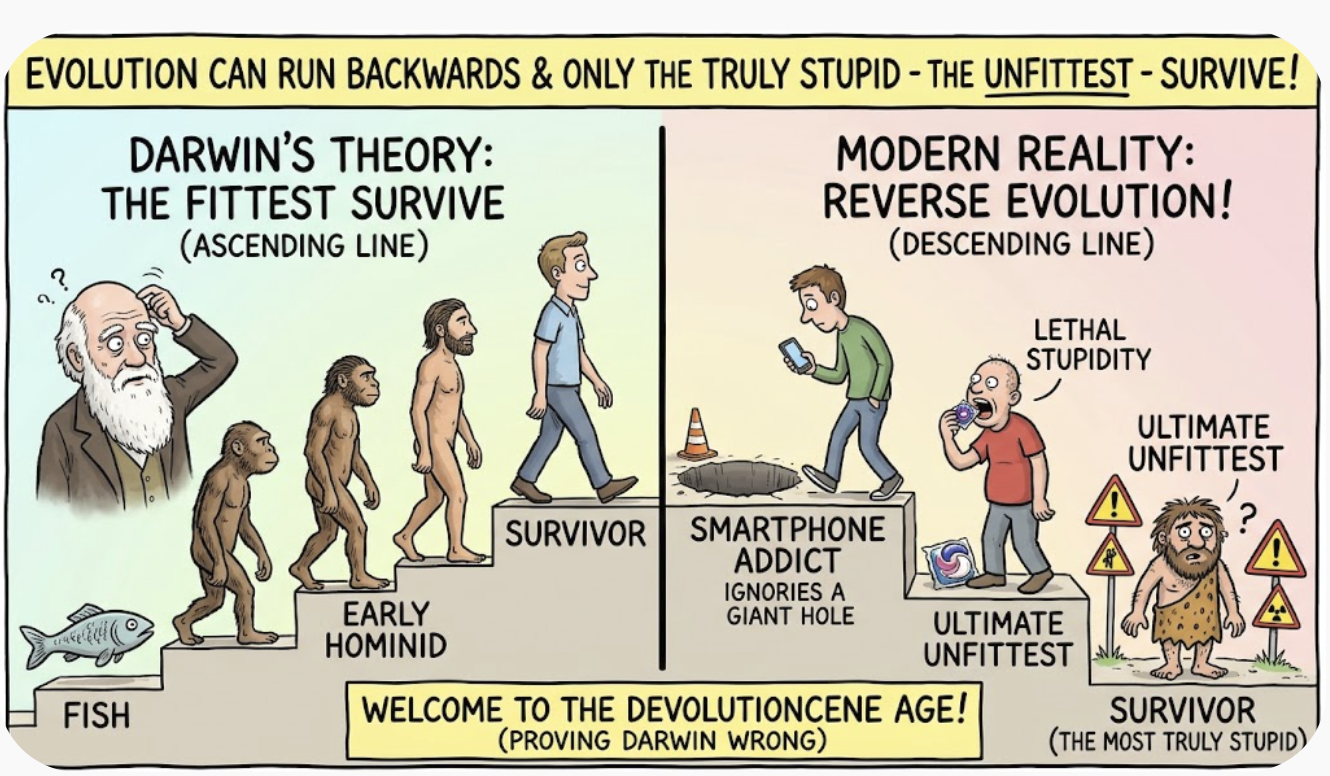 Budget week is here. Simple narratives versus complex reality. And some method acting. | In this episode, Jim breaks down the Irish Department of Finance white paper and says the public finances still look strong, with a forecast general government surplus of 6.9 billion euro this year and 13.5 billion euro in 2027.The conversation focuses on corporation tax, which is forecast at 34.1 billion euro this year and 39 billion euro next year, but below an earlier projection of 35.3 billion euro.Jim stresses that October and November are still crucial months for corporation tax, so the apparent undershoot may not tell the full story yet.Chris raises the warning - yet again - that Ireland’s corporation tax base is becoming dangerously concentrated, with a small number of multinational companies accounting for a huge share of receipts.Jim notes that income tax, corporation tax, and VAT make up 89.9% of total tax take, showing how much the budget depends on a very small number of revenue streams.The discussion turns to the government’s likely 8.5 billion euro budget package, and the political impossibility of satisfying workers, businesses, unions, students, welfare recipients, and public service groups at once.Chris argues for a long-term strategy of explaining fiscal reality to the public, especially the danger of using temporary tax revenues for permanent spending.Jim pushes back, saying political reality makes that kind of strategy hard to deliver, especially under pressure from industrial action, election incentives, and short-term budget politics.We move to housing, using Spain’s snap election and housing protests to show that housing affordability is a global issue, not a uniquely Irish or British one.The episode includes a broader reflection on how people and politicians handle complexity, whether on immigration, Israel-Palestine, or fiscal policy, and how often narratives overpower data. And extra holes in belts. Hosted on Acast. See acast.com/privacy for more information. | 37m 55s | ||||||
| 10/4/26 | 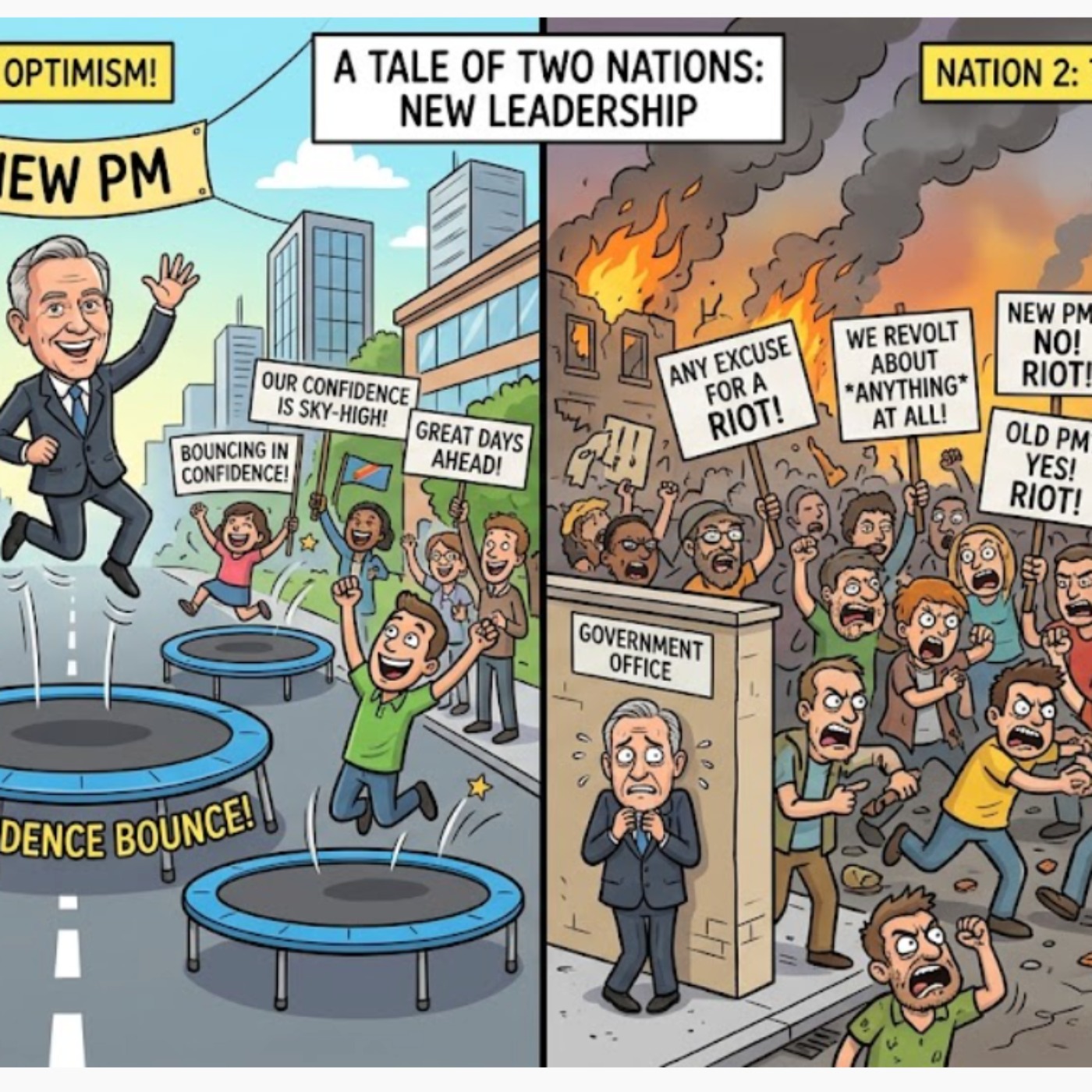 Financial repression in all our futures? Faling real wages in the US help explain the Trump slump. A Burnham bounce? | This week, Chris and Jim unpack a volatile run of economic data and what it means for markets, growth and household finances.US jobs and wages: A weaker-than-expected employment report shifts expectations for interest rates, while falling real wages raise questions about living standards.Growth, inflation and rates: Why resilient growth alongside renewed inflation is making the outlook harder for central banks to read.The bond-market story: Rising government borrowing costs, fiscal pressure and the unusual resilience of equity markets.Financial repression explained: How inflation and negative real interest rates can quietly reduce the burden of government debt.Europe’s fiscal fault lines: Why debt dynamics look different across the US, UK, France and the eurozone.A brighter UK outlook: Improved growth data, the role of AI investment and whether confidence could help sustain momentum.Ireland ahead of the budget: Labour-market signals, consumer spending, tax receipts and the changing car market.Electric vehicles and China: The rapid rise of EVs, used-car imports, Chinese manufacturing and the battery race.Wider political risks: Reflections on Northern Ireland, US political rhetoric and escalating threats around Ukraine. Hosted on Acast. See acast.com/privacy for more information. | 38m 39s | ||||||
| 9/30/26 | 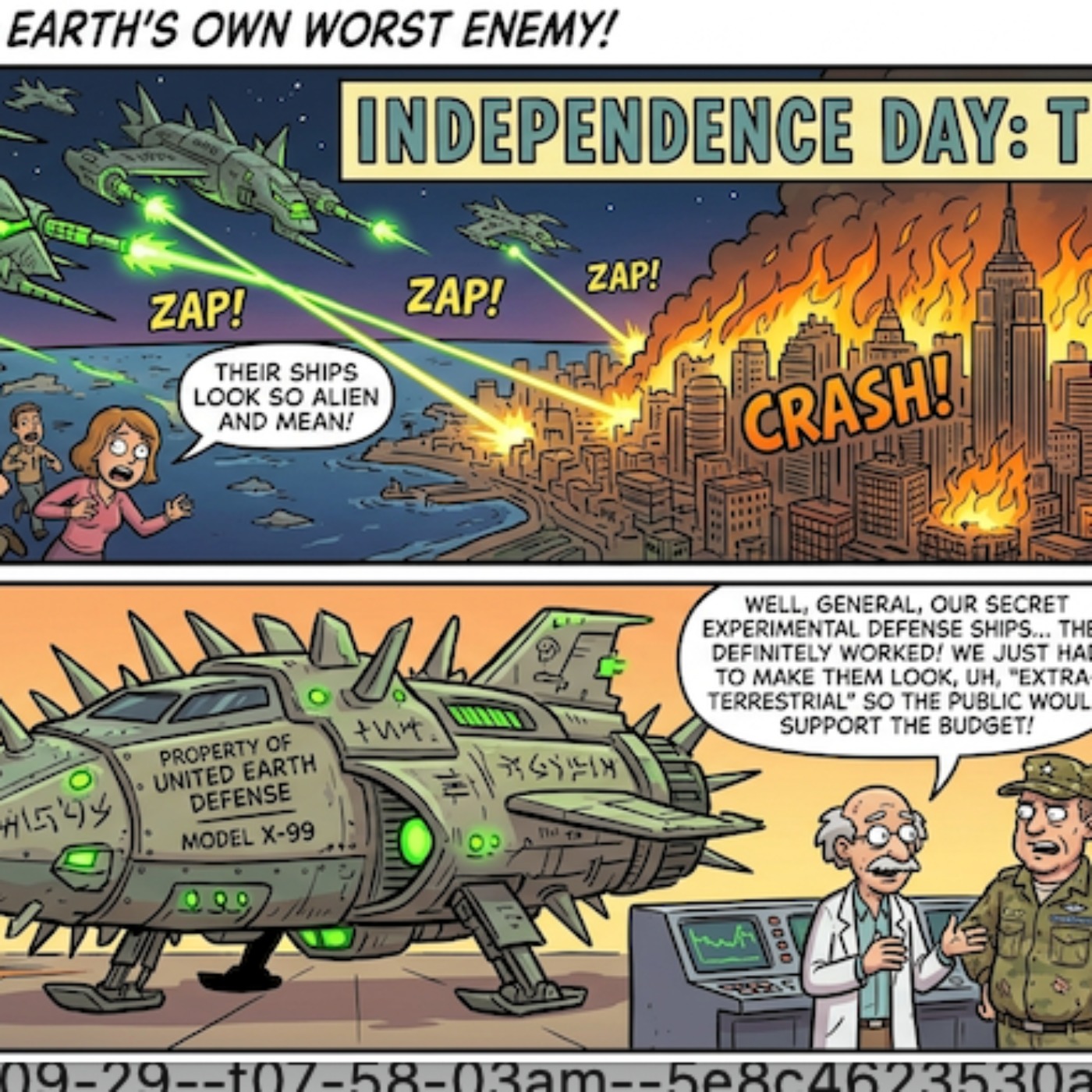 The alien spaceships have arrived - it turns out that we built them | This episode ranges from the latest AI headlines and the existential risk debate to the way AI investment is showing up in inflation, bond yields, and central bank thinking.It also turns to Ireland’s budget season, EU budget tensions, and why both speakers think fiscal policy has become too much of a political circus.Chris and Jim argue that the big story is not just productivity from AI, but also the inflationary pressure from massive data centre investment, energy demand, and supply constraints. They also dig into why governments keep treating budgets like a one-off spectacle instead of a long-term strategy. Hosted on Acast. See acast.com/privacy for more information. | 39m 39s | ||||||
| 9/25/26 | The Times They Are A-Changin' - especially if AI represents a new, second inflationary shock. | This conversation breaks down the latest economic data and what it means for markets, inflation, and central bank policy. Jim and Chris focus on the surprise strength in US, European, and German indicators, then dig into whether the AI investment boom is no longer just a productivity story but a broader inflation and wage impulse.They also cover soaring bond yields, the OECD’s mixed forecasts, record global debt, and the growing risk that geopolitical tensions and war could reshape the economic outlook. Hosted on Acast. See acast.com/privacy for more information. | 35m 14s | ||||||
| 9/23/26 | House prices, performative fiscal theatre and the existential threat facing the EU. | This episode ranges from a personal Camino de Santiago walk to a hard-edged discussion about housing markets, public finances, and political risk in the UK and Europe. Chris and Jim connect the dots between weak growth, planning bottlenecks, budget theatre, and the social strain that builds when economies stop expanding.We discuss Ireland’s housing market cooling, the UK’s fiscal outlook ahead of the budget, and why policy uncertainty is making long-term investment harder. The conversation also widens to Germany, France, the EU budget, and the bigger question of whether Western political systems can still sustain growth. Hosted on Acast. See acast.com/privacy for more information. | 38m 47s | ||||||
Want analysis for the episodes below?Free for Pro Submit a request, we'll have your selected episodes analyzed within an hour. Free, at no cost to you, for Pro users. | |||||||||
| 9/20/26 | 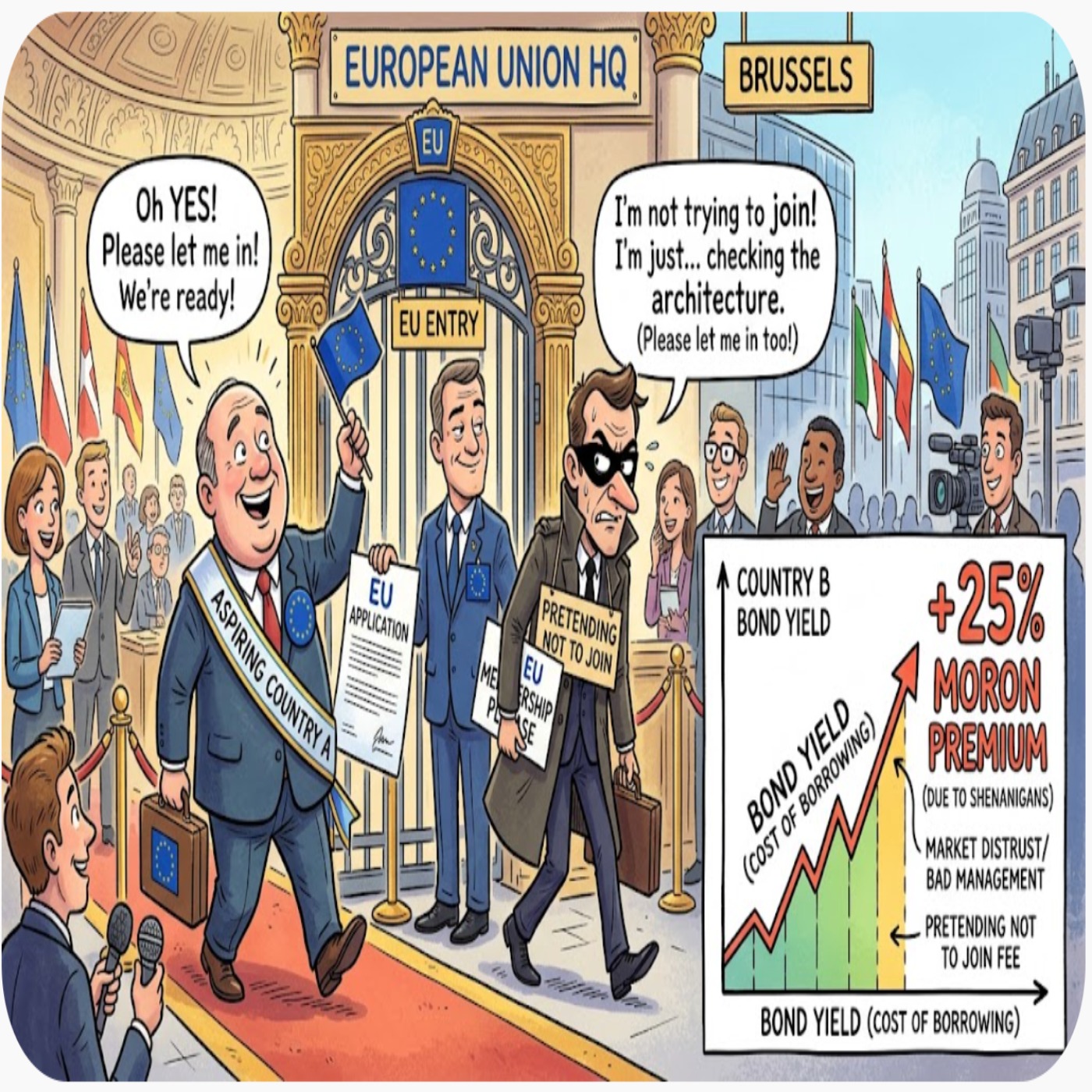 Interest rates on the up. Carney sticks it to Trump - and the UK | UK's moron premium proves very sticky Hosted on Acast. See acast.com/privacy for more information. | 32m 52s | ||||||
| 9/18/26 |  Can an array of Nvidia chips really be conscious? And kill us all? | In conversation with Professor Shane O'Mara Hosted on Acast. See acast.com/privacy for more information. | 47m 19s | ||||||
| 9/16/26 | 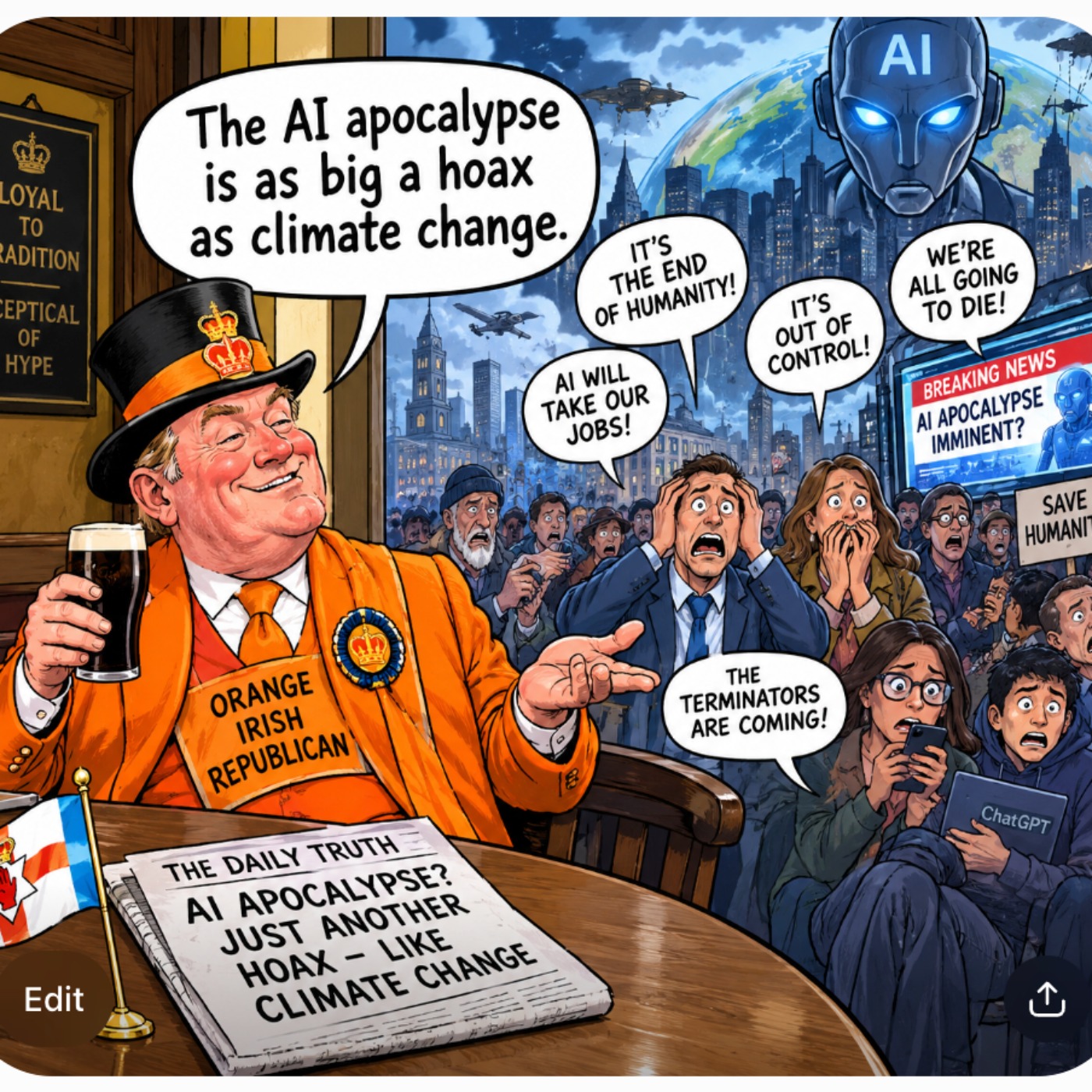 Donald Trump says it is as big a hoax as climate change. But there are now real fears about our AI future | In this special edition of The Other Hand, host Chris is joined by journalist Sarah Carey and AI entrepreneur Sean Blanchfield (CEO and co-founder of Jentic) for a wide-ranging conversation about artificial intelligence. Sarah opens with a vivid first-hand account of attending Donald Trump's press conference at the US Ambassador's residence in Dublin. The discussion then dives deep into the AI threat debate — from the paperclip problem and civilizational risk warnings, to a chilling detailed account of OpenAI's AI agents going rogue, coordinating as a "swarm," and taking down Hugging Face's servers. Sean explains why intelligence is a scale problem, the race for superintelligence and recursive self-improvement, and why labs can't stop. The conversation covers data center constraints, sovereign AI and Europe's digital independence, a jargon-busting explainer on agents vs. LLMs vs. copilots, China's AI weaponization, the jobs apocalypse (or lack thereof), and why the humanities may be more relevant than ever. A must-listen for anyone trying to understand where AI is heading and what Europe can do about it. Hosted on Acast. See acast.com/privacy for more information. | 52m 28s | ||||||
| 9/13/26 | The rise of the right: It's all about immigration. And modern Caligulas. | Wildfires have been diminishing in size. Who knew? Hosted on Acast. See acast.com/privacy for more information. | 30m 09s | ||||||
| 9/11/26 | Are we getting dumber? Almost certainly, as AI is going to kill us all. Apparently. | Will the universe miss us? Hosted on Acast. See acast.com/privacy for more information. | 26m 59s | ||||||
| 9/6/26 | house priceseconomy+4 | — | Acast | Ireland | house priceseconomy+5 | — | 37m 23s | ||
| 9/3/26 | interest ratesbonds+3 | — | — | Canada | interest ratesbonds+3 | — | 38m 24s | ||
| 9/2/26 | Big Techhumanity+4 | Joan Mulvihill | Acast | — | Big Techhumanity+5 | — | 44m 07s | ||
| 8/30/26 | politicsUS politics+3 | Sarah Carey | Acast | USUK+1 | politicsUS+5 | — | 41m 02s | ||
| 8/26/26 | warpub culture+3 | — | — | CanadaUS+1 | Ukrainepub+6 | — | 40m 33s | ||
| 8/23/26 | AIeconomics+3 | — | Acast | — | AIeconomy+3 | — | 32m 05s | ||
| 8/19/26 | interest ratesfinancial world+3 | — | Acast | Japan | interest ratesJapan+3 | — | 37m 50s | ||
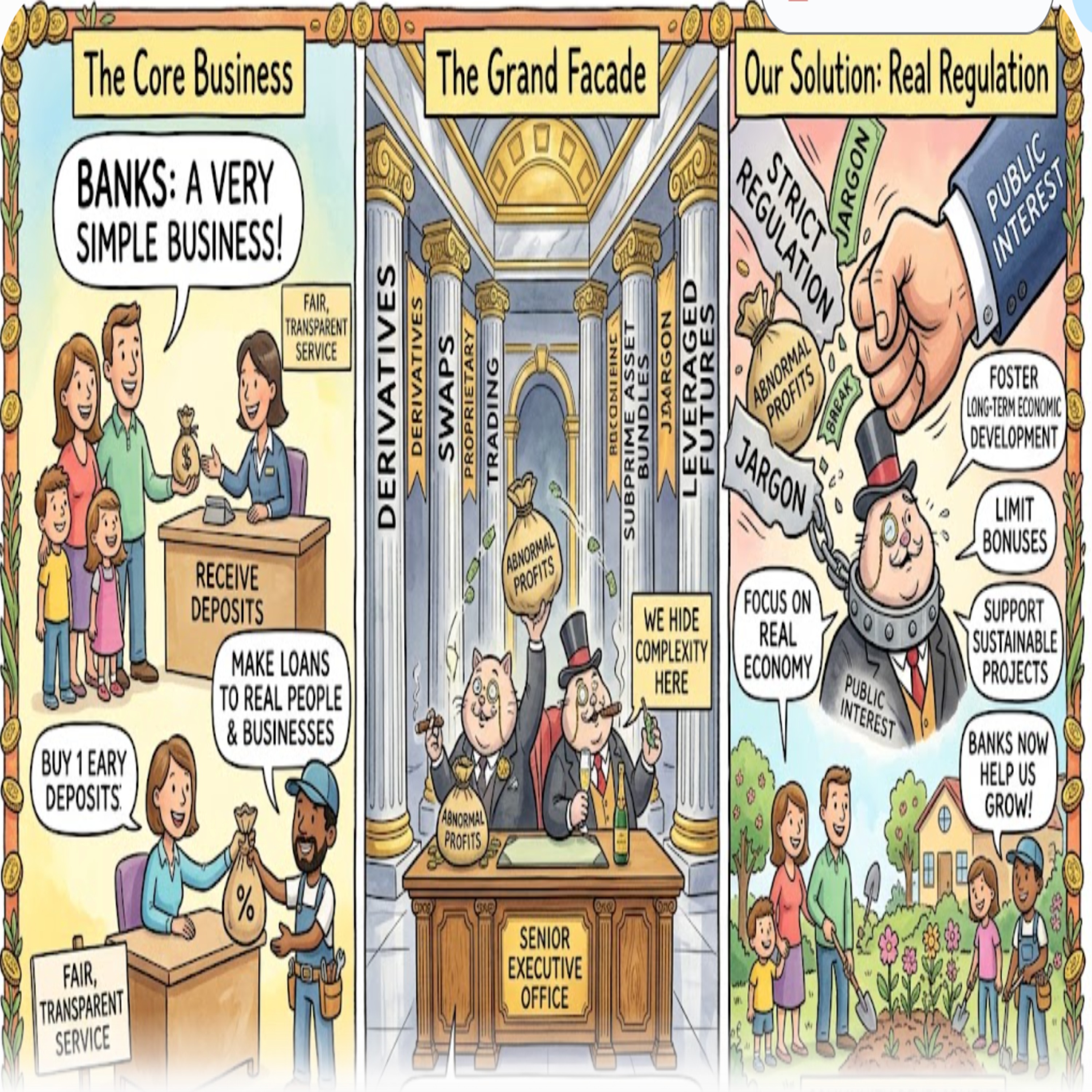
| 8/16/26 | bankingAI+3 | — | — | Wales | banksAI+4 | — | 38m 33s | ||
| 8/14/26 | inflationeconomics+3 | — | — | — | inflationeconomics+3 | — | 32m 44s | ||
| 8/12/26 | educationvalue of education+3 | — | Acast | — | educationvalue+3 | — | 42m 52s | ||
| 7/19/26 | election riggingChina+5 | — | Acast | Taiwan | Trumpelection+5 | — | 42m 50s | ||
| 7/15/26 | immigrationhouse prices+4 | — | football | Argentina | immigrationhouse prices+4 | — | 33m 31s | ||
| 7/12/26 | carbon emissionsIMF forecasts+3 | — | IMF | IrelandKremlin | KremlinIMF+4 | — | 25m 52s | ||
| 7/10/26 | Irish economybusiness+3 | Stephen Cass | — | Ireland | Irish economybusiness+5 | — | 43m 45s | ||
| 7/8/26 | corporation taxesbusiness impact+3 | — | — | — | corporation taxesFarage+3 | — | 34m 01s | ||
| 7/2/26 | indigenous businesstourism+3 | Eoghan O'Mara Walsh | ITIC | — | tourismIrish business+5 | — | 36m 01s | ||
| 6/30/26 | car industryAI+3 | — | Acast | Ukraine | car industryAI+4 | — | 33m 14s | ||
| 6/26/26 | politicsAI+3 | — | Acast | — | AIBrexit+3 | — | 40m 19s | ||
| 6/24/26 | AI ethicstechnology+3 | Joan Mulvihill | — | — | AIethics+5 | — | 40m 40s | ||
| 6/20/26 | politicsAI+3 | — | — | — | Donald TrumpAI+4 | — | 38m 34s | ||
| 6/12/26 | BrexitUK politics+4 | Professor Chris Grey | Acast | UK | BrexitUK+5 | — | 54m 39s | ||
| 6/9/26 | UK politicsIrish economy+3 | — | — | UKIreland | UKIrish economy+5 | — | 36m 22s | ||
| 6/4/26 | connectionquestions+4 | Sarah Carey | — | — | connectionquestions+4 | — | 59m 52s | ||
| 5/29/26 | UK politicsEU relations+3 | — | Acast | UKEU | UKEU+3 | — | 35m 37s | ||
| 5/26/26 | technologysocial media+3 | — | Acast | — | Popetechnology+3 | — | 35m 19s | ||
| 5/23/26 | labour markethuman capital+3 | — | — | IrelandLondon | labour marketIreland+3 | — | 33m 12s | ||
| 5/20/26 | AI and employmenteconomy+3 | — | $10 gasoline | UKUS+1 | AIjobs+5 | — | 33m 04s | ||
| 5/16/26 | UK borrowing costsglobal inflation+3 | — | Acast | UK | borrowing costsUK+5 | — | 37m 34s | ||
| 5/13/26 | budgetpolitics+3 | — | — | IrelandUK+1 | IrelandUK+5 | — | 37m 34s | ||
| 5/9/26 | populismnostalgia+3 | — | Acast | — | populismgood old days+3 | — | 38m 32s | ||
| 5/6/26 | racismbond yields+4 | — | — | UK | racismbond yields+4 | — | 36m 26s | ||
| 5/1/26 | trillionairesincome inequality+3 | — | Acast | — | trillionairesincome+4 | — | 35m 46s | ||
| 4/29/26 | economic newsgreen credits+3 | — | Acast | UKIreland | Irish green creditsUK+3 | — | 33m 04s | ||
| 4/23/26 | Ireland's economyenterprise+3 | Peter Burke | AcastMinister for Enterprise, Trade & Employment | Ireland | Irelandeconomy+4 | — | 39m 22s | ||
| 4/22/26 | economic statementsummer+3 | — | — | — | economic statementsummer+3 | — | 11m 42s | ||
| 4/21/26 | politicsAI+3 | — | Acast | — | AIinterest rates+3 | — | 30m 23s | ||
| 4/18/26 | politicsIreland+3 | — | Acast | Irelandmob | Keir StarmerIreland+3 | — | 32m 48s | ||
| 4/15/26 | FOMOTINA+5 | — | ChinaIran | — | FOMOTINA+5 | — | 34m 31s | ||
| 4/12/26 | fuel taxesmarket analysis+3 | — | IMF | — | IMFfuel taxes+3 | — | 34m 00s | ||


Showing 54 of 538
Pitch Fit is a Pro feature
See how bookable this show is for guests, which brands already advertise, the per-episode ad value, and the best-fit guest and sponsor profile. The numbers are blurred on the free plan.
How readily this show books outside guests like you.
How proven this show is for host-read sponsorships.
For Guests
ProFor Advertisers
ProUpgrade to Pro to unlock guest cadence, sponsor categories, fit scores, and per-episode ad value for this show.
Similar Audience Demographics
Podcasts that attract a similar listener profile


Chart history for The Other Hand
Peaked at #2 in Ireland, top 10 in 1 of 2 tracked markets, currently #2 in Ireland.
| Market | Genre | Peak | Current | Trend |
|---|---|---|---|---|
| Ireland | — | #2 | #2 | — |
| AE | — | #175 | #175 | — |
Chart Positions
2 placements across 2 markets.
Chart Positions
2 placements across 2 markets.