The Storm Skiing Journal and Podcast
by Stuart Winchester
Is this your podcast?On the show
From 10 epsHost
Recent guests
Recent episodes
Storm Skiing 10/15/2026: Nub’s Nob GM Ben Doornbos on Lift Upgrades and Sticking With Indy Pass
Oct 15, 2026
49m 26s
The Storm 10/14/2026: Purgatory CEO Dave Rathbun on Expansion, Snowmaking, $9 Lift Tickets
Oct 14, 2026
50m 51s
The Storm 10/13/2026: Cloudflare CEO Matthew Prince Thinks Vail Should Sell Him Park City
Oct 13, 2026
1h 02m 38s
Storm Skiing 10/6/2026: Breaking Down Epic, Ikon, Indy, Mountain Collective with PeakRankings Founder Sam Weintraub
Oct 6, 2026
55m 49s
Storm News 9/28/2026: Alterra Appoints Kelly Vohs CEO + Mountain Creek GM Evan Kovach
Oct 5, 2026
57m 41s
Insights from recent episode analysis
Audience Interest
Podcast Focus
Publishing Consistency
Platform Reach
Insights are generated by CastFox AI using publicly available data, episode content, and proprietary models.
Most discussed topics
Brands & references
Total monthly reach
Based on 1 signal.
Built from
By chart position
- 🇺🇸United States · WildernessHOME#4570K to 373K
- 🇳🇿New Zealand · Wilderness#75.0K to 27K
- 🇰🇷South Korea · Wilderness#292.6K to 14K
- 🇦🇺Australia · Wilderness#621.4K to 7.5K
- 🇬🇧United Kingdom · Wilderness#164377 to 2.0K
- Per-Episode Audience
Est. listeners per new episode within ~30 days
81K to 426K🎙 Sporadic cadence·245 episodes·Last published 4d ago - Monthly Reach
Unique listeners across all episodes (30 days)
81K to 426K🇺🇸87%🇳🇿6%🇰🇷3%+1 more - Active Followers
Loyal subscribers who consistently listen
32K to 170K
Market Insights
Platform Distribution
Reach across major podcast platforms, updated hourly
Total Followers
—
Total Plays
—
Total Reviews
—
* Data sourced directly from platform APIs and aggregated hourly across all major podcast directories.
Social Links & Contact
Official channels & resources
Official Website
Login
RSS Feed
Login
| Date | Episode | Topics | Guests | Brands | Places | Keywords | Sponsor | Length | |
|---|---|---|---|---|---|---|---|---|---|
| 10/15/26 |  Storm Skiing 10/15/2026: Nub’s Nob GM Ben Doornbos on Lift Upgrades and Sticking With Indy Pass | The Storm Skiing Journal and Podcast is raising money for a brain transplant so that I’ll remember to hit “record” before recording a podcast. Thank you for supporting this amazing cause:WhoBen Doornbos, General Manager of Nub’s Nob, MichiganDate RecordedOctober 15, 2026About Nub’s NobOwned by: The Fisher FamilyYear founded: 1958Pass affiliations:* Indy Pass: 2 days, select blackouts* Indy+ Pass: 2 days, no blackoutsBase elevation: 923 feetSummit elevation: 1,350 feetVertical drop: 427 feetSkiable acres: 248Average annual snowfall: 125 inchesLift count: 10 (4 fixed-grip quads, 3 triples, 1 double, 1 carpet, 1 ropetow)Nub’s Nordic map also shows a pretty cool overhead of how all the lifts match up with a topo map:Why I interviewed himNub’s Nob is basically the Jay Peak/Wolf Creek/Mt. Baker/Bridger Bowl/Alta/Jackson Hole/Mount Bohemia/Mad River Glen of Michigan’s Lower Peninsula. By that I mean it is a ski area with loyalists so fiercely devoted to the place that if a Random Internet Commenter dares offer an opinion that said ski area is anything other than a snowy Narnia dreamed up by and for Jesus as a reward for having endured human existence on Earth then that Random Internet Commenter shall have unspeakable crimes attributed to their name with such persistence and gruesome detail that the accused while innocent will come to believe themselves guilty and seek out an active caldera in which to hurl themselves. It’s hard to understand until you ski there but hard to not understand once you have. And lest I enrage the Nub’s partisans who will attempt to read into the nuances of this conversation some dastardly plot to tar the name of Nub’s by for example pointing out the true age of Purple chair I will just state unambiguously that The Storm has been a House of Nub’s fan since 1995 even though I spent half my inaugural visit tumbling down Chute like a beachball and am frankly still slightly terrified any time I glance at the trailmap believing subconsciously that it was not a lack of skill as a result of being on my seventh-ever ski day that caused my cyclical pinwheeling but rather an attribute of that trail that uniquely exposed my lack of ability to SnoSportSki and no amount of experience or preparation will save me. And I think this even though I have since skied Chute and all adjacent trails many times without dismembering myself. And no Nub’s Knob I am not dissing Nub’s just myself McBroseph so chill. TranscriptsThere is only one transcript today, which you may or may not be able to view at the top of this article, depending upon your browser and device. This is the transcript that the robots create when I upload the podcast to the internet. The cool thing about it is that you can click on any block of text and the audio will teleport there instantly. The uncool thing about this transcript is that it does not indicate who is talking at any given moment. There is no Zoom transcript today because Zoom didn’t work right. Just kidding there is no Zoom transcript because see the part where my brain isn’t good. Get full access to The Storm Skiing Journal and Podcast at www.stormskiing.com/subscribe | 49m 26s | ||||||
| 10/14/26 |  The Storm 10/14/2026: Purgatory CEO Dave Rathbun on Expansion, Snowmaking, $9 Lift Tickets | Word.WhoDave Rathbun, CEO of Purgatory, ColoradoCheck out Dave’s Purgspective mountain blog:Date RecordedOct. 14, 2026About PurgatoryOwned by: Mountain Capital Partners, which also owns:Year founded: 1965Pass affiliations:* Power Pass: unlimited* Power Pass Select: 12 shared days with Arizona Snowbowl, Lee Canyon – holiday blackouts apply* Power Pass Core: 4 shared days with Arizona Snowbowl, Lee Canyon, Brian Head – holiday blackouts applyBase elevation: 8,750 feetSummit elevation: 10,822 feetVertical drop: 2,072 feetSkiable acres: 1,635Average annual snowfall: 261 inchesLift count: 12 (1 six-pack, 2 high-speed quads, 4 triples, 3 doubles, 2 carpets)This video gives a pretty sick look down the steep lift line:And here’s a bit on the Divinity snowmaking expansion:Why I interviewed himPurgatory has everything we’re looking for in a modern lift-served ski area attempting to stay relevant in a changing world: an eclectic owner, a multi-mountain pass, wacky lift ticket deals, high-elevation snowmaking, trail expansions, fast lifts, slow lifts, lifts glued together from the discarded parts of other lifts, lifts that predate the invention of the alphabet, private land, public land, places to stay on the mountain, a hip town nearby, and big plans colliding with big bureaucracy. And it’s in Colorado but also sort of not because how do you even get to Southwest Colorado unless you’re driving up from Texas?TranscriptsThere are two transcripts. Both are generated by robots. Both are helpful and defective in their own unique ways. I do not proofread either of them.Transcript 1: Click the “transcript” button at the top of this article. You can only see this transcript on a computer. Because I don’t know why exactly but everything is getting better and dumber all at once it seems. Anyway, this is the transcript that the robots create when I upload the podcast to the internet. The cool thing about it is that you can click on any block of text and the audio will teleport there instantly. The uncool thing about this transcript is that it does not indicate who is talking at any given moment.Transcript 2: You can read this below. This is the transcript that Zoom creates as we record the podcast. The cool thing about this transcript is that it indicates who is talking at any given moment. The uncool thing about this transcript is that the timestamps do not match the audio. Also, you cannot click on this text to move to the associated point in the audio.ZoomStuart Winchester: My guest today is the CEO of Purgatory Resort Holdings. Purgatory delivers a 2,072-foot vertical drop over 1,635 skiable acres served by 12 lifts, including a brand new triple chair for winter 2026-27.00:28:29.000 --> 00:28:38.000Stuart Winchester: Since 2015, Purgatory has been owned by Mountain Capital Partners, which operates 11 active ski areas in the United States and Chile.00:28:38.000 --> 00:28:54.000Stuart Winchester: Prior to his promotion to the CEO role last year, he was Purgatory’s general manager for eight seasons. Prior to joining the team at Purgatory, he was chief marketing officer at Sugar Bowl California for two years and spent eight years as president and general manager of Mount Bachelor Oregon.00:28:54.000 --> 00:29:03.000Stuart Winchester: He has also spent time at Killington, Stratton, and IntraWest. Dave Rathbun is my guest. Dave, welcome to the Storm. Did I get your last name right?00:29:03.000 --> 00:29:09.000Dave Rathbun: Absolutely, Stuart. I am just thrilled to be here with you today.00:29:09.000 --> 00:29:21.000Stuart Winchester: Uh, that’s one of those things I’m always like, okay, ask him about his last name before you introduce him, and then I didn’t, and then I just hope I get it right. So, uh, but just blew my cover there. So, so you have been really busy. Tell us about…00:29:21.000 --> 00:29:31.000Stuart Winchester: The Jaland expansion has historically been known, and it’s a really interesting expansion because it’s at once billed as an expert expansion.00:29:31.000 --> 00:29:37.000Stuart Winchester: but it’s also kind of for everyone. So take us through this very unique new addition to your mountain this year.00:29:37.000 --> 00:29:52.000Dave Rathbun: Yeah, so for those that have been here before, our base area is kind of vertically challenged. We’re in a place where we’re right along US Highway 550 is the literal base of the mountain.00:29:52.000 --> 00:30:04.000Dave Rathbun: But there’s about a 200-foot elevation gain to the village right down from the highway, so that… that puts a little extra pressure on forcing people to get up through.00:29:56.000 --> 00:29:57.000Stuart Winchester: Mmm.00:30:04.000 --> 00:30:15.000Dave Rathbun: what we call our Columbine base area to get to the village. So, as you can imagine, along the highway, it’s nice and flat, that’s where all our parking is.00:30:15.000 --> 00:30:32.000Dave Rathbun: And people would park there and have to catch a shuttle bus, or they could walk to the base of the graduate lift, lift 7 on the map you’re showing, and ride that up to the base village, which is where you jump on the six-pack to get you up on the mountain.00:30:24.000 --> 00:30:25.000Stuart Winchester: Mm-hmm.00:30:32.000 --> 00:30:47.000Dave Rathbun: So what the Galande and now Colorado Cool War chair will do is it’ll give people, especially pass holders that already have a ticket that don’t require any base services like rentals or.00:30:47.000 --> 00:30:57.000Dave Rathbun: hey, I need to stop and get tickets, or I need to, you know, get my ski school lesson started. Those pass holders can go park right at the base of the cool bar chair.00:30:57.000 --> 00:31:10.000Dave Rathbun: jump on that lift, get up to the top of the mountain where they can access everything on the front side, and get all the way to the backside lifts as well. So it’s gonna be a… it’s gonna be a dual-purpose lift.00:31:03.000 --> 00:31:04.000Stuart Winchester: Mm-hmm.00:31:10.000 --> 00:31:15.000Dave Rathbun: You know, for the really hardcore extreme skier, this is terrain that, uh…00:31:15.000 --> 00:31:34.000Dave Rathbun: is absolutely mind-bending, um, for people that are into that sort of thing. Um, it changes the whole game related to our terrain offering here, to cater to that zealot, that really high-end, uh, free skier rider that really is looking for some steep, gnarly terrain.00:31:19.000 --> 00:31:21.000Stuart Winchester: Mmhm.00:31:34.000 --> 00:31:45.000Dave Rathbun: But it’s also gonna make it easy for, you know, your general local to avoid the village and get up on the mountain. So it’s gonna deal with both of those objectives.00:31:45.000 --> 00:31:54.000Stuart Winchester: So on this trail map that I’m showing, if you’re watching on stormskiing.com or YouTube at Storm Ski Journal, so this yellow line is your.00:31:54.000 --> 00:32:02.000Stuart Winchester: current boundary, and then it looks like that’s going to get pushed out, and the lift will come up from around here. Is that about right?00:32:02.000 --> 00:32:13.000Dave Rathbun: Yeah, correct. So the map that you’re showing on the left that I’m seeing, that triangle that’s shaded, that was part of a permit boundary adjustment to accommodate.00:32:02.000 --> 00:32:04.000Stuart Winchester: And yeah.00:32:07.000 --> 00:32:09.000Stuart Winchester: Mm-hmm.00:32:13.000 --> 00:32:18.000Dave Rathbun: the lift and also the skiing through the canyon.00:32:17.000 --> 00:32:18.000Stuart Winchester: Mmhm.00:32:18.000 --> 00:32:19.000Dave Rathbun: So…00:32:19.000 --> 00:32:34.000Dave Rathbun: That boundary is going to move out to that edge along the shaded triangle there. And then we go down onto our private land down below. So again, Forest Service land starts coming out of the base area, and then.00:32:34.000 --> 00:32:37.000Dave Rathbun: Private land all below that.00:32:36.000 --> 00:32:52.000Stuart Winchester: So I wonder if you’re gonna have a challenge, and maybe this is something I’m sure some of you’ve already thought of, but I’m sure you’ve been to Taos, and you see that great sign at the beginning that says, don’t worry, we have lots of expert runs, too, because you see Al’s running super steep. Do you worry that people are gonna park in the parking lot and say.00:32:52.000 --> 00:33:05.000Stuart Winchester: oh my god, because the lift line from the videos I’ve seen is insane, like, really steep. Are you gonna have to train people that there are easy ways, not only from the top, but back at the end of the day?00:33:05.000 --> 00:33:21.000Dave Rathbun: It’s funny, we just had a meeting with our patrol leaders this morning talking about this very subject. So, you know, the management plan for this area is completely different. We’re talking about everything from.00:33:12.000 --> 00:33:14.000Stuart Winchester: Mm-hmm.00:33:21.000 --> 00:33:28.000Dave Rathbun: The communication side of things, like who should maybe think twice about riding this lift?00:33:28.000 --> 00:33:45.000Dave Rathbun: Having the proper signage, and then obviously the snow management, avalanche reduction, you know, lift evacuation in the unlikely event that it should occur. I mean, all of those things are off the wall for this lift. There are only a few places.00:33:45.000 --> 00:33:49.000Dave Rathbun: that are operating something this complicated.00:33:49.000 --> 00:33:50.000Stuart Winchester: Yeah.00:33:50.000 --> 00:34:00.000Stuart Winchester: Given the importance of this as a… not just a terrain lift, but a transit lift, do you plan to run this even when this terrain is not open, so people can just…00:34:00.000 --> 00:34:02.000Stuart Winchester: Get right out of the parking lot.00:34:02.000 --> 00:34:16.000Dave Rathbun: Yes. So what we’ve talked about is, you know, if say we have a a season like, let’s hope it never happens again, like last year, you know, this terrain might have been available for a few days.00:34:10.000 --> 00:34:11.000Stuart Winchester: Yeah, thank you.00:34:16.000 --> 00:34:32.000Dave Rathbun: Um, we’re still going to want to operate this on these busier days to get people up and out of the parking lot. So, um, there’s currently no snowmaking at the bottom. We are working on a plan with the Forest Service to get snowmaking down there for next year.00:34:32.000 --> 00:34:47.000Dave Rathbun: Um, then we’ll be able to get you on a platform this year with some nevoplast, so you can at least shuffle ahead, get on the lift, and get up on the hill. So, uh, hopefully next year we’ll be able to put snowmaking down to the bottom, and then that run.00:34:47.000 --> 00:35:02.000Dave Rathbun: will connect to the bottom of our sticks run, which is another black diamond coming down the shoulder of the front side. And then you’ll be able to ski from there back to the bottom of this lift, which will make it a little bit more sustainable.00:35:02.000 --> 00:35:17.000Stuart Winchester: You’ve done a couple big snowmaking projects, and I want to get to those in a minute. Right now, I want to talk a little bit more about the Colorado Coulard chairlift. So, I’ll give you some fun facts, and maybe you already know these. Of the 511 active triple chairs in the United States.00:35:17.000 --> 00:35:28.000Stuart Winchester: Colorado Colar will be the 5th tallest with 1,625 vertical feet. You also have the 4th longest triple in needles.00:35:28.000 --> 00:35:44.000Stuart Winchester: At 5,798 feet long. And Needles is the 12th longest fixed grip of the 1,445 fixed grip chairs in America. And you also have, interestingly, the 11th shortest triple chair, Columbine.00:35:44.000 --> 00:35:56.000Stuart Winchester: Which is 531 feet long, over 72 feet of vert. I’ll just sort of throwing that out there for people who care about that kind of stuff, but I… point is, it’s a very long, tall.00:35:56.000 --> 00:36:11.000Stuart Winchester: Triple chair. Talk about the decision to go fixed grip there. And also, I believe this is a hybrid of a Skytrak machine and, and an old lift from Telluride. So, so take us through the decision and, and, and what this lift actually is.00:36:11.000 --> 00:36:27.000Dave Rathbun: So first and foremost, it’s not, again, like you said, it’s only a little over 4,000 feet long. So at 500 feet a minute as a fixed grip chair, it’s going to be just under 10 minutes. So, you know, nine minutes.00:36:17.000 --> 00:36:19.000Stuart Winchester: Mm-hmm.00:36:24.000 --> 00:36:26.000Stuart Winchester: Mmhm.00:36:27.000 --> 00:36:42.000Dave Rathbun: You know, you gotta figure for a little bit of, uh, loading accuracy and, you know, maybe slows here and there, but it’s only gonna be about a 9-minute ride. So the question was, for the astronomical cost of putting a detach on this alignment.00:36:42.000 --> 00:37:00.000Dave Rathbun: Uh, versus, you know, doing something that our company loves to do. We are recycling an older Lyft that still has a lot of hours and a lot of miles yet to go on it. Um, but what we’ve found is we had to go hybrid on this because of the tension involved.00:37:00.000 --> 00:37:17.000Dave Rathbun: So, again, being as steep and as short as this lift is, there are extreme factors on the ground pressure that this lift requires to be able to climb that steep a pitch in that shorter run.00:37:17.000 --> 00:37:36.000Dave Rathbun: So, both terminals, the drive terminal and the return terminal, are Skytrak. Um, we reused towers, um, from the plunge lift from Telluride Lift 9. Uh, we also have a few of our old Lift 8 towers that were.00:37:36.000 --> 00:37:51.000Dave Rathbun: Pama, much thicker wall, steel tubes, and then all new SkyTrak head frames, shiv assemblies. So it’s a pretty darn modern lift from the head frame up.00:37:38.000 --> 00:37:40.000Stuart Winchester: Mmhm.00:37:51.000 --> 00:38:05.000Dave Rathbun: and the top and the bottom terminals, with mostly towers that have been reused, and chairs, and grips. So, it was a significant savings by going this route. Um, and we’ve got…00:38:05.000 --> 00:38:10.000Dave Rathbun: We’ve got a pretty stout lift now that’s gonna go up this pretty rugged face.00:38:10.000 --> 00:38:27.000Stuart Winchester: So while we’re on the, the list, the lift topic here, Dave, a blog post from earlier in this last spring or this spring had mentioned a, an upgrade to the Purgatory Express, which for listeners is a 2000 Alpenmeyer six pack.00:38:27.000 --> 00:38:32.000Stuart Winchester: With the latest control system, do you have any update on that, and why it was time, and what that will achieve?00:38:32.000 --> 00:38:50.000Dave Rathbun: Yeah, and we chose to do that early. We did that in the springtime. So right after we closed, we put in all the new low voltage controls for that lift. So again, that era lift that was pre-Doppelmeyer, so it’s still a CTEK lift, but.00:38:36.000 --> 00:38:37.000Stuart Winchester: Mm-hmm.00:38:42.000 --> 00:38:44.000Stuart Winchester: Mmhm.00:38:50.000 --> 00:39:06.000Dave Rathbun: It is a bomber lift. It just was showing its age from its drive components and obviously the low voltage controls. So changed out the comm line. We had already done an upgrade on some of the terminal equipment. We put a cyclo spacing unit in.00:39:06.000 --> 00:39:19.000Dave Rathbun: And all the things that a modern, you know, detach of that size, um, and it’s our workhorse. That’s the main way out of the base area currently. Um, really important lift for Purgatory, and…00:39:12.000 --> 00:39:13.000Stuart Winchester: Mmhm.00:39:19.000 --> 00:39:28.000Dave Rathbun: the time was right, um, we got it done, and that lift, I think, is going to give us another solid 15 or more years.00:39:27.000 --> 00:39:40.000Stuart Winchester: So you talked about the cost savings that you got from Colorado Coal Air with combining lifts. What kind of cost savings was it to modernize the 6 rather than replace it? Is that something you even considered?00:39:30.000 --> 00:39:31.000Dave Rathbun: Uh…00:39:40.000 --> 00:39:44.000Dave Rathbun: Uh, yeah, I mean, you’re talking, um…00:39:44.000 --> 00:39:49.000Dave Rathbun: Probably close to $10 million to replace that lift.00:39:49.000 --> 00:39:55.000Dave Rathbun: And it’s still, again, a solid lift. We do run it in the summer, so it’s picked up a few extra hours because of summer ops.00:39:55.000 --> 00:40:11.000Dave Rathbun: But, you know, by the time everything’s said and done, you spend about a million and a half dollars when you upgrade a lift like that. You know, my experience at Mt. Bachelor, we upgraded every one of those, you know, early to mid 90s detachable quads.00:40:11.000 --> 00:40:16.000Dave Rathbun: You know, the plan that we had there was to get them all to 40 years old, and uh…00:40:15.000 --> 00:40:17.000Stuart Winchester: Mm-hmm.00:40:16.000 --> 00:40:31.000Dave Rathbun: A couple of them have gotten a little bit longer than 40, but now it’s time for those to go away, so I’m happy to see they’re doing that. But, you know, these lifts, if you take good care of them, there’s no reason why you can’t get 40 years out of them these days.00:40:30.000 --> 00:40:38.000Stuart Winchester: Right. And some upgrades happening for sure. The, let’s see if I’m.00:40:38.000 --> 00:40:53.000Stuart Winchester: Trying to share the trail map again. Not sure if I did that successfully. I did not. Okay. So, uh, you have some, some that are over 40 here and, and you’ve made some nice upgrades, but Grizzly here is a, is a 1980.00:40:53.000 --> 00:41:10.000Stuart Winchester: Riblet, according to Liftblog’s records, Engineer is, uh, 69 Riblet, and then the Twilight Lift is a… is 76 Riblet. So, you know, you have this nice new Legends Express over here, that’s from 2015, but just talk to us about…00:41:10.000 --> 00:41:23.000Stuart Winchester: As you think… once you… now that you have this expansion out of the way, what lift would you like to upgrade next? What’s in the plan? I know you had some things in the 2008 Master Plan, but that’s probably been updated since.00:41:23.000 --> 00:41:35.000Dave Rathbun: Yeah, so we have two different approvals. We have the 2008 EIS that we’re still working mostly off of.00:41:35.000 --> 00:41:42.000Dave Rathbun: That gives us lots of ability to add, um, new lifts on current alignments.00:41:42.000 --> 00:41:52.000Dave Rathbun: One new lift on a new alignment. And then we have another EA that was approved in 2019 for what is called Ice Creek.00:41:51.000 --> 00:41:53.000Stuart Winchester: Right.00:41:52.000 --> 00:42:02.000Dave Rathbun: So, I am working right now with all of our, um, mountain planners and the Forest Service to install Ice Creek next summer.00:42:02.000 --> 00:42:03.000Stuart Winchester: Oh, wow.00:42:02.000 --> 00:42:17.000Dave Rathbun: So that, again, is a little bit complicated. We have some cultural resources, um, on the map that you’re looking at right there, that the lift would, uh, the top of the lift would be about where the, uh, sea is and backside on that, um.00:42:15.000 --> 00:42:17.000Stuart Winchester: Mm-hmm.00:42:17.000 --> 00:42:31.000Dave Rathbun: the big map that you were showing, uh, you’ve got the Ice Creek map right there. So, that’s what we’re looking at doing next year. Um, we’re actually talking about cutting the lift line over snow this winter.00:42:18.000 --> 00:42:20.000Stuart Winchester: Yeah.00:42:21.000 --> 00:42:22.000Stuart Winchester: Yes.00:42:30.000 --> 00:42:32.000Stuart Winchester: Mmm.00:42:31.000 --> 00:42:48.000Dave Rathbun: So, the Forest Service has the construction plan in hands. We’re just going through some fine details with that. There is a historic wagon road that runs through this project area. So, we have to be very careful with that. And then, obviously.00:42:48.000 --> 00:43:01.000Dave Rathbun: The headwaters of the East Fork of the Hermosa Creek run right through the base of this, so we have lots of water influence zones and wetlands that are.00:43:01.000 --> 00:43:17.000Dave Rathbun: you know, an issue to navigate around for a project in this type of zone. So that’s the plan for next year. Cut the lift line over snow this winter to minimize the impact on the wagon road. And then we’ll be doing the trail clearing next summer when we put the lift in.00:43:17.000 --> 00:43:24.000Dave Rathbun: So, still a little tentative, but that’s what we’re working on right now for next year.00:43:23.000 --> 00:43:38.000Stuart Winchester: What’s the ambition for this? It looks like a fairly small expansion and it’s kind of tucked away from the base. Usually you’d see this for maybe a beginner area. This looks to be Blue Trail. So tell us what you have in mind here and what you hope to achieve and also what kind of lift you are envisioning right here.00:43:39.000 --> 00:43:53.000Dave Rathbun: So, it’s a low intermediate area, so that’s one of the areas that has been identified at PERG. We’ve got great, you know, long cruiser intermediate and a little bit higher-end intermediate trails.00:43:52.000 --> 00:43:54.000Stuart Winchester: Mm-hmm.00:43:53.000 --> 00:43:59.000Dave Rathbun: We don’t have a great place to go from true beginner down in the Columbine base.00:43:59.000 --> 00:44:06.000Dave Rathbun: We’ll talk about the Divinity Pod on Lift 4 next, I’m sure. That’s kind of the next step for beginners.00:44:02.000 --> 00:44:03.000Stuart Winchester: Right.00:44:06.000 --> 00:44:07.000Stuart Winchester: Hmm. Okay.00:44:06.000 --> 00:44:20.000Dave Rathbun: But where do they go next? So that’s what this ice creek pod is designed to be. You can go right from, you can see on this map, the top of lift four is just at the top of that map to the right of the 15.00:44:19.000 --> 00:44:21.000Stuart Winchester: Mmhm.00:44:20.000 --> 00:44:28.000Dave Rathbun: Now you’ll be able to go right over to this pod once you’re ready for the next step up, go to Ice Creek from lift four.00:44:28.000 --> 00:44:32.000Dave Rathbun: So that’s the intent there.00:44:32.000 --> 00:44:46.000Dave Rathbun: Yeah, it’s beautiful skiing, incredible views looking to the north and looking directly west down this… this unbelievable valley. Talk about, you know, San Juan Mountain, picturesque.00:44:46.000 --> 00:44:50.000Stuart Winchester: Is this going to be a new lift, Dave, or are you sourcing it from elsewhere?00:44:50.000 --> 00:44:58.000Dave Rathbun: So, we are actually looking at using, um, we haven’t gotten all this finalized yet, but using the REST.00:44:58.000 --> 00:45:02.000Dave Rathbun: of Lift 9 plunge from Telluride.00:45:01.000 --> 00:45:02.000Stuart Winchester: Oh, cool.00:45:02.000 --> 00:45:18.000Dave Rathbun: So our lift maintenance manager and I just went out earlier, this summer, toward the end of the summer, and did a a big inspection of all the remaining lift parts, and we basically have the remainder of a lift there.00:45:18.000 --> 00:45:35.000Dave Rathbun: And for those that have ridden the old plunge, there were a lot of towers. And those towers would work fine on this alignment because the ground pressure and the tension required here is far less than what it is on the cool warm.00:45:18.000 --> 00:45:19.000Stuart Winchester: Right.00:45:35.000 --> 00:45:37.000Stuart Winchester: Mmhm.00:45:36.000 --> 00:45:49.000Dave Rathbun: So we think we might be able to reuse that whole lift. There are some things that we’re still debating, like, you know, that old plunge lift had a counterweight tensioning system.00:45:48.000 --> 00:45:49.000Stuart Winchester: Mmhm.00:45:49.000 --> 00:46:06.000Dave Rathbun: Does that make sense this day and age? You know, there are some benefits. You know, the line gauge changes if we change those terminals, which means the width of the towers. So that would add a lot of cost if we went to like a SkyTrak approach.00:46:06.000 --> 00:46:10.000Dave Rathbun: That would be wider than what this, um…00:46:10.000 --> 00:46:15.000Dave Rathbun: the original plunge would be. So we’re looking at all of this.00:46:15.000 --> 00:46:21.000Dave Rathbun: Trying to figure out what the the best solution will be, but that’s what we’re working off of right now.00:46:21.000 --> 00:46:24.000Stuart Winchester: What’s the vertical here, Dave, approximately?00:46:23.000 --> 00:46:31.000Dave Rathbun: So, that one is gonna be, uh, a bit less. I wanna say it’s around 1,100 feet.00:46:31.000 --> 00:46:39.000Dave Rathbun: you know, a thousand feet. It’s not… it’s not steep. There is one pretty good cliff that we have to clear, which is…00:46:39.000 --> 00:46:47.000Dave Rathbun: Just about where the eye and ice is, right below, that’s a forest service road that it goes across.00:46:42.000 --> 00:46:43.000Stuart Winchester: Okay.00:46:46.000 --> 00:46:47.000Stuart Winchester: Mm-hmm.00:46:47.000 --> 00:46:55.000Dave Rathbun: So that’s the only kind of challenging part of it. So you’ll pick up like, uh…00:46:55.000 --> 00:47:00.000Dave Rathbun: 80 feet right there going up and over a cliff.00:46:58.000 --> 00:46:59.000Stuart Winchester: Okay.00:47:00.000 --> 00:47:03.000Stuart Winchester: It’ll be a fun Lyft ride, if nothing else.00:47:00.000 --> 00:47:01.000Dave Rathbun: So.00:47:02.000 --> 00:47:08.000Dave Rathbun: Yeah. Again, you know, we don’t do anything, you know, too simple here at Purgatory.00:47:07.000 --> 00:47:22.000Stuart Winchester: Yeah, so just looking far into the future, and not to hold you to this, but just thinking about Grizzly, thinking about Engineer, thinking about Twilight, it seems like from a business point of view, this would probably be the one that would make the most sense.00:47:22.000 --> 00:47:37.000Stuart Winchester: to replace next? Maybe you’re hardcore to get more excited about some of these upper mountain lifts, but of these riblets you have left, is there one that you have in mind to go first, and do you have an idea of what you would want to replace them with?00:47:37.000 --> 00:47:45.000Dave Rathbun: Yeah, I mean, right now, lift four, which is twilight coming out of the base area.00:47:40.000 --> 00:47:41.000Stuart Winchester: Mm-hmm.00:47:44.000 --> 00:47:45.000Stuart Winchester: Mmhm.00:47:45.000 --> 00:48:01.000Dave Rathbun: Every one of us here is nervous that if something should happen to lift one, you know, we’re left with, significantly less uphill capacity out of the base area. So the plan right now is we are looking at, replacing that.00:47:56.000 --> 00:47:57.000Stuart Winchester: Mm-hmm.00:48:01.000 --> 00:48:07.000Dave Rathbun: riblet, double chair, center pole double, with an eight-person gondola.00:48:02.000 --> 00:48:03.000Stuart Winchester: Mmhm.00:48:06.000 --> 00:48:08.000Stuart Winchester: Oh, jeez, okay, cool.00:48:07.000 --> 00:48:14.000Dave Rathbun: So, yeah, so that is, again, part of the strategy for that terrain pod.00:48:13.000 --> 00:48:14.000Stuart Winchester: Mmhm.00:48:14.000 --> 00:48:20.000Dave Rathbun: Which would be, as soon as you get your very low-level, level 1, level 2 beginner lessons.00:48:20.000 --> 00:48:30.000Dave Rathbun: probably still down in Columbine, you’ll be able to get on that gondola and go up into this, again, a beautiful pod of beginner terrain.00:48:23.000 --> 00:48:25.000Stuart Winchester: Mmhm.00:48:30.000 --> 00:48:38.000Dave Rathbun: served by that lift and be able to have the big San Juan views again.00:48:37.000 --> 00:48:39.000Stuart Winchester: Mmhm.00:48:38.000 --> 00:48:50.000Dave Rathbun: And then the other beauty of this lift is at the end of your lesson or at the end of your experience there, you can ride that gondola back to the base and avoid lower demon.00:48:48.000 --> 00:48:50.000Stuart Winchester: Mm-hmm.00:48:50.000 --> 00:49:02.000Dave Rathbun: Uh, for, again, those that know Purgatory, we funnel back pretty heavily down that one trail to the base area, and we have quite a mix of.00:49:02.000 --> 00:49:06.000Dave Rathbun: High-end skiers, race team, you know.00:49:06.000 --> 00:49:11.000Dave Rathbun: Terrain park riders and beginners. So…00:49:11.000 --> 00:49:23.000Dave Rathbun: It’s a… it’s a bit nerve-wracking at times, especially during the holidays, especially right before lunch and toward the end of the day with the mixing that happens on that trail, so…00:49:23.000 --> 00:49:30.000Dave Rathbun: That lift eventually could provide those that wanna avoid that experience the opportunity to ride it back to the bottom.00:49:30.000 --> 00:49:38.000Dave Rathbun: The other big thing is we have entitlement for a 16,000 square foot lodge at the top of that lift.00:49:30.000 --> 00:49:32.000Stuart Winchester: Yeah, that…00:49:38.000 --> 00:49:43.000Dave Rathbun: So, picture, you know, right now we have 2 really nice on-mountain lodges.00:49:43.000 --> 00:49:52.000Dave Rathbun: Very large, very suitable to meet the needs of our skiers, but none of them are at the top of a lift.00:49:44.000 --> 00:49:46.000Stuart Winchester: Mmhm.00:49:52.000 --> 00:50:02.000Dave Rathbun: So, building a lodge at the top of that gondola would be another game changer for us, especially for events, things like summertime.00:49:52.000 --> 00:49:53.000Stuart Winchester: Right.00:50:02.000 --> 00:50:04.000Dave Rathbun: et cetera.00:50:03.000 --> 00:50:12.000Stuart Winchester: Yeah, I’m a big fan of gondolas around beginner areas. Big Sky just put one in, and Jackson’s had a ton of success with theirs.00:50:12.000 --> 00:50:23.000Stuart Winchester: I’m really good at spending other people’s money, so let me ask you, is there a world, since you have these two old double chairs right next to each other, where you take a gondola up here and then angle it to the top of, uh, where Lift 2 is now?00:50:24.000 --> 00:50:33.000Dave Rathbun: Probably not. That is… that is something we would have to get entitled. And, uh, you know, we did play around with…00:50:28.000 --> 00:50:30.000Stuart Winchester: Right.00:50:33.000 --> 00:50:48.000Dave Rathbun: Um, angling something, and actually having a little bit different profile here, but it didn’t work out, but at one point, we looked at that gondola coming out of the base area, having an angle station, and going up toward the top of lift 3.00:50:39.000 --> 00:50:40.000Stuart Winchester: Mm-hmm.00:50:48.000 --> 00:51:00.000Dave Rathbun: for most of Park Express. Uh, it’s just, you know, today’s day, we don’t need that. So… but that Lift 4, with a new lodge at the top of it.00:50:49.000 --> 00:50:50.000Stuart Winchester: Mmhm.00:51:00.000 --> 00:51:03.000Dave Rathbun: That would make a lot of sense for us.00:51:03.000 --> 00:51:05.000Stuart Winchester: Any kind of timeline on that, Dave?00:51:05.000 --> 00:51:15.000Dave Rathbun: So, we’re looking at that. So, again, we’ve got, uh, we’ve got some big mountain bike races coming up here starting in 2028, um, including the World Championships in 2030.00:51:15.000 --> 00:51:20.000Dave Rathbun: We would love to have that thing in the summer of 2028.00:51:20.000 --> 00:51:21.000Stuart Winchester: So you…00:51:20.000 --> 00:51:25.000Dave Rathbun: So, again, I, you know, just like the weather, you know.00:51:25.000 --> 00:51:35.000Dave Rathbun: As conditions permit, so as conditions permit, you know, we’ll shoot for summer of ‘28 to put that lift in.00:51:34.000 --> 00:51:42.000Stuart Winchester: And really, it seems as though you’ve already been laying the groundwork for improvements on the speed, because the bit… you put in a big snowmaking…00:51:42.000 --> 00:51:57.000Stuart Winchester: Project along Divinity Trail this summer. I don’t know if I had that line exactly right. And also a big one off Legends last year that, uh, from, from what it seems really helped in what was a very hard season for Purgatory. So just talk about those.00:51:57.000 --> 00:52:03.000Stuart Winchester: projects, Dave, and where you’re at with snowmaking and purgatory in relation to where you want to be eventually?00:52:03.000 --> 00:52:08.000Dave Rathbun: Absolutely. Well, uh, being perfectly blunt.00:52:08.000 --> 00:52:13.000Dave Rathbun: that Lyft 8 Legends Express pod probably would not have opened.00:52:12.000 --> 00:52:14.000Stuart Winchester: Mmm.00:52:13.000 --> 00:52:30.000Dave Rathbun: till February last year had we not put that snowmaking in. That snowmaking running down that long Legends Trail that connected all the way to the front side is how you would get down that last steep pitch. As again, people remember from.00:52:18.000 --> 00:52:19.000Stuart Winchester: Right.00:52:24.000 --> 00:52:25.000Stuart Winchester: Mmhm.00:52:28.000 --> 00:52:29.000Stuart Winchester: Mmhm.00:52:30.000 --> 00:52:32.000Dave Rathbun: the old Lyft 8.00:52:32.000 --> 00:52:46.000Dave Rathbun: most people loaded basically where the Legends Trail line crossed the lift line. That’s where what was called the mid-load was, and people didn’t have to ski to the very bottom.00:52:46.000 --> 00:52:56.000Dave Rathbun: Um, you know, that’s kind of an expensive way to put in a detachable quad, is to put a mid-station in, you know, literally 200 vertical feet above where the base is.00:52:56.000 --> 00:52:57.000Stuart Winchester: Right.00:52:56.000 --> 00:53:08.000Dave Rathbun: So, um, getting that snowmaking down to the bottom was a huge, huge thing for us. You know, I… since I got here, we’ve been doing all kinds of crazy things like we did in Oregon, where.00:53:08.000 --> 00:53:17.000Dave Rathbun: Most mountains don’t have much snow making and you would snow farm. So we were setting up wind fence to catch snow and farm it.00:53:11.000 --> 00:53:12.000Stuart Winchester: Mmhm.00:53:17.000 --> 00:53:32.000Dave Rathbun: It just it’s just so hard and so unpredictable. Now that we have snowmaking to the bottom, you know, that that might change how early we get that lift open. It’s great to be able to get to the far reaches of the resort.00:53:32.000 --> 00:53:36.000Dave Rathbun: Um, you know, as early in the season as we can, so…00:53:35.000 --> 00:53:37.000Stuart Winchester: Mmhm.00:53:36.000 --> 00:53:43.000Dave Rathbun: And the limiting factor there is that bottom two hundred feet for, you know, the snow line back there.00:53:43.000 --> 00:53:53.000Stuart Winchester: So you’ve been lucky in your career, you’ve worked at a lot of places where it really nuked, especially Sugar Bowl and Bachelor. I’m curious, you know, you’ve been around and worked.00:53:53.000 --> 00:54:08.000Stuart Winchester: for Powder for a while, and… and worked for IntraWest, and uh… now you’re working for Mountain Capital Partners, and… and I just recently hosted your colleague down in… Jason down at Parrito, and talked about the giant snowmaking.00:54:08.000 --> 00:54:12.000Stuart Winchester: installation going in there this summer. Can you just talk a little bit about.00:54:12.000 --> 00:54:14.000Stuart Winchester: working for Mountain Capital Partners, and.00:54:14.000 --> 00:54:24.000Stuart Winchester: their philosophy around snowmaking, because, gosh, they’re running in some really tough environments in New Mexico and Arizona, and probably southwest Colorado.00:54:24.000 --> 00:54:27.000Dave Rathbun: Yeah, I mean…00:54:27.000 --> 00:54:32.000Dave Rathbun: that’s the beauty. Somebody who’s done this as long as I have for the types of companies I’ve worked for.00:54:32.000 --> 00:54:38.000Dave Rathbun: There is nothing better than working for somebody like James Coleman. Skiing first.00:54:35.000 --> 00:54:37.000Stuart Winchester: Yeah.00:54:38.000 --> 00:54:44.000Dave Rathbun: Give people the freedom to ski. I mean, everything is central to the ski experience.00:54:44.000 --> 00:54:49.000Dave Rathbun: That is music to my ears, having gone through some really…00:54:49.000 --> 00:54:57.000Dave Rathbun: strange and painful things for skiers at different areas during different times of their, you know, life cycles.00:54:57.000 --> 00:55:17.000Dave Rathbun: Nothing better. Uh, we start with, you know, making sure that we can get as much of our mountain and as much of our lifts open with snowmaking. So, that’s the key. We’ve got to get these lifts open, and if you’re in the southwest, where you can be sometimes temperature or precip challenged.00:55:17.000 --> 00:55:32.000Dave Rathbun: You better have snowmaking. So, that’s a huge focus for us. And, you know, Pajarito, that will be a game changer. That mountain, that little mountain skis huge and put a little more snowmaking on it.00:55:29.000 --> 00:55:30.000Stuart Winchester: Mmhm.00:55:30.000 --> 00:55:32.000Stuart Winchester: Right.00:55:33.000 --> 00:55:36.000Dave Rathbun: That place is going to be amazing.00:55:36.000 --> 00:55:51.000Stuart Winchester: So you can ski Pareto and Purgatory on the Power Pass, which is awesome, free for kids 12 and under, which is the best deal for families in America. Also recently announced $9 lift tickets when I checked.00:55:51.000 --> 00:56:05.000Stuart Winchester: today, Dave, there were still 14 days with $9 lift tickets at Purgatory, mostly early season, but the highest I see was $85 all season. I’m sure some of those numbers will go up, but just talk about…00:56:05.000 --> 00:56:20.000Stuart Winchester: having that sort of entry point, and you already have a really cheap pass with the Power Pass, so… so what’s the reaction been like to that? And… and, you know, Vail always tells us that lift tickets have to be highest people buy the Epic Pass, but you’re kind of doing both.00:56:20.000 --> 00:56:28.000Dave Rathbun: Yeah, I mean, I’ve been a student of this my whole career. You know, the middle third of my career was all sales and marketing.00:56:27.000 --> 00:56:28.000Stuart Winchester: Right.00:56:28.000 --> 00:56:38.000Dave Rathbun: And we did some wild, crazy stuff at other places, too, but this is by far the most aggressive pricing. And this is…00:56:38.000 --> 00:56:44.000Dave Rathbun: This is hard for a ski guy like me to get your head around initially.00:56:43.000 --> 00:56:45.000Stuart Winchester: Mmhm.00:56:44.000 --> 00:56:51.000Dave Rathbun: But what it does is, until this year, it gave Purgatory unbelievable free ink.00:56:51.000 --> 00:57:08.000Dave Rathbun: now all my sister resorts are doing it too, and I joke with everybody, hey, you guys, you didn’t follow us along, you know, when you could have the last few years, but, you know, I think we prove that this is, you know, the juice is well worth the squeeze, and again.00:57:08.000 --> 00:57:21.000Dave Rathbun: People are talking about us like they never have before. Some people don’t even know about some of our mountains. They’re awesome places. They may not be the biggest, they may not have the fastest, newest lifts.00:57:20.000 --> 00:57:22.000Stuart Winchester: Mmhm.00:57:21.000 --> 00:57:30.000Dave Rathbun: But man, skiing is fun at these places. We are authentic and the pricing just helps us tell our story a little bit better.00:57:30.000 --> 00:57:47.000Dave Rathbun: It is demand based. So obviously when we get busier, we’re trying not to go over our, we call it our do not exceed. Every one of our mountains has a different number. We want to get as close to that number we can every single day.00:57:47.000 --> 00:57:53.000Dave Rathbun: You know, are we ever gonna get there? Are we ever gonna fill every seat on the plane like an airline does?00:57:53.000 --> 00:58:08.000Dave Rathbun: Probably not. But that’s how we that’s how we’re trying to, you know, stay authentic, provide a great value. You know, there’s really no excuse to not go skiing if we can make it this affordable.00:58:08.000 --> 00:58:28.000Dave Rathbun: Yeah, you may not be able to do it on a holiday, but this is how we roll. We want people to get out and enjoy the snow, and we’re trying to make it as affordable and take down as many barriers as we can. You know, the free lessons that we do, you know, you buy a full-price ticket, we’ll give you a free lesson.00:58:28.000 --> 00:58:43.000Dave Rathbun: These are just parts of the things that are non-negotiables with somebody that is like James Coleman. He has a vision for what he wants to create, and he puts his money where his mouth is. We could make more money.00:58:36.000 --> 00:58:37.000Stuart Winchester: Mmhm.00:58:42.000 --> 00:58:44.000Stuart Winchester: Yep.00:58:43.000 --> 00:58:55.000Dave Rathbun: That’s not what this is about. So you talk about, again, being a ski guy my whole life, where I grew up, started skiing when I was five, I ended up in this industry.00:58:56.000 --> 00:59:09.000Dave Rathbun: People like that just don’t exist anymore. He acts like some of these incredible founding pioneer operators. There are not many of them left. James Coleman is one of them.00:58:59.000 --> 00:59:00.000Stuart Winchester: Mmhm.00:59:09.000 --> 00:59:22.000Stuart Winchester: Absolutely, and you know, those lower prices have not led to a lack of investments, because MCP, as we’ve been talking about, has been building new lifts and snowmaking projects like crazy. You know, your perspective is really interesting here, Dave, and I want to…00:59:23.000 --> 00:59:38.000Stuart Winchester: I want you to leave us on, on this today. So you’ve worked in a lot of different markets with, with a lot different regulations. New England is its own thing, and Pacific Northwest is a, is a monster regulatory wise. And in Tahoe, you know, good luck doing anything there.00:59:38.000 --> 00:59:47.000Stuart Winchester: And so now you’re at purgatory, and I thought you had a really interesting note. When you wrote about, in April, when you stepped into the CEO role.00:59:47.000 --> 01:00:03.000Stuart Winchester: You wrote you wanted to focus on, quote, developing solid business strategy and navigating the complex compliance and permitting world that dictates our future growth. And you also wrote, quote, the time red tape and financial hurdles required to get even simple improvement projects off the ground.01:00:03.000 --> 01:00:08.000Stuart Winchester: are growing. I read about this all the time. It’s interesting to watch.01:00:09.000 --> 01:00:21.000Stuart Winchester: up in Canada, I’m sure, when you worked for Interwest, you saw that the government has a philosophy of clearing hurdles, whereas in America, there are just so many hurdles. But can you just talk about, over your career.01:00:22.000 --> 01:00:27.000Stuart Winchester: How much more difficult has it become to.01:00:27.000 --> 01:00:34.000Stuart Winchester: do simple things, and kind of one of the baselines I always use is some operators tell me it costs more to.01:00:34.000 --> 01:00:45.000Stuart Winchester: fight litigation and approve a project than it does to build it. But from your point of view, just tell us how this has evolved and why this really requires a full-time person in an executive role now.01:00:46.000 --> 01:00:52.000Dave Rathbun: Yeah, I mean, I think this is the eighth forest that I’ve been on.01:00:50.000 --> 01:00:51.000Stuart Winchester: Yeah.01:00:52.000 --> 01:00:57.000Dave Rathbun: So the Forest Service alone, it’s been highly publicized.01:00:57.000 --> 01:01:14.000Dave Rathbun: There are a lot of changes at the Forest Service. They have lost an incredible amount of their institutional knowledge. And every time that happens, it changes the interpretation of what the regulations are, even though they may not have changed.01:01:14.000 --> 01:01:25.000Dave Rathbun: And then people have to learn them. You know, I am going through an issue right now with, you know, the last part of this divinity snowmaking is going to require some blasting.01:01:25.000 --> 01:01:42.000Dave Rathbun: So, I’m trying to get a blasting plan approved, and the person that I’m working with at the Forest Service, you know, sent our blaster a whole bunch of regulations on Forest Service land related to mining.01:01:42.000 --> 01:01:43.000Stuart Winchester: Mm. Okay.01:01:42.000 --> 01:01:50.000Dave Rathbun: And we’ve never, never had that before. And again, I don’t know why, I just think it’s.01:01:43.000 --> 01:01:44.000Stuart Winchester: Okay.01:01:46.000 --> 01:01:48.000Stuart Winchester: Right.01:01:50.000 --> 01:02:02.000Dave Rathbun: probably because they don’t know. Um, so we’re… I mean, that’s one small example. So, the loss of their institutional knowledge, and I will say that.01:01:53.000 --> 01:01:54.000Stuart Winchester: Right.01:02:02.000 --> 01:02:17.000Dave Rathbun: It doesn’t feel like the partnership it was not that long ago. I mean, you know, when I was in Oregon, we got a master plan through and accepted in record time. It was supposedly going to be the first of the new style.01:02:17.000 --> 01:02:35.000Dave Rathbun: master development plans, which were around a 10-year time horizon. So, smaller, don’t do what we call the kitchen sink master plans. I mean, when I was at Copper Mountain, um, I was there, like, the last 7 years I was there, we were working on a master plan. I left.01:02:35.000 --> 01:02:40.000Dave Rathbun: And it took, like, 2 or 3 more years for them to get the thing approved.01:02:39.000 --> 01:02:40.000Stuart Winchester: All right.01:02:40.000 --> 01:02:41.000Dave Rathbun: I mean…01:02:41.000 --> 01:02:47.000Dave Rathbun: This stuff just, it depends on where you are and who you’re working with.01:02:47.000 --> 01:02:58.000Dave Rathbun: But a lot of the people that, um, they have had have cycled through, and now they’ve got a whole new… a whole new crop of people running these forests.01:02:58.000 --> 01:03:02.000Dave Rathbun: And then that’s just the forest side of it. In our situation, we’re part on…01:03:02.000 --> 01:03:14.000Dave Rathbun: Forest Service land in part on county land. So, in the past, we didn’t have a county development code. And ever since they passed one in 2020.01:03:14.000 --> 01:03:18.000Dave Rathbun: here in La Plata County, Colorado.01:03:18.000 --> 01:03:23.000Dave Rathbun: It’s kinda weird. They they are kinda looking at the ski area like it was never here.01:03:23.000 --> 01:03:24.000Stuart Winchester: Hmm. Okay.01:03:23.000 --> 01:03:39.000Dave Rathbun: So, what… what held up that cool water lift was the county made us make… go through a major land use process, which put us in front of the planning commission and public comment, and finally in front of the.01:03:39.000 --> 01:03:46.000Dave Rathbun: the Board of County Commissioners who have the final say on any major land use in our county. And we…01:03:46.000 --> 01:03:53.000Dave Rathbun: We had to go through it like there was never a ski area here. So we’re we’re working with them to try to sort that out so that.01:03:50.000 --> 01:03:51.000Stuart Winchester: Cheers.01:03:53.000 --> 01:04:03.000Dave Rathbun: you know, this Lift 4 project, the gondola, is another one of these, so it starts on private land and goes up on the Forest Service land. So…01:04:01.000 --> 01:04:03.000Stuart Winchester: Mm-hmm.01:04:03.000 --> 01:04:08.000Dave Rathbun: It’s just a different day and age, and…01:04:08.000 --> 01:04:13.000Dave Rathbun: These regulations never seem to go away, they only get a little bit more intense.01:04:13.000 --> 01:04:29.000Dave Rathbun: So, you just have to have a good attitude and frankly, for how much time and effort is required to keep the balls in the air and keep, you know, I’ll use the football analogy. We got to just keep matriculating down that field, right? Just got to keep moving.01:04:29.000 --> 01:04:40.000Dave Rathbun: I spend pretty much 80% of my time on that now. I want to get all of these projects done so that we’re entitled, and when we get the word go, we’re ready to go.01:04:40.000 --> 01:04:43.000Stuart Winchester: That’s great insight, Dave.01:04:43.000 --> 01:05:01.000Stuart Winchester: I think we need some kind of major reform, but I don’t know what that is. And certainly you’ve seen things that work better in your career, but you got it done. And it sounds like you have another expansion and a whole bunch more things coming up. So listen, cannot thank you enough for your time. Congratulations on getting all this done. I’m hoping for a deep winter.01:05:01.000 --> 01:05:17.000Stuart Winchester: for you and everyone out west, uh, because I’ve got… I got… I had a trip out to, uh, Colorado. I got there in February. I was like, oh, the back bowls will be open at Vail, for sure. No, they didn’t open until halfway through my trip, so… so really hoping it’s a deep one for you, but thanks so much for.01:05:17.000 --> 01:05:22.000Dave Rathbun: My pleasure. Snow on the peaks right out here behind me right now.01:05:21.000 --> 01:05:27.000Stuart Winchester: Is it really? Okay. All right. All right. Well, I’ll, uh, hopefully I can get out there to ski that expansion this year.01:05:27.000 --> 01:05:29.000Dave Rathbun: All right, man. Take care.01:05:28.000 --> 01:05:31.000Stuart Winchester: All right, take care, Dave. Thanks so much. Bye. Get full access to The Storm Skiing Journal and Podcast at www.stormskiing.com/subscribe | 50m 51s | ||||||
| 10/13/26 | 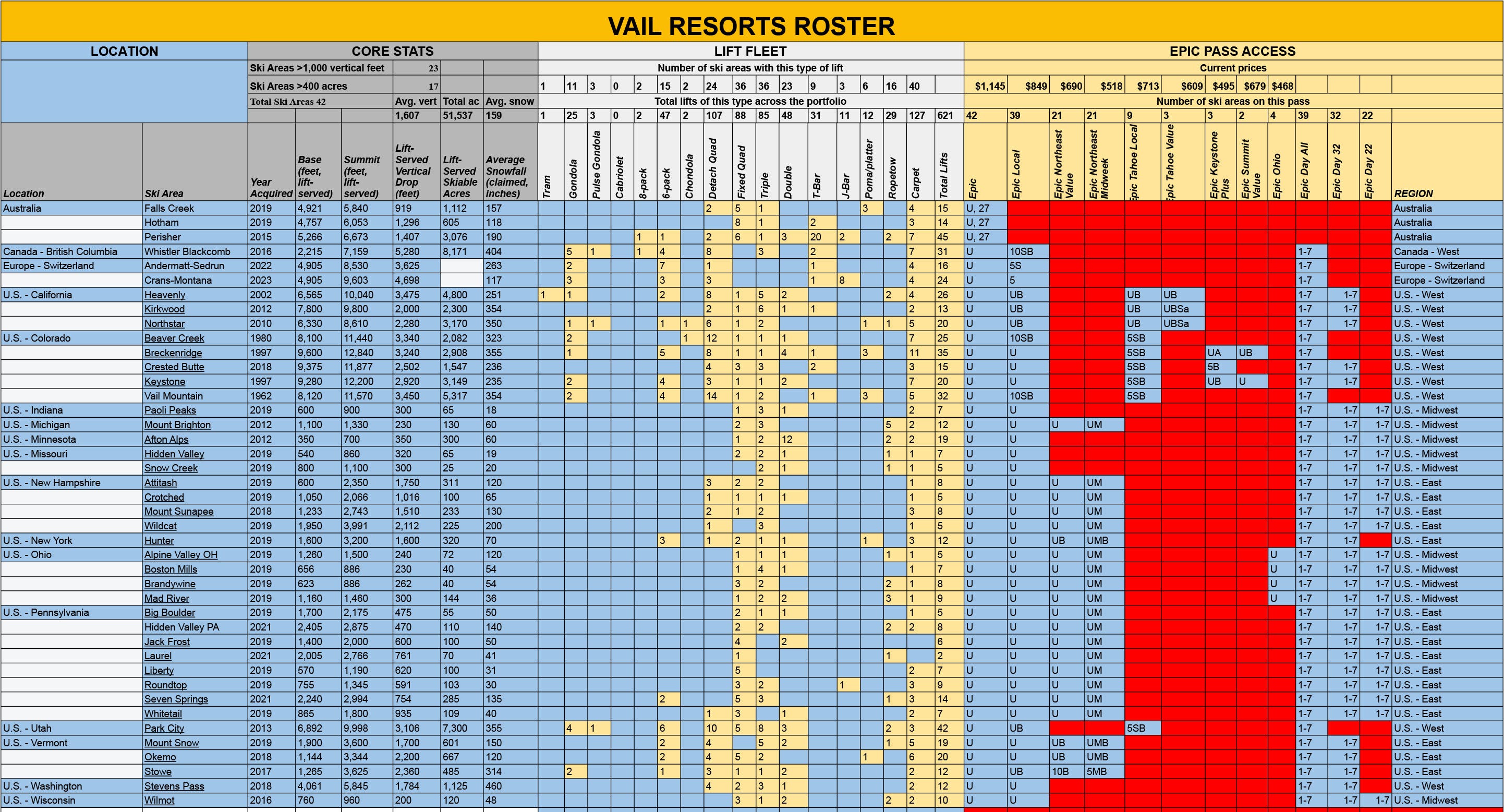 The Storm 10/13/2026: Cloudflare CEO Matthew Prince Thinks Vail Should Sell Him Park City | Today is The Storm’s seven-year anniversary. An enormous thank-you to all of my paid subscribers, who have helped transform the newsletter into a full-time job and a sustainable small business. Thank you for supporting independent ski journalism.WhoMatthew Prince, co-founder, Executive Chairman, and CEO of tech gigantor Cloudflare and owner of the Park Record newspaper.Date RecordedOct. 13, 2026About Park City Mountain ResortOwned by: Vail Resorts, which also owns:Year founded:* Legacy Park City: 1963, as Treasure Mountain (name until 1966)* Legacy Canyons: 1968, as Park City West, then Park West from 1975 to ’95, Wolf Mountain from 1995 to ’97, and The Canyons from 1997 until Vail Resorts joined both legacy resorts with the Quicksilver gondola in 2015.Pass affiliations:* Epic Pass: unlimited access* Epic Local Pass: unlimited access with holiday blackouts* Epic Tahoe Local Pass: up to 5 non-holiday days combined with Vail Mountain, Beaver Creek, Crested Butte, Keystone, Breckenridge* Epic Day Pass: all-mountain tier onlyBase elevation:* Legacy Park City – bottom of Silver Star triple: 6,892 feet* Legacy Canyons – bottom of Orange Bubble Express: 6,911 feetSummit elevation:* Legacy Park City o Lift-served – top of Jupiter double: 9,998 feet o Hike-to – Jupiter Peak: 10,026 feet* Legacy Canyons – top of Ninety-Nine 90: 9,990 feetVertical drop: 3,106 from top to bottom, actual per-run vert will vary depending upon route, but somewhere around 3,000 feet is possible with a lot of workSkiable acres: 7,300Average annual snowfall: 355 inchesLift count: 42 (2 ten-passenger gondolas, 2 eight-passenger gondolas, 1 pulse gondola, 6 six-packs, 10 high-speed quads, 5 fixed-grip quads, 8 triples, 3 doubles, 2 ropetows, 3 carpets)Why I interviewed himCheck out Park City, circa 1974:Sure, it’s a painting, not a photograph. But you can see it, right? The idyll. The stenciled historic mine-town street grid. Nothing new but the lifts and the parking lots to feed the freshly cut mountain. No traffic in or out. No hilltop mansions. No Deer Valley. Two thousand residents. Maybe. Vail was just a ski area in Colorado.Well that’s quaint. Deer Valley opened in 1981. Powdr bought Park City in 1994, American Skiing Company snatched neighboring Park West/Wolf Mountain/Canyons in 1997, and Vail Resorts eventually acquired both and strung them together with a gondola to create the largest ski resort in the United States. In 2017, Alterra bought long-independent Deer Valley and has since more than doubled the resort’s size with an expansion that included 11 new aerial lifts. Park City today:As Park City filled up, Summit County filled out:The population exploded with little planning outside of the standard U.S. American Cars-Go-Fast philosophy of road engineering. The tangle of traffic, disconnected structures, and patchwork preservation is a case study in dysfunctional sprawl, in which a community boxed in by its own bad planning resists the density and transit projects that would remedy its worst crowding and affordability problems. Once the toxic narrative takes hold that any development must be bad development, it’s easy enough for a Concerned Citizen to weaponize environmental and zoning regulations to halt – or at least almost indefinitely stall – nearly any project.I’ve written about all this before. And it’s easy enough to say “sit down Brooklyn if we wanted to live in your big dirty city we’d move there.” But Matthew Prince, born in 1974, grew up in that backwater washed-up Park City and watched it evolve into a center-of-the-world ski town that’s about to co-host its second Olympics. And he’s saying pretty much all the same things. “We’re strangling this place by just saying ‘nothing can ever change,’” he recently told KPCW’s Mountain Money podcast. “Everyone is here trying to preserve some past that never existed. I was here in the ‘70s – it sucked! … We have to get back to actually trying to build things and making this community better. … [We can] actually build a community that we actually want to live in. … Immediately, you try to do anything unique or original here or you try and invest in the community at all, and the first thing you get is just a series of lawsuits.”Prince envisions a car-free Main Street and a gondola connection over the peaks to Solitude and Alta (his plan differs different from this 2014 graphic demonstrating how a handful of lifts could connect all six Wasatch resorts):He also envisions a Park City Mountain Resort under local ownership. Vail, Prince says, can keep the Epic Pass – an independent PCMR may even participate – but he believes the Colorado-based company has under-invested in the ski resort, and he has a half-billion-dollar plan to modernize the whole circus with new lifts and snowmaking infrastructure. He has pledged to reinvest every dollar the ski area earns back into the mountain and the people who work there.Vail doesn’t want to sell Park City, but as Epic Pass sales continue their sad decline and activist investors nominate new board members and pile up MTN shares, Prince is betting that eventually they’ll have to. Prince, who co-founded tech giant Cloudflare and is worth some number of billions, is waiting with a check. This could get weird. It wasn’t so long ago that a consolidation-is-inevitable narrative gripped skiing. No one predicted that Park City-based Powdr would sell Killington, the largest and busiest ski area in the East, or, less dramatically, that their smaller neighbor, Pacific Group Resorts, would dispense with Ragged (PGR then almost immediately bought Silverstar, British Columbia from Powdr, which will keep Copper, Snowbird, Woodward, and maybe Bachelor, but is otherwise continuing to downsize). There’s actually plenty of precedent for operator shrinkage, as plenty of multimountain ski area companies have disintegrated (American Skiing Company), or backed away from globe-trotting ambitions (Aspen in the 1980s). But Vail could yet push through, as 11-mountain Boyne Resorts has done for nearly 80 years.Running a ski area is hard, and most people are bad at it. But if Prince gets his chance, he possesses a rare combination of financial resources and true I-be-from-here status that puts him in an awfully strong position to succeed.TranscriptsThere are two transcripts. Both are generated by robots. Both are helpful and defective in their own unique ways. I do not proofread either of them.Transcript 1: Click the “transcript” button at the top of this article. You can only see this transcript on a computer. Because I don’t know why exactly but everything is getting better and dumber all at once it seems. Anyway, this is the transcript that the robots create when I upload the podcast to the internet. The cool thing about it is that you can click on any block of text and the audio will teleport there instantly. The uncool thing about this transcript is that it does not indicate who is talking at any given moment.Transcript 2: You can read this below. This is the transcript that Zoom creates as we record the podcast. The cool thing about this transcript is that it indicates who is talking at any given moment. The uncool thing about this transcript is that the timestamps do not match the audio. Also, you cannot click on this text to move to the associated point in the audio.ZoomStuart Winchester: My guest today is the co-founder, executive chairman, and CEO of CloudFlare, a publicly traded global cloud platform with a $125 billion market capitalization that is used by more than 20% of all websites on the internet.00:46:34.000 --> 00:46:42.000Stuart Winchester: He is also owner of the Park Record newspaper, which has published continuously in Park City since 1880.00:46:42.000 --> 00:46:58.000Stuart Winchester: He is a Park City native who has worked as a ski instructor at Park City Mountain Resort, which at 7,300 acres served by 42 lifts is the largest ski area in the United States. Matthew Prince is my guest. Matthew, welcome to the storm. So fired up to talk to you about Park City.00:46:58.000 --> 00:46:59.000Stuart Winchester: How are you doing today?00:46:59.000 --> 00:47:18.000Matthew Prince: Uh, I’m, I’m okay. I, uh, I, I broke my arm, uh, not in a ski accident, unfortunately, but in a, in a mountain biking accident in Corsica. Uh, so I shattered the humerus bone in my, uh, in my arm, and, and I’m in a sling right now, but, uh, but on the mend, and hopefully, uh, hopefully be ready for opening day.00:47:17.000 --> 00:47:23.000Stuart Winchester: What was that flight like back to the US? Were you in pain or did you take something to knock it out?00:47:21.000 --> 00:47:38.000Matthew Prince: It was, I will say that Corsican medical care leaves something to be desired. So they gave me a little bit of regular strength Tylenol. And it was, if I held perfectly still, it was fine, but I felt every bump of turbulence.00:47:31.000 --> 00:47:32.000Stuart Winchester: Mmhm.00:47:38.000 --> 00:47:45.000Stuart Winchester: Oh, wow. Alright, so hopefully that’s not gonna mess with your ski season too much. I wanna set up the scene here, Matthew, to…00:47:45.000 --> 00:48:01.000Stuart Winchester: For, for the listeners and viewers. So if you’re watching on YouTube or stormseeing. com, you will see what I have here is a trail map of Park City from 1974, the year you were born. Now, it’s a drawing, but it’s more or less shows a very small town.00:47:54.000 --> 00:47:56.000Matthew Prince: Yeah.00:47:56.000 --> 00:47:57.000Matthew Prince: Yeah.00:48:01.000 --> 00:48:16.000Stuart Winchester: In a very tight valley and a very small ski resort. Uh, the ski area had just opened in 1963. The population was around 2,000 people. It’s 8,500 today. Summit County’s population was 6,000. It’s 43,000 today.00:48:16.000 --> 00:48:21.000Stuart Winchester: No such thing as Deer Valley yet. Nick Badami owned Park City.00:48:20.000 --> 00:48:26.000Matthew Prince: Pull out, this is my, this is my, uh, this is my 7778 ski pass.00:48:22.000 --> 00:48:23.000Stuart Winchester: Ooh!00:48:26.000 --> 00:48:27.000Stuart Winchester: Oh, wow.00:48:26.000 --> 00:48:36.000Matthew Prince: Which I just happen to have here. So that’s my bona fides of how long I’ve been skiing at Park City. So there you go.00:48:28.000 --> 00:48:30.000Stuart Winchester: Oh my gosh, that is…00:48:35.000 --> 00:48:39.000Stuart Winchester: Does that thing have a price on it?00:48:37.000 --> 00:48:41.000Matthew Prince: It’s, uh, but it’s, you know, it’s actually pretty amazing that, um…00:48:41.000 --> 00:48:57.000Matthew Prince: And again, I think this is somewhere, you know, we’ll talk about a bunch about Vale, but somewhere where Vale deserves a bunch of credit, the rate of inflation of season passes since I had that one, I actually looked it up.00:48:57.000 --> 00:49:15.000Matthew Prince: has increased at half the rate of inflation. So it’s actually one of the goods that has actually massively under-tracked the cost of inflation. So while the Lyft pass has gone up, and the price of the cheeseburgers has gone up, and lessons have gone up, the actual season passes have stayed down. And I actually think that’s something that.00:49:15.000 --> 00:49:36.000Matthew Prince: That is, you know, for a while, especially in the 90s, we were all worried that everyone was going to get priced out of skiing. And that was going to become, you know, just sort of a kind of, you know, small niche, rich person sport. And I think actually, you know, Vail with Epic and Altera with Icon deserve a lot of credit of figuring out ways to.00:49:21.000 --> 00:49:22.000Stuart Winchester: Mmhm.00:49:28.000 --> 00:49:29.000Stuart Winchester: Mmhm.00:49:36.000 --> 00:49:44.000Matthew Prince: continue to make the sport accessible to a wide number of people. And I think that’s incredibly important.00:49:44.000 --> 00:49:56.000Stuart Winchester: Yeah, I’ve not done the analysis for Park City, but I did one recently for Vail and Steamboat, which is a little easier because Park City was two separate mountains, uh, but the season pass for all of Vail’s mountains now is…00:49:56.000 --> 00:50:13.000Stuart Winchester: 60% cheaper even adjusted for inflation than it was 20 years ago. In Park City, I believe the year before Vail started buying them up, each pass was around $1,000 for Canyons and for Park City, so that’s $2,000 for a pass that you now get for, you know, inflation-adjusted, much less.00:49:59.000 --> 00:50:01.000Matthew Prince: Yeah.00:50:08.000 --> 00:50:09.000Matthew Prince: Yep.00:50:13.000 --> 00:50:15.000Matthew Prince: Yeah.00:50:13.000 --> 00:50:21.000Stuart Winchester: So… so… but take us… take us back to the 70s. I don’t expect you to remember 1974, Matthew, but… but what was it like.00:50:19.000 --> 00:50:27.000Matthew Prince: I was. I don’t. I don’t remember 74, but I but I remember. I remember the. You know it was. It was. It was.00:50:22.000 --> 00:50:24.000Stuart Winchester: Yeah, what was it like growing up there?00:50:27.000 --> 00:50:44.000Matthew Prince: You know, it was a fun sort of outdoors town. My parents were very sort of free-range parents. You know, they used to send me out with my friends and say, “Hey, don’t come home until you find a moose.” And we’d be out on the side of the mountain. We hadn’t found a moose, so we’d just sleep out there. And this is before, obviously, cell phones or anything else.00:50:37.000 --> 00:50:39.000Stuart Winchester: Yeah.00:50:41.000 --> 00:50:43.000Stuart Winchester: Right.00:50:44.000 --> 00:51:12.000Matthew Prince: you know. Eventually in the morning we get hungry and come wandering back in. But you know it was. It was very much that it was an amazing place to to grow up, you know, skiing. I skied, you know, almost almost every day, almost every weekend. The school that I went to had a had a had a program where every Friday afternoon we would go skiing, and so had had an opportunity to just, you know, just really enjoy the time out there on the mountains and make great friends and get to know those those mountains extremely well.00:51:12.000 --> 00:51:27.000Stuart Winchester: And what was the town itself like? You had a quote recently that Old Town has essentially become a bunch of Airbnbs, but just that sense of being in a neighborhood, in a small town, and you happen to have this world, well, probably wasn’t world class at the time, but this gigantic ski resort.00:51:27.000 --> 00:51:33.000Stuart Winchester: right there. What was the community like and just being a kid in that time and place?00:51:32.000 --> 00:51:48.000Matthew Prince: Oh, you know, I don’t, I don’t think, I think there are a lot of people that sort of fetishize, um, what it was. I, I think it was, um, I think it was kind of a mess. I mean, it was, there was a lot of, there was a lot of falling down buildings. There was a lot of, um, you know, there, there weren’t, there weren’t.00:51:36.000 --> 00:51:37.000Stuart Winchester: Yeah, thank you. Yeah.00:51:48.000 --> 00:52:06.000Matthew Prince: Uh, there, um, you know, I, I used to, there was a place called Utah Coal and Lumber, which is the little Mexican place that as a kid I loved, but it was, you know, it wasn’t, it wasn’t anything to, to write home about. And, um, and, and, and yeah, you could, you could get, you know, a crumbling miner shack for, for basically just paying the back taxes.00:51:55.000 --> 00:51:56.000Stuart Winchester: Mmhm.00:52:06.000 --> 00:52:22.000Matthew Prince: But there wasn’t actually that much kind of energy or life to it. It was really the skiing. And I think the Badami’s deserve, you know, an enormous amount of credit through the ‘70s and ‘80s, really, really enriching the skiing environment.00:52:22.000 --> 00:52:39.000Matthew Prince: Bringing World Cup races in, doing things in order to get people there. But even things like, you know, the Sundance Film Festival, which was in Park City Forever, didn’t start out as the Sundance Film Festival. It was the United States Film Festival. I, as a kid, used to stand out in front of the Egyptian theater with a sign that said, you know.00:52:39.000 --> 00:52:55.000Matthew Prince: And it was a, it was a gimmick to get people to come out and ski because you were, you were fighting like crazy just to get, to get people, uh, into, into town. So I, I think it was, um, like I, I certainly wouldn’t trade, uh, with that and, and, and it, and, and there, you know, I think that.00:52:55.000 --> 00:53:20.000Matthew Prince: There are people who remember good times back then, drinking lots and hooking up with their friends and not really having a care in the world. But the reality is, the lines were long, the lifts were slow, the grooming was bad, there wasn’t snowmaking. In ‘76, ‘77, the mountain basically didn’t open because it didn’t have any.00:53:20.000 --> 00:53:38.000Matthew Prince: any snow. And so, you know, you fast forward to today, you know, you’ve got much, much bigger mountains, much more terrain, faster, faster lifts, um, you know, better, better snowmaking, better grooming, uh, and, and it’s, and, and skiing is just a lot more, a lot more fun and a lot more accessible to, uh, to, to more people, and I, and I think it’s.00:53:38.000 --> 00:53:46.000Matthew Prince: It’s that we should be celebrating that, not sort of, again, fetishizing some past that really never existed.00:53:46.000 --> 00:54:02.000Stuart Winchester: Right, so let’s talk about that change in the evolution. It’s so unique and interesting that you actually grew up in Park City, and that’s such a rare thing for what it was and what it became. So just some of the highlights, in ‘81, Deer Valley opened.00:53:59.000 --> 00:54:00.000Matthew Prince: Yes.00:54:02.000 --> 00:54:18.000Stuart Winchester: Uh, the Badami’s were there and then they sold to Powder in 94. They really brought in a lot of those high speed newer lifts. Uh, Park West obviously changed name to Canyons and then, you know, Vail came in and, and updated. There was Olympics along the way. As you said, Sundance was growing.00:54:02.000 --> 00:54:04.000Matthew Prince: Yeah.00:54:12.000 --> 00:54:14.000Matthew Prince: Yep.00:54:18.000 --> 00:54:19.000Matthew Prince: That’s it.00:54:18.000 --> 00:54:22.000Stuart Winchester: Was there a point where…00:54:22.000 --> 00:54:37.000Stuart Winchester: You can look back and say, okay, this is when it started to change, or you’re just a kid, maybe you got back from college and were like, wait a minute, this is, so, so, so take us through that process through your eyes and, and how it’s evolved and, and when it stopped becoming.00:54:37.000 --> 00:54:42.000Stuart Winchester: this dumpy place of your childhood and started becoming more of what it is.00:54:41.000 --> 00:54:43.000Matthew Prince: Yeah, you know, I think, um…00:54:44.000 --> 00:55:03.000Matthew Prince: You know, I think that, I mean, it was, it was amazing to watch, you know, Deer Valley go, and I, I, I, um, before they put lifts in, my dad and I got to go on the cat, cats and cat ski the run for, before they were, were, were doing that. And, and when, you know, Todd, uh, the GM was opening East Village, um, I got to do that again and go ski the, the runs on.00:55:03.000 --> 00:55:25.000Matthew Prince: on cats before before they were opening it. And so it’s, you know, it’s it’s amazing to see as it’s as it’s continued to evolve. I think it’s it’s been great that you that you can have this incredible, you know, accessible area between Deer Valley, you know, old old Park Cities, the old Park West, Wolf Mountain Canyons area that that all combining.00:55:25.000 --> 00:55:32.000Matthew Prince: And, you know, my favorite thing to do when we bring, you know, people to town is that I live kind of on the, what is effectively the far sort of…00:55:32.000 --> 00:55:52.000Matthew Prince: southern edge of Park City, and getting people to, you know, take off from our house, ski down, and then ski all the way to the far northern side, and ski all the way back. You just get a sense of the size, and the scale, and the range. And that’s just a small part of it. Like, if you’ve also then done something like… Ski Utah does something called the Interconnect Tour, where you start at Deer Valley.00:55:53.000 --> 00:56:08.000Matthew Prince: You go to Deer Valley at Park City, you ski over the back of Jupiter. So if you’ve ever ridden the Jupiter chair, there’s a ski patrol shack at the top of that. You ski just right around that and then down some what is actually fairly intermediate terrain.00:56:08.000 --> 00:56:24.000Matthew Prince: Um, not groomed, obviously, but you’re, you’re kind of rolling through, through the, uh, through the glades. You pop out at Solitude. The only time you have to take your skis off is to, is to cross the road, uh, to go to Solitude. You ski Solitude, you go over to Brighton just to see Brighton, come back to Solitude, go over.00:56:10.000 --> 00:56:11.000Stuart Winchester: Mm-hmm.00:56:24.000 --> 00:56:44.000Matthew Prince: the Highway to Heaven, which then drops you down into Grizzly Gulch, takes you down to Alta, and then you ski Alta to Snowbird. The fact that you can ski between six different resorts all in one day, and that they are so much closer than people expect, is just really, really incredibly miraculous. And so.00:56:44.000 --> 00:56:56.000Matthew Prince: I think that, you know, for me, the mountains themselves and the resorts themselves have gotten better and better and better over time. I think the thing that’s changed a little bit is just, really, in the last few years.00:56:56.000 --> 00:57:14.000Matthew Prince: it’s gotten frustrating to watch as Vale, which controls Park City, um, you know, and Park City’s really the keystone within this, has just really underinvested in the mountain. And some of that’s, you know, Vale’s fault. Um, you know, they’re a public corporation, they have, um, they’ve obligated to pay a dividend, they’ve got a lot of debt.00:57:14.000 --> 00:57:32.000Matthew Prince: that they have to service, and so it makes it harder for them to invest in the mountains. Some of it’s the town’s fault. I mean, the fact that, again, Vail was ready to upgrade some of the lifts, and the town, you know, freaked out and kept them from doing it. I mean, that has caused there just to be this real underinvestment. And if you compare.00:57:32.000 --> 00:57:48.000Matthew Prince: what’s happened at Park City, where they haven’t put new snowmaking in the Park City side of Park City in, you know, in 20 plus years. The lifts are, you know, the silver load lift, which is one of the kind of key lifts at Park City was installed the year that I was a.00:57:48.000 --> 00:58:03.000Matthew Prince: a ski instructor there, which is more than 30 years ago. It’s way past its useful life at this point. Um, like, all of these things are places where the mountain just desperately needs investment. And both, I think, because of the restrictions that Vail has of being a public company.00:58:03.000 --> 00:58:23.000Matthew Prince: And because of just how much goodwill they’ve burned with the town, it’s, it’s, it’s, it’s, it’s, it’s just been sad to watch, uh, what, what feels like a, an infrastructure which is, which is increasingly, you know, just falling apart. And, and it’s gotten to the point where, like, I don’t, I don’t, I don’t let my kids ride certain lifts at, um, at Park City anymore.00:58:21.000 --> 00:58:22.000Stuart Winchester: Really?00:58:23.000 --> 00:58:33.000Matthew Prince: Because I think they’re dangerous. And, um, and again, I think it’s, it’s up to, you know, Vail to really, to really, um, you know, fix those, or, or, or we’ve got to fix Vail.00:58:33.000 --> 00:58:51.000Stuart Winchester: So let’s take a look here and give Vail credit for what they have done. So their first thing was connecting canyons to Park City with this really big gondola. It’s a lot bigger than it looks on this trail map here. Again, sharing my screen. They took King Con. This was a high-speed four, moved that high-speed four over here to replace a triple.00:58:43.000 --> 00:58:44.000Matthew Prince: Yep.00:58:51.000 --> 00:59:07.000Stuart Winchester: made this a 6, they put this, uh, over an out lift over here as a infill lift at Canyons, and then this High Meadow Express was an old fixed grip, and they updated that, and then, as you mentioned, they had wanted to.00:59:07.000 --> 00:59:22.000Stuart Winchester: and want to, again, take Eagle and Eaglet triples, replace those with one six-pack, and take Silverload, or replace it with an eight-pack. They tried to do it in 2022. Those lifts are doing great at Whistler Blackcomb right now, because that’s where they went, uh, after the town, uh.00:59:13.000 --> 00:59:14.000Matthew Prince: Yep.00:59:19.000 --> 00:59:20.000Matthew Prince: Okay.00:59:22.000 --> 00:59:37.000Stuart Winchester: process went through, and they were not allowed to put those in. But, they’re trying again, they just announced, they just announced in their earnings report that they’re putting them in. That’s part of what they say is $200 million in investment they’ve put overall into Park City since buying it. So.00:59:37.000 --> 00:59:51.000Stuart Winchester: they have done some things, but if you were them specifically, if this was your mountain, and it’s Fantasy Park City, what would you replace? I mean, you’ve got these two 70s doubles over here, but, I mean, what would you… what would you want to do?00:59:38.000 --> 00:59:40.000Matthew Prince: Yep.00:59:50.000 --> 01:00:07.000Matthew Prince: Yeah, I mean, so first of all, I have the fortunate position that I’ve done very well financially, and I don’t need to make any money off of the mountain. And so any money that the mountain makes, I would put back into really two things, which is, first of all, how do we reward and take care of the employees and staff?01:00:07.000 --> 01:00:26.000Matthew Prince: that are making sure that everyone has a great, great experience. The, the tension between Vail and folks like the Ski Patrol is just, I mean, it’s just silly. Like, that, that’s the, that’s, those are the people who keep my kids safe when they’re out skiing. They, they’re doing incredibly hard, incredibly important work. They should be paid for that work. And, and again, I think that that’s the first thing that we have to, have to invest.01:00:26.000 --> 01:00:44.000Matthew Prince: And the second thing is the infrastructure of the mountain. And yes, that means lift infrastructure. And it’s not just about how do you upgrade the lifts, but I think a lot of it is, you know, if you look at where they put the lifts in, especially the Park City side of Park City, back when they originally installed them back in ‘63, in a lot of cases, I mean, some of the lifts.01:00:41.000 --> 01:00:42.000Stuart Winchester: Mmhm.01:00:44.000 --> 01:01:08.000Matthew Prince: They just don’t make a ton of sense, for what it is. It’s it’s not designed the way a modern mountain would be, would be designed. There’s some very simple things that you could do that would spread people around the mountain and let people take advantage of a lot more of that. But it’s not just lifts. It also is snowmaking. Really, you’ve got to directly invest in the snowmaking that’s there. The problem is that when you have a bad snow year like we did last year.01:01:08.000 --> 01:01:23.000Matthew Prince: The amount of runs on the Park City side of Park City, their cover snowmaking is tiny compared with someone like Deer Valley. And what that does is it forces more people onto fewer runs, and that just makes it more dangerous to actually be skiing there. And so the best way for us to.01:01:23.000 --> 01:01:41.000Matthew Prince: There’s plenty of mountain. There’s plenty of space. If you know where to ski, like, I ski at Park City, you know, and don’t wait in a lift line ever, don’t see another person on a trail most of the time. But we have to do a better job of re-engineering how the mountain is structured, and that means a real investment.01:01:41.000 --> 01:01:59.000Matthew Prince: you know, I have a specific plan that if I’m able to buy Park City from Vail, that I’d put a half a billion dollars into upgrading the infrastructure of the mountain, upgrading the infrastructure of the lifts, upgrading the snowmaking, upgrading the dining facilities. I mean, the fact that the Midmountain Lodge basically didn’t have a functional bathroom for a significant portion of.01:01:59.000 --> 01:02:15.000Matthew Prince: of last year is just, I mean, it’s just disgusting. And this is the sort of thing that what I think is missing from Vail is they have lost what’s magic about skiing, which is that every mountain is different, every mountain is unique.01:02:15.000 --> 01:02:35.000Matthew Prince: They all have unique stories to tell. They’re all places that have unique cultures and a unique local environment. You can’t manage them all from Broomfield. You have to allow people who really have care and local ownership in order to do well. And I think that if you look at mountains like Jackson Hole, if you look at mountains like Sun Valley, Snow Basin.01:02:35.000 --> 01:02:44.000Matthew Prince: Like, just the experience that you have at places like that is much richer because you have local ownership, and then you have a partnership.01:02:44.000 --> 01:02:57.000Matthew Prince: with someone like Altera that sells a global pass. And I think that’s the right model for skiing going forward, which is local owners of mountains with local stewardship, and then someone doing a global pass, whether it’s Epic or Icon.01:02:57.000 --> 01:03:12.000Stuart Winchester: So just being a knucklehead in New York City and skiing Park City once in a while, whenever I can, it does feel very unique to me. You got the big mining infrastructure and, you know, some of the old lists are kind of cool and quirky. You got town down there below, and there’s really not much like that.01:03:06.000 --> 01:03:08.000Matthew Prince: Yeah.01:03:12.000 --> 01:03:19.000Stuart Winchester: in American skiing, but you have a much broader, longer perspective on it. So, what do you think that…01:03:19.000 --> 01:03:28.000Stuart Winchester: was lost in Vail Resorts ownership? Is it specifically Vail, or did it start to fade when Powder owned it? I know Powder is based right there in Park City, but…01:03:27.000 --> 01:03:45.000Matthew Prince: No, I think Patrick’s very much a real local owner. And again, the last time, I mean, one of the best ways to measure this is, you know, that anytime the resort has to upgrade the mountain in any meaningful way, they have to have a development agreement with the town.01:03:45.000 --> 01:03:50.000Matthew Prince: Um, Powder, back in, uh, 97.01:03:50.000 --> 01:04:05.000Matthew Prince: um, the same year that I was a ski instructor, um, put in place the last master development agreement that’s there. Um, that’s something that should be revisited, frankly, every 2 to 3 years, uh, and gone back to. And yet, we’re now 30 years in.01:04:00.000 --> 01:04:02.000Stuart Winchester: Mmhm.01:04:05.000 --> 01:04:28.000Matthew Prince: And no one has revisited it. And the town keeps saying, hey, we’re happy to talk about this, but Vail refuses to actually come to the table and revisit it. Again, I think that the challenge with it, and I hadn’t totally appreciated this. I’ve been a supporter of the US ski team for quite some time, and I went out to the Birds of Prey race, which they hold in Beaver Creek, which is another Vail resort.01:04:28.000 --> 01:04:37.000Matthew Prince: And I remember it was, um, you know, I skied down, uh, it was between races, and I skied down to get a cheeseburger from the lodge, and I walked in the lodge, and I was like.01:04:37.000 --> 01:04:52.000Matthew Prince: huh, this looks exactly the same as Miners Camp at Park City. And I think the Vail model, at some level, is to treat skiing like McDonald’s. How do we make every single place be exactly the same? In fact, if you look at.01:04:52.000 --> 01:05:11.000Matthew Prince: that what the lift operators, if you look at what the ski instructors are wearing, oftentimes it won’t even be something specific to the mountain you’re on. It will say… it’ll list all of the different Vail resorts. And again, I get it. At some level, that might be the most efficient way to run something, is treat every mountain as if it’s McDonald’s.01:05:11.000 --> 01:05:29.000Matthew Prince: But that’s losing, I think, what people really care about skiing. Like, if you go to Sun Valley, there’s an experience there that you get. If you go to Deer Valley, there’s an experience there that you get, which is different. If you go to Jackson Hole, there’s an experience there that you get that’s different. And I think that comes back to really local management.01:05:29.000 --> 01:05:45.000Matthew Prince: which is taking those mountains and running them in a way which is really unique to them. And I think the right model for Vail going forward is, how do you say, how can we get more local ownership and then still sell the Epic Pass? I’ll give you an example. Here are two different.01:05:45.000 --> 01:05:55.000Matthew Prince: future realities. Let’s imagine that Vale’s stock price trades on nothing more by than how many Epic Passes they sell, which is roughly true.01:05:55.000 --> 01:06:13.000Matthew Prince: Um, here are two different futures. One future is they’ll continue to do what they’re doing in Park City, where they, you know, you know, run it as they’ve been running it, and they promise they’re gonna, you know, make it better next year with, you know, an epic promise to do epic things in an epic way.01:06:13.000 --> 01:06:29.000Matthew Prince: Right? And they do that, right? And again, I think we’ve all heard those stories before, and some people are going to bypass us saying, well, yeah, maybe this time is different. And others of us are going to say, you know, the definition of insanity is doing the same thing over and over again and expecting different results. Like, I think Park City stays.01:06:29.000 --> 01:06:48.000Matthew Prince: Park City as long as Vail continues to run it. In an alternative world, they sell Park City to someone like me. They get a bunch of cash, which they can use, you know, pay down their debt, do a dividend, buy back stock, invest in their other mountains. I commit to putting half a billion dollars into the mountain, so upgrade the mountain substantially.01:06:48.000 --> 01:07:12.000Matthew Prince: We do a deal where we still accept the Epic Pass. There’s no reason you can’t continue to do that. I immediately go to Eric Resnick at KSL and Altera and do it, do a deal to do an interconnect between Deer Valley and Park City upgrade. Then the deal that you need to do in order to do that, you got to upgrade the food on the Park City side because they don’t want everyone to ski over and overwhelm the restaurants at Deer Valley. So you’ve got to get people to go both directions. But that’s a very.01:07:12.000 --> 01:07:29.000Matthew Prince: And then in addition to that, put in place a plan in order to connect with a gondola from where the town lift is today, all the way to Alta, stopping in solitude along the way, so that you connect all six resorts and have the largest skiable acreage anywhere in the world. And if you want to ski at Park City.01:07:29.000 --> 01:07:48.000Matthew Prince: the keystone to all of that, that you have to actually, you know, have an Epic Pass or have a Park City Pass in order to do that. Under which of those worlds do you sell more Epic Passes? I think the clear answer is B. I think clearly in that world, you sell more Epic Passes if you’re Vale, and so the thing which has been just mind-blowing to me.01:07:48.000 --> 01:08:04.000Matthew Prince: Is that folks like Rob Katz at Vail won’t even engage in the conversation. And that to me is just a hallmark of what bad management looks like. If you could do that, it would be good for Vail. It would be good for Park City. It would be good for skiers.01:08:04.000 --> 01:08:13.000Matthew Prince: It’d be good for everyone involved. And again, I think that that is very, very, very plausible, and I’ve got a plan to do that and the financing all lined up to do it myself.01:08:13.000 --> 01:08:28.000Stuart Winchester: What I’m showing on the screen is the old Wasatch Interconnect plan from 2014. That was pre-Vail purchasing Park City. I think it was probably more environmental activists that killed that plan. But I really want to — there’s so many things I want to follow up on here that you said, Matthew.01:08:28.000 --> 01:08:42.000Stuart Winchester: my audience is very much into the… the lifts, the mountain, the way… the way it works. What can you tell us? I mean, the half billion’s a lot of money. Specifically, what lifts would you like to take out, replace, put in?01:08:32.000 --> 01:08:33.000Matthew Prince: Yeah.01:08:33.000 --> 01:08:35.000Matthew Prince: Okay.01:08:36.000 --> 01:08:38.000Matthew Prince: It’s a lot of money. I mean, it’s.01:08:41.000 --> 01:08:57.000Matthew Prince: Yeah, I mean, so again, I think that the first step would be like, let’s bring in someone who’s a real ski resort designer to do this. But let’s spitball, you know, some of the things that you can do. So the first is the town lift. Imagine if the town lift, which today takes 22 minutes.01:08:48.000 --> 01:08:49.000Stuart Winchester: Yeah.01:08:51.000 --> 01:08:52.000Stuart Winchester: Mmhm.01:08:57.000 --> 01:09:08.000Matthew Prince: from the base just to get up to, you know, the top of it. If instead it took 22 minutes to take you not just from the base of downtown Park City, but all the way up.01:09:08.000 --> 01:09:18.000Matthew Prince: over the, uh, the back of what is, um, Scott’s Bowl on there, down to Solitude, with a stop at Solitude, then up and over, down Grizzly Gulch.01:09:12.000 --> 01:09:13.000Stuart Winchester: Mmhm.01:09:18.000 --> 01:09:39.000Matthew Prince: to Alta. We can do that with a modern gondola in 22 min, end-to-end downtown Park City to downtown Alta. And think about what that enables. You can stay in Park City, and you can go ski in Alta, or if we ran it late enough, managed it and ran until 1 in the morning, you could be staying over at Alta, and you could come eat at the great restaurants.01:09:39.000 --> 01:10:02.000Matthew Prince: At Park City, go see a show, go out to a bar, and then get on the gondola and ride it back. It’d be this very European-like experience, which, because of how close everything is together, that is very plausible and able to do. So I think that’s the sort of thing that is there. We have other places that are absolute bottlenecks within the mountain of Park City itself. So again, the Silver Load area is a key example of that. I take the Silver Load lift.01:10:02.000 --> 01:10:19.000Matthew Prince: But run an additional lift from Silver Load and put it to the top of where Crescent goes now. Put a high-speed quad that takes off from right below where Silver Load is, takes people up and takes that down. Put additional snowmaking, especially on some of those Ski Team Ridge runs, and make sure they groom them. What the Cummings did under Powder.01:10:19.000 --> 01:10:40.000Matthew Prince: was they made sure that every single day, one of those ski team ridge runs was always groomed, and they called it a signature run, and it was a great run for an advanced intermediate skier to be able to get down off the mountain. That took people off of the choke point of people coming down, uh, Treasure Hollow at the end of the day. Take a lift from the base of where, um, the, the Bonanza lift is.01:10:40.000 --> 01:11:02.000Matthew Prince: And run it up to the top. Just it can be a fixed grip triple, and run it to the top of where payday is to get people on the payday runs and again, get them out of Treasure Hollow, which is, again, one of the number one places where you have accidents at the end of the day. Invest in just more snowmaking so that you get more of the mountain open. I think there are a lot of things that you can do in order to, improve the access to other things. Take the mother load lift.01:11:02.000 --> 01:11:23.000Matthew Prince: and redirect it slightly so that instead of it ending at the same place where Silver Load and Bonanza do, it actually takes you to the top of where Pioneer and Thanes are so that you get access to some of those Pioneer runs and get more places for people to ski. Take the Pioneer lift, obviously make it a much faster lift, make it less high off the ground because it’s actually dangerously high.01:11:23.000 --> 01:11:40.000Matthew Prince: at various places, but run that actually all the way back down to Bonanza so that you have a much longer kind of intermediate run area that’s there, and create an additional intermediate trail that comes off and cuts around Pioneer Ridge so that you can do that. Again, I think what Deer Valley has done a good job of is saying.01:11:40.000 --> 01:11:55.000Matthew Prince: How can we make sure that no matter what lift someone is getting on, there’s at least a beginner and an intermediate way of getting down the mountain? I think Park City has divided things up. And so as a family, if you have some people who are strong skiers and some whose people are weaker skiers, you end up having to divide up.01:11:55.000 --> 01:12:11.000Matthew Prince: Whereas I think that there are ways that you can, with modern design of a mountain, make the entire mountain more accessible to more people. And as you do that, you spread crowds out, lift lines go down, the crowding on the slopes goes down, the carrying capacity of the mountain goes way up, and you can do.01:12:11.000 --> 01:12:18.000Matthew Prince: You know, really great things where the same number of people on the mountain can have just a much, much, much better experience.01:12:17.000 --> 01:12:21.000Stuart Winchester: Let’s keep going. Canyons, what do you got?01:12:20.000 --> 01:12:36.000Matthew Prince: Well, I mean, again, I think there’s a ton. The Kansas has had better investment, but I think snowmaking galore. I think that there’s a ton of opportunity, especially as you go off Pinecone Ridge. So coming down into the area that’s now the colony, there’s great terrain that you can have.01:12:24.000 --> 01:12:26.000Stuart Winchester: Mmhm.01:12:33.000 --> 01:12:35.000Stuart Winchester: Mmhm.01:12:36.000 --> 01:12:52.000Matthew Prince: that comes down off of all of that. But I think just snowmaking like crazy, making sure that you’ve got, you know, the ability to cover these various parts. And then I think working with the Forest Service to say, how can you go up to the next ridge? So one of the most dangerous places.01:12:52.000 --> 01:13:17.000Matthew Prince: to ski right now is flat top, which is out of bounds. But it’s really, really tempting where people can just kind of ski under a rope and get right to it when they come off the 99 90 chair, and every single year even advanced skiers are dying up there, and it’s a really, really dangerous area. If you sort of look right in the center of the screen where 99 90 comes up.01:13:11.000 --> 01:13:13.000Stuart Winchester: Hmm.01:13:17.000 --> 01:13:34.000Matthew Prince: You can see there’s a boundary and then just to the right of the boundary, there’s sort of a, I can’t remember if it’s a flat top or square top, the name of that mountain. I mean, the best way to deal with that is like put a lift up it and actually groom it and avalanche control it. And there’s a ton of additional terrain.01:13:34.000 --> 01:13:54.000Matthew Prince: that I think you can see directly expanding up into and just making the mountain even bigger. And then I think it opens the opportunity of where are the places that you can then ski over the backside and get down into the solitudes and brightens of the world in order to make this just this incredible, like, rich ability to ski across multiple different areas.01:13:47.000 --> 01:13:48.000Stuart Winchester: Mmhm.01:13:54.000 --> 01:14:07.000Matthew Prince: Because I think it’d be incredible to wake up in Park City, you know, take the gondola over, ski a couple of laps over in, you know, Eddy’s High Nowhere at Alta, or the Cirque.01:14:06.000 --> 01:14:07.000Stuart Winchester: Yeah. Okay.01:14:07.000 --> 01:14:24.000Matthew Prince: at Snowbird, come back and have the buttered chicken at the Roundhouse at Solitude for lunch, and then make your way back to, you know, the High West Saloon for Apres Ski back in Park City. That would be such a unique opportunity, and again.01:14:24.000 --> 01:14:41.000Matthew Prince: I think that you can do something like that, accepting the Epic Pass, but you can’t have Vail own it because Vail has just made too many enemies with too many of the other ski resort operators around there. An independent owner like myself, I think, can pull that off and make that happen. And again, I think it’s good for skiing.01:14:41.000 --> 01:14:43.000Matthew Prince: It’s good for skiers and it’s even good for.01:14:43.000 --> 01:15:00.000Stuart Winchester: So setting aside Vail for a moment, and we’ll come back to all that, I love this idea of connecting all of these mountains. You see what, but this plan was killed by, from my understanding, a lot of litigation, which is pretty typical of what kills things.01:14:50.000 --> 01:14:52.000Matthew Prince: Yeah.01:15:00.000 --> 01:15:15.000Matthew Prince: There wasn’t litigation. I think it died early. I think, you know, the advantage of having grown up in Utah and seen, I mean, we’ve been talking about doing some sort of interconnect.01:15:00.000 --> 01:15:02.000Stuart Winchester: in the U.S. West.01:15:15.000 --> 01:15:32.000Matthew Prince: since the 70s, and it’s not happened. And there’s some real landmines that are out there. And so I think, you know, I’m, you know, cautiously and quietly clearing those landmines. And I think the Olympics, which are coming in 2034, provide.01:15:32.000 --> 01:15:47.000Matthew Prince: you know, a real impetus. And there’s, um, and there’s, you know, significant buy-in across, sort of, the political leadership, um, and across most of the ski resort leadership. And so, um, you know, again, I think what’s been missing is a crazy person who.01:15:47.000 --> 01:15:56.000Matthew Prince: who, uh, who has the resources to be able to, uh, to drive something like this. And, and, um, and, and that’s, um, I, I, I fit that bill.01:15:56.000 --> 01:16:12.000Stuart Winchester: So you see how much trouble they’re having right now putting a gondola up Little Cottonwood Canyon, right? And, and you’ve spoken yourself about how hard it is to build anything in Park City. You have this five acre site that’s very contentious. You have issues with your own home on the property that you own trying to build something.01:16:12.000 --> 01:16:14.000Stuart Winchester: So, so there’s…01:16:14.000 --> 01:16:20.000Stuart Winchester: We’re stuck in this regulatory world where it can be difficult to get things done.01:16:17.000 --> 01:16:27.000Matthew Prince: Yeah, I’m pretty optimistic. I think that those are solvable problems.01:16:27.000 --> 01:16:41.000Matthew Prince: and again, it just makes… it makes a ton of sense. There’s a… there’s a lot of… there’s a lot of mountain, uh, for… for people who are gonna do, um, you know, backcountry skiing, uh, and that… that should be preserved, but we should also make sure that we can.01:16:41.000 --> 01:16:49.000Matthew Prince: get cars out of the Cottonwood Canyons, that rubber pollution from tires, uh, going into the water sources is terrible.01:16:48.000 --> 01:16:50.000Stuart Winchester: Mmhm.01:16:49.000 --> 01:16:54.000Matthew Prince: And, uh, and if you can get people there on, you know, fast, quiet.01:16:54.000 --> 01:17:09.000Matthew Prince: Almost invisible gondolas. Uh, I mean, Europe has shown that that is, is, is the way that works, and I think we should learn, uh, from, from their examples and, and, and, and, and again, the environmental movements there that have, that have led to, yes, getting people out to enjoy the mountains.01:16:55.000 --> 01:16:57.000Stuart Winchester: Mmhm.01:17:09.000 --> 01:17:15.000Matthew Prince: But also investing in how you move people around in ways that are not incredibly polluting or inefficient or dangerous.01:17:15.000 --> 01:17:20.000Stuart Winchester: Yeah, it seems like we’re overdue for a narrative shift because often.01:17:20.000 --> 01:17:24.000Stuart Winchester: The folks opposing things for environmental reasons are.01:17:24.000 --> 01:17:29.000Stuart Winchester: Really maintaining a mode of transit or.01:17:29.000 --> 01:17:44.000Stuart Winchester: Uh, activity that is worse for the environment, like all the cars up Little Cottonwood Canyon. And you, you’ve talked about how you would close Main Street and Park City to cars. And, and that’s just one example. This, this area of the Wasatch is so dense, has so much.01:17:45.000 --> 01:18:00.000Stuart Winchester: potential to be like Europe and like nothing else in the United States. You know, having grown up and watched this all come, you’ve also talked about Park City kind of being stuck in time, you know, like stuck in 1985 or whatever it is that people idealize.01:17:48.000 --> 01:17:49.000Matthew Prince: Cool.01:17:59.000 --> 01:18:01.000Matthew Prince: 95, but yeah.01:18:00.000 --> 01:18:03.000Stuart Winchester: Yeah, was there one…01:18:03.000 --> 01:18:04.000Stuart Winchester: Big…01:18:04.000 --> 01:18:08.000Stuart Winchester: Big change or one big thing that kind of.01:18:08.000 --> 01:18:22.000Stuart Winchester: they need to get past? Is it all just relationships and having someone that can talk to the community more? What did Park City and the surrounding areas get stuck on, and how can they move ahead to a more modern, non-car-based system?01:18:21.000 --> 01:18:43.000Matthew Prince: Yeah, I mean, I think to some extent, you’ve got a whole bunch of people who a lot of their wealth has been tied up in the fact that they, you know, bought what were legacy miner shacks, and then those miner shacks are now worth a whole bunch of money. And there’s a false belief that if you allow people to build new things, that that will then cause the older things to be worth less.01:18:43.000 --> 01:19:00.000Matthew Prince: That feels like people are having their basically nest egg stolen from them. That has turned out not to be true. If you look at towns like Aspen, the old properties have appreciated even as they’ve built new properties, Telluride, Sun Valley, Jackson Hole, all of those cases, it turns out.01:18:46.000 --> 01:18:47.000Stuart Winchester: Mm-hmm.01:19:00.000 --> 01:19:16.000Matthew Prince: That helps. I think there’s also just sort of a sort of fear and panic over, oh my gosh, the traffic is so bad. And, you know, again, to some extent, that’s a problem of our own creation in places like Park City. I think, you know, Park City has done, and Park City is a very liberal town.01:19:07.000 --> 01:19:08.000Stuart Winchester: Mmhm.01:19:16.000 --> 01:19:36.000Matthew Prince: Uh, within a very conservative state. And, um, and has been kind of thumbing its nose at the, um, at the state leadership for quite some time. And yet the two roads that go in and out of town, uh, roads are 224 and 248, they’re both state roads. And, you know, a few years back, there was a state bill.01:19:36.000 --> 01:19:40.000Matthew Prince: that upgraded roads across the entire state.01:19:40.000 --> 01:19:56.000Matthew Prince: Every single state road got upgraded except two, 224 and 248. And so at some level, like, you know, you may not like the people that run the state legislature, but you’re not doing your community a service if you’re not actually.01:19:43.000 --> 01:19:44.000Stuart Winchester: Okay.01:19:56.000 --> 01:20:11.000Matthew Prince: Building a relationship with them and saying, hey, it’s in all of our interests to make sure that the infrastructure gets supported, that we’re able to upgrade things, that we’re able to get these things in place. I think there’s a lot that we can do to improve the place.01:20:11.000 --> 01:20:27.000Matthew Prince: And, and there’s just a ton of change which is coming like, you know, in ten years, you know, are we all going to be driving cars ourselves? I think probably no. I mean, you look at someone like my dad, who’s 85 and has a Tesla, is self-driving and drives him up and drives him down when he comes and visits.01:20:27.000 --> 01:20:43.000Matthew Prince: I think that’s going to become much more of the reality. And how do we think through and plan for what that future looks like? And I think there’s an enormous opportunity for new kind of real leadership to step up and say, we’re going to build what is the future.01:20:43.000 --> 01:20:58.000Matthew Prince: Honoring the past, but not preserving the past. And, you know, fights over whether or not a set of stairs is historic or not. Honestly, not the best use of time. And if we don’t do this, the real risk for Park City is, it’s not like…01:20:58.000 --> 01:21:16.000Matthew Prince: development and growth is stopping like East Village is getting built like crazy. The canyons based area is getting built like crazy. It’s just Park City itself. It’s kind of in in a in a stasis. And what I worry about is, you know, my, when my dad grew up in in Utah, he used to come up in the in the sixties to see to see Park City as the ghost town.01:21:16.000 --> 01:21:33.000Matthew Prince: And it’s not inconceivable that we beat the case. When I was a kid, it was the people from Salt Lake who came up to Park City to go to the good restaurants. Now the people from Park City are going down to Salt Lake to go to good restaurants because it’s become too hard to open a great restaurant in Park City.01:21:16.000 --> 01:21:17.000Stuart Winchester: Yeah, yeah.01:21:27.000 --> 01:21:28.000Stuart Winchester: Mmhm.01:21:33.000 --> 01:21:49.000Matthew Prince: And so I think there’s an opportunity, but we’ve got to make investments. We’ve got to make it easy to get there. We’ve got to make it easy to start businesses and have those businesses thrive. We’ve got to make it a real destination. It’s got to have a little bit more density. I mean, if you compare.01:21:49.000 --> 01:22:06.000Matthew Prince: You know, Park City’s one relatively steep road that people have to navigate with somewhere like Aspen, where it’s, again, flat and has some depth to it. Like, there’s some easy things that are wins. Like, there’s an alley called Sweet Alley. Of course, that should be developed with restaurants and shops.01:22:06.000 --> 01:22:25.000Matthew Prince: hotels and a grocery store. Of course, we should be doing things to encourage, you know, more people to get there. And in doing that, again, I think it’s going to benefit the entire community, and I think we can do it in a way that actually makes the mountains better, makes the experience of being there better, decreases the actual traffic burden.01:22:25.000 --> 01:22:30.000Matthew Prince: And makes it a place where, you know, families like my own were excited to call home.01:22:30.000 --> 01:22:32.000Stuart Winchester: So I.01:22:32.000 --> 01:22:49.000Stuart Winchester: Read your competitor town lifts email every day. And one of the funniest, it’s, it’s a, it’s a, well, it’s a good newsletter, but one of the funniest parts is the job postings for jobs paying 25 an hour are right above the real estate listings for homes that are 12 million. So there’s a disconnect there.01:22:49.000 --> 01:22:58.000Stuart Winchester: And I’m curious how much you’ve thought, Matthew, about if you were to own Park City Resort. We’ve seen in Aspen, Aspen Skiing Company’s done a pretty good job of.01:22:58.000 --> 01:23:14.000Stuart Winchester: Helping employees basically by subsidizing homes. But it sounds like what you are saying is maybe more of the abundance movement, which is kind of figure out ways to build and, and let and, and have a market that works better. Am I getting that right? Or do you have other thoughts on housing and how you might handle that?01:23:12.000 --> 01:23:14.000Matthew Prince: Yeah, of course, of course.01:23:14.000 --> 01:23:31.000Matthew Prince: I mean, I think that the massive advantage that Park City has over places like Aspen is that we’ve got communities all around us that are significantly more affordable. So if you go to Colville, which is not far away, if you go to Heber, which is incredibly close.01:23:20.000 --> 01:23:22.000Stuart Winchester: Mm-hmm.01:23:25.000 --> 01:23:26.000Stuart Winchester: Mm-hmm.01:23:31.000 --> 01:23:50.000Matthew Prince: to, you know, the East Village in Park City. If you go to Salt Lake, which is not that long a drive, you’ve got just… you’ve got places where people can afford to buy homes. In addition, I mean, I do think that for places where, you know, people are firefighters or school teachers or newspaper reporters.01:23:50.000 --> 01:24:08.000Matthew Prince: We’ve got to find ways for them to be able to live in the communities that they service as well. So it’s not one silver bullet here, but there’s a lot of different solutions. But I think Park City is better positioned to be able to deal with this than a lot of other places. You’ve got a town of 2 million people with lots of affordable housing options.01:24:08.000 --> 01:24:25.000Matthew Prince: within a 30-minute commute to the resort, which is, you know, an incredible luxury that basically none of the Colorado resorts have. And so while I think that, you know, housing prices are a difficult problem, and it’s always going to be tough, like, it’s going to be hard to have ski-in, ski-out.01:24:25.000 --> 01:24:28.000Matthew Prince: You know, on mountain employee housing.01:24:28.000 --> 01:24:50.000Matthew Prince: Because there’s always going to be an incentive for people to try and find some way to sell that, because you’re selling something for less than what it’s actually worth. But we’ve got lots of other communities around, and we’ve just got to find a way to work with that. And so what I’ve encouraged, you know, is how do we make sure that, yeah, it’s great to do things like after-school, you know, programs and daycare.01:24:50.000 --> 01:25:12.000Matthew Prince: inside Park City, but a lot of the people who are working in Park City don’t actually live in Park City. They live in the surrounding communities. So how can Park City be an advocate to those communities to say, let’s make sure that Henifer has the best, you know, after school, you know, programs available. Let’s make sure that, you know, Francis has an incredible, you know, preschool program.01:25:12.000 --> 01:25:28.000Matthew Prince: that’s open to anyone that’s there. Let’s make sure that, you know, clinics like the People’s Health Clinic extend their service outside of just the Park City community, but to the greater Summit and Wasatch County communities. And I think as you do that, and you think about it, not just about like.01:25:28.000 --> 01:25:48.000Matthew Prince: Park City proper and the town proper, but about the entire area and the entire community, there’s a way for that to be, you know, really important. There’s a guy who works at one of the locker rooms who I’ve become friends with who, you know, is Hispanic and moved to town years ago and bought a home in Heber.01:25:48.000 --> 01:26:05.000Matthew Prince: you know, when it was very affordable, and has watched that appreciate, and has made, you know, a really good life and living for himself and his family. And I think those are the stories that we need to encourage and tell, and foster more and more. There’s another guy who owns a…01:26:05.000 --> 01:26:22.000Matthew Prince: a restaurant called The Bridge and Flying Sumo in town, came to Park City on a J-1 visa, working basically as a janitor at Deer Valley, worked his way up, was a hard worker, and now is a business owner in town. We need to make it easier and easier for more and more people to do that, and what I’m committed to doing is saying, like.01:26:22.000 --> 01:26:33.000Matthew Prince: Let’s make sure that that’s the case, where we’re not, you know, just pricing everyone out of town, but we’re actually creating opportunities, not just in town, but across the greater community.01:26:32.000 --> 01:26:49.000Stuart Winchester: Part of the plan for getting more money to flow around, it seems like, was you made a comment to the Colorado Sun that I’ve not seen you expand upon elsewhere, and maybe you have, but if you could humor us here, you said the town should own part of the resort. What kind of model do you have in mind there?01:26:49.000 --> 01:26:52.000Stuart Winchester: And how do you see that benefiting the city as a whole?01:26:51.000 --> 01:27:16.000Matthew Prince: Yeah, again, what I think I said was that I would be open to that. I’ve had a couple of folks from city council say, hey, would you be willing to cut the town in on any deal? And I said, absolutely. But we just have to be really clear. Like my goal of this is not to make money off of this. And so I’m not going to be, I don’t, some of all, I don’t want investors because investors then have an expectation of return.01:26:57.000 --> 01:26:58.000Stuart Winchester: Mm-hmm, okay.01:27:02.000 --> 01:27:03.000Stuart Winchester: Yeah. Okay. Yeah.01:27:09.000 --> 01:27:11.000Stuart Winchester: Mmhm.01:27:16.000 --> 01:27:17.000Stuart Winchester: Yeah.01:27:16.000 --> 01:27:35.000Matthew Prince: Whereas I, in this case, am just trying to do something where this is a community that gave a lot to me, and I want to give something back to it. But sure, if the local community wanted to have some, you know, skin in the game in the mountain, I’d be happy to cut them in. I think that that makes a ton of sense. I think it’s a model for a lot of other communities, especially smaller communities.01:27:35.000 --> 01:27:40.000Matthew Prince: To say, how can we take back the ownership of the mountains themselves?01:27:40.000 --> 01:27:43.000Matthew Prince: But then outsource the selling of passes and the marketing.01:27:43.000 --> 01:28:02.000Matthew Prince: to someone like Avail, like, I think that makes a ton of sense. And from a perspective of someone like Avail, you know, generally, I mean, you look at other businesses like this, so you look at, like, a McDonald’s, or you look at, like, a Coca-Cola. Like, a McDonald’s, when interest rates are low, they buy up a bunch of the stores from the local owners. When interest rates go up.01:28:02.000 --> 01:28:17.000Matthew Prince: They sell those stores off to various ownership groups, and they manage it. Coca-Cola does the same thing with bottlers. When interest rates are low, they buy the bottlers up and they control more of them. They sell them off when interest rates are high. Interest rates are going up.01:28:17.000 --> 01:28:33.000Matthew Prince: And and Vale is sitting on more assets than the underlying value of the company, which means that they’ve done something terribly wrong in terms of capital allocation. And so what we need to do is is basically get them to say, like, this is a time where they should be selling those assets off. And that doesn’t mean that.01:28:33.000 --> 01:28:54.000Matthew Prince: those assets can’t still take the Epic Pass. Again, that’s just a negotiation. That’s part of the deal on what the price of buying the asset is. But if you could imagine a world where they could sell the assets off, get the cash from that, those assets would still take the Epic Pass, but you’d have local owners, people like me, and towns that really care about and want to.01:28:54.000 --> 01:29:10.000Matthew Prince: you know, highlight these communities, and that they get paid based on every time someone actually comes and skis at one of these resorts. Like, that’s clearly a better model for Vail. We know it works incredibly well for Altera, which, frankly, if you go and visit the Altera Mountains.01:29:10.000 --> 01:29:27.000Matthew Prince: They’re much more unique. They’re much more, you know, much more fun places to ski. And I think it’s, again, it’s such a strange no brainer when you’ve got folks like me, when you’ve got folks like the town of Park City that are willing to say, hey, we will take and invest in this.01:29:11.000 --> 01:29:13.000Stuart Winchester: Mmhm.01:29:27.000 --> 01:29:38.000Matthew Prince: in exchange for making sure that it is the world-class mountain that we know it can be, I think that’s just a no-brainer for Vail to be doing.01:29:38.000 --> 01:29:54.000Stuart Winchester: So let’s say you did buy the Scaria from Veiled. Do you think there’s a world in which Park City could be a thriving modern resort without Epic or Icon or any national pass? It’s just a destination resort like Whitefish or like Powder Mountain up the road. Or do you think that we’re at a point where.01:29:54.000 --> 01:30:00.000Stuart Winchester: in order to be a successful destination resort in the United States, you need to make some sort of affiliation.01:30:00.000 --> 01:30:15.000Matthew Prince: You know, I don’t, I mean, it, it maybe can, I mean, you’ve got a local, you’ve got a local population, you’ve got, you got a bunch of, bunch of things that are there, but I think it, you know, I like, I like the fact that tourists come to town. Like, I like the fact that you, you attract people. I think that the, the key is just.01:30:11.000 --> 01:30:12.000Stuart Winchester: Yeah.01:30:15.000 --> 01:30:31.000Matthew Prince: You know, what are good restrictions? So Deer Valley takes the Icon Pass, but they just limit the number of days that you can use it, and they require you to have a reservation when you use it. If you have a season pass to Deer Valley, you get preferred access, and some other other benefits. That seems like the right model.01:30:19.000 --> 01:30:20.000Stuart Winchester: Mmhm.01:30:31.000 --> 01:30:47.000Matthew Prince: So I think that there’s a way of doing this that makes sense. And the vast majority of resorts have said, hey, we will partner with one or more of the Mega Pass providers in order to do that. But it’s a competition, and it’s essentially like a franchise.01:30:42.000 --> 01:30:43.000Stuart Winchester: Mmhm.01:30:47.000 --> 01:31:02.000Matthew Prince: And if, um, you know, if one sort of falls down and another one, uh, picks up, then you’re seeing that people are switching around, uh, between the various pass models. So, so I think that for, for, certainly for a mountain that’s as large as Park City, it can, it can absorb.01:31:02.000 --> 01:31:20.000Matthew Prince: you know, both the local population, um, as well as tourists that are coming in, and, and I think that, you know, having some sort of affiliation with, with someone like, like a Vail and an Epic makes, it makes a ton of sense, and, and again, I, I think it, it, it, from, even from Vail’s perspective, it should be a no-brainer.01:31:20.000 --> 01:31:33.000Stuart Winchester: You’ve mentioned Altera and Deer Valley a couple times, and you’re not leaning on Altera to sell you Deer Valley. What did they do right that Vail did wrong? Because they both bought from longtime owners.01:31:32.000 --> 01:31:39.000Matthew Prince: Yeah, I mean, I think that they’ve given just a lot more control. Like, if you go skiing with Todd.01:31:39.000 --> 01:31:40.000Stuart Winchester: Mmhm.01:31:40.000 --> 01:31:56.000Matthew Prince: at Deer Valley versus you go skiing with Deidre at Park City. Like, I think they’re both great people. I think Deidre’s super smart and very, very capable operator. But she, you know, anytime she has to, you know, sneeze, she has to call Broomfield to get permission to do it. Whereas Todd.01:31:44.000 --> 01:31:46.000Stuart Winchester: Mmhm.01:31:56.000 --> 01:32:16.000Matthew Prince: knows every employee on the mountain, is out there every day fixing issues, you know, and has much more local control, and again, is allowed to make decisions on an individual basis, and that gives it a much more local feel. I think that’s the core thing which has been missing from a lot of the Vail resorts, is that this.01:32:16.000 --> 01:32:33.000Matthew Prince: It’s that management is too far away from the mountain, and you’ve got to have people who actually care about the mountain, on the mountain, skiing around, knowing every instructor’s name, knowing every lift operator’s name, knowing every mechanic’s name, hearing about what the problems are, investing ahead of them.01:32:33.000 --> 01:32:48.000Matthew Prince: as opposed to, you know, having to, you know, basically ask Mother May I from, you know, a corporation which is thousands of miles away. And I think that’s the core problem. And then I think also.01:32:48.000 --> 01:33:02.000Matthew Prince: Um, the willingness to say, we don’t need to own every one of the mountains. The majority of Icon Mountains, um, Altera doesn’t own. You know, Doral is the exception. Um, but you go to Jackson Hole, you go to, you go to Snow Basin, you go to Sun Valley.01:33:02.000 --> 01:33:07.000Matthew Prince: But Altera doesn’t own them. And again, I think that’s the right model. Local ownership.01:33:07.000 --> 01:33:21.000Matthew Prince: with some sort of a global pass that sits on top of it. And there’s no reason that Vale can’t imitate that model and see a lot more success over, again, what has been, you know, just an abysmal financial performance for the last 5 years.01:33:21.000 --> 01:33:33.000Stuart Winchester: So, just curious about, you know, you run a publicly traded company and have a more sophisticated understanding of how that works than probably the majority of my audience, myself included. There’s some, uh…01:33:33.000 --> 01:33:39.000Stuart Winchester: new board nominations for Vail. There’s, uh, increasing…01:33:39.000 --> 01:33:44.000Stuart Winchester: Stock stake that activist investors are.01:33:44.000 --> 01:33:57.000Stuart Winchester: building up, how fast could things theoretically change with Vail Resorts’ current ownership management team structure, if things got really aggressive?01:33:56.000 --> 01:34:16.000Matthew Prince: Yeah, I mean, at the end of the day, the CEO is the person that sets the strategy for any company, and the CEO’s boss is the board, and the board decides whether to hire or fire the CEO. And so, I’ve not been… I don’t own a single share of Vale stock, I’m not an investor in.01:34:02.000 --> 01:34:03.000Stuart Winchester: Mmhm.01:34:16.000 --> 01:34:31.000Matthew Prince: and any of the activists that are there. I know some of the nominees for the board, for folks like Bryce Roberts, who’s a venture capitalist, and Peekaboo Street, who, like, if you could have Peekaboo Street on your board, like, as a ski…01:34:31.000 --> 01:34:32.000Stuart Winchester: That’d be pretty cool.01:34:31.000 --> 01:34:46.000Matthew Prince: There’s no one who understands, like, the love and the fun of skiing can bring it back better than, than, than someone like Pipu. And, um, and so, you know, I, I, I think that, you know, this can go down a number of different ways. One way is that.01:34:46.000 --> 01:35:02.000Matthew Prince: you know, Val can just say, hey, this is a great list of people, and we’d love to have them, you know, on the board, and they could… they could join in, and then… then again, they… they would, um, you know, either, um, presumably influence Rob to… to change directions to some extent, or at least consider other… other possibilities. Maybe…01:35:00.000 --> 01:35:01.000Stuart Winchester: Mmhm.01:35:02.000 --> 01:35:18.000Matthew Prince: Maybe at least return my phone calls. Or they replace Rob, right? You know, at some level, that’s a possibility as well. And again, I think Rob deserves a ton of credit. He, in some ways, saved skiing.01:35:18.000 --> 01:35:33.000Matthew Prince: Um, you know, if prices had just continued to go up and up and up, a lot of people who are able to ski today would have been priced out of it, and they deserve credit for that. But that’s one trick, like, and you need to be able to have multiple tricks to sustain over.01:35:32.000 --> 01:35:34.000Stuart Winchester: Mm-hmm.01:35:33.000 --> 01:35:49.000Matthew Prince: Over the years. And so I think it’s time for potentially some new management and some new ideas to come in. And I think there’s an opportunity to unlock an enormous amount of value, not only just to Vail shareholders, but to all of us who actually ski and enjoy and love these mountains.01:35:49.000 --> 01:36:04.000Matthew Prince: And so, you know, it could change very, very quickly. If Vail resists it, then the activists would launch what’s called a proxy fight, which is basically there’d be two different slates of directors that would be up for election.01:36:04.000 --> 01:36:20.000Matthew Prince: And both sides would be advocating for what would happen. But it doesn’t have to come to that. And in fact, in most cases, it doesn’t come to that. If it does come to that, it’s pretty rare. But it’s, you know, I think it’s hard.01:36:20.000 --> 01:36:36.000Matthew Prince: To have, if you just look at the chart of, you know, Vale’s stock price over the last five years, it’s hard to have that bad of performance and say, yeah, we’re going to believe and continue to invest in the management team that’s taken us down this hole.01:36:33.000 --> 01:36:34.000Stuart Winchester: Mmhm.01:36:36.000 --> 01:36:53.000Matthew Prince: And so something has to change. And again, I don’t know. I don’t know what the right strategy is. I don’t have a I don’t have any interest in owning Vail itself. I just want to take care of Park City and the community that I grew up in. I want to make Park City into one of the best.01:36:53.000 --> 01:37:09.000Matthew Prince: uh, if not the best ski resort in the entire world, and I want to make the region of Park City, Deer Valley, Brighton, Solitude, Alta, Snowbird, into the largest, most, uh, just amazing, um, ski… ski areas in the world. And again, I think I have the…01:37:09.000 --> 01:37:14.000Matthew Prince: the ability and the resources to do that in a way that I think would be hard for Vail to do on their own.01:37:14.000 --> 01:37:22.000Stuart Winchester: All right, leave us with this, Matthew. One of Vail’s more toxic legacies, in my opinion, is the cost of a walk-up lift ticket.01:37:22.000 --> 01:37:36.000Stuart Winchester: the peak day walk-up lift ticket at Park City will be $369 this season, uh, $349 at Deer Valley, so Altera’s not doing any better. Do you have any thoughts on lift ticket pricing and…01:37:36.000 --> 01:37:39.000Stuart Winchester: what that could look like under your ownership.01:37:39.000 --> 01:37:53.000Matthew Prince: Yeah, I mean, I think… I think you gotta… so… so, first of all, I think that the incentive here, because what… what Dale Stock trades on entirely is how many Epic Passes they sell, and so the fact that an Epic Pass is basically 3 days of… of lift tickets.01:37:53.000 --> 01:38:12.000Matthew Prince: Um, it, you know, shows that they’re just trying to really push you to everyone to, to get, to get Epic Passes. And, and there’s, you know, there’s some part of that that makes sense. It, it’s, it’s much more predictable, it’s better for, it’s better for the resort, it’s better for, you know, skiers, it allows you to, to, to do various things. But for sure, we’ve.01:38:12.000 --> 01:38:28.000Matthew Prince: it’s fair, and it feels like it’s, you know, something that that allows people to continue to enjoy enjoy the sport. And, and so, you know, I don’t know exactly what, you know, lift ticket pricing would be, I will tell you that.01:38:28.000 --> 01:38:46.000Matthew Prince: my goal is not… I… I don’t… I don’t… I don’t want to make any money off this. I… I have… I have a new unique problem, which is I have to give a lot of money away, um, so I don’t… I don’t need any more. Um, but… but I, um… but… but… but at the same time, like, I do want to make sure that we are able to take care of our… our team and our employees. I.01:38:46.000 --> 01:39:01.000Matthew Prince: able to invest in the infrastructure and make it, you know, a world class, you know, mountain. But it should be high quality. A cheeseburger costs the same at Deer Valley as it does at Park City. It’s a lot better at Deer Valley. There’s no reason that that has to be the case. We can have great things and great food.01:39:01.000 --> 01:39:19.000Matthew Prince: We can have, you know, ways that, you know, that local school teacher can afford to ski or the kids that are there on the mountain. And, you know, if, you know, if the investment banker comes in last minute and wants to go skiing, you know, maybe they do pay some sort of premium.01:39:19.000 --> 01:39:29.000Matthew Prince: Uh, for… for… for the… for the lift ticket. I… I don’t… I don’t know. What… what I come back to is just from a first principles perspective of we need to make… we need to invest in the mountain.01:39:29.000 --> 01:39:47.000Matthew Prince: We need to continue to make it a safe, enjoyable, fun place for as many as possible people to be able to ski. We shouldn’t be privatizing it. Like, I don’t… like, the idea of Yellowstone Club sounds… I love meeting random strangers on the lifts. I don’t want to hang out just with my friends when I go ski. I want to actually have.01:39:45.000 --> 01:39:46.000Stuart Winchester: Yeah.01:39:47.000 --> 01:40:03.000Matthew Prince: a diverse community, so we should be encouraging people to do it. We should make it easier to ski between various places. We should open more of the mountain so that… so that we spread crowds out, and that we don’t have, kind of, bottlenecks, uh, that are there. And we should make it as affordable as possible.01:40:03.000 --> 01:40:22.000Matthew Prince: While still making sure that we can pay our, you know, the team a wage that is respectable for the incredible hard work that they do, and that we can invest in the mountain and the lifts and the infrastructure so that it’s a safe and really, you know, enjoyable place to ski.01:40:22.000 --> 01:40:34.000Matthew Prince: Like, that doesn’t… that… that… and then exactly where that falls out in terms of prices and passes and everything else, I think we can figure it out, um, because again, I don’t… I don’t need to pay a dividend, and I don’t have a whole bunch of debt that.01:40:34.000 --> 01:40:49.000Stuart Winchester: All right, Matthew, let’s walk off on that. I took way more time than I said. I cannot thank you enough. A, just knowing how busy you are in general. B, you know, I hope your arm gets better, and I know you’re fighting through that. And C, just everything going on in Park City.01:40:43.000 --> 01:40:44.000Matthew Prince: Thank you.01:40:47.000 --> 01:41:04.000Matthew Prince: It’s a lesson. All my friends who are skiers, they don’t get hurt skiing, they get hurt mountain biking. And I swore I was going to be an amateur mountain biker all my life, and yet I still managed to blow my arm up. But anyway, hopefully see you out there. I’ll be the one-armed skier out there. Get full access to The Storm Skiing Journal and Podcast at www.stormskiing.com/subscribe | 1h 02m 38s | ||||||
| 10/6/26 |  Storm Skiing 10/6/2026: Breaking Down Epic, Ikon, Indy, Mountain Collective with PeakRankings Founder Sam Weintraub | The best way to support The Storm’s mission of independent ski journalism is to subscribe to the newsletter, which will deliver future analysis, news, and podcasts directly to your inbox. WhoSam Weintraub, Founder and CEO of PeakRankingsDate RecordedOct. 5, 2026About PeakRankingsPeakRankings rates ski areas, plans trips, makes killer YouTube vids, and Instaposts and Facebooks (those are verbs, right?). Like me, they seem to have given up on TwiXXer. Please give them all the follows, but especially check out the trips page:Why I interviewed himSunday evening, PeakRankings published an article headlined “Epic vs. Ikon: Which Pass Should You Buy Before Prices Go Up?” It’s an excellent breakdown of the two biggest ski passes by price, access, and region.I’ve known Sam for a while. He started PeakRankings around the time that I started The Storm. We both found momentum during Covid when everyone was at home making macaroni replicas of their cats and injecting themselves with bleach. Good times. But everyone was bored enough to pay attention to a couple of ski media startups.I don’t remember how we connected, but it turned out that Sam lived in the next neighborhood over, and one night we grabbed a few beers and talked skiing and ski media. Sam is younger than I am, and has been far more tuned-in and aggressive in his evolution from ski-ranking site to Insta/YouTube god (102k my dude!), to uniter-of-souls-via-ski-trip in our Age of Loneliness. He’s been generous with his time, insight, and advice, and we (my editor/wife and I), have learned a lot from Sam about deeking the algorithms.One thing I’m very deliberate about is not over-relying on one source. Everyone in skiing is busy all the time, and over-communication is fatiguing for me, for them, and for listeners and readers. But as soon as I read the pass article, I emailed Sam – who I’d seen several times already over the past few weeks – to see if he could jump on and help us break everything down. He could, and he crushed it.ResourcesEpic Pass prices are set to increase Oct. 7, and Ikon will go up Oct. 8. Those are both probably fake deadlines and you can usually get those same rates for at least a day afterward, but don’t assume that will be so. Anyway, here’s what the major passes cost now:You can view all the rosters here (scroll right to view). Here’s a nifty chart showing Epic and Ikon price changes over the years:If you want to view all the Big Dumb Charts I screenshared showing differences in pass partners by size and region, here they are.All of these charts are on a Big Dumb Google Sheet, otherwise known as The Encyclopedia Bro-Tannica, otherwise known as the U.S. American SnoSportSkiing Masterchart. Yes I know they look like s**t. Yes I know I need to migrate to something better. But what you see as you click through the tabs at the bottom is seven years of data entry fusing into something like an encyclopedia of American skiing. It’s just my worksheet, and I made it public because why the hell not? But like Joel from Open Snow said on my pod years ago, I move very slowly, but I’m always moving forward.TranscriptsThere are two transcripts. Both are generated by robots. Both are helpful and defective in their own unique ways. I do not proofread either of them.Transcript 1: Click the “transcript” button at the top of this article. You can only see this transcript on a computer. Because I don’t know why exactly but everything is getting better and dumber all at once it seems. Anyway, this is the transcript that the robots create when I upload the podcast to the internet. The cool thing about it is that you can click on any block of text and the audio will teleport there instantly. The uncool thing about this transcript is that it does not indicate who is talking at any given moment.Transcript 2: You can read this below. This is the transcript that Zoom creates as we record the podcast. The cool thing about this transcript is that it indicates who is talking at any given moment. The uncool thing about this transcript is that the timestamps do not match the audio. Also, you cannot click on this text to move to the associated point in the audio.ZoomStuart Winchester: My guest today is the founder and CEO of PeakRankings. Sam Weintraub is my guest. Sam, welcome to the storm. I know you’re a few blocks away from me, but I don’t have a good in-person setup. How you doing today?00:49:51.000 --> 00:50:07.000Sam Weintraub: Good, thanks for having me, Stu. I know, we gotta figure it out, um, we’ll do maybe, like, a round 2 in the… I can just walk right over, um, I think it’s, like, 5 blocks away, it’s just up, um, Metropolitan Avenue, I don’t know if anyone.00:50:06.000 --> 00:50:07.000Stuart Winchester: Yah.00:50:07.000 --> 00:50:08.000Sam Weintraub: Oh.00:50:09.000 --> 00:50:13.000Sam Weintraub: watching or listening to this knows Brooklyn, but…00:50:12.000 --> 00:50:14.000Stuart Winchester: Mmhm.00:50:14.000 --> 00:50:26.000Stuart Winchester: So, you put on… this was a last-minute thing, and I really appreciate you coming on last minute here, Sam. So, you wrote a great article yesterday. Well, I don’t know who wrote it. PeakRankings released an article yesterday.00:50:26.000 --> 00:50:32.000Stuart Winchester: called Epic vs. Icon, which pass should you buy before prices go up? So…00:50:32.000 --> 00:50:49.000Stuart Winchester: At a very high level, let’s just talk Epic versus Icon and the price dates and lay those out for everybody and, uh, and what, what your baseline thought is on each pass from an affordability, from an access standpoint.00:50:51.000 --> 00:50:58.000Sam Weintraub: Yeah, so, I mean, what’s really interesting is in the 2020s, Epic and Icon have…00:50:58.000 --> 00:51:04.000Sam Weintraub: really started to take different market positions. So…00:51:04.000 --> 00:51:11.000Sam Weintraub: If you look back at, like, 2019, 2020, they were around the same price.00:51:11.000 --> 00:51:12.000Sam Weintraub: But…00:51:12.000 --> 00:51:19.000Sam Weintraub: I think both of them were still trying to figure out where they were, because…00:51:19.000 --> 00:51:33.000Sam Weintraub: I believe, and you can correct me if I’m wrong, I believe it was 2018, the first year that you could buy both the Epic and the Icon Pass. The Icon Pass used to have a predecessor called the Max Pass, and…00:51:33.000 --> 00:51:48.000Sam Weintraub: it wasn’t really, um… I don’t remember the specifics of the Max Pass, but it wasn’t really as comprehensive as the Icon Pass is, in terms of destination offerings especially, um, that the Icon Pass is today.00:51:48.000 --> 00:52:03.000Sam Weintraub: And so, I think, long story short, what happened was it became clear that the Icon Pass just had much more of a destination, like, fly-to-destination roster, and that.00:52:03.000 --> 00:52:07.000Sam Weintraub: continued to increase over the…00:52:07.000 --> 00:52:22.000Sam Weintraub: course of the 2020s, um, you know, the Icon Pass started adding more and more destinations, and it just got to the place where now, if you go almost anywhere, um, with potentially the exception of Colorado.00:52:22.000 --> 00:52:30.000Sam Weintraub: Tahoe, and Whistler, um, the Icon Pass is just going to offer more compelling.00:52:30.000 --> 00:52:48.000Sam Weintraub: Ski resorts when it comes to things like terrain quality, when it comes to snow quality in a lot of cases, especially in Utah, because you get in on Icon, even if you’re thinking of Park City as its own destination, which it really does deserve to be in a lot of ways because it’s so big.00:52:48.000 --> 00:52:57.000Sam Weintraub: uh, it gets, like, half the snow of the Cottonwood Mountains that are just west of it. So, ultimately, what we’ve arrived at, and I think the market.00:52:53.000 --> 00:52:54.000Stuart Winchester: Mmhm.00:52:57.000 --> 00:53:04.000Sam Weintraub: I think, and I say I think because I know Icon doesn’t release its past numbers, but I believe what has happened is that.00:53:04.000 --> 00:53:06.000Sam Weintraub: Icon is just…00:53:06.000 --> 00:53:16.000Sam Weintraub: you know, become more of a premium in terms of its pass offerings. Um, and Epic, you know, I believe it was 2021, they…00:53:16.000 --> 00:53:35.000Sam Weintraub: decided to drop all their pass prices by 20%, and they never caught back up with Icon. So now they’re actually more of the value play. Um, and that’s also reflective in some of their packaging. So, if you look at the Epic Local Pass, which is the competitor to the Icon Base Pass.00:53:22.000 --> 00:53:23.000Stuart Winchester: Mmhm.00:53:35.000 --> 00:53:42.000Sam Weintraub: those are, like, the products that come with holiday blackouts. So those are the ones, um, and I…00:53:42.000 --> 00:53:44.000Sam Weintraub: I think you probably have…00:53:44.000 --> 00:53:50.000Sam Weintraub: some of these sources as well, right, Stu? But I believe that, like, somewhere between 80…00:53:50.000 --> 00:53:58.000Sam Weintraub: to 85% of people who buy these passes get the base pass rather than the full. Um, is that correct?00:53:57.000 --> 00:54:04.000Stuart Winchester: That’s my general sense. You know, I’ve never been given an exact number, but yes, I’m hearing the same estimates.00:54:03.000 --> 00:54:19.000Sam Weintraub: Yeah, so with that being said, if you look at the Epic Local Pass versus the Icon Base Pass, the Epic Local Pass has a lot more leniency when it comes to those holiday blackouts. So if you look.00:54:19.000 --> 00:54:28.000Sam Weintraub: I believe at there are certain mountains in Colorado that are destination worthy. I believe Keystone.00:54:28.000 --> 00:54:33.000Sam Weintraub: I think Breckenridge, I would have to double check on that, Crested Butte, um…00:54:33.000 --> 00:54:45.000Sam Weintraub: Mount Snow, Okemo, those don’t have holiday blackouts, even if you have the Epic Local Pass. If you get the Icon Pass, you maybe have Copper, Eldora, Winter Park.00:54:39.000 --> 00:54:40.000Stuart Winchester: Yeah. Yeah.00:54:45.000 --> 00:54:59.000Sam Weintraub: those don’t have holiday blackouts, but everything else, if you have the Icon Base Pass, has holiday blackouts. So, the Epic Local Pass is a lot more flexible, and it’s less punishing than the Icon equivalent.00:54:59.000 --> 00:55:14.000Sam Weintraub: And I think, you know, when you take a look at the price discrepancy, the Epic Local Pass is, uh, around $200 less than the Icon Pass. You’re getting a product that is just much better in terms of the value. So…00:55:14.000 --> 00:55:30.000Sam Weintraub: So I guess just to sum it up, long story short, Epic is more of a value oriented pass at this point. And it’s great if you want to go to a veil owned mountain. That ecosystem is, you know, like a very useful one.00:55:30.000 --> 00:55:36.000Sam Weintraub: a lot more than just the pass access. There’s… there’s other things that are streamlined, like…00:55:36.000 --> 00:55:52.000Sam Weintraub: If you care about having an app that you can, you know, use at North Star and Stowe and Stevens Pass and Park City that has the exact same UI, you want to use your phone as a pass rather than a physical.00:55:52.000 --> 00:56:08.000Sam Weintraub: product. Like, those are all things that, because all of the Epic resorts, with the exception of, like, Vail, or with the exception of Telluride, maybe a couple that are outside the country, um, they’re all owned by Vail. So Vail has a lot more control over those things.00:56:08.000 --> 00:56:19.000Sam Weintraub: With Icon, you don’t. Um, but like I said, with Icon, you just have a lot more variety for, like, those dream destinations, um, that you might want to go to.00:56:19.000 --> 00:56:33.000Stuart Winchester: Yeah, and for those watching on stormskiing.com or YouTube at Storm Ski Journal, I’ve been putting a bunch of things up on the screen as Sam talks to show the prices. I want to talk a little bit about these… I want to hit that point you made, Sam, about more quality. So these are charts…00:56:33.000 --> 00:56:38.000Stuart Winchester: So, if you look at ski areas with over 1,000 vertical feet, Icon has 46.00:56:38.000 --> 00:56:40.000Stuart Winchester: Epic has 19.00:56:40.000 --> 00:56:47.000Stuart Winchester: Uh, if you look at Ski Area, it’s over 400 acres. Icon has 42, Epic has 14.00:56:47.000 --> 00:56:51.000Stuart Winchester: Uh, if you look at past numbers, partner numbers.00:56:51.000 --> 00:56:53.000Stuart Winchester: Uh, let me…00:56:53.000 --> 00:56:55.000Stuart Winchester: Do a few more here.00:56:56.000 --> 00:56:59.000Stuart Winchester: Okay, if you look at, for example.00:56:59.000 --> 00:57:03.000Sam Weintraub: This is a really impressive array of charts, too.00:57:02.000 --> 00:57:17.000Stuart Winchester: Thanks. I, I think it’s, uh, I, I’m getting some flack for making, doing this, uh, dizzying screen shares, but I’ll try to find a better way to present these. But, uh, number of ski areas in each pass, Icon has 103, Epic has 71. I have a little bit of an idiosyncratic way.00:57:14.000 --> 00:57:16.000Sam Weintraub: Sure.00:57:17.000 --> 00:57:34.000Stuart Winchester: Uh, counting ski areas. Uh, if you look at ski areas outside the US, Epic has, has actually more, actually, Icon’s not on that. So let me fix that chart. Uh, Icon total skiable acres, 83,306. Epic total acres, 40,573.00:57:34.000 --> 00:57:42.000Stuart Winchester: Uh, if you look at the distribution in the U.S, right here on this chart, and India actually has more than Epic as well.00:57:42.000 --> 00:57:59.000Stuart Winchester: And… Skier has more than 1,000 vertical feet, Epic has 19 in the US, Icon has 46. I mean, I go on and on. You can see these in my Encyclopedia Britannica, which is this gigantic, stupid chart I have linked from my past. You know, Sam, when you look at the… when you start to look at the prices, right?00:57:59.000 --> 00:58:00.000Stuart Winchester: I mean, I…00:58:00.000 --> 00:58:03.000Stuart Winchester: I was talking to someone recently who…00:58:03.000 --> 00:58:06.000Stuart Winchester: Is a person of means, runs a hedge fund.00:58:06.000 --> 00:58:15.000Stuart Winchester: And they needed to buy 5 passes for the year, right? And he’s like, I’m going Epic, because it’s so much less expensive. I mean, this is a guy who…00:58:16.000 --> 00:58:27.000Stuart Winchester: you know, could afford 5 Icon Passes. But it’s enough of a difference, it’s like a 30% price difference, and I have these prices up on the screen, and these are the prices now as we record this on October 5th.00:58:27.000 --> 00:58:45.000Stuart Winchester: You know, how much of a factor are you finding that that price difference is making in the marketplace, regardless of Icon’s superior roster? FXL has plenty of great mountains, more than most people can get to in a year. How much of a difference do you think that that’s making, and how much of an edge is it giving Vail to keep these.00:58:45.000 --> 00:58:47.000Stuart Winchester: Passes, pass prices lower.00:58:47.000 --> 00:58:52.000Sam Weintraub: Yeah, I mean, for a lot of people, there’s…00:58:52.000 --> 00:59:09.000Sam Weintraub: A singular number that matters. And that’s one. A lot of people are buying these passes. If you go on a week long trip, they pay off with just one mountain. So for a lot of people, if you don’t care whether you’re going to Vail or Deer Valley.00:59:03.000 --> 00:59:05.000Stuart Winchester: Mmhm.00:59:09.000 --> 00:59:24.000Sam Weintraub: or Park City, or Alta. Like, if you’re just going to one of those, then it doesn’t really matter, um, and you don’t have a strong preference as to which one you want to go to. Like, there are great mountains. If you’ve never been out west before, um.00:59:24.000 --> 00:59:39.000Sam Weintraub: the thing that could be the distinguisher is the pass price. Like, you could be going, like, let’s say, for example, you wanted to go to Vail. Um, it’s on the Epic Pass. The, uh, Park City, Whistler, um…00:59:39.000 --> 00:59:48.000Sam Weintraub: I think that does make a pretty big difference, um, if you really don’t have a strong opinion as to which.00:59:48.000 --> 00:59:50.000Sam Weintraub: resort you want to go to. If you just…00:59:50.000 --> 01:00:05.000Sam Weintraub: Want to go somewhere regionally, that’s where the past strengths and weaknesses become more of a factor. And ironically, I would say in the New York City area, Epic may actually be slightly more.01:00:05.000 --> 01:00:23.000Sam Weintraub: of a desirable pass to have than Icon because Epic has Hunter, whereas Icon, you’re kind of stuck if you don’t want to drive all the way up to Stratton, you’re kind of stuck going to the Poconos. Nothing against that, but Hunter is better than Camelback and Blue Mountain.01:00:12.000 --> 01:00:13.000Stuart Winchester: Mmhm.01:00:18.000 --> 01:00:19.000Stuart Winchester: Mmhm.01:00:19.000 --> 01:00:21.000Stuart Winchester: Right.01:00:22.000 --> 01:00:24.000Stuart Winchester: Oh yeah. Oh yeah.01:00:23.000 --> 01:00:25.000Sam Weintraub: In my opinion.01:00:24.000 --> 01:00:32.000Stuart Winchester: Oh, absolutely. Absolutely. So, you see the Epic Pass roster here, and one of the big differences, I think, Sam, is, uh…01:00:32.000 --> 01:00:47.000Stuart Winchester: when you get outside of North America, which is what these mountains are here. Uh And you look at this is the epic pass roster that I have in the Encyclopedia Britannica and the uh mega pass rosters tab and you have to scroll right. But the, the epic pass is over here on the left and the epic local is here on the right.01:00:47.000 --> 01:01:05.000Stuart Winchester: As far as what mountains you can access. And, and outside of the US you don’t get a lot. You do get the, the Japanese mountains, but, uh, you, Vail has included their premium mountains on Epic Local. You get 10 combined days between Beaver Creek, Vail, and, and Whistler. And that’s an amazing deal.01:01:05.000 --> 01:01:18.000Stuart Winchester: When you go over to the Icon Pass, not only is it 30% more expensive for the Major Pass, but once you go to Epic or Icon Base, you lose…01:01:18.000 --> 01:01:33.000Stuart Winchester: You see, you get a lot more international than you do with, uh, with Vail. Oh, that’s Session Pass, sorry. Um, so you get a lot more international access than you do with, with Epic Local, but you lose a lot of the places that you really want to go to. You lose Aspen, you lose Jackson Hole.01:01:20.000 --> 01:01:22.000Sam Weintraub: Mm-hmm.01:01:33.000 --> 01:01:45.000Stuart Winchester: You lose Alta, you lose Sun Valley, you lose Snow Basin. Uh, so… it’s… I really like Epic Local for just about anyone, and I believe you made that point.01:01:45.000 --> 01:01:52.000Stuart Winchester: yesterday in that article. Let’s talk a little bit about the day passes, Sam. I have been…01:01:52.000 --> 01:02:02.000Stuart Winchester: really hard on Altera with Icon Session. I think it’s just a terrible product. If you look at the roster, it only has 49 of…01:01:56.000 --> 01:01:57.000Sam Weintraub: Mm-hmm.01:02:02.000 --> 01:02:16.000Stuart Winchester: icons. Uh, let’s see how many… 103 total ski areas. Uh, I’m sorry, 53. And it leaves all the best ones out. There are blackout dates, even at ski areas Altera owns. It’s kind of expensive.01:02:16.000 --> 01:02:20.000Stuart Winchester: And then on the other side, you have Epic Day, which…01:02:20.000 --> 01:02:24.000Stuart Winchester: I can go to the current prices for all these.01:02:24.000 --> 01:02:27.000Stuart Winchester: is a really… a lot…01:02:27.000 --> 01:02:35.000Stuart Winchester: better deal. It’s getting a little expensive, but you can buy in one to… so, so, Icon Session is 2 to 4 day increments.01:02:34.000 --> 01:02:35.000Sam Weintraub: Mm-hmm.01:02:35.000 --> 01:02:51.000Stuart Winchester: And there’s blackouts, there’s no non-blackout option. Vail sells their Epic Day Pass in one to seven day increments, and there’s three different tiers of access. I just think this is such a good product, and you can see the current prices here on the screen.01:02:51.000 --> 01:02:53.000Stuart Winchester: Just talk about, uh…01:02:53.000 --> 01:02:55.000Stuart Winchester: Day passes, and, and…01:02:55.000 --> 01:03:00.000Stuart Winchester: how you think that can be used in a skier’s toolkit and which ones that you like.01:03:00.000 --> 01:03:16.000Sam Weintraub: Yeah, yeah. So I actually have many, many thoughts on this. First off, what I will say is I truly believe that Icon wants their session pass product to be bad on purpose. They do not want people to buy it.01:03:04.000 --> 01:03:05.000Stuart Winchester: Mm-hmm.01:03:16.000 --> 01:03:31.000Sam Weintraub: And I’m pretty sure they just haven’t figured out a way to make money on it. Like it’s a loss leader. I think one of the things that I remember having a conversation with the Icon Pass group salesperson, there was one.01:03:21.000 --> 01:03:23.000Stuart Winchester: Okay.01:03:31.000 --> 01:03:47.000Sam Weintraub: point where I was considering buying, like, 20 passes for a group of people, and the salesperson said that, you know, they could potentially do, like, a group sales deal for the Icon Base Pass, for the Full Icon Pass, but not the Icon Session Pass.01:03:47.000 --> 01:03:48.000Stuart Winchester: Hmm. Okay.01:03:47.000 --> 01:03:55.000Sam Weintraub: And they just couldn’t afford to discount that pass. And I got the sense it’s just because they’re not making any money on it. And like…01:03:53.000 --> 01:03:55.000Stuart Winchester: Mmhm.01:03:55.000 --> 01:03:58.000Sam Weintraub: I think, you know…01:03:58.000 --> 01:04:13.000Sam Weintraub: The thing that the Icon Session Pass gives Icon is the ability to advertise that you can get an Icon Pass for as low as… I don’t remember the exact amount, but something like $2.99 for the two-day pass.01:04:12.000 --> 01:04:13.000Stuart Winchester: Right.01:04:13.000 --> 01:04:19.000Sam Weintraub: Like, Icon can say, Icon Pass starting at $299. That is…01:04:17.000 --> 01:04:18.000Stuart Winchester: Mmhm.01:04:19.000 --> 01:04:27.000Sam Weintraub: probably something that gets some people through the door to their website. I’m not a marketing expert, but that’s something that…01:04:27.000 --> 01:04:45.000Sam Weintraub: I wouldn’t be surprised if that’s their strategy. It’s their loss leader. Um, you know how, like, tech companies have, like, the really bad, like, base product, and then the middle product that they recommend to everyone, then the top tier that almost no one gets? Like, icon session, icon base, and then full icon.01:04:39.000 --> 01:04:40.000Stuart Winchester: Mmhm.01:04:41.000 --> 01:04:43.000Stuart Winchester: Yeah.01:04:45.000 --> 01:04:59.000Sam Weintraub: follows that recipe almost to a T. But anyway, that in mind, I think that the Epic Day Pass is a much, much, much more compelling product. Um, unfortunately for Icon, uh.01:04:47.000 --> 01:04:48.000Stuart Winchester: Mmhm.01:04:59.000 --> 01:05:09.000Sam Weintraub: Epic just has the flexibility to offer these products, because they own almost all of the mountains that are on the pass. And, you know, I wouldn’t be surprised if Epic.01:05:02.000 --> 01:05:03.000Stuart Winchester: Mmhm.01:05:09.000 --> 01:05:24.000Sam Weintraub: loses money on the partner mountains that it offers the day pass for as well. And, you know, a big part of that you could kind of get a sense of is that even if you get the top-tier Epic Day Pass.01:05:14.000 --> 01:05:15.000Stuart Winchester: Mmhm.01:05:24.000 --> 01:05:33.000Sam Weintraub: you don’t get access to the partner resorts unless you buy at least 4 days. So, I would imagine what Epic figured out.01:05:29.000 --> 01:05:30.000Stuart Winchester: Mmhm.01:05:33.000 --> 01:05:44.000Sam Weintraub: is if, like, someone buys a Epic Day Pass, and they want to go to Telluride, they’re more likely to use all those days at Telluride if they get a lower…01:05:44.000 --> 01:06:02.000Sam Weintraub: number of days, and so they only want someone to, like, use their days at, like, tech, uh, like Telluride, or like those, um, you know, RCR resorts like Kicking Horse, Kimberley, uh, Fernie, if there is a high likelihood that they use them at the, uh, Vail Owns Mountains as well, where they’re likely profitable.01:05:45.000 --> 01:05:47.000Stuart Winchester: Mmhm.01:05:53.000 --> 01:05:54.000Stuart Winchester: Mmhm.01:06:00.000 --> 01:06:02.000Stuart Winchester: Mmhm.01:06:02.000 --> 01:06:07.000Sam Weintraub: So I think Vale just really has the economics of this.01:06:07.000 --> 01:06:16.000Sam Weintraub: down, um, but that is actually where I wanted to talk about some options that most people who.01:06:16.000 --> 01:06:33.000Sam Weintraub: are considering the Icon Session Pass probably don’t even know about. Most of the mountains that are on the Icon Session Pass are also available on like three or most, most, most commonly four packs that you can buy through the resorts.01:06:19.000 --> 01:06:21.000Stuart Winchester: Mmhm.01:06:31.000 --> 01:06:32.000Stuart Winchester: Mmhm.01:06:33.000 --> 01:06:49.000Sam Weintraub: or the company that owns the resorts as well. Like, for example, and I don’t know if you have… I’m sure you’ve probably looked at the ones that Boeing offers, but, like, for example, I think you could get a 4-pack that you could use at the Northeast.01:06:36.000 --> 01:06:38.000Stuart Winchester: Mmhm.01:06:43.000 --> 01:06:44.000Stuart Winchester: Mmhm.01:06:49.000 --> 01:07:06.000Sam Weintraub: Boyne-owned resorts, like Loon, Sunday River, Sugarloaf. You could get a four-pack for Copper. You could get one for, I think, Winter Park. A lot of these resorts, they just have their own four-pack options, and those are gonna be much better values than the session pass options.01:06:53.000 --> 01:06:54.000Stuart Winchester: Mmhm.01:07:01.000 --> 01:07:02.000Stuart Winchester: Mmhm.01:07:06.000 --> 01:07:12.000Sam Weintraub: Um, so if you’re still considering, like, going to these resorts, and you don’t want to buy an exorbitant day ticket, like.01:07:11.000 --> 01:07:12.000Stuart Winchester: Mmhm.01:07:12.000 --> 01:07:28.000Sam Weintraub: Actually, my favorite, one of my favorites is Sugarbush, where you can buy a $99 flexible, they call it a TBD ticket. You not only get a flexible pass to use any day at Sugarbush, but you also get a comp for every one of those.01:07:28.000 --> 01:07:36.000Sam Weintraub: one-day passes you buy, you get a complimentary ticket after April 1st to use any day after April 1st. But anyway.01:07:34.000 --> 01:07:35.000Stuart Winchester: Mmhm.01:07:36.000 --> 01:07:51.000Sam Weintraub: I just think that, like, the Icon Session Pass is a terrible product on purpose, and you can tell by the fact that you can get better deals on many Icon partners by just going to the, like, individual pass products offered by.01:07:47.000 --> 01:07:48.000Stuart Winchester: Right.01:07:51.000 --> 01:07:54.000Sam Weintraub: many of the ICON partners themselves.01:07:54.000 --> 01:08:09.000Stuart Winchester: You know, what’s so funny about this, and this is just a little background for the readers, is I’ll see you tomorrow, I’m sure, at the ICON Pass media event that they host in New York City every day. So, if you’re ever wondering if Sam and I are being objective, I think you just point to this podcast and say yes.01:08:01.000 --> 01:08:04.000Sam Weintraub: Yes, yes.01:08:09.000 --> 01:08:25.000Stuart Winchester: And, and I’ve told Altera this, and I, I, I think that they could at least take their owned mountains, you know, Mammoth, Palisades, Sugarbush, Winter Park, and, and make, make a version of Icon Session. There’s unlimited on them, as they’ve done with Icon Base and the full icon. You know, Sam, you.01:08:26.000 --> 01:08:35.000Stuart Winchester: that… that was a really good point about the Daypacks, by the way, and I made a chart that I can’t find last year, showing that in almost every case, Altera’s owned mountains.01:08:32.000 --> 01:08:33.000Sam Weintraub: Mm-hmm.01:08:35.000 --> 01:08:50.000Stuart Winchester: Have a four pack that’s cheaper than icon session and has no holiday blackouts. It was, it’s amazing. So you mentioned that you were trying to buy a group of 20 icon passes. You also part, a big part of peakrankings is you run trips.01:08:38.000 --> 01:08:40.000Sam Weintraub: Yeah.01:08:40.000 --> 01:08:41.000Sam Weintraub: Mm-hmm.01:08:51.000 --> 01:09:04.000Stuart Winchester: And what I’ve seen from watching C clubs from afar, and I used to go, shout out to Diamond Dogs, that was my club back in the day, before I got into this and started, uh, doing different places, but the clubs have started to match.01:09:04.000 --> 01:09:17.000Stuart Winchester: their trip queue with a pass. So, this year, we’re doing Epic. Buy Epic, because we’re going to Vail, Heavenly, uh, and Lathree Valleys, and, you know, another group, BICOM, we’re going to Revelstoke.01:09:08.000 --> 01:09:09.000Sam Weintraub: Hmm.01:09:17.000 --> 01:09:22.000Stuart Winchester: Alta and, uh, you know, Aspen or something. So, do you…01:09:22.000 --> 01:09:34.000Stuart Winchester: How do you think about passes, and how do you see people thinking about passes in relation to the trips that you plan, and the way that that sort of influences their behavior throughout the rest of the winter?01:09:34.000 --> 01:09:52.000Sam Weintraub: Yeah, absolutely. So as you alluded to, one of the parts of running peakrankings at this point is we now run a peak house group ski trips. And so we rent out like a huge chalet and we’ll fit, you know, 10 to 20 people in there, depending on where we’re going.01:09:52.000 --> 01:10:03.000Sam Weintraub: But you’re absolutely on the money that the pass is a big part of how we plan these trips. So, you know, what we’re trying to do is…01:10:03.000 --> 01:10:16.000Sam Weintraub: we try to plan the majority of the domestic trips around a specific Pass product, because we’ve heard from our readers, our watchers, our clients, that they want to go to.01:10:16.000 --> 01:10:32.000Sam Weintraub: you know, a region that they can choose one pass, and they can go to all the resorts based off of that pass. Or there are, like, certain small cases, like, for example, for our Peak House Vermont trip to Sugarbush this year, enough people.01:10:32.000 --> 01:10:46.000Sam Weintraub: want to check out Mad River Glen, and the lift tickets are cheap enough that they still are willing to pay for one day of tickets at, like, you know, kind of a bucket list place, but in general, people will plan these, like.01:10:46.000 --> 01:10:50.000Sam Weintraub: to go on these trips based on what pass they get. And so…01:10:50.000 --> 01:11:06.000Sam Weintraub: We do a lot of research maybe like a year in advance at this point. So we released our 2027 roster, I think for the most part in March, 2026. And that was designed so that people could buy their passes.01:11:02.000 --> 01:11:03.000Stuart Winchester: Mmhm.01:11:06.000 --> 01:11:25.000Sam Weintraub: and then decide which trip they wanted to go on based off of which passes were available. So, like, if someone was planning to go on our Whistler trip, they would get the Epic Pass. If someone was planning to go on our Utah trip, they would go and probably get the Icon Full Pass, because if you don’t have the Icon Full Pass.01:11:25.000 --> 01:11:38.000Sam Weintraub: I’m sure your listeners know this, but it’s kind of a pain to go to the best Utah resorts if you have the Icon Base Pass, and I know we didn’t discuss it in general, but, like, also a little bit Mountain Collective.01:11:38.000 --> 01:11:42.000Sam Weintraub: Um, and then there was one trip that, like.01:11:42.000 --> 01:11:56.000Sam Weintraub: people actually requested that we do an IndyPass trip this year. So that’s why we’re doing our Indy Inland Northwest trip, where we’re going to 49 degrees north, Silver, Brundage, and Tamarack. Um, and we almost…01:11:45.000 --> 01:11:46.000Stuart Winchester: Mm-hmm. Oh, cool.01:11:49.000 --> 01:11:50.000Stuart Winchester: Oh, wow.01:11:54.000 --> 01:11:57.000Stuart Winchester: Oh, wow. That’s awesome. That’s an awesome trip.01:11:56.000 --> 01:12:11.000Sam Weintraub: It’s going to be sick. We had almost a little bit of a heart attack when Tamarack was announced on Icon because we were like, OK, hopefully this doesn’t mess up our plans. Also very glad that we didn’t plan IndiePass based Luton Granite Peak.01:11:58.000 --> 01:11:59.000Stuart Winchester: Yeah.01:12:03.000 --> 01:12:04.000Stuart Winchester: Yeah, I think so.01:12:11.000 --> 01:12:15.000Sam Weintraub: in Snow River trip for this year, but…01:12:14.000 --> 01:12:18.000Stuart Winchester: You know that India’s confirmed that the Tamarack will be on India this year.01:12:17.000 --> 01:12:27.000Sam Weintraub: Yes, yes, yes. So that was an interesting news week, though.01:12:18.000 --> 01:12:20.000Stuart Winchester: Yeah. Okay.01:12:27.000 --> 01:12:42.000Sam Weintraub: yeah, basically, um, it is remarkable outside of probably, like, you know, some of the international trips, like Japan, Chile, but domestically, how much, like, you know, the past affiliation of these trips goes into what people.01:12:42.000 --> 01:12:46.000Sam Weintraub: want to do, and how they’ve decided what trips they want to go on.01:12:46.000 --> 01:12:52.000Stuart Winchester: Yeah, it’s really interesting to see how, over time, that macro effect.01:12:52.000 --> 01:13:08.000Stuart Winchester: bunches people into, you know, maybe they ski a lot, and they’ve skied all over, but they never skied it like Vail, because they are always Icon Pass. You know, you mentioned Mountain Collective Center. I want to talk about Mountain Collective, and they had a media event in New York City last year, last week as well, and I love Todd, and I want to give him.01:13:05.000 --> 01:13:07.000Sam Weintraub: Mm-hmm.01:13:08.000 --> 01:13:13.000Stuart Winchester: his credit here. So the Mountain Collective, I kind of think of this as what…01:13:13.000 --> 01:13:26.000Stuart Winchester: the icon session should be, like, the tier below icon base, because if you look, I… so on this chart, on the Encyclopedia Britannica, I put the Mountain Collective roster, and I also put.01:13:16.000 --> 01:13:18.000Sam Weintraub: Yeah, yeah.01:13:26.000 --> 01:13:38.000Stuart Winchester: every mountain that’s on there that’s also on Icon, so you can see the ones that are on Icon. There’s a lot of overlap. There’s only a few that are on Mountain Collective that aren’t on, uh…01:13:38.000 --> 01:13:49.000Stuart Winchester: Icon, and those are Sugarbush and Targhee in the U.S, and Marmot Basin in Canada, and there might be one overseas. But, uh, so if you look at this, the mountains, they do have a mountain collective.01:13:49.000 --> 01:14:06.000Stuart Winchester: Uh, are the ones that are not on Icon Base. So, they have, they have Alta, they have, uh, well, Snowbird is on Icon Base, they have, but you get four days, or two days combined at the Aspen Mountains, and you get Jackson Hole, and you get also Big Sky and Taos, which are on Icon Base.01:13:52.000 --> 01:13:54.000Sam Weintraub: Mm-hmm. Yeah.01:14:06.000 --> 01:14:18.000Stuart Winchester: you get Snow Basin, and you get, uh… Sun Valley. So you get all these, and the non-collective right now is $729. It was much cheaper, it was about $100 cheaper at its… at its core, uh…01:14:18.000 --> 01:14:34.000Stuart Winchester: Early bird price, so you have Mountain Collective, and then you have Indy, which is just phenomenal, I mean, 254 ski areas around the world, uh, that’s just Alpine, they have a bunch of cross country too, which I can’t keep track of, 2 days at each, uh, and, and the pass is ridiculously cheap, it’s not on sale right now, but.01:14:34.000 --> 01:14:48.000Stuart Winchester: Its last price was $419 for a pass with some blackouts, and $469 for one with no blackouts. But talk about these alternatives, Sam, because I think we live in a world where these passes are priced.01:14:48.000 --> 01:14:57.000Stuart Winchester: at a rate that you really can get two, right? Because you can get, I think, and I think Indian Mountain Collective pair great together.01:14:55.000 --> 01:14:57.000Sam Weintraub: Yeah, yeah.01:14:57.000 --> 01:15:05.000Stuart Winchester: Uh, and… and I think, you know, if you have an Epic Local or an Icon Bass, get an Indy Pass, because it’s… it’s gonna get you for less than the price of.01:15:05.000 --> 01:15:24.000Stuart Winchester: Epic or IconPass, access to all these mountains. So, just talk a little bit about these products, and, you know, interesting tidbit, IndiePass told me that their pass sales are up, they hit records. Meanwhile, Epic is going down. So, talk about these alternatives, and how you think they fit in, and it sounds like.01:15:16.000 --> 01:15:18.000Sam Weintraub: Mm.01:15:25.000 --> 01:15:37.000Stuart Winchester: people are starting to take them seriously, and I think especially Indy was dismissed for many years as having, like, mountains that weren’t worth traveling for, which we both know isn’t true. So, just talk a little bit about these alternatives, and which ones you like, and why.01:15:32.000 --> 01:15:33.000Sam Weintraub: Yeah.01:15:37.000 --> 01:15:42.000Sam Weintraub: Yeah, for sure. I think having the two mega pass hack.01:15:42.000 --> 01:15:56.000Sam Weintraub: up your sleeve is a great option now. Like, having… having… especially Epic and Indy. Indy is great in a lot of regions that Epic is just completely missing. Like, the Northwest, um…01:15:56.000 --> 01:15:59.000Sam Weintraub: Some places abroad, like…01:15:59.000 --> 01:16:02.000Sam Weintraub: Indy is just a great, you know.01:16:02.000 --> 01:16:07.000Sam Weintraub: trick to have in your… your pocket. And… I think, in general.01:16:04.000 --> 01:16:05.000Stuart Winchester: Mmhm.01:16:07.000 --> 01:16:13.000Sam Weintraub: what’s great about the Indy Pass is that you can get.01:16:13.000 --> 01:16:23.000Sam Weintraub: like, especially if you have the Epic Local Pass and you are subject to certain blackouts, you can now get, like, the full Indy Pass for not that much more than the Indy Base Pass, which…01:16:17.000 --> 01:16:18.000Stuart Winchester: Mmhm.01:16:23.000 --> 01:16:36.000Sam Weintraub: the Indy Base Pass has some of the worst blackout policies of any pass I’ve ever seen in my life, but it’s not that much more expensive to get the full Indy Pass at this point. I think it’s called the Indy Plus Pass. Um, so…01:16:32.000 --> 01:16:34.000Stuart Winchester: Yah.01:16:34.000 --> 01:16:35.000Stuart Winchester: Yes.01:16:36.000 --> 01:16:47.000Sam Weintraub: The problem with the Indy Pass is a lot of these mountains are still pretty mediocre compared to the.01:16:45.000 --> 01:16:46.000Stuart Winchester: Mm-hmm.01:16:47.000 --> 01:17:00.000Sam Weintraub: roster on Epic Icon and Mountain Collective. Like, most of these are not going to be proper destinations, but they’re gonna be, like, good regional mountains. Obviously, the Inland Northwest is.01:16:53.000 --> 01:16:54.000Stuart Winchester: Mm-hmm.01:17:00.000 --> 01:17:16.000Sam Weintraub: One of those exceptions, like it’s got Mount Hood Meadows. It’s Northern Vermont is an exception as well. It’s got some of the best resorts in Northern Vermont. But like one of the biggest problems with Indy is something that, you know, like it’s.01:17:09.000 --> 01:17:10.000Stuart Winchester: Mmhm.01:17:16.000 --> 01:17:31.000Sam Weintraub: affordable price tag kind of knocks out. Like, the good news is that, you know, it’s a two-day pass, uh, it’s a two-day, um, part… all of… or to rephrase it, all of the mountains on the Indy Pass are two-day partners.01:17:31.000 --> 01:17:38.000Sam Weintraub: But you don’t really need more than two days at most of these mountains. So it kind of works to its benefit.01:17:38.000 --> 01:17:42.000Sam Weintraub: The big thing that is a…01:17:42.000 --> 01:17:47.000Sam Weintraub: still the biggest drawback, in my opinion, about getting either the Indy Pass.01:17:47.000 --> 01:18:03.000Sam Weintraub: And to a lesser extent, the Mountain Collective, but I’ll go through why I say to a lesser extent in a sec for Mountain Collective. But the biggest issue with the Indy Pass is if you want to do a lazy week-long vacation anywhere, you can’t really with the Indy Pass, because it’s only two days of access to all of its partner resorts.01:17:50.000 --> 01:17:51.000Stuart Winchester: Mmhm.01:17:52.000 --> 01:17:53.000Stuart Winchester: Yes.01:17:59.000 --> 01:18:01.000Stuart Winchester: Mmhm.01:18:03.000 --> 01:18:04.000Stuart Winchester: Mmhm.01:18:03.000 --> 01:18:05.000Sam Weintraub: And I think I…01:18:05.000 --> 01:18:21.000Sam Weintraub: I can totally understand why the Indy Pass is getting more popular. Um, I think part of it is because they continue to add more mountains. Um, the second is, I think Eric Mogenson, who is the head of Indy Pass, is really, really good at getting attention.01:18:21.000 --> 01:18:22.000Stuart Winchester: Mm-hmm.01:18:21.000 --> 01:18:36.000Sam Weintraub: Um, and I think he’s done a much better job in terms of like making it known that the Indy Pass exists and in terms of branding, like the fact that the Indy, like, I think the Indy Pass branding in the early 2020s was very, like, it’s…01:18:36.000 --> 01:18:38.000Sam Weintraub: Still felt like it was…01:18:38.000 --> 01:18:48.000Sam Weintraub: not handled… I don’t want to say professionally, but it wasn’t up to snuff with, like, Epic and Icon. These days, that gap is much, much narrower.01:18:48.000 --> 01:19:03.000Sam Weintraub: But yeah, I think the Indie Pass, in terms of, like, just getting so many more partners, and more people continuing to get value out of these passes, I also think that the, um, the…01:19:03.000 --> 01:19:08.000Sam Weintraub: Manufactured scarcity is probably…01:19:08.000 --> 01:19:25.000Sam Weintraub: Working to a certain extent. And the reason I say manufactured scarcity is I don’t think anyone who was following closely thought that the Indy Pass selling out in 37 minutes in the spring was actually going to be the end of the Indy Pass sales. And then when the Indy Pass went back on sale this.01:19:20.000 --> 01:19:22.000Stuart Winchester: Right.01:19:25.000 --> 01:19:27.000Sam Weintraub: Fall, there was no, like…01:19:27.000 --> 01:19:43.000Sam Weintraub: you know, there was an actual deadline that was time-based rather than demand-based. So, you know, with that all being said, those are all marketing techniques. In terms of the actual quality of the IndiePass, it really comes down to.01:19:43.000 --> 01:20:00.000Sam Weintraub: if you want an affordable pass, and you’re willing to do, you know, some traveling to get between mountains, it is a great option. Um, like I said, the drawbacks are the fact that the mountains are just not going to be as polished for the most part, or in a lot of cases, as big. Um, and you can’t really do a week-long.01:19:56.000 --> 01:19:57.000Stuart Winchester: Mmhm.01:20:00.000 --> 01:20:13.000Sam Weintraub: vacation to a lot of these places using exclusively the pass, although I believe you do get discounts on a third day, maybe, maybe more. I think it’s just the third day, though. Um, but you do get discounts on.01:20:13.000 --> 01:20:18.000Sam Weintraub: continuing to visit those mountains.01:20:18.000 --> 01:20:26.000Sam Weintraub: But yeah, the Indy Pass is great for people who road trip and want to potentially visit multiple different mountains.01:20:25.000 --> 01:20:41.000Stuart Winchester: So before you jump over to Mountain Collective, I want to highlight that trip you just said, because I want people to understand that if you are willing to do a little bit of hoofing, it is worth it. So 49 degrees, I think you said 49 North, Silver, Brundage, and Tamarack. Okay, awesome mountains. And let’s just…01:20:37.000 --> 01:20:39.000Sam Weintraub: Yeah.01:20:41.000 --> 01:20:56.000Stuart Winchester: Statistically, look at these, okay? So, 49 North has an 1,851-foot vertical drop, has 2,200-skilled lakers, tons of glades, 301 inches of annual snowfall. Then we go up to Idaho, and Silver Mountain is owned by the same fellow.01:20:56.000 --> 01:21:14.000Stuart Winchester: who owns 49 North, and by the way, he put in a high-speed quad based to Summit at 49 North, they’re putting in another new lift this year, and it… it… when I talked to the GM, it doubled their skier visits, so that’s a great place. Silver, one of my favorite ski areas anywhere, 2,200 feet of vert, uh, 1,800 acres, and 328 inches annual s.01:20:56.000 --> 01:20:58.000Sam Weintraub: Mm-hmm.01:21:14.000 --> 01:21:30.000Stuart Winchester: Silver is kind of magical because you exit the highway, you sit in the parking lot, there’s a gondola, you take it 3 miles up to the ski area, it’s like being in Europe, and then you just ski up there and there’s no one there, and it’s all fixed grip lifts, but it doesn’t really matter because the skiing is so good. Then you have.01:21:30.000 --> 01:21:47.000Stuart Winchester: 1,900 vertical feet, 1,900 skiable acres, 300 inches of average annual snowfall. They just put in a second high-speed quad. They’re really making moves, and they have McCall, a nice little cool ski town down there, which I’m sure you’re probably staying at. And there’s another little rope tow called, uh, or T-bar called.01:21:41.000 --> 01:21:43.000Sam Weintraub: Yes, yeah.01:21:47.000 --> 01:21:52.000Stuart Winchester: With your Indy Pass. And then, uh, obviously you have Tamarack, which…01:21:52.000 --> 01:22:07.000Stuart Winchester: For some reason, it’s not showing up in my chart, I’ll look into that, but that’s… I think they have 3 high-speed quads, and that’s a really great mountain, which is why Icon, I think, added it. So, that’s… you can really get a great trip out of Indy at those price points if you.01:21:57.000 --> 01:21:58.000Sam Weintraub: Hmm.01:22:05.000 --> 01:22:06.000Sam Weintraub: Yeah.01:22:07.000 --> 01:22:13.000Stuart Winchester: if what you care about the most about skiing is skiing, so… so sorry to interrupt you, let’s jump to Mountain Collective.01:22:10.000 --> 01:22:12.000Sam Weintraub: Yeah, yeah, yeah.01:22:13.000 --> 01:22:20.000Sam Weintraub: Also, on the little ski hill, I’ll see if my trip lead wants to go there, because I hadn’t even thought of that small one, but that’s…01:22:17.000 --> 01:22:19.000Stuart Winchester: Yes.01:22:20.000 --> 01:22:27.000Stuart Winchester: Yeah, I think it’s on the… I think it’s on the Access Road to Brundage, but it’s… and it’s also on Indy, so I’m sure they.01:22:21.000 --> 01:22:23.000Sam Weintraub: Pretty interesting.01:22:23.000 --> 01:22:25.000Sam Weintraub: Yeah, yeah, yeah.01:22:28.000 --> 01:22:32.000Stuart Winchester: And a rating from PeakRankings.01:22:29.000 --> 01:22:32.000Sam Weintraub: Yeah.01:22:32.000 --> 01:22:34.000Sam Weintraub: But, okay.01:22:32.000 --> 01:22:34.000Stuart Winchester: I…01:22:34.000 --> 01:22:36.000Stuart Winchester: So, Mountain Collective.01:22:34.000 --> 01:22:35.000Sam Weintraub: Go ahead.01:22:36.000 --> 01:22:45.000Sam Weintraub: Yes. So, okay. First thing about Mountain Collective is it is just insane that given the economics of.01:22:45.000 --> 01:22:58.000Sam Weintraub: today’s ski companies that Mountain Collective even exists. Like, I imagine if it weren’t for a very unique set of circumstances, Icon would never allow this pass to exist. Um, like…01:22:56.000 --> 01:22:58.000Stuart Winchester: Mmhm.01:22:59.000 --> 01:23:06.000Sam Weintraub: Mountain Collective, if I remember correctly, has just been around much, much longer than the Icon Pass, right?01:23:06.000 --> 01:23:07.000Stuart Winchester: Mmhm.01:23:06.000 --> 01:23:14.000Sam Weintraub: And so, a lot of these legacy agreements, like, the partners who are not on the Icon Base Pass.01:23:08.000 --> 01:23:09.000Stuart Winchester: It’s 2012.01:23:14.000 --> 01:23:26.000Sam Weintraub: they probably just have these agreements with… with Mountain Collective. They’ve been on Mountain Collective a lot longer than the Icon Passes even existed. Um, but with that being said, Mountain Collective is…01:23:26.000 --> 01:23:41.000Stuart Winchester: Hey, Sam, let me jump in there, because I want to point something out. So we went to the Mountain Collective Media event in New York City last week, right? And who was there? Boyne Resorts president, Stephen Kircher. Aspen Snowmass president, Jeff Buchheister. Longtime Snowbird head, Dave Field.01:23:26.000 --> 01:23:28.000Sam Weintraub: Great.01:23:32.000 --> 01:23:34.000Sam Weintraub: Yes.01:23:41.000 --> 01:23:54.000Stuart Winchester: And Alta’s Mike McGowan, who’s retiring in their new GM. When we go tomorrow, I love all these people, but it’ll be, like, their comms head and their PR people. Mountain Collective is, like, their little country club.01:23:54.000 --> 01:24:05.000Stuart Winchester: And as long as they keep this country club, they have some leverage over Icon. And this is my narrative, this is what I think, no one’s ever said this so much to me. But when you look at it, it’s like…01:24:00.000 --> 01:24:01.000Sam Weintraub: Mm-hmm.01:24:05.000 --> 01:24:10.000Stuart Winchester: yeah, you want Big Sky, you want Jackson Hole, you want Aspen… well, Aspen’s sort.01:24:10.000 --> 01:24:25.000Stuart Winchester: you know, owns Vaughn Collective and has a stake in ICON as well, but regardless, you see it’s like this little ICON insurance they have to say, don’t mess with us because we do have some leverage and some power here. That’s my take. Anyway, back to you.01:24:12.000 --> 01:24:13.000Sam Weintraub: Sure.01:24:25.000 --> 01:24:39.000Sam Weintraub: Yeah, no, I can see how you think about it that way. For all these mountains, well, actually, I just want to extend your point a little bit. With Icon, I think…01:24:35.000 --> 01:24:37.000Stuart Winchester: Mmhm.01:24:39.000 --> 01:24:54.000Sam Weintraub: Altera is just, like, in a situation where they want those partners more, maybe, in some circumstances than those partners want them. That might be overstating it a little bit, but, like, you know, Icon…01:24:49.000 --> 01:24:51.000Stuart Winchester: Mmhm.01:24:54.000 --> 01:25:09.000Sam Weintraub: they are being very generous with a lot of these, I think, mountains, and that’s what they’ve gotten basically every destination that is not owned by Vail onto the pass. Um, and so, like, I could totally see.01:25:06.000 --> 01:25:07.000Stuart Winchester: Mmhm.01:25:09.000 --> 01:25:26.000Sam Weintraub: Of, um, like kind of where you’re coming at from that perspective. Um, but it is amazing to me that there hasn’t been like some massive squabble that’s come through where Icon’s been like, hey, you have to choose between Icon or Mountain Collective.01:25:26.000 --> 01:25:31.000Sam Weintraub: Um, and you can’t be on both. Like, there have been some other situations like that.01:25:28.000 --> 01:25:34.000Stuart Winchester: In 2022, they did pull their mountains. They pulled Palisades, Mammoth, and Sugarbush, their last three.01:25:31.000 --> 01:25:44.000Sam Weintraub: They did. Yes, yes, yes. They did. They did pull the mountains that they own, but they didn’t force any of the ones that they didn’t own off of the mountain collective pass. And that is really interesting to me.01:25:36.000 --> 01:25:37.000Stuart Winchester: Yeah. Yeah.01:25:44.000 --> 01:25:48.000Sam Weintraub: Yeah, basically, with Mountain Collective, what is…01:25:48.000 --> 01:26:02.000Sam Weintraub: really interesting about this pass is it’s another one where you do have to do some work a lot of the time to actually use it, but you get access to, like, to, like, world-class resorts, rather than Indy, which, you know.01:26:02.000 --> 01:26:17.000Sam Weintraub: There are some great mountains on there, but you don’t have people saving up their, you know, you don’t have people saving up to go on vacation and getting on a plane a lot of the time to go to those mountains and dreaming of them for their entire lives.01:26:17.000 --> 01:26:25.000Sam Weintraub: With Mountain Collective, you really do have dream resorts on here, for the most part. Um, I would say that…01:26:20.000 --> 01:26:22.000Stuart Winchester: Mmhm.01:26:25.000 --> 01:26:38.000Sam Weintraub: what is interesting about Mountain Collective is if you really know how to use the pass, you can absolutely just go to one place and get your money’s worth. So, for example, if you buy Mountain Collective.01:26:38.000 --> 01:26:54.000Sam Weintraub: well, actually, I’ll start with, if you go to certain regions, you will be at mountains that are so close to each other, like, high-quality mountains that are so close to each other, that you can basically use the pass as, like, a near-week or week-long, uh, vehicle.01:26:54.000 --> 01:27:01.000Sam Weintraub: for visiting them. Um, and the first case for this is… I would actually start with… with Western Canada. So…01:26:55.000 --> 01:26:56.000Stuart Winchester: Mmhm.01:27:01.000 --> 01:27:17.000Sam Weintraub: if you go to Banff, um, you get 2 days at Lake Louise, and you get 2 days at Banff Sunshine. What’s really interesting about Mountain Collective is the days at Lake Louise and Banff Sunshine are not shared between the two of them. If you get an Icon Pass.01:27:17.000 --> 01:27:26.000Sam Weintraub: The days are shared. So if you have an icon base pass, you get five days with blackouts on Lake Louise.01:27:26.000 --> 01:27:27.000Sam Weintraub: um…01:27:27.000 --> 01:27:42.000Sam Weintraub: Banff Sunshine and Mount Norquay, the third of which people probably aren’t going to as much, but you get five days between the three of them with blackouts. If you go to, if you go to that same region with the Mountain Collective, you don’t get Norquay.01:27:42.000 --> 01:28:01.000Sam Weintraub: which a lot of people probably will be okay with, um, but the two much better mountains, Lake Louise and Mammoth Sunshine, you get two days at both of those, and there are no blackouts, so you could also buy… I believe you get 50% off a third day at those resorts, and that’s where Mountain Collective actually becomes.01:27:51.000 --> 01:27:52.000Stuart Winchester: Mmhm.01:28:01.000 --> 01:28:15.000Sam Weintraub: a massive hack if you do your due diligence on the economics. The fact that you can get 50% off a one-day Lyft ticket, especially when those Lyft tickets can come out to over $200 in some cases, like.01:28:15.000 --> 01:28:21.000Sam Weintraub: You can still get a better deal by doing five days at.01:28:21.000 --> 01:28:35.000Sam Weintraub: you know, a resort using Mountain Collective than by getting, like, the Icon Pass, because even if you buy a one-day lift ticket to Banff and Lake Louise, despite having the.01:28:35.000 --> 01:28:44.000Sam Weintraub: like, despite having fewer free days or complimentary days on the IconPass, you still are… are fewer…01:28:44.000 --> 01:28:50.000Sam Weintraub: complimentary days than the Icon Pass, you’re still saving money, and you’re… you’re… you’re…01:28:50.000 --> 01:28:55.000Sam Weintraub: saving hundreds on Lyft tickets with the additional that you’re spending. And so…01:28:55.000 --> 01:29:10.000Sam Weintraub: there’s that, there’s also, um, Alta and Snowbird in Utah. So those two days are separate, or those two mountains are separate on Mountain Collective as well, whereas if you get the full Icon Pass, they are combined, and if you get the Icon Base Pass.01:29:10.000 --> 01:29:27.000Sam Weintraub: Alta access isn’t even included at all. Um, so you can basically stay in the Cottonwoods, you can do 2 days at Alta, you can do 2 days at Snowbird, and if you want to do any more, you can get 50% off the lift ticket. And then you’ll also have Snowbase nearby, if you’re staying in Salt Lake City, and you want to visit.01:29:12.000 --> 01:29:14.000Stuart Winchester: Mmhm.01:29:27.000 --> 01:29:43.000Sam Weintraub: like, more than just Alto and Snowbird. So, basically, Mountain Collective is… if you want to just, like, go to some of these mountains, and you’re willing to put in the… the math to… to get your money’s worth.01:29:43.000 --> 01:29:52.000Sam Weintraub: Mountain Collective, even if you end up buying some lift tickets, can be a much better deal than the icon equivalent for access to these places.01:29:52.000 --> 01:30:07.000Stuart Winchester: Alright, Sam, I know you gotta run. Let’s… leave us with this. I want your opinion on the Snow Pass, because we’re both in New York Metro, and I think if you’re in New York Metro, the Snow Pass is great. And back to, you know, buying two passes. If you buy a Snow Pass or a Snow Triple Play, you can.01:30:07.000 --> 01:30:16.000Stuart Winchester: a mountain collective. I think that’s the math. So they have a little partnership, and so you can combine these passes, and if you look at… here’s triple play and, uh…01:30:09.000 --> 01:30:11.000Sam Weintraub: Mm-hmm.01:30:16.000 --> 01:30:26.000Stuart Winchester: and snow passes, two days each. And in New York Metro, it’s great. It’s big snow, it’s Mountain Creek, then you go up Bel Air, Gore, Whiteface. What’s your take on.01:30:26.000 --> 01:30:43.000Sam Weintraub: Yeah, so I mean, I think it’s generally good. The one thing I was going to say about Mountain Collective that I actually know anecdotally, obviously I don’t have raw numbers behind anecdotes here, but anecdotally, I know people who have decided not to get the Mountain Collective Pass.01:30:43.000 --> 01:30:44.000Sam Weintraub: Because it’s just…01:30:44.000 --> 01:31:00.000Sam Weintraub: It’s really not a good fit for people who live in like the New York City area. It’s it lacks a lot of those Vermont partners that you get with the icon pass. And so, you know, I think the snow pass.01:30:48.000 --> 01:30:50.000Stuart Winchester: Yeah, thank you.01:31:00.000 --> 01:31:12.000Sam Weintraub: to a certain extent, it actually serves a lot of those resorts that the Mountain Collective Pass is very, very weak in. So, to a certain extent, I think this is a good thing. Um…01:31:12.000 --> 01:31:15.000Sam Weintraub: The thing…01:31:15.000 --> 01:31:21.000Sam Weintraub: that is good about the Snow Pass is the affordable price. Um, it is very, very affordable compared to, like.01:31:21.000 --> 01:31:36.000Sam Weintraub: the Icon… obviously, we’ve already talked about the Icon Session Pass, like, I’m pretty sure some versions of the Icon Session Pass are more expensive than this entire Snow Pass. Um, but, like, the thing about the Snow Pass that I’ll be looking out for is…01:31:30.000 --> 01:31:31.000Stuart Winchester: Yeah. Yeah.01:31:36.000 --> 01:31:54.000Sam Weintraub: do they continue to try to, like, take some of Indy’s partners? Um, I don’t see them… right now, I don’t see any Icon-affiliated… full Icon-affiliated partners on here. I see some Icon, um, bonus mountains. I think Jiminy Peak and Cranmore are on there.01:31:50.000 --> 01:31:52.000Stuart Winchester: Bonus. Mm-hmm.01:31:53.000 --> 01:31:54.000Stuart Winchester: Mmhm.01:31:54.000 --> 01:31:58.000Sam Weintraub: Um, but are they… are they on the snow pass, or just triple play?01:31:57.000 --> 01:32:05.000Stuart Winchester: Just triple play. Yep. But Butternut is on, uh, is a bonus mountain and on Snowpass. Where’s Butternut?01:31:58.000 --> 01:32:00.000Sam Weintraub: Yeah.01:32:03.000 --> 01:32:18.000Sam Weintraub: Okay, yeah. So I think what’s gonna be interesting is… and I’ll just leave you with this. What’s gonna be interesting is seeing, um, how the Snowpass continues to evolve. Um, if they can… if they can, like, take some partners from Indy.01:32:18.000 --> 01:32:34.000Sam Weintraub: That will be fascinating because Indy is in a situation right now where they seem to have a monopoly on non like Epic or Icon affiliated resorts. But we’re already seeing a bit of a turf war with Snow King. And I know you had.01:32:33.000 --> 01:32:34.000Stuart Winchester: Yeah.01:32:34.000 --> 01:32:51.000Sam Weintraub: um, you know, someone from Snow King on your podcast, and it sounds like, from that perspective, that could either be an anomaly, or that could be a harbinger of things to come. Um, I get the sense there are some partners with Indy who are not the most.01:32:52.000 --> 01:32:57.000Sam Weintraub: you know, pleased with how certain things have gone. Um, if…01:32:57.000 --> 01:33:05.000Sam Weintraub: Snowpass ends up adding, like, Cabar Fay Peaks or Mission Ridge in the coming years, that would be a really interesting development.01:33:04.000 --> 01:33:15.000Stuart Winchester: Yeah. All right, Sam, I could do this all day, but I know you got to run. So I will see. I’ll see you a bunch of times this week, I’m sure. So thank you so much for doing this last minute. I really appreciate your insight. Tell people how to.01:33:09.000 --> 01:33:11.000Sam Weintraub: Yeah, yeah.01:33:15.000 --> 01:33:27.000Sam Weintraub: Yes, you can go to peakrankings.com or you can find us on YouTube at PeakRankings or you can find us on Instagram or TikTok also at the handle PeakRankings.01:33:27.000 --> 01:33:30.000Stuart Winchester: Right on. Alright, let’s do this again soon, Sam. That was a lot.01:33:30.000 --> 01:33:33.000Sam Weintraub: Yes. Thanks so much, Stu. Take care. Bye.01:33:30.000 --> 01:33:33.000Stuart Winchester: All right. Take care. Bye.01:33:36.000 --> 01:33:38.000Stuart Winchester: All right.01:33:38.000 --> 01:33:43.000Stuart Winchester: That was Sam Weintraub, founder of PeakRankings. Sam’s a good dude.01:33:43.000 --> 01:33:53.000Stuart Winchester: Uh, Sam and I started our deals, I know we didn’t really get into peakrankings, but Sam and I started in the same year, uh, although he might have started actually…01:33:53.000 --> 01:34:08.000Stuart Winchester: I think it was right… it was either right before COVID or during… we’ll get the story from him. So, let’s do a little, uh, reader react today, since I didn’t do it yesterday, because I was rushing between podcasts. So, let’s get some react first to…01:34:08.000 --> 01:34:23.000Stuart Winchester: Jay Doherty, the general manager of Mount Southington, Connecticut, who was on the podcast last Friday. Michael Bernstein says, Stu, thank you so much for finally covering Connecticut and pronouncing Southington correctly.01:34:23.000 --> 01:34:27.000Stuart Winchester: Still annoyed you dissed on Connecticut Pizza a few weeks ago.01:34:28.000 --> 01:34:38.000Stuart Winchester: Oh, man. Oh, yeah, I’m gonna pause right there. So, I… the pizza thing. All right, I grew up in the Midwest, and that’s where Domino’s and Little Caesars are based.01:34:38.000 --> 01:34:44.000Stuart Winchester: And so to me, pizza is like thicker, thick crust, a little smaller.01:34:44.000 --> 01:34:52.000Stuart Winchester: So I moved to New York in 2002. I’ve been here a long time, okay? And everyone’s like, oh, New York pizza, New York pizza, and I’m like.01:34:52.000 --> 01:34:58.000Stuart Winchester: it’s, like, 1mm thick, and it’s awkward to pick up, and it’s, like, I don’t like doing the weird sandw.01:34:58.000 --> 01:35:14.000Stuart Winchester: And also, when you get New York pizza, you go in to these pizza places, and it’s been sitting under a heat lamp for, like, 4 hours, and then they put it in to heat it up in the oven. I just think the whole thing is a little overhyped, but just so you know, my wife…01:35:14.000 --> 01:35:29.000Stuart Winchester: who is a native New Yorker, calls Little Caesars, or I’m sorry, Domino’s, which I order sometimes with my son, because my kids like it. She calls it not pizza. So, uh, don’t worry, I am… I am reminded every time I mention pizza, Michael, that.01:35:29.000 --> 01:35:41.000Stuart Winchester: Uh, that my take is… is an outlier. So, continuing… He’s mad that I dissed on Connecticut Pizza. I know you just do, quote, lift-served skiing, but Southington’s weeknight racing is huge for the ski industry.01:35:41.000 --> 01:35:57.000Stuart Winchester: CISL, which is the Connecticut High School League, is great for skiing. On Wednesdays and Thursdays, they race close to 300 kids on an almost roller derby style four wide course. It’s worth seeing. None of these kids will be FIS racers or even race D1 in college.01:35:57.000 --> 01:36:15.000Stuart Winchester: These kids race because they get to ski after school, ski with friends, but most importantly, they’re the next generation of skiers to get their kids skiing, love the storm, rep Connecticut more. Michael, I will, I appreciate your support of the storm, in spite of my bad pizza takes.01:36:15.000 --> 01:36:31.000Stuart Winchester: And I will. I do plan to cover Connecticut more. I’ve skied at all the ski areas there. I just… the first connection I could make was with Jay. So I’ll do my best to connect with the rest of them. Rick Payer, longtime supporter of the Storm. Coverage of small New England area. I love it.01:36:31.000 --> 01:36:38.000Stuart Winchester: Thank you, Rick. Thank you for being a paid subscriber to the Storm Skiing Journal and podcast. Let’s take a look at the reaction to…01:36:38.000 --> 01:36:47.000Stuart Winchester: my podcast with Holiday Valley’s chairlift, or Holiday Valley’s Dennis Eshbaugh, he’s a good friend of the storm. Allison says.01:36:47.000 --> 01:37:02.000Stuart Winchester: And I published this one on Saturday. And by the way, I’m reading comments from the article that accompanies these on stormskiing.com. Allison says, our ski group in Cleveland makes it up to Holiday Valley at least two to three times a year for day trips. We always have a good time.01:37:02.000 --> 01:37:16.000Stuart Winchester: While not on any ski passes, HV also has a great deal where you get two free lift tickets if you book a midweek night at their in-property. Their group lift rates are very, also very reasonable, and another way to get around paying full price.01:37:16.000 --> 01:37:24.000Stuart Winchester: Thank you, Allison. Thank you for being a paid supporter of the Storm Skiing Journal podcast. I’m wondering what you think of my hoodie, you know, in your Cleveland.01:37:25.000 --> 01:37:28.000Stuart Winchester: I know I’m unnecessarily alienating a state of, like.01:37:29.000 --> 01:37:44.000Stuart Winchester: 15 million people with my, uh, Michigan decor. All right, but thank you, Allison. That’s, uh… it’s good to hear the Cleveland folks getting up to Holiday Valley. River Rogue says, Stuart, Dennis Eshbaugh is an impressive guy. We need more like him. Couldn’t agree more.01:37:44.000 --> 01:37:58.000Stuart Winchester: Taugenberg sadly sits and rots. Ugh. Any updates you have would be greatly appreciated. I also drive by the carcass of Four Seasons. Visually, it looks like the ski hill is a small percentage of the property and might increase the value of residential development.01:37:58.000 --> 01:38:13.000Stuart Winchester: Liability might be a major factor in not reopening. Microsoft is building the largest chip fab in the country in the flatland north of Syracuse and bringing in many related businesses. This could inject a lot of money into the Syracuse areas that haven’t seen expansion in decades.01:38:13.000 --> 01:38:21.000Stuart Winchester: Perhaps someone will see opportunity and value in Toggenberg, but I suspect it’s being strangled in the legal battle with New York State.01:38:21.000 --> 01:38:29.000Stuart Winchester: Ironically, the Lab Song Group has achieved its goal of buying TOG to shut it down. The opposite to how Dennis Eshbaugh operates.01:38:29.000 --> 01:38:39.000Stuart Winchester: Currently, I’m recovering from a nasty viral illness that caused a syncopal episode. Oh, man, I get those. And during a 2AM nature call, it may keep me from skiing this season.01:38:39.000 --> 01:38:56.000Stuart Winchester: I hope not. Now, the kudos, you’re the only source of scary news that is trustworthy and incredibly comprehensive. I started reading you when you launched and prospered with the addition of the paywall and became a successful business. I wish you all the best and keep the articles coming. Dick Cavey, Cazenovia, New York, as a really nice and thorough comment.01:38:56.000 --> 01:39:13.000Stuart Winchester: Uh, there, Dick, and I have a lot of thoughts on that. First, thank you for your kind words on the storm. I appreciate your support for a long, long time. The, the, in case you’re not tuned into this, what he’s referring to with Toggenberg is there are three ski areas.01:39:13.000 --> 01:39:25.000Stuart Winchester: along the interstate corridor south of Syracuse that are substantial skiers. There’s a bunch of little ski areas scattered around that have surface lifts, but the three substantial ones were Toggenberg, Song, and Labrador.01:39:25.000 --> 01:39:27.000Stuart Winchester: And in 2021.01:39:27.000 --> 01:39:33.000Stuart Winchester: Uh, the fellow who owns Song and Labrador bought Toggenberg and shut it down.01:39:33.000 --> 01:39:40.000Stuart Winchester: And New York State, the Attorney General, has been… filed an antitrust…01:39:40.000 --> 01:39:44.000Stuart Winchester: sued against… I’m not using the legal terms right, but they… they sued them for antitrust.01:39:44.000 --> 01:39:46.000Stuart Winchester: He’s fighting it.01:39:46.000 --> 01:40:00.000Stuart Winchester: To us, Lab and Song are fighting it. But basically, New York State’s case was, it’s anti-competitive behavior to buy a ski area, buy one of your competitors, and intentionally shut it down. Which I agree with, and…01:40:00.000 --> 01:40:03.000Stuart Winchester: Laban Song’s argument was, okay, there’s not enough.01:40:03.000 --> 01:40:17.000Stuart Winchester: room for three ski areas in central New York. Greek Peak is also a little ways more down the highway, and Greek Peak had owned Taugenberg as the one who sold it to Lab and Song. So, now you have a situation where.01:40:17.000 --> 01:40:19.000Stuart Winchester: You have live and song.01:40:19.000 --> 01:40:30.000Stuart Winchester: Uh, you know, their competitor, Taugenberg, has been shut down for 5 years. I don’t… I’m not aware of super substantial investments that have been made at Lab & Song, which was sort of implied.01:40:30.000 --> 01:40:31.000Stuart Winchester: When…01:40:31.000 --> 01:40:44.000Stuart Winchester: TOG was shut down. Okay, you know, with more money coming into these other sea areas, we’ll be able to invest in them more. Uh, I’ve always found the argument extremely suspect, and the bad part about TOG is…01:40:44.000 --> 01:40:56.000Stuart Winchester: is Peter Harris, the fellow who owns, uh, Lab and Song and Tog. He, uh, he stripped all the snowmaking equipment off, as far as I understand. Uh, the lifts are still there. I doubt they’ve been maintained.01:40:56.000 --> 01:40:59.000Stuart Winchester: Uh, the lodge is still there, it’s, it’s, you.01:40:59.000 --> 01:41:11.000Stuart Winchester: it’s been gutted. So, yeah, it’s really sad. Four Seasons is a little bit different thing. I think that the reason that worked is because that was on inherited property, and he was dealing with.01:41:11.000 --> 01:41:18.000Stuart Winchester: I wrote an article on this last year. Four Seasons was a small scare, one of the smallest chairlifts in the country, it was, like, 100 vertical feet.01:41:18.000 --> 01:41:20.000Stuart Winchester: And it was really fun, it was really neat.01:41:20.000 --> 01:41:38.000Stuart Winchester: But he only did 10, 000 skier visits a year. He was telling me his insurance was 50 grand. So, so do the math. That’s 5 a skier at a place that charges like 15, 20 bucks for a lift ticket and, you know, offers really affordable season passes. So, uh, the longtime owner who had inherited the land.01:41:38.000 --> 01:41:47.000Stuart Winchester: shut it down last year, and he’s selling it to developers, and the lift is listed for sale. Oh, and actually, I have some…01:41:47.000 --> 01:42:02.000Stuart Winchester: some other feedback. There’s someone who had wrote that they want to buy Four Seasons lifts for $69,000, and he wanted to put it up in his backyard. And here’s what’s really cool about… about these reiterations, is that, uh…01:42:02.000 --> 01:42:08.000Stuart Winchester: The people who listen to this, a lot of scary people listen to this. So I got this text.01:42:09.000 --> 01:42:13.000Stuart Winchester: From Laszlo Veta.01:42:13.000 --> 01:42:14.000Stuart Winchester: And Laszlo…01:42:14.000 --> 01:42:30.000Stuart Winchester: Laszlo is the owner of Platykill, and he texted me after that crazy dude in Virginia who asked if he should buy this lift and install it and how much it would cost. I had no idea. Laszlo says in a text to me after that, he said, just listen to your podcast.01:42:30.000 --> 01:42:46.000Stuart Winchester: They can install that lift for about $250K. It’s small, and it’s been maintained. We installed our own haul double purchased from Bel Air State Auction. It can be done if you stay the course. Not sure how a private ski area in a backyard fits regulations.01:42:46.000 --> 01:43:04.000Stuart Winchester: But I bet pretty minimal. Public ski areas are regulated because they are public people movers. If that lift was long enough to fit our mountain, it could be put up, put in for 1 million if we did it all ourselves. But in fact, our lift took four years to rehab and install. It is 15 towers, 200 horsepower, and 3, 300 feet long. He’s talking about the double chair at Platykill.01:43:04.000 --> 01:43:16.000Stuart Winchester: one of my favorite chairlifts anywhere, it’s an old hall double from, uh, from Bel Air, but the lift he was talking about that was at Four Seasons is… it actually started out life.01:43:16.000 --> 01:43:18.000Stuart Winchester: At Holiday Valley, New York.01:43:18.000 --> 01:43:21.000Stuart Winchester: And I talked about this with Dennis Eshbaugh.01:43:21.000 --> 01:43:28.000Stuart Winchester: Uh, when he came on the podcast, because he sold that Lyft to them. So, that Lyft…01:43:28.000 --> 01:43:40.000Stuart Winchester: the Four Seasons bought it in 2004. It was a Borvig double that had been at Holiday Valley for many years as well. So, it was… it was really cool to see.01:43:40.000 --> 01:43:57.000Stuart Winchester: you know, that that lift might have a third life, and a bunch of the lifts that started at Holiday Valley have had third lifes, and the article that accompanies Dennis H. Spall’s podcast on stormskiing.com includes a breakdown of all those. Alright, that will be our show for today.01:43:57.000 --> 01:44:07.000Stuart Winchester: This week is a little weird. I’m not sure if I’m gonna get another show to you, because I have a lot of appointments and events.01:44:07.000 --> 01:44:18.000Stuart Winchester: but I’ll see what I can do. If nothing else, I got some really, really good stuff coming for you next week. I don’t want to jinx it, so I’m gonna… I’m gonna keep those names to myself for the moment, but…01:44:18.000 --> 01:44:19.000Stuart Winchester: I…01:44:19.000 --> 01:44:36.000Stuart Winchester: Please go to stormskiing.com, subscribe to the Storm Skiing newsletter that will get you everything that the Storm publishes, podcasts and written content as soon as it is out. It takes a little while for the pods to publish to the various podcast services, but they’re available right away at stormskiing.com.01:44:36.000 --> 01:44:52.000Stuart Winchester: The very best way to support my mission of independent ski journalism is to upgrade to a paid subscription at stormskiing.com that will give you everything below the paywall and the ability to interact with the podcast, uh, as those fellows just did, uh, I’m sorry, fellows and gals just did.01:44:52.000 --> 01:44:58.000Stuart Winchester: in the comments section in, uh, on the article that accompanies those on StormScan.com.01:44:58.000 --> 01:45:10.000Stuart Winchester: You can also get a Storm shirt, hoodie, or hat at stormskiing.myshopify.com. I know we need a better URL, we’re working on it. Please follow the Storm on YouTube, Instagram, and TikTok at stormskijournal.01:45:10.000 --> 01:45:17.000Stuart Winchester: Until next time, stay well, stay safe. I am Stuart Winchester, and I will talk to you again very soon. Get full access to The Storm Skiing Journal and Podcast at www.stormskiing.com/subscribe | 55m 49s | ||||||
| 10/5/26 |  Storm News 9/28/2026: Alterra Appoints Kelly Vohs CEO + Mountain Creek GM Evan Kovach | WhatMain stage today belongs to Kovach, who agreed to come on the podcast like 90 years ago and waited patiently for his turn. But just as I wrapped this pod, breaking news slammed my inbox: Alterra has selected their next CEO after dismissing Jared Smith in March. From the press release:Alterra Mountain Company … today announced that experienced hospitality and operations leader Kelly Vohs has been appointed Chief Executive Officer, effective October 19, 2026.Vohs brings nearly 30 years of experience leading customer-facing, operationally complex businesses across hospitality, real estate, and technology. Previously, Vohs spent more than a decade leading companies within Blackstone’s portfolio, including recently as CEO of LivCor. Most recently, he served as Chief Executive Officer of SafetyCulture, a global frontline operations platform used by more than 85,000 organizations and supporting more than 2.5 million frontline workers.Earlier in his career, Vohs led operations for BR Guest Hospitality, a New York restaurant group with more than 20 restaurants, and held leadership roles at several iconic hotels, including as General Manager of the Boca Raton Resort & Club and the Waldorf Astoria Chicago, and as opening General Manager of the Conrad Chicago. He also served eight years as a Green Beret with the U.S. Army’s 10th Special Forces Group at Fort Carson, Colorado Springs, completing four combat deployments.First - I am not sure whether Vohs is any relation to the Wisconsin Vohs, who have done such an excellent job building Cascade Mountain. I’m not sure if he skis or really knows anything about skiing other than that it requires snow and idiots to strap six-foot-long planks to their feet so they can slide down it. But I won’t dismiss him as a viable next leader for Alterra simply because his resume is not some jumble of Whistler-Intrawest-ASC-Sunday-River-Big-Bear. Plenty of individuals without ski industry backgrounds have successfully run U.S. ski areas - Win Smith at Sugarbush is one of the best examples. But I’m not sure if anyone with zero ski industry background has ever run such a large ski company. I give a bit more perspective in the pod, and I’ve already bothered Alterra for an interview. Stand by.WhoEvan Kovach, General Manager of Mountain Creek, New JerseyDate RecordedOctober 5, 2026About Mountain CreekOwned by: Snow PartnersYear founded: 1965Pass affiliations:* Snow Pass – 2 days, no blackouts* Snow Triple Play – up to 2 days, no blackouts Pay attention, because these passes have overlapping, but different, rosters:Base elevation: 448 feet (bottom of South Peak and Bear Peak quads)* Vernon Peak: 452 feet* Granite Peak: 605 feet* South/Bear Peaks: 448 feetSummit elevation: 1,458 feet (top of Sojourn double)* Vernon Peak: 1,403 feet* Granite Peak: 1,453 feet* South Peak: 1,444 feet* Bear Peak: 1,126 feetVertical drop: 1,010 feet – top of Sojourn lift/Granite Peak to South/Bear base* Vernon Peak: 951 feet* Granite Peak: 853 feet* South Peak: 996 feet* Bear Peak: 678 feetSkiable acres: 167Average annual snowfall: 65 inchesLift count: 9 (1 cabriolet, 2 high-speed quads, 2 fixed-grip quads, 1 triple, 1 double, 2 carpets)Why I interviewed himI mean:I’m a bit obsessed with Mountain Creek, and it’s been a secondary subject on many past podcasts:For referenceIn 1998, Intrawest pulled off one of the most audacious single-season ski area transformations in American history, demolishing 15 double chairs and three surface lifts and replacing them with five modern machines. Check the before and after:Pretty amazing. It’s too bad Intrawest sold the place off in 2010. It stagnated for nearly a decade before onetime parking-lot attendant Joe Hession bought it in 2019. It’s been all rocketships since. I still, however, pine over this old early-Intrawest masterplan, showing additional trailpods and lifts between South and Granite peaks:TranscriptsThere are two transcripts. Both are generated by robots. Both are helpful and defective in their own unique ways. I do not proofread either of them.Transcript 1: Click the “transcript” button at the top of this article. You can only see this transcript on a computer. Because I don’t know why exactly but everything is getting better and dumber all at once it seems. Anyway, this is the transcript that the robots create when I upload the podcast to the internet. The cool thing about it is that you can click on any block of text and the audio will teleport there instantly. The uncool thing about this transcript is that it does not indicate who is talking at any given moment.Transcript 2: You can read this below. This is the transcript that Zoom creates as we record the podcast. The cool thing about this transcript is that it indicates who is talking at any given moment. The uncool thing about this transcript is that the timestamps do not match the audio. Also, you cannot click on this text to move to the associated point in the audio.ZoomThe Zoom transcript only contains my conversation with Evan Kovach. Please use the other transcript to read/skim my take on Alterra’s new CEO.Stuart Winchester: My guest today has been General Manager of Mountain Creek, New Jersey since 2020. Mountain Creek spans more than two miles along four peaks served by nine lifts.00:03:16.000 --> 00:03:36.000Stuart Winchester: Since 2019, Mountain Creek has been owned by Snow Partners, which also operates the nearby Big Snow American Dream indoor ski area, the beginner-focused train-based learning program, Snow Cloud Resort operating software, and the Snow Pass and Snow Triple Play. He has worked at or around the resort for nearly two decades. Evan Kovac is my guest.00:03:36.000 --> 00:03:44.000Stuart Winchester: Evan, welcome at last to the storm. I don’t know if I said your last name right, I’m sorry, but so good to finally track you down. How’s life in Jersey today?00:03:43.000 --> 00:03:51.000Evan Kovach: It’s great. Thanks, Stuart. And actually, you did pronounce my last name correctly, which is very rare. So thank you for that. And thanks for having me.00:03:50.000 --> 00:03:57.000Stuart Winchester: Look at that. So, I had the general manager of Mount Southington on the pod the other day, and I was calling it Mount Southington.00:03:57.000 --> 00:04:04.000Stuart Winchester: So I messed up the whole scary Mountain Creek, I think is an easy one. You know, Evan.00:04:05.000 --> 00:04:20.000Stuart Winchester: Folks are hard on Mountain Creek, uh, if they have skied at bigger ski areas, but I think the place is awesome. You know, it’s a thousand vertical feet with, with high speed lifts, an hour and 15 minutes from my house on a weekend morning with no traffic. So, uh, and, and I think.00:04:21.000 --> 00:04:36.000Stuart Winchester: You know, part of it’s, uh, and I’ll give you a chance to comment on this, but my perception is people think it’s kind of a wild place, uh, and sometimes dysfunctional, but I think under Snow Partners, they’ve really modernized, and at the core of that.00:04:36.000 --> 00:04:40.000Stuart Winchester: is snowmaking. So, what can you tell us about…00:04:40.000 --> 00:04:47.000Stuart Winchester: how the snowmaking system has evolved since Snow Partners took over, basically, your tenure from 2020 to now?00:04:47.000 --> 00:05:02.000Evan Kovach: Yeah, absolutely. And snowmaking is something I’ve been passionate about since I was about 5 years old. So when I first started skiing, I would download ski resorts trail maps to Microsoft Paint and color in trails that I think they should be snowmaking on.00:04:52.000 --> 00:04:53.000Stuart Winchester: Mmhm.00:04:58.000 --> 00:05:00.000Stuart Winchester: Mm-hmm.00:05:01.000 --> 00:05:02.000Stuart Winchester: Right.00:05:02.000 --> 00:05:18.000Evan Kovach: Um, so it’s something I’ve always kind of played with as a kid and now I get to do it, um, as a career. So that’s, that’s a pretty cool thing for me. But obviously, uh, two years ago we invested $5 million in automation, um, with TechnoAlpin. So that was, uh, 40 TT9s and TT10s.00:05:18.000 --> 00:05:28.000Evan Kovach: Um, and that allowed us to get open our primary terrain on our primary peak, um, you know, much faster, and, um…00:05:26.000 --> 00:05:27.000Stuart Winchester: Mmhm.00:05:27.000 --> 00:05:30.000Stuart Winchester: When you say primary, are you talking Vernon or South?00:05:28.000 --> 00:05:29.000Evan Kovach: I…00:05:30.000 --> 00:05:45.000Evan Kovach: Yes, Vernon Peak. So, upper horizon, lower horizon, the base area. Um, it allows us to open up our main base lodge to rentals and ski schools, so that’s really our core terrain. Um, a lot of our season pass holders, if they’re listening, they’re probably saying, what about south?00:05:41.000 --> 00:05:42.000Stuart Winchester: Mm-hmm.00:05:45.000 --> 00:06:02.000Evan Kovach: And one of the intended consequences of automation there was we could focus our 60,000 CFMs of air over to South and Bear Peaks. That gets our train park open, you know, the primary place our season pass holders call home open, ski racing, all of those things.00:05:53.000 --> 00:05:54.000Stuart Winchester: Mmhm.00:06:02.000 --> 00:06:15.000Evan Kovach: Um, it’s funny when you look at the whole puzzle, we were always so heavily focused on using so much air, and when we added in this automated system, we started drawing water at a rate that even exceeded what our calculation said.00:06:15.000 --> 00:06:33.000Evan Kovach: Um, and then, you know, fast forward the past couple of years in the New Jersey, New York area, we’ve had somewhat of a drought, um, until this summer. Um, so, you know, this past winter, we realized we really need to work on water management, um, not so much the core aspects of snowmaking, like buying more snow guns, or.00:06:33.000 --> 00:06:50.000Evan Kovach: uh, more automation. It was entirely water management. So we’ve installed regeneration pumps, um, at the bottom of the mountain. Something somewhat unique about our resort is the snowmaking, uh, lakes are at the top. So, uh, so we installed a couple of pumps so we could capture runoff as it comes… Oh, there they are!00:06:50.000 --> 00:07:09.000Evan Kovach: um, about seven lakes up there, and we could pump from those back lakes forward to the lakes that we actually pumped down, um, the mountain into, so… But as I was saying, we could now draw from those streams that are coming off the mountain, pull it back up, um, so if we find ourselves in a drought again, we won’t find water as our restricting factor.00:06:54.000 --> 00:06:55.000Stuart Winchester: Mmhm.00:07:09.000 --> 00:07:20.000Evan Kovach: Um, part of that is $4 million on dam, um, rehabilitation, which is probably the least sexy investment you can make as a ski area operator, but it’s part of the puzzle.00:07:19.000 --> 00:07:25.000Stuart Winchester: Mm-hmm. Yeah. I, I know it’s, it’s sometimes hard to quantify these things beyond.00:07:25.000 --> 00:07:29.000Stuart Winchester: dollars spent. But I’m curious if…00:07:29.000 --> 00:07:31.000Stuart Winchester: You can give us any sense of.00:07:31.000 --> 00:07:47.000Stuart Winchester: the pace at which Mountain Creek has been able to open, or open all of its trails, or I know a big point of contention is always connecting Sojourn and connecting north and south via trail. So, do you have any, if not numbers, anecdotes of.00:07:47.000 --> 00:07:49.000Stuart Winchester: Of how much…00:07:49.000 --> 00:07:55.000Stuart Winchester: Better, you can manage the mountain with your snowmaking system now than 5-6 years ago.00:07:55.000 --> 00:08:10.000Evan Kovach: Sure, yeah, I mean, I think the past two winters have proven it, right? We’ve opened in very early in December versus mid to late December, or, you know, in some really terrible winters, we would open in January, which obviously makes the P&L look ugly, and it’s not great for our guests. But, um…00:08:10.000 --> 00:08:17.000Evan Kovach: you know, what I can say is, and it’s kind of to what I, uh, you know, ties into what I alluded to before, with.00:08:17.000 --> 00:08:35.000Evan Kovach: all of the automation that’s going on on Vernon Peak, we could send all of that air across the mountain. Um, whereas in the past, we’d be focusing on what we call our Phase 1 trails, um, and, you know, we’d get those open and be like, okay, let’s go to Phase 2. Now, on Night 1, we’re already focused on what we would have considered Phase 2, which includes getting down to Granite.00:08:35.000 --> 00:08:53.000Evan Kovach: And then getting over to Sojourn, which connects the peaks. As you said off the hop, Mountain Creek skis so much bigger than people realize when all four peaks are open. It spans two miles. There’s four unique peaks of skiing. And when I say unique, they do have different terrain.00:08:53.000 --> 00:08:54.000Stuart Winchester: Mmhm.00:08:53.000 --> 00:08:59.000Evan Kovach: Um, and different styles of terrain, which I think, um, you know, a lot of folks who ski here all the time really appreciate.00:08:59.000 --> 00:09:16.000Stuart Winchester: Yeah, what can you tell us about the history? Because these were actually two separate ski areas up until the 1970s, and I think that probably plays a part in how they were designed. And in my personal preference, I almost always just park it south because the parking’s easier, and I like the mountain better. It’s just got the best fall lines, I think.00:09:13.000 --> 00:09:15.000Evan Kovach: Yep.00:09:16.000 --> 00:09:23.000Stuart Winchester: Uh, but, but talk about the differences between, you know, uh, Great Gorge and Vernon Valley.00:09:22.000 --> 00:09:39.000Evan Kovach: Sure, sure, I could tie that into snowmaking, too. So, um, you know, Great Gorge is, if you’re watching, um, what you see on the right part of the screen, that’s the former Great Gorge. It now encompasses present-day South Peak and Bear Peak, um, and then to the far left would be Vernon Valley, which is.00:09:25.000 --> 00:09:26.000Stuart Winchester: Sure.00:09:39.000 --> 00:09:45.000Evan Kovach: present day, um, we call it Vernon Peak, though everyone else calls it North. I think at some point, we’re just gonna have to start calling it North.00:09:42.000 --> 00:09:44.000Stuart Winchester: Yeah.00:09:44.000 --> 00:09:46.000Stuart Winchester: Right.00:09:45.000 --> 00:10:03.000Evan Kovach: Um, but a funny story, so, um, Big Al Lazer’s been running our snowmaking for over 50 years, and he worked at both resorts at times, but, um, there was a point in time where he was working for Vernon Valley, and there was somewhat of a rivalry between Vernon Valley and Great Gorge.00:09:51.000 --> 00:09:53.000Stuart Winchester: Yeah.00:09:55.000 --> 00:09:56.000Stuart Winchester: Okay.00:10:03.000 --> 00:10:04.000Stuart Winchester: Mmhm.00:10:03.000 --> 00:10:12.000Evan Kovach: So he would, at night, uh, with his crew, go over to Great Gorge and steal some of their snow guns and throw them in the lakes up, up, uh…00:10:10.000 --> 00:10:12.000Stuart Winchester: What?00:10:12.000 --> 00:10:14.000Evan Kovach: Up right behind, uh, Vernon.00:10:13.000 --> 00:10:15.000Stuart Winchester: Throw them in the lakes.00:10:14.000 --> 00:10:23.000Evan Kovach: And with the droughts this past year, it was the first time he’s ever actually seen the guns at the bottom of the lake. They’re still there.00:10:21.000 --> 00:10:24.000Stuart Winchester: Oh my god.00:10:23.000 --> 00:10:26.000Evan Kovach: So that’s a that’s a little fun story about our snowmaking.00:10:25.000 --> 00:10:32.000Stuart Winchester: Like the big cannon guns, or the… or the sticks, or what… or the little, like, weird homemade ones?00:10:29.000 --> 00:10:45.000Evan Kovach: No. They were they were they were little ground mounts. They were little ground mounts that were actually handmade with, like, rebar, welded to them as as as bases. And, yeah, our water we made so much snow in December last year that you could actually see them at the bottom.00:10:33.000 --> 00:10:34.000Stuart Winchester: Okay, okay.00:10:36.000 --> 00:10:37.000Stuart Winchester: Mmhm.00:10:45.000 --> 00:10:56.000Evan Kovach: of, uh, Stewart Lake, which is one of those two lakes on top of Vernon Peak, so… we were having a good laugh at that, because I was like, why, why, what is that in the water? And he’s like, oh, I got a story for you, and…00:10:49.000 --> 00:10:51.000Stuart Winchester: Oh my god.00:10:56.000 --> 00:10:58.000Evan Kovach: Quite a story.00:10:57.000 --> 00:11:12.000Stuart Winchester: That’s amazing, Evan. I think a lot of people have probably seen Class Action Park, which details, uh, the life and death of, uh, you know, whatever amusement park used to live at the base, and you’ve… this was all…00:11:12.000 --> 00:11:24.000Stuart Winchester: pre-snow partners, but that’s quite a story that we’ll save for another day. But they’re designed different, and they ski different. The connection is great. As long as we’re here.00:11:24.000 --> 00:11:25.000Stuart Winchester: On this…00:11:25.000 --> 00:11:33.000Stuart Winchester: map that you can see if you’re watching on StormSkiing.com or YouTube at Storm Skiing. There’s…00:11:33.000 --> 00:11:38.000Stuart Winchester: A couple cool things about Mountain Creek’s history, so…00:11:38.000 --> 00:11:40.000Stuart Winchester: I want to pull up.00:11:40.000 --> 00:11:42.000Stuart Winchester: A little map here.00:11:43.000 --> 00:11:44.000Stuart Winchester: Not that one.00:11:48.000 --> 00:11:50.000Stuart Winchester: All right, so Mountain Creek…00:11:50.000 --> 00:11:52.000Stuart Winchester: Where did I, where did I put that?00:12:01.000 --> 00:12:12.000Stuart Winchester: No, not that one. Alright, I’ll… I’ll track it down, but uh… so… so Mountain Creek has some abandoned trails, which I’ve talked about before with Hugh Reynolds, and it has…00:12:13.000 --> 00:12:17.000Stuart Winchester: Some potential trails that were laid out a long, long time ago.00:12:17.000 --> 00:12:18.000Stuart Winchester: And I want to…00:12:19.000 --> 00:12:33.000Stuart Winchester: bring up this map. So this was… this right here is really cool, Evan. I’m sure you’ve seen this. So this is… was IntraWest’s… I believe this was IntraWest’s initial master plan. So here’s Vernon or North.00:12:24.000 --> 00:12:25.000Evan Kovach: Oh, yeah.00:12:33.000 --> 00:12:42.000Stuart Winchester: Uh, and here’s South, and here’s Bear, and here’s Granite. And then, right here is an abandoned trail.00:12:42.000 --> 00:12:57.000Stuart Winchester: And right here is an abandoned trail. Well, let’s start with that, Evan, and Hugh Reynolds has told the story on the podcast before, but it was 2019, and so I have a lot of new listeners. So tell us why these two trails that were a part of Mountain Creek for quite a long time.00:12:57.000 --> 00:13:00.000Stuart Winchester: are no longer active trails.00:13:00.000 --> 00:13:17.000Evan Kovach: Sure, yeah, so, um, the first one you highlight that kind of goes around, um, used to be called Granite View. Um, I actually lived in the condo that’s just below that trail. You can see the development down there. So I would spend most afternoons and evenings hiking with my dog up that trail, because it’s still cut.00:13:05.000 --> 00:13:06.000Stuart Winchester: Mmhm.00:13:09.000 --> 00:13:11.000Stuart Winchester: On the way.00:13:16.000 --> 00:13:17.000Stuart Winchester: Mmm.00:13:17.000 --> 00:13:33.000Evan Kovach: Uh, we still use it as a service road, but the part that most people miss is there’s about a 300-foot section that, as I’m hiking up it, is actually downhill. Um, so if you’re skiing down it, it’s actually uphill. Um, there’s really not much that I find fun about.00:13:17.000 --> 00:13:18.000Stuart Winchester: Mmhm.00:13:19.000 --> 00:13:21.000Stuart Winchester: Mmhm.00:13:26.000 --> 00:13:28.000Stuart Winchester: Mmm.00:13:33.000 --> 00:13:44.000Evan Kovach: I would find fun about skiing down that, and the amount of snow that it would take to fill in that uphill, um, just really doesn’t make it worth it to focus on. Um…00:13:40.000 --> 00:13:41.000Stuart Winchester: Mmhm.00:13:43.000 --> 00:13:44.000Stuart Winchester: Mmhm.00:13:44.000 --> 00:13:50.000Evan Kovach: So there’s my answer for Granite View, like, the uphill just doesn’t, doesn’t make it make sense.00:13:49.000 --> 00:13:50.000Stuart Winchester: Mmhm.00:13:50.000 --> 00:13:54.000Evan Kovach: And then Pipeline, I think, is the other trail you highlighted there. Is that correct? Yeah.00:13:52.000 --> 00:13:59.000Stuart Winchester: Yeah. Yeah, that’s pipeline. It was actually labeled double black when it was on Mountain Creek’s trail maps, so…00:13:59.000 --> 00:14:01.000Stuart Winchester: Uh, but yeah.00:14:01.000 --> 00:14:18.000Evan Kovach: Yeah, and again, um, the pitch on pipeline, it was steep. Um, that pitch was fun, but ever since the condos were built, um, you know, there’s a hard, hard right after a really steep pitch. And, um, you know, for a lot of our clientele, that could be super deceptive compared to our other.00:14:18.000 --> 00:14:28.000Evan Kovach: Black Diamond Trail, so it’s just something we didn’t think was safe to keep open, and, you know, as long as… I think it’s safe to say as long as Joe and myself are here, it’s not something we would reopen.00:14:28.000 --> 00:14:33.000Stuart Winchester: Yeah, there was, uh… I think people were getting in over their heads, and there was actually a fatality.00:14:33.000 --> 00:14:40.000Stuart Winchester: on that trail that I believe preceded that closing. So that made that decision. So we go back to this.00:14:40.000 --> 00:14:47.000Stuart Winchester: this funny plan here, and… you know, I… skiers always want more, right? Mountain Creek, as you said, it’s 2 miles wide.00:14:47.000 --> 00:15:03.000Stuart Winchester: However, these are kind of intriguing. Uh So, so this trail, I don’t know if this was ever an active trail, but it’s, it’s sort of, you can see it on Google Earth still cut in and people poach it and they come down here down this old, I don’t know what that is if it was a cut for a lift line or what.00:15:03.000 --> 00:15:14.000Stuart Winchester: But there’s this little trail pod from connecting south to, you know, Sojourn, and then there’s another trail pod, and this actually, when you’re riding the lift, this terrain looks really cool.00:15:08.000 --> 00:15:09.000Evan Kovach: Yep.00:15:14.000 --> 00:15:22.000Stuart Winchester: and I know Mound Creek’s super rocky, so it’s not easy to make new trails, but just talk about these trail pods, if you ever think about them, if they’re just done.00:15:22.000 --> 00:15:34.000Evan Kovach: I personally think about all the terrain all the time. We have a lot of open space on the mountain, so, um, you know, I like to play, um, fantasy GM and say, you know, if…00:15:25.000 --> 00:15:26.000Stuart Winchester: Yeah.00:15:34.000 --> 00:15:50.000Evan Kovach: If resources were unrestricted, what would we do with all of this space? Um, a lot of it, um, again, going back to the way gravity works, it’s not as realistic as it looks when you draw it on a map, even, even a topo map. Um, I’m really into trail running and I spend a lot of time in those woods because.00:15:37.000 --> 00:15:38.000Stuart Winchester: Right.00:15:44.000 --> 00:15:46.000Stuart Winchester: Right.00:15:49.000 --> 00:15:51.000Stuart Winchester: Right.00:15:50.000 --> 00:16:00.000Evan Kovach: mountain bikers have made a lot of trails, um, and I could tell you they’re not entirely downhill, um, especially coming from south over to Sojourn.00:16:00.000 --> 00:16:01.000Stuart Winchester: Right.00:16:00.000 --> 00:16:06.000Evan Kovach: There’s spots in there where, you know, you have to come back uphill, unless you go really far down.00:16:06.000 --> 00:16:12.000Evan Kovach: At which point, um, you know, the condo development starts to get in the way of your method back to the bottom of south.00:16:12.000 --> 00:16:13.000Stuart Winchester: Mm-hmm.00:16:12.000 --> 00:16:13.000Evan Kovach: Um…00:16:14.000 --> 00:16:25.000Evan Kovach: You know, the woods, the woods are very nice there. Um, on a, on a snowy season, I, I would say that, you know, some people could have a lot of fun in there, although I don’t encourage or condone that.00:16:25.000 --> 00:16:40.000Evan Kovach: But, um, yeah, right now we’re really focused on what we currently have in terms of trails, the snowmaking on those trails, and investing in lift infrastructure to support those. I think that has to come first before we, we start looking at these additional pods.00:16:35.000 --> 00:16:36.000Stuart Winchester: Mmhm.00:16:40.000 --> 00:16:55.000Evan Kovach: I mean, going way back to the Vernon Valley Great Gorge days, there was a lot more lifts at Mountain Creek, um, as, as I’m sure many of our, um, as many of the listeners know, and many of our pass holders know, but, um, you know, with mid-mountain lifts, when you’re talking about a thousand vertical.00:16:45.000 --> 00:16:46.000Stuart Winchester: Mmhm.00:16:55.000 --> 00:17:05.000Evan Kovach: It starts to get a little silly to be spinning off these things when they really don’t have a distinct reason for circulation or flow to exist in the first place.00:17:05.000 --> 00:17:20.000Stuart Winchester: So this was one of the most amazing transformations, and I’ve talked about this in the pod with a bunch of people, like Frank DeBerry, who lived through it, and it’s so incredible to me. This is Vernon Valley Great Gorge, circa 1989. You can see there’s so many chairlifts just everywhere.00:17:21.000 --> 00:17:34.000Stuart Winchester: And then IntraWest comes along and they take out 15 Borvig doubles and three surface lifts in one summer. One summer! And they build South Peak high speed quad, Bear high speed quad, Granite fixed.00:17:34.000 --> 00:17:51.000Stuart Winchester: Cabriolet and Sugar fixed quads. So it was an amazing transformation. But here we are. We’re in 2026. That was 28 years ago. All these lists are the same age. Well, Sojourn was built in 2012 or something, and Vernon Triple’s much older.00:17:51.000 --> 00:17:59.000Stuart Winchester: But talk about the current lift fleet, and, you know, Joe Heschen on the podcast once talked about maybe bringing back this lift.00:17:59.000 --> 00:18:10.000Stuart Winchester: that goes from, uh, Vernon back up to Great Gorge, or I’m sorry, uh, Granite, but what’s the current thinking? And he also talked about maybe a six-pack.00:18:10.000 --> 00:18:15.000Stuart Winchester: over here to replace, or an 8-pack to replace the, uh… the triple, but…00:18:15.000 --> 00:18:21.000Stuart Winchester: all kinds of things, and I know it’s always changing, so what’s on your mind right now as far as Mountain Creek lift upgr.00:18:20.000 --> 00:18:36.000Evan Kovach: Yeah, that this image haunts me. So, uh, thanks for sharing that five, five lifts all at the same time. Cause you know, right? Um, yeah, obviously Partek, Partek’s in the next town over. Um, we had all those Borvig lifts and we still have a couple, couple part, uh, Partek’s and one Borvig.00:18:25.000 --> 00:18:26.000Stuart Winchester: Right.00:18:26.000 --> 00:18:28.000Stuart Winchester: Yes.00:18:36.000 --> 00:18:37.000Stuart Winchester: Mmhm.00:18:36.000 --> 00:18:41.000Evan Kovach: Um, still spinning here, so it’s nice to have Hoggin right next door. But, uh…00:18:39.000 --> 00:18:40.000Stuart Winchester: Right.00:18:41.000 --> 00:18:57.000Evan Kovach: Yeah, IntraWest came in, we got those 5 new lifts, um, and that’s really part of our focus right now, is, um, you know, we’ve talked about putting another workhorse lift next to the Cabriolet. We love the Cabriolet for certain aspects. We know skiers hate it for taking off their skis every run.00:18:54.000 --> 00:18:55.000Stuart Winchester: Yeah.00:18:57.000 --> 00:19:00.000Evan Kovach: Um, trust me, that’s why I like to ski south as well.00:18:59.000 --> 00:19:01.000Stuart Winchester: So.00:19:00.000 --> 00:19:02.000Evan Kovach: But, um…00:19:02.000 --> 00:19:17.000Evan Kovach: You know, what we want to do first is invest in the infrastructure we have. So something we’re looking into right now is modernizing the Cabriolet to modern controls, putting in a new motor, really throwing several million dollars into that lift to keep it going for the next 20 years.00:19:17.000 --> 00:19:29.000Evan Kovach: Um, and then the same, you know, can be said for South and Bear. Those lifts are gonna need some love soon. Obviously, the Cabriolet spins 10 months out of the year, so it has a lot more hours on it, and that’s the first priority. Um…00:19:28.000 --> 00:19:29.000Stuart Winchester: Right.00:19:29.000 --> 00:19:46.000Evan Kovach: Personally, again, if we go back to playing Fantasy GM, I’ve always wanted a fixed grip lift coming out of the South and Bear base area. Right now we have two detachables. It’s a beautiful thing. We could send almost 5,000 skiers up per hour with those two lifts, but I always get nervous in the event of…00:19:42.000 --> 00:19:44.000Stuart Winchester: Mmhm.00:19:46.000 --> 00:20:03.000Evan Kovach: of ice. I’d love to have a fixed grip lift there. Um, you know, I’ve heard Mike Solomono talk on your show about their strategy around having, you know, fixed grips as redundancy for the detachables, and, you know, hasn’t really been an issue to date. We’ve had some delays, you know, on those icy mornings, but.00:19:48.000 --> 00:19:50.000Stuart Winchester: Mmhm.00:19:57.000 --> 00:19:58.000Stuart Winchester: Mmhm.00:20:03.000 --> 00:20:19.000Evan Kovach: that’s more in fantasy land. But for now I think the focus remains. You know, we invest millions of dollars into our lifts. It’s something every resort has to do again. It’s not the sexiest money we spend to keep existing lifts, you know, built to modern standards. But it’s super important.00:20:18.000 --> 00:20:19.000Stuart Winchester: Mmhm.00:20:19.000 --> 00:20:27.000Evan Kovach: Um, and Interest knew what they were doing when they made this change, right? They, they really looked at skier circulation, they looked at how the flow would work.00:20:27.000 --> 00:20:38.000Evan Kovach: And to me, this puzzle works. Um, we’ve learned some things about lift opening times, like the Vernon Triple. We open a little bit earlier now to get… to get more skiers up on top of Vernon Peak.00:20:38.000 --> 00:20:56.000Evan Kovach: The, uh, the lift you… you hinted at that would follow, kind of, Osprey from Granite Peak to Vernon, that’s something we’re still looking into as well. Um, that would really transform our beginner experience. Um, with the Cabriolet, we could send beginners up on foot. They could, uh… they could ski that really gentle terrain at the top of the mountain, and…00:20:43.000 --> 00:20:45.000Stuart Winchester: Mmhm.00:20:54.000 --> 00:20:56.000Stuart Winchester: Mmhm.00:20:56.000 --> 00:21:12.000Evan Kovach: we find that to be unique. Um, you know, a lot of times beginner skiers say, oh, I’m gonna go skiing, and they wind up, you know, at the bottom of the hill all day, never see a ski lift, so if we could give them that experience, we think that would be, you know, transformative, so… so that one’s certainly still on the list, but…00:21:11.000 --> 00:21:26.000Stuart Winchester: Yeah, I just want to jump in one second. So this beginner area is really cool. It doesn’t look like anything on the trail map, but it’s where you have the terrain-based learning setup, and you have the carpets. I don’t know if you’ve been up to Bel Air, but they did an awesome job at the top of their gondola.00:21:13.000 --> 00:21:15.000Evan Kovach: Sure.00:21:26.000 --> 00:21:37.000Stuart Winchester: putting in a covered carpet, and of course, they have an unlimited budget, so they can do whatever they want. But, uh, have you thought about a carpet up here somewhere? That would be really neat, because…00:21:37.000 --> 00:21:48.000Stuart Winchester: I know it’s New Jersey, but it’s beautiful. It really is, and people have this idea of Jersey, but I’m telling you, I love it up there. So, is that something that you’ve considered, in addition to a chairlift?00:21:48.000 --> 00:22:05.000Evan Kovach: You know, I personally haven’t thought about a carpet, but it’s not a bad idea. Part of the goal would be to keep that beginner traffic away from upper horizon, just because that’s the primary way people take down off the cab. You know, the cab fits 8 people, the triple fits 3, obviously, so…00:22:05.000 --> 00:22:21.000Evan Kovach: Um, you know, that trail, we don’t want to crowd anymore by, A, taking up space with a surface lift, and B, adding more skier traffic that’s just circulating that trail. Um, I think the reason why we talk aerial lift is because it used to exist, right? The lift line you could still see on Google Maps, so…00:22:09.000 --> 00:22:10.000Stuart Winchester: Mmhm.00:22:19.000 --> 00:22:20.000Stuart Winchester: Yeah.00:22:21.000 --> 00:22:22.000Stuart Winchester: Yeah.00:22:21.000 --> 00:22:28.000Evan Kovach: Um, we think that would be easier, but hey, a carpet, certainly something we consider. Certainly, uh, a little bit less money, right?00:22:28.000 --> 00:22:39.000Stuart Winchester: Yeah, exactly. And then, uh, what about Sugar Quad? Joe’s hinted at maybe a reorientation of that lift, or… or, uh, you know, other… some moving it, maybe?00:22:40.000 --> 00:22:55.000Evan Kovach: Yeah, we’ve looked at… we’ve looked at a few different alignments, and whatever we do there would likely come, um, at the same time as we, um, put additional lift, you know, alongside or somewhere in the vicinity of the Cabriolet. Um, those two decisions kind of go together.00:22:52.000 --> 00:22:53.000Stuart Winchester: Mmhm.00:22:55.000 --> 00:23:11.000Evan Kovach: I don’t think we would do one without the other, or at least we would do one knowing where the other would happen in the future. But yeah, the alignment that you’re referring to would be the kind of the base terminal of the Sugar Quad would move over to Looker’s right, exactly.00:23:01.000 --> 00:23:03.000Stuart Winchester: Mmhm.00:23:11.000 --> 00:23:13.000Stuart Winchester: Okay. Okay.00:23:11.000 --> 00:23:26.000Evan Kovach: Yep. And then that would open up more, um, beginner terrain in that area. You see kind of the tree line to the right of, uh, the sugar slope. Um, that could be opened up. Um, you could create some really cool, um, beginner terrain, maybe some like family cross kind of stuff.00:23:26.000 --> 00:23:32.000Evan Kovach: um, some bank turns, um, pulling our TVL up onto the, uh, the sugar slope a bit.00:23:32.000 --> 00:23:49.000Stuart Winchester: Yeah, this sugar slope is pretty steep, I think, for a green. I still remember my daughter coming down when she was little. I mean, she’s in college now, but running into the safety fence right here because she just couldn’t stop. And that’s on me for taking her on something she wasn’t ready for.00:23:49.000 --> 00:24:05.000Stuart Winchester: Uh, it’s, I can see why you’d want to put something at the top. Uh, okay. And what about like that, uh, that eight pack or six pack? Would that go, you know, Joe had hinted replacing the Vernon triple with that and, and has also talked about maybe putting it over here. Any current thinking around that?00:24:06.000 --> 00:24:09.000Evan Kovach: Yeah, I mean, we’ve looked at a lot of alignments, um…00:24:09.000 --> 00:24:23.000Evan Kovach: you know, and what keeps kind of ringing true when we look at that is we would likely put it near the Cabriolet’s current line. Um… the triple line, although it opens up, you know, the triple-bound ski trail and spreads things out a bit, um…00:24:16.000 --> 00:24:17.000Stuart Winchester: Mmhm.00:24:23.000 --> 00:24:39.000Evan Kovach: the existing line is built for a triple, and the 6 pack would require, especially detached, will require a lot more width. And you’re looking at going, you know, kind of through the water park, through the condo development. The trail map doesn’t show it perfectly here the way it’s drawn. But.00:24:37.000 --> 00:24:39.000Stuart Winchester: Mmhm.00:24:39.000 --> 00:24:57.000Evan Kovach: you know, the challenges of following that triple lift line are much greater than those putting it next to where the cabriolet line currently exists. Um, but nothing’s set in stone. We, we, uh, we don’t like to, uh, you know, make decisions until we have to, so we have a few options there, and once the time comes, I’m sure we’ll…00:24:49.000 --> 00:24:50.000Stuart Winchester: Yeah.00:24:57.000 --> 00:25:01.000Evan Kovach: We’ll get back into batting all those around and making the right choice.00:25:01.000 --> 00:25:07.000Stuart Winchester: Evan, I have a couple of weird questions that came up while I was researching this, and it’s funny because…00:25:04.000 --> 00:25:05.000Evan Kovach: Please.00:25:07.000 --> 00:25:12.000Stuart Winchester: I’ve skied Mound Creek more than probably anywhere, because it’s so easy for me to get there, and…00:25:12.000 --> 00:25:23.000Stuart Winchester: there’s train tracks, I believe, back here, somewhere. And I read that in the 70s, there used to be trains, I think, from New York City. Is that…00:25:23.000 --> 00:25:29.000Stuart Winchester: is there still passenger rail that runs by? Would that be possible? Because that would be amazing, because it’s…00:25:29.000 --> 00:25:42.000Stuart Winchester: you know, Mound Creek is close to the city, but if you don’t have a car, it’s really hard to figure out, so I don’t believe there’s a lot of buses to go there like they do to Hunter. Is there any… anything in that train line that’s possible?00:25:42.000 --> 00:25:56.000Evan Kovach: Uh, not currently for passenger rail. Um, it’s something that, you know, local politicians have been looking at, um, Glantz State. Um, you know, the population in our corner of the state is a lot less than the rest of the state, so, um…00:25:48.000 --> 00:25:49.000Stuart Winchester: Right.00:25:56.000 --> 00:26:14.000Evan Kovach: you know, that doesn’t help that argument. But, you know, you mentioned not as much bus traffic as perhaps some other places, and that’s kind of deliberate. You had mentioned earlier, you know, some people have this perception of Mount Creek being wild on weekends. That’s something we’ve been, you know, working pretty intently to change.00:25:58.000 --> 00:26:00.000Stuart Winchester: Mmhm.00:26:08.000 --> 00:26:09.000Stuart Winchester: Mmhm.00:26:09.000 --> 00:26:10.000Stuart Winchester: Yeah, thank you.00:26:14.000 --> 00:26:29.000Evan Kovach: And you won’t find, you know, 30 buses in our parking lot on a Saturday anymore. That used to be the case. And we’re really working to control that capacity. So, you know, as much as we want to be accessible to the, you know, the folks who don’t currently have a vehicle who might live in the city.00:26:29.000 --> 00:26:44.000Evan Kovach: you know, there’s part of that equation where we’re deliberately trying not to keep people out of Mountain Creek, but, you know, to make sure we manage the crowds so that, you know, when you come here on a Saturday, you don’t leave with that experience. That’s not our intention, and, you know.00:26:34.000 --> 00:26:35.000Stuart Winchester: Mmhm.00:26:44.000 --> 00:26:55.000Evan Kovach: Looking years back, it used to be kind of the place where, you know, operations would cram the place with as many people as possible and see how many could fit, and that’s definitely not our strategy any longer.00:26:51.000 --> 00:26:52.000Stuart Winchester: Yeah.00:26:54.000 --> 00:27:10.000Stuart Winchester: Right. Uh, Joe, last time I talked to him also hinted at maybe some changes with this stuff down here, I believe he was talking about. I’m just curious about this gigantic parking lot. I actually, when I go to Vernon, I park here because there’s no one over there and I don’t have to walk up this hill. So.00:27:07.000 --> 00:27:09.000Evan Kovach: Yep, yep.00:27:10.000 --> 00:27:25.000Stuart Winchester: But that’s rare. I usually go to South and come over and ski over. But anything you can tell us about this sort of area and, you know, people, gosh, they hate this walk up here and then over the bridge over 94. I’m not sure what your shuttle situation is right now. Cause again, I don’t go down there.00:27:26.000 --> 00:27:41.000Evan Kovach: Yeah, it’s a great question, and we have a team that’s currently looking, led by Frank DeBerry, um, obviously Joe’s part of that as well, but looking at what the future could hold for the base area. Um, IntraWest had grant plans, um, not only on the mountain, like you shared earlier, but also for the base area.00:27:41.000 --> 00:28:01.000Evan Kovach: And right now, the parking doesn’t really make sense. If you look at, especially just looking at this map, that large lot that’s at the bottom right, the Sandhill lot that you like to park in, it would really make sense if we brought that parking further uphill and closer to the base area, where you see, like, woods in that.00:27:51.000 --> 00:27:53.000Stuart Winchester: Mm-hmm. Yeah.00:28:01.000 --> 00:28:16.000Evan Kovach: that concrete pad there, so that you know there’s some. There’s some grade in there that’s challenging. But as we look to develop we’re thinking that parking should come closer to the resort for our day guests, and development should come kind of a little bit further away off the.00:28:16.000 --> 00:28:25.000Evan Kovach: Sandhill Road there, um, that corner of Sandhill and 94, where the parking lot currently exists. Um, you know, maybe a lift to bring people up to the base area, who knows?00:28:24.000 --> 00:28:30.000Stuart Winchester: Yeah, that’d be really neat. And so you own all this here?00:28:29.000 --> 00:28:34.000Evan Kovach: Oh, yeah. Yep. Yep. Yep. That’s all one property.00:28:30.000 --> 00:28:32.000Stuart Winchester: Or lease it? Okay.00:28:32.000 --> 00:28:33.000Stuart Winchester: Yeah, and then…00:28:33.000 --> 00:28:37.000Stuart Winchester: Okay, any plans for this little parcel here, these little buildings?00:28:37.000 --> 00:28:42.000Evan Kovach: Yeah, I mean, that’s the old cobblestone village. It’s getting dated.00:28:40.000 --> 00:28:41.000Stuart Winchester: Mmhm.00:28:42.000 --> 00:28:51.000Evan Kovach: we have a few different plans, and that would, again, be predicated based on what we do down below, but, um, I think the best use of that space is parking.00:28:47.000 --> 00:28:48.000Stuart Winchester: Yeah.00:28:51.000 --> 00:28:52.000Stuart Winchester: Yeah. Yeah.00:28:51.000 --> 00:29:01.000Evan Kovach: Um, keep the parking closest to the resort. Um, because that applies not only for ski, but also for water park, also for bike park. Um, our core business is people, you know.00:28:57.000 --> 00:28:59.000Stuart Winchester: Mmhm.00:29:02.000 --> 00:29:11.000Evan Kovach: using gravity on the mountain to to have fun. So we we that parking closest to the activity is is one of our weaknesses, and something that we can improve with these plans.00:29:05.000 --> 00:29:06.000Stuart Winchester: Yeah. Okay.00:29:11.000 --> 00:29:14.000Stuart Winchester: You know, I wrote an article a while back called.00:29:14.000 --> 00:29:19.000Stuart Winchester: how to ski with your kids and not hate life, and a Mountain Creek hack.00:29:19.000 --> 00:29:24.000Stuart Winchester: is not really a hack, but just something that I think a lot of people don’t know about, just skier drop-off.00:29:23.000 --> 00:29:25.000Evan Kovach: Exactly.00:29:24.000 --> 00:29:37.000Stuart Winchester: And that is so clutch here, because you come, you drop everything, your gear, your people, and just leave them, and then come park, and just walk over the hill with nothing. Or park it south, if you…00:29:37.000 --> 00:29:50.000Stuart Winchester: get there in time, and can do that. You just gotta keep going a couple miles past to this parking lot here that’s across from South. Uh, can you give us any more Mountain Creek hacks, Evan, as a lifelong local?00:29:50.000 --> 00:29:55.000Evan Kovach: I mean, I think you just shared the best hack, which is parking at South.00:29:54.000 --> 00:29:56.000Stuart Winchester: Yeah.00:29:55.000 --> 00:30:06.000Evan Kovach: generally, even on a peak Saturday or Sunday, there’s still parking there. Um, you know, the catch there is you can’t be a beginner skier and park there, right? There’s no beginner train coming out of that base area.00:30:03.000 --> 00:30:04.000Stuart Winchester: Yeah.00:30:05.000 --> 00:30:08.000Stuart Winchester: And there’s drop off here too, even though the…00:30:07.000 --> 00:30:22.000Evan Kovach: There is drop off there. I don’t even think you need it. I think you just park and walk across. It’s a flat walk. Um, it’s an easy walk and then you’re on, you know, you’re on a high speed lift in a minute. So that’s really the hack. Um, I do like what you shared over at Vernon Peak, the drop off.00:30:08.000 --> 00:30:10.000Stuart Winchester: The parking lot’s across. Yeah.00:30:12.000 --> 00:30:13.000Stuart Winchester: Mmhm.00:30:17.000 --> 00:30:18.000Stuart Winchester: Yeah.00:30:22.000 --> 00:30:24.000Stuart Winchester: Mm-hmm. Yeah.00:30:22.000 --> 00:30:38.000Evan Kovach: is clutch. You typically see the, you know, the mom being dropped off with the kids, and then the dad’s gonna be the one to go across and take the walk. And, you know, we’ve really focused on how that drop-off works, too. It’s a place you’ll find Joe and myself there on a Saturday.00:30:37.000 --> 00:30:39.000Stuart Winchester: Yeah, thank you.00:30:38.000 --> 00:30:54.000Evan Kovach: directing traffic, where we want to be really high touch, and, you know, help people unload their cars, and make it a fast process, but make it a fast process, right? We don’t want people lingering there for 20 minutes, because that doesn’t give the next person an opportunity to do the same, as in drop off their stuff.00:30:54.000 --> 00:31:07.000Evan Kovach: and park. So, that’s an area… it’s just funny you bring that up, because it’s an area that Joe and I will often be there on a Saturday, directing traffic, speeding things up, um, working on the process there, because it’s the ultimate process exercise.00:31:06.000 --> 00:31:12.000Stuart Winchester: Yeah, I find that, uh, a lot of times, the perceptions folks have of.00:31:12.000 --> 00:31:27.000Stuart Winchester: Really busy places like Mountain Creek is just a lack of knowing what to do and sort of doing the wrong thing, like showing up at 11 o’clock on a peak Saturday and trying to park in the first lot you find and being put, you know, back in the woods and, and having to come up here and get rentals.00:31:27.000 --> 00:31:42.000Stuart Winchester: But, but process is, is really important to, uh, and, and for, for folks who don’t know who Joe is, Joe Heschen, the, the CEO and founder of Snow Partners, which owns the ski area for the listeners. So he, when he came on the pod, I think last year, Joe shared some pictures with me of.00:31:43.000 --> 00:31:50.000Stuart Winchester: the lines at Mountain Creek the year before they bought it to buy tickets, and the same place and time.00:31:50.000 --> 00:32:03.000Stuart Winchester: on the same date, or, you know, same equivalent Saturday, or whatever, the following year, and there was no lines. So, so talk about, you know, you just talked about the process with the, uh, with the drop-off, but just talk about the process with.00:32:03.000 --> 00:32:08.000Stuart Winchester: The the snow is for the snow cloud.00:32:08.000 --> 00:32:12.000Stuart Winchester: operating system, and just how that’s…00:32:12.000 --> 00:32:18.000Stuart Winchester: Linked to passes, tickets, and everything else at the resort, and how that smooths people’s journey.00:32:18.000 --> 00:32:33.000Evan Kovach: Yeah, so SnowCloud was born out of, you know, basically the Snow Operating Team, looking at other resorts and spending time at other resorts trying to solve problems, really with the beginner experience and the arrival process and the guest experience overall.00:32:33.000 --> 00:32:54.000Evan Kovach: And what it kept coming back to was, you know, the problem could be solved, but the technology had to change. So now enter into the picture, SnowCloud. You know, prior to COVID, we got rid of our ticket booths that used to be in front of Redtail Lodge, which was, you know, bold at the time, but we had eight fixed windows that were restricting the amount of tickets we could issue.00:32:39.000 --> 00:32:40.000Stuart Winchester: Mmhm.00:32:54.000 --> 00:32:55.000Stuart Winchester: Mmhm.00:32:54.000 --> 00:33:09.000Evan Kovach: Um, whether somebody bought online or was buying on site. Um, and that was really the start of, of really how the base area of Mountain Creek changed from a process perspective. Um, we also instituted, uh, rental time slot bookings at that time.00:33:04.000 --> 00:33:06.000Stuart Winchester: Mmhm.00:33:09.000 --> 00:33:34.000Evan Kovach: which now is becoming more commonplace post-COVID, but we had that prior to COVID just as a means to, you mentioned, you know, the family that plans to arrive at 11 a.m, that’s every family unless they have a time slot, right? So for those 2,000 plus folks who rent on a Saturday with us, now they’re organized into times, which smooths everything, right? It smooths the parking lot, it smooths the arrival experience in front of the lodge.00:33:34.000 --> 00:33:51.000Evan Kovach: It smooths, um, the cafeteria, right? Um, and it also smooths out the lifts. Now, one thing we found, and I mentioned this earlier, was with SnowCloud, we could issue tickets way faster, and not everyone’s renting, right? So, the line at the Cabriolet started to back up.00:33:51.000 --> 00:34:09.000Evan Kovach: at 9.15am, whereas in the past, it would take until 10.15, maybe 10.30, maybe 11. Um, and we’re like, what’s going on here? So, you know, we step back, and we start watching, and we’re like, oh, everyone’s getting their tickets so fast that they’re in the lift line now faster, they’re not in a line waiting for tickets, so…00:33:55.000 --> 00:33:56.000Stuart Winchester: Hmm. Okay.00:33:57.000 --> 00:33:58.000Stuart Winchester: Yep.00:34:07.000 --> 00:34:09.000Stuart Winchester: Right.00:34:09.000 --> 00:34:15.000Evan Kovach: that’s where we changed the opening of the Vernon Triple Lift to be significantly earlier. Um…00:34:15.000 --> 00:34:30.000Evan Kovach: it’s just funny how when you change one part of the ski area arrival process, there’s such a cascading effect to the rest of the mountain. We noticed Granite started getting more skiers earlier, so we have Patrol open that up as soon as they can now.00:34:22.000 --> 00:34:23.000Stuart Winchester: Yeah, thank you.00:34:26.000 --> 00:34:27.000Stuart Winchester: Mmhm.00:34:30.000 --> 00:34:39.000Evan Kovach: it’s really fun to kind of play with this puzzle and continue to tweak it, right? It’s going to continually change as we start to change things.00:34:38.000 --> 00:34:45.000Stuart Winchester: So, so another, another hack, Evan, and it’s related to all these, all these processes we’re talking about, is…00:34:45.000 --> 00:35:02.000Stuart Winchester: Mountain Creek Season Pass is amazingly cheap. Right now, it’s $369.99 unlimited. It started early bird at $329.99. And the really cool thing about it is that you can get access to South and Cabriolet Lifts at 8am on weekends, which is an hour before it opens to the public.00:35:02.000 --> 00:35:17.000Stuart Winchester: That is awesome, because this is, look, this is 1,000 vertical on South Peak, and I’m telling the listeners here, and it’s a high-speed lift, so it’s like a, what, a 5-6 minute ride, and you can get 10,000 vert in a couple of hours, and, you know.00:35:17.000 --> 00:35:33.000Stuart Winchester: The cool kids don’t show up till 10 30. So I would get there at eight and it might, I’ve been a little absentee on mountain creeks. I started the storm because I’m skiing all over, but I’d get there at eight and just bam, bam, bam, bam. And you got fun little jumps all over here. And, and you do a really good job of.00:35:25.000 --> 00:35:27.000Evan Kovach: Sure.00:35:34.000 --> 00:35:49.000Stuart Winchester: Making like approachable features for, you know, like a middle aged dad. I’m not going to like go off the big, the big ones that are over here on buddy’s way, but, but I’ll go on like the little ones you put on canyon and giant steps. Those are super fun. I get a little air and feel like I’m cool for five seconds until a snowboarder won’t r.00:35:39.000 --> 00:35:40.000Evan Kovach: Sure.00:35:49.000 --> 00:36:04.000Stuart Winchester: On the next ride. But talk about that season pass and the kind of benefits of it. And also the Mountain Creek Triple Play is awesome. And that was the seed for the Snow Triple Play. So just talk about those products.00:35:49.000 --> 00:35:51.000Evan Kovach: Yep, yep.00:36:04.000 --> 00:36:10.000Stuart Winchester: And why that makes sense for you? Because it’s one of the best season pass deals in the country.00:36:10.000 --> 00:36:25.000Evan Kovach: Yeah, first I have to comment on, uh, on the south arrival. That is what most of our season pass holders do, right? They get there at 8 AM, they’re out. Um, they’re either out by 10 AM, or they’re on the kink deck having a couple of beers at 10 AM, don’t judge them. Um, that’s just what they do, but.00:36:16.000 --> 00:36:17.000Stuart Winchester: Yeah.00:36:25.000 --> 00:36:42.000Evan Kovach: Um, and Fun Run, you mentioned, like, the, the jumps, we call it Fun Run, that’s Canyon down the giant steps, down to Bakersfield, down to Cloud 9. Um, the locals started calling it, so we call it that now, it’s our first open. But we have this unwritten rule that the GM has to be able to hit every feature on that run.00:36:29.000 --> 00:36:32.000Stuart Winchester: Okay. Right. Okay.00:36:35.000 --> 00:36:36.000Stuart Winchester: Mmhm.00:36:42.000 --> 00:36:43.000Stuart Winchester: Oh no, okay.00:36:42.000 --> 00:36:57.000Evan Kovach: Um, I… I am not a great park skier, so, uh, we do a lot of work with Effective Edge, Mike Pitera, and those guys on our park strategy, and… and that will be one we always have, that Fun Run has to be accessible to all. Um, and trust me, if I could hit everything on there.00:36:45.000 --> 00:36:46.000Stuart Winchester: Okay.00:36:57.000 --> 00:37:13.000Evan Kovach: virtually anyone could hit anything on there. But, uh, yeah, back to the season pass. We’ve always had a low-price pass strategy. Um, that’s just who we are. I mean, I always make the argument, too, that with our night skiing, the number of hours we’re open compares to.00:37:13.000 --> 00:37:26.000Evan Kovach: resorts up in New England. Um, you know, at least 10 hours, or at least 12 hours a day, we’re open. Um, so when you start to add up the total opportunity to ski, it’s… it’s an insane value. And then the triple play.00:37:19.000 --> 00:37:20.000Stuart Winchester: Crazy.00:37:26.000 --> 00:37:38.000Evan Kovach: I think people think we’re nuts. Um, I know I’ve been told that I’m nuts before because of that product, but right now it’s selling for $109.99. Um, a single-day lift ticket is $119.99 on a weekend.00:37:38.000 --> 00:37:55.000Evan Kovach: And the biggest catch, which isn’t a catch with that product, is there are no blackout dates. You could use it on MLK Sunday, during Christmas week, and on President’s Day. Those could be your three days. There are no blackouts. There are no restrictions.00:37:44.000 --> 00:37:45.000Stuart Winchester: Mmhm.00:37:55.000 --> 00:38:02.000Evan Kovach: And we sell it for less than the price of one Lyft ticket. Um, the sooner you buy, the more you save, obviously, but that’s a product, uh, you know.00:38:02.000 --> 00:38:24.000Evan Kovach: We, we, we sell tens of thousands of those, um, and they make great gifts, so people buy them as Christmas presents for their kids, and, you know, as I travel, as I travel the country a little bit more and meet other people at other ski areas, usually the first thing people say to me when I say Mountain Creek, they either, they either mention our water park or they mention the Triple Play. The Triple Play is so widely known, it’s, it’s pretty cool.00:38:05.000 --> 00:38:07.000Stuart Winchester: Yes.00:38:21.000 --> 00:38:23.000Stuart Winchester: Right.00:38:24.000 --> 00:38:37.000Stuart Winchester: Yeah, almost everybody I talk to on the lift, if they’re not a season pass holder, they do the triple play. I’ve never been clear, because I was a season pass holder, always. Does the triple play get the 8am access or not?00:38:36.000 --> 00:38:38.000Evan Kovach: They do not.00:38:37.000 --> 00:38:40.000Stuart Winchester: Okay, and then, and then…00:38:38.000 --> 00:38:40.000Evan Kovach: Keep that just for our pass holders.00:38:40.000 --> 00:38:55.000Stuart Winchester: Okay, and let’s talk about snow pass and snow triple play. So, just to run these down for the listeners, the snow pass is currently $359.99, and the snow triple’s $184.99. The snow pass gets you 2 days each.00:38:56.000 --> 00:39:02.000Stuart Winchester: At a bunch of ski areas, and then the triple gets you a total of 3 days.00:39:02.000 --> 00:39:18.000Stuart Winchester: At a bunch of scary, so if you’re watching on stormskiing.com or YouTube, uh, this is Triple Play’s roster, anything with a number in here, and this column is anything that is snow pass. So, Mountain Creek is on both, with no blackouts. Uh, I guess to start, do they get the 8 AM?00:39:18.000 --> 00:39:20.000Stuart Winchester: Access.00:39:21.000 --> 00:39:25.000Evan Kovach: The snow pass holders do, the triple play holders do not.00:39:24.000 --> 00:39:29.000Stuart Winchester: Okay, that’s important. Okay, cool. Now, and talk about…00:39:29.000 --> 00:39:49.000Stuart Winchester: you know, because Mountain Creek, it was part of a network, right, with IntraWest back in the day, but they never really got their pass strategy going, you know, they went bust before they could do that. I guess they eventually turned into Altera and got it right, but you’ve been part of this network now for a full season with the triple play, and now the snow pass launches, and I really like…00:39:50.000 --> 00:40:05.000Stuart Winchester: the flow of this. If you’re in New York Metro, Snowpass is two days of big snow, two days of Mound Creek, two days of Bel Air, two days of Gore, two days at Whiteface, two days at Oak Mountain. So there’s a nice south-north setup, right? And it’s very affordable, very approachable.00:40:05.000 --> 00:40:08.000Stuart Winchester: Uh, just talk about your expectations around…00:40:08.000 --> 00:40:11.000Stuart Winchester: that pass, and…00:40:11.000 --> 00:40:17.000Stuart Winchester: And what you anticipate it’s gonna be like to be part of this network of resorts that feed into each other.00:40:17.000 --> 00:40:26.000Evan Kovach: Yeah, and obviously the Snow Triple Play was born out of Mountain Creek’s Triple Play, right? We’ve had so much success with that product, it just made sense, but um…00:40:26.000 --> 00:40:45.000Evan Kovach: Mountain Creek is very uniquely positioned for this product, right? A lot of, you mentioned it, New York metro area. Um, it’s an insane product for those folks. There’s 20 million skiers within a reasonable drive time of Mountain Creek, and for all those folks, you know, Mountain Creek, 1,000 vertical feet, high-speed lifts out of the base area, it’s a great place to ski.00:40:45.000 --> 00:41:03.000Evan Kovach: but you want a taste for something a little bit more, too, at the same time, and I think the, you know, the Whiteface Gore Bel Airs of the world definitely provide that. Um, and then there’s also some options on there if you want to, you know, explore even a little bit more, but when you look at it just from… when I look at it from Mountain Creek’s perspective.00:41:03.000 --> 00:41:18.000Evan Kovach: You know, I encourage our skiers and riders to buy these products just because I think it’s great that they could get a taste of these other resorts. The skier in me says that, you know, if I was, you know, high school aged Evan, I probably would own a snow pass.00:41:17.000 --> 00:41:19.000Stuart Winchester: Mm-hmm. Yeah.00:41:18.000 --> 00:41:34.000Evan Kovach: Just because I love skiing Bel Air. I love skiing Whiteface. Those are places that I really enjoy. I mean, Platykill is a place I also enjoy. Always good to see Laz and take some laps there in the trees, but…00:41:22.000 --> 00:41:24.000Stuart Winchester: Mmhm.00:41:34.000 --> 00:41:40.000Evan Kovach: Yeah, I think the offering for somebody who’s regionally based and is looking to explore is just, um…00:41:40.000 --> 00:41:45.000Evan Kovach: It’s awesome, and the price point makes it well worth it.00:41:45.000 --> 00:41:52.000Stuart Winchester: Alright, Evan, let’s wrap up here. I would love to know… because one thing I really like about Mountain Creek…00:41:52.000 --> 00:42:01.000Stuart Winchester: is the way the trails are laid out, there’s so many routes you could take down that the mountain, at least to me, it always feels like I can be there.00:42:01.000 --> 00:42:16.000Stuart Winchester: all day, and take different runs every time, just because the way they kind of cross and interconnect, and this is more of a traditional mountain, this has… you know, unfortunately, you have this green run across the fall line over on North, but what’s your favorite run if you just want to bomb Mountain Creek?00:42:15.000 --> 00:42:22.000Evan Kovach: Oh, easy question. My favorite run is to take the South Peak Express to the summit.00:42:21.000 --> 00:42:22.000Stuart Winchester: Mm-hmm.00:42:22.000 --> 00:42:28.000Evan Kovach: And then the Ski Trail Red Tail, which is looker’s right, far looker’s right of South Peak.00:42:26.000 --> 00:42:27.000Stuart Winchester: Mmhm.00:42:29.000 --> 00:42:30.000Stuart Winchester: Yeah.00:42:29.000 --> 00:42:33.000Evan Kovach: Yeah, that guy. Redtail.00:42:31.000 --> 00:42:32.000Stuart Winchester: Yeah.00:42:33.000 --> 00:42:43.000Evan Kovach: um, down into Buddy’s Way, and then down Gorge Run to the base area, maybe cut over into the arena and hit one of the takeoffs from one of the rails. Um…00:42:42.000 --> 00:42:51.000Stuart Winchester: Ivan, I’m not kidding you, that was exactly what I was going to say. Because on a day when it’s a little corn.00:42:47.000 --> 00:42:48.000Evan Kovach: No way.00:42:50.000 --> 00:42:52.000Evan Kovach: Yep.00:42:51.000 --> 00:43:06.000Stuart Winchester: you… because you come down here, and it’s so nice, and you get this steep, like, boom, for, like, two… two turns. Then you come here, you can do a couple side hits on the… on the… unless you want to hit the big ones, which I don’t. It’s kind of fun. And this can’t… the gorge is just so beautiful.00:42:56.000 --> 00:42:57.000Evan Kovach: Nope.00:42:58.000 --> 00:42:59.000Evan Kovach: Yep.00:43:02.000 --> 00:43:04.000Evan Kovach: Yep.00:43:06.000 --> 00:43:12.000Evan Kovach: Narrow, you got this right next to you, it feels like you’re kind of on one of those New England-style trails, yep.00:43:07.000 --> 00:43:08.000Stuart Winchester: Right, yeah.00:43:10.000 --> 00:43:11.000Stuart Winchester: Yeah, yeah, yeah.00:43:11.000 --> 00:43:20.000Stuart Winchester: And it feels really long. So yeah, that’s amazing. So sorry to cut you off, but yeah, that’s always been a special route for me. I love doing that one.00:43:16.000 --> 00:43:18.000Evan Kovach: No, no.00:43:19.000 --> 00:43:34.000Evan Kovach: Yeah, and the view from the ski trail, Red Tail, is so, so beautiful. Um, just when you get to that, and it’s rolling, the pitch is rolling, and then, like you said, that steep Idrivetch drop is, is incredible. Um, that’s my favorite run, hands down.00:43:24.000 --> 00:43:25.000Stuart Winchester: Yeah.00:43:30.000 --> 00:43:31.000Stuart Winchester: Yeah.00:43:33.000 --> 00:43:37.000Stuart Winchester: Yeah. All right, so let’s walk off on this. You know, I’ve…00:43:37.000 --> 00:43:41.000Stuart Winchester: I’ve nodded toward the perceptions of Mountain Creek, and you know, I may.00:43:41.000 --> 00:43:54.000Stuart Winchester: regurgitating old stereotypes that are not helpful to you, but I want to give you a chance to respond, because I talk to people all over the country. And I, you know, I know a lot of skiers who live in New York Metro, and they’re like, I only ski out west.00:43:54.000 --> 00:44:01.000Stuart Winchester: And I’ll talk to people on the chairlift, they’re from Jersey, I’m like, oh, do you go to Mountain Creek? They’re like, no.00:44:01.000 --> 00:44:16.000Stuart Winchester: I don’t know, man, if you wanna get three hours of turns on a Saturday, it’s pretty sweet to have, to have all that vert. But, but what, what, what’s your response to people thinking Mountain Creek is just kind of this wild place for teenagers and, and, and, you know, way too crowded and, and, and not worth.00:44:16.000 --> 00:44:19.000Stuart Winchester: going to, and I think, at times.00:44:19.000 --> 00:44:34.000Stuart Winchester: the stereotypes are true, at times it gets very crowded, you know, you got 8,000-9,000 skiers on this mountain, or whatever it is, but just walk us through, kind of, your perception of modern Mountain Creek, and how it may differ from what has been put out there into the ether for a long time.00:44:34.000 --> 00:44:52.000Evan Kovach: Yeah, I think we’ve… I think the answer is something we’ve said a few times, but what I’ve found, because I have these conversations constantly, and a lot of times, those folks have never given Mountain Creek a try, right? They’re, uh… they say, I’m too cool for it, I’m gonna go up north, but uh… one more time, a thousand vertical feet.00:44:45.000 --> 00:44:46.000Stuart Winchester: Mm-hmm.00:44:52.000 --> 00:45:09.000Evan Kovach: high-speed detachables coming out of every base area, except for granite, but that’s a super steep lift line that still gets you to the top in 7 minutes. And 4 peaks of varied terrain, right? It’s not like you’re taking one lift the whole time and skiing the same fall lines. You could… you could have 4 unique experiences as you ski across the mountain, so…00:44:58.000 --> 00:44:59.000Stuart Winchester: Yeah.00:45:09.000 --> 00:45:26.000Evan Kovach: I think the real answer there is give us a try, um, if you haven’t, because in my experience, most of those folks haven’t even tried to, uh, to experience this madness that you described, but, um, if you come to Mountain Creek on a holiday weekend Saturday at 11am.00:45:12.000 --> 00:45:13.000Stuart Winchester: Mmhm.00:45:26.000 --> 00:45:30.000Evan Kovach: and plan to ski for 2 hours, you’re gonna get in less runs. That’s…00:45:30.000 --> 00:45:47.000Evan Kovach: that’s a reality. I think that’s a reality at most ski areas, but, um, Mountain Creek midweek, um, either during the day or at night, you basically have the mountain to yourself. Um, you know, we’re so close to the population that they can get here and still… if you get here at 6 o’clock at night, you have 3 hours of skiing. That’s…00:45:47.000 --> 00:45:58.000Evan Kovach: the amount of vert you could cover in that time with the… the detachable lifts is… is pretty wild. So, um, I guess my… my answer to those folks is 1,000 vertical feet, high-speed lifts, give it a try.00:45:58.000 --> 00:46:04.000Stuart Winchester: And I have one more, one more dumb question. So people who have, like my brother-in-law.00:46:04.000 --> 00:46:11.000Stuart Winchester: who grew up skiing there. They still call it Vernon Valley Great Gorge. And they’re like, what’s it called? I mean, it’s been Mountain.00:46:08.000 --> 00:46:09.000Evan Kovach: Yep.00:46:11.000 --> 00:46:20.000Stuart Winchester: You know, when Boeing bought Shawnee Peak up in Maine, they changed the name back to Pleasant Mountain, which was the name it had in the 80s, and people loved that.00:46:20.000 --> 00:46:22.000Stuart Winchester: Do you ever get any…00:46:22.000 --> 00:46:31.000Stuart Winchester: suggestions or pressure to change the name to Vernon Valley Great Gorge, but I think it was a very awkward name, and I like the Mountain Creek name, but do you ever get that from locals?00:46:31.000 --> 00:46:33.000Evan Kovach: Yes.00:46:32.000 --> 00:46:34.000Stuart Winchester: Really.00:46:33.000 --> 00:46:48.000Evan Kovach: Uh, yeah, we, I mean, we hear it all the time, right? And we like to pay homage to, to those two resorts that, you know, we now encompass. But, um, it’s almost like I was saying earlier, Vernon Peak, right? We’ve, we’ve been calling that Vernon Peak because we want to recognize Vernon, Vernon Valley.00:46:34.000 --> 00:46:35.000Stuart Winchester: Okay.00:46:37.000 --> 00:46:38.000Stuart Winchester: Yes.00:46:49.000 --> 00:47:02.000Evan Kovach: at the same time, everyone calls it north, um, just because there is a south, right? So, um, will we be changing the name of the mountain anytime soon? I don’t think so, but I also, you know, never say never. That’s not a hint to anything we’re planning.00:46:51.000 --> 00:46:53.000Stuart Winchester: Yeah.00:46:53.000 --> 00:46:54.000Stuart Winchester: Yeah, right.00:47:01.000 --> 00:47:15.000Stuart Winchester: Alright, Evan, listen, I really, really appreciate your time today. I am way overdue for a trip to Mountain Creek. It used to be my regular bump, but I’ve been ignoring it, and uh… and I, you know, I need to come out and take a few turns with you.00:47:15.000 --> 00:47:20.000Evan Kovach: Yeah, let’s take 10 laps one Saturday morning down Redtail into Gorge Run. How does that sound?00:47:19.000 --> 00:47:28.000Stuart Winchester: I love it, love it, let’s do it, man. Alright, Evan, really appreciate you, I will, uh, I will talk to you real soon, and this will be out later today, so thanks so much for your time.00:47:21.000 --> 00:47:23.000Evan Kovach: Awesome.00:47:28.000 --> 00:47:35.000Evan Kovach: Awesome. Thanks, Stuart. Thanks for everything you do, by the way. That spreadsheet, that is amazing. That is absolutely amazing.00:47:30.000 --> 00:47:31.000Stuart Winchester: Yeah.00:47:34.000 --> 00:47:38.000Stuart Winchester: Thank you. I’m trying to make it more readable. We’ll see.00:47:38.000 --> 00:47:40.000Evan Kovach: Awesome.00:47:38.000 --> 00:47:42.000Stuart Winchester: So I appreciate it. All right, take care, Evan. Have a good day. Bye.00:47:41.000 --> 00:47:42.000Evan Kovach: Yep.00:47:45.000 --> 00:47:52.000Stuart Winchester: All right, that was Evan Kovach, the general manager of Mountain Creek.00:47:53.000 --> 00:47:59.000Stuart Winchester: I want to thank you for listening to the Storm Skiing Podcast. That will be our show for today.00:47:59.000 --> 00:48:03.000Stuart Winchester: Please subscribe to The Storm on StormSkiing.com.00:48:03.000 --> 00:48:14.000Stuart Winchester: And upgrade to a paid subscription is the… upgrading to a paid subscription is the best way to support the Storm Skiing Journal and podcast. You can also follow us on Instagram.00:48:14.000 --> 00:48:23.000Stuart Winchester: Twitter, or… I’m sorry. Well, you can follow me on Twitter, but I won’t post anything, it’s called X now. Follow me on Instagram, TikTok, and YouTube, at Storm Ski Jour.00:48:23.000 --> 00:48:39.000Stuart Winchester: Next up will be Sam Weintraub, who we will talk to about Epic and Icon and Mountain Collective and India and the rest of the past landscape for next season. Until next time, stay well, stay safe. I’m Stuart Winchester, and I’ll talk to you again very soon. Get full access to The Storm Skiing Journal and Podcast at www.stormskiing.com/subscribe | 57m 41s | ||||||
| 10/3/26 |  Storm Skiing 10/3/2026: Holiday Valley’s Chairlift Diaspora with GM Dennis Eshbaugh | WhoDennis Eshbaugh, President and General Manager of Holiday Valley, New YorkThis is Dennis’ second appearance on The Storm Skiing Podcast:Date RecordedOct. 2, 2026About Holiday ValleyOwned by: Win-Sum Ski Corp, which Holiday Valley’s website describes as “a closely held corporation owned by a small number of stockholders.”Year founded: 1957 (opened Jan. 7, 1958)Pass affiliations: None!Base elevation: 1,514 feet (bottom of Snowpine Quad)Summit elevation: 2,324 feet (top of Tannenbaum)Vertical drop: 736 feet (skiing from the top of Tannenbaum to the bottom of Snowpine would be tricky but not impossible if a skier poached the summit-top walking trails and didn’t mind a little uphill; however, it would not be a great run; the most consistent quality vert would be lapping the Mardi Gras sixer, which is roughly 693 vertical feet.)Skiable acres: 290 trail acres, but 90 percent-ish of the trees are open enough to ski through (though the trailmap has few marked glades), when there’s sufficient natural snow. Which is often.Average annual snowfall: 180 inchesLift count: 13 (1 six-pack, 3 high-speed quads, 7 fixed-grip quads, 2 carpets) – Cindy’s fixed-grip quad chairlift scheduled for replacement with a high-speed quad ahead of winter 2027-28.Why I interviewed himWe are in the midst of a Great Aerial Lift Reset in the United States. Halfway through this decade, U.S. ski areas have already built nearly the same number of new lifts as they did from 2010-2019:The last Great Aerial Lift Reset (GALR) came in the 1980s and ‘90s, when ski areas of means discarded not-terribly-old-fixed-grip-lifts and replaced them with detachables.The difference between GALR 1900s and GALR 2020s is that, in the previous era, most large ski areas were willing to sell their discarded lifts to small ski areas. Today, many hesitate. Holiday Valley does not hesitate. Since the 1990s, the busiest, most aggressively modern ski area in New York State has sold eight chairlifts to seven ski areas in six states. An eighth floated south until it ended up, improbably, in the Andes Mountains of Chile:Why does Holiday Valley do this? Operators who prefer to sell off the carriers as firepit accessories and scrap the rest often vaguely wave toward liability concerns. But I’m unaware of any injury lawsuit involving a relocated chairlift that blames the seller. Another common argument for scrapping older lifts is that detachable technologies are improving so rapidly that earlier generations of high-speed machines are too outmoded to bother moving. This is certainly true of most lifts built in the 1980s, but 1990s models have proven more durable – Boyne has relocated four within its system, and Holiday Valley’s 1996 Garaventa-CTEC detachable quad is now Corralco’s El Volcan Express.So when Holiday Valley announced recently that their next lift replacement would be a 2027 detachable quad to replace the 35-year-old Cindy’s fixed-grip quad, the question was not whether they would sell it, but to whom (Holiday Valley also occasionally moves lifts internally).And when Vail Resorts announced earlier this week that Park City would replace three 1990s chairlifts with two new machines, I thought it was fair to pressure the company to either re-use the lifts or offer them for sale. The three lifts in question are highlighted below. While they’re among the oldest machines on the mountain, they’re not old by U.S. chairlift standards.I’ve held off reaching out to Vail for comment, as I anticipate seeing reps from Park City at the annual Ski Utah media event next week in New York. Vail knows how to move lifts – Hunter moved the Broadway fixed quad over to the Hunter East beginner zone two years ago, and moved a then-19-year-old bubble detach quad across Okemo in 2021. The last aerial lift relocation from a Vail-owned mountain that I’m aware of is Heavenly’s Powderbowl Yan triple, retired in 2004 and moved to independent (and then-private) Echo Mountain, Colorado in 2005.If Vail decides to repurpose these Park City lifts elsewhere in their portfolio, fine. But if I see one more social media post humble-bragging about a $50,000 chair-sales donation from a lift worth 10 or 20 times that number, I think it’s fair to question whether the world’s largest ski company is putting its resources and scale to the highest and best use.TranscriptsThere are two transcripts. Both are generated by robots. Both are helpful and defective in their own unique ways. I do not proofread either of them.Transcript 1: Click the “transcript” button at the top of this article. You can only see this transcript on a computer. Because I don’t know why exactly but everything is getting better and dumber all at once it seems. Anyway, this is the transcript that the robots create when I upload the podcast to the internet. The cool thing about it is that you can click on any block of text and the audio will teleport there instantly. The uncool thing about this transcript is that it does not indicate who is talking at any given moment.Transcript 2: You can read this below. This is the transcript that Zoom creates as we record the podcast. The cool thing about this transcript is that it indicates who is talking at any given moment. The uncool thing about this transcript is that the timestamps do not match the audio. Also, you cannot click on this text to move to the associated point in the audio.ZoomStuart Winchester: My guest today has been president of Holiday Valley New York since 1995, and general manager since 1989.00:05:22.000 --> 00:05:37.000Stuart Winchester: With 13 lifts serving nearly 300 acres of terrain on 750 vertical feet. Holiday Valley is one of the largest and busiest ski areas in New York State. It is also one of the snowiest, averaging 180 inches of lake effect snowfall.00:05:37.000 --> 00:05:47.000Stuart Winchester: per winter. He is also, like me, a proud brown dad. Dennis Eshbaugh joins me. Dennis, welcome back to the storm. How you doing today?00:05:46.000 --> 00:05:54.000Dennis Eshbaugh: I’m doing great. Good morning, Stuart, and thanks for the introduction, and uh… yes, and congratulations on your daughter at Brown, that’s outstanding.00:05:54.000 --> 00:06:06.000Stuart Winchester: Yeah, she seems to be loving it there. She’s in her fourth or fifth week, and uh… just, what a cool town. I’d never been up there, and I just expected Providence to be another city, but it’s very leafy and fun and collegey.00:06:06.000 --> 00:06:15.000Dennis Eshbaugh: I had the same experience in our first visit. I’d never been to Providence before Kate went there, and yeah, it’s a great, great town, and a great place for a great school.00:06:08.000 --> 00:06:09.000Stuart Winchester: Yeah.00:06:14.000 --> 00:06:18.000Stuart Winchester: Yeah, and I didn’t realize this, but Brown is older than America.00:06:18.000 --> 00:06:25.000Stuart Winchester: So, it’s one of the… one of the few universities, yeah. All right, Dennis, we’re coming off a pretty…00:06:19.000 --> 00:06:21.000Dennis Eshbaugh: Yeah, hard to fathom, isn’t it?00:06:25.000 --> 00:06:38.000Stuart Winchester: crummy winter in parts of the country, but it was pretty good in New York, and I… I didn’t ski Holiday Valley last year, but I did get out to Hollomont Buffalo Ski Center, had really good turns there. How was last winter for Holiday Valley?00:06:38.000 --> 00:06:54.000Dennis Eshbaugh: Well, the first thing I want to make an observation on is Jane pointed out that you were here in Western New York and didn’t ski with us. So you were duly noted, but the year was good. It was a touch late on the start. We opened a week later than anticipated.00:06:43.000 --> 00:06:45.000Stuart Winchester: Sorry.00:06:45.000 --> 00:06:47.000Stuart Winchester: Sorry.00:06:53.000 --> 00:06:55.000Stuart Winchester: Mm-hmm.00:06:54.000 --> 00:07:09.000Dennis Eshbaugh: Snowfall was average, I think it was in the 186 range, but the consistency of the snow was outstanding. And so the snow year was good, the ski conditions were good, and it was a really solid winter.00:07:09.000 --> 00:07:16.000Stuart Winchester: Yeah, I’m sorry I missed. If you want to feel even worse about that, where I blew past you to go ski is Ohio.00:07:15.000 --> 00:07:18.000Dennis Eshbaugh: Oh, my goodness! Hey!00:07:17.000 --> 00:07:21.000Stuart Winchester: I went and skied all over Ohio and then hit Buffalo on the way back.00:07:19.000 --> 00:07:20.000Dennis Eshbaugh: Oh.00:07:20.000 --> 00:07:23.000Dennis Eshbaugh: Ohio’s important, it builds skiers.00:07:22.000 --> 00:07:33.000Stuart Winchester: It does, it does. And they’re all… four of the five are owned by Vail, and there’s one independent still, so it’s interesting to see all the contrasts. And I wrote that up a little while ago. So, so last time you were on the pod.00:07:33.000 --> 00:07:49.000Stuart Winchester: Dennis, and one thing I keep telling my listeners is, one thing I like about doing shorter pods is I can have folks like you on more often, because I talk to you all the time, and bother you all the time, and text you all the time, but I haven’t had you on the pod in 3 years, and you’re a great guest, so it’s great to get you back.00:07:49.000 --> 00:08:04.000Stuart Winchester: But you were… you were about… or you were starting the process, or you had just announced you were upgrading Mardi Gras to a six-pack, and that was gonna be the fourth generation for Mardi Gras, and that… that detached quad you were shipping down to Chile. So…00:08:04.000 --> 00:08:10.000Stuart Winchester: just talk about that. The first six-pack at Holiday Valley, you know, three seasons in, how do you like it?00:08:11.000 --> 00:08:23.000Dennis Eshbaugh: Well, I would say we love it. You know, it’s a great lift. It’s a Doppelmeyer and a great piece of machinery. Of course, like everything, you know, technology continues to improve.00:08:23.000 --> 00:08:38.000Dennis Eshbaugh: Um, the six-pack aspect, I mean, you know, I’ve been, I’ve been in this business a long time, and although I’d be perfectly comfortable to ski T-bars, uh, customers today don’t expect that. Um, and, and as the technology improves and the ability to have.00:08:34.000 --> 00:08:35.000Stuart Winchester: Right.00:08:38.000 --> 00:08:56.000Dennis Eshbaugh: you know, larger seating capacity. Uh, I think there’s a real benefit there in many different aspects. So, um, that lift in particular, we didn’t actually increase our uphill capacity that much. We went from, I think, a design of 2,400 to, I think, that lift is 2,880, so.00:08:50.000 --> 00:08:52.000Stuart Winchester: Mmhm.00:08:56.000 --> 00:09:04.000Dennis Eshbaugh: We’ll round it to 2,900. Um, but the comfort of the chairs, the seating, the ability for large groups, uh, it’s been a winner for us.00:08:57.000 --> 00:08:59.000Stuart Winchester: Okay.00:09:04.000 --> 00:09:20.000Stuart Winchester: Has it changed the way people use the mountain and the way they distribute themselves? So in other words, given the choice of the six right here or the four here, do you find more people going here than you used to or any other patterns you’ve noticed?00:09:20.000 --> 00:09:24.000Stuart Winchester: And how that might have shifted how skiers use Holiday Valley.00:09:23.000 --> 00:09:39.000Dennis Eshbaugh: Yeah, I don’t believe it actually has changed the pattern. I mean, Mardi Gras is a really critical lift, because it links the main base area, although there are, you know, four different ways that you can access the mountain, you know, parking areas and access lifts.00:09:36.000 --> 00:09:38.000Stuart Winchester: Mmhm.00:09:39.000 --> 00:09:42.000Dennis Eshbaugh: Um, really five, um, with, uh, the shoe chair.00:09:42.000 --> 00:10:03.000Dennis Eshbaugh: But what it has done is it’s made it convenient and it’s a big stepping stone. A, if you arrive here, whether you’ve got a group of family and you’re trying to go up and get into the upper area or get into Hidden Valley or whatever, it’s also the lift, basically the transitional lift. We have a wonderful beginner’s area.00:10:03.000 --> 00:10:13.000Dennis Eshbaugh: You know, beginner terrain is critically important, in our opinion, and it’s a great transition lift to get people up into a really good variety of green terrain.00:10:14.000 --> 00:10:26.000Stuart Winchester: At this point in Holiday Valley, you know, I made the comments when I was introducing you, Dennis, that Holiday Valley is often, maybe always, the busiest ski area in New York. At this point in your evolution.00:10:26.000 --> 00:10:41.000Stuart Winchester: is it more about just taking better care of the skiers that are here, or you still consider Holiday Valley to be in growth mode as far as, yes, we can handle more capacity? So when you get a six-pack, is it about shortening lift lines, or is it about saying, hey, we have a six-pack, more people come here?00:10:42.000 --> 00:10:52.000Dennis Eshbaugh: Well, that’s an important question. And I guess our view, my view, is it’s sort of like a tree.00:10:52.000 --> 00:11:05.000Dennis Eshbaugh: If it’s not growing, it’s dying, and so you always have to… you always have to look at growth, but… but we’ve always been believers in evolution versus revolution, and… and so as you evolve this area, um…00:11:02.000 --> 00:11:03.000Stuart Winchester: Mmhm.00:11:05.000 --> 00:11:14.000Dennis Eshbaugh: you know, I don’t think there’s an opportunity for double-digit growth, but we can certainly continue to grow, serve more people.00:11:14.000 --> 00:11:24.000Dennis Eshbaugh: Um, watch the transition of how people ski when, their patterns, uh, and make sure that we’re providing, uh, what they’re, you know, meeting their expectation, providing what they want.00:11:18.000 --> 00:11:19.000Stuart Winchester: Mmhm.00:11:25.000 --> 00:11:34.000Stuart Winchester: So I have the trail map up for those watching on stormskiing.com, or on YouTube at Storm Ski Journal, which helps make a little more sense. And Holiday Valley, it’s this…00:11:34.000 --> 00:11:50.000Stuart Winchester: It doesn’t really look like this, but the trail map does a really good job of capturing everything without having insets and all these different things, so it really skis like a bunch of distinct ski areas, so it kind of looks like a long ridge on this trail map, but it skis much more like a bunch of.00:11:50.000 --> 00:12:10.000Stuart Winchester: different peaks. So, you know, Mardi Gras, Dennis, this is… those are your fourth generation Lyft, and Holiday Valley has upgraded Lyfts at a faster clip than probably anyone in the country, or at least as fast as anyone in the country, and you’re on your fourth generation of many different Lyfts. You recently announced what I believe is a.00:12:10.000 --> 00:12:16.000Stuart Winchester: third generation for Cindy’s Quad. Do you want to tell us about what’s going on at Cindy’s?00:12:16.000 --> 00:12:33.000Dennis Eshbaugh: Well, I’m glad to, and I also had to give you a compliment, uh, Stuart. You do a better job of keeping track of the statistics than I do, um, and that is important, and, you know, that generation of lift and that evolution. Cindy’s, you know, first started as a double chair, went to a quad, um.00:12:33.000 --> 00:12:34.000Stuart Winchester: Mm-hmm.00:12:34.000 --> 00:12:46.000Dennis Eshbaugh: And, uh, uh, that lift is… was 1991 when it was installed, and yeah, this is the third edition. Um, so, yeah, what happens and why? Um…00:12:46.000 --> 00:13:02.000Dennis Eshbaugh: You know, the first thing is we’re fortunate, I guess, that we’re in a position where we can continue to evolve the technology of our lifts. Every lift, whether it’s 10 years or whether it’s 60 years old, safety is really all about maintenance and operation.00:13:02.000 --> 00:13:18.000Dennis Eshbaugh: Um, and that’s critical for every operator today, and I think everybody in the industry knows and appreciates that. Um, so what do you accomplish with a new detachable? Well, convenience, of course, is wonderful. Speed, uphill, I mean, the throughput.00:13:18.000 --> 00:13:30.000Dennis Eshbaugh: for, um, you know, the avid skier, the expert skier, um, is amazing, and I think it’s important for the expectation of today’s guests. Um…00:13:30.000 --> 00:13:45.000Dennis Eshbaugh: you know, expert skiers in, you know, the era of the 70s and 80s, on a typical Saturday, you were lucky to make 20 runs, because you spent most of the day in lift lines or on a slow-moving lift.00:13:45.000 --> 00:14:00.000Dennis Eshbaugh: And, you know, time is critically important to people. People ski shorter days than ever, and that… I don’t see that changing. Um, and… and so an avid skier can come here on that Saturday and get those 20 runs in an hour and a half.00:14:00.000 --> 00:14:02.000Dennis Eshbaugh: Now, um…00:14:02.000 --> 00:14:17.000Dennis Eshbaugh: the beauty, I guess, of a detachable or high-speed, A, it allows the throughput, increases the uphill, uh, reduces the time, increases, basically, your ability as a skier to get up and down. Um, but then what it really also does for every skier.00:14:17.000 --> 00:14:35.000Dennis Eshbaugh: that, you know, that, uh, comfortable load and unload, it goes a long way. And, uh, it’s great for families, great for new skiers, great, you know, to get into the sport. Quite frankly, as an advanced skier, I think probably you see this, Stuart, uh, it’s easy to sometimes not pay attention.00:14:35.000 --> 00:14:39.000Dennis Eshbaugh: Uh, because lifts are so easy to get on and off today.00:14:38.000 --> 00:14:39.000Stuart Winchester: Yeah.00:14:39.000 --> 00:14:43.000Stuart Winchester: Yeah, you know, last time I spoke with you, Dennis.00:14:43.000 --> 00:14:53.000Stuart Winchester: Yodler, the Yodler Express quad, was 2 years old, and that had replaced a 20-year-old fixed-grip quad, and I asked you.00:14:53.000 --> 00:15:08.000Stuart Winchester: did you have hesitation about doing that, or something like that? And you said, yeah, I really, you know, pressed the team on why we needed to do that. So, here we are, 5 years after, and Cindy’s is not quite as short as Yodler, but.00:15:08.000 --> 00:15:14.000Stuart Winchester: It’s a fairly short lift for a detachable, 2,000-some feet, so…00:15:14.000 --> 00:15:22.000Stuart Winchester: I guess you did find there was enough to like about a short detachable to continue building them, or are there other factors at play here?00:15:22.000 --> 00:15:38.000Dennis Eshbaugh: Well, there are always other factors, but it starts with the customer. And one of the messages that I heard, actually a good friend of mine that is an avid skier and excellent skier.00:15:38.000 --> 00:15:53.000Dennis Eshbaugh: He said Yoda Yodler basically transformed his scheme because of, because of his ability to get um more runs in more vertical in a shorter period of time. And, you know, I, I personally, I wasn’t driven.00:15:42.000 --> 00:15:44.000Stuart Winchester: Mmm.00:15:48.000 --> 00:15:49.000Stuart Winchester: Mmhm.00:15:53.000 --> 00:16:08.000Dennis Eshbaugh: Uh, from that perspective as much, but I recognize the importance. Uh, in the case of Cindy’s, um, it’s more blue terrain, uh, although it has access to, to other, uh, little steeper pitches. Um, it’s got a, uh, ratio off of it, and uh.00:16:08.000 --> 00:16:13.000Dennis Eshbaugh: Fox Fire, which is important terrain.00:16:13.000 --> 00:16:24.000Dennis Eshbaugh: But the other thing that happens as you change a lift out, in our case, I mean, we’ve got a skier that’s been here a long time. We’re continuing, you know, to try to make it better, perfect what we can.00:16:24.000 --> 00:16:30.000Dennis Eshbaugh: it gives us an opportunity, um, to make some changes, which we have. You know, that first alignment.00:16:30.000 --> 00:16:37.000Dennis Eshbaugh: When the original double was built in 1978, the area was different at that point in time.00:16:37.000 --> 00:16:58.000Dennis Eshbaugh: interconnecting lifts up at the top were different. The golf course and the summer aspect was different. The circulation, etc. So one of the beauties of replacing Cindy’s and and putting this this new lift in this year is we’re making significant improvements in the infrastructure base area around it, changing some things in the golf course and the number one tee.00:16:58.000 --> 00:17:15.000Dennis Eshbaugh: moving the base of the lift so we have an improved milling area for the skier, as well as we’re actually going to gain some beginner terrain because of the former alignment, and moving it slightly west. So there are a lot of things that many of our skiers might not.00:17:11.000 --> 00:17:12.000Stuart Winchester: Mmm.00:17:15.000 --> 00:17:20.000Dennis Eshbaugh: initially noticed, but they will make the ski resort better.00:17:17.000 --> 00:17:18.000Stuart Winchester: Mmhm.00:17:20.000 --> 00:17:30.000Stuart Winchester: So, for folks familiar with Cindy’s in this busy area right here, the load station will move in what direction from where it is right now?00:17:28.000 --> 00:17:44.000Dennis Eshbaugh: Well, from where your arrow is now, it’ll move slightly right. And then if you move even further right, you’re actually in the area where the number one tee is for the golf course. And so, you know, there’s a few things. There’s a golf irrigation.00:17:35.000 --> 00:17:37.000Stuart Winchester: Mmhm.00:17:39.000 --> 00:17:41.000Stuart Winchester: Okay.00:17:44.000 --> 00:18:00.000Dennis Eshbaugh: a reservoir right there that’s getting relocated to open that up, and then we’re going to have the ability, if you… if you look at the alignment of Mardi Gras, just to the west or to the right, uh, north wind slope parallels that, and again, this NIHU’s map, which is an outstanding map, does not.00:18:00.000 --> 00:18:18.000Dennis Eshbaugh: reflect the complexity and the depth of the mountain faces. But Northwind is a really important slope that parallels Mardi Gras, and it’s going to allow us to actually improve that bottom and interconnect where it comes into Cindy’s, what we call the East Complex. So, yeah, it’s, you know, these are small things, but I think.00:18:02.000 --> 00:18:03.000Stuart Winchester: Yeah.00:18:12.000 --> 00:18:14.000Stuart Winchester: Mmm.00:18:15.000 --> 00:18:16.000Stuart Winchester: Right.00:18:18.000 --> 00:18:23.000Dennis Eshbaugh: I think they’re really good things to make good skiing, better skiing.00:18:22.000 --> 00:18:28.000Stuart Winchester: And so you have a slightly different load, you’re still unloading at the same spot up top, Dennis?00:18:27.000 --> 00:18:47.000Dennis Eshbaugh: Actually, we moved the top as well. We are changing some of the alignment, the tree line. The lift is no longer going to be on the Cindy Slope. It’s actually going to be further west of that, and it will come off really at the eastern top, or when you’re looking at the map on the left.00:18:29.000 --> 00:18:30.000Stuart Winchester: Okay.00:18:34.000 --> 00:18:35.000Stuart Winchester: Mmhm.00:18:39.000 --> 00:18:40.000Stuart Winchester: Oh.00:18:47.000 --> 00:18:58.000Dennis Eshbaugh: top edge of Foxfire, right where your, uh, arrow is. Um, it will still have good access to the Cindy’s, uh, mountaintop, uh, warming hut. It’ll have great access onto the slope.00:18:58.000 --> 00:19:03.000Dennis Eshbaugh: the lift towers disappear off of Cindy’s Slope, which we’re really excited about.00:19:03.000 --> 00:19:06.000Stuart Winchester: Did they go… you’re cutting a new line in the woods?00:19:05.000 --> 00:19:17.000Dennis Eshbaugh: Yes, yep. Yeah, actually underway right now. We don’t have final engineering drawings, but we do have tower alignments, profiles are complete.00:19:06.000 --> 00:19:08.000Stuart Winchester: Oh, cool.00:19:17.000 --> 00:19:18.000Stuart Winchester: Mmhm.00:19:17.000 --> 00:19:31.000Dennis Eshbaugh: Um, and so our hope is that we will actually get the foundations for the tower line in, uh, in October and November. Um, you know, the Europeans have been doing 2-year lift installs for some time.00:19:30.000 --> 00:19:31.000Stuart Winchester: Yeah, that’s true.00:19:31.000 --> 00:19:36.000Dennis Eshbaugh: And it was slow to reach the US.00:19:35.000 --> 00:19:36.000Stuart Winchester: Mmhm.00:19:36.000 --> 00:19:54.000Dennis Eshbaugh: But when we did that on Mardi Gras, it was really wonderful in what it did to allow, I guess, a better pattern, if you will, as far as schedule of construction, direction of the top and bottom terminals, you know, and all the equipment that interfaces with that.00:19:47.000 --> 00:19:48.000Stuart Winchester: Mmhm.00:19:55.000 --> 00:19:59.000Stuart Winchester: Um, so you’re actually doing this one in a two-year cycle as well, so…00:19:58.000 --> 00:20:16.000Dennis Eshbaugh: Yeah, if we get this tower line complete, and we’re a little tight on time on this, but I think we will. We’ll have the foundation lines ready, and I just lost power for the fourth time this morning. You can probably see that on your screen, Stuart.00:20:03.000 --> 00:20:05.000Stuart Winchester: Yeah.00:20:12.000 --> 00:20:13.000Stuart Winchester: Okay.00:20:15.000 --> 00:20:18.000Stuart Winchester: I can, but your connection’s still good, so…00:20:16.000 --> 00:20:17.000Dennis Eshbaugh: Okay.00:20:17.000 --> 00:20:25.000Dennis Eshbaugh: Yeah, well, we’ll see how the auxiliary battery backup holds up.00:20:22.000 --> 00:20:37.000Stuart Winchester: Yeah, yeah, we’ll see, uh, if a more, if a more important service at, at Holiday Valley needs, uh, that energy than, than this podcast, then, uh, I can, I can connect with you later. So, okay, so we’ll get a new Cindy’s, that then sounds like it’ll be ready for 28, 29 season?00:20:37.000 --> 00:20:43.000Dennis Eshbaugh: Yes, that’s the goal was 27, 28. Yes, next.00:20:38.000 --> 00:20:39.000Stuart Winchester: Or…00:20:40.000 --> 00:20:42.000Stuart Winchester: Or 27, 28, I’m sorry.00:20:42.000 --> 00:20:52.000Stuart Winchester: 27, 28. Okay, perfect. So, at that point, Dennis, you’re gonna have… Cindy’s will be a 37-year-old fixed grip quad, right? This chair you take out.00:20:43.000 --> 00:20:45.000Dennis Eshbaugh: Yep. Yep.00:20:52.000 --> 00:20:57.000Stuart Winchester: And Holiday Valley, more than almost any other ski area.00:20:57.000 --> 00:21:01.000Stuart Winchester: that I’m aware of in the country. The only other one that’s…00:21:01.000 --> 00:21:16.000Stuart Winchester: done this nearly as much as Deer Valley, has been really, really good about either repurposing your lifts on your own slopes, or selling them to other ski areas, and you did an inventory for me last year, and it was 8.00:21:04.000 --> 00:21:06.000Dennis Eshbaugh: Okay.00:21:16.000 --> 00:21:33.000Stuart Winchester: lifts that had gone on to other ski areas, and you said they were in, in Chile, and you, and that’s the, uh, Coralco lift, the, the old Mardi Gras one, New York Mass, that’s Catamount’s, Catamount Quad, and that was the old, the older, that 20 year old, the older, uh, this, Cindy’s double went up to.00:21:33.000 --> 00:21:50.000Stuart Winchester: Ragged and is now retired. Uh, and then the Schoolhouse double went to Four Seasons. That’s unfortunately now a closed ski area. He is trying to sell it. Uh, maybe you can buy it back. Uh, and the, uh, Snow Pine double went to Toggenberg, which unfortunately is also closed, but as far as I know, the lift is still there.00:21:50.000 --> 00:21:59.000Stuart Winchester: I couldn’t… I couldn’t find which Lyfts you had sold to in West Virginia, Wisconsin, in Montana. I don’t know if you remember them off the top of your head, but…00:21:59.000 --> 00:22:01.000Stuart Winchester: In every case.00:22:01.000 --> 00:22:08.000Stuart Winchester: These lifts have gone to ski areas that probably couldn’t have afforded a brand new chairlift.00:22:08.000 --> 00:22:11.000Stuart Winchester: But still got…00:22:11.000 --> 00:22:19.000Stuart Winchester: a good enough new-use lift that they were able to refurbish to continue to evolve their mountain. So.00:22:19.000 --> 00:22:22.000Stuart Winchester: Just philosophically.00:22:22.000 --> 00:22:32.000Stuart Winchester: Is this something that’s important to you? Is this just a business transaction? You’re like, highest bidder, take off with the lift. How do you view this? Because it’s been a pattern for decades.00:22:32.000 --> 00:22:50.000Dennis Eshbaugh: Well, I would say, you know, probably in the early days, it was a business transaction. I mean, you know, you watch… you always watch every dollar you have. That’s important. You know, the old adage, if you watch the pennies, the dollars take care of themselves. Um, you know, that’s an old adage. But, um…00:22:50.000 --> 00:23:05.000Dennis Eshbaugh: No, I think we look beyond that. You know, I think it’s really important to a lot of areas to have, you know, a lift that’s affordable, and a used lift, you know, can help them get there. You still have to comply, of course, with.00:23:05.000 --> 00:23:19.000Dennis Eshbaugh: you know, whatever the code requirements are. And, uh, you know, that’s pretty straightforward. Um, the idea of repurposing, um, you know, I think is really important. I think it’s good, you know, environmental stewardship.00:23:19.000 --> 00:23:24.000Dennis Eshbaugh: Um, I think it’s good for the, you know, the operator and the industry in general.00:23:24.000 --> 00:23:36.000Dennis Eshbaugh: I also understand the complexity, especially for bigger companies. The manufacturers, you know, they have some concerns relative, I think, just to liability, because they’re, so to speak, out of the loop.00:23:36.000 --> 00:23:44.000Dennis Eshbaugh: Um, uh, and there’s certainly, you know, I think some scaries that would look at this and say, I… I…00:23:44.000 --> 00:23:57.000Dennis Eshbaugh: I’m not willing to accept the liability of selling a lift to someone else. Um, there’s risk in everything we do. Um, you know, our belief is that it’s good for other operators and good for the industry.00:23:58.000 --> 00:24:14.000Stuart Winchester: Do you think that you just have a higher risk tolerance than maybe the average ski area operator? Because you’re also one of the few ski areas that still self-installs, as far as I’m aware, and I’m not, I guess, I’m not sure if you’re doing that with Cindy’s, but you do have a high degree of expertise there.00:24:14.000 --> 00:24:24.000Stuart Winchester: You’ve done this so much. I just wonder, do you have a higher risk tolerance for risk, or is the risk exaggerated?00:24:25.000 --> 00:24:27.000Dennis Eshbaugh: Yes?00:24:27.000 --> 00:24:41.000Dennis Eshbaugh: Uh, to all those questions. Um, so, yeah, why do we do it? Well, we do it because we have Jim Curtis as Director of Mountain Operations. This will be his 23rd lift installation. Jim started as a young man here.00:24:41.000 --> 00:24:47.000Dennis Eshbaugh: Um, and it has built probably more ski lifts than a lot of people that are in lift manufacturing business.00:24:47.000 --> 00:25:04.000Dennis Eshbaugh: Uh, so, yeah, we’ve got a team in, in, uh, Mountain Ops here that, you know, they’re proud of their lift installations, they know their lifts inside and out. That serves us, our customer, and everyone, and, and quite frankly, you know, we’re pretty proud of their work, and they’re proud of their work.00:25:04.000 --> 00:25:06.000Dennis Eshbaugh: Um…00:25:06.000 --> 00:25:13.000Dennis Eshbaugh: As far as the risk tolerance, you know, I think part of risk tolerance.00:25:13.000 --> 00:25:15.000Dennis Eshbaugh: you know, comes with…00:25:15.000 --> 00:25:31.000Dennis Eshbaugh: being a bit of a technocrat and really understanding what the risks are, measuring them, going through, you know, the process management, if you will, steps of saying, you know, what are the real risks? You have to also, you have to look at what you are risking, of course.00:25:17.000 --> 00:25:18.000Stuart Winchester: Mmhm.00:25:32.000 --> 00:25:38.000Dennis Eshbaugh: Um, you’ve gotta have, uh, a solid team behind you. We’ve gotta…00:25:38.000 --> 00:25:50.000Dennis Eshbaugh: we’ve got a company, and our board has rarely transitioned, that has been incredibly consistent. It’s a small group that stands behind what we do, and has for 60-some years.00:25:50.000 --> 00:26:03.000Dennis Eshbaugh: Um, so… yeah, the answer is yes to all of those things, but is there risk? Of course there’s risk. Um, is it, uh, made, hopefully, um…00:26:03.000 --> 00:26:06.000Dennis Eshbaugh: you know, a sound decision? Yeah, we believe so.00:26:06.000 --> 00:26:09.000Stuart Winchester: Yeah, I, I’m, I’m just not aware of any move.00:26:09.000 --> 00:26:22.000Stuart Winchester: Moved chairlift that ever got the original seller in legal trouble and in a lot of the smaller ski area operators that I speak with, and we were both up at the ski areas of New York and Pennsylvania convention last week.00:26:22.000 --> 00:26:25.000Stuart Winchester: And one of their biggest…00:26:25.000 --> 00:26:36.000Stuart Winchester: concerns is that as consolidation accelerates, and you have large players owning a lot of mountains, some of these large players seem unwilling to.00:26:36.000 --> 00:26:39.000Stuart Winchester: Put their lifts on the secondary market.00:26:39.000 --> 00:26:40.000Stuart Winchester: And…00:26:40.000 --> 00:26:46.000Stuart Winchester: it’s almost at the point where in New York and in Pennsylvania, it might be almost an existential.00:26:46.000 --> 00:26:55.000Stuart Winchester: crisis, because they have 60-year-old haul lifts, and there won’t be anything to replace them. So when you have something like Cindy’s, I mean, I’d imagine the first thing you think of is, can we use.00:26:55.000 --> 00:27:08.000Stuart Winchester: And if not, what does that process look like? Do you… I imagine you know everybody in New York. Do you reach out and say, hey, you want this lift, or do you just advertise it? How does that… like, if someone’s listening to this and they’re like, oh man, I want that 2,000-foot-long quad.00:27:09.000 --> 00:27:28.000Dennis Eshbaugh: Well, yeah, that’s a very good point. It’s not like, yeah, you call it up and, you know, ski lifts are us, or whatever, right? It lists the thing. We actually are just in the process of putting together, basically, a listing of, you know, what the original equipment is, the current equipment.00:27:16.000 --> 00:27:18.000Stuart Winchester: Yeah, I think so.00:27:28.000 --> 00:27:38.000Dennis Eshbaugh: the condition of the lift, the hours of operation, etc. Um, there are a handful of really good people in the industry that are involved in lift construction.00:27:38.000 --> 00:27:55.000Dennis Eshbaugh: Um, there are, I guess, probably 4 or 5 scaries that have already, uh, approached, uh, us and said we’d like to be contacted. Uh, I actually… I had an individual that I’ve known a long time, uh, reach out this week and say.00:27:55.000 --> 00:28:06.000Dennis Eshbaugh: Um, could we make a deal with you before… before the lift is listed? Um, which is a nice problem to have, uh, whether or not that works out, I don’t know. Um…00:27:59.000 --> 00:28:00.000Stuart Winchester: Mmhm.00:28:06.000 --> 00:28:18.000Dennis Eshbaugh: So, yeah, it is a bit of word of mouth, though, actually. And we’ll see how it goes, right? I’ll know more six months from now.00:28:18.000 --> 00:28:32.000Stuart Winchester: So, just from talking to people around the industry, your Holiday Valley has a really excellent reputation for lift maintenance, so people are very happy to buy a lift from you. I’m gonna ask a question that you may not answer. I’m wondering…00:28:32.000 --> 00:28:39.000Stuart Winchester: if you can tell us anything about how much these tend to sell for. And the reason I’m asking…00:28:39.000 --> 00:28:42.000Stuart Winchester: Is because a lot of the larger operators, uh.00:28:42.000 --> 00:28:47.000Stuart Winchester: Uh, they will… when they take down an old lift, they will auction the chairlifts.00:28:47.000 --> 00:28:56.000Stuart Winchester: And they will put them online. And then they will donate all that money to charity, which is great. And they say, we donated $75,000 to XYZ. Fine.00:28:56.000 --> 00:28:59.000Stuart Winchester: But I’m curious, if they would have sold the Lyft.00:28:59.000 --> 00:29:01.000Stuart Winchester: and donated the proceeds.00:29:02.000 --> 00:29:07.000Stuart Winchester: how much more valuable is the intact machine? And I know sometimes a Lyft is just toast.00:29:07.000 --> 00:29:13.000Stuart Winchester: But, you know, Bill, not too long ago, took out a 40-year-old fixed-grip quad at Mount Snow, and…00:29:13.000 --> 00:29:25.000Stuart Winchester: basically recycled it. So… so is there anything you can tell us about how much the lift is worth versus the chairs for something like, say, Yodler when it was 20 years old and you sold it, or Cindy’s, which is about double that?00:29:26.000 --> 00:29:37.000Dennis Eshbaugh: I think that’s harder to do today than it was 10 years ago. There were more lifts, I think, available and being sold, and the market was probably better understood or better known. It’s been interesting when I’ve talked.00:29:37.000 --> 00:29:46.000Dennis Eshbaugh: Uh, with my peers in the industry that… that are really involved in lift construction in the… in the last 6 months or a year, um…00:29:46.000 --> 00:29:52.000Dennis Eshbaugh: everyone’s afraid to give you, so what should the list sell for? And everyone starts looking at their toes.00:29:52.000 --> 00:30:01.000Dennis Eshbaugh: Um, you know, from an experience standpoint, uh, I would say, uh, Lyft would sell anywhere from.00:30:01.000 --> 00:30:17.000Dennis Eshbaugh: Bottom would be 5% of value of a new one if the lift is really in poor condition, needs a lot of TLC. 10% of a value of a new lift is probably a common number, and 15 or 20 if it’s exceptional.00:30:18.000 --> 00:30:20.000Dennis Eshbaugh: Um, so…00:30:20.000 --> 00:30:32.000Dennis Eshbaugh: you know, what does that mean? I would guess that lift, the machinery for that lift today, uh, probably would be in the range of contract of $2.5 to $3 million to buy a new fixed-grip quad today of that size.00:30:32.000 --> 00:30:33.000Stuart Winchester: Mmhm.00:30:33.000 --> 00:30:36.000Dennis Eshbaugh: But I’m not really sure.00:30:35.000 --> 00:30:37.000Stuart Winchester: Damn.00:30:36.000 --> 00:30:44.000Dennis Eshbaugh: And so but I’ll I’ll throw that. That’s a lot of a lot of words. 10%. So.00:30:41.000 --> 00:30:42.000Stuart Winchester: Yes.00:30:43.000 --> 00:30:53.000Stuart Winchester: That’s extremely helpful, actually, and I’ve never heard anyone break it down quite like that before. So, when you make these deals, and let’s say somebody does buy Cindy’s, and…00:30:53.000 --> 00:31:03.000Stuart Winchester: I know you have that expertise to self-install. Would you then take it down and then offer to help them put it back up if they wanted, or do you just sell it and say, get your own engineering?00:31:03.000 --> 00:31:14.000Dennis Eshbaugh: Yeah, that’s… that is a very good and important point. Um, we only take them down, uh, because we want to control everything on our property. And when we sell the lift, it is FOB, our parking lot.00:31:06.000 --> 00:31:07.000Stuart Winchester: Yep.00:31:10.000 --> 00:31:11.000Stuart Winchester: Mmhm.00:31:14.000 --> 00:31:28.000Dennis Eshbaugh: Um, we have equipment to help them load. For example, the Mardi Gras lift that went to Chile, um, was packed into containers. It was fascinating. Uh, and the team that came and did that did an outstanding job.00:31:22.000 --> 00:31:24.000Stuart Winchester: Mmhm.00:31:28.000 --> 00:31:45.000Dennis Eshbaugh: Um, so we do not offer, uh, any outside, uh, off-premise. Uh, we really… we’ve got our hands full keeping track of our own equipment and machinery, and uh, uh, we have control of that, we know our systems, but we’re really not set up to be out on the road, uh, installing.00:31:45.000 --> 00:31:47.000Dennis Eshbaugh: Installing ski lifts for others.00:31:47.000 --> 00:32:05.000Stuart Winchester: And I’d imagine that would change that liability equation quite a bit. I had Jimmy Ackerson, the general manager of Caralco in Chile, who bought your old Mardi Gras lift on the pod, and he talked about that process of moving the lift from Western New York to Chile. And I mean, it took them a couple of years to do everything because it was such a distance.00:32:03.000 --> 00:32:05.000Dennis Eshbaugh: Mm-hmm.00:32:05.000 --> 00:32:10.000Stuart Winchester: So that was a really impressive project. So let me…00:32:10.000 --> 00:32:12.000Stuart Winchester: I’ll ask you…00:32:12.000 --> 00:32:27.000Dennis Eshbaugh: Before you ask the question, I’m just gonna add, and I think Jimmy, and I listened to that podcast, you did a great job with him. He’s an impressive guy. And they did an outstanding job with that lift. They needed some US support and assistance to get it done.00:32:12.000 --> 00:32:14.000Stuart Winchester: Yep.00:32:16.000 --> 00:32:18.000Stuart Winchester: Yeah, I think so.00:32:18.000 --> 00:32:19.000Stuart Winchester: Thank you.00:32:27.000 --> 00:32:28.000Stuart Winchester: Mmhm.00:32:27.000 --> 00:32:32.000Dennis Eshbaugh: But they really did a great job in that install.00:32:31.000 --> 00:32:36.000Stuart Winchester: Yeah, it looks really cool. Have you gotten down there to ride it?00:32:34.000 --> 00:32:37.000Dennis Eshbaugh: I have not. I have not.00:32:36.000 --> 00:32:43.000Stuart Winchester: What a trip that would be, right? To ride your old Lyft in South America. So let me give you a…00:32:37.000 --> 00:32:38.000Dennis Eshbaugh: Yeah.00:32:38.000 --> 00:32:40.000Dennis Eshbaugh: Yes.00:32:43.000 --> 00:33:00.000Stuart Winchester: Uh, well, it’s not really a hypothetical, but I’m, I’m just curious if you have any thoughts on this. So, so Vale Resorts is going to install two new lifts at Park City. They’ve been trying to put these lifts in for a long time. So they are taking out a 1996 Garaventa CTEC six pack and replacing it with an eight pack. That’s the silver load ch.00:33:00.000 --> 00:33:11.000Stuart Winchester: They are taking out two Garaventa CTEC triple chairs. One is a 95, one is a 93, and they’re replacing those two lifts with one lift, a six pack.00:33:11.000 --> 00:33:16.000Stuart Winchester: So to me, I sit here and look at these and I say, okay.00:33:16.000 --> 00:33:25.000Stuart Winchester: 30-year-old fixed-grip triples are probably in great shape, especially for a mountain like Park City that doesn’t have night skiing. Uh, that 1996 six-pack.00:33:25.000 --> 00:33:33.000Stuart Winchester: certainly probably didn’t have as many hours on it as your 93, I think it was, Lyft that you… it was a 96 as well.00:33:30.000 --> 00:33:36.000Dennis Eshbaugh: It was a 96 as well, but a day-night operating ski lift, yes.00:33:33.000 --> 00:33:34.000Stuart Winchester: Yeah, sure. Yeah.00:33:35.000 --> 00:33:44.000Stuart Winchester: So I’m trying to lean on Vale a little bit and say, don’t scrap these things. Somebody needs them. Somebody will pay you real green money for them.00:33:44.000 --> 00:33:58.000Stuart Winchester: If Vail was hesitating, and you just… if you had a consultation with someone trying to decide what to do with these lists, what would you tell them about your experience, and about how concerned or not they should be, and the sort of…00:33:58.000 --> 00:34:01.000Stuart Winchester: goodwill they could get by selling these.00:34:02.000 --> 00:34:05.000Dennis Eshbaugh: So I’m advising Vail.00:34:04.000 --> 00:34:06.000Stuart Winchester: Yeah.00:34:05.000 --> 00:34:20.000Dennis Eshbaugh: Wow, that’s impressive because Vale, of course, it’s an incredible company with some of the best and the brightest. And that question would be better answered by my friend Bill Rock, who does an outstanding job as the president of Vale.00:34:11.000 --> 00:34:12.000Stuart Winchester: Mmhm.00:34:20.000 --> 00:34:22.000Stuart Winchester: Yes. He’s been on the pod.00:34:20.000 --> 00:34:23.000Dennis Eshbaugh: Um, I… I think…00:34:23.000 --> 00:34:39.000Dennis Eshbaugh: you know, I’m not… I’m not in Vail’s shoes. Um, that is a big company, and they have done an incredible job with the structure and to make the resorts work. Um, and, you know, part of being successful, of course, is being true.00:34:39.000 --> 00:34:43.000Dennis Eshbaugh: You know, to basically your own mission, and what you can and can’t do, and do well.00:34:43.000 --> 00:34:50.000Dennis Eshbaugh: So, you know, would I like to see Vale sell lifts that you just described? Yes.00:34:50.000 --> 00:34:51.000Dennis Eshbaugh: um…00:34:51.000 --> 00:35:08.000Dennis Eshbaugh: But I’m not sure that I could give Bill or anyone else in the organization advice on how to do it. I think that it gets more complicated because the manufacturers are very hesitant to support used lifts, and I think one of the things that’s important for buying a used lift for a skier, if they’re going to install one, is.00:34:56.000 --> 00:34:57.000Stuart Winchester: Mmhm.00:35:08.000 --> 00:35:27.000Dennis Eshbaugh: They need to make sure that they have a pipeline and support system for parts and service, etc. And now, if Jimmy Ackerson can do that at Caralco, I think anyone can do it, right? Because he’s in South America, and he’s got all sorts of barriers.00:35:27.000 --> 00:35:41.000Dennis Eshbaugh: but… but that is important, and… and I understand if Vail doesn’t want to be in the middle of that. Um, uh, would I like to see them sell their lifts? Yes. Uh, but if they… whether they should or not.00:35:34.000 --> 00:35:35.000Stuart Winchester: Mmhm.00:35:41.000 --> 00:35:43.000Dennis Eshbaugh: Only they all can decide.00:35:42.000 --> 00:35:49.000Stuart Winchester: So let me ask you this question. What sort of goodwill or good karma or just…00:35:49.000 --> 00:36:05.000Stuart Winchester: you know, friends have you made selling to places like Toggenberg and Four Seasons and Catamount and Ragged that don’t have the cash flow that Holiday Valley does, I’m assuming, and that probably helped them take the next step in their… well, two of them are out of business, so maybe not, but…00:36:05.000 --> 00:36:06.000Stuart Winchester: Oh.00:36:05.000 --> 00:36:06.000Dennis Eshbaugh: Right.00:36:07.000 --> 00:36:09.000Stuart Winchester: What sort of goodwill has they gotten you?00:36:08.000 --> 00:36:09.000Dennis Eshbaugh: Alright.00:36:09.000 --> 00:36:21.000Dennis Eshbaugh: Um, well, I think probably some industry goodwill. Certainly, the long-tenured, uh, people in the industry, um, I think respect that. Um, you know.00:36:13.000 --> 00:36:14.000Stuart Winchester: Yeah.00:36:21.000 --> 00:36:37.000Dennis Eshbaugh: Tom Sanford and I have been friends for decades, and he’s an outstanding guy, and he’s done a lot of impressive things in this industry, including being the Eastern rep for Doppelmeyer for a long, long time. Tom still does some consulting and work, and uh…00:36:37.000 --> 00:36:47.000Dennis Eshbaugh: You know, I think if there’s a guy that would know how to put the pieces together to get a lift reinstalled, it would be Tom. There are other experts as well.00:36:44.000 --> 00:36:45.000Stuart Winchester: Mmhm.00:36:47.000 --> 00:37:03.000Dennis Eshbaugh: Do I get goodwill from Tom when we sell a lift and we see that happen? Absolutely, because, you know, he’s a believer in skiing and the industry, and he does a great job of helping every operator, whether you’re Vail, or whether you’re the smallest area.00:37:03.000 --> 00:37:14.000Dennis Eshbaugh: whether, you know, you know, in the case of John Goodfellow, who decided to retire and didn’t have a successor at Four Seasons, and that Morvig lift is now standing there looking for a new buyer.00:37:09.000 --> 00:37:10.000Stuart Winchester: Mmhm.00:37:14.000 --> 00:37:15.000Stuart Winchester: Yeah.00:37:14.000 --> 00:37:29.000Dennis Eshbaugh: Um, but I also appreciate that John’s, you know, situation, and it’s time to call it a day, that his land, you know, outside of Mandalus and Syracuse is far more valuable.00:37:29.000 --> 00:37:33.000Dennis Eshbaugh: It’s something other than a small ski area.00:37:32.000 --> 00:37:33.000Stuart Winchester: Yeah. Okay.00:37:34.000 --> 00:37:50.000Stuart Winchester: All right, Dennis, I’ll ask you one more Lyft question, then I have one more thing for you. This has been the Great Holiday Valley Lyft discussion of 2026. Any insight on what might be next? Shoot Quad is 33 years old, Sunrise is 34, and then.00:37:50.000 --> 00:38:00.000Stuart Winchester: Snow Pine, I believe, is on its third location. I think it rotated through Mardi Gras and Morningstar, so that one’s, I don’t know, maybe 40 years old or something, but it…00:37:58.000 --> 00:38:01.000Dennis Eshbaugh: Has a new, has a new motor room.00:38:00.000 --> 00:38:02.000Stuart Winchester: Okay.00:38:01.000 --> 00:38:05.000Dennis Eshbaugh: That new term, the whole new base terminal. But very true. Yep.00:38:02.000 --> 00:38:03.000Stuart Winchester: Okay.00:38:04.000 --> 00:38:11.000Stuart Winchester: Okay, yeah. Okay, so any of those, if you’re thinking about what you’re gonna do next, or you’re like, stop spending my money, Stu, go.00:38:10.000 --> 00:38:26.000Dennis Eshbaugh: Well, yeah, they’re all on the list. What’s interesting, I talked about, I enjoy riding a T-bar. You’re always skiing, right? I’m a tiny minority of skiers today.00:38:13.000 --> 00:38:14.000Stuart Winchester: Yeah.00:38:19.000 --> 00:38:21.000Stuart Winchester: Mm-hmm, yeah.00:38:22.000 --> 00:38:24.000Stuart Winchester: Mmhm.00:38:24.000 --> 00:38:25.000Stuart Winchester: Yeah, thank you.00:38:26.000 --> 00:38:40.000Dennis Eshbaugh: it’s funny to me, Cindy’s has great exposure, it’s a wonderful lift to ski, especially in the afternoon, because it gets great sun, has great visibility, and it’s a ride that’s long enough that you can have a conversation.00:38:31.000 --> 00:38:32.000Stuart Winchester: Mmhm.00:38:40.000 --> 00:38:41.000Stuart Winchester: Mmhm.00:38:41.000 --> 00:38:59.000Dennis Eshbaugh: And that is one negative about detachables. I mean, it’s like you’ve got to have an elevator speech ready, right? Because you’re not on the lift very long. I would say of our customers that have talked to me about Cindy’s. For everyone that has said, I can’t believe you’re taking away that lift and putting another detachable lift.00:38:45.000 --> 00:38:47.000Stuart Winchester: Right.00:38:59.000 --> 00:39:06.000Dennis Eshbaugh: you know, I won’t be able to talk to my friend. Well, there’s 3 or 4 people that’s saying, thank God for getting rid of the slow lift.00:39:05.000 --> 00:39:06.000Stuart Winchester: Yeah.00:39:06.000 --> 00:39:21.000Dennis Eshbaugh: Um, I do think, though, that those lifts that you just named, whether it’s Eagle or Chute, um, Snow Pine, there’s still a value there for a fixed grip lift and a purpose. Um, I think sometimes people, avid skiers that are making a lot of turns and a lot of runs.00:39:21.000 --> 00:39:36.000Dennis Eshbaugh: will then go and look for a fixed grip to kind of catch their breath a bit. Um, but with all that said, um, I would say probably, uh, would be Eagle would be next in line, and it’s also the oldest, uh, of that lineage.00:39:24.000 --> 00:39:25.000Stuart Winchester: Mmhm.00:39:25.000 --> 00:39:26.000Stuart Winchester: Mmhm.00:39:35.000 --> 00:39:37.000Stuart Winchester: Mmhm.00:39:37.000 --> 00:39:38.000Stuart Winchester: And eagles…00:39:38.000 --> 00:39:41.000Stuart Winchester: a shorter lift, right? So…00:39:40.000 --> 00:39:43.000Dennis Eshbaugh: It is. Yes, it is. Yep, yep.00:39:42.000 --> 00:39:53.000Stuart Winchester: And would you be looking at… I mean, I guess it’s… it’s a little longer than Yodler, so would you be looking at detach over here, or… or is what you’re saying here is… is we’re going to consider each lift, we’re not committing one way or the other.00:39:52.000 --> 00:40:03.000Dennis Eshbaugh: Yeah, I wouldn’t commit today, but I’m… but I’m confident that the pressures from, you know, our team would be… it needs to be a detach, that’s who we are.00:40:02.000 --> 00:40:04.000Stuart Winchester: Mm-hmm. Okay.00:40:04.000 --> 00:40:06.000Dennis Eshbaugh: That’s what our customer expects.00:40:05.000 --> 00:40:07.000Stuart Winchester: Right, right.00:40:07.000 --> 00:40:22.000Stuart Winchester: All right, Dennis, last thing I want to ask you about today, and that’s been enough lift talk, I think, for now, but you are one of the most prominent ski areas in America that is still not part of any multi-mountain pass.00:40:22.000 --> 00:40:31.000Stuart Winchester: And I believe when I asked you this question in 2023, your answer was, never say never. You know, we’re aware of it. We’ve been approached.00:40:31.000 --> 00:40:37.000Stuart Winchester: Any update on that? Any current thinking about multi-mountain passes? Ready to say yes or no either way?00:40:37.000 --> 00:40:52.000Dennis Eshbaugh: The answer today is no, but it is also never say never. I don’t think that’s changed. I think obviously they continue to gain presence and broader reach.00:40:39.000 --> 00:40:40.000Stuart Winchester: Okay.00:40:52.000 --> 00:41:04.000Dennis Eshbaugh: I think probably half of the ski areas, uh, in the US now are part of some sort of multi-area pass. Uh, so the independents definitely are shrinking. Um, there’s a purpose.00:41:05.000 --> 00:41:09.000Dennis Eshbaugh: We’re fortunate, I think, in that, you know, we started…00:41:09.000 --> 00:41:26.000Dennis Eshbaugh: you know, following with the night programs of great introduction, low, you know, for for the beginner, not not low for the introduction of skier for for beginner skiers. With multiple day ticketing right? Primarily nights. It’s evolved beyond that and the complexity of what we offer.00:41:26.000 --> 00:41:38.000Dennis Eshbaugh: Fortunately, today, between, you know, our customer base and what we offer, we’re able to stay singularly focused on what we do. And I do worry a little bit from a…00:41:38.000 --> 00:41:50.000Dennis Eshbaugh: customer perspective, um, you don’t want to overcomplicate life for the customer. Um, you know, you want to provide the best game you can. You need to be true to who you are and your security, and we’re all different.00:41:43.000 --> 00:41:44.000Stuart Winchester: Right.00:41:47.000 --> 00:41:48.000Stuart Winchester: Mmhm.00:41:50.000 --> 00:41:57.000Dennis Eshbaugh: And fortunately today, we’re still fiercely independent, it’s working.00:41:56.000 --> 00:41:58.000Stuart Winchester: Mmhm.00:41:57.000 --> 00:42:08.000Dennis Eshbaugh: Um, and we have no plan to change. Uh, but I do think that never say never, you know, you always have to keep that in the back of your mind, and if you don’t, the world will move on without you.00:42:04.000 --> 00:42:06.000Stuart Winchester: Yeah, thank you.00:42:08.000 --> 00:42:19.000Stuart Winchester: So, I wonder what it looks like in the other direction. So, it’s been 5 years since Vail bought Seven Springs, which I imagine you both pull equally probably from Cleveland, right? That’s sort of a… you could go either way?00:42:18.000 --> 00:42:20.000Dennis Eshbaugh: Yes.00:42:19.000 --> 00:42:37.000Stuart Winchester: Uh, and then Vail also has three ski areas around Cleveland, Boston Mills, Brandywine, and Alpine Valley that skiers could do as, like, a local, then go down to Seven Springs. I’m wondering if you’ve heard either way over the last five years, anecdotally, or I don’t know if you have data, that if you’ve either lost customers to the Epic Pass from that.00:42:37.000 --> 00:42:44.000Stuart Winchester: Or gain some, who said maybe they don’t want to be part of something that is so national of a coalition, they just want their local mountain.00:42:45.000 --> 00:43:05.000Dennis Eshbaugh: Well, there we go. The answer is yes. We’ve lost some and we’ve gained some. You know, I’d like to think I’m smart enough not to pick a fight with Vail Resorts, right? But we don’t need to pick a fight with them. You know, they are who they are. That pass, the epic pass, and how it’s evolved and what they offer is incredible.00:43:05.000 --> 00:43:18.000Dennis Eshbaugh: Uh, we have a lot of our customers that buy Epic Passes. Um, have we gained skiers? Yes, our market share from Pennsylvania has increased, uh, as well as, uh, Ohio has increased.00:43:08.000 --> 00:43:09.000Stuart Winchester: Mmhm.00:43:17.000 --> 00:43:18.000Stuart Winchester: Mmhm.00:43:18.000 --> 00:43:33.000Dennis Eshbaugh: Um, does it have anything to do with Vail and the Epic Pass? I’m not so sure. I think it’s probably more impacted by the change in the Canadian traveler. Um, and, you know, there’s some border issues, there are concerns from the, uh, the Canadian perspective.00:43:27.000 --> 00:43:28.000Stuart Winchester: Mmm.00:43:33.000 --> 00:43:34.000Dennis Eshbaugh: And their dollar is soft.00:43:34.000 --> 00:43:50.000Dennis Eshbaugh: Um, so, yeah, I don’t mean to belittle that question. It’s a good question, but the answer is yes, we’ve gained some and we’ve lost some. There are some people that, you know, are saying, oh, they’re independent, I’m going there. Uh, is that enough to make a ski area successful? I’m not so confident.00:43:46.000 --> 00:43:47.000Stuart Winchester: Right.00:43:50.000 --> 00:44:10.000Stuart Winchester: Do you think it’s also a factor, Dennis, that… I think that your snow is just a lot more consistent than Seven Springs, and I don’t know if it was historically as far apart as it is now, because they’re on that high plateau in western PA. They don’t seem to be… they seem to be getting more rain these days, less big dumps, and you’re still getting 180 inches a year. Do you think that…00:44:10.000 --> 00:44:13.000Stuart Winchester: Customers just going where the snow is.00:44:12.000 --> 00:44:27.000Dennis Eshbaugh: Well, I do think snow is critically important. I think snow making is part of it. I think we’ve done a really good job of staying focused. You know, the 700 gun system and over 50% of that is automated. Natural snow, though, trumps all.00:44:14.000 --> 00:44:15.000Stuart Winchester: Yeah.00:44:19.000 --> 00:44:20.000Stuart Winchester: Yeah.00:44:27.000 --> 00:44:28.000Stuart Winchester: Yeah. Okay.00:44:27.000 --> 00:44:40.000Dennis Eshbaugh: Right? But you’ve got to have a base to work with to begin with. So, snow conditions? Absolutely. And, you know, that’s incumbent on every one of us to make sure that we put the best snow surfers out we can every morning.00:44:31.000 --> 00:44:32.000Stuart Winchester: Yeah.00:44:40.000 --> 00:44:41.000Stuart Winchester: Yeah, okay.00:44:41.000 --> 00:44:42.000Dennis Eshbaugh: So…00:44:41.000 --> 00:44:53.000Stuart Winchester: Well, you do a heck of a job, Dennis, and I promise I will not drive past Holiday Valley again without stopping in. So, thanks so much for all this today. I always appreciate the conversation and the candor, and I hope you get your power back.00:44:52.000 --> 00:45:08.000Dennis Eshbaugh: Well, it’s on at the moment, so hopefully it stays on. Right. Stuart, thank you. You do an incredible job. I, uh… I don’t want to give you a big head, but there’s nobody in our business that does a better job, A, of understanding the stats and keeping track of them, and uh…00:44:57.000 --> 00:44:59.000Stuart Winchester: All right, Dennis.00:44:59.000 --> 00:45:00.000Stuart Winchester: Well, thank you.00:45:08.000 --> 00:45:11.000Dennis Eshbaugh: You always ask good questions. So my best to you.00:45:10.000 --> 00:45:14.000Stuart Winchester: Okay, thank you very much, Dennis. Appreciate all that. Take care.00:45:12.000 --> 00:45:13.000Dennis Eshbaugh: Bye-bye.00:45:15.000 --> 00:45:33.000Stuart Winchester: All right, that was Dennis Eshbaugh at Holiday Valley, New York. So, you know, I don’t mean to keep, well, I guess I do mean to keep hitting bail over the head with this Park City Lyft stuff. And believe me, I am going, I am reaching out to try to get Park City’s perspective on this. I’m just.00:45:33.000 --> 00:45:36.000Stuart Winchester: seeding that conversation with…00:45:36.000 --> 00:45:51.000Stuart Winchester: By putting a lot of thoughts out into the atmosphere that, hey, Vale, let’s not just take these lifts and solid chairs for 300 bucks and scrap the rest. Let’s see if there’s someplace else they can use them. If it’s, if it’s a Vale ski area, great.00:45:51.000 --> 00:46:08.000Stuart Winchester: Uh, but if it’s not a Vail ski area, there are lots and lots of places that would love to have a look at those 30 year old lifts and we’ll, and we’ll pay you good money for them. So, all right, we do not have reader reaction today because I recorded this episode on Friday, same day I recorded the Mount Southington.00:46:08.000 --> 00:46:17.000Stuart Winchester: Episode, and so I did the reader reaction then. But I will be back on Monday with a conversation with…00:46:17.000 --> 00:46:22.000Stuart Winchester: the General Manager of Mountain Creek, New Jersey, Evan Kovach.00:46:22.000 --> 00:46:26.000Stuart Winchester: Evan and I have been trying to make that one work for a really long time.00:46:26.000 --> 00:46:39.000Stuart Winchester: If you want to support the Storm, please go to stormskiing.com and subscribe to the Storm Skiing Newsletter. That will get you new posts and podcasts right to your inbox the moment I publish them.00:46:39.000 --> 00:46:48.000Stuart Winchester: And then if you like that, if you like the free version, you can upgrade to the paid tier, which is the very best way to support the Storm Skiing Journal and Podcast.00:46:48.000 --> 00:47:04.000Stuart Winchester: And that is the only way to interact with the pod by leaving a comment on the article at stormskiing. com that comes along with this podcast. And it is the only way to read every single thing that I write. Oh, 80 percent of the written content tends to be below the paywall.00:47:04.000 --> 00:47:11.000Stuart Winchester: You can grab some storm swag at stormskiing.myshopify.com for a hat, hoodie, shirt, whatever else we have on there.00:47:11.000 --> 00:47:17.000Stuart Winchester: And please follow the storm on YouTube, Instagram, and TikTok @stormskijournal.00:47:17.000 --> 00:47:22.000Stuart Winchester: Until next time, stay well, stay safe. I’m Stuart Winchester, and I’ll talk to you again very soon. Get full access to The Storm Skiing Journal and Podcast at www.stormskiing.com/subscribe | 44m 16s | ||||||
| 10/2/26 |  Storm Skiing 10/2/2026: Mount Southington GM Jay Dougherty on Lift Upgrades, Snow Pass, & More | WhoJay Dougherty, President and General Manager of Mount Southington, ConnecticutDate RecordedOct. 2, 2026About Mount SouthingtonOwned by: Multiple shareholders descended from the ski area’s foundersYear founded: 1964Pass affiliations:* Snow Pass – 2 days, no blackouts* Snow Triple Play – up to 2 days, no blackoutsThese two passes have a lot of overlap, but completely different rosters:Base elevation: 210 feetSummit elevation: 571 feetVertical drop: 361 feetSkiable acres: 51 acresAverage annual snowfall: 40 inchesLift count: 8 (1 triple, 3 doubles, 4 carpets) – view Lift Blog’s inventory of Mount Southington’s lift fleetWhy I interviewed himA lot of ski areas are beautiful because they’re set within nature’s masterpieces. Mount Southington is beautiful because it’s not: How cool is that? A ski area in the middle of a neighborhood. A neighborhood that most of us could probably afford to live in. Kids grow up across the street. If it snows enough, they can probably ski from their front door to the lifts. Good thing the ski hill is already there. We rarely build cool things next to where we actually live anymore. But it’s hard to get rid of a ski area once it’s built, unless it fails. Southington [Suh-thing-ton] is not going anywhere. Three of the bump’s chairlifts are under 20 years old (two are younger than five), and a replacement for the fourth - Stardust - starts, well, any second now (a new top terminal is sitting in the parking lot). A few dozen neighborhood ski areas like this still exist across America, mostly east of the Mississippi. Sometimes the neighbors hate them, especially during all-night snowmaking season. But very few people living in a house near a ski area today would have been surprised to find themselves living near a ski area, since the facility would have in most cases preceded them. Maybe a few even moved in to be close to skiing. It’s cool to imagine being one of them, waking up to morning turns three months per year. How cool - like having a lake house on a kinda small lake. It’s not Aspen, but most of us aren’t billionaires, and it’s nice to think that, in a few far-flung corners of America, there’s a backdoor to that sort of life that no one’s really checking.Additional resources* New England Ski History details Mount Southington’s early days.* A bit more on Southington’s Northstar lift, received second-hand from Craigmeur, New Jersey, migrating for its third life as Lost Valley, Maine’s Chair 3.* Somehow all my Mount Southington photos have vanished into the digital void, but Instapost preserves this shot of a really awesome sunset from my 2021 visit. Top of the Stardust chair:TranscriptsThere are two transcripts. Both are generated by robots. Both are helpful and defective in their own unique ways. I do not proofread either of them.Transcript 1: Click the “transcript” button at the top of this article. You can only see this transcript on a computer. Because I don’t know why exactly but everything is getting better and dumber all at once it seems. Anyway, this is the transcript that the robots create when I upload the podcast to the internet. The cool thing about it is that you can click on any block of text and the audio will teleport there instantly. The uncool thing about this transcript is that it does not indicate who is talking at any given moment.Transcript 2: You can read this below. This is the transcript that Zoom creates as we record the podcast. The cool thing about this transcript is that it indicates who is talking at any given moment. The uncool thing about this transcript is that the timestamps do not match the audio. Also, you cannot click on this text to move to the associated point in the audio.ZoomStuart Winchester: My guest today has been president and general manager of Mount Southington, Connecticut since 2014.00:03:20.000 --> 00:03:37.000Stuart Winchester: Established in 1964, Mount Southington offers 51 acres of skiable terrain served by four chairlifts and several surface lifts. Jay Doherty is my guest. Jay, welcome to the storm. You are the first Connecticut representative to ever be on the podcast, not.00:03:34.000 --> 00:03:36.000Jay Dougherty: Okay.00:03:37.000 --> 00:03:42.000Stuart Winchester: for any reason other than I haven’t been able to figure out who to talk to, so thank you very much for coming on today.00:03:41.000 --> 00:03:45.000Jay Dougherty: Oh, absolutely. I’m excited to be here. Excited to join you.00:03:44.000 --> 00:04:01.000Stuart Winchester: And you’re a true Connecticut guy. We were chatting a little bit, and you said that Southington, and I don’t know if I’m even pronouncing that right, is in — OK, there we go. There we go. All right, see, this is why I need to get you on the pod, because otherwise I mess up simple things.00:03:52.000 --> 00:03:56.000Jay Dougherty: It’s Southern Vin. Yeah, there you go. It’s all good.00:03:57.000 --> 00:03:59.000Jay Dougherty: Yeah, exactly.00:04:01.000 --> 00:04:06.000Stuart Winchester: From right down the street, he said, tell us about Southington and what it means to you. Southington.00:04:04.000 --> 00:04:25.000Jay Dougherty: Yeah, so I’m one of those fortunate few to get, have the opportunity to run the actual ski area that I grew up at. You know, I’ve had a season’s pass here since I was probably seven, eight years old. You know, and then I worked, this was my first job was in the rental department here. So it means a lot to me and about something that’s got a great community connection.00:04:16.000 --> 00:04:17.000Stuart Winchester: Mmhm.00:04:25.000 --> 00:04:26.000Jay Dougherty: Oh.00:04:26.000 --> 00:04:37.000Stuart Winchester: And did you… I noted that you’ve been general manager since 2014. That’s as far back as I could find your history online. Did you work there as a lifty in high school or anything? Was it your first job?00:04:37.000 --> 00:04:52.000Jay Dougherty: I did, yeah, so it was my first job, I worked in the rental department as a technician, um, and then I was going to college for elementary ed, um, didn’t really know what I wanted to do, and my parents were like, well, I gotta do something. So I’m like, yeah, alright, you know, there’s a shortage of.00:04:45.000 --> 00:04:46.000Stuart Winchester: Mmhm.00:04:52.000 --> 00:05:09.000Jay Dougherty: male, young elementary school teacher. So I’m like, that sounds like a great opportunity. But I was working here and got offered a year-round position painting lifts. And I fell in love with it at that point. And then I found a college program that was just starting out with Green Mountain College in connection with Killington.00:05:00.000 --> 00:05:01.000Stuart Winchester: Mmhm.00:05:09.000 --> 00:05:19.000Jay Dougherty: Uh, and I ended up going there, and, you know, I graduated 2004, uh, worked for Killington for a very short while, and then came back here as Assistant Mountain Manager.00:05:14.000 --> 00:05:15.000Stuart Winchester: Mmhm.00:05:19.000 --> 00:05:34.000Stuart Winchester: So talk to us a little bit about who owns Mount Southington. There’s a really good, you know, New England Ski History, this site does a great job with the origin stories and there’s a little bit on your site about the doctor and his wife, Dr. Harold Richmond and his wife who started it.00:05:26.000 --> 00:05:27.000Jay Dougherty: Yeah.00:05:33.000 --> 00:05:34.000Jay Dougherty: Oh.00:05:34.000 --> 00:05:38.000Stuart Winchester: I’m not sure who owns it now, but who do you report to?00:05:38.000 --> 00:05:48.000Jay Dougherty: Uh, this is the best story, because it’s actually the kin of all the original owners. So all of their kids own it, and now we’re starting to see actual, like, fourth generation, like…00:05:40.000 --> 00:05:41.000Stuart Winchester: Yeah.00:05:43.000 --> 00:05:45.000Stuart Winchester: Oh, really? Oh, cool.00:05:47.000 --> 00:05:48.000Stuart Winchester: Oh, wow.00:05:48.000 --> 00:06:05.000Jay Dougherty: starting to enjoy the ski area. You see all the little kids and the nephews, cousins. So, uh, there’s actually probably about 25, um, actual owners, um, but we’re very organized down to, like, the board of directors that I answer to, that is comprised of those owners.00:05:48.000 --> 00:05:49.000Stuart Winchester: Okay.00:05:50.000 --> 00:05:52.000Stuart Winchester: Okay.00:05:58.000 --> 00:06:00.000Stuart Winchester: Mmhm.00:06:05.000 --> 00:06:08.000Stuart Winchester: So are they still mostly local folks then?00:06:07.000 --> 00:06:14.000Jay Dougherty: No, not at all. Everybody’s spread out, uh, basically worldwide at this point.00:06:08.000 --> 00:06:10.000Stuart Winchester: Okay.00:06:10.000 --> 00:06:11.000Stuart Winchester: All over.00:06:11.000 --> 00:06:12.000Stuart Winchester: Yeah.00:06:13.000 --> 00:06:14.000Stuart Winchester: Mmhm.00:06:14.000 --> 00:06:20.000Stuart Winchester: You know, I… maybe you’re not able to speak for them on this, but I’ll ask, because I’m seeing…00:06:19.000 --> 00:06:21.000Jay Dougherty: Hmm?00:06:20.000 --> 00:06:24.000Stuart Winchester: Family-owned ski areas all over the country. Go through a sort of, uh…00:06:24.000 --> 00:06:42.000Stuart Winchester: ownership existential crisis where maybe the parents were really into it, or the grandparents, or even the grandkids, but then along comes a generation that maybe just doesn’t have an interest in running a ski area. You know, that’s how Vail ends up with a lot of its ski areas. They just, they were family owned, and they get.00:06:40.000 --> 00:06:41.000Jay Dougherty: Yep.00:06:42.000 --> 00:06:57.000Stuart Winchester: rolled over. I’m not saying there’s anything wrong with that, I’m just saying that it’s a model that is uniquely challenged by, you know, generational transition. What’s your sense from Southington and the owners that you work with that.00:06:57.000 --> 00:07:05.000Stuart Winchester: They would like to keep this, as it is, a community ski area owned by families for, you know, the foreseeable future, or not.00:07:05.000 --> 00:07:24.000Jay Dougherty: So what I can say is that they’re great at advocating themselves, like the board of directors that advocates amongst the ownership group for involvement. Um, subcommittees, um, and obviously we always promote to them, like, you know, take advantage of this great opportunity that, like, your grandparents, again, or great-grandparents.00:07:13.000 --> 00:07:14.000Stuart Winchester: Mmhm.00:07:24.000 --> 00:07:28.000Jay Dougherty: Ah, set you up for it. I mean, there’s a lot of, um.00:07:25.000 --> 00:07:26.000Stuart Winchester: Yeah. Okay.00:07:28.000 --> 00:07:34.000Jay Dougherty: There’s a lot of benefits to owning a portion of a ski area and being involved with it.00:07:34.000 --> 00:07:38.000Stuart Winchester: So as it is, it’s had all this time to…00:07:38.000 --> 00:07:48.000Stuart Winchester: grow under the original owners, and I imagine it gives it a really cool character, and I want to talk about some of the character things in a minute, but can you tell us, and this is going to sound like a dumb question, Jay, but.00:07:49.000 --> 00:08:05.000Stuart Winchester: I think you’re uniquely qualified to answer it, having grown up down the road. What is Mount Southington? And what I mean by that is you look in New England, there’s a hundred ski areas, right? And you don’t have to go very far north to get to some really big ski areas, some really nice ski areas, you know, Mount Snow, maybe the first one north if you’re going.00:07:58.000 --> 00:07:59.000Jay Dougherty: Yes.00:08:05.000 --> 00:08:07.000Stuart Winchester: And…00:08:07.000 --> 00:08:15.000Stuart Winchester: I think a lot of folks kind of look at skiing as, like, up and out. You know, I conquered Southington, so I don’t have any reason to go back there, and I talk to people all.00:08:15.000 --> 00:08:21.000Stuart Winchester: who live in New Jersey, and I’m like, do you have a Mountain Creek Pass? They’re like, no, why.00:08:21.000 --> 00:08:31.000Stuart Winchester: Right, it’s not, you know, Jackson Hole, but it has 1,000 vertical feet and high-speed lifts. Now, Slingson’s a different thing, but you have pretty new infrastructure. So, what do you think…00:08:31.000 --> 00:08:47.000Stuart Winchester: Southington is. Is it just a place for the kids? Do you try to make it nice for that? I know every skier has got that, uh, crew of dudes who are, like, 75 and then boot up every morning in the lodge. I think that’s a Northeast thing. So, so what is Southington to you, and, and.00:08:43.000 --> 00:08:44.000Jay Dougherty: Yep.00:08:47.000 --> 00:08:50.000Stuart Winchester: What’s your kind of core audience you focus on?00:08:50.000 --> 00:09:10.000Jay Dougherty: Yeah. So we’re we’re really the feeder, right? And and one of the things that we really strive to do, especially over the last decade. So my tenure as general manager is try to create pathways to keep everybody engaged a lot of times. What you’d find is you get that kid that gets to middle school, and they kind of like fall off, and they’re no longer interested. So like.00:08:52.000 --> 00:08:53.000Stuart Winchester: Yeah, yeah, yeah.00:09:10.000 --> 00:09:26.000Jay Dougherty: What we’ve tried to do is create pathways for those interested in terrain parks. We’ve introduced like an intro to free ride or freestyle for those interested in alpine racing. There’s intro programs for that. We have weekend.00:09:26.000 --> 00:09:47.000Jay Dougherty: snow sports, school programs like our wild things and all of those type of things. So really, what we focus on are the kids, but also families. I think it’s a great family atmosphere. If I had to like, we do a lot of things, and we do a lot of things pretty well. I mean, we go everywhere from like high school racing.00:09:34.000 --> 00:09:35.000Stuart Winchester: Mmhm.00:09:44.000 --> 00:09:45.000Stuart Winchester: Mmhm.00:09:47.000 --> 00:10:00.000Jay Dougherty: Um, we’re the home of Connecticut’s high school, like, at least the public school leagues. Uh, we have adult night racing, um, and then, like, we host USASA events, uh.00:09:58.000 --> 00:10:00.000Stuart Winchester: Mmhm.00:10:00.000 --> 00:10:06.000Jay Dougherty: So it’s it’s it’s a lot and it’s a really orchestrated operation.00:10:05.000 --> 00:10:07.000Stuart Winchester: Mm-hmm.00:10:06.000 --> 00:10:13.000Jay Dougherty: You gotta be, you know, sometimes, uh, you can almost think of it as, like, being a maestro, trying to keep everything moving, and…00:10:13.000 --> 00:10:28.000Jay Dougherty: So it’s not stepping on something else, you know, because we we really do change, and that that could happen in one day. The demographic completely shifts from yesterday. 75 plus crew that’s here during the day. You hit 3 o’clock and the buses start unloading, and it’s just.00:10:15.000 --> 00:10:16.000Stuart Winchester: Mmhm.00:10:28.000 --> 00:10:39.000Jay Dougherty: crazy here. And then, at the same time, um, we’re really unique in, like, our seasons past. Like, most of the visits that come from our seasons past, those folks live within, like.00:10:34.000 --> 00:10:36.000Stuart Winchester: Mmhm.00:10:39.000 --> 00:10:51.000Jay Dougherty: probably a 15-mile radius of the mountain. So after school, all of those teenagers are getting dropped off here. Uh, so it’s… it’s… it’s unique, um, in that sense. And then 8 o’clock, it’s night racing.00:10:45.000 --> 00:10:46.000Stuart Winchester: Mmhm.00:10:51.000 --> 00:10:53.000Stuart Winchester: Right.00:10:51.000 --> 00:10:53.000Jay Dougherty: So.00:10:53.000 --> 00:11:08.000Stuart Winchester: So I’ve pulled up your trail map here, for those who are watching this on StormSkiing.com or YouTube, and the Connecticut ski areas, all four of them that are public, they remind me of Midwest ski areas, and that’s… I say that because that’s where I grew up, and Midwest ski areas are very.00:11:03.000 --> 00:11:05.000Jay Dougherty: Yeah.00:11:08.000 --> 00:11:19.000Stuart Winchester: efficient, right? They have the racing lane and the terrain park, and what I really liked, I thought was impressive when I came to Southington, was you had a little mogul patch, maybe it was right here when I came.00:11:19.000 --> 00:11:28.000Stuart Winchester: This seemed to be the race hill. Wasn’t much going on the day I was there, but that’s neither here nor there. That’s what I was assuming that was for. And there’s some really nice park stuff.00:11:28.000 --> 00:11:35.000Stuart Winchester: I don’t know, just… I mean, you can see it on the trail map where it’s marked, but… but it’s… it’s, like, thought.00:11:35.000 --> 00:11:39.000Stuart Winchester: to, you know, give variety and make a small place.00:11:39.000 --> 00:11:49.000Stuart Winchester: feel bigger. I also like how you haven’t widened the trails too much up top. So, just talk a little bit about that, you know, efficiency of use, and how challenging it is to make a mountain for everyone.00:11:49.000 --> 00:12:06.000Jay Dougherty: Yeah, it is a challenge, especially when you’re only dealing with like 51 acres, right? A skiable terrain. But you, you know, we want our programs to be successful. We want everybody to have a good time. We’re fortunate in that, like our lift capacity somewhat matches our parking capacity.00:11:53.000 --> 00:11:55.000Stuart Winchester: Mmhm.00:12:01.000 --> 00:12:02.000Stuart Winchester: Mmhm.00:12:06.000 --> 00:12:26.000Jay Dougherty: So, like, people see the lots fall. Connecticut’s a small state, so, like, if we’re full, it’s very accessible to go somewhere else. Not that we’re encouraging that, but we don’t want to… we don’t want to overcrowd our trails, right? And yes, I admittedly catch flack, because when you do run high school racing in the afternoons, oftentimes you have to close down that.00:12:10.000 --> 00:12:11.000Stuart Winchester: Down.00:12:18.000 --> 00:12:19.000Stuart Winchester: Mmhm.00:12:26.000 --> 00:12:34.000Jay Dougherty: Thunderbolt Trail in its entirety. There’s sometimes four GS lanes that are set up across it during training and race days.00:12:27.000 --> 00:12:28.000Stuart Winchester: Mmhm.00:12:34.000 --> 00:12:45.000Jay Dougherty: Um, but you… you try to do a good job at everything you’re gonna offer. Um, so, you know, oftentimes, we… we get questions about things like tubing, right? Like, why… why don’t you have tubing, right? So…00:12:45.000 --> 00:12:57.000Jay Dougherty: unless I can do a really good job at it, um, which our acres just doesn’t allow for right now, and our parking capacity, like, it’s… it just doesn’t make sense to do it, because I don’t want to…00:12:57.000 --> 00:13:07.000Jay Dougherty: offer, like, a poor product, a poor on-snow product, so… Um, but yeah, it’s, uh, it is a big challenge, uh, for sure, especially when you’re…00:13:07.000 --> 00:13:19.000Jay Dougherty: you know again, going back to that demographic shift like on a Saturday or Sunday morning, and you have all these lessons that are out there, and they’re all fighting for beginner terrain. Yeah, it’s a it’s a challenge.00:13:17.000 --> 00:13:18.000Stuart Winchester: Mmhm.00:13:19.000 --> 00:13:23.000Stuart Winchester: Yeah, and for folks who may be wondering why…00:13:23.000 --> 00:13:35.000Stuart Winchester: Southington doesn’t put in more. Here is Southington on the map, right? This is a Google map, and you can see neighborhood. You have development all around you, and I think… what is this, like a nature preserve in the back?00:13:26.000 --> 00:13:27.000Jay Dougherty: No.00:13:35.000 --> 00:13:43.000Jay Dougherty: Uh, so that’s actually Southington Water Department, so yeah, there’s no… there’s no expansion that’s gonna happen back there, yeah.00:13:35.000 --> 00:13:36.000Stuart Winchester: Right.00:13:37.000 --> 00:13:39.000Stuart Winchester: Mm-hmm.00:13:40.000 --> 00:13:41.000Stuart Winchester: Right.00:13:42.000 --> 00:13:48.000Stuart Winchester: Right, and if you really zoom in, I mean, some of these houses, they probably have ski-in, ski-out if they want it. I.00:13:46.000 --> 00:13:49.000Jay Dougherty: Yeah, they’re really good. Some do, actually.00:13:48.000 --> 00:13:49.000Stuart Winchester: I don’t know if they do.00:13:49.000 --> 00:14:05.000Stuart Winchester: But you have this, uh, it’s a really unique location, and it feels very New England, because you, you get off the highway, you get off 84, and you’re driving through these neighborhoods, you’re like, where is this, is there really a ski area here? You know, I’m just blindly following my Google Maps like everyone else, and you pull up, and there’s this.00:14:00.000 --> 00:14:01.000Jay Dougherty: Yeah.00:14:05.000 --> 00:14:17.000Stuart Winchester: barn. And I was reading a little bit about the history of it, but I’ll let you tell us, what is this barn, and what can you tell us about the history of Southington as far as how you crammed a ski area.00:14:06.000 --> 00:14:07.000Jay Dougherty: Yep.00:14:17.000 --> 00:14:21.000Stuart Winchester: Or how a scary is crammed into a neighborhood that probably wants a neighborhood.00:14:21.000 --> 00:14:39.000Jay Dougherty: Yeah, so, the story goes, as you can read on the website, uh, Dr. Harold Richmond took his family on a ski trip up north, uh, I’m assuming it was probably Mount Snow, and, uh, I wanted to recreate that in Connecticut. I mean, there were already existing areas in Connecticut, obviously Mohawk was around, um, it was Satan Ridge at the time.00:14:27.000 --> 00:14:29.000Stuart Winchester: Mmhm.00:14:39.000 --> 00:14:54.000Jay Dougherty: So he came back and was looking for a spot. Initially, I think he wanted to open a skating rink in the town of Southington, and that got like shot down by the planning zoning at the time. So this farm was up for sale on the west side of town.00:14:49.000 --> 00:14:50.000Stuart Winchester: Mmhm.00:14:54.000 --> 00:15:02.000Jay Dougherty: At that time period, all of those houses weren’t there. There were some, but not nearly the messages there on the map.00:15:01.000 --> 00:15:02.000Stuart Winchester: Mmhm.00:15:02.000 --> 00:15:08.000Jay Dougherty: And, you know, he purchased the farm. Uh, he was an orthodontist, which…00:15:09.000 --> 00:15:22.000Jay Dougherty: typically doesn’t blend well with construction, uh, at least, uh, on-hill construction. Uh, so they partnered with Palmisano Construction out of Bristol, and they built out the ski area. Uh, in 1964, it opened, so…00:15:17.000 --> 00:15:18.000Stuart Winchester: Mmhm.00:15:23.000 --> 00:15:25.000Jay Dougherty: Been going ever since.00:15:25.000 --> 00:15:35.000Stuart Winchester: And then the barn, I understand that this property, I think, was assembled from a lot of things, but part of it was actually a dairy farm, right?00:15:28.000 --> 00:15:29.000Jay Dougherty: Yeah.00:15:32.000 --> 00:15:33.000Jay Dougherty: Yep.00:15:33.000 --> 00:15:34.000Jay Dougherty: Yep.00:15:34.000 --> 00:15:49.000Jay Dougherty: So, yeah, so, yes, I have, uh, actual photos of, um, cows being milked in that barn, uh, by the original owners, uh, which one of the original owners, actually, the family still lives in an adjacent property, so…00:15:48.000 --> 00:15:49.000Stuart Winchester: Really?00:15:49.000 --> 00:15:50.000Jay Dougherty: Yeah.00:15:49.000 --> 00:15:52.000Stuart Winchester: Do you have any idea how old the barn is?00:15:52.000 --> 00:15:56.000Jay Dougherty: Uh, roughly, I think there’s a stamp on the side, it’s like 1937.00:15:56.000 --> 00:16:12.000Stuart Winchester: Okay, so have you, you know, I imagine a lot of renovations have happened over the years. Do they have to winterize it? Did they, like, what do you, what does it take to maintain a building that’s this old? Because it looks super cool, but one other thing I know about old buildings by living in a bunch of them is they’re a pain in the butt.00:16:01.000 --> 00:16:03.000Jay Dougherty: Yes.00:16:08.000 --> 00:16:09.000Jay Dougherty: Yeah.00:16:12.000 --> 00:16:28.000Jay Dougherty: Yeah, yeah, it’s a challenge. It certainly is. You know, they’re not the most efficient structures and like, especially when you’re striving for sustainability these days and trying to reduce your carbon footprint and an older facility like that.00:16:14.000 --> 00:16:15.000Stuart Winchester: Yeah.00:16:18.000 --> 00:16:19.000Stuart Winchester: Yeah.00:16:28.000 --> 00:16:43.000Jay Dougherty: you know it. It’s it is oftentimes drafty. But there there is that like quaint New England feeling to it when you walk in. Certainly, if it were much larger, it would. It would better service the folks visiting here. But we also have the mountain room, which is a second restaurant.00:16:35.000 --> 00:16:36.000Stuart Winchester: Mmhm.00:16:41.000 --> 00:16:42.000Stuart Winchester: Right.00:16:43.000 --> 00:16:45.000Stuart Winchester: Mmhm.00:16:43.000 --> 00:16:45.000Jay Dougherty: Um…00:16:45.000 --> 00:16:51.000Jay Dougherty: and lounge area. So, you know, we do a good job of spreading folks out, and.00:16:51.000 --> 00:17:01.000Jay Dougherty: you know, in the post-COVID era, people seem to not be as afraid to eat outside anymore. So, like, we’ve taken full advantage of, like, patio space and things like that.00:16:56.000 --> 00:16:58.000Stuart Winchester: Okay. Yeah.00:16:59.000 --> 00:17:01.000Stuart Winchester: Mm-hmm.00:17:01.000 --> 00:17:06.000Stuart Winchester: That’s cool, and then the old original farmhouse, I believe, is your ticket office, is that right?00:17:05.000 --> 00:17:10.000Jay Dougherty: Yep. Yeah, I’m sitting in it right now. My office is in there, guest service office, everything like that.00:17:07.000 --> 00:17:08.000Stuart Winchester: But.00:17:10.000 --> 00:17:26.000Stuart Winchester: That is so cool. So another quirk of Southington and Southington, and you, you find this only, well, I’m sure you find it elsewhere, but I’ve only seen it in the northeast, is the parking lot across the street. And so I know you have overflow parking here, but I always think it’s kind of neat, but also kind of.00:17:20.000 --> 00:17:21.000Jay Dougherty: Yep.00:17:26.000 --> 00:17:36.000Stuart Winchester: scary, considering your demo of kids. I mean, how much of a pain is this? Is this, like, the apple orchards where… because I came on a non-busy day, like I usually do these places, and uh…00:17:27.000 --> 00:17:29.000Jay Dougherty: Yeah.00:17:34.000 --> 00:17:35.000Jay Dougherty: Mm-hmm.00:17:36.000 --> 00:17:44.000Stuart Winchester: you know, like, I know the apple orchards in the fall have to set up a cop to safely get people across the road. What’s the… what’s the safety situation here?00:17:43.000 --> 00:17:50.000Jay Dougherty: So the states provided us with a great, like, crosswalk there of solar power.00:17:50.000 --> 00:17:56.000Jay Dougherty: It’s not… Mount Vernon Road, unless the traffic’s coming here, is not typically that busy.00:17:56.000 --> 00:18:01.000Jay Dougherty: It’s not one of the main, like, thoroughfares in Southampton by any means.00:17:59.000 --> 00:18:01.000Stuart Winchester: Mmhm.00:18:02.000 --> 00:18:18.000Jay Dougherty: And for the most part, yes, occasionally you get the rogue driver that’s doing over the speed limit, and you do encounter a scary situation. But knock on wood, I mean, for the most part, it’s function. People know we’re here. Certainly anybody in town knows we’re here.00:18:12.000 --> 00:18:13.000Stuart Winchester: No.00:18:18.000 --> 00:18:30.000Jay Dougherty: So, it really hasn’t been quite that big of an issue. It’s well-lit, like, you know, at night, the skier would glow.00:18:23.000 --> 00:18:24.000Stuart Winchester: Mmhm.00:18:30.000 --> 00:18:40.000Jay Dougherty: as, you know, we put it, it’s there. I mean, you know, it hasn’t been a huge issue, but it is unique to, you know, New England skiers. You really don’t see it anywhere else.00:18:34.000 --> 00:18:35.000Stuart Winchester: Yeah.00:18:40.000 --> 00:18:56.000Stuart Winchester: Yeah, so, so when I, when I see all these houses, you know, I made the crack that they might have ski in, ski out, and that’s my brain going to, I would love to live on the side of a ski area. Uh, not everyone necessarily does. I was talking to the folks over at Thunder Ridge last week up at, uh, the Ski Areas of New York convention.00:18:48.000 --> 00:18:49.000Jay Dougherty: Yeah.00:18:56.000 --> 00:19:12.000Stuart Winchester: And they’re similarly built, kind of, aside a neighborhood. But, you know, the ski area’s been there longer than most people live there. They said they’ve been having some issues with neighbors. I don’t know how Southington sits with its neighbors, or if this is a blessing or curse to have these homes right here.00:18:58.000 --> 00:19:00.000Jay Dougherty: Yeah.00:19:13.000 --> 00:19:32.000Jay Dougherty: Um, obviously, the ski area itself, before a lot of those homes, especially ones that are trailside, um, you know, the ski area existed. Uh, early on, yeah, there were certainly issues. I mean, they were running, and I don’t know if you’re familiar with, like, snowmaking equipment, but, like, Radnik’s, like, Sky Giant 2, or.00:19:19.000 --> 00:19:20.000Stuart Winchester: Yeah, thank you.00:19:22.000 --> 00:19:23.000Stuart Winchester: Mmhm.00:19:32.000 --> 00:19:49.000Jay Dougherty: snow giant tubes, which were loud, sounded like a jet engine taking off. They were running compressors. They used to pump air into mines in Pennsylvania, like, very much a smaller version of what Hunter had going on a few years ago. And, like, it would, you know, thump and…00:19:33.000 --> 00:19:35.000Stuart Winchester: Mmhm.00:19:36.000 --> 00:19:37.000Stuart Winchester: Yeah.00:19:45.000 --> 00:19:47.000Stuart Winchester: Mmhm.00:19:49.000 --> 00:20:04.000Jay Dougherty: shaking foundations. We’ve since modernized a lot of our equipment. We’ve gone to mostly fan technology, and it’s quieted down quite a bit, but it was such an issue back then. The town recognized how important the steering was.00:19:56.000 --> 00:19:57.000Stuart Winchester: Mmhm.00:20:04.000 --> 00:20:16.000Jay Dougherty: you know, to tax revenue. We bring a lot of skier visits in. Um, you know, I think about this here, it’s like a ton of volume on small acreage. So, you know.00:20:06.000 --> 00:20:07.000Stuart Winchester: Mmhm.00:20:16.000 --> 00:20:26.000Jay Dougherty: They actually worked with my predecessor, and it’s actually in the town ordinance that we’re exempt from the noise at night.00:20:25.000 --> 00:20:26.000Stuart Winchester: Mmhm.00:20:26.000 --> 00:20:30.000Jay Dougherty: Um, yeah, so…00:20:28.000 --> 00:20:37.000Stuart Winchester: Yeah, I have to imagine, too, that as your equipment has gotten more efficient, I’ve seen a lot of skiers, their snowmaking window has really shrunk.00:20:36.000 --> 00:20:37.000Jay Dougherty: Yep.00:20:37.000 --> 00:20:55.000Jay Dougherty: Yeah, that’s absolutely us. Um, we have a really difficult climate where we are. You know, it’s somewhat coastal. Uh, we deal with Long Island Sound, you’re close to the Connecticut River. Um, you know, we always talk about that I-84 corridor in Connecticut before, like the snow line versus rain line, and um…00:20:41.000 --> 00:20:43.000Stuart Winchester: Yeah, yeah, yeah.00:20:51.000 --> 00:20:52.000Stuart Winchester: Okay.00:20:54.000 --> 00:20:56.000Stuart Winchester: Right.00:20:55.000 --> 00:21:10.000Jay Dougherty: Yeah, it is a challenge year after year. So, like, staying on top of ZoomMate, that’s probably one of our largest investments that we do. We put our new pump house in, fully automated in 2018, and now we’ve been, every year, just adding more automation to the hill.00:21:01.000 --> 00:21:03.000Stuart Winchester: Yeah.00:21:11.000 --> 00:21:16.000Jay Dougherty: Um, this year we added another, like, 10 TL8 Lances from TechnoAlpin, um…00:21:11.000 --> 00:21:12.000Stuart Winchester: Okay.00:21:15.000 --> 00:21:16.000Stuart Winchester: Mmhm.00:21:16.000 --> 00:21:22.000Jay Dougherty: and yeah, I mean, it’s the way to go, uh, because our winters are so short, like…00:21:19.000 --> 00:21:20.000Stuart Winchester: Mmhm.00:21:21.000 --> 00:21:22.000Stuart Winchester: Yeah, thank you.00:21:22.000 --> 00:21:23.000Jay Dougherty: Oh.00:21:23.000 --> 00:21:37.000Jay Dougherty: like, manual snowmaking equipment, like, you’ll never be able to keep up with a computer as far as, like, changes in the atmosphere and conditions, so it’s worked really well for us. And it’s manageable because we’re small, you know, like, we can bite off small investments at a time with it.00:21:27.000 --> 00:21:28.000Stuart Winchester: Right.00:21:37.000 --> 00:21:41.000Stuart Winchester: Yeah, I try to make that point to my listeners and readers a lot, is that…00:21:41.000 --> 00:21:51.000Stuart Winchester: I was certainly surprised by this when I started this podcast, is sometimes the smallest ski areas have the best snowmaking, and I always point to Pennsylvania, they are just…00:21:49.000 --> 00:21:50.000Jay Dougherty: Yeah.00:21:51.000 --> 00:22:03.000Stuart Winchester: have some incredible snowmaking systems, because they have very challenging weather patterns, and that rain-snow line you’re talking about, a lot of times, folks who are in the Northeast, our weather goes sort of up at an angle.00:22:02.000 --> 00:22:05.000Jay Dougherty: Yeah, yeah.00:22:03.000 --> 00:22:14.000Stuart Winchester: So… so it comes from wherever it comes from, and then goes… so there’s sometimes this fun little rain-snow line that… that sometimes you’re below, but sometimes you’re above, right?00:22:13.000 --> 00:22:31.000Jay Dougherty: Right, and you have to be able to recover quickly, and that’s what it’s all about. I mean, like, typically after you get, like, one of those events, um, you do have usually some colder weather that’ll follow in, and you have to take full advantage of that, and you want to be able to resurface as much terrain as possible, so…00:22:16.000 --> 00:22:18.000Stuart Winchester: Yeah.00:22:30.000 --> 00:22:34.000Stuart Winchester: Mm-hmm. And are you feeding from this… this pond down here?00:22:34.000 --> 00:22:44.000Jay Dougherty: Yes, but we also have a, uh, water supply from the town. The town owns their own water here, so yeah. And we pay for it, um, but that’s another expense item.00:22:38.000 --> 00:22:39.000Stuart Winchester: Oh.00:22:39.000 --> 00:22:41.000Stuart Winchester: Oh, that’s great.00:22:43.000 --> 00:22:58.000Stuart Winchester: So, snowmaking’s big. Another thing that Southington has really been investing in is lifts, and you’re… you have one of the newer lift fleets that I’m aware of for a small ski area, and uh…00:22:44.000 --> 00:22:45.000Jay Dougherty: I don’t know how.00:22:58.000 --> 00:23:04.000Stuart Winchester: Let me just pull up my notes here so I get this correct. But the…00:23:04.000 --> 00:23:15.000Stuart Winchester: So you put in North Star just three years ago, right, or two years ago, or 2023. Avalanche was new in 2021, I think.00:23:06.000 --> 00:23:08.000Jay Dougherty: Yep.00:23:15.000 --> 00:23:18.000Stuart Winchester: Thunderbolt was new in, like, 2011, is that right?00:23:18.000 --> 00:23:21.000Jay Dougherty: Uh, 2009 for Thunderbolt.00:23:19.000 --> 00:23:33.000Stuart Winchester: Oh, 2009. Right, and so, uh, before I ask you about these lists individually, I was up at, again, I was at Skiers in New York last year, or last week, and one of the big concerns with these guys, because New York has the most Skiers, but it’s mostly family owned.00:23:33.000 --> 00:23:40.000Stuart Winchester: And one of their big concerns is just the cost of new lifts. All your lifts are ParTech lifts.00:23:39.000 --> 00:23:41.000Jay Dougherty: Correct.00:23:40.000 --> 00:23:42.000Stuart Winchester: And I’ve talked to Hagen, and…00:23:42.000 --> 00:24:00.000Stuart Winchester: Small operators, especially in the Northeast, or actually whoever’s worked with them, speak very reverently of Hagen and how if he wasn’t around, it would be very hard to afford new lifts. So can you just talk about working with Hagen on these lifts? And I realize, Thunderbolt, you were not in the GM role at that time, but it sounds like you were on site.00:24:00.000 --> 00:24:01.000Jay Dougherty: Yeah.00:24:00.000 --> 00:24:09.000Stuart Winchester: So just talk about Hagen and what it’s like to work with him and how important he is to small ski areas in the 2020s.00:24:08.000 --> 00:24:15.000Jay Dougherty: Yeah, so Hagen… Hagen’s great. I mean, like, I have a long-standing relationship with Hagen, and…00:24:11.000 --> 00:24:12.000Stuart Winchester: Mmhm.00:24:15.000 --> 00:24:31.000Jay Dougherty: he’s the guy that you can call on, like, Sunday morning, and, like, if you need him to take a ride here to look at something, he will. Um, stands behind his product, always fix it, you know, he’ll work with you. He’s a solutions guy, really, um, is what it boils down to. And I feel like, um.00:24:18.000 --> 00:24:19.000Stuart Winchester: Mmhm.00:24:21.000 --> 00:24:23.000Stuart Winchester: Yeah.00:24:27.000 --> 00:24:28.000Stuart Winchester: Yeah.00:24:31.000 --> 00:24:35.000Jay Dougherty: you know, when it comes to Hagen, like…00:24:35.000 --> 00:24:41.000Jay Dougherty: He’s willing to work more with you than… than…00:24:41.000 --> 00:24:56.000Jay Dougherty: I don’t have much experience working with the other manufacturers, because really, like, I’ve only really considered that, because, I mean, one of the important things for me is to try to standardize everything here. It makes it easier on my crew, it makes it easier on what we have to stock for lift parts.00:24:44.000 --> 00:24:45.000Stuart Winchester: Yeah.00:24:46.000 --> 00:24:47.000Stuart Winchester: Right.00:24:51.000 --> 00:24:52.000Stuart Winchester: Mmhm.00:24:56.000 --> 00:25:12.000Jay Dougherty: and all of the above. Um, so, like, every one of our lifts now has the same grip in it, you know, assemblies are all similar, except for one lift, which we’ll talk about, I’m sure. Um, but yeah, I mean, I have nothing but good things to say about Hagen, and he’s.00:25:01.000 --> 00:25:03.000Stuart Winchester: Okay.00:25:12.000 --> 00:25:16.000Jay Dougherty: incredibly important to this, and you say you’re from the Midwest, so, like…00:25:16.000 --> 00:25:33.000Jay Dougherty: that’s where I think you know where where you don’t have you know that the lift ticket pricing in general in the Midwest is a bit lower than it is in the northeast, but we all spend have to spend the same amount of money on upgrading our facilities like it’s not like there’s a.00:25:24.000 --> 00:25:26.000Stuart Winchester: Mm-hmm.00:25:31.000 --> 00:25:32.000Stuart Winchester: Yeah, thank you.00:25:33.000 --> 00:25:42.000Jay Dougherty: a discount for buying techno alpine equipment if you live in the Midwest, or you’re here in the Midwest, or buying, you know, chairlifts. So…00:25:37.000 --> 00:25:38.000Stuart Winchester: Right.00:25:42.000 --> 00:25:51.000Jay Dougherty: um, yeah, it’s a concern, and guys like Hagen are the… are… what can keep that alive, and come up with the solutions, um, for the future. I mean, like…00:25:52.000 --> 00:25:59.000Jay Dougherty: it, for us, it just makes sense, too. Pine Island, New York’s not that far from Southern, like, it’s an hour and a half, maybe.00:25:59.000 --> 00:26:06.000Stuart Winchester: Right. How worried are you about Hagen retiring and what’s going to happen after that?00:25:59.000 --> 00:26:00.000Jay Dougherty: So.00:26:05.000 --> 00:26:07.000Jay Dougherty: Um…00:26:07.000 --> 00:26:09.000Jay Dougherty: I mean…00:26:09.000 --> 00:26:22.000Jay Dougherty: as with most lift manufacturers, somebody inevitably takes it over and takes care of it, but very concerned. I mean, the loss of, like, Hagen in the industry, if and when he decides to retire.00:26:22.000 --> 00:26:36.000Jay Dougherty: Um, it’s gonna be huge for… for the areas that it relied on. There’s a ton of part-tech lifts in the Northeast, and you find them at small areas like Mount Southington, and then private clubs, and things like that, and he’s still servicing all the old boardwreck equipment.00:26:36.000 --> 00:26:47.000Jay Dougherty: Which I know, like, many people have had issues with Borbug in the past, but truth be told, I mean, there’s a number of those installations that are still running from the mid-70s, so…00:26:39.000 --> 00:26:41.000Stuart Winchester: Mmhm.00:26:46.000 --> 00:26:47.000Stuart Winchester: Yeah, thank you.00:26:47.000 --> 00:27:08.000Stuart Winchester: Yeah, and one of them is right here. The Stardust, which according to LiftBlog is a 1978 Borvig triple. So you have one, two, three new lifts. Well, I’m going to say they’re, you know, anything built in this century, I call it new. And then you have this guy here. What’s your thinking on Stardust long term? Are you happy with it? Do you like it? Do you want to replace it?00:26:49.000 --> 00:26:51.000Jay Dougherty: Exactly. Yeah.00:27:08.000 --> 00:27:10.000Stuart Winchester: What’s popping around?00:27:08.000 --> 00:27:26.000Jay Dougherty: Yeah, so, speaking of Hagen, we’ve been working with Hagen, and actually, the new, uh, idler return terminal is actually sitting on site right now, and that’s getting replaced. So, we’re somewhat redesigning the unload of that area, we’re moving it downhill, gaining a little bit of elevation for now, and it’s part of, uh.00:27:18.000 --> 00:27:19.000Stuart Winchester: Okay.00:27:20.000 --> 00:27:22.000Stuart Winchester: Okay.00:27:26.000 --> 00:27:35.000Jay Dougherty: pretty much a three-year, uh, as of right now, it’s planned for three years. It could be a shortage, too. Um, planned full replacement of that list.00:27:31.000 --> 00:27:32.000Stuart Winchester: Okay.00:27:34.000 --> 00:27:38.000Stuart Winchester: Okay, so, so, so you’re, you’re getting a new…00:27:35.000 --> 00:27:36.000Jay Dougherty: So.00:27:38.000 --> 00:27:44.000Stuart Winchester: So you’ll get a new top terminal, then a new… I mean, I guess just take us through the timeline that you plan.00:27:40.000 --> 00:27:41.000Jay Dougherty: Yep.00:27:44.000 --> 00:28:04.000Jay Dougherty: Yeah, so it’d be a new top terminal first year, probably a new bottom terminal the second and then towers in between the third. So unique to board big lifts, they have the hanging ship assemblies, right? So that changes, you know, the dynamic of your of your carrier, right? So you have a shorter with those hanging ship assemblies, you have a shorter hanger.00:27:46.000 --> 00:27:47.000Stuart Winchester: Okay.00:27:51.000 --> 00:27:53.000Stuart Winchester: Okay.00:27:55.000 --> 00:27:56.000Stuart Winchester: Yeah, I think so.00:28:04.000 --> 00:28:06.000Stuart Winchester: Mm-hmm.00:28:05.000 --> 00:28:14.000Jay Dougherty: attached to your chair. Um, so for me to do… I couldn’t do the towers before I did the terminals, but I could do the terminals before the towers.00:28:14.000 --> 00:28:17.000Stuart Winchester: Okay, so that’s essentially going to be a brand new Partech lift.00:28:17.000 --> 00:28:22.000Jay Dougherty: Yeah, essentially. I mean, there’ll be huge components in it. Um, the gearbox is…00:28:18.000 --> 00:28:19.000Stuart Winchester: The the.00:28:20.000 --> 00:28:21.000Stuart Winchester: Yeah, yeah, yeah.00:28:22.000 --> 00:28:29.000Jay Dougherty: We’re in great shape still, so I think that would probably get repurposed into the lift, so… but other than that, yeah.00:28:28.000 --> 00:28:43.000Stuart Winchester: That’s an interesting strategy, uh, Lonnie Gleiberman, who runs Ischeria Mount Bohemia up in northern Michigan, he had some old riblets, and he replaced the top terminal and bottom terminal with SkyTrak terminals, and just left all the chairs and, uh…00:28:43.000 --> 00:28:51.000Stuart Winchester: towers in place, because he said it was going to be another couple million dollars to do those, and he said I could just build another lift for that. Talk to us about the 3-year…00:28:51.000 --> 00:28:58.000Stuart Winchester: construction? Is that just a money thing? Is that a labor availability thing? What makes you spread it over 3 years?00:28:58.000 --> 00:29:13.000Jay Dougherty: Yeah, we do a lot in-house, right? I have a very talented team. Most of these guys, they’re 10 years or 10 plus years. I mean, we’ve been working together for a long time, so we know our abilities, we know our timelines, we know what we can fit in. Um, and me coming from the operation end, I know what’s, like, feas.00:28:59.000 --> 00:29:01.000Stuart Winchester: Mmhm.00:29:04.000 --> 00:29:05.000Stuart Winchester: Yeah, so. Yeah.00:29:13.000 --> 00:29:14.000Jay Dougherty: So…00:29:14.000 --> 00:29:30.000Jay Dougherty: you know, we… when we… when we plan these things, yeah, there’s a financial component, because, like, just maintaining a ski area like this takes a lot, but we also have a lot of summer activity that goes on here. Last fiscal year, I think we did 39 weddings. Um, we have a summer camp.00:29:22.000 --> 00:29:23.000Stuart Winchester: Mmhm.00:29:30.000 --> 00:29:43.000Jay Dougherty: for 9 or 10 weeks that operates out of here. Uh, and then midweek, we have sand volleyball and cornhole leagues, so there’s always something going on. Oftentimes, we’re busier in the summer than we are during the winter.00:29:32.000 --> 00:29:33.000Stuart Winchester: Mmhm.00:29:38.000 --> 00:29:40.000Stuart Winchester: Mm-hmm.00:29:42.000 --> 00:29:44.000Stuart Winchester: Really.00:29:43.000 --> 00:29:51.000Jay Dougherty: Um, but that’s all part of the sustainability strategy for the skier, you know, you want to be able to absorb those, those bad years.00:29:51.000 --> 00:30:05.000Jay Dougherty: But, with all that activity, um, you know, construction periods get into smaller and smaller, uh, time frames, you know? You can’t be running site trucks by, uh, summer camp, you know what I mean? So…00:29:51.000 --> 00:29:53.000Stuart Winchester: That’s it.00:29:58.000 --> 00:29:59.000Stuart Winchester: Yeah.00:30:04.000 --> 00:30:05.000Stuart Winchester: Yeah.00:30:05.000 --> 00:30:07.000Stuart Winchester: And do you guys self-install?00:30:07.000 --> 00:30:13.000Jay Dougherty: Um, we assist with installation, like, obviously, um, but, I mean…00:30:09.000 --> 00:30:11.000Stuart Winchester: Yeah. Okay.00:30:14.000 --> 00:30:18.000Jay Dougherty: I’ll hire somebody to put the towers in, I’ll, you know…00:30:15.000 --> 00:30:17.000Stuart Winchester: Yeah, thank you.00:30:18.000 --> 00:30:21.000Stuart Winchester: Yeah, no, I know it’s rare. The reason I ask…00:30:19.000 --> 00:30:26.000Jay Dougherty: We’re very actively involved in installation, I’ll say that. It’s local concrete work, uh, local site work. It’s not, like.00:30:23.000 --> 00:30:24.000Stuart Winchester: Okay.00:30:24.000 --> 00:30:25.000Stuart Winchester: Yeah.00:30:27.000 --> 00:30:33.000Jay Dougherty: that, you know, Ropeway Construction’s helped us a ton. Randy Glennis has been a great partner of ours, so, yeah.00:30:30.000 --> 00:30:31.000Stuart Winchester: Yes.00:30:32.000 --> 00:30:48.000Stuart Winchester: Yeah, most people don’t. The only reason I ask is I have Dennis Eschbach from Holiday Valley coming on later today, and he’s one of the few that has an in-house team that just, they drop the lift off and they put it up. It’s kind of amazing. So, you know, you said you were sticking, you know, you had a good gearbox and.00:30:43.000 --> 00:30:45.000Jay Dougherty: Yeah.00:30:48.000 --> 00:30:53.000Stuart Winchester: Assuming that you’re just gonna have a, uh, replace Stardust with a triple, then?00:30:52.000 --> 00:31:09.000Jay Dougherty: Yeah, it’s going to be a trouble. It’s going to remain. In fact, the chairs will be repurposed. So those aren’t obviously the original boardwreck chairs that were on it. Those were flats, and they had issues with the chairs back in… that was probably about 2002. I think that was in College Way, and they replaced them with Partech.00:30:53.000 --> 00:30:55.000Stuart Winchester: Okay.00:30:56.000 --> 00:30:58.000Stuart Winchester: Oh.00:30:58.000 --> 00:31:00.000Stuart Winchester: Yeah, okay.00:31:05.000 --> 00:31:06.000Stuart Winchester: Mmhm.00:31:09.000 --> 00:31:10.000Jay Dougherty: chairs at that time.00:31:10.000 --> 00:31:25.000Stuart Winchester: Right. So moving over to Avalanche, I don’t know if you followed a similar multi-year process with that, but interesting to me that you kept it as a double. We don’t build a lot of new doubles these days, just the ski industry in general. I mean, certainly like A-Basin built Pally.00:31:15.000 --> 00:31:16.000Jay Dougherty: We did.00:31:18.000 --> 00:31:20.000Jay Dougherty: Yeah.00:31:25.000 --> 00:31:34.000Stuart Winchester: a few years ago, replaced with a double. Was that the same kind of thing where you were modifying, or was there another reason why you went with a double chair instead of upgrading to that to maybe a triple or quad?00:31:26.000 --> 00:31:27.000Jay Dougherty: Yep.00:31:33.000 --> 00:31:47.000Jay Dougherty: Yeah, so there was a lot that went into that decision, right? So, 2010, I want to say, that terminal at the bottom was replaced. So, there was originally a haul lift there. Um, I think it was, like, a 75 horsepower haul double chair. Um…00:31:41.000 --> 00:31:42.000Stuart Winchester: Hmm.00:31:47.000 --> 00:31:54.000Jay Dougherty: And… you know, it had some issues in the lower terminal, so we knew we had to replace that, so we…00:31:54.000 --> 00:32:11.000Jay Dougherty: took the hall wheel at the time, had a new hub put into it, so it would fit on a gearbox, a, uh, Kistling gearbox, and we had Hagen build a terminal around… around that to service the hall, and we ran it for… well, right up until we did the… all the…00:32:11.000 --> 00:32:23.000Jay Dougherty: last replacement of it. When that lift went in, it was designed that it could be a triple, so Hagen offered, like, two types of terminals at the time, and one could accept both a triple and a double.00:32:12.000 --> 00:32:14.000Stuart Winchester: Mmhm.00:32:19.000 --> 00:32:20.000Stuart Winchester: Mmhm.00:32:23.000 --> 00:32:35.000Jay Dougherty: Fast forward to 2011, and then time in between, ANSI standard changed. So your swing clearance has changed. Um, and that kind of brought in the issue of the lower terminal legs for us.00:32:29.000 --> 00:32:31.000Stuart Winchester: Umm.00:32:35.000 --> 00:32:50.000Jay Dougherty: And uh… so that was one of them. So I would have… if I wanted to change it to a triple at that point, it would have been a complete teardown of the lower terminal, new concrete, and a lot of… a lot of work that would go into that. Then you have the top, and if… I’m assuming you rode that lift when you’re here?00:32:42.000 --> 00:32:44.000Stuart Winchester: Mmm.00:32:50.000 --> 00:32:58.000Stuart Winchester: Yeah, Thunderbolt wasn’t running, but I rode the other ones. But this was actually before you replaced it, so I rode the old Avalanche.00:32:51.000 --> 00:32:52.000Jay Dougherty: Very tight.00:32:54.000 --> 00:32:55.000Jay Dougherty: Yes.00:32:57.000 --> 00:33:04.000Jay Dougherty: Okay, okay. So, when you get off the avalanche double chair, right, it’s a really tight spot at the top.00:33:02.000 --> 00:33:05.000Stuart Winchester: Yeah. Oh, and suddenly that little hill, yeah.00:33:04.000 --> 00:33:18.000Jay Dougherty: Yeah, yeah. Um, so… one of the things that we salvaged out of that was the original concrete off the top. We had everything, like, NDT’d and tested, and we dug down to the base of the footing and all nine yards. Um…00:33:18.000 --> 00:33:33.000Jay Dougherty: And I got to thinking, I’m like, alright, if we’re gonna, you know, add a little bit of uphill capacity, because the difference in all reality between a double and a triple is not… it’s not crazy, it’s not… you’re not getting 33% more people uphill.00:33:29.000 --> 00:33:31.000Stuart Winchester: Mmhm.00:33:32.000 --> 00:33:33.000Stuart Winchester: Right.00:33:33.000 --> 00:33:34.000Jay Dougherty: um…00:33:34.000 --> 00:33:51.000Jay Dougherty: it boiled down to, like, bang for the buck, and we accomplished this in a different way, and is this the ultimate, um, you know, top unloading for all of Mount Sinai? Can we try to stay, like, 5, 10 years ahead when we think about some of these things? And it’s like, well, we knew we had the Stardust triple up there, and.00:33:47.000 --> 00:33:48.000Stuart Winchester: Right.00:33:51.000 --> 00:34:16.000Jay Dougherty: you know, that’s become more of the lift when we’re busy. Yes, the avalanche double runs during the day, because the easy to access lift for the you know, the older crowd that’s here skiing during the day. But anytime it’s busy, or there’s kids here. Family is adaptive programs. It’s mostly the starters triple. And really what you lose between the 2 lifts or lost before this year when we replaced doctor and all of.00:34:16.000 --> 00:34:23.000Jay Dougherty: Stardust was probably 2, 3 acres of terrain. That’s yeah.00:34:16.000 --> 00:34:18.000Stuart Winchester: Mmhm.00:34:20.000 --> 00:34:22.000Stuart Winchester: Right. Okay.00:34:22.000 --> 00:34:24.000Stuart Winchester: Yeah. Okay.00:34:23.000 --> 00:34:28.000Jay Dougherty: it wasn’t… it wasn’t that much. I mean, you can still access the primary terrain from the other way.00:34:28.000 --> 00:34:36.000Stuart Winchester: And so you have good reliability to the top. It sounds like you’re going to improve it. Well, you said start us starting this summer with that new terminal.00:34:35.000 --> 00:34:40.000Jay Dougherty: Yeah, oh no, the terminal’s on site, there’s no chairs on the line right now, it’s in progress.00:34:37.000 --> 00:34:39.000Stuart Winchester: Oh, wow.00:34:39.000 --> 00:34:45.000Stuart Winchester: Oh, great. Uh, oh, wait, so will that be in place for 26-27 ski season?00:34:40.000 --> 00:34:41.000Jay Dougherty: Yeah.00:34:44.000 --> 00:34:48.000Jay Dougherty: Yeah, the top, the top of it, yeah. Just the top row, yeah.00:34:45.000 --> 00:34:48.000Stuart Winchester: Oh, okay. Okay.00:34:48.000 --> 00:35:02.000Stuart Winchester: Okay, no, that’s awesome. Then, North Star is your most recent lift. So, this one’s interesting. You went from a double to a triple here. I think I know why, but just tell us about this lift and why you wanted to go triple over here.00:35:01.000 --> 00:35:09.000Jay Dougherty: Yeah, again, our big focus is on teaching people to ski and ride, and, um, you know, when you have… and we have a ton of kids here.00:35:05.000 --> 00:35:06.000Stuart Winchester: Yeah.00:35:09.000 --> 00:35:29.000Jay Dougherty: So, uh, a double chair really didn’t make sense, like, it was, you know, for a, um, instructor to ride with only one student. Uh, or a lot of times you’ll get families, and the parents want to teach their kids how to ski, and you’ll get one parent that skis, and another that sits in the base lodge, and they’ve got two children with them, so…00:35:17.000 --> 00:35:19.000Stuart Winchester: Mmhm.00:35:29.000 --> 00:35:31.000Jay Dougherty: You know, triple makes more sense there.00:35:30.000 --> 00:35:31.000Stuart Winchester: Mmhm.00:35:31.000 --> 00:35:47.000Jay Dougherty: Absolutely. So that that was the primary driver of changing that to a triple, and that lift was put in. You know the lift that that replaced was a salvage lift from Craigmere in New Jersey.00:35:46.000 --> 00:35:48.000Stuart Winchester: Right.00:35:47.000 --> 00:36:00.000Jay Dougherty: Uh, many years ago, uh, which I was part of taking down. Um, yeah, so, like, steel has an age, and I’m gonna be the first one to tell you that. So that was one of the decisions of, like, where we’re, like, you know, let’s just get it and replace this.00:35:50.000 --> 00:35:52.000Stuart Winchester: Were you really?00:35:55.000 --> 00:35:56.000Stuart Winchester: Yes.00:36:00.000 --> 00:36:01.000Jay Dougherty: So.00:36:00.000 --> 00:36:12.000Stuart Winchester: That’s wild. So that lift is, from what I can tell, it was installed in 76 at Cregmer, and then you guys put it in, I think, 01.00:36:11.000 --> 00:36:13.000Jay Dougherty: Yep.00:36:12.000 --> 00:36:20.000Stuart Winchester: And then when you took it down, Lost Valley, Maine took it, and they made it their chair 3, and I rode that chair last year, and I was like…00:36:20.000 --> 00:36:25.000Stuart Winchester: Hey, is this the one they moved from Southington? Because this is… they did a really good job with it, but…00:36:23.000 --> 00:36:25.000Jay Dougherty: Yeah.00:36:25.000 --> 00:36:30.000Stuart Winchester: how did that whole deal happen? Were you like, dude, you’re crazy, this chairlift is, like, 50 years old?00:36:30.000 --> 00:36:39.000Jay Dougherty: Yeah, I mean, so, Scott’s very talented, right? And, like, you know, his, um…00:36:35.000 --> 00:36:36.000Stuart Winchester: There.00:36:39.000 --> 00:36:54.000Jay Dougherty: he knows everything there is to know about all grips, and he has access to a lot of parts, so… I mean, for him, it worked. Uh, for us, you know, like, with the volume of people that we do, and what our challenge was with that lift.00:36:44.000 --> 00:36:45.000Stuart Winchester: Yeah.00:36:54.000 --> 00:37:07.000Jay Dougherty: you know, I would say more of it into the functionality of the lift was the… was the reason for the replacement than the age. Yes, steel does have an age, like I said, but I mean, I think for me, it was more, you know.00:37:07.000 --> 00:37:14.000Jay Dougherty: we need this because of the volume of lessons we’re doing, and, like, the pinch point it’s causing with instructors, so…00:37:10.000 --> 00:37:11.000Stuart Winchester: Yeah. Okay.00:37:14.000 --> 00:37:20.000Stuart Winchester: Right. Yeah, you know, one of the arguments I hear from the larger operators.00:37:20.000 --> 00:37:26.000Stuart Winchester: for the reason that they don’t sell older lifts, they’re worried about liability. You know.00:37:26.000 --> 00:37:30.000Stuart Winchester: I find that dubious. Was that a consideration when you…00:37:30.000 --> 00:37:31.000Stuart Winchester: Sold.00:37:31.000 --> 00:37:33.000Stuart Winchester: To… to Lost Valley?00:37:33.000 --> 00:37:42.000Jay Dougherty: No, I… you know, when you’re… when you write up paperwork, you can write it up as you’re selling it for scrap, and I don’t care what they’re doing with it afterwards.00:37:37.000 --> 00:37:38.000Stuart Winchester: Yeah.00:37:41.000 --> 00:37:57.000Stuart Winchester: Yeah, right, right, yeah. And they have other halls up there, and there’s still a couple hundred halls running in the country. So, but it was probably good, nice for you to get rid of the last one you had. I’m curious about Snowflake, this little, I think this is the handle toe, and then you have the carpets over here.00:37:57.000 --> 00:38:02.000Stuart Winchester: Do you like the handle toes still here, or are you gonna move to a carpet? What’s your thinking around there?00:38:01.000 --> 00:38:19.000Jay Dougherty: So, Snowflake is actually a, uh, it was a conveyor lift, um, that was there. The handle tow that we had is over on Whoopi, and that’s since gone. Uh, that’s moved its way out west to tubing operation this summer. Um, and the conveyor lift that was on Snowflake, our crews kind of, uh.00:38:04.000 --> 00:38:06.000Stuart Winchester: Okay.00:38:09.000 --> 00:38:11.000Stuart Winchester: Oh, okay.00:38:19.000 --> 00:38:31.000Jay Dougherty: redoing, and that conveyor is moving over to replace the Whoopie handle towel, and we have a new conveyor that arrived yesterday that’s, uh, replacing the snowflake, yeah.00:38:24.000 --> 00:38:25.000Stuart Winchester: Okay.00:38:30.000 --> 00:38:34.000Stuart Winchester: Man, there’s a lot happening. So you’re gonna have, uh, four carpets.00:38:34.000 --> 00:38:36.000Jay Dougherty: Yeah, 4 conveyors, and then, yep.00:38:36.000 --> 00:38:41.000Stuart Winchester: Yeah, so that’s… look, this is all really impressive, and if I…00:38:41.000 --> 00:38:59.000Stuart Winchester: was looking at any skier area in the country, I think you probably have, top to bottom, one of the newer Lyft fleets, even including Stardust, right? And, you know, I cover skier areas all over the country, and a lot of times, there’s so much deferred maintenance, you get something like a Holiday Mountain in New York, where.00:38:49.000 --> 00:38:50.000Jay Dougherty: Yeah.00:38:59.000 --> 00:39:14.000Stuart Winchester: Mike Taylor, I’m not sure if you’re acquainted with him, but he bought it, and it was just… it was a junker, and he had to do everything all at once. It sounds like Southington’s been able to keep up. And I asked this question, because I have a lot of people who listen to this who run skier areas or want to run skier areas. Is all this money.00:39:14.000 --> 00:39:30.000Stuart Winchester: to upgrade Southington coming from Southington, or is it… is there an outside business that helps feed in, or is it, hey, like, Patch Peak, the ski area, has to make a profit, even though the family owns a bunch of different ski areas. It’s, uh, you know, Patch Peak can’t take money from whatever their other businesses are.00:39:30.000 --> 00:39:49.000Jay Dougherty: Nope, it’s all from outside of it, honestly. And that’s, uh, you know, that’s the best part of it all, you know, like… And, you know, it’s having that strategy of how to continue operating under, like, all these outside pressures that we have. And, you know, we compete with everything.00:39:32.000 --> 00:39:34.000Stuart Winchester: Yeah.00:39:49.000 --> 00:39:52.000Jay Dougherty: Compute with video to complete.00:39:51.000 --> 00:39:52.000Stuart Winchester: Yeah.00:39:52.000 --> 00:40:07.000Jay Dougherty: everything that’s on the outside. We’re just very fortunate to have like that main artery that runs through Connecticut and I 84 makes us accessible. Honestly, that’s that’s one of the biggest drivers. So it’s helped us develop our after school programs.00:39:59.000 --> 00:40:01.000Stuart Winchester: Yeah.00:40:07.000 --> 00:40:13.000Jay Dougherty: It’s helped us become the home for, you know, the high school race leagues.00:40:13.000 --> 00:40:19.000Jay Dougherty: all of those things. And, like, New York City, like, I can be down in New York City in, like, 2 hours.00:40:19.000 --> 00:40:29.000Jay Dougherty: Yankee Stadium, whatever. And, uh, it… we get a lot of traffic from there. We get traffic from Long Island, we get traffic from Westchester County, Fairfield County.00:40:20.000 --> 00:40:21.000Stuart Winchester: Yeah.00:40:29.000 --> 00:40:36.000Jay Dougherty: Um, you name it. So, like, just being accessible has been, like, the key to the success of it, really.00:40:35.000 --> 00:40:39.000Stuart Winchester: Yeah, it really is. There’s not… There’s a lot of…00:40:39.000 --> 00:40:54.000Stuart Winchester: good ski areas that orbit New York City, that that’s their main purpose. I, you know, Mount Peter is our go-to for my son for his seasonal program. Thunder Ridge, another one I mentioned. Uh, and there’s Camp Gaughan, New Jersey. But then, the Connecticut ski areas, I think, are great, and they’re actually…00:40:44.000 --> 00:40:45.000Jay Dougherty: that.00:40:54.000 --> 00:41:01.000Stuart Winchester: So, let’s… let’s wrap up on this today, Jay. You… last year, Southington joined the Snow Triple Play.00:40:54.000 --> 00:40:56.000Jay Dougherty: Yes.00:41:01.000 --> 00:41:02.000Jay Dougherty: Right.00:41:01.000 --> 00:41:17.000Stuart Winchester: And this year, you are on that product again, plus Snow Partners’ new Snow Pass, which has two days each at 16 ski areas. And just to lay this out a little bit for the listeners, the way that I see Southington feeding into this is it’s, you have Southington, you have Butternut.00:41:17.000 --> 00:41:33.000Stuart Winchester: Uh, and then you have Bel Air, Gore, Whiteface. So you kind of got those beginner ski areas where people can hop around and learn and then go up to the more aspirational ski areas, I’ll call them. But just talk about those passes and snow operating and why.00:41:33.000 --> 00:41:40.000Stuart Winchester: Because I imagine you could have joined IndyPass years ago, but why did you finally go with Snow Operating?00:41:41.000 --> 00:41:52.000Jay Dougherty: So, we’ve had a great relationship with Snow Operating. Obviously, we’re a little later in the ballgame with the attorney-based learning, um, but we’ve had such good success with them, and such a positive relationship with.00:41:43.000 --> 00:41:44.000Stuart Winchester: Okay.00:41:47.000 --> 00:41:48.000Stuart Winchester: Okay.00:41:49.000 --> 00:41:50.000Stuart Winchester: Okay. Yeah.00:41:52.000 --> 00:41:59.000Jay Dougherty: with Joe and Hugh and that whole group, um, that it was kind of, like, the natural choice for us to go with them.00:41:59.000 --> 00:42:00.000Stuart Winchester: Yeah.00:41:59.000 --> 00:42:13.000Jay Dougherty: Um, last year, yeah, we were on the, uh, the Triple Play, which was kind of the product that came out of something they were doing at Mountain Creek for a number of years. And, you know, thinking about it, when you approached us with the idea, it was like, yeah, we’d love to attract new.00:42:07.000 --> 00:42:08.000Stuart Winchester: Mm-hmm.00:42:13.000 --> 00:42:19.000Jay Dougherty: with folks, and, like, we share a similar demographic. Um, people go south to them, they come north to us.00:42:19.000 --> 00:42:24.000Jay Dougherty: out of the city, or… or actually, they go a little bit west. Um, but…00:42:25.000 --> 00:42:36.000Jay Dougherty: it just made sense, you know? And we did see a value last year in bringing new people to Southington, and I’m sure they saw a value with people in our general area buying that pass to explore their mountains.00:42:36.000 --> 00:42:41.000Jay Dougherty: And the same kind of goes for the past now, right?00:42:41.000 --> 00:42:46.000Jay Dougherty: Butternut is the natural progression, like you said.00:42:45.000 --> 00:42:46.000Stuart Winchester: Yeah, thank you.00:42:46.000 --> 00:43:04.000Jay Dougherty: being from Connecticut and Southern Finland, I, like, have that true perspective on what the Connecticut skier explores, and growing up, and I can say this just in this general region, because I’ve lived it, like, we ski Vermont, right? Vermont, we ski New Hampshire, right? That’s it. New York’s not really a consideration. I think this is a great way.00:42:58.000 --> 00:42:59.000Stuart Winchester: Yeah. Okay.00:43:04.000 --> 00:43:21.000Jay Dougherty: to get people to explore. You know your belly, or your your core, your white face, whatever and and still butter, not being honest, butter. That’s also on the freedom pass with us as well. So like it. It’s it’s a great relationship. And you’re right, though, that is the natural progression. So.00:43:07.000 --> 00:43:08.000Stuart Winchester: Mmhm.00:43:15.000 --> 00:43:17.000Stuart Winchester: Right.00:43:20.000 --> 00:43:21.000Stuart Winchester: Yep.00:43:21.000 --> 00:43:22.000Jay Dougherty: Yeah.00:43:21.000 --> 00:43:32.000Stuart Winchester: Do you… so the Freedom Pass is a little newer, and Lost Valley’s on that as well. Do the… I guess you’re okay with the free days. Do you consider it sort of like a…00:43:29.000 --> 00:43:30.000Jay Dougherty: Yep.00:43:32.000 --> 00:43:34.000Stuart Winchester: New customer recruitment.00:43:34.000 --> 00:43:52.000Jay Dougherty: Yeah, in a way, it is. Um, but, you know, the industry as a whole, like, there’s a cool story, you know, sharing this whole, like, experience with everybody. Like, explore these small mountains, they’re unique in their own ways, like you said. Like, we haven’t cut many of our trails, our classic New England trails.00:43:34.000 --> 00:43:36.000Stuart Winchester: Yeah.00:43:47.000 --> 00:43:49.000Stuart Winchester: Sure.00:43:51.000 --> 00:43:52.000Stuart Winchester: Mmhm.00:43:52.000 --> 00:44:00.000Jay Dougherty: Pico’s always been great for that, you know what I mean? Up north. So, like, keeping in a world of ski areas where.00:43:54.000 --> 00:43:55.000Stuart Winchester: Mmhm.00:44:00.000 --> 00:44:17.000Jay Dougherty: some of the larger corporations have tried to standardize the feeling of being at those ski areas and having the same experience across the board. You kind of lose the individuality that makes us all so special. So for for Mount Silo that I like, I.00:44:14.000 --> 00:44:15.000Stuart Winchester: Yep.00:44:17.000 --> 00:44:31.000Jay Dougherty: of course, I’d encourage people to go visit Lost Valley, go ride that chair that was here. Um, I think that’s good for the industry. I mean, it gives… shows people that there’s more than just your local hill, and there’s more than just the big, massive areas.00:44:31.000 --> 00:44:32.000Jay Dougherty: So.00:44:32.000 --> 00:44:48.000Stuart Winchester: Yeah. All right, Jay, I think we’ll leave it at that for today. I really appreciate you coming on The Storm and breaking down Southington for us and correcting my pronunciation, which I’ve been saying it wrong basically my entire life. But hey, I’m only a couple hours away. I’m in New York City, so hopefully I can come up, take a run with you sometime this winter.00:44:40.000 --> 00:44:43.000Jay Dougherty: No worries at all.00:44:43.000 --> 00:44:44.000Jay Dougherty: Yep.00:44:48.000 --> 00:44:51.000Jay Dougherty: Yeah, absolutely, I enjoy that. Thanks.00:44:50.000 --> 00:44:53.000Stuart Winchester: All right. Thanks a lot, Jay. Take care. Have a great weekend.00:44:55.000 --> 00:44:59.000Stuart Winchester: All right, that was Jay Doherty.00:44:59.000 --> 00:45:06.000Stuart Winchester: Repping Connecticut, that was awesome. Alright, let’s wrap up here today with a little bit of…00:45:06.000 --> 00:45:08.000Stuart Winchester: Feedback…00:45:09.000 --> 00:45:12.000Stuart Winchester: And then, let’s see.00:45:12.000 --> 00:45:17.000Stuart Winchester: My podcast with Doug Fish, which aired on.00:45:17.000 --> 00:45:30.000Stuart Winchester: On Wednesday, I say aired. I always say things like aired and tape. I don’t even know if my kids know what I’m talking about when I’m like, hey, did you tape that? I guess they did. I guess the word is translated even though we don’t use tape anymore. All right.00:45:30.000 --> 00:45:41.000Stuart Winchester: Commenting on the IndiePass episode, Mike Schulte says, love hearing from Doug Fish, he’s a marketing machine for the ski industry. I hope Snowvana can find a venue in Detroit or Cleveland, Ohio.00:45:41.000 --> 00:45:56.000Stuart Winchester: So it can get more Midwest exposure. I… believe me, I… look, man, I got the Michigan thing going here. I’m… I’ve been on Doug about Detroit. I think he… just has to find a venue. We’ll see. We’ll see. I don’t want to speak for Doug. Uh, but I can tell.00:45:56.000 --> 00:46:15.000Stuart Winchester: Jasu Branin says, sorry, tech challenged from… I relate. From Florida, coming to New York for New Year’s and taking a quick two-day trip to Whiteface to visit some buddies. Passing through the city from 1231 to 12, what was that New York boot fitter that you recommended or mentioned in a couple pods a long time ago?00:46:15.000 --> 00:46:24.000Stuart Winchester: I want to get new boots for my growing teens. Yeah, so the boot fitter that I like is up at Hunter Mountain.00:46:24.000 --> 00:46:29.000Stuart Winchester: And it’s not at Hunter Mountain, it’s in Hunter on your way to Hunter Mountain.00:46:29.000 --> 00:46:32.000Stuart Winchester: And let me make sure I get the.00:46:32.000 --> 00:46:35.000Stuart Winchester: The name exactly right here.00:46:35.000 --> 00:46:37.000Stuart Winchester: So…00:46:38.000 --> 00:46:40.000Stuart Winchester: So should I?00:46:40.000 --> 00:46:42.000Stuart Winchester: Look this up before I.00:46:42.000 --> 00:46:47.000Stuart Winchester: Started on the pod, but it’s, uh… let’s see…00:46:51.000 --> 00:47:07.000Stuart Winchester: Alright, I’m gonna have to come back to you on the name of the ski shop, but I will… I will drop it into the comment when I find it. It’s… I’m really bad at remembering the names of things, which is why I sometimes don’t remember the names of lifts or trails, because I have so many floating around in my head, so…00:47:07.000 --> 00:47:22.000Stuart Winchester: Moving on here, Allison says, the pod helps me get through my post-lunch tiredness at work. The only issue now is that I want to go everywhere now. I guess I need to win the lottery. You know, Allison, uh, first of all, thank you for saying that. And, uh, and second, I’m sorry, I, I can’t.00:47:22.000 --> 00:47:38.000Stuart Winchester: uh, regularly put these out after lunch. The editing… the editing doesn’t take long, but the processing takes a while, we’re trying to speed that up. Uh, but, you don’t need to win the lottery to go everywhere, you just need to get a couple of passes, start with an IndiePass, get an IconBase or an Epic Local.00:47:38.000 --> 00:47:50.000Stuart Winchester: Actually, Mountain Collective and Indy go really well together. You get the big guys and the little ones. And then just kind of pot them up, you know? Plan a week where you can stay in one place and hit a bunch of ski areas. So, for example, if you had…00:47:50.000 --> 00:48:06.000Stuart Winchester: You know, an icon base in a, in an indie pass, you could set up shop in Northern Vermont off the interstate somewhere for a few days, and, and you could hit JP, you could hit Smugs, you could hit Walton Valley, you could hit Sugarbush, and you’d wanna buy a ticket for Mad River Glen anyway, because it’s.00:48:06.000 --> 00:48:08.000Stuart Winchester: So…00:48:08.000 --> 00:48:13.000Stuart Winchester: It’s just, uh, it’s planning, more than anything. More than, uh, more than cash.00:48:13.000 --> 00:48:29.000Stuart Winchester: Although it’s that, too. Noah H. Forrest says, loving the new format and the increased frequency of the podcast. Anytime we get to hear more from leaders like Doug Fish, John Schaefer, and Steve Wright, we are all winning. Thank you, Noah. I have not had Steve Wright on again recently.00:48:29.000 --> 00:48:41.000Stuart Winchester: again, it’s another guy that I talk to frequently, and I should have on the podcast more often. So, that’s gonna be our show. We will be back tomorrow with a podcast with a conversation with.00:48:41.000 --> 00:48:43.000Stuart Winchester: Holiday Valley.00:48:43.000 --> 00:48:45.000Stuart Winchester: General Manager and President.00:48:45.000 --> 00:48:53.000Stuart Winchester: Dennis Eshbaugh, who has been on the Storm before. Please go to stormskiing.com and subscribe to the Storm Skiing Newsletter.00:48:53.000 --> 00:49:09.000Stuart Winchester: You can start with the free tier and you can upgrade to a paid subscription, which is the best way to support the Storm Skiing Journal and podcast that will get you the ability to interact with this podcast by leaving a comment on the article on storm skiing.com, and it will also get you everything below the paywall.00:49:09.000 --> 00:49:20.000Stuart Winchester: in the written part than the written post, which is about 80% of what I put out traditionally. Kind of easing into the podcast right now, so frequency of that’s been a little less, but it will ramp back up.00:49:20.000 --> 00:49:27.000Stuart Winchester: You can also rep the storm with a shirt, a hoodie, a hat, a bunch of other stuff at stormskiing.myshopify.com.00:49:27.000 --> 00:49:34.000Stuart Winchester: You can follow The Storm on YouTube, Instagram, and TikTok at Storm Ski Journal. We are trying to push out daily content there as well.00:49:34.000 --> 00:49:40.000Stuart Winchester: Until next time, stay well, stay safe. I’m Stuart Winchester, and I’ll talk to you again very soon. Get full access to The Storm Skiing Journal and Podcast at www.stormskiing.com/subscribe | 46m 59s | ||||||
| 9/30/26 | 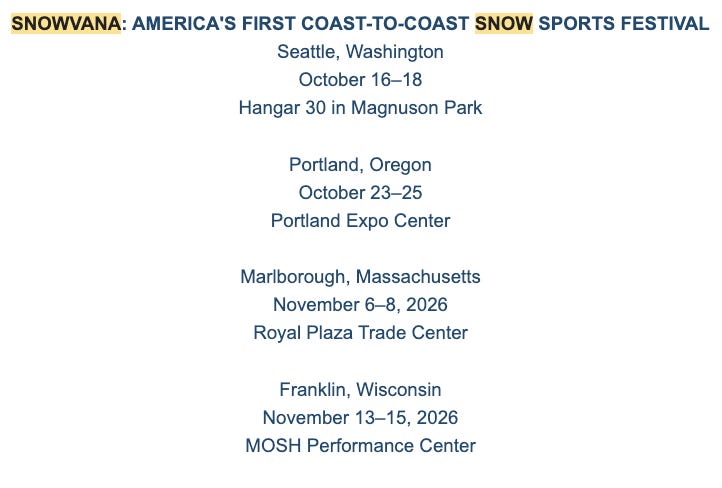 Storm Skiing 9/30/2026: Indy Pass & Snowvana Founder Doug Fish on Megapass Proliferation and the Future of Ski Shows | WhoDoug Fish, founder of the Snowvana ski show and Indy PassDate RecordedSept. 30, 2026About SnowvanaSnowvana is a “winter kick-off festival” (a ski show) scheduled for a four-city 2026 tour:Use the code “thestorm26” to snatch a free ticket here for any 2026 Snowvana show.Check out the list of free and discounted lift tickets available onsite at each show. Why I interviewed himIf we trust the metonymic origin story of our surnames, then Doug Fish is a descendant of “a catcher or seller of fish,” probably sometime before the invention of the printing press. I cannot think of anything that I understand less than fishing. Specifically, how a person can be good at it. My experience with fishing is that you cast a line in the water and nothing happens while you get drunk. But my buddy’s brother could go out on Sanford Lake in a rowboat and return an hour later surrounded by like 50 fish. Every damn time. And I was always just astonished like whatever inherent traits you need to be good at fishing that dude has them.I don’t know if Doug Fish is good at fishing, or if he even likes it. I do know that he’s good at skiing, and that he likes it. And whatever fishing ability he may or may not have inherited from Alabaster Fish of the 12th Century, he certainly possesses some of the traits of great fishermen: patience, instinct, and the ability to do hard things that no one else can figure out.Organizing and launching the Indy Pass is probably one of the great achievements of modern skiing, in that it proved that any ski area - and therefore nearly any skier - could join the multimountain pass club. While Indy wasn’t a novel or new concept, Fish was able to achieve the heretofore impossible task of organizing far-flung ski areas into a coalition with patience, persistence, and a low-key, no-pressure approach devoid of Big Ski’s ego. Once Fish sold Indy Pass, he tried something even harder: replicating the success of his Portland ski show across the country. To me, that sounds even more impossible than fishing, and does not include the benefit of a cooler MGDs on the boat floor. But whatever is inside of Fish that made the Indy Pass work, it’s making the recently faded ski show work too. I’ve attended Snowvana in Portland and Milwaukee, each time as a paid speaker. I’m scheduled to host live conversations with Indy Pass/Entabeni/Black Mountain owner Erik Mogensen (Friday, Nov. 6) and Killington owner Phill Gross and president Mike Solimano (Saturday, Nov. 7), at this year’s New England show. I don’t endorse Snowvana over any competing shows, but I do think ski shows in general offer a fun atmosphere, and a cool way to participate in skiing when you can’t actually go skiing.BackgroundFish has appeared on The Storm Skiing Podcast four times, each time solely as a representative of the Indy Pass:TranscriptsThere are two transcripts. Both are generated by robots. Both are helpful and defective in their own unique ways. I do not proofread either of them.Transcript 1: Click the “transcript” button at the top of this article. You can only see this transcript on a computer. Because I don’t know why exactly but everything is getting better and dumber all at once it seems. Anyway, this is the transcript that the robots create when I upload the podcast to the internet. The cool thing about it is that you can click on any block of text and the audio will teleport there instantly. The uncool thing about this transcript is that it does not indicate who is talking at any given moment.Transcript 2: You can read this below. This is the transcript that Zoom creates as we record the podcast. The cool thing about this transcript is that it indicates who is talking at any given moment. The uncool thing about this transcript is that the timestamps do not match the audio. Also, you cannot click on this text to move to the associated point in the audio.ZoomStuart Winchester: My guest today is the founder of the Snowvana Winter Kickoff Festival and also founder of the Indie Pass. Now in its 10th year, Snowvana gathers skiers, ski area operators, and retailers in Portland, Oregon.00:16:42.000 --> 00:16:46.000Stuart Winchester: Seattle, New England, and Wisconsin.00:16:46.000 --> 00:17:03.000Stuart Winchester: The Indy Pass, which Fish founded in 2019 and sold in 2023, but is still involved in, delivers skiers two days each at more than 300 ski areas around the world for winter 2026 to 27. He is making his fifth appearance on the Storm Skiing Podcast. He is Doug Fish. Doug, welcome back.00:17:03.000 --> 00:17:06.000Stuart Winchester: How’s it been? Been way too long.00:17:06.000 --> 00:17:10.000Doug Fish: It has to. I know. I miss you.00:17:09.000 --> 00:17:21.000Stuart Winchester: I know. Well, it’s been way too long on the pod, and I was just talking before this, in my little intro, before you joined, that this is one of the reasons I wanted to do a different format pod, because.00:17:21.000 --> 00:17:24.000Stuart Winchester: I talk or text you all the time.00:17:23.000 --> 00:17:25.000Doug Fish: Yeah, yeah, no worries.00:17:24.000 --> 00:17:39.000Stuart Winchester: And I haven’t had you on the pod in 3 years. So, there’s no reason for that, because we love hearing from you, and your episodes always do really well. And we will be working together here a little bit on one of these Snovana appearances in a bit. We’ll get to that.00:17:39.000 --> 00:17:42.000Stuart Winchester: First, though, I do want to pick up…00:17:39.000 --> 00:17:40.000Doug Fish: Yeah.00:17:42.000 --> 00:17:47.000Stuart Winchester: where we left off in that pod three years ago. You had just sold IndiePass to Eric Mogensen.00:17:45.000 --> 00:17:47.000Doug Fish: Mm-hmm.00:17:47.000 --> 00:17:48.000Doug Fish: Get it.00:17:47.000 --> 00:17:56.000Stuart Winchester: Uh, who has gone on to since, also by Black Mountain, and runs a technology company. He was on the podcast recently, and has been a couple times. Just…00:17:55.000 --> 00:17:56.000Doug Fish: Yep.00:17:57.000 --> 00:18:04.000Stuart Winchester: First of all, tell us how you’re still involved, and give as candid of an assessment as you can of.00:18:01.000 --> 00:18:02.000Doug Fish: Mm-hmm.00:18:04.000 --> 00:18:10.000Stuart Winchester: where the Indy Pass is once you… once you let that baby go.00:18:09.000 --> 00:18:11.000Doug Fish: Yeah.00:18:11.000 --> 00:18:22.000Doug Fish: Well, it was a little difficult to let the baby go, but I felt at the time that it would be in good hands, and I’m happy to report that it is in good hands.00:18:14.000 --> 00:18:15.000Stuart Winchester: No.00:18:22.000 --> 00:18:27.000Doug Fish: Um, you know, my country… my employment agreement ran out.00:18:27.000 --> 00:18:29.000Doug Fish: Almost two years ago.00:18:29.000 --> 00:18:35.000Doug Fish: And I’m still involved, you know. Eric and I extended it, and we keep extending it, and…00:18:35.000 --> 00:18:45.000Doug Fish: I believe in in what he’s doing. I certainly believe in the past. I think that Eric has done a great job of.00:18:45.000 --> 00:18:50.000Doug Fish: Staying true to the mission and the brand promise of IndyPass.00:18:50.000 --> 00:19:00.000Doug Fish: And, um, you know, as long as that continues, I will… I will be involved in some capacity. I’m kind of the Colonel Sanders of the IndyPass now.00:19:00.000 --> 00:19:08.000Doug Fish: I and you know I get to be a little a bit of an ambassador. I go to some of the trade shows.00:19:08.000 --> 00:19:10.000Doug Fish: I ski with people.00:19:10.000 --> 00:19:14.000Doug Fish: It’s… it’s a pretty good gig, you know.00:19:13.000 --> 00:19:15.000Stuart Winchester: When you said Colonel Sanders, I mean, are you…00:19:15.000 --> 00:19:19.000Stuart Winchester: What I thought you were doing is still…00:19:19.000 --> 00:19:23.000Stuart Winchester: Recruiting new partners? Is that not the case?00:19:21.000 --> 00:19:37.000Doug Fish: Yeah, I’ve been. That’s what I’ve been primarily focused on recruiting and maintaining relationships, you know, and and helping grow from a hundred to 300 resorts in the last 3, 3 and a half years, which is pretty incredible growth. And.00:19:24.000 --> 00:19:26.000Stuart Winchester: Yeah, yeah, yeah.00:19:31.000 --> 00:19:33.000Stuart Winchester: Yeah.00:19:37.000 --> 00:19:49.000Doug Fish: you know, I can’t take all the credit, but, um, you know, when you can focus on just one thing, you can be a lot more effective, and I’ve been focused on that.00:19:49.000 --> 00:20:04.000Doug Fish: But Eric has assembled a great team, and I’ve kind of handed that that part of the the effort off to Nick Niebus and a couple other people on Eric’s team that are recruiting new resorts, and, as you can see from the latest release, that’s.00:20:04.000 --> 00:20:06.000Doug Fish: Going pretty well.00:20:06.000 --> 00:20:12.000Doug Fish: Um, and I, you know, I think there’s some other exciting news in the, in the, uh…00:20:12.000 --> 00:20:21.000Doug Fish: Uh, coming up in the future, I won’t spill the beans, but, um, you know, there’s always cool things happening there, and I’m just really thankful to be involved.00:20:21.000 --> 00:20:38.000Stuart Winchester: It’s been really fascinating to watch the evolution of not just the Indy Pass, but the Pass landscape as a whole. And coincidentally, we started our brands in the same year. Obviously, you’ve been at this game for a long time, but the Indy Pass launched in 2019, and that’s when I came around.00:20:28.000 --> 00:20:30.000Doug Fish: Mmhm.00:20:38.000 --> 00:20:41.000Stuart Winchester: observing the industry.00:20:41.000 --> 00:20:57.000Stuart Winchester: the pass landscape for as long as you’ve been directly involved in it. And I think the way I always look at this, Doug, is Vail normalized the notion of a multi-mountain pass as an everyday product for the everyday skier, not just a niche product for locals.00:20:57.000 --> 00:20:58.000Doug Fish: Mm-hmm.00:20:57.000 --> 00:21:04.000Stuart Winchester: And then ICON copied that model, and your contribution to it, which I think was…00:21:05.000 --> 00:21:07.000Stuart Winchester: Extremely important was.00:21:07.000 --> 00:21:17.000Stuart Winchester: taking that idea and normalizing the idea of the non-alpha ski area, non-destination ski area, and you do have some of those, you do. But…00:21:16.000 --> 00:21:18.000Doug Fish: Yep.00:21:17.000 --> 00:21:25.000Stuart Winchester: the idea that if you put together Brundage and Mission Ridge and Silver Mountain and White Pass.00:21:23.000 --> 00:21:25.000Doug Fish: Okay.00:21:25.000 --> 00:21:40.000Stuart Winchester: That would be an attractive pass together, right? Because those ski areas, they’re, they’re good, they’re big ski areas, they have lots of snow, but they’re not destination ski areas, they’re not things people would have thought to fly to, but you had this insight, okay, but if I put them all together, that’s pretty cool.00:21:26.000 --> 00:21:29.000Doug Fish: Yeah.00:21:40.000 --> 00:21:44.000Stuart Winchester: And so I’ll give you some numbers and I’ll let you react to this.00:21:44.000 --> 00:21:52.000Stuart Winchester: So, the first season of IndiePass, you launched with, you know, your first list of 10, and maybe you had 50 by the end of the year. Right now.00:21:52.000 --> 00:22:04.000Stuart Winchester: if you look at, uh, Epic, Icon, Indy, Mountain Collective, and the new Snow Pass from Snow Partners, there are 451 ski areas around the world.00:22:04.000 --> 00:22:11.000Stuart Winchester: Uh, between those 5 passes. A little bit of overlap between a few of them. 267 in the United States.00:22:10.000 --> 00:22:11.000Doug Fish: Yeah, thank you.00:22:11.000 --> 00:22:13.000Stuart Winchester: 55 in Canada, 61 in Europe.00:22:13.000 --> 00:22:17.000Stuart Winchester: Uh, and 53 in Japan.00:22:17.000 --> 00:22:19.000Stuart Winchester: I mean, as you…00:22:20.000 --> 00:22:25.000Stuart Winchester: As you kind of reflect on how this landscape has changed.00:22:25.000 --> 00:22:33.000Stuart Winchester: I’ve asked this before, but I’ll ask again, does this surprise you? I mean, how well this worked and how much it caught on?00:22:33.000 --> 00:22:37.000Doug Fish: No, it doesn’t surprise me at all.00:22:37.000 --> 00:22:39.000Doug Fish: It’s basic economics.00:22:39.000 --> 00:22:44.000Doug Fish: You know, lift tickets were getting super expensive, and.00:22:45.000 --> 00:23:05.000Doug Fish: a lot of people are getting priced out of the sport, and I mean, even if you want to ski at Vail resorts or Altara resorts. You know you you really have to get a pass if you want to ski more than a few days, and so it doesn’t surprise me at all. It’s just a it’s a good deal. Any pass is the best deal of all.00:22:48.000 --> 00:22:49.000Stuart Winchester: Mmhm.00:23:05.000 --> 00:23:06.000Stuart Winchester: Mmhm.00:23:05.000 --> 00:23:19.000Doug Fish: You know, whether you use it as a regional pass, you know, you go 4 or 5 days in New England, or you take it and you hit the road and hit 25 resorts. It’s the best deal in skiing, and it always has been.00:23:19.000 --> 00:23:24.000Doug Fish: So, you know, people respond to deals. That’s…00:23:24.000 --> 00:23:28.000Doug Fish: That’s, uh, you know, the most of… most, uh…00:23:28.000 --> 00:23:39.000Doug Fish: effective word in advertising is free and cheap comes a second, I think. So it doesn’t surprise me a bit.00:23:32.000 --> 00:23:34.000Stuart Winchester: Mmhm.00:23:39.000 --> 00:23:44.000Stuart Winchester: So we’re starting to see a little bit of churn, and we’ve seen this since the days of the Max Pass.00:23:44.000 --> 00:23:45.000Doug Fish: Okay.00:23:44.000 --> 00:23:59.000Stuart Winchester: Uh, and, you know, the Epic Pass and Mountain Collective sort of trading partners around. We’ve seen less of it, maybe, than I expected at the top end of Epic and Icon. We’re starting to see a little in Indy. You’ve had some partners leave, you’ve had some partners who have gone to different passes.00:23:48.000 --> 00:23:50.000Doug Fish: Yeah. Okay.00:23:51.000 --> 00:23:53.000Doug Fish: Yeah, exactly.00:23:58.000 --> 00:24:00.000Doug Fish: Mm-hmm.00:23:59.000 --> 00:24:05.000Stuart Winchester: What do you… so, the reality is it’s a good idea, and people copied it, and that’s a free market, and that’s how compet.00:24:04.000 --> 00:24:06.000Doug Fish: Yes.00:24:05.000 --> 00:24:09.000Stuart Winchester: My question for you is, what do you think?00:24:09.000 --> 00:24:20.000Stuart Winchester: IndyPass has to do to make sure that it stays relevant, that the coalition stays together, that it stays an attractive.00:24:17.000 --> 00:24:18.000Doug Fish: Mmhm.00:24:20.000 --> 00:24:26.000Stuart Winchester: product for both skiers and ski area operators as Eric takes it into the future.00:24:26.000 --> 00:24:27.000Doug Fish: Yes.00:24:28.000 --> 00:24:32.000Doug Fish: Well, two things. I think that any of us, Lauren.00:24:34.000 --> 00:24:37.000Stuart Winchester: I’m sorry, can you repeat that?00:24:37.000 --> 00:24:41.000Doug Fish: I apologize, too. I got a derm.00:24:39.000 --> 00:24:40.000Stuart Winchester: All good.00:24:41.000 --> 00:24:43.000Doug Fish: Um…00:24:43.000 --> 00:24:51.000Doug Fish: In order for Dandy Pass to remain relevant, they need to continue to be an affordable option for consumers.00:24:51.000 --> 00:24:56.000Doug Fish: and continue to deliver value for the resorts.00:24:56.000 --> 00:25:07.000Doug Fish: And value in, you know, the quality of the visitors, the guests, the amount of check they write, and the amount that they pay for each visit.00:25:07.000 --> 00:25:11.000Doug Fish: And if they can continue to do that, then they will…00:25:11.000 --> 00:25:14.000Doug Fish: They will outlive you and I both.00:25:13.000 --> 00:25:14.000Stuart Winchester: Mmhm.00:25:14.000 --> 00:25:28.000Doug Fish: Um, and, you know, yes, we have over 300 resorts now, you’re bound to lose a few now and then. And, you know, we took a hit this year, a few people left, that was unfortunate, but we added…00:25:16.000 --> 00:25:17.000Stuart Winchester: Thank you.00:25:21.000 --> 00:25:23.000Stuart Winchester: Mmhm.00:25:28.000 --> 00:25:38.000Doug Fish: quite a few more. So, you know, it’s going great. I’m proud of what they’re doing over there, and I’m proud to be associated with it still.00:25:29.000 --> 00:25:30.000Stuart Winchester: Mmhm.00:25:38.000 --> 00:25:54.000Stuart Winchester: So you’re playing… I mean, your name comes up all the time, as you said, from listening to the first few podcasts of this shorter version that I’m doing now, or trying to make them short, is… wow, everyone has a lot of opinions about Doug Fish, but so does Doug Fish.00:25:49.000 --> 00:25:50.000Doug Fish: Yep.00:25:54.000 --> 00:26:03.000Stuart Winchester: So, so you’re clearly still living large in the minds of, of everyone who’s involved in the IndiePass or works with it, but you’re…00:26:03.000 --> 00:26:18.000Stuart Winchester: Main focus, I think, now, is on Snowvana, which… I copied this language, I don’t want people to think I’m being corny, when I say it’s a winter kickoff festival. I copied that from your press release, because I didn’t really know what… like, I want to call it a ski show.00:26:16.000 --> 00:26:17.000Doug Fish: Yeah.00:26:18.000 --> 00:26:25.000Stuart Winchester: but you seem to not want to call it a ski show. So, what is… what is Snovana, and…00:26:21.000 --> 00:26:24.000Doug Fish: Well, that’s a ski show.00:26:25.000 --> 00:26:28.000Stuart Winchester: And what are you trying to accomplish with it?00:26:25.000 --> 00:26:26.000Doug Fish: Good, good.00:26:28.000 --> 00:26:43.000Doug Fish: It’s all those things. It’s a enhanced ski swap. You know, you can call it anything you want, but, um, we started Savannah in 2016, so this is our 10th anniversary, and, um.00:26:29.000 --> 00:26:30.000Stuart Winchester: Okay.00:26:33.000 --> 00:26:34.000Stuart Winchester: Mmhm.00:26:43.000 --> 00:26:54.000Doug Fish: You know, Snowvana is a place for everyone to gather at the beginning of the season, you know, and we certainly didn’t invent that. I think Warren Miller did.00:26:53.000 --> 00:26:55.000Stuart Winchester: Mmhm.00:26:54.000 --> 00:27:10.000Doug Fish: originally, and I remember as a kid going to Warren Miller films, and I was just in awe of of all that, and it was a just, you know, getting stoked for the coming season. It was just an annual pilgrimage.00:27:10.000 --> 00:27:14.000Doug Fish: And, um, you know, over the years there’s been, um.00:27:14.000 --> 00:27:31.000Doug Fish: you know, hundreds of ski shows, 50 ski shows across the country, big shows. And you know we we I have always been involved in events. I was in the concert business for almost 20 years, and my.00:27:31.000 --> 00:27:34.000Doug Fish: At the beginning of my career.00:27:34.000 --> 00:27:46.000Doug Fish: And, uh, I just, you know, when I was a kid and was in high school, we used to, you know, put on keggers and sell cups for a buck. So, you know, events are in my blood, and I love it, and…00:27:41.000 --> 00:27:42.000Stuart Winchester: Okay.00:27:44.000 --> 00:27:45.000Stuart Winchester: Right.00:27:46.000 --> 00:28:01.000Doug Fish: you know, when I sold the IndyPass, I sold my marketing agency, but I kept Snowvana, because, you know, I thought it’d be fun to keep it going, and… and uh… the young man who…00:28:01.000 --> 00:28:06.000Doug Fish: helped me, um, helped me, um.00:28:07.000 --> 00:28:10.000Doug Fish: Grow the Indy Pass.00:28:10.000 --> 00:28:14.000Doug Fish: Didn’t want to go with Indy Pass. He didn’t want to move to Colorado.00:28:14.000 --> 00:28:19.000Doug Fish: So I said, well, why don’t you come and run Snowball? And we’ll keep that going.00:28:19.000 --> 00:28:26.000Doug Fish: And it was actually his idea to, um, to expand it. He said, you know, I think this is a model that we can scale.00:28:26.000 --> 00:28:38.000Doug Fish: And, um, you know, I looked at him, I said, okay, you do all the work, and I’ll help with the marketing, and I’ll finance the operation, and, you know, here we are.00:28:38.000 --> 00:28:39.000Doug Fish: That was, uh.00:28:38.000 --> 00:28:44.000Stuart Winchester: Alright, so you’re doing… you started this 10 years ago, and you’re taking it around the country.00:28:44.000 --> 00:28:50.000Stuart Winchester: But you said ski shows have been around forever, right? So, you said there’s been 50, 100 ski shows.00:28:47.000 --> 00:28:49.000Doug Fish: Yeah.00:28:50.000 --> 00:28:52.000Stuart Winchester: How is…00:28:52.000 --> 00:28:57.000Stuart Winchester: What happened to all those shows? Aren’t they still there? Are you still competing with them?00:28:57.000 --> 00:29:03.000Stuart Winchester: And if so, it doesn’t seem like a… like a market that’s super ripe for disruption, right? Like, once you…00:28:58.000 --> 00:28:59.000Doug Fish: Here.00:29:03.000 --> 00:29:04.000Doug Fish: Yeah.00:29:03.000 --> 00:29:16.000Stuart Winchester: have a ski show, you kind of own the market, it would seem like. So, I guess rewind for us a little bit, maybe I should have started there. What have ski shows traditionally been in America, and.00:29:07.000 --> 00:29:09.000Doug Fish: Mm-hmm.00:29:16.000 --> 00:29:19.000Stuart Winchester: What’s happened to them over time?00:29:19.000 --> 00:29:31.000Doug Fish: Well, ski shows have been, you know, what’s Nirvana? It was kind of a kickoff festival, a gear sale, and I think they kind of collapsed under their own weight.00:29:30.000 --> 00:29:32.000Stuart Winchester: Mmhm.00:29:32.000 --> 00:29:40.000Doug Fish: You know, the Windy City Ski Show had a 40-year run. The Boston Ski and Snowboard Expo had a 60-year run.00:29:40.000 --> 00:29:49.000Doug Fish: uh, the Denver show. There’s been ski shows in all the major northern markets, even in, you know, Dallas had a big show for many, many years, Atlanta.00:29:49.000 --> 00:30:03.000Doug Fish: And, um, but the cost of putting on these shows, these big shows, 100,000 square foot shows, is just too much. And, uh, at the same time, as these big shows started to go away.00:30:03.000 --> 00:30:18.000Doug Fish: ski swaps proliferated, you know, in every gymnasium and, you know, high school cafeteria across the country. You know, small ski resorts have a ski swap and a kickoff, you know, festival in the fall.00:30:18.000 --> 00:30:22.000Doug Fish: All over the country, there must be hundreds of ski swaps.00:30:22.000 --> 00:30:39.000Doug Fish: And so we looked at that and said, well, you know, ski swaps are great, but you can’t get out of there fast enough. You know, when there you rifle through all the stuff and maybe you find a gym and you get a good deal, but, you know, there’s no reason to stick around.00:30:39.000 --> 00:30:55.000Doug Fish: And what we try to do is create a festival atmosphere. We still have the ski swap. We have a consignment swap, which is a fundraiser for a local nonprofit. And then we have a huge gear sale and we work with local retailers.00:30:56.000 --> 00:31:04.000Doug Fish: So, you know, there’s a lot to choose from, but there’s lots of really good deals. And, um, but there’s…00:31:04.000 --> 00:31:16.000Doug Fish: you know, there’s fun stuff to do, too. We have films, we have live music, we have a bar. Um, you know, we do stupid stuff like, uh, frozen t-shirt contests and barefoot skis.00:31:14.000 --> 00:31:15.000Stuart Winchester: Yeah.00:31:16.000 --> 00:31:19.000Doug Fish: Um, so…00:31:19.000 --> 00:31:25.000Doug Fish: Yeah, there’s just, you know, there’s a lot of fun activities happening.00:31:29.000 --> 00:31:31.000Doug Fish: And, um…00:31:33.000 --> 00:31:38.000Stuart Winchester: So, so, so that’s, that’s all right, that’s all right. So.00:31:33.000 --> 00:31:37.000Doug Fish: Sorry, I got interrupted too.00:31:38.000 --> 00:31:42.000Stuart Winchester: Is there a… is there an inflection point when the ski…00:31:42.000 --> 00:31:54.000Stuart Winchester: show stopped working. I want to point to COVID in 2020 that probably killed a lot of them for a year and then forever, but that’s probably too simple of an explanation.00:31:49.000 --> 00:31:50.000Doug Fish: Yep.00:31:53.000 --> 00:32:00.000Doug Fish: Yeah, COVID I think was, you know, put a fork in a lot of the big shows.00:32:00.000 --> 00:32:08.000Doug Fish: Um, you know, a lot of promoters decided not to… not to come back. Um, but, you know, I think that the…00:32:05.000 --> 00:32:06.000Stuart Winchester: Mmhm.00:32:08.000 --> 00:32:15.000Doug Fish: It’s very tough. These municipal convention centers are just extremely expensive.00:32:15.000 --> 00:32:27.000Doug Fish: and I think you know that’s that was part of it. And you know, online sales. And you know all the all the things that kill retail right? Because these are retail events.00:32:25.000 --> 00:32:26.000Stuart Winchester: Mmhm.00:32:27.000 --> 00:32:37.000Doug Fish: And so, you know, we kind of, we took a year off for COVID too. In 2020, nobody was doing events.00:32:34.000 --> 00:32:35.000Stuart Winchester: Yeah.00:32:37.000 --> 00:32:42.000Doug Fish: Well, we came back in 2021 and it was our best show. We were the first.00:32:42.000 --> 00:32:54.000Doug Fish: show to come back and give it a go in 21 at the Oregon Convention Center. And the place was packed, and it was because people were just starving for.00:32:54.000 --> 00:33:11.000Doug Fish: you know, human connection. You know, they’ve been cooped up in their house for a year, and they came out in droves. And, you know, this is what, you know, these shows give us, is that human connection.00:32:55.000 --> 00:32:56.000Stuart Winchester: Something.00:32:56.000 --> 00:32:58.000Stuart Winchester: Yeah. Okay.00:33:11.000 --> 00:33:21.000Doug Fish: You know you can buy skis online. You can buy anything online. But you know the the community comes together and and.00:33:21.000 --> 00:33:28.000Doug Fish: It’s, you know, we call it AI for the ski business, authentic interaction.00:33:28.000 --> 00:33:33.000Doug Fish: You know, we need more of that, not less of it. And it’s…00:33:30.000 --> 00:33:31.000Stuart Winchester: Mmhm.00:33:33.000 --> 00:33:36.000Doug Fish: It’s just a it’s a cool thing.00:33:36.000 --> 00:33:51.000Stuart Winchester: So how are you getting around the cost piece, though? I mean, if you want to — they left Chicago because of cost. It seems like that’s because Chicago costs a lot. So you’re going into Boston this year, and we’ll talk about that in a minute. That’s not a cheap market.00:33:40.000 --> 00:33:42.000Doug Fish: Yeah.00:33:45.000 --> 00:33:47.000Doug Fish: Yeah.00:33:50.000 --> 00:34:00.000Doug Fish: No, well, we’re going into the suburbs. We’re hitting the suburbs now, you know, we’re in West Seattle, in a suburb of Seattle.00:33:53.000 --> 00:33:55.000Stuart Winchester: Okay.00:33:56.000 --> 00:33:58.000Stuart Winchester: Mmhm.00:34:00.000 --> 00:34:01.000Stuart Winchester: Okay.00:34:00.000 --> 00:34:11.000Doug Fish: Uh, we’re in a suburb of Milwaukee and Franklin, Wisconsin, and we’re in a suburb of Boston, out in Marlboro. It’s about 40 minutes west of town.00:34:11.000 --> 00:34:19.000Doug Fish: And they call it, uh, West Metro. And, um, you know, these venues are smaller.00:34:14.000 --> 00:34:16.000Stuart Winchester: Mmhm.00:34:19.000 --> 00:34:22.000Doug Fish: They’re about 50,000 square feet versus 100.00:34:22.000 --> 00:34:23.000Stuart Winchester: Mmhm.00:34:22.000 --> 00:34:37.000Doug Fish: and they’re way less expensive. We don’t have to deal with union. You know the cost of a union labor, and you know nothing against unions. But.00:34:37.000 --> 00:34:52.000Doug Fish: they can drive the cost up. And and you know, General Motors and Ford, you know, they can do an auto show there. No problem. They’ve they’ve got deep pockets. We can’t. And I think that’s why some of these big shows, you know, finally threw in the towel.00:34:44.000 --> 00:34:46.000Stuart Winchester: Right.00:34:52.000 --> 00:34:59.000Doug Fish: And, you know, the venues we’re in, they’re not as fancy. We’re in a World War II airplane hangar in Seattle.00:34:58.000 --> 00:34:59.000Stuart Winchester: Right.00:34:59.000 --> 00:35:14.000Doug Fish: you know, at a in a in a park in West Seattle. It’s a really cool building. But believe me, you know, it’s it’s it’s not fancy. And so that’s the that’s the difference. And and.00:35:09.000 --> 00:35:10.000Stuart Winchester: Yeah, thank you.00:35:14.000 --> 00:35:25.000Doug Fish: we’re able to charge 5 bucks in advance. Kids are free. The booth cost is reasonable for for vendors, and.00:35:25.000 --> 00:35:27.000Doug Fish: You know, it works.00:35:27.000 --> 00:35:38.000Stuart Winchester: Yeah, so you… the timeline’s interesting for those who are following along. So you started Snovana in 2016, launched Indie in 2019. I’m curious…00:35:38.000 --> 00:35:44.000Stuart Winchester: how one may have fueled the other. In other words, and I know you’ve been in skiing and in the ski industry for decades, but…00:35:44.000 --> 00:35:46.000Stuart Winchester: Once you…00:35:46.000 --> 00:35:58.000Stuart Winchester: established IndiePass, and you made all these connections all over the country, I have to imagine that greased the wheels a little bit for Snowvana, because a big part of this, and we’ll talk about this in a minute, is.00:35:58.000 --> 00:36:07.000Stuart Winchester: when you go there, most of the regional ski areas have booths set up. And not just the Independents, it’s Vail and Altera, I’ve been at a bunch of the ones that I’ve been to.00:36:02.000 --> 00:36:04.000Doug Fish: Yeah.00:36:06.000 --> 00:36:08.000Doug Fish: Mm-hmm.00:36:07.000 --> 00:36:12.000Stuart Winchester: In their mountains, in the bigger mountains, all over the place, so… so…00:36:12.000 --> 00:36:15.000Stuart Winchester: Do you think, I guess…00:36:15.000 --> 00:36:24.000Stuart Winchester: I guess the question is, how did IndiePass fuel the growth of Snowvana, or do you think that this would be taking off the way it is either way?00:36:24.000 --> 00:36:33.000Doug Fish: Oh, I think Snowvana and the work we were doing at the agency with a number of ski resorts all led to the.00:36:33.000 --> 00:36:36.000Doug Fish: the idea behind the Indy Pass.00:36:35.000 --> 00:36:37.000Stuart Winchester: Mmhm.00:36:36.000 --> 00:36:42.000Doug Fish: And certainly the IndyPass connections that I’ve made have helped us expand.00:36:42.000 --> 00:36:52.000Doug Fish: Snowball on it. There’s no question. You know, we just we’re moving into the Boston market this year for the 1st time, and we have 37 resorts signed up.00:36:52.000 --> 00:36:59.000Doug Fish: That’s pretty good for a first-year show. We have 70 resorts across the country. I think it’s closer to 80 now.00:36:59.000 --> 00:37:00.000Stuart Winchester: Mmhm.00:36:59.000 --> 00:37:08.000Doug Fish: And, you know, it’s the only place where you’re gonna see, uh, Epic Pass, Icon Pass, and Indy Pass all in the same room.00:37:07.000 --> 00:37:09.000Stuart Winchester: Right.00:37:08.000 --> 00:37:16.000Doug Fish: And, um, you know, that’s the way it should be. You know, we want to be Switzerland and invite everyone in, because that’s what the consumer wants.00:37:15.000 --> 00:37:17.000Stuart Winchester: Mmhm.00:37:16.000 --> 00:37:27.000Doug Fish: you know, people want to want to interact with all those companies. And and so yeah, indie pass. There’s no question it. It helped us.00:37:27.000 --> 00:37:29.000Doug Fish: You know.00:37:29.000 --> 00:37:31.000Doug Fish: break into new markets.00:37:31.000 --> 00:37:46.000Stuart Winchester: So if you look at the four markets you’re in this year and, you know, Portland is the logical one, that’s your home base and has been for a long time. Then you have Seattle, you have Milwaukee in the Midwest, and you have, you know, we’ll call it Boston or New England or whatever you want to. It’s in Mass.00:37:38.000 --> 00:37:40.000Doug Fish: Mm-hmm.00:37:46.000 --> 00:37:47.000Doug Fish: Yep.00:37:46.000 --> 00:37:55.000Stuart Winchester: Right? So, one thing I always appreciated about the Indy Pass is that you didn’t just make it a Western Pass, you went into the Midwest right away.00:37:55.000 --> 00:37:56.000Doug Fish: Mmhm.00:37:55.000 --> 00:38:13.000Stuart Winchester: You went into New England right away. So talk about each of those four markets and, and why it makes sense to do ski shows there because for, for example, in the Midwest, you could have, you could have gone to Detroit, you could have gone to Grand Rapids, you could have gone to Chicago, you could have gone to Indianapolis.00:38:04.000 --> 00:38:06.000Doug Fish: Mm-hmm.00:38:13.000 --> 00:38:23.000Stuart Winchester: chose Milwaukee, which is, you know, everyone’s heard of Milwaukee, but it’s not necessarily, like, the capital of Midwest, like Chicago is. So just talk us through those markets and your…00:38:13.000 --> 00:38:14.000Doug Fish: Mm-hmm.00:38:23.000 --> 00:38:29.000Stuart Winchester: Slow expansion across the country, and you’re kind of thinking behind where you’re choosing to do this.00:38:29.000 --> 00:38:40.000Doug Fish: Yeah, good question. Um, so Seattle was a no-brainer. You know, we knew that we were drawing people out of Seattle for the Portland show. It’s three, three and a half hours to Seattle.00:38:40.000 --> 00:38:48.000Doug Fish: And we were drawing a pretty good crowd, so… uh, there hasn’t been a show in Seattle for a decade. It’s a great ski market, you know, they have…00:38:48.000 --> 00:38:55.000Doug Fish: 3 phenomenal resorts within an hour of downtown Seattle, Stevens, Crystal.00:38:55.000 --> 00:39:11.000Doug Fish: Summit. That’s no qualming help at all. So you know, we found a venue up there that was affordable, you know, an old airplane hangar. And you know, we put a show up there, and it did well. And so we thought, Okay.00:39:09.000 --> 00:39:10.000Stuart Winchester: Yep.00:39:11.000 --> 00:39:18.000Doug Fish: Uh, we didn’t really want to go to California, uh, so we started looking east because.00:39:17.000 --> 00:39:21.000Stuart Winchester: You, you didn’t wanna go to California, why not? I mean, that’s a huge market.00:39:19.000 --> 00:39:30.000Doug Fish: Um, yeah, it is a huge market, and, you know, maybe we’ll go to the Bay Area. There’s a big show down in LA called Ski Dazzle that’s still going, a big show.00:39:29.000 --> 00:39:31.000Stuart Winchester: Okay.00:39:30.000 --> 00:39:32.000Doug Fish: And, um…00:39:32.000 --> 00:39:44.000Doug Fish: Uh, but to my knowledge, nothing significant in Northern California, so we may go there someday. But, um, you know, where we… where we went, it’s really…00:39:44.000 --> 00:39:52.000Doug Fish: you know, I knew that the Indy Pass was going to be successful back east because there’s so many resorts, and more importantly, so many people.00:39:52.000 --> 00:39:53.000Stuart Winchester: Yeah.00:39:52.000 --> 00:39:55.000Doug Fish: And, and so.00:39:55.000 --> 00:40:03.000Doug Fish: We started looking to the east and Milwaukee, you may think, well, that’s kind of a weird place.00:40:03.000 --> 00:40:23.000Doug Fish: Wisconsin’s the number four ski state in the country in terms of number of ski resorts. And Michigan is number three. So, you know, or maybe it’s number two, but yeah. So, you know, there’s a lot of passion in the Midwest. And I knew that from working with the resorts out there.00:40:06.000 --> 00:40:07.000Stuart Winchester: Yeah, okay.00:40:14.000 --> 00:40:15.000Stuart Winchester: It’s 2.00:40:23.000 --> 00:40:35.000Doug Fish: you know, Rick Schmitz has been a great ally and supporter of mine, and you know we’ve been friends for many, many years, and he said, Hey.00:40:35.000 --> 00:40:39.000Doug Fish: Uh, come and do a show in Milwaukee, and I’ll help you promote it, and…00:40:39.000 --> 00:40:54.000Doug Fish: you know, there just happens to be a big sports complex right there at the base of Crystal Ridge, which he owns. And, um, you know, they had space that would work for a show, so we popped a show in there, and it worked.00:40:55.000 --> 00:41:10.000Doug Fish: Um, and then we were all set to go into Chicago next, you know, kind of an eastward progression, uh, either Chicago or Detroit, and, um, I got a call.00:41:10.000 --> 00:41:17.000Doug Fish: from a friend of mine in New England. They said, Hey, Snowbound is leaving Boston.00:41:17.000 --> 00:41:20.000Doug Fish: You guys should come out here and do a show.00:41:20.000 --> 00:41:38.000Doug Fish: And I thought, oh my gosh, that’s the best ski show market in the country, you know, it’s been going for 65 years. And so Quinn McIntyre and I jumped on a plane in early December, when there was absolutely no snow, by the way, in the West.00:41:38.000 --> 00:41:58.000Doug Fish: And so we, of course, took our gear, and we spent a week in New England skiing some phenomenal powder at Loon, and Jay Peak, and Bretton Woods, and Black Mountain, and, you know. But we also, you know, met with a few venues back there, and found one that made sense out in Marlboro.00:41:43.000 --> 00:41:45.000Stuart Winchester: Yeah, okay.00:41:49.000 --> 00:41:51.000Stuart Winchester: Yeah.00:41:58.000 --> 00:42:09.000Doug Fish: Uh, a nice suburb of… of Boston, and… and made the decision right then, okay, we’re gonna do this. We signed a 3-year lease, or 3-year contract for… for the space.00:42:09.000 --> 00:42:14.000Doug Fish: And here we are. We’re in Boston.00:42:13.000 --> 00:42:19.000Stuart Winchester: So, so to, so to clarify for listeners, Snowbound still exists. It moved to the Mohegan Sun.00:42:19.000 --> 00:42:23.000Stuart Winchester: Casino in Connecticut. So that show, indeed, will still go on.00:42:21.000 --> 00:42:29.000Doug Fish: Yes. Yeah, they didn’t go away, they just moved… they just changed locations, and… and they’re a couple hours from Boston now, so…00:42:29.000 --> 00:42:31.000Stuart Winchester: Yeah, so, so…00:42:29.000 --> 00:42:31.000Doug Fish: Thank you.00:42:31.000 --> 00:42:32.000Doug Fish: Go ahead.00:42:31.000 --> 00:42:48.000Stuart Winchester: So each of these shows you go to and, you know, the gear is great and I’m sure that’s why a lot of people go. I’m obviously super into the ski area, so when I go and I look at the deals tab on Snovana.com, the first thing I see at the top of each.00:42:48.000 --> 00:43:05.000Stuart Winchester: list of ski areas that will be there, and their deals are free lift tickets for Willamette Pass, when you’re out in the Western shows, uh, I believe in the Midwest, you get one free at Little Switz, or Nordic, or Crystal Ridge, then out East, it’s Black Mountain Maine, and there’s some others as well, I’m just…00:42:52.000 --> 00:42:53.000Doug Fish: Yeah.00:43:01.000 --> 00:43:02.000Doug Fish: Yep.00:43:02.000 --> 00:43:04.000Doug Fish: Okay.00:43:05.000 --> 00:43:08.000Stuart Winchester: Highlighting some. So, talk a little bit about…00:43:06.000 --> 00:43:07.000Doug Fish: Mm-hmm.00:43:08.000 --> 00:43:25.000Stuart Winchester: that, because, I mean, you pay $5 to get in, and this is… it’s funny, because it’s kind of a throwback to the pre-pass era, when you kind of have to collect your own pass, and find all these coupons, and, you know, Warren Miller would have, like, a free ticket to Sugarbush or whatever, so… so just talk a little bit about that, and what.00:43:17.000 --> 00:43:20.000Doug Fish: Yeah, right.00:43:20.000 --> 00:43:21.000Doug Fish: Yes.00:43:22.000 --> 00:43:23.000Doug Fish: Yeah.00:43:25.000 --> 00:43:29.000Stuart Winchester: attendees can expect to find their deals wise.00:43:28.000 --> 00:43:36.000Doug Fish: Oh, yeah. Well, that’s what motivates people is deals. We say the deals are great and the stoke is free.00:43:35.000 --> 00:43:36.000Stuart Winchester: Mmhm.00:43:36.000 --> 00:43:39.000Doug Fish: And yeah, I, you know.00:43:39.000 --> 00:43:45.000Doug Fish: Can’t help but mention in Boston, we have Black Mountain of Maine.00:43:45.000 --> 00:43:47.000Doug Fish: Neshoba.00:43:47.000 --> 00:44:03.000Doug Fish: and Mcintyre, all giving away free lift tickets for your with your admission. And yeah, so 5 bucks, or for 5 bucks you probably get. I don’t know. That’s 200 bucks worth of lift tickets, and that that’s before you know all the other swag that people are giving away.00:43:48.000 --> 00:43:50.000Stuart Winchester: Okay.00:43:50.000 --> 00:43:52.000Stuart Winchester: Yeah.00:43:58.000 --> 00:44:00.000Stuart Winchester: Mm-hmm, sure.00:44:02.000 --> 00:44:03.000Stuart Winchester: Right.00:44:03.000 --> 00:44:14.000Doug Fish: So, yeah, I mean, it takes a lot to get people off the couch to come down and park and, you know, go to an event. And, excuse me.00:44:14.000 --> 00:44:19.000Doug Fish: So we try and pack as much value into the ticket as we can. Um…00:44:19.000 --> 00:44:39.000Doug Fish: And all the resorts are there with deals. There’ll be 37 resorts in Boston and 70 across the country. They’re all offering deals of some kind, whether they’re selling a season pass for a discount or a three pack or a daily lift ticket.00:44:29.000 --> 00:44:30.000Stuart Winchester: Mmhm.00:44:39.000 --> 00:44:43.000Doug Fish: And that’s what people want.00:44:43.000 --> 00:44:44.000Stuart Winchester: 8. Yep.00:44:43.000 --> 00:44:52.000Doug Fish: And, you know, those are just the lift tickets. The gear is… the deals on the gear is what really brings people in.00:44:52.000 --> 00:45:06.000Doug Fish: And, um, you know, we can… I can confidently say that we’ve got some of the best selection of new and slightly used gear for 40% to 80% off.00:45:05.000 --> 00:45:07.000Stuart Winchester: Mm-hmm.00:45:06.000 --> 00:45:14.000Doug Fish: And, you know, we spend all summer collecting it from manufacturers, from reps, from, you know, demo fleets.00:45:15.000 --> 00:45:30.000Doug Fish: And the retailers that we work with in each market, they also, you know, they bring last year’s stuff that didn’t sell. They bring maybe their lease fleet that, you know, they’re retiring. And there’s just some incredible deals, and…00:45:30.000 --> 00:45:36.000Doug Fish: You know, people will walk out saving hundreds of thousands of dollars.00:45:36.000 --> 00:45:40.000Doug Fish: If they can spend the time, you know, looking around.00:45:40.000 --> 00:45:54.000Stuart Winchester: Yeah, so, so, lip ticket deals, gear deals, another thing you’ll find there, uh, at least at the Boston show, is me and I will be doing live interviews on Friday with Eric Mogenson, the owner of IndiePass and IntoBenny. Then on Saturday…00:45:50.000 --> 00:45:51.000Doug Fish: Yes.00:45:54.000 --> 00:46:13.000Stuart Winchester: I will be hosting live on stage at Snovana Boston, or Suburban Boston, or New England, or whatever you want to call it. The owner of Killington, Phil Gross, and also the president, Mike Solomano, who I’ve had on my podcast before, but this will be our first live event. This is the third time I’ve done this sort of event.00:46:04.000 --> 00:46:05.000Doug Fish: Uh-huh.00:46:13.000 --> 00:46:20.000Stuart Winchester: For Snowvana, I did one last year with Lonnie Gleiberman of Mount Bohemia at the Milwaukee show, and I did one.00:46:20.000 --> 00:46:29.000Stuart Winchester: I think maybe it was the year… two years before that, in Portland, with a panel of general managers. It’s been a lot of fun, and… and, you know, that’s a…00:46:24.000 --> 00:46:25.000Doug Fish: Yeah.00:46:30.000 --> 00:46:46.000Stuart Winchester: That’s a disclosure. I’ve worked, I guess, for Snowvana because these, you know, I don’t do these things for free. It’s, it’s a, it’s a business, you know, it’s a, it’s a, it’s a business deal. And, um, and those things take a lot of work, as you know, but, but that, that’s just one example. All right.00:46:37.000 --> 00:46:38.000Doug Fish: No.00:46:46.000 --> 00:46:48.000Stuart Winchester: Talk about just…00:46:48.000 --> 00:46:59.000Stuart Winchester: I guess quickly just run through the dates of the other shows, and the sorts of things that people can expect to be on the stages, or other things I haven’t mentioned yet.00:46:58.000 --> 00:47:00.000Doug Fish: Yeah.00:47:00.000 --> 00:47:02.000Doug Fish: Excuse me.00:47:02.000 --> 00:47:08.000Doug Fish: We don’t spend a lot of time with speakers. You’re kind of the only one, Stu.00:47:07.000 --> 00:47:12.000Stuart Winchester: That’s not true. Sean Suttner, my friend, is doing one the next day.00:47:08.000 --> 00:47:12.000Doug Fish: Yeah, the great Sean Sutner.00:47:12.000 --> 00:47:23.000Doug Fish: Yeah, Sean Suttner from the Worcester Gazette and Telegram will be there on Sunday interviewing the ownership team from Wachusett.00:47:16.000 --> 00:47:17.000Stuart Winchester: Mmhm.00:47:19.000 --> 00:47:21.000Stuart Winchester: Crowley’s.00:47:22.000 --> 00:47:23.000Stuart Winchester: Yeah.00:47:23.000 --> 00:47:42.000Doug Fish: But yeah, I mean, we have live music. We’ve got, you know, frozen T-shirt contests this year. We’re launching the pray for snow dance contests. And we’ve got this thing called the Sumo Bowl. It’s a inflatable boxing ring and 2 inflatable beer cans. You put these on your body, and.00:47:32.000 --> 00:47:34.000Stuart Winchester: Mmhm.00:47:42.000 --> 00:47:50.000Doug Fish: you try to knock your buddy down, and if you do, you’re entered to win a pair of skis. I mean, it’s just stupid stuff, but people love it.00:47:48.000 --> 00:47:50.000Stuart Winchester: Right, right.00:47:50.000 --> 00:48:04.000Doug Fish: And so those are happening at all the shows. Great gear sales, lots of resorts, free lift tickets. The great Stu Winchester in Boston this year.00:47:55.000 --> 00:47:56.000Stuart Winchester: Mmhm.00:48:04.000 --> 00:48:15.000Doug Fish: And and then, you know, we’ve got this thing called the cream of the swap. It is a special section in the gear sale.00:48:05.000 --> 00:48:07.000Stuart Winchester: Don’t oversell it.00:48:10.000 --> 00:48:11.000Stuart Winchester: Mmhm.00:48:15.000 --> 00:48:30.000Doug Fish: in the ski swap where we feature a lot of higher end product, mostly, you know, brand new 2627 demo skis. It’s all mount. They’re all mounted. They’ve been skied 2 or 3 times.00:48:30.000 --> 00:48:38.000Doug Fish: And there’s just some incredible deals there, 40% to 50% off on essentially brand new gear.00:48:37.000 --> 00:48:38.000Stuart Winchester: Mmhm.00:48:38.000 --> 00:48:53.000Doug Fish: And, um, so you’ll find those features at all of the shows. Each market, you know, had some slight differences and, you know, based on what’s going on locally and how the venue’s laid out, but…00:48:53.000 --> 00:49:03.000Doug Fish: You can go to our website and check out what’s different in each show if you want, what the different deals are. All the deals are listed.00:49:03.000 --> 00:49:10.000Doug Fish: Uh, that, you know, the resorts are giving away, or the retailers are giving away for, you know, discounting.00:49:10.000 --> 00:49:20.000Stuart Winchester: Yeah, so don’t hold me to this, because they could change, so check the website, please, before you go. But right now, I’m scheduled to interview Al… Excuse me.00:49:20.000 --> 00:49:36.000Stuart Winchester: Eric on Friday, November 6th at 5.30pm Eastern, and Phil Gross and Mike Solomano of Killington at 2pm on Saturday, November 7th. Those are in Marlboro, Massachusetts. So the… the only thing that I think we can hold Doug to at this point.00:49:36.000 --> 00:49:44.000Stuart Winchester: is… is the dates. So, Seattle, Washington, October 16th to 18th, at Hangar 30 in Magnuson Park.00:49:44.000 --> 00:49:50.000Stuart Winchester: Uh, the Portland show is October 23rd to 25th at Portland Expo Center, where it’s been for several years.00:49:49.000 --> 00:49:51.000Doug Fish: Mmhm.00:49:50.000 --> 00:50:06.000Stuart Winchester: The show that I’ll be at will be in Marlboro, Massachusetts, November 6th to 8th at the Royal Plaza Trade Center, and you wrap the season in Franklin, Wisconsin at the Crystal Ridge Ski Area, or the Mosh Performance Center, November 13th through 15th, and again, we won’t.00:50:06.000 --> 00:50:13.000Stuart Winchester: resorts and everything else, because I’d imagine you’re adding more all the time. You do have a special treat for my listeners, Doug.00:50:13.000 --> 00:50:15.000Doug Fish: Yes, we do.00:50:13.000 --> 00:50:16.000Stuart Winchester: If they want to go to any of those, right?00:50:15.000 --> 00:50:22.000Doug Fish: Yeah. Thank you, Stu, for having me on, and thank you to your listeners for, you know, listening to this podcast.00:50:22.000 --> 00:50:30.000Doug Fish: Um, if you want to go to Snow Vaughan and check it out, because you’re a fan of Stuart Winchester, you can get a free ticket.00:50:30.000 --> 00:50:47.000Doug Fish: And oh, the code. So there’s a promo code. Go to our website, snovana.com, and, you know, click on Buy Ticket, and the promo code that’ll get you a free ticket is THESTORM26. THESTORM, all lowercase, 26. You should put that up on the screen.00:50:47.000 --> 00:50:49.000Doug Fish: Stu, um…00:50:48.000 --> 00:50:51.000Stuart Winchester: I will have my editor do that.00:50:50.000 --> 00:51:02.000Doug Fish: Okay, good. And, uh, yeah, get a free ticket, come down, get some, you know, some swag, some free lift tickets, and find a deal on a pair of skis, or a snowboard.00:51:01.000 --> 00:51:05.000Stuart Winchester: Okay, any… so that’s for this year…00:51:05.000 --> 00:51:09.000Stuart Winchester: You have any sense of where you want to go next?00:51:08.000 --> 00:51:14.000Doug Fish: Oh, yeah. Yeah, we’ve got Philadelphia booked for 2027 through 2019.00:51:12.000 --> 00:51:13.000Stuart Winchester: Oh, really?00:51:14.000 --> 00:51:33.000Doug Fish: We will be in the King of Prussia suburb of Philly. Quinn McIntyre, my colleague, is from Philadelphia, so he’s pretty stoked about that. And so we’ll be there, and then, you know, we’re looking at some other potential.00:51:24.000 --> 00:51:25.000Stuart Winchester: Okay.00:51:26.000 --> 00:51:27.000Stuart Winchester: Yeah.00:51:33.000 --> 00:51:34.000Doug Fish: expansions.00:51:34.000 --> 00:51:40.000Stuart Winchester: Alright, and do you anticipate these 4 locations returning for 27, or is it too soon to say?00:51:40.000 --> 00:51:55.000Doug Fish: Oh, yeah, we anticipate all of them just, you know, going gangbusters this year, and we’ll be back, but, you know, it’s like an election. You never know how it’s gonna go until election day, and uh…00:51:54.000 --> 00:52:07.000Stuart Winchester: Alright, Doug. Well, look, I appreciate you coming on the show again. I never know where I’m gonna see you next. You mentioned you were in New England last December, and I had gone up there for the Ski New Hampshire media event they hold every December, and…00:51:55.000 --> 00:51:56.000Doug Fish: So…00:52:07.000 --> 00:52:23.000Stuart Winchester: I turned around at one point, and there’s Doug Fish and Quinn walk through the door. I was like, the last thing I… the last people I expected to see at the Ski New Hampshire media night, because you guys are usually, uh, locked into the West Coast at that time of year, but… but it was a pleasant surprise, so, uh, next time I see you, hopefully.00:52:10.000 --> 00:52:12.000Doug Fish: Bye.00:52:18.000 --> 00:52:19.000Doug Fish: Yeah. Okay.00:52:23.000 --> 00:52:28.000Doug Fish: Yeah, hopefully it will, Stu, and it’s always a pleasure. It’s great to be back on the show.00:52:24.000 --> 00:52:26.000Stuart Winchester: Yeah.00:52:30.000 --> 00:52:33.000Stuart Winchester: You too, man. Talk to you soon.00:52:35.000 --> 00:52:40.000Stuart Winchester: Alright, that was Doug Fish, founder of IndiePass and Snovana.00:52:40.000 --> 00:52:56.000Stuart Winchester: Let’s do a little quick reader react, listener react, and then we’ll get outta here for today. So there you got some reaction to the podcast that I put out on Monday with Pajarito, New Mexico, general manager Jason Bellamy.00:52:56.000 --> 00:53:12.000Stuart Winchester: Gary Luft says, as a New Mexico local, I am pumped about Powerito getting these upgrades. I’ve been a pass holder at Ski Santa Fe, but this year I’m going with MCP’s Power Pass. Thanks to Stuart for giving some attention to our great unknown.00:53:12.000 --> 00:53:25.000Stuart Winchester: to those outside of New Mexico, mountains. You’re welcome, Gary. I, uh, love all ski areas, and I’m sorry I have not given more love to New Mexico in the past, though I have done a couple of Taos podcasts. So the Power Pass, for those who.00:53:25.000 --> 00:53:32.000Stuart Winchester: don’t know what Gary’s talking about is… is Mountain Capital Partners owns about a dozen ski areas, including two down in Chile, and… and…00:53:32.000 --> 00:53:48.000Stuart Winchester: The power pass is, is basically their epic pass, right? It’s the unlimited pass at all of their mountains, not unlimited at the Chilean ones, but you can see all the footnotes on their website. Uh, the point is it, it, there’s three different versions and the cheapest version, it’s 4 49 right now, I believe.00:53:48.000 --> 00:54:05.000Stuart Winchester: gets you unlimited access to Pajaritos, Sapapu, and Sandia Peak in New Mexico, and it gets you quite a bit of access at MCP’s other resorts as well. The full unlimited version is unlimited at all of MCP’s U.S. mountains, including really, really good ones like Purgatory, Arizona Snow Bowl.00:54:05.000 --> 00:54:18.000Stuart Winchester: I’ve also got Lee Canyon on there, which is a super gorgeous ski area outside of Las Vegas I talked about the other day. And again, the PowerEater upgrades he’s referring to are… PowerEater’s just putting in this massive snowmaking system that’s…00:54:18.000 --> 00:54:23.000Stuart Winchester: Doubling is a fire suppression system, so it’s, uh, it’s super… it’s a…00:54:23.000 --> 00:54:40.000Stuart Winchester: Partnership with local governments that they’re doing this through. So it’s, it’s a really cool model that hopefully other ski areas around the West can learn from and copy. Jeremiah Kay says, interesting episode. I think wildfire mitigation will be an increasingly important component of helping get snowmaking permitted in the West.00:54:40.000 --> 00:54:50.000Stuart Winchester: 100% agree. Jeremiah Kay continues, The ski school and MCP episodes back-to-back got me thinking about urban opportunities to learn and progress as a skier.00:54:50.000 --> 00:55:02.000Stuart Winchester: Mostly because I always thought MCP should acquire the Outpost Ice Rink at the base of the Sandia Tram, and put their version of the indoor part of Woodward in that facility.00:55:02.000 --> 00:55:13.000Stuart Winchester: Would love an update episode on the state, urban, indoor… uh, state, I think he’s saying state of urban slash indoor ski areas. I know you covered Big Snow well, not sure what happened to Alpine X.00:55:13.000 --> 00:55:21.000Stuart Winchester: Much like Epic and Icon add small feeder hills, I wonder if they will add something like Snowbond to a past product.00:55:21.000 --> 00:55:38.000Stuart Winchester: A little surprised we don’t have Woodward Brooklyn in a warehouse somewhere. Yeah, I think, Jeremiah, that that would get back to Doug’s earlier comment about why the urban ski shows mostly died. It’s just the expense. You don’t… and the Brooklyn warehouse, as you well know.00:55:38.000 --> 00:55:40.000Stuart Winchester: is not inexpensive.00:55:40.000 --> 00:55:55.000Stuart Winchester: thing to find these days, even though they still look like they’re 150 years old, because they are. I don’t know what happened to AlpineX, either. I check in with them for an update once in a while, and they keep answering my emails, but there’s nothing to report. I would imagine they’re caught up either in permitting.00:55:55.000 --> 00:56:13.000Stuart Winchester: or financing hell, and probably both. Continuing, Allison says, this pod does a great job showing the appeal of smaller, out-of-the-way resorts. Thank you very much, Allison. That is a core part of the storm. I love ski areas, large and small. Patrick says, I had to rewind to double-check after listening to the first 10 minutes.00:56:13.000 --> 00:56:30.000Stuart Winchester: You recapped the exciting things MCP has done while mentioning every ski area except Arizona Snowball. Later, it made more sense. You discussed Snowball specifically with Jason and called out the potential for Power Rito to follow the same transformative storyline, and you probably planned that all along.00:56:30.000 --> 00:56:42.000Stuart Winchester: This was a great interview about a skier I’d love to check out one of these days, and maybe snowmaking will make it more feasible. Yeah, you know, Patrick, it’s interesting. There’s a little nuance there in that that big snowmaking project?00:56:42.000 --> 00:56:57.000Stuart Winchester: I believe all happened before MCP bought Snowbowl, so I hesitate to give them credit for it. I do give them credit for all the things they’ve done since, you know, putting in the Chadala and.00:56:57.000 --> 00:57:12.000Stuart Winchester: really revamping that ski area, and… and uh… I think the power pass and everything else has been great for it, and I think MCP’s doing a… a great job across their portfolio, so… so you’re right. It was… it was, uh, something I didn’t get to till later, and… and I’m always…00:57:12.000 --> 00:57:13.000Stuart Winchester: a little bit…00:57:13.000 --> 00:57:22.000Stuart Winchester: indecisive about how much credit they should give her, but I am working on a separate podcast that’s going to focus on that, so stand by for that.00:57:22.000 --> 00:57:24.000Stuart Winchester: Scott Abraham…00:57:24.000 --> 00:57:39.000Stuart Winchester: Bajarito, Powerito, Powerino, don’t care what AI calls it, had one of the best powder days of my life 15 years ago or so. Girlfriend in Santa Fe, who worked at Los Alamos, drove her up on Thursday and headed for the mountain, 2 feet afresh since they closed Monday.00:57:39.000 --> 00:57:54.000Stuart Winchester: Over the groom, helly skiing quality, amazingly friendly locals who were delighted to show off their mountain to the tourists from Seattle, and green chili on my inexpensive burger, of course. Might have to visit her again this winter and sneak up on Thursday. Alright, Scott’s a tough critic, so…00:57:54.000 --> 00:58:03.000Stuart Winchester: if he likes something, uh, that’s a good sign that it’s probably pretty good. So that’s an endorsement, uh, from someone who typically complains about everything.00:58:04.000 --> 00:58:20.000Stuart Winchester: Uh, Aiden says, in the last comment, I was referring to Scaria operations and management programs when he said SROM, or similar at several colleges. Thanks again for the great work. So Aiden was referring to a previous comment he made in an episode when he said, uh, you should find out more about SROM programs in your…00:58:20.000 --> 00:58:27.000Stuart Winchester: And I said, you’re right, I should, because I have no idea what they are. All right, thank you, Aiden, for clarifying that. That will be our show for today.00:58:27.000 --> 00:58:43.000Stuart Winchester: Please go to stormskiing.com and subscribe to the Storm Ski Newsletter. You can start with the free tier and the very best way to up to support my mission of independent ski journalism is to upgrade to the paid tier, which will give you the ability to interact with the podcast and all of the written content.00:58:43.000 --> 00:58:50.000Stuart Winchester: below the paywall, which typically is about 80% of the storm. Been a little slow lately, but like I said, it will pick up.00:58:50.000 --> 00:58:52.000Stuart Winchester: You can rep the storm.00:58:52.000 --> 00:59:05.000Stuart Winchester: like this hat if you’re watching, uh, with hat, shirt, hoodie, go to stormskiing.myshopify.com. Please follow the storm on Instagram, TikTok, or YouTube, at Storm Ski Journal. Till next time, stay well, stay safe.00:59:05.000 --> 00:59:21.000Stuart Winchester: I’m Stuart Winchester, and I’ll talk to you again very soon. No show tomorrow on Thursday. I’m recording a couple on Friday. We’ll put one out Friday, one out Saturday. That’s the plan anyway. General managers of Mount Southington, Connecticut, and our good friend Dennis Eshbaugh.00:59:21.000 --> 00:59:25.000Stuart Winchester: who has run Holiday Valley in New York for decades.00:59:26.000 --> 00:59:32.000Stuart Winchester: Till next time, stay well, stay safe. I’m Stuart Winchester, and I’ll talk to you again very soon.00:59:33.000 --> 00:59:36.000Stuart Winchester: All right, sorry, you’ll have to smooth me out a little at.00:59:36.000 --> 00:59:38.000Stuart Winchester: Okay, so, uh…00:59:38.000 --> 00:59:40.000Stuart Winchester: Just a couple notes.00:59:41.000 --> 00:59:42.000Stuart Winchester: Um…00:59:42.000 --> 00:59:44.000Stuart Winchester: There’s, uh…00:59:44.000 --> 00:59:48.000Stuart Winchester: At the end, Doug says a discount code.00:59:48.000 --> 00:59:55.000Stuart Winchester: Storm, lowercase, 26, and he wants us… he said, put that up on your screen. I said, I’ll ask my editor to do that. Get full access to The Storm Skiing Journal and Podcast at www.stormskiing.com/subscribe | 49m 39s | ||||||
| 9/29/26 | 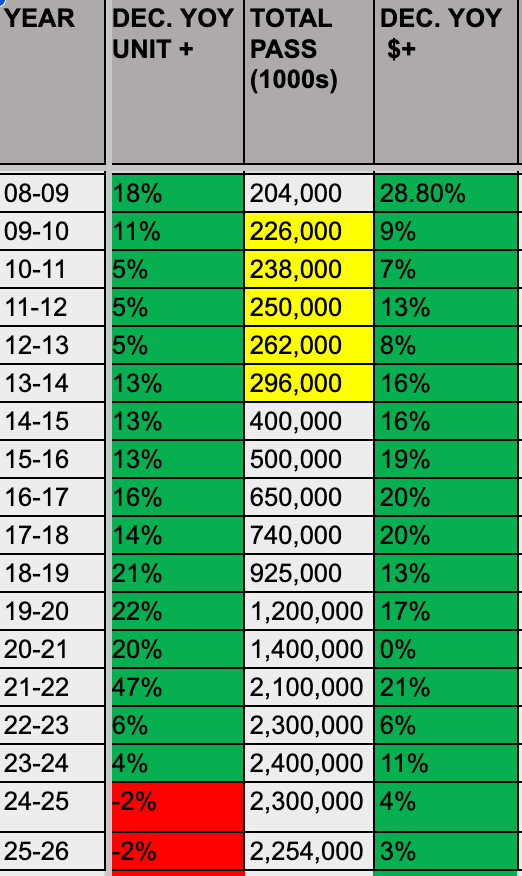 Storm News 9/29/2026: 6 Takeaways from Vail Resorts’ Q4 Earnings | It would not be difficult to locate a photo of The Storm Skiing Journal and Podcast drinking canned Miller Lite shirtless in a lake while wearing a backward baseball cap. There is therefore nothing I can say here that can hurt anyone more than I’ve already hurt myself.Vail Resorts reported fourth-quarter and end-of-fiscal-2026 earnings yesterday. I’m no financial analyst, but the numbers are what I would call “not good”:[Epic] Pass product unit sales through September 18, 2026 for the upcoming 2026/2027 North American ski season decreased approximately 12%, days sold decreased approximately 10% and sales dollars, inclusive of sales and admissions taxes, decreased approximately 6%, as compared to the prior year period through September 19, 2025.Which, whatever - the only Epic Pass numbers that really matter are the ones that Vail Resorts reports in December, after the product goes off sale. Up until two years ago, annual sales ranged from “all right” to “pretty good” to “damn-I-guess-making-a-season-pass-cheaper-than-a-frozen-burrito-moves-passes.” Unit sales - meaning the number of Epic Pass “products” (we include Epic Day) sold - increased every year from the pass’ introduction in 2008-09 until 2024-25. Even then, unit sales only declined by two percent:Notably, Epic Pass sales dollars (right-hand column above), have never declined year-over-year. That could change this year.Vail executives seemed oddly fatalistic about declining Epic Pass numbers. CEO Rob Katz noted, during yesterday’s earnings call, that destination guests’ hesitation to buy (mostly, he implied) Epic Day Passes after last year’s crummy winter was an opportunity for Vail to “lean in to be more competitive on lift ticket pricing.” It’s all very disconcerting: after working for years to diminish the lift ticket as an Idiot Tax product-of-last-resort-that-will-either-force-you-to-buy-an-Epik-Pass-or-give-up-skiing-forever, Vail is betting on discounted lift tickets that sit well above peak rates from a decade ago to prop up financials as pass sales level off to yeah-2-million-passes-is-all-42-ski-areas-can-realistically-handle-anyway-Brah levels. Weird. Wonder what this guy thinks?McBrosephs I have takes. Just remember that when I go in on the Bros, it’s more self-reflective diary than attack on American culture. Though it’s also that. And when I go in on Vail, it’s acknowledging the good things they’ve done to democratize the season pass even as the company destroyed a perfectly good product that it now wants to summon as a savior.The Storm Skiing Journal and Podcast will adopt one hamster for every new paid subscriber. Just kidding hamsters are weird I once watched one give birth and systematically devour her offspring. No thanks dude I’ll take the rats that live under my porch. What’s good, Fat Boy? Anyway if you like skiing subscribe to my newsletter because I like it too: Get full access to The Storm Skiing Journal and Podcast at www.stormskiing.com/subscribe | 50m 09s | ||||||
| 9/28/26 |  Storm Skiing 9/28/2026: Pajarito’s Massive Snowmaking Upgrade with GM Jasen Bellomy | The Storm Skiing Journal and Podcast wants you to know that there is skiing in New Mexico. Even beyond Taos. Subscribe for constant journeys into such improbable ski realms:WhoJasen Bellomy, General Manager of Pajarito, New MexicoDate RecordedSeptember 28, 2026Also discussedUpgrades across Mountain Capital Partners’ portfolio (see chart below), and reader reaction to last week’s pods - especially the EuroSki ep with Iain Martin.About PajaritoOwned by: Mountain Capital Partners, since 2014; company also owns:Year founded: 1957 - predecessor ski area, Sawyers Hill, founded nearby by the same ski club in 1944Pass affiliations: Power Pass, Power Pass Select, Power Pass Core - unlimitedBase elevation: 9,000 feetSummit elevation: 10,440 feetVertical drop: 1,440 feetSkiable acres: 280 trail acres + unspecified glade acreage (though Bellomy urges caution in the glades)Average annual snowfall: 125 inchesLift count: 6 (1 fixed quad, 1 triple, 3 doubles, 1 carpet) - view Lift Blog’s inventory of Pajarito’s lift fleet.Why I interviewed him“Ski New Mexico,” you say? Those three words underwhelm, but the stat sheet suggests that skiers miss out by dismissing New Mexico:Those are respectable vertical drops, and some nice acreage with modernizing lift fleets. Taos gets all the Ikon/Mountain Collective destination attention, and deserves it, after building seven new aerial lifts and otherwise sweeping the place clean over the past dozen years. But just about every New Mexico ski area is investing: Angel Fire props up the state’s first sixer for winter 2026-27, just a year after dropping a second quad, Rake’s Rider, onto its east side to spread skiers out between blues and blacks:Ski Santa Fe, Ski Apache, and Red River have collectively built or relocated another five lifts in the past decade. Tiny, super-south Cloudcroft seems like a mess, with little online presence and minimal operations (the bump lacks snowmaking). But overall, New Mexico is a bit of a big-mountain secret, with dry desert snow when it comes.The key to this improbable kingdom is base elevations among the highest in America:It’s not quite Colorado, but they’re high:And it’s high enough to get us to nine active New Mexico ski areas in 2026, which is probably nine more than most people think the state has. But even cloud addresses are not enough to keep these survivors around forever. They need snowmaking. Taos’ system - a big part of the mountain’s modernization under billionaire Louis Bacon, who bought the ski area in 2013 - runs to nearly 11,000 feet. But the smaller areas are building more firepower too. MCP, which operates one-third of those ski areas, stapled together a nice system at Sipapu, the company’s first acquisition, in 2000. Now, after years of negotiations, MCP is working with state and Los Alamos County officials on an $18 million snowmaking modernization plan for Pajarito:A five-mile pipe will shuttle water approximately 2,000 vertical feet up from Los Alamos to Pajarito’s summit reservoir. But this is not just a snowmaking project: firefighters will be able to tap hydrants along the five-mile route or dip the 10-million gallon reservoir with helicopters. The impact, MCP officials believe, will be substantial, and could mirror the turnaround of the company’s Arizona Snowbowl ski area. Prior to running a 15-mile-long snowmaking pipe 3,000 feet up from Flagstaff, Snowbowl’s seasons swung wildly, from 162,000 visits in winter 2000-01 to just four operating days the following season. Now, Snowbowl is consistently one of the last ski areas in the nation to close, with a 185-day 2024-25 season that ended on June 1. Repeating that success at Pajarito would, according to officials, give skiers seasons up to 140 days long - more than double the ski area’s traditional 60-day winter.So yeah, ski New Mexico, Man. It’s weird, I know. Down there in the desert. But there’s water if you get creative and work together. (Now we just need to see if MCP can repeat some version of this deal at snow-starved Sandia Peak.)Additional reading* A Ski profile of Pajarito by Nick Heil, 2016* Pajarito’s blog tracking the snowmaking projectTranscriptsThere are two transcripts. Both are generated by robots. Both are helpful and defective in their own unique ways. I do not proofread either of them.Transcript 1: Click the “transcript” button at the top of this article. You can only see this transcript on a computer. Because I don’t know why exactly but everything is getting better and dumber all at once it seems. Anyway, this is the transcript that the robots create when I upload the podcast to the internet. The cool thing about it is that you can click on any block of text and the audio will teleport there instantly. The uncool thing about this transcript is that it does not indicate who is talking at any given moment.Transcript 2: You can read this below. This is the transcript that Zoom creates as we record the podcast. The cool thing about this transcript is that it indicates who is talking at any given moment. The uncool thing about this transcript is that the timestamps do not match the audio. Also, you cannot click on this text to move to the associated point in the audio. I only included my conversation with Jasen in this transcript - you can read my editorial on MCP or my reaction to reader’s comments in the other transcript, but frankly I’d either listen to them or skip those sections.ZoomStuart Winchester: My guest today has been the general manager of Powerito New Mexico since 2023.00:35:14.000 --> 00:35:26.000Stuart Winchester: Bajarito’s predecessor ski area, Sawyers Hill, was founded by top American scientists and soldiers working on top secret research, including the Manhattan Project in Los Alamos during World War II.00:35:26.000 --> 00:35:46.000Stuart Winchester: In 1957, the Los Alamos Ski Club moved the facility up to Pareto, where today, 5 chairlifts serve 1,440 vertical feet on 280 skiable trail acres, plus glades. Pareto is one of 13 ski areas operated by Durango, Colorado-based Mountain Capital Partners.00:35:46.000 --> 00:35:52.000Stuart Winchester: and one of three that the company operates in New Mexico, including Sipapu and Sandia Peak.00:35:52.000 --> 00:36:09.000Stuart Winchester: Prior to joining the team at Power Reno, he worked at Saddleback, Maine, Sugarbush, Vermont, Pratchett, New Hampshire, and all the way back at the start of his career as a lifty at Waterville Valley, New Hampshire. He served a tour in the Marine Corps and spent several years working in air traffic management technologies.00:36:09.000 --> 00:36:16.000Stuart Winchester: Jason Bellamy is my guest. Jason, welcome to The Storm. So good to have you. How is life in the mountains of New Mexico today?00:36:16.000 --> 00:36:24.000Jasen: Oh, man, thanks for having me. Super excited. Uh, busy. And wet, currently.00:36:23.000 --> 00:36:38.000Stuart Winchester: Oh, yeah, yeah, it’s… I’m out on the East Coast, it’s been raining all weekend, so… so I… look, I know you got a ton going on, so let’s jump right into it. The headline, if you go to Powerito’s website right now, which, by the way, if I’m saying the name of the scary wrong, you.00:36:38.000 --> 00:36:48.000Stuart Winchester: 2700% more water for snowmaking, so lay this out for us, Jason. What did Powerito’s snowmaking system look like before, and what are you…00:36:48.000 --> 00:36:50.000Stuart Winchester: Building up.00:36:51.000 --> 00:36:57.000Jasen: So, historically, it was about 2010 that we were able to.00:36:57.000 --> 00:37:04.000Jasen: while it was still operated by the Los Alamos Ski Club, they put in a very bare-bones snowmaking system.00:37:04.000 --> 00:37:10.000Jasen: and captured surface runoff in the springtime to fill a 10 million gallon pond at the top of the mountain.00:37:10.000 --> 00:37:11.000Stuart Winchester: Mmhm.00:37:11.000 --> 00:37:17.000Jasen: The runoff did not yield enough water to fill that pond.00:37:17.000 --> 00:37:18.000Jasen: So for…00:37:18.000 --> 00:37:35.000Jasen: pretty near a decade, there’s been this effort to get a pipeline connecting the county to the Ski Hill for both wildfire suppression and firefighting capabilities, as well as solidifying the future for the Ski Hill.00:37:36.000 --> 00:37:43.000Jasen: That pipeline is going to provide us with about, we’ll be able to cycle that pond about six times a winter.00:37:43.000 --> 00:37:55.000Jasen: Um, which, with 60 million gallons, we should be able to make about 300 acre-feet of snow. So, theoretically, when we’re done with this, we could cover the entire mountain with 12 inches of man-made snow.00:37:56.000 --> 00:38:13.000Stuart Winchester: So talk about, I guess, to start with, just that pipeline. I mean, there’s echoes here of Arizona Snowbowl, your sister mountain, which ran a pipeline all the way down to Flagstaff from its mountain. And from the press materials, it looks like this is being run up.00:38:13.000 --> 00:38:20.000Stuart Winchester: from Los Alamos. So how long is that pipeline? Where does it start? And what does the effort look like to put that in?00:38:20.000 --> 00:38:23.000Jasen: Yeah, great question. Um…00:38:23.000 --> 00:38:39.000Jasen: The project started over half a decade ago, the real nuts and bolts of it. It’s a really complex project. It involves running that pipeline across DOE land, Llano property, Santa Fe National Forest. We had to get the county, the state, and the federal government.00:38:39.000 --> 00:39:01.000Jasen: behind it, and it’s amazing how everyone’s come together. So, after about five or six years of negotiating and all the legal work required, we were able to break ground. The pipeline’s about five miles long, and as a result of previous wildfires that have sparked up from the overhead power lines, we decided to go ahead and put the power underground as well.00:38:40.000 --> 00:38:41.000Stuart Winchester: Mmhm.00:39:01.000 --> 00:39:03.000Stuart Winchester: Mmhm.00:39:02.000 --> 00:39:03.000Jasen: Um, so…00:39:03.000 --> 00:39:16.000Jasen: The… we’re also running fiber infrastructure in the road associated with the project so that we can create backhaul to Albuquerque to solidify our communications for the community as well.00:39:16.000 --> 00:39:20.000Jasen: There’s a lot more going on with this project than just water.00:39:20.000 --> 00:39:22.000Jasen: Oh.00:39:22.000 --> 00:39:23.000Jasen: The…00:39:24.000 --> 00:39:36.000Jasen: there’ll be 4 booster stations to push the elevation to get it to the mountain, and then it’ll tie into a 250,000 gallon tank, which will energize all the fire hydrants along Camp May Road.00:39:36.000 --> 00:39:42.000Jasen: And then from there, we push it to the summit pond out of a pump station.00:39:43.000 --> 00:39:52.000Stuart Winchester: So, so we’re looking here at the, at the map of, uh, here’s Puerto Rico and then here’s Los Alamos. Does the, does the pipeline come from up from the.00:39:52.000 --> 00:39:59.000Jasen: It does. It starts down just on the corner of the DOE property at the bottom of Camp May Road.00:39:59.000 --> 00:40:03.000Jasen: It’s a few thousand feet down, um…00:40:04.000 --> 00:40:05.000Jasen: Once you get…00:40:05.000 --> 00:40:07.000Jasen: Yes.00:40:07.000 --> 00:40:10.000Stuart Winchester: Click around, here’s Camp May Road, where it meets up with West Road.00:40:07.000 --> 00:40:10.000Jasen: So, on… on…00:40:10.000 --> 00:40:21.000Jasen: Yes, uh, just to the, uh, I guess that would be east on West Road. If you scroll your mouse to the corner there, you can see there’s a tank right there.00:40:15.000 --> 00:40:16.000Stuart Winchester: Okay.00:40:18.000 --> 00:40:19.000Stuart Winchester: Mmhm.00:40:20.000 --> 00:40:21.000Stuart Winchester: Okay.00:40:21.000 --> 00:40:29.000Jasen: We built another half million gallon tank there, and then that’s where the first booster pump will reside.00:40:28.000 --> 00:40:45.000Stuart Winchester: Okay. Well, that is a major project. I mean, just talk about the effort of that. I, you know, I guess it’s a partnership. Did you share in the cost of construction of all this? And what did it take to run a pipeline five miles?00:40:45.000 --> 00:40:50.000Stuart Winchester: And I’m not sure what the elevation is it starts at, but I imagine you have to also push that water up.00:40:50.000 --> 00:41:06.000Jasen: It’s close to 2,000 feet of elevation gain, and it is a financial partnership. It’s probably one of the first of its kind where we’ve got federal, state, local, and private dollars to accomplish the mission.00:40:54.000 --> 00:40:55.000Stuart Winchester: Wow.00:41:04.000 --> 00:41:06.000Stuart Winchester: Mmhm.00:41:06.000 --> 00:41:10.000Jasen: It’s really just amazing to see the support.00:41:10.000 --> 00:41:17.000Jasen: And everything come together. Los Alamos and Mountain Capital Partner developed a.00:41:17.000 --> 00:41:22.000Jasen: an agreement. So, the state was, uh…00:41:22.000 --> 00:41:29.000Jasen: basically funded with a grant, the project, um, for $8 million, and then FEMA’s kicking in.00:41:29.000 --> 00:41:30.000Jasen: Um, so…00:41:30.000 --> 00:41:40.000Jasen: an amount to be determined to bury those power lines. Historically, Los Alamos has been very affected by two, um, huge wildfires.00:41:40.000 --> 00:41:53.000Jasen: With hundreds of millions of dollars in, um, asset loss. So, the water getting up there, and Parito, the way it sits, is kind of like a frontline defense to protect the town and the lab.00:41:53.000 --> 00:41:54.000Jasen: Oh.00:41:54.000 --> 00:41:59.000Jasen: So, it’s amazing that everything’s come together the way it has.00:41:59.000 --> 00:42:10.000Stuart Winchester: Yeah, I want to linger on that water point for a moment here, Jason. You know, I never really appreciated this until I was talking to some of the guys who run ski areas in Southern California, and I believe this is your pond right here.00:42:10.000 --> 00:42:15.000Stuart Winchester: Uh, which you anticipate being full, and I’m not sure if there’s an older picture, if that’s what.00:42:11.000 --> 00:42:12.000Jasen: Yes, it is.00:42:16.000 --> 00:42:18.000Stuart Winchester: So so.00:42:16.000 --> 00:42:19.000Jasen: That’s pretty current.00:42:18.000 --> 00:42:35.000Stuart Winchester: Okay, yeah, so this is Google Earth. So I was speaking with Robbie Ellingson, who runs Mount Baldy, right above Los Angeles, and Carl Kabasinski, who runs Mountain High, just there, I guess, a little bit east of the city. And the way they explained it to me, I never thought about this, was…00:42:35.000 --> 00:42:41.000Stuart Winchester: When they have these full ponds in the summer, the helicopters can just come and dip the pond.00:42:41.000 --> 00:42:57.000Stuart Winchester: ponds for fire suppression. And so I, I guess that would help answer the question of, you know, we always hear about water shortages in the, in the West, right? So, so how is the ski area building, you know, all this snow making, don’t we have better things to use water for? So, so just talk about that relationship.00:42:57.000 --> 00:43:05.000Stuart Winchester: Uh, with… with the, uh, firefighters and… and the firefighting infrastructure this is creating, as well as being useful for snowmaking.00:43:06.000 --> 00:43:18.000Jasen: But yeah, you brought up two interesting points there, sir. First and foremost, yes, they will be able to dip out of the pond. We’re also putting in a dry hydrant so that we can hook pump vehicles up to it.00:43:18.000 --> 00:43:20.000Jasen: Um…00:43:18.000 --> 00:43:20.000Stuart Winchester: Mmhm.00:43:20.000 --> 00:43:32.000Jasen: The other thing, I think Mountain High in California, one of the things they did when that fire came through there was they energized their snowmaking system in the summer and just turned on all the snow guns.00:43:32.000 --> 00:43:33.000Stuart Winchester: Mmhm.00:43:32.000 --> 00:43:37.000Jasen: And from what I understand, that that had a beneficial…00:43:37.000 --> 00:43:50.000Jasen: outcome. Um, it could have been a lot worse, apparently. So, there’s a bunch of different things, and we’ve got water now that we can push, you know, multiple locations across the mountain as we build out our pipelines.00:43:50.000 --> 00:44:01.000Jasen: in our snowmaking infrastructure. So we’re gonna put water across this 750-acre piece of land that is pretty critical in the defense of Los Alamos.00:44:01.000 --> 00:44:08.000Jasen: And then the other thing you mentioned, which I hear a lot, is how can we waste all this water for skiing?00:44:08.000 --> 00:44:21.000Jasen: But fundamentally, if you consider what mountains are, they’re a storage device for water during the wintertime. We take the water from the earth, we pump it up the hill, yeah, we’re using energy, but we’re conserving the water on the hill.00:44:21.000 --> 00:44:36.000Jasen: as stored water, and in the springtime it melts and goes back into the aquifer. So 80 to 90 percent of the water that we use is going to go directly back into the land. I mean, what we’re losing is what we lose to sublimation through evaporation into the atmosphere.00:44:37.000 --> 00:44:54.000Stuart Winchester: Yeah, and in the fires in the past where a couple of Poweritos lifts were damaged, having this on site would theoretically have at least mitigated the damage to some point. So what I have up on the screen here, Jason, as you know, but for the folks watching on stormskiing.com or YouTube.00:44:54.000 --> 00:45:09.000Stuart Winchester: is, uh, your phased snowmaking plan. So just talk us through this. Is this year one, year two, year three, or… or how do you… how do you envision or plan for this to play out in real life? And then, you know, here’s…00:45:09.000 --> 00:45:14.000Stuart Winchester: Pario’s trail map for reference, but just to see the snowmaking plan.00:45:15.000 --> 00:45:24.000Jasen: This was originally the concept that we were going to roll with. Like any major project, there’s speed bumps in the road.00:45:19.000 --> 00:45:20.000Stuart Winchester: Mm-hmm.00:45:23.000 --> 00:45:25.000Stuart Winchester: Mmhm.00:45:24.000 --> 00:45:35.000Jasen: So we’ve had to pivot a little bit. Um, we’re putting a lot more resource into the actual delivery of water in year one, so we had to scale back a little bit of the on-hill distribution.00:45:35.000 --> 00:45:36.000Stuart Winchester: Mmhm.00:45:35.000 --> 00:45:43.000Jasen: For this winter, we’re gonna add about 50% in snowmaking coverage, acreage wise.00:45:43.000 --> 00:45:50.000Jasen: Uh, we did not get into the pump stations. We’re working on engineering and design of, um, future pump stations.00:45:50.000 --> 00:45:52.000Jasen: Right now…00:45:52.000 --> 00:46:02.000Jasen: We’re at about 1,000 GPM, gallons per minute, for production pumping capacity, and next year we plan to increase that by 400%.00:46:02.000 --> 00:46:07.000Jasen: Um, final design build out of 4,000 gallons per minute.00:46:07.000 --> 00:46:09.000Jasen: which…00:46:07.000 --> 00:46:09.000Stuart Winchester: And yeah.00:46:09.000 --> 00:46:11.000Jasen: Oh, I’m sorry, go ahead.00:46:11.000 --> 00:46:29.000Stuart Winchester: So, final of 4,000 gallons per minute. You have some trails in white here that are not phased. Do those already have snowmaking, or do you want to keep some stuff natural? I see your famous kind of front four steepies here. A couple of those are white. So, talk to us about the white trails and what’s planned for those.00:46:30.000 --> 00:46:34.000Jasen: So, those will just be… those will be El Natural?00:46:34.000 --> 00:46:41.000Jasen: Classic, you know, old school bump runs and let Mother Nature take care of those.00:46:43.000 --> 00:46:49.000Stuart Winchester: All right, so another interesting thing about Pyroido, Jason, is…00:46:49.000 --> 00:46:57.000Stuart Winchester: It’s the only major New Mexico skier area, other than Angel Fire, that does not operate, as far as I understand it, on U.S. Forest Service land.00:46:57.000 --> 00:47:12.000Stuart Winchester: So who does own the land? You referenced a lot of different entities here. I know there’s a partnership with the county. Does MCP own the land? Was that given to the county? Take us through the land ownership and the sort of different parties that are involved here and have an interest.00:47:13.000 --> 00:47:17.000Jasen: So, the land historically was…00:47:18.000 --> 00:47:22.000Jasen: Um, owned by the Los Alamos Ski Club.00:47:21.000 --> 00:47:23.000Stuart Winchester: Mmhm.00:47:22.000 --> 00:47:28.000Jasen: Through over the course of time, they did some land exchanges with DOE.00:47:28.000 --> 00:47:32.000Jasen: So back in 14 when the ski club needed support.00:47:32.000 --> 00:47:49.000Jasen: Um, James and Mountain Capital got involved, and originally, MCP was going to assume the liabilities of the ski area and operate the ski area. The bank didn’t like that arrangement, so it took about 3 or 4 years to get through the legal work.00:47:49.000 --> 00:47:58.000Jasen: And currently, the majority of the land is owned by MCP. That was a requirement from the bank to transfer the liabilities against the assets.00:47:58.000 --> 00:48:05.000Jasen: And then there’s one shoulder over on the west side that was originally part of, um…00:48:05.000 --> 00:48:09.000Jasen: I believe it was the Dunnigan family owned it.00:48:09.000 --> 00:48:17.000Jasen: And they gave it to the ski club, and there was a first right of refusal on any future transfer of the west side.00:48:17.000 --> 00:48:32.000Jasen: So currently, we’re still working through the legal details on that. And in the transfer of the land, the ski club said once the pipeline was established and operational, that they would be willing to transfer the remaining land to MCP.00:48:32.000 --> 00:48:39.000Jasen: So that’s happening here pretty quickly, and there’s still… there’s a bunch of legal work to satisfy the first right of refusal.00:48:39.000 --> 00:48:40.000Stuart Winchester: Mmhm.00:48:39.000 --> 00:48:46.000Jasen: Um, but essentially, Parrito, the 750-acre parcel, is completely privately owned.00:48:46.000 --> 00:48:48.000Jasen: Oh.00:48:48.000 --> 00:48:50.000Jasen: Which is pretty rare in the West.00:48:50.000 --> 00:48:57.000Stuart Winchester: Yeah. So you’re a little late to snowmaking, but it’s… in some ways, I would think…00:48:57.000 --> 00:49:01.000Stuart Winchester: an advantage to install a snowmaking system, kind of…00:49:01.000 --> 00:49:17.000Stuart Winchester: from whole right now, because the technology’s gotten so good, right? You can start low energy, you can start with automation, if you want. Talk to us about who you worked with, whether it’s SMI or HKD or whoever, uh, to plan out your snowmaking system, and what sort of technology.00:49:17.000 --> 00:49:21.000Stuart Winchester: you’re able to deploy to make sure you get the most snow out the most efficiently.00:49:22.000 --> 00:49:27.000Jasen: Yeah, great question. So, the partners that we’ve most…00:49:28.000 --> 00:49:33.000Jasen: We worked with, uh, Torrent is working with us on some of the pump stations.00:49:33.000 --> 00:49:34.000Stuart Winchester: Mmhm.00:49:33.000 --> 00:49:46.000Jasen: The pipe design layout, electrical. Brandon, I’m sorry, Jeff and the guys from Slope Works have been here supporting the physical installation.00:49:46.000 --> 00:49:55.000Jasen: And because of the history of Puerto Rico, we originally had a — it was a TechnoAlpin system. So we’ve got some legacy TA gear here.00:49:51.000 --> 00:49:52.000Stuart Winchester: Mmhm.00:49:55.000 --> 00:50:04.000Jasen: And then, we’ve also started working with SMI on some of their equipment. One of the things that, um…00:50:04.000 --> 00:50:11.000Jasen: we’re balancing is… there’s so much need in terms of how much infrastructure we have to build and how much equipment we have to purchase.00:50:11.000 --> 00:50:16.000Jasen: So we’re kind of balancing the future with today’s needs.00:50:16.000 --> 00:50:17.000Stuart Winchester: Mmhm.00:50:16.000 --> 00:50:22.000Jasen: Automation is not inexpensive, so we’re doing kind of a semi automation.00:50:23.000 --> 00:50:34.000Jasen: where we can run actuators on the hydrants, but it’s not a full-blown system. The original system that was installed back in the early 2010 period, um…00:50:27.000 --> 00:50:28.000Stuart Winchester: Mmhm.00:50:34.000 --> 00:50:41.000Jasen: That system didn’t work out very well for Power Reno, so we’ve pivoted and moved in a different direction.00:50:42.000 --> 00:50:58.000Stuart Winchester: So, you know, you’ve had snowmaking for a while. I’d imagine you got some guys who are pretty good at it. I saw one of your videos, you brought in a fellow from Pennsylvania. I always say that Pennsylvania is home to some of the best skier operators in the world because they have to be masters.00:50:58.000 --> 00:51:14.000Stuart Winchester: of snowmaking, because if you don’t have it, you’re just not going to open. I know you’re an East Coast guy yourself, so what have you done as far as, okay, you got this great new system, have you brought in some folks who are more experienced with snowmaking to help out? Are you confident you have the experience yourself?00:51:14.000 --> 00:51:18.000Stuart Winchester: What’s your plan to make sure you get the most out of the system right away?00:51:19.000 --> 00:51:36.000Jasen: So we got Brandon on board and one of the things that’s challenging at every skier across the country is staffing. So for this winter we really need to nail it and we reached out to Seasonal Labor Solutions.00:51:27.000 --> 00:51:29.000Stuart Winchester: Yeah. Okay.00:51:37.000 --> 00:51:42.000Jasen: And they have a team of professional snowmakers that basically do the Never Summer.00:51:42.000 --> 00:51:55.000Jasen: Um, so after the guys get done making snow for the Birds of Prey up in Colorado, a couple of those guys are gonna come down and support us this winter for the season to make sure that we get it right.00:51:51.000 --> 00:51:52.000Stuart Winchester: Oh, wow.00:51:54.000 --> 00:52:01.000Stuart Winchester: Awesome, so they’re coming straight to you from Beaver Creek. That’s… that’s impressive. That’s good. And, you know.00:51:58.000 --> 00:52:00.000Jasen: Yeah!00:52:01.000 --> 00:52:09.000Stuart Winchester: Tell us how much it helps to be part of a larger group like Mountain Capital. I’m particularly interested because this Arizona Snow Bowl.00:52:09.000 --> 00:52:24.000Stuart Winchester: story just amazes me, how they… and I realize this was done before MCP arrived, but they ran the pipeline all the way up from Flagstaff, and, you know, Arizona Snowbowl, in the 2001-2 season, was open 4 days, and did 3,000 skier visits.00:52:24.000 --> 00:52:39.000Stuart Winchester: Last year, even in a bad winter, it was open 134 days, 185 the season before that. They keep it open until June a lot of years, and that’s a sister mountain of yours. So we’re talking about Arizona, you know, high desert.00:52:39.000 --> 00:52:51.000Stuart Winchester: Probably, I would imagine, a pretty similar climate to what you’re dealing with. How much have you learned from talking to them, and how valuable is it to have that support sort of in-house, so to speak?00:52:52.000 --> 00:52:55.000Jasen: Oh, yeah, it’s critical.00:52:55.000 --> 00:53:10.000Jasen: It’s funny that you picked up on that. The storyline behind Power Rito and Snowball, I mean, you couldn’t draw a more parallel story. It’s the same thing. And realistically, you know.00:53:05.000 --> 00:53:06.000Stuart Winchester: Yeah.00:53:07.000 --> 00:53:08.000Stuart Winchester: Right.00:53:11.000 --> 00:53:18.000Jasen: what they did in Arizona is exactly what we plan on doing in New Mexico. Um, the…00:53:18.000 --> 00:53:27.000Jasen: Part of that is, you know, our philosophy is skiing first, and it’s, you know, as soon as we can open, and as long as we have snow, we’re gonna run a chairlift.00:53:27.000 --> 00:53:28.000Stuart Winchester: Mmhm.00:53:27.000 --> 00:53:39.000Jasen: And I do believe New Mexico is ripe for the picking. I think Puerto Rico is slated to become the king of spring. There’s a lot of great mountains here, but everyone shuts down like the first or second week of April.00:53:39.000 --> 00:53:40.000Stuart Winchester: Mmhm.00:53:39.000 --> 00:53:43.000Jasen: And that’s not the vision that we have for Power Reno at all.00:53:43.000 --> 00:53:49.000Jasen: Well, we plan on having margaritas on the deck, Cinco de Mayo, and hopefully a lot.00:53:49.000 --> 00:53:51.000Jasen: Few more weekends after that.00:53:50.000 --> 00:53:55.000Stuart Winchester: So, so Pat Ridley, looking back at historical skier visit data was.00:53:55.000 --> 00:54:10.000Stuart Winchester: One of the least busy ski areas in New Mexico, you know, Cloudcroft obviously barely operates, but uh someone within MCP whispered to me that they think that Parito within a few years could be the busiest ski area in New Mexico with these upgrades.00:54:10.000 --> 00:54:12.000Stuart Winchester: Is that is that the aim?00:54:12.000 --> 00:54:16.000Jasen: That’s… that’s kind of the goal, yeah.00:54:15.000 --> 00:54:31.000Stuart Winchester: Yeah, so how thorough will the transformation be? Because I saw this in some of your materials. Power Radio averaged 60 days open per season. You want to increase that to 120 to 140. Does that mean… I’m not sure if you go 7 days a week right now, and you have the snow, but…00:54:31.000 --> 00:54:36.000Stuart Winchester: But just talk to us about what that could mean for the skier if you’re able to achieve that.00:54:38.000 --> 00:54:45.000Jasen: Well, I mean, there’s so much to unpack there. I mean, the economic impact for the community, the labor…00:54:45.000 --> 00:54:46.000Jasen: um…00:54:47.000 --> 00:54:52.000Jasen: Bottom line is, yes, we are going 7 days a week, effective this winter.00:54:52.000 --> 00:54:54.000Jasen: um…00:54:54.000 --> 00:55:05.000Jasen: And the plan is, you know, Thanksgiving, as soon as we can get open. Two years ago, we got a monster storm, and I think we were the only skier in the southwest other than Wolf Creek open.00:55:05.000 --> 00:55:11.000Jasen: And we were busier that day than we were the previous winter. So there’s the demand.00:55:08.000 --> 00:55:09.000Stuart Winchester: Mmhm.00:55:11.000 --> 00:55:12.000Stuart Winchester: Yep.00:55:11.000 --> 00:55:12.000Jasen: Oh.00:55:12.000 --> 00:55:22.000Jasen: So, from the very first cold snap, and we’ve designed and built the new snowmaking system that we put in this year to be able to open it with about 40 hours of snowmaking.00:55:22.000 --> 00:55:23.000Stuart Winchester: Wow.00:55:23.000 --> 00:55:33.000Jasen: So, we’re looking to do things quite a bit differently, and be super aggressive. Uh, and the plan is, you know, we’ll run 7 days a week into April.00:55:33.000 --> 00:55:44.000Jasen: And then as the demand tails off, and the snow starts to melt, we’ll run weekends until we just can’t anymore. So, my goal is Thanksgiving to May every year.00:55:42.000 --> 00:55:49.000Stuart Winchester: Okay. Okay. And what’s the, what’s the sort of alpha trail that opens first, closes last? I don’t know, maybe they’re different.00:55:49.000 --> 00:55:52.000Jasen: Uh, it would be Pussycat.00:55:51.000 --> 00:55:53.000Stuart Winchester: Yeah. Okay.00:55:52.000 --> 00:55:55.000Jasen: It’s kind of shaded, it’s in between the two peaks.00:55:53.000 --> 00:55:54.000Stuart Winchester: Yeah, yeah.00:55:55.000 --> 00:56:00.000Stuart Winchester: Okay, is that one of those, uh, double black bumpers off of the mother lift?00:56:01.000 --> 00:56:07.000Jasen: No, it’s off of Aspen. It sits in the saddle between Aspen and Mother. Um, it’s a blue square.00:56:03.000 --> 00:56:04.000Stuart Winchester: Okay.00:56:04.000 --> 00:56:05.000Stuart Winchester: Okay.00:56:07.000 --> 00:56:08.000Stuart Winchester: Okay.00:56:07.000 --> 00:56:11.000Jasen: But it’s a really great fall line trail.00:56:11.000 --> 00:56:26.000Stuart Winchester: So, so let’s talk about the Aspen lift. So the Aspen lift was one of those ones that was damaged in the 2011 fire. It is, uh, a 1982 SeaTac triple 1,143-foot vertical rise, 3450 length, so a pretty substantial.00:56:26.000 --> 00:56:36.000Stuart Winchester: lift, and, and I think your most important lift out of your base. So, so you got a lot, you’re, uh, spiffing that lift up. Take us through Aspen and what you’re doing with it this offseason.00:56:36.000 --> 00:56:43.000Jasen: Yeah, so as you pointed out, um, our historical average is about 60 days. Um, that lift.00:56:43.000 --> 00:56:45.000Jasen: um…00:56:45.000 --> 00:56:54.000Jasen: Because of the limited seasons, we looked at that lift and said, you know, all this snow in the world isn’t going to do us any good if we can’t get the people to it.00:56:53.000 --> 00:56:55.000Stuart Winchester: Yeah.00:56:55.000 --> 00:57:06.000Jasen: So, we went through… we have major lift projects in the works, but we have to do this piece by piece. The first piece was get the water. Second piece is be able to use the water.00:57:03.000 --> 00:57:05.000Stuart Winchester: Yeah.00:57:06.000 --> 00:57:16.000Jasen: So as a stopgap for the meantime, we went through and rewired the entire lift, all new controls, new drive.00:57:16.000 --> 00:57:19.000Jasen: New hydraulics for the brake systems.00:57:19.000 --> 00:57:23.000Jasen: We just did the return bull wheel bearing this summer.00:57:23.000 --> 00:57:33.000Jasen: Basically, everything short of the steel and the carrier has been updated, and the goal there was really reliability.00:57:28.000 --> 00:57:29.000Stuart Winchester: Mmhm.00:57:32.000 --> 00:57:33.000Stuart Winchester: Mmhm.00:57:33.000 --> 00:57:39.000Jasen: So when you show up to Puerto Rico this winter, you’re not gonna see a sexy new lift, but you’re gonna have a very reli.00:57:39.000 --> 00:57:40.000Stuart Winchester: Yeah.00:57:40.000 --> 00:57:55.000Stuart Winchester: So, so Aspen Triple’s getting an upgrade, and then your rest of your lift fleet, you have 3 doubles. Uh, this Beginner is an 81 Seatech. Uh, Mother is a 76 Riblet double. Uh, Spruce…00:57:55.000 --> 00:58:14.000Stuart Winchester: is a 69 riblet double, and then Townsite is a 94 quad, so I imagine you’re pretty happy with Townsite, but what are some of those projects that you’re eyeballing? What can you share with us, Jason, about, ultimately, I mean, because once you double the season, the revenue should follow, right? You should be able to make some investments.00:58:14.000 --> 00:58:18.000Stuart Winchester: What would you like the Lyft fleet to look like, ultimately, at Pareto?00:58:19.000 --> 00:58:32.000Jasen: I think currently we’re looking at, um, the next… the first focus would be updating Motherlift, um, and I do suspect, based on conversations that we had, that that lift, uh, winds up being a detachable.00:58:33.000 --> 00:58:38.000Jasen: Townsite, I’m really glad you brought that up. That’s a 1994 Lyft.00:58:38.000 --> 00:58:39.000Stuart Winchester: Mmhm.00:58:38.000 --> 00:58:43.000Jasen: That exposure got heavy, uh, burn scars during the fires.00:58:43.000 --> 00:58:48.000Jasen: And that lift, as a 94, doesn’t even have 4,000 hours on it.00:58:47.000 --> 00:58:49.000Stuart Winchester: Wow.00:58:48.000 --> 00:58:53.000Jasen: So that lift is in pretty, pretty new shape in terms of wear.00:58:54.000 --> 00:59:05.000Jasen: Um, so, the big focus right now, the next piece is, uh, getting the mother lift done, uh, with the new lift, and we’ve got some other things that we’re talking about doing in association with that.00:59:00.000 --> 00:59:01.000Stuart Winchester: Mmhm.00:59:05.000 --> 00:59:15.000Jasen: That peak overlooks the Valle Caldera, which is an absolutely amazing, breathtaking piece of New Mexico landscape. So there’s a lot of…00:59:08.000 --> 00:59:09.000Stuart Winchester: Mm-hmm.00:59:13.000 --> 00:59:14.000Stuart Winchester: Yeah. Okay.00:59:15.000 --> 00:59:33.000Jasen: a lot of opportunity with the detach. Um, discussions around Chandler have been thrown around. Um, the idea being is, you know, from the top of that peak, having a, um, potentially a banquet, um, event center at the top of the lift, and being able to use that in the off-season for.00:59:33.000 --> 00:59:38.000Jasen: Dinners and different type of corporate functions and stuff like that.00:59:38.000 --> 00:59:54.000Stuart Winchester: Yeah, everyone I talk to, Jason, just tells me that weddings are going off. They’re so busy, they can’t keep up. It’s just, it’s such a natural thing, and now folks are starting to think about it, especially in the East. It’s really popping. Any thoughts on spruce? I mean, I love an old riblet double.00:59:54.000 --> 01:00:04.000Stuart Winchester: you know, they look cool, uh, there’s a couple hundred of them still spinning, but, you know, probably won’t last forever. Any ideas for spruce long-term?01:00:04.000 --> 01:00:13.000Jasen: I think, Spruce, that lift, uh, based on the parking lot, there’s a stairwell that goes right up to it. It’s a really popular lift.01:00:08.000 --> 01:00:10.000Stuart Winchester: Mm-hmm.01:00:12.000 --> 01:00:13.000Stuart Winchester: Mmhm.01:00:13.000 --> 01:00:27.000Jasen: It’s a redundant lift. You can ski off at Aspen and get the whole middle of the mountain, but that lift does have tremendous value. That would probably be the second lift that we look at.01:00:18.000 --> 01:00:20.000Stuart Winchester: Mm-hmm.01:00:27.000 --> 01:00:38.000Jasen: The timing on that, I’m not sure. We haven’t really gotten that far in the master planning. Um, but based on that profile, I would imagine that that becomes a fixed-script quad.01:00:32.000 --> 01:00:34.000Stuart Winchester: Mmhm.01:00:38.000 --> 01:00:48.000Stuart Winchester: Okay. And, and do you like where the lifts are? You like the layout? They, they did a good job that your predecessors or, or do you wanna move anything around, like as far as where it loads or lands?01:00:47.000 --> 01:00:58.000Jasen: I think there might be a slight realignment on the mother lift. That lift doesn’t truly go to the top of the… there’s a few feet of elevation that you can gain.01:00:51.000 --> 01:00:52.000Stuart Winchester: Okay.01:00:58.000 --> 01:01:04.000Jasen: so that the alignment would kind of come down between, um, Mother… Big Mother Trail and Pussycat.01:01:02.000 --> 01:01:04.000Stuart Winchester: Mmhm.01:01:04.000 --> 01:01:05.000Stuart Winchester: Mmhm.01:01:04.000 --> 01:01:11.000Jasen: And land a little bit closer to the base area, in that triangle of trees at the bottom there.01:01:08.000 --> 01:01:09.000Stuart Winchester: Mmhm.01:01:12.000 --> 01:01:14.000Jasen: And the…01:01:12.000 --> 01:01:15.000Stuart Winchester: Yeah, yeah, go ahead.01:01:15.000 --> 01:01:26.000Jasen: But realistically, I mean, the scientists and all the folks that worked on this project back in the day did a really great job of laying out the mountain.01:01:24.000 --> 01:01:25.000Stuart Winchester: Yeah. Okay.01:01:26.000 --> 01:01:29.000Stuart Winchester: Is there, yeah, go ahead.01:01:26.000 --> 01:01:28.000Jasen: And…01:01:28.000 --> 01:01:38.000Jasen: Oh, I just… the other thing I think that’s kind of cool to know, I don’t think that there’s a larger ski area in the country that was built by volunteers.01:01:38.000 --> 01:01:43.000Stuart Winchester: Yeah, no, I don’t think so either. There’s a lot of, uh…01:01:43.000 --> 01:01:50.000Stuart Winchester: of ones that I’m sure you know from your time in the East that were started with Civilian Conservation Corps, but that wasn’t volunteer, those was putting men to.01:01:50.000 --> 01:01:55.000Stuart Winchester: Uh, and I… most volunteer-built ski areas are, like.01:01:55.000 --> 01:02:11.000Stuart Winchester: A rope tow and a couple of trails like this is, this is impressive. I, I cannot believe what they did here is, you know, looking around and I, and I know you explained the land situation. Is there any potential for expansion in any direction or, or is this the footprint that you’re working with for the foreseeable future?01:01:57.000 --> 01:01:59.000Jasen: Yeah, yeah.01:02:13.000 --> 01:02:15.000Jasen: There’s…01:02:15.000 --> 01:02:26.000Jasen: A couple things. So, Camp May is a campground. The county has approached us about doing a management agreement. With the water line, they’re going to be able to put water in.01:02:18.000 --> 01:02:20.000Stuart Winchester: Mmhm.01:02:25.000 --> 01:02:27.000Stuart Winchester: Mmhm.01:02:26.000 --> 01:02:30.000Jasen: It’s a primitive campground right now. It’s beautiful.01:02:30.000 --> 01:02:33.000Jasen: A lot of people come up here to escape the heat.01:02:32.000 --> 01:02:34.000Stuart Winchester: Yeah. Okay.01:02:33.000 --> 01:02:34.000Jasen: um…01:02:34.000 --> 01:02:43.000Jasen: The way this bowl is laid out, it’s amazing. When I first got out here, we had, you know, we were skiing on 60, 70 inches of snowpack, and the mountains…01:02:43.000 --> 01:02:45.000Jasen: That we’re looking at.01:02:45.000 --> 01:02:56.000Jasen: are completely bare. It’s just the sun angle. Uh, it’s… coming from the east, it’s just… it’s pretty trippy. But, um, I think we’re pretty much…01:02:46.000 --> 01:02:48.000Stuart Winchester: Mmhm.01:02:48.000 --> 01:02:50.000Stuart Winchester: Yeah. Yeah.01:02:56.000 --> 01:03:04.000Jasen: the footprint that we’re in right now is pretty much, I think, about what it’s gonna be, just because of the aspect.01:03:04.000 --> 01:03:08.000Jasen: And, you know, where we can hold snow.01:03:08.000 --> 01:03:23.000Stuart Winchester: Alright, two more quick things for you, Jason, I’ll let you go. This one’s kind of for your more hardcore. I saw in one of your posts that the Crazy Mother Terrain Park was being, uh, quote, regraded into a regular run. Does that mean you’re not going to have a terrain park at Barrio this season?01:03:23.000 --> 01:03:32.000Jasen: No, the exact opposite is true. With snowmaking, it gives us the ability to ensure that we can build quality parks.01:03:25.000 --> 01:03:27.000Stuart Winchester: Okay.01:03:32.000 --> 01:03:48.000Jasen: One of the things that I am really passionate about, I grew up ski racing, so getting consistent seasons so that we can host USSA races, support USASA, we want to have events and we want to grow.01:03:37.000 --> 01:03:39.000Stuart Winchester: Mm-hmm.01:03:45.000 --> 01:03:47.000Stuart Winchester: Mmhm.01:03:48.000 --> 01:03:54.000Jasen: the foundation for our sport to make sure that it survives for the next several generations, so…01:03:54.000 --> 01:04:03.000Jasen: Those pieces, the train parks, the available train for ski racing, and all the ancillary stuff that comes with that, we’re 100% behind.01:04:03.000 --> 01:04:17.000Jasen: I’ve got… I saw a lot of pushback, and I’ve heard a lot of pushback about the Crazy Mother Train Park getting bulldozed down. The problem was, is that stuff hasn’t… hadn’t been used in years. Um, they built some really big stuff, and it was too…01:04:13.000 --> 01:04:14.000Stuart Winchester: Really?01:04:17.000 --> 01:04:21.000Jasen: It was too large. We didn’t have progression to get to that level.01:04:21.000 --> 01:04:26.000Jasen: When we need something like that, we’ll build it again.01:04:25.000 --> 01:04:40.000Stuart Winchester: I’ve heard the same thing from operators all over the country. Those big ones, they’re impressive and people like to look at them, but in reality, they’re expensive and not a lot of folks use them or have the skill to use them. So that’s a pattern I’ve seen all over the country.01:04:40.000 --> 01:04:45.000Stuart Winchester: Uh, so the last thing I wanted to touch on here, Jason, I mean, I…01:04:45.000 --> 01:04:52.000Stuart Winchester: I mention this every time I talk about MCP, but I think it’s hard to… I can’t mention it enough. I mean, the PowerPass…01:04:52.000 --> 01:04:56.000Stuart Winchester: This thing is unbelievable. Kids 12 and under are free.01:04:56.000 --> 01:05:12.000Stuart Winchester: Everyone. No parent purchase required. And right now, the PowerPass Core, which is unlimited at your ski area in Sipapu and Sandia Peak, and has lots of access to the other ski areas in MCP’s portfolio, it’s $449. I mean, it was $299 if you grabbed it early.01:05:12.000 --> 01:05:21.000Stuart Winchester: But talk a little bit about that power pass, and do you think people in Los Alamos really get it? Like, kids 12 and under are free, do you hit the schools, do you hit that hard?01:05:12.000 --> 01:05:14.000Jasen: Yes.01:05:22.000 --> 01:05:28.000Jasen: We do, um, we… it’s amazing how the message just doesn’t resonate loud enough.01:05:27.000 --> 01:05:28.000Stuart Winchester: Yeah, okay.01:05:28.000 --> 01:05:35.000Jasen: But when you look at our organization, Skiing First, like, that’s real. That’s like the Bible.01:05:35.000 --> 01:05:39.000Jasen: And one of the things I think everyone within the organization looks at is.01:05:39.000 --> 01:05:55.000Jasen: How do we strip back the barriers to access? Price is number one. So the 12 and under ski free, I mean, that’s just something that the entire organization just firmly believes in. We want to cultivate and grow our sport, and we feel like there’s no better way.01:05:55.000 --> 01:05:58.000Jasen: Than to get kids involved at an early age.01:05:58.000 --> 01:06:01.000Jasen: And then the pass pricing for, um…01:06:01.000 --> 01:06:13.000Jasen: Every year that I’ve been with MCP, springtime comes around and the pass pricing discussion comes up, and it’s not even a discussion because, like, they’re not increasing pricing, and they’re really proud of that.01:06:13.000 --> 01:06:19.000Jasen: Another thing that we’re doubling down on this year, which is really cool, is $9 Lyft tickets.01:06:19.000 --> 01:06:22.000Jasen: I mean, 9 bucks, with a $10 resort credit.01:06:23.000 --> 01:06:25.000Stuart Winchester: We’re basically free.01:06:25.000 --> 01:06:29.000Jasen: We’re paying you a dollar, you know?01:06:27.000 --> 01:06:32.000Stuart Winchester: That… and is that… that’s not every day, is it?01:06:32.000 --> 01:06:47.000Jasen: No, that’s… it’s limited availability, but when we launch, um… I think Purgatory, Snowbowl, and Brian had a launch ticket, so if you hop on the computer right now and you say, I want to go ski on such and such day, you can get a $9 ticket with a $10 resort credit.01:06:34.000 --> 01:06:35.000Stuart Winchester: Okay.01:06:42.000 --> 01:06:43.000Stuart Winchester: Yes.01:06:48.000 --> 01:06:50.000Stuart Winchester: That’s incredible.01:06:48.000 --> 01:06:53.000Jasen: It’s not gonna last all winter, but… I mean, the deals are out there.01:06:50.000 --> 01:06:51.000Stuart Winchester: Yes.01:06:51.000 --> 01:06:52.000Stuart Winchester: Yeah, yeah.01:06:53.000 --> 01:07:01.000Stuart Winchester: Yeah, and you have, uh, so is it a… when you have a $9 day, is there a limited number of $9, and it goes up to $10 or $11?01:07:01.000 --> 01:07:08.000Jasen: It’s incremental. Yeah, it’s an extremely dynamic pricing system.01:07:01.000 --> 01:07:03.000Stuart Winchester: et cetera.01:07:03.000 --> 01:07:04.000Stuart Winchester: Okay, okay.01:07:04.000 --> 01:07:06.000Stuart Winchester: All right, well…01:07:07.000 --> 01:07:12.000Stuart Winchester: That’s… and have you… have you rolled those out yet at Pareto?01:07:12.000 --> 01:07:15.000Jasen: We plan to launch our tickets in the next couple weeks.01:07:15.000 --> 01:07:18.000Stuart Winchester: Okay, do you know how many days we’ll have that $9 price?01:07:20.000 --> 01:07:23.000Stuart Winchester: Is it, like, one or two, or is it, like, dozens.01:07:23.000 --> 01:07:27.000Jasen: No, in October, it’ll be, like, 80% of the season.01:07:24.000 --> 01:07:26.000Stuart Winchester: Okay.01:07:26.000 --> 01:07:36.000Stuart Winchester: Oh my gosh, okay. All right, well, set your timer. All right, I’ll leave us with this, Jason, because I have a lot of listeners on the East Coast.01:07:28.000 --> 01:07:29.000Jasen: Yeah.01:07:36.000 --> 01:07:53.000Stuart Winchester: And who have never skied Parado. I imagine most people haven’t skied Parado because New Mexico is sort of like the forgotten ski land. Uh, but a lot of my listeners have skied the places that you’ve worked at. So I know you grew up at Hunter Hunter’s Madness. I love Hunter. There’s nothing else like it.01:07:53.000 --> 01:08:08.000Stuart Winchester: But it’s just, it’s just New York City sort of transposed onto the ski slope. Uh, Crotchet, more of a college scene, kind of like, you know, they have the high speed quads, a lot of night skiing, you know, a lot of like beer in a lap. Uh, Sugarbush.01:08:08.000 --> 01:08:25.000Stuart Winchester: More of a resort, lots of natural snow, great skiing, you know, gets busy, but people get spread out around the base, and it has, obviously, the two mountains. And Saddleback is just, like, this glorious, you know, highest elevation in the east, up there. Uh, it doesn’t get too busy, because it’s far from everything.01:08:25.000 --> 01:08:27.000Stuart Winchester: Of those four.01:08:27.000 --> 01:08:33.000Stuart Winchester: that my listeners are probably familiar with a couple. What is Powerito? Which one is Powerito most like, and why?01:08:34.000 --> 01:08:45.000Jasen: Interesting question. Uh, yeah, New Mexico, the land of enchantment. Um, when I moved out here from the East Coast, everyone asked me why I was leaving the ski industry.01:08:44.000 --> 01:08:45.000Stuart Winchester: Yeah.01:08:45.000 --> 01:08:54.000Jasen: The lack of awareness… New Mexico’s the best-kept secret. You can fly into Albuquerque, grab a rental car, not hit any traffic, and be a skier in less than 2 hours. It’.01:08:48.000 --> 01:08:49.000Stuart Winchester: There.01:08:52.000 --> 01:08:54.000Stuart Winchester: Love it.01:08:54.000 --> 01:08:57.000Jasen: But Paul Rito, I would say…01:08:58.000 --> 01:09:09.000Jasen: I would say it’s very similar in feel to Saddleback. Saddleback is kind of a hidden, quiet gem. It’s just far enough you have to pass everything else.01:09:03.000 --> 01:09:04.000Stuart Winchester: Yes.01:09:09.000 --> 01:09:12.000Jasen: On a busy day at Parrito.01:09:12.000 --> 01:09:18.000Jasen: Because we have 300 acres and we only have fixed scripts getting you up the hill.01:09:18.000 --> 01:09:31.000Jasen: the downhill to uphill ratios are a lot different than what most skiers are today. Throughout my life, I’ve seen detaches go up where there used to be a double, especially at… Hunter’s a perfect example, right?01:09:31.000 --> 01:09:38.000Jasen: When I started skiing there, there was a summit double chairlift, and now there’s, I think, 3 different detaches that put you at the top of that mountain.01:09:38.000 --> 01:09:46.000Jasen: Um, so we’ve increased the uphill capacity and not addressed the downhill capacity, and I think it’s watered down.01:09:46.000 --> 01:09:57.000Jasen: the experience a little bit. Powder Retail is the way it used to be. You get to the top of the mountain, and you ski down a trail, and even on a powder day, you have the trail to yourself. It’s amazing.01:09:57.000 --> 01:10:01.000Jasen: It’s it’s what I fell in love with as a kid.01:10:01.000 --> 01:10:04.000Jasen: And Paul Rito still has that.01:10:04.000 --> 01:10:13.000Stuart Winchester: That is an awesome vision. And I read here and there that the Glades are pretty good, and that’s something else Saddleback has. Talk to us about the Glades at Power Reno.01:10:15.000 --> 01:10:19.000Jasen: Yeah, the… with some of the, um…01:10:19.000 --> 01:10:26.000Jasen: When we get sufficient snowpack, you can go into the trees, but with all the burn scars and stuff.01:10:26.000 --> 01:10:30.000Jasen: You really want to be cautious about the woods. Um…01:10:28.000 --> 01:10:29.000Stuart Winchester: Mmhm.01:10:30.000 --> 01:10:35.000Jasen: I’m actually trying to get the tree message removed from our marketing campaign.01:10:33.000 --> 01:10:36.000Stuart Winchester: Oh, I see. Okay. Okay.01:10:36.000 --> 01:10:48.000Jasen: So, uh, I would really define Palo Rito more as… there’s certainly trees to get into, I mean, don’t get me wrong, it’s not a J Peak, if you will, um, but…01:10:48.000 --> 01:10:54.000Jasen: It’s in-your-face fall line skiing, more so than I think most in New Mexico.01:10:50.000 --> 01:10:52.000Stuart Winchester: Yeah, that’s true.01:10:53.000 --> 01:10:56.000Stuart Winchester: But you are allowed in the trees when there’s snow?01:10:56.000 --> 01:10:58.000Jasen: Oh, yeah.01:10:57.000 --> 01:11:13.000Stuart Winchester: Yeah. And, uh, just one last thing, just because I… this popped into my head. Saddleback was doing some really cool things with, like, portable rope tows in their terrain park, their lower level, uh, by, like, the Sandy Lift when they put in the new one. Were you involved with all that before you came out?01:11:14.000 --> 01:11:16.000Jasen: I, I was.01:11:15.000 --> 01:11:26.000Stuart Winchester: Yeah, and so that’s kind of cool. I really like rope tows for terrain parks because they, you know, you can lap, lap, lap without having to ride a lift. Is that something you’ve thought about for Power Radio at all?01:11:26.000 --> 01:11:33.000Jasen: Yeah, as a matter of fact, uh, if you want to pull up the trail map, I’ll show you kind of what I got thinking here.01:11:29.000 --> 01:11:31.000Stuart Winchester: Yeah, yeah, yeah.01:11:31.000 --> 01:11:33.000Stuart Winchester: All right, let’s do it.01:11:33.000 --> 01:11:35.000Jasen: So…01:11:35.000 --> 01:11:37.000Stuart Winchester: Here’s a trail map.01:11:37.000 --> 01:11:41.000Jasen: Yeah, so the bottom of Lone Spruce…01:11:42.000 --> 01:11:48.000Jasen: Right now, we’re having a hard time to really… the beginner lift…01:11:49.000 --> 01:11:53.000Jasen: On a busy day, we don’t want to add a lot of traffic on that lift.01:11:52.000 --> 01:11:53.000Stuart Winchester: Yeah.01:11:53.000 --> 01:12:04.000Jasen: Down here below East Road on the bottom of Daisy May and the bottom of Lone Spruce, there’s a perfect little triangle in there when we’re not running spruce lift.01:12:04.000 --> 01:12:05.000Stuart Winchester: Mm-hmm.01:12:06.000 --> 01:12:16.000Jasen: The thought process is potentially for next year. We’re on a surface lift up along the looker’s left side of the bottom of Daisy May.01:12:15.000 --> 01:12:16.000Stuart Winchester: Okay.01:12:16.000 --> 01:12:24.000Jasen: So that if that lift isn’t running, that parking lot is the easiest access to snow, so you could boot up in your car, ride up.01:12:24.000 --> 01:12:30.000Jasen: We’ve got snowmaking down in there, and that could be the beginning of our future, um…01:12:30.000 --> 01:12:35.000Jasen: uh… beginner level terrain park, and that lift would…01:12:33.000 --> 01:12:35.000Stuart Winchester: That’s awesome.01:12:35.000 --> 01:12:40.000Jasen: would give you the bottom of Lowen Spruce, the bottom of Daisy May.01:12:39.000 --> 01:12:40.000Stuart Winchester: Mmhm.01:12:40.000 --> 01:12:43.000Jasen: And also access from that parking lot back to the lodge.01:12:44.000 --> 01:12:53.000Jasen: So, exactly, think of what, you know, the lodge is below the train park at Saddleback, but essentially kind of the same thing that we did at Saddleback.01:12:49.000 --> 01:12:50.000Stuart Winchester: Yeah, so…01:12:53.000 --> 01:12:55.000Stuart Winchester: That’s really cool.01:12:53.000 --> 01:12:56.000Jasen: To access that lower section.01:12:56.000 --> 01:13:00.000Stuart Winchester: And with a portable rope tower, would you put something more permanent in?01:13:00.000 --> 01:13:03.000Jasen: Probably something a little more permanent.01:13:02.000 --> 01:13:04.000Stuart Winchester: Yeah.01:13:04.000 --> 01:13:05.000Jasen: Um…01:13:05.000 --> 01:13:09.000Jasen: Because even when we do replace Sloan’s spruce lift.01:13:10.000 --> 01:13:17.000Jasen: You know, do you really want to ride… if you’re just looking to nail a couple features, do you really want to ride a 6 or 7 minute chair?01:13:16.000 --> 01:13:17.000Stuart Winchester: Yeah. Okay.01:13:17.000 --> 01:13:21.000Jasen: When you can just loop and cycle that lower area.01:13:23.000 --> 01:13:32.000Stuart Winchester: Yeah, that’s awesome, Jason, and I imagine being right above a city, you have a good, you know, young skier demographic for that, so…01:13:32.000 --> 01:13:42.000Stuart Winchester: All right, Jason, listen, I really appreciate all this. This is, uh, it’s really exciting, and now I’ve skied a little in New Mexico, but I gotta get out there, and I’m always telling people these kind of…01:13:42.000 --> 01:13:58.000Stuart Winchester: fringe areas, if you’re coming from the East Coast, they see… they’re as big as an East Coast ski area, and there’s no one there. And they’re wonderful skiing, so this sounds, uh… this first time I focused on Power Reno, it sounds kind of like that if you were an East Coast skier coming out.01:13:59.000 --> 01:14:08.000Jasen: Yes, yes. Even on the busiest of days, it’s just… it still amazes me how awesome the terrain is. And you know.01:14:08.000 --> 01:14:16.000Jasen: all of the places I’ve worked, we’ve talked about some of the different skiers I’ve worked at, um, in the East. The other thing that I think is important to note.01:14:16.000 --> 01:14:17.000Jasen: Because of…01:14:17.000 --> 01:14:20.000Jasen: Just the quantity of people.01:14:21.000 --> 01:14:28.000Jasen: At 3 or 4 o’clock, the trails get stomped. I mean, you’re down to, like, boilerplate, everything’s scrapped off.01:14:26.000 --> 01:14:27.000Stuart Winchester: Yeah, okay.01:14:28.000 --> 01:14:29.000Stuart Winchester: Mmhm.01:14:28.000 --> 01:14:46.000Jasen: And, uh, that was the other thing that blew my mind when I got out here. The quality of skiing from 8 AM to 4 PM is pretty consistent. Like, you just don’t get that, oh, you know, I’m going to the pub to have a beer because it’s already scraped off at 1 o’clock or 2 o’clock, you know. It’s just, it’s great skiing from first chair to last.01:14:34.000 --> 01:14:35.000Stuart Winchester: Yeah.01:14:36.000 --> 01:14:37.000Stuart Winchester: Awesome. Yeah.01:14:41.000 --> 01:14:42.000Stuart Winchester: Yes.01:14:47.000 --> 01:15:02.000Stuart Winchester: Incredible. All right, Jason. Well, I’m going to come test that theory hopefully this winter. If not, I’ll make it out at some point and hope to take a couple turns with you. So thanks so much for all your time, especially I know how busy you are. It’s a huge project. I really appreciate it.01:15:02.000 --> 01:15:05.000Jasen: Thanks a lot, Stuart. It was awesome talking to you. Get full access to The Storm Skiing Journal and Podcast at www.stormskiing.com/subscribe | 1h 08m 56s | ||||||
Want analysis for the episodes below?Free for Pro Submit a request, we'll have your selected episodes analyzed within an hour. Free, at no cost to you, for Pro users. | |||||||||
| 9/26/26 | 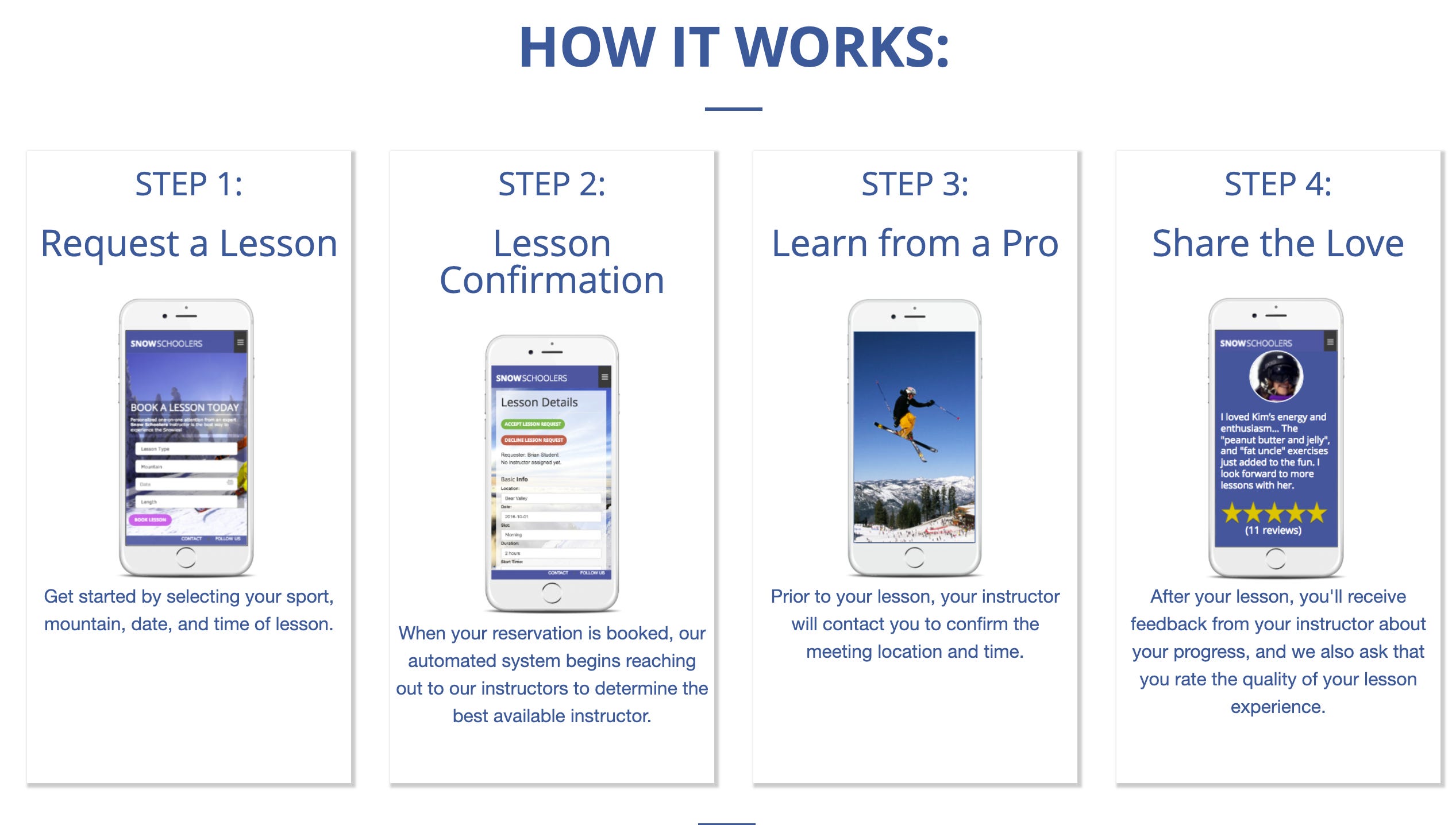 Storm Skiing 9/26/2026: Fixing America’s Broken Ski School Model with Snow Schoolers’ Brian Bensch | The Storm Skiing Journal and Podcast thinks that yelling “PIZZA!” and “FRENCH FRY!” at a 2-year-old superman straightlining down a green slope is a highly effective ski instruction technique. If you agree, please sign up for my newsletter:WhoBrian Bensch, founder of Snow SchoolersDate recordedSeptember 24, 2026About Snow SchoolersSnow Schoolers, per its website, is an “independent ski school program” that teaches lessons “at any mountain where we’ve established a revenue-sharing partnership with the ski area.” Skiers sign up for lessons on their Pet Rectangles, like this:Why I interviewed himThat sounds pretty neat, right? Let me go see if Snow Schoolers teaches at my favorite mountain. Snow Schoolers probably does not teach at your favorite mountain. Unless your favorite mountain is 222-vertical-foot Granlibakken, which is about five feet away from 6,000-acre Palisades Tahoe, or 100 vertical-foot Frisco Adventure Park, tucked off highway 9, after 1.5 million-ish skiers exit I-70 on their way to nearby Breckenridge.That is not an indictment of small ski areas, which I love, or Snow Schoolers’ business model, which I also love. Rather, it’s my way of saying that the only way to sign up for ski school at Palisades Tahoe or Breckenridge is through Palisades Tahoe or Breckenridge. With the strange, grandfathered-in exception of the strange, cobbled-together ski bazaar that is Summit at Snoqualmie in Washington, all major American ski areas (so far as I know) operate with a monopoly over ski school operations on their property. In ways subtle and aggressive, they police and ban rogue instructors who would offer discounted lessons on resort property.There are probably ways to break this system, either through the courts or legislative amendment of the Forest Service leases that 125 U.S. ski areas operate on. Such change sounds radical only in an American context - most European ski areas already operate with multiple independent competing ski schools onsite. Over the past 20 years, technology has challenged monopolies across American commerce. Sports and concert tickets and taxi rides offer two prime examples of power shifting from one central operator to many operators, with benefits and drawbacks for the consumer. Perhaps we will get there with ski school. For now, I see a more practical path for an asset-light, app-based, independent ski school like Snow Schoolers - as the costs of labor, utilities, infrastructure, and insurance pile up, perhaps outsourcing the operation of a ski school is more practical for many smaller, independent ski areas than establishing and maintaining one of their own. That is what you get at Granlibakken and Frisco: Snow Schoolers pays the ski areas a share of each lesson, essentially as rent for the right to operate a ski school on their property. And Granlibakken and Friso don’t have to worry about hiring instructors and organizing lessons. There are probably 100 under-resourced ski areas in America where this model could work tomorrow. Brian and I discuss why Snow Schoolers works where it does, and why the model has been slow to spread.TranscriptsThere are two transcripts. Both are generated by robots. Both are helpful and defective in their own unique ways. I do not proofread either of them.Transcript 1: Click the “transcript” button at the top of this article. You can only see this transcript on a computer. Because I don’t know why exactly but everything is getting better and dumber all at once it seems. Anyway, this is the transcript that the robots create when I upload the podcast to the internet. The cool thing about it is that you can click on any block of text and the audio will teleport there instantly. The uncool thing about this transcript is that it does not indicate who is talking at any given moment.Transcript 2: You can read this below. This is the transcript that Zoom creates as we record the podcast. The cool thing about this transcript is that it indicates who is talking at any given moment. The uncool thing about this transcript is that the timestamps do not match the audio. Also, you cannot click on this text to move to the associated point in the audio.ZoomStuart Winchester: My guest today founded Snowschoolers in 2014 with the mission to make skiing and riding affordable and accessible for average Americans.00:16:06.000 --> 00:16:11.000Stuart Winchester: and to pay snow sports pros a sustainable living wage.00:16:11.000 --> 00:16:19.000Stuart Winchester: Today, Snowschoolers operates at Grand Lebakken in Lake Tahoe, and Frisco Adventure Park in Colorado, two small ski areas.00:16:19.000 --> 00:16:36.000Stuart Winchester: Last year, Snow Schoolers hosted approximately 6,000 students. He is a good friend of the Storm. He is Brian Bench. Brian, welcome to the Storm. You reached out to me very shortly after I launched in 2019 or 20, and we’ve been talking for years, and you’ve helped me out a lot.00:16:36.000 --> 00:16:38.000Stuart Winchester: With the…00:16:38.000 --> 00:16:45.000Stuart Winchester: digital side of things, which I’m not so good at, so it’s awesome to finally get you on and talk some snow schoolers. How you doing today?00:16:44.000 --> 00:16:48.000Brian Bensch: Doing lovely. Can’t complain. Always busy, never bored.00:16:46.000 --> 00:16:52.000Stuart Winchester: And that is… yeah, that is a picture out your window of Tahoe, right?00:16:51.000 --> 00:17:00.000Brian Bensch: Yes, that is a, it’s called Maggie’s Peak, but that’s looking at the little lake just next to Emerald Bay.00:16:55.000 --> 00:16:57.000Stuart Winchester: Mmhm.00:17:00.000 --> 00:17:05.000Stuart Winchester: Okay, which would be sort of north side of the lake, so you’d be looking…00:17:02.000 --> 00:17:03.000Brian Bensch: Oh.00:17:03.000 --> 00:17:08.000Brian Bensch: South Tahoe, kind of on the other side of the corner, like, across from Heavenly.00:17:08.000 --> 00:17:18.000Stuart Winchester: Oh, south, right? I was… I was backwards. So… so on the… up the left side, there would be Homewood, and then up the right side would be Heavenly and Diamond Peak, and at the top is, like.00:17:09.000 --> 00:17:10.000Brian Bensch: Yeah.00:17:13.000 --> 00:17:15.000Brian Bensch: Correct.00:17:18.000 --> 00:17:19.000Brian Bensch: Mostly correct.00:17:18.000 --> 00:17:26.000Stuart Winchester: Or North Star? North Star, Northwood. Okay, alright, uh, before I hurt myself, let’s just get into this. So, so Brian.00:17:24.000 --> 00:17:28.000Brian Bensch: Well, we’ll get you out to Tahoe soon enough, and then your Tahoe geography will get.00:17:26.000 --> 00:17:31.000Stuart Winchester: It’s been a minute. So…00:17:32.000 --> 00:17:40.000Stuart Winchester: What is broken about American ski schools, and how did you try to fix it with snow schoolers?00:17:39.000 --> 00:17:45.000Brian Bensch: Yeah. So I would say similar to, you know.00:17:45.000 --> 00:17:49.000Brian Bensch: The the general diatribe about, you know.00:17:49.000 --> 00:17:55.000Brian Bensch: The ski industry being kind of broken with lift tickets too expensive and climate change is gonna end the world.00:17:55.000 --> 00:18:07.000Brian Bensch: Not everything is broken, but particularly the most front and center in your face resorts that you know everyone hears about, and you know, makes the quote unquote mainstream news has been broken for a while.00:18:07.000 --> 00:18:15.000Brian Bensch: And, you know, the gist is, if you roll up to, you know, a Tier 1 destination resort.00:18:15.000 --> 00:18:16.000Brian Bensch: Brooke, uh…00:18:16.000 --> 00:18:32.000Brian Bensch: Not only is lift ticket price what it is, but if you are looking for a group lesson, you’re looking at a couple 100 bucks. And if you’re looking for a private lesson, you’re lucky if you can find anything that is under 1000 today. When we started Snow Schoolers, I remember telling people like, you know, a private lesson is $700 or $800.00:18:32.000 --> 00:18:35.000Brian Bensch: Well, now it’s roughly double that.00:18:35.000 --> 00:18:51.000Brian Bensch: And I started teaching skiing back in college at the Dartmouth Skiway shout out to Mark and the team there, and you know I thought it was the best job ever making 12 bucks an hour in college, but it is still a minimum wage hourly job.00:18:51.000 --> 00:18:55.000Brian Bensch: Despite the high margins that resorts take.00:18:54.000 --> 00:18:59.000Stuart Winchester: Okay, wait, wait, let’s, let’s pause right there. So over a thousand a day for a lesson.00:18:59.000 --> 00:19:07.000Stuart Winchester: patrollers are making… I think at the Tier 1 resorts, they’re probably making more than minimum wage. I think it’s probably more in… at least in the 20s.00:19:07.000 --> 00:19:10.000Brian Bensch: Yeah, the, the, go ahead.00:19:07.000 --> 00:19:09.000Stuart Winchester: Plus tips, but, but.00:19:09.000 --> 00:19:19.000Stuart Winchester: Still, right, so you figure it’s $1,200 a day for a lesson, and the instructor’s getting, you know, $150 of that, or something. What… why…00:19:19.000 --> 00:19:23.000Stuart Winchester: Why does that model even exist? Like, who would even do that?00:19:24.000 --> 00:19:25.000Brian Bensch: Out.00:19:26.000 --> 00:19:28.000Brian Bensch: Because…00:19:26.000 --> 00:19:31.000Stuart Winchester: Like, who would work for that? Like, when you, right? Like, why not just give your own lessons?00:19:28.000 --> 00:19:29.000Brian Bensch: Yeah.00:19:29.000 --> 00:19:44.000Brian Bensch: Yeah, well, and there’s two sides… two sides of the mark, and I, uh… outside of my passions for skiing, I consider myself sort of a marketplace, you know, guru of sorts. And, you know, on the supply side, or, like, the staffing side.00:19:31.000 --> 00:19:33.000Stuart Winchester: Yeah, thank you.00:19:47.000 --> 00:19:52.000Brian Bensch: could ever imagine, and there’s a reason why people love to teach skiing.00:19:53.000 --> 00:19:55.000Brian Bensch: One of the, I would say.00:19:54.000 --> 00:20:03.000Stuart Winchester: Hey, Brian, I’m sorry, you froze there for probably about, like, 5 seconds. Um, I don’t know if you’re on a hard line, or you have good Wi-Fi, or…00:19:58.000 --> 00:20:00.000Brian Bensch: Okay.00:20:03.000 --> 00:20:11.000Brian Bensch: It’s Tahoe Wi-Fi. But it’s generally fine, unless it goes out and flickers, but…00:20:03.000 --> 00:20:05.000Stuart Winchester: Is it?00:20:05.000 --> 00:20:07.000Stuart Winchester: It’s Tahoe Wi-Fi.00:20:07.000 --> 00:20:09.000Stuart Winchester: Yeah.00:20:11.000 --> 00:20:13.000Stuart Winchester: you…00:20:12.000 --> 00:20:19.000Brian Bensch: I can close a couple tabs, that might help. Or we can just… I don’t want you to… I know editing is tough.00:20:15.000 --> 00:20:17.000Stuart Winchester: Yeah, I think so.00:20:19.000 --> 00:20:22.000Stuart Winchester: No, no, no, you, you, uh, can you plug in, possibly?00:20:22.000 --> 00:20:25.000Brian Bensch: I don’t have an Ethernet.00:20:23.000 --> 00:20:31.000Stuart Winchester: You know, okay, alright. Um, yeah, let’s just, yeah, try to close some stuff, and we’ll keep going, and at worst case, you can, uh, go off screen.00:20:28.000 --> 00:20:29.000Brian Bensch: Yep.00:20:31.000 --> 00:20:32.000Brian Bensch: Sure.00:20:33.000 --> 00:20:38.000Brian Bensch: To pick back up the… the kind of…00:20:38.000 --> 00:20:54.000Brian Bensch: Why is it, you know, possible for a lesson to cost $1,200 and the instructor only keeps 20% of that? There’s two components to it. The first is that, you know, historically there was a glut of ski instructors going back into the 60s, 70s, 80s.00:20:54.000 --> 00:21:10.000Brian Bensch: Uh, you know, the, the quintessential ski bum, uh, is and was a great job, particularly for people that, you know, get the addiction that I know we both have. Um, and so, you know, lessons didn’t used to be this expensive, um, just like lift tickets didn’t used to be this expensive.00:21:10.000 --> 00:21:29.000Brian Bensch: Um, and so just like being a lifty, being a ski instructor was, you know, maybe a slight step above, you know, requires more training, but it has always been the sort of an entry-level hourly position. Um, and it’s certainly not the federal minimum wage at most resorts. Uh, when Vail came out, uh, post-COVID with the $20 an hour kind of cross-board raise.00:21:29.000 --> 00:21:41.000Brian Bensch: Uh, that was great for the industry, not just, you know, Vail Resorts staff. Um, and… but the prevailing wage for, you know, first-year ski instructor is certainly in that $20 an hour range today.00:21:41.000 --> 00:21:45.000Brian Bensch: And, you know, we try to do things differently.00:21:44.000 --> 00:21:49.000Stuart Winchester: Right, but okay, so, but fundamentally to get at the…00:21:49.000 --> 00:21:55.000Stuart Winchester: at this dynamic. I’m a ski instructor. Let’s say I’m a great ski instructor, right? And everybody loves me.00:21:55.000 --> 00:21:57.000Stuart Winchester: And I… I can see that…00:21:57.000 --> 00:22:07.000Stuart Winchester: you know, Northstar is charging $1,000 for a lesson, and they’re paying me $25 an hour. I don’t know what Northstar pays, so feel free to correct me, Northstar, but…00:22:07.000 --> 00:22:10.000Stuart Winchester: Why don’t I as an instructor?00:22:10.000 --> 00:22:25.000Stuart Winchester: just say, well, I’m just gonna go on Facebook and advertise my services, and say, meet me at the Lyft at Northstar, and I’ll give you a lesson for $200 for the day, because then I’m making more, and… and we’re just… and the consumer’s getting a better deal.00:22:25.000 --> 00:22:34.000Stuart Winchester: And then we established this one-on-one relationship. Why doesn’t that marketplace exist? Why do ski areas exist?00:22:34.000 --> 00:22:42.000Stuart Winchester: How are they able to do this weird market dynamic, which sounds fundamentally unfair to the instructor?00:22:42.000 --> 00:22:57.000Brian Bensch: Yeah. Well, that question is certainly more or less exactly what I pondered 10 years ago. And how I got into this fun little project called Snowschoolers.00:22:57.000 --> 00:23:03.000Brian Bensch: was the realization that, oh my god, like, why does this exist? Um, and, you know, and…00:23:03.000 --> 00:23:08.000Brian Bensch: 10 years ago, Uber and Airbnb had just become kind of a mainstream thing.00:23:08.000 --> 00:23:10.000Brian Bensch: Um, and so I was like, oh.00:23:10.000 --> 00:23:28.000Brian Bensch: I wonder if we could just connect instructors to students directly and have a little marketplace for ski school. At the time, I knew nothing about, you know, special use permits from the Forest Service and the ski industry broadly. You know, I’d grown up skiing, but I was just a lay consumer skier. The reality is, and very similar to.00:23:28.000 --> 00:23:36.000Brian Bensch: you know a lot of the work you’ve done this summer going into Forest Service kind of history. The special use permit system.00:23:36.000 --> 00:23:54.000Brian Bensch: effectively grants the resort, at least on Federal lands, where the special use permit exists, a micro monopoly over all business activity at their mountain. And it doesn’t have to be that way. If you do go over to Europe, it is a much more laissez-faire free market.00:23:54.000 --> 00:24:07.000Brian Bensch: Um, and most major resorts in Europe have at least four to six, you know, uh, ski schools that operate and compete, and, you know, the average lesson prices are roughly a third, and instructors keep, you know, 50 to 60% of lessons.00:24:07.000 --> 00:24:19.000Brian Bensch: And so it doesn’t have to be the way it is. But at at the core it is. It is because resorts have the legal right to be the only ski school of record. And.00:24:17.000 --> 00:24:30.000Stuart Winchester: Right, so just to get ahead of the people who like to point out details, so North Star was a weird example for me to use because it’s on private land, it’s not on Forest Service land. However, it’s owned by Vail Resorts, and I think what you’re saying is.00:24:30.000 --> 00:24:44.000Stuart Winchester: even though not every U.S. skier is on U.S. Forest Service land, 125 of them are, it… the fact that that encompasses the majority of our ski terrain has normalized the culture of one mountain, one ski school. Is that fair?00:24:44.000 --> 00:25:01.000Brian Bensch: Correct. And there is maybe a dirty little secret of capitalism that monopolies are great businesses. So Northstar does not want six other ski schools competing and driving the price down because ski school is very, very lucrative to the at least traditional big resort ski model.00:24:44.000 --> 00:24:46.000Stuart Winchester: Okay.00:24:49.000 --> 00:24:50.000Stuart Winchester: Mmhm.00:25:02.000 --> 00:25:09.000Stuart Winchester: So, disruptor Brian comes out and says, alright guys, get out of the way, I am gonna change the world with.00:25:09.000 --> 00:25:19.000Stuart Winchester: snow schoolers and my Uber for skiing app, which I know you don’t want to call it anymore, but nonetheless, since you brought up the analogy, let’s go back to 2014.00:25:19.000 --> 00:25:22.000Stuart Winchester: Take us into it. What did you do and what happened?00:25:22.000 --> 00:25:32.000Brian Bensch: Yeah. In short, I would say, did a little bit of experimenting with that idea. And, you know, by the end of the first season.00:25:32.000 --> 00:25:43.000Brian Bensch: Learned pretty quickly that the ski resort management does not like the idea. And if you want to be able to ski at places that you love to ski.00:25:43.000 --> 00:25:55.000Brian Bensch: it’s probably a good idea to not, uh, not poke the bear too much, so to speak. Um, and so, uh, that first kind of pilot program very much led me into the, uh.00:25:55.000 --> 00:26:14.000Brian Bensch: and and this it was always a snooze. This has been a side project of mine for a while. It’s a I would call it a thriving small business. That 1st year I I pretended it was a startup, or I called it a startup, but never took funding and you know that 1st pilot program helped me realize that the only way, if I was going to turn this into real business.00:26:06.000 --> 00:26:07.000Stuart Winchester: Okay.00:26:14.000 --> 00:26:27.000Brian Bensch: was to find a way that was mutually beneficial for both resorts and instructors, uh, and obviously the students. Um, and that led me to, you know, how can I create a revenue share model.00:26:27.000 --> 00:26:41.000Brian Bensch: Uh, where by bringing more new skiers to the mountain, everyone benefits. Um, the resort gets to share the revenue, uh, the student gets a cheaper lesson, and the instructor gets higher pay. Um, and, uh…00:26:41.000 --> 00:26:54.000Brian Bensch: you know, by the time 2016 rolled around I was ready to quit my corporate job and give it a role, and so moved to Tahoe. And you know, without the.00:26:54.000 --> 00:27:04.000Brian Bensch: A gentleman named Brian Schilling out in Homewood. Without him taking sort of a chance on me, snow schoolers would not exist. But Homewood was coming off.00:27:04.000 --> 00:27:22.000Brian Bensch: we’ll say a typical bad snow year, and had to let go a lot of their ski school staff the year prior, because I think they were open for, like, 40 days that season, and hiring was a huge priority. Like, they were rebuilding a ski school from scratch, and the reality was the pitch that resonated with Homewood.00:27:22.000 --> 00:27:37.000Brian Bensch: was much less about, can we, like, you know, offer more affordable lessons and increase gear visits that way, but we need, like, we don’t know how to hire instructors, we need a bunch of instructors, and this Uber model of.00:27:37.000 --> 00:27:52.000Brian Bensch: uh, pseudo-freelance instructors was attractive to them. Um, and, you know, I told them that, like, I had put up a couple ads and had, you know, 20 people apply within a few weeks, and they’re like, ah, that’s interesting. Um, and so that led to our first season, uh, which I would say was.00:27:52.000 --> 00:28:06.000Brian Bensch: uh, not a hands-down success at Homewood, um, but I skied nearly 100 days, and it ended up being, uh, Tahoe’s second best winter of at least my young adulthood, um, and, you know, you know, no regrets at all.00:28:06.000 --> 00:28:17.000Stuart Winchester: Yeah, I mean, Homo’s a serious mountain. I mean, right on the lake, it’s dramatic, it has pretty nice chair lifts. But that didn’t end up being the future, right?00:28:18.000 --> 00:28:23.000Stuart Winchester: How did Homewood break down, and how did you…00:28:23.000 --> 00:28:25.000Stuart Winchester: reassemble…00:28:25.000 --> 00:28:35.000Stuart Winchester: like, sort of rethink the business, uh, on a different scale, and I mean both, like, going smaller to get bigger, if that makes sense.00:28:35.000 --> 00:28:44.000Brian Bensch: Yeah. So the core hypothesis of snow schoolers was always kind of twofold. If you make lessons.00:28:46.000 --> 00:28:52.000Brian Bensch: more interest or demand and potential customers when lessons are affordable.00:28:52.000 --> 00:29:09.000Brian Bensch: I think the same thing is true of lift tickets, and that’s why, you know, the places that are still offering $700 lift tickets are thriving. But affordable lessons drives an outsized increase in, you know, lesson visits. And if you pay instructors well, there’s no shortage of instructors you can find if you’re willing to pay them well.00:29:09.000 --> 00:29:25.000Brian Bensch: What we didn’t get right in that 1st year at Homewood was the affordable lesson side of things. We were able to teach lessons at Homewood, but we were offering the normal prices from the year before, which were more or less, I would say, 10% below what Squaw Valley Alpine Meadows up the road was charging.00:29:25.000 --> 00:29:41.000Brian Bensch: Um, and we were not… yeah, we taught a total of, I think, 50 lessons that season, um, which was, you know, better than zero, but certainly not enough to get me too, too excited. Um, and the kind of going smaller to get bigger.00:29:42.000 --> 00:29:45.000Brian Bensch: Uh, it was a function of, uh…00:29:45.000 --> 00:29:57.000Brian Bensch: my my tiny little hill in the woods called Grand Lebakken, that, as someone who’d grown up skiing Tahoe, I had literally never heard of. I think I’d probably skied in Tahoe 500 days at that point.00:29:57.000 --> 00:29:59.000Brian Bensch: Um, but, uh…00:29:57.000 --> 00:30:02.000Stuart Winchester: And it’s right by Palisades, right? It’s, like, right across the street, basically.00:30:01.000 --> 00:30:17.000Brian Bensch: Not quite across the street. It is two minutes from the lake, but you can’t see the lake from Grand Labaquin. So it’s literally like tucked in the way, tucked kind of behind a hill. It is between Alpine Meadows and Homewood, if you look at the map. And it’s roughly like 10 minutes from both of them.00:30:04.000 --> 00:30:05.000Stuart Winchester: Yeah.00:30:06.000 --> 00:30:08.000Stuart Winchester: Right.00:30:08.000 --> 00:30:09.000Stuart Winchester: Mmhm.00:30:16.000 --> 00:30:18.000Stuart Winchester: Mmhm.00:30:17.000 --> 00:30:23.000Brian Bensch: Um, and as I was winding down that first season with Homewood, I challenged myself, um.00:30:23.000 --> 00:30:39.000Brian Bensch: And, you know, tried to put it on social media, but no one really cared to do a March Madness Sweet 16 circuit, because there, at the time, were 16 unique mountains in Tahoe, and Grand Lebakken was one of the last stops on that circuit, and I forget who told me it existed.00:30:33.000 --> 00:30:34.000Stuart Winchester: Mmhm.00:30:39.000 --> 00:30:44.000Brian Bensch: Um, but, you know, Grand Lubakken is not a ski resort. Grand Lubakken is a ski.00:30:47.000 --> 00:30:51.000Brian Bensch: Kind of known for its lodging and accommodations business.00:30:49.000 --> 00:30:54.000Stuart Winchester: Hey, Brian, you, uh, you just froze again, but you said Grand Lebakken is a ski…00:30:53.000 --> 00:30:55.000Brian Bensch: Yeah.00:30:54.000 --> 00:30:57.000Stuart Winchester: So just start over from Grand Lebakken is a ski.00:30:56.000 --> 00:31:13.000Brian Bensch: Sure. Grand Labaca is not a ski resort. It is a ski hill or a ski area, as Stuart likes to say. It is two surface lifts. It is roughly 20 acres from the bottom of the hill of Grand Labaca. You can see the entire hill, the entire mountain. What you see is what you get.00:31:13.000 --> 00:31:30.000Brian Bensch: It is not, I would say, exclusively for beginners. The Poma that goes to the top, and it’s, I think, roughly 225 feet. I would put it at a solid, you know, a Jackson Hole blue. It is at least a 25 to 30 degree slope.00:31:30.000 --> 00:31:46.000Brian Bensch: and I have seen 12 year olds straight line it and almost die. So it is. It is certainly like there’s enough terrain that you could do ski race like training on it, and we do a little bit of that in the winter on weekdays. But it is a ski hill.00:31:46.000 --> 00:31:57.000Brian Bensch: Um, not at all, sort of, no bells and whistles, no high-speed quads, um, just a bunny lift, uh, rope toe, and a, you know, slightly more advanced poma that goes to the top.00:31:57.000 --> 00:32:09.000Brian Bensch: And, uh, spent a good afternoon with, uh, the Parson family back in spring 2017, and I was like, this price is pretty cool, this is cute, and told them about my ideas for ski school.00:32:07.000 --> 00:32:09.000Stuart Winchester: And who are they?00:32:09.000 --> 00:32:25.000Brian Bensch: Chris Parson and Ron Parson. Ron is Chris’s father, and has owned the mountain for quite a while, and what Grand Lombachman is known for is, it is more of an accommodations center. It’s a lodge and conference center.00:32:18.000 --> 00:32:20.000Stuart Winchester: Mmhm.00:32:25.000 --> 00:32:42.000Brian Bensch: Uh, with roughly, I think, 150-ish units. Um, and the ski hill is an amenity, uh, along with their pool, along with their spa, along with, like, you know, their, you know, uh, dining areas and so forth. Um, and they’ve operated the ski area and sled hill, um, for…00:32:28.000 --> 00:32:29.000Stuart Winchester: Mmhm.00:32:42.000 --> 00:32:55.000Brian Bensch: I think Ron is — the Parson family is going on maybe 30 years. I hope to convince him that he should come on the pod at some point. But he is —.00:32:46.000 --> 00:32:47.000Stuart Winchester: Mmhm.00:32:55.000 --> 00:33:12.000Brian Bensch: Their family, you know, is the quintessential mom and pop ski hill ski area sort of operators. When I met them, ski school was run mostly with Chris, who had sort of two group lesson slots a day and a piece of paper for people to sign up in the morning.00:33:12.000 --> 00:33:28.000Brian Bensch: And they were like, you know, we could probably be more organized with this. And I was like, yeah, I think I can help you a little bit. And then the season ended and I went home, had made no money. So, you know, my day job has been in marketing.00:33:28.000 --> 00:33:40.000Brian Bensch: for big and small tech companies for a while. Um, and so I went and had to get a big boy tech job again to, you know, pay for rent. Um, and my Tahoe ski lease was up for the season. So, I went back home.00:33:38.000 --> 00:33:39.000Stuart Winchester: Mmhm.00:33:40.000 --> 00:33:47.000Brian Bensch: you know, wasn’t sure if Snow Solutions was going to continue, kind of just assumed it was a one-year thing, and, you know.00:33:47.000 --> 00:34:03.000Brian Bensch: you know, hadn’t talked a ton with Homewood, but I knew, like we weren’t gonna you know the business wasn’t great. But fast forward October 1st roughly, this time of year the Gm. Gives me a call out of the blue, and I pick up. I’m now at my new day job, and I just play it cool. And I’m like, Oh, yeah.00:34:03.000 --> 00:34:19.000Brian Bensch: Yeah, no, we’ll run your ski school this winter. Grant Lebakken did, yeah. So the GM of Grant Lebakken picked up and said, hey, you know, we love meeting you in the spring, and you know, winter’s around the corner. Let’s talk about, you know, what needs to be done for you guys to run ski school for us this year.00:34:06.000 --> 00:34:08.000Stuart Winchester: Grand Labaquin?00:34:08.000 --> 00:34:10.000Stuart Winchester: Okay, okay.00:34:10.000 --> 00:34:11.000Stuart Winchester: Yeah, thank you.00:34:13.000 --> 00:34:14.000Stuart Winchester: Mmhm.00:34:18.000 --> 00:34:20.000Stuart Winchester: Mm-hmm. Right.00:34:19.000 --> 00:34:23.000Brian Bensch: Um, and I remember going home that night being like, huh.00:34:23.000 --> 00:34:33.000Brian Bensch: This is not going to be easy because I’m working 40 to 50 hours a week now at my new job. But skiing in this space is what I love to do.00:34:24.000 --> 00:34:25.000Stuart Winchester: Yeah.00:34:33.000 --> 00:34:51.000Brian Bensch: You know, at one point, a quote on the website was the Confucius quote, “If you find a job you love, you’ll never work another day.” And, you know, I said, yes, you know, porque no las dos, let’s do both. Didn’t tell my employer at the time.00:34:48.000 --> 00:34:49.000Stuart Winchester: Mmhm.00:34:51.000 --> 00:35:06.000Brian Bensch: Because, you know, don’t want to give them reason to question how much time you’re putting in. But basically worked, you know, spent many nights, and I was a bad developer at the time. So everything snow schoolers is kind of built in-house from a code perspective.00:34:53.000 --> 00:34:55.000Stuart Winchester: Been there?00:35:01.000 --> 00:35:03.000Stuart Winchester: Mmhm.00:35:06.000 --> 00:35:23.000Brian Bensch: And, you know, I just, every evening from 6 p.m. to midnight, I’d be plugging away to build the Grand Le Bacon kind of new system that we built that first year. And it worked. You know, year two, we taught.00:35:23.000 --> 00:35:38.000Brian Bensch: I think 300 plus lessons, and we did five times more revenue than year one at Homewood. And again, I was, you know, I only taught probably 2% of lessons because I had my full-time job. Christmas was a fun disaster where.00:35:38.000 --> 00:35:47.000Brian Bensch: all of a sudden, we were sold out every single day, and I was like, uh, I guess I need to figure out how to stop selling lessons, uh, because I hadn’t really built that into the model the first year, because we were never sold out.00:35:46.000 --> 00:35:48.000Stuart Winchester: Ah, okay, okay.00:35:48.000 --> 00:35:56.000Brian Bensch: But, you know, we made it work and lots of families had amazing, you know, first experiences learning to slide on snow.00:35:55.000 --> 00:36:06.000Stuart Winchester: So let me zoom out and just tell you why I think this makes sense from my point of view, and then you can color that in with with how Graham Lebakken actually achieved it. I look at…00:36:07.000 --> 00:36:13.000Stuart Winchester: something like the Icon Pass, and they have a partnership with Jackson Hole.00:36:13.000 --> 00:36:22.000Stuart Winchester: but Altera doesn’t have to own or operate Jackson Hole, and if a lift breaks, it’s not Altera’s problem, but they get the benefit of Jackson Hole.00:36:22.000 --> 00:36:25.000Stuart Winchester: on their IconPass. Uh…00:36:25.000 --> 00:36:36.000Stuart Winchester: this model that Grand Lebakken has, there used to be hundreds of ski areas like this, just attached to resorts all across. In this part of the country, there were a ton of them, in the Catskills and the Poconos, and…00:36:36.000 --> 00:36:38.000Brian Bensch: Okay.00:36:36.000 --> 00:36:42.000Stuart Winchester: most of them, I mean, they frankly weren’t super interesting hills, but they…00:36:42.000 --> 00:37:02.000Stuart Winchester: Those resorts found that as God running a ski hill became more complex, it wasn’t worth keeping all those pieces and parts as an amenity. So in the case of, of Grand Le Bacon, I, I imagine, you know, you have a couple Pomas, so your market is probably like people who wanted to come to Tahoe in the winter, but aren’t necessarily skiers, but maybe want to try it.00:37:02.000 --> 00:37:18.000Stuart Winchester: Right? Because no one’s like, hmm, should I go to Palisades or Grand Lebakken today, right? Like it’s, it’s a very unique place. So, but Grand Lebakken, I mean, if they’re going to have a hill, that means they also have to have, you know, a rental shop and they have to have a ski school and instructors. This basically.00:37:07.000 --> 00:37:08.000Brian Bensch: Yeah.00:37:18.000 --> 00:37:21.000Stuart Winchester: Takes the whole ski school, all that labor.00:37:21.000 --> 00:37:23.000Stuart Winchester: all the infrastructure.00:37:23.000 --> 00:37:25.000Stuart Winchester: out of it, and I’d imagine you just…00:37:25.000 --> 00:37:41.000Stuart Winchester: Pay, you know, you just write them a check like a lease, basically like a forest service lease where a skier operates and they, they pay based on what they make to the government. So it, it seems to me like ski areas would love that. And I, and I could think of 100 small ski areas in the country where that would work. That’s how I’m understanding this is that.00:37:41.000 --> 00:37:44.000Stuart Winchester: Is that fair? And…00:37:43.000 --> 00:37:47.000Brian Bensch: Yeah, I I would say you more or less hit the nail on the head.00:37:46.000 --> 00:37:47.000Stuart Winchester: Yeah.00:37:48.000 --> 00:38:03.000Brian Bensch: The and and the models the operating model that we’ve sort of developed, that we are sort of most in favor of is, we do ski school. We take full responsibility for ski school and nothing else.00:38:03.000 --> 00:38:14.000Brian Bensch: we’ve we’ve we’re not obligated, or we don’t have to stick with that model entirely. And at our Frisco location, Colorado. We also do all of rentals.00:38:14.000 --> 00:38:20.000Brian Bensch: And but ski school is what sort of what we love, what we care about.00:38:20.000 --> 00:38:34.000Brian Bensch: And you know, in in other past smaller partnerships we’ve done. We were responsible for even more of operations, grooming and parking and snow removal is.00:38:33.000 --> 00:38:34.000Stuart Winchester: Mmhm.00:38:34.000 --> 00:38:40.000Brian Bensch: like very underappreciated. How time consuming, expensive those can be.00:38:39.000 --> 00:38:40.000Stuart Winchester: Mmhm.00:38:40.000 --> 00:38:50.000Brian Bensch: And so I I am very thankful that Gran Lebakken and our partners at Frisco take responsibility for for grooming, and particularly grooming snowmaking.00:38:50.000 --> 00:39:00.000Brian Bensch: um, and sort of the general operations, uh, lift operations and so forth, are… are never gonna be our sweet spot. Um, and we would happily run the, like.00:38:56.000 --> 00:38:57.000Stuart Winchester: Mmhm.00:39:00.000 --> 00:39:06.000Brian Bensch: like ski school is often the biggest human part of the organization, because you have a bunch of instructors.00:39:06.000 --> 00:39:22.000Brian Bensch: Uh, and you have to, like, you know, herding cats doesn’t happen without effort. Um, and scheduling does not happen, uh, without good software, and a human to supervise the software. Um, and so, yeah, that’s been our sweet spot. Um, I likewise, uh, think that there are at least.00:39:10.000 --> 00:39:11.000Stuart Winchester: Mmhm.00:39:15.000 --> 00:39:16.000Stuart Winchester: Mmhm.00:39:22.000 --> 00:39:35.000Brian Bensch: a few dozen, if not hundreds, of other small ski areas, whether they’re surface lift only, or just small with, like, a single fixed grip lift, that, um, that want to do a better ski school program, and we would love to talk to them.00:39:35.000 --> 00:39:53.000Stuart Winchester: So, so Grand Labakin you’ve been with ever since, so I’m assuming they’ve been pretty happy with it. Let’s jump across the country to another really weird ski area that probably people don’t know exists, that we’ve been talking about, which is Frisco, which is… you pass by it on the way to Breckenridge, but you won’t even see it. It’s so small, like.00:39:53.000 --> 00:40:09.000Stuart Winchester: You have to drive around this weird road and it’s, you know, underneath a hill. And I’ve not skied there, but I stopped by after they were closed, uh, a couple years ago. So, so that is not attached to a resort. That’s, I think, a city park. So you have a completely different demo there.00:40:09.000 --> 00:40:19.000Stuart Winchester: So who is Frisco trying to serve, and how did you meet that need? And it seems like you’ve had a long-term relationship with them as well.00:40:18.000 --> 00:40:29.000Brian Bensch: Yes. So we’re now going to our fifth season with the town of Frisco. And so, yes, it is a municipally managed ski area and tubing park.00:40:29.000 --> 00:40:42.000Brian Bensch: You can’t miss the tubing element when you’re driving from getting off I-70 and heading to Breckenridge, but very few people will know that there’s beginner ski and snowboarding there as well. I’ve been to Colorado a good handful of times.00:40:42.000 --> 00:40:48.000Brian Bensch: definitely drove by it once and didn’t know they were skiing there. And you know a mutual acquaintance.00:40:44.000 --> 00:40:45.000Stuart Winchester: Yeah.00:40:48.000 --> 00:41:01.000Brian Bensch: post-COVID, when I was talking about, you know what, you know, the world’s going remote, maybe I can just, you know, expand snow schoolers without me physically being there all the time. Um, and I was like, huh, have you heard of Frisco? I was like, no, what.00:40:57.000 --> 00:40:58.000Stuart Winchester: Yeah. Okay.00:41:01.000 --> 00:41:07.000Brian Bensch: And, you know, that was probably two months before our first successful season with Frisco.00:41:07.000 --> 00:41:22.000Brian Bensch: Um, the audience they’re serving, to your question, is not nearly as local as you might expect for being, like, a town-run hill. Uh, we certainly have some local programs, but their audience is Summit County visitors.00:41:14.000 --> 00:41:15.000Stuart Winchester: Hmm.00:41:22.000 --> 00:41:35.000Brian Bensch: Who primarily are either not skiers yet, not skiers and swimmers yet, or are brand new and want to get their sort of their ski legs on because someone invited them on a trip to Breck or trip to Copper.00:41:35.000 --> 00:41:52.000Brian Bensch: and they’re like, well, I’ve never skied before. You know a lifting. It’s expensive, less expensive. B like, can I get my legs like, you know, get my footing somewhere, and we are smack dab in the middle of, you know, 4 major resorts. In addition to Copper Breck, you’ve got a base and and.00:41:51.000 --> 00:41:52.000Stuart Winchester: Mmhm.00:41:52.000 --> 00:41:59.000Brian Bensch: and Keystone around the corner, and we are the affordable alternative for Summit County visitors.00:41:59.000 --> 00:42:03.000Stuart Winchester: It’s expensive for a rope tail, by the way, it’s like $40 for a lift ticket.00:41:59.000 --> 00:42:01.000Brian Bensch: Um, and the town…00:42:03.000 --> 00:42:07.000Brian Bensch: Sure. Expenses is very relative. That is fair.00:42:06.000 --> 00:42:07.000Stuart Winchester: Yeah.00:42:07.000 --> 00:42:08.000Stuart Winchester: Yeah, okay.00:42:08.000 --> 00:42:10.000Stuart Winchester: Uh, okay, so, so…00:42:10.000 --> 00:42:21.000Stuart Winchester: you established… that’s funny, that’s not at all what I expected. I thought it would be, like, bust loads of kids, but I guess they probably have deals with Breckenridge or something. So you’ve had success.00:42:21.000 --> 00:42:35.000Stuart Winchester: at Frisco and at Grand Labaca, and you’ve had a couple others that you’ve been in and out of other than Homewood. Tell us about those, and what did work, and ultimately what didn’t work about them.00:42:35.000 --> 00:42:46.000Brian Bensch: Yeah. Let’s go with — let’s stick with the Colorado trend first, and then we’ll come back to Tahoe. There’s an awesome little mountain.00:42:46.000 --> 00:43:01.000Brian Bensch: that, I think you know, and and didn’t. As you think about your the last ski resorts to open or ski areas to open. I actually think Hoedown Hill is the most recently opened new ski area in the country. It’s about an hour north of Denver.00:43:01.000 --> 00:43:06.000Brian Bensch: in Windsor, Colorado, and we worked with them for their 1st 2 seasons.00:43:06.000 --> 00:43:15.000Brian Bensch: Um, and we did not work with them last year. Um, still in touch with them, um, but they are a brand new ski area that is, I would say, a…00:43:15.000 --> 00:43:18.000Brian Bensch: a privately…00:43:18.000 --> 00:43:26.000Brian Bensch: run like you. You could say there’s similarities to the Grand Lebakken business model, but on a whole other level of, I would say.00:43:26.000 --> 00:43:40.000Brian Bensch: affluence and like target demo. The Hoedown Hill facility is attached to the Raindance National Golf Course, which I’m not a golfer, but I hear it’s a tier one destination golf course.00:43:40.000 --> 00:43:49.000Brian Bensch: They want to build, you know, 4 seasons esque hotel there, and it is a we’ll say a bourgeois experience that they’re going for with some, you know.00:43:49.000 --> 00:44:06.000Brian Bensch: you know, a good culture vibe there. And I think so long as the management team remains committed, it will continue to grow. They are at the IndyPass, so shout out there, like, it’s worth a quick visit if you’re flying into Denver with your IndyPass.00:44:00.000 --> 00:44:01.000Stuart Winchester: Yep.00:44:05.000 --> 00:44:07.000Stuart Winchester: Yeah.00:44:06.000 --> 00:44:10.000Brian Bensch: Um, and in our first two seasons there, um.00:44:10.000 --> 00:44:12.000Brian Bensch: We did, we did.00:44:12.000 --> 00:44:19.000Brian Bensch: we did okay. But we weren’t able to draw the numbers that we saw in Summit County, or anywhere close to them.00:44:18.000 --> 00:44:20.000Stuart Winchester: Hmm. Okay.00:44:19.000 --> 00:44:22.000Brian Bensch: And my conclusion.00:44:22.000 --> 00:44:26.000Brian Bensch: or one of my conclusions is that.00:44:26.000 --> 00:44:39.000Brian Bensch: It is much, much harder to influence the macro kind of tide of skier movements than it is to siphon off.00:44:39.000 --> 00:44:55.000Brian Bensch: not to capture demand in an underserved market in Northern Colorado. You know, it’s great that they have Hodown Hill, but there weren’t a thousand people looking for affordable lessons in Northern Colorado before Hodown Hill existed.00:44:44.000 --> 00:44:45.000Stuart Winchester: Mmhm.00:44:53.000 --> 00:44:55.000Stuart Winchester: Hmm. Okay.00:44:55.000 --> 00:45:11.000Brian Bensch: Uh, whereas there’s, you know, thousands of Summit County visitors who want more affordable lessons and just don’t take lessons today. Um, and so, like, it was… and same thing in Tahoe. Uh, it was much easier, like, we open up for business and, like, we don’t have to do much marketing for.00:45:02.000 --> 00:45:04.000Stuart Winchester: You know.00:45:11.000 --> 00:45:25.000Brian Bensch: for the wave of customers to come in, whereas every customer we earned in, uh, in Windsor and Fort Collins area, sort of, we had to hustle to get. There weren’t people, like, already looking for affordable skiing there, because it’s… it’s a suburb of Denver.00:45:19.000 --> 00:45:21.000Stuart Winchester: Yeah, that’s true.00:45:25.000 --> 00:45:28.000Stuart Winchester: That’s so interesting because I.00:45:28.000 --> 00:45:39.000Stuart Winchester: wrote up, and I talked to the folks at Hood on Hill, and they were opening it. And the way I thought… the way they pitched it to me was more of making skiing accessible for locals at an entry level.00:45:39.000 --> 00:45:49.000Stuart Winchester: Uh, they didn’t… I mean, I understood that it was attached to this other resort, but my understanding is it was kind of a low-cost thing for the community. I think one mistake they made, and…00:45:49.000 --> 00:45:53.000Stuart Winchester: Maybe you don’t want to criticize them, but I think having four carpets.00:45:53.000 --> 00:46:02.000Stuart Winchester: I think they should have had at least one rope tower or T-bar, like, something to serve the terrain park that wasn’t so slow. I think that would have gotten them more…00:46:02.000 --> 00:46:04.000Stuart Winchester: Energy on site.00:46:04.000 --> 00:46:18.000Stuart Winchester: And… and had a multiplier effect. I just didn’t… I didn’t like the four carpets model. I liked the model of putting a ski area there, because otherwise the closest place is, what, like Eldora, and a lift ticket’s 180 bucks?00:46:18.000 --> 00:46:30.000Stuart Winchester: Uh, so… so there wasn’t… or you go up to Echo, I guess, but that’s a pain to get to. So… so I… I don’t know, that… that was my… that’s my impression of Hoedown so far, is it was, like, a good idea with bad execution.00:46:22.000 --> 00:46:24.000Brian Bensch: Yeah.00:46:31.000 --> 00:46:35.000Brian Bensch: I I think that there’s some fairness to that.00:46:35.000 --> 00:46:48.000Brian Bensch: They did a great job with the terrain park, given the resources available. And yes, like, a rope tower right next to the park is always, like, I think, a good idea. And it’s something that the town of Frisco invested in, I think.00:46:37.000 --> 00:46:38.000Stuart Winchester: Mmhm.00:46:43.000 --> 00:46:44.000Stuart Winchester: Yeah. Okay.00:46:48.000 --> 00:47:05.000Brian Bensch: 3 years ago, maybe 2 years ago, and it has been wildly popular. And you know, rope toes, you know you don’t need to convince me. But I’m I’m with you on the rope toes are the most affordable, accessible way for a ski area to like increase uphill uphill capacity.00:47:05.000 --> 00:47:06.000Stuart Winchester: Yeah.00:47:05.000 --> 00:47:17.000Brian Bensch: Um, I think the biggest challenge for Hoedown was… and you’d call this bad luck, um, I would say bad luck more than bad execution, but it is at, you know, 6,000 feet, and uh…00:47:17.000 --> 00:47:24.000Brian Bensch: Natural snowfall in an hour north of Denver is not the most plentiful.00:47:23.000 --> 00:47:25.000Stuart Winchester: Yeah. Okay.00:47:24.000 --> 00:47:28.000Brian Bensch: And they invested heavily in snowmaking, but you can’t fight temps.00:47:28.000 --> 00:47:40.000Brian Bensch: And so, in both of our first two seasons at Hoedown, we opened between January 2nd and January 7th, but we missed Christmas both of those years, and it’s really hard to, sort of.00:47:40.000 --> 00:47:57.000Brian Bensch: generate momentum for a ski area when you miss Christmas. Um, and, you know, Mother Nature is the biggest determiner of that. Uh, I’m not positive, but I don’t think they got open for Christmas last year, and last year was obviously the worst of the three past seasons. So, um, hoping Mother Nature cooperates better for them this year.00:47:43.000 --> 00:47:44.000Stuart Winchester: Yeah, thank you.00:47:53.000 --> 00:47:55.000Stuart Winchester: Mmhm.00:47:57.000 --> 00:48:00.000Stuart Winchester: All right, Brian, so you can keep hunting rope toes.00:48:00.000 --> 00:48:16.000Stuart Winchester: You know, I was having this debate with someone yesterday. A lot of the stats you hear when you point back in time, oh, there was 1,200 ski areas and now there’s only 500. It’s like, well, a lot of them were little rope toes. Like, most of the lost ski areas in Colorado were just little rope toes that existed. The reason they went away…00:48:16.000 --> 00:48:22.000Stuart Winchester: Uh, is, is not because there, there was some catastrophe in, uh.00:48:22.000 --> 00:48:34.000Stuart Winchester: anywhere other than the fact that there just was better ski areas built, and they’re kind of boring. Like, when you just… you get over that pretty quick. Like, 100 vertical foot, wide open run, with a rope tow, unless it has some park features.00:48:29.000 --> 00:48:31.000Brian Bensch: Yeah.00:48:34.000 --> 00:48:47.000Stuart Winchester: you’re gonna get over it. And almost all of them, they still exist. And I’ve been to a lot of them across America, and they’re mostly in New England and Midwest, and kind of sprinkled throughout the West, especially in the Pacific Northwest. They’re almost all…00:48:47.000 --> 00:48:56.000Stuart Winchester: None of them are actual businesses, almost. Like, they’re almost all subsidized, they’re a city park, they’re owned by a school, they’re attached to a resort.00:48:56.000 --> 00:49:01.000Stuart Winchester: My point is, this is not a growth area long term.00:49:01.000 --> 00:49:02.000Stuart Winchester: And…00:49:02.000 --> 00:49:17.000Stuart Winchester: you know, the big ski areas mostly do have really good beginner centers, and they’re getting better all the time, right? You see places like Jackson and Big Sky building mid-mountain beginner centers to put people more up in the alpine experience and away from.00:49:17.000 --> 00:49:22.000Stuart Winchester: the chaos of the base. So what I’m getting at here is.00:49:22.000 --> 00:49:24.000Stuart Winchester: Eventually…00:49:25.000 --> 00:49:28.000Stuart Winchester: It seems like you have to get…00:49:28.000 --> 00:49:41.000Stuart Winchester: into a ski area where there’s somewhere else to go after the beginner hill’s done, right? Or else you’re just gonna be teaching pizza French fry forever, and… and I don’t think that even the most passionate ski instructor wants to do that, so…00:49:42.000 --> 00:49:49.000Stuart Winchester: And it’s funny, because you started at Homewood, and it’s like, how do you get back to Homewood is almost the question I’m asking.00:49:49.000 --> 00:49:51.000Stuart Winchester: But I…00:49:51.000 --> 00:50:02.000Stuart Winchester: How do you… First of all, do you agree with that or am I totally missing the point? And second, if you do want to eventually get into bigger operations, what…00:50:02.000 --> 00:50:07.000Stuart Winchester: What are the obstacles to doing so other than the obvious permitting issue we just talked about?00:50:07.000 --> 00:50:20.000Brian Bensch: Yeah, so I would say I 80% agree with you. The 20% carve out would be that Grand Lavaca is still a business and Ron runs it like a business.00:50:12.000 --> 00:50:13.000Stuart Winchester: Mmhm.00:50:16.000 --> 00:50:18.000Stuart Winchester: Mmhm.00:50:20.000 --> 00:50:27.000Brian Bensch: And the town of Frisco, even if it’s town-operated, is a business that, like, reports its P&L, and they’re both, like, pretty thriving.00:50:27.000 --> 00:50:33.000Brian Bensch: medium sized businesses. Snow schoolers is a small business. They’re they’re certainly, you know, 5 to 10 x bigger.00:50:33.000 --> 00:50:42.000Brian Bensch: And and I think that just like, you know, grade school education is a business.00:50:40.000 --> 00:50:41.000Stuart Winchester: Mmhm.00:50:42.000 --> 00:50:46.000Brian Bensch: There is a steady stream of families.00:50:46.000 --> 00:50:47.000Stuart Winchester: Mmhm.00:50:46.000 --> 00:51:01.000Brian Bensch: You know, kids that, you know, will hopefully have the opportunity to learn to ski. And, you know, I think there’s a world for, you know, bump hills, so to speak, to remain thriving in existence without having, you know.00:51:01.000 --> 00:51:13.000Brian Bensch: the Jackson Hole Palisades terrain to keep people forever. As far as you know, snow schoolers and kind of the the lesson ecosystem.00:51:04.000 --> 00:51:06.000Stuart Winchester: Mmhm.00:51:06.000 --> 00:51:07.000Stuart Winchester: Right.00:51:14.000 --> 00:51:22.000Brian Bensch: I would say vehemently believe there is an underserved market for intermediate and advanced lessons.00:51:21.000 --> 00:51:22.000Stuart Winchester: Mmhm.00:51:22.000 --> 00:51:37.000Brian Bensch: at, you know, quote-unquote, real resorts. Um, I’d somewhat be lying if I said I had the answer, uh, to how to break into that, because I probably would have done so already, uh, even if this is my part-time endeavor. Um, but the… in a similar manner to.00:51:28.000 --> 00:51:29.000Stuart Winchester: Yeah, thank you.00:51:38.000 --> 00:51:44.000Brian Bensch: Uh, you know, how to… you know, we’ve… we struggled to create demand at Hoedown Hill. Hoedown Hill? Um…00:51:42.000 --> 00:51:43.000Stuart Winchester: Mmhm.00:51:44.000 --> 00:51:59.000Brian Bensch: It is a completely new endeavor to create demand for that, you know, lifelong skier who skis, you know, 5 to 15 days a year, or maybe even like 10 to 50 days a year, and doesn’t think that they need a lesson.00:51:59.000 --> 00:52:01.000Brian Bensch: Um, that is a much sort of.00:52:01.000 --> 00:52:14.000Brian Bensch: harder marketing challenge. But I can guarantee you, unless they are in the top 1% of like wealth. They’re not going to pay $1,000. And so that’s the like. How do you? How do you like? Come up with the right product?00:52:14.000 --> 00:52:15.000Stuart Winchester: Right.00:52:14.000 --> 00:52:26.000Brian Bensch: And, you know, when I talk to people on chairlifts, you know, fun skiing, I’ll often ask, like, you know, hey, when’s the last time you took a lesson now? Yeah, when I was a kid. What would you be willing to pay?00:52:26.000 --> 00:52:42.000Brian Bensch: Uh, you know, to get 20% better at your skiing riding today. It’s like, yeah, maybe 50 bucks, maybe 40 bucks, 60 bucks, like, you know. Uh, and there’s no mountain that offers that, particularly for, like, the one or two hour segment. Um, and, you know.00:52:42.000 --> 00:52:49.000Brian Bensch: I think there’s a lot of experimentation that the bigger mountains could do with ski school to serve that sort of.00:52:46.000 --> 00:52:48.000Stuart Winchester: Mmhm.00:52:49.000 --> 00:52:52.000Brian Bensch: Latent market, or latent demand, uh…00:52:52.000 --> 00:52:55.000Brian Bensch: I’d love to help, but I’d be lying if I think that.00:52:55.000 --> 00:52:58.000Brian Bensch: Ask a 3rd party to do it for them.00:52:57.000 --> 00:52:59.000Stuart Winchester: Yeah. Okay.00:52:58.000 --> 00:53:13.000Brian Bensch: And but you know, in the the only thing I think that I am a believer of Einstein’s definition of insanity, and and if you do the same thing over over and over again, and expect different results like that’s insane.00:53:13.000 --> 00:53:28.000Brian Bensch: Um, and I’d love to see more experimentation with, like, you know, better serving sort of lessons for people that already know how to ski. Um, because that’s what… that’s what got me addicted. Uh, becoming an instructor made me realize how much more.00:53:21.000 --> 00:53:23.000Stuart Winchester: Yeah, I’m.00:53:25.000 --> 00:53:26.000Stuart Winchester: Yeah. Okay.00:53:28.000 --> 00:53:37.000Brian Bensch: fun I could have and how much more like I still I want to learn to be a better skier this year uh and like everyone that sort of.00:53:33.000 --> 00:53:34.000Stuart Winchester: Yeah, I think so.00:53:37.000 --> 00:53:47.000Brian Bensch: really gets sort of addicted to ski instruction. They do it because, like there, it’s a lifelong pursuit of learning to like, get better. And most.00:53:47.000 --> 00:53:50.000Brian Bensch: lace gears like don’t have that sort of.00:53:50.000 --> 00:53:54.000Brian Bensch: have that spark that I’d love to spread.00:53:51.000 --> 00:53:52.000Stuart Winchester: Yeah, thank you.00:53:53.000 --> 00:54:08.000Stuart Winchester: Yeah, I guess the cynic in me thinks you’re never gonna get the robots to ski. Like, there’s too much ego in American skiing, especially among the sort of core demographic of males. But what I… I think what I meant more was, like, okay.00:54:08.000 --> 00:54:24.000Stuart Winchester: Uh, Grand Le Bacon’s kind of a novelty, and I get that it’s a business, uh, that’s attached to it. I, how about like Tahoe Donner, right? So it’s, it’s, it’s not a big resort. It’s, you know, right next to Sugar Bowl. It’s got 500 vertical feet, like five double.00:54:24.000 --> 00:54:31.000Stuart Winchester: Maybe they don’t need the hassle of running a ski school, and the…00:54:31.000 --> 00:54:41.000Stuart Winchester: they have locals, right? Because that’s a mountain with interesting terrain, even though it’s short vert, where parents would want to go and, like, put their kids in ski school while they go off and ski, even if you don’t.00:54:41.000 --> 00:54:57.000Stuart Winchester: get the parents. Is there… do you see opportunity in that? Because there’s… there’s lots of hills like that, which are not, you know, down the Frisco level, but, you know, if you want to go Summit County, so you have Frisco, and you have, like, Keystone Basin.00:54:57.000 --> 00:55:07.000Stuart Winchester: uh, Breck, but then you also have Granby Ranch, and you have Ski Cooper, and it’s like, okay, may… or you have Echo Mountain, maybe those places are sort of the logical next.00:55:07.000 --> 00:55:18.000Stuart Winchester: I don’t even know if it’s possible to get the really big ones, but, you know, do you see any growth in that? Just tiering up, not to destinations necessarily, but sort of like.00:55:18.000 --> 00:55:21.000Stuart Winchester: ski areas that families actually want to ski a whole season at.00:55:21.000 --> 00:55:23.000Brian Bensch: Yeah, um…00:55:23.000 --> 00:55:28.000Brian Bensch: A few things to come back to your earlier question. Not all of ski school is broken.00:55:27.000 --> 00:55:28.000Stuart Winchester: Mmhm.00:55:28.000 --> 00:55:30.000Brian Bensch: I visited Granby Ranch.00:55:30.000 --> 00:55:37.000Brian Bensch: last spring, I believe? Maybe it was 2 springs ago. Um, and I’ve been to Tahoe Donner many a times. Both of those, uh…00:55:32.000 --> 00:55:34.000Stuart Winchester: Mmhm.00:55:35.000 --> 00:55:36.000Stuart Winchester: Mmhm.00:55:37.000 --> 00:55:42.000Brian Bensch: mountains have pretty phenomenal ski schools. Like, they don’t need our help.00:55:42.000 --> 00:55:50.000Brian Bensch: You know, maybe, you know, maybe there’s some cool software things that we’re doing that they could, you know, borrow and replicate, but they are thriving.00:55:50.000 --> 00:56:00.000Brian Bensch: learning area programs. And I think there’s a like for for the listeners that have, you know, you know.00:56:00.000 --> 00:56:03.000Brian Bensch: young kids that are thinking about when to start in ski school.00:56:03.000 --> 00:56:22.000Brian Bensch: That, I would say, tier of mountain is today, like, if it’s not on your radar, it should be, because the affordability, like, they’re not gouging people nearly as much as the Tier 1 Icon Epic Resorts are, and every time I’ve visited them, on a weekend at least.00:56:22.000 --> 00:56:30.000Brian Bensch: Yeah, their fault. They’re thriving. And so I don’t think that at least the class of the Tahoe Donners and Granbys of the world. I don’t think they’re broken.00:56:30.000 --> 00:56:38.000Brian Bensch: Other than, you know, yeah, more staff, like, how do you keep scaling? But they are thriving pretty well from what I’ve seen.00:56:34.000 --> 00:56:36.000Stuart Winchester: Yeah, I’m.00:56:37.000 --> 00:56:50.000Stuart Winchester: I could still see some operator… you know, I was talking to the guy who revitalized Steeplechase, and he was saying, you know, we don’t have a ski school, and I think I may have even connected you guys, but it’s like, you sort of have a ski school in a box you could offer them.00:56:50.000 --> 00:56:51.000Brian Bensch: Yeah.00:56:50.000 --> 00:56:57.000Stuart Winchester: Alright, one more ski school question, and then you can make fun of my charts. Um, so… so, Summit at Snoqualmie.00:56:57.000 --> 00:57:11.000Stuart Winchester: and I’m sure you know this, for some reason, because of, like, it’s grandfathered in, because it used to be, like, 92 different ski areas, and now it’s… it’s one. They have competing ski schools there. It’s one of the few… might be the only place in America.00:57:11.000 --> 00:57:16.000Stuart Winchester: Uh, that I’m aware of, at least the only major, you know, it’s owned by Boeing. And I’ve asked Boe.00:57:16.000 --> 00:57:25.000Stuart Winchester: I don’t know, we don’t really want to have that war. You know, it works. But but what do you think of Summit at Snoqualmie?00:57:25.000 --> 00:57:27.000Stuart Winchester: And is it just?00:57:27.000 --> 00:57:40.000Stuart Winchester: a fringe case, and it doesn’t tell us anything useful about how we could maybe change American ski school structure. Any thoughts on that? That’s right outside of Seattle, by the way, for folks who don’t know.00:57:39.000 --> 00:57:40.000Brian Bensch: Yeah, yeah, uh…00:57:40.000 --> 00:57:43.000Brian Bensch: Now, fun, fun fact.00:57:43.000 --> 00:57:45.000Brian Bensch: You know, in my 1st year of.00:57:45.000 --> 00:57:52.000Brian Bensch: researching this space and figuring out what I was gonna do. Uh, the Pacific Northwest, and Snoqualmie in particular, was sort of.00:57:52.000 --> 00:58:08.000Brian Bensch: Number one, I’m like, I need to get up there and figure out, like, what they’re doing, why, how they made it work, and how do we do that in Tahoe? That was my, like, year one thesis. I finally got up there just before the world shut down with COVID.00:58:01.000 --> 00:58:03.000Stuart Winchester: Yes.00:58:08.000 --> 00:58:11.000Brian Bensch: Knocked on doors, had some good conversations.00:58:11.000 --> 00:58:23.000Brian Bensch: And and you’re correct like there are at least 6 or 7, maybe even more independent ski schools. They all have their own little lodge building. They’re all primarily seasonal programs.00:58:23.000 --> 00:58:33.000Brian Bensch: And they do. They still do a good deal of the sort of transportation coordination. You know that whole market is, you know, Seattle and Seattle suburbs, you know, coming up.00:58:33.000 --> 00:58:36.000Stuart Winchester: Right off the interstate. Yeah.00:58:33.000 --> 00:58:45.000Brian Bensch: to the mountains right off the interstate. It’s it’s as sort of like convenient as you could imagine. And more or less the answer I got was, we’ve done it this way.00:58:39.000 --> 00:58:40.000Stuart Winchester: Mmhm.00:58:45.000 --> 00:58:48.000Brian Bensch: Uh, but we’re not looking to make it more this way.00:58:49.000 --> 00:58:51.000Brian Bensch: And you know they.00:58:50.000 --> 00:58:52.000Stuart Winchester: That was the answer from Boyne or from the ski schools?00:58:52.000 --> 00:59:08.000Brian Bensch: Uh, it was… I would say both. There was a, uh, like, the first party unoperated, like, Snoqualmie Ski School manager, like, told me that. And there was a person who coordinated, basically, was the Boyne representative for the seven other independents.00:59:07.000 --> 00:59:09.000Stuart Winchester: Mmhm.00:59:08.000 --> 00:59:11.000Brian Bensch: And it was like, yeah, we’re not, you know, we’re not inviting new people.00:59:11.000 --> 00:59:18.000Stuart Winchester: Yeah, and in case anyone from the ski schools at Summit is listening to this, don’t run to Guy Lawrence or Steven Kirchner and be like.00:59:11.000 --> 00:59:13.000Brian Bensch: Um, okay.00:59:18.000 --> 00:59:33.000Stuart Winchester: Stu Winchester said that you said this. I’m paraphrasing, and that’s my take, is that they don’t want that war. What they said was probably something like, our ski schools do a great job, and we’re so happy to work with them. So don’t run that back to them. This is just my take on it.00:59:22.000 --> 00:59:23.000Brian Bensch: Yeah.00:59:30.000 --> 00:59:31.000Brian Bensch: Yep.00:59:33.000 --> 00:59:37.000Stuart Winchester: Uh, that they don’t want to fight you, and I think they’re smart not to.00:59:36.000 --> 00:59:43.000Brian Bensch: Yeah. The thing I would probably acknowledge is when a…00:59:43.000 --> 00:59:47.000Brian Bensch: Sierra is running a…00:59:49.000 --> 00:59:54.000Brian Bensch: a well executed, operationally efficient ski school.00:59:53.000 --> 00:59:54.000Stuart Winchester: Mmhm.00:59:54.000 --> 01:00:00.000Brian Bensch: They don’t necessarily need third parties to come in and, like, try to do it better.01:00:00.000 --> 01:00:02.000Brian Bensch: Okay.01:00:02.000 --> 01:00:06.000Brian Bensch: However, there is a short term sort of.01:00:06.000 --> 01:00:09.000Brian Bensch: financially motivated incentive.01:00:09.000 --> 01:00:15.000Brian Bensch: to run a, I would say, less at scale, more profitable ski area over time.01:00:15.000 --> 01:00:19.000Brian Bensch: And you know that is sort of.01:00:19.000 --> 01:00:22.000Brian Bensch: what I would attribute to, like, you know, the…01:00:23.000 --> 01:00:37.000Brian Bensch: the non-snow summit at Snoqualmie Mountains that have one ski school and their list prices are $279 for group lesson or $1,299 for private lesson.01:00:37.000 --> 01:00:50.000Brian Bensch: they’ve decided that it’s better for their business to, you know, maximize, like, short-term financials over long-term bringing skiers in the market. Um, and the history of Snoqualmie was, you know.01:00:50.000 --> 01:01:05.000Brian Bensch: Because it was like this, and because the ski schools were busing kids, you know, from school to the mountain afternoon, and, like, handling the very messy logistics and operations, that, like, they saw that as valuable and let them keep doing that.01:01:05.000 --> 01:01:12.000Brian Bensch: But from a business perspective, it’s just more profitable, at least in the short term, to teach fewer lessons at higher margin.01:01:13.000 --> 01:01:17.000Stuart Winchester: So to end on this thought on ski lessons.01:01:17.000 --> 01:01:27.000Stuart Winchester: I think they’re… it’s like… it’s a little bit like Lyft tickets, where the retail price is scary, but there’s a lot of hacks. And I’m not saying there’s hacks at, like.01:01:27.000 --> 01:01:40.000Stuart Winchester: Big Sky, but, but what I always tell folks with kids is find a seasonal program. And my seasonal program at Mount Peter, you know, 250 vertical foot ski area, an hour and 15 minutes away from New York City.01:01:40.000 --> 01:01:55.000Stuart Winchester: Uh, 3 little chairlifts, family-run, great little place. It’s $650 for my son. It… that includes 7 weekends, uh, you know, 3… so, it’s 7 different weekends, and you choose a time, and it’s…01:01:55.000 --> 01:02:10.000Stuart Winchester: 3 hours on Sunday. Okay, so it’s, it’s a total of 21 hours of instruction, if we go to all 7, which we never seem to make it to. But they’re with the same group every, every week, they’re with the same instructor every week, they get a lot of peer pressure from the other kids, positive peer pressure because they’re having fun.01:02:10.000 --> 01:02:26.000Stuart Winchester: So that’s the hack I always tell people about, is like, don’t wait until you go on vacation to Banff and get your kids a lesson. Like, get them a seasonal rental of gear, right? It’s like 150 bucks around here, and they don’t really do it in some parts of the country, but in the Northwest they do.01:02:26.000 --> 01:02:37.000Stuart Winchester: Uh, and then you… you get them in a seasonal program with a… a season pass place at Mt. Peter’s $400, and then the CC program’s $650. Still… still, like, not… not nothing.01:02:37.000 --> 01:02:43.000Stuart Winchester: Uh, but if you’re a middle-class person with a middle-class income, and you want skiing to be part of your life.01:02:43.000 --> 01:02:58.000Stuart Winchester: I think that, you know, $1,200 is a fair investment in your child per winter to make that happen. And that’s, again, like, one day of one lesson at a major resort. So that’s sort of my hack, and it’s not even really a hack, it’s just…01:02:58.000 --> 01:03:09.000Stuart Winchester: kind of things that I found. So, so do you have any tips for people looking to get more affordable lessons, uh, either, you know, at any, at any.01:03:09.000 --> 01:03:11.000Stuart Winchester: Age or stage?01:03:11.000 --> 01:03:13.000Brian Bensch: Yeah, uh…01:03:13.000 --> 01:03:15.000Brian Bensch: A love that.01:03:15.000 --> 01:03:23.000Brian Bensch: Love the hacker. Seasonal programs are great. The downside of seasonal programs is, you know.01:03:23.000 --> 01:03:33.000Brian Bensch: Similar to the downside of, uh, season passes in general, and it… a season pass is never going to be that attractive to your first-time skier.01:03:27.000 --> 01:03:28.000Stuart Winchester: Mmhm.01:03:33.000 --> 01:03:48.000Brian Bensch: Like, you know, being asked to, like, spend any, you know, approaching $500 to $1,000 amount for a thing that you want to try for the first time is just, like, a big ask. And so, even, you know, seasonal programs are great. Once you’ve.01:03:44.000 --> 01:03:45.000Stuart Winchester: Mmhm.01:03:48.000 --> 01:04:01.000Brian Bensch: had your successful first day or so, day or two. Um, and uh… and we gotta get people over the hump. So, you know, the ski industry, I do believe, has a top-of-funnel problem.01:04:01.000 --> 01:04:17.000Brian Bensch: Um, and I, I, I hope that the Vail Resorts and Alteras of the world are, are sort of slowly but surely waking up to that. Um, but as far as, like, you know, if you’re thinking about, you know, how to introduce your, your son or daughter to skiing for the first time.01:04:17.000 --> 01:04:20.000Brian Bensch: Um, my… I would say…01:04:20.000 --> 01:04:28.000Brian Bensch: I don’t know, biggest unknown hack, so to speak, would be to take the lesson with them.01:04:28.000 --> 01:04:43.000Brian Bensch: Like sign up for a group lesson where they’ll, where they’ll let adults and kids together. And your job is to learn as much from the instructor about how to teach your son or daughter as as your son or daughter learns so that you can continue with them.01:04:44.000 --> 01:04:55.000Brian Bensch: Um, and, and most people, like, think you’re doing this, like, you hopefully already know how to ski yourself, but, like, learning to, to be your own instructor for, for your son or daughter is.01:04:55.000 --> 01:05:11.000Brian Bensch: the most affordable hack out there. And we’ve done an occasional mommy and me program with snow schoolers that very much serves that market or that intent.01:04:56.000 --> 01:04:58.000Stuart Winchester: Mmhm.01:05:11.000 --> 01:05:15.000Brian Bensch: And maybe you might learn that you want to take lessons yourself for real later.01:05:14.000 --> 01:05:25.000Stuart Winchester: Yeah. You know, another thing that I just thought of, and my brother-in-law does this a lot, he has three kids, and uh, you know, he’ll often have other friends with kids skiing with him.01:05:25.000 --> 01:05:32.000Stuart Winchester: in a… a private lesson for a day is super expensive, right, at a big place like Steamboat, but it starts to make sense.01:05:32.000 --> 01:05:38.000Stuart Winchester: when you realize it doesn’t have to be one-to-one. Like, if you get an instructor, it can be…01:05:38.000 --> 01:05:45.000Stuart Winchester: for your whole group of 5 people, or whatever. I’m not saying that’s cheap for a day, but you do cut the line, and you go around, and you…01:05:45.000 --> 01:06:01.000Stuart Winchester: And, you know, they give you tips, and they know the mountain, and they know where to go, and uh, you know, I skied with them one day, and they’re like, oh, Stewie, you go down this mogul run and meet us on this cat track, we’re gonna go, like, go all around. And I thought that was kind of neat, too, if…01:05:56.000 --> 01:05:57.000Brian Bensch: Yeah.01:06:01.000 --> 01:06:02.000Stuart Winchester: you know…01:06:02.000 --> 01:06:13.000Stuart Winchester: So it’s not like if you have 5 people, it’s $5,000 for a day. Like, if it’s $1,000 for 5 people, you know, as a splurge, it starts to make a little more sense when I realize that.01:06:05.000 --> 01:06:07.000Brian Bensch: Totally.01:06:12.000 --> 01:06:19.000Brian Bensch: Yeah, and and that is that is true almost anywhere. And you know, when.01:06:15.000 --> 01:06:16.000Stuart Winchester: Yeah.01:06:19.000 --> 01:06:28.000Brian Bensch: When we talk about our ratio of private lessons to group lessons, and we are well over 90% private lessons, we call this, like, private.01:06:28.000 --> 01:06:40.000Brian Bensch: including, like, the brothers, the mom, dad, etc. And, you know, a family lesson makes the economics work much better than, you know, an actual individual one-to-one lesson.01:06:40.000 --> 01:06:43.000Stuart Winchester: Do you have another meeting right now, or do you have a minute to make fun of my chart.01:06:43.000 --> 01:06:45.000Brian Bensch: Uh, let’s do it. Um…01:06:44.000 --> 01:06:47.000Stuart Winchester: Alright, so… so, as everyone knows.01:06:47.000 --> 01:06:52.000Stuart Winchester: Uh, I do big dumb charts, and uh… about…01:06:52.000 --> 01:07:01.000Stuart Winchester: once a day, I get an email from someone who’s like, hey, why don’t you do this thing to fix them? And I think they’re mostly missing the point, because what I’m…01:07:01.000 --> 01:07:06.000Stuart Winchester: Like, I didn’t have to make this public. It’s a piece of junk worksheet that I made public.01:07:06.000 --> 01:07:23.000Stuart Winchester: Just because you could see the chart, right? Just because I was like, why not have this information? So, so what I’m trying to do is just get all this information about ski areas in one place where I don’t have to click through a million pages, where it’s not buried under somebody’s, it’s all just right here. Like anything I need.01:07:23.000 --> 01:07:27.000Stuart Winchester: and then I make little breakout tables, so, like, for example.01:07:27.000 --> 01:07:30.000Stuart Winchester: Uh, if I want to see, like, early bird pass prices.01:07:30.000 --> 01:07:47.000Stuart Winchester: for different ski areas. You know, once I learned how to make pivot tables, which any, like, 2-year-old can do, you know, now I can just break this out, and I can just look at them all in order, and I can just do it like this. Inevitably, people, like, they focus too much on what it looks like, and not on the fact that this is exactly what I.01:07:47.000 --> 01:08:05.000Stuart Winchester: wanted to build. Now, I wish it would, uh, that I could make it, you know, it’d be nice to make it look better at some point, and it would be nice to be able to make charts easier, and to be able to sort information on demand easier. But that’s sort of my position, and that’s why I’m always.01:08:05.000 --> 01:08:09.000Stuart Winchester: Pretty dismissive about, like, all the chart geniuses out there.01:08:09.000 --> 01:08:23.000Stuart Winchester: But we’ve had a working relationship for a long time. I respect your opinion. I’m not saying they’re perfect, I’m just saying that it’s gonna take a pretty big boulder to knock me off my position here, so…01:08:23.000 --> 01:08:27.000Stuart Winchester: So talk to me, Brian, and talk to the audience more importantly.01:08:24.000 --> 01:08:39.000Brian Bensch: All I’ll say is that it’s a blessing and a curse that I think my first shout out in the Storm Ski Journal was when you said someone taught me that pivot tables existed. And I think that was me.01:08:39.000 --> 01:08:54.000Brian Bensch: Because you mangling sort of static spreadsheets hand by hand was was an even more painful experience to watch. But the fact that you’ve assembled this data is a hundred percent.01:08:49.000 --> 01:08:50.000Stuart Winchester: Mmhm.01:08:54.000 --> 01:09:11.000Brian Bensch: a gift to the industry. So thank you. And I’ll more or less say that like data visualization used to be something that people, you know, spend a semester in college studying, or a few years in a white collar job to get good at data visualization.01:08:56.000 --> 01:08:57.000Stuart Winchester: Mmhm.01:08:57.000 --> 01:08:58.000Stuart Winchester: Sure.01:09:07.000 --> 01:09:09.000Stuart Winchester: Mmhm.01:09:11.000 --> 01:09:12.000Stuart Winchester: Mmhm.01:09:11.000 --> 01:09:16.000Brian Bensch: And as much as AI is controversial these days.01:09:16.000 --> 01:09:21.000Brian Bensch: We’re going to teach you how to take your…01:09:21.000 --> 01:09:33.000Brian Bensch: current outputs and just make it easier for, uh, us on our mobile devices, uh, to look at and get the gist. But the underlying data you put together is incredible. And, you know, uh…01:09:22.000 --> 01:09:23.000Stuart Winchester: Mmhm.01:09:28.000 --> 01:09:29.000Stuart Winchester: Yep.01:09:33.000 --> 01:09:38.000Brian Bensch: And I guarantee you, whether it’s Claude or Gbt or or anything else.01:09:38.000 --> 01:09:40.000Brian Bensch: We’ll…01:09:40.000 --> 01:09:47.000Brian Bensch: You’re going to be able to create beautiful charts that are still based on the big dumb pivot table that should never go away.01:09:46.000 --> 01:09:54.000Stuart Winchester: The, the, the actual, uh, you know, I, I jest, uh, with cockiness, but, um, I, I do…01:09:54.000 --> 01:09:59.000Stuart Winchester: really realize that this is a rough draft of what I hope to get to, and.01:09:59.000 --> 01:10:04.000Stuart Winchester: Uh, it was Joel from OpenSnow who captured this sentiment best. He’s like.01:10:04.000 --> 01:10:11.000Stuart Winchester: you know, I move very slowly, but I’m always moving forward. And so we’ve seen what he’s built with OpenSnow.01:10:08.000 --> 01:10:09.000Brian Bensch: Yeah.01:10:11.000 --> 01:10:20.000Stuart Winchester: Uh, and, you know, I’m building something with the storm, and I’m not saying it’s gonna be at the scale of… of open snow, but… but I am saying that I’m always…01:10:20.000 --> 01:10:35.000Stuart Winchester: Aware of the faults and trying to make it better so I do appreciate your insights on a bunch of other things and I think we’ll get to a better place with this eventually. Get full access to The Storm Skiing Journal and Podcast at www.stormskiing.com/subscribe | 1h 03m 55s | ||||||
| 9/24/26 |  Storm News 9/24/2026: Examining 61 Epic, Ikon, Indy Resorts in Europe with ‘The Ski Podcast’s’ Iain Martin | The Storm Skiing Journal and Podcast is flabbergasted by EuroSki. Donate to my brain transplant fund to make me more smarter:WhoIain Martin, founder and host of UK-based The Ski Podcast. YouTube here. This is Iain’s second appearance on The Storm:Interview dateSeptember 24, 2026Why I interviewed himIf, like me, you’re a U.S. American SnoSportSkier, you may find European skiing more than a little baffling. More than 4,000 ski areas spread over dozens of countries with their dozens of languages. Trams and gondolas pop skyward from every other corner in Switzerland or the Pyrenees or Slovenia, as numerous as the strip-mall vape shops and Jesus-Knows-You’re-Watching-Porn billboards defecating all over America’s roads. The trail markings in Europe are all different colors. Why is no one skiing off the groomers? Who stole all the trees? Why is every ski lift either a tram that looks CGI’d to transport Storm Troopers to a fictional Star Wars Cloud City or a T-bar that looks as though it was hammered together by Yohan in between sheep shearings? Why is the food good and the alcohol cheap? Why do lift tickets not cost more than a semester’s tuition at Cornell? And, most baffling of all as we contemplate the growing presence of EuroSki on U.S.-based multimountain passes, why is every ski resort actually 10 or 15 or 100 different ski areas stapled together as the Valley of Grand Domaine de Les Skis?I wish I could be more helpful in answering these questions. So far, I have not been very helpful. I felt like I could get away with just pointing and laughing as Vail and Alterra added a handful of big-time European ski resorts to their rosters, but the numbers have rapidly spiraled: check out the number of Euro ski areas that have joined Epic, Ikon, and Indy since 2018:At first I tried to keep up, but I just sort of surrendered after 2025. I did manage write-ups of Epic Pass additions in Austria, and new Ikon partners in Italy and France, but I never got past more than cursory acknowledgements of Indy’s massive haul of Euro partners from Turkey up through the Alps core to Scotland. And I thought, “OK how many gigantic resorts can they have over there it’s gotta stop soon right?” But they just kept coming like kaijū in Pacific Rim. The pass-by-pass totals headed into winter 2026-27 are shocking:Here’s a country-by-country breakdown that’s a bit easier to read:And here’s the detailed roster - not all the lifts are filled in because shoot me:This chart is the European equivalent of American college football rankings. It makes no sense, but it must be fun because so many people do it, right?I tried to make a map but it sorta sucks so I’m going to keep trying. I did use the map as a visual aide in the podcast, which is also and always available in audio-only. But if you want to watch above or on YouTube, our conversation will make marginally more sense as I scroll around beneath Iain’s narrative.TranscriptsThere are two transcripts. Both are generated by robots. Both are helpful and defective in their own unique ways. I do not proofread either of them.Transcript 1: Click the “transcript” button at the top of this article. You can only see this transcript on a computer. Because I don’t know why exactly but everything is getting better and dumber all at once it seems. Anyway, this is the transcript that the robots create when I upload the podcast to the internet. The cool thing about it is that you can click on any block of text and the audio will teleport there instantly. The uncool thing about this transcript is that it does not indicate who is talking at any given moment. Transcript 2: You can read this below. This is the transcript that Zoom creates as we record the podcast. The cool thing about this transcript is that it indicates who is talking at any given moment. The uncool thing about this transcript is that the timestamps do not match the audio. Also, you cannot click on this text to move to the associated point in the audio.ZoomStuart Winchester: My guest today is the founder and host of The Ski Podcast, a UK-based show that just published its 327th episode.00:07:39.000 --> 00:07:56.000Stuart Winchester: He’s also a freelance journalist writing for national and specialized press and the owner of a digital marketing consultancy for snow sports. Ian Martin is my guest. He is a good friend of the storm. He has been on the show before and he is here today to help us make sense of Europe. Ian, how you doing today?00:07:57.000 --> 00:08:02.000Iain - The Ski Podcast: I am really well, Stuart. It’s really nice to see you, and thank you for inviting me onto the show.00:08:01.000 --> 00:08:07.000Stuart Winchester: Before we get started, what do you got lined up for this winter? When do you start skiing?00:08:07.000 --> 00:08:23.000Iain - The Ski Podcast: My personal first trip will be out to Les Des Alpes ski resort in France, which I’ll be doing in early December. But I will actually be skiing not next weekend, but the one after in one of our indoor snow slopes.00:08:22.000 --> 00:08:24.000Stuart Winchester: Okay.00:08:23.000 --> 00:08:28.000Iain - The Ski Podcast: in the UK. I’ll be skiing in the snowy center, Manchester, so I’ll get to get my skis on.00:08:26.000 --> 00:08:28.000Stuart Winchester: Oh, cool.00:08:28.000 --> 00:08:40.000Stuart Winchester: Oh, that’ll be a lot of fun. Yeah, we have the one right over in New Jersey. I was supposed to go a couple of… a couple weeks ago, but I… something came up, and I wasn’t able to make it. Alright, so Ian, let me set this up for the listeners.00:08:40.000 --> 00:08:42.000Stuart Winchester: And, and…00:08:42.000 --> 00:08:54.000Stuart Winchester: as a baseline for what we’re dealing with here. So, US-based passes, meaning Epic, Icon, and Indy. There’s also one on Mountain Collective, but it overlaps with… there’s two on Mountain Collective that overlap with Icon, so I’.00:08:54.000 --> 00:08:59.000Stuart Winchester: So they have added a total of 61 destinations.00:08:58.000 --> 00:09:00.000Iain - The Ski Podcast: Mm-hmm.00:08:59.000 --> 00:09:02.000Stuart Winchester: in 14 European countries.00:09:02.000 --> 00:09:04.000Stuart Winchester: 13 of those are on Epic.00:09:04.000 --> 00:09:06.000Stuart Winchester: Nine are on icon.00:09:06.000 --> 00:09:18.000Stuart Winchester: 39 are on Indy. Uh, so… some of those are unlimited on Epic, some you get 5 days, some you get 7. Icon’s a pretty standard 7 days, or 5 days, even with the base pass. Indy is 2 days at each.00:09:18.000 --> 00:09:22.000Stuart Winchester: Uh, 20 of those destinations are in Austria.00:09:22.000 --> 00:09:31.000Stuart Winchester: 12 are in Switzerland. Uh, 8 are in France, and they’re all over the place, but those are the countries with the most. So let me… I wanna actually…00:09:31.000 --> 00:09:33.000Stuart Winchester: Share on my screen.00:09:33.000 --> 00:09:38.000Stuart Winchester: a map that I made that could help us as a little guide, although it’s not a…00:09:38.000 --> 00:09:42.000Stuart Winchester: It’s not a great map, but I will…00:09:43.000 --> 00:09:46.000Stuart Winchester: Oh, okay. Can you, can you see the map?00:09:46.000 --> 00:09:51.000Iain - The Ski Podcast: I… can see the map, yes.00:09:49.000 --> 00:09:52.000Stuart Winchester: Okay, yeah, I couldn’t figure out how to make the…00:09:52.000 --> 00:10:04.000Stuart Winchester: Uh, let me just explain this at a high level. So, I couldn’t figure out how to make the text smaller, it’s very much a work in progress, but, uh, blue is, uh, the names of the ski areas are by country.00:10:04.000 --> 00:10:19.000Stuart Winchester: And the names of the icons are bypassed. So when you zoom down to Austria, it’s Epic, Epic, Indy. Uh, Indy’s red, Icon’s yellow, uh, Epic is blue. This is one where it really helps to watch the video. If not, we’ll explain it, and you don’t have to.00:10:19.000 --> 00:10:34.000Stuart Winchester: be watching to understand everything. So, uh, looking at this, Ian, and putting aside my, uh, crappy map design skills, and looking at the full of Europe, from above, from space, as we can do in the future here, uh, where do you even start?00:10:35.000 --> 00:10:53.000Iain - The Ski Podcast: Well, firstly, I’ve got to congratulate you on your data. It’s just amazing. When you read out all of the different resorts, and the number of countries, and the number of resorts in each country, I’ve got one of your spreadsheets printed out here, and it’s already changed since then. So, staying up to date the whole time is really quite incredible.00:10:53.000 --> 00:11:06.000Iain - The Ski Podcast: how you manage… how you manage to do that. Um, it is, uh, amazing. In… in respect of the map, there’s obviously a lot of ski areas on there, and probably this is going to be better for someone as a research tool.00:10:53.000 --> 00:10:55.000Stuart Winchester: Yep.00:11:06.000 --> 00:11:15.000Iain - The Ski Podcast: Now, you mentioned that there are 61 countries in total, 61 ski areas in total that are covered on those different passes.00:11:11.000 --> 00:11:12.000Stuart Winchester: Yeah.00:11:15.000 --> 00:11:18.000Iain - The Ski Podcast: And I was thinking about…00:11:18.000 --> 00:11:34.000Iain - The Ski Podcast: what is the best way to kind of go into getting a sense for maybe which ones you should visit? Obviously, it’s going to be different for everybody, depending on what kind of pass they have, and I know some people have more than one pass, but I thought that maybe a useful way to do it might be to think of.00:11:34.000 --> 00:11:37.000Iain - The Ski Podcast: Let’s say the hero trip.00:11:36.000 --> 00:11:38.000Stuart Winchester: Mmhm.00:11:37.000 --> 00:11:41.000Iain - The Ski Podcast: Then maybe somewhere you might go.00:11:41.000 --> 00:11:56.000Iain - The Ski Podcast: for a week, and then somewhere that you might visit if you were… if you were touring, or possibly if you’re over for work, and you happen to be roughly in that area to give people a sense of, you know, where it might be worth doing a little side trip to while they were doing that.00:11:55.000 --> 00:11:56.000Stuart Winchester: Mmhm.00:11:56.000 --> 00:12:03.000Iain - The Ski Podcast: So if you are happy with that structure, I could work from that. Okay, cool.00:12:00.000 --> 00:12:01.000Stuart Winchester: I love it.00:12:01.000 --> 00:12:03.000Stuart Winchester: Full speed ahead. Let’s do it.00:12:03.000 --> 00:12:06.000Iain - The Ski Podcast: Okay, cool. So, I think…00:12:06.000 --> 00:12:26.000Iain - The Ski Podcast: We’ve seen more Americans coming over to Europe over the last few years, and that is to do with these. That is to do with the passes. No, it’s a pleasure. I mean, I talk to everybody when I’m on a chairlift or in a gondola, and if I hear someone who’s from the States or maybe from Canada, I’m always interested to know, you know, why they’ve come over, and predominantly it’s because.00:12:11.000 --> 00:12:12.000Stuart Winchester: Sorry.00:12:21.000 --> 00:12:22.000Stuart Winchester: Mm-hmm.00:12:25.000 --> 00:12:26.000Stuart Winchester: Right.00:12:26.000 --> 00:12:46.000Iain - The Ski Podcast: they’ve got the passes. And, you know, I spent a lot of time in Chamonix last winter, and evidently you get a lot of people in Chamonix. Chamonix is one of the ones on the Icon Pass, I believe, as is Zermatt. Now, Chamonix and Zermatt are two amazing destinations. They really are fantastic. You can see them, actually, on the map that you’ve got in the video now.00:12:31.000 --> 00:12:32.000Stuart Winchester: Mmhm.00:12:36.000 --> 00:12:38.000Stuart Winchester: Mmhm.00:12:45.000 --> 00:12:46.000Stuart Winchester: Mmhm.00:12:46.000 --> 00:12:54.000Iain - The Ski Podcast: They’re quite close to each other. They’re probably about two and a half hours by car apart. You could fly into Geneva for both of them.00:12:50.000 --> 00:12:51.000Stuart Winchester: Mm-hmm, okay.00:12:53.000 --> 00:12:55.000Stuart Winchester: Mmhm.00:12:54.000 --> 00:13:01.000Iain - The Ski Podcast: They are fantastic resorts, fantastic destinations. They’re my two favorites in Europe.00:13:00.000 --> 00:13:01.000Stuart Winchester: Okay.00:13:01.000 --> 00:13:02.000Stuart Winchester: Okay.00:13:01.000 --> 00:13:20.000Iain - The Ski Podcast: But they’re not necessarily going to be suitable for everyone. And the reason I say that is Chamonix is incredible. It’s in the middle of a very dramatic valley. You have Mont Blanc, the highest mountain in Europe, at 4,800 meters on one side. You can take the Aguille de Midi.00:13:20.000 --> 00:13:21.000Stuart Winchester: Mmhm.00:13:20.000 --> 00:13:35.000Iain - The Ski Podcast: Which is the lift that goes up to 3,800 roughly meters. And ski the Valley Blanche from there. Lots of people will have, you know, heard of that very famous off-piste run. It’s incredible just to go up to the Aguirre de Midi.00:13:24.000 --> 00:13:26.000Stuart Winchester: Mmhm.00:13:30.000 --> 00:13:31.000Stuart Winchester: Right.00:13:35.000 --> 00:13:49.000Iain - The Ski Podcast: But in terms of the ski areas itself, they’re very disparate. They’re not connected, uh, in the same way as we might come onto the Three Valleys, uh, you know, shortly. So…00:13:40.000 --> 00:13:42.000Stuart Winchester: Mmhm.00:13:42.000 --> 00:13:44.000Stuart Winchester: Okay.00:13:46.000 --> 00:13:48.000Stuart Winchester: Mm-hmm.00:13:49.000 --> 00:14:00.000Iain - The Ski Podcast: you’ve got to put in a bit of legwork if you’re going to go to Chamonix. The connections between them generally involve getting a bus, and even if you’re staying right in the center of town, you’ve got to get a bus.00:13:51.000 --> 00:13:52.000Stuart Winchester: Okay.00:14:00.000 --> 00:14:07.000Iain - The Ski Podcast: or maybe a train from one end of the valley to ski the five different areas that you have in Chamonix-Mont-Blanc. And I think…00:14:02.000 --> 00:14:03.000Stuart Winchester: Mmhm.00:14:07.000 --> 00:14:11.000Iain - The Ski Podcast: And I’m not 100%, I’m not the expert on the icon passes, but…00:14:09.000 --> 00:14:11.000Stuart Winchester: Yeah, thank you.00:14:11.000 --> 00:14:26.000Iain - The Ski Podcast: The Icon Pass only covers the lifts that are in that area. There’s also a couple of areas which are included on your map there, actually, Megeve and Les Contamines. You can get a lift ticket in Chamonix when I stay there that covers all of those.00:14:20.000 --> 00:14:21.000Stuart Winchester: Mm-hmm.00:14:26.000 --> 00:14:28.000Stuart Winchester: Mmhm.00:14:26.000 --> 00:14:29.000Iain - The Ski Podcast: And you can ski over there as well.00:14:29.000 --> 00:14:48.000Stuart Winchester: Yeah, so Mijeve, I’m sorry to interrupt, but Mijeve has been added to the Icon Pass, but it took me so long to sort out even what that meant when they said Mijeve, and even Icon Pass themselves didn’t seem to know. We’ll get to that mess in a little bit, but Mijeve is on the Icon Pass, uh, you know, along with Shamani, and those are separate buckets of days.00:14:29.000 --> 00:14:31.000Iain - The Ski Podcast: Uh so.00:14:31.000 --> 00:14:32.000Iain - The Ski Podcast: Yep.00:14:48.000 --> 00:14:52.000Stuart Winchester: Then, like in Tammany, which is part of Mijav, is also on Indy.00:14:52.000 --> 00:15:07.000Iain - The Ski Podcast: Yeah, exactly. Megeve isn’t really part of Chamonix, but it is covered on that very big pass that you can buy. My point being really that Chamonix is fantastic. It’s an amazing town. It has an incredible history.00:15:00.000 --> 00:15:01.000Stuart Winchester: Mmhm.00:15:05.000 --> 00:15:06.000Stuart Winchester: Mmhm.00:15:07.000 --> 00:15:21.000Iain - The Ski Podcast: It’s where the first Winter Olympic Games are in 1924. You can get really close to, uh, Mont Blanc. You could ski the Vallee Blanche. There are lots and lots of options for, uh, high mountain skiing, but for a more recreational skier.00:15:21.000 --> 00:15:27.000Iain - The Ski Podcast: it’s perhaps not as good. If we look at Zermatt, another one, yes, yep.00:15:24.000 --> 00:15:39.000Stuart Winchester: Okay, so let me pause one moment on Chamonix first. So, I want to point out, the Icon Pass, for whatever reason, does not cover the Algo de Midi, or whatever, I’m sure I pronounced it wrong, the big tram. How important is it to just pony up, buy that tram ride anyway?00:15:33.000 --> 00:15:35.000Iain - The Ski Podcast: Yes, okay.00:15:39.000 --> 00:15:47.000Iain - The Ski Podcast: Yeah, I mean, we had… we stayed out there for 2 months last winter, and we had lots of friends come to visit us, and with all of them.00:15:43.000 --> 00:15:44.000Stuart Winchester: Mmhm.00:15:46.000 --> 00:15:47.000Stuart Winchester: Mmhm.00:15:47.000 --> 00:15:56.000Iain - The Ski Podcast: we recommended that you go up there. It really is something quite special, being so high, so close to.00:15:56.000 --> 00:16:14.000Iain - The Ski Podcast: Mont Blanc itself, but also just for the type of visitors we had, who weren’t really expert skiers, to get an insight into the high mountain, because you do see skiers who are heading off down the Valley Blanche, and the Valley Blanche is a relatively accessible off-piste run with a guide.00:16:06.000 --> 00:16:07.000Stuart Winchester: Mmhm.00:16:14.000 --> 00:16:31.000Iain - The Ski Podcast: but other skiers who are doing much more hardcore stuff, or climbers who are up there, who are practicing their mountaineering skills. And if you go up the Aguirre de Midi, you get an insight to all of that. I mean, I met some of your American friends who were over, who were.00:16:19.000 --> 00:16:20.000Stuart Winchester: Yeah.00:16:31.000 --> 00:16:46.000Iain - The Ski Podcast: Really going for it, going down the Cosmic. When I met them, going up with some friends to the Aguirre-Midi, they were on their second ascent of the day. They’d already gone up, done the Valley Blanche, come back up, and then they were on their way down Cosmic to stay in a refuge for the night.00:16:35.000 --> 00:16:36.000Stuart Winchester: Yeah.00:16:39.000 --> 00:16:41.000Stuart Winchester: Yes.00:16:46.000 --> 00:16:48.000Stuart Winchester: Of course, yeah.00:16:46.000 --> 00:16:51.000Iain - The Ski Podcast: I really would recommend it. And yes, it is expensive.00:16:51.000 --> 00:17:03.000Iain - The Ski Podcast: it could even be worth just buying that Montblanc Unlimited ticket in advance, because it’s dynamic pricing. It’s one of those things where if you buy it in advance, it’s less expensive than buying it on the day.00:16:56.000 --> 00:16:57.000Stuart Winchester: Mmhm.00:17:03.000 --> 00:17:09.000Stuart Winchester: Mm-hmm. And Mont Blanc, just for my listeners, is, I believe, the tallest mountain in Europe.00:17:09.000 --> 00:17:14.000Iain - The Ski Podcast: Yeah, highest mountain in Western Europe. I think it’s 4,810 meters.00:17:10.000 --> 00:17:12.000Stuart Winchester: Yeah, okay.00:17:15.000 --> 00:17:17.000Stuart Winchester: All right, so over to Zermatt.00:17:17.000 --> 00:17:33.000Iain - The Ski Podcast: Zermatt, I worked a season there as well. Absolutely beautiful place. Zermatt Matterhorn, as it’s known. The Matterhorn is the standout attraction. It is just an incredible looking mountain.00:17:26.000 --> 00:17:27.000Stuart Winchester: Mmhm.00:17:33.000 --> 00:17:43.000Iain - The Ski Podcast: The village itself, in my opinion, very pretty. Lots of traditional chalets, traditional buildings.00:17:38.000 --> 00:17:39.000Stuart Winchester: Mmhm.00:17:43.000 --> 00:17:55.000Iain - The Ski Podcast: they have controlled development of it. It’s not full of skyscrapers. Without going into the details, there was a proposal to build, you know, one recently that really got it dampened down pretty quickly.00:17:47.000 --> 00:17:49.000Stuart Winchester: Mmhm.00:17:55.000 --> 00:18:02.000Iain - The Ski Podcast: You can only get there by train. It’s a car-free resort, which adds to the charm as well.00:18:00.000 --> 00:18:02.000Stuart Winchester: Mmhm.00:18:03.000 --> 00:18:12.000Iain - The Ski Podcast: really, I would say, if… the only negatives are that it’s quite expensive. It is one of the most expensive destinations in Europe.00:18:12.000 --> 00:18:28.000Iain - The Ski Podcast: There are a lot of, uh, visitors, a bit like Chamonix, who go there not necessarily to ski, but because they want to go and see the Matterhorn, in the same way that you could go up the Agua de Midi in Chamonix. There’s a Gornergrat, uh, cog railway.00:18:15.000 --> 00:18:17.000Stuart Winchester: Mmhm.00:18:19.000 --> 00:18:20.000Stuart Winchester: Mmhm.00:18:25.000 --> 00:18:27.000Stuart Winchester: Mmhm.00:18:28.000 --> 00:18:46.000Iain - The Ski Podcast: which will take you up, uh, to a fantastic view looking over, uh, the Matterhorn. So, I guess you’re competing a little bit with the non-skiers. The ski area itself is better connected than Chamonix. It goes up high. You’ve also got lifts of skiing up to 3,800 meters.00:18:42.000 --> 00:18:43.000Stuart Winchester: Mmhm.00:18:46.000 --> 00:18:49.000Iain - The Ski Podcast: at the Klein Matterhorn area.00:18:49.000 --> 00:19:03.000Iain - The Ski Podcast: typically they have summer skiing there as well. It’s actually closed this summer for a little while because of the weather, but, you know, it’s so high, and because of the glacier, they can offer skiing all year round. So, I really do love Zermatt.00:18:55.000 --> 00:18:56.000Stuart Winchester: Mmhm.00:19:03.000 --> 00:19:05.000Iain - The Ski Podcast: The only negative would be…00:19:05.000 --> 00:19:16.000Iain - The Ski Podcast: it’s expensive, you know, you just gotta face up to that fact if you want to go there, but it has a cachet and a feel to it that I just, uh, love.00:19:10.000 --> 00:19:11.000Stuart Winchester: Okay.00:19:17.000 --> 00:19:34.000Stuart Winchester: And one thing this map doesn’t show is it does interconnect with Turbinia, which is now on Icon Pass, but separate days. So once you cross, if you use the day of Zermatt, even if it’s the same day, you cross into Turbinia, you’re using another Icon Pass day. It doesn’t really matter for most Americans who are visiting anyway.00:19:34.000 --> 00:19:39.000Stuart Winchester: But what do you think about Slovenia? Is it worth it to pop over there?00:19:38.000 --> 00:19:47.000Iain - The Ski Podcast: Yeah, well, interesting you should mention that. So I picked Chamonix and Zermatt as the first two because they are the most well-known.00:19:42.000 --> 00:19:44.000Stuart Winchester: Mmhm.00:19:46.000 --> 00:19:48.000Stuart Winchester: Yeah.00:19:47.000 --> 00:20:02.000Iain - The Ski Podcast: But it’s not strictly necessary to go to those two places and base yourself there. And you mentioned that, uh, you know, Cervinia is on… did you… did you say Cervinia is on… sorry, which pass again?00:19:53.000 --> 00:19:55.000Stuart Winchester: Mmhm.00:20:01.000 --> 00:20:05.000Stuart Winchester: So, it’s on ICON, and the reason I didn’t have it…00:20:05.000 --> 00:20:06.000Iain - The Ski Podcast: Yeah. Okay.00:20:05.000 --> 00:20:12.000Stuart Winchester: called out. It’s under Valle de Oesta, Italy, so that includes, uh, Pila, it includes, uh…00:20:07.000 --> 00:20:09.000Iain - The Ski Podcast: Yep.00:20:09.000 --> 00:20:10.000Iain - The Ski Podcast: Yep.00:20:13.000 --> 00:20:19.000Stuart Winchester: Slovenia, it includes Cormier, it includes some other ones, but I made the map fast.00:20:15.000 --> 00:20:17.000Iain - The Ski Podcast: Yep.00:20:17.000 --> 00:20:35.000Iain - The Ski Podcast: Yeah, Stuart, you are… you are very well, uh, informed. You’re right. I mean, you can see it on the map that we’re looking at below us. You can get from Chamonix to Courmayeur very easily through the Mont Blanc tunnel. It’s actually a 22 kilometer tunnel, and we skied over in Courmayeur while we were there. Lots of.00:20:22.000 --> 00:20:24.000Stuart Winchester: Yep.00:20:24.000 --> 00:20:25.000Stuart Winchester: Mmhm.00:20:27.000 --> 00:20:29.000Stuart Winchester: Mm-hmm.00:20:29.000 --> 00:20:30.000Stuart Winchester: Okay.00:20:31.000 --> 00:20:33.000Stuart Winchester: Oh, wow.00:20:34.000 --> 00:20:36.000Stuart Winchester: Okay.00:20:35.000 --> 00:20:50.000Iain - The Ski Podcast: Chamonix, people who are based in Chamonix do go over there, because, uh, although the ski area is limited, there are more trees over there, you know, on a bad weather day, it’s a really good place to ski, and it’s included on the Mont Blanc Unlimited Pass. And Courmayeur is right at the top.00:20:38.000 --> 00:20:39.000Stuart Winchester: Mm-hmm.00:20:42.000 --> 00:20:44.000Stuart Winchester: Mmhm.00:20:48.000 --> 00:20:49.000Stuart Winchester: Okay.00:20:50.000 --> 00:20:59.000Iain - The Ski Podcast: of the Aosta Valley. So where that little yellow, uh, icon is, underneath where it says Val de Aosta, is Courmayeur.00:20:52.000 --> 00:20:53.000Stuart Winchester: Okay.00:20:57.000 --> 00:20:58.000Stuart Winchester: Mmhm.00:20:58.000 --> 00:21:00.000Stuart Winchester: Okay.00:20:59.000 --> 00:21:09.000Iain - The Ski Podcast: But the Cormier… if I understand it correctly, then, all of the Aosta Valley resorts are included on the Icon Pass. So, as you say, Cormier… Cormier…00:21:05.000 --> 00:21:07.000Stuart Winchester: Correct.00:21:09.000 --> 00:21:26.000Iain - The Ski Podcast: It’s quite a shishi kind of resort. You’ll find lots of Milanese and Turinese will go up there for the weekend. There are lots of very smart shops in the little high street there. There’s some very, very good restaurants up there.00:21:26.000 --> 00:21:43.000Iain - The Ski Podcast: The ski area is not as big, probably, you know, 50km, two, three days for a, you know, a good advanced skier would be sufficient to ski a lot of it. But you can get access up to the Vallee Blanche from the Italian side as well.00:21:29.000 --> 00:21:30.000Stuart Winchester: Mm-hmm.00:21:34.000 --> 00:21:35.000Stuart Winchester: Mmhm.00:21:42.000 --> 00:21:44.000Stuart Winchester: Okay.00:21:43.000 --> 00:21:59.000Iain - The Ski Podcast: And that lift was upgraded a few years ago. And it’s very, very impressive. It’s much more modern than the Aguirre de Midi. And it has, you know, museums at the mid station and at the top station, which explore the history of mountaineering in the area.00:21:48.000 --> 00:21:49.000Stuart Winchester: Okay.00:21:51.000 --> 00:21:52.000Stuart Winchester: Mmhm.00:21:59.000 --> 00:22:05.000Iain - The Ski Podcast: So, I would actually say that if someone’s, you know, looking to stay.00:22:06.000 --> 00:22:07.000Iain - The Ski Podcast: For a week.00:22:07.000 --> 00:22:19.000Iain - The Ski Podcast: and they have an Icon Pass, that the Ossa Valley could be a really good choice. If you had a car as well, because you can then explore Courmayeur, and then you mentioned Chavinha.00:22:12.000 --> 00:22:13.000Stuart Winchester: Mm-hmm.00:22:17.000 --> 00:22:18.000Stuart Winchester: Mm-hmm.00:22:18.000 --> 00:22:20.000Stuart Winchester: Mm-hmm.00:22:19.000 --> 00:22:34.000Iain - The Ski Podcast: So, uh, slightly further down the valley, uh, and then up the hill, you mentioned that Shavinia links with Zermatt, and Shavinia is a really good resort. It’s high, uh, it has.00:22:22.000 --> 00:22:23.000Stuart Winchester: Mmhm.00:22:28.000 --> 00:22:29.000Stuart Winchester: Mm-hmm.00:22:30.000 --> 00:22:31.000Stuart Winchester: Yeah, thank you.00:22:34.000 --> 00:22:45.000Iain - The Ski Podcast: Quite wide pistes, quite flattering type of skiing. It has Italian cuisine, as all of the Aosta Valley does. Much.00:22:36.000 --> 00:22:37.000Stuart Winchester: Mmhm.00:22:45.000 --> 00:22:55.000Iain - The Ski Podcast: more affordable than Zermatt, but you could ski over to Zermatt for the day and ski the Zermatt area, uh, as well.00:22:47.000 --> 00:22:49.000Stuart Winchester: Mmhm.00:22:49.000 --> 00:22:50.000Stuart Winchester: Okay.00:22:55.000 --> 00:23:02.000Iain - The Ski Podcast: So, Chavinha, you know, is great. There’s also a smaller resort called La Tuile, uh, in the Aosta Valley as well, which…00:22:59.000 --> 00:23:00.000Stuart Winchester: Mm-hmm.00:23:02.000 --> 00:23:09.000Iain - The Ski Podcast: it is worth a day or two. That actually links over to a French resort called La Rozier. I doubt.00:23:09.000 --> 00:23:21.000Iain - The Ski Podcast: that would be included, and I don’t see it on your list. Uh, and what I do see included a bit further down, we’re moving around the map quite a lot, there is an area called Monterosa.00:23:20.000 --> 00:23:22.000Stuart Winchester: Mm-hmm.00:23:21.000 --> 00:23:28.000Iain - The Ski Podcast: which is on the Aosta Valley as well. Uh, and there’s two areas there called Gressenet.00:23:24.000 --> 00:23:25.000Stuart Winchester: Mmhm.00:23:28.000 --> 00:23:41.000Iain - The Ski Podcast: uh, and Alanya, and the skiing in both of those, I believe, is included, uh, within that. And, uh, you know, in Gressenet, uh, and Alanya, there’s some quite advanced skiing there, up in Monterosa.00:23:39.000 --> 00:23:41.000Stuart Winchester: Mmhm.00:23:41.000 --> 00:23:53.000Iain - The Ski Podcast: um, some really good, you know, off-piste, uh, challenging skiing, and in fact, you can do heli-skiing out of those areas. Heli-skiing is banned in France, but it’s legal in Italy, so you can ski, and it’.00:23:46.000 --> 00:23:48.000Stuart Winchester: Oh, wow.00:23:50.000 --> 00:23:51.000Stuart Winchester: Oh.00:23:53.000 --> 00:24:04.000Iain - The Ski Podcast: legal in Switzerland as well, but you can ski out of Alanya, and heliski up to the mountain called Monterosa, and, uh, you know, access some amazing off-piste from there.00:23:57.000 --> 00:23:58.000Stuart Winchester: Okay.00:24:04.000 --> 00:24:22.000Stuart Winchester: That’s incredible. I, you know, for a while, Google Maps took that. I’m looking at the map here and I changed the settings so that the lifts show up. And for a while, Google Maps had taken them off and now they’ve added them back on. And so you can just really get to see the scale of what’s going on in Europe. And I know what Americans are going to want to do.00:24:22.000 --> 00:24:29.000Stuart Winchester: when they look at Chamonix. They’re going to want to take the Algomenidae up, and they’re going to try to ski down into Italy. Is.00:24:29.000 --> 00:24:50.000Iain - The Ski Podcast: Uh, I mean, it is possible. Quite literally, if you did that to the Aguirre de Midi, you could ski, you’d have to ski tour up slightly, and then you could ski down. I wouldn’t suggest doing that without a guide. You know, it is feasible to do it, and when last time I went up the, uh, the lift from the Courmayeur side, I saw tracks below.00:24:31.000 --> 00:24:32.000Stuart Winchester: Yes.00:24:32.000 --> 00:24:34.000Stuart Winchester: Okay.00:24:37.000 --> 00:24:39.000Stuart Winchester: Mmhm.00:24:39.000 --> 00:24:41.000Stuart Winchester: Mmhm.00:24:44.000 --> 00:24:46.000Stuart Winchester: Mm-hmm.00:24:50.000 --> 00:25:04.000Iain - The Ski Podcast: but it’s not a straightforward route. Cormier’s 1,200 meters, you know, you can get snow all the way to the bottom, but yeah, it’s possible, but definitely, you know, take a guide, I would suggest.00:24:56.000 --> 00:24:57.000Stuart Winchester: Mmhm.00:25:03.000 --> 00:25:11.000Stuart Winchester: Right. All right, so let’s continue with the hero trip here. Where next, Ian?00:25:10.000 --> 00:25:25.000Iain - The Ski Podcast: Yeah, well, again, if you’re thinking about, you know, some of the great resorts in Europe, I’m actually going to pick St. Anton in Austria next, because that is listed on the spreadsheet I’m looking at as Skjalberg.00:25:15.000 --> 00:25:16.000Stuart Winchester: Mmhm.00:25:19.000 --> 00:25:20.000Stuart Winchester: Okay.00:25:24.000 --> 00:25:25.000Stuart Winchester: Okay.00:25:25.000 --> 00:25:27.000Stuart Winchester: Okay.00:25:25.000 --> 00:25:28.000Iain - The Ski Podcast: On the epic, on the epic pass.00:25:27.000 --> 00:25:34.000Stuart Winchester: Right. Yeah. Everything has 10 names there. That’s another, that’s another reason I, we needed you on here. Um.00:25:30.000 --> 00:25:33.000Iain - The Ski Podcast: Yeah. Well…00:25:33.000 --> 00:25:41.000Iain - The Ski Podcast: Yeah, Ski… Ski Aalberg is… so, let’s just have a look at where you are. It’s gonna be slightly to the, uh, west.00:25:36.000 --> 00:25:39.000Stuart Winchester: There it is. There it is. I found it.00:25:41.000 --> 00:25:59.000Iain - The Ski Podcast: Yeah, there you go, Ski Aalberg. So, Ski Aalberg… Aalberg is, like, a region of Austria that sits within Tyrol, one of the, uh, the cantons, and in fact, that is quite good, the level that you’ve got it at right there. You can see, just on the video that I’m looking at, uh, at the moment.00:25:41.000 --> 00:25:44.000Stuart Winchester: Okay, there we go.00:25:46.000 --> 00:25:48.000Stuart Winchester: Mmhm.00:25:49.000 --> 00:25:51.000Stuart Winchester: Okay.00:25:53.000 --> 00:25:55.000Stuart Winchester: Okay.00:25:59.000 --> 00:26:13.000Iain - The Ski Podcast: That you’ve got St. Anton is sitting almost underneath where it says Ski Aalberg. It’s pretty easy to get to.00:26:10.000 --> 00:26:11.000Stuart Winchester: Okay.00:26:13.000 --> 00:26:25.000Iain - The Ski Podcast: you can get there… you can fly into either Innsbruck, or you can fly into Zurich. For, you know, I typically travel by train, but, you know, from both of those, it’s about an hour and a half or so by train.00:26:19.000 --> 00:26:20.000Stuart Winchester: Okay.00:26:25.000 --> 00:26:26.000Stuart Winchester: Mmhm.00:26:25.000 --> 00:26:33.000Iain - The Ski Podcast: Uh, roughly, uh, transfer time. A really good train station in St. Anton. And St. Anton…00:26:33.000 --> 00:26:40.000Iain - The Ski Podcast: is an amazing destination. I was lucky enough to learn to ski there, you know, when I was a kid.00:26:35.000 --> 00:26:37.000Stuart Winchester: Mmhm.00:26:40.000 --> 00:26:50.000Iain - The Ski Podcast: And I think what… it ticks a lot of boxes. It does have, uh, maybe contrary to some people’s impressions, amazing food.00:26:50.000 --> 00:26:51.000Stuart Winchester: Mmhm.00:26:50.000 --> 00:27:01.000Iain - The Ski Podcast: There’s, like, a Michelin-star restaurant at the mid-station, just above a resort, which is, you know, well worth checking out. But lots of resorts, lots of restaurants in the town as well.00:26:52.000 --> 00:26:54.000Stuart Winchester: Okay.00:26:57.000 --> 00:26:59.000Stuart Winchester: Mmhm.00:27:01.000 --> 00:27:03.000Iain - The Ski Podcast: Has legendary apres ski.00:27:03.000 --> 00:27:04.000Stuart Winchester: Mm-hmm.00:27:04.000 --> 00:27:12.000Iain - The Ski Podcast: There are two bars located opposite each other, which some listeners may have heard of, called the Crazy Kangaroo.00:27:08.000 --> 00:27:09.000Stuart Winchester: Mmhm.00:27:11.000 --> 00:27:12.000Stuart Winchester: Okay.00:27:12.000 --> 00:27:14.000Iain - The Ski Podcast: And the moose avert.00:27:13.000 --> 00:27:15.000Stuart Winchester: Okay.00:27:14.000 --> 00:27:29.000Iain - The Ski Podcast: And these are, like, legendary at the end of the day. Skiers will go there, they’ll be dancing on the tables, they’ll be, uh, you know, knocking back whatever they can, and then skiing down very, very carefully.00:27:16.000 --> 00:27:18.000Stuart Winchester: Okay.00:27:25.000 --> 00:27:26.000Stuart Winchester: Yes.00:27:29.000 --> 00:27:44.000Iain - The Ski Podcast: Uh, to the resort, the remaining, kind of, 500 meters or so. They do actually encourage people to get a bus back, uh, now, uh, if you can, because there is a little bit of a history of… of accidents, but those two, you know, have amazing apres ski.00:27:33.000 --> 00:27:34.000Stuart Winchester: Right.00:27:35.000 --> 00:27:37.000Stuart Winchester: Okay.00:27:40.000 --> 00:27:42.000Stuart Winchester: Yes.00:27:44.000 --> 00:27:45.000Stuart Winchester: Okay.00:27:44.000 --> 00:28:00.000Iain - The Ski Podcast: Really good restaurants, but the ski area is fantastic. Ski Aalberg covers all of the resorts in that area. On the level of maps on at the moment, you can see over to the left, there’s an area called St. Christoph. You can link over to St. Christoph.00:28:00.000 --> 00:28:08.000Iain - The Ski Podcast: you can link over to Steuben, quite easy to ski over there, and then just to the north of the map, as we’re looking at it at the moment, will be Lech.00:28:08.000 --> 00:28:09.000Stuart Winchester: Mmhm.00:28:08.000 --> 00:28:17.000Iain - The Ski Podcast: which is also part of Ski Aalberg. You know, you can stay in Lech. I tend to favor St. Anton, there’s a lot more going on. Lech is a bit…00:28:10.000 --> 00:28:12.000Stuart Winchester: Okay.00:28:16.000 --> 00:28:17.000Stuart Winchester: Okay.00:28:17.000 --> 00:28:33.000Iain - The Ski Podcast: how can I put it? Posher, quite frankly. You know, frequented by the Dutch royal family and, uh, and others. You know, the British royal family historically used to go there as well. You can actually ski on Ski Arburg all the way up to that town called.00:28:19.000 --> 00:28:21.000Stuart Winchester: Okay, okay.00:28:30.000 --> 00:28:31.000Stuart Winchester: Mmhm.00:28:33.000 --> 00:28:43.000Iain - The Ski Podcast: Vaath, or Vaath, which is right at the top of the map. That is a very long day, and the connections to there are quite difficult. But it is a…00:28:34.000 --> 00:28:35.000Stuart Winchester: Oh, gosh.00:28:36.000 --> 00:28:38.000Stuart Winchester: Right.00:28:42.000 --> 00:28:44.000Stuart Winchester: You can ski from there to…00:28:44.000 --> 00:28:59.000Iain - The Ski Podcast: Yeah, you could ski between there and St. Anton and back in a single day. You can get a certificate if you follow the whole route and do it. But it is a very large ski area. But St. Anton itself, really brilliant place to base yourself.00:28:44.000 --> 00:28:46.000Stuart Winchester: You’re saying, wow.00:28:46.000 --> 00:28:48.000Stuart Winchester: Jeez.00:28:51.000 --> 00:28:52.000Stuart Winchester: Unbelievable.00:28:52.000 --> 00:28:53.000Stuart Winchester: Okay.00:28:58.000 --> 00:29:00.000Stuart Winchester: Okay.00:28:59.000 --> 00:29:06.000Iain - The Ski Podcast: you know, lift connections are really good, the resort is really good, and, you know, that would be one of the reasons I would suggest that.00:29:06.000 --> 00:29:14.000Iain - The Ski Podcast: And just another kind of equivalent destination for the hero trip. Oh, sorry. Go on. Go on. Yes.00:29:11.000 --> 00:29:18.000Stuart Winchester: Let me just pause and ask you one question about Ahlberg. So, you know, again, Americans are…00:29:18.000 --> 00:29:34.000Stuart Winchester: And that’s, I don’t want to mean to speak for the whole nation, but they tend to fall into the checklist trap where they’re just trying to get to everything. Would you recommend trying to ski from here to there, or would you recommend settling in, kind of enjoying a day at each, or maybe just.00:29:25.000 --> 00:29:27.000Iain - The Ski Podcast: Hmm.00:29:34.000 --> 00:29:38.000Stuart Winchester: Seeing where the day takes you, not worrying about all the lifts.00:29:38.000 --> 00:29:53.000Iain - The Ski Podcast: I mean, I would only do that for a long way to go. I mean, it’s quite a long way to go to Lech and back for the day. And there is a lot of really good skiing in St. Anton. I actually tend to favor the St. Christoph Steuben.00:29:42.000 --> 00:29:44.000Stuart Winchester: Yeah.00:29:48.000 --> 00:29:50.000Stuart Winchester: Okay.00:29:53.000 --> 00:30:09.000Iain - The Ski Podcast: area, because it doesn’t get skied as much as some of the other areas, and there’s a lot to ski there, so you can have peace to yourself, whereas it might be much busier closer to St. Anton. There’s actually another area you can see with the lifts that you’ve got there going slightly south.00:29:57.000 --> 00:29:58.000Stuart Winchester: Mm-hmm.00:30:09.000 --> 00:30:10.000Stuart Winchester: Mmhm.00:30:09.000 --> 00:30:24.000Iain - The Ski Podcast: from St. Anton, that goes to an area called Rendle, which is part of the Ski Arburg area. And, you know, Rendle is another really good ski area that’s often underskied. I mean, you could spend a day skiing over there on its own.00:30:15.000 --> 00:30:16.000Stuart Winchester: Okay.00:30:24.000 --> 00:30:30.000Stuart Winchester: Is… is that… is that part of Ski Aalberg? On the Epic Pass? It is? Okay. Okay.00:30:27.000 --> 00:30:31.000Iain - The Ski Podcast: Yeah, yeah, yeah, that’s part of Schiberg as well, yeah.00:30:31.000 --> 00:30:37.000Stuart Winchester: Okay, great. All right. Anwar, you were gonna tell us about another, I think, Austrian destination.00:30:35.000 --> 00:30:39.000Iain - The Ski Podcast: Yeah, I was gonna go the other… the other very obvious, I would say.00:30:38.000 --> 00:30:39.000Stuart Winchester: Okay.00:30:39.000 --> 00:30:40.000Iain - The Ski Podcast: Um…00:30:41.000 --> 00:30:44.000Iain - The Ski Podcast: Big destination is Verbier.00:30:44.000 --> 00:30:47.000Iain - The Ski Podcast: Which I believe is also on the Epic Pass.00:30:46.000 --> 00:30:48.000Stuart Winchester: Mm-hmm.00:30:48.000 --> 00:30:58.000Iain - The Ski Podcast: Uh, so Verbier’s in Switzerland, quite close to Chamonix. You can drive between Chamonix and Verbier in an hour and a quarter. Again, you’d fly into Geneva.00:30:48.000 --> 00:30:50.000Stuart Winchester: Ah, yeah, let’s…00:30:51.000 --> 00:30:53.000Stuart Winchester: Okay. Oh, there it is.00:30:53.000 --> 00:30:55.000Stuart Winchester: Yep.00:30:55.000 --> 00:30:56.000Stuart Winchester: Okay.00:30:58.000 --> 00:30:59.000Stuart Winchester: Mmhm.00:30:58.000 --> 00:31:14.000Iain - The Ski Podcast: really easy to get to from Geneva. You can actually get the train all the way from Geneva Airport direct to the town at the bottom of Verbier, which is called Le Chapelle, and then they have a gondola, which, uh… which you guys call a tram, I think, or, uh…00:31:06.000 --> 00:31:07.000Stuart Winchester: Oh, wow.00:31:07.000 --> 00:31:09.000Stuart Winchester: Mmhm.00:31:12.000 --> 00:31:14.000Stuart Winchester: There.00:31:14.000 --> 00:31:25.000Iain - The Ski Podcast: it’s a bubble lift, however you want to term it, that goes directly from the valley floor, connects directly out of the railway station and up into Verbier.00:31:16.000 --> 00:31:17.000Stuart Winchester: Right.00:31:25.000 --> 00:31:26.000Stuart Winchester: Okay.00:31:25.000 --> 00:31:28.000Iain - The Ski Podcast: And, you know, Verbier…00:31:28.000 --> 00:31:43.000Iain - The Ski Podcast: Brilliant resort. Such an amazing ski area. It’s actually listed on there as a Catra Valley, the Four Valleys, and that’s because it also includes several other resorts as well, which are called, I think, Lazu… you can just about see them. Lazuma, Nonda.00:31:29.000 --> 00:31:30.000Stuart Winchester: Yeah, okay.00:31:35.000 --> 00:31:37.000Stuart Winchester: Okay.00:31:43.000 --> 00:31:48.000Iain - The Ski Podcast: and Vaesuna, which are just slightly to the north there.00:31:48.000 --> 00:32:00.000Iain - The Ski Podcast: Uh, so they’re all included in that area. It’s a big ski area, but Verbier has a lot going on. Uh, again, you know, good apres ski, really good, uh, restaurants, uh, but.00:31:51.000 --> 00:31:52.000Stuart Winchester: Okay.00:31:54.000 --> 00:31:55.000Stuart Winchester: Mm-hmm.00:32:00.000 --> 00:32:07.000Iain - The Ski Podcast: Particularly for the more advanced skiers, there’s some incredible off-piste there. You know, you can…00:32:07.000 --> 00:32:12.000Iain - The Ski Podcast: um… go off… off the back from the top of Mon4.00:32:11.000 --> 00:32:13.000Stuart Winchester: Mmhm.00:32:12.000 --> 00:32:28.000Iain - The Ski Podcast: with a guide, just again, and there’s a huge area that can open up there. You can also do heli skiing out of Verbier to access some of the other peaks around there, but you can stay in the inbounds area and still ski a lot of really good off-piste.00:32:28.000 --> 00:32:34.000Iain - The Ski Podcast: It’s high as well, you know, the resort itself is 1600 meters, and I think it goes up to.00:32:35.000 --> 00:32:45.000Iain - The Ski Podcast: 3… 2… I’m not 100% sure about that, but certainly high. So, you know, you have regular snow. I mean, I skied there in the last week of…00:32:45.000 --> 00:32:47.000Iain - The Ski Podcast: April last year.00:32:46.000 --> 00:32:48.000Stuart Winchester: Mmhm.00:32:47.000 --> 00:33:02.000Iain - The Ski Podcast: and there was still plenty of snow. Um, it’s, you know, it’s expensive. It’s not quite as expensive as, uh, Zermatt. It doesn’t have the view of the Matterhorn, but it is one of the world’s best ski resorts, for sure.00:32:55.000 --> 00:32:56.000Stuart Winchester: Mmhm.00:33:02.000 --> 00:33:14.000Stuart Winchester: So that’s on Epic Pass, and it’s, you know, Vail has purchased a couple of ski areas at Kranz, Montana, and Andermatt-Suderun, and it’s also… the Epic Pass is unlimited on DeSantis, which is right.00:33:14.000 --> 00:33:23.000Stuart Winchester: contiguous with the Entermeister Druun. If you have the Epic Pass, is it worth trying to do a trip with all of those, or is Verbier enough?00:33:23.000 --> 00:33:32.000Iain - The Ski Podcast: And Verbier’s definitely enough for a whole week. If you had a car, Cro-Montana isn’t very far away, it would probably only take you…00:33:27.000 --> 00:33:28.000Stuart Winchester: Mm-hmm.00:33:32.000 --> 00:33:45.000Iain - The Ski Podcast: you know, an hour and a bit… I’m gonna say an hour and a quarter, perhaps, to, uh, get there. Cremontana’s a big area in itself. It’s, um… you know, I’ve skied there on many occasions, and I really like it. It’s not… I’ve been there…00:33:35.000 --> 00:33:36.000Stuart Winchester: Okay.00:33:38.000 --> 00:33:40.000Stuart Winchester: Mmhm.00:33:45.000 --> 00:33:47.000Iain - The Ski Podcast: On a family holiday.00:33:47.000 --> 00:33:48.000Iain - The Ski Podcast: Whereas…00:33:48.000 --> 00:34:05.000Iain - The Ski Podcast: I would go to Verbier because I like to ski kind of, uh, steep and off-piste, uh, you know, with a guide. And probably it’s too expensive to take a family to. Cromontana is, uh, you know, a bit more, uh, affordable. I mean, it’s still a very smart, uh, resort.00:33:53.000 --> 00:33:54.000Stuart Winchester: Yeah.00:34:05.000 --> 00:34:06.000Stuart Winchester: Mmhm.00:34:05.000 --> 00:34:13.000Iain - The Ski Podcast: But if you wanted to explore, you could go there. Amount is a bit more of a stretch in terms of distance.00:34:13.000 --> 00:34:14.000Stuart Winchester: Mmhm.00:34:13.000 --> 00:34:18.000Iain - The Ski Podcast: You know, if you were on a tour, and you’re an Epic Pass holder, you could take it in.00:34:18.000 --> 00:34:33.000Iain - The Ski Podcast: Now, I’m also a fan of Andermatt. I’ve been there several times, uh, as well. Again, probably go to Zurich for Andermatt. You can get the train from Zurich in about an hour and a half, something like that. And it’s a really interesting story, uh, Andermatt. You know, it used to be…00:34:25.000 --> 00:34:26.000Stuart Winchester: Mm-hmm.00:34:33.000 --> 00:34:43.000Iain - The Ski Podcast: Its location is strategically significant in the middle of several valleys. So at once upon a time, it used to be an army base.00:34:43.000 --> 00:34:55.000Iain - The Ski Podcast: And then, when the army, uh, withdrew, it kind of went into decline for a long time. And it was bought by, uh, the area was brought by a property developer.00:34:49.000 --> 00:34:50.000Stuart Winchester: Mmhm.00:34:55.000 --> 00:35:08.000Iain - The Ski Podcast: And ultimately, he built it up, and more recently, Vale Resorts have taken that over. And so there’s a lot of new accommodations, some incredibly nice restaurants. Again, more Michelin stars there. I’ve got a feeling…00:35:08.000 --> 00:35:14.000Iain - The Ski Podcast: It might have the highest number of Michelin stars per capita for any.00:35:14.000 --> 00:35:16.000Iain - The Ski Podcast: town in the world.00:35:16.000 --> 00:35:26.000Iain - The Ski Podcast: Uh, and the skiing itself, you know, again, I’ve been there with a guide, there’s some excellent off-piste skiing, but there’s, you know, a good amount of on-piste skiing as well.00:35:26.000 --> 00:35:29.000Iain - The Ski Podcast: It’s a really, it’s really appealing area.00:35:29.000 --> 00:35:35.000Stuart Winchester: So you mentioned having a guide many times, and I think that’s, you know, in…00:35:32.000 --> 00:35:33.000Iain - The Ski Podcast: Heh.00:35:35.000 --> 00:35:45.000Stuart Winchester: in North America, we generally only hire guides when we’re going outside of the resort, and a lot of folks don’t even do it then, if they’re confident in their own avalanche.00:35:45.000 --> 00:36:00.000Stuart Winchester: capabilities. In general, everything within resort boundaries in North America is considered to be patrolled and controlled, meaning they’ll do avalanche work, and if it’s open, you can go in it without a guide. There’s a few exceptions where you need transceivers, etc.00:36:00.000 --> 00:36:13.000Stuart Winchester: That’s not really the case in Europe, so just from a mentality standpoint, how should skiers approach this when they’re going to some of these hero resorts you’re talking about, as far as.00:36:14.000 --> 00:36:18.000Stuart Winchester: Considering a guide in essential versus a luxury.00:36:18.000 --> 00:36:36.000Iain - The Ski Podcast: Okay, I wouldn’t want to mislead you there. I mean, guides are just on my mind, because I like a lot of backcountry skiing, and therefore, I often, you know, go with them. In bounds, you don’t need a guide, absolutely not. You know, you can download the app, or get yourself a peace map, and you can.00:36:21.000 --> 00:36:23.000Stuart Winchester: Yeah, yeah, yeah, yeah.00:36:26.000 --> 00:36:27.000Stuart Winchester: Mmhm.00:36:36.000 --> 00:36:58.000Iain - The Ski Podcast: go around the place as much as you want, and, uh, you know, it is fully secured, you’ve got ski patrol, uh, etc, so you don’t need to be concerned about that. It just happens that a lot of the places that I’ve mentioned so far, you know, do have some of those more interesting off-piste options, and I guess it depends a bit on the listener and, you know, what they’re, uh, looking for, but you… you don’t…00:36:58.000 --> 00:37:06.000Iain - The Ski Podcast: need to have a guide to show you around resorts. I mean, potentially, some of these ski areas are.00:37:03.000 --> 00:37:04.000Stuart Winchester: Mmhm.00:37:06.000 --> 00:37:13.000Iain - The Ski Podcast: significantly larger than they might come across in North America, and therefore.00:37:11.000 --> 00:37:12.000Stuart Winchester: Right.00:37:13.000 --> 00:37:29.000Iain - The Ski Podcast: it could be a good investment to rent someone or to hire someone to show you around. I mean, back in the day, in the 90s, when I was working in the Alps, I worked for British tour operators, and part of my job was showing guests around the mountains and helping them orientate themselves.00:37:29.000 --> 00:37:38.000Iain - The Ski Podcast: And that actually is pertinent, because the next resort I wanted, or area I wanted to mention, was Le Trois Vallees, Le Three Valleys.00:37:36.000 --> 00:37:38.000Stuart Winchester: Mmhm.00:37:38.000 --> 00:37:40.000Iain - The Ski Podcast: Which…00:37:39.000 --> 00:37:41.000Stuart Winchester: Also on Epic Pass.00:37:40.000 --> 00:37:45.000Iain - The Ski Podcast: also is on Epic Pass. Now, the three valleys…00:37:45.000 --> 00:37:53.000Iain - The Ski Podcast: probably has a pretty good awareness amongst the North American market. I mean, it is the world’s largest ski area.00:37:50.000 --> 00:37:51.000Stuart Winchester: Mmhm.00:37:53.000 --> 00:37:54.000Stuart Winchester: Mmhm.00:37:53.000 --> 00:38:01.000Iain - The Ski Podcast: There’s 600 kilometers apiece there, and I work four seasons in the three valleys, three in Meribel and one in Courchevel.00:37:56.000 --> 00:37:57.000Stuart Winchester: Peace.00:37:58.000 --> 00:37:59.000Stuart Winchester: Wow.00:38:01.000 --> 00:38:03.000Iain - The Ski Podcast: And it is.00:38:03.000 --> 00:38:14.000Iain - The Ski Podcast: magnificent in terms of scale. There is so much skiing you can do there, and, you know, I worked four winters there. Did I ski every single run, you know, during that time? I doubt it.00:38:14.000 --> 00:38:24.000Iain - The Ski Podcast: Uh, because you tend to go back and forth across a lot of them. Uh, you know, there is so much that it’s gonna take you well more than a week if you wanted to, uh.00:38:18.000 --> 00:38:19.000Stuart Winchester: Mmhm.00:38:24.000 --> 00:38:29.000Iain - The Ski Podcast: ski them all, but you could certainly explore the three valleys.00:38:29.000 --> 00:38:39.000Iain - The Ski Podcast: You know, I… it’s hard to know exactly which of those destinations to recommend, because it depends on the individuals to…00:38:39.000 --> 00:38:46.000Iain - The Ski Podcast: put it in context, you have three valleys, literally, over, if we were looking on the map, the left-hand side, you would have Courchevel.00:38:42.000 --> 00:38:43.000Stuart Winchester: Mmhm.00:38:46.000 --> 00:38:47.000Stuart Winchester: Mmhm.00:38:46.000 --> 00:38:49.000Iain - The Ski Podcast: The middle, Maribel.00:38:49.000 --> 00:39:07.000Iain - The Ski Podcast: Uh, and the right-hand side, Val Torrens. I think as we look at the map at the moment, it’s the opposite way round. So we can see on the left, you’ve got Val Torrens at the top. That’s the highest ski resort in Europe. It’s 2,300 meters itself, the resort. Not high by, like, Colorado standards or something like that, but high by European standards.00:38:51.000 --> 00:38:53.000Stuart Winchester: Mmhm.00:38:54.000 --> 00:38:55.000Stuart Winchester: Okay.00:39:04.000 --> 00:39:06.000Stuart Winchester: Mmhm.00:39:07.000 --> 00:39:08.000Stuart Winchester: Mmhm.00:39:07.000 --> 00:39:19.000Iain - The Ski Podcast: It’s above the tree line, uh, you know, it’s changed a lot in recent years, but there’s a lot of apartment accommodation there, there’s a lot of nice four- and five-star hotels up there, uh, as well, but it doesn’t have.00:39:13.000 --> 00:39:15.000Stuart Winchester: Okay.00:39:19.000 --> 00:39:28.000Iain - The Ski Podcast: Like, if you were coming to Europe for the first time, it doesn’t have the kind of character, the charisma.00:39:21.000 --> 00:39:22.000Stuart Winchester: Mmhm.00:39:27.000 --> 00:39:28.000Stuart Winchester: Okay.00:39:28.000 --> 00:39:43.000Iain - The Ski Podcast: that some other resorts, let’s say, like Verbier, or Zermatt, or St. Anton have, because it’s modern, you know, it was built in the 1970s, so it’s a purpose-built, uh, resort. Also, in that valley slightly lower down, you have Leymanduia, more.00:39:33.000 --> 00:39:35.000Stuart Winchester: Mmhm.00:39:43.000 --> 00:39:47.000Iain - The Ski Podcast: Prettier, you know, at the bottom, you’ve got a place called San Martin.00:39:46.000 --> 00:39:48.000Stuart Winchester: Mmhm.00:39:47.000 --> 00:39:49.000Iain - The Ski Podcast: The middle valley, Meribel.00:39:49.000 --> 00:40:04.000Iain - The Ski Podcast: that is lots of pretty chocolate box chalets. Uh, you know, I worked 3 years there. It’s brilliantly connected. Uh, the resort itself is between 1,400 and 1,800 meters, so it’s pretty high.00:39:52.000 --> 00:39:53.000Stuart Winchester: Yeah.00:39:58.000 --> 00:39:59.000Stuart Winchester: Mmhm.00:40:05.000 --> 00:40:07.000Iain - The Ski Podcast: And, you know, it’s a good…00:40:07.000 --> 00:40:19.000Iain - The Ski Podcast: base, I’d still, if you were thinking about that, I’d still, you know, without wishing to offend any of my friends in Mirabal, and I have very many of them, I’d probably say if you think about a week and you wanted to base yourself somewhere.00:40:19.000 --> 00:40:21.000Iain - The Ski Podcast: Maybe Verbier or Saint Anton.00:40:21.000 --> 00:40:33.000Iain - The Ski Podcast: would be a better choice for that. They both have, you know, still big ski areas, and just a little bit more accessibility, uh, you know, overall.00:40:23.000 --> 00:40:25.000Stuart Winchester: Right.00:40:26.000 --> 00:40:28.000Stuart Winchester: Mmhm.00:40:32.000 --> 00:40:34.000Stuart Winchester: Mmhm.00:40:33.000 --> 00:40:39.000Iain - The Ski Podcast: Courchevel, again, a resort I love that I worked in for a season.00:40:39.000 --> 00:40:41.000Iain - The Ski Podcast: There’s several different…00:40:41.000 --> 00:40:46.000Iain - The Ski Podcast: um, what the French call station, different levels within Courchevel.00:40:43.000 --> 00:40:44.000Stuart Winchester: Mm-hmm.00:40:45.000 --> 00:40:46.000Stuart Winchester: Okay.00:40:46.000 --> 00:41:01.000Iain - The Ski Podcast: Courchevel 1850, most people will have heard of. It’s a top station. It’s at 1850 meters. It is very shishy. Five and six star hotels, 13 Michelin stars.00:40:49.000 --> 00:40:51.000Stuart Winchester: Mmhm.00:40:56.000 --> 00:40:58.000Stuart Winchester: Okay.00:40:58.000 --> 00:41:00.000Stuart Winchester: Right.00:41:01.000 --> 00:41:13.000Iain - The Ski Podcast: you know, across the resort, it… you can’t find… well, I have stayed there in a couple of budget accommodations, but there’s not really budget accommodation. You know, if you want to go and…00:41:14.000 --> 00:41:31.000Iain - The Ski Podcast: to a resort where you may well end up, you know, sharing a hotel with, I don’t know, Leo DiCaprio, or, you know, you might find a member of the British Royals there, or David Beckham, then that’s the kind of place to go.00:41:31.000 --> 00:41:32.000Stuart Winchester: Okay.00:41:31.000 --> 00:41:36.000Iain - The Ski Podcast: But you’re going to have to pay to go along with that. And it has fantastic skiing.00:41:34.000 --> 00:41:35.000Stuart Winchester: Mm-hmm.00:41:36.000 --> 00:41:37.000Stuart Winchester: Mmhm.00:41:36.000 --> 00:41:38.000Iain - The Ski Podcast: But again.00:41:38.000 --> 00:41:45.000Iain - The Ski Podcast: if you’re only coming for a shorter period of time, I’d be inclined to mention a couple of the other resorts I mentioned, plus…00:41:45.000 --> 00:41:54.000Iain - The Ski Podcast: I want to mention Valdezare as well, but I don’t think Valdezare is on any of the collective passes, is it?00:41:53.000 --> 00:41:58.000Stuart Winchester: Hmm. Uh, is it part of one of these bigger…00:41:58.000 --> 00:41:59.000Stuart Winchester: Domains or.00:41:58.000 --> 00:42:05.000Iain - The Ski Podcast: No, it is not. I mean, there is a, uh… so it’s not going to come up on your map.00:42:05.000 --> 00:42:07.000Iain - The Ski Podcast: But Valdisera is a brilliant…00:42:07.000 --> 00:42:24.000Iain - The Ski Podcast: uh, resort, which does give you traditional skiing, a pretty village, a huge, uh, ski area that links up to Teen, where they have a glacier, so you can kind of guarantee that you’re going to be able to get skiing. Skiing goes up to 3,500 meters there.00:42:08.000 --> 00:42:10.000Stuart Winchester: Mmhm.00:42:24.000 --> 00:42:25.000Stuart Winchester: Mmhm.00:42:24.000 --> 00:42:41.000Iain - The Ski Podcast: And I met Americans there, so Americans certainly know about it. I met a family from, you know, Florida who were in the Folly Deuce, who were enjoying themselves in the VIP area and very kindly, you know, offered us some of their champagne.00:42:28.000 --> 00:42:29.000Stuart Winchester: Okay.00:42:41.000 --> 00:42:53.000Iain - The Ski Podcast: uh, at the time. You know, Founders Area is a brilliant resort, not covered on any of those passes. That doesn’t mean that it’s not necessarily going to be, you know, a good option, uh, for you. You know, lift tickets.00:42:42.000 --> 00:42:43.000Stuart Winchester: Right.00:42:53.000 --> 00:43:07.000Iain - The Ski Podcast: are going to be, you know, dirt cheap compared to the States, but maybe still, like, 80 euros a day, or something like that, you know, overall, but a really good ski area. So those are all… I think we’ve covered all of the, kind of, the bigger.00:42:59.000 --> 00:43:00.000Stuart Winchester: Okay.00:43:03.000 --> 00:43:04.000Stuart Winchester: Mmhm.00:43:06.000 --> 00:43:08.000Stuart Winchester: Okay.00:43:07.000 --> 00:43:18.000Iain - The Ski Podcast: kind of places there, unless you’ve got any other questions in relation to any of them. Oh, no, hold on! We’ve missed one! We’ve missed one! Dolomitiski!00:43:12.000 --> 00:43:15.000Stuart Winchester: No. Yeah.00:43:15.000 --> 00:43:16.000Stuart Winchester: Okay.00:43:17.000 --> 00:43:19.000Stuart Winchester: Okay.00:43:18.000 --> 00:43:21.000Iain - The Ski Podcast: That’s on Icon, isn’t it?00:43:20.000 --> 00:43:35.000Stuart Winchester: Uh, well, Dolomiti Super Ski is on Icon, Skirama Dolomiti is on Epic. They each have, like, 100 ski areas, it seems like, so… yeah, this is how they’re pitched to us. I don’t know how you want to make sense to them on the ground… of them on the ground.00:43:29.000 --> 00:43:31.000Iain - The Ski Podcast: Yeah.00:43:33.000 --> 00:43:34.000Iain - The Ski Podcast: Yeah.00:43:35.000 --> 00:43:51.000Iain - The Ski Podcast: Yeah, okay, let’s talk Dolomiti superskis. That’s where the Winter Olympics were last year. Milan Cortina. Cortina is in the Dolomites. And it is a huge superski area, you know, depending how you do the definitions, it’s larger.00:43:37.000 --> 00:43:39.000Stuart Winchester: Right.00:43:39.000 --> 00:43:40.000Stuart Winchester: Okay.00:43:42.000 --> 00:43:43.000Stuart Winchester: Okay.00:43:44.000 --> 00:43:45.000Stuart Winchester: Mmhm.00:43:48.000 --> 00:43:50.000Stuart Winchester: Yes.00:43:51.000 --> 00:43:54.000Iain - The Ski Podcast: than L’Etoile Vallee.00:43:53.000 --> 00:43:54.000Stuart Winchester: Okay.00:43:54.000 --> 00:43:56.000Iain - The Ski Podcast: Uh, but…00:43:56.000 --> 00:44:01.000Iain - The Ski Podcast: Sometimes that means getting a bus in between. Uh, it is…00:43:58.000 --> 00:44:00.000Stuart Winchester: Okay.00:44:01.000 --> 00:44:13.000Iain - The Ski Podcast: It is great. You could fly into Innsbruck, you could fly into Venice, you can combine that with a trip to Venice, or maybe Verona, or Milan. They’re all about equidistance from the Dolomiti Sufski.00:44:02.000 --> 00:44:04.000Stuart Winchester: Mmhm.00:44:13.000 --> 00:44:16.000Iain - The Ski Podcast: It’s visually accurate.00:44:16.000 --> 00:44:31.000Iain - The Ski Podcast: Absolutely stunning. The Dolomites are just an amazing mountain range. I found myself when I was skiing in Val Gardena, which we’ll come to right in the middle of your map at the moment, just being distracted.00:44:17.000 --> 00:44:18.000Stuart Winchester: Mmhm.00:44:21.000 --> 00:44:23.000Stuart Winchester: Mmhm.00:44:28.000 --> 00:44:29.000Stuart Winchester: Mmhm.00:44:31.000 --> 00:44:43.000Iain - The Ski Podcast: I’m looking at the mountains, because they’re just so gorgeous. I’m skiing down this piste. You know, looking at this mountain, thinking, oh my god, this is just amazing. And then on top of that, you know, you have.00:44:35.000 --> 00:44:36.000Stuart Winchester: Right.00:44:40.000 --> 00:44:41.000Stuart Winchester: Yah.00:44:43.000 --> 00:44:58.000Iain - The Ski Podcast: Italian cuisine, Italian prices, you know, yeah, Cortina’s the most expensive. Again, quite a lot of, uh, you know, Milanese would go up there for the weekend, but, you know, overall, Selva, again, roughly around the middle of your, uh, map at the moment. Yeah, really…00:44:57.000 --> 00:44:58.000Stuart Winchester: Okay.00:44:58.000 --> 00:45:06.000Iain - The Ski Podcast: Really good value, you know, considering it’s a really good access point for a fantastic ski area.00:45:00.000 --> 00:45:01.000Stuart Winchester: Mmhm.00:45:05.000 --> 00:45:06.000Stuart Winchester: Mmhm.00:45:06.000 --> 00:45:09.000Iain - The Ski Podcast: And it has…00:45:09.000 --> 00:45:16.000Iain - The Ski Podcast: The Superski is not a misnomer. It is a very large ski area.00:45:12.000 --> 00:45:13.000Stuart Winchester: Mmhm.00:45:16.000 --> 00:45:27.000Iain - The Ski Podcast: And there’s some amazing circuits that you can do there. So I would probably recommend, if you were thinking about it, Cortina or Silva Val Gardena would be the two best places to locate yourself.00:45:24.000 --> 00:45:26.000Stuart Winchester: Mmhm.00:45:27.000 --> 00:45:37.000Stuart Winchester: And do you like Superski over Vail’s Skirama Dolomiti group? And again, I’ve dug in a little bit, but I didn’t include on this map what that…00:45:37.000 --> 00:45:42.000Stuart Winchester: contains, and I dropped the pin here on, uh, Campo Carlomagno, but…00:45:42.000 --> 00:45:46.000Stuart Winchester: It includes a lot of things in, you know, almost equal.00:45:44.000 --> 00:45:58.000Iain - The Ski Podcast: Yeah, I’m gonna have to put my hand up and say I don’t know that area as well. I haven’t actually skied there myself. It is, to my mind, and I can check your stats because I’ve got it in front of me, you’re saying it’s roughly the same skiable area.00:45:48.000 --> 00:45:49.000Stuart Winchester: Mmhm.00:45:58.000 --> 00:46:01.000Iain - The Ski Podcast: Right. Was that the vertical drop?00:45:59.000 --> 00:46:01.000Stuart Winchester: That’s the stats that…00:46:01.000 --> 00:46:04.000Stuart Winchester: or on the Epic Pass website.00:46:03.000 --> 00:46:04.000Iain - The Ski Podcast: Yeah.00:46:04.000 --> 00:46:06.000Stuart Winchester: Which I’ve yeah.00:46:04.000 --> 00:46:13.000Iain - The Ski Podcast: I think the Dolomiti Super Ski is significantly bigger than what’s available at Ski-Rama Dolomiti. Yeah, it’s a possibility. It wouldn’t be my…00:46:07.000 --> 00:46:08.000Stuart Winchester: Okay.00:46:09.000 --> 00:46:10.000Stuart Winchester: Okay.00:46:13.000 --> 00:46:30.000Iain - The Ski Podcast: If I was sending someone to the Dolomites, I would suggest probably that I would go for Selva Val Gardena or Cortina as being the two locations. Cortina being the slightly more expensive Shishi destination and Val Gardena.00:46:16.000 --> 00:46:18.000Stuart Winchester: Mmhm.00:46:30.000 --> 00:46:35.000Iain - The Ski Podcast: Uh, being the more affordable, but in fact, brilliantly located.00:46:34.000 --> 00:46:36.000Stuart Winchester: Mmhm.00:46:35.000 --> 00:46:37.000Iain - The Ski Podcast: Yeah.00:46:36.000 --> 00:46:42.000Stuart Winchester: Okay, so you wanted to start with the kind of hero trips and then take us into the next level.00:46:39.000 --> 00:46:40.000Iain - The Ski Podcast: Heh.00:46:43.000 --> 00:46:49.000Iain - The Ski Podcast: Yeah, well, I mean, I guess it depends, you know, how long you would be thinking about going for.00:46:49.000 --> 00:46:50.000Stuart Winchester: Mmhm.00:46:49.000 --> 00:46:56.000Iain - The Ski Podcast: But I noticed that on the Indy Pass, Innsbruck is covered.00:46:53.000 --> 00:46:54.000Stuart Winchester: Mmhm.00:46:56.000 --> 00:46:57.000Stuart Winchester: Mmhm.00:46:56.000 --> 00:47:00.000Iain - The Ski Podcast: And Innsbruck is a really good destination.00:47:00.000 --> 00:47:14.000Iain - The Ski Podcast: it often gets overlooked, you know, people just kind of pass through Innsbruck, but I’ve based myself, you know, in Innsbruck before. You can actually see that if you stay in Innsbruck, if you don’t go too close in.00:47:04.000 --> 00:47:06.000Stuart Winchester: Mm-hmm.00:47:09.000 --> 00:47:10.000Stuart Winchester: Oh, really?00:47:14.000 --> 00:47:15.000Stuart Winchester: Mmhm.00:47:14.000 --> 00:47:29.000Iain - The Ski Podcast: there are a lot of ski resorts in a very, uh, close proximity to it. So, it’s a city itself. People live there, you know? It has everything you’d think a city would have, but without it being.00:47:22.000 --> 00:47:23.000Stuart Winchester: Mmhm.00:47:24.000 --> 00:47:25.000Stuart Winchester: Yeah, thank you.00:47:29.000 --> 00:47:33.000Iain - The Ski Podcast: Very big. There is actually a ski area immediately.00:47:33.000 --> 00:47:44.000Iain - The Ski Podcast: above the, uh, the town itself, called Nordketter, which is pretty small. But what’s great about being based in Innsbruck is you can get to other ski areas within…00:47:35.000 --> 00:47:37.000Stuart Winchester: Okay.00:47:44.000 --> 00:47:58.000Iain - The Ski Podcast: half an hour, you can get to, uh, um, a ski area. Uh, I’m just looking at the map there. Oh, yeah, it closed in. Okay, so Kutai is not very far away, about, you know, 30 minutes.00:47:45.000 --> 00:47:46.000Stuart Winchester: Mmhm.00:47:53.000 --> 00:47:54.000Stuart Winchester: Mmhm.00:47:56.000 --> 00:47:57.000Stuart Winchester: Okay.00:47:58.000 --> 00:48:02.000Iain - The Ski Podcast: I’m looking at a map and just getting my head around what’s going on there.00:48:02.000 --> 00:48:10.000Stuart Winchester: Yeah, the Innsbruck Ski and City Network that’s on India covers 12 ski areas, and I didn’t mark them all on this map, so again, I made this one in.00:48:02.000 --> 00:48:04.000Iain - The Ski Podcast: Yeah, I…00:48:06.000 --> 00:48:08.000Iain - The Ski Podcast: Yeah.00:48:08.000 --> 00:48:25.000Iain - The Ski Podcast: I think that’s a really slightly under the radar type of a destination that you can go to, you can base yourself there, you can enjoy. There’s a lot of culture, there’s a lot of history there.00:48:25.000 --> 00:48:26.000Stuart Winchester: Mmhm.00:48:25.000 --> 00:48:36.000Iain - The Ski Podcast: uh, in terms of the, the Habsburg Empire, et cetera, the different museums, uh, that you can go and visit as well. Uh, but it’s a very modern city. They’ve got an amazing, um.00:48:36.000 --> 00:48:37.000Iain - The Ski Podcast: uh…00:48:37.000 --> 00:48:52.000Iain - The Ski Podcast: funicular that’s designed by Zaha Hadid, that’s won awards, and you’re within 30 to 40 minutes of a lot of ski areas, so I don’t exactly know what the 12 are, but it’s probably Solden, which you can see there, you know, that’s going to be the.00:48:50.000 --> 00:48:53.000Stuart Winchester: Well, Sultans aren’t epic.00:48:52.000 --> 00:48:55.000Iain - The Ski Podcast: Ah, right, okay.00:48:54.000 --> 00:48:58.000Stuart Winchester: Yeah, so let me see if I can bring up the, uh…00:48:55.000 --> 00:48:56.000Iain - The Ski Podcast: at…00:48:59.000 --> 00:49:16.000Iain - The Ski Podcast: Kutai, but I still rate it as a destination, and even if you’re going up there and you actually had to buy a ticket for the day, it’s not going to be that much. You’ve got several glaciers nearby, and you can fly into the city itself. I mean, I don’t know if you get…00:48:59.000 --> 00:49:01.000Stuart Winchester: Bye.00:49:01.000 --> 00:49:03.000Stuart Winchester: Yeah.00:49:08.000 --> 00:49:10.000Stuart Winchester: Right, right.00:49:16.000 --> 00:49:19.000Iain - The Ski Podcast: transatlantic flights into Innsbruck.00:49:18.000 --> 00:49:21.000Stuart Winchester: I’m not certain. I’d have to check.00:49:19.000 --> 00:49:20.000Iain - The Ski Podcast: That would be.00:49:20.000 --> 00:49:21.000Iain - The Ski Podcast: Yeah. Okay.00:49:22.000 --> 00:49:30.000Stuart Winchester: So, let’s see, if we go to Austria, and okay, this is the list, the ones in yellow.00:49:27.000 --> 00:49:29.000Iain - The Ski Podcast: Yeah, just…00:49:30.000 --> 00:49:44.000Iain - The Ski Podcast: Ah, right, okay, so Stubai is included. Rakutai is included, that’s only half an hour away, that’s about 60 kilometers apiece. I’ve done a family holiday there, you know, really good. Nordketter that I mentioned is the one just above Innsbruck itself.00:49:33.000 --> 00:49:34.000Stuart Winchester: Okay.00:49:43.000 --> 00:49:44.000Stuart Winchester: Okay.00:49:44.000 --> 00:49:59.000Iain - The Ski Podcast: Uh, yeah, you know, there’s plenty of skiing there. They’ve got, um, you know, connections that you can take to all of these different ski resorts, uh, on a daily basis. I really like that as a kind of underrated, different cultural experience that you could, uh, that you could go for.00:49:55.000 --> 00:49:56.000Stuart Winchester: Mmhm.00:49:59.000 --> 00:50:06.000Stuart Winchester: Yeah, you only get 2 days between all 12 on Indy, but there are a bunch of other Indy.00:50:06.000 --> 00:50:24.000Stuart Winchester: mountains around there. I don’t even know how to pronounce these things, but they’re all on the map, and I have the charts, which I’ll include in the article that accompanies us on stormskiing.com. But if you have an Indy Pass and you’re in the area, anything else you see here that you’re like, oh, that’s pretty cool. So again, the Indy are the red pins.00:50:13.000 --> 00:50:14.000Iain - The Ski Podcast: Right.00:50:24.000 --> 00:50:25.000Iain - The Ski Podcast: Yep.00:50:25.000 --> 00:50:36.000Iain - The Ski Podcast: I’m looking at your list there, you know, Obertower, and Karnatal, and Glacier, Pitstala. Yeah, you know, there’s some really good skiing that’s going to cover quite a lot. Shevelt.00:50:26.000 --> 00:50:28.000Stuart Winchester: Yeah, thank you.00:50:36.000 --> 00:50:37.000Stuart Winchester: Mm-hmm.00:50:36.000 --> 00:50:53.000Iain - The Ski Podcast: It’s a bit further away, but that’s a big ski area as well. You know, slightly lower, but, uh, you know, really nice connections. And what I didn’t realize, and I mentioned this in relation to St. Anton earlier, is that, you know, historically, people have thought of Austria as having, kind of.00:50:53.000 --> 00:51:05.000Iain - The Ski Podcast: I don’t know, quite sort of, like, let’s say, lumpy cuisine. The Italians get all their credit, but the food in Austria, you know, is really good. It’s completely different from.00:50:57.000 --> 00:50:59.000Stuart Winchester: Okay.00:51:03.000 --> 00:51:04.000Stuart Winchester: Mmhm.00:51:05.000 --> 00:51:14.000Iain - The Ski Podcast: what people’s preconceptions, uh, might be. It’s definitely worth going there and experiencing it, just for the gastronomy side of things as well.00:51:14.000 --> 00:51:16.000Stuart Winchester: And how much is it?00:51:16.000 --> 00:51:23.000Stuart Winchester: worth focusing on those big names, the, you know, Arlbergs and the Verbiers, and… and the, uh…00:51:23.000 --> 00:51:26.000Stuart Winchester: You know, Zermatti, is it?00:51:27.000 --> 00:51:38.000Stuart Winchester: if you want to go to, like… so, for example, if we were to do this show in the flip, right, and I were to take you through where to go in America on passes.00:51:39.000 --> 00:51:47.000Stuart Winchester: I would give you the big ones, but there’s a lot of little ones where you could have a really good ski day. It might not be the complete…00:51:47.000 --> 00:51:52.000Stuart Winchester: you know, American ski experience, but you’d have a lot of fun. So…00:51:52.000 --> 00:52:08.000Stuart Winchester: How would you describe the smaller, all these little ones we’ve never heard of that, that Indy are signing up as, you know, just a place to stop and ski for a day? Is it worth just maybe doing that and hopping around on, on a road trip?00:52:08.000 --> 00:52:11.000Stuart Winchester: And if so, are there any of these that stand out for you?00:52:11.000 --> 00:52:15.000Iain - The Ski Podcast: Yeah, okay, that’s a really good question, and, you know, I…00:52:15.000 --> 00:52:30.000Iain - The Ski Podcast: you’re… I know you’re a fan of independent ski resorts, and, uh, you know, I recently, uh, interviewed Eric Mogensen, who you’ve interviewed before, and he’s obviously incredibly passionate about independent ski resorts, and I think it’s important, because one of the points he made to me is.00:52:16.000 --> 00:52:18.000Stuart Winchester: Mmhm.00:52:21.000 --> 00:52:23.000Stuart Winchester: Mmhm.00:52:23.000 --> 00:52:24.000Stuart Winchester: Yeah, so. Yeah.00:52:27.000 --> 00:52:28.000Stuart Winchester: Mmhm.00:52:30.000 --> 00:52:40.000Iain - The Ski Podcast: if we don’t visit these places, you know, they’re gonna go out of business, aren’t they? So we need to go to them as well, we can’t just focus on them. And there are some really good ones on that list. Um…00:52:32.000 --> 00:52:33.000Stuart Winchester: Thank you.00:52:33.000 --> 00:52:35.000Stuart Winchester: Ja.00:52:39.000 --> 00:52:40.000Stuart Winchester: Mhm.00:52:40.000 --> 00:52:43.000Iain - The Ski Podcast: Let’s see, lacontamine.00:52:42.000 --> 00:52:44.000Stuart Winchester: Mhm.00:52:43.000 --> 00:52:51.000Iain - The Ski Podcast: That’s near to Chamonix. It’s a pretty small resort. It’s at the end of the valley.00:52:44.000 --> 00:52:45.000Stuart Winchester: Mhm.00:52:49.000 --> 00:52:50.000Stuart Winchester: Mhm.00:52:51.000 --> 00:53:06.000Iain - The Ski Podcast: So it doesn’t… you know, a lot of people… you can… you can kind of see exactly on that map there, the road just stops at Le Contamine, right? So you’ve got to make a bit of an effort to go up there. But I skied there… I’ve skied there only two days ever.00:52:56.000 --> 00:52:57.000Stuart Winchester: Mhm.00:52:57.000 --> 00:52:58.000Stuart Winchester: Ja.00:52:58.000 --> 00:53:00.000Stuart Winchester: Hi.00:53:01.000 --> 00:53:02.000Stuart Winchester: Mhm.00:53:06.000 --> 00:53:07.000Stuart Winchester: Mhm.00:53:06.000 --> 00:53:08.000Iain - The Ski Podcast: But it’s brilliant.00:53:07.000 --> 00:53:08.000Stuart Winchester: Ja.00:53:08.000 --> 00:53:10.000Iain - The Ski Podcast: It’s brilliant, because…00:53:10.000 --> 00:53:23.000Iain - The Ski Podcast: it’s a big ski area, it’s a big bowl at the end of the valley. You know, I know lots of resorts claim they have, like, a microclimate, but it does have this microclimate. It collects all the snow that comes along that, uh, valley.00:53:12.000 --> 00:53:13.000Stuart Winchester: Mhm.00:53:18.000 --> 00:53:19.000Stuart Winchester: Mhm.00:53:23.000 --> 00:53:28.000Iain - The Ski Podcast: It’s quiet, and you can see from the lifts there.00:53:28.000 --> 00:53:38.000Iain - The Ski Podcast: You know, that’s a decent ski area. It doesn’t actually… it’s slightly misleading, that map, because it doesn’t link in with the Megeve ski area.00:53:38.000 --> 00:53:39.000Stuart Winchester: Okay.00:53:38.000 --> 00:53:59.000Iain - The Ski Podcast: Lake Contamine, but that’s good, because it means the people from Meshev can’t get over there. So, it’s, uh, I mean, you could, you could do it by a bootwhacking a bit, but, uh, you know, Lake Contamine, really good one. If you were doing a tour and you wanted to visit a more independent place, then that would be a really good one. Another one.00:53:41.000 --> 00:53:42.000Stuart Winchester: Ich.00:53:43.000 --> 00:53:44.000Stuart Winchester: Right.00:53:44.000 --> 00:53:46.000Stuart Winchester: Okay.00:53:56.000 --> 00:53:57.000Stuart Winchester: Ja.00:53:57.000 --> 00:53:59.000Stuart Winchester: Okay.00:53:59.000 --> 00:54:07.000Iain - The Ski Podcast: is Pila in the Aosta Valley, so it’s going to be slightly to the right on your map, uh, there. I can see it there in purple.00:54:07.000 --> 00:54:08.000Stuart Winchester: Mhm.00:54:07.000 --> 00:54:09.000Iain - The Ski Podcast: Now it’s over on the left there.00:54:08.000 --> 00:54:10.000Stuart Winchester: Alles.00:54:10.000 --> 00:54:12.000Iain - The Ski Podcast: Yeah, so Pila…00:54:12.000 --> 00:54:20.000Iain - The Ski Podcast: Again, I don’t… I know that we discussed the Eostre Vale being included on the Icon Pass, and Pila is in…00:54:18.000 --> 00:54:19.000Stuart Winchester: Mhm.00:54:20.000 --> 00:54:24.000Stuart Winchester: It’s on both Indy and Icon, it’s just weird exception, yeah.00:54:20.000 --> 00:54:22.000Iain - The Ski Podcast: There you’ll still…00:54:22.000 --> 00:54:25.000Iain - The Ski Podcast: It is. Okay. So…00:54:24.000 --> 00:54:26.000Stuart Winchester: Just Pila, just Pila.00:54:25.000 --> 00:54:27.000Iain - The Ski Podcast: Yeah, okay, well, Pilar…00:54:27.000 --> 00:54:44.000Iain - The Ski Podcast: uh, is a small resort, uh, although a decent, uh, ski area. You know, off the top of my head, I would guess it probably has, you know, like a 60 kilometers or something like that. But it sits above a town called Aosta. The valley is called Aosta. And if you’re doing a tour, staying in Aosta is actually great.00:54:29.000 --> 00:54:31.000Stuart Winchester: Mmhm.00:54:40.000 --> 00:54:42.000Stuart Winchester: Mmhm.00:54:44.000 --> 00:54:45.000Stuart Winchester: Mmhm.00:54:44.000 --> 00:55:02.000Iain - The Ski Podcast: there’s a strong, uh, Roman, uh, connection with that town. And in fact, you can see there, it says Teatro Romano on that, uh, when you went in closer. You know, there’s an old Roman amphitheater that you can have a little wander around. There’s arches, uh, in the town there that you can have a look at.00:54:48.000 --> 00:54:49.000Stuart Winchester: Mmm.00:54:52.000 --> 00:54:53.000Stuart Winchester: Oh, wow.00:54:58.000 --> 00:55:00.000Stuart Winchester: Oh, jeez.00:55:02.000 --> 00:55:03.000Stuart Winchester: Look at that.00:55:02.000 --> 00:55:04.000Iain - The Ski Podcast: And, you know, you get…00:55:04.000 --> 00:55:20.000Iain - The Ski Podcast: a sense of that history if you’re staying down in Aosta, and then there’s a… you can see the lift that connects up from Aosta into the Pila ski area. So, that, if you wanted to visit a more of an independent, uh, resort, is a really interesting way.00:55:11.000 --> 00:55:12.000Stuart Winchester: Mmhm.00:55:17.000 --> 00:55:19.000Stuart Winchester: Mmhm.00:55:20.000 --> 00:55:26.000Iain - The Ski Podcast: of doing it that perhaps, you know, people wouldn’t necessarily think of.00:55:22.000 --> 00:55:23.000Stuart Winchester: Mmhm.00:55:26.000 --> 00:55:31.000Stuart Winchester: So these… it’s weird when you zoom out, right? And…00:55:29.000 --> 00:55:32.000Iain - The Ski Podcast: Yeah.00:55:31.000 --> 00:55:38.000Stuart Winchester: you know, I have them in different colors for countries, and you can’t really see the names of them right now, but really, it’s all kind of Alps, right?00:55:38.000 --> 00:55:53.000Stuart Winchester: But there’s also some places outside the Alps that have joined these passes. One that I find really interesting, just because I really like this part of the world, is these areas up in Scandinavia. I mean, if you just want something different.00:55:38.000 --> 00:55:40.000Iain - The Ski Podcast: Yes?00:55:42.000 --> 00:55:43.000Iain - The Ski Podcast: Yep.00:55:53.000 --> 00:55:58.000Stuart Winchester: Right? And your expectation is not mind-blowing skiing, but just…00:55:58.000 --> 00:56:09.000Stuart Winchester: to see it for the novelty. What do you think about flying in to Norway, renting a car, and just kind of popping around all these places up here, Norway, Finland, and Sweden?00:56:09.000 --> 00:56:26.000Iain - The Ski Podcast: Yeah, well, again, firstly, I haven’t skied there myself, but on the Ski Podcast, we have covered most of these destinations, because there is, from the UK market, an increasing interest in going over to Scandinavia, and I think partly that is because there’s a sense that.00:56:12.000 --> 00:56:13.000Stuart Winchester: Mm-hmm.00:56:16.000 --> 00:56:18.000Stuart Winchester: Okay.00:56:23.000 --> 00:56:24.000Stuart Winchester: Mmhm.00:56:26.000 --> 00:56:31.000Iain - The Ski Podcast: They have better snow reliability.00:56:30.000 --> 00:56:31.000Stuart Winchester: Mm-hmm.00:56:31.000 --> 00:56:47.000Iain - The Ski Podcast: because they’re further north, they’re less subject to any climate change issues. I think the difference is that you’re going to get skiing in Scandinavia is you don’t get as big a vertical drop. The mountains are not as high as they are in the Alps, so.00:56:36.000 --> 00:56:37.000Stuart Winchester: Mmhm.00:56:42.000 --> 00:56:43.000Stuart Winchester: Mmhm.00:56:47.000 --> 00:56:56.000Iain - The Ski Podcast: you know, typically, you know, the… I mean, sometimes you can ski down. I have lots of friends who’ve been ski touring, who can… will do it from sea level.00:56:56.000 --> 00:56:57.000Stuart Winchester: Mmhm.00:56:56.000 --> 00:57:12.000Iain - The Ski Podcast: and ski tour up, but you’re talking about much shorter vertical drops, so it might be 3, 4, 500 meters, uh, as opposed to some of the, you know, the big vertical drops that you can get, like in Zermatt, you can ski from 3,800 down to 1,400, so that’s a.00:57:12.000 --> 00:57:14.000Iain - The Ski Podcast: A massive, massive run!00:57:14.000 --> 00:57:24.000Iain - The Ski Podcast: to do in one go, which is next to impossible. You would possibly set that against Scandinavia being pretty expensive as well.00:57:24.000 --> 00:57:25.000Stuart Winchester: Mmhm.00:57:24.000 --> 00:57:39.000Iain - The Ski Podcast: Uh, that might be how we view it from Britain, you know, converting. I don’t know how it would relate in the US dollar, but, you know, from the UK, Scandinavia, Sweden, and Norway would be equivalent to…00:57:31.000 --> 00:57:33.000Stuart Winchester: It’s the same.00:57:39.000 --> 00:57:43.000Iain - The Ski Podcast: you know, the Zermatt Switzerland kind of prices.00:57:42.000 --> 00:57:43.000Stuart Winchester: Mmhm.00:57:43.000 --> 00:57:46.000Iain - The Ski Podcast: If you get a package.00:57:46.000 --> 00:57:57.000Iain - The Ski Podcast: it can save you money, and the lift ticket isn’t necessarily more expensive. It’s more about, if you want to buy a pint, buy yourself a beer at the end of the day, then be prepared, because it’s going to be quite expensive.00:57:57.000 --> 00:58:01.000Stuart Winchester: Gosh, is it like Iceland? I was driving around Iceland, and I’m.00:58:01.000 --> 00:58:06.000Stuart Winchester: I just want to grab a beer to have at my Airbnb afterwards, we had a baby at the time.00:58:03.000 --> 00:58:04.000Iain - The Ski Podcast: Mm-hmm.00:58:06.000 --> 00:58:10.000Stuart Winchester: And I go into, like, 4 grocery stores, and they all have…00:58:09.000 --> 00:58:11.000Iain - The Ski Podcast: Okay.00:58:10.000 --> 00:58:26.000Stuart Winchester: Beer, that’s like 0. 01%. I’m like, where you can get a beer in this country? Like, oh, you have to go to a, a state owned store. These stores are open from like 11 to 5, like four days a week. So it took me a long time to find a beer. And when I did, it was like.00:58:26.000 --> 00:58:33.000Stuart Winchester: $50 for a, uh, for a 12-pack of cans. I was like, oh my god.00:58:30.000 --> 00:58:32.000Iain - The Ski Podcast: Okay.00:58:32.000 --> 00:58:50.000Iain - The Ski Podcast: Okay. Well, I don’t think it’s quite that difficult to get a drink in Sweden and Norway, but it is an option. And you mentioned some of the, you know, other destinations. Let’s take the Pyrenees. So, the Pyrenees is that range of mountains that runs between Spain and France.00:58:37.000 --> 00:58:38.000Stuart Winchester: Okay.00:58:44.000 --> 00:58:46.000Stuart Winchester: Yeah.00:58:50.000 --> 00:58:51.000Stuart Winchester: Mmhm.00:58:50.000 --> 00:58:58.000Iain - The Ski Podcast: And you’ve got a couple of areas highlighted there. So taking the one on the left to start off with, which is Bakira Beret.00:58:57.000 --> 00:58:59.000Stuart Winchester: Mmhm.00:58:58.000 --> 00:59:14.000Iain - The Ski Podcast: And that is the largest ski resort in Spain. You know, you would get a lot of people from Barcelona going up there. It’s gone quite upmarket in recent years. The Spanish royal family have often skied there, has a really good snow record.00:59:14.000 --> 00:59:23.000Iain - The Ski Podcast: You might think that’s surprising, because it’s quite a long way south. But that is… remind me what pass that one is included on? It’s on the Indy Pass.00:59:17.000 --> 00:59:18.000Stuart Winchester: Mm-hmm.00:59:21.000 --> 00:59:24.000Stuart Winchester: This is on Andy. Yep.00:59:23.000 --> 00:59:29.000Iain - The Ski Podcast: Yeah, okay. You know, and it’s… it’s a good ski area, and if you’re doing a tour.00:59:29.000 --> 00:59:34.000Iain - The Ski Podcast: and you wanted to try something different from the Alps, and get a bit of Spanish culture.00:59:34.000 --> 00:59:37.000Iain - The Ski Podcast: That would be really interesting.00:59:36.000 --> 00:59:37.000Stuart Winchester: Yeah. Okay.00:59:37.000 --> 00:59:38.000Iain - The Ski Podcast: At…00:59:37.000 --> 00:59:42.000Stuart Winchester: Yeah, and Spain tends to be less expensive, although I heard that may be changing a bit.00:59:41.000 --> 00:59:47.000Iain - The Ski Podcast: Yes. No, no, no. I would definitely agree with that. It’s definitely less expensive overall. I mean, Bakira Beret.00:59:42.000 --> 00:59:43.000Stuart Winchester: Yeah, yeah, yeah.00:59:44.000 --> 00:59:45.000Stuart Winchester: Yeah, so… yeah.00:59:47.000 --> 01:00:02.000Iain - The Ski Podcast: These days, you’ll find a few champagne bars there. It’s not going to be as cheap as some of, you know, the rest of the Iberian Peninsula, but it still would represent much better value for money than, you know, a lot of the bigger resorts in Europe.00:59:50.000 --> 00:59:52.000Stuart Winchester: Yeah, that’s right.00:59:55.000 --> 00:59:57.000Stuart Winchester: Right.01:00:02.000 --> 01:00:03.000Stuart Winchester: Okay.01:00:03.000 --> 01:00:09.000Iain - The Ski Podcast: And then Andorra, Gran Valera, covers several different resorts.01:00:08.000 --> 01:00:09.000Stuart Winchester: Right.01:00:09.000 --> 01:00:16.000Iain - The Ski Podcast: It’s a decent ski area, and not quite as good a snow record, but…01:00:16.000 --> 01:00:28.000Iain - The Ski Podcast: I haven’t been there, uh, myself. I skied lots of the French Pyrenees, but not the Andorran, uh, Pyrenees. But, we have friends, uh, you know, who go there every year, and they absolutely, uh, love it.01:00:17.000 --> 01:00:18.000Stuart Winchester: Mmhm.01:00:26.000 --> 01:00:28.000Stuart Winchester: Yeah.01:00:29.000 --> 01:00:42.000Iain - The Ski Podcast: if I was… it sits on the Icon Pass, you know, if I had an Icon Pass and I was thinking about where I was going to go, I probably wouldn’t make that, you know, my priority, given that some of the other, you know, great options that you’ve got with Icon.01:00:30.000 --> 01:00:31.000Stuart Winchester: Yep.01:00:32.000 --> 01:00:34.000Stuart Winchester: Yeah, yeah, yeah.01:00:39.000 --> 01:00:40.000Stuart Winchester: Mmhm.01:00:42.000 --> 01:00:46.000Stuart Winchester: Right, right. All right. Yeah.01:00:44.000 --> 01:00:52.000Iain - The Ski Podcast: You could go to Dolomiti or you could go to Val de Oster. I think I probably prioritize that over going to Andorra.01:00:46.000 --> 01:00:47.000Stuart Winchester: Yeah, that’s. Yeah.01:00:52.000 --> 01:00:54.000Stuart Winchester: So the cool thing about…01:00:54.000 --> 01:01:12.000Stuart Winchester: Europe. I mean, I’m bucketing this by pass, just because that’s how we have been trained as American consumers to think about skiing, because if you don’t have a pass, it’s very hard to just hop around and ski. And you could do that 20 years ago here, but you really can’t do it anymore, because the walk-up prices are.01:00:57.000 --> 01:00:59.000Iain - The Ski Podcast: Yep.01:01:12.000 --> 01:01:29.000Stuart Winchester: $300 and upwards at the bigger resorts on the peak days and the peak of winter. And even on low days, they’re going to be over $200, which is just not worth it for any day of skiing that doesn’t involve a helicopter. So, you know, I’m bucketing these bypasses. You probably don’t.01:01:29.000 --> 01:01:32.000Stuart Winchester: Need a pass to go to Europe, so…01:01:32.000 --> 01:01:43.000Stuart Winchester: If you don’t have a pass, and you’re not locked into these, and you called out a couple that weren’t here, are there any big holes anywhere where you think…01:01:43.000 --> 01:01:51.000Stuart Winchester: a skier really shouldn’t overlook this region as a consideration just because it’s not on their pass? Or… region or ski area?01:01:51.000 --> 01:02:05.000Iain - The Ski Podcast: Yeah, okay. I mean, that’s a really interesting question. I guess the most obvious one is what I mentioned before, which is Val d’Azur. You know, Val d’Azur is definitely one of the best, the world’s best ski resorts, ski areas, and it’s not included on there at all.01:01:56.000 --> 01:01:58.000Stuart Winchester: Mmhm.01:01:58.000 --> 01:01:59.000Stuart Winchester: Mmhm.01:02:01.000 --> 01:02:03.000Stuart Winchester: Mmhm.01:02:05.000 --> 01:02:07.000Iain - The Ski Podcast: Um, and in that…01:02:07.000 --> 01:02:11.000Iain - The Ski Podcast: Valley, which is called the Tarantes.01:02:10.000 --> 01:02:11.000Stuart Winchester: Mmhm.01:02:11.000 --> 01:02:24.000Iain - The Ski Podcast: we mentioned the Three Valleys, which is one of the first areas that you would go past, uh, on the way. But a bit further, uh, along that valley, you can also ski in, uh, Les Arc.01:02:13.000 --> 01:02:14.000Stuart Winchester: Yeah. Okay.01:02:24.000 --> 01:02:25.000Stuart Winchester: Okay.01:02:25.000 --> 01:02:29.000Iain - The Ski Podcast: uh, you know, La Plan, those two together are called Paradisky.01:02:28.000 --> 01:02:30.000Stuart Winchester: Okay.01:02:29.000 --> 01:02:38.000Iain - The Ski Podcast: You know, they are… it’s a big ski area, again, some really good skiing there. If it was going to be your only ever trip.01:02:35.000 --> 01:02:36.000Stuart Winchester: Mm-hmm.01:02:37.000 --> 01:02:38.000Stuart Winchester: Mmhm.01:02:38.000 --> 01:02:39.000Iain - The Ski Podcast: To Europe?01:02:39.000 --> 01:02:55.000Iain - The Ski Podcast: I probably would recommend, you know, going to Val d’Isere or, uh, or Les Trois Vallees instead, but, you know, I’m a big fan of Les Arc. It’s more apartments, they do have hotels there as well, but they’ve got it right in the middle, uh, there, which is great.01:02:48.000 --> 01:02:49.000Stuart Winchester: Yeah.01:02:51.000 --> 01:02:52.000Stuart Winchester: Okay.01:02:55.000 --> 01:03:13.000Iain - The Ski Podcast: you can’t, uh, quite… yeah, you can see La Planne in the bottom left of that map. So those two areas link together. So there’s a massive amount of skiing if you want to, uh, if you want to do it, and it’s high, and it’s typically, you know, north-facing, so it’s… snow is, uh, is really good around there.01:02:59.000 --> 01:03:00.000Stuart Winchester: Okay.01:03:13.000 --> 01:03:16.000Iain - The Ski Podcast: But if you’re coming from the States.01:03:16.000 --> 01:03:22.000Iain - The Ski Podcast: you know, I would go to Val d’Isere or L’Etoile Vallee if I was going to that area instead.01:03:22.000 --> 01:03:33.000Stuart Winchester: Yeah, this is so good, Ian, and I mean, we could do this all day. In the interest of respecting your time, because we’re already a half hour over what I made this call for, anything else you want to call out.01:03:34.000 --> 01:03:46.000Stuart Winchester: in Europe, European skiing, that if someone’s coming from North America and making the investments, that they should see, or do, or think about, or be aware of, or go to?01:03:46.000 --> 01:03:57.000Iain - The Ski Podcast: Yeah, I mean, I guess the only other thoughts are… because we’ve covered, you know, a lot of them. There’s two that… or three that aren’t on your map at the moment. I was very…01:03:52.000 --> 01:03:54.000Stuart Winchester: Mmhm.01:03:56.000 --> 01:03:57.000Stuart Winchester: Okay.01:03:57.000 --> 01:04:13.000Iain - The Ski Podcast: I don’t know, amused, interested to see that the two Scottish resorts, Glencoe and Glenshee, are included on the Indy Pass. Now, I’m definitely not going to recommend that someone comes all the way from the States to go and ski there.01:04:02.000 --> 01:04:03.000Stuart Winchester: Yeah, okay.01:04:04.000 --> 01:04:06.000Stuart Winchester: Yes.01:04:06.000 --> 01:04:08.000Stuart Winchester: Yes.01:04:13.000 --> 01:04:31.000Iain - The Ski Podcast: purely for that. But if you’re on a business trip, let’s say, and that business trip happened to take you to Glasgow or Edinburgh, and it happened to be snowy at that time, I think you would find it really interesting going to probably, you know, Glencoe over Glenshee.01:04:15.000 --> 01:04:16.000Stuart Winchester: Right.01:04:16.000 --> 01:04:17.000Stuart Winchester: Mmhm.01:04:21.000 --> 01:04:22.000Stuart Winchester: Mmhm.01:04:30.000 --> 01:04:32.000Stuart Winchester: Okay.01:04:31.000 --> 01:04:48.000Iain - The Ski Podcast: Firstly, it’s absolutely beautiful, the area. I mean, Glencoe itself is an incredible valley to drive along. And the ski area is, you know, they don’t claim it’s a three valley. It’s pretty limited.01:04:33.000 --> 01:04:35.000Stuart Winchester: Yes.01:04:48.000 --> 01:05:04.000Iain - The Ski Podcast: It’s Scottish skiing, and you just have to have a bit of luck, and if you have a bit of luck, you can have incredible skiing. And, you know, my, um, my family, my mum, you know, came from Scotland and learned to ski around that area, and I’ve been up there a few times, and at the moment.01:04:54.000 --> 01:04:56.000Stuart Winchester: Mmhm.01:05:00.000 --> 01:05:01.000Stuart Winchester: Mmhm.01:05:04.000 --> 01:05:13.000Iain - The Ski Podcast: I have a gap in my diary in January, and it says Scotland in there. But what… because…01:05:08.000 --> 01:05:09.000Stuart Winchester: Okay.01:05:13.000 --> 01:05:22.000Iain - The Ski Podcast: the snow can come and go very quickly. I’ll have to just decide, you know, a few days beforehand if that’s going to work. If it looks alright.01:05:15.000 --> 01:05:17.000Stuart Winchester: Mmhm.01:05:19.000 --> 01:05:20.000Stuart Winchester: Okay.01:05:22.000 --> 01:05:23.000Iain - The Ski Podcast: I’m going.01:05:23.000 --> 01:05:24.000Stuart Winchester: Okay.01:05:23.000 --> 01:05:32.000Iain - The Ski Podcast: But, you know, even from Brighton, you know, south coast of England, I mean, we’re in the same country, but it’s still quite a long way away. So those are two…01:05:30.000 --> 01:05:32.000Stuart Winchester: Would you still do train?01:05:32.000 --> 01:05:47.000Iain - The Ski Podcast: Yeah, I would do train. You can get the, uh, Caledonian Sleeper overnight train from London to Edinburgh, and in fact, it goes all the way through to very close to Glencoe, so that would work, uh, that would work really well. So, fingers crossed.01:05:32.000 --> 01:05:34.000Stuart Winchester: Sure. Okay. Okay.01:05:35.000 --> 01:05:36.000Stuart Winchester: Mmhm.01:05:43.000 --> 01:05:44.000Stuart Winchester: Okay.01:05:47.000 --> 01:05:56.000Iain - The Ski Podcast: you know, for… for that one. And the other ones I wanted to mention that are definitely off the beaten track are in Turkey, which are also on the Indy Pass, I would guess.01:05:47.000 --> 01:05:48.000Stuart Winchester: Okay.01:05:53.000 --> 01:05:55.000Stuart Winchester: Mmhm.01:05:55.000 --> 01:05:58.000Stuart Winchester: Yes, all three of these are in Indy.01:05:56.000 --> 01:05:57.000Iain - The Ski Podcast: Yeah. Okay.01:05:58.000 --> 01:06:02.000Iain - The Ski Podcast: Yeah, and, you know, again.01:06:02.000 --> 01:06:03.000Iain - The Ski Podcast: If…01:06:03.000 --> 01:06:20.000Iain - The Ski Podcast: you wanted to build in, or you were going to a business meeting, let’s say in Istanbul, or something like that, I think it would be super interesting. I haven’t skied in these areas, but they’re definitely on my list, you know, to ski in. We have covered them on the Ski Podcast, uh, before.01:06:09.000 --> 01:06:10.000Stuart Winchester: Mm-hmm.01:06:12.000 --> 01:06:13.000Stuart Winchester: Mmhm.01:06:19.000 --> 01:06:20.000Stuart Winchester: Mmhm.01:06:20.000 --> 01:06:22.000Iain - The Ski Podcast: And…01:06:22.000 --> 01:06:34.000Iain - The Ski Podcast: there’s a real interest in skiing in Turkey, and not… not specifically from the UK, but across Europe, you know, they’re drawing in… these areas, you might think of them as being…01:06:34.000 --> 01:06:51.000Iain - The Ski Podcast: your typical cliched assumption would be, oh, they’re a bit old, they’ve probably got really old lifts, etc. They’re investing a lot of money in these areas. They’re getting a lot of that increasing middle class coming from the Stans, who are just over to the east of there.01:06:40.000 --> 01:06:41.000Stuart Winchester: Mmhm.01:06:42.000 --> 01:06:43.000Stuart Winchester: Okay.01:06:47.000 --> 01:06:49.000Stuart Winchester: Mmhm.01:06:50.000 --> 01:06:51.000Stuart Winchester: Right.01:06:51.000 --> 01:07:02.000Iain - The Ski Podcast: Kazakhstans and, uh, all the rest of them. Yeah, Georgia, uh, you know, there we go, that shows it pretty well. Uh, you know, they’re getting a lot of people coming over from there to ski.01:06:52.000 --> 01:06:54.000Stuart Winchester: Yeah. Okay.01:06:54.000 --> 01:06:55.000Stuart Winchester: Okay.01:07:01.000 --> 01:07:02.000Stuart Winchester: Mmhm.01:07:02.000 --> 01:07:04.000Iain - The Ski Podcast: Uh, and…01:07:04.000 --> 01:07:16.000Iain - The Ski Podcast: I think it looks really interesting. Turkey’s a really fast-moving country at the moment. I’d love to go to Istanbul. You know, it’s definitely on my list of places to try out. So, I wouldn’t come to Europe.01:07:16.000 --> 01:07:31.000Iain - The Ski Podcast: from the States, just to ski in Turkey, but if, by chance, you’re an IndyPass holder, and you happen to be going nearby, I mean, even if you’re going to Georgia or something like that, you know, it’s probably not going to affect a high proportion of your listeners, but there’ll be someone out there, yeah, go on.01:07:22.000 --> 01:07:24.000Stuart Winchester: Yeah. Okay.01:07:29.000 --> 01:07:30.000Stuart Winchester: Mmhm.01:07:31.000 --> 01:07:35.000Iain - The Ski Podcast: Go and have a look at them. It’s probably worth buying the IndiePass just for that.01:07:35.000 --> 01:07:41.000Stuart Winchester: Yeah, I’ve been watching some of the nations, like, I just wrote about the ski areas in China.01:07:41.000 --> 01:07:57.000Stuart Winchester: And like everything else in China, they’re brand new because they didn’t build ski resorts till, you know, 20 years ago. So so, you know, whereas in Japan, every ski resort has four abandoned chairlifts and, you know, in America, every resort has a 60 year old double chair.01:07:41.000 --> 01:07:43.000Iain - The Ski Podcast: Right.01:07:44.000 --> 01:07:45.000Iain - The Ski Podcast: Yeah. Okay.01:07:46.000 --> 01:07:48.000Iain - The Ski Podcast: Mmhm.01:07:58.000 --> 01:08:13.000Stuart Winchester: These new resorts are being built brand new with brand new technology. And I think as we see more regions rise to the middle class, as you’re saying, I think we’ll start to see more of these places in these mountain regions that maybe we’re not thinking about right now.01:08:13.000 --> 01:08:20.000Iain - The Ski Podcast: Yeah, for sure. I mean, it’s super interesting, the development of skiing. You know, in Europe.01:08:16.000 --> 01:08:18.000Stuart Winchester: Yeah.01:08:20.000 --> 01:08:21.000Stuart Winchester: Yeah. Okay.01:08:21.000 --> 01:08:36.000Iain - The Ski Podcast: like in the States, I think, you know, the overall audience has matured, you know, to a certain degree. We don’t have as many younger people coming through, and although people are skiing until a later age.01:08:28.000 --> 01:08:29.000Stuart Winchester: Mmhm.01:08:36.000 --> 01:08:37.000Stuart Winchester: Mmhm.01:08:37.000 --> 01:08:45.000Iain - The Ski Podcast: you know, it’s a mature audience, whereas the growth is coming in Asia, and that is, you know, super interesting.01:08:39.000 --> 01:08:41.000Stuart Winchester: Yeah.01:08:45.000 --> 01:08:47.000Stuart Winchester: Yeah. Okay.01:08:47.000 --> 01:09:02.000Stuart Winchester: All right, Ian, that was awesome. That’s an awesome orientation to European skiing. I hope it was helpful to the listeners. I am happy to flip it around and do one for your listeners in North America, if that’s ever something you’re interested in.01:09:02.000 --> 01:09:16.000Stuart Winchester: Uh, because if you are gonna come over and ski here, you definitely need a pass, or else you’re in for some shock, or unless you got a billion dollars in your bank account, then good for you. Uh, but thanks so much, Ian, I really appreciate it, and I hope you have an awesome winter.01:09:16.000 --> 01:09:22.000Iain - The Ski Podcast: Cool! That’s great, Stuart. Same to you, and, you know, I really enjoy listening to the storm, so keep it going.01:09:22.000 --> 01:09:24.000Stuart Winchester: Thanks so much, Ian. Talk to you soon.01:09:24.000 --> 01:09:25.000Iain - The Ski Podcast: Alright, ciao.01:09:29.000 --> 01:09:45.000Stuart Winchester: Okay, that was Ian Martin of the Ski Podcast. All right, that is going to be our show for today. I will get to some listener reaction on tomorrow’s show, which will feature Brian Bench, the founder of Snow Schoolers.01:09:45.000 --> 01:10:01.000Stuart Winchester: Disrupting the lesson world. Uh, for more content, you will want to subscribe to the Storm Skiing Newsletter at stormskiing.com. The best way to support the storm is to upgrade to a paid subscription. Uh, but you can start with the free and the emails and, and podcasts will come right to your inbox.01:10:01.000 --> 01:10:15.000Stuart Winchester: The only way to interact with the podcast is to be a paid subscriber. You also get all of the written content below the paywall, which is most of what I write. You can rep the Storm with a shirt or hat or other swag at our Storm store.01:10:15.000 --> 01:10:21.000Stuart Winchester: You can buy those items, stormskiing.myshopify.com. Follow The Storm on YouTube, Instagram, and…01:10:21.000 --> 01:10:35.000Stuart Winchester: my wife tells me there’s a TikTok now, she’s running a lot of our social game these days, at Storm Ski Journal on YouTube, Instagram, and TikTok. Till next time, stay well, stay safe, I am Stuart Winchester, and I’ll talk to you again very soon. Get full access to The Storm Skiing Journal and Podcast at www.stormskiing.com/subscribe | 1h 00m 36s | ||||||
| 9/22/26 |  Storm News 9/21/2026: Board Drama at Vail, Giants Ridge Shops Operators, A State-Run Ski Area in Utah? | The Storm Skiing Journal and Podcast is a reader-supported publication. To receive new posts and support my work, consider becoming a free or paid subscriber.Stuff referenced in podcast:* The Salt Lake Tribune profiles Clint Richins of Logan, who wants the State of Utah to open a ski area where “he can take his family skiing without breaking the bank.” Clint, you have an open invitation if you want to come on the pod.* Vail Resorts acknowledges Oasis Management’s nomination of four new board members.* Lift Blog reported Friday that Giants Ridge, Minnesota is seeking a new operator - and I have one in mind. The ski area also updated its master development plan.* Plus listener reaction to several of last week’s posts: Get full access to The Storm Skiing Journal and Podcast at www.stormskiing.com/subscribe | 48m 09s | ||||||
| 9/21/26 | 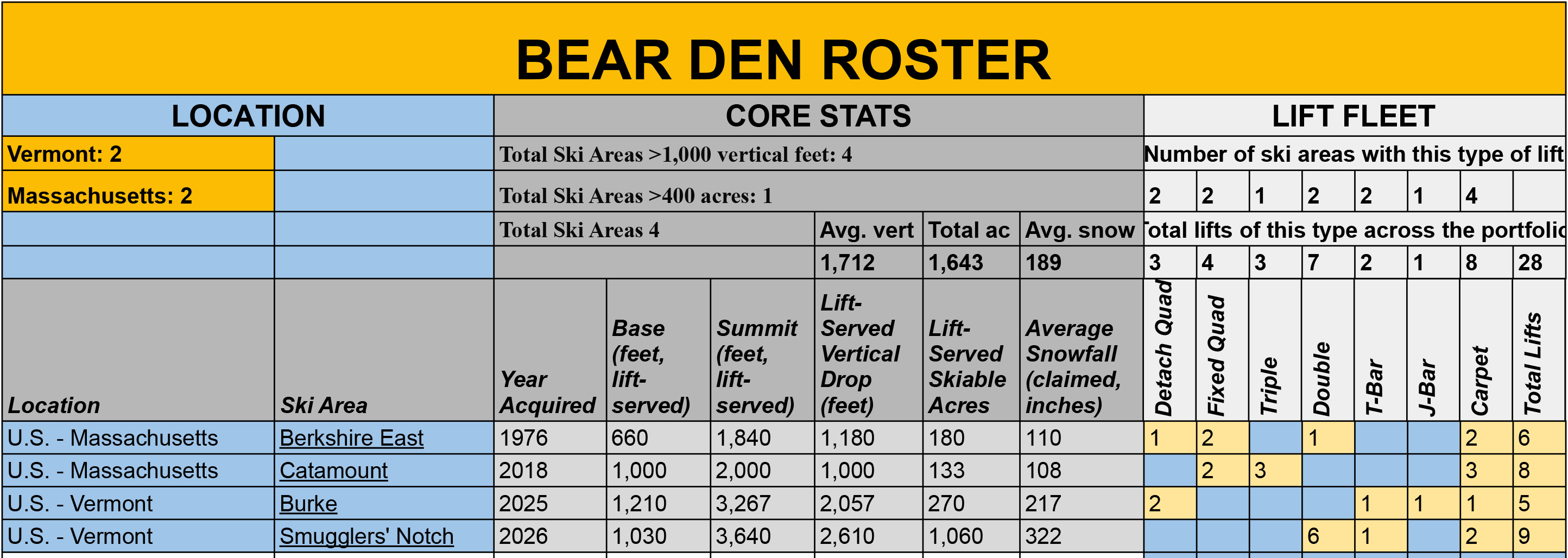 Storm Shorts 9/21/2026: Smugglers’ Notch, Burke, Indy Pass with Bear Den CEO Schaefer | The Storm Skiing Journal and Podcast is a reader-supported publication. To receive new posts and support my work, consider becoming a free or paid subscriber.About Bear DenTranscriptsThere are two transcripts. Both are generated by robots. Both are helpful and defective in their own unique ways. I do not proofread either of them. Transcript 1: Click the “transcript” button at the top of this article. This is the transcript that the robots create when I upload the podcast to the internet. The cool thing about it is that you can click on any block of text and the audio will teleport there instantly. The uncool thing about this transcript is that it does not indicate who is talking at any given moment.Transcript 2: You can read this below. This is the transcript that Zoom creates as we record the podcast. The cool thing about this transcript is that it indicates who is talking at any given moment. The uncool thing about this transcript is that the timestamps do not match the audio. Also, you cannot click on this text to move to the associated point in the audio.Stuart Winchester: My guest today is the CEO of Bear Den Partners, which operates four New England ski areas. His family has operated 1,180 vertical-foot Berkshire East, Massachusetts since 1976, and acquired 1,000 vertical-foot Catamount on the New York-Massachusetts border in 2018.01:14:24.000 --> 01:14:53.000Stuart Winchester: In 2025, the family teamed up with a local group to acquire 2,057 vertical foot Burke Mountain out of receivership. And earlier this year, Bairdan purchased a majority stake in Smuggler’s Notch, which with 2,610 vertical feet, 1,060 acres across three mountains, and 322 inches of average annual snowfall, is one of the largest, snowiest, and most fun ski areas in eastern North America. John Schaefer is my guest. John is a very good friend of the storm, and I welcome him back.01:14:53.000 --> 01:14:56.000Stuart Winchester: How is life leading up to ski season, John?01:14:56.000 --> 01:14:58.000Jonathan Schaefer: Oh, is what?01:14:57.000 --> 01:14:59.000Stuart Winchester: How is life?01:14:58.000 --> 01:15:01.000Jonathan Schaefer: How is life? It’s good.01:15:00.000 --> 01:15:04.000Stuart Winchester: Yeah, what delayed you today?01:15:01.000 --> 01:15:03.000Jonathan Schaefer: I’m, uh…01:15:04.000 --> 01:15:14.000Jonathan Schaefer: Uh, a skunk. So I’m a little tired. I have some Diet Pepsi here to kickstart the day, but my dog got a skunk, uh, first thing, which is great.01:15:04.000 --> 01:15:05.000Stuart Winchester: Good.01:15:05.000 --> 01:15:07.000Stuart Winchester: Let’s go.01:15:08.000 --> 01:15:10.000Stuart Winchester: Thank you.01:15:14.000 --> 01:15:16.000Stuart Winchester: Massachusetts.01:15:14.000 --> 01:15:19.000Jonathan Schaefer: And it was better once I opened the door and it all came wafting into the house.01:15:18.000 --> 01:15:28.000Stuart Winchester: Oh, God, Berkshire’s living. All right, well, I appreciate you fighting through that and joining us here, John. So, let’s talk smugs, first of all, because.01:15:28.000 --> 01:15:44.000Stuart Winchester: You know, Bill Stritzler, I have a ton of respect for what he did at Smuggler’s Notch, and how he’s maintained the atmosphere, and it’s consistently voted one of skier… by skiers as one of their favorite mountains, one of the best family mountains. It’s also just a badass expert mountain.01:15:44.000 --> 01:15:46.000Stuart Winchester: Uh, the… the…01:15:46.000 --> 01:15:48.000Stuart Winchester: the…01:15:48.000 --> 01:16:04.000Stuart Winchester: issue that comes up over and over again is, of course, the chairlifts. There are 7 haul lifts. They are a combined 392 years old. Uh, they are a combined 29,439 feet long. That’s 5.58 miles. Uh, Madonna is the oldest.01:16:04.000 --> 01:16:21.000Stuart Winchester: 6,719-foot-long 1963 haul, it got a new top terminal in 2002, which I believe is the drive terminal. Sterling is the next longest, it’s a 1964 haul, and the Village Lift is the next longest at 5,155 feet, that’s 1967, so…01:16:21.000 --> 01:16:28.000Stuart Winchester: those are sort of the three main lifts, and then there’s some other little lifts, Madonna 2 and a T-bar and such, but… but John…01:16:28.000 --> 01:16:39.000Stuart Winchester: I think everyone wants to know, what are you gonna do about the Lyft fleet at Smug’s, because you have a contingent that loves the old Lyfts and doesn’t want you to, but you have another contingent that’s like…01:16:39.000 --> 01:16:44.000Stuart Winchester: That’s why I don’t go there. So what do you have in mind? What can you tell us?01:16:43.000 --> 01:16:59.000Jonathan Schaefer: Well, I mean, it’s a problem that’s highlighted by all the fun facts you just gave us here. And give you credit for that, going back to the announcement letter and post that you did.01:16:59.000 --> 01:17:00.000Stuart Winchester: Yeah.01:16:59.000 --> 01:17:01.000Jonathan Schaefer: Um…01:17:01.000 --> 01:17:12.000Jonathan Schaefer: It’s the balance between preservation and conservation, right? I mean, it’s an environmental argument, it’s a scary management argument, it’s… do you preserve it, and do you keep it just exactly like it is?01:17:04.000 --> 01:17:06.000Stuart Winchester: Yeah. Okay.01:17:12.000 --> 01:17:24.000Jonathan Schaefer: Or do you conserve an asset on into the future? And that’s a fancy way of saying that, nice try, you’re not going to quite get the answer today.01:17:24.000 --> 01:17:27.000Jonathan Schaefer: I mean, we have to have some reality here, right? Which is…01:17:28.000 --> 01:17:31.000Jonathan Schaefer: Those lifts are in excellent shape.01:17:32.000 --> 01:17:40.000Jonathan Schaefer: maintenance going on through the years and decades will become harder and harder and harder. And we’re gonna have to address the problems.01:17:40.000 --> 01:17:43.000Jonathan Schaefer: before they become problems. So.01:17:43.000 --> 01:17:45.000Jonathan Schaefer: Eyes wide open.01:17:45.000 --> 01:17:50.000Jonathan Schaefer: We are looking at everything at Smuggler’s Notch, including the lift system.01:17:50.000 --> 01:17:55.000Jonathan Schaefer: Also, in perfect honesty, there isn’t just.01:17:55.000 --> 01:18:00.000Jonathan Schaefer: a single plan that’s gonna work there. You know, there’s not.01:18:01.000 --> 01:18:08.000Jonathan Schaefer: you know, there’s not an endless pool of capital to go through and replace. How many? How many lineal feet of lift is that.01:18:07.000 --> 01:18:10.000Stuart Winchester: 29,439.01:18:10.000 --> 01:18:14.000Jonathan Schaefer: I mean, that’s just under six miles of lift line.01:18:13.000 --> 01:18:15.000Stuart Winchester: Yeah.01:18:14.000 --> 01:18:18.000Jonathan Schaefer: Yeah, that’s a lot right? And it’s a pretty big, angry mountain.01:18:16.000 --> 01:18:17.000Stuart Winchester: Right.01:18:18.000 --> 01:18:19.000Stuart Winchester: Mm-hmm.01:18:18.000 --> 01:18:23.000Jonathan Schaefer: So when you look at that hillside and you contemplate driving.01:18:23.000 --> 01:18:25.000Jonathan Schaefer: Concrete up to the top, or…01:18:25.000 --> 01:18:29.000Jonathan Schaefer: I mean, you’re flying helicopters in, and it’s a massive project.01:18:29.000 --> 01:18:30.000Stuart Winchester: Mm-hmm.01:18:29.000 --> 01:18:32.000Jonathan Schaefer: So, we have to just do…01:18:32.000 --> 01:18:48.000Jonathan Schaefer: the right amount of work to keep that mountain, you know, going and thriving into the future. But also, you know, to your point, you know, people love it. You know, people love these mountains. They love them to death sometimes. We don’t want that to happen.01:18:49.000 --> 01:19:00.000Jonathan Schaefer: Um, but we respect everybody’s point of view and we’re just gonna have to work with our community to, to sort of telegraph those changes when they come up. And right now there’s, uh, there’s no major changes. You know, I don’t have a.01:19:00.000 --> 01:19:12.000Jonathan Schaefer: an SE group plan that I can peel off the desk here and lay it out in front of you and show you exactly what’s going on. I think that we’ve been around long enough that we got an idea, but we’re not quite there yet.01:19:12.000 --> 01:19:27.000Stuart Winchester: I think the big question for Smugs that I’ve been trying to figure out for a while is, if you want the throwback experience in New England, you just drive an hour down the road to Mount River Glen, and they have a single chair that goes 2,000 vertical feet, and they have great terrain, and they’ve put a lot of money into creating.01:19:27.000 --> 01:19:38.000Stuart Winchester: the facade of being a 1940s ski area. But it’s modern, they groom, they make snow below 20-whatever, 100 feet. So, the question, I think, for Smuggler’s Notch is.01:19:29.000 --> 01:19:30.000Jonathan Schaefer: Yep.01:19:38.000 --> 01:19:54.000Stuart Winchester: Is there room for a second throwback ski area in New England, and do you want it to be that? Do you want, for example, to say, no, we’ll never put in a high-speed lift, like smug should have slow lifts even if they’re, even if they’re new, uh, or, you know, the lift.01:19:54.000 --> 01:19:59.000Stuart Winchester: The trail footprint should stay. Do you have any thoughts on modernization?01:19:56.000 --> 01:20:12.000Jonathan Schaefer: I mean, it really gets to capacity, Stuart. And this is, this is, it’s like this, it’s almost like the saber metrics of skiing, right? Like where the numbers, what do they mean? I’m sitting here at Berkshire East and pardon the screwdriver, it’s my pointer.01:19:59.000 --> 01:20:00.000Stuart Winchester: Yeah. Okay.01:20:03.000 --> 01:20:05.000Stuart Winchester: Yeah.01:20:12.000 --> 01:20:14.000Jonathan Schaefer: I’ve got two lifts in front of me.01:20:14.000 --> 01:20:15.000Stuart Winchester: Mm-hmm.01:20:14.000 --> 01:20:22.000Jonathan Schaefer: One’s a high speed quad that moves around 600 people per hour, and one’s a sky track quad.01:20:22.000 --> 01:20:27.000Jonathan Schaefer: with over twice as many chairs. It does. It’s rated to move up to 2,400 people per hour.01:20:26.000 --> 01:20:29.000Stuart Winchester: Wait, your high-speed quad moves 600 people an hour?01:20:28.000 --> 01:20:30.000Jonathan Schaefer: 1600.01:20:29.000 --> 01:20:31.000Stuart Winchester: Oh, okay.01:20:30.000 --> 01:20:33.000Jonathan Schaefer: Sorry, I may have misspoke.01:20:34.000 --> 01:20:37.000Jonathan Schaefer: And we can bump it to 1800.01:20:36.000 --> 01:20:37.000Stuart Winchester: Mmhm.01:20:37.000 --> 01:20:42.000Jonathan Schaefer: But you know, right out here I got a fixed script that moves more people than a high speed.01:20:42.000 --> 01:20:43.000Stuart Winchester: Mm-hmm.01:20:43.000 --> 01:20:45.000Jonathan Schaefer: Now…01:20:45.000 --> 01:20:55.000Jonathan Schaefer: up the road from me is another mountain, Berkshire Snowmason. It no longer exists. It was founded by a World War II vet. And he has a great quote from the early 1960s, where he says.01:20:55.000 --> 01:21:00.000Jonathan Schaefer: People care more about how they go up the mountain than how they look coming down it.01:21:00.000 --> 01:21:11.000Jonathan Schaefer: And at the time, he was complaining about a ski lift that went in at Jiminy Peak, where he had T-bars, and he felt that he had been left behind. So there’s a lot of different emotions. There’s, like, the raw numbers.01:21:05.000 --> 01:21:07.000Stuart Winchester: Mm-hmm.01:21:11.000 --> 01:21:12.000Stuart Winchester: Mm-hmm.01:21:11.000 --> 01:21:15.000Jonathan Schaefer: Fixed scripts are great. They a lot of butts in the air. My dad.01:21:15.000 --> 01:21:21.000Jonathan Schaefer: I think it was talking to Everett Kircher, and that’s what Everett used to tell him. He used to say.01:21:21.000 --> 01:21:25.000Jonathan Schaefer: Their butts are in the air, you know, and not on the hill.01:21:24.000 --> 01:21:26.000Stuart Winchester: Mm-hmm.01:21:25.000 --> 01:21:31.000Jonathan Schaefer: And so you either have people in a line, on a lift, or on a trail.01:21:31.000 --> 01:21:35.000Jonathan Schaefer: If you accelerate one of those numbers, they’re gonna show up someplace else. It’s just…01:21:35.000 --> 01:21:38.000Jonathan Schaefer: Physics. There’s no way around it.01:21:36.000 --> 01:21:37.000Stuart Winchester: Mm-hmm.01:21:38.000 --> 01:21:47.000Jonathan Schaefer: And so you gotta look at all that stuff when you do this work. And you know, while I don’t have a solid answer, I do have a commitment to doing our best to.01:21:47.000 --> 01:21:50.000Jonathan Schaefer: to getting the right answers for the resort.01:21:48.000 --> 01:21:50.000Stuart Winchester: Mm-hmm.01:21:50.000 --> 01:21:55.000Jonathan Schaefer: And for our customer base. And in terms of nostalgia, there’s never going to be a point.01:21:55.000 --> 01:22:01.000Jonathan Schaefer: where there’s not a nostalgic lift, you know, in the foreseeable future at Smuggler’s Notch.01:22:00.000 --> 01:22:02.000Stuart Winchester: Mm-hmm.01:22:01.000 --> 01:22:08.000Jonathan Schaefer: But the the question is that lift appropriate for the terrain? Is it the right one? Is the wrong one?01:22:06.000 --> 01:22:08.000Stuart Winchester: Mm-hmm.01:22:08.000 --> 01:22:14.000Jonathan Schaefer: But inevitably, I mean, your stats tell all, you know, we’re we’re gonna be doing something at some point.01:22:14.000 --> 01:22:18.000Stuart Winchester: Yeah, I think there’s two good models that I look to of…01:22:18.000 --> 01:22:35.000Stuart Winchester: really atmospheric ski areas that have upgraded without losing that cachet. One is A-Basin, where the oldest lift, I think, is 2007 Zuma, and they have a combination. They have a high-speed quad, a high-speed six-pack, two long fixed-grip quads, and when they replaced the Pella Vicini.01:22:35.000 --> 01:22:52.000Stuart Winchester: double chair, I think in 2020, they just replaced… it was a 1970s lift, they replaced it with a brand new double chair that was made, I think, by Doppelmeyer. Same exact specs, it’s just a new machine. The other example is Alta, which, if you go back to the 90s, had a bunch of double chairs just all over the mountain.01:22:52.000 --> 01:23:05.000Stuart Winchester: have consolidated most of those to one line and replaced them, almost all but Wildcat Double, with high-speed chairs. So, looking at those two models and thinking about it, and people still love those ski areas because they’re the ski areas.01:23:05.000 --> 01:23:20.000Stuart Winchester: Looking at those two models, do you start to get a sense of, like, is it really that it’s a 1962 Hall double that people care about, or is it more that you create, as you said, a chair that matches the terrain? Do you get any inspiration from those other skiers as you think about this?01:23:22.000 --> 01:23:24.000Jonathan Schaefer: Yeah, I mean…01:23:24.000 --> 01:23:37.000Jonathan Schaefer: I would say, we’ve all been to a place, whether it’s a restaurant or a ski area, I mean, I love to ski, so I’ve skied all over the world, and you go someplace, and you go back to it, and somebody did something to screw it up, and it pisses you off. I mean, that’s really what.01:23:30.000 --> 01:23:32.000Stuart Winchester: Mmhm.01:23:35.000 --> 01:23:37.000Stuart Winchester: Mm-hmm.01:23:37.000 --> 01:23:42.000Jonathan Schaefer: And we’ve all seen it. We’ve all experienced it.01:23:42.000 --> 01:23:45.000Jonathan Schaefer: Then we’ve also seen thoughtful design.01:23:45.000 --> 01:23:47.000Jonathan Schaefer: Um…01:23:47.000 --> 01:23:54.000Jonathan Schaefer: when we took over the Hermitage Club during COVID and started operating it, there was 27 point-of-sales.01:23:54.000 --> 01:23:57.000Jonathan Schaefer: on the first floor alone.01:23:56.000 --> 01:23:57.000Stuart Winchester: Okay.01:23:57.000 --> 01:24:07.000Jonathan Schaefer: just to handle food and beverage. Right? And so you start to add it up. And it’s like, Wow, you know, if maybe if they just designed the food and beverage system better.01:23:58.000 --> 01:24:00.000Stuart Winchester: Mm-hmm.01:24:07.000 --> 01:24:12.000Jonathan Schaefer: you could have gotten through it with a a lot less point of sale, folks, and.01:24:12.000 --> 01:24:24.000Jonathan Schaefer: design is really critical, it’s scariest. And… you really have to understand what you’re doing when you make a 30, or 40, or 50, or, in Smug’s case, 60-year investment in a ski lift.01:24:15.000 --> 01:24:16.000Stuart Winchester: Mm-hmm.01:24:24.000 --> 01:24:26.000Jonathan Schaefer: Um, because…01:24:26.000 --> 01:24:34.000Jonathan Schaefer: You don’t wanna fly that concrete up that mountain more than you have to. You know, you don’t wanna undo it down the road. So.01:24:35.000 --> 01:24:41.000Jonathan Schaefer: Again, there’s a lot of factors that go into how to tweak a mountain and what makes sense and what doesn’t.01:24:42.000 --> 01:24:45.000Jonathan Schaefer: And how not to ruin it. Um…01:24:45.000 --> 01:24:58.000Jonathan Schaefer: And, and that’s, it’s a big, it’s a big task, you know, with a lot of responsibility that we definitely, you know, we, we’re not just gonna go in there willy-nilly and start throwing stuff around and start moving things. ‘cause that, that is how you screw it up.01:24:48.000 --> 01:24:50.000Stuart Winchester: Yep.01:24:58.000 --> 01:24:59.000Jonathan Schaefer: Oh.01:24:58.000 --> 01:25:15.000Stuart Winchester: Do you think you have a priority, John, between Morse, generally considered the beginner mountain, Sterling, generally considered the intermediate mountain, and Madonna, generally considered the expert mountain, as far as where you think upgrades should be concentrated first, infrastructure-wise? And we can also talk about snowmaking here, which I know you’ve already announced.01:25:16.000 --> 01:25:28.000Jonathan Schaefer: It sort of matches the, the available equipment to the mountain, I would say. You know, there’s, there’s certain, there’s certain things we, we gotta figure that out. That’s, that’s, that’s what the next six months of my life will be focused on.01:25:26.000 --> 01:25:28.000Stuart Winchester: Okay.01:25:28.000 --> 01:25:33.000Stuart Winchester: So talk about the snowmaking upgrades that you’ve already announced at Smugs, and what you hope to achieve there.01:25:33.000 --> 01:25:45.000Jonathan Schaefer: So this some going into the sale. We had a pretty good understanding of of some of the broad strokes work that needs to get done, and snowmaking is always a huge.01:25:45.000 --> 01:25:47.000Jonathan Schaefer: a huge factor for us.01:25:47.000 --> 01:26:01.000Jonathan Schaefer: And how we approach resorts, you know, it’s literally, you go up the mountain, and you come down the mountain. And ideally, you come down on as many different trails as possible, and with as good of conditions as possible, and that’s the snow aspect.01:26:00.000 --> 01:26:02.000Stuart Winchester: Mm-hmm.01:26:01.000 --> 01:26:07.000Jonathan Schaefer: And so, we always start there, you know that. Uh, smugglers, each mountain always has different, sort of.01:26:07.000 --> 01:26:10.000Jonathan Schaefer: Assets, you know, it’s like…01:26:10.000 --> 01:26:16.000Jonathan Schaefer: You buy a house, it’s got a great kitchen, you don’t like the bathroom, right? And then vice versa.01:26:16.000 --> 01:26:23.000Jonathan Schaefer: Smugs… so we laid out what we thought needed to happen at Smugs, then you sort of do the low-hanging…01:26:23.000 --> 01:26:35.000Jonathan Schaefer: medium hanging, high hanging fruit, you know, to achieve the goals. And where, and we wanted to spend money where you would, the skiers would see the first, every dollar yielded the greatest results.01:26:35.000 --> 01:26:38.000Jonathan Schaefer: And so we focused a lot this year on.01:26:38.000 --> 01:26:52.000Jonathan Schaefer: fixing broken things and and dilapidated equipment, putting in fixed infrastructure on the hill. So the snowmakers themselves don’t have to lug things around the less lugging they do on.01:26:40.000 --> 01:26:41.000Stuart Winchester: Okay.01:26:52.000 --> 01:26:56.000Jonathan Schaefer: big, difficult mountains in the northeast, the more snow they tend to make.01:26:56.000 --> 01:27:10.000Jonathan Schaefer: And then really incorporating, uh, the snowmaker’s experience into the upgrades, so that they felt that they were part, you know, of defining what that list was gonna be. And so, it’s Smuggler’s Notch, right? So there’s 3 mountains, so it’s…01:27:10.000 --> 01:27:26.000Jonathan Schaefer: It’s everything times 3. You know, there’s broken thing. There’s the fixed equipment that needs to be put on the hill. So we attacked each one of the the areas of the the resort, and tried to address bottlenecks or issues that could unlock a lot of.01:27:26.000 --> 01:27:36.000Jonathan Schaefer: potential out of the system. And it’s sort of the first salvo. You know, you… scary operations, you know, the way you fix mountains, it’s like waves on a beach. You get…01:27:30.000 --> 01:27:31.000Stuart Winchester: Mm-hmm.01:27:36.000 --> 01:27:41.000Jonathan Schaefer: You get a capital plan in January, you start to execute, if you’re lucky, by April.01:27:41.000 --> 01:27:49.000Jonathan Schaefer: The wave falls on the beach and then your next thing you know, it’s November and you’re back into operating and you gotta do it again. And there’s this cycle.01:27:48.000 --> 01:27:50.000Stuart Winchester: Yep.01:27:49.000 --> 01:27:57.000Jonathan Schaefer: This is what we could get done this… this year on a short, you know, transaction window, and then love plans for next year’s, too, and…01:27:54.000 --> 01:27:55.000Stuart Winchester: Mm-hmm.01:27:57.000 --> 01:28:00.000Jonathan Schaefer: Those will probably have more meaningful impact.01:27:59.000 --> 01:28:17.000Stuart Winchester: Well, where are you at, John, on… you know, one thing I liked about when Eric Mogensen bought Black Mountain in New Hampshire is the… it’s such a fun mountain, but the top was rarely open. They have a double chair that goes to the summit, but it has a mid-station, and for years and years, sometimes the summit wouldn’t even open, and he made a commitment right away, hey.01:28:17.000 --> 01:28:26.000Stuart Winchester: run the lift to the top as much as possible, and he has, including all the way into May the last two years. How much have you thought about.01:28:26.000 --> 01:28:41.000Stuart Winchester: Getting Madonna open a little earlier in the season and, and consistently making sure that peak is open, uh, as late as possible because that’s sort of, I mean, Sterling’s a lot of fun, but, but Madonna is the alpha peak, right? That’s the, the biggest lift, the biggest vert, the toughest terrain. That’s what people think.01:28:41.000 --> 01:28:48.000Stuart Winchester: when they think of the challenging terrain as smug. So have you thought much about Madonna and its operating schedule?01:28:47.000 --> 01:28:53.000Jonathan Schaefer: The bottlenecks aren’t really Madonna. It’s everything that leads to Madonna.01:28:50.000 --> 01:28:52.000Stuart Winchester: Mm-hmm.01:28:52.000 --> 01:28:53.000Stuart Winchester: Okay.01:28:53.000 --> 01:28:55.000Jonathan Schaefer: And that’s what we went to fix.01:28:55.000 --> 01:29:03.000Jonathan Schaefer: with the snowmaking system. So if you can chew through everything else, like, you gotta get beginner terrain open, you have to get…01:28:57.000 --> 01:28:58.000Stuart Winchester: Mmhm.01:29:03.000 --> 01:29:10.000Jonathan Schaefer: something for your your pass holders as fast as possible, and if that fast thing becomes faster.01:29:06.000 --> 01:29:08.000Stuart Winchester: Mm-hmm.01:29:10.000 --> 01:29:15.000Jonathan Schaefer: or those bottlenecks disappear, then we’re we’re hitting Madonna.01:29:15.000 --> 01:29:20.000Jonathan Schaefer: earlier. So it it has a cascading effect throughout the whole system.01:29:20.000 --> 01:29:36.000Stuart Winchester: So speaking of pass holders, let’s talk about passes. So since I was just talking about Eric and Black Mountain, let’s talk about Indy Pass. So you were an early adopter of Indy Pass, going back to 2019, put Berkshire East on it, catamount right away. As soon as you bought.01:29:30.000 --> 01:29:32.000Jonathan Schaefer: Okay.01:29:36.000 --> 01:29:52.000Stuart Winchester: Burke, or were involved in Burke, it switched over from an allied mountain to full, and you just added Smugs, which is huge for IndyPass holders. You now have Jay and Smugs. I mean, four days of those alone is worth the price of an IndyPass, let alone the other dozens of mountains you have there. So talk about.01:29:48.000 --> 01:29:50.000Jonathan Schaefer: Correct?01:29:52.000 --> 01:30:06.000Stuart Winchester: your relationship with IndyPass, and ultimately why you recommitted… because they’re one-year contracts, right? So why you recommitted by adding all four of your mountains, including Smugs, which you haven’t had a winter to run yet, onto Indy?01:29:59.000 --> 01:30:00.000Jonathan Schaefer: Yep.01:30:06.000 --> 01:30:16.000Jonathan Schaefer: Indy’s a really important piece for, you know, independent skiers in the country. And we, I used to have debates with different people pre Indy Pass.01:30:15.000 --> 01:30:16.000Stuart Winchester: Mm-hmm.01:30:16.000 --> 01:30:21.000Jonathan Schaefer: And one of the debates was, and I won’t name them, was around.01:30:21.000 --> 01:30:27.000Jonathan Schaefer: Could there ever be a pass that represented those types of mountains?01:30:27.000 --> 01:30:28.000Stuart Winchester: Mm-hmm.01:30:27.000 --> 01:30:34.000Jonathan Schaefer: Because, let’s just be… let’s face it, you have the Epic Pass, which has Vail and Whistler, and…01:30:34.000 --> 01:30:42.000Jonathan Schaefer: when Doug branded the IndyPass, he gave a voice to a whole, you know, quite frankly, the majority of the ski world.01:30:42.000 --> 01:30:43.000Stuart Winchester: Mm-hmm.01:30:42.000 --> 01:30:45.000Jonathan Schaefer: Which was feeling a little left out at the time.01:30:45.000 --> 01:30:46.000Stuart Winchester: Yeah. Okay.01:30:45.000 --> 01:30:51.000Jonathan Schaefer: And so it’s done a lot for small ski areas across the country.01:30:50.000 --> 01:30:51.000Stuart Winchester: Mm-hmm.01:30:51.000 --> 01:30:59.000Jonathan Schaefer: But it’s certainly done a lot for ours at Berkshire East and Catamount. So we’re, what, 5 or 6 years in at having Indy at those resorts?01:30:58.000 --> 01:30:59.000Stuart Winchester: Mm-hmm.01:30:59.000 --> 01:31:01.000Jonathan Schaefer: We’ve certainly been.01:31:01.000 --> 01:31:18.000Jonathan Schaefer: sort of like Indy Pied Pipers along the way. It, it wasn’t necessarily a layup that we were gonna do it at Smuggler’s Notch. You know, it seemed obvious maybe from the outside and we’d have to get there. But our commitment really is, is to the full pass holders and the ticket holders of a resort.01:31:03.000 --> 01:31:05.000Stuart Winchester: Yeah.01:31:16.000 --> 01:31:17.000Stuart Winchester: Mm-hmm.01:31:19.000 --> 01:31:36.000Jonathan Schaefer: First, you know, they’re, they’re sort of our primary constituents and what India Smugs allows us to do is we, we are very experienced with using the capacity controls in any pass at our other mountains. So we, a reservation system at Berkshire East and Catamount.01:31:32.000 --> 01:31:34.000Stuart Winchester: Mm-hmm.01:31:36.000 --> 01:31:48.000Jonathan Schaefer: that allows, you know, for only certain number of capacity per day. And we’re pretty experienced on managing, you know, weekly, or monthly, or daily, even, on how we want to handle that.01:31:40.000 --> 01:31:41.000Stuart Winchester: Mm-hmm.01:31:48.000 --> 01:31:56.000Jonathan Schaefer: So we felt comfortable with not overwhelming the mountain. And what happens is, I think one of my critiques of the ski business is it’s like…01:31:56.000 --> 01:32:10.000Jonathan Schaefer: You know, with the multi passes, you have this slosh of people, you know, you fill a bucket full of water. It’s like you got a Home Depot bucket and you’re walking down the street with a bucket and it inevitably spills out and gets you wet.01:32:10.000 --> 01:32:14.000Jonathan Schaefer: And to me, that slosh is what happens when you have.01:32:14.000 --> 01:32:21.000Jonathan Schaefer: unlimited access everywhere. Right? So if Berkshire East, for example.01:32:21.000 --> 01:32:22.000Jonathan Schaefer: was…01:32:23.000 --> 01:32:29.000Jonathan Schaefer: was in a huge pass product, and we happened to get 3 feet of snow, which happens occasionally.01:32:29.000 --> 01:32:37.000Jonathan Schaefer: and 50,000 people show up at Berkshire East, that slosh would break the town, it would break the mountain, it would break everything, right?01:32:36.000 --> 01:32:37.000Stuart Winchester: Mm-hmm.01:32:37.000 --> 01:32:52.000Jonathan Schaefer: And we don’t wanna have that. We actually do care about the experience at these mountains. That being said, it’s important to fill up the excess capacity so we can do the snowmaking upgrades and we can do the resort upgrades that at Smuggler’s Notch or the any of the other mountains that you will see the snowmaking.01:32:52.000 --> 01:32:57.000Jonathan Schaefer: you will see the improvements. And so we have to optimize.01:32:57.000 --> 01:33:02.000Jonathan Schaefer: you know, around the midweek and the non busiest times.01:33:02.000 --> 01:33:08.000Jonathan Schaefer: And then, once once that stuff starts to happen, the snowmaking improvements.01:33:08.000 --> 01:33:12.000Jonathan Schaefer: More people start to show up in off-peak times. You feel that energy?01:33:12.000 --> 01:33:17.000Jonathan Schaefer: And then you got something to work with. And so.01:33:15.000 --> 01:33:16.000Stuart Winchester: Yeah.01:33:17.000 --> 01:33:20.000Jonathan Schaefer: I think that’s where we’re headed with that relationship, and, you know…01:33:20.000 --> 01:33:22.000Jonathan Schaefer: Uh…01:33:22.000 --> 01:33:35.000Jonathan Schaefer: it’s also why we didn’t do the Four Mountain Pass right out of the gate. You know, I think a lot of people wondered, well, will there just be a Bearden Pass? And Bearden, you know, our core mantra is distinctly local. Like, we love.01:33:35.000 --> 01:33:41.000Jonathan Schaefer: these mountains. We love the people that make them up and the history and the legacy of those resorts.01:33:41.000 --> 01:33:51.000Jonathan Schaefer: And we care about, you know, doing our best to be caretakers, you know, so that the mountain we buy is still recognizable by the people.01:33:51.000 --> 01:33:55.000Jonathan Schaefer: who utilize it, you know, 10 or 15 years from now when they come back to it.01:33:55.000 --> 01:33:59.000Jonathan Schaefer: And so not overwhelming.01:33:59.000 --> 01:34:05.000Jonathan Schaefer: not having overwhelming numbers is a it’s a real. I mean, it’s probably the thing I’ve thought about most this year.01:34:06.000 --> 01:34:21.000Stuart Winchester: Yeah, so you have a couple different levels of competition here. You have the other big multi-mountain passes, you have your four mountains and your different pass products, and you’re kind of competing with yourself a little by being part of India. Now we’re seeing.01:34:21.000 --> 01:34:36.000Stuart Winchester: Other competing passes, the Snow Pass, run by Snow Operating, start to follow that model of two days at each mountain, and they got some really nice ones out of the gate, Whiteface and Gore. Do you think that Indy Pass will remain important long.01:34:36.000 --> 01:34:52.000Stuart Winchester: term to you as you… as you build up, you know, you have four mountains to work with, that’s a pretty attractive little portfolio, especially the way they run north-south, with Catamount being two hours from New York City, and Smuggs being this great destination, and everything in between, and all easy to get to off the freeway. So… so what…01:34:44.000 --> 01:34:45.000Jonathan Schaefer: Yep.01:34:52.000 --> 01:34:57.000Stuart Winchester: long… as you think about passes long-term, do you think you’ll stay on a multi-mountain pass? Do you think.01:34:57.000 --> 01:34:59.000Jonathan Schaefer: I mean, uh…01:34:59.000 --> 01:35:05.000Jonathan Schaefer: We’re we’re into hypothetical worlds. We’re we’re into indie. We like indie. So.01:35:01.000 --> 01:35:02.000Stuart Winchester: Yeah. Okay.01:35:03.000 --> 01:35:05.000Stuart Winchester: Yeah. Okay.01:35:05.000 --> 01:35:08.000Jonathan Schaefer: Why don’t you tell me where you think the market’s going and we’ll.01:35:08.000 --> 01:35:10.000Jonathan Schaefer: Yes, sir.01:35:10.000 --> 01:35:27.000Stuart Winchester: I’m liking the competition. I’m liking that there’s a lot of different options for consumers right now. I think the Indy Pass is, it’s the largest pass coalition ever assembled in the history of the world that I’m aware of. And I just think for consumers, particularly in New England to have.01:35:16.000 --> 01:35:17.000Jonathan Schaefer: Okay.01:35:21.000 --> 01:35:22.000Jonathan Schaefer: Yep.01:35:28.000 --> 01:35:51.000Stuart Winchester: Those mountains, Smuggs, Jay, Waterville. And Berkshire East is such a great mountain, too, and it’s almost always a top 10 on Indy Redemptions, which surprised me. So, I love where you’re going. I also love the Bash Badge. Can you talk about the Bash Badge at Smuggs? Because you actually have the Bash Badge Plus, which maybe they had before, I don’t know if that’s new. And if that concept could roll out across your other mountains, and I know you’re not…01:35:34.000 --> 01:35:35.000Jonathan Schaefer: Yep.01:35:51.000 --> 01:35:58.000Stuart Winchester: Uh, Mr. Price Guy, so I can throw the prices up here. Um, the…01:35:58.000 --> 01:36:04.000Jonathan Schaefer: Well, the bash pads fits between a day ticket and a full pass, you know, just sort of.01:36:01.000 --> 01:36:03.000Stuart Winchester: Yeah.01:36:04.000 --> 01:36:15.000Jonathan Schaefer: Functionally and emotionally. And it’s an important piece of the product, and we’ve… we have evaluated it across the board. There was a… it’s… it was funny, you know, it’s funny not funny. We hadn’t communicated it yet, but um…01:36:05.000 --> 01:36:06.000Stuart Winchester: Mm-hmm.01:36:16.000 --> 01:36:21.000Jonathan Schaefer: A lot, there was so much concern out of the sort of the smug social media.01:36:20.000 --> 01:36:22.000Stuart Winchester: Mm-hmm.01:36:21.000 --> 01:36:32.000Jonathan Schaefer: around their prob… quote-unquote, they are probably going to get rid of the bash badge. I’m they. They were never going to get rid of the bash badge. It’s an important part of the puzzle, and uh…01:36:26.000 --> 01:36:27.000Stuart Winchester: Okay.01:36:29.000 --> 01:36:31.000Stuart Winchester: Okay.01:36:33.000 --> 01:36:36.000Jonathan Schaefer: You know, it speaks to…01:36:36.000 --> 01:36:39.000Jonathan Schaefer: You know what you’re saying about the industry.01:36:39.000 --> 01:36:41.000Jonathan Schaefer: Indy’s an important funnel.01:36:40.000 --> 01:36:42.000Stuart Winchester: Mm-hmm.01:36:41.000 --> 01:36:51.000Jonathan Schaefer: for visitation for us. You know, Bash Badge is an important funnel. People get so… you get so locked into your routine, right? Even your social media routine, or your…01:36:48.000 --> 01:36:49.000Stuart Winchester: Mm-hmm.01:36:51.000 --> 01:36:57.000Jonathan Schaefer: web presence routine. So you’re only exposed to what you’re exposed to. And.01:36:57.000 --> 01:37:13.000Jonathan Schaefer: the reality is, it’s tough business, you know. The winters are tough. There’s a the ex. The equipment’s extremely expensive, and we have 13 weeks to really get after it each year. Yeah, we need to be as in front of as many people as possible, so they can come up and.01:37:13.000 --> 01:37:18.000Jonathan Schaefer: rent from our homeowners and buy food in the kitchens and.01:37:18.000 --> 01:37:21.000Jonathan Schaefer: Ski awesome terrain. So that’s…01:37:22.000 --> 01:37:37.000Stuart Winchester: Let me break down this product real quick because I think it’s so good. So the Bash Badge, you pay $159 upfront and then you get $30 lift tickets or $20 half-day lift tickets for the entire season whenever you show up. The Bash Badge, Bash Badge.01:37:37.000 --> 01:37:44.000Stuart Winchester: Plus is $249, has the same deal, but it’s sort of a pseudo-season pass, because you get…01:37:44.000 --> 01:38:04.000Stuart Winchester: direct-to-lift, you know, unlimited days from opening day, which is usually around Thanksgiving, through December 18th, and then from March 22nd through the end of the season, which at Smuggs is somewhere between the first and third weekend in April, usually. I don’t know if you want to push that at all. But that is an awesome product. I mean, is this something that you want to roll out across the portfolio?01:38:05.000 --> 01:38:10.000Jonathan Schaefer: We’re evaluating it. Yeah. All the mountains are different, right? So that’s…01:38:06.000 --> 01:38:07.000Stuart Winchester: Yeah.01:38:08.000 --> 01:38:10.000Stuart Winchester: Yeah. Okay.01:38:10.000 --> 01:38:15.000Jonathan Schaefer: which may work, something that may work great, and I’m not, this is more generic.01:38:15.000 --> 01:38:21.000Jonathan Schaefer: at Burke may not work at Catamount. You just pulled up Catamount there, right? That’s a different user base.01:38:17.000 --> 01:38:18.000Stuart Winchester: Yeah. Okay.01:38:18.000 --> 01:38:19.000Stuart Winchester: Yeah.01:38:21.000 --> 01:38:24.000Jonathan Schaefer: Different demand profile. Right? So.01:38:25.000 --> 01:38:28.000Jonathan Schaefer: These mountains are going to run.01:38:28.000 --> 01:38:42.000Jonathan Schaefer: relatively independently, but also, we want our guests to know what to expect when they go to a Bear Dam Mountain, which is that independence, the quality, the focus on the fundamentals, you know, good snow, um…01:38:30.000 --> 01:38:32.000Stuart Winchester: Mm-hmm.01:38:40.000 --> 01:38:42.000Stuart Winchester: Mmhm.01:38:42.000 --> 01:38:47.000Jonathan Schaefer: and efficient operations. I mean, it’s… the weather’s ever-changing, so you can’t always promise it, but…01:38:47.000 --> 01:38:51.000Jonathan Schaefer: You know, you’ll certainly get our best effort in any given time.01:38:51.000 --> 01:38:55.000Stuart Winchester: How would you know, John, like, what would be your sign?01:38:55.000 --> 01:38:58.000Stuart Winchester: that you were messing up SMUGS, that you were going in the wrong direction.01:38:58.000 --> 01:39:00.000Jonathan Schaefer: Well, I’m sure I’d hear about it.01:39:01.000 --> 01:39:10.000Stuart Winchester: As a… as a skier, what do you not want smugs to be? Because you’re a skier, I mean, you… you know, you’ve skied every day of your life that…01:39:10.000 --> 01:39:13.000Stuart Winchester: you know, has been… there’s been snow on the ground, I believe.01:39:13.000 --> 01:39:14.000Jonathan Schaefer: Yep.01:39:14.000 --> 01:39:16.000Jonathan Schaefer: I, um…01:39:16.000 --> 01:39:22.000Jonathan Schaefer: For me, it’s that overwhelming presence of just, you know, you’re on a trail and.01:39:22.000 --> 01:39:24.000Jonathan Schaefer: You feel like you’re gonna get.01:39:24.000 --> 01:39:30.000Jonathan Schaefer: just overrun, and you’re just… you want to go home. I mean, I’ve had ski days where.01:39:30.000 --> 01:39:32.000Jonathan Schaefer: Um…01:39:32.000 --> 01:39:34.000Jonathan Schaefer: You know, for example.01:39:35.000 --> 01:39:38.000Jonathan Schaefer: My wife and I did a trip to a.01:39:38.000 --> 01:39:40.000Jonathan Schaefer: a larger, you know.01:39:40.000 --> 01:39:52.000Jonathan Schaefer: Northern Mountain a couple years ago, and I was invited to an event, and I couldn’t get the person who, you know, I get comp tickets, it’s just one of the perks, who was there to comp the ticket, and…01:39:47.000 --> 01:39:49.000Stuart Winchester: Mm-hmm.01:39:52.000 --> 01:40:04.000Jonathan Schaefer: So it’s like, oh, I’ll go through the ticket line and really experience a day trip, you know, as the general consumer of one of these resorts, you know, which, you know, I’m generally at smaller mountains doing our thing.01:40:03.000 --> 01:40:05.000Stuart Winchester: Mm-hmm.01:40:04.000 --> 01:40:05.000Jonathan Schaefer: And…01:40:05.000 --> 01:40:10.000Jonathan Schaefer: I think almost 500 bucks of ticket fees later.01:40:09.000 --> 01:40:11.000Stuart Winchester: Wow.01:40:10.000 --> 01:40:14.000Jonathan Schaefer: You know, we’re in the middle of an overrun.01:40:15.000 --> 01:40:16.000Jonathan Schaefer: Trail.01:40:16.000 --> 01:40:17.000Stuart Winchester: Mm-hmm.01:40:16.000 --> 01:40:22.000Jonathan Schaefer: My wife, who’s an advanced intermediate, was just like, can we go home to Berkshire East?01:40:22.000 --> 01:40:24.000Jonathan Schaefer: You know, so.01:40:22.000 --> 01:40:24.000Stuart Winchester: Yeah.01:40:24.000 --> 01:40:33.000Jonathan Schaefer: if I feel like I want to go home right now, as much feels like home to me. I had a lot of great skiing there this winter. I brought my daughters up, and.01:40:26.000 --> 01:40:28.000Stuart Winchester: Mm-hmm.01:40:28.000 --> 01:40:30.000Stuart Winchester: Mm-hmm.01:40:33.000 --> 01:40:37.000Jonathan Schaefer: You know, there’s awesome terrain. We’re looking at the map here.01:40:37.000 --> 01:40:47.000Jonathan Schaefer: it feels like a western mountain. I mean, it it’s big enough that the whoever cut the trails, there’s there’s grade reversals to uphills to big rolls to.01:40:39.000 --> 01:40:40.000Stuart Winchester: Mm-hmm.01:40:47.000 --> 01:40:52.000Jonathan Schaefer: you know, snow-covered trees, and I know it’s not always like that, but we just had the best.01:40:52.000 --> 01:40:54.000Jonathan Schaefer: Few weeks of skiing this year.01:40:54.000 --> 01:40:55.000Stuart Winchester: Mm-hmm.01:40:54.000 --> 01:40:59.000Jonathan Schaefer: And you can really let it rip. Woods are awesome.01:40:59.000 --> 01:41:04.000Jonathan Schaefer: Great family experience. That’s what home feels like. And.01:41:04.000 --> 01:41:11.000Jonathan Schaefer: You know, I’m I associate with myself, you know, in in general, with people that appreciate that. And.01:41:10.000 --> 01:41:11.000Stuart Winchester: Mm-hmm.01:41:11.000 --> 01:41:17.000Jonathan Schaefer: That’s we’re here to curate this and to grow it, but not ruin it.01:41:17.000 --> 01:41:27.000Jonathan Schaefer: And that’s very subjective, right? So we have to run good businesses, and we’re never gonna make everybody happy. But I think in the effort we give.01:41:27.000 --> 01:41:29.000Jonathan Schaefer: People will appreciate it.01:41:29.000 --> 01:41:31.000Stuart Winchester: The more…01:41:31.000 --> 01:41:35.000Stuart Winchester: skiing changes in New England, the more…01:41:35.000 --> 01:41:46.000Stuart Winchester: people love what Smuggs is, and I’m looking at the trail map here for those watching on YouTube or StormSkiing.com, and what you see back here is Stowe. Now, I love Stowe. I think it’s the best mountain.01:41:46.000 --> 01:41:48.000Jonathan Schaefer: Yeah, me too.01:41:46.000 --> 01:42:04.000Stuart Winchester: in New England. I just love the fall lines, I love the skiing. Vail purchased it, of course, in 2017. Bill Strissel, the former owner, had proposed a gondola from Sterling across, which is much flatter than this, across to Stowe.01:42:04.000 --> 01:42:14.000Stuart Winchester: Is that idea dead? Is that still something you would consider? You can still walk between Stowe and Smugs, of course, but is a potential lift something you’re considering?01:42:14.000 --> 01:42:25.000Jonathan Schaefer: Uh, you know, I think we’re considering getting back to where we were, which is… I think it would be awesome to skin up Sterling, but they don’t allow it, and um…01:42:25.000 --> 01:42:28.000Jonathan Schaefer: come over to smugs and go back and forth.01:42:28.000 --> 01:42:39.000Jonathan Schaefer: we’re not in the market for paying for that lift, and I read the reviews online, just as well as everybody else, on what locals thought about it, so… that’s not the…01:42:31.000 --> 01:42:32.000Stuart Winchester: Right.01:42:39.000 --> 01:42:43.000Jonathan Schaefer: you know, I want to develop a great great relationship with those guys and the Gm. There.01:42:43.000 --> 01:42:52.000Jonathan Schaefer: Started at Mount Snow, and we have a ton of mutual friends. And he’s very, very, very well respected, you know, within the Vail organization.01:42:52.000 --> 01:42:54.000Jonathan Schaefer: And so is awesome.01:42:54.000 --> 01:42:56.000Jonathan Schaefer: But, um…01:42:56.000 --> 01:43:12.000Jonathan Schaefer: Yeah, I think that I have trail run it all summer and fall, and it’s a it’s a great trail. I was there, and I think it was 1997. Somebody dumped a snow cat into the pond trying to drive across it. I saw the snow cat as a 17 year old or 18 year old.01:42:57.000 --> 01:43:00.000Stuart Winchester: Yeah, Mike’s a good dude.01:43:01.000 --> 01:43:03.000Stuart Winchester: Yeah.01:43:04.000 --> 01:43:05.000Stuart Winchester: Yeah. Okay.01:43:08.000 --> 01:43:09.000Stuart Winchester: Yep.01:43:12.000 --> 01:43:14.000Stuart Winchester: Oh, man.01:43:12.000 --> 01:43:14.000Jonathan Schaefer: Yeah, um…01:43:15.000 --> 01:43:17.000Jonathan Schaefer: Yeah.01:43:15.000 --> 01:43:17.000Stuart Winchester: Is it still there?01:43:17.000 --> 01:43:20.000Jonathan Schaefer: No, some other… I think they got out with a scooter.01:43:17.000 --> 01:43:21.000Stuart Winchester: Okay.01:43:20.000 --> 01:43:21.000Jonathan Schaefer: Um…01:43:21.000 --> 01:43:39.000Stuart Winchester: Yeah, you know, I mean, Mike’s a great guy, and I skied with Mike in April, and folks don’t understand this, and I beat it to death, but unless you’re from the region, and I didn’t understand it until I moved out here, Northern Vermont is so good. I mean, 322 inches of snow, that’s the second snowiest.01:43:39.000 --> 01:44:02.000Stuart Winchester: In the east that Smuggs gets, of course, JP gets a little more, and maybe they get the same. I don’t know, people measure things different, but last year I was supposed to take my family to Tahoe in April. I canceled it, went to Stowe and Killington instead, and we got a couple of powder days of Stowe in April. It is really, really good skiing up there, and there’s tree skiing more often than not. So, I mean, you’ve got such a prize up there, and if people have not been up there.01:44:02.000 --> 01:44:08.000Stuart Winchester: Uh, go now so you can watch the evolution. Uh, John, I wanna…01:44:06.000 --> 01:44:14.000Jonathan Schaefer: I’m gonna try to text you a picture here, Stuart. I’ve got me pounding the Lincoln Gap and I think 2003.01:44:08.000 --> 01:44:10.000Stuart Winchester: Okay.01:44:14.000 --> 01:44:15.000Stuart Winchester: Okay.01:44:15.000 --> 01:44:18.000Jonathan Schaefer: But I I grew up skiing up there.01:44:18.000 --> 01:44:22.000Jonathan Schaefer: And the scheme is awesome.01:44:22.000 --> 01:44:24.000Jonathan Schaefer: The, um…01:44:25.000 --> 01:44:33.000Jonathan Schaefer: There’s there’s nothing like it. And it’s it’s it’s not. You know it. It is Northern Vermont, right? It’s not.01:44:31.000 --> 01:44:33.000Stuart Winchester: Mmhm.01:44:33.000 --> 01:44:34.000Jonathan Schaefer: Banff.01:44:34.000 --> 01:44:35.000Stuart Winchester: Yeah. Okay.01:44:35.000 --> 01:44:40.000Jonathan Schaefer: And it’s okay. There’s great communities. There’s great.01:44:40.000 --> 01:44:48.000Jonathan Schaefer: There’s great people. There’s a huge legacy of people that love these mountains and care for them. And utilize them.01:44:42.000 --> 01:44:43.000Stuart Winchester: Mm-hmm.01:44:48.000 --> 01:44:50.000Jonathan Schaefer: So.01:44:50.000 --> 01:44:56.000Jonathan Schaefer: We’re just lucky to be the next man up here, and we’re fired up to do a good job about it.01:44:55.000 --> 01:45:19.000Stuart Winchester: I’m fired up that you bought it. There was a lot of chatter that Vail may buy it and combine it with Stowe. Again, love Stowe, but I do think that the Northeast in any ski region benefits from having strong independent operators. I’m pulling up Burke’s old trail maps for those following along here. So Burke, the trail network’s been similar for years and years, but there used to be some more lifts. So here we’re going all the way back.01:45:19.000 --> 01:45:27.000Stuart Winchester: 1983, when Burke was sponsored by Camel. Can you imagine? Camel cigarettes, guys.01:45:25.000 --> 01:45:28.000Jonathan Schaefer: One of our ski coaches was a, um…01:45:28.000 --> 01:45:30.000Jonathan Schaefer: A Marlboro man.01:45:29.000 --> 01:45:50.000Stuart Winchester: Yeah, so you see different lifts here. So you see the Summit lift, which was replaced. Now this is a high-speed quad. And there was another lift over here. So looking at Burke’s modern trail map here, John, I believe there’s some room for expansion out here. I believe you could probably infill some lifts. So what are your thoughts on Burke now that you’ve had a year running that guy?01:45:51.000 --> 01:45:55.000Jonathan Schaefer: I think Burke’s an awesome mountain.01:45:55.000 --> 01:46:02.000Jonathan Schaefer: you know, if we’re talking about the trail map, we’ve got the green section down here in Sherbourne, which is one of the best beginner mountains.01:45:59.000 --> 01:46:00.000Stuart Winchester: Mm-hmm.01:46:02.000 --> 01:46:04.000Jonathan Schaefer: And that was a little bit of a.01:46:04.000 --> 01:46:10.000Jonathan Schaefer: Surprise for me, because I spent most of my time at Burke on Warren’s way.01:46:09.000 --> 01:46:10.000Stuart Winchester: Mm-hmm.01:46:10.000 --> 01:46:12.000Jonathan Schaefer: facing, and then…01:46:12.000 --> 01:46:18.000Jonathan Schaefer: Big Dipper. I think we raised the first Eastern Cup there the day after the Pats won their first Super Bowl.01:46:18.000 --> 01:46:19.000Stuart Winchester: Oh, wow.01:46:18.000 --> 01:46:20.000Jonathan Schaefer: Okay.01:46:20.000 --> 01:46:25.000Jonathan Schaefer: Which was awesome. Middlebury showed up with no time to inspect, because it was a late night, but it was…01:46:25.000 --> 01:46:28.000Jonathan Schaefer: Lots of energy, um…01:46:28.000 --> 01:46:39.000Jonathan Schaefer: And then the Upper Mountain, and you can kind of see, if you go back up to the Upper Mountain, just how steep… you see where all the black diamonds are in the middle, in the double blacks? That’s just a feature of the resort, so…01:46:32.000 --> 01:46:33.000Stuart Winchester: Mm-hmm.01:46:34.000 --> 01:46:37.000Stuart Winchester: Yeah. Mm-hmm.01:46:39.000 --> 01:46:41.000Jonathan Schaefer: It’s hard to get…01:46:41.000 --> 01:46:50.000Jonathan Schaefer: You know, there’s a total lack of green trails from the summit, and that’s a priority for us, is increasing that blue access over the next couple of years.01:46:50.000 --> 01:46:55.000Jonathan Schaefer: But also, you know, we’ve done a ton of snowmaking that work there. I think we…01:46:56.000 --> 01:47:02.000Jonathan Schaefer: We knocked out… we were able to cut 500 hours of snowmaking time.01:47:02.000 --> 01:47:04.000Stuart Winchester: Yeah.01:47:02.000 --> 01:47:04.000Jonathan Schaefer: Year over year.01:47:04.000 --> 01:47:05.000Stuart Winchester: Wow.01:47:04.000 --> 01:47:10.000Jonathan Schaefer: and open more terrain, far more terrain than the year prior. And so.01:47:07.000 --> 01:47:09.000Stuart Winchester: Amazing.01:47:10.000 --> 01:47:13.000Jonathan Schaefer: We, uh…01:47:14.000 --> 01:47:29.000Jonathan Schaefer: We are doing a lot more work this year. And so last year, it’s like the wave on the beach analogy. We were able to throw a big wave up on the beach and we got a ton of stuff done. But this year, it’s a lot of the interconnections and sort of like finishing off the work. I’d say we got 80% of the way home last year.01:47:16.000 --> 01:47:18.000Stuart Winchester: Mm-hmm.01:47:23.000 --> 01:47:24.000Stuart Winchester: Mm-hmm.01:47:29.000 --> 01:47:30.000Stuart Winchester: Yeah.01:47:29.000 --> 01:47:39.000Jonathan Schaefer: And this year, a few more guns, filling in some holes, moving water around more effectively.01:47:37.000 --> 01:47:38.000Stuart Winchester: Yep.01:47:40.000 --> 01:47:47.000Jonathan Schaefer: I think people are going to notice maybe even as big a difference as the year prior. Midburg Lodge is getting some updates.01:47:46.000 --> 01:47:48.000Stuart Winchester: Mm-hmm.01:47:48.000 --> 01:47:49.000Jonathan Schaefer: Yeah, it…01:47:48.000 --> 01:48:15.000Stuart Winchester: How did that translate business-wise, John? You know, Burke had sort of been, it had been in receivership for nine years when you purchased it, and it was part of the whole Jay Peak scandal, and Jay Peak got purchased in 2022 by Pacific Group Resorts, but Burke was still orphaned, and not that there weren’t capable folks running it, but the first thing you did was, I think, triple snowmaking capacity. So how did that translate business, skier visits-wise? What can you tell us about last year at Burke and the kind of momentum you were able to establish there?01:47:55.000 --> 01:47:56.000Jonathan Schaefer: Yep.01:48:16.000 --> 01:48:27.000Jonathan Schaefer: So I do believe that energy at a resort is a very palpable thing. You can either feel it, or you can’t. You know, you’ve all been places, and it’s like, oh, what happened to the restaurant? And it’s like, oh, the chef left, and.01:48:27.000 --> 01:48:31.000Jonathan Schaefer: You just know it’s over yet.01:48:31.000 --> 01:48:47.000Jonathan Schaefer: you know the receivership was. It was sort of like slack tide for that mountain for almost a decade, you know, is not really coming or going, and I think our us stepping up and the grand family’s commitment to the resort, which is runs really deep.01:48:48.000 --> 01:48:54.000Jonathan Schaefer: was able to bring some of that, inject that energy. And then the next step.01:48:54.000 --> 01:49:04.000Jonathan Schaefer: is, and I’ve been doing the Ted Lasso analogies with you for years, but it’s like getting people, not only the resort staff, but the guests to believe.01:49:04.000 --> 01:49:15.000Jonathan Schaefer: you know, that it is a great mountain. There’s phenomenal glades. You know, I… I was stuck on Warren’s Way half my life whenever I’d be there, but, you know, so it was a revelation what the glades were like. Um…01:49:15.000 --> 01:49:27.000Jonathan Schaefer: in the… in the acquisition period, and then skiing them last year. It’s a… it’s a great mountain. I don’t think it’s ever really had its chance. I think we’re the seventh or eighth ownership group. That thing is like a…01:49:27.000 --> 01:49:41.000Jonathan Schaefer: a ship without a rock, without a lighthouse that ships keep running into, and we’re gonna try to avoid being the next ship that breaks apart on those rocks right there. But I think there’s a really thoughtful way to do it.01:49:41.000 --> 01:49:54.000Jonathan Schaefer: quite frankly, it’s shocking how close it is to people. You know, I don’t think people realize that it’s really not that much further from Boston than a Mount Snow or a Killington. Obviously, it doesn’t have the scale of those resorts. Um…01:49:54.000 --> 01:49:57.000Jonathan Schaefer: But it does have that sense of community.01:49:57.000 --> 01:50:10.000Jonathan Schaefer: it’s a great mountain, it’s a beautiful hotel, and… and the town itself is full of wonderful restaurants, largely supported by Kingdom Trails and skiers, you know, so it’s a very adventurous… we did a kickoff party there, and…01:50:10.000 --> 01:50:11.000Jonathan Schaefer: I mean, there’s…01:50:11.000 --> 01:50:13.000Jonathan Schaefer: Eight Olympians.01:50:13.000 --> 01:50:18.000Jonathan Schaefer: you know, at the kickoff party that live in and around that town.01:50:18.000 --> 01:50:19.000Stuart Winchester: Incredible.01:50:18.000 --> 01:50:31.000Jonathan Schaefer: And it attracts a really diverse set of outdoor adventurers, and it’s a… it’s a throwback community. And uh… I think as our guests start to discover it, you know, in the wintertime, I think a lot of people discovered it for KT.01:50:31.000 --> 01:50:33.000Jonathan Schaefer: Which we’re also doing a lot of work.01:50:33.000 --> 01:50:40.000Jonathan Schaefer: With to integrate with Kingdom trails, and we’re the largest single owner of Kingdom trails, and so it’s.01:50:40.000 --> 01:50:44.000Jonathan Schaefer: you know, people start to feel that energy. And.01:50:44.000 --> 01:50:50.000Jonathan Schaefer: Again, we’re here to work it and to build it and, you know, do our best to caretake it.01:50:50.000 --> 01:51:04.000Stuart Winchester: Yeah, it looks far north, John, but it’s right off I-91, and I agree, there’s some of the best glades in New England. Let’s talk quickly about Berkshire East, where you’ve teased an expansion for several years, I believe, right over in this area.01:51:02.000 --> 01:51:05.000Jonathan Schaefer: We’re going on a decade, I think.01:51:04.000 --> 01:51:09.000Stuart Winchester: Okay. Is it right over here? Am I pointing to the right place? Farlookers right on the trail map?01:51:05.000 --> 01:51:06.000Jonathan Schaefer: Yep.01:51:09.000 --> 01:51:13.000Jonathan Schaefer: Um, it goes from the wind turbine.01:51:12.000 --> 01:51:14.000Stuart Winchester: Mm-hmm.01:51:14.000 --> 01:51:17.000Jonathan Schaefer: Where the thunder writing is, somewhere right in there.01:51:14.000 --> 01:51:15.000Stuart Winchester: Okay.01:51:16.000 --> 01:51:18.000Stuart Winchester: Okay. Yeah.01:51:17.000 --> 01:51:26.000Jonathan Schaefer: in between Mohawk and Thunder down over towards those fields at the lower left. I would say it’s not well represented on on this map. But.01:51:25.000 --> 01:51:32.000Stuart Winchester: Okay, so there’s more terrain. Is it basically in here, or is it over on this side?01:51:30.000 --> 01:51:35.000Jonathan Schaefer: It’s thunder is sort of like the off ramp for it. So it’s the return.01:51:34.000 --> 01:51:38.000Stuart Winchester: Oh, so you would go into Thunder off the back of the mountain?01:51:37.000 --> 01:51:42.000Jonathan Schaefer: You would go off of… you see where Rogers World is? The lift would go through Rogers World.01:51:39.000 --> 01:51:41.000Stuart Winchester: Here.01:51:41.000 --> 01:51:42.000Stuart Winchester: Okay.01:51:42.000 --> 01:51:43.000Jonathan Schaefer: Um…01:51:44.000 --> 01:51:49.000Jonathan Schaefer: Through to the wind turbine, and there’d be 3 or 4 trails back there, and…01:51:46.000 --> 01:51:47.000Stuart Winchester: Okay.01:51:49.000 --> 01:51:52.000Jonathan Schaefer: It hasn’t quite launched yet.01:51:49.000 --> 01:51:51.000Stuart Winchester: Thank you.01:51:52.000 --> 01:52:04.000Jonathan Schaefer: But again, you know, it’s easy to cut this stuff, it’s easy to build it, it’s harder to actually operate it and take care of it, so we keep optimizing our resort, you know, and the snowmaking there, and then…01:52:04.000 --> 01:52:08.000Jonathan Schaefer: Hopefully, we’ll get to a point here where that’s doable again. So.01:52:08.000 --> 01:52:23.000Stuart Winchester: And you took out a triple chair that was based this summer right here. That was a used lift from Ski Rio New Mexico. I think the plan was to put it over here. I don’t know, it looks like you could probably serve it with the existing lifts, but any thoughts on lifts or not as part of the expansion?01:52:13.000 --> 01:52:14.000Jonathan Schaefer: Yep.01:52:24.000 --> 01:52:26.000Jonathan Schaefer: It would require a lift, yeah.01:52:25.000 --> 01:52:27.000Stuart Winchester: Okay. Okay.01:52:26.000 --> 01:52:27.000Jonathan Schaefer: So.01:52:27.000 --> 01:52:45.000Stuart Winchester: But not… it doesn’t sound like, uh, like you can put a timeline on it, and last time you were on, you also talked about a potential expansion at Catamount. Again, I’m looking at the trail map. Uh, if you look at the far right side of the trail map, I believe that’s where the potential expansion was. Any thoughts on… on that, or are you pretty happy with Catamount as it is?01:52:31.000 --> 01:52:32.000Jonathan Schaefer: No.01:52:45.000 --> 01:52:47.000Jonathan Schaefer: We are, uh…01:52:48.000 --> 01:53:03.000Jonathan Schaefer: I would say that we’re never complacent, right? So the idea of happy is very temporal and focused on what’s going on. I think at all these mountains, we’re focused on snowmaking. Folks will see some snowmaking upgrades at all the resorts.01:52:54.000 --> 01:52:55.000Stuart Winchester: Mm-hmm.01:53:03.000 --> 01:53:06.000Jonathan Schaefer: So in terms of lift layouts, you know it’s.01:53:06.000 --> 01:53:15.000Jonathan Schaefer: Those are private landowners that you happen to point out up there, so they may or may not be the right, you know, people to point your mouse at.01:53:10.000 --> 01:53:12.000Stuart Winchester: Mm-hmm.01:53:14.000 --> 01:53:15.000Stuart Winchester: Right.01:53:15.000 --> 01:53:24.000Jonathan Schaefer: it’s all on the table, right? And it’s just a matter. Now my job is to really, you know, look at four resorts and what their needs are.01:53:16.000 --> 01:53:18.000Stuart Winchester: Okay.01:53:23.000 --> 01:53:25.000Stuart Winchester: Mm-hmm.01:53:24.000 --> 01:53:27.000Jonathan Schaefer: and advance the ones that make the most sense.01:53:27.000 --> 01:53:39.000Jonathan Schaefer: from resort to resort to resort, and categorize those. And a lot of what we’ve been doing this year, I mean, this conversation has been very appropriately anchored in, um, sort of asset upgrades.01:53:40.000 --> 01:53:45.000Jonathan Schaefer: But I’m trying to build an organization that can really thoughtfully run this.01:53:45.000 --> 01:53:50.000Jonathan Schaefer: these resorts and do a good job with it and build the right team.01:53:50.000 --> 01:53:57.000Jonathan Schaefer: And so a lot of the governance and organizational work that we’ve done this year will really help support those.01:53:57.000 --> 01:54:00.000Jonathan Schaefer: going forward into future years. So.01:53:58.000 --> 01:54:16.000Stuart Winchester: So talk a little about that. Actually leave us with that today, John, because I just find the Schaefer family story so compelling. You know, Roy drove his station wagon out from Michigan full of kids and just, you know, bought this junky mountain and fixed it up, you know, just out there buying scrap from all over the country.01:54:09.000 --> 01:54:10.000Jonathan Schaefer: Okay.01:54:16.000 --> 01:54:23.000Stuart Winchester: And, uh, then handed it off to you and your brother, who modernized it. And, and you’ve, you’ve built, uh…01:54:23.000 --> 01:54:30.000Stuart Winchester: you know, you’ve built now this four-mountain portfolio, so a couple elements to that is, number one, if I have this right.01:54:30.000 --> 01:54:43.000Stuart Winchester: you actually sold Catamount Berkshires to Bearden, so you’re no longer the owner, you’re an employee, probably for the first time, really, in your life, you know, and not part of a… necessarily a family-owned thing.01:54:38.000 --> 01:54:39.000Jonathan Schaefer: Mm-hmm.01:54:41.000 --> 01:54:44.000Jonathan Schaefer: Outside is an ice cream.01:54:43.000 --> 01:54:47.000Stuart Winchester: Yeah, so what’s that transition been like, I guess?01:54:47.000 --> 01:54:56.000Stuart Winchester: emotionally, and how do you handle that professionally? Like, going from, you know, your dad out there with a hammer, you know.01:54:56.000 --> 01:55:05.000Stuart Winchester: nailing up some snow gun to, uh, I know that’s not how you put up a snow gun, but, um, but to, you know, running a professional organization that oversees four mountains in three states.01:54:59.000 --> 01:55:00.000Jonathan Schaefer: Yep.01:55:06.000 --> 01:55:26.000Jonathan Schaefer: Evolve or die, right? So I couldn’t be more fired up about it. There’s Ken Graham and I had the opportunity to build five years of trust. We worked on Burke for four or five years. And that could be, you know, five calls a week or one call every five months. You know, it’s hard to say, but we really stuck it out together.01:55:07.000 --> 01:55:09.000Stuart Winchester: Yeah.01:55:14.000 --> 01:55:15.000Stuart Winchester: Mm-hmm.01:55:22.000 --> 01:55:24.000Stuart Winchester: Mmhm.01:55:26.000 --> 01:55:43.000Jonathan Schaefer: and had a good understanding of of who we were as people and as families. You know their their dad’s a Michigan family, too. They are a Michigan family. The grandfather was a ecologist working for the University of Michigan. So it’s a lot of shared family history here. Ski racing.01:55:40.000 --> 01:55:41.000Stuart Winchester: Mm-hmm.01:55:43.000 --> 01:55:58.000Jonathan Schaefer: And that’s important when you do this stuff because these, you’re in it for the long haul. You know, you jump into rapids with somebody and you want to know what they’re about. And so we had that opportunity and it wasn’t as spontaneous as it may have seen on the outside.01:55:58.000 --> 01:56:00.000Stuart Winchester: Mm-hmm.01:55:59.000 --> 01:56:00.000Jonathan Schaefer: So…01:56:00.000 --> 01:56:05.000Jonathan Schaefer: There’s there’s also pieces of the organization that I always wanted to bring.01:56:05.000 --> 01:56:11.000Jonathan Schaefer: You know, I wrote my Berkshire operator manual in 2015, and it was clunky, and…01:56:11.000 --> 01:56:12.000Jonathan Schaefer: Um…01:56:12.000 --> 01:56:14.000Jonathan Schaefer: And and probably just.01:56:15.000 --> 01:56:17.000Jonathan Schaefer: half finished, right?01:56:17.000 --> 01:56:29.000Jonathan Schaefer: But a lot of the elements that we’re bringing to the table around role clarity, how to do jobs, you know, those threads started there. And I always wanted to build something bigger.01:56:29.000 --> 01:56:32.000Jonathan Schaefer: than what we had. And that’s why I always sort of like, you know, I’ve been.01:56:32.000 --> 01:56:43.000Jonathan Schaefer: doing these crazy side gigs for years, right? Like the Hermitage Club, or rebuilding Bosque, or Big Red Cats, or working in Arkansas building bike parks. It’s never been…01:56:43.000 --> 01:56:46.000Jonathan Schaefer: It’s always been like, okay. Well.01:56:46.000 --> 01:56:51.000Jonathan Schaefer: I can’t spin my wheels endlessly at Berkshire East or Catamount.01:56:52.000 --> 01:56:58.000Jonathan Schaefer: Let the people responsible do their jobs and go do something else for a little while.01:56:58.000 --> 01:57:08.000Jonathan Schaefer: try to keep building. So that’s now I feel like we’ve married our family’s legacy and the information we’ve learned.01:57:08.000 --> 01:57:14.000Jonathan Schaefer: to a platform and another family that that will help us, you know, fulfill this vision.01:57:15.000 --> 01:57:32.000Stuart Winchester: Doing all that, John, and you still made time for the podcast, you know, one of the… one of my hopes out of the shorter form is we can have you on a little more often as you announce new things, so… listen, I cannot thank you enough for making the time, especially with the wildlife emergency, with all you’ve got going on in winter coming up, so… so thanks so much, John, I really appreciate it.01:57:18.000 --> 01:57:20.000Jonathan Schaefer: I love it.01:57:24.000 --> 01:57:25.000Jonathan Schaefer: Sure.01:57:28.000 --> 01:57:30.000Jonathan Schaefer: Yeah.01:57:31.000 --> 01:57:34.000Jonathan Schaefer: Well, you’re lucky you’re not with me, because otherwise you’d stink.01:57:34.000 --> 01:57:43.000Stuart Winchester: Well, I don’t have a sense of smell, that’s one of my secret weapons. Yeah, yeah, so, uh, anyway, alright, thanks a lot, John, I’ll talk to you soon.01:57:35.000 --> 01:57:36.000Jonathan Schaefer: Hehe.01:57:37.000 --> 01:57:39.000Jonathan Schaefer: Okay. Oh, nice. Great.01:57:43.000 --> 01:57:45.000Stuart Winchester: All right, take care. Bye. Get full access to The Storm Skiing Journal and Podcast at www.stormskiing.com/subscribe | 47m 50s | ||||||
| 9/18/26 |  AMA 9/18/2026: No I Don’t Hate Vail, the Chairlift Apocalypse, Pass Strategies, & More | The Storm Skiing Journal and Podcast is stocking up on canned corn ahead of the Robot Apocalypse. To support this worthy cause, please sign up for my skiing newsletter:Today’s episode answers questions from paid subscribers. I’m not including the Zoom transcript since I am the only one speaking, and the built-in transcript (click button above) will take you to any point in the audio when you click on the associated text block. Get full access to The Storm Skiing Journal and Podcast at www.stormskiing.com/subscribe | 57m 31s | ||||||
| 9/17/26 |  Storm News 9/17/2026: Caberfae Expansion, Indy to Ikon, Colorado Lift Ticket Deals | The Storm Skiing Journal and Podcast is made in the USA. Thank you for supporting independent ski journalism.About CaberfaeOwned by: The Meyer FamilyYear founded: 1937Pass affiliations:* Ikon Pass: 2 days, blackouts* Freedom Pass: 3 days, no blackouts Base elevation: 1,076 feetSummit elevation: 1,561 feetVertical drop: 485 feetSkiable Acres: 200Average annual snowfall: 120 inchesLift count: 5 (1 fixed-grip quad, 3 triples, 1 carpet – view Lift Blog’s inventory of Caberfae’s lift fleet)The Zoom transcript (click “transcript” above for the Substack transcript, then click on any text block to teleport to the associated point in the video; timestamps below DO NOT MATCH THE VIDEO; also since Tim and Pete were on one screen, the transcript does not differentiate between them).Stuart Winchester: Welcome to the storm. I’m your host, Stuart Winchester. Today is Thursday, September 17th, 2026, and we are going to mix things up a little bit today. Instead of starting with the takes, we are starting with the guests, and I have some great guests today.00:22:29.000 --> 00:22:40.000Stuart Winchester: They are the general managers of Cabrifay Peaks, Michigan, with over 200 acres of terrain served by 4 chairlifts across 3 peaks, with a 485-foot vertical drop.00:22:40.000 --> 00:22:44.000Stuart Winchester: Cabar Fay is one of the largest ski areas in Michigan’s Lower Penins.00:22:44.000 --> 00:22:49.000Stuart Winchester: The ski area averaged 120 inches of lake effect snowfall per winter.00:22:49.000 --> 00:23:06.000Stuart Winchester: Their family has operated Cabaret since 1980. They are co-general managers, with Tim Meyer on the right, handling everything on the mountain, and Pete Meyer on the left, taking care of everything off. Tim and Pete, welcome to the storm. I’m always hyped to talk Cabaret. How are you guys doing today?00:23:07.000 --> 00:23:11.000Pete Meyer: Good. We’re doing awesome. Thanks for having us. Yeah.00:23:10.000 --> 00:23:26.000Stuart Winchester: Yeah, and trigger warning for any Sparties or Buckeyes out there who want to go to the video version on stormskiing.com or YouTube. Me and Tim are both proudly rocking our Wolverines gear. This is a shirt I wore to the maze out when Michigan blasted Oklahoma in the big house this past weekend. So we’re feeling.00:23:26.000 --> 00:23:31.000Stuart Winchester: Although I understand Tim’s also got a little Sparty, side loyalty.00:23:31.000 --> 00:23:35.000Pete Meyer: Yes, my children, both my sons are Spartans, so that’s…00:23:34.000 --> 00:23:44.000Stuart Winchester: Yeah, as soon as my daughter got into college, I bought all the gear for her place. So, you know, there’s tons going on at Cabaret, and I want to start…00:23:35.000 --> 00:23:36.000Pete Meyer: It.00:23:44.000 --> 00:23:54.000Stuart Winchester: with this coming expansion, and you, you announced this a while ago, and I’m gonna share my screen here so that everyone can see, uh, see this as we talk through it.00:23:54.000 --> 00:24:13.000Stuart Winchester: And this is where I am never quite as fast as I want to be. Uh, but… okay. So, here is the Cabra Fay trail map. This is the one I took off your website this morning, so it’s the most current that I have. Uh, and last time I talked to Tim in, I think, 2021, when you came on the podcast.00:24:13.000 --> 00:24:15.000Stuart Winchester: Uh, it…00:24:15.000 --> 00:24:31.000Stuart Winchester: This East Peak triple chair was still still in a theory phase and you hadn’t built yet. Now that’s in place and we’ll talk about that in a minute and how that’s gone. But talk to us about the Green Mountain triple chair, what we’re getting and why you’re building it.00:24:32.000 --> 00:24:34.000Pete Meyer: Yeah, so, um…00:24:34.000 --> 00:24:40.000Pete Meyer: I’m going to start with why, because it’s kind of an interesting story, you know.00:24:40.000 --> 00:24:51.000Pete Meyer: we… when we put in the East Peak lift, we took out the shelter chairlift, the double. They started in almost the same place, but the shelter… the shelter lift.00:24:46.000 --> 00:24:47.000Stuart Winchester: Mmhm.00:24:51.000 --> 00:24:54.000Pete Meyer: let off about halfway up the hill.00:24:54.000 --> 00:25:04.000Pete Meyer: And because we we have our dads before us and then and then we also have continued to develop the terrain.00:25:04.000 --> 00:25:13.000Pete Meyer: the terrain changes and the flow changes. And what happened over time, like, especially over the last.00:25:13.000 --> 00:25:16.000Pete Meyer: 25 years or so.00:25:16.000 --> 00:25:23.000Pete Meyer: we kept adding on to Smiling Irishman and making it wider and wider and wider, and it got busier and busier and busier, so…00:25:23.000 --> 00:25:29.000Pete Meyer: The shelter chairlift was essentially letting off these new skiers.00:25:29.000 --> 00:25:33.000Pete Meyer: in the middle of flowing traffic. And…00:25:33.000 --> 00:25:37.000Pete Meyer: We thought when we put in the East Peak lift.00:25:37.000 --> 00:25:41.000Pete Meyer: Now we’re gonna take these lower end skiers to the top.00:25:41.000 --> 00:25:55.000Pete Meyer: we’re going to give them a longer run, and the new part we’re giving them is actually the easier half. They’re already negotiating the tougher half, the steeper half, and the narrower half. If we add the upper half, it’s easier, it’s wider, it should be fine.00:25:50.000 --> 00:25:51.000Stuart Winchester: Mmhm.00:25:55.000 --> 00:26:06.000Pete Meyer: And that’s what we thought. And so we put it in and then but then what we found and this is the this is the piece that you learn as you go.00:26:06.000 --> 00:26:07.000Pete Meyer: is…00:26:07.000 --> 00:26:15.000Pete Meyer: The new skiers accepted being let off at the lower level, and having to merge into traffic, because.00:26:15.000 --> 00:26:32.000Pete Meyer: They didn’t really know any different and that it was the psychological factor. Well, I’m only halfway up the mountain. I can, I can do this. When we took them up to the top, you know, that East Peak lift actually feels like a out, it almost feels like an out West lift. It has.00:26:32.000 --> 00:26:43.000Pete Meyer: like, three rises, you know? So you ride… you go up over a break, and then you… and then you go again for a while, and then up over another break, and then you’re coming into the top, and you… you know, you’re above…00:26:43.000 --> 00:26:47.000Pete Meyer: Tree line, basically, and you can see the horizon, and it just…00:26:47.000 --> 00:26:51.000Pete Meyer: would kind of psych out that new skier, you know, they would just, they would.00:26:50.000 --> 00:26:51.000Stuart Winchester: Mmhm.00:26:51.000 --> 00:26:55.000Pete Meyer: They’d get up there and kind of freeze and panic, and…00:26:55.000 --> 00:27:06.000Pete Meyer: say, there’s no way I’m gonna go down, you know, I’m not gonna go down that hill. And, uh, so we found our ski patrol having to give a lot of lessons just to get people down the hill, and…00:26:59.000 --> 00:27:00.000Stuart Winchester: Mmhm.00:27:06.000 --> 00:27:13.000Pete Meyer: And, um, and so we, we just, we kind of knew that we had a, you know, a little bit of an issue that we had to work through.00:27:13.000 --> 00:27:21.000Pete Meyer: And so Pete and I would be talking, you know, and I would say, I think I have it all figured out, you know, I’m saying, um…00:27:21.000 --> 00:27:34.000Pete Meyer: we just need to give them… make sure that all the… every single new skier gets a lesson, and we get them ready to… you know, we get them ready to go. And a lot of the… a lot of this is the school groups, you know, the different groups, and we do offer lessons.00:27:34.000 --> 00:27:40.000Pete Meyer: to everybody, but sometimes they don’t take them, and, you know, they slide, they slide through, and…00:27:40.000 --> 00:27:42.000Pete Meyer: And so.00:27:42.000 --> 00:27:50.000Pete Meyer: Pete and I were having a meeting on Green Mountain with our ski patrol director, Katie, and Dennis, one of our top instructors.00:27:50.000 --> 00:27:59.000Pete Meyer: And we think we have it all figured out. You know, we’re just we just need to put them through a lesson and then and then problem solved.00:27:59.000 --> 00:28:00.000Pete Meyer: And…00:28:00.000 --> 00:28:12.000Pete Meyer: And Dennis, our ski instructor, was like, almost grabbed right onto my jacket. He’s like, you don’t understand. I can’t get them ready for East Peak on this.00:28:12.000 --> 00:28:23.000Pete Meyer: we need something in between, and I… and… and so it’s like, oh, oh, well, what do you need, Dennis? And he pointed up at the Green Mountain, and he said, we need that.00:28:12.000 --> 00:28:14.000Stuart Winchester: Yeah, thank you.00:28:23.000 --> 00:28:41.000Pete Meyer: And I… I said, well, I think we have a plan for that on a cocktail napkin somewhere. We could go look at that again. So basically, what… what hap… what it was is we… we had always had this. We… we actually had lift lines staked out, and we hadn’t been looking at doing this. We just thought it would be…00:28:41.000 --> 00:28:51.000Pete Meyer: the last thing that we do. We thought we would… we would continue to develop into the… into the backcountry area, and then do the Green Mountain expansion later.00:28:51.000 --> 00:29:06.000Pete Meyer: But what the… what the customer told us was, no, you need the Green Mountain expansion now. So that’s the why and the how, that all of a sudden that thing kind of appeared out of nowhere, and why it was a two…00:29:06.000 --> 00:29:14.000Pete Meyer: why it’s a two-year construction, because there’s nothing over there. No services. Um, so we’ve had… we had to…00:29:14.000 --> 00:29:18.000Pete Meyer: You know, we had to do the final planning kind of fast.00:29:18.000 --> 00:29:30.000Pete Meyer: so we wanted to take 2 years to do it. Um, and so what are you getting? You’re getting about 135 vertical feet, a brand new Doppelmayr triple.00:29:30.000 --> 00:29:38.000Pete Meyer: uh, that’s just like East Peak and just like Vista, so it’s gonna show this, you know, it’s gonna take the new skier, um.00:29:38.000 --> 00:29:43.000Pete Meyer: Uh, and get them going on a lift that’s similar to what we have throughout the area.00:29:43.000 --> 00:29:55.000Pete Meyer: it runs a little bit slower, has a bigger chair spacing, so it’s going to be a little bit easier to load and unload. And when it’s all built out, we should have 4 or 5.00:29:55.000 --> 00:30:00.000Pete Meyer: really, uh, easy trails, but with character. I mean, these aren’t just…00:30:00.000 --> 00:30:14.000Pete Meyer: you know, a football field at 10 degrees that doesn’t have any character. These are, you know, tree-lined, um, interesting slopes. Uh, the lift itself actually goes through the woods.00:30:14.000 --> 00:30:20.000Pete Meyer: and part of the way, and it’s just a really neat development. So we think that.00:30:20.000 --> 00:30:32.000Pete Meyer: You know, even though it’s not big vertical, it lifts about a thousand feet long. The terrain has really good character and we think it’s going to be really popular.00:30:31.000 --> 00:30:47.000Stuart Winchester: I’ve always loved that about Cabaret. My favorite section of Cabaret for the folks who are watching is this sort of lower section where all the trails split off. And I’ve always found it a little confusing and fun. And I like confusing. I like it. I feel like it makes ski areas feel bigger than they are.00:30:47.000 --> 00:30:59.000Stuart Winchester: I want to zoom out a little bit and connect this expansion to some larger ski industry narratives, because the narrative that won’t die is that the big corporate consolidation and big passes are killing the independents.00:30:59.000 --> 00:31:15.000Stuart Winchester: here I’m looking at Cabra Fay, family-owned for the last 46 years, and in 2016, you put in a brand new triple chair right here on North Peak. In 2022, you put in the brand new East Peak triple chair, and then you’re putting in this brand new Green Mountain triple chair next year, at least that’s the plan. I mean…00:31:15.000 --> 00:31:31.000Stuart Winchester: So you’re affording three new chairlifts. Uh, you know, Monarch was willing to tell me out in Colorado. Yeah, we, and we paid cash for them. I don’t know if you, if you have, you know, theories on debt. I know a lot of scare operators like Platykill in New York, like to stay out of debt, but, but how did Cab.00:31:31.000 --> 00:31:40.000Stuart Winchester: How is Calgary managing all these capital upgrades, and what does it say, do you think, about independents competing in 2026?00:31:41.000 --> 00:32:05.000Pete Meyer: Yeah, I don’t have access to the checkbook, so you have to let me answer that one. No, that’s a great question, Stu. And Tim kind of hit on this on his first podcast with you, but when Tim and I got moved back here in 2001, we had what I call like soul crushing debt. You know, it was just crippling, like every dollar we made had to go and service the debt.00:31:48.000 --> 00:31:49.000Stuart Winchester: Yep.00:32:05.000 --> 00:32:08.000Pete Meyer: Uh, we didn’t have…00:32:08.000 --> 00:32:18.000Pete Meyer: really any money to even make capital improvements or to do much of anything. So our our main mission early on was try to try to get out of debt and get out of that hole.00:32:18.000 --> 00:32:35.000Pete Meyer: And, you know, our dad’s done a nice job developing and building, and they got it out of bankruptcy. So when you get something out of bankruptcy, they’ve already cut every corner and done all kinds of deferred maintenance, pushed it all off. So we had quite a bit to deal with, and it was a long…00:32:35.000 --> 00:32:36.000Pete Meyer: Um…00:32:36.000 --> 00:32:46.000Pete Meyer: the long slugfest. Tim and I call those the dark days, you know, about 10 years of just really grinding. And then, finally, right, you know.00:32:46.000 --> 00:32:58.000Pete Meyer: about 2015, we were able to, uh, to get out of debt, and then… and then we started to, um, really put capital back into it, and that’s why we decided on… on…00:32:58.000 --> 00:33:02.000Pete Meyer: Uh, putting in some new chairlifts, and yes, we have not gone back into debt since.00:33:02.000 --> 00:33:14.000Stuart Winchester: That’s fantastic, and as you think to the future, okay, you have this North Peak quad chair, built in, I think, 92, and then you have the South Peak triple, which I think early 80s lift, it’s a riblet, which…00:33:14.000 --> 00:33:29.000Stuart Winchester: As you know, is out of business now. I think this one’s a SeaTac. So, I don’t know if when, you know, you give a really good summary, Tim, of how East Peak changed traffic around the mountain. Uh, I, I’ve seen a, there’s a ton of comments. I was just scrolling through, through Lyft blog for the folks watching.00:33:29.000 --> 00:33:41.000Stuart Winchester: to show Peter’s excellent pictures of that lift. And the Cabaret page on there has a ton of comments, and I’m sure you’ve seen them. So, there’s a lot of wondering, it seems, among skiers.00:33:41.000 --> 00:33:44.000Stuart Winchester: Why the quad is still here, because it…00:33:44.000 --> 00:33:57.000Stuart Winchester: they don’t seem to think it runs a lot, and they think the triple does the job. Is there any thought of moving the quad, or do you really need 7 seats here? Or, just thinking long-term, what does the lift distribution look like across Cabaret Fay as you look at this map?00:33:57.000 --> 00:34:13.000Pete Meyer: Well, I think that we do need the quad on the busiest days, right? Otherwise, the reason we put the Vista Triple in there is the lines on the quad used to get so long. And it was like, that’s the artery. I mean, you know, more people.00:34:01.000 --> 00:34:02.000Stuart Winchester: Mmhm.00:34:03.000 --> 00:34:04.000Stuart Winchester: Mmhm.00:34:14.000 --> 00:34:17.000Pete Meyer: go through the North Peak complex.00:34:17.000 --> 00:34:34.000Pete Meyer: every day than than the others, you know, because it’s the middle. And so it’s you go through there on your way to and from South Peak, and a lot of people just ski there because it’s really really good inter advanced, intermediate and intermediate type terrain, and even some advanced beginner terrain. So it.00:34:19.000 --> 00:34:20.000Stuart Winchester: Mmhm.00:34:34.000 --> 00:34:43.000Pete Meyer: It services a wide range of abilities. So I think you want to have the two lifts.00:34:43.000 --> 00:34:45.000Pete Meyer: Um…00:34:45.000 --> 00:34:58.000Pete Meyer: I think ultimately, though, we want to have more places for people to go, more pods of skiing, so that actually you do run the quad less and less, but you have it there so that on the really busy days.00:34:58.000 --> 00:35:14.000Pete Meyer: you can turn it on and have, you know, a lift that doesn’t have a line that somebody can sit on and ride up. But, um, I don’t know if that answers the question. Yeah, right now, Stu, we run it 3 days a week, Friday, Saturdays, and Sundays, the busier days, and so…00:35:12.000 --> 00:35:13.000Stuart Winchester: Mmhm.00:35:14.000 --> 00:35:24.000Pete Meyer: Uh, we don’t run it, uh, Monday through Thursday, just because it’s a redundant lift, and we don’t need the uphill capacity, um, is… is why people say it’s not running some of the time.00:35:24.000 --> 00:35:41.000Stuart Winchester: Yeah, I guess what I was getting at is, is there a world where you move the quad over here to serve some of this backcountry terrain and in the top of Green Mountain? As it’s, as there’s kind of open space on the trail map and, and knowing Gary Milken, how he designs maps, he sometimes leaves that space.00:35:41.000 --> 00:35:57.000Stuart Winchester: for expansion. So, so what’s the thought around, you know, and you alluded to it earlier when you were thinking about a lift for backcountry, and Tim, you had mentioned even maybe reviving those halls. I don’t know if that’s still a possibility. I don’t know if they’re still sitting at the bottom of the mountain here, but what’s the thought on.00:35:57.000 --> 00:36:02.000Stuart Winchester: potential expansion over in this area or lifts in this area long term.00:36:03.000 --> 00:36:17.000Pete Meyer: I think that would be the next frontier. So, somewhere in the bottom… because you’ve skied here, Stu, you know if you go through the backcountry, you run out of gas, and then you have… and then you have to walk, and that’s why we call it backcountry, because it’s a…00:36:09.000 --> 00:36:10.000Stuart Winchester: Mmhm.00:36:11.000 --> 00:36:12.000Stuart Winchester: Yeah. Okay.00:36:17.000 --> 00:36:27.000Pete Meyer: Because it’s a tearful experience for many people coming out of there in the flats. And so somewhere down in that basin.00:36:21.000 --> 00:36:23.000Stuart Winchester: Mmhm.00:36:27.000 --> 00:36:40.000Pete Meyer: there could, there could be a lift someday that goes up to east of the top of East Peak. And Stu, what Tim had alluded to earlier in his first answer is that that was our original plan, so that would have been.00:36:32.000 --> 00:36:34.000Stuart Winchester: Mm-hmm.00:36:40.000 --> 00:36:58.000Pete Meyer: Uh, that was the plan to be our next chairlift, was to service that area. But due to the reaction and the response of our skiers, you know, we deviated and focused on… and moved to Green Mountain. Um, and, you know, one thing we found is that transition from the magic carpet, right there on the trail map, you can see, to the East Peak chair.00:36:55.000 --> 00:36:57.000Stuart Winchester: Mmhm.00:36:57.000 --> 00:36:59.000Stuart Winchester: Yeah. Okay.00:36:58.000 --> 00:37:15.000Pete Meyer: was just too much for most of our skiers. And not only were we not doing Cabaret any favors, but we’re not doing the industry any favors. You know, it’s just, it was asking them to do too much, too big of a, make too much of a jump. So by putting in this East Peak.00:37:01.000 --> 00:37:03.000Stuart Winchester: Right.00:37:15.000 --> 00:37:30.000Pete Meyer: chair, and then we’ll have all green runs that’ll all be, um, varying degrees of difficulty of a green run, but all of them will be in between the Magic Carpet slope and the Smiling Irishman slope, so it’ll be a really nice.00:37:17.000 --> 00:37:18.000Stuart Winchester: Mmhm.00:37:30.000 --> 00:37:43.000Pete Meyer: transition, and quite frankly, we think a lot of school groups and a lot of skiers are going to come out, um, and never get off that chair, and stay on Green Mountain all day, and have a wildly successful day, and want to return, um, to not only Cabaret Fay, but to other ski.00:37:43.000 --> 00:37:48.000Stuart Winchester: I love it, and I can confidently say, because I ski all over, uh, that Cabaret is now…00:37:48.000 --> 00:38:04.000Stuart Winchester: And, and especially once you put in this new lift, it’s one of the most modern up to date ski areas in the entire region. And, and that wasn’t always true. When I first skied at Cabaret in the nineties, it was a lot of haul double chairs. I mean, these, these guys were over here, the, the quad and the, and the triple, but.00:38:04.000 --> 00:38:11.000Stuart Winchester: that, that throwback feel to it. And I know, Tim, when you were on last time, uh, you, you talked, you lamented a little bit.00:38:11.000 --> 00:38:23.000Stuart Winchester: getting rid of the last rope toe for the carpet, and just sort of the emotion of it, even though you knew it was logically the right thing. What if you could bring back a little throwback by putting a little rope toe right here to bring people out of the backcountry?00:38:24.000 --> 00:38:27.000Pete Meyer: Well, you know, it’s funny, I…00:38:27.000 --> 00:38:36.000Pete Meyer: I was kind of slow to warm up to getting rid of that rope toe. I guess, you know, I always had that old school…00:38:36.000 --> 00:38:52.000Pete Meyer: you know, I learned on a rope toe, my kids learned on a rope toe, your kids are going to learn on a rope toe, which is just backwards thinking, right, for a for a ski area manager to have that kind of thought process. I’m not sure. I know where you’re going. I mean, no one knows what the future holds.00:38:40.000 --> 00:38:41.000Stuart Winchester: Yeah.00:38:42.000 --> 00:38:43.000Stuart Winchester: Mmhm.00:38:52.000 --> 00:39:09.000Pete Meyer: I do see ski areas having a lot of success with train parks with fast tows that service them. Again, another cocktail napkin plan that we have that we’re not going to get into in this interview is something like that on our property down the road.00:38:58.000 --> 00:38:59.000Stuart Winchester: Yeah. Okay.00:39:09.000 --> 00:39:16.000Pete Meyer: Um, so there, you know, I could see that kind of a thing, but, um…00:39:16.000 --> 00:39:26.000Pete Meyer: And… but I think… I don’t know if we would ever want to put a surface tow out of the backcountry area unless, for some reason, we weren’t going to lift serve it.00:39:25.000 --> 00:39:27.000Stuart Winchester: Got it.00:39:26.000 --> 00:39:31.000Pete Meyer: But, you know, I guess, you know, no one knows for sure.00:39:30.000 --> 00:39:31.000Stuart Winchester: Yeah, thank you.00:39:31.000 --> 00:39:37.000Pete Meyer: Um, but I wanna… I wanna back up on the Green Mountain expansion a little bit, if… if you’ll let me.00:39:34.000 --> 00:39:36.000Stuart Winchester: Sure.00:39:36.000 --> 00:39:38.000Stuart Winchester: Yeah, do it. Let’s do it.00:39:37.000 --> 00:39:44.000Pete Meyer: When we were at the Midwest, uh, show this year, there was a, there was a fireside chat, and we were talking about.00:39:44.000 --> 00:39:54.000Pete Meyer: We’re talking about, you know, turning first-time skiers into second-time skiers, and making the experience the best it can be.00:39:54.000 --> 00:40:06.000Pete Meyer: And so that we have… we have success in that arena. And the Green Mountain… the Green Mountain is… is really a missing piece, because you’re looking at our trail map, and you see how the parking lot is laid out.00:40:06.000 --> 00:40:07.000Stuart Winchester: Mmhm.00:40:06.000 --> 00:40:12.000Pete Meyer: Um, so if you’re, you know, trying to make it as easy as possible for somebody who’s never skied before.00:40:12.000 --> 00:40:17.000Pete Meyer: You can park on pavement right in front of our ticket office.00:40:17.000 --> 00:40:18.000Stuart Winchester: Mmhm.00:40:17.000 --> 00:40:24.000Pete Meyer: Get out of your car, walk a short distance on heated sidewalks to the ticket office.00:40:22.000 --> 00:40:23.000Stuart Winchester: Mmhm.00:40:24.000 --> 00:40:36.000Pete Meyer: Get… pay for everything you need. Pay for your skis, pay for your ticket, pay for your rentals, pay for your lesson, and then walk up to the… walk up to the, um…00:40:36.000 --> 00:40:37.000Pete Meyer: Rental.00:40:37.000 --> 00:40:38.000Stuart Winchester: Mmhm.00:40:37.000 --> 00:40:52.000Pete Meyer: In your, in your regular boots, so it’s easy walking, go inside, take your stuff off, take your boots off, get your boots, get your skis and come and then, and then secure your lesson at the end and then walk out the door.00:40:52.000 --> 00:41:09.000Pete Meyer: And you’re 30, you know, you’re 30 feet from where the ski school meets and you’re right at the bottom of the conveyor. So it’s really easy to start out and we can get you going on the conveyor. We can virtually get anybody that can stand up on skis or snowboard up to the top.00:41:08.000 --> 00:41:10.000Stuart Winchester: Mmhm.00:41:09.000 --> 00:41:13.000Pete Meyer: And then put, you know, all their energy into getting them down the hill.00:41:13.000 --> 00:41:28.000Pete Meyer: And then once you outgrow that, you just get off the conveyor and you ski down a little slope right onto the East Peak lift. Or, I’m sorry, onto the Green Mountain lift. So now you’re right there, and you have this real easy area.00:41:22.000 --> 00:41:24.000Stuart Winchester: Mmhm.00:41:28.000 --> 00:41:37.000Pete Meyer: to learn to ski, and then when you, when you’re ready, you just ski down, just ski down the hill to the east peak lift. So the, the flow.00:41:37.000 --> 00:41:42.000Pete Meyer: for that never ever in the in the ah, the the.00:41:42.000 --> 00:41:51.000Pete Meyer: possibility of getting them to come a second and third and fourth time is really real, and I think… I think we’re in, like, a new stratosphere for getting…00:41:51.000 --> 00:41:59.000Pete Meyer: you know, getting people, uh, skiing. And then as it flows, you know, the next step, the next place to ski is East Peak.00:41:59.000 --> 00:42:10.000Pete Meyer: And then as you get a little more daring, you work your way into the North Peak complex, and then eventually over to South Peak. So the flow is really natural, and I think it’s going to work out extremely well.00:42:08.000 --> 00:42:21.000Stuart Winchester: Yeah, it’s like a mini, uh, Copper Mountain. I know you’re a Winter Park guy, but it, you know, the, the, the viability… You know what, the exciting thing, I think, for skiers who are not novices, who know Cabaret Faye well.00:42:10.000 --> 00:42:12.000Pete Meyer: Yeah.00:42:21.000 --> 00:42:38.000Stuart Winchester: starts to creep back into old Caber Fay. And, and when we’ve talked a while ago, Tim, I, I didn’t have a good perspective, but some new maps have popped up on ski map.org, which is my go to for old trail maps. And this one I think shows the old terrain really well. So here’s the road looping around, here’s the parking lot.00:42:38.000 --> 00:42:47.000Stuart Winchester: And then here’s all the terrain. And so I… Google Earth also makes it really easy. So as I go here…00:42:47.000 --> 00:43:02.000Stuart Winchester: I am, for those who are watching, I am zooming in on… so this is what you were talking about, you kind of just park on pavement, you get out here, for those watching on YouTube or StormSkiing.com, the carpet’s right around here, and then this will be green, is that right?00:43:01.000 --> 00:43:07.000Pete Meyer: No, if you go, if you, if you go back to that old, old trail map, like you can see right to there, there’s a.00:43:04.000 --> 00:43:06.000Stuart Winchester: Yeah.00:43:07.000 --> 00:43:14.000Pete Meyer: A rope toe — there’s two rope toes right there, right up that line, top of that peak. There was two rope toes.00:43:10.000 --> 00:43:12.000Stuart Winchester: Right there? Okay.00:43:12.000 --> 00:43:13.000Stuart Winchester: Okay.00:43:14.000 --> 00:43:19.000Pete Meyer: Uh, heading up that way, and another rope tow coming out at 90 degrees from… from the top.00:43:17.000 --> 00:43:19.000Stuart Winchester: Okay.00:43:19.000 --> 00:43:20.000Stuart Winchester: Mm-hmm.00:43:19.000 --> 00:43:37.000Pete Meyer: And that shack still is up there to this day. It’s a two-story tow shack where we had three different rope tows coming in. So it’s going to come right up to the top of that. And that area was always called practice area. That was the old name of it. So if you look at old trail maps, you’ll see that word practice area.00:43:23.000 --> 00:43:24.000Stuart Winchester: That’s cool.00:43:25.000 --> 00:43:26.000Stuart Winchester: Mm-hmm.00:43:37.000 --> 00:43:41.000Pete Meyer: It’s a great name for a learn to ski area.00:43:40.000 --> 00:43:54.000Stuart Winchester: Yeah, here’s another map, the 1971 map has it as practice area. Okay, so I was assuming that you were digging that up, but I guess you’re taking earth from there for the other… is that where you took it for East Peak? Is that what this big sandpit is?00:43:53.000 --> 00:44:07.000Pete Meyer: Oh, that’s more of the West Ridge area out into that area. So we’re actually off to the left. It’s all still green. Up into there, yeah, so it’ll be a nice natural hilltop with big mature trees, tree line runs. It’s gonna be really, it’s gonna be really nice.00:43:55.000 --> 00:43:57.000Stuart Winchester: Okay.00:43:59.000 --> 00:44:00.000Stuart Winchester: Okay.00:44:01.000 --> 00:44:02.000Stuart Winchester: Okay.00:44:07.000 --> 00:44:18.000Stuart Winchester: So as you… so you can see, for those watching, this is old cab buffet. These are… this is all abandoned, right? I… do you still own this? I mean, it… because once you put the lift up here.00:44:18.000 --> 00:44:37.000Stuart Winchester: It seems like it could potentially open some of this backside terrain. I know people would love that. It also makes you very big. I don’t know if that’s on your radar as Cabaret continues to grow and succeed, but what are the thoughts on this really cool abandoned terrain that you have back here? And Tim, I know we talked about this a few years ago, but I also know that thoughts evolve over time.00:44:38.000 --> 00:44:44.000Pete Meyer: So we do still own all of that. So that area you’re looking at, we do own it.00:44:40.000 --> 00:44:41.000Stuart Winchester: Okay.00:44:45.000 --> 00:44:55.000Pete Meyer: I think that we don’t have any plans to go back into that area at this time, but you never know.00:44:50.000 --> 00:44:52.000Stuart Winchester: Mmhm.00:44:53.000 --> 00:44:54.000Stuart Winchester: Yeah.00:44:55.000 --> 00:45:04.000Pete Meyer: Going back, though, a little bit, we don’t want to get too far into the weeds. Unless you want to get into the weeds, we can go. Um, I brought my machete, so we can…00:45:03.000 --> 00:45:06.000Stuart Winchester: I live in the weeds, man, that’s, uh, my…00:45:04.000 --> 00:45:22.000Pete Meyer: we can do what we need to do. But when… way back, going way back to 1982, 83, when South Peak opened, you know, South Peak was redeveloped, all that… a lot of that terrain was still running back then. We were riding T-bars and rope tows on the North Ridge, and West Ridge was alive, and.00:45:07.000 --> 00:45:09.000Stuart Winchester: Yes.00:45:12.000 --> 00:45:13.000Stuart Winchester: Mmhm.00:45:16.000 --> 00:45:18.000Stuart Winchester: Yeah.00:45:20.000 --> 00:45:21.000Stuart Winchester: Mmhm.00:45:22.000 --> 00:45:31.000Pete Meyer: The practice area tow was still running. So I remember that stuff, you know, as a kid, all happening. And when South Peak was built.00:45:31.000 --> 00:45:43.000Pete Meyer: it was so much bigger than all that, you know, vertical-wise. It was, like, twice, you know, twice the vertical, um, real snowmaking, real grooming.00:45:36.000 --> 00:45:37.000Stuart Winchester: Mmhm.00:45:43.000 --> 00:45:56.000Pete Meyer: people just abandoned the back… the back hills. They just went… they left that. They left that area, and they went to Salt Peak. And that’s really why it all closed, is people just stopped going back there. It just wasn’t as good. So…00:45:45.000 --> 00:45:46.000Stuart Winchester: Or did they?00:45:56.000 --> 00:46:00.000Pete Meyer: I often think maybe it just is better to be a memory.00:46:00.000 --> 00:46:05.000Pete Meyer: But but who knows? You know, down the road it could be what it could be.00:46:04.000 --> 00:46:16.000Stuart Winchester: Yeah, I think between opening the backcountry and that, uh, the Green Mountain expansion, I think you excited some folks. Alright, that, that’s, uh, that’s, that’s all really cool. I appreciate you taking me inside that. Let’s talk passes now, and I’m.00:46:16.000 --> 00:46:19.000Stuart Winchester: the screen share here. So, uh…00:46:19.000 --> 00:46:36.000Stuart Winchester: Cabrefe joined IndyPass as an inaugural member in 2019, and has been on that pass every season since, for the 2026-27 season. Cabrefe has, and I’m just laying this out for the listeners, uh, Cabrefe has departed the IndyPass and has joined.00:46:36.000 --> 00:46:51.000Stuart Winchester: The full icon pass, uh, on their two day tier, which is only on the full icon pass, not on the icon base, there’s no access, and there’s also holiday blackout, so the only mountains that are holiday blacked out on the full icon are the, the two day mountains, of which.00:46:51.000 --> 00:46:55.000Stuart Winchester: Cabaret is now one. So, so talk us through.00:46:55.000 --> 00:47:03.000Stuart Winchester: your experience with IndiePass and the decision, ultimately, to leave that partnership and to join up with ICON.00:47:04.000 --> 00:47:09.000Pete Meyer: Yeah, sure, Stu, we have a feeling this might be a topic of conversation today, so…00:47:07.000 --> 00:47:08.000Stuart Winchester: Yeah.00:47:09.000 --> 00:47:11.000Pete Meyer: So we.00:47:10.000 --> 00:47:11.000Stuart Winchester: Okay.00:47:11.000 --> 00:47:22.000Pete Meyer: There’s a lot of layers to this answer, and this decision was not made quickly or lightly, and a lot of analysis and discussion went into it.00:47:22.000 --> 00:47:37.000Pete Meyer: To be quite honest, we were… we’ve been frustrated with the IndyPass a little bit for a couple years, and we kind of… we kind of laid out a bunch of, um, the pros and cons list, and the cons list was a lot longer than the pros, and so we… we ultimately kind of came to this decision to exit, and um…00:47:37.000 --> 00:47:53.000Pete Meyer: We’re going to talk about — I’ll talk about a couple of those reasons now. But before I do, I think it’s important to provide some history and some context with Cadbury and IndyPass. So as you mentioned, Indy launched in 2019. We were an early adopter. We had some great conversations with Doug Fish that summer.00:47:39.000 --> 00:47:41.000Stuart Winchester: Mmhm.00:47:45.000 --> 00:47:46.000Stuart Winchester: Mmhm.00:47:53.000 --> 00:48:10.000Pete Meyer: Doug worked really hard to get this pass going. We really enjoyed our conversations. He kind of could answer the questions that nobody could answer. He knew things that nobody else knew. And I still remember to this day, I’m like, Doug, how do you know all this? And he’s like in his raspy voice.00:48:10.000 --> 00:48:21.000Pete Meyer: I just know, you know, so it’s like, it was kind of cool. So we had confidence that, uh, that he could implement this pass and make it successful, um, because he knew what it took. So we…00:48:19.000 --> 00:48:26.000Stuart Winchester: I’m sorry to interrupt. I may have been the first ever Cabaret Redemption on the Indie Pass since November 2019.00:48:22.000 --> 00:48:25.000Pete Meyer: You know what? That’s this.00:48:25.000 --> 00:48:30.000Pete Meyer: It wasn’t, it was December 5th, 2019.00:48:29.000 --> 00:48:31.000Stuart Winchester: Okay. It…00:48:30.000 --> 00:48:39.000Pete Meyer: So, I was gonna get into that in a little bit, but now I’ll hit on that. So then, um, in digging through all these redemptions, which I was gonna get into.00:48:31.000 --> 00:48:34.000Stuart Winchester: Yeah, yeah, okay, go ahead.00:48:37.000 --> 00:48:40.000Stuart Winchester: Yeah. Sorry, I spoiled it.00:48:39.000 --> 00:48:56.000Pete Meyer: And pouring this data, I was like, Stuart Winchester, you were redemption number one for us. I don’t know if you knew that. And I remember it to this day because I never heard your name. I never heard of your podcast. I don’t even know if you had it going then.00:48:41.000 --> 00:48:42.000Stuart Winchester: Yep.00:48:47.000 --> 00:48:49.000Stuart Winchester: Wow, that’s cool.00:48:52.000 --> 00:48:53.000Stuart Winchester: Yah.00:48:55.000 --> 00:48:59.000Stuart Winchester: It launched, uh, that October, so it was brand new. Mm-hmm.00:48:57.000 --> 00:48:59.000Pete Meyer: That October? Okay.00:48:59.000 --> 00:49:14.000Pete Meyer: So the… our… my office is right behind the ticket window, and the ticket teller… our office… the ticket manager wasn’t in there, so the ticket teller came and got me when he came to the window. I have this, uh, IndiePass, I don’t know what to do with it. So I was showing her how to…00:49:03.000 --> 00:49:04.000Stuart Winchester: Yeah.00:49:08.000 --> 00:49:09.000Stuart Winchester: Yeah.00:49:14.000 --> 00:49:18.000Pete Meyer: redeem it in in Brooklyn.00:49:18.000 --> 00:49:43.000Pete Meyer: New York pops up. Oh, I got to talk to this guy. I go, you mean that you drove all the way here just to ski at Cabra Faith in Brooklyn, New York? And you’re like, yeah, I did. And I thought, I’m like, this pass is awesome, right? It’s great, guys. But then we talked a little bit more and you said you had family in the area and we’re in the area for a while. So I was really high for a long time on the UniPass because of that. But I didn’t know it was you until I was digging through the data. I’m like, oh, that’s.00:49:19.000 --> 00:49:20.000Stuart Winchester: Right.00:49:34.000 --> 00:49:36.000Stuart Winchester: Yeah.00:49:36.000 --> 00:49:37.000Stuart Winchester: Mm-hmm.00:49:39.000 --> 00:49:40.000Stuart Winchester: Yeah, so.00:49:42.000 --> 00:49:44.000Stuart Winchester: Oh, that’s cool.00:49:43.000 --> 00:49:58.000Pete Meyer: That’s that’s so. So anyways, anyways, we’ll where was I? So okay, so then we were the first as part of that. Then we were the 1st ski resort in the Lower Peninsula to to commit to the to Indy Pass, and I’m not sure about.00:49:44.000 --> 00:49:46.000Stuart Winchester: Love that.00:49:59.000 --> 00:50:01.000Pete Meyer: Um, the UP, uh.00:50:01.000 --> 00:50:16.000Pete Meyer: But the only one in the Lower Peninsula. And so we knew at that time, well, this isn’t going to do anything unless we get a couple more ski resorts to join. So we had reached out to a few. And Pete Bigford was interested. And he was the CEO and president of Shanty Creek at the time.00:50:16.000 --> 00:50:30.000Pete Meyer: And Pete had said, yeah, we’ll do it, but we need a couple of downstate resorts to join as well. So then we reached out to Jamie at Swiss Valley, she said yes, and Doug at Cannonsburg, and he said yes. So that first year, we had four.00:50:30.000 --> 00:50:33.000Pete Meyer: Um, resorts on the Indy Pass. And…00:50:33.000 --> 00:50:45.000Pete Meyer: During that time he that 1st year he charged resorts a thousand dollars to get in. So we we had conversations. We’re like, well, let’s let’s try it. The worst we can do is be out a thousand dollars right? So we had these.00:50:45.000 --> 00:51:00.000Pete Meyer: 4 ski areas in, and we did… I think we did 44 redemptions that first year. It was… it was virtually nothing. I don’t even think it covered the… the $1,000. It might have come… but… but we liked the concept, it was neat, and the word got out, and then… and then Crystal Mountain joined, um, the next year.00:50:52.000 --> 00:50:53.000Stuart Winchester: Oh, wow. Okay.00:51:00.000 --> 00:51:06.000Pete Meyer: Uh, and then, so we kind of hit a critical mass there, and then it was a really good pass, um.00:51:06.000 --> 00:51:16.000Pete Meyer: for a long time, for a while, for several years. And one thing that Doug had said, and during that first year, I think in 2019, they had about 50.00:51:16.000 --> 00:51:32.000Pete Meyer: ski resorts on the pass, if I remember. And he said, I really hope to get it to 80 to maybe 100 passes. Um, and you as an early adopter, um, Cabaret will have say who gets in, in, in your particular region, because I really want to keep it, do just a couple ski resorts per region.00:51:32.000 --> 00:51:37.000Pete Meyer: not to not to oversaturate the market. Like, yeah, great. This sounds sounds really good.00:51:37.000 --> 00:51:40.000Pete Meyer: So then as we go on, um…00:51:40.000 --> 00:51:50.000Pete Meyer: he sells the pass to, uh, Entebani and Eric. Um, and great for Doug, we’re happy for Doug, he worked really hard to make that pass, good for him for selling it. Um, can’t fault him.00:51:50.000 --> 00:52:05.000Pete Meyer: Um, and then we like to say, like, Eric, Eric took the pass and put it on steroids. You know, it’s just, he, he’s, he’s done a wonderful job with it. You know, he’s obviously very, very intelligent, very successful, running three different businesses, um, um, and doing well at all of them.00:51:56.000 --> 00:51:57.000Stuart Winchester: Okay.00:52:05.000 --> 00:52:09.000Pete Meyer: But he’s blown it up. He just had a different mission.00:52:09.000 --> 00:52:13.000Pete Meyer: than than Doug had. Right? So what did that evolve into?00:52:12.000 --> 00:52:14.000Stuart Winchester: Blowing it up, you mean making bigger, right?00:52:14.000 --> 00:52:22.000Pete Meyer: Yeah, making it bigger. Like, Doug was gonna keep it small and couple to each region, and we were gonna have an input on, you know.00:52:14.000 --> 00:52:15.000Stuart Winchester: Yeah.00:52:16.000 --> 00:52:17.000Stuart Winchester: Mmhm.00:52:23.000 --> 00:52:35.000Pete Meyer: to try to prevent it from being oversaturated. So, I know the Midwest has a lot of ski areas on the pass, but, like, our world is Michigan and our, more specifically, northern Michigan.00:52:26.000 --> 00:52:27.000Stuart Winchester: Yep.00:52:35.000 --> 00:52:36.000Stuart Winchester: Okay.00:52:35.000 --> 00:52:38.000Pete Meyer: So it got down to where we had 6.00:52:38.000 --> 00:52:56.000Pete Meyer: um, ski resorts within a 60-mile radius in northern Michigan, right? So if you drop a pin, you can drive within, within 60 miles, you can get to six resorts on it. Um, that density just became too much for us, because that’s 12 visits, right? If a skier buys an Andy Pass, they can ski 12 times, two at each place. It’s great for them, they get a lot of.00:52:42.000 --> 00:52:43.000Stuart Winchester: Yeah.00:52:57.000 --> 00:53:12.000Pete Meyer: Um, the problem is, is what we’re seeing, and we’re watching the numbers every year, um, and it was easy to do because there’s not a ton of redemptions, but how many of those people were former Passovers, right? And that percentage kept rising every year.00:53:11.000 --> 00:53:12.000Stuart Winchester: Mmm.00:53:12.000 --> 00:53:25.000Pete Meyer: So what it became and evolved into is just a direct competitor of our own season pass product. And that’s ultimately reason number one why we — it just oversaturated.00:53:23.000 --> 00:53:25.000Stuart Winchester: Yeah. Okay.00:53:25.000 --> 00:53:26.000Pete Meyer: And.00:53:25.000 --> 00:53:27.000Stuart Winchester: So, go ahead.00:53:26.000 --> 00:53:28.000Pete Meyer: And, you know, so…00:53:28.000 --> 00:53:34.000Pete Meyer: I and I think the the Indy Pass really for a lot of ski resorts.00:53:34.000 --> 00:53:51.000Pete Meyer: doesn’t move the needle a ton, um, financially. Uh, for… for us, it really didn’t, and I felt like we were… did a reasonable number of redemptions, so we could… we could take it… take it or leave it. It doesn’t have a big impact. It affects the customer more. Like, that decision was hard, the person who bought it in the past.00:53:51.000 --> 00:53:56.000Pete Meyer: Um, but I think Eric’s a stand-up guy. He’ll let anybody who…00:53:56.000 --> 00:54:07.000Pete Meyer: who bought an E-Pass, and their favorite resort is not on that, they’ll give a refund to anybody who wants one. So the Cabaret listeners know that, and I think that’s nice of him to do. Also, for those.00:54:01.000 --> 00:54:02.000Stuart Winchester: Yeah, thank you.00:54:07.000 --> 00:54:19.000Pete Meyer: um, Cabaret, uh, listeners who bought an Indy add-on. He’ll honor that for this year, from what I understand. So, it’s a couple of really good things that he’s doing there, so we’re thankful, thankful for that. But, um.00:54:19.000 --> 00:54:28.000Pete Meyer: through conversations, and we just decided it was time to get out. So that’s reason number one. I got a couple more reasons if you’ve got time.00:54:25.000 --> 00:54:26.000Stuart Winchester: Yeah, thank you.00:54:26.000 --> 00:54:41.000Stuart Winchester: Well, let’s linger on that for a second. I mean, for me, it just comes down to good old-fashioned free market competition, right? Where there’s another pass available that is looking for smaller mountains like Caber Fay. It also signed mountains like Buck Hill and.00:54:41.000 --> 00:54:58.000Stuart Winchester: Uh, and uh… Wild Mountain over in Minnesota, just small areas near populations that are popular. I saw you catching some heat in comments to me, you know, on my platforms and social media, because you go from the Indy Pass, which maxed out at $419.00:54:58.000 --> 00:55:16.000Stuart Winchester: to the full Icon, which is $1,449 right now, and I know you can upgrade and buy a discounted Icon session pass, but I don’t want to overstate it. What’s the reaction been like from your pass holders, and how have you handled that?00:55:16.000 --> 00:55:24.000Stuart Winchester: The fact that you’re no longer available on the cheap discounted pass, multi-mountain pass, but you are available on the very expensive one.00:55:24.000 --> 00:55:27.000Pete Meyer: Great question, great question, because we’ve been getting…00:55:27.000 --> 00:55:42.000Pete Meyer: Uh, we’ve been getting both, uh, good and, and bad feedback from it. So, what, what it comes down to is the, is the decision to, to, uh, leave Indy and, and join OCCON. Those, those decisions were, were mutually exclusive. Like, like, we had made the decision to.00:55:42.000 --> 00:55:43.000Stuart Winchester: Mmhm.00:55:42.000 --> 00:55:52.000Pete Meyer: to leave Indy, um, before we even started to Icon. And we had a lot of conversations of, hey, let’s just… let’s just be… let’s just be independent and not on any… any, uh…00:55:52.000 --> 00:56:08.000Pete Meyer: Multi resort pass, you know, there’s a lot of really successful and really nice ski resorts that have that model, like Perfect North Slopes, Cascade in Wisconsin. We always go out and ski somewhere every spring and I went out to the Tahoe area this year and skied at Mount Rose, you know, that place is.00:55:58.000 --> 00:55:59.000Stuart Winchester: Yeah. Okay.00:56:01.000 --> 00:56:03.000Stuart Winchester: Mmhm.00:56:08.000 --> 00:56:09.000Stuart Winchester: Yeah.00:56:08.000 --> 00:56:18.000Pete Meyer: that place is phenomenal. They’re not on any, any, um, any pants. And, um, it was neat to ski there, and just see they had a similar vibe and feel that, um, Cabaret had, right?00:56:10.000 --> 00:56:11.000Stuart Winchester: Yeah. Okay.00:56:11.000 --> 00:56:13.000Stuart Winchester: Right. That’s right.00:56:17.000 --> 00:56:18.000Stuart Winchester: Yeah.00:56:18.000 --> 00:56:23.000Pete Meyer: So quite a bit more, quite a bit more. Yeah, yeah.00:56:18.000 --> 00:56:21.000Stuart Winchester: Just a little more elevation.00:56:21.000 --> 00:56:24.000Stuart Winchester: They’re at, like, 9,000 feet.00:56:23.000 --> 00:56:27.000Pete Meyer: Absolutely, but it was great terrain. So.00:56:24.000 --> 00:56:25.000Stuart Winchester: Yeah.00:56:25.000 --> 00:56:26.000Stuart Winchester: Yeah.00:56:27.000 --> 00:56:29.000Pete Meyer: After we left the Indy Pass.00:56:29.000 --> 00:56:31.000Pete Meyer: Then we, um…00:56:31.000 --> 00:56:46.000Pete Meyer: Started talking to the folks at ICON, and I want to give a shout out to Aaron Keene and Caitlin Windauer, those girls are really sharp and would answer all the questions. It kind of reminded me of the early DuckFish days where they were all knowing and knew a lot of answers to everything.00:56:46.000 --> 00:56:53.000Pete Meyer: We talked to them for a long time. We weren’t in any rush to make a decision to go down this road.00:56:52.000 --> 00:56:54.000Stuart Winchester: Mmhm.00:56:53.000 --> 00:56:57.000Pete Meyer: And you know what ultimately decided for us is.00:56:57.000 --> 00:57:10.000Pete Meyer: We want to do what’s best for our core customer, and our core customer is our season pass holder, okay? And this IndyPass or this IconPass brought on this reciprocal benefit of a three-day.00:57:10.000 --> 00:57:27.000Pete Meyer: 3 day session pass you can get for 50% off. Right? And that adds a lot of value. To our pass holders. And so we’ve been hit as much as the negativity that you’ve seen online for leaving any pass, we’ve been getting messages from our pass holders saying, hey, thank you for this benefit. This is great.00:57:12.000 --> 00:57:13.000Stuart Winchester: It’s.00:57:13.000 --> 00:57:15.000Stuart Winchester: Oh, three day. Yeah. Okay.00:57:18.000 --> 00:57:19.000Stuart Winchester: Mmhm.00:57:27.000 --> 00:57:43.000Pete Meyer: I’m gonna use it. I’m gonna take a trip. And then we’ve known we’ve gone out west together and 3 days of skiing is plenty. Like we like to ski bell to bell and it’s you’re by that 3rd day you’re waking up and you’re like you can’t even move your legs for you know we’re so so we think it’s a nice.00:57:29.000 --> 00:57:31.000Stuart Winchester: Mmhm.00:57:37.000 --> 00:57:38.000Stuart Winchester: Okay, yeah.00:57:40.000 --> 00:57:41.000Stuart Winchester: Okay.00:57:43.000 --> 00:57:55.000Pete Meyer: Uh, you can ski locally here, you can head up in, um, hit up, hit up both Boyne Mountain and Boyne Highlands, or drive over to, uh, Blue Mountain, Ontario, so you don’t have to get in a plane. So it’s.00:57:55.000 --> 00:58:11.000Pete Meyer: Uh, of our pass holders. Cause we know, we know, Stuart, that nobody’s going to buy a full icon pass for two days at Cabaret. We, we know that that wasn’t even the, like Pete said, we’re, we do like our independence and, and.00:57:57.000 --> 00:57:59.000Stuart Winchester: Yeah, yeah, yeah.00:58:03.000 --> 00:58:04.000Stuart Winchester: Right.00:58:04.000 --> 00:58:06.000Stuart Winchester: Yeah.00:58:11.000 --> 00:58:25.000Pete Meyer: And we like to create these partnerships that are good for our core customers. The people that commit to us, we’re going to give you the best we can. And so, you know, that that three day session pass is just it’s it’s.00:58:25.000 --> 00:58:29.000Pete Meyer: It’s a it’s a great benefit for our core customers.00:58:29.000 --> 00:58:47.000Stuart Winchester: Yeah, it’s like you take a trip to Steamboat, or Palisades Tahoe, or a lot of the mountains that are on that. So, you know, it all makes sense, and I like the, you know, Boyne, Cabaret, sort of on one team, and then you have Nubs, and Crystal, and Treetops, and Shani on the other. I think that’s good for skiers, it’s good for.00:58:47.000 --> 00:59:03.000Stuart Winchester: Uh, two more, two more things I wanna talk about and then we’ll get out of here. Uh, I, I really wanna talk about your season pass. $299 unlimited. I think it was even a little cheaper for early birds, but that’s what it is right now. Uh, 219 for weekday, 129 for Sunday. That, that’s an awesome, awesome deal.00:59:03.000 --> 00:59:18.000Stuart Winchester: by any measure. I noticed you no longer have the Saturday-Sunday pass, and I think it’s been a couple years, and it also… Saturday lift tickets are more than Sunday, so it seems as though, from my point of view, you’re really trying to manage the experience on Saturday. So, talk about your season pass suite.00:59:18.000 --> 00:59:27.000Stuart Winchester: And how that relates to your mountain management as far as making sure when people show up, they have a good experience.00:59:27.000 --> 00:59:42.000Pete Meyer: No, you’re exactly right. You hit the nail on the head right there. We’re trying to preserve the Saturday experience. That’s the day everybody wants to ski. So if you’re going to be on a pass and ski at Calgary on a pass, you got to have the seven-day week pass.00:59:42.000 --> 01:00:00.000Pete Meyer: And we wanted to protect that experience and not get overcrowded, not get overrun, and that’s one of the main reasons that we got rid of the weekend pass. The weekend pass, we roll out, it was a $99 weekend pass in 2007 when we launched that, and that thing went all the way till.01:00:01.000 --> 01:00:14.000Pete Meyer: I think 2000 or 2001, we had that, so we had that for a long time, and that brought a lot of skiers here and exposed us as we continued to get better, and they saw the resort that we had, and all the work that Tim was doing on the hill.01:00:14.000 --> 01:00:21.000Pete Meyer: And then that just evolved into trying to manage the volume levels on Saturdays.01:00:21.000 --> 01:00:38.000Stuart Winchester: Yeah, it’s a, it’s, it’s a great deal. And, uh, you know, even, even as it’s risen past 99, I mean, you know, 299, there’s, there’s a lot of resorts in the West that are charging more than that for a day this year. Beaver Creek’s topping out at 392. So I love it. Okay. The last thing I want to.01:00:38.000 --> 01:00:48.000Stuart Winchester: This one’s a little personal, and I know I talked to you about this, uh, it was about 4 years ago, Tim or Pete, I forget, it was maybe both of you I was talking to. So I want to talk about this Trail Starkey.01:00:48.000 --> 01:01:03.000Stuart Winchester: Uh, I knew Dick Starkey. I’m friends with his daughter Crystal from way back. We went to school together. Uh, and, and I met him and I, I was always just remember being very impressed by him. He had a really good presence. Uh, he was, he was very fit and active and, and did a lot of things.01:01:03.000 --> 01:01:09.000Stuart Winchester: Um, I didn’t know him super well, but I met him a few times, and… and I… I just want to talk about, you know, he passed.01:01:09.000 --> 01:01:25.000Stuart Winchester: Four or five years ago now, and I noticed this trail and, and I said, oh, is that, is that named after Dick? And, and you said it was. So, uh, can, can you talk about the Starkey trail? Talk about Dick Starkey and, and, uh, his legacy at Cabre Fay and, and, and why it was fitting to name a.01:01:27.000 --> 01:01:34.000Pete Meyer: Yeah, Dick was a volunteer patroller at SP, patroller at Caber Fay for…01:01:34.000 --> 01:01:42.000Pete Meyer: I think… I… I think as long as… as my dad was around, you know, uh, Dick was there, and so, you know.01:01:39.000 --> 01:01:40.000Stuart Winchester: Mmhm.01:01:42.000 --> 01:01:52.000Pete Meyer: 40… however many years, 40… 40-some years, he was a patroller at Cabaret, and uh… you know, just had a big presence, you know, you knew him.01:01:52.000 --> 01:01:53.000Stuart Winchester: Mmhm.01:01:52.000 --> 01:02:01.000Pete Meyer: Played football at Ferris. Great stories about that. He was a captain and so he’s tough.01:01:54.000 --> 01:01:55.000Stuart Winchester: Yeah. Okay.01:02:01.000 --> 01:02:02.000Pete Meyer: And.01:02:02.000 --> 01:02:17.000Pete Meyer: just a… just a great guy, great patroller, great mentor, um, a ton… lots and lots of stories about Dick Starkey for another day, but, uh, just somebody that we wanted to honor, and, um, so, you know, we made that change.01:02:17.000 --> 01:02:21.000Stuart Winchester: And why this trail? Why this, uh, why did you choose this one?01:02:24.000 --> 01:02:35.000Pete Meyer: you know, that… I don’t… I don’t know why we picked that one. We just… we… we… I think we… the, um… the previous name was an old, you know, an older name that… that… that honored a…01:02:35.000 --> 01:02:47.000Pete Meyer: an older ski instructor, but I think we thought, you know, maybe… maybe it was time for a change there. Some… maybe just something a little more relevant to… someone more relevant to…01:02:41.000 --> 01:02:43.000Stuart Winchester: Mmhm.01:02:47.000 --> 01:02:52.000Pete Meyer: You know, this this last, you know, 40 years of caprophage tradition.01:02:51.000 --> 01:02:57.000Stuart Winchester: Yeah. And, and I believe, I believe Crystal still, uh, volunteer patrols there as well, right? Yeah.01:02:56.000 --> 01:02:59.000Pete Meyer: Yes. Yes, she is.01:02:57.000 --> 01:03:03.000Stuart Winchester: Yeah, that’s great. I haven’t talked to her in a minute, but hi, Crystal. Hope you’re doing great. Pete.01:03:03.000 --> 01:03:05.000Pete Meyer: No, no, not about the trail.01:03:04.000 --> 01:03:22.000Stuart Winchester: Okay, okay, all right. Well, hey, listen, guys, I really appreciate catching up with you. There’s so much always going on at Cabaret, and we were long overdue, so let’s do it again soon, and I gotta get up there and ski that East Peak lift, because I haven’t been in a minute, so I really appreciate that, and I’ll talk to you guys soon, and thanks so much.01:03:22.000 --> 01:03:25.000Pete Meyer: Thanks, Stuart. Thanks a lot, Stu. Appreciate it.01:03:24.000 --> 01:03:26.000Stuart Winchester: All right, talk soon.01:03:26.000 --> 01:03:28.000Stuart Winchester: All right, let me just…01:03:30.000 --> 01:03:43.000Stuart Winchester: Okay, that was Tim and Pete Meyer of Cabaret. I love Cabaret. It was my pseudo home mountain when I lived in Michigan. It was just 90 minutes down the road, so I never had a season pass there.01:03:43.000 --> 01:03:51.000Stuart Winchester: but I would go there a lot. I mean, and this was, you know, lift tickets were $20 or something back then, so it didn’t really matter, and they had a lot of specials. So, I want to…01:03:51.000 --> 01:03:57.000Stuart Winchester: wrap up today, I want to talk about lift tickets a little bit, because there’s some lift ticket deals going on.01:03:57.000 --> 01:03:59.000Stuart Winchester: And…01:03:59.000 --> 01:04:14.000Stuart Winchester: I’ll tell you about the deals first, and then I’ll, I’ll tell you what I make of them as a, as a theme. So we’re gonna focus on Colorado for a moment. So Arapahoe Basin, to celebrate its 80th anniversary, is doing $80 lift tickets every Wednesday.01:04:14.000 --> 01:04:29.000Stuart Winchester: from late December through April, except for December 30th, which is holiday week, of course. Uh, they are $50 on Wednesdays outside of those windows, so early season at A-Basin, and then late season, and of course, uh, the mountain typically goes until June.01:04:29.000 --> 01:04:35.000Stuart Winchester: $80 lift ticket today, based in on their anniversary weekend, Saturday and Sunday, December 5th and 6th.01:04:35.000 --> 01:04:45.000Stuart Winchester: Also, anyone born in 1946, making you 80 years old, skis free all winter. Uh, A-Basin has a lot of ways to get in cheap. They have 3-day packs.01:04:45.000 --> 01:05:00.000Stuart Winchester: With no blackouts, any day, use any 3 days for $249. They have midweek packs, 5 days for $319. Midweek season pass is $539, and a full is $699, and of course, A-Basin is unlimited on both the Icon and the Icon.01:05:00.000 --> 01:05:03.000Stuart Winchester: Uh, base pass, and I wanna see…01:05:03.000 --> 01:05:08.000Stuart Winchester: Okay, they did get rid of the fall pass. I had…01:05:09.000 --> 01:05:21.000Stuart Winchester: I had emailed, because… because A-Basin used to have this great pass for, like, 250 bucks. It was from opening day until Christmas, but they did get rid of it. Uh, and… and they… Shayna from A-Basin emailed, and she told me.01:05:21.000 --> 01:05:37.000Stuart Winchester: Uh, for background, that was a very small audience for, for us who were interested in the Fall Pass pack. So, uh, so thank you, Shayna, for getting back to me so quickly, and I’d sent that right before the podcast started. So, so A-Basin deals on Wednesdays, you know, put that down in your.01:05:37.000 --> 01:05:55.000Stuart Winchester: List if you, if you wanna actually day ski and maybe you have an epic pass, but you wanna, you miss a basin. Uh, and then Thursdays Copper Mountain is again doing $99 Thursdays. They’re play for every Thursdays and a portion of that goes to a good cause. They’re doing that every Thursday from January 7th to April 8th.01:05:55.000 --> 01:06:04.000Stuart Winchester: Including the holiday week in February, I don’t know if that’s a mistake, but grab it while you can, because I don’t think they can take it back once you buy it. Uh, and then.01:06:04.000 --> 01:06:05.000Stuart Winchester: $99 a copper.01:06:05.000 --> 01:06:19.000Stuart Winchester: starting Monday, April 12th, which is pretty awesome. So, if you wanted to do a little day ski, and, you know, right now you can still buy tickets and everything, or still buy passes, because we’re recording this on September 17th.01:06:19.000 --> 01:06:30.000Stuart Winchester: But if you’re listening in the future, you could do a Wednesday $80 a day basin, a Thursday $99 at Copper Mountain. It’s not a bad couple days in Summit County for a pretty reasonable price, given.01:06:30.000 --> 01:06:44.000Stuart Winchester: prices in 2026 for lift tickets at most mountains. Uh, down the road, Aspen, for its 80th anniversary, is doing $80 lift tickets Saturday and Sunday, December 12th and 13th. They also offered…01:06:44.000 --> 01:07:01.000Stuart Winchester: Uh, tickets for $3 and 75 cents for Monday, December 14th. But those are sold out and they, I’m pretty much sure they sold out instantly. And it’s funny ‘cause they didn’t even market it at first. And, and Aspen folks tell me they just blew off the shelves. So that is for Aspen’s 80th anniversary.01:07:01.000 --> 01:07:17.000Stuart Winchester: Same year as, uh, a basin is celebrating right now. And of course, some of the little guys around there, you know, ski Cooper hasn’t announced their lift ticket prices yet. And I know it’s small, but it’s still, it’s, it’s a place you can go. It’s high. There’s no snow making. It’s all natural snow.01:07:17.000 --> 01:07:22.000Stuart Winchester: $49 midweek tickets at Ski Cooper last year, maxed out at $99 on weekends.01:07:22.000 --> 01:07:30.000Stuart Winchester: Down the road, if you’re on your way to Aspen, Sunlight, which has 1,750 feet of vertical drop.01:07:30.000 --> 01:07:46.000Stuart Winchester: And two brand new lifts. Well, one was from a base and used, but it was only 20 years old. So they put in two brand new lifts last year. Big vertical. Uh, their lift tickets max out at $109. Midweek, they’re $74 to $94. It’s a fun little area. It gives you Colorado.01:07:46.000 --> 01:07:53.000Stuart Winchester: with a little bit more of a… a throwback Colorado, old Colorado feel. So, so the question here is.01:07:53.000 --> 01:07:57.000Stuart Winchester: Are we starting to see a rationalization?01:07:57.000 --> 01:07:58.000Stuart Winchester: In the lift ticket market.01:07:58.000 --> 01:08:04.000Stuart Winchester: Are we starting to see ski areas value the skier that.01:08:04.000 --> 01:08:19.000Stuart Winchester: maybe has an Icon Pass, but wants to ski another mountain for a day? Or I guess more in this case, since Copper and A-Basin are both Epic Pass mountains, are we seeing them take advantage of the fact that right now, if you look at prices for.01:08:19.000 --> 01:08:27.000Stuart Winchester: Breckenridge, it’s $153 to ski on Friday, November 6th. Who knows what they’ll have open? Probably not a lot.01:08:27.000 --> 01:08:43.000Stuart Winchester: Uh, it’s 180 that day. Breckenridge goes over 300 for peak days. Uh, and on Monday, April 19th, as, as copper has dropped to 99, Breck right now is set to have a $179 walkup price for Monday, April 19th. So.01:08:43.000 --> 01:08:49.000Stuart Winchester: I think you’re seeing some smart reactions from some of the…01:08:49.000 --> 01:08:55.000Stuart Winchester: larger players and showing there’s still a competitive market in Colorado. The question is…01:08:55.000 --> 01:09:07.000Stuart Winchester: will Vail follow? In their earnings call, one of their earnings calls recently, uh, Rob Katz, or their end-of-year earnings, their CEO, Rob Katz, said that Lyft ticket sales had softened considerably.01:09:07.000 --> 01:09:14.000Stuart Winchester: To absolutely no one’s surprise, uh, because of the price of lift tickets. So, Ken Vale…01:09:15.000 --> 01:09:27.000Stuart Winchester: find a way in the softer seasons to start to compete, because it’s clear that their direct competitors are doing so. So let’s look at… I want to go…01:09:28.000 --> 01:09:33.000Stuart Winchester: to the Encyclopedia Britannica for a minute, and I want to give you some of these.01:09:33.000 --> 01:09:41.000Stuart Winchester: of these top lift ticket prices for the year. And, and I’ll tell you why I care about top lift ticket prices. And, and I know some of you say, well, it doesn’t matter.01:09:41.000 --> 01:09:46.000Stuart Winchester: I think it does matter, and I’ll tell you why.01:09:46.000 --> 01:10:00.000Stuart Winchester: Aspen’s peak lift ticket this year for any of the Four Mountains, or all of the Four Mountains, however you want to look at it, is $309. They used to keep pretty on par with Vail. Not anymore. Vail will hit $374.01:10:00.000 --> 01:10:17.000Stuart Winchester: Beaver Creek tops in the nation, probably the world $392 in some parts of the world that will get you on a helicopter. Like no joke. I hired a guide in Europe and this was several years ago, but we took one heli run and I think the day was, I don’t know, €250.01:10:17.000 --> 01:10:36.000Stuart Winchester: Uh, and then that also got us onto the resort for a guide for the rest of the day. So, so it, you know, 392, that’s, that’s something else. Uh, Steamboat will be 344. That’s an Alterra-owned mountain. Another Alterra flagship, Deer Valley, is 349. Vail flagship, Park City, is set to be 369. Again, these are peak day walk-up rates.01:10:36.000 --> 01:10:49.000Stuart Winchester: So we’re seeing these continue to rise around Colorado. I don’t think that that will change. I wish it would, but I don’t think it will. They’re busy enough at those times. We’re actually seeing a little softening in Tahoe.01:10:49.000 --> 01:11:04.000Stuart Winchester: And Vale didn’t, as far as I know, really promote this hard, but Heavenly, their top lift ticket last year was 3 0 5. They’ve knocked that to 2 84 and a big drop at North Star 3 29 was their top lift ticket rate last year. And that’s down.01:11:04.000 --> 01:11:21.000Stuart Winchester: So I think possibly we found the top of the market in Tahoe. In New England, Mount Snow, that’s Vail, $206. Killington, Independent, $225. Stratton, that’s Altera, $229. Okemo, $231.01:11:21.000 --> 01:11:33.000Stuart Winchester: And Stowe, Vail’s flagship in New England, $272. So, you’re probably saying, Stu, why do you care? We know you don’t pay these prices. No one listening to this podcast pays those prices.01:11:33.000 --> 01:11:49.000Stuart Winchester: But I don’t… and… and… trust me, the ski companies are frustrated that I talk about these prices. Why are you talking about a $392 lift ticket? There’s so many ways to get on Beaver Creek for cheaper. Well, because it’s a $392 lift ticket. And some people…01:11:49.000 --> 01:11:54.000Stuart Winchester: People don’t know that, and if they haven’t skied in.01:11:54.000 --> 01:11:55.000Stuart Winchester: A decade?01:11:55.000 --> 01:12:09.000Stuart Winchester: 15 years, and maybe their brother-in-law gets a place out in Vail, and suddenly they go up, and they say, okay, we’ll just get lift tickets when we get there, because that’s what they’ve done before.01:12:09.000 --> 01:12:18.000Stuart Winchester: And maybe they like skiing, but maybe they stepped away from it because they had kids, or they moved to a place where there wasn’t a lot of snow. And this is their chance… this is the chance to recapture them.01:12:18.000 --> 01:12:29.000Stuart Winchester: And I thought Jason Bay said it really well yesterday about Camelback, and I know Camelback is not Vail Mountain, but, you know, he would rather create a… a lifelong customer.01:12:29.000 --> 01:12:32.000Stuart Winchester: than a one-time customer. And I think that what you see…01:12:32.000 --> 01:12:38.000Stuart Winchester: with these really mega-huge lift ticket prices. So that’s just for one day. So imagine…01:12:38.000 --> 01:12:44.000Stuart Winchester: you’re a family of four, and you get out to Beaver Creek, and you’re gonna ski for a week, and you find out it’s gonna be $8,000.01:12:44.000 --> 01:12:55.000Stuart Winchester: for the 4U, it’s an idiot tax, or maybe an ignorance tax, right? I experienced this recently myself, because obviously I’m really tuned into skiing, but I rented a car in Ireland.01:12:55.000 --> 01:13:04.000Stuart Winchester: And I’ve rented cars all over the world, all over Europe, and I’ve always just said, oh, my credit card covers it.01:13:04.000 --> 01:13:14.000Stuart Winchester: So I got to Ireland, and they have their own set of rules, which I should have researched, but again, it’s an idiot tax, and they said, uh, sorry, we need proof.01:13:14.000 --> 01:13:16.000Stuart Winchester: Your credit card covers this.01:13:16.000 --> 01:13:23.000Stuart Winchester: Or, it’s gonna be… I think it was another 45 euros a day, and we were there for, you know, a good 10-12 days.01:13:23.000 --> 01:13:32.000Stuart Winchester: So, I paid. I paid the idiot tax, because I didn’t want to go through the process of proving the credit card, which I didn’t even know how to do that, or if I could reach them.01:13:32.000 --> 01:13:47.000Stuart Winchester: And, you know, I learned my lesson. I feel kind of dumb, and I think that’s what ultimately ends up happening at skiing. I’ll never forget this experience I had at Steamboat in 2020. This was right before the shutdowns.01:13:47.000 --> 01:14:02.000Stuart Winchester: And I went into the ticket office. It’s right at the base of the gondola. Well, I don’t know if they’ve moved it around with all the stuff they’ve done, but it was at the base of the original gondola. I haven’t been back since Wild Blue was put in, but there was a ticket office right there, and I walked in, and.01:14:02.000 --> 01:14:10.000Stuart Winchester: Alpine slide tickets, because she just loves the Alpine slides, and we were done skiing for the day, and that stayed open a little bit later, and there was a big ticket board up.01:14:10.000 --> 01:14:22.000Stuart Winchester: and it gave you the prices for all of the lift tickets for one day, two day, three… and at the time, I mean, this seems quaint now, they were $200 and whatever dollars, so it was over $200.01:14:22.000 --> 01:14:30.000Stuart Winchester: And the… I’ve never seen a sadder line in my life. Like, the people just looked bereft. They just looked like…01:14:30.000 --> 01:14:45.000Stuart Winchester: why are we doing this? You could tell that they were somehow thrust into this situation, and they looked like dead people walking, and they looked like people who were probably going to vacation in the Florida Keys the following year, because they.01:14:45.000 --> 01:14:50.000Stuart Winchester: See those lift ticket prices, and if there’s no…01:14:50.000 --> 01:14:55.000Stuart Winchester: immediate notification that there’s a better way to do it. If there’s no way to buy the bigger pass.01:14:55.000 --> 01:15:11.000Stuart Winchester: I love Vail’s Turn Your Ticket program. I love that they’re reemphasizing it. I don’t think Icon has anything like that. Correct me if I’m wrong, but it turns into a one time very frustrated experience. And, you know, any marketer will tell you people talk about their bad experiences.01:15:11.000 --> 01:15:18.000Stuart Winchester: much more than their good experiences. So I think the lift ticket market is out of control.01:15:18.000 --> 01:15:33.000Stuart Winchester: I hope that there is a market correction happening. I don’t have enough confidence to say that right now, but I can say that, unlike in some of the previous years, there are deals out there, even in the heart of ski country.01:15:33.000 --> 01:15:35.000Stuart Winchester: In Summit County.01:15:35.000 --> 01:15:53.000Stuart Winchester: All right, this podcast is brought to you today by Profile Search. A lot of you come to this podcast to hear from the best minds in skiing. But what if you want to find one of these great leaders for your own mountain team? Well, you should call Profile Search International, the ski industry talent acquisition experts.01:15:53.000 --> 01:15:59.000Stuart Winchester: The only executive search and recruitment firm in the world that is 100% focused on the ski industry.01:16:00.000 --> 01:16:12.000Stuart Winchester: Profile searches use their intimate understanding of skiing and related industries and of available candidates worldwide to place hundreds of transformational leaders at the best and most progressive ski areas over the past 30 years.01:16:12.000 --> 01:16:18.000Stuart Winchester: Profile search has offices in the US and Canada. They find and negotiate with the right leaders for your team.01:16:18.000 --> 01:16:31.000Stuart Winchester: You can reach out to Profile Search directly at profilesearch.com, or contact them by email or phone, or send me a note at skiing at substack.com. My email is skiing at substack.com.01:16:31.000 --> 01:16:38.000Stuart Winchester: Might go to spam, I might miss it, but I will try to check my spam folder, and connect you directly with this expert team.01:16:38.000 --> 01:16:41.000Stuart Winchester: All right, this is where I would normally…01:16:42.000 --> 01:16:54.000Stuart Winchester: look at feedback from readers on yesterday’s podcast, but I put it out really late, so I don’t know how much feedback I’m gonna have, because sometimes these interviews are just in the evening, so…01:16:54.000 --> 01:16:59.000Stuart Winchester: Let’s see if there’s any comments. There must be a better way to get to the comments. Okay.01:16:59.000 --> 01:17:15.000Stuart Winchester: Uh, this is from Gustav, longtime paid subscriber. I love that Camelback is pushing their season length. Every region or sub region needs a place like that for the ski community to congregate in the spring. I, I totally agree. And it’s great that the Mid-Atlantic.01:17:15.000 --> 01:17:20.000Stuart Winchester: Has that and they’re being aggressive about it. Camelback has a little elevation to help them out.01:17:20.000 --> 01:17:35.000Stuart Winchester: In the Midwest, you see Lutzen and Granite Peak will sometimes operate into May, but Boyne Mountain has really been pushing it. They sometimes have a competition with, uh, with Mount Bohemia, which has no snow making, which is funny ‘cause Boyne has like the best snow making and to see who can close the latest.01:17:35.000 --> 01:17:50.000Stuart Winchester: Uh, up in New England, you have Black Mountain, improbably has come up in New Hampshire, and Mogensen has been on the podcast recently, and even though it faces south and has a low elevation, he’s been keeping Black Mountain open into May for the past couple of years, and of course.01:17:50.000 --> 01:18:02.000Stuart Winchester: Uh, Killington, Sugarbush, and Jay Peak always stay open pretty late in Vermont, and uh… and Jay Peak’s been pushing it the last couple years into mid… mid-May, and… and Killington will go to June when they can.01:18:02.000 --> 01:18:18.000Stuart Winchester: Uh, which I don’t think they did this year. Uh, anyway, then out west, you, you have the obvious players. You have A-Basin, you have Snowbird, you have Mammoth, you have Palisades Tahoe, uh, you sometimes get Crystal up in, up in, uh, Washington.01:18:18.000 --> 01:18:26.000Stuart Winchester: And Bachelor will go late in the ski areas in Mount Hood. Of course, not a lot of good late operators. You know who needs a late operator?01:18:26.000 --> 01:18:31.000Stuart Winchester: is, like, Idaho, Montana, Wyoming.01:18:31.000 --> 01:18:39.000Stuart Winchester: I know that Wyoming has that Beartooth Basin ski area that opens, but am I missing any? Because I don’t think anyone goes for May.01:18:39.000 --> 01:18:47.000Stuart Winchester: And Big Sky told me a few years ago they were gonna start trying to go for May, but I… have not seen them do that yet.01:18:47.000 --> 01:18:56.000Stuart Winchester: Anyway, this is getting too long, and my editor is going to scold me severely. So, I am going to wrap up the show for today.01:18:56.000 --> 01:19:11.000Stuart Winchester: The next show will be tomorrow, it will be the Ask Me Anything, so if you’ve not gotten your questions in yet, please get them over to me. If you are a paid subscriber, that is who I’m reading the questions from. And I’ve got some pretty good questions so far, but I wouldn’t mind a couple more.01:19:11.000 --> 01:19:17.000Stuart Winchester: For more content to get all of the Storm’s updates, reading, writing, podcasts.01:19:17.000 --> 01:19:32.000Stuart Winchester: as soon as they’re out, please go to StormSkiing.com, subscribe to the Storm Skiing newsletter, and the very best way to support independent ski journalism is to upgrade to a paid subscription at StormSkiing.com, which will give you the ability to interact with this podcast, and…00:21:23.000 --> 00:21:26.000Stuart Winchester: Makes your Michigan pop a little more.00:21:29.000 --> 00:21:30.000Stuart Winchester: Right.00:21:30.000 --> 00:21:31.000Stuart Winchester: Yes.00:21:34.000 --> 00:21:37.000Stuart Winchester: Well, I appreciate you, uh, breaking the rules.00:21:37.000 --> 00:21:51.000Stuart Winchester: for me, Tim. It’s, uh, I think, I think so far, the video’s gotten pretty good reaction. Let me, uh, make sure my transcript is back on. Okay, started the transcript. Okay, good. Gotta set up all my systems.00:21:37.000 --> 00:21:38.000Pete Meyer: Okay.00:21:50.000 --> 00:21:51.000Pete Meyer: Okay.00:21:51.000 --> 00:22:01.000Stuart Winchester: Um, and I’m recording this a little different than the old style, so I’m going in one continuous stream now, so I’ll actually do the show intro, and then I’ll introduce you guys, and then we’ll get into it.00:22:00.000 --> 00:22:02.000Pete Meyer: Okay.00:22:01.000 --> 00:22:05.000Stuart Winchester: Let me start the recording.00:22:05.000 --> 00:22:09.000Stuart Winchester: All right. I think I didn’t mess anything up. We’ll see.00:22:09.000 --> 00:22:10.000Stuart Winchester: Okay.00:22:10.000 --> 00:22:13.000Stuart Winchester: All right.00:22:13.000 --> 00:22:29.000Stuart Winchester: Welcome to the storm. I’m your host, Stuart Winchester. Today is Thursday, September 17th, 2026, and we are going to mix things up a little bit today. Instead of starting with the takes, we are starting with the guests, and I have some great guests today.00:22:29.000 --> 00:22:40.000Stuart Winchester: They are the general managers of Cabrifay Peaks, Michigan, with over 200 acres of terrain served by 4 chairlifts across 3 peaks, with a 485-foot vertical drop.00:22:40.000 --> 00:22:44.000Stuart Winchester: Cabar Fay is one of the largest ski areas in Michigan’s Lower Penins.00:22:44.000 --> 00:22:49.000Stuart Winchester: The ski area averaged 120 inches of lake effect snowfall per winter.00:22:49.000 --> 00:23:06.000Stuart Winchester: Their family has operated Cabaret since 1980. They are co-general managers, with Tim Meyer on the right, handling everything on the mountain, and Pete Meyer on the left, taking care of everything off. Tim and Pete, welcome to the storm. I’m always hyped to talk Cabaret. How are you guys doing today?00:23:07.000 --> 00:23:11.000Pete Meyer: Good. We’re doing awesome. Thanks for having us. Yeah.00:23:10.000 --> 00:23:26.000Stuart Winchester: Yeah, and trigger warning for any Sparties or Buckeyes out there who want to go to the video version on stormskiing.com or YouTube. Me and Tim are both proudly rocking our Wolverines gear. This is a shirt I wore to the maze out when Michigan blasted Oklahoma in the big house this past weekend. So we’re feeling.00:23:26.000 --> 00:23:31.000Stuart Winchester: Although I understand Tim’s also got a little Sparty, side loyalty.00:23:31.000 --> 00:23:35.000Pete Meyer: Yes, my children, both my sons are Spartans, so that’s…00:23:34.000 --> 00:23:44.000Stuart Winchester: Yeah, as soon as my daughter got into college, I bought all the gear for her place. So, you know, there’s tons going on at Cabaret, and I want to start…00:23:35.000 --> 00:23:36.000Pete Meyer: It.00:23:44.000 --> 00:23:54.000Stuart Winchester: with this coming expansion, and you, you announced this a while ago, and I’m gonna share my screen here so that everyone can see, uh, see this as we talk through it.00:23:54.000 --> 00:24:13.000Stuart Winchester: And this is where I am never quite as fast as I want to be. Uh, but… okay. So, here is the Cabra Fay trail map. This is the one I took off your website this morning, so it’s the most current that I have. Uh, and last time I talked to Tim in, I think, 2021, when you came on the podcast.00:24:13.000 --> 00:24:15.000Stuart Winchester: Uh, it…00:24:15.000 --> 00:24:31.000Stuart Winchester: This East Peak triple chair was still still in a theory phase and you hadn’t built yet. Now that’s in place and we’ll talk about that in a minute and how that’s gone. But talk to us about the Green Mountain triple chair, what we’re getting and why you’re building it.00:24:32.000 --> 00:24:34.000Pete Meyer: Yeah, so, um…00:24:34.000 --> 00:24:40.000Pete Meyer: I’m going to start with why, because it’s kind of an interesting story, you know.00:24:40.000 --> 00:24:51.000Pete Meyer: we… when we put in the East Peak lift, we took out the shelter chairlift, the double. They started in almost the same place, but the shelter… the shelter lift.00:24:46.000 --> 00:24:47.000Stuart Winchester: Mmhm.00:24:51.000 --> 00:24:54.000Pete Meyer: let off about halfway up the hill.00:24:54.000 --> 00:25:04.000Pete Meyer: And because we we have our dads before us and then and then we also have continued to develop the terrain.00:25:04.000 --> 00:25:13.000Pete Meyer: the terrain changes and the flow changes. And what happened over time, like, especially over the last.00:25:13.000 --> 00:25:16.000Pete Meyer: 25 years or so.00:25:16.000 --> 00:25:23.000Pete Meyer: we kept adding on to Smiling Irishman and making it wider and wider and wider, and it got busier and busier and busier, so…00:25:23.000 --> 00:25:29.000Pete Meyer: The shelter chairlift was essentially letting off these new skiers.00:25:29.000 --> 00:25:33.000Pete Meyer: in the middle of flowing traffic. And…00:25:33.000 --> 00:25:37.000Pete Meyer: We thought when we put in the East Peak lift.00:25:37.000 --> 00:25:41.000Pete Meyer: Now we’re gonna take these lower end skiers to the top.00:25:41.000 --> 00:25:55.000Pete Meyer: we’re going to give them a longer run, and the new part we’re giving them is actually the easier half. They’re already negotiating the tougher half, the steeper half, and the narrower half. If we add the upper half, it’s easier, it’s wider, it should be fine.00:25:50.000 --> 00:25:51.000Stuart Winchester: Mmhm.00:25:55.000 --> 00:26:06.000Pete Meyer: And that’s what we thought. And so we put it in and then but then what we found and this is the this is the piece that you learn as you go.00:26:06.000 --> 00:26:07.000Pete Meyer: is…00:26:07.000 --> 00:26:15.000Pete Meyer: The new skiers accepted being let off at the lower level, and having to merge into traffic, because.00:26:15.000 --> 00:26:32.000Pete Meyer: They didn’t really know any different and that it was the psychological factor. Well, I’m only halfway up the mountain. I can, I can do this. When we took them up to the top, you know, that East Peak lift actually feels like a out, it almost feels like an out West lift. It has.00:26:32.000 --> 00:26:43.000Pete Meyer: like, three rises, you know? So you ride… you go up over a break, and then you… and then you go again for a while, and then up over another break, and then you’re coming into the top, and you… you know, you’re above…00:26:43.000 --> 00:26:47.000Pete Meyer: Tree line, basically, and you can see the horizon, and it just…00:26:47.000 --> 00:26:51.000Pete Meyer: would kind of psych out that new skier, you know, they would just, they would.00:26:50.000 --> 00:26:51.000Stuart Winchester: Mmhm.00:26:51.000 --> 00:26:55.000Pete Meyer: They’d get up there and kind of freeze and panic, and…00:26:55.000 --> 00:27:06.000Pete Meyer: say, there’s no way I’m gonna go down, you know, I’m not gonna go down that hill. And, uh, so we found our ski patrol having to give a lot of lessons just to get people down the hill, and…00:26:59.000 --> 00:27:00.000Stuart Winchester: Mmhm.00:27:06.000 --> 00:27:13.000Pete Meyer: And, um, and so we, we just, we kind of knew that we had a, you know, a little bit of an issue that we had to work through.00:27:13.000 --> 00:27:21.000Pete Meyer: And so Pete and I would be talking, you know, and I would say, I think I have it all figured out, you know, I’m saying, um…00:27:21.000 --> 00:27:34.000Pete Meyer: we just need to give them… make sure that all the… every single new skier gets a lesson, and we get them ready to… you know, we get them ready to go. And a lot of the… a lot of this is the school groups, you know, the different groups, and we do offer lessons.00:27:34.000 --> 00:27:40.000Pete Meyer: to everybody, but sometimes they don’t take them, and, you know, they slide, they slide through, and…00:27:40.000 --> 00:27:42.000Pete Meyer: And so.00:27:42.000 --> 00:27:50.000Pete Meyer: Pete and I were having a meeting on Green Mountain with our ski patrol director, Katie, and Dennis, one of our top instructors.00:27:50.000 --> 00:27:59.000Pete Meyer: And we think we have it all figured out. You know, we’re just we just need to put them through a lesson and then and then problem solved.00:27:59.000 --> 00:28:00.000Pete Meyer: And…00:28:00.000 --> 00:28:12.000Pete Meyer: And Dennis, our ski instructor, was like, almost grabbed right onto my jacket. He’s like, you don’t understand. I can’t get them ready for East Peak on this.00:28:12.000 --> 00:28:23.000Pete Meyer: we need something in between, and I… and… and so it’s like, oh, oh, well, what do you need, Dennis? And he pointed up at the Green Mountain, and he said, we need that.00:28:12.000 --> 00:28:14.000Stuart Winchester: Yeah, thank you.00:28:23.000 --> 00:28:41.000Pete Meyer: And I… I said, well, I think we have a plan for that on a cocktail napkin somewhere. We could go look at that again. So basically, what… what hap… what it was is we… we had always had this. We… we actually had lift lines staked out, and we hadn’t been looking at doing this. We just thought it would be…00:28:41.000 --> 00:28:51.000Pete Meyer: the last thing that we do. We thought we would… we would continue to develop into the… into the backcountry area, and then do the Green Mountain expansion later.00:28:51.000 --> 00:29:06.000Pete Meyer: But what the… what the customer told us was, no, you need the Green Mountain expansion now. So that’s the why and the how, that all of a sudden that thing kind of appeared out of nowhere, and why it was a two…00:29:06.000 --> 00:29:14.000Pete Meyer: why it’s a two-year construction, because there’s nothing over there. No services. Um, so we’ve had… we had to…00:29:14.000 --> 00:29:18.000Pete Meyer: You know, we had to do the final planning kind of fast.00:29:18.000 --> 00:29:30.000Pete Meyer: so we wanted to take 2 years to do it. Um, and so what are you getting? You’re getting about 135 vertical feet, a brand new Doppelmayr triple.00:29:30.000 --> 00:29:38.000Pete Meyer: uh, that’s just like East Peak and just like Vista, so it’s gonna show this, you know, it’s gonna take the new skier, um.00:29:38.000 --> 00:29:43.000Pete Meyer: Uh, and get them going on a lift that’s similar to what we have throughout the area.00:29:43.000 --> 00:29:55.000Pete Meyer: it runs a little bit slower, has a bigger chair spacing, so it’s going to be a little bit easier to load and unload. And when it’s all built out, we should have 4 or 5.00:29:55.000 --> 00:30:00.000Pete Meyer: really, uh, easy trails, but with character. I mean, these aren’t just…00:30:00.000 --> 00:30:14.000Pete Meyer: you know, a football field at 10 degrees that doesn’t have any character. These are, you know, tree-lined, um, interesting slopes. Uh, the lift itself actually goes through the woods.00:30:14.000 --> 00:30:20.000Pete Meyer: and part of the way, and it’s just a really neat development. So we think that.00:30:20.000 --> 00:30:32.000Pete Meyer: You know, even though it’s not big vertical, it lifts about a thousand feet long. The terrain has really good character and we think it’s going to be really popular.00:30:31.000 --> 00:30:47.000Stuart Winchester: I’ve always loved that about Cabaret. My favorite section of Cabaret for the folks who are watching is this sort of lower section where all the trails split off. And I’ve always found it a little confusing and fun. And I like confusing. I like it. I feel like it makes ski areas feel bigger than they are.00:30:47.000 --> 00:30:59.000Stuart Winchester: I want to zoom out a little bit and connect this expansion to some larger ski industry narratives, because the narrative that won’t die is that the big corporate consolidation and big passes are killing the independents.00:30:59.000 --> 00:31:15.000Stuart Winchester: here I’m looking at Cabra Fay, family-owned for the last 46 years, and in 2016, you put in a brand new triple chair right here on North Peak. In 2022, you put in the brand new East Peak triple chair, and then you’re putting in this brand new Green Mountain triple chair next year, at least that’s the plan. I mean…00:31:15.000 --> 00:31:31.000Stuart Winchester: So you’re affording three new chairlifts. Uh, you know, Monarch was willing to tell me out in Colorado. Yeah, we, and we paid cash for them. I don’t know if you, if you have, you know, theories on debt. I know a lot of scare operators like Platykill in New York, like to stay out of debt, but, but how did Cab.00:31:31.000 --> 00:31:40.000Stuart Winchester: How is Calgary managing all these capital upgrades, and what does it say, do you think, about independents competing in 2026?00:31:41.000 --> 00:32:05.000Pete Meyer: Yeah, I don’t have access to the checkbook, so you have to let me answer that one. No, that’s a great question, Stu. And Tim kind of hit on this on his first podcast with you, but when Tim and I got moved back here in 2001, we had what I call like soul crushing debt. You know, it was just crippling, like every dollar we made had to go and service the debt.00:31:48.000 --> 00:31:49.000Stuart Winchester: Yep.00:32:05.000 --> 00:32:08.000Pete Meyer: Uh, we didn’t have…00:32:08.000 --> 00:32:18.000Pete Meyer: really any money to even make capital improvements or to do much of anything. So our our main mission early on was try to try to get out of debt and get out of that hole.00:32:18.000 --> 00:32:35.000Pete Meyer: And, you know, our dad’s done a nice job developing and building, and they got it out of bankruptcy. So when you get something out of bankruptcy, they’ve already cut every corner and done all kinds of deferred maintenance, pushed it all off. So we had quite a bit to deal with, and it was a long…00:32:35.000 --> 00:32:36.000Pete Meyer: Um…00:32:36.000 --> 00:32:46.000Pete Meyer: the long slugfest. Tim and I call those the dark days, you know, about 10 years of just really grinding. And then, finally, right, you know.00:32:46.000 --> 00:32:58.000Pete Meyer: about 2015, we were able to, uh, to get out of debt, and then… and then we started to, um, really put capital back into it, and that’s why we decided on… on…00:32:58.000 --> 00:33:02.000Pete Meyer: Uh, putting in some new chairlifts, and yes, we have not gone back into debt since.00:33:02.000 --> 00:33:14.000Stuart Winchester: That’s fantastic, and as you think to the future, okay, you have this North Peak quad chair, built in, I think, 92, and then you have the South Peak triple, which I think early 80s lift, it’s a riblet, which…00:33:14.000 --> 00:33:29.000Stuart Winchester: As you know, is out of business now. I think this one’s a SeaTac. So, I don’t know if when, you know, you give a really good summary, Tim, of how East Peak changed traffic around the mountain. Uh, I, I’ve seen a, there’s a ton of comments. I was just scrolling through, through Lyft blog for the folks watching.00:33:29.000 --> 00:33:41.000Stuart Winchester: to show Peter’s excellent pictures of that lift. And the Cabaret page on there has a ton of comments, and I’m sure you’ve seen them. So, there’s a lot of wondering, it seems, among skiers.00:33:41.000 --> 00:33:44.000Stuart Winchester: Why the quad is still here, because it…00:33:44.000 --> 00:33:57.000Stuart Winchester: they don’t seem to think it runs a lot, and they think the triple does the job. Is there any thought of moving the quad, or do you really need 7 seats here? Or, just thinking long-term, what does the lift distribution look like across Cabaret Fay as you look at this map?00:33:57.000 --> 00:34:13.000Pete Meyer: Well, I think that we do need the quad on the busiest days, right? Otherwise, the reason we put the Vista Triple in there is the lines on the quad used to get so long. And it was like, that’s the artery. I mean, you know, more people.00:34:01.000 --> 00:34:02.000Stuart Winchester: Mmhm.00:34:03.000 --> 00:34:04.000Stuart Winchester: Mmhm.00:34:14.000 --> 00:34:17.000Pete Meyer: go through the North Peak complex.00:34:17.000 --> 00:34:34.000Pete Meyer: every day than than the others, you know, because it’s the middle. And so it’s you go through there on your way to and from South Peak, and a lot of people just ski there because it’s really really good inter advanced, intermediate and intermediate type terrain, and even some advanced beginner terrain. So it.00:34:19.000 --> 00:34:20.000Stuart Winchester: Mmhm.00:34:34.000 --> 00:34:43.000Pete Meyer: It services a wide range of abilities. So I think you want to have the two lifts.00:34:43.000 --> 00:34:45.000Pete Meyer: Um…00:34:45.000 --> 00:34:58.000Pete Meyer: I think ultimately, though, we want to have more places for people to go, more pods of skiing, so that actually you do run the quad less and less, but you have it there so that on the really busy days.00:34:58.000 --> 00:35:14.000Pete Meyer: you can turn it on and have, you know, a lift that doesn’t have a line that somebody can sit on and ride up. But, um, I don’t know if that answers the question. Yeah, right now, Stu, we run it 3 days a week, Friday, Saturdays, and Sundays, the busier days, and so…00:35:12.000 --> 00:35:13.000Stuart Winchester: Mmhm.00:35:14.000 --> 00:35:24.000Pete Meyer: Uh, we don’t run it, uh, Monday through Thursday, just because it’s a redundant lift, and we don’t need the uphill capacity, um, is… is why people say it’s not running some of the time.00:35:24.000 --> 00:35:41.000Stuart Winchester: Yeah, I guess what I was getting at is, is there a world where you move the quad over here to serve some of this backcountry terrain and in the top of Green Mountain? As it’s, as there’s kind of open space on the trail map and, and knowing Gary Milken, how he designs maps, he sometimes leaves that space.00:35:41.000 --> 00:35:57.000Stuart Winchester: for expansion. So, so what’s the thought around, you know, and you alluded to it earlier when you were thinking about a lift for backcountry, and Tim, you had mentioned even maybe reviving those halls. I don’t know if that’s still a possibility. I don’t know if they’re still sitting at the bottom of the mountain here, but what’s the thought on.00:35:57.000 --> 00:36:02.000Stuart Winchester: potential expansion over in this area or lifts in this area long term.00:36:03.000 --> 00:36:17.000Pete Meyer: I think that would be the next frontier. So, somewhere in the bottom… because you’ve skied here, Stu, you know if you go through the backcountry, you run out of gas, and then you have… and then you have to walk, and that’s why we call it backcountry, because it’s a…00:36:09.000 --> 00:36:10.000Stuart Winchester: Mmhm.00:36:11.000 --> 00:36:12.000Stuart Winchester: Yeah. Okay.00:36:17.000 --> 00:36:27.000Pete Meyer: Because it’s a tearful experience for many people coming out of there in the flats. And so somewhere down in that basin.00:36:21.000 --> 00:36:23.000Stuart Winchester: Mmhm.00:36:27.000 --> 00:36:40.000Pete Meyer: there could, there could be a lift someday that goes up to east of the top of East Peak. And Stu, what Tim had alluded to earlier in his first answer is that that was our original plan, so that would have been.00:36:32.000 --> 00:36:34.000Stuart Winchester: Mm-hmm.00:36:40.000 --> 00:36:58.000Pete Meyer: Uh, that was the plan to be our next chairlift, was to service that area. But due to the reaction and the response of our skiers, you know, we deviated and focused on… and moved to Green Mountain. Um, and, you know, one thing we found is that transition from the magic carpet, right there on the trail map, you can see, to the East Peak chair.00:36:55.000 --> 00:36:57.000Stuart Winchester: Mmhm.00:36:57.000 --> 00:36:59.000Stuart Winchester: Yeah. Okay.00:36:58.000 --> 00:37:15.000Pete Meyer: was just too much for most of our skiers. And not only were we not doing Cabaret any favors, but we’re not doing the industry any favors. You know, it’s just, it was asking them to do too much, too big of a, make too much of a jump. So by putting in this East Peak.00:37:01.000 --> 00:37:03.000Stuart Winchester: Right.00:37:15.000 --> 00:37:30.000Pete Meyer: chair, and then we’ll have all green runs that’ll all be, um, varying degrees of difficulty of a green run, but all of them will be in between the Magic Carpet slope and the Smiling Irishman slope, so it’ll be a really nice.00:37:17.000 --> 00:37:18.000Stuart Winchester: Mmhm.00:37:30.000 --> 00:37:43.000Pete Meyer: transition, and quite frankly, we think a lot of school groups and a lot of skiers are going to come out, um, and never get off that chair, and stay on Green Mountain all day, and have a wildly successful day, and want to return, um, to not only Cabaret Fay, but to other ski.00:37:43.000 --> 00:37:48.000Stuart Winchester: I love it, and I can confidently say, because I ski all over, uh, that Cabaret is now…00:37:48.000 --> 00:38:04.000Stuart Winchester: And, and especially once you put in this new lift, it’s one of the most modern up to date ski areas in the entire region. And, and that wasn’t always true. When I first skied at Cabaret in the nineties, it was a lot of haul double chairs. I mean, these, these guys were over here, the, the quad and the, and the triple, but.00:38:04.000 --> 00:38:11.000Stuart Winchester: that, that throwback feel to it. And I know, Tim, when you were on last time, uh, you, you talked, you lamented a little bit.00:38:11.000 --> 00:38:23.000Stuart Winchester: getting rid of the last rope toe for the carpet, and just sort of the emotion of it, even though you knew it was logically the right thing. What if you could bring back a little throwback by putting a little rope toe right here to bring people out of the backcountry?00:38:24.000 --> 00:38:27.000Pete Meyer: Well, you know, it’s funny, I…00:38:27.000 --> 00:38:36.000Pete Meyer: I was kind of slow to warm up to getting rid of that rope toe. I guess, you know, I always had that old school…00:38:36.000 --> 00:38:52.000Pete Meyer: you know, I learned on a rope toe, my kids learned on a rope toe, your kids are going to learn on a rope toe, which is just backwards thinking, right, for a for a ski area manager to have that kind of thought process. I’m not sure. I know where you’re going. I mean, no one knows what the future holds.00:38:40.000 --> 00:38:41.000Stuart Winchester: Yeah.00:38:42.000 --> 00:38:43.000Stuart Winchester: Mmhm.00:38:52.000 --> 00:39:09.000Pete Meyer: I do see ski areas having a lot of success with train parks with fast tows that service them. Again, another cocktail napkin plan that we have that we’re not going to get into in this interview is something like that on our property down the road.00:38:58.000 --> 00:38:59.000Stuart Winchester: Yeah. Okay.00:39:09.000 --> 00:39:16.000Pete Meyer: Um, so there, you know, I could see that kind of a thing, but, um…00:39:16.000 --> 00:39:26.000Pete Meyer: And… but I think… I don’t know if we would ever want to put a surface tow out of the backcountry area unless, for some reason, we weren’t going to lift serve it.00:39:25.000 --> 00:39:27.000Stuart Winchester: Got it.00:39:26.000 --> 00:39:31.000Pete Meyer: But, you know, I guess, you know, no one knows for sure.00:39:30.000 --> 00:39:31.000Stuart Winchester: Yeah, thank you.00:39:31.000 --> 00:39:37.000Pete Meyer: Um, but I wanna… I wanna back up on the Green Mountain expansion a little bit, if… if you’ll let me.00:39:34.000 --> 00:39:36.000Stuart Winchester: Sure.00:39:36.000 --> 00:39:38.000Stuart Winchester: Yeah, do it. Let’s do it.00:39:37.000 --> 00:39:44.000Pete Meyer: When we were at the Midwest, uh, show this year, there was a, there was a fireside chat, and we were talking about.00:39:44.000 --> 00:39:54.000Pete Meyer: We’re talking about, you know, turning first-time skiers into second-time skiers, and making the experience the best it can be.00:39:54.000 --> 00:40:06.000Pete Meyer: And so that we have… we have success in that arena. And the Green Mountain… the Green Mountain is… is really a missing piece, because you’re looking at our trail map, and you see how the parking lot is laid out.00:40:06.000 --> 00:40:07.000Stuart Winchester: Mmhm.00:40:06.000 --> 00:40:12.000Pete Meyer: Um, so if you’re, you know, trying to make it as easy as possible for somebody who’s never skied before.00:40:12.000 --> 00:40:17.000Pete Meyer: You can park on pavement right in front of our ticket office.00:40:17.000 --> 00:40:18.000Stuart Winchester: Mmhm.00:40:17.000 --> 00:40:24.000Pete Meyer: Get out of your car, walk a short distance on heated sidewalks to the ticket office.00:40:22.000 --> 00:40:23.000Stuart Winchester: Mmhm.00:40:24.000 --> 00:40:36.000Pete Meyer: Get… pay for everything you need. Pay for your skis, pay for your ticket, pay for your rentals, pay for your lesson, and then walk up to the… walk up to the, um…00:40:36.000 --> 00:40:37.000Pete Meyer: Rental.00:40:37.000 --> 00:40:38.000Stuart Winchester: Mmhm.00:40:37.000 --> 00:40:52.000Pete Meyer: In your, in your regular boots, so it’s easy walking, go inside, take your stuff off, take your boots off, get your boots, get your skis and come and then, and then secure your lesson at the end and then walk out the door.00:40:52.000 --> 00:41:09.000Pete Meyer: And you’re 30, you know, you’re 30 feet from where the ski school meets and you’re right at the bottom of the conveyor. So it’s really easy to start out and we can get you going on the conveyor. We can virtually get anybody that can stand up on skis or snowboard up to the top.00:41:08.000 --> 00:41:10.000Stuart Winchester: Mmhm.00:41:09.000 --> 00:41:13.000Pete Meyer: And then put, you know, all their energy into getting them down the hill.00:41:13.000 --> 00:41:28.000Pete Meyer: And then once you outgrow that, you just get off the conveyor and you ski down a little slope right onto the East Peak lift. Or, I’m sorry, onto the Green Mountain lift. So now you’re right there, and you have this real easy area.00:41:22.000 --> 00:41:24.000Stuart Winchester: Mmhm.00:41:28.000 --> 00:41:37.000Pete Meyer: to learn to ski, and then when you, when you’re ready, you just ski down, just ski down the hill to the east peak lift. So the, the flow.00:41:37.000 --> 00:41:42.000Pete Meyer: for that never ever in the in the ah, the the.00:41:42.000 --> 00:41:51.000Pete Meyer: possibility of getting them to come a second and third and fourth time is really real, and I think… I think we’re in, like, a new stratosphere for getting…00:41:51.000 --> 00:41:59.000Pete Meyer: you know, getting people, uh, skiing. And then as it flows, you know, the next step, the next place to ski is East Peak.00:41:59.000 --> 00:42:10.000Pete Meyer: And then as you get a little more daring, you work your way into the North Peak complex, and then eventually over to South Peak. So the flow is really natural, and I think it’s going to work out extremely well.00:42:08.000 --> 00:42:21.000Stuart Winchester: Yeah, it’s like a mini, uh, Copper Mountain. I know you’re a Winter Park guy, but it, you know, the, the, the viability… You know what, the exciting thing, I think, for skiers who are not novices, who know Cabaret Faye well.00:42:10.000 --> 00:42:12.000Pete Meyer: Yeah.00:42:21.000 --> 00:42:38.000Stuart Winchester: starts to creep back into old Caber Fay. And, and when we’ve talked a while ago, Tim, I, I didn’t have a good perspective, but some new maps have popped up on ski map.org, which is my go to for old trail maps. And this one I think shows the old terrain really well. So here’s the road looping around, here’s the parking lot.00:42:38.000 --> 00:42:47.000Stuart Winchester: And then here’s all the terrain. And so I… Google Earth also makes it really easy. So as I go here…00:42:47.000 --> 00:43:02.000Stuart Winchester: I am, for those who are watching, I am zooming in on… so this is what you were talking about, you kind of just park on pavement, you get out here, for those watching on YouTube or StormSkiing.com, the carpet’s right around here, and then this will be green, is that right?00:43:01.000 --> 00:43:07.000Pete Meyer: No, if you go, if you, if you go back to that old, old trail map, like you can see right to there, there’s a.00:43:04.000 --> 00:43:06.000Stuart Winchester: Yeah.00:43:07.000 --> 00:43:14.000Pete Meyer: A rope toe — there’s two rope toes right there, right up that line, top of that peak. There was two rope toes.00:43:10.000 --> 00:43:12.000Stuart Winchester: Right there? Okay.00:43:12.000 --> 00:43:13.000Stuart Winchester: Okay.00:43:14.000 --> 00:43:19.000Pete Meyer: Uh, heading up that way, and another rope tow coming out at 90 degrees from… from the top.00:43:17.000 --> 00:43:19.000Stuart Winchester: Okay.00:43:19.000 --> 00:43:20.000Stuart Winchester: Mm-hmm.00:43:19.000 --> 00:43:37.000Pete Meyer: And that shack still is up there to this day. It’s a two-story tow shack where we had three different rope tows coming in. So it’s going to come right up to the top of that. And that area was always called practice area. That was the old name of it. So if you look at old trail maps, you’ll see that word practice area.00:43:23.000 --> 00:43:24.000Stuart Winchester: That’s cool.00:43:25.000 --> 00:43:26.000Stuart Winchester: Mm-hmm.00:43:37.000 --> 00:43:41.000Pete Meyer: It’s a great name for a learn to ski area.00:43:40.000 --> 00:43:54.000Stuart Winchester: Yeah, here’s another map, the 1971 map has it as practice area. Okay, so I was assuming that you were digging that up, but I guess you’re taking earth from there for the other… is that where you took it for East Peak? Is that what this big sandpit is?00:43:53.000 --> 00:44:07.000Pete Meyer: Oh, that’s more of the West Ridge area out into that area. So we’re actually off to the left. It’s all still green. Up into there, yeah, so it’ll be a nice natural hilltop with big mature trees, tree line runs. It’s gonna be really, it’s gonna be really nice.00:43:55.000 --> 00:43:57.000Stuart Winchester: Okay.00:43:59.000 --> 00:44:00.000Stuart Winchester: Okay.00:44:01.000 --> 00:44:02.000Stuart Winchester: Okay.00:44:07.000 --> 00:44:18.000Stuart Winchester: So as you… so you can see, for those watching, this is old cab buffet. These are… this is all abandoned, right? I… do you still own this? I mean, it… because once you put the lift up here.00:44:18.000 --> 00:44:37.000Stuart Winchester: It seems like it could potentially open some of this backside terrain. I know people would love that. It also makes you very big. I don’t know if that’s on your radar as Cabaret continues to grow and succeed, but what are the thoughts on this really cool abandoned terrain that you have back here? And Tim, I know we talked about this a few years ago, but I also know that thoughts evolve over time.00:44:38.000 --> 00:44:44.000Pete Meyer: So we do still own all of that. So that area you’re looking at, we do own it.00:44:40.000 --> 00:44:41.000Stuart Winchester: Okay.00:44:45.000 --> 00:44:55.000Pete Meyer: I think that we don’t have any plans to go back into that area at this time, but you never know.00:44:50.000 --> 00:44:52.000Stuart Winchester: Mmhm.00:44:53.000 --> 00:44:54.000Stuart Winchester: Yeah.00:44:55.000 --> 00:45:04.000Pete Meyer: Going back, though, a little bit, we don’t want to get too far into the weeds. Unless you want to get into the weeds, we can go. Um, I brought my machete, so we can…00:45:03.000 --> 00:45:06.000Stuart Winchester: I live in the weeds, man, that’s, uh, my…00:45:04.000 --> 00:45:22.000Pete Meyer: we can do what we need to do. But when… way back, going way back to 1982, 83, when South Peak opened, you know, South Peak was redeveloped, all that… a lot of that terrain was still running back then. We were riding T-bars and rope tows on the North Ridge, and West Ridge was alive, and.00:45:07.000 --> 00:45:09.000Stuart Winchester: Yes.00:45:12.000 --> 00:45:13.000Stuart Winchester: Mmhm.00:45:16.000 --> 00:45:18.000Stuart Winchester: Yeah.00:45:20.000 --> 00:45:21.000Stuart Winchester: Mmhm.00:45:22.000 --> 00:45:31.000Pete Meyer: The practice area tow was still running. So I remember that stuff, you know, as a kid, all happening. And when South Peak was built.00:45:31.000 --> 00:45:43.000Pete Meyer: it was so much bigger than all that, you know, vertical-wise. It was, like, twice, you know, twice the vertical, um, real snowmaking, real grooming.00:45:36.000 --> 00:45:37.000Stuart Winchester: Mmhm.00:45:43.000 --> 00:45:56.000Pete Meyer: people just abandoned the back… the back hills. They just went… they left that. They left that area, and they went to Salt Peak. And that’s really why it all closed, is people just stopped going back there. It just wasn’t as good. So…00:45:45.000 --> 00:45:46.000Stuart Winchester: Or did they?00:45:56.000 --> 00:46:00.000Pete Meyer: I often think maybe it just is better to be a memory.00:46:00.000 --> 00:46:05.000Pete Meyer: But but who knows? You know, down the road it could be what it could be.00:46:04.000 --> 00:46:16.000Stuart Winchester: Yeah, I think between opening the backcountry and that, uh, the Green Mountain expansion, I think you excited some folks. Alright, that, that’s, uh, that’s, that’s all really cool. I appreciate you taking me inside that. Let’s talk passes now, and I’m.00:46:16.000 --> 00:46:19.000Stuart Winchester: the screen share here. So, uh…00:46:19.000 --> 00:46:36.000Stuart Winchester: Cabrefe joined IndyPass as an inaugural member in 2019, and has been on that pass every season since, for the 2026-27 season. Cabrefe has, and I’m just laying this out for the listeners, uh, Cabrefe has departed the IndyPass and has joined.00:46:36.000 --> 00:46:51.000Stuart Winchester: The full icon pass, uh, on their two day tier, which is only on the full icon pass, not on the icon base, there’s no access, and there’s also holiday blackout, so the only mountains that are holiday blacked out on the full icon are the, the two day mountains, of which.00:46:51.000 --> 00:46:55.000Stuart Winchester: Cabaret is now one. So, so talk us through.00:46:55.000 --> 00:47:03.000Stuart Winchester: your experience with IndiePass and the decision, ultimately, to leave that partnership and to join up with ICON.00:47:04.000 --> 00:47:09.000Pete Meyer: Yeah, sure, Stu, we have a feeling this might be a topic of conversation today, so…00:47:07.000 --> 00:47:08.000Stuart Winchester: Yeah.00:47:09.000 --> 00:47:11.000Pete Meyer: So we.00:47:10.000 --> 00:47:11.000Stuart Winchester: Okay.00:47:11.000 --> 00:47:22.000Pete Meyer: There’s a lot of layers to this answer, and this decision was not made quickly or lightly, and a lot of analysis and discussion went into it.00:47:22.000 --> 00:47:37.000Pete Meyer: To be quite honest, we were… we’ve been frustrated with the IndyPass a little bit for a couple years, and we kind of… we kind of laid out a bunch of, um, the pros and cons list, and the cons list was a lot longer than the pros, and so we… we ultimately kind of came to this decision to exit, and um…00:47:37.000 --> 00:47:53.000Pete Meyer: We’re going to talk about — I’ll talk about a couple of those reasons now. But before I do, I think it’s important to provide some history and some context with Cadbury and IndyPass. So as you mentioned, Indy launched in 2019. We were an early adopter. We had some great conversations with Doug Fish that summer.00:47:39.000 --> 00:47:41.000Stuart Winchester: Mmhm.00:47:45.000 --> 00:47:46.000Stuart Winchester: Mmhm.00:47:53.000 --> 00:48:10.000Pete Meyer: Doug worked really hard to get this pass going. We really enjoyed our conversations. He kind of could answer the questions that nobody could answer. He knew things that nobody else knew. And I still remember to this day, I’m like, Doug, how do you know all this? And he’s like in his raspy voice.00:48:10.000 --> 00:48:21.000Pete Meyer: I just know, you know, so it’s like, it was kind of cool. So we had confidence that, uh, that he could implement this pass and make it successful, um, because he knew what it took. So we…00:48:19.000 --> 00:48:26.000Stuart Winchester: I’m sorry to interrupt. I may have been the first ever Cabaret Redemption on the Indie Pass since November 2019.00:48:22.000 --> 00:48:25.000Pete Meyer: You know what? That’s this.00:48:25.000 --> 00:48:30.000Pete Meyer: It wasn’t, it was December 5th, 2019.00:48:29.000 --> 00:48:31.000Stuart Winchester: Okay. It…00:48:30.000 --> 00:48:39.000Pete Meyer: So, I was gonna get into that in a little bit, but now I’ll hit on that. So then, um, in digging through all these redemptions, which I was gonna get into.00:48:31.000 --> 00:48:34.000Stuart Winchester: Yeah, yeah, okay, go ahead.00:48:37.000 --> 00:48:40.000Stuart Winchester: Yeah. Sorry, I spoiled it.00:48:39.000 --> 00:48:56.000Pete Meyer: And pouring this data, I was like, Stuart Winchester, you were redemption number one for us. I don’t know if you knew that. And I remember it to this day because I never heard your name. I never heard of your podcast. I don’t even know if you had it going then.00:48:41.000 --> 00:48:42.000Stuart Winchester: Yep.00:48:47.000 --> 00:48:49.000Stuart Winchester: Wow, that’s cool.00:48:52.000 --> 00:48:53.000Stuart Winchester: Yah.00:48:55.000 --> 00:48:59.000Stuart Winchester: It launched, uh, that October, so it was brand new. Mm-hmm.00:48:57.000 --> 00:48:59.000Pete Meyer: That October? Okay.00:48:59.000 --> 00:49:14.000Pete Meyer: So the… our… my office is right behind the ticket window, and the ticket teller… our office… the ticket manager wasn’t in there, so the ticket teller came and got me when he came to the window. I have this, uh, IndiePass, I don’t know what to do with it. So I was showing her how to…00:49:03.000 --> 00:49:04.000Stuart Winchester: Yeah.00:49:08.000 --> 00:49:09.000Stuart Winchester: Yeah.00:49:14.000 --> 00:49:18.000Pete Meyer: redeem it in in Brooklyn.00:49:18.000 --> 00:49:43.000Pete Meyer: New York pops up. Oh, I got to talk to this guy. I go, you mean that you drove all the way here just to ski at Cabra Faith in Brooklyn, New York? And you’re like, yeah, I did. And I thought, I’m like, this pass is awesome, right? It’s great, guys. But then we talked a little bit more and you said you had family in the area and we’re in the area for a while. So I was really high for a long time on the UniPass because of that. But I didn’t know it was you until I was digging through the data. I’m like, oh, that’s.00:49:19.000 --> 00:49:20.000Stuart Winchester: Right.00:49:34.000 --> 00:49:36.000Stuart Winchester: Yeah.00:49:36.000 --> 00:49:37.000Stuart Winchester: Mm-hmm.00:49:39.000 --> 00:49:40.000Stuart Winchester: Yeah, so.00:49:42.000 --> 00:49:44.000Stuart Winchester: Oh, that’s cool.00:49:43.000 --> 00:49:58.000Pete Meyer: That’s that’s so. So anyways, anyways, we’ll where was I? So okay, so then we were the first as part of that. Then we were the 1st ski resort in the Lower Peninsula to to commit to the to Indy Pass, and I’m not sure about.00:49:44.000 --> 00:49:46.000Stuart Winchester: Love that.00:49:59.000 --> 00:50:01.000Pete Meyer: Um, the UP, uh.00:50:01.000 --> 00:50:16.000Pete Meyer: But the only one in the Lower Peninsula. And so we knew at that time, well, this isn’t going to do anything unless we get a couple more ski resorts to join. So we had reached out to a few. And Pete Bigford was interested. And he was the CEO and president of Shanty Creek at the time.00:50:16.000 --> 00:50:30.000Pete Meyer: And Pete had said, yeah, we’ll do it, but we need a couple of downstate resorts to join as well. So then we reached out to Jamie at Swiss Valley, she said yes, and Doug at Cannonsburg, and he said yes. So that first year, we had four.00:50:30.000 --> 00:50:33.000Pete Meyer: Um, resorts on the Indy Pass. And…00:50:33.000 --> 00:50:45.000Pete Meyer: During that time he that 1st year he charged resorts a thousand dollars to get in. So we we had conversations. We’re like, well, let’s let’s try it. The worst we can do is be out a thousand dollars right? So we had these.00:50:45.000 --> 00:51:00.000Pete Meyer: 4 ski areas in, and we did… I think we did 44 redemptions that first year. It was… it was virtually nothing. I don’t even think it covered the… the $1,000. It might have come… but… but we liked the concept, it was neat, and the word got out, and then… and then Crystal Mountain joined, um, the next year.00:50:52.000 --> 00:50:53.000Stuart Winchester: Oh, wow. Okay.00:51:00.000 --> 00:51:06.000Pete Meyer: Uh, and then, so we kind of hit a critical mass there, and then it was a really good pass, um.00:51:06.000 --> 00:51:16.000Pete Meyer: for a long time, for a while, for several years. And one thing that Doug had said, and during that first year, I think in 2019, they had about 50.00:51:16.000 --> 00:51:32.000Pete Meyer: ski resorts on the pass, if I remember. And he said, I really hope to get it to 80 to maybe 100 passes. Um, and you as an early adopter, um, Cabaret will have say who gets in, in, in your particular region, because I really want to keep it, do just a couple ski resorts per region.00:51:32.000 --> 00:51:37.000Pete Meyer: not to not to oversaturate the market. Like, yeah, great. This sounds sounds really good.00:51:37.000 --> 00:51:40.000Pete Meyer: So then as we go on, um…00:51:40.000 --> 00:51:50.000Pete Meyer: he sells the pass to, uh, Entebani and Eric. Um, and great for Doug, we’re happy for Doug, he worked really hard to make that pass, good for him for selling it. Um, can’t fault him.00:51:50.000 --> 00:52:05.000Pete Meyer: Um, and then we like to say, like, Eric, Eric took the pass and put it on steroids. You know, it’s just, he, he’s, he’s done a wonderful job with it. You know, he’s obviously very, very intelligent, very successful, running three different businesses, um, um, and doing well at all of them.00:51:56.000 --> 00:51:57.000Stuart Winchester: Okay.00:52:05.000 --> 00:52:09.000Pete Meyer: But he’s blown it up. He just had a different mission.00:52:09.000 --> 00:52:13.000Pete Meyer: than than Doug had. Right? So what did that evolve into?00:52:12.000 --> 00:52:14.000Stuart Winchester: Blowing it up, you mean making bigger, right?00:52:14.000 --> 00:52:22.000Pete Meyer: Yeah, making it bigger. Like, Doug was gonna keep it small and couple to each region, and we were gonna have an input on, you know.00:52:14.000 --> 00:52:15.000Stuart Winchester: Yeah.00:52:16.000 --> 00:52:17.000Stuart Winchester: Mmhm.00:52:23.000 --> 00:52:35.000Pete Meyer: to try to prevent it from being oversaturated. So, I know the Midwest has a lot of ski areas on the pass, but, like, our world is Michigan and our, more specifically, northern Michigan.00:52:26.000 --> 00:52:27.000Stuart Winchester: Yep.00:52:35.000 --> 00:52:36.000Stuart Winchester: Okay.00:52:35.000 --> 00:52:38.000Pete Meyer: So it got down to where we had 6.00:52:38.000 --> 00:52:56.000Pete Meyer: um, ski resorts within a 60-mile radius in northern Michigan, right? So if you drop a pin, you can drive within, within 60 miles, you can get to six resorts on it. Um, that density just became too much for us, because that’s 12 visits, right? If a skier buys an Andy Pass, they can ski 12 times, two at each place. It’s great for them, they get a lot of.00:52:42.000 --> 00:52:43.000Stuart Winchester: Yeah.00:52:57.000 --> 00:53:12.000Pete Meyer: Um, the problem is, is what we’re seeing, and we’re watching the numbers every year, um, and it was easy to do because there’s not a ton of redemptions, but how many of those people were former Passovers, right? And that percentage kept rising every year.00:53:11.000 --> 00:53:12.000Stuart Winchester: Mmm.00:53:12.000 --> 00:53:25.000Pete Meyer: So what it became and evolved into is just a direct competitor of our own season pass product. And that’s ultimately reason number one why we — it just oversaturated.00:53:23.000 --> 00:53:25.000Stuart Winchester: Yeah. Okay.00:53:25.000 --> 00:53:26.000Pete Meyer: And.00:53:25.000 --> 00:53:27.000Stuart Winchester: So, go ahead.00:53:26.000 --> 00:53:28.000Pete Meyer: And, you know, so…00:53:28.000 --> 00:53:34.000Pete Meyer: I and I think the the Indy Pass really for a lot of ski resorts.00:53:34.000 --> 00:53:51.000Pete Meyer: doesn’t move the needle a ton, um, financially. Uh, for… for us, it really didn’t, and I felt like we were… did a reasonable number of redemptions, so we could… we could take it… take it or leave it. It doesn’t have a big impact. It affects the customer more. Like, that decision was hard, the person who bought it in the past.00:53:51.000 --> 00:53:56.000Pete Meyer: Um, but I think Eric’s a stand-up guy. He’ll let anybody who…00:53:56.000 --> 00:54:07.000Pete Meyer: who bought an E-Pass, and their favorite resort is not on that, they’ll give a refund to anybody who wants one. So the Cabaret listeners know that, and I think that’s nice of him to do. Also, for those.00:54:01.000 --> 00:54:02.000Stuart Winchester: Yeah, thank you.00:54:07.000 --> 00:54:19.000Pete Meyer: um, Cabaret, uh, listeners who bought an Indy add-on. He’ll honor that for this year, from what I understand. So, it’s a couple of really good things that he’s doing there, so we’re thankful, thankful for that. But, um.00:54:19.000 --> 00:54:28.000Pete Meyer: through conversations, and we just decided it was time to get out. So that’s reason number one. I got a couple more reasons if you’ve got time.00:54:25.000 --> 00:54:26.000Stuart Winchester: Yeah, thank you.00:54:26.000 --> 00:54:41.000Stuart Winchester: Well, let’s linger on that for a second. I mean, for me, it just comes down to good old-fashioned free market competition, right? Where there’s another pass available that is looking for smaller mountains like Caber Fay. It also signed mountains like Buck Hill and.00:54:41.000 --> 00:54:58.000Stuart Winchester: Uh, and uh… Wild Mountain over in Minnesota, just small areas near populations that are popular. I saw you catching some heat in comments to me, you know, on my platforms and social media, because you go from the Indy Pass, which maxed out at $419.00:54:58.000 --> 00:55:16.000Stuart Winchester: to the full Icon, which is $1,449 right now, and I know you can upgrade and buy a discounted Icon session pass, but I don’t want to overstate it. What’s the reaction been like from your pass holders, and how have you handled that?00:55:16.000 --> 00:55:24.000Stuart Winchester: The fact that you’re no longer available on the cheap discounted pass, multi-mountain pass, but you are available on the very expensive one.00:55:24.000 --> 00:55:27.000Pete Meyer: Great question, great question, because we’ve been getting…00:55:27.000 --> 00:55:42.000Pete Meyer: Uh, we’ve been getting both, uh, good and, and bad feedback from it. So, what, what it comes down to is the, is the decision to, to, uh, leave Indy and, and join OCCON. Those, those decisions were, were mutually exclusive. Like, like, we had made the decision to.00:55:42.000 --> 00:55:43.000Stuart Winchester: Mmhm.00:55:42.000 --> 00:55:52.000Pete Meyer: to leave Indy, um, before we even started to Icon. And we had a lot of conversations of, hey, let’s just… let’s just be… let’s just be independent and not on any… any, uh…00:55:52.000 --> 00:56:08.000Pete Meyer: Multi resort pass, you know, there’s a lot of really successful and really nice ski resorts that have that model, like Perfect North Slopes, Cascade in Wisconsin. We always go out and ski somewhere every spring and I went out to the Tahoe area this year and skied at Mount Rose, you know, that place is.00:55:58.000 --> 00:55:59.000Stuart Winchester: Yeah. Okay.00:56:01.000 --> 00:56:03.000Stuart Winchester: Mmhm.00:56:08.000 --> 00:56:09.000Stuart Winchester: Yeah.00:56:08.000 --> 00:56:18.000Pete Meyer: that place is phenomenal. They’re not on any, any, um, any pants. And, um, it was neat to ski there, and just see they had a similar vibe and feel that, um, Cabaret had, right?00:56:10.000 --> 00:56:11.000Stuart Winchester: Yeah. Okay.00:56:11.000 --> 00:56:13.000Stuart Winchester: Right. That’s right.00:56:17.000 --> 00:56:18.000Stuart Winchester: Yeah.00:56:18.000 --> 00:56:23.000Pete Meyer: So quite a bit more, quite a bit more. Yeah, yeah.00:56:18.000 --> 00:56:21.000Stuart Winchester: Just a little more elevation.00:56:21.000 --> 00:56:24.000Stuart Winchester: They’re at, like, 9,000 feet.00:56:23.000 --> 00:56:27.000Pete Meyer: Absolutely, but it was great terrain. So.00:56:24.000 --> 00:56:25.000Stuart Winchester: Yeah.00:56:25.000 --> 00:56:26.000Stuart Winchester: Yeah.00:56:27.000 --> 00:56:29.000Pete Meyer: After we left the Indy Pass.00:56:29.000 --> 00:56:31.000Pete Meyer: Then we, um…00:56:31.000 --> 00:56:46.000Pete Meyer: Started talking to the folks at ICON, and I want to give a shout out to Aaron Keene and Caitlin Windauer, those girls are really sharp and would answer all the questions. It kind of reminded me of the early DuckFish days where they were all knowing and knew a lot of answers to everything.00:56:46.000 --> 00:56:53.000Pete Meyer: We talked to them for a long time. We weren’t in any rush to make a decision to go down this road.00:56:52.000 --> 00:56:54.000Stuart Winchester: Mmhm.00:56:53.000 --> 00:56:57.000Pete Meyer: And you know what ultimately decided for us is.00:56:57.000 --> 00:57:10.000Pete Meyer: We want to do what’s best for our core customer, and our core customer is our season pass holder, okay? And this IndyPass or this IconPass brought on this reciprocal benefit of a three-day.00:57:10.000 --> 00:57:27.000Pete Meyer: 3 day session pass you can get for 50% off. Right? And that adds a lot of value. To our pass holders. And so we’ve been hit as much as the negativity that you’ve seen online for leaving any pass, we’ve been getting messages from our pass holders saying, hey, thank you for this benefit. This is great.00:57:12.000 --> 00:57:13.000Stuart Winchester: It’s.00:57:13.000 --> 00:57:15.000Stuart Winchester: Oh, three day. Yeah. Okay.00:57:18.000 --> 00:57:19.000Stuart Winchester: Mmhm.00:57:27.000 --> 00:57:43.000Pete Meyer: I’m gonna use it. I’m gonna take a trip. And then we’ve known we’ve gone out west together and 3 days of skiing is plenty. Like we like to ski bell to bell and it’s you’re by that 3rd day you’re waking up and you’re like you can’t even move your legs for you know we’re so so we think it’s a nice.00:57:29.000 --> 00:57:31.000Stuart Winchester: Mmhm.00:57:37.000 --> 00:57:38.000Stuart Winchester: Okay, yeah.00:57:40.000 --> 00:57:41.000Stuart Winchester: Okay.00:57:43.000 --> 00:57:55.000Pete Meyer: Uh, you can ski locally here, you can head up in, um, hit up, hit up both Boyne Mountain and Boyne Highlands, or drive over to, uh, Blue Mountain, Ontario, so you don’t have to get in a plane. So it’s.00:57:55.000 --> 00:58:11.000Pete Meyer: Uh, of our pass holders. Cause we know, we know, Stuart, that nobody’s going to buy a full icon pass for two days at Cabaret. We, we know that that wasn’t even the, like Pete said, we’re, we do like our independence and, and.00:57:57.000 --> 00:57:59.000Stuart Winchester: Yeah, yeah, yeah.00:58:03.000 --> 00:58:04.000Stuart Winchester: Right.00:58:04.000 --> 00:58:06.000Stuart Winchester: Yeah.00:58:11.000 --> 00:58:25.000Pete Meyer: And we like to create these partnerships that are good for our core customers. The people that commit to us, we’re going to give you the best we can. And so, you know, that that three day session pass is just it’s it’s.00:58:25.000 --> 00:58:29.000Pete Meyer: It’s a it’s a great benefit for our core customers.00:58:29.000 --> 00:58:47.000Stuart Winchester: Yeah, it’s like you take a trip to Steamboat, or Palisades Tahoe, or a lot of the mountains that are on that. So, you know, it all makes sense, and I like the, you know, Boyne, Cabaret, sort of on one team, and then you have Nubs, and Crystal, and Treetops, and Shani on the other. I think that’s good for skiers, it’s good for.00:58:47.000 --> 00:59:03.000Stuart Winchester: Uh, two more, two more things I wanna talk about and then we’ll get out of here. Uh, I, I really wanna talk about your season pass. $299 unlimited. I think it was even a little cheaper for early birds, but that’s what it is right now. Uh, 219 for weekday, 129 for Sunday. That, that’s an awesome, awesome deal.00:59:03.000 --> 00:59:18.000Stuart Winchester: by any measure. I noticed you no longer have the Saturday-Sunday pass, and I think it’s been a couple years, and it also… Saturday lift tickets are more than Sunday, so it seems as though, from my point of view, you’re really trying to manage the experience on Saturday. So, talk about your season pass suite.00:59:18.000 --> 00:59:27.000Stuart Winchester: And how that relates to your mountain management as far as making sure when people show up, they have a good experience.00:59:27.000 --> 00:59:42.000Pete Meyer: No, you’re exactly right. You hit the nail on the head right there. We’re trying to preserve the Saturday experience. That’s the day everybody wants to ski. So if you’re going to be on a pass and ski at Calgary on a pass, you got to have the seven-day week pass.00:59:42.000 --> 01:00:00.000Pete Meyer: And we wanted to protect that experience and not get overcrowded, not get overrun, and that’s one of the main reasons that we got rid of the weekend pass. The weekend pass, we roll out, it was a $99 weekend pass in 2007 when we launched that, and that thing went all the way till.01:00:01.000 --> 01:00:14.000Pete Meyer: I think 2000 or 2001, we had that, so we had that for a long time, and that brought a lot of skiers here and exposed us as we continued to get better, and they saw the resort that we had, and all the work that Tim was doing on the hill.01:00:14.000 --> 01:00:21.000Pete Meyer: And then that just evolved into trying to manage the volume levels on Saturdays.01:00:21.000 --> 01:00:38.000Stuart Winchester: Yeah, it’s a, it’s, it’s a great deal. And, uh, you know, even, even as it’s risen past 99, I mean, you know, 299, there’s, there’s a lot of resorts in the West that are charging more than that for a day this year. Beaver Creek’s topping out at 392. So I love it. Okay. The last thing I want to.01:00:38.000 --> 01:00:48.000Stuart Winchester: This one’s a little personal, and I know I talked to you about this, uh, it was about 4 years ago, Tim or Pete, I forget, it was maybe both of you I was talking to. So I want to talk about this Trail Starkey.01:00:48.000 --> 01:01:03.000Stuart Winchester: Uh, I knew Dick Starkey. I’m friends with his daughter Crystal from way back. We went to school together. Uh, and, and I met him and I, I was always just remember being very impressed by him. He had a really good presence. Uh, he was, he was very fit and active and, and did a lot of things.01:01:03.000 --> 01:01:09.000Stuart Winchester: Um, I didn’t know him super well, but I met him a few times, and… and I… I just want to talk about, you know, he passed.01:01:09.000 --> 01:01:25.000Stuart Winchester: Four or five years ago now, and I noticed this trail and, and I said, oh, is that, is that named after Dick? And, and you said it was. So, uh, can, can you talk about the Starkey trail? Talk about Dick Starkey and, and, uh, his legacy at Cabre Fay and, and, and why it was fitting to name a.01:01:27.000 --> 01:01:34.000Pete Meyer: Yeah, Dick was a volunteer patroller at SP, patroller at Caber Fay for…01:01:34.000 --> 01:01:42.000Pete Meyer: I think… I… I think as long as… as my dad was around, you know, uh, Dick was there, and so, you know.01:01:39.000 --> 01:01:40.000Stuart Winchester: Mmhm.01:01:42.000 --> 01:01:52.000Pete Meyer: 40… however many years, 40… 40-some years, he was a patroller at Cabaret, and uh… you know, just had a big presence, you know, you knew him.01:01:52.000 --> 01:01:53.000Stuart Winchester: Mmhm.01:01:52.000 --> 01:02:01.000Pete Meyer: Played football at Ferris. Great stories about that. He was a captain and so he’s tough.01:01:54.000 --> 01:01:55.000Stuart Winchester: Yeah. Okay.01:02:01.000 --> 01:02:02.000Pete Meyer: And.01:02:02.000 --> 01:02:17.000Pete Meyer: just a… just a great guy, great patroller, great mentor, um, a ton… lots and lots of stories about Dick Starkey for another day, but, uh, just somebody that we wanted to honor, and, um, so, you know, we made that change.01:02:17.000 --> 01:02:21.000Stuart Winchester: And why this trail? Why this, uh, why did you choose this one?01:02:24.000 --> 01:02:35.000Pete Meyer: you know, that… I don’t… I don’t know why we picked that one. We just… we… we… I think we… the, um… the previous name was an old, you know, an older name that… that… that honored a…01:02:35.000 --> 01:02:47.000Pete Meyer: an older ski instructor, but I think we thought, you know, maybe… maybe it was time for a change there. Some… maybe just something a little more relevant to… someone more relevant to…01:02:41.000 --> 01:02:43.000Stuart Winchester: Mmhm.01:02:47.000 --> 01:02:52.000Pete Meyer: You know, this this last, you know, 40 years of caprophage tradition.01:02:51.000 --> 01:02:57.000Stuart Winchester: Yeah. And, and I believe, I believe Crystal still, uh, volunteer patrols there as well, right? Yeah.01:02:56.000 --> 01:02:59.000Pete Meyer: Yes. Yes, she is.01:02:57.000 --> 01:03:03.000Stuart Winchester: Yeah, that’s great. I haven’t talked to her in a minute, but hi, Crystal. Hope you’re doing great. Pete.01:03:03.000 --> 01:03:05.000Pete Meyer: No, no, not about the trail.01:03:04.000 --> 01:03:22.000Stuart Winchester: Okay, okay, all right. Well, hey, listen, guys, I really appreciate catching up with you. There’s so much always going on at Cabaret, and we were long overdue, so let’s do it again soon, and I gotta get up there and ski that East Peak lift, because I haven’t been in a minute, so I really appreciate that, and I’ll talk to you guys soon, and thanks so much.01:03:22.000 --> 01:03:25.000Pete Meyer: Thanks, Stuart. Thanks a lot, Stu. Appreciate it.01:03:24.000 --> 01:03:26.000Stuart Winchester: All right, talk soon.01:03:26.000 --> 01:03:28.000Stuart Winchester: All right, let me just…01:03:30.000 --> 01:03:43.000Stuart Winchester: Okay, that was Tim and Pete Meyer of Cabaret. I love Cabaret. It was my pseudo home mountain when I lived in Michigan. It was just 90 minutes down the road, so I never had a season pass there.01:03:43.000 --> 01:03:51.000Stuart Winchester: but I would go there a lot. I mean, and this was, you know, lift tickets were $20 or something back then, so it didn’t really matter, and they had a lot of specials. So, I want to…01:03:51.000 --> 01:03:57.000Stuart Winchester: wrap up today, I want to talk about lift tickets a little bit, because there’s some lift ticket deals going on.01:03:57.000 --> 01:03:59.000Stuart Winchester: And…01:03:59.000 --> 01:04:14.000Stuart Winchester: I’ll tell you about the deals first, and then I’ll, I’ll tell you what I make of them as a, as a theme. So we’re gonna focus on Colorado for a moment. So Arapahoe Basin, to celebrate its 80th anniversary, is doing $80 lift tickets every Wednesday.01:04:14.000 --> 01:04:29.000Stuart Winchester: from late December through April, except for December 30th, which is holiday week, of course. Uh, they are $50 on Wednesdays outside of those windows, so early season at A-Basin, and then late season, and of course, uh, the mountain typically goes until June.01:04:29.000 --> 01:04:35.000Stuart Winchester: $80 lift ticket today, based in on their anniversary weekend, Saturday and Sunday, December 5th and 6th.01:04:35.000 --> 01:04:45.000Stuart Winchester: Also, anyone born in 1946, making you 80 years old, skis free all winter. Uh, A-Basin has a lot of ways to get in cheap. They have 3-day packs.01:04:45.000 --> 01:05:00.000Stuart Winchester: With no blackouts, any day, use any 3 days for $249. They have midweek packs, 5 days for $319. Midweek season pass is $539, and a full is $699, and of course, A-Basin is unlimited on both the Icon and the Icon.01:05:00.000 --> 01:05:03.000Stuart Winchester: Uh, base pass, and I wanna see…01:05:03.000 --> 01:05:08.000Stuart Winchester: Okay, they did get rid of the fall pass. I had…01:05:09.000 --> 01:05:21.000Stuart Winchester: I had emailed, because… because A-Basin used to have this great pass for, like, 250 bucks. It was from opening day until Christmas, but they did get rid of it. Uh, and… and they… Shayna from A-Basin emailed, and she told me.01:05:21.000 --> 01:05:37.000Stuart Winchester: Uh, for background, that was a very small audience for, for us who were interested in the Fall Pass pack. So, uh, so thank you, Shayna, for getting back to me so quickly, and I’d sent that right before the podcast started. So, so A-Basin deals on Wednesdays, you know, put that down in your.01:05:37.000 --> 01:05:55.000Stuart Winchester: List if you, if you wanna actually day ski and maybe you have an epic pass, but you wanna, you miss a basin. Uh, and then Thursdays Copper Mountain is again doing $99 Thursdays. They’re play for every Thursdays and a portion of that goes to a good cause. They’re doing that every Thursday from January 7th to April 8th.01:05:55.000 --> 01:06:04.000Stuart Winchester: Including the holiday week in February, I don’t know if that’s a mistake, but grab it while you can, because I don’t think they can take it back once you buy it. Uh, and then.01:06:04.000 --> 01:06:05.000Stuart Winchester: $99 a copper.01:06:05.000 --> 01:06:19.000Stuart Winchester: starting Monday, April 12th, which is pretty awesome. So, if you wanted to do a little day ski, and, you know, right now you can still buy tickets and everything, or still buy passes, because we’re recording this on September 17th.01:06:19.000 --> 01:06:30.000Stuart Winchester: But if you’re listening in the future, you could do a Wednesday $80 a day basin, a Thursday $99 at Copper Mountain. It’s not a bad couple days in Summit County for a pretty reasonable price, given.01:06:30.000 --> 01:06:44.000Stuart Winchester: prices in 2026 for lift tickets at most mountains. Uh, down the road, Aspen, for its 80th anniversary, is doing $80 lift tickets Saturday and Sunday, December 12th and 13th. They also offered…01:06:44.000 --> 01:07:01.000Stuart Winchester: Uh, tickets for $3 and 75 cents for Monday, December 14th. But those are sold out and they, I’m pretty much sure they sold out instantly. And it’s funny ‘cause they didn’t even market it at first. And, and Aspen folks tell me they just blew off the shelves. So that is for Aspen’s 80th anniversary.01:07:01.000 --> 01:07:17.000Stuart Winchester: Same year as, uh, a basin is celebrating right now. And of course, some of the little guys around there, you know, ski Cooper hasn’t announced their lift ticket prices yet. And I know it’s small, but it’s still, it’s, it’s a place you can go. It’s high. There’s no snow making. It’s all natural snow.01:07:17.000 --> 01:07:22.000Stuart Winchester: $49 midweek tickets at Ski Cooper last year, maxed out at $99 on weekends.01:07:22.000 --> 01:07:30.000Stuart Winchester: Down the road, if you’re on your way to Aspen, Sunlight, which has 1,750 feet of vertical drop.01:07:30.000 --> 01:07:46.000Stuart Winchester: And two brand new lifts. Well, one was from a base and used, but it was only 20 years old. So they put in two brand new lifts last year. Big vertical. Uh, their lift tickets max out at $109. Midweek, they’re $74 to $94. It’s a fun little area. It gives you Colorado.01:07:46.000 --> 01:07:53.000Stuart Winchester: with a little bit more of a… a throwback Colorado, old Colorado feel. So, so the question here is.01:07:53.000 --> 01:07:57.000Stuart Winchester: Are we starting to see a rationalization?01:07:57.000 --> 01:07:58.000Stuart Winchester: In the lift ticket market.01:07:58.000 --> 01:08:04.000Stuart Winchester: Are we starting to see ski areas value the skier that.01:08:04.000 --> 01:08:19.000Stuart Winchester: maybe has an Icon Pass, but wants to ski another mountain for a day? Or I guess more in this case, since Copper and A-Basin are both Epic Pass mountains, are we seeing them take advantage of the fact that right now, if you look at prices for.01:08:19.000 --> 01:08:27.000Stuart Winchester: Breckenridge, it’s $153 to ski on Friday, November 6th. Who knows what they’ll have open? Probably not a lot.01:08:27.000 --> 01:08:43.000Stuart Winchester: Uh, it’s 180 that day. Breckenridge goes over 300 for peak days. Uh, and on Monday, April 19th, as, as copper has dropped to 99, Breck right now is set to have a $179 walkup price for Monday, April 19th. So.01:08:43.000 --> 01:08:49.000Stuart Winchester: I think you’re seeing some smart reactions from some of the…01:08:49.000 --> 01:08:55.000Stuart Winchester: larger players and showing there’s still a competitive market in Colorado. The question is…01:08:55.000 --> 01:09:07.000Stuart Winchester: will Vail follow? In their earnings call, one of their earnings calls recently, uh, Rob Katz, or their end-of-year earnings, their CEO, Rob Katz, said that Lyft ticket sales had softened considerably.01:09:07.000 --> 01:09:14.000Stuart Winchester: To absolutely no one’s surprise, uh, because of the price of lift tickets. So, Ken Vale…01:09:15.000 --> 01:09:27.000Stuart Winchester: find a way in the softer seasons to start to compete, because it’s clear that their direct competitors are doing so. So let’s look at… I want to go…01:09:28.000 --> 01:09:33.000Stuart Winchester: to the Encyclopedia Britannica for a minute, and I want to give you some of these.01:09:33.000 --> 01:09:41.000Stuart Winchester: of these top lift ticket prices for the year. And, and I’ll tell you why I care about top lift ticket prices. And, and I know some of you say, well, it doesn’t matter.01:09:41.000 --> 01:09:46.000Stuart Winchester: I think it does matter, and I’ll tell you why.01:09:46.000 --> 01:10:00.000Stuart Winchester: Aspen’s peak lift ticket this year for any of the Four Mountains, or all of the Four Mountains, however you want to look at it, is $309. They used to keep pretty on par with Vail. Not anymore. Vail will hit $374.01:10:00.000 --> 01:10:17.000Stuart Winchester: Beaver Creek tops in the nation, probably the world $392 in some parts of the world that will get you on a helicopter. Like no joke. I hired a guide in Europe and this was several years ago, but we took one heli run and I think the day was, I don’t know, €250.01:10:17.000 --> 01:10:36.000Stuart Winchester: Uh, and then that also got us onto the resort for a guide for the rest of the day. So, so it, you know, 392, that’s, that’s something else. Uh, Steamboat will be 344. That’s an Alterra-owned mountain. Another Alterra flagship, Deer Valley, is 349. Vail flagship, Park City, is set to be 369. Again, these are peak day walk-up rates.01:10:36.000 --> 01:10:49.000Stuart Winchester: So we’re seeing these continue to rise around Colorado. I don’t think that that will change. I wish it would, but I don’t think it will. They’re busy enough at those times. We’re actually seeing a little softening in Tahoe.01:10:49.000 --> 01:11:04.000Stuart Winchester: And Vale didn’t, as far as I know, really promote this hard, but Heavenly, their top lift ticket last year was 3 0 5. They’ve knocked that to 2 84 and a big drop at North Star 3 29 was their top lift ticket rate last year. And that’s down.01:11:04.000 --> 01:11:21.000Stuart Winchester: So I think possibly we found the top of the market in Tahoe. In New England, Mount Snow, that’s Vail, $206. Killington, Independent, $225. Stratton, that’s Altera, $229. Okemo, $231.01:11:21.000 --> 01:11:33.000Stuart Winchester: And Stowe, Vail’s flagship in New England, $272. So, you’re probably saying, Stu, why do you care? We know you don’t pay these prices. No one listening to this podcast pays those prices.01:11:33.000 --> 01:11:49.000Stuart Winchester: But I don’t… and… and… trust me, the ski companies are frustrated that I talk about these prices. Why are you talking about a $392 lift ticket? There’s so many ways to get on Beaver Creek for cheaper. Well, because it’s a $392 lift ticket. And some people…01:11:49.000 --> 01:11:54.000Stuart Winchester: People don’t know that, and if they haven’t skied in.01:11:54.000 --> 01:11:55.000Stuart Winchester: A decade?01:11:55.000 --> 01:12:09.000Stuart Winchester: 15 years, and maybe their brother-in-law gets a place out in Vail, and suddenly they go up, and they say, okay, we’ll just get lift tickets when we get there, because that’s what they’ve done before.01:12:09.000 --> 01:12:18.000Stuart Winchester: And maybe they like skiing, but maybe they stepped away from it because they had kids, or they moved to a place where there wasn’t a lot of snow. And this is their chance… this is the chance to recapture them.01:12:18.000 --> 01:12:29.000Stuart Winchester: And I thought Jason Bay said it really well yesterday about Camelback, and I know Camelback is not Vail Mountain, but, you know, he would rather create a… a lifelong customer.01:12:29.000 --> 01:12:32.000Stuart Winchester: than a one-time customer. And I think that what you see…01:12:32.000 --> 01:12:38.000Stuart Winchester: with these really mega-huge lift ticket prices. So that’s just for one day. So imagine…01:12:38.000 --> 01:12:44.000Stuart Winchester: you’re a family of four, and you get out to Beaver Creek, and you’re gonna ski for a week, and you find out it’s gonna be $8,000.01:12:44.000 --> 01:12:55.000Stuart Winchester: for the 4U, it’s an idiot tax, or maybe an ignorance tax, right? I experienced this recently myself, because obviously I’m really tuned into skiing, but I rented a car in Ireland.01:12:55.000 --> 01:13:04.000Stuart Winchester: And I’ve rented cars all over the world, all over Europe, and I’ve always just said, oh, my credit card covers it.01:13:04.000 --> 01:13:14.000Stuart Winchester: So I got to Ireland, and they have their own set of rules, which I should have researched, but again, it’s an idiot tax, and they said, uh, sorry, we need proof.01:13:14.000 --> 01:13:16.000Stuart Winchester: Your credit card covers this.01:13:16.000 --> 01:13:23.000Stuart Winchester: Or, it’s gonna be… I think it was another 45 euros a day, and we were there for, you know, a good 10-12 days.01:13:23.000 --> 01:13:32.000Stuart Winchester: So, I paid. I paid the idiot tax, because I didn’t want to go through the process of proving the credit card, which I didn’t even know how to do that, or if I could reach them.01:13:32.000 --> 01:13:47.000Stuart Winchester: And, you know, I learned my lesson. I feel kind of dumb, and I think that’s what ultimately ends up happening at skiing. I’ll never forget this experience I had at Steamboat in 2020. This was right before the shutdowns.01:13:47.000 --> 01:14:02.000Stuart Winchester: And I went into the ticket office. It’s right at the base of the gondola. Well, I don’t know if they’ve moved it around with all the stuff they’ve done, but it was at the base of the original gondola. I haven’t been back since Wild Blue was put in, but there was a ticket office right there, and I walked in, and.01:14:02.000 --> 01:14:10.000Stuart Winchester: Alpine slide tickets, because she just loves the Alpine slides, and we were done skiing for the day, and that stayed open a little bit later, and there was a big ticket board up.01:14:10.000 --> 01:14:22.000Stuart Winchester: and it gave you the prices for all of the lift tickets for one day, two day, three… and at the time, I mean, this seems quaint now, they were $200 and whatever dollars, so it was over $200.01:14:22.000 --> 01:14:30.000Stuart Winchester: And the… I’ve never seen a sadder line in my life. Like, the people just looked bereft. They just looked like…01:14:30.000 --> 01:14:45.000Stuart Winchester: why are we doing this? You could tell that they were somehow thrust into this situation, and they looked like dead people walking, and they looked like people who were probably going to vacation in the Florida Keys the following year, because they.01:14:45.000 --> 01:14:50.000Stuart Winchester: See those lift ticket prices, and if there’s no…01:14:50.000 --> 01:14:55.000Stuart Winchester: immediate notification that there’s a better way to do it. If there’s no way to buy the bigger pass.01:14:55.000 --> 01:15:11.000Stuart Winchester: I love Vail’s Turn Your Ticket program. I love that they’re reemphasizing it. I don’t think Icon has anything like that. Correct me if I’m wrong, but it turns into a one time very frustrated experience. And, you know, any marketer will tell you people talk about their bad experiences.01:15:11.000 --> 01:15:18.000Stuart Winchester: much more than their good experiences. So I think the lift ticket market is out of control.01:15:18.000 --> 01:15:33.000Stuart Winchester: I hope that there is a market correction happening. I don’t have enough confidence to say that right now, but I can say that, unlike in some of the previous years, there are deals out there, even in the heart of ski country.01:15:33.000 --> 01:15:35.000Stuart Winchester: In Summit County.01:15:35.000 --> 01:15:53.000Stuart Winchester: All right, this podcast is brought to you today by Profile Search. A lot of you come to this podcast to hear from the best minds in skiing. But what if you want to find one of these great leaders for your own mountain team? Well, you should call Profile Search International, the ski industry talent acquisition experts.01:15:53.000 --> 01:15:59.000Stuart Winchester: The only executive search and recruitment firm in the world that is 100% focused on the ski industry.01:16:00.000 --> 01:16:12.000Stuart Winchester: Profile searches use their intimate understanding of skiing and related industries and of available candidates worldwide to place hundreds of transformational leaders at the best and most progressive ski areas over the past 30 years.01:16:12.000 --> 01:16:18.000Stuart Winchester: Profile search has offices in the US and Canada. They find and negotiate with the right leaders for your team.01:16:18.000 --> 01:16:31.000Stuart Winchester: You can reach out to Profile Search directly at profilesearch.com, or contact them by email or phone, or send me a note at skiing at substack.com. My email is skiing at substack.com.01:16:31.000 --> 01:16:38.000Stuart Winchester: Might go to spam, I might miss it, but I will try to check my spam folder, and connect you directly with this expert team.01:16:38.000 --> 01:16:41.000Stuart Winchester: All right, this is where I would normally…01:16:42.000 --> 01:16:54.000Stuart Winchester: look at feedback from readers on yesterday’s podcast, but I put it out really late, so I don’t know how much feedback I’m gonna have, because sometimes these interviews are just in the evening, so…01:16:54.000 --> 01:16:59.000Stuart Winchester: Let’s see if there’s any comments. There must be a better way to get to the comments. Okay.01:16:59.000 --> 01:17:15.000Stuart Winchester: Uh, this is from Gustav, longtime paid subscriber. I love that Camelback is pushing their season length. Every region or sub region needs a place like that for the ski community to congregate in the spring. I, I totally agree. And it’s great that the Mid-Atlantic.01:17:15.000 --> 01:17:20.000Stuart Winchester: Has that and they’re being aggressive about it. Camelback has a little elevation to help them out.01:17:20.000 --> 01:17:35.000Stuart Winchester: In the Midwest, you see Lutzen and Granite Peak will sometimes operate into May, but Boyne Mountain has really been pushing it. They sometimes have a competition with, uh, with Mount Bohemia, which has no snow making, which is funny ‘cause Boyne has like the best snow making and to see who can close the latest.01:17:35.000 --> 01:17:50.000Stuart Winchester: Uh, up in New England, you have Black Mountain, improbably has come up in New Hampshire, and Mogensen has been on the podcast recently, and even though it faces south and has a low elevation, he’s been keeping Black Mountain open into May for the past couple of years, and of course.01:17:50.000 --> 01:18:02.000Stuart Winchester: Uh, Killington, Sugarbush, and Jay Peak always stay open pretty late in Vermont, and uh… and Jay Peak’s been pushing it the last couple years into mid… mid-May, and… and Killington will go to June when they can.01:18:02.000 --> 01:18:18.000Stuart Winchester: Uh, which I don’t think they did this year. Uh, anyway, then out west, you, you have the obvious players. You have A-Basin, you have Snowbird, you have Mammoth, you have Palisades Tahoe, uh, you sometimes get Crystal up in, up in, uh, Washington.01:18:18.000 --> 01:18:26.000Stuart Winchester: And Bachelor will go late in the ski areas in Mount Hood. Of course, not a lot of good late operators. You know who needs a late operator?01:18:26.000 --> 01:18:31.000Stuart Winchester: is, like, Idaho, Montana, Wyoming.01:18:31.000 --> 01:18:39.000Stuart Winchester: I know that Wyoming has that Beartooth Basin ski area that opens, but am I missing any? Because I don’t think anyone goes for May.01:18:39.000 --> 01:18:47.000Stuart Winchester: And Big Sky told me a few years ago they were gonna start trying to go for May, but I… have not seen them do that yet.01:18:47.000 --> 01:18:56.000Stuart Winchester: Anyway, this is getting too long, and my editor is going to scold me severely. So, I am going to wrap up the show for today.01:18:56.000 --> 01:19:11.000Stuart Winchester: The next show will be tomorrow, it will be the Ask Me Anything, so if you’ve not gotten your questions in yet, please get them over to me. If you are a paid subscriber, that is who I’m reading the questions from. And I’ve got some pretty good questions so far, but I wouldn’t mind a couple more.01:19:11.000 --> 01:19:17.000Stuart Winchester: For more content to get all of the Storm’s updates, reading, writing, podcasts.01:19:17.000 --> 01:19:32.000Stuart Winchester: as soon as they’re out, please go to StormSkiing.com, subscribe to the Storm Skiing newsletter, and the very best way to support independent ski journalism is to upgrade to a paid subscription at StormSkiing.com, which will give you the ability to interact with this podcast, and…. Get full access to The Storm Skiing Journal and Podcast at www.stormskiing.com/subscribe | 57m 50s | ||||||
| 9/17/26 | 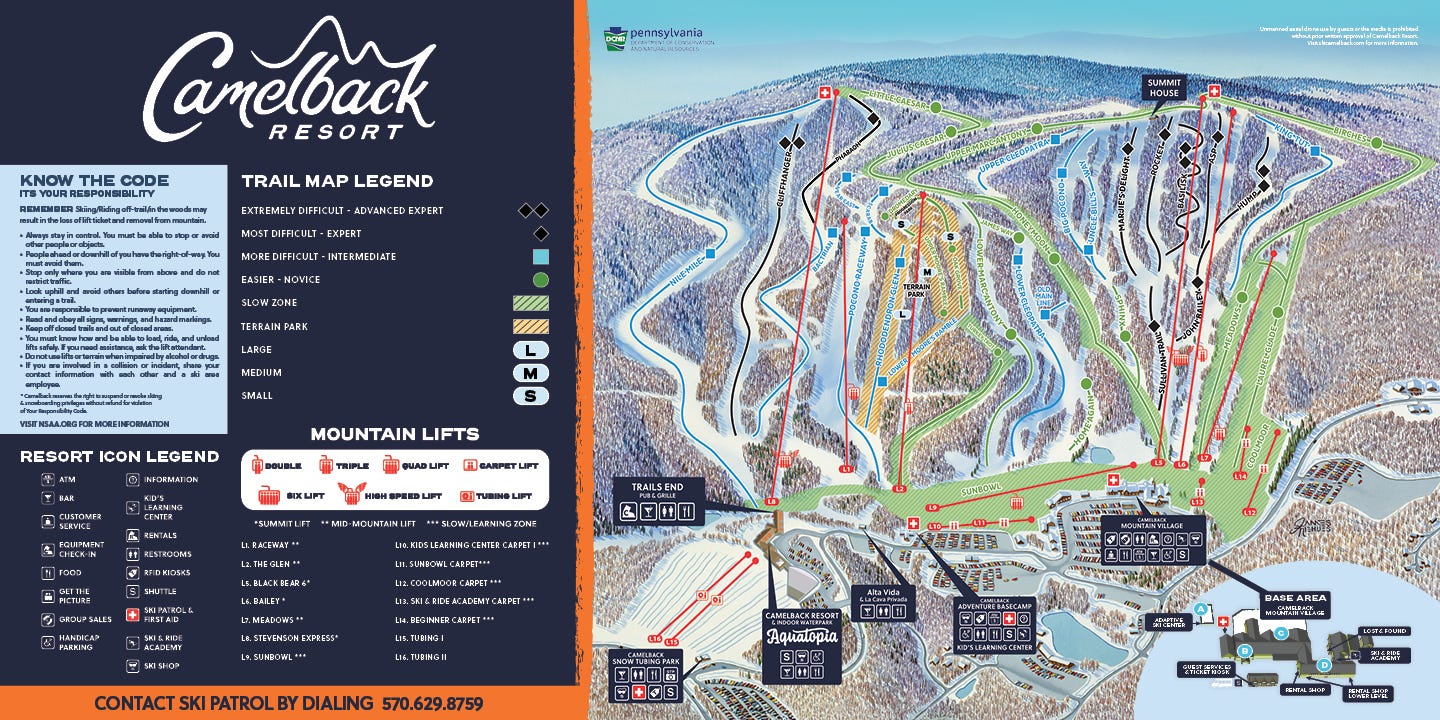 Storm News 9/16/2026: Camelback’s Reset with GM Jason Bays | The Storm Skiing Journal and Podcast likes it when ski areas are run by people who are good at running ski areas. Please subscribe to the email newsletter to get new posts the moment they’re live. Thank you for supporting independent ski journalism.About CamelbackOwned by: EPR Properties, managed by Peregrine Hospitality (formerly KSL Resorts)Located in: Tannersville, PennsylvaniaYear founded: 1963Pass affiliations:* Ikon Pass: 7 days, no blackouts* Ikon Base Pass: 5 days, holiday blackoutsClosest neighboring ski areas: Shawnee Mountain (:24), Jack Frost (:26), Big Boulder (:27), Skytop Lodge (:29), Saw Creek (:37), Blue Mountain (:41), Pocono Ranchlands (:43), Montage (:44), Hideout (:51), Elk Mountain (1:05), Bear Creek (1:09), Ski Big Bear (1:16)Base elevation: 1,252 feetSummit elevation: 2,079 feetVertical drop: 827 feetSkiable Acres: 166Average annual snowfall: 50 inchesTrail count: 45, with three new trails for 2026-27 (not on the map below, but discussed on the podcast)Lift count: 12 (1 high-speed six-pack, 1 high-speed quad, 1 fixed-grip quad, 2 triples, 2 doubles, 5 carpets – view Lift Blog’s inventory of Camelback’s lift fleet)For reference:The Zoom transcript (click “transcript†above for the Substack transcript, then click on any text block to teleport to the associated point in the video; timestamps below DO NOT MATCH THE VIDEO)00:03:25.000 --> 00:03:37.000Stuart Winchester: Welcome to The Storm! I’m your host, Stuart Winchester. Today is Wednesday, September 16th, 2026, and I’ve got a really good show for you today.00:03:37.000 --> 00:03:45.000Stuart Winchester: we’re going to talk some Pennsylvania skiing. And Pennsylvania skiing is a really interesting thing. As I travel around the country.00:03:45.000 --> 00:03:56.000Stuart Winchester: and ski at all these different places in the Midwest, and out West, and in New England, and in the Mid-Atlantic. Uh, and as I talk to folks who‌ who don’t ski that much, or only ski at the big mountains.00:03:56.000 --> 00:04:05.000Stuart Winchester: I’ll often bring up some experience I had at a Pennsylvania ski area. Pennsylvania has quite a few ski areas as 21.00:04:05.000 --> 00:04:20.000Stuart Winchester: public chairlift-served ski areas, and it does 2.6 million skier visits on average per year. That is more than any state except for Colorado, California, Utah, Vermont, and New York.00:04:20.000 --> 00:04:26.000Stuart Winchester: It’s more than Washington, it’s more than Oregon, it’s more than Montana, it’s more than New.00:04:26.000 --> 00:04:39.000Stuart Winchester: So, Pennsylvania is a really important ski state, which is probably why Vail Resorts owns 8 ski areas there, because it is really close to a lot of population centers. In western PA, you have Pittsburgh.00:04:39.000 --> 00:04:54.000Stuart Winchester: and Seven Springs, and Laurel, and Hidden Valley, and then you have Philadelphia on the east side, and you can also draw up from Baltimore and D.C. for Round Top and Whitetail. And uh‌00:04:54.000 --> 00:04:57.000Stuart Winchester: And Jack Frost’s Big Boulder up in the Poconos. So‌00:04:58.000 --> 00:05:00.000Stuart Winchester: Vail has a big presence there.00:05:00.000 --> 00:05:15.000Stuart Winchester: Icon has a presence there with Camelback and Blue Mountain. Uh, and then Indy Pass just signed their 8th ski area in Pennsylvania with Spring Mountain, uh, down near Philadelphia. So, so it’s, it’s a place where a lot of skiers start.00:05:15.000 --> 00:05:19.000Stuart Winchester: And it’s a little bit of a funny place to ski, because‌00:05:19.000 --> 00:05:29.000Stuart Winchester: it tends to have an outsized number of novice skiers, which is great. They’re very good at doing that. Uh, but it can make it a little chaotic.00:05:29.000 --> 00:05:38.000Stuart Winchester: And the lift lines can get a little crazy, and people are all over the hill, and sometimes they’re walking down the hill because they’re frustrated and they’re giving up.00:05:38.000 --> 00:05:40.000Stuart Winchester: Uh, and‌00:05:40.000 --> 00:05:44.000Stuart Winchester: You take that as your baseline in Pennsylvania.00:05:44.000 --> 00:05:49.000Stuart Winchester: And you had any sort of complications.00:05:49.000 --> 00:05:54.000Stuart Winchester: And things get out of hand really quickly. And in general.00:05:55.000 --> 00:06:00.000Stuart Winchester: For that reason, the ski areas that have survived in Pennsylvania.00:06:00.000 --> 00:06:07.000Stuart Winchester: are among the best operators in the world, and I would put that up against anyone.00:06:07.000 --> 00:06:14.000Stuart Winchester: It’s a very, very challenging environment, not only because you have a high number of novice skiers.00:06:14.000 --> 00:06:17.000Stuart Winchester: Uh, but also because you have‌00:06:17.000 --> 00:06:31.000Stuart Winchester: not a ton of snow, sometimes in the west part of the state, where there’s higher elevation, they do get a lot of snow, but‌ but not as a rule, you couldn’t count on it for natural snow. Uh, you get a lot of rain, you get a lot of warm-ups.00:06:31.000 --> 00:06:35.000Stuart Winchester: Uh, and‌ and you, in general, have to rely on‌00:06:35.000 --> 00:06:42.000Stuart Winchester: a very short season, generally mid-December-ish to mid-March-ish.00:06:42.000 --> 00:06:45.000Stuart Winchester: And the skiers there‌00:06:47.000 --> 00:06:52.000Stuart Winchester: They’re they’re accustomed to a pretty high standard, so.00:06:52.000 --> 00:06:57.000Stuart Winchester: So when things do get out of control, uh‌00:06:57.000 --> 00:07:04.000Stuart Winchester: They really rebelled, and they really noticed. So, a couple years ago, this is what happened at Camelback. So, Camelback‌00:07:05.000 --> 00:07:09.000Stuart Winchester: You know, I don’t generally do ops stories, uh‌00:07:09.000 --> 00:07:10.000Stuart Winchester: You know.00:07:10.000 --> 00:07:19.000Stuart Winchester: ski area didn’t groom this run, or they haven’t opened this lift, or, uh, you know, they usually let this bump up, but they don’t, or, or‌00:07:19.000 --> 00:07:27.000Stuart Winchester: you know, they‌ they are trying to save money, or they’re being cheap. I generally don’t bother with those, even though I get a lot of messages.00:07:27.000 --> 00:07:32.000Stuart Winchester: Complaining about things like that, because there’s almost always a pretty good reason.00:07:32.000 --> 00:07:38.000Stuart Winchester: Uh, and it’s almost always temporary, and it’s really not worth the effort.00:07:38.000 --> 00:07:48.000Stuart Winchester: to write the story if I’m just writing about, you know, why Stratton or Mount Snow or Magic Mountain didn’t open a certain lift on a certain day.00:07:48.000 --> 00:08:04.000Stuart Winchester: Uh, it’s, it’s a lot to track down and it’s a lot of, uh, this person said this and the other person said that. It’s just not the kind of thing that I’m want to cover with the storm, right? I want to do bigger stories. I want to do trend stories. I want to look at the culture and evolution of skiing.00:08:04.000 --> 00:08:11.000Stuart Winchester: And the passes, and all the infrastructure, and all the fun stuff. So I don’t generally cover the day-to-day stuff, just because‌00:08:12.000 --> 00:08:18.000Stuart Winchester: The ski areas that remain in 2026 are, for the most part, run by really good operators.00:08:18.000 --> 00:08:32.000Stuart Winchester: Uh, it‌ because‌ and they’ve survived. Most of the bad ski areas that were either mismanaged or were in the wrong places, they went out of business a long time ago, which is why the number of ski areas has been stable for around 25 years now in America.00:08:32.000 --> 00:08:35.000Stuart Winchester: So I but I started to notice.00:08:35.000 --> 00:08:45.000Stuart Winchester: several years ago that I was getting an outsized number of complaints around one ski area in particular in the Poconos.00:08:45.000 --> 00:08:47.000Stuart Winchester: And it was Camelback.00:08:47.000 --> 00:08:51.000Stuart Winchester: And Camelback had a long history of being an independent.00:08:51.000 --> 00:08:52.000Stuart Winchester: And‌00:08:52.000 --> 00:08:54.000Stuart Winchester: Really‌00:08:54.000 --> 00:08:59.000Stuart Winchester: the way it’s been described to me by‌ by season pass holders, and I’ve skied‌00:08:59.000 --> 00:09:04.000Stuart Winchester: some at Camelback, but I don’t have that depth of knowledge of having grown up there.00:09:04.000 --> 00:09:20.000Stuart Winchester: That Camelback for a long time, for decades, set the standard on snowmaking, on grooming, on just general maintenance of lifts in the ski area in the Poconos. And that was why they had chosen to ski there all those years.00:09:20.000 --> 00:09:30.000Stuart Winchester: But things had started to fall apart when a new owner showed up in 2019. It was at the time KSL Capital, who was.00:09:30.000 --> 00:09:43.000Stuart Winchester: was managing it for EPR Properties, which is the entity that bought it, and they own a bunch of ski areas, EPR Properties, including a bunch owned by Vail, including North Star, and a lot of the old Peak Resorts in Ohio and such.00:09:43.000 --> 00:09:50.000Stuart Winchester: And KSL Resorts was a division of KSL Capital.00:09:50.000 --> 00:09:53.000Stuart Winchester: which is a part owner of Altera.00:09:53.000 --> 00:09:58.000Stuart Winchester: But for some reason, Altera, which is very good at running ski resorts.00:09:58.000 --> 00:10:00.000Stuart Winchester: did not‌00:10:00.000 --> 00:10:15.000Stuart Winchester: get assigned as the‌ as the owner of Camelback. And when KSL Resorts purchased Blue Mountain, not in Ontario, the Blue Mountain in Pennsylvania, that’s about 45 minutes from Camelback, two years later, in 2021.00:10:15.000 --> 00:10:26.000Stuart Winchester: That ski area also did not fall under Altera’s ownership. And it was an odd choice to make, because Altera’s really good at running ski areas, and they run‌00:10:26.000 --> 00:10:35.000Stuart Winchester: Mammoth, and Deer Valley, and Steamboat, and Solitude, and Palisades Tahoe, and Stratton, and Sugarbush, and they definitely have.00:10:35.000 --> 00:10:41.000Stuart Winchester: the institutional knowledge and internal firepower to be able to run these ski areas in the Poconos.00:10:41.000 --> 00:10:43.000Stuart Winchester: Uh, Blue Mountain‌00:10:43.000 --> 00:10:47.000Stuart Winchester: Had the benefit of a long time tenured management team.00:10:47.000 --> 00:11:02.000Stuart Winchester: That kept the place, by all accounts, running pretty well. Camelback, on the other hand, seemed to be falling apart before our eyes, and before the eyes of the loyalist skiers who loved the place so much. And they were really, really concerned, and I started to‌00:11:02.000 --> 00:11:08.000Stuart Winchester: Because they had put, uh, a management team in place, it seemed.00:11:08.000 --> 00:11:10.000Stuart Winchester: that‌00:11:11.000 --> 00:11:22.000Stuart Winchester: was not familiar with the‌ with the inner workings of a ski area. Uh, I‌ I hosted Dave Makarski, the former general manager of Kalenbach, on this podcast.00:11:22.000 --> 00:11:33.000Stuart Winchester: and very nice guy. We had a great conversation. Uh, he’s not a skier. And, and, you know, sometimes you can be not a skier and run a great ski resort. Uh, look at Bill Stritzler up at Smuggler’s Notch.00:11:33.000 --> 00:11:43.000Stuart Winchester: Bill hasn’t skied in years, and he snowboarded for a little bit, but he’s not a daily skier. Look at Shawnee.00:11:43.000 --> 00:11:54.000Stuart Winchester: that where the owner‌ that’s one of the most modern, nice ski areas in the Poconos, uh, and the owner has not skied in decades. So, so it’s not always necessary, uh, but‌00:11:55.000 --> 00:12:10.000Stuart Winchester: It does help and it’s certainly a benefit. So everyone I talked to, I was, I was gathering all this stuff for a story and I was gonna write about Camelback and, and it, it really seemed like it was the worst run ski area anywhere that I could find based on the amount of feedback I was getting.00:12:10.000 --> 00:12:25.000Stuart Winchester: I was gathering all this feedback from all these long-time pass holders, and then they hired a new general manager, and so I scrapped the story, but I still wanted to get it, and by all accounts, Jason Bays, who I’ll bring on the podcast in a moment.00:12:25.000 --> 00:12:34.000Stuart Winchester: has really done a nice job of turning CamelBak around. So, so let’s go to Jason now.00:14:09.000 --> 00:14:16.000Stuart Winchester: My guest today is the Vice President and General Manager of Camelback Ski Area in Pennsylvania.00:14:16.000 --> 00:14:26.000Stuart Winchester: Camelback runs six chairlifts, or maybe seven. I might have had a typo there. Serving 45 trails on an 827-foot vertical drop.00:14:26.000 --> 00:14:41.000Stuart Winchester: Prior to taking the top job at Camelback, he was general manager for Great Wolf Resorts around the United States. He also spent time as chief operating officer and general manager of Mountain Creek Ski Area in New Jersey and director of operations.00:14:41.000 --> 00:14:54.000Stuart Winchester: for Jay Peak, Vermont. His very first jobs as a teenager were as a lifeguard and ski instructor at Camelback. Jason Bay is my guest. Jason, welcome to the Storm. Awesome to have you. How you doing today?00:14:53.000 --> 00:15:00.000Jason Bays: Thank you, Stuart. Great to be here. I’ve been a listener from day one, so excited to join you.00:14:59.000 --> 00:15:14.000Stuart Winchester: I love that. I’m so hyped to hear that. I know I started with a little Northeast focus. You know, you’re the‌ you probably know this already, but you’re the second straight guest I’ve had on. There was a Mountain Creek alum, Chris Haggerty, on yesterday. Are you acquainted with Chris?00:15:13.000 --> 00:15:18.000Jason Bays: Yeah, Chris and I worked together, um, back in our days at Mountain Creek, great guy.00:15:17.000 --> 00:15:33.000Stuart Winchester: Yeah, yeah, I’m, uh, I’m not sure, I’m sure you’re aware I’m based in New York City and Mountain Creek is one of my go-tos and, and was my home mountain before I started traveling all over the place for the storm. So, so, you know, Jason, I, I think it’s awesome that you grew up at Camelback. Tal.00:15:34.000 --> 00:15:41.000Stuart Winchester: your childhood Camelback. What was the kingdom of Camelback like to you, uh, when you were growing up skiing there?00:15:40.000 --> 00:16:03.000Jason Bays: Yeah, look, I, you know, took, I grew up in Pocono Kid, born and raised 10 minutes from the resort. After school ski program was the first, you know, first sort of foray into life at Camelback and was immediately hooked in the summer as a swimming pool and two water slides. I thought that was the most awesome place in the world too.00:15:44.000 --> 00:15:45.000Stuart Winchester: Yeah.00:15:54.000 --> 00:15:55.000Stuart Winchester: Mmhm.00:16:03.000 --> 00:16:04.000Stuart Winchester: Mmhm.00:16:03.000 --> 00:16:21.000Jason Bays: And my parents thought it was a great babysitting service, you know, relative to that. So it was just an awesome, awesome place to grow up and, you know, be part of the small but mighty ski community that is Tannersville, Pennsylvania, in this area, in the Poconos.00:16:21.000 --> 00:16:39.000Jason Bays: um, you know, when it came to get a first job, uh, there’s no place I was, uh, gonna consider other than Camelback. It’s where all my friends were, it’s where we all hung out all the time, and, um, you know, really just got introduced to, uh, to the sport, and, um, had some freedom. It was the first time I had some freedom, and it was to be at Camelback, so that’s.00:16:27.000 --> 00:16:29.000Stuart Winchester: Mmhm.00:16:39.000 --> 00:16:56.000Stuart Winchester: So you worked there, and you were part of the machine, so to speak, and I realized you were sort of on the peripheral of the machine, as opposed to in the center of it, as you are now. But, you know, you grew up in the Poconos, and had that experience, and you had this vision of Camelback in your head, right? Then you went off and had a big life, as‌00:16:56.000 --> 00:16:57.000Jason Bays: Yes.00:16:56.000 --> 00:17:00.000Stuart Winchester: as people do, and you went and worked at all these places that I just mentioned.00:17:00.000 --> 00:17:03.000Stuart Winchester: And then you came back to Camelback.00:17:03.000 --> 00:17:06.000Stuart Winchester: When you, when you arrived.00:17:06.000 --> 00:17:10.000Stuart Winchester: How had the place changed? And I just want to tee this up. I, you know.00:17:10.000 --> 00:17:19.000Stuart Winchester: before you came on, I was talking about how I don’t generally write operations stories, right? Because it‌ there’s usually a good reason for why a trail is closed, a lift’s not running.00:17:19.000 --> 00:17:26.000Stuart Winchester: Uh, but a few years ago, I started to get an outsized number of complaints about Camelback.00:17:26.000 --> 00:17:38.000Stuart Winchester: And so I started to write a story about it, and then when you came along, I shelved it, because honestly, everyone immediately was like, oh, this is so much better. So, you know, how had‌00:17:38.000 --> 00:17:41.000Stuart Winchester: Camelback changed.00:17:41.000 --> 00:17:42.000Stuart Winchester: when you‌00:17:42.000 --> 00:17:44.000Stuart Winchester: Came back to work there.00:17:44.000 --> 00:17:51.000Stuart Winchester: And what were the challenges facing the resort? What did you focus on immediately?00:17:50.000 --> 00:18:08.000Jason Bays: Yeah, I’ll just back up to say, you know, just to contextualize, um, from when I was there as a teenager and, um, through college on the ski team, too, I would say that community was a really big word, um, that was used all the time. You, you felt like it was, it was the Camelback community, and there’s a really big emphasis on the ski product.00:18:08.000 --> 00:18:28.000Jason Bays: Um, as a ski instructor, like, what we were putting out, how we were doing lessons, how many lessons we could do, and the experience that was surrounding that. And same thing on the water park side. And, you know, I think the, um, you know, some of the observations, um, coming back to Camelback was, um, I think there’s a little bit of focus, um, focus direction for, for, like, to focus on the ski product.00:18:28.000 --> 00:18:44.000Jason Bays: and focusing on the water park product, and I sort of look at it as, like, a‌ as Disney World, right? Whereas we fill out‌ if we do the ski part well, we do the snow tubing part well, we do the water park well, that puts heads in beds, um, versus trying to put heads in beds.00:18:44.000 --> 00:19:01.000Jason Bays: And then have them do the activities. We’re leading with an activity front and centered focus. And that means making the strategic investments in the ski product, in our recreational product, and making that the very best that it can be.00:19:01.000 --> 00:19:23.000Jason Bays: back in 2008 when I was here as a teenager, that was all there was. There was no hotel product, right? So the ski product got outsized attention just naturally because it was a 560-acre resort that identified as a ski area and a water park. And I think some of the context that was missing was that while there’s been a great evolution of Camelback as a four-season resort.00:19:15.000 --> 00:19:16.000Stuart Winchester: Mmhm.00:19:23.000 --> 00:19:40.000Jason Bays: It’s really important that, to me, that each of those business units gets the time and attention that they would deserve if they were stand-alone units, particularly because a cog‌ it’s a cog in the wheel, and that wheel is‌ it’s a flywheel. It needs to‌ it all needs to turn at once, and so we lead with.00:19:40.000 --> 00:19:43.000Jason Bays: the recreational offerings first.00:19:43.000 --> 00:19:48.000Stuart Winchester: You know, you mentioned the community, and I wasn’t aware‌00:19:48.000 --> 00:19:59.000Stuart Winchester: that there was such a strong community around Camelback, and I’m not surprised, because most ski areas have that group of folks who, you know, they’re retirees, and they boot up at 8am, and they take runs together.00:19:59.000 --> 00:20:14.000Stuart Winchester: But they were really passionate, and the running theme, Jason, in the emails and messages that I got from Camelback locals was that they loved Camelback. It wasn’t that they hated Camelback, they hated to complain about Camelback.00:20:14.000 --> 00:20:18.000Stuart Winchester: They wanted to love it, but they couldn’t. There was there was.00:20:18.000 --> 00:20:34.000Stuart Winchester: a lot of things they cited, uh, not making snowmaking when it’s cold, understaffed grooming, uh, missed lift inspections. I don’t know if this is true. This is what people were‌ they were reaching, I think, for answers. Uh, put it all together, and there was‌ it was definitely‌00:20:34.000 --> 00:20:47.000Stuart Winchester: seemed as though the ski product was not the focus. So when you came in, what did you focus on right away and say, okay, this is what we gotta change, you know, we have to cover every trail 100% right away, or whatever it was?00:20:47.000 --> 00:21:09.000Jason Bays: Yeah, I think that’s, look, I would start, you hit the nail on the head that there’s a very passionate skiing community here at Camelback and in the Poconos and it means a lot to people. This is second, third generations that are learning to ski here, bring their families here and be part of this. And to your point, everyone wants to be prideful of Camelback, right?00:21:09.000 --> 00:21:24.000Jason Bays: This was the, this was family run for a really long time and, you know, very focused on sort of the, you know, season pass holders renewing year after year.00:21:24.000 --> 00:21:40.000Jason Bays: You know, a couple of things. One is I think that how we authentically tell our story isn’t done in a way that is, you know, is done in a way that’s authentic. A, bringing back the Camelback Mountain Facebook page that communicated ski related content.00:21:38.000 --> 00:21:39.000Stuart Winchester: Yeah.00:21:40.000 --> 00:22:06.000Jason Bays: Right? I think that, you know, there’s only so many things you can say about a hotel room and how exciting it is. Like, we really lead now first with authentically telling the story. Our snow report got a lot more detailed, gave granular information as to what was going on. So, you know, did we have a perfect winter last winter? By all means, no, but we communicated that authentically. And where we messed up, we took.00:22:06.000 --> 00:22:23.000Jason Bays: the blame for it, and said, hey, we didn’t get this right, and where we were working to improve the experience, we communicated that‌ communicated that story. So, to me, it started from a communication standpoint, that we were authentic, that we were honest, that we were truthful, and that we were communicating on a medium that.00:22:23.000 --> 00:22:31.000Jason Bays: our guests would see, um, and relate to. So I think a big miss was, I think, admittedly, a big miss was removing the, um, Camelback Mountain.00:22:31.000 --> 00:22:53.000Jason Bays: social media pages, um, and bringing those back were really important so that, um, we could tell the story authentically. I think SKUs really appreciate, um, knowing what’s going on, and to your point on, hey, there’s sort of this rumor flying or that rumor flying, um, you know, we were able to, uh, sort of hone in and, and tell, tell that story. Secondarily, I think from an infrastructure standpoint.00:22:53.000 --> 00:23:09.000Jason Bays: um, we really needed to make sure that we had, um, the right team in place. And we have an amazingly talented team at Camelback, um, but we did not have key positions filled, um, in certain areas. Um, and so, we bolstered up the snowmaking. Snowmaking team went from.00:23:04.000 --> 00:23:05.000Stuart Winchester: Mmhm.00:23:06.000 --> 00:23:08.000Stuart Winchester: Like, what areas?00:23:09.000 --> 00:23:30.000Jason Bays: you know, 3 to 4 to 30, um, this past winter, um, that makes a big difference, right? Our trail rollout was, um, you know, first to open in the East, uh, for Pennsylvania, um, and, uh, um, and, and focus on the core products. Um, same thing with lift operations. We brought in a really experienced lift, uh, maintenance manager.00:23:12.000 --> 00:23:13.000Stuart Winchester: Hey!00:23:13.000 --> 00:23:14.000Stuart Winchester: Wow.00:23:14.000 --> 00:23:16.000Stuart Winchester: Yeah.00:23:20.000 --> 00:23:21.000Stuart Winchester: Yep.00:23:30.000 --> 00:23:46.000Jason Bays: Um, to our team that really helped, um, support our Lyft, um, uh, operation. Um, decisions on when Lyfts ran and what time they ran, uh, you know, our thought was, let’s, um, be more‌ like, you have to run the Terrain Park Lyft every day.00:23:46.000 --> 00:23:47.000Stuart Winchester: Mmhm.00:23:46.000 --> 00:24:06.000Jason Bays: to me, that’s a commitment. We make that every day. We say we’re running the Glen Lift every day. It services great novice terrain. It services the train park. And so, looking at the operational plan and saying, okay, what are ways that we can give back, you know, and make deposits back to our skiers? And in turn.00:24:06.000 --> 00:24:24.000Jason Bays: that builds momentum, right? People talk, and, like, the ski community is so connected, right? It’s like, if you do something, like, people find out about it, because they’re really, you know, they hear about it. And so, for us, focus on the core business was, um, you know, from a ski standpoint, was really important, and the infrastructure.00:24:12.000 --> 00:24:13.000Stuart Winchester: Right.00:24:17.000 --> 00:24:19.000Stuart Winchester: Mmhm.00:24:24.000 --> 00:24:41.000Jason Bays: to be able to do it. And I would just, lastly, just say I go back to making sure that our team had the resources to do their job. We’re supported, we’re empowered, collaborative leadership, you know, we sat around the table and said, this is the operating plan, this is what we’re going to do for our guests.00:24:41.000 --> 00:24:46.000Jason Bays: And then go out and execute it to the best we can.00:24:45.000 --> 00:25:03.000Stuart Winchester: You know, Jason, I, I, I think you could have run for governor with one of the first things that you did, which was get rid of paid parking. I, I, I don’t think that I’ve ever, uh, heard people happier about anything. Now, now, and let me, let me qualify this, right? I think in, in some instances, paid parking and parking reservations.00:25:03.000 --> 00:25:05.000Stuart Winchester: make sense.00:25:05.000 --> 00:25:18.000Stuart Winchester: you know, super high volume days. Arapahoe Basin, I think, is a model in Colorado where they only charge for certain days and certain times, and they keep backing off which days as they learn when they really need it. Camelback was charging every day.00:25:18.000 --> 00:25:36.000Stuart Winchester: All day, you know, a Monday with, you know, 10 people on the mountain, they were charging for it. And, you know, acknowledging that sometimes it’s appropriate, I think Camelback got pretty out of hand with it, and when I had Mr. Markowski on the podcast, great guy, we had a great conversation, but he was not backing off that. He said, nope, paid parking.00:25:36.000 --> 00:25:51.000Stuart Winchester: we’re all in. You said no. So talk about that and how you sold. I’d imagine it was a revenue stream, right? And you had to sell management on that, and I don’t know if I’m giving you credit for something someone else did, but talk to us about parking and the evolution there.00:25:51.000 --> 00:26:12.000Jason Bays: Yeah, that was a week one decision from the Camelback team when I got here made from our leadership team at Camelback that everyone was in alignment on our senior leadership team here at the property and myself to remove the paid parking. And I think definitely there’s actually you have so many nice pictures behind you.00:26:12.000 --> 00:26:30.000Jason Bays: I have a picture of the old paid parking sign behind me there, if you can see it on the corner, and it actually serves to me as a reminder of the guest experience, because someone’s put a sticker on that paid parking sign that you probably can’t see there, but it says, Ski Camelback, we’re not happy until you’re not happy.00:26:15.000 --> 00:26:19.000Stuart Winchester: Yeah.00:26:30.000 --> 00:26:48.000Jason Bays: Um, and it’s a reminder to, to me and our team, um, that we’re here to have fun, and we’re here for the guest experience, and we’re here to live, live and breathe fun Camelback style. This is not a, um, you know, we want guests to look forward to, to being here. And I think, you know, yes, there was.00:26:37.000 --> 00:26:38.000Stuart Winchester: Mmhm.00:26:48.000 --> 00:27:05.000Jason Bays: So obviously we ran a financial model. We didn’t just, you know, get rid of paid parking and not assume, you know, that there wasn’t some revenue to be recaptured elsewhere with a strategy to do it. But I think more importantly, you know, think about it.00:27:05.000 --> 00:27:22.000Jason Bays: a non-busy day, it might even be raining, it’s 40 degrees, the last thing you want is someone running around a parking lot telling you, like, hey, I need you to hand over $15, and by the way, then you’re gonna schlep your stuff up two different levels of parking, um, you know, that might be even charged higher, and then get to.00:27:18.000 --> 00:27:19.000Stuart Winchester: Mmhm.00:27:22.000 --> 00:27:38.000Jason Bays: uh, the mountain and go to guest services. You know, I have a 3-year-old. If my wife and I went skiing, that would be an incredible amount of friction, um, just to get to, uh, the front of the mountain. And so I think putting ourselves in the guest lens of saying, is that really what we want the guests to experience?00:27:29.000 --> 00:27:30.000Stuart Winchester: Mmhm.00:27:38.000 --> 00:27:53.000Jason Bays: Um, it’s not, and, and it was a burden to everyone at this, you know, you think I’m talking about, we talked to frontline associates too, like, the first thing that they had to tell people was that they had to pay for parking. You just imagine, sort of, the cascading effect that, that, that, uh, that that had, and we said, look, is there.00:27:53.000 --> 00:28:09.000Jason Bays: Um, is there a better way? Um, can we run shuttles to these lots and pick people up and bring them to the mountain and make them feel, um, you know, like our valued‌ like our valued guests? What does that arrival experience look like? Um, you know, that’s really what we‌ what we looked at, and then said, okay.00:28:09.000 --> 00:28:25.000Jason Bays: can we‌ ultimately, will we drive more volume here? Will more people come because of a better guest experience? And I’ll say that I would rather grow the sport, grow the industry. Our team would rather grow the sport and grow the industry than figuring out how to.00:28:25.000 --> 00:28:35.000Jason Bays: You know, sort of, you know, run a secondary ancillary business that’s not to our core product and what we want our guests to experience here.00:28:34.000 --> 00:28:48.000Stuart Winchester: You know, it’s a little counterintuitive, but sometimes, by removing a revenue stream, you get that less-is-more effect. Another example, your season pass, you know, according to my records.00:28:48.000 --> 00:29:04.000Stuart Winchester: Starting in 2020 to ‘21, the season pass was $599 at its early bird price, and it hovered between that and $649 for the next five years. This year, you put it on sale for $399. It’s still at that price for unlimited Camelback.00:29:04.000 --> 00:29:20.000Stuart Winchester: That’s a great bargain for, uh, for a season pass on the East Coast, and, you know, for the listeners, you are competing with the Epic Pass, which has Jack Frost, Big Boulder, right down the road, a couple exits down I-80, and their Northeast season pass is pretty affordable, and it’s a pretty good deal.00:29:20.000 --> 00:29:33.000Stuart Winchester: So‌ so talk to us about that decision and‌ and‌ and how‌ how that $399 is worth it. You also wrote back, if you want to talk about, uh, the‌ the triple pack. I thought that was great, and I don’t have the price right in front of me, but‌ but you’ve really done a lot to‌ to‌00:29:33.000 --> 00:29:39.000Stuart Winchester: create more of a value experience for that loyal Camelback skier, from my point of view.00:29:39.000 --> 00:29:55.000Jason Bays: Yeah, thank you, and that’s definitely the goal. Um, you know, I think our thought process here is let’s get more people on Snow, um, and have them have a great experience while they’re here. Um, I would love to tell you that there’s some master business plan behind this.00:29:50.000 --> 00:29:52.000Stuart Winchester: Mmhm.00:29:55.000 --> 00:30:10.000Jason Bays: But, you know, truly, at the heart of what we do is, let’s figure out how to get more people on snow, get them to a spot where they want to come back and learn and be part of it. And guess what I would just share to that is.00:30:10.000 --> 00:30:24.000Jason Bays: you know, we were charging a day ticket in 2025 of $169, um, at its highest point, right? And I would rather have a lifelong‌ I would rather have one per‌ I would much rather, I think from business proposition, we would rather have.00:30:16.000 --> 00:30:17.000Stuart Winchester: Mmhm.00:30:24.000 --> 00:30:39.000Jason Bays: one person definitely not come and spend $15 to $40 to park and $169 and say, I’m never coming back, versus $399, now they’re like, wow, this place is awesome, I’m getting a great value, I bring my family.00:30:32.000 --> 00:30:33.000Stuart Winchester: Damn.00:30:39.000 --> 00:31:01.000Jason Bays: I want to come enjoy food and beverage. And hey, by the way, we also have this great snow tubing park and this great water park. And would you like to stay at our hotel when you come with your season pass and enjoy Aquatopia? And we’re debuting The Curse of Camelback this fall, right? Which is the Halloween, if you haven’t heard, it’s a Halloween 13 scare zones. Take a chair, lift up to it.00:31:01.000 --> 00:31:03.000Stuart Winchester: Mmhm.00:31:01.000 --> 00:31:24.000Jason Bays: But I say all that to say we’ve got so many great cross marketing promotional opportunities at Camelback that that really becomes a super compelling business case for us. And I think it’s the right thing to do for the sport is grow it, make it more accessible, allow more people to come here and see what we have to offer. I can’t tell you how many people I meet, whether it’s snow tubing, skiing.00:31:24.000 --> 00:31:41.000Jason Bays: water park, the hotel, whatever they’re here for, CBKMA or Adventure Park, they have no idea that the other part exists to, um, the resort. And I’ll share that that’s been the case even in, like, when I was, uh, at Jay Peak running the water park.00:31:32.000 --> 00:31:34.000Stuart Winchester: Hmm. Okay.00:31:41.000 --> 00:31:43.000Jason Bays: People would come there, and they’d be like.00:31:43.000 --> 00:32:02.000Jason Bays: what is this mountain that is here? And it’s Jay Peak, like, one of the most hardcore ski resorts in the world. And there were people that were coming there and were like, I had no idea there was a ski resort here. So, if it’s true at Jay Peak, it certainly is true at Camelback, where.00:31:48.000 --> 00:31:49.000Stuart Winchester: Right.00:31:49.000 --> 00:31:52.000Stuart Winchester: Yeah.00:31:52.000 --> 00:31:53.000Stuart Winchester: Yeah, thank you.00:31:59.000 --> 00:32:00.000Stuart Winchester: Mm-hmm.00:32:01.000 --> 00:32:02.000Stuart Winchester: Yeah, okay.00:32:02.000 --> 00:32:19.000Jason Bays: we have all these different offerings that people don’t know about, maybe necessarily about all of them, so our fundamental business philosophy is make it accessible, make them lifelong, um, skiers and riders, and introduce them to everything that we have to offer here in the Poconos. And I would just argue, when I say Poconos.00:32:19.000 --> 00:32:41.000Jason Bays: Like go, like experience Shawnee and experience Jack Frost Big Boulder and experience, you know, the other great ski areas in this region and Mountain Creek and wherever else and get a flavor for it. I think that’s, we could use more skiers in the industry and to grow the sport. So for us, that’s sort of the long-term business model that we’re using.00:32:22.000 --> 00:32:23.000Stuart Winchester: Mmhm.00:32:41.000 --> 00:32:58.000Stuart Winchester: So, I just looked at the triple ticket, and it looks like $149, and I think that’s no blackouts. $199 includes rentals. That’s pretty amazing. So, talk about that product, and then you mentioned the $169 peak day ticket. Have you settled on prices yet for 2020?00:32:58.000 --> 00:33:03.000Stuart Winchester: 6, 27. I should have checked your site in advance, but I didn’t. So I don’t know if you’ve.00:33:03.000 --> 00:33:21.000Jason Bays: Yeah, we have not, uh, posted, uh, day ticket prices for this year. Last year, um, we didn’t exceed around $110, um, on a day ticket. Uh, so we kept it, I think, pretty reasonable for, for, for a, for a Pocono offering. Um, triple tickets, massive, um, success, uh, for us.00:33:10.000 --> 00:33:12.000Stuart Winchester: Oh, okay.00:33:14.000 --> 00:33:15.000Stuart Winchester: Yeah, yeah.00:33:21.000 --> 00:33:37.000Jason Bays: Um, and when we talk about, like, again, getting more people introduced to the sport, you don’t necessarily pick up skiing on the first time. Um, you think about that rental product, which we, um, tremendously‌ whatever we had on the pro forma for that was, uh, blown by by, like.00:33:28.000 --> 00:33:30.000Stuart Winchester: Mmhm.00:33:37.000 --> 00:33:53.000Jason Bays: 400% on the triple ticket with rentals. And what I really believe in is that, you know, you become a lifelong skier by getting repetition, not by going once a year. It’s really hard to sustain as a skier going once a year.00:33:50.000 --> 00:33:52.000Stuart Winchester: Yeah. Okay.00:33:53.000 --> 00:34:11.000Jason Bays: and saying, oh yeah, that was our trip. We’re really trying to create a guest for life and get them to return visit. That’s in many ways more important to us than, again, trying to get, like, the highest yield on that one day that they picked. Like, come back and visit our resort and, um, you know, again, the business side to this is.00:34:11.000 --> 00:34:28.000Jason Bays: we’re cross-marketing across all of our other offerings here that we have on this campus to say, come and visit us again. And again, to us, that’s more important than, you know, the highest yield that we can get to. So the triple ticket’s really successful. And I think one last thing I would share.00:34:28.000 --> 00:34:46.000Jason Bays: a lot of season passes in the market right now, um, the triple ticket’s a great opportunity for people to get a couple of days at Camelback, even if they’ve committed somewhere else, and particularly, you know, our long season, um, there’s plenty of time to use it, um, as well, uh, from the, uh, long season that we established from last year.00:34:46.000 --> 00:34:50.000Stuart Winchester: Jason, I think that’s a really smart way to look at it as‌00:34:50.000 --> 00:34:57.000Stuart Winchester: a‌ creating a habit rather than pulling as much yield as possible. And a lot of the larger operators.00:34:57.000 --> 00:35:11.000Stuart Winchester: get frustrated with me and the rest of the ski media because they don’t understand why we focus on that peak price, right? Because the peak lift ticket this year at Beaver Creek is $392, set to be. Probably almost no one will pay that price, but‌00:35:11.000 --> 00:35:28.000Stuart Winchester: What it does is it acts as a, a billboard for the rest of the ski industry and especially so, so Camelback for, for people who don’t know when you’re driving on I 80 I mean, you see it, it looms right over the highway. It is one of the major interstates in America, especially at night. The thing is lit up.00:35:28.000 --> 00:35:46.000Stuart Winchester: And so, chances are, if people think about skiing, and they think about where to go, they’re gonna think about the most obvious one, and that’s Camelback, and that’s why, for many years, it was that, or Seven Springs was the busiest ski area in Pennsylvania, traditionally. So I think that’s a really smart way to look at it, because if people show up that one time, and.00:35:46.000 --> 00:35:59.000Stuart Winchester: cost them, you know, $500 for 2 people, they’re just not gonna come back, and they’re not gonna try Shawnee, or‌ or Blue Mountain, or Jack Frost, or Elk Mountain, or Montage. So, um, I wanna talk about‌ Jason, I wanna talk about Lyft.00:35:59.000 --> 00:36:16.000Stuart Winchester: And‌ can you see this trail map? This is an old trail map. I mentioned that I know this, so for those watching on StormSkiing.com or YouTube, you can see this. So there’s been a ton of changes, and I want to break all these down with you. The first I want to talk about is, over the past couple years.00:36:16.000 --> 00:36:32.000Stuart Winchester: Mark Antony and Cleopatra, these two lifts right here, an old triple and an old double, have been removed. Can you talk about why you took those lifts out of service, and if you plan to replace them with anything, or what you planned, or what the rationale was behind it?00:36:32.000 --> 00:36:49.000Jason Bays: Yeah, I appreciate that. Uh, that does predate my time here, that they had reached the end of their, um, uh, ability to operate. Um, and so they have, um, both been, um, sort of partially disassembled. Um, there is unfortunately not.00:36:35.000 --> 00:36:37.000Stuart Winchester: Mmhm.00:36:39.000 --> 00:36:41.000Stuart Winchester: Mmhm.00:36:46.000 --> 00:36:47.000Stuart Winchester: Okay.00:36:49.000 --> 00:37:05.000Jason Bays: I, by the way, two of my favorite lifts when I was a ski instructor, because you could get right up and not wait in long lines on the weekends, so absolutely realizing and recognizing the capacity that they brought, but no opportunity for us to.00:37:01.000 --> 00:37:02.000Stuart Winchester: Mmhm.00:37:05.000 --> 00:37:23.000Jason Bays: um, reinstate those lifts as presently, um, as presently, uh, uh, sort of, um, situated, um, and, and not, not, not able to, uh, um, not able to, uh, rerun them. It will require a, um, new, uh, chairlift to, um, to ultimately replace.00:37:23.000 --> 00:37:37.000Jason Bays: those two lifts. It saddens me to share that, but that is, in fact, what has happened there, and I’ve been very open with our season pass holders about that messaging and the why behind it.00:37:38.000 --> 00:37:41.000Stuart Winchester: So, so in fantasy ski resort world, Jason.00:37:41.000 --> 00:37:46.000Stuart Winchester: Would you put a new lift here, and what would you put, if you could?00:37:45.000 --> 00:38:04.000Jason Bays: Yeah, absolutely. Um, same thing. We’ve, uh, we’ve made clear, uh, with no time, no official time frame to share, um, but certainly, uh, we’ve, we’ve, um, had, uh, preliminary conversations, um, about a fixed grip, um, quad that would, uh, would be able to take the place of both of those lifts, uh, and create that.00:38:03.000 --> 00:38:04.000Stuart Winchester: Mmhm.00:38:04.000 --> 00:38:10.000Jason Bays: original redundancy that those two lifts brought to the resort when they were in operation.00:38:10.000 --> 00:38:27.000Stuart Winchester: Yeah, that would be really nice. So, so, so these are gone and I, I have a, a current trail map now. So, um, and, and it’s not completely current. We’ll discuss the new trails in a moment, but this is the most current posted on your website. So, uh, we go over, these are the lifts that remain and see, uh, yeah, I, I miscounted in my intro, so sorry about that.00:38:27.000 --> 00:38:42.000Stuart Winchester: So this one is Stevenson, and Stevenson was, uh, it’s a high-speed quad, uh, for the listeners, and it‌ it was a real junker. It was always stop, stop, stop, and, you know, it was‌ it was really‌ seemed to be falling apart and have a lot of issues. Now, uh, in 2020‌00:38:42.000 --> 00:38:51.000Stuart Winchester: 5, this year, or 2024, I believe, Camelback, uh, McCarthy, the GM at the time, sent out a letter saying it was due for a‌00:38:51.000 --> 00:38:53.000Stuart Winchester: Waltz.00:38:53.000 --> 00:39:02.000Stuart Winchester: Uh, let me see what he said‌ like, a complete modernization of Stevenson. So, so did that happen? And talk to us about Stevenson, and what kind of shape it’s in right now.00:39:01.000 --> 00:39:20.000Jason Bays: Yeah, great, um, yes, that was a, uh, look, an amazing, um, project that was completed by, uh, by Dave and team, um, to modernize that lift. Um, it has, essentially, Doppelmayr came in and put in an entire new, uh, minus the, uh, minus the, uh, uh, the terminals and the.00:39:08.000 --> 00:39:09.000Stuart Winchester: Mmhm.00:39:20.000 --> 00:39:35.000Jason Bays: Um, uh, and the structure itself, um, essentially all new components, all new electrical, um, uh, wiring components to it, a lot of the things that had plagued it. Um, and last year, uh, it operated 138 days.00:39:34.000 --> 00:39:36.000Stuart Winchester: Unbelievable.00:39:35.000 --> 00:39:53.000Jason Bays: Uh, which for Pennsylvania, uh, that’s pretty darn good. I think we recognize it’s a workhorse, um, it’s key to accessing some really, um, fantastic terrain for us, um, and that modernization project with Doppel‌ in, um, partnership with Doppelmeyer that was done in the summer and fall of 2025.00:39:53.000 --> 00:39:54.000Stuart Winchester: Mmhm.00:39:53.000 --> 00:40:08.000Jason Bays: um, was, uh, very, uh, so it’s all immediate impact, um, with, uh, Stevenson Reliability this past year, and we expect that to, uh, you know, knock on wood, to, uh, to continue going forward. We essentially, again, have a brand new lift, minus the, uh.00:40:08.000 --> 00:40:10.000Jason Bays: Uh, minus the physical pieces.00:40:10.000 --> 00:40:26.000Stuart Winchester: That’s a really smart way to do it because they are tremendously expensive, these new lifts. And for folks who are watching or listening, this Stevenson is really important because you walk out of this giant hotel that’s right here, that’s not on the trail map with 400 and some rooms, and that is how you get up the mountain. Otherwise you got to.00:40:26.000 --> 00:40:41.000Stuart Winchester: pull your way over, so when that lift is not running or has problems, it’s a real big issue. So, the alternative was, over here, Black Bear 6, uh, you replaced an old high-speed quad that was there, and‌ and I love this Black Bear 6 lift. It is‌00:40:41.000 --> 00:41:01.000Stuart Winchester: Freakin’ Ferrari, man. I think the price they gave me was something like $12 million that they spent, or maybe it was $10 to put that in. So that’s the alternative, right? If you don’t just modernize that current lift, you replace it. So, uh, Black Bear is awesome. I love it. It has bubbles. Is it too much? I mean, I know that KSL Now Peregrine had reasons for.00:41:01.000 --> 00:41:16.000Stuart Winchester: for putting it in, but what have you learned from a couple of years of having BlackBerry around, which is, again, probably the nicest lift in the state of Pennsylvania and one of the nicest in the Northeast, but maybe a little heavier than what you need for CamelBak, but I don’t know, you tell me.00:41:17.000 --> 00:41:41.000Jason Bays: Yeah, you know, you know what I would share to that, um, you know, we, we brought it back for scenic chairlift rides this summer, and I mean, it’s a massive hit. The summer, summer guests love, uh, the bubbles, they put them down when it’s sunny, they put them down, um, probably gets more use in the summer as a bubble lift than the winter, uh, but look, it’s, it’s nice to, uh, have on the days where, you know, there’s some liquid precipitation out here. It certainly happens in the Poconos.00:41:22.000 --> 00:41:24.000Stuart Winchester: Hmm.00:41:34.000 --> 00:41:35.000Stuart Winchester: Okay.00:41:41.000 --> 00:41:58.000Jason Bays: um, and, uh, and, and or, um, uh, you know, other, other weather events, it’s, it’s, it’s a nice to have, um, and it certainly, it gets you up in, you know, a little bit over two minutes. Um, it’s a smooth ride, it’s a great ride. Um, you are not going to get any complaints from me that we have a, um.00:41:47.000 --> 00:41:48.000Stuart Winchester: Mmhm.00:41:51.000 --> 00:41:52.000Stuart Winchester: Mm-hmm.00:41:58.000 --> 00:42:11.000Jason Bays: bubble, D-line, six-pack, um, in place, uh, and able to operate as our main workhorse lift. Um, and, uh, I think the six-pack versus the quad was absolutely the right, uh, call. Um‌00:42:11.000 --> 00:42:27.000Jason Bays: from my experience being here before with the Sullivan Express, um, with the four-seater, the six-seater, just the‌ the added, uh, ability, uh, there is, uh, is‌ is well worth it. So, uh, we’re happy to have that‌ happy to have that lift. I‌ I wouldn’t, uh‌ I wouldn’t‌00:42:27.000 --> 00:42:31.000Jason Bays: We won’t be trading it in at this point. Let’s put it that way.00:42:30.000 --> 00:42:38.000Stuart Winchester: It is a gorgeous machine, and I have to tell you, I’m that weird person who, if there’s a line on one lift.00:42:38.000 --> 00:42:56.000Stuart Winchester: And no line on the lift next to it. Even if it’s a slower lift, I’ll take the slower lift, because I just would rather not deal with the hassle of the line. So right here, for those who are watching, is the Bailey Double, and this is an old chair lift. It’s an old slow double, it runs almost exactly parallel to Black Bear 6, doesn’t land quite as high.00:42:56.000 --> 00:43:16.000Stuart Winchester: on the mountain, but functionally, it does about the same thing for you. So I like Bailey, and I was glad to see that not only did you keep it, and it does run, and that was true even under the previous regime, but you got a new gearbox for it, which is a really big deal for a lift like this in several decades. Also, talk about the work you’ve done on Bailey, and how you hope to use that lift.00:43:16.000 --> 00:43:18.000Stuart Winchester: this year to complement Black Bear.00:43:18.000 --> 00:43:21.000Jason Bays: Yeah, so, um, Bailey Lift‌00:43:21.000 --> 00:43:32.000Jason Bays: full disclosure, Bailey Lift, Meadows Lift, Raceway Lift, and our season pass holders are very aware of this. Um, unfortunately, uh, we’re not, um‌00:43:32.000 --> 00:43:41.000Jason Bays: ready for day one of last year, um, or even close. And so, uh, we had to do a lot of, um‌00:43:34.000 --> 00:43:35.000Stuart Winchester: Mmhm.00:43:41.000 --> 00:43:57.000Jason Bays: normal PM maintenance, um, throughout the, um, end of fall and into winter to have all of them operational. Um, what I share to that is, um, we will run, just level set here really quickly, we will run all the lifts that we have on this trail map.00:43:42.000 --> 00:43:44.000Stuart Winchester: Okay.00:43:57.000 --> 00:44:02.000Jason Bays: Um, and take care of them, maintain them, operate them.00:44:02.000 --> 00:44:18.000Jason Bays: Staff them, everything that you would do to run the extra capacity, we certainly need it. We’d like more capacity, actually. So that being said, Bailey Lift is critical. We got it back online.00:44:08.000 --> 00:44:10.000Stuart Winchester: Yeah. Okay.00:44:18.000 --> 00:44:34.000Jason Bays: End of January, it ran for 2 or 3 weekends, and we had a failed gearbox, um, on it, which is really unfortunate. Um, this off-season, uh, we’ve replaced the gearbox, we’ve done a full PM over the course of the summer on it, which is‌00:44:34.000 --> 00:44:50.000Jason Bays: the, as you, as everyone knows, the ideal time, uh, to be, um, conducting such work, um, so that it is ready on, uh, day one. Um, it is a critical backup lift. We will run it every weekend.00:44:50.000 --> 00:45:07.000Jason Bays: Um, that we’re, you know, in season, I would say in the heart of season, we’re gonna run it. Won’t be shy to not run it. Um, same thing with the Meadows, same thing with the Glen, same thing with the Raceway, which, um, you know, I know that that was, um, certainly chief among the complaints of.00:45:07.000 --> 00:45:22.000Jason Bays: locals and guests who were visiting from out of town alike was Lyft availability, Lyft reliability. That was something that we focused as fast as we could on last year, but we’re setting ourselves up this year to be.00:45:22.000 --> 00:45:39.000Jason Bays: um, very proactive to that, and recognizing the importance of, of each of, uh, uh, you know, each of these. And look, every once in a while, uh, if the, you always want to have, like, Bailey is critical because it’s the only other, if there’s Black Bear, without Black Bear, it’s the only other thing left, right?00:45:36.000 --> 00:45:38.000Stuart Winchester: Yeah.00:45:39.000 --> 00:45:55.000Jason Bays: Um, and so, uh, you know, I think the, you know, back in the, when I was here, like, every Lyft ran on the weekends. It was Camelback. Um, it was busy, right? Like, everything was going. That’s, that’s essentially our, our, our philosophy, um, will continue to be our philosophy going forward.00:45:46.000 --> 00:45:48.000Stuart Winchester: Mmhm.00:45:55.000 --> 00:46:11.000Stuart Winchester: Yeah, Jason, I’ll admit, I didn’t come to Camelback last season, so I wasn’t able to experience it firsthand. I really wanted to come to your May thing, which I’ll talk about, I’ll get to in a minute, but I had a shoulder surgery, so I wasn’t able to do that. But I wasn’t only basing my perceptions of C.00:46:11.000 --> 00:46:19.000Stuart Winchester: on locals’ reactions. I had skied there myself in recent years, and the lift line management, I have to say.00:46:19.000 --> 00:46:21.000Stuart Winchester: It was‌00:46:21.000 --> 00:46:33.000Stuart Winchester: really frustrating from a skier point of view, when you’re waiting for the Stevenson lift, and there’s a big line, and every chair is going up with one or two people, and this is not peak COVID or anything else, this is several years later.00:46:33.000 --> 00:46:50.000Stuart Winchester: So, you know, and I had a lot of locals tell me, oh, we walk up Sun Bowl because the lift line is just too chaotic. People come from both sides. No, no, again, that was all before. What’s your philosophy of lift line management? How have you tried to tame that? And there’s always, it’s always going to be a little wild and hard in Pennsylvan.00:46:50.000 --> 00:46:56.000Stuart Winchester: Uh, but they could definitely have been managed better. Is that something that was important to you, that you focused on?00:46:56.000 --> 00:47:15.000Jason Bays: Yeah, we focused on that. We have a new lift operations manager that was hired in November of 2025, who took the bull by the horns. We developed a supervisor team in fairly short order to that as well, to build out a well-rounded team. And then I would just share that our lift attendants.00:47:15.000 --> 00:47:32.000Jason Bays: All hired locally within the community. And I think that we were fully staffed in LiftOps this year, which was a big, very big win. It starts there, right? A, the people, and then B, the right people.00:47:22.000 --> 00:47:23.000Stuart Winchester: Mmhm.00:47:32.000 --> 00:47:49.000Jason Bays: um, on the, uh, on the bus, um, as a catalyst to drive, uh, lift operations forward. Um, and then absolutely, uh, we focused on, uh, line management, queuing, um, we set new, in some cases, new queues. We had, um, uh, supervisors, in many cases, out.00:47:49.000 --> 00:48:04.000Jason Bays: um, putting up chairs, um, and, um, and managing the lift line. We added, once we got that right, and we felt like we were in a good spot, and we, you know, look, I think, admittedly, a couple technology hiccups here and there, it was not a perfect, uh.00:48:04.000 --> 00:48:17.000Jason Bays: we didn’t, like, on opening day, it wasn’t perfect, but, uh, we improved, it was a big focus for our team, and I think when we talk about fundamental ski operation, um, if we just were a ski area, we would absolutely be focusing on.00:48:06.000 --> 00:48:08.000Stuart Winchester: Yeah.00:48:17.000 --> 00:48:36.000Jason Bays: lift queuing, but we have to do that, like, we have to execute that every day because we are a ski area, um, and that’s core to our business, and so that’s important. Um, then we added, once we got queuing, uh, uh, correct, we added surprise and delights. Lift, uh, chocolate chip cookies were massively popular.00:48:36.000 --> 00:49:04.000Jason Bays: We handed out over 15,000 chocolate chip cookies this winter at the Stevenson lift line. And so, you know, then it becomes fun, right? Then it’s the hospitality side of the business of how do we engage with our guests now that we have full chairs going up for the most part off of the Stevenson and the Black Bear and the Sun Bowl. So we hired extra associates to do that, to surprise and delight, to help our guests.00:48:40.000 --> 00:48:42.000Stuart Winchester: Cool.00:49:04.000 --> 00:49:20.000Jason Bays: The one other thing I would just share is Sunbowl is a great example. How many people get down to the Sunbowl and have never ridden a lift before? And so you need that extra human touch to be able to help. It’s not even just putting people in groups of four. It’s just helping them with like, here’s where you go to load the lift. Here’s what you do.00:49:12.000 --> 00:49:14.000Stuart Winchester: Yeah.00:49:20.000 --> 00:49:21.000Stuart Winchester: Yep.00:49:20.000 --> 00:49:33.000Jason Bays: Um, I think that that investment in our people to provide that service to our guests is very well worth it, and it’s the difference between someone having a bad experience getting on a lift and never coming back.00:49:33.000 --> 00:49:43.000Jason Bays: or having a great experience, feeling well cared for, and wanting to try again. Um, and so that, that, that was, um, you know, I think that’s a core, um, focus for us.00:49:43.000 --> 00:50:02.000Stuart Winchester: So, one of the ways that I can tell the resort is being run by a skier, in addition to all the things you just said, and your passion for the minutiae of things like lift lines, which I share, is that you’re cutting 3 new trails in a resort that’s 60 years old, and I love that. So, talk us through these trails, Jason. I’ll do my best to trace them.00:50:02.000 --> 00:50:08.000Stuart Winchester: on the trail map. I don’t have the updated trail map, I don’t know if you’ve created it yet, but talk us through these three trails.00:50:08.000 --> 00:50:25.000Jason Bays: Yeah, so we’re really excited. Look, this, you know, came after, you know, the so many guests, new guests that visited us at Camelback this past season. We said, you know what, let’s do something fun and exciting. And like, you know, you think about how.00:50:25.000 --> 00:50:43.000Jason Bays: Um, yeah, I just, you know, if someone said, anyone puts in a new trail, uh, the skier in me wants to drive to that resort, no matter how big or small, and be like, alright, like, let’s do it. Um, and our team feels, uh, you know, much of the same way. So, um, that being said, uh, we had a lot of natural snowfall this year, so‌00:50:32.000 --> 00:50:33.000Stuart Winchester: Yeah.00:50:33.000 --> 00:50:36.000Stuart Winchester: Yeah.00:50:36.000 --> 00:50:37.000Stuart Winchester: Yeah, sure. Yeah.00:50:43.000 --> 00:50:59.000Jason Bays: I was acutely paying attention to where people were skiing when we had natural snowfall, where they wanted to go, and then, you know, maybe following those lines, too, and seeing what the fun was about. So, my point to all of that is, we said, let’s create some, and I think for Camelback, too.00:50:46.000 --> 00:50:48.000Stuart Winchester: Mm-hmm.00:50:59.000 --> 00:51:15.000Jason Bays: it’s very, um, you know, we wanted to create something that was sort of unique. I didn’t want to just put in, like, regular trails that, A, we don’t have a lot of space for regular trails, and B, um, we really wanted to create sort of unique experience. So, right underneath Black Bear, um, in between Sullivan and John Bailey there.00:51:07.000 --> 00:51:09.000Stuart Winchester: Mmhm.00:51:15.000 --> 00:51:30.000Jason Bays: um, there’s a, um, there’s a chute, um, where the old Alpine Slide used to go. Basculus goes back into Rocket, uh, but underneath there is some really fun rolling terrain. Like, it’s, it’s because the mountain, the, uh, Alpine Slide.00:51:26.000 --> 00:51:28.000Stuart Winchester: Yeah, thank you.00:51:30.000 --> 00:51:54.000Jason Bays: back in the day did had several dips and curves and so we’re going to lean into those dips and curves and create something sort of fun that you can get some you know launch some airtime off of if you want or carve a turn over it but it’ll have some some really nice terrain variation in a way that most trails at Camelback don’t have and they’re coming off of an expert trail there so.00:51:54.000 --> 00:52:06.000Jason Bays: um, gives, uh, you know, anyone skiing Asp, Hump, Rocket, um, or Basilisk would be able to reach that trail, um, and, uh, and be able to, uh, just have a little bit more excitement on the way back down.00:52:06.000 --> 00:52:08.000Jason Bays: Um‌00:52:08.000 --> 00:52:20.000Jason Bays: Upper Cleopatra there, if you go to the, uh, where the U is, uh, or where Upper is, we’re gonna cut a trail through the woods there that’s going to end up on the bottom of Big Pocono.00:52:19.000 --> 00:52:21.000Stuart Winchester: Okay.00:52:20.000 --> 00:52:31.000Jason Bays: Um, so it’s gonna go down and across. So, um, that‌ um, and I see where your cursor is. If you go to the‌ where it says Upper on Upper Cleopatra.00:52:26.000 --> 00:52:29.000Stuart Winchester: So, like, here? Or‌00:52:30.000 --> 00:52:32.000Stuart Winchester: Oh, upper‌00:52:32.000 --> 00:52:54.000Jason Bays: So, Big Pocono, that’s Uncle B. Yeah, right there. Yep, we’re going through there. Yeah, so that’s gonna be, that’s a narrow blue square. So, you know, I think one of the things that’s fun for us is we’re gonna create a blue square there. That used to be a trail back in the 60s and 70s, fun fact, when Walter Foger was designing Camelback.00:52:34.000 --> 00:52:37.000Stuart Winchester: Upper‌ oh, this one. Okay, so you’re cutting through here?00:52:37.000 --> 00:52:39.000Stuart Winchester: Oh, cool. Okay.00:52:49.000 --> 00:52:51.000Stuart Winchester: Oh, cool.00:52:54.000 --> 00:53:09.000Jason Bays: Um, that being said, um, the‌ actually, it got filled in with pine trees, so it’s gonna be really cool, because there’s pine trees on both sides. Um, we made it narrow, so we kept the pine trees, um, and so that’s gonna be a really fun, um, sort of narrow‌ I think about, like, the, um.00:52:58.000 --> 00:52:59.000Stuart Winchester: Mmhm.00:53:01.000 --> 00:53:03.000Stuart Winchester: That’s cool. It’s pretty.00:53:09.000 --> 00:53:26.000Jason Bays: the ending of Jay Peak with some of the blues at the very bottom there by Interstate. We’re trying to sort of have that, obviously in a much smaller zone, have that same effect, though, where you’re feeling like you’re really in the trees, and you’ve got some nice twists and turns to it. It’s not terribly steep.00:53:12.000 --> 00:53:13.000Stuart Winchester: Yeah, okay.00:53:26.000 --> 00:53:44.000Jason Bays: Um, two things on that trail. One is, it takes traffic off of Honeymoon Lane, which is a main boulevard, it pushes it onto the Sphinx, which has much more trail capacity, which is great, um, comfortable carrying capacity, and secondarily, um, on weekends, we’re gonna have a hot chocolate, um, hut that people can ski up to.00:53:31.000 --> 00:53:32.000Stuart Winchester: Mmhm.00:53:44.000 --> 00:53:52.000Jason Bays: Um, and get shots of hot chocolate, um, as well, so we’re excited to, um, uh, to offer that to our guests. We think that’ll be really fun.00:53:46.000 --> 00:53:47.000Stuart Winchester: That’s cool.00:53:51.000 --> 00:53:53.000Stuart Winchester: That was awesome.00:53:53.000 --> 00:54:17.000Jason Bays: And then the Stevenson, it’s going to drop on the cliffhanger side and drop down that lift line and go right down into the Faroe there and follow that lift line. Vermont skiing in a very short array but very much Vermont skiing, that’s an intimidating drop. Stevenson for those that may not be familiar has a extremely.00:53:53.000 --> 00:53:55.000Stuart Winchester: And it.00:53:58.000 --> 00:53:59.000Stuart Winchester: Okay.00:54:08.000 --> 00:54:09.000Stuart Winchester: Yeah, I think so.00:54:17.000 --> 00:54:34.000Jason Bays: extremely tight, um, and high, uh, crest of the lift, because the mountain crests, um, really steeply. Well, we’re gonna ski that, um, and, uh, and make snow on it, and, uh, and, and, uh, and allow our guests to, uh, um, and allow skiers to, uh, to, to, to test, um, you know, a more narrow.00:54:34.000 --> 00:54:44.000Jason Bays: um, uh, trail up there that has a really great expansive view over the Pocono Mountains, too. So, uh, that’s gonna be a really neat, uh, offering for us.00:54:44.000 --> 00:54:59.000Stuart Winchester: Those sound really awesome, Jason. And this cliffhanger run, yeah, it’s got a great pitch. And then this little nine mile over here, this is one of my favorite ones to do with kids because it really does feel like it goes on for a long, long time. And it seems to get a nice vert there. So exciting.00:54:59.000 --> 00:55:05.000Stuart Winchester: for those new trails. Uh, Jason, I‌ I already kept you way longer than I said. I want to walk off on this.00:55:05.000 --> 00:55:12.000Stuart Winchester: Camelback closed, and I can’t actually believe that I’m saying this, Camelback closed for skiing on May 5th.00:55:08.000 --> 00:55:09.000Jason Bays: Okay.00:55:11.000 --> 00:55:12.000Jason Bays: Okay.00:55:12.000 --> 00:55:15.000Stuart Winchester: How did you do that?00:55:15.000 --> 00:55:19.000Stuart Winchester: Why did you do that and are you going to do it again?00:55:18.000 --> 00:55:30.000Jason Bays: So, um, you know, in February is when, you know, we said, look, we’re having a really good, we’re having a really good, you know, the North, the Mid-Atlantic had a great season, um, a lot of snowpack, which was great.00:55:28.000 --> 00:55:29.000Stuart Winchester: Yeah. Okay.00:55:30.000 --> 00:55:36.000Jason Bays: Um, we were eager to‌ I wanted to test this hypothesis since I was.00:55:36.000 --> 00:55:44.000Jason Bays: 9, maybe 8 years old, um, and I first heard about Killington staying open late, I wanted to test this hypothesis at Camelback.00:55:44.000 --> 00:55:51.000Jason Bays: Um, unfortunately, when I was a 16-year-old ski instructor, um, no one really wanted to hear my hypothesis or business plan.00:55:51.000 --> 00:56:12.000Jason Bays: Um, and, uh, when I came back for a short time, it was to open up Aquatopia, um, and Camelback Lodge. No one wanted to hear it then either. Uh, but, um, there was no, uh, when I was the decision maker, well, then of course we were gonna do it. Um, no, um, our team really, um, I think we were really, um, excited to, um, build on the momentum of the season.00:55:51.000 --> 00:55:52.000Stuart Winchester: Thank you.00:55:55.000 --> 00:55:57.000Stuart Winchester: Mmhm.00:56:05.000 --> 00:56:07.000Stuart Winchester: It’s amazing.00:56:12.000 --> 00:56:27.000Jason Bays: Um, and we announced it in February, um, that we were going to stay open as long as we can. We were going to try and make it to May. Um, if you go back to our social posts during that time, uh, you would see that it was actually received really poorly. We kind of all looked at each other in the room and were like.00:56:27.000 --> 00:56:44.000Jason Bays: People are like, we’re going to take screenshots of this. Good luck. They have no idea what they’re doing. And the awesome part was we had no idea what we were doing. And so we have this dream.00:56:32.000 --> 00:56:35.000Stuart Winchester: Yeah. Okay.00:56:36.000 --> 00:56:37.000Stuart Winchester: Yah.00:56:44.000 --> 00:57:01.000Jason Bays: Um, let’s do it. But in all seriousness, Cliffhanger’s a really wide trail. We knew that we could get to about a 20-foot to 25-foot base, um, on it. Um, and we did. We got it to about, to average base depth, 25 feet. Um, we did some snow calculations on snowmelt, if we had a normal.00:57:01.000 --> 00:57:17.000Jason Bays: normal year, uh, where we could get to, how long we could do it. And, um, we also, um, we actually made so much so on Cliffhanger, and it was successful, that we pulled out this other thought of, well, we’ve got a little bit of extra time, it’s cold, let’s do Nile Mile 2.00:57:02.000 --> 00:57:03.000Stuart Winchester: Mmhm.00:57:17.000 --> 00:57:34.000Jason Bays: Um, and we actually blew about 10 feet, 10 to 12 feet average depth on Nile Mile, which you pointed out, it’s a long trail, it’s not an easy, easy thing to do. Um, we actually made Nile Mile go until about end of April as, as well. I think it was the second to last week of April that it, um, that it made it to, so‌00:57:20.000 --> 00:57:22.000Stuart Winchester: Yes.00:57:23.000 --> 00:57:25.000Stuart Winchester: Yeah?00:57:34.000 --> 00:57:51.000Jason Bays: Uh, but here was the thought. Um, A, um, that we had the longest ski season in Pennsylvania, that we could, um, realistically cross-market everything else that we offer here. I mean, we had people‌ I didn’t know that this would happen, but we‌ it’s easy to say now, but.00:57:51.000 --> 00:58:15.000Jason Bays: We had people driving from Pittsburgh and from Maryland and Virginia. I met someone from Nashville, Tennessee who drove up for the day. I was like, did you get a hotel room? They’re like, no, I’m driving back. I’m like, all right, well, we didn’t sell a hotel room, but this is great. Like, nice to meet you. Maybe next time we will. But so many people came out and experienced Camelback.00:58:01.000 --> 00:58:02.000Stuart Winchester: Wow.00:58:15.000 --> 00:58:32.000Jason Bays: um, got to see what we offer, and got to do Aquatopia at the same time, like, and we’re like, oh my gosh, this Flowrider thing is really cool! Um, I got to learn to surf, and I got to learn to, you know, and I got to ski in the same day, this is really neat. Um, and it just became a vibe for our locals and our local community.00:58:32.000 --> 00:58:48.000Jason Bays: that they were out there, like, tailgate party, and, like, there’s‌ and just, like, uh, everyone just sort of came together as a community in the parking lot, and had a lot of fun. Um, so it was a blast, and we were really glad that we didn’t miscalculate.00:58:48.000 --> 00:59:06.000Jason Bays: Uh, snowmelt. Because it also is a risk of, you know, could this be pulled off? We are absolutely going to do it again next season. Uh, we’ve got notes on where we need to make more snow, where it melted faster than we thought, where we’ve got to build up higher than what we did.00:59:06.000 --> 00:59:21.000Jason Bays: Um, and we’re going to do it again next year and roll it back, and maybe even some more surprises, um, along the way. We wouldn’t miss it. Um, that was, I think, one of the most exciting parts of the season was to have that long season.00:59:21.000 --> 00:59:28.000Jason Bays: And we want to be known for that going forward. It’s part of our brand now.00:59:28.000 --> 00:59:44.000Stuart Winchester: So let me put all this together. So you roll up in the spring, you’re not paying for parking, so you tailgate for free. Your season pass is going to be $200 cheaper than it was in previous years, and your season is about four to five weeks longer.00:59:44.000 --> 01:00:01.000Stuart Winchester: I think that’s gonna be a popular move. Glad to be here. I think you’re doing an awesome job, Jason. Thank you. I know I said this would only be a half hour, but this was a really important one, and one I got a lot of feedback on, so I really appreciate you sticking with me here. And I’m gonna come make some turns with you, because I gotta see this for myself, and I’m right around the corner, so I have no.01:00:02.000 --> 01:00:05.000Jason Bays: Yeah, that’d be great, Stuart. Can’t wait to see you out here.01:00:04.000 --> 01:00:08.000Stuart Winchester: Alright, sounds good. I’ll talk to you soon. Thanks so much. Alright, bye.01:00:06.000 --> 01:00:09.000Jason Bays: Thank you. Take care. Bye.01:00:13.000 --> 01:00:24.000Stuart Winchester: All right, that was Jason Bayes, VP and General Manager of Camelback, Pennsylvania. Let’s do some quick reader reaction, and then we will get out of here.01:00:25.000 --> 01:00:29.000Stuart Winchester: To the post from yesterday.01:00:29.000 --> 01:00:31.000Stuart Winchester: And‌01:00:31.000 --> 01:00:37.000Stuart Winchester: Get this up here. I had it up, but my window’s getting squeezed shut here.01:00:37.000 --> 01:00:40.000Stuart Winchester: I‌ let me just refresh it, just in case, uh‌01:00:40.000 --> 01:00:43.000Stuart Winchester: If there’s any new ones‌01:00:43.000 --> 01:00:55.000Stuart Winchester: So again, I don’t know where people are leaving the comments, but I’m reading the ones from the previous day’s podcast, which was with Monarch General Manager Chris Haggerty.01:00:55.000 --> 01:01:12.000Stuart Winchester: Jay Ring says, Hey Stu, love the pod. Just wanted to advise of a new lift install just announced in New York. Holiday Valley will install their fifth high speed lift to replace Cindy’s quad in 2027 to 28, along with a new alignment on Foxfire. Uh, yeah, that’s, that’s awesome. Holiday Valley.01:01:12.000 --> 01:01:22.000Stuart Winchester: is the class of ski areas, uh, not just in the East, it’s, I think, one of the best-run ski areas anywhere in the country. So, they aggressively replaced their lifts.01:01:22.000 --> 01:01:33.000Stuart Winchester: about once every 20 years, and I’m trying to get Dennis Eshbaugh, the president, over there to come on the pod to talk about the new Cindy’s lift, so thanks for flagging that for us. Steven Rapp, long time‌01:01:33.000 --> 01:01:44.000Stuart Winchester: subscriber, uh, that I’ve had a dialogue with, says, Hi Stuart, thank you for all you do to cover the lift-served ski industry. I think I have a list a mile long based on your pods of places I want to ski.01:01:44.000 --> 01:02:00.000Stuart Winchester: I very much enjoy listening and learning about ski areas in all regions. Yes, even the Midwest as they remind me of the small areas in New Jersey and Pennsylvania. Last thing and most important, I’m enjoying how you are continuing to change and evolve the storm. I very much enjoy this new format and the frequency.01:02:00.000 --> 01:02:15.000Stuart Winchester: It’s been fun to ride along with you. Thanks, Snow. Thanks, Steve. I really appreciate that. Very nice sentiments there. Todd Reich says, I will now have to check out Monarch simply for the natural factor. What he’s referring to is Monarch makes no snow. We discussed that yesterday with Chris Haggard.01:02:15.000 --> 01:02:27.000Stuart Winchester: listen to that podcast. Uh, while, uh, Todd continues, while snowmaking is important for a lot of resorts to survive, as a Wisconsin skier, I spend much of my time at the Porkies and Mount Bohemia for that reason.01:02:27.000 --> 01:02:44.000Stuart Winchester: I hope they hold out as long as possible, relying on Mother Nature’s provisions. There is a difference. Yeah, I totally agree, Todd, and I’m glad we still have some natural snow ski areas. I think if Monarch were to do snowmaking, if you look at their master plan, it’s not terribly extensive. It’s sort of a‌01:02:44.000 --> 01:03:02.000Stuart Winchester: a backbone move, and‌ and really, the model for this, I think, would be Alta, which obviously gets tons of snow, and‌ and more natural than‌ it gets twice what Monarch gets, uh, and its base is quite high. But they do it just at the base area, they do it just to pad things out, because it’s also a very busy ski area.01:03:02.000 --> 01:03:12.000Stuart Winchester: you know, half a million skier visits a year, Alta is. So, you know, as Monarch gets busier and the snow gets tracked down the mountain, I would see them using it as sort of a‌01:03:12.000 --> 01:03:30.000Stuart Winchester: you know, they’re not gonna blow it in the trees. They’re not gonna blow it, uh, everywhere. It’s gonna be just those main artery runs. Uh, and finally, Joseph Ohl says, you’ve talked about national pass saturation maturation, but both Detroit and Grand Rapids are still severely underserved by national ski passes.01:03:30.000 --> 01:03:48.000Stuart Winchester: Although Vail has Mount Brighton that only serves the western suburbs and Ann Arbor, which represent just a tiny portion of the 4.5 million Detroit metro area, throw in the 1.2 million person Greater Grand Rapids area without an affiliated major pass, and it doesn’t take long to recognize that there are a lot of.01:03:48.000 --> 01:04:03.000Stuart Winchester: underserved skiers. Making this underrepresentation even more unfortunate is the fact that Wisconsin Resorts LLC sells their astonishingly unreasonable season pass for $750. Please, someone take notice of our plight. Joseph, I am taking notice of your plight.01:04:03.000 --> 01:04:20.000Stuart Winchester: So Wisconsin Resorts that Joseph is referring to, uh, owns‌ it’s called Wisconsin Resorts, but four of their six ski areas are in Michigan. They own Alpine Valley, Michigan, Pine Knob, Michigan, Mount Holly, Michigan, and Bittersweet, Michigan. Those first three serve Metro Detroit on the norther.01:04:20.000 --> 01:04:32.000Stuart Winchester: Grand Rapids on the western end. They also own Alpine Valley in Wisconsin, so they own two Alpine Valleys. Uh, and they also own Searchmont, one of my favorite ski areas up in Ontario.01:04:32.000 --> 01:04:36.000Stuart Winchester: And Wisconsin resorts, I have to tell you, Joseph, they’re a black hole.01:04:36.000 --> 01:04:50.000Stuart Winchester: I have contacts at pretty much every ski area and every ski company across the United States, but Wisconsin resorts, they’re a ghost. They have no presence. I’ve never been able to reach anyone over there. I do talk to people who work there, but not anyone who.01:04:50.000 --> 01:04:54.000Stuart Winchester: is in charge of building, which is unfortunate, because.01:04:54.000 --> 01:05:00.000Stuart Winchester: while I agree with you that their season pass price is high, and that’s $7.50 for all those‌ all those 6 mountains, I‌01:05:00.000 --> 01:05:06.000Stuart Winchester: they do do a really nice job running their mountains. They’ll open in November, early November, when they can.01:05:06.000 --> 01:05:10.000Stuart Winchester: Um, they’ve built some of the shortest high-speed quads anywhere.01:05:10.000 --> 01:05:26.000Stuart Winchester: and they really invest in, like, bittersweet, they have two high-speed quads there, you know, it’s like 300 and some vertical feet, and they even moved one around that was pretty recently put in just to give folks a better experience. Now, that said, I have often thought.01:05:26.000 --> 01:05:40.000Stuart Winchester: that, number one, I’m not really sure how they were allowed to buy three of the four ski areas in Metro Detroit, because Vail owns Mount Brighton, and Wisconsin Resorts owns the other three. I think just no one was really paying attention. I think‌01:05:40.000 --> 01:05:48.000Stuart Winchester: the Wisconsin Resorts would probably be a pretty good acquisition target for a Boyne or an Alterra.01:05:48.000 --> 01:05:55.000Stuart Winchester: who could then add them to the Icon Pass. Uh, you’re right, India is not represented.01:05:55.000 --> 01:06:09.000Stuart Winchester: really at all in‌ in the southern part of the Lower Peninsula of Michigan. Swiss Valley left when‌ when Perfect North bought them. Uh, Canonsburg was actually on IndyPass for a little bit, and Doug Fish told me they removed Canonsburg for, uh.01:06:09.000 --> 01:06:22.000Stuart Winchester: quote, violation of past policy. I don’t really know what that means. But yeah, right now, it’s‌ it is a multi-mountain past desert. Uh, Mount Brighton is‌ you know, it’s nice, the Vail has that, and it’s nice if you live around the corner in Brighton, but it’s.01:06:22.000 --> 01:06:37.000Stuart Winchester: Uh, it, it’s number four, in my opinion, in quality of the four Metro Detroit ski areas. So look, I hear you. Uh, may, maybe Wisconsin resorts will strike a deal with Indy Pass, uh, or, or maybe Icon Pass with their, with their bonus mountains program.01:06:37.000 --> 01:06:51.000Stuart Winchester: Uh, maybe we’ll see the snow pass move in there, but Wisconsin Resorts very much likes to be alone and isolated and by themselves. So, but thank you, Joseph. I always, I always love talking Michigan skiing, and a chance to rant about that a little bit is a lot of fun.01:06:52.000 --> 01:06:58.000Stuart Winchester: Alright, this podcast today was brought to you by my friends at Profile Search International.01:06:58.000 --> 01:07:06.000Stuart Winchester: A lot of you come to this podcast to hear from the best minds in skiing, folks like Jason Bays, who’s turning around important ski areas like Camelback.01:07:06.000 --> 01:07:10.000Stuart Winchester: But, if you want to find one of these great leaders for yourself.01:07:11.000 --> 01:07:25.000Stuart Winchester: it’s going to be hard, because they already have a job. So, I want to introduce you to Profile Search International. They are the ski industry talent acquisition experts, and are the only executive search and recruitment firm in the world that is 100% focused on the ski industry.01:07:25.000 --> 01:07:38.000Stuart Winchester: Profile Search has used their intimate understanding of skiing and related industries, and of available candidates worldwide, to place hundreds of transformational leaders at the best and most progressive ski areas over the past 30 years.01:07:38.000 --> 01:07:44.000Stuart Winchester: Profile searches offices in the US and Canada. They find and negotiate with the right leaders for your team.01:07:44.000 --> 01:07:56.000Stuart Winchester: you can reach out to them directly at profilesearch.com, where you can find their email or phone, or send me a message, skiing at substack.com, and I will connect you directly with this expert team.01:07:57.000 --> 01:08:14.000Stuart Winchester: Well, that will be our show for today. Please, if you have not already, go to stormskiing.com and subscribe to the Storm Skiing Journal and podcast. That is the way to get not just the podcast content, but all the written content that I produce.01:08:14.000 --> 01:08:31.000Stuart Winchester: into your email box or the Substack app the moment I send it out. The best way to support The Storm and my mission of independent ski journalism is to upgrade to a paid subscription at stormskiing.com, which will give you the ability to interact with this podcast via the comments, and also all of the content.01:08:31.000 --> 01:08:36.000Stuart Winchester: below the paywall in my written pieces, which is about 80% of what I write.01:08:36.000 --> 01:08:51.000Stuart Winchester: Uh, you can also rep the storm with a shirt or other swag by going to stormskiing.myshopify.com. Please follow me on YouTube and Instagram. Until next time, which is scheduled to be tomorrow with the Meyer cousins who run Cabaret Peaks, Michigan.01:08:51.000 --> 01:08:58.000Stuart Winchester: Until next time, stay well, stay safe. I’m Stuart Winchester, and I will talk to you again very soon. Get full access to The Storm Skiing Journal and Podcast at www.stormskiing.com/subscribe | 1h 03m 43s | ||||||
| 9/15/26 |  Storm News 9/15/2026: Snow Pass + Monarch GM on snowmaking, chairlifts, expansion | The Storm Skiing Journal and Podcast is a reader-supported publication. To receive new posts and support my work, consider becoming a free or paid subscriber.Welcome to the Storm’s short-form, news-focused podcast. Don’t worry, I still write long-form newsletters. Paid subscribers can leave a comment in the article below, or by joining The Storm’s chat (also below). I’ll respond to some comments in the next episode, which is scheduled for Wednesday, Sept. 16.Transcript updateFollowing up on yesterday’s feedback, there are now two transcripts available for each podcast:* Substack’s transcript: This transcript is auto-generated when I upload the podcast file to Substack, which is the platform that hosts stormskiing.com. This one is cool because you can click on any block of text and the audio will jump to that point in the conversation. Click the “transcript†button above to access. * Zoom’s transcript: Zoom automatically generates this transcript as I record. It should be more or less identical to Substack’s transcript, but with names attached to each quote block. The downside of this transcript is that you can’t teleport to that point in the pod by clicking on the text block, as you can with Substack’s. Another downside: the timestamps are off, since I typically start recording prior to the start of the podcast. I’ll work on cleaning this up.So until the robots get smarter, we’re stuck with two different transcripts. Both are auto-generated, and I don’t proofread either one, as that would be the fastest way to make sure my quick-turnaround, up-to-date podcast turns into a slow-turnaround, out-of-date one. My hope is that Substack will soon hire or invent or weld from raw iron a robot that’s smart enough to know who’s speaking when. I’ll just keep following the robots around and using their hyper-intelligence until they decide to kill me.The Zoom transcript (click “transcript†above for the Substack transcript, which will zoom to any point in the video when you click on the associated text block; timestamps below DO NOT MATCH THE VIDEO)Stuart Winchester: Welcome to The Storm! I’m your host, Stuart Winchester. It is Tuesday, September 15th, 2026, and I am very excited today to bring you a conversation with the General Manager of Monarch Mountain, Colorado, Chris Haggerty. Now, I’ve never featured Monarch either on the long-form pod or on the short-form pod.00:09:57.000 --> 00:10:11.000Stuart Winchester: There’s never really a reason behind that, other than this is just kind of when it happened. If you run an area, a ski area anywhere in America, I do want to talk to you. I’ve just never had the opportunity to feature Monarch before, so we will talk about Monarch in just a little bit here.00:10:11.000 --> 00:10:27.000Stuart Winchester: Part of the reason why we’re talking about Monarch is because they were one of two Western Mountains to this year join Snow Operating’s Snow Pass. Now, the Snow Pass, if you missed the news, it works a lot like the Indy Pass or the Mountain Collective Pass, where you get two days each.00:10:27.000 --> 00:10:37.000Stuart Winchester: at a set number of ski areas. In this case, it’s planned to be 14 ski areas for the 2026-27 ski season. And‌00:10:37.000 --> 00:10:45.000Stuart Winchester: That product went on sale last Tuesday. I had Snow Operating CEO Joe Heschen on the podcast to talk through it with us.00:10:45.000 --> 00:11:01.000Stuart Winchester: Couple days later, I got an email from Snow Operating saying, Hey, guess what? Our first round of Snow Operating and Snow Triple Play, which are two different products, and I’ll explain the difference in a moment, sold out. So we’re taking it off sale. We’re putting it back on sale next Monday, September 21st.00:11:01.000 --> 00:11:13.000Stuart Winchester: at 10 a.m. Eastern. It will be $349.99 for Snowpass, and $184.99 for Snow Triple Play. Still a pretty good deal. Those products at full price.00:11:13.000 --> 00:11:24.000Stuart Winchester: the prices that Snow Partners gave me, and they anticipate selling both products through Christmas Eve, December 24th, just like they did last year with the first season of the Triple Play.00:11:24.000 --> 00:11:40.000Stuart Winchester: They, the final prices they anticipate will be 3 99 99 for snow pass and 1 99 99 for snow triple play. So you get a nice little discount, particularly with the snow pass, $50 off if you buy it in the next round. So let’s talk a little bit about the snow pass because.00:11:40.000 --> 00:11:43.000Stuart Winchester: When this product debuted.00:11:43.000 --> 00:11:53.000Stuart Winchester: I‌ I’ve been saying for years, there’s 4 national ski passes, right? There’s obviously Epic and Icon, and those have some season pass unlimited tiers at certain mountains.00:11:53.000 --> 00:12:08.000Stuart Winchester: And a limited number of days at other partner mountains. And then you have Indian Mountain Collective, which essentially worked the same way, 2 days at each ski area that is on their roster. Uh, Mountain Collective is more expensive, tends to be your bigger, more high-end resorts, Snowbird, Jackson Hole.00:12:08.000 --> 00:12:23.000Stuart Winchester: Uh, Sun Peaks up in Canada. And Indy tended to be the lesser-known ski areas, but still some really dynamite stuff there, and a lot more ski areas. Mountain Collective always has around 30, and Indy is more like 250, not counting their cross-country.00:12:23.000 --> 00:12:36.000Stuart Winchester: ski areas. So, I always thought there was probably room for a fifth national pass, but I wasn’t sure, and as time went on, and more and more mountains joined multi-mountain passes.00:12:36.000 --> 00:12:37.000Stuart Winchester: I‌00:12:37.000 --> 00:12:41.000Stuart Winchester: I thought, okay, maybe there’s not room for a fifth national pass. Maybe everyone who’s‌00:12:41.000 --> 00:12:44.000Stuart Winchester: who wants to join a pass has, because I know Indy, uh.00:12:44.000 --> 00:12:58.000Stuart Winchester: Now, I’m not saying they don’t have standards, but they’ll let just about anybody on the pass just to help them get that exposure and that national marketing. But Snow Operating, the outfit that owns Mountain Creek in New Jersey and the indoor big snow ski area in New Jersey, they launched.00:12:58.000 --> 00:13:15.000Stuart Winchester: their Snow Pass, and it’s a pretty good roster. Here, I’m gonna share my screen for those of you watching on video, and if you’re not watching on video, don’t worry, I’m gonna talk through it. So, here’s the Snow Triple Play East roster, and here’s the Snow Pass roster. Now, the Snow Pass has 14 ski areas on it.00:13:15.000 --> 00:13:18.000Stuart Winchester: And you get 2 days at each ski area.00:13:18.000 --> 00:13:22.000Stuart Winchester: The Snow Triple Play has‌00:13:22.000 --> 00:13:27.000Stuart Winchester: 23 total ski areas on it, and you get 3 days total.00:13:27.000 --> 00:13:43.000Stuart Winchester: across all 23 ski areas. That’s why it’s so much less expensive. The most days you can use at any ski area is 2, so you can’t buy this as a 3-pack Force A Gore Mountain, alright? So, that’s the first important.00:13:43.000 --> 00:13:59.000Stuart Winchester: distinction is that Snow Triple Play is a much more limited basket of days. You also don’t want to assume that they have the same roster. Just because something’s on Snow Pass doesn’t mean it’s on Snow Triple Play, and vice versa. Snow Triple Play right now has a pretty‌00:13:59.000 --> 00:14:15.000Stuart Winchester: Big roster that I wish was on the, uh, Snow Pass, because it has Jiminy Peak in, uh, Massachusetts, and also Cranmore in New Hampshire, which is jointly owned. It has Platykill up in the New York Catskills.00:14:15.000 --> 00:14:30.000Stuart Winchester: It has all these summit ski areas around Quebec. It has Bromont, one of the great eastern townships ski areas. Uh, so that’s Snow Triple Play. Snow Triple Play does not have anything in the west. It’s all east. It’s all east coast, either eastern Canada or eastern New York.00:14:30.000 --> 00:14:45.000Stuart Winchester: Uh, Snow Pass has‌ it’s a pretty interesting roster, and it’s a great roster for a very particular type of skier. Now, it does have two ski areas in the West, uh, Snow King, which has been controversial, I’m gonna set that aside, and Monarch, which we’ll talk about in a moment.00:14:45.000 --> 00:15:00.000Stuart Winchester: The core of the Snow Pass, and the reason why it makes sense, is because of the south to north line of ski areas that it offers. So if you buy the Snow Pass, again, goes back on sale for $349.99 next Monday, September 21st.00:15:00.000 --> 00:15:05.000Stuart Winchester: You would get two days each at Bel Air, which is in New York’s Catskills.00:15:05.000 --> 00:15:07.000Stuart Winchester: Gore.00:15:07.000 --> 00:15:16.000Stuart Winchester: higher up in the Adirondacks, and Whiteface, which are all owned and run and operated by the state, all fantastic ski areas. So it’s 2 days at each of those, that alone would be worth $350.00:15:16.000 --> 00:15:33.000Stuart Winchester: Then you add in the fact that you get two days at Mountain Creek, which is right there in New Jersey, uh, two days at the indoor snow dome, big snow American dream. Uh, if you have kids, two days at Butternut and two days at Mount Southington in Connecticut. Uh, Butternut is in Massachusetts. They’re both day drive distance from New York City.00:15:33.000 --> 00:15:42.000Stuart Winchester: Let them wander around, let them explore. They’re both, uh, especially Butternut. It’s very up-to-date, very modern lifts, very, very well-run ski area. So‌00:15:42.000 --> 00:15:45.000Stuart Winchester: You have a really great little, you know.00:15:46.000 --> 00:16:03.000Stuart Winchester: 5, 6, 7 ski areas that really make sense. Now, Ski Martok doesn’t really make sense. It’s all the way up in the middle of nowhere in the, in the Atlantic provinces in, in Canada. Uh, and, and Pleasant Mountain makes less sense. It’s, it’s up in Maine and, uh, harder to get to from, from the folks who would likely buy this as.00:16:03.000 --> 00:16:13.000Stuart Winchester: But what you have to ask yourself is, okay, the snow pass, that’s a pretty good deal, right? It’s $349.99 for 2 days each of 14 mountains. Then you look at Indy.00:16:13.000 --> 00:16:16.000Stuart Winchester: And Indy Pass is 254.00:16:16.000 --> 00:16:34.000Stuart Winchester: uh, alpine ski areas, and it just went off sale for $429 for the base pass. So, it would be 2 days each at all of these, and the‌ the plus pass, the ND plus pass, was $469. It had no blackouts. Now, the other thing to know about Snow Triple Play.00:16:34.000 --> 00:16:50.000Stuart Winchester: and snow passes, there are a lot of blackouts, okay? So, a lot of these are holidays, you probably expect that. Uh, you know, here I see Big Snow, Oak Mountain, Plattekill, a lot of holiday blackouts, Butternut holiday blackouts, Gore, uh, Bel Air. Bel Air, though, you want to stop.00:16:50.000 --> 00:17:06.000Stuart Winchester: Bel Air is blacked out every Saturday and Sunday. That’s a big deal, because when do you probably want to go to Bel Air if you’re someone skiing around with your little kids? Probably on a Saturday or Sunday. So, you want to be really careful and really look at these, uh, these blackout dates before you pull the trigger.00:17:06.000 --> 00:17:09.000Stuart Winchester: on the snow pass. So‌00:17:09.000 --> 00:17:14.000Stuart Winchester: So if you have a snow pass, I I’m calling it.00:17:14.000 --> 00:17:18.000Stuart Winchester: A national pass, kind of, uh‌00:17:18.000 --> 00:17:24.000Stuart Winchester: out of anticipation, right? It’s more of a, I think they’ll get there, sort of designation, because right now.00:17:24.000 --> 00:17:40.000Stuart Winchester: it’s not really a national pass, right? You have one small skier in Wyoming, one small skier in Colorado. Is someone who lives in New York’s metro really going to travel to Colorado just to ski that because they have a snow pass, right? Because it’s not cheap to get up to Colorado.00:17:40.000 --> 00:17:56.000Stuart Winchester: And there’s a lot of much bigger mountains out there. So‌ so I think that Snow Pass, much like Indy did when it started in 2019, will grow into a national‌ a true national pass. Uh, for now, just based on the reputation of the operators, uh, the fact that I think that they will be able to grow this thing, the fact that I‌00:17:56.000 --> 00:18:11.000Stuart Winchester: know their relationships with folks all around the country, and how much folks like working with them, I am assuming that this pass will grow up, and if it does, Monarch will be the OG Western partner. So, let’s talk more about Monarch now, and I’m gonna bring.00:18:11.000 --> 00:18:13.000Stuart Winchester: Chris Haggerty in.00:18:14.000 --> 00:18:17.000Stuart Winchester: And we will, uh‌ Chris, how you doing?00:18:17.000 --> 00:18:20.000Chris Haggerty: I’m doing well today, Stuart. How are you?00:18:19.000 --> 00:18:37.000Stuart Winchester: I’m doing great. All right, you passed the sound check, so I’m going to give you an intro here. Joining us now is the general manager of Monarch Mountain, Colorado. Monarch has six chairlifts serving 1,017 acres of terrain, including the 377-acre no-name expansion that opened last winter.00:18:37.000 --> 00:18:44.000Stuart Winchester: Monarch’s 10,727-foot base elevation is the third highest in American skiing.00:18:44.000 --> 00:18:59.000Stuart Winchester: Prior to taking the top job at Monarch in 2024, he spent 21 years as general manager of Mountain Creek, New Jersey. Chris Haggerty is my guest. Chris, welcome to The Storm. Awesome to connect with you. I’ve really been wanting to spotlight Monarch for a long time now, and I’m so hyped we get to.00:19:00.000 --> 00:19:10.000Chris Haggerty: Yeah. Thanks for having me, and I’m excited to be here and chat Monarch. It’s a special place, so excited to share some discussion about it.00:19:10.000 --> 00:19:23.000Stuart Winchester: So, the New Jersey to Colorado pipeline is maybe not necessarily a well-trod one, although there are a surprising amount of IntraWest vets working in the ski industry because of its relationship with IntraWest, but talk to us about‌00:19:24.000 --> 00:19:40.000Stuart Winchester: Getting to Monarch, and you were taking over for Randy Stroud, super experienced guy, he was retiring, uh, he’d been there 23 years, a decade as GM, and he stayed on, I believe, for, for a year. So, talk to us about going from New Jersey, where they have a lot of snowmaking, because they have to.00:19:39.000 --> 00:19:41.000Chris Haggerty: Mmhm.00:19:40.000 --> 00:19:47.000Stuart Winchester: to Monarch, where they have no snowmaking, and just what that adjustment period was like, and how you settled into the role.00:19:48.000 --> 00:20:07.000Chris Haggerty: Yeah, just a quick story is that, you know, as you mentioned, I was at Mountain Creek for a long time, and, you know, really where I found my love for the ski industry, and after college, I had taken a trip out to Colorado and got my first taste of, like.00:20:07.000 --> 00:20:12.000Chris Haggerty: the Rockies, right? So it’s always been something in the back of my mind. Um‌00:20:12.000 --> 00:20:28.000Chris Haggerty: And I ended up stumbling upon Monarch. I hadn’t been to Monarch before, and I was like, oh, this place looks pretty cool. It definitely screamed the ski independent. I definitely wanted to.00:20:28.000 --> 00:20:50.000Chris Haggerty: you know, if I was going to relocate, wanted to find an area where the resort and the local community both had that kind of just feeling of community and stuff. So a monarch was it. And I was blessed to step in after Randy Stroud, and we shared a season together. So I got to learn a lot of institutional knowledge from him.00:20:50.000 --> 00:20:58.000Chris Haggerty: Um, but also bring my viewpoints coming from New Jersey in an area where, you know, we’re not‌00:20:58.000 --> 00:21:15.000Chris Haggerty: maybe blessed with natural snow. Um, so last year was, like, a challenging winter, and, um, I was ready for it, because I was like, man, 120 inches, like, if you gave me that in New Jersey, we’d be celebrating for years, right? So, um, you know, just kind of a unique perspective, but‌00:21:15.000 --> 00:21:21.000Chris Haggerty: um, definitely happy to be here, and just pumped to keep the Monarch kind of spirit going forward.00:21:21.000 --> 00:21:37.000Stuart Winchester: So you’ve been there for a couple years, one full year as GM, and one of the‌ there’s been tons of stuff coming out of Monarch, it’s amazing for a small ski area, which is why I wanted to get you on. So you recently joined the Snow Pass, one of two Western partners to join the Snow Pass, which gives pass holders.00:21:32.000 --> 00:21:34.000Chris Haggerty: Thank you.00:21:37.000 --> 00:21:54.000Stuart Winchester: Two days at Monarch. I don’t think there’s blackouts on that, but correct me if I’m wrong now. Now, Multimon Pass has been around for years and almost everybody in Colorado is on either Epic or Icon if they’re large and if they’re small, a lot of them have joined Indy. So the option has been there for years.00:21:54.000 --> 00:22:00.000Stuart Winchester: Why was it finally time for Monarch to join a multi-mountain pass, and why the snow pass?00:22:02.000 --> 00:22:15.000Chris Haggerty: Yeah, two parts there. I think on the, I mentioned it before, we’re ski independent as our tagline, right? Part of independence is like the definition is freedom.00:22:10.000 --> 00:22:11.000Stuart Winchester: Mmhm.00:22:15.000 --> 00:22:19.000Chris Haggerty: Right? Like, you make your own choices. You do what you wanna do.00:22:19.000 --> 00:22:31.000Chris Haggerty: we’ve been approached in the past for IndyPass, and, you know, it wasn’t right for us because it kind of went against our spirit of being independent. Like, we want to be able to work with who we‌00:22:31.000 --> 00:22:43.000Chris Haggerty: who we choose at any given moment, um, and that just isn’t something that, um, is available through the Unipass, so‌ so we’ve passed on that. Um, we were even approached about it this year. Um‌00:22:43.000 --> 00:23:00.000Chris Haggerty: As far as Snowpass goes, they respect that. They’re all about, hey, you want to work with XYZ Pass, go for it. And obviously, I’ve spent some time working with the Snow Partners group.00:23:00.000 --> 00:23:05.000Chris Haggerty: You know, from my perspective, that group is all about, um‌00:23:05.000 --> 00:23:17.000Chris Haggerty: you know, rising tides lifts all boats, right? And, um, you know, for me personally, they’ve opened doors for me, right? And helped me throughout growing in my career, so, um‌00:23:39.000 --> 00:23:40.000Chris Haggerty: We’re down.00:23:40.000 --> 00:23:52.000Stuart Winchester: I want to share, because you’ve sort of created your own‌ I’m sharing my screen now, if you can see that, and hopefully the folks watching can as well, and if you’re listening, I’ll talk through it. So, Monarch has‌00:23:45.000 --> 00:23:46.000Chris Haggerty: Thank you.00:23:52.000 --> 00:24:07.000Stuart Winchester: not joined a pass, necessarily, but you’ve kind of built your own pass, and what I have on the screen right now is a list of Monarch’s reciprocals, and it’s a pretty amazing pass all in and of itself, so if you buy a Monarch season pass, which I believe now is, what, $6.59, less if you renew.00:24:07.000 --> 00:24:24.000Stuart Winchester: It comes with a lot of reciprocal days. Some of the big ones that people probably are really attracted to, 3 days at A-Basin, 3 days at Copper. Now there’s blackouts on that, but still, it’s freaking Copper Mountain. Uh, 3 days at Purgatory. And then, uh, 3 days each at all of the Mountain Capital Partners-owned skiers, which Purgatory.00:24:07.000 --> 00:24:08.000Chris Haggerty: Mm-hmm.00:24:14.000 --> 00:24:16.000Chris Haggerty: I’ll do that.00:24:24.000 --> 00:24:25.000Chris Haggerty: Yes.00:24:24.000 --> 00:24:39.000Stuart Winchester: Also, Arizona Snowball. And there’s a bunch more. I don’t want to list them all, given our time constraints here today. But talk about this reciprocal program, because essentially, you’re saying you’re going to give pass holders of all these mountains.00:24:33.000 --> 00:24:34.000Chris Haggerty: Yes.00:24:37.000 --> 00:24:38.000Chris Haggerty: Sure.00:24:39.000 --> 00:24:46.000Stuart Winchester: free visits to Monarch in exchange for your pass holders getting free visits there, so‌00:24:41.000 --> 00:24:42.000Chris Haggerty: Oh.00:24:43.000 --> 00:24:44.000Chris Haggerty: Yes.00:24:46.000 --> 00:24:52.000Stuart Winchester: whatever you did or didn’t like about IndyPass, it does pay per visit, so what was attractive about.00:24:47.000 --> 00:24:49.000Chris Haggerty: Just a second.00:24:52.000 --> 00:24:57.000Stuart Winchester: this, and why did it make sense to do these free visit exchanges with other ski areas?00:24:57.000 --> 00:25:15.000Chris Haggerty: We look at it as other skiers are not our competition, right? There’s 350 million people roughly in the United States. Less than 5% actually ski or snowboard, right? So there’s a lot of people out there that just need to be introduced into the sport.00:25:15.000 --> 00:25:17.000Chris Haggerty: Um‌00:25:17.000 --> 00:25:23.000Chris Haggerty: rather than trying to fight for visits between resorts. So‌ so one of the things is just‌00:25:23.000 --> 00:25:39.000Chris Haggerty: How do we get more people skiing and snowboarding, which is obviously a huge conversation you could talk about forever. But with this one, it’s just like, hey, these are other resorts that are interested in also giving their pass holders as well as ours.00:25:55.000 --> 00:26:10.000Chris Haggerty: allow our pass holders to try each out while still knowing that, like most people that have a copper pass, they’re not migrating to Monarch because they came here for two days.00:26:10.000 --> 00:26:28.000Chris Haggerty: they’re bought a Copper Pass for a reason, they love that, and they’re like, yeah, if I could get two days over at Monarch, cool. Same thing with our Monarch guests, like, they‌ they‌ they love Monarch, they want most of their days to be here, and if we could break it up for them, um, you know, a couple times a year, or they could go to A-Basin and Copper, then.00:26:16.000 --> 00:26:17.000Stuart Winchester: Yeah. Okay.00:26:28.000 --> 00:26:37.000Chris Haggerty: That adds a lot of value to them and gives them that flexibility to move around and go where it works for them.00:26:37.000 --> 00:26:52.000Stuart Winchester: You know, Monarch is small by Colorado standards, but it always surprised me to see that it actually does have a pseudo national following. And I get emails from people all over the country that say they buy the Monarch Pass because it gives them all those reciprocals and they come out and they like to support the small ski area.00:26:52.000 --> 00:26:59.000Stuart Winchester: I want to get your take on something here, Chris. I’m going to share my screen again, and I want to share a chart that I made.00:26:59.000 --> 00:27:14.000Stuart Winchester: Uh, so, so this is a chart of Monarch’s skier visits since 1997, up to 2024 to 25, right? And I’ve compiled these from all kinds of different places, and I have a little bit of a gap there. But as you, as you see right here, they’ve been going steadily up, right?00:27:14.000 --> 00:27:29.000Stuart Winchester: So, so you were averaging below $200,000 for most of the, of the 2010s, you know, much lower some years, and now you’re pretty steadily adding, averaging over $200,000. Now, last year, I don’t have your numbers, I’m, I’m sure that they were, uh, pretty bad, but.00:27:29.000 --> 00:27:33.000Stuart Winchester: You know, in relation to what your past numbers were.00:27:33.000 --> 00:27:35.000Stuart Winchester: So here’s my question.00:27:35.000 --> 00:27:48.000Stuart Winchester: Monarch was supposed to be one of the ski areas that got squeezed out by Epic, squeezed out by Icon. That was one of the big worries. Uh, independent ski areas can’t compete. We’re seeing the opposite, because I’ve put some things on this timeline.00:27:48.000 --> 00:28:04.000Stuart Winchester: So, for example, 2007, IntraWest buys Steamboat. Uh, 2008, the Epic Pass launches. 2009, Powder buys Copper. Uh, the Mountain Collective launched in 2012. Uh, Mountain Capital Partners bought Purgatory in 2015. Powder bought Eldora the following year.00:28:04.000 --> 00:28:21.000Stuart Winchester: Uh In 2017, Alterra combined Steamboat and Winter Park in 2018, they launched the icon pass. Uh And then we had the 20% epic price cut in 2022. So all these things you think, ok, Vale and Alterra putting their mountains on sale. These are big world famous mountains, Steamboat Vale Mountain.00:28:21.000 --> 00:28:25.000Stuart Winchester: Monarch must be getting crushed. No, it’s not. Why?00:28:27.000 --> 00:28:45.000Chris Haggerty: I think it’s a couple of reasons. Number one is we’ve just stayed true to who we are. And as the population has grown in the front range, like since 2010, Denver and Colorado Springs have grown by about 20%.00:28:45.000 --> 00:29:00.000Chris Haggerty: Right? So there’s just more people, um, that are finding Monarch, and they’re, they’re like, wow, we like this, this is what we want. You know, you also throw in the fact that, um, I-70, for those in Colorado, are pretty familiar with, like, the traffic that is.00:28:49.000 --> 00:28:50.000Stuart Winchester: Mmhm.00:29:00.000 --> 00:29:17.000Chris Haggerty: created there on the weekends and it’s not for everybody. So thankfully the drive to Monarch currently is a pretty attractive one, a lot less traffic. And I give credit to our ownership group, our current ownership group. They bought the resort in.00:29:17.000 --> 00:29:33.000Chris Haggerty: 2002. And part of it was, you know, a little bit of a passion project. Right? Like, they had come here and just really liked the vibe at Monarch and and wanted to protect that. And what they’ve been able to do is, number one, protect it.00:29:33.000 --> 00:29:53.000Chris Haggerty: Um, by not selling, you know, to, to one of the larger players, um, to just investing into our, our core, um, like deferred maintenance projects and those types of things, and then being really committed to the no name project, which we talked about and, and making sure timing was right on that and.00:29:53.000 --> 00:30:11.000Chris Haggerty: Um, that we were a healthy company before we jumped into that, so we didn’t need a lifeline from, you know, someone else. So, um, there’s kind of a lot of pieces that go into it. Um, and it’s also worth noting that, like, our pass holders, like, and I think this goes to the growth, like, once people find us.00:30:11.000 --> 00:30:25.000Chris Haggerty: Um, our pass holder, uh, renewal rate is about 85% every year. Um, and the industry standard, depending on where you, you know, who you ask, it’s somewhere between, like, 55% and 62%.00:30:25.000 --> 00:30:42.000Chris Haggerty: Um, and, and most of the 15% that we lose as we’ve dug into it is because of, uh, we have a lot of season pass holders from Fort Carson, um, military base outside of Colorado Springs, and they’ve just moved out of the area, right? So, um, I think our growth is partly due to, like.00:30:34.000 --> 00:30:35.000Stuart Winchester: Mmhm.00:30:42.000 --> 00:30:49.000Chris Haggerty: Once people come here and they discover it and they love it and they just keep coming back and we’re just building upon that.00:30:49.000 --> 00:31:06.000Stuart Winchester: So you have owners that are willing to invest and that’s really important. And Randy Stroud, I interviewed him, not on the podcast, but just for an article a couple of years ago. And he told me, and I’m not sure if this ended up being true, but their intention was to pay for the entire no name expansion in cash, including a brand new SkyTrak.00:31:06.000 --> 00:31:22.000Stuart Winchester: triple chair, or Doppelmayr, I can’t remember what it was offhand, but regardless, it spoke to a very stable operation. Now, meanwhile, you still have some pretty old lifts, some pretty old infrastructure on the front side of the mountain, and recently Monarch’s.00:31:22.000 --> 00:31:36.000Stuart Winchester: Master Development Plan was accepted by the U.S. Forest Service, which, for the listeners, just means that they said, okay, we’ll let you consider doing these things on a project-by-project basis in the future. I have a lot of questions about the Master Plan, but first.00:31:36.000 --> 00:31:52.000Stuart Winchester: I want to focus on one that you called out, that Monarch Mountain called out in its first blog post announcing acceptance of the Master Plan, and it was about snowmaking. And Dan Torsell, the longtime GM of Ski Cooper, told me a long time ago when he came on this pod that.00:31:52.000 --> 00:32:04.000Stuart Winchester: that Ski Cooper and Monarch were the only big lift-surf ski areas in Colorado that don’t have snowmaking. I think Silverton is too, but that sometimes gets lost in the shuffle. So, uh, you have it in your master development plan.00:32:04.000 --> 00:32:19.000Stuart Winchester: to a sort of rudimentary snowmaking system that would allow you to open early. But, this is a quote from your blog, quote, Before anyone panics when they read about snowmaking, let me assure you that Monarch is committed to remaining 100% all natural.00:32:19.000 --> 00:32:37.000Stuart Winchester: Snowmaking has been a part of our previous MDPs, Master Development Plan, and we have chosen not to implement it as we truly believe that natural snow provides the best skiing experience. This continues to be the case as snowmaking is in the plan to cover all bases, but we will not implement anything unless Mother Nature gives us no other choice.00:32:37.000 --> 00:32:40.000Stuart Winchester: Care to expand upon that at all?00:32:41.000 --> 00:32:53.000Chris Haggerty: Definitely. And yeah, and we are committed to that. And I actually, last summer, I spoke in front of some of the locals and pass holders, and when I let them know that we were committed to.00:32:41.000 --> 00:32:43.000Stuart Winchester: Or elaborate.00:32:53.000 --> 00:33:09.000Chris Haggerty: 100% all natural. That was the loudest cheer we got all day. So, like, that’s what our, that’s what our guests want. That’s what we want. Um, as far that, you know, snowmaking has come a long way, and, and it is a necessity for a bunch of resorts.00:33:09.000 --> 00:33:19.000Chris Haggerty: Um, we’re not at that point, um, and we’re gonna push as far as we can, um, leaning into, like, snow farming and everything else before we ever, um.00:33:19.000 --> 00:33:35.000Chris Haggerty: have snow‌ have snowmaking. But, you know, in the Master Development Plan, it’s in there because, like, part of putting things into that document is because it’s a conceptual document. It’s, like, it’s designed to be a 15-year document. If it’s not in there.00:33:35.000 --> 00:33:51.000Chris Haggerty: The Forest Service really doesn’t even consider something. So if 15 years from now we’re like, we need to put snowmaking in and it’s not in there, we’d have some challenges. I will say our base elevation being basically 10,800 feet.00:33:51.000 --> 00:34:02.000Chris Haggerty: has helped us out, right? Like, as weather patterns has changed, and temperatures have rised, and winters are, you know, different every year, um‌00:34:02.000 --> 00:34:13.000Chris Haggerty: we’ve been pretty lucky because of that base elevation, where we’re‌ we are seeing snow, where other resorts are seeing some of that other precipitation falling, right? So, um‌00:34:13.000 --> 00:34:30.000Chris Haggerty: you know, and then I mentioned the snow farming, like, we’re‌ we’re gonna do everything we can, like, on that side of things, right? And that’s all the way from, like, fences strategically placed throughout the mountain, whether they’re permanent or temporary, to catch the snow when the winds are coming from whatever direction.00:34:30.000 --> 00:34:47.000Chris Haggerty: And we do early season, we take the snow in the parking lots and we plow it all up and get it into one of the corners and then our groomers take it from there and start to build our base in the base area. So we have some different techniques to try to insulate us as much as possible.00:34:47.000 --> 00:34:53.000Chris Haggerty: And we’re going to keep going that way as long as Mother Nature allows us to.00:34:53.000 --> 00:35:09.000Stuart Winchester: So snowmaking, it sounds like, is Monarch’s emergency parachute. Meanwhile, there are a lot of big chairlift upgrades outlined on the master development plan. So Monarch has had substantially the same footprint for decades until last season’s snowmaking upgrade.00:35:09.000 --> 00:35:24.000Stuart Winchester: And like I said before, more and more skier visits, and you were still running, with the exception of the 1999 Pioneer lift, the quad that was put in, with a lot of older double chairs. So Breezeway is a 1968 hall, Garfield is a 1969 hall, Panorama is a 1980 hall.00:35:24.000 --> 00:35:40.000Stuart Winchester: Tumbling as a 1981 hall. Those are all doubles. Now they’ve all gotten new drive terminals. So I understand they’re, they’re more modern in their actual functioning than, than in their look. However, the capacity is probably not a whole lot more than maybe it would have been. The master development plan proposes.00:35:40.000 --> 00:35:43.000Stuart Winchester: Replacing all of these with.00:35:43.000 --> 00:35:54.000Stuart Winchester: is advanced of a lift as a high-speed quad. Now, I realize you wanna‌ maybe the same reason as somebody‌ you say high-speed quad because you can always take it down, easier to go down than up, but talk us through‌00:35:54.000 --> 00:36:05.000Stuart Winchester: your lift upgrade plan, and whether you think that high speed would be good for Monarch, or if you think that maybe fixed grip is the way you want to stay.00:36:06.000 --> 00:36:09.000Chris Haggerty: Yeah, fixed script is, you know.00:36:09.000 --> 00:36:24.000Chris Haggerty: Well, let me back up. A lot of that is in there because it’s got to be in there if we choose to do that. And with no name opening, there’s a lot of unknowns as far as, like, how is that going to change skier traffic around the mountain, right?00:36:14.000 --> 00:36:15.000Stuart Winchester: Mmhm.00:36:24.000 --> 00:36:41.000Chris Haggerty: One of the things we worked with the SE group, so they’re, you know, a company that helps ski areas, right, with all sorts of development projects, big and small. And one of the things that they do is they do this density analysis, right? And it’s a complicated, you know.00:36:41.000 --> 00:36:57.000Chris Haggerty: Analysis that takes on a lot of different data, but basically it’s like they look at your uphill capacity based on the speed of the lift, the size of the lift, the length of the trip up, the time, and then what terrain it accesses from that lift.00:36:57.000 --> 00:37:14.000Chris Haggerty: And, like, an optimal score where, like, you have, like, perfect harmony from uphill and downhill is, like, a hundred percent. If you’re below that, you’re actually putting fewer people up the hill, that the downhill terrain can handle.00:37:14.000 --> 00:37:34.000Chris Haggerty: Monarch, in our current state, sits at a 56%. So basically, like, when you ski the runs at Monarch, even on our busiest day, because of the capacity that we have at our lifts, like, you have, like, semi-private runs, right? If we were to do all of our lift upgrades in the 2025 MDP.00:37:34.000 --> 00:37:49.000Chris Haggerty: we would actually get to an 84% density analysis. So even still, you wouldn’t feel overcrowded on the runs. So knowing that, we’re like, wow, well, we don’t need to right away push for any kind of high speed lifts.00:37:49.000 --> 00:37:58.000Chris Haggerty: Um, and in fact, again, things that our guests like about them is twofold. Number one, it’s like‌00:37:58.000 --> 00:38:11.000Chris Haggerty: that slow metering from a fixed grip lift just adds, like, this extra time, right? Like, part of why we ski and snowboard is because we like to just disconnect, right, from reality for a little while and, like, be out in nature and, like.00:38:11.000 --> 00:38:21.000Chris Haggerty: you know, our guests like taking a step back and slowing things down here, and it feels like things are just moving a little slower. And second, one thing that we feel is like a‌00:38:21.000 --> 00:38:36.000Chris Haggerty: a strong differentiator for us is, um, having a fixed grip lift. Our lift operators have to be at, like, the load point, and, um, you know, bumping the chairs and helping our guests on, and.00:38:36.000 --> 00:38:40.000Chris Haggerty: It’s this, like, human interaction piece that, like.00:38:40.000 --> 00:38:56.000Chris Haggerty: You don’t get everywhere else, especially with some of the newer lifts where, you know, it’s everything’s so automated, um, which has its value, but for us, again, with who Monarch is and taking that step back in time a little bit like that, that face-to-face interaction.00:38:56.000 --> 00:39:14.000Chris Haggerty: like, so many of our reviews are constantly calling out our lift operators, like, oh, yeah, I remember so-and-so, like, he’s awesome, he helped me on, or he just said hello, or he remembered what kind of skis I’m wearing, or told me about this secret powder stash, which‌ another benefit of a slower uphill capacity is, like.00:39:14.000 --> 00:39:23.000Chris Haggerty: Monarch, even though it’s smaller in size, doesn’t get tracked out. Like, you get powder turns at the end of the day on a powder day.00:39:23.000 --> 00:39:34.000Stuart Winchester: So the, I’m gonna share my screen to, to talk about this next bit. So those are the lift upgrades that you’re proposing. There’s also two, and I’m, I, so for those watching.00:39:34.000 --> 00:39:49.000Stuart Winchester: On YouTube or stormskiing.com, I have the master development plan, conceptual plan up. There’s also two infill lifts. Okay, so there would be this planned NNB lift, which is a redundant lift in the No Name Basin expansion. This is the new lift that opened last year. And then there’s this‌00:39:49.000 --> 00:40:04.000Stuart Winchester: Plan, divide, express. So, again, it’s two more lifts on the same footprint. And I didn’t see in the master plan, maybe I missed it, that you do have all this cat skiing terrain over here, so‌00:40:04.000 --> 00:40:10.000Stuart Winchester: So, talk us through the logic of putting in more lists to serve the same amount of terrain, and if you’ve considered.00:40:10.000 --> 00:40:18.000Stuart Winchester: moving lift surf skiing into the cat skiing, as Targi did with its peaked mountain expansion a couple of years ago.00:40:19.000 --> 00:40:37.000Chris Haggerty: Yeah, so no name is actually was a part of our cat skiing terrain. So we did take a little bit of that. That redundant lift out there is just because we’ll see what happens, how many people just access the terrain and no name. And if we ever need a second lift there, then.00:40:23.000 --> 00:40:24.000Stuart Winchester: Hmm. Okay.00:40:37.000 --> 00:40:55.000Chris Haggerty: um, we’ll consider it. As far as further into cat skiing terrain, um, you know, our current MDP outlines our next 15 years, so we’re not looking to push any further into that. Um, we also have, um, the Mirkwood terrain, which is a little bit of a hike-to terrain.00:40:55.000 --> 00:41:04.000Chris Haggerty: Um, between, like, the front side and no name, and we get‌ that’s‌ that’s the area we most commonly get asked about a lift, and uh‌00:41:04.000 --> 00:41:12.000Chris Haggerty: I will tell you from my, uh, initial conversations with owners, it’s‌ it’s not a, um‌00:41:12.000 --> 00:41:27.000Chris Haggerty: the answer isn’t no, we’re not putting a lift there, it’s a expletive no, we’re not putting a lift there. Um, we take pride in having, like, being a small mountain, but still offering, like, all these other things, right? Which one being hike to terrain, um, which is pretty cool for‌00:41:27.000 --> 00:41:31.000Chris Haggerty: a small mountain like this. And then that, um‌00:41:31.000 --> 00:41:41.000Chris Haggerty: the Divide Express, right, that would get us all the way from the base area to the summit on the front side. Um, that‌ that is one that we’ve, you know, had some‌00:41:41.000 --> 00:41:55.000Chris Haggerty: serious discussions about, and, um, you know, it probably‌ number one, it would just, you know, allow guests to not have to take two lifts to get to the‌ to the summit on the front side. Um, but also, if we‌00:41:55.000 --> 00:42:06.000Chris Haggerty: explore, um, summer operations in the future. You know, having a high-speed, you know, detachable lift gives you more flexibility to do that.00:42:06.000 --> 00:42:13.000Chris Haggerty: So that kind of, you know, would add into that if we get to that point.00:42:12.000 --> 00:42:24.000Stuart Winchester: So let me ask a stupid question, because that’s what I’m here for. So Garfield Lyft, as I said, was built in the 60s. Pioneer Lyft came along in 1999. So I would have thought, okay, they cross over each other.00:42:24.000 --> 00:42:41.000Stuart Winchester: Because they, they retroactively built Pioneer and didn’t realize it. Uh, I would have thought, hey, the master plan is an opportunity to straighten those out so they don’t have to cross over each other. Maybe I’m overthinking it and it’s not that complicated, but, but talk about this interesting crisscross pattern you have here and, and why that’s where Garfield and Pioneer are slated.00:42:24.000 --> 00:42:25.000Chris Haggerty: Mm-hmm.00:42:41.000 --> 00:42:45.000Stuart Winchester: to continue to exist, even if you were to upgrade their lifts.00:42:47.000 --> 00:43:05.000Chris Haggerty: Yeah, I mean, I don’t know that I have the best answer. We do have a proposal to shift the base of the bottom terminal of Pioneer uphill a little bit, just because the terrain is a little more desirable there. And obviously, if we needed to add the Divide Express, we need to open that area up.00:43:05.000 --> 00:43:06.000Chris Haggerty: um‌00:43:06.000 --> 00:43:21.000Chris Haggerty: but other than that, right, we just kind of‌ we like the terrain that they serve right now, we don’t really have a better spot, so the lifts crisscrossing wasn’t like a, oh man, we need to change this. It wasn’t something that we were focused on solving, um, in a way.00:43:21.000 --> 00:43:24.000Chris Haggerty: I think it’s kind of a little cool, I guess.00:43:24.000 --> 00:43:40.000Stuart Winchester: I do like criss-crossing lifts, so I’m glad we’re doing this one a video, because every time I bring this up, I get tomatoes thrown at me. Uh, Monarch skier visits have gone up and up, as we said. However, as they’ve gone up and up, there’s still nowhere to stay on the mountain. There never has been. Uh.00:43:40.000 --> 00:43:51.000Stuart Winchester: a philosophical choice? Is that just a practical matter of, hey, the Forest Service owns the land at the base? Is it both? Talk us through why there’s nowhere to stay at Monarch as a drive ski area only.00:43:52.000 --> 00:43:55.000Chris Haggerty: Yeah, there’s a couple of reasons.00:43:56.000 --> 00:44:02.000Chris Haggerty: And, you know, one of them, again, I’ll say our pass holders and our guests, like‌00:44:02.000 --> 00:44:18.000Chris Haggerty: are pretty vocal about not wanting that, right? Like that’s what separates Monarch. We’re not that resort that has the big base village. And again, that’s not to knock those resorts. I think that that’s, you know, I’ve gone to those resorts as a guest. I think it’s awesome.00:44:18.000 --> 00:44:38.000Chris Haggerty: I think another side of it for us is we’re really focused on our community, right? We’re a small mountain ski area and there’s a small mountain community 15 miles from where we are that has a really cool, the town of Salida has a really cool downtown, a main street.00:44:38.000 --> 00:44:52.000Chris Haggerty: Um, with a ton of restaurants, a ton of mom-and-pop-owned shops, right? And, um, you know, we’re our largest, uh, driver for winter visits, and, and, you know, um‌00:44:52.000 --> 00:45:01.000Chris Haggerty: in the wintertime, and we want to make sure we embrace that community. If we moved a village up onto the mountain, like.00:45:01.000 --> 00:45:16.000Chris Haggerty: Salida is going to suffer. All those guests now are going to stay in the lodging up at Monarch versus in town. And we want to be good community partners and be like, no, here, you guys should be the ones to have lodging. And we live.00:45:16.000 --> 00:45:35.000Chris Haggerty: all of us live in the community as well, and we want to see those restaurants, you know, stay active all year round, the mom-and-pop shops, like, you know, thrive. So part of it is just, like, wanting to be a part of something bigger, right, in that larger community, rather than.00:45:35.000 --> 00:45:38.000Chris Haggerty: moving everything up to‌ to Monarch.00:45:38.000 --> 00:45:53.000Stuart Winchester: So if Snowpass skiers do decide to come out and visit Monarch, they’ll stay in Salida, most likely, and drive up that day. So leave us with this, Chris, because Joe Heschen, the CEO of Snow Partners.00:45:53.000 --> 00:45:58.000Stuart Winchester: Said we get so caught up on stats, but stats aren’t aren’t always the thing and and.00:45:58.000 --> 00:46:04.000Stuart Winchester: when you look statistically at Monarch, it’s 1,100 vertical feet.00:46:04.000 --> 00:46:21.000Stuart Winchester: Lift serve drop. That’s 25th in Colorado. Uh, 1017 acres that ranks 17th in Colorado is bigger than Aspen Mountain. I’ll point, I’ll point out, uh, it’s 308 inch average annual snowfall is good, but it’s, it’s good for ninth best. It has the third highest base, as I said, but the 12th highest summ.00:46:21.000 --> 00:46:28.000Stuart Winchester: It has those older lifts in a state that has 120 high-speed lifts, and there’s nowhere to stay on the mountain, so‌00:46:28.000 --> 00:46:34.000Stuart Winchester: I’m just stating those facts, right? So what’s your pitch to someone to come.00:46:34.000 --> 00:46:37.000Stuart Winchester: use that snow pass, and try out Monarch.00:46:39.000 --> 00:46:44.000Chris Haggerty: Yeah, the big one is to start with, we’re 100% natural, right?00:46:44.000 --> 00:46:59.000Chris Haggerty: you want natural snow, it is a definitely a different feel, even as good as snowmaking is these days, like, come check it out. And this, and the second part is, um, the people that are at Monarch are a unique group, right? Like, we’re, we’re.00:46:59.000 --> 00:47:18.000Chris Haggerty: past the characters, whether you work here or you’re a guest here. And, um, we’re looking out for each other, right? Like, it’s not, um, it’s not judgmental, like, no matter what you show up wearing or what your ability is, like, we just want everyone here to have a fun day on the mountain.00:47:18.000 --> 00:47:37.000Chris Haggerty: whether you’re the extreme person out in the cat skiing terrain, hiking Mirkwood, the Never Ever, or the SnowTuber, which I love SnowTubers, you know, I think that’s who we all are at our core. Um, you know, it’s just‌ it’s just a cool vibe that you gotta just come check it out, and our track record’s saying that.00:47:29.000 --> 00:47:31.000Stuart Winchester: Yeah.00:47:37.000 --> 00:47:40.000Chris Haggerty: People love it once they find it. So give it a shot.00:47:40.000 --> 00:47:51.000Stuart Winchester: I’m always telling my readers that these old lifts, these hauls, these riblets, they’re not gonna be around for a whole lot longer, right? There’s still hundreds in operation, but they don’t last forever.00:47:51.000 --> 00:48:08.000Stuart Winchester: And the best thing you can do to memorialize them, you can’t really preserve them forever because they’re functional machines, right? But go ride them. And right now, Monarch, along with Lost Trail, is probably the best place in the West to go and ride all Old Hall Liftley. And I understand, again, they’ve been updated.00:48:08.000 --> 00:48:23.000Stuart Winchester: But the aesthetic is similar. So, alright, Chris, look, I gotta take my own advice and get out there and ride those hauls with you this winter. It was really great to talk to you. I really appreciate you coming on. I can’t wait to catch up and hopefully make some turns together this winter.00:48:23.000 --> 00:48:27.000Chris Haggerty: Yeah, thanks a lot for the time and look forward to seeing you out here at Monarch.00:48:26.000 --> 00:48:29.000Stuart Winchester: All right. Talk to you soon. Thanks so much, Chris.00:48:28.000 --> 00:48:30.000Chris Haggerty: Thank you. Bye.00:48:31.000 --> 00:48:47.000Stuart Winchester: Alright, that was Chris Haggerty, the General Manager of Monarch Mountain. That was really fun, I’m really glad that he came on. Uh, Randy Stroud, just to be clear, the former GM, it’s not that he ever didn’t want to come on the podcast, it’s just that.00:48:47.000 --> 00:49:00.000Stuart Winchester: I covered Monarch in a different way for the story about the expansion. So he was very good to the storm as well. I do want to tell you that today’s podcast is brought to you by Profile Search International.00:49:00.000 --> 00:49:08.000Stuart Winchester: If you want to find a great leader for your mountain team, I want to introduce you to the pros at Profile Search International.00:49:08.000 --> 00:49:18.000Stuart Winchester: They are the ski industry talent acquisition experts, and they are the only executive search and recruitment firm in the entire world that is 100% focused on the ski industry.00:49:18.000 --> 00:49:31.000Stuart Winchester: ProfileSearch has used their intimate understanding of skiing and related industries, and of available candidates worldwide, to place hundreds of transformational leaders at the best and most progressive ski areas over the past 30 years.00:49:31.000 --> 00:49:44.000Stuart Winchester: Profile Search has offices in the US and Canada. They find and negotiate with the right leaders for your team, which sometimes you don’t even know that you need in this era of online everything and big data. You can reach Profile Search.00:49:44.000 --> 00:49:59.000Stuart Winchester: Directly at ProfileSearch.com, where you will find their email or phone number. You can also send me a note. I will be happy to connect you directly with this expert team. My email address is skiing at substack.com. Alright, we are going to wrap up today.00:49:59.000 --> 00:50:05.000Stuart Winchester: With some reader reaction to yesterday’s podcast on‌00:50:06.000 --> 00:50:22.000Stuart Winchester: with Midwest skiers, Matt Zabranski, and there wasn’t a lot of feedback. I think, number one, because the Midwest doesn’t get as much feedback in general, but also because I published this one pretty late, I think I put it out at 8 or 9 at night, and so folks may just have not had a chance.00:50:24.000 --> 00:50:27.000Stuart Winchester: really process it yet. So‌00:50:28.000 --> 00:50:30.000Stuart Winchester: Nell says‌00:50:30.000 --> 00:50:41.000Stuart Winchester: Midwest Skiers, meaning MidwestSkiers.com, Matthew Zbrensky’s site, is a regional treasure. The ride-throughs are so thorough, and what Nell means by that is.00:50:41.000 --> 00:50:52.000Stuart Winchester: Uh, Midwest Skiers puts up on their YouTube channel a, hey, look, here’s the trail map at, say, Trollhagen, Wisconsin. Here’s all 32 trails, whatever it is.00:50:52.000 --> 00:51:03.000Stuart Winchester: and then it rides the reach for the GoPro, and tells you about them, and gives you a really specific breakdown, uh, with some great graphs. So the production quality is really, really good. So, I second that now. Really good.00:51:03.000 --> 00:51:15.000Stuart Winchester: breakdowns of the ski areas from Midwest Skiers. Eric Morris says, great Midwest content, it’d be great to talk to the Dean of Southern Skiing, Randy Johnson, who wrote Southern Snow, the new guide to winter sports.00:51:15.000 --> 00:51:31.000Stuart Winchester: Couldn’t agree more, Eric. If you know him, I would love an introduction. I am not acquainted with Mr. Randy Johnson, but I would love to meet him, as the South has certainly been an undercovered region from my point of view, and not on purpose, just because there’s‌00:51:31.000 --> 00:51:44.000Stuart Winchester: a little different culturally than the rest of the United States from a ski point of view, and I have not sunk as far of roots in there as I would like to, especially since I’m not too far from those ski areas. There was also‌00:51:44.000 --> 00:51:47.000Stuart Winchester: We’re not getting as much action on the chat, but here’s one.00:51:47.000 --> 00:51:57.000Stuart Winchester: question on the chat, and this is not to do with the podcast from yesterday, but I want to talk about it a little. What will it take for Vail Resorts to turn around? That’s from Saurabh Jain.00:51:57.000 --> 00:52:06.000Stuart Winchester: And commenter Slappy said, redefine what success looks like and suspend the dividend and stock buyback. Of course, those last two may be non-negotiable.00:52:06.000 --> 00:52:24.000Stuart Winchester: I’m not going to get out of my lane and talk too much about dividends and stock buybacks, though I do like stocks and follow that world nominally. It’s certainly nothing that I’m an expert to speak on. What Vail needs to do to turn around, I think, is very simple, and I’ve said this many, many times.00:52:24.000 --> 00:52:25.000Stuart Winchester: And I’ve written about it.00:52:25.000 --> 00:52:37.000Stuart Winchester: many times, and we’ve talked about it on the podcast many times, is they need to treat every single ski resort like it’s Vail Mountain, and every single guest like they’re the President of the United States. They‌00:52:37.000 --> 00:52:40.000Stuart Winchester: They need to make sure that.00:52:41.000 --> 00:52:48.000Stuart Winchester: the experience of a lifetime ethos is transferred to any Skiera, whether it’s Beaver Creek.00:52:48.000 --> 00:53:03.000Stuart Winchester: or it’s Mad River, Ohio. And that has not always seemed to be the case since Vail Resorts purchased Peak Resorts in 2019 and sort of doubled the size of its owned resort portfolio within a year’s span. Now.00:53:03.000 --> 00:53:08.000Stuart Winchester: Certainly, Vail has recently recommitted to.00:53:08.000 --> 00:53:11.000Stuart Winchester: To that sort of quality, and we’ll see how that plays out.00:53:11.000 --> 00:53:13.000Stuart Winchester: I think‌00:53:13.000 --> 00:53:19.000Stuart Winchester: maybe a little more shuffling with the Epic Pass, uh, maybe a higher-priced.00:53:19.000 --> 00:53:22.000Stuart Winchester: Full pass to to.00:53:22.000 --> 00:53:37.000Stuart Winchester: help traffic some of the more popular ski areas, and maybe some more options. They do a really good job, actually, with the Epic Regionals, with the Tahoe Local, the Northeast Local, and the Summit County Local. So, I think Vail’s done a nice job with that. And I think‌00:53:38.000 --> 00:53:45.000Stuart Winchester: From my experience, Vail executives, and I’ve hosted many of them on this podcast. They’re very receptive to criticism.00:53:45.000 --> 00:53:47.000Stuart Winchester: Uh, and they are‌00:53:48.000 --> 00:53:53.000Stuart Winchester: Willing to listen and change and evolve. I’m not sure.00:53:53.000 --> 00:53:57.000Stuart Winchester: If that always comes through.00:53:57.000 --> 00:54:04.000Stuart Winchester: Outside of direct lines of questioning, if that makes sense. So, so the, the owning of mistakes and saying, okay, you know what?00:54:04.000 --> 00:54:19.000Stuart Winchester: we messed up because Paley Peaks was only open 25 days a year in 2021, or whatever it was. There was a year when a lot of its Midwest ski areas were extremely restricted, or the COVID restrictions and everyone else, but the local ski area operators there.00:54:19.000 --> 00:54:24.000Stuart Winchester: we’re out competing them. Uh, you know, when Vail first bought Wilmot, Wisconsin.00:54:24.000 --> 00:54:27.000Stuart Winchester: In 2016, there‌00:54:27.000 --> 00:54:38.000Stuart Winchester: their‌ or maybe that was 2012. They bought Afton Alps, Wilmot, and Mount Brighton in some order, two of them in 2012 and one in 2016. Anyway, there was a great article I read that said.00:54:38.000 --> 00:54:49.000Stuart Winchester: what Wilmot skiers can expect, and Wilmot’s a small ski area outside of, well, it’s broad, it has a lot of lifts, outside of Wisconsin and Chicago, uh, Milwaukee and Chicago.00:54:49.000 --> 00:54:56.000Stuart Winchester: And what they said was, we’re gonna bring Western standards to the Midwest, right? And that was very out front. Dale spokespeople were saying that.00:54:56.000 --> 00:55:11.000Stuart Winchester: You never hear them say that anymore, and it’s not clear that that is the standard, and I had a very nice time at Wilmot when I went two years ago, and super friendly staff, and all the lifts were running, even though clearly they didn’t need to be, because it was a Monday, and hardly anyone was there, so I’m certain they were.00:55:11.000 --> 00:55:19.000Stuart Winchester: losing money on that day, and yet they still did their best to provide an experience. I’m just not‌00:55:19.000 --> 00:55:21.000Stuart Winchester: It’s just not always‌00:55:21.000 --> 00:55:31.000Stuart Winchester: super clear throughout the portfolio, particularly in the Lower Midwest, Indiana, Missouri, Ohio, uh, in some of the Pennsylvania ski areas, Mid-Atlantic.00:55:31.000 --> 00:55:36.000Stuart Winchester: that that this is their operating philosophy. So I think that.00:55:36.000 --> 00:55:38.000Stuart Winchester: I think Vail’s better than most‌00:55:38.000 --> 00:55:49.000Stuart Winchester: than you would think, scrolling through social media. Uh, in general, I’ve been to pretty much every Vail resort in North America, other than, I think, the two in Missouri and Paoli Peaks.00:55:49.000 --> 00:56:07.000Stuart Winchester: And I generally have a really good time and a positive experience, and I find the staff friendly, and that’s a super important thing to me. I love that Vail puts bars on all the lifts. I love that they’re focused on safety in general, that they help police speed. As someone who skis with my kids, that’s important to me.00:56:07.000 --> 00:56:13.000Stuart Winchester: So I generally have a pretty good experience. I think‌00:56:14.000 --> 00:56:29.000Stuart Winchester: there’s a little too much gum in the machine, maybe, when it comes to communicating these things and owning and correcting mistakes. So, anyway, with that, I will leave Vel alone for today, and you’re probably wondering why I haven’t yet covered the new Slate.00:56:29.000 --> 00:56:44.000Stuart Winchester: of proposed board members by Oasis Capital for Vail Resorts. I don’t want to get too into the weeds on stock stuff, but I do have some thoughts on that. I want to wait till I have a little bit more time to break it down.00:56:45.000 --> 00:56:50.000Stuart Winchester: So I thank you for coming today. I hope you enjoyed that podcast episode.00:56:50.000 --> 00:56:58.000Stuart Winchester: If you are not already subscribed to the Storm Skiing newsletter, please click over to stormskiing.com and subscribe.00:56:58.000 --> 00:57:14.000Stuart Winchester: That will come right to your inbox. It is not only podcasts, I do a ton of writing. And if you want to upgrade to a paid subscription to the Storm Skiing Journal and Podcast, that will give you everything below the paywall, which is a lot of really deep analysis.00:57:14.000 --> 00:57:29.000Stuart Winchester: that I do on the lift service ski industry, particularly in North America, and especially in the United States. Also, if you’re a paid subscriber to The Storm at stormskiing.com, that is the only way to interact with the podcast, because I’m only reading comments from the.00:57:29.000 --> 00:57:30.000Stuart Winchester: Previous.00:57:31.000 --> 00:57:47.000Stuart Winchester: Day’s podcast and only paid subscribers can comment. Only paid subscribers can join the chat, which is the second way that they can interact with the podcast. If you want to rep the storm, we have a swag store. You can buy shirts, hats, et cetera, at stormskiing.myshopify.com.00:57:47.000 --> 00:57:48.000Stuart Winchester: Okay.00:57:48.000 --> 00:57:52.000Stuart Winchester: Please follow me on YouTube. YouTube is‌00:57:52.000 --> 00:57:55.000Stuart Winchester: Where we will increasingly.00:57:55.000 --> 00:58:02.000Stuart Winchester: It’ll be increasingly important to us, and right now, we don’t have that many subscribers there. Uh, everything is going there, but it’s just not‌00:58:02.000 --> 00:58:12.000Stuart Winchester: made it into the cultural fabric of that site just yet, so please follow me at Storm Ski Journal on YouTube. Also, Instagram, which I post on more during the winter season.00:58:12.000 --> 00:58:27.000Stuart Winchester: I will be back tomorrow, or I’m scheduled to be back tomorrow, with, and this is one a lot of people have asked me for, a conversation with the general manager of what I think was perhaps the most improved ski area in the country last year, Camelback.00:58:27.000 --> 00:58:38.000Stuart Winchester: Pennsylvania. If you’re rolling your eyes, if you live out west, I encourage you to tune in anyway, because the story of Camelback is a really good story of how do we do things wrong?Stuff referenced in the pod:Monarch’s amazing season pass reciprocal network:A full breakdown of Monarch’s U.S. Forest Service masterplan:Conversation with Snow Partners’ CEO Joe Hession: Get full access to The Storm Skiing Journal and Podcast at www.stormskiing.com/subscribe | 49m 08s | ||||||
| 9/14/26 |  Storm News 9/14/2026: Ikon, Indy Pass Shuffle; Top 5 Midwest Ski Areas; Race to Open | The Storm Skiing Journal and Podcast is going to cover Midwestern skiing whether you like it or not. Don’t worry, Colorad-Bro, it’s your turn tomorrow.Welcome to the Storm’s short-form, news-focused podcast. Don’t worry, I will still write newsletters too. To browse a (robot-generated) podcast transcript, click the “transcript” button above - click on any block of text and the audio will jump to that point in the conversation. Paid subscribers can leave a comment in the article below, or by joining The Storm’s chat (also below). I’ll respond to some comments in the next episode, which is scheduled for Tuesday, Sept. 15.The Zoom transcript (click “transcript” above for the Substack transcript, which will zoom to any point in the video when you click on the associated text block; timestamps below DO NOT MATCH THE VIDEO)Stuart Winchester: Welcome to the Storm! I’m your host, Stuart Winchester. It is Monday, September 14th, 2026. Welcome to week two of the New Look Storm Skiing Podcast. If you missed last week, I am still doing the longer form pod.00:15:53.000 --> 00:16:08.000Stuart Winchester: But I’m cutting way back on the frequency of those. Instead, I am doing a shorter, news-focused pod that I release more often, and whenever possible, that I release the same day that I record it.00:16:08.000 --> 00:16:11.000Stuart Winchester: And the reason that I’m doing that is because…00:16:11.000 --> 00:16:19.000Stuart Winchester: the world has changed a lot since 2019, when I launched the Storm Skiing podcast, and when I launched it, there really wasn’t anything quite like…00:16:19.000 --> 00:16:26.000Stuart Winchester: what I was doing with the long-form audio stories of a ski area’s background.00:16:27.000 --> 00:16:29.000Stuart Winchester: I’ve done a couple hundred episodes at this point.00:16:29.000 --> 00:16:31.000Stuart Winchester: I feel like…00:16:31.000 --> 00:16:47.000Stuart Winchester: They’re evergreen. But what they don’t allow me to do is to really talk about what’s happening in a ski area right now. Uh Especially when there’s a lot of things happening and there’s a lot of pieces and parts shuffling around as there is right now in the Midwest.00:16:47.000 --> 00:16:51.000Stuart Winchester: with multi-mountain passes. So, what I’m doing…00:16:51.000 --> 00:17:06.000Stuart Winchester: is I’m trying out a little bit of a new format today. The format… we’re gonna experiment, we’re gonna play around with it. Sometimes there’ll be a guest off the top, sometimes I’ll have a take off the top, uh, sometimes I’ll have a guest on for a longer period, and that’s gonna be the case today.00:17:06.000 --> 00:17:22.000Stuart Winchester: Because right now there is so much happening in the Midwest with multi mountain passes and different mountains leaving and joining is completely changing the landscape there. So I want to bring in someone to talk to us at length about that. We’ll do a couple other fun things as well.00:17:22.000 --> 00:17:24.000Stuart Winchester: Let’s bring…00:17:25.000 --> 00:17:27.000Stuart Winchester: I’m in now.00:17:32.000 --> 00:17:35.000Stuart Winchester: And there he is. Can you hear me, Matthew?00:17:32.000 --> 00:17:34.000Matthew Zabransky: Hey, how’s it going, Stuart?00:17:34.000 --> 00:17:36.000Matthew Zabransky: I can.00:17:35.000 --> 00:17:41.000Stuart Winchester: Oh, I can’t hear you. All right. This is a flub, and this is why I haven’t heard her.00:17:40.000 --> 00:17:41.000Matthew Zabransky: Thank you.00:17:42.000 --> 00:17:45.000Stuart Winchester: Because I am not that smart.00:17:46.000 --> 00:17:49.000Stuart Winchester: Okay, you there?00:17:48.000 --> 00:17:50.000Matthew Zabransky: Can you hear me?00:17:49.000 --> 00:17:52.000Stuart Winchester: Oh, yes, I can. Look at that.00:17:50.000 --> 00:17:54.000Matthew Zabransky: Okay, perfect.00:17:52.000 --> 00:18:07.000Stuart Winchester: The technology known as headphones. Matthew, this is why you’re the production guy, and I generally stick to writing, because I’m an idiot. Alright, I want to introduce today the founder of MidwestSkiers.com.00:18:07.000 --> 00:18:13.000Stuart Winchester: He founded that in 2018, and in 2020, founded MWS Productions.00:18:13.000 --> 00:18:29.000Stuart Winchester: He is making all the Midwest content that I was dying for in the 1990s when I was a teenager living and skiing in Michigan, and the ski mags would completely ignore the region and maybe mention Boyne Mountain or Luton once per year, but he makes.00:18:19.000 --> 00:18:20.000Matthew Zabransky: Okay.00:18:29.000 --> 00:18:38.000Stuart Winchester: Top quality content. I link to it all the time in my stuff because no one else quite does it, as well as Matthew Zabranski. Matthew, welcome to The Storm. How you doing today?00:18:37.000 --> 00:18:56.000Matthew Zabransky: I am doing fantastic. Stuart, thank you, first of all, for the opportunity, but more importantly, for also repping the Midwest. I think it’s such an important, obviously, region, and you have ties to it, I obviously have ties to it as well, so it’s great that we’re getting recognition, not only, obviously, in our region now, but on the national, even international scale, so…00:18:56.000 --> 00:19:00.000Matthew Zabransky: Thank you so much for doing that. I appreciate it. I’m excited to be here.00:18:59.000 --> 00:19:08.000Stuart Winchester: Yeah, I love covering the Midwest, Matthew, and I still make it a point to go back and take a Midwest trip every year, because there’s…00:19:00.000 --> 00:19:01.000Matthew Zabransky: Thank you.00:19:08.000 --> 00:19:27.000Stuart Winchester: when I’m doing this podcast, there’s nothing quite like making relationships, like showing up at, you know, a 200 vertical foothill in the boondocks in Minnesota. People are like, okay, I’ll talk to this guy, even though, you know, I’ve never heard of him. So, but you are 100% Midwest-focused. I cover it where I can and whenever I can.00:19:20.000 --> 00:19:21.000Matthew Zabransky: Mm-hmm.00:19:25.000 --> 00:19:26.000Matthew Zabransky: Yeah.00:19:27.000 --> 00:19:37.000Stuart Winchester: There is so much happening in the Midwest that we could talk about. I really want to focus today on multi-mountain passes. So…00:19:32.000 --> 00:19:34.000Matthew Zabransky: Okay.00:19:36.000 --> 00:19:37.000Matthew Zabransky: Mm-hmm.00:19:37.000 --> 00:19:53.000Stuart Winchester: I’ll start by, I’ll just set this up and then I’ll, and then I’ll, I’ll let you comment on it. So if you go back about 10 years, there was nothing in the Midwest on multi mountain passes. You know, Vale had started to add a few things to Epic Pass and B Brighton and Afton Alps and Wilmot and such.00:19:53.000 --> 00:20:03.000Stuart Winchester: But the real inflection point came in 2019, when IndiePass came along. 2018, Icon added a couple things. So, right now, I’ll give you some stats.00:20:03.000 --> 00:20:09.000Stuart Winchester: Of the 124 ski areas that I have inventoried in the Midwest, that you might have a different count.00:20:08.000 --> 00:20:10.000Matthew Zabransky: Yeah.00:20:09.000 --> 00:20:15.000Stuart Winchester: They’re 117 of those are public. 89 of those are public with aerial lifts.00:20:15.000 --> 00:20:28.000Stuart Winchester: 58 of those, although there’s a couple that are just surface toes only, so 58 ski areas in the Midwest are now on a national multi-mountain ski pass. 10 on Epic.00:20:28.000 --> 00:20:32.000Stuart Winchester: 11 on Icon, 37 for Indy. So, so to start out with, Matthew.00:20:32.000 --> 00:20:34.000Stuart Winchester: How has…00:20:34.000 --> 00:20:47.000Stuart Winchester: the acceptance of the Midwest by multi-mountain national passes change the calculus for skiers as they’re planning out their winter in the Midwest, compared to what it was for most of history up until just a few years ago?00:20:47.000 --> 00:21:02.000Matthew Zabransky: Yeah, it’s changed dramatically. It’s even going back a little bit further. I think the first initial, if you look at the statistics and you obviously know all this offhand, but back when you go back to Vail’s acquisition of Wilmont, Afton.00:21:02.000 --> 00:21:19.000Matthew Zabransky: Brighton back in like 2012. I mean, that’s really what started to to kick off this like idea of like. Maybe the Midwest has some legs in it, as far as like developing skiers, and then, you know, bringing them into a pass portfolio that could bring them out west. So that was the very early set, you know, early iteration of this. And then, obviously, as we went along, there wasn’t.00:21:19.000 --> 00:21:37.000Matthew Zabransky: too many options outside of just the epic pass. But then, like you mentioned, Indie Pass came in, and I knew, and it’s you know, as we dive into this, I do want to do a little disclosure here, and like Indie Pass was my very 1st client from a production side of things. So Doug and I, because I I saw the opportunity like there was an absolute gold mine here. I’m like.00:21:31.000 --> 00:21:32.000Stuart Winchester: Mmhm.00:21:32.000 --> 00:21:33.000Stuart Winchester: Mmhm.00:21:37.000 --> 00:21:55.000Matthew Zabransky: Because I got to travel around, that’s why I started MidwestGears.com, because we were… we were traveling for my wife’s job all over the Midwest, and every time we’d go to a new city, Columbus, Akron, I’d be a pass holder at one of these little ski areas, and I’d be like, holy crap, there’s a lot of them here, no one’s talking about them.00:21:55.000 --> 00:22:15.000Matthew Zabransky: But you know, once you start to realize there was this many, then you’re then you’re starting to think, okay, like, why isn’t somebody coming in here and starting to develop a past that could actually stand on its own. And that’s what we’ve seen the last, I would say, 5 to 10 years. Specifically, we’ve seen more people traveling around in the Midwest. You’ll catch people at any stereo across the Midwest. That’s not their home hill, and that’s not how it used.00:22:15.000 --> 00:22:27.000Matthew Zabransky: you go ski or one little local place for the most part, you might do your weekend trip up to Boyne or something, but you would never catch people going to some of these really small places, you know, outside of just the local crew there, so it’s been really cool to watch people.00:22:27.000 --> 00:22:45.000Matthew Zabransky: travel and discover, more importantly, the different areas, uh, throughout the Midwest. I think a lot of that had to do with IndyPass’s push in the Midwest, because, as we’re gonna talk about here in a second, it was an absolute auto-buy. Like, there was not even a question about it. From the day it started, when it was, you know, what was that, $99?00:22:45.000 --> 00:23:02.000Matthew Zabransky: up until even just the last year. It was like you almost just were gonna if you lived in the Midwest, and you like skiing, and you don’t. You know you like traveling around checking out new things. There was no reason not to buy it. You’d be silly, basically not to, just because how much saturation there was in the Midwest, which I think is going to lead us into our next conversation a little bit here.00:23:02.000 --> 00:23:04.000Stuart Winchester: Yeah, so, so the…00:23:04.000 --> 00:23:15.000Stuart Winchester: Just being on the ground, before we get to the shuffling around, you know, I’d imagine you’re pretty connected with a lot of pretty hardcore skiers, pretty frequent skiers.00:23:11.000 --> 00:23:13.000Matthew Zabransky: Yeah.00:23:15.000 --> 00:23:17.000Stuart Winchester: How much has…00:23:17.000 --> 00:23:24.000Stuart Winchester: that a… a season… a multi-mountain pass becomes something that the person in the Midwest just…00:23:24.000 --> 00:23:40.000Stuart Winchester: considers or, or automatically buys it as compared to several years ago where you might buy your local season pass, but, but you, you probably, like you said, you wouldn’t go around. And when I lived in the Midwest, actually, I always appreciated how close the areas were, so I would just kind of bounce around a lot for.00:23:34.000 --> 00:23:36.000Matthew Zabransky: Mm-hmm.00:23:40.000 --> 00:23:46.000Stuart Winchester: for deal days or whatever, back when those were still a thing. But how automatic has it become?00:23:41.000 --> 00:23:42.000Matthew Zabransky: Yeah.00:23:46.000 --> 00:24:01.000Matthew Zabransky: Very. I mean, there’s people that have been buying the IndyPass specifically now. Up until this season, it was like they were probably on their fifth year of doing it and just continue to. And to be honest, there wasn’t any reason not to because the pricing has stayed relatively affordable.00:24:01.000 --> 00:24:17.000Matthew Zabransky: they keep they kept strengthening their pro, their their product. I mean, like they just kept adding more ski areas in the Midwest. And so in in a lot of times the pass would pay itself off within a couple of visits based off of some of the redemption rates that you’d be getting at some somewhere like Lutz and Snow River.00:24:17.000 --> 00:24:34.000Matthew Zabransky: um, those are all, like, you know, $100 tickets, so you buy… you go there once or twice, you get two days of each of them, and basically that’s already done. So if you already had one of those trips kind of on there, and if you lived in Chicago, you’re going to Granite Peak usually once or twice a year. If you lived in Minnesota, you’re going to Lutz.00:24:34.000 --> 00:24:52.000Matthew Zabransky: So it almost became this thing. And then you shuffle in like nubs, knob, and all that. So it it very much was like, yeah, we’re gonna buy it every single year, you know, we might not. And some people are hardcore and going to all the places they could. And some people were just, you know. Hey? I’m gonna buy it because I’m gonna go for a weekend, so I might as well. And then I have this option of going some other places.00:24:46.000 --> 00:24:47.000Stuart Winchester: Mmhm.00:24:52.000 --> 00:25:03.000Matthew Zabransky: it was huge. I mean, I don’t… of course, I don’t have any of the IndyPass numbers, but I would… I would venture to say that the Midwest had to be a very big portion of their portfolio from the sales and redemption standpoint.00:25:03.000 --> 00:25:20.000Stuart Winchester: So the traditional numbers that Indy has given me, and it’s been a couple years since Doug Fish provided these round numbers to me, but he told me about half of their sales came in New England, and 25% came in the Midwest, which is a really big number for a national pass. So you figured the other quarter were coming from somewhere else.00:25:04.000 --> 00:25:05.000Matthew Zabransky: Thank you.00:25:15.000 --> 00:25:16.000Matthew Zabransky: Cool.00:25:17.000 --> 00:25:19.000Matthew Zabransky: For… yeah.00:25:20.000 --> 00:25:25.000Stuart Winchester: I always give Doug Fish credit, because he’s a Pacific Northwest guy, and…00:25:25.000 --> 00:25:40.000Stuart Winchester: Western skiers just love to hate on the Midwest. Everyone loves to hate on the Midwest. It’s like the national pastime. It’s like the safe thing to make fun of, and you know, I hope you take that personally, because I always do, and I really appreciated that Doug.00:25:30.000 --> 00:25:32.000Matthew Zabransky: Is…00:25:37.000 --> 00:25:38.000Matthew Zabransky: I do.00:25:40.000 --> 00:25:55.000Stuart Winchester: Included the Midwest from the start. That first year in 2019, he had Little Switz, he had Crystal, he had Cabre Fay, he had a bunch of other ski areas. Really got big in 2020 when he added Lutzen and Granite Peak. Now, I always say his insight was…00:25:44.000 --> 00:25:45.000Matthew Zabransky: Yeah.00:25:55.000 --> 00:26:02.000Stuart Winchester: that Doug’s great insight with the IndyPass was realizing there was value in the mountains that are not.00:26:02.000 --> 00:26:08.000Stuart Winchester: super destinations when you put them all together for skiers across the country. He also…00:26:05.000 --> 00:26:07.000Matthew Zabransky: Mm-hmm.00:26:08.000 --> 00:26:23.000Stuart Winchester: the fact that he extended that to the Midwest is huge, because, yes, I… so, before Icon started adding in into the Midwest, which we’ll talk about in a minute, I would always say, Indy Pass is the pass to go to in the Midwest, no one else has anything, and everyone would always say, oh, wait, Epic has 10 mountains. I was like.00:26:14.000 --> 00:26:16.000Matthew Zabransky: Thank you.00:26:17.000 --> 00:26:18.000Matthew Zabransky: Okay.00:26:23.000 --> 00:26:34.000Stuart Winchester: But the Midwest is gigantic. Unless you live in Ohio, they’re very spread out, and they’re near cities, and there are actually mountains in the Midwest that are more…00:26:34.000 --> 00:26:44.000Stuart Winchester: of, of what you would consider, like, regional destinations. And that, that’s your Boyne, Nubs, Lutsen, uh, even, even Spira with the bigger, uh, all the stuff over in the UP.00:26:37.000 --> 00:26:38.000Matthew Zabransky: Yeah.00:26:44.000 --> 00:26:57.000Stuart Winchester: So Indy really collected them all together, and it was almost too good to be true, because they had over 40 ski areas in the Midwest. Talk about Indy at its peak.00:26:57.000 --> 00:27:02.000Stuart Winchester: And how great of a pass that was for the Midwest here.00:26:58.000 --> 00:26:59.000Matthew Zabransky: Okay.00:27:00.000 --> 00:27:17.000Matthew Zabransky: It was too great. We’re going to get into this, I’m sure, but I think that’s part of the reason for the course correction. There was a moment two or three years ago when I literally turned to Nick, my associate who edits for me and stuff, and I said, with some of the additions they announced at that time, I said.00:27:05.000 --> 00:27:06.000Stuart Winchester: Mmhm.00:27:17.000 --> 00:27:33.000Matthew Zabransky: this is too saturated like it’s got to fix itself at some point like it’s just. It’s too good of a value, and like for skiers, we like anybody that was buying the passes like this is amazing. It makes it like again. It’s an auto buy like, why wouldn’t you do this? But I knew that this time was going to come at some point. But I’m you know, at least we got to.00:27:18.000 --> 00:27:20.000Stuart Winchester: Yeah.00:27:33.000 --> 00:27:50.000Matthew Zabransky: to see what it like. The peak of that was for a little while. We got a couple of years. We’ve got to be happy for that, to be honest. We’re starting to see some of those what I’ll call course corrections now and and we’re going to continue to see this. I mean, you know that every every year it’s going to be something new. Someone’s changing. It’s just kind of the nature of the business. But.00:27:50.000 --> 00:28:02.000Matthew Zabransky: it was not a shock to me when, um, when these changes were announced, uh, both in the spring and then more recently in the last few weeks and stuff, so it wasn’t… I kind of saw it coming, it was just a matter of, like, when was it gonna happen.00:28:02.000 --> 00:28:14.000Stuart Winchester: So everyone left… they seemed as though… Epic and Icon seemed like they were just leaving the Midwest to Indy, to take. And I’ve always thought that Icon’s original sin was when they killed the Max Pass.00:28:06.000 --> 00:28:08.000Matthew Zabransky: Yeah.00:28:14.000 --> 00:28:15.000Matthew Zabransky: Mm-hmm.00:28:14.000 --> 00:28:30.000Stuart Winchester: And launched the Icon Pass. They brought all the Powder Mountains, all the Boyne Mountains, uh, all the Intra West Mountains, but they didn’t bring Granite Peak and Lutzen, which are the biggest ski areas or most modern, however, whatever metric you want to use in Minnesota and, and Wisconsin.00:28:26.000 --> 00:28:27.000Matthew Zabransky: Yep.00:28:30.000 --> 00:28:31.000Stuart Winchester: So…00:28:31.000 --> 00:28:46.000Stuart Winchester: for a long time, Indy just built up this huge coalition. Started to see some cracks last year. Icon had just two mountains, Boyne Mountain and Boyne Highlands, and honestly, and Boyne has never affirmed this to me, but my hunch is, Boyne said, include our mountains or you don’t get Big Sky.00:28:39.000 --> 00:28:40.000Matthew Zabransky: Yep.00:28:46.000 --> 00:28:48.000Matthew Zabransky: Yeah, yeah.00:28:46.000 --> 00:29:01.000Stuart Winchester: So, so, Icon was like, okay, I guess we’ll add these stupid little things. Uh, which is not my opinion of them, but I think that’s probably what they thought from Colorado, which is why they dropped Lutzen and Granite Peak. So, last year, we started to see the first crack in Indy’s armor.00:28:52.000 --> 00:28:55.000Matthew Zabransky: I was like, don’t do that.00:29:01.000 --> 00:29:02.000Matthew Zabransky: Mm.00:29:01.000 --> 00:29:12.000Stuart Winchester: when the Icon Pass… they call them bonus mountains, I call them two-day mountains, because that’s what they are. If you have an Icon Pass, you get two days of these mountains. Uh, Buck Hill, Minnesota.00:29:06.000 --> 00:29:07.000Matthew Zabransky: Yeah.00:29:12.000 --> 00:29:27.000Stuart Winchester: Uh joined the icon pass as a two day mountain, which for the listeners, that’s no, you get no base pass access, you only get full icon access and there are holiday blackouts. So that’s what the two day tier is. They added Buck Hill. Uh Indy said, no, you’re not allowed to do that. Remove Buck Hill.00:29:27.000 --> 00:29:30.000Stuart Winchester: Uh, which is a great little, uh, you know.00:29:30.000 --> 00:29:34.000Stuart Winchester: kind of trainer hill outside of the Twin Cities.00:29:34.000 --> 00:29:40.000Stuart Winchester: And every square inch is used with very maximum effect. So Indy removed them.00:29:40.000 --> 00:29:53.000Stuart Winchester: Buck Hill has been on Icon, and that was sort of the first… when you first saw that, did you think, okay, here we go, Icon is finally starting to realize the value of the Midwest, and if not, what was the moment that you did think that they got it?00:29:53.000 --> 00:30:09.000Matthew Zabransky: I would, you know, the whole time I’ve been shaking my head a little bit because it’s just ironic to me that Boeing, Boeing, one of the biggest companies in, you know, that started in the Midwest, that literally has its roots here. And I’m just shocked that Icon hasn’t.00:30:09.000 --> 00:30:26.000Matthew Zabransky: made this push earlier, and it took this long. But that was like the 1st that was the 1st like mention of that. And the other connection that was really kind of just crazy to me is, there’s so many people from the twin cities that go to Big Sky like a lot like you talk to people all over the place. They have cabins up there. They.00:30:23.000 --> 00:30:24.000Stuart Winchester: Yeah, so. Yeah.00:30:26.000 --> 00:30:27.000Stuart Winchester: Mmhm.00:30:26.000 --> 00:30:42.000Matthew Zabransky: They’re traveling there all the time. It’s a huge destination for specifically for Minnesota, it seems. So I was always thinking, man, like if they were just to strengthen this pass a little bit in the Midwest, give somebody a reason to, to jump on to the icon pass. They’re probably going out to Big Sky anyway.00:30:42.000 --> 00:30:57.000Matthew Zabransky: now all of a sudden, you give them another reason to buy the full pass, you got some… some more local hills, some day… like, weekend trips, you can go up to Lutzen, things like that, and I think that’s when… when Lutzen and those guys came on, that was, like, full-blown, that’s gonna… that changes everything. Like, everything.00:30:57.000 --> 00:31:14.000Matthew Zabransky: As you know, the lake, Lake Michigan, is a huge divider for the eastern and the western side of what I’ll call the Midwest. Basically, if you’re on the eastern side of the lake, you’re kind of going to stick to mostly your lower peninsula, maybe go up to the UP occasionally. But if you’re on the western side over here, in the Minneapolis.00:31:14.000 --> 00:31:31.000Matthew Zabransky: Um, there was really no offerings for Icon, so it really made no sense at that point to buy an Icon Pass. You know, maybe Chicago, you drive up to Boeing, but you’re kind of on that cusp there, where it’s like, mmm… but I think once they strengthened it this past year, now it’s like… it’s a fair fight, in my opinion. Now we’re.00:31:31.000 --> 00:31:46.000Matthew Zabransky: You know, which one is gonna make more sense for you, or your situation, which it was not, it didn’t used to be that way, it just, there was never an opportunity for most people that were on this side of the lake, or in Minneapolis. Sometimes it didn’t make sense, unless you’re going out to, you know, Big Sky for a week and a half, it, you know.00:31:47.000 --> 00:31:50.000Stuart Winchester: Yeah, so just a little background for the listeners.00:31:48.000 --> 00:31:49.000Matthew Zabransky: Mm.00:31:50.000 --> 00:31:52.000Stuart Winchester: Boyne Mountain and and.00:31:52.000 --> 00:32:08.000Stuart Winchester: what they call the Highlands at Harbor Springs. I’ll call it Boyne Highlands because no one knows what I’m talking about when I say the Highlands. So Boyne and Boyne Highlands are two of the nicer ski areas, more built up ski areas in Michigan, and they were long on Icon. Uh, Lutzen and Granite Peak.00:31:55.000 --> 00:31:58.000Matthew Zabransky: Yeah, this…00:32:06.000 --> 00:32:07.000Matthew Zabransky: Yeah.00:32:08.000 --> 00:32:14.000Stuart Winchester: that, uh, Midwest Family Ski Resorts, which owns Lutzen and Granite Peak, bought, immediately took.00:32:14.000 --> 00:32:25.000Stuart Winchester: four old riblet lifts, put in a high-speed six-pack, the first one in the UP. So, those three ski areas had been indie anchors in the Midwest for years.00:32:23.000 --> 00:32:24.000Matthew Zabransky: Okay.00:32:25.000 --> 00:32:30.000Stuart Winchester: This year, for 2026-27 winter, they’re going as 5-7 day…00:32:30.000 --> 00:32:42.000Stuart Winchester: mountains each on Icon and Icon Base, and so they are leaving the Indy Pass as a result of that. Now, Icon has also added some more two-day mountains. I’m gonna put those to the side for a second.00:32:40.000 --> 00:32:42.000Matthew Zabransky: Yeah.00:32:42.000 --> 00:32:50.000Stuart Winchester: How big of a loss was Lutsen and Granite Peak and Snow River for Indy Pass in the Midwest?00:32:51.000 --> 00:33:06.000Matthew Zabransky: It’s it’s an easy question. I mean the answer just like, go look at the comments on the thread when it was announced, and you could just read how an impactful it was. And I think that was my argument when people started talking about like, Oh, they’re you know, hey? Like they’re leaving. They’re leaving us in the dust, and we we don’t like them anymore.00:33:07.000 --> 00:33:29.000Matthew Zabransky: It’s probably justified. If you guys are this upset about them leaving, it means they probably had a little more leverage than they should have in that past portfolio. And I think it to that. And again, I don’t know that it needs, like, a passion never be so strong, in my opinion. And I’m talking about the business side of things. You’re not talking about the skier. Trust me, if I was, like, just skiing Matthew, put my skiing thing on, I’d be like, yeah, absolutely.00:33:10.000 --> 00:33:12.000Stuart Winchester: Yeah.00:33:24.000 --> 00:33:25.000Stuart Winchester: Yeah.00:33:26.000 --> 00:33:28.000Stuart Winchester: Yeah.00:33:29.000 --> 00:33:49.000Matthew Zabransky: Uh, but from the business side, as an area owner, operator, you gotta look at it, like, what kind of value are we getting back out of this pass? Are we the ones carrying your product? Like, that’s the other thing to think about, too, right? We don’t… you don’t always necessarily want to be the top dog in the pass lineup. Sometimes it works well, sometimes it doesn’t. Uh, and in this case, I think that they…00:33:49.000 --> 00:33:56.000Matthew Zabransky: they were carrying that pass line up, and I think nothing speaks more to the volumes of how upset people were when they came off of the pass.00:33:56.000 --> 00:34:00.000Stuart Winchester: So we’re… I’ve kind of looked at this as it’s…00:34:00.000 --> 00:34:12.000Stuart Winchester: sucks for Indy, it’s probably good for the consumer in the long run, because, like you said, you never want too much market concentration, so now you have… you have the Snow Pass coming up, which is… which is Snow Partners in two days…00:34:04.000 --> 00:34:05.000Matthew Zabransky: Yeah.00:34:12.000 --> 00:34:28.000Stuart Winchester: at each mountain. There’s none in the Midwest yet, but I suspect there may be at some point. Right now, they’re mostly in the Northeast. And then you have Icon. So, before, I think a lot of people in Michigan probably had Icon, because you could use it for the Boynes, but like you said.00:34:28.000 --> 00:34:44.000Stuart Winchester: if you’re not from the Midwest, you’re probably just thinking it’s like a big square, but there’s a lake there, and you can’t… I mean, you can take a ferry over it, but it takes all day, right? You have to go to Ludington, and it’s like a whole thing, right? So really, you have Michigan, the Lower Peninsula, and then you kind.00:34:32.000 --> 00:34:33.000Matthew Zabransky: Yep.00:34:44.000 --> 00:34:58.000Stuart Winchester: Wisconsin. So, you live on the west side of that, I believe, like, around the Minnesota-Wisconsin line. How immediately did you see people say, okay, well, now, yeah, let’s consider Icon that maybe never would have before?00:34:48.000 --> 00:34:49.000Matthew Zabransky: Yeah.00:34:59.000 --> 00:35:04.000Matthew Zabransky: I think the original, like, when it first was announced, there was just a lot of, like.00:35:04.000 --> 00:35:17.000Matthew Zabransky: oh man, this sucks. Like, now what? You know, what do we do? Because the initial reaction was like, well, I’m not gonna auto-buy this now, I gotta think about it a little bit more. I’m curious because I haven’t… it’s still so fresh, to be honest, and I haven’t, like.00:35:06.000 --> 00:35:07.000Stuart Winchester: Yeah.00:35:10.000 --> 00:35:12.000Stuart Winchester: Yeah.00:35:17.000 --> 00:35:32.000Matthew Zabransky: but to, like, really figure that question, like, the answer to that question out, but I have… the one thing I have been seeing is a lot more people starting to weigh those options, right? They’re starting to look at the passes differently now. Now it’s, like, not just, like, we’re gonna pick up Indy automatically and, you know, whatever might throw a different pass on there. Now they.00:35:25.000 --> 00:35:26.000Stuart Winchester: Mmhm.00:35:32.000 --> 00:35:49.000Matthew Zabransky: think about, how am I using my pass? Am I going up to Lutzen for a weekend or 2? Does it make sense for me to just get an icon pass? Am I a pass holder at Lutzen, and want to add it on now that that’s an option, and maybe do an out west trip, or if you’re granted peak. So I’m starting to see more people analyzing.00:35:42.000 --> 00:35:44.000Stuart Winchester: Yeah. Okay.00:35:49.000 --> 00:36:03.000Matthew Zabransky: in an area where they haven’t before. So I’ll be curious to see this upcoming season will be a really good test to kind of figure out, like, where are those numbers starting to shift a little bit. But, um, from my first reaction is I have a feeling that there’s gonna be a pretty big drop in IndyPass sales in the Midwest.00:36:03.000 --> 00:36:20.000Matthew Zabransky: For that reasoning. Um, and then I do think there’s gonna be a bit of a spike, um, in, in IconPass sales. I don’t think it’s gonna obviously affect much on the Michigan side, Lower Peninsula side of things. I think that’ll stay pretty stable. But I think this side, for sure, this market, Minneapolis specifically, a little bit of Chicago.00:36:20.000 --> 00:36:25.000Matthew Zabransky: Um, but I would expect to see a pretty good little spike in sales on the IconPass side.00:36:25.000 --> 00:36:35.000Stuart Winchester: So, Lutzen and Granite Peak, I think, huge losses for India. Snow River, less so, just because Powderhorn is right next door, and it’s kind of the same size, and it’s, you know, gets the same s.00:36:29.000 --> 00:36:30.000Matthew Zabransky: Mm.00:36:30.000 --> 00:36:32.000Matthew Zabransky: Yeah.00:36:35.000 --> 00:36:53.000Stuart Winchester: Continued building by Icon after that announcement, and, and some, and some continued bleeding by Indy. So, so Icon had a Giants Ridge, which is an excellent ski area up in Minnesota. It’s, it’s kind of in the middle of nowhere, but it’s worth it. Uh, Devil’s Head, which is a nice, uh, Madison ski area, and then.00:36:44.000 --> 00:36:45.000Matthew Zabransky: Yep.00:36:53.000 --> 00:37:10.000Stuart Winchester: in Michigan left Indy to join the Icon today, so those all joined Icon today. And then Indy also lost Little Switzerland, Nordic Mountain, and Crystal Ridge in Wisconsin. As of now, they are passless. So, you know, those are small ski areas, but they’re really important sort of urban.00:37:10.000 --> 00:37:21.000Stuart Winchester: collectors, but do you worry, Matthew, and I’ll say, Indy still has 37 ski areas in the Midwest, but do you worry that their coalition is splintering a little bit, starting to fall apart?00:37:16.000 --> 00:37:17.000Matthew Zabransky: Yeah.00:37:21.000 --> 00:37:40.000Matthew Zabransky: Yeah, a little bit. So I’m going to dance around this as carefully as I can because I have connections with all these owners, operators, and I talk to them on a regular basis, so I kind of know more than I probably should. But I’ll try to navigate this the best that I can.00:37:35.000 --> 00:37:36.000Stuart Winchester: Yep.00:37:40.000 --> 00:37:56.000Matthew Zabransky: with… when IndyPass started, Doug Fish and the team did a really nice job of making sure that when they signed a ski area on, that they were being very, very intentional about its location, what… who was serving, and then when they would add another person on, a lot of times they would even approach.00:37:56.000 --> 00:38:04.000Matthew Zabransky: some of the nearby ski areas, and be like, hey, we’re adding so-and-so, or making sure that those partnerships were all, you know.00:38:04.000 --> 00:38:22.000Matthew Zabransky: You’re not too close where you’re starting to monopolize business in different ways. I’ll talk a little bit more about this in a second. So that was the approach for many, many years. However, I noticed a pretty big change a handful of years ago when it became more about a statistical difference than building those partnerships and.00:38:22.000 --> 00:38:41.000Matthew Zabransky: making those owners feel valued, if that makes sense. So it was like, okay, how can we just continue to pump numbers, get more? And in that process, what happened was a lot of ski areas in a small geographical area. And why has that caused a lot of issues for owners and operators? Is the idea of the IndyPass was, yeah.00:38:41.000 --> 00:38:50.000Matthew Zabransky: to create value with a portfolio of ski areas across the Midwest to rival that of, like, you know, other multi-mountain passes.00:38:50.000 --> 00:39:06.000Matthew Zabransky: Um, but what some of the owners and operators were starting to see was that instead of skiers buying a season pass at their local ski area, what they would do is buy the Indy Pass, ski two days at the ski area that would have been their local ski area, and then.00:39:01.000 --> 00:39:03.000Stuart Winchester: Mmhm.00:39:06.000 --> 00:39:22.000Matthew Zabransky: You know, in some cases, like in the Twin Cities, you have a handful that are within a two hour drive. So then it became this thing of like, oh, we’re starting to see RR like personal season passes drop for then people that are using IndiePass redemptions to treat it as if it were basically a season pass.00:39:10.000 --> 00:39:12.000Stuart Winchester: Mmhm.00:39:22.000 --> 00:39:40.000Matthew Zabransky: I’m summarizing a lot there. There’s a lot, like, to dive into, like, the details, but I can’t, unfortunately, go into too much of that. But I think you can probably get the idea of why that was a little bit frustrating for some, um, owners and operators. So they really had to take a deep dive into some of those numbers and start to look at, like.00:39:24.000 --> 00:39:25.000Stuart Winchester: Yes.00:39:25.000 --> 00:39:26.000Stuart Winchester: Okay.00:39:29.000 --> 00:39:30.000Stuart Winchester: Mm-hmm.00:39:40.000 --> 00:39:50.000Matthew Zabransky: Where are these people coming from? How are the redemptions being used? And then, you know, how is this pass either, you know, net positive or net negative for us? And, you know, I always tell everybody, it’s…00:39:50.000 --> 00:40:00.000Matthew Zabransky: the ski business is, you know, Stuart, is just a very, very low margin business, and it is a business. Like, at the end of the day, like, they have to treat it like…00:40:00.000 --> 00:40:22.000Matthew Zabransky: you know, like you gotta find out where you’re losing money, or is there opportunity? And that assessment has to happen on a yearly basis. And sometimes when they run it for their business, they might be finding out that this might not be a great option for them. Or maybe it was, and things have changed. And now it’s not so. It’s an ongoing assessment. And like I was mentioning earlier, this is going to be a game that is going to play out over the next 10 years, probably where people are going to be switching teams all the time. And.00:40:22.000 --> 00:40:28.000Matthew Zabransky: and just get used to it. I mean, this is gonna be the way it is, unfortunately or fortunately, you know.00:40:26.000 --> 00:40:31.000Stuart Winchester: If you’re Indy, what’s your next move to try to build your coalition back up?00:40:31.000 --> 00:40:49.000Matthew Zabransky: Yeah, I think the biggest thing they need to do is get some sort of anchor on this side of the lake. I mean, you’ve got Nub’s Knob on Lower Peninsula, which is a great offering. I think that that really does anchor that side for sure. Over here, you gotta start eyeing up some areas that would serve as that anchor ski area. I know Whitecap was added.00:40:37.000 --> 00:40:38.000Stuart Winchester: Mmhm.00:40:49.000 --> 00:41:04.000Matthew Zabransky: Um, which is good, but I think, like, you gotta think about, you know, what is that replacement for? You know, what is that replacement for Granite Peak? And it immediately comes to mind, like, a Cascade, right? Or one of those. And we all know, like, it’s just gonna be a tough sale for some of these operations, because it’s always that, like.00:40:59.000 --> 00:41:00.000Stuart Winchester: Yeah, I think so.00:41:04.000 --> 00:41:09.000Matthew Zabransky: If you’re an anchor skier, you’ve probably got a good operation and a good thing going already, so…00:41:09.000 --> 00:41:29.000Matthew Zabransky: you know, what is the pitch? Why should I join your indie pass? So it’s always this give and take a little bit, but, you know, given that we’ve had a bunch of ski areas now come off of indie, there might be an opportunity to fill that little bit of a void and be kind of that new anchor spot that would then highlight that side of the lake. I don’t know. It’ll be curious to see kind of how things play out, but.00:41:29.000 --> 00:41:37.000Matthew Zabransky: Um, I think we’ll see a little bit of this course correction go on for the next year or two, and then I think maybe we’ll see some moves in the future. It’s hard to say.00:41:36.000 --> 00:41:43.000Stuart Winchester: That was really good, so I’m gonna extend that question. If you’re Icon, what’s your next move in the Midwest, and if you’re Epic?00:41:45.000 --> 00:42:02.000Matthew Zabransky: If if I’m icon, what I’m circling right now to be quite frank is somewhere in the Chicagoland area. There’s an opportunity there, and I don’t, you know, of course. What is it? We don’t know, but I think if you could add an offering like a full offering to which is a little bit tricky to do. But yeah, like you think of something like.00:42:02.000 --> 00:42:24.000Matthew Zabransky: Cascade, Devil’s Head, one of those areas, if you can get it into, like, a full area where you can now grab that Chicago market and have it really well solidified, because right now you’re kind of in a, you know, it’s about four hours from up to Granite Peak, and then Boeing the other way is something like that, five or something. So you’re kind of in that weird dead zone there, so I think there’s still a huge opportunity to grab that market, which obviously is a huge market of skiers and s.00:42:13.000 --> 00:42:15.000Stuart Winchester: Mmhm.00:42:18.000 --> 00:42:20.000Stuart Winchester: Yep.00:42:24.000 --> 00:42:30.000Stuart Winchester: Mm-hmm. And if you’re Epic, I mean, they have all city stuff, so what do you do if you’re Epic?00:42:28.000 --> 00:42:29.000Matthew Zabransky: Yeah.00:42:30.000 --> 00:42:49.000Matthew Zabransky: Yeah, I mean, I think Epic’s playing the card that they want. The one thing that I am curious to see with Epic is not necessarily that, it’s what’s gonna happen with some of these smaller regional ski areas that have kind of been left in the dust a little bit. Paley Peaks is the first one that comes to mind when you start to think about this Snow Creek.00:42:45.000 --> 00:42:46.000Stuart Winchester: Mmhm.00:42:49.000 --> 00:43:06.000Matthew Zabransky: These ones that are just kind of in no man’s land a little bit. They kind of got brought in with the Peak Resorts acquisition. I’m not sure that they necessarily wanted some of these ski areas, but they came in as a package deal as part of that. So it’s just gonna be kind of interesting to see. They need a lot of reinvestment over the next, you know.00:43:06.000 --> 00:43:23.000Matthew Zabransky: 10 to 15 years, for sure, if not even sooner than that. So it’ll be curious to see kind of how they approach those sort of areas in those regions, because some of those are in their own land like there is no ski area relatively close to some of them, or a couple of hours to the nearest ski area. So it’ll be curious to see how they leverage that going forward.00:43:23.000 --> 00:43:44.000Stuart Winchester: Yeah, Matthew, I could sink into that one for about two hours and we could have a talk. I’m going to have to bring you back for that one. But for now, let’s move on. And some of the folks who may not be familiar with the Midwest, we’re going to talk about some of our favorite Midwest ski areas in just a moment. First, I want to tell you that this podcast is brought to you today by Profile Search International.00:43:44.000 --> 00:44:03.000Stuart Winchester: Profile Search is the only talent acquisition firm in the entire world that is 100% focused on the ski industry. They have used their intimate understanding of skiing and related industries, and of available candidates worldwide, to place hundreds of transformational leaders at the best and most progressive ski areas over the past.00:44:03.000 --> 00:44:19.000Stuart Winchester: 30 years. Profile Search has offices in the US and Canada, and they find and negotiate with the right leaders for their team. If you want to reach out to Profile Search, you can find them at profilesearch.com, and you can get their email or phone number there, or send me a note and I will.00:44:19.000 --> 00:44:26.000Stuart Winchester: make that connection for you. That is profilesearch.com. All right, Matthew, I gave you a challenge.00:44:26.000 --> 00:44:43.000Stuart Winchester: Or, or homework or something. I don’t know. I’m sure you didn’t have to think too hard about this, but we are going to break down our five favorite Midwest ski areas. We each have five. We’ll, we’ll start with five and, and, uh, and we’ll take turns. Now, these are not what we think are the best necessarily because that’s a whole different.00:44:43.000 --> 00:44:47.000Stuart Winchester: Conversation and I tried to think about.00:44:47.000 --> 00:44:59.000Stuart Winchester: If you’ve never skied the Midwest and are only going to ski here once in your life, where would I tell people to go? So, Matthew, I’ll start with you. What is your number five favorite Midwest ski area and why?00:44:58.000 --> 00:45:14.000Matthew Zabransky: Yeah. So I’ll just just key this up with like, yeah, I agree with you. I went with kind of like I took an approach of uniqueness. There’s different things that I enjoy about this years for different reasons, and I’ll obviously unpack them as we kind of go through number 5 for me was perfect north slopes.00:45:06.000 --> 00:45:08.000Stuart Winchester: Mm-hmm.00:45:14.000 --> 00:45:15.000Stuart Winchester: Mmhm.00:45:14.000 --> 00:45:32.000Matthew Zabransky: And at its face, you might not think that that’s… it’s, you know, it’s a ski area right outside of, uh, Cincinnati, um, and the southern tip of Indiana down there. And for, you know, for people that have never heard of it, they’d be like, why does this… why is this even on here? Uh, but the moment that you visit there, I think it all becomes very clear. Their throughput.00:45:32.000 --> 00:45:51.000Matthew Zabransky: their snowmaking capacity, their operations. It is a gold standard when we think of how to run a ski area in extremely challenging conditions and environments. Perfect North is the one that comes to mind. The way that they can move people through their rental department is phenomenal. The way that they can have a stable season based off of where they are.00:45:51.000 --> 00:46:08.000Matthew Zabransky: is just absolutely mind blowing. And they’ve been doing this since day one. So this isn’t something that they have. You know they’re new to. They’ve been doing this for many, many, many decades now at this point. So it’s it’s definitely worth a visit. Their train’s really good as well. They have some Olympians that have come out of there just some some good stuff going down at at perfect north slopes.00:46:08.000 --> 00:46:23.000Stuart Winchester: I’m so glad you said Perfect North, because I did not include it on my list, but I think they are one of the best operators in the country. My number 5 is Chestnut, Illinois, and everyone’s… you know why, but everyone’s gonna say, Illinois? Like, what does it matter with you?00:46:20.000 --> 00:46:23.000Matthew Zabransky: Yeah.00:46:23.000 --> 00:46:29.000Stuart Winchester: It is so unique, because you get up there, and it’s about 500 vertical feet.00:46:29.000 --> 00:46:45.000Stuart Winchester: and you ski down to the freaking Mississippi River. It is… there is nothing else like that in American skiing. It is such a gorgeous view, and there’s a train that goes by, and, and, and… the lift system is fantastic. Bunch of, you know, really maintained quads.00:46:45.000 --> 00:47:00.000Stuart Winchester: They have bars, which I like, which most Midwest ski areas don’t, but they’ve retrofit them. Their grooming is phenomenal. Terrain’s really good, steep and varied, and then one of the best things is on the backside, and the name of this probably is escaping me, it’s like the backyard or something.00:46:47.000 --> 00:46:48.000Matthew Zabransky: Yeah. Okay.00:46:58.000 --> 00:47:00.000Matthew Zabransky: Uh, far side.00:47:00.000 --> 00:47:15.000Stuart Winchester: Okay, yeah, so they have a terrain park that could be its own ski area, and it has a lift by itself, and so all the badly behaved teenagers go over there and throw cans around and smoke. Maybe it was just the day I was there.00:47:00.000 --> 00:47:02.000Matthew Zabransky: Yeah.00:47:15.000 --> 00:47:20.000Stuart Winchester: Uh, but, but my number five is Chestnut, Illinois. Uh, number four, Matthew.00:47:20.000 --> 00:47:37.000Matthew Zabransky: This is gonna be. This is gonna be a deep cut here, and I’ll give you my reasoning. So I’m a sucker for community rope toe ski places like it. It warms my heart every time every year there’s at least one or 2 that I go to every time I show up. It’s just the kids are so excited to show me around.00:47:23.000 --> 00:47:25.000Stuart Winchester: Okay.00:47:27.000 --> 00:47:29.000Stuart Winchester: Mm-hmm. Oh, love it.00:47:37.000 --> 00:47:38.000Stuart Winchester: Yeah. Okay.00:47:37.000 --> 00:48:00.000Matthew Zabransky: They’re so passionate and it really brings me back to why skiing is important and what it really is about, right? We talk about the steeps and all this fun stuff all the time, but like when you go to these places, there’s just to see a kid just in jeans or whatever it may be after school ripping down. It’s so fun. So one of my favorite, if not my favorite rope to ski area in the entire Midwest is a place called Hickory Hills. It’s in Traverse City.00:47:59.000 --> 00:48:00.000Stuart Winchester: Mmhm.00:48:00.000 --> 00:48:18.000Matthew Zabransky: It’s a beautiful setting overlooking the bay, and they have just all ropes and one conveyor, and it’s stacked. And it was one of the first ski areas in the Midwest to offer night skiing, which I thought was really, really cool as well. Obviously, not a lot of vertical, maybe 200 feet of vertical, depending on which rope you’re going on, but it’s one of those places you just show up.00:48:10.000 --> 00:48:12.000Stuart Winchester: Mm-hmm.00:48:18.000 --> 00:48:30.000Matthew Zabransky: And they’ve reinvested, as recently as 2018, they built a new lodge, new snowmaking, and you just show up there, and you’re just like, it brings you back to that, like, oh yeah, this is some good skiing, like, just…00:48:30.000 --> 00:48:37.000Matthew Zabransky: fundamental, good stuff, you see kids ripping around after school, it’s like, it’s what I think of when I think of, uh, rope tow places.00:48:36.000 --> 00:48:42.000Stuart Winchester: And long live the rope tow. I mean, it is amazing that I think they run five or six there, right?00:48:42.000 --> 00:48:46.000Matthew Zabransky: Yeah, I think they have six total, I believe, yeah.00:48:45.000 --> 00:48:59.000Stuart Winchester: Yeah, I’ve been there in the summer. I’ve never skied there. I used to ski at Sugarloaf down the… down the road till that went out of business. My number 4 is one you already mentioned, Matthew. Whitecap, Wisconsin. I just love this crazy ski area. It is…00:48:49.000 --> 00:48:51.000Matthew Zabransky: Yo.00:48:59.000 --> 00:49:04.000Stuart Winchester: I like to be confused when I’m skiing. I like it when a ski area…00:49:04.000 --> 00:49:05.000Matthew Zabransky: Okay.00:49:04.000 --> 00:49:22.000Stuart Winchester: Kind of hides its secrets and has lots of little trails and the trail map doesn’t quite match up with the, with what you actually see. And, and there’s lifts all over the place and there’s little pockets and there’s, you can tell that they don’t care if you ski in the trees. And, and, and Whitecap is, is one of the most confusing ski areas I’ve, I’ve ever been to and I love.00:49:21.000 --> 00:49:23.000Matthew Zabransky: Okay.00:49:22.000 --> 00:49:40.000Stuart Winchester: it’s in the great snow pocket off of Lake Superior, gets 200 or more inches of snow average per year, which is a good thing, because they don’t have a lot of snowmaking, uh, there. But I really, really love Whitecap, and by the way, we did not share ours before, so we may have some crossover here. So, uh, what’s your number 3, Matthew?00:49:38.000 --> 00:49:39.000Matthew Zabransky: Thank you.00:49:40.000 --> 00:49:55.000Matthew Zabransky: Number three, I am going with a ski area that I think people around here would know, but I think people on the other side of the lake would not. And it is going to be Welch Village. Welch Village is an area that just, you look at the numbers, you read the stats, and you’re like, this place…00:49:50.000 --> 00:49:51.000Stuart Winchester: Mmm.00:49:55.000 --> 00:50:15.000Matthew Zabransky: cannot be that good. But it really is. It skis so much bigger than the stats suggest. I think it’s about 300 feet of vertical. They have like 50 something runs. But I think what Welch Village has that a lot of skiers don’t is the amount of terrain variation and stepping that they have is just phenomenal for beginners, and the fact that it’s only about 40 minutes from the Twin Cities.00:50:15.000 --> 00:50:31.000Matthew Zabransky: is amazing. So they have basically a run for every progression. If you want super steep, now obviously it’s only 300 feet of vertical, so it’s gonna be a handful of turns, but they have that. If you want something very, very gently sloped, they got that, and basically everything in between. And it’s just one of those areas that is a perfect.00:50:23.000 --> 00:50:24.000Stuart Winchester: Mmhm.00:50:31.000 --> 00:50:41.000Matthew Zabransky: Kind of like just outside the urban reach, right? It’s not like in your backyard, but it’s close enough where you can easily go for a few hours and just a perfect place to learn how to ski and snowboard.00:50:41.000 --> 00:50:57.000Stuart Winchester: Yeah, I love Welch Village. I was super impressed when I went there a few years ago, and it’s not too far from Vail’s Afton Alps, so you can do both in a day easily if you want to, but Welch Village, first-rate operation, absolutely one of the best in the Midwest. My number three is a nostalgia play, and I’m gonna say Boyne Mount.00:50:42.000 --> 00:50:44.000Matthew Zabransky: Okay.00:50:57.000 --> 00:51:13.000Stuart Winchester: The reason I love Boyne Mountain is not because of the fast lift, so they were the first six-pack in North America, and, you know, they put in the first eight-pack in the Midwest, and there’s a lot of history there. The first chairlift in the world is there. They moved it from Sun Valley.00:51:13.000 --> 00:51:23.000Stuart Winchester: the single chair from Sun Valley back in the… in the 40s, and it’s now the Hemlock double chair. But what I love Boyne Mountain is because when I… back in the 90s, when I lived in Michigan.00:51:23.000 --> 00:51:30.000Stuart Winchester: they would stay open into May. And back then, there was no social media, so no one knew about it, so I’d show up, and there would be…00:51:25.000 --> 00:51:26.000Matthew Zabransky: Mm-hmm.00:51:30.000 --> 00:51:47.000Stuart Winchester: not kidding, 10 people skiing, and they would be running that six-pack all day, and they would let it bump up, and just run idiots to light, and it’s where I learned how to ski moguls, and I’ve always just been tremendously fond of Boyne for that reason. So while it is one of the nicest ski areas in the Midwest, just on its own terms.00:51:32.000 --> 00:51:34.000Matthew Zabransky: Thank you.00:51:47.000 --> 00:52:02.000Stuart Winchester: It’s also very steep. It’s just, I have that feeling of, you know, that memory of skiing in my t-shirt in May in 1996, you know, down the moguls at Boyne Mountain with five other people, and it was just, it’s one of my favorite ski memories ever, and the fact that they.00:52:02.000 --> 00:52:13.000Stuart Winchester: empowered that and did that. When they lost money, there’s no way they didn’t lose money doing that. It just speaks a lot to the spirit that still animates that company, even though it’s a bigger company now.00:52:06.000 --> 00:52:07.000Matthew Zabransky: Yeah.00:52:13.000 --> 00:52:16.000Stuart Winchester: Number two for you, Matthew.00:52:16.000 --> 00:52:31.000Matthew Zabransky: We’ll get to this, I’m sure, at the end, but it’s cool to see some of that going full circle. I don’t want to give too much away. We’ll get into that in a second. Number two for me is a pick that I think is going to change a lot this year, specifically because of the new lift alignment, and that’s Marquette Mountain.00:52:17.000 --> 00:52:19.000Stuart Winchester: Yeah, yeah, yeah.00:52:31.000 --> 00:52:32.000Stuart Winchester: Mmm.00:52:31.000 --> 00:52:50.000Matthew Zabransky: They have phenomenal terrain up there, they get great snow, and the thing that was always just missing was a little bit of polishing around the edges, and I think they’re finally getting to that point now with, uh, you know, a lot of snowmaking investments over the last handful of years. This new chair from Dolphin Meyer, uh, triple gonna run up basically the center of the ski area, and I think it’s really gonna change the way that this.00:52:50.000 --> 00:53:07.000Matthew Zabransky: Uh, previously, it was divided into kind of two almost separate pods. It kind of had this weird split down the middle. It was kind of hard to navigate. But given that this one’s gonna go right up to the center there, you’re gonna be able to get full top-to-bottom access a lot more easily, be able to access a lot more of the terrain across the port, the entire, you know, trail map off the front side there.00:52:54.000 --> 00:52:55.000Stuart Winchester: Mmhm.00:53:07.000 --> 00:53:23.000Matthew Zabransky: and I think it’s 1 of those that like it. This they have the terrain, and there’s not many areas in the Midwest that have the terrain. It’s usually the other way where it’s like, Yeah, okay, we have. You know the infrastructure. We have the location, but we don’t have the steeps, or we don’t have the trees, or whatever it may be.00:53:15.000 --> 00:53:16.000Stuart Winchester: Okay.00:53:18.000 --> 00:53:20.000Stuart Winchester: Mmhm.00:53:23.000 --> 00:53:34.000Matthew Zabransky: It’s a Marquette, good city up there in the UP, really the only major city in the UP, but they have a good demographic up there. And I think with the changes that they’re gonna see this year with the new lift, it’s gonna be really fun to watch.00:53:27.000 --> 00:53:28.000Stuart Winchester: Yeah.00:53:34.000 --> 00:53:44.000Stuart Winchester: Not only do they have the terrain, they have the snow. I mean, they’re another one of those Lake Superior. They don’t get quite as much as up in the Keweenaw or Snow River, but they do get a fair amount.00:53:36.000 --> 00:53:38.000Matthew Zabransky: Yeah, yeah.00:53:44.000 --> 00:53:45.000Matthew Zabransky: They do.00:53:45.000 --> 00:53:54.000Stuart Winchester: So my number two, I’m kind of going chalk on these last two, so you can probably guess what my number one is. My number two is a very obvious one, and that’s Lutzen.00:53:54.000 --> 00:53:56.000Matthew Zabransky: Mm-hmm.00:53:54.000 --> 00:54:10.000Stuart Winchester: You know, for, for folks who have never been to Lutzen, it, first of all, it has a gondola. Now, now it’s more of a transit lift. It goes more sideways than up and down, but it does have, is it eight or 900 feet of vertical? I think 800 and, or you could ski down to, yeah, of lift served vertical. And the.00:54:00.000 --> 00:54:01.000Matthew Zabransky: Thank you.00:54:05.000 --> 00:54:07.000Matthew Zabransky: It’s… yeah.00:54:10.000 --> 00:54:26.000Stuart Winchester: enormous. It’s really four separate mountains and it goes in all different directions and they have two six packs and they have that Gandhi, which is fairly new. I think within the last 10 years, they built that to replace their older one. Uh That is one of the best run ski areas in the Midwest. Another one that will stay open into May.00:54:26.000 --> 00:54:42.000Stuart Winchester: when they can. Oh, and speaking of views, I mean, the view off of Moose Mountain of Lake Superior just knock you on your ass. It is so good. I really love Lutzen Mountain, which takes us, Matthew, to your number one ski area in the Midwest.00:54:42.000 --> 00:55:01.000Matthew Zabransky: Man, man, this is one, and it’s funny ‘cause I’m working on this video right now, and it’s a place that every time I leave this ski area or while I’m at this gear, I just have a smile on my face the entire time. It has nothing flashy, but they do everything right, and that’s nub knob. I mean, you go to this place and you just…00:54:42.000 --> 00:54:44.000Stuart Winchester: Favorite ski area.00:54:59.000 --> 00:55:00.000Stuart Winchester: Yeah, thank you.00:55:01.000 --> 00:55:17.000Matthew Zabransky: It’s just crazy to me that we were working on this video and my editor, Nick, we got to the end of the video and I mentioned like, “Oh, it doesn’t have any high-speed lifts, but it almost feels like it does just because of the way that they’re aligned and the way the traffic flows and the way that the runs are cut and everything.00:55:17.000 --> 00:55:34.000Matthew Zabransky: It feels like another one that just, you read the stats and you’re like, okay, that sounds decent. But then you get on site and you’re just like, this is just a really well run ski area. Snowmaking is always top notch. Grooming is amazing. Lifts spin, they don’t stop very often. I mean, everything is just really well polished.00:55:31.000 --> 00:55:33.000Stuart Winchester: Mmhm.00:55:34.000 --> 00:55:45.000Matthew Zabransky: the core skiing experience, and they really nail it, and again, it’s one of those, like, every time I come off the hill there, I’m just like, man, that was a great day of skiing, even if, you know, it’s raining outside, I feel like.00:55:43.000 --> 00:55:44.000Stuart Winchester: Mmhm.00:55:45.000 --> 00:56:01.000Stuart Winchester: And as a… just to underscore how good of a scary it is, it’s right across the street from Boyne Highlands, and it has been, you know, obviously its whole time, but for a scary to succeed, a lot of times, a smaller scary will fail next to a big corporate area, but Nubs has managed to flourish. Matthew, we actually had no crossover, because.00:55:46.000 --> 00:55:47.000Matthew Zabransky: Okay.00:55:49.000 --> 00:55:51.000Matthew Zabransky: Yeah.00:56:01.000 --> 00:56:16.000Stuart Winchester: as you can probably guess, is Mount Bohemia, and I’m sure that’s probably why you left it off. Uh, Mount Bohemia, for the folks who are not familiar with it, I wrote an article last year, I called it, Mount Bohemia, the scarier the Midwest deserves, because when Mount Bohemia opened in 2000, it.00:56:02.000 --> 00:56:03.000Matthew Zabransky: Hey.00:56:04.000 --> 00:56:07.000Matthew Zabransky: Yep.00:56:16.000 --> 00:56:31.000Stuart Winchester: And it has 900 feet of vertical. They do not groom. They have no snowmaking. They get 300 inches annually. It’s all, almost all, glades. Their glading is some of the best I’ve ever seen anywhere, because there’s a lot of underbrush in Michigan.00:56:20.000 --> 00:56:22.000Matthew Zabransky: Okay.00:56:31.000 --> 00:56:48.000Stuart Winchester: Uh, the place is an absolute riot. Talk about culture. You get on the ground and you’re like, oh, what’s here? They don’t even have a proper base lodge. It’s, it’s all these yurts and then they have this giant complex of hot tubs for some reason that, that everyone’s always in there drinking beer and.00:56:48.000 --> 00:56:55.000Stuart Winchester: And the skiing is just… it’s great! It’s… it’s… there’s nothing else like it anywhere in North America, where there’s just…00:56:55.000 --> 00:57:12.000Stuart Winchester: that much just free skiing available off of a lift, and Lonnie, the owner, has been on a couple times, and I cannot say enough good things about Nubs Knob, including… and I’ll let people do their own research on this, but their season pass is $117, or $99 for… you don’t want Fridays and Saturdays, and you get all kinds of reciprocals with it, so…00:57:12.000 --> 00:57:16.000Stuart Winchester: It’s not a bad multi-mountain pass on its own. So…00:57:12.000 --> 00:57:14.000Matthew Zabransky: Yeah.00:57:15.000 --> 00:57:30.000Matthew Zabransky: I was so. I was so nervous the 1st so I went to Bohemia last year for the 1st time ever, and I it has been on my list forever, and I keep like I want to hit it right, because I don’t want to like. Just go there and not be able to ski everything. And the entire time I’ve been super fortunate to see a lot of amazing places in in North.00:57:18.000 --> 00:57:20.000Stuart Winchester: Yeah.00:57:24.000 --> 00:57:26.000Stuart Winchester: Yeah, yeah, yeah.00:57:30.000 --> 00:57:49.000Matthew Zabransky: And I was super nervous it was not going to live up to the hype, because I was like, this place is hyped up so much, there is no way that it is going to live up to the hype, and it absolutely did. It’s one of the most unique scary areas that you’ll ever go to, the operations, the bus system, the hot tub. Nothing makes sense there, but it all does in a weird way. It’s an absolute riot.00:57:49.000 --> 00:58:04.000Stuart Winchester: I couldn’t have said any better. I always tell people, if you ski one place in the Midwest in your life, make it Mount Bohemia. All right, now, Matthew, what I want you to leave us with today is… I imagine, maybe deliberately, you didn’t mention any of these ski areas, but one of the…00:58:04.000 --> 00:58:15.000Stuart Winchester: things that you do an awesome job with every year is covering the race to open in the Midwest. So, so tell us about the race to open. Who’s involved?00:58:15.000 --> 00:58:19.000Stuart Winchester: When it generally takes place and how you cover it.00:58:19.000 --> 00:58:35.000Matthew Zabransky: Yeah, so the race to open is a pretty big deal across the Midwest. It was something that before I started this website and YouTube channel, I did not really realize a lot, but the Midwest is always usually fighting for one of the first areas to open in the entire country on occasion. It really just depends on the weather.00:58:35.000 --> 00:58:52.000Matthew Zabransky: But what we do is we always have that hype the early season. Everyone’s hyped up. They’re ready to go out. But unfortunately, a lot of people can’t. So what we like to do is really get that hype going, and then obviously highlight those ski areas that are going to be open. There are people that make the drive. They drive 8, 10 h sometimes just to go ski one run, which is crazy to me, but.00:58:49.000 --> 00:58:51.000Stuart Winchester: Oh, wow.00:58:52.000 --> 00:59:07.000Matthew Zabransky: they do it. So we want to make sure we give them as much information leading into the into those opening weeks as we can. So what I do is I do a video series weekly starting. It all depends on the weather we open as early have opened as early as mid October.00:59:07.000 --> 00:59:27.000Matthew Zabransky: generally speaking, it’s gonna be first week of November, I would say, is generally the average. Um, give or take a few weeks in either direction, based on, you know, these cold fronts that move through. And I’ll basically do weekly snow-making reports and opening updates, videos that’ll… I’ll break down the forecast, we’ll go through, like, who’s gonna be making snow, who’s gonna be firing up, what kind of production they’re gonna be getting.00:59:27.000 --> 00:59:43.000Matthew Zabransky: And then what’s the likelihood that these areas are gonna have skiing? And if they do have skiing, how many runs are gonna be open? Is it gonna be top to bottom coverage? Is it gonna be fast grass? What are we talking here? Um So I make sure to do that and we usually I’ll, I’ll do that, you know, beginning of the season until usually around the Christmas time once everyone kind.00:59:43.000 --> 01:00:01.000Matthew Zabransky: Um, and gets rolling, so it’s always a really fun way to kick off the season, and then obviously gives people a little bit of information about operations as well, because I don’t think people understand how much goes into snowmaking, both on the strategic side of things, and then obviously the science and all the other stuff that goes on behind it, so it’s a good way to kind of share some of that knowledge with some of the viewers.00:59:53.000 --> 00:59:54.000Stuart Winchester: Mm-hmm.01:00:01.000 --> 01:00:10.000Stuart Winchester: So I think most of my listeners are probably familiar with the A-Base in Keystone, Loveland, Triangle, and Colorado. Tend to have the same group of players in the Midwest as well.01:00:08.000 --> 01:00:09.000Matthew Zabransky: Yeah.01:00:09.000 --> 01:00:30.000Matthew Zabransky: So the 3 really that it comes down to each and every year is going to be Andy Sour Hills, Wild Mountain, and Trollhagen. And the reason is they’re really, this is their thing. And you know, when it comes to when it comes to opening early, there’s always this little like risk element to it. You’re doing it mostly because you want to serve your season pass holders. I mean, you’re not really making any money on a lot of those opening days.01:00:30.000 --> 01:00:53.000Matthew Zabransky: you’re doing it for the marketing, and then to obviously give your pass holders kind of a fun thing to get started. Now, the downside to that is, you could push really hard and spend a lot of money on water and energy to get nothing like it all might just like melt a week later. So there’s a lot of strategy when we talk about, you know, making snow opening dates all that. There’s a lot of people that will just wait. You look at Welch Village and.01:00:41.000 --> 01:00:42.000Stuart Winchester: Yeah.01:00:53.000 --> 01:01:08.000Matthew Zabransky: their owner is very outspoken about, no, we want to wait until we get a deeper front that we can open with more terrain, right? We don’t want to open with just one run, we want to open with a few top-to-bottom runs. Trollhoggin kind of has that same attitude, we’re not going to open with just a rope, we want.01:01:08.000 --> 01:01:24.000Matthew Zabransky: But then you have like Andy Starhills and Wild Mountain that will open with whatever it takes, you know, if it’s a rope toe, if it’s a carpet, it doesn’t matter. They’re gonna try to, you know, even if it’s like literally 3 inches of snow on the ground, if they can get it to be skiable, they will certainly try. So it’s always kind.01:01:22.000 --> 01:01:23.000Stuart Winchester: Mmhm.01:01:24.000 --> 01:01:41.000Matthew Zabransky: main players. Andy’s Tower Hills usually has a little bit of an advantage because they’re just a little more north, and they’re also on the western side of the state, more of the western side of Minnesota. So they get the weather first. So they usually have a few hour head jump on those in the St. Croix Valley, which would be your Trollhagen and Wild Mount.01:01:41.000 --> 01:01:58.000Stuart Winchester: Well, it’s always fun to watch. Matthew, where is the best place for people to follow you? Because, you know, the good news about No Gatekeepers is that folks like you can make awesome Midwest content. The bad thing is there’s a lot of platforms. So what’s your, do you have one that you focus on the most?01:01:58.000 --> 01:02:22.000Matthew Zabransky: Yeah, we definitely focus on YouTube the most. That’s going to be our main platform. And generally speaking, our Instagram and Facebook pages are mostly just feeding people over to mostly to YouTube. We really want to focus on more of the long form content. And then over on our website, you’ll get some really good resources as well. One of our big highlights is we have a map of every area across the Midwest with statuses of if they’re open, making snow, things like that. So early season.01:02:22.000 --> 01:02:33.000Matthew Zabransky: it’s really handy, because you can go on there and just kind of see what’s the nearest ski area that’s open, like, near me. Um, so that’s a good one, and that’s at midwestskiers.com. Uh, you can go on.01:02:33.000 --> 01:02:49.000Stuart Winchester: Incredible. All right, Matthew, you’re doing a great job. I always tell my listeners and readers that I believe that the Midwest is one of the world’s great ski cultures, and maybe they think I’m just saying that because I’m from there, but I truly believe that, and I’m so glad that they have someone with your talents covering it.01:02:46.000 --> 01:02:48.000Matthew Zabransky: Thank you.01:02:49.000 --> 01:02:56.000Stuart Winchester: That was a lot of fun, Matthew. Let’s do it again. Thanks so much for coming on. I’ll hopefully see you for some turns this weekend.01:02:56.000 --> 01:03:11.000Matthew Zabransky: Yeah, for sure. Yeah, let’s talk some more, man. I love talking Midwest, love talking skiing, and thank you so much for what you’re doing. You guys are making some amazing content over there. Always a pleasure to listen to your podcast, specifically when they’re Midwesterners, but all of it’s great, sir. You’re doing an awesome job.01:03:11.000 --> 01:03:19.000Stuart Winchester: Oh, yeah, I got more Midwest coming this week. I got the Meyer boys from Cabaret, so look for that one. All right, Matthew, thanks so much. Talk to you soon.01:03:16.000 --> 01:03:17.000Matthew Zabransky: Yes.01:03:19.000 --> 01:03:21.000Matthew Zabransky: All right, take care.01:03:20.000 --> 01:03:21.000Stuart Winchester: All right, bye.01:03:22.000 --> 01:03:33.000Stuart Winchester: Alright, that was… Matthew Zabranski. Matt is the best, that was really awesome, Matt. I… I could talk Midwest skiing all day long, and… and hopefully, for those of you who…01:03:35.000 --> 01:03:54.000Stuart Winchester: our Midwest, uh, haters or deniers, you can at least understand why we like it and why we value the culture over there so much. So, uh, let’s do some reader feedback, and then I will get out of here for today. So, uh, I noticed that some folks were leaving comments on.01:03:54.000 --> 01:04:09.000Stuart Winchester: On the older pods in general, what I’m gonna try to do is read the comments from the most recent pod just for efficiency’s sake. So I always go to the same place. So if I didn’t read your comment, that is probably why.01:04:09.000 --> 01:04:14.000Stuart Winchester: So, first comment, so this is responding to our podcast with Eric Mogensen.01:04:14.000 --> 01:04:16.000Stuart Winchester: on Thursday, September 10th.01:04:16.000 --> 01:04:27.000Stuart Winchester: from Nick, paid subscriber. Again, you have to be a paid subscriber to participate in the podcast to be able to comment on the article that links to the podcast on stormskiing.com.01:04:27.000 --> 01:04:38.000Stuart Winchester: This is from a comment from Nick. Great listen, loving the new format, glad Eric addressed the Snow King stuff, even though he so clearly hates getting roped into the annual preseason drama.01:04:38.000 --> 01:04:48.000Stuart Winchester: Hot take, Smugs joining Indy is great. Jay remaining is better. Look forward to seeing what this season brings. So do I, Nick. Next comment is from Ari.01:04:48.000 --> 01:05:04.000Stuart Winchester: Is it possible for the transcripts to show more clearly where the questions end and answers begin? That would make them much more readable. IMO, happy that others prefer the pod, but you’ve trained me to be a reader. Look, I get it, Ari, I’m a reader as well, and I wish the transcripts were better.01:05:04.000 --> 01:05:16.000Stuart Winchester: The only way the transcripts can exist is if the robots make them, and right now they are AI-generated transcripts. Uh, so I can’t go through and improve them, because.01:05:16.000 --> 01:05:32.000Stuart Winchester: Even though that sounds like a simple task, it would take way too long. So, what I can say is the reason I’ve stuck with Substack for 7 years is they are always making the technology better. When I launched in 2019, there were no auto transcripts. They rolled out that feature without even talking about it.01:05:32.000 --> 01:05:43.000Stuart Winchester: at some point over the following few years, and I do believe that they will continue to get better and better and better, so I… what I would say is, hang on.01:05:43.000 --> 01:05:48.000Stuart Winchester: I think that the transcripts will improve. I think that’s part of…01:05:48.000 --> 01:05:52.000Stuart Winchester: of Substack’s model is always making a better product.01:05:52.000 --> 01:06:04.000Stuart Winchester: Next comment is from my guy SuperMario, big fan of the Storm Skiing Podcast. He was one of the first folks to jump onto the paid tier when I launched it, when I introduced it in 2022.01:06:05.000 --> 01:06:20.000Stuart Winchester: SuperMario says, Stuart, I’m a big fan of this new podcast format. My question to you is, do you think you’ll be covering more South American skiing like you’ve done with Vinovato and Coralco, or perhaps any ski resorts from New Zealand and Australia? I know Vail Resorts has a presence in Australia.01:06:20.000 --> 01:06:35.000Stuart Winchester: Do you think mega passes will permeate further into the southern hemisphere than they currently do, such as in New Zealand and Argentina? The answer to the first question, Super Mario, is yes, I will absolutely be covering the southern hemisphere more because I can now do a lot more podcasts than I used to.01:06:35.000 --> 01:06:50.000Stuart Winchester: Uh I as far as weather veil and icon and epic will go further into the southern hemisphere. Yes. But one thing that I’ve discovered and I, I wasn’t keenly aware of this before I launched the storm. There’s really not that many ski areas down there.01:06:50.000 --> 01:06:53.000Stuart Winchester: There’s only about a half dozen.01:06:54.000 --> 01:07:08.000Stuart Winchester: actual functional ski areas in Australia. You know, a few more in New Zealand, a lot of them are high-altitude ski fields. There’s maybe several dozen between Chile and Argentina. That’s pretty much it. There’s fewer than 100 in the whole southern hemisphere, so…01:07:08.000 --> 01:07:16.000Stuart Winchester: I think that we will see more. I think the big opportunity area is probably Argentina, which has some larger.01:07:16.000 --> 01:07:31.000Stuart Winchester: ski areas that are not on any pass quite yet. So yes, to a limited extent, because there just aren’t that many down there. And there’s a variety of reasons for that, mostly because a lot more people live in the northern hemisphere. Next comment is from Hayden.01:07:31.000 --> 01:07:48.000Stuart Winchester: As another Michigander, Matt Z will be an interesting one next week. He’s about the only other one besides you with good, knowledgeable coverage of Midwest skiing stuff. Would love to hear his take on indie icon moves. Hope you enjoyed that. I know a lot of people, myself included, were pretty pissed about Midwest Family and Cabaret.01:07:48.000 --> 01:08:03.000Stuart Winchester: Seemingly selling out to Icon that is at least three times the price of Indy. Money is king, and I’m sure the numbers work out better for the resorts, but that price point for Icon is nuts for Midwest Hills. Only worth it if you can foot the bill for the trip west.01:08:04.000 --> 01:08:13.000Stuart Winchester: I hear ya, it’s a rapidly changing world, but like Matthew said, I don’t think that that will be the last draft of our…01:08:13.000 --> 01:08:15.000Stuart Winchester: different past tiers in the Midwest.01:08:15.000 --> 01:08:34.000Stuart Winchester: Next comment is from Gustav. This episode was a good example of how Stuart is bringing real journalism to skiing. That said, I don’t think it was necessary to ask Eric line by line about ski areas that left Indy. The Snow King issue did need attention, though, and although it sounds like the issue stemmed from an internal misread of the Indy contract.01:08:34.000 --> 01:08:37.000Stuart Winchester: It was helpful to clear up that Snow King is still on Indy.01:08:37.000 --> 01:08:52.000Stuart Winchester: What pass they are on does matter for people that want to ski there, so they can decide what passes to buy or not. The King is nearest the southern part of the West, where Indy’s presence isn’t strong enough to make it a compelling pass option, which is why I’ve never bought it living in Arizona.01:08:52.000 --> 01:09:08.000Stuart Winchester: And it may matter for the snow pass buyers that want a straightforward trip west and only have a couple of options this year. That’s some good analysis on that conversation and passes. Matt Hart, paid subscriber, says, Stuart, you’ve mentioned a handful of times over the years.01:09:09.000 --> 01:09:27.000Stuart Winchester: You’ve mentioned a handful of times over the years of the pod that many now resorts, and especially smaller indie-type mountains, were founded and run by, meant lovingly in my word, not yours per se, eccentrics. Mostly guys who got back from service.01:09:27.000 --> 01:09:33.000Stuart Winchester: and founded and built something into a huge success, and that their era has reached or is reaching an end.01:09:33.000 --> 01:09:42.000Stuart Winchester: I think Eric fits this mold in a totally different 21st century way, but there are definitive common threads. It hit me when I… when he said.01:09:42.000 --> 01:09:49.000Stuart Winchester: Quote, I spend my first 8 to 10 hours of my day, end quote, and then goes up to the alpine cabin to work some more.01:09:49.000 --> 01:10:06.000Stuart Winchester: Eric has a motor-slash-work ethic drive that has very few peers. After 8 hours of doing anything, I am ready for a nap. But then again, maybe he’s popping a bottle of champagne for inspiration and a second wind. Yeah, Eric absolutely fits that mold. Great ski area owner.01:10:06.000 --> 01:10:08.000Stuart Winchester: Michael Malkoli.01:10:08.000 --> 01:10:16.000Stuart Winchester: Sorry, man. Mokali. Uh, it follows that. A real banger of a pod. Eric, way to represent Western New York. Go Bills.01:10:16.000 --> 01:10:31.000Stuart Winchester: Alex Kaufman, again, started the Winery Mix podcast. He says, “New format has deaf-hooked me more than the old. He called him Jersey Joe, lol.” That was Eric referring to Joe Heschen. Jersey people know what you think about Jersey, and they don’t care.01:10:31.000 --> 01:10:47.000Stuart Winchester: Mike Schultes says, another great interview with Eric M. You have to be very impressed with the numbers they’ve done at Black. The cabin now doing about as much as the prior owners did in total on the overall growth in revenue, almost 20x. That has to take up so much of his time and energy.01:10:47.000 --> 01:11:04.000Stuart Winchester: plus what Entebeni requires, and of course, IndiePass. Just hope this small team can engage their ski partners like Doug F. and company did prior to acquiring Black. Well, yeah, I think all that’s all built in, because it’s… Entebeni is really the owner.01:11:04.000 --> 01:11:19.000Stuart Winchester: of Black Mountain, not Eric per se. I just do that for expediency’s sake, say that Eric is the owner. Matt Hart follows that comment with, I absolutely love that Eric shares these numbers. It makes everything more believable. I mean, hopefully everything on the podcast is believable, Matt.01:11:19.000 --> 01:11:36.000Stuart Winchester: I’m doing a non-fiction podcast, in case anyone was wondering. Final comment from Jeff. Hi, Stuart. Really enjoy the additional format, and the Surge season’s cadence makes a ton of sense. Regarding indie, Smugs is obviously a great addition, but more generally, I’m.01:11:36.000 --> 01:11:52.000Stuart Winchester: Floored with Indy’s growth. It tracks with what I’ve observed in recent years, more ski friends from different circles opting for Indy add-ons or straight Indy Pass and leaving the Megas. I do wonder when Indy will hit quote peak partner cap end quote thoughts.01:11:52.000 --> 01:12:07.000Stuart Winchester: I realize Eric said nothing is static, rosters will change every year, but seems to me if you’re not on Indy by now, you’re not paying attention. Also make sure Mr. Zabranski, OG of Opening Day Madness, gives you a prediction for the East, West, and Midwest. Thanks to keep it going.01:12:07.000 --> 01:12:22.000Stuart Winchester: signed Jeff Shaw. Uh, unfortunately, I am reading these as… as I’m recording this, so I did not ask Zabransky about East and Midwest, but… or, uh, East and West, but hopefully I asked him enough. As far as, uh, Peak, Indy, I think…01:12:22.000 --> 01:12:39.000Stuart Winchester: It’s more or less India is probably maxed out in the United States. I think it will continue to gain and lose partners and, and we’ll see it hold steady right now uh around. Well, I have the exact number. So I wanna just look at it. So India right now in the United States.01:12:40.000 --> 01:12:42.000Stuart Winchester: Has…01:12:43.000 --> 01:12:57.000Stuart Winchester: 146 partners. That’s a quarter of all the ski areas in the U.S, and a much higher percentage of all the ski areas that are public with chairlifts. So I think now, with Snowpass as a challenger, Indy will start to see.01:12:57.000 --> 01:13:13.000Stuart Winchester: not necessarily attrition, but I think you will see operators going back and forth between those passes, uh, as Snow Pass catches on. However, I think Indy Pass’s ceiling… I’ve written about this before.01:13:13.000 --> 01:13:25.000Stuart Winchester: I think they could get to 1,000 ski areas. Right now, they’re at 250, not counting the cross-country, and I know with cross-country, they’re over 300, but just their alpine ski areas. There’s about 6,000 ski areas in the world.01:13:25.000 --> 01:13:28.000Stuart Winchester: Uh, Vail and Altera are only interested in.01:13:28.000 --> 01:13:44.000Stuart Winchester: between them, a couple hundred of them. So, I think that Indy, you know, 4,000 of those ski areas are in Europe. Indy could have 1,000 ski areas in Europe alone, if other market forces don’t intervene, and if they can bridge those cultural gaps. So, we’ll see. I remember having Doug Fish on the pod.01:13:44.000 --> 01:13:58.000Stuart Winchester: in, uh, 2020, and he said that he hoped to someday get IndyPass to 80 skiers, and so we see how… how that pass has grown. All right, that is gonna be our show for today. I will be back… well, I’m scheduled to be back tomorrow.01:13:58.000 --> 01:14:09.000Stuart Winchester: for a chat with the general manager of Monarch Martin, Colorado. I have never featured Monarch on the pod, I am stoked for that one.01:14:09.000 --> 01:14:21.000Stuart Winchester: The very best way to support the Storm Skiing Podcast is to upgrade to a paid subscription at stormskiing.com. That will get you access to all of my paid content, plus you’ll be able to participate in the.01:14:21.000 --> 01:14:25.000Stuart Winchester: Podcast by leaving a comment.01:14:25.000 --> 01:14:40.000Stuart Winchester: which I will read and respond to. You can also rep the Storm. Oh, I got this dope Storm shirt on today. You can buy Storm swag at stormskiing.myshopify.com. You can follow the Storm on YouTube and Instagram at stormskijournal.01:14:40.000 --> 01:14:47.000Stuart Winchester: Until next time, stay well, stay safe. I’m Stuart Winchester, and I’ll talk to you again very soon.Stuff referenced in pod: Get full access to The Storm Skiing Journal and Podcast at www.stormskiing.com/subscribe | 59m 11s | ||||||
| 9/11/26 | ski newsIkon Pass+3 | — | Ikon | BlackSmuggs+1 | Ikon PassIndy Pass+5 | — | 56m 10s | ||
| 9/9/26 | ski journalismpodcast format+3 | — | The Storm Skiing Journal and Podcast | Loon | skiingpodcast+5 | — | 53m 48s | ||
| 9/8/26 | ski newsIndy Pass+3 | Joe Hession | SmuggsThe Storm Skiing Journal and Podcast | — | SmuggsIndy Pass+4 | — | 53m 35s | ||
| 6/4/26 | skiinginterview+3 | John Kelly | Taos Ski ValleyLouis Bacon | New MexicoTaos Ski Valley, New Mexico | Taos Ski ValleyJohn Kelly+3 | — | 1h 08m 34s | ||
| 4/27/26 | skiinginterview+5 | Dan Skelton | Blue Mountain, OntarioAlterra Mountain Company+1 | The Blue Mountains, Ontario, CanadaMichigan+2 | Blue MountainDan Skelton+7 | — | 1h 21m 39s | ||
| 3/18/26 | skiinginterview+4 | Tim Smith | Waterville ValleyThe Sununu Family | New HampshireWaterville Valley, New Hampshire | Waterville ValleyTim Smith+5 | — | 1h 36m 23s | ||
| 3/8/26 | skiingmountain operations+3 | Susan Cross | Aspen Skiing Company | AspenSnowmass | Aspen Skiing CompanySusan Cross+3 | — | 1h 23m 40s | ||
| 2/8/26 | snowsportsski racing+5 | Shaun Sutner | BOA boot bucklesWorcester Telegram & Gazette | New HampshireMaine+9 | ski racinginjury recovery+7 | — | 1h 30m 08s | ||
| 1/16/26 | skiingmountain ranges+5 | Jimmy Ackerson | Indy Pass | Corralco, ChileCuracautín, Araucanía, Chile+9 | CorralcoJimmy Ackerson+5 | — | 1h 26m 19s | ||
| 12/19/25 | skiinggolf+3 | Ryan Brown | The Mountaintop at Grand GenevaMarcus Hotels | WisconsinLake Geneva, Wisconsin+2 | Grand GenevaRyan Brown+5 | — | 54m 32s | ||
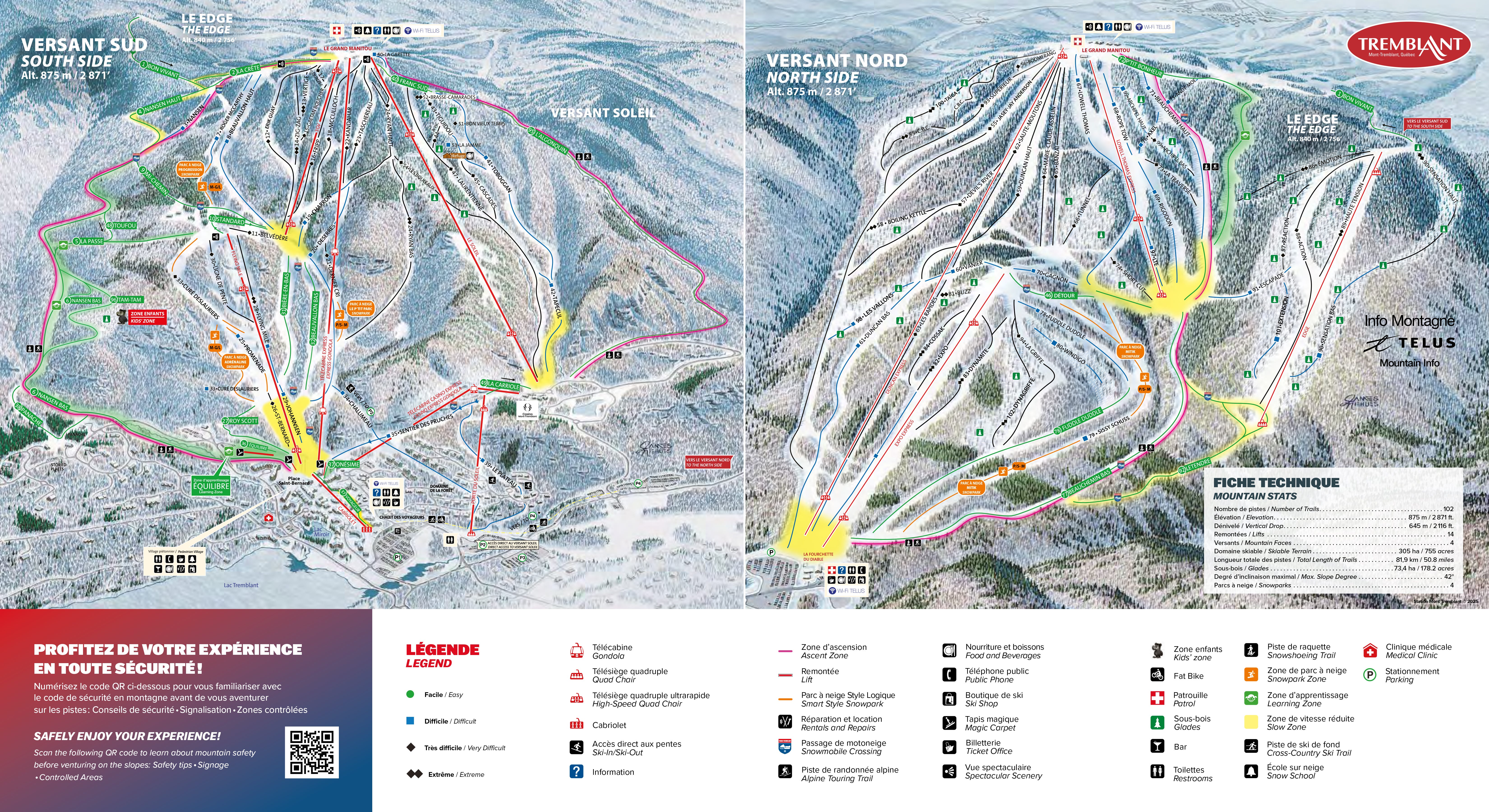


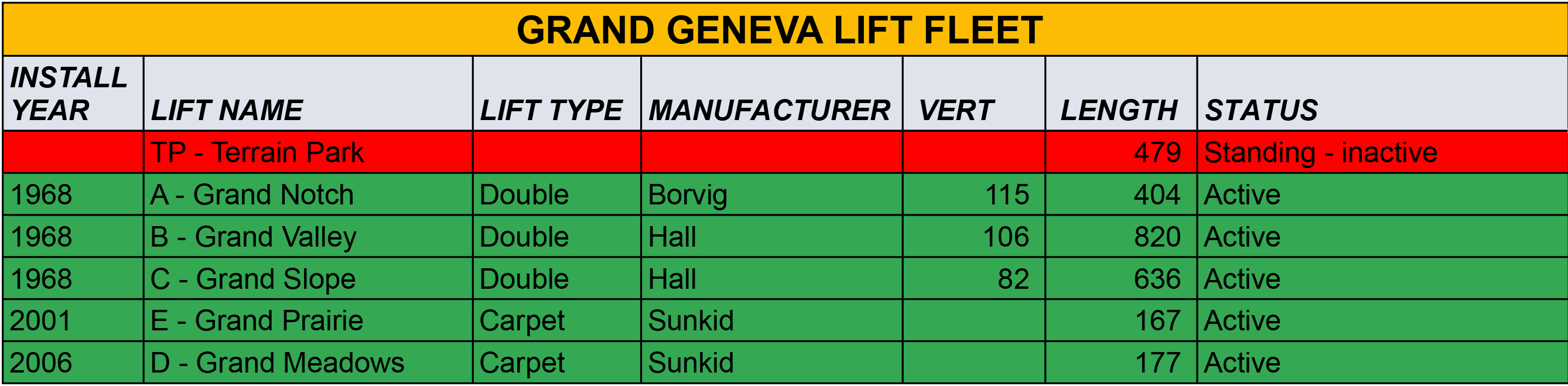
Showing 29 of 245
Pitch Fit is a Pro feature
See how bookable this show is for guests, which brands already advertise, the per-episode ad value, and the best-fit guest and sponsor profile. The numbers are blurred on the free plan.
How readily this show books outside guests like you.
How proven this show is for host-read sponsorships.
For Guests
ProFor Advertisers
ProUpgrade to Pro to unlock guest cadence, sponsor categories, fit scores, and per-episode ad value for this show.
Similar Audience Demographics
Podcasts that attract a similar listener profile


Chart history for The Storm Skiing Journal and Podcast
Peaked at #7 in New Zealand, top 10 in 1 of 9 tracked markets, currently #7 in New Zealand.
| Market | Genre | Peak | Current | Trend |
|---|---|---|---|---|
| New Zealand | — | #7 | #7 | — |
| South Korea | — | #29 | #29 | — |
| United States | — | #45 | #45 | — |
| CL | — | #47 | #47 | — |
| Australia | — | #62 | #62 | — |
| CZ | — | #126 | #126 | — |
| Canada | — | #156 | #156 | — |
| United Kingdom | — | #164 | #164 | — |
| New Zealand | — | #176 | #176 | — |
Chart Positions
9 placements across 8 markets.
Chart Positions
9 placements across 8 markets.