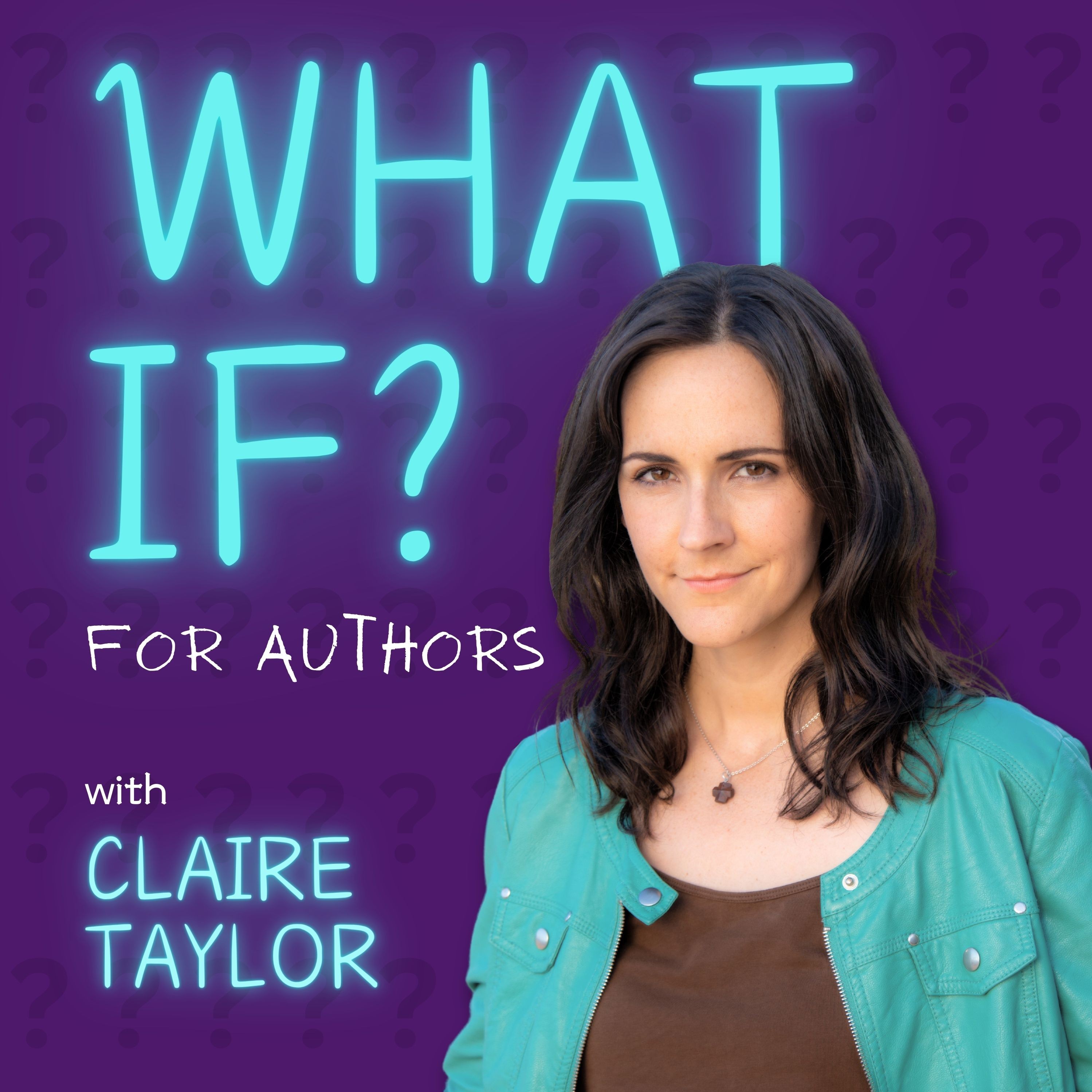
What If? For Authors
by Claire Taylor
Is this your podcast?On the show
From 10 epsHost
Recent guests
No guests detected in recent episodes.
Recent episodes
What if I know what to do but can't get myself to do it?
Oct 12, 2026
19m 38s
What if the central romance isn't working?
Sep 2, 2026
20m 29s
What if I don't know my antagonist?
Aug 10, 2026
25m 23s
What if I hate social media - 2026 edition
Jul 27, 2026
44m 53s
What if I don't know how to rest?
Jun 22, 2026
29m 50s
Insights from recent episode analysis
Audience Interest
Podcast Focus
Publishing Consistency
Platform Reach
Insights are generated by CastFox AI using publicly available data, episode content, and proprietary models.
Most discussed topics
Brands & references
Total monthly reach
Based on the show's feed history.
Built from
By chart position
- 🇳🇴NO · Careers#8816K to 196K
- Per-Episode Audience
Est. listeners per new episode within ~30 days
16K to 196K🎙 Biweekly cadence·63 episodes·Last published 1w ago - Monthly Reach
Unique listeners across all episodes (30 days)
23K to 280K🇺🇸71%🇳🇴29% - Active Followers
Loyal subscribers who consistently listen
9.1K to 112K
Market Insights
Platform Distribution
Reach across major podcast platforms, updated hourly
Total Followers
—
Total Plays
—
Total Reviews
—
* Data sourced directly from platform APIs and aggregated hourly across all major podcast directories.
Social Links & Contact
Official channels & resources
Official Website
Login
RSS Feed
Login
| Date | Episode | Topics | Guests | Brands | Places | Keywords | Sponsor | Length | |
|---|---|---|---|---|---|---|---|---|---|
| 10/12/26 | What if I know what to do but can't get myself to do it? | Episode Description In this episode of What If? For Authors, Claire tackles a common question for writers: what if I know what to do but just can’t get myself to do it? Whether you're struggling to finish a book series, start a new project, or make a business decision, the problem might not be a lack of discipline or motivation. Claire explores the deeper reasons we resist taking action, from following advice that doesn't actually align with our needs to holding onto projects we've outgrown, lacking essential resources, or confronting fears that make moving forward feel unsafe. In This Episode, You’ll Learn Why the thing you think you should do might not actually be right for you How holding onto old projects and expectations can prevent new opportunities Why letting go of a creative dream sometimes requires a period of grief How limited time, energy, money, or emotional support can create legitimate barriers to action What the window of tolerance is and how it affects your ability to handle discomfort The difference between healthy discomfort, hyperarousal, and hypoarousal How each Enneagram type can identify its particular patterns of avoidance, resistance, and fear When support from a friend, coach, or therapist might help you move forward Resources Mentioned Sustain Your Author Careerhttps://books2read.com/SYAC Liberated Writer (Coaching & Courses)liberatedwriter.com Liberated Writer Substackliberatedwriter.substack.com Support the Show If this episode gave you something to reflect on, here are a few ways to support the podcast: Leave a review on your favorite platform - it helps other authors find the show. Share this episode with an author who’s navigating similar challenges. Subscribe to Claire’s Substack for deeper insights on writing, the industry, and the author life. Happy writing! | 19m 38s | ||||||
| 9/2/26 | central romancecharacter development+3 | — | Write Iconic Relationships | — | romance writingEnneagram types+3 | — | 20m 29s | ||
| 8/10/26 | antagonist developmentcharacter conflict+3 | — | KickstarterWrite Iconic Relationships | — | antagonistprotagonist+4 | — | 25m 23s | ||
| 7/27/26 | social mediaauthor career+3 | — | Liberated WriterWrite Iconic Characters+3 | — | social mediaauthor+5 | — | 44m 53s | ||
| 6/22/26 | restproductivity+4 | — | Liberated WriterSubstack+1 | — | restproductivity+6 | — | 29m 50s | ||
| 5/25/26 | chronic overcommitmentinternal wounds+4 | — | Write Iconic CharactersLiberated Writer+1 | — | overcommitmentEnneagram+5 | — | 35m 03s | ||
| 5/5/26 | author communityregistration+3 | — | Liberatiwww.liberatedwriter.com | — | Liberatiauthor community+3 | — | 2m 53s | ||
| 4/20/26 | community buildingauthor relationships+4 | — | — | — | communityauthors+5 | — | 22m 33s | ||
| 3/19/26 | author communitycoaching+3 | — | the Liberatiwww.liberatedwriter.com | — | author communitycoaching+3 | — | 4m 37s | ||
| 3/16/26 | storytellingendings+4 | — | Iconic Five-Star Endings CourseWrite Iconic Relationships+1 | — | story endingsEnneagram+4 | — | 20m 29s | ||
Want analysis for the episodes below?Free for Pro Submit a request, we'll have your selected episodes analyzed within an hour. Free, at no cost to you, for Pro users. | |||||||||
| 2/16/26 | importance of writingoverwhelm in authors+3 | — | — | — | book importancewriter overwhelm+3 | — | 26m 34s | ||
| 1/19/26 | What if I just can't get ahead? | Episode Description: Many authors are doing everything right—publishing consistently, running promotions, chasing algorithms, investing in tools—and still can’t seem to get ahead financially. The books break even. The sales spike and disappear. The stress never really lets up. In this episode of What If? For Authors, Claire Taylor addresses a painful but essential question: What if struggling to get ahead isn’t a personal failure—but the predictable result of broken systems? Using the Enneagram as a framework for liberation (not self-blame), Claire explores why productivity hacks, discipline fixes, virality, and AI tools often function as promising distractions rather than real solutions. She unpacks how dominant cultural narratives—bootstrapping, meritocracy, savior myths, and algorithmic “neutrality”—keep authors exhausted, isolated, and blaming themselves instead of questioning the systems designed to extract their time, money, and attention. This episode is not about giving up. It’s about reclaiming agency, and choosing paths that reduce suffering, build solidarity, and support sustainable creative lives—on human terms. In this episode, you’ll learn: Why struggling financially as an author is not a moral or personal failure How the Enneagram helps distinguish inner work from systemic harm What “promising distractions” are—and how they keep authors trapped Why algorithms, ads, and platforms are not neutral or merit-based How savior-seeking keeps people exploitable and disempowered The hidden cost of tying hope to virality, productivity, or being “chosen” How internalized cultural narratives quietly sabotage creativity and wellbeing What genuine agency, community, and non-extractive alternatives can look like Why stepping back from writing (temporarily or permanently) is not shameful Key Takeaways: You are not broken—and you were never failing Many author systems are designed to extract, not sustain Optimization does not equal liberation Hope does not come from being saved—it comes from collective agency Building community is a radical act in an extractive industry Anger can be alchemized into clarity, solidarity, and action Resources & Links: Learn more about Claire’s coaching, courses, and books: liberatedwriter.com Write Iconic Characters: books2read.com/WIC Happy writing! | 32m 22s | ||||||
| 12/22/25 | What if there's no hope? | Episode Description In times of economic uncertainty, industry upheaval, and personal burnout, it can feel impossible to imagine a hopeful future—especially as an author whose dreams are often tied to outcomes beyond their control. In this episode of What If? For Authors, Claire tackles one of the hardest questions writers face: What if there’s no hope? Drawing on the Enneagram, existential psychology, and real-world author experience, Claire reframes hope not as an emotion or a promised outcome—but as a courageous choice we make, even (and especially) when things feel bleak. This episode is an invitation to loosen cynicism’s grip, detach hope from specific results, and rediscover the kind of hope that sustains creativity, value-based decisions, and long-term resilience—regardless of what the market, algorithms, or economy are doing. In This Episode, You’ll Learn: Why outcome-dependent hope inevitably collapses—and what to replace it with How losing hope shows up differently for each Enneagram type Why cynicism feels protective but quietly drains your creative life How privilege shapes our relationship to hope and “proof” What sustainable, outcome-independent hope actually looks like in practice Why you don’t need to feel hopeful to choose hope Small, concrete ways authors choose hope every day (often without realizing it) How writing itself can be an act of hope—for yourself and for others Key Takeaways: Hope is not a reward for good outcomes—it’s a prerequisite for meaningful action You can choose hope even when you’re tired, burned out, or unsure Small choices (rest, water, boundaries, honesty) are legitimate acts of hope Stories matter precisely because they imagine possibilities beyond present conditions Resources & Links: Learn more about Claire’s coaching, courses, and books: liberatedwriter.com Write Iconic Characters: books2read.com/WIC Happy writing! | 22m 20s | ||||||
| 11/24/25 | What if I'm stuck in doubt? | Episode Description: Being an author means navigating an endless maze of decisions — creative decisions, business decisions, financial decisions, social decisions — and at some point, all of us hit a wall where everything feels murky. The next step isn’t clear. The “right” answer seems to flicker between yes and no. And the longer we sit in that limbo, the more everything stalls. In this episode, Claire explores the anatomy of doubt: why we freeze, why uncertainty feels so emotionally loaded, and why some types (hello, Loyalists) live close to doubt every day while others completely unravel the moment they encounter it. If you’re stuck in doubt about your writing, career, or next steps — this episode gives you tools to reclaim clarity and reconnect with your inner authority. In this episode, you’ll learn: Why doubt is a human condition, not a character flaw The difference between not having enough information and being afraid to act How impatience, overthinking, or rushing toward certainty can backfire What “polarity” conflicts are and why they make some decisions feel impossible How losing trust in your inner authority derails decision-making Why burnout makes even simple choices feel overwhelming How to check in with your head, heart, and body to get clear on your next step Key questions that help you break out of the doubt spiral and move forward Key Takeaway: Doubt isn’t always a stop sign — sometimes it’s a signal to slow down, sometimes a nudge to reevaluate your values, and sometimes a warning that your nervous system is overwhelmed. But no matter the cause, you can learn to disentangle the noise, reconnect with your inner authority, and make decisions that honor who you are now. Support the Show: If today’s episode helped you breathe a little easier in the face of uncertainty, share it with another writer who might need it too. You can explore Claire’s courses, coaching, and books at liberatedwriter.com, including her newest release, Write Iconic Characters, available now through major retailers. Access the transcript here. Happy writing! | 28m 16s | ||||||
| 10/27/25 | What if I can't get started? | Episode Description: In this episode of What If? For Authors, Claire unpacks the hidden dynamics behind creative inertia. She explores why we freeze at the starting line, how to tell if it’s a sign of fear, exhaustion, or wisdom, and what to do when you can’t seem to move forward—no matter how hard you try. You’ll learn how to distinguish between procrastination and protection, why shame and “tough love” don’t actually help, and how to use curiosity and compassion to get yourself unstuck. With insight from the Enneagram, Claire also explores how each type experiences this resistance differently—and how you can build gentle, practical structures to help yourself begin again. In this episode, you’ll learn: Why struggling to start isn’t laziness—it’s information How to tell if your resistance is a pattern or a novelty, and why that matters What “body doubling” is, and how it can help Enneagram Nines build momentum How each Enneagram type tends to resist getting started (and what to do about it) Why friction can be a good sign for naturally fast starters How to check whether your resistance is fear, intuition, or simply exhaustion A powerful exercise to check in with your head, heart, and body centers before beginning What it really means to act courageously—even when the fear doesn’t go away Takeaway Challenge:Next time you can’t seem to get started, pause the shame spiral and turn to curiosity. Ask: Is this fear? Fatigue? A sign to pause? Then, listen to what your head, heart, and body have to say. If it’s still something worth doing, plan for courage—don’t wait for the fear to disappear first. Support the Show: If this episode helped you see your resistance in a new light, please share it with another author who might need to hear it too. You can also support What If For Authors by leaving a review wherever you listen—it helps more writers find the show. Want to explore these ideas more deeply? Visit liberatedwriter.com for Claire’s courses, coaching, and books on building a sustainable author career in uncertain times. Access the transcript here. Happy writing! | 24m 57s | ||||||
| 9/29/25 | What if I'm losing my ambition? | Episode Description: In this episode of What If? For Authors, Claire explores the nuanced relationship between ambition, fear, and contentment. What if your ambition isn’t really gone… but simply changing shape? With insight, humor, and plenty of hard truths, Claire unpacks how ambition often gets tangled up with fear—fear of worthlessness, fear of missing out, fear of falling behind—and how that mislabeling can make us think we’re “losing” something essential. She offers a reframing that helps authors understand the difference between fear-fueled ambition and hope-fueled ambition, and how to build a healthier, more sustainable drive in your creative career. If you’ve ever thought, “I used to be so motivated—what happened to me?” this episode is for you. In this episode, you’ll learn: The surprising truth about how ambition and contentment actually support each other Why ambition doesn’t have to feel like a fire under your ass How fear disguises itself as ambition (especially for Enneagram Threes and Sevens) Why tying ambition to outcomes you can’t control leads to burnout How to distinguish between “fear-driven” and “hope-driven” ambition A practical way to reframe self-talk so ambition feels energizing, not punishing Why practicing contentment won’t kill your ambition—it may save it Takeaway Challenge:Ask yourself: What would I find deeply gratifying to create—even if no one praised me for it? Sit with that answer. Notice how different it feels from fear-driven goals. Then, practice shifting one piece of your ambition toward hope, curiosity, or joy, instead of fear. Support the Show: If this episode helped you reimagine ambition in a healthier way, share it with another author who might need it too. You can also support the show by leaving a review wherever you listen—it makes a big difference in helping other writers find this resource. Want more support? Visit liberatedwriter.com to explore Claire’s coaching, courses, workshops, and books for building a sustainable, liberated writing career. Access the transcript here. Happy writing! | 25m 21s | ||||||
| 9/1/25 | What if I'm a perfectionist? | Episode Description: In this episode of What If For Authors, Claire asks the question: What if I’m a perfectionist? She breaks down the myth of “perfect,” explores how each Enneagram type approaches perfectionism differently, and offers practical ways to challenge the illusion of control that perfectionism creates. If you’ve ever stalled out because your draft “wasn’t good enough,” obsessed over tiny details at the expense of joy, or secretly feared that one mistake could ruin everything—you’ll find both relief and encouragement in this conversation. In this episode, you'll learn: Why the concept of “perfection” is made up—and how that realization can set you free How idealism (a beautiful quality) can twist into painful perfectionism The hidden childhood lessons that might have taught you mistakes weren’t safe Why perfectionism doesn’t produce perfect books—it produces stuck authors How each Enneagram type disguises perfectionism in its own way Why publishing a book will always feel vulnerable (and why that’s good news) A simple practice to start loosening perfectionism’s grip today Takeaway Challenge:Make one mistake on purpose this week—and leave it there. Whether it’s leaving a typo in a draft, breaking one of your own “rules,” or letting something slide without fixing it, notice what happens. Is it really the catastrophe your perfectionism promised? Or is it… nothing at all? Support the Show: If this episode gave you permission to breathe a little deeper, please share it with another author who could use the same relief. You can also support the show by leaving a review wherever you listen—it helps more perfectionist authors find their way here. Want to go deeper? Visit liberatedwriter.com to explore Claire’s coaching, courses, and books designed to help authors thrive without perfectionism weighing them down. Access the transcript here. Happy writing! | 24m 28s | ||||||
| 8/4/25 | What if I need more certainty? | Episode Description: In this episode, Claire dives headfirst into a topic that feels especially timely in a chaotic world and unpredictable industry: the craving for certainty. What if you need to know how something will turn out before you take the risk? What if uncertainty keeps you frozen, anxious, or constantly second-guessing your choices? With equal parts humor and wisdom (and a little sleep deprivation), Claire explores how our brains seek certainty for safety, how this impulse shows up differently for each Enneagram type, and how clinging to certainty can actually keep us stuck. She offers a powerful mindset shift that helps authors stop grasping for guarantees and start building confidence in their own resilience. If you've ever thought, “If this doesn’t work, I don’t know what I’ll do,” this episode gives you practical tools to turn that fear into forward momentum. In this episode, you'll learn: Why certainty is so alluring—and how it tricks us into playing small How each Enneagram type tends to seek certainty in their creative work The danger of mistaking plans or perfectionism for actual security What a “toolbox” of internal resources is, and how to build yours How to shift your mindset from “I need this to work” to “I’ll figure it out either way” Why failure hurts—but doesn’t have to stop you How your rebounding process can become a source of self-respect Takeaway Challenge:Inventory your “toolbox.” What inner resources, skills, support systems, and past experiences remind you that you’ve handled hard things before? Add to it regularly. Confidence doesn’t come from knowing the future—it comes from trusting that you’ll know what to do when the future arrives. Support the Show: If this episode helped you see uncertainty in a new light, please consider leaving a review on your favorite podcast platform and sharing it with your author friends. Want more guidance? Visit liberatedwriter.com to explore Claire’s coaching, courses, and books for authors navigating the wild world of publishing with purpose. Access the transcript here. Happy writing—and yes, you can handle the bad parts. | 25m 12s | ||||||
| 7/28/25 | What if I don't know my protagonist? | Episode Description: In this special bonus episode, Claire shares practical, story-focused advice for one of the most common (and frustrating) issues writers face: not knowing their protagonist. Whether your main character feels flat, unmotivated, or like a stranger you just can’t crack, this episode offers a clear path forward—with help from the Enneagram, of course. Claire explains how understanding your protagonist’s core fear and desire can unlock their behavior, clarify their voice, and get your story moving again. She also walks you through the process of choosing the right Enneagram type for your character, using concrete examples to show how motivation drives everything from plot to emotional depth. Plus, she shares an exciting update about her new book, Write Iconic Characters, and its currently-running Kickstarter campaign! In this episode, you'll learn: Why some protagonists “refuse” to follow the plot—and how to fix it How to use Enneagram types to shape character motivation What to do when you’ve blended multiple Enneagram types by accident The simplest way to start creating a protagonist who feels authentic Why writing your own Enneagram type can actually be a storytelling superpower How to reverse-engineer your protagonist based on your story world or theme What to do if your usual character-building methods aren’t working Back the Write Iconic Characters Kickstarter (ends Aug 8): https://liberatedwriter.com/kickstarter Support the Show: If you found this episode thought-provoking and helpful, please leave a review on your favorite podcast platform and share it with fellow authors. Every review helps more writers discover this resource. Access the transcript here. Happy Writing! | 15m 28s | ||||||
| 7/7/25 | What if I hate networking? | Episode Description: In this episode, Claire explores why so many authors hate networking (hint: it’s not because you’re antisocial), how the Enneagram can reveal the hidden gifts you bring to any professional community, and why deep, meaningful connections—not surface-level ones—are the real magic behind sustainable author careers. Whether you’re a conference avoider, an online lurker, or someone who thinks they’re just bad at making friends, this episode is packed with practical advice, gentle encouragement, and some hard-won insights about what it takes to build a network that actually feeds you. In this episode, you'll learn: Why many authors resist networking—and how to gently shift that mindset How your Enneagram type may influence your relationship with connection The difference between transactional vs. transformational networks Tips for building relationships that don’t feel forced or fake What to do if you're socially anxious, neurodivergent, or easily overwhelmed Simple strategies to start (or deepen) meaningful author connections Takeaway Challenge:Reach out to one person in the writing industry you like but haven’t spoken to in a while. Just say hi. Ask how they’re doing. That’s it. That’s networking. Support the Show: If you found this episode thought-provoking and helpful, please leave a review on your favorite podcast platform and share it with fellow authors. Every review helps more writers discover this resource. Access the transcript here. Happy Writing! | 29m 04s | ||||||
| 6/9/25 | What if I need help? | Episode Description: In this episode, Claire dives into a pattern she knows all too well — the belief that she has to solve everything on her own. Sound familiar? If you’ve ever curled up in bed overwhelmed by the weight of being a one-person problem-solving machine, this episode is for you. Claire explores the roots of this pattern, tracing it back to childhood perceptions and our culture’s celebration of rugged individualism. She talks through the moment she realized that not only could she ask for help, but she might actually want to — even if it feels wildly uncomfortable at first. Using her signature blend of coaching insight, author empathy, and a bit of humor, Claire breaks down: What gets in the way of asking for help How fear narrows our options Why it’s so hard for authors (and humans) to even imagine what help might look like The different types of help we might need — physical, emotional, intellectual The critical difference between interdependence and codependence Whether you're burning out from doing it all yourself, feeling emotionally isolated, or simply wondering if there’s an easier way, this episode offers clarity, compassion, and a gentle nudge toward a more sustainable, connected writing life. Key Takeaways: Naming your self-reliance pattern is the first step toward choosing something different. Help can be practical or emotional — both are valid, needed, and deeply human. Interdependence is healthy and necessary; it’s not a weakness, it’s a strength. You don’t have to wait until you can’t to say I won’t. Support the Show: If you found this episode thought-provoking and helpful, please leave a review on your favorite podcast platform and share it with fellow authors. Every review helps more writers discover this resource. What’s Next?: If this episode hit home, take a few minutes to sit with the question: “What kind of help would I want, even if I don’t technically need it?” Then, try something wild… ask for it. Access the transcript here. Happy Writing! | 30m 33s | ||||||
| 5/12/25 | What if I'm an emotion-oriented writer? | Episode Description: In this episode of What If? For Authors, Claire completes her exploration of writer orientations by diving into the world of emotion-oriented authors. If you lead with the heart when writing, this episode is for you. Claire explores how the emotional orientation manifests in different Enneagram types (especially 2s, 3s, and 4s), the unique strengths and challenges this style brings, and how emotion-driven writing can both elevate your work and stall your process if you’re not careful. Plus, get insights on how to balance emotion with action and logic to bring your stories to life with impact and clarity. In This Episode: What makes someone an emotion-oriented writer How the Enneagram heart types (2, 3, 4) each engage with emotion in the creative process Why 3s avoid emotion—and what happens when they slow down enough to feel How 2s' people-pleasing tendencies can derail their writing The way 4s can get stuck in emotional complexity and how to access universality through others What to watch out for if your emotion center is strong but action or thinking is underdeveloped Tips for managing overwhelming emotions that block progress How to differentiate between emotions that need to be observed vs. acted on The importance of emotional discernment for creative sustainability Practical Takeaway: Emotion-oriented writers don’t need to tone down their feelings—but they do need to balance them with thoughtful structure and forward momentum. Learn to discern which emotions are fuel for your writing and which are simply data to be acknowledged and released. Support the Show: If you found this episode thought-provoking and helpful, please leave a review on your favorite podcast platform and share it with fellow authors. Every review helps more writers discover this resource. Join the Conversation: Are you an emotion-oriented writer? What challenges or strengths have you noticed in your process? Share your experience by replying to this episode post or tagging Claire on social media. Access the transcript here. Happy Writing! | 21m 57s | ||||||
| 4/14/25 | What if I don't feel safe? | Episode Description: In this episode of What If? For Authors, Claire tackles one of the most quietly powerful questions lurking beneath so many of our writing blocks: What if I don’t feel safe? Safety isn’t just about locked doors and quiet neighborhoods. It shows up in four key forms: Physical safety (Is your body secure — and does it know it’s secure?) Emotional safety (Can you express your true feelings with yourself and others without fear of rejection or judgment?) Intellectual safety (Do you feel free to say “I don’t know,” stay curious, and risk being wrong?) Spiritual safety (Are you able to explore beliefs, questions, and doubts without being cast out or silenced — by others or by yourself?) Claire explores how lacking safety in any of these areas can quietly suffocate creativity, lead to writer’s block, and keep us from fully connecting to the stories we want to tell. She also shares: Why your nervous system sometimes can't tell the difference between being safe and feeling safe. How trauma, people-pleasing, perfectionism, and even the relationships around you can subtly limit your creative freedom. The difference between real danger and perceived danger, and why naming the fear can shrink it. Why discomfort isn’t always a sign to stop — and why it’s essential to learn how to move forward even when you’re uncomfortable. Why becoming a “safe person” for yourself and others will make you a stronger and more fearless creator. Why You Should Listen: This episode offers a thoughtful, compassionate look at why the modern world can feel increasingly unsafe, how to sort through those feelings, and how building practices for emotional, intellectual, physical, and spiritual safety can liberate both your writing and your life. Support the Show: If you found this episode thought-provoking and helpful, please leave a review on your favorite podcast platform and share it with fellow authors. Every review helps more writers discover this resource. Join the Conversation: Share your insights with Claire by emailing [email protected] or connecting on social media. Access the transcript here. Happy Writing! | 25m 21s | ||||||
| 3/17/25 | What if I'm a private person? | Episode Description: In this episode of What If? For Authors, Claire dives into a deeply personal question: What if I'm a private person? If you feel more comfortable keeping parts of your life under wraps and struggle with the pressure to overshare, this conversation is for you. Claire explores the right to privacy as a basic human need and examines how personal boundaries can be both a shield and a source of strength in your writing career. Drawing on her own experiences and insights from the Enneagram, she discusses how embracing your privacy can empower your creative voice while still allowing meaningful connections with your audience. Tune in to discover strategies for balancing what you share with the world and what you keep for yourself—and learn how being a private person can be a powerful asset in your author journey. Key Takeaways: Interwoven Rights: Discover how free speech and privacy are intertwined pillars of creative and personal freedom, and why protecting one often means defending the other. Legal Protections: Understand the scope and limitations of the First Amendment—not only as a guardian of free expression but also as a shield for your private life. Erosion of Privacy: Learn about the subtle ways in which political maneuvers and legal gray areas may gradually undermine your privacy and the implications for authors. Staying Grounded: Explore strategies to remain mindful and resilient amid external chaos, focusing on what you can control: your thoughts, actions, and personal narrative. Empowered Expression: Embrace the power of choosing what to share and what to keep private, and how this balance can liberate your creative voice. Why You Should Listen: If you’re an author or creative concerned about maintaining your personal privacy while exercising your right to free expression, this episode is for you. Claire blends snark, insight, and personal anecdotes to help you navigate these complex issues in a rapidly changing world. Whether you’re worried about government overreach, digital surveillance, or just the erosion of personal boundaries, you’ll gain practical perspectives on how to protect your privacy and empower your writing. Support the Show: If you found this episode thought-provoking and helpful, please leave a review on your favorite podcast platform and share it with fellow authors. Every review helps more writers discover this resource. Join the Conversation: How do you balance your need for privacy with the demands of building an audience? What are your thoughts on the current state of free speech and personal privacy? Share your insights with Claire by emailing [email protected] or connecting on social media. Happy Writing! | 26m 17s | ||||||
| 2/17/25 | What if I'm an action-oriented writer? | Episode Description: In this episode of What If for Authors, Claire explores the challenges and benefits of being an action-oriented writer. Drawing on her Enneagram expertise, Claire delves into what it means to lead with action in your writing process—balancing the need to move forward with moments of pause for reflection and emotional connection. She shares personal insights on managing overwhelming schedules, the importance of intentional pauses, and how to leverage your innate action-oriented strengths without burning out. Key Takeaways: Understanding Action Orientation: Discover what it means to be an action-oriented writer and how it may manifest differently based on your Enneagram type and subtype. Recognize that being action oriented doesn’t preclude using planning or intuition—it's about finding your unique balance. The Power of Pausing: Learn why even action oriented writers benefit from occasional pauses to check in with their emotions and thoughts. Explore strategies to avoid unproductive action that arises from trying to outrun negative feelings. Balancing Productivity with Self-Care: Understand the pitfalls of overloading your schedule with responsibilities as a misguided attempt to maintain control. Embrace the idea that taking time to pause, reflect, and even connect with loved ones can ultimately enhance your writing. Practical Strategies: Consider setting up realistic, sustainable work habits and allowing room for flexibility in your creative process. Use techniques like mindfulness to refocus and reclaim your energy when your schedule feels overwhelming. Why You Should Listen: If you’re an author who thrives on action but finds yourself occasionally overwhelmed by your own pace or the pressure to always be moving forward, this episode is for you. Claire offers a refreshing perspective on how to harness your action-oriented strengths while incorporating essential pauses for growth and self-reflection. Whether you're struggling to maintain balance or looking for ways to optimize your creative process, you'll gain valuable insights to empower your author journey. Support the Show: If you enjoyed this episode, please consider leaving a review on your favorite podcast platform and sharing the show with fellow authors. Every review helps more writers discover these insights and join our community. Join the Conversation: We’d love to hear your thoughts! How do you balance action and reflection in your writing process? What strategies have helped you avoid burnout while staying productive? Share your insights with Claire by emailing [email protected] or connect on social media. Transition Announcement: As a quick update, Claire announces that the podcast will be transitioning from a weekly to a monthly schedule. This change will help ensure the quality and sustainability of the show and protect Claire’s sanity, so be sure to stay tuned for the next episode! Happy Writing! | 18m 37s | ||||||
Showing 25 of 63
Pitch Fit is a Pro feature
See how bookable this show is for guests, which brands already advertise, the per-episode ad value, and the best-fit guest and sponsor profile. The numbers are blurred on the free plan.
How readily this show books outside guests like you.
How proven this show is for host-read sponsorships.
For Guests
ProFor Advertisers
ProUpgrade to Pro to unlock guest cadence, sponsor categories, fit scores, and per-episode ad value for this show.
Similar Audience Demographics
Podcasts that attract a similar listener profile

QuitCast for Writers with Becca Syme
Becca Syme
The Creative Penn Podcast For Writers
Joanna Penn

Wish I'd Known Then: a Podcast for Self Published Indie Writers
Sara Rosett and Jami Albright

The Two Authors’ Podcast
Harvey Books, LLC

SPA Girls Podcast
SPA Girls podcast - self publishing for authors

The Sell More Books Show: Book Marketing, Digital Publishing and Kindle News, Tools and Advice
Bryan Cohen and H. Claire Taylor: Self Publishing Author Entrepreneurs

The Shit No One Tells You About Writing
Bianca Marais, Carly Watters and CeCe Lyra
Chart history for What If? For Authors
Peaked at #88 in Norway, currently #88 in Norway.
| Market | Genre | Peak | Current | Trend |
|---|---|---|---|---|
| Norway | — | #88 | #88 | — |
Chart Positions
1 placement across 1 market.
Chart Positions
1 placement across 1 market.