
Business for Good Podcast
by Paul Shapiro
Is this your podcast?Insights from recent episode analysis
Audience Interest
Podcast Focus
Publishing Consistency
Platform Reach
Insights are generated by CastFox AI using publicly available data, episode content, and proprietary models.
Most discussed topics
Brands & references
Total monthly reach
Estimated from 1 chart position in 1 market.
By chart position
- 🇮🇱IL · Business#873K to 10K
- Per-Episode Audience
Est. listeners per new episode within ~30 days
1.5K to 5K🎙 ~2x weekly·190 episodes·Last published 2w ago - Monthly Reach
Unique listeners across all episodes (30 days)
3K to 10K🇮🇱100% - Active Followers
Loyal subscribers who consistently listen
900 to 3K
Market Insights
Platform Distribution
Reach across major podcast platforms, updated hourly
Total Followers
—
Total Plays
—
Total Reviews
—
* Data sourced directly from platform APIs and aggregated hourly across all major podcast directories.
On the show
From 10 epsHost
Recent guests
Recent episodes
The Geothermal Startup That Made It Big
Aug 15, 2026
Unknown duration
Did America Forget How to Build Nuclear Energy?
Aug 1, 2026
Unknown duration
The Lean Startup's Eric Ries on How Good Companies Go Bad
Jul 15, 2026
52m 57s
How a Biologist Built a Startup to Stop Billions of Bird Deaths with Dominique Waddoup
Jul 1, 2026
37m 10s
Turning Waste Biomass Into Carbon-Negative Buildings with Allison Dring
Jun 15, 2026
40m 39s
Social Links & Contact
Official channels & resources
Official Website
Login
RSS Feed
Login
| Date | Episode | Topics | Guests | Brands | Places | Keywords | Sponsor | Length | |
|---|---|---|---|---|---|---|---|---|---|
| 8/15/26 |  The Geothermal Startup That Made It Big | What if the same drilling technology that powered the shale boom could be redirected to produce clean, carbon-free electricity around the clock? In this episode of Business For Good, Paul Shapiro sits down with Tim Latimer, CEO and chairman of Fervo Energy, to explore how a former oil and gas drilling engineer built one of the most celebrated clean energy companies in the country in under a decade. Tim started Fervo in 2017 with two core beliefs: that the world would need more reliable clean electricity, and that advances in horizontal drilling had made geothermal energy dramatically more cost-effective than anyone in the geothermal industry realized. Those beliefs led to a partnership with Google, a pilot project in Nevada that produced the first horizontal geothermal well ever drilled, and a 2026 IPO that raised over $2 billion. The conversation covers why geothermal has remained a rounding error in the energy mix for over a century, how Fervo reduced drilling times from 70 days to 21 days in just four years, why their process differs fundamentally from oil and gas fracking, and what milestones investors should watch as the company scales toward 500 megawatts at its Project Cape site in Utah. Things You Will Learn: Why geothermal energy has remained less than 1% of U.S. electricity despite being over a century old. How horizontal drilling technology borrowed from oil and gas is transforming the cost structure of geothermal power. Why Fervo's process is structurally different from fossil fuel fracking, even though it borrows similar techniques. How Fervo went from startup to a multi-billion-dollar publicly traded company in under a decade. Where the next wave of geothermal entrepreneurship opportunities may emerge across the value chain. Tools & Frameworks Covered: Horizontal Drilling for Geothermal: Applying directional drilling techniques from the oil and gas industry to access deeper, hotter rock formations and dramatically increase well productivity compared to traditional vertical geothermal wells. The Earned Secret Framework: The idea that successful startups are built on insights that incumbents have missed, whether because the timing was not right, the technology had not yet transferred across industries, or conventional wisdom had not caught up with reality. Investors Invest on a Line, Not a Point: A fundraising philosophy emphasizing consistent delivery against stated milestones over multiple rounds, building credibility that compounds with each stage of execution. #BusinessForGood #SustainableBusiness #CleanEnergy #FutureOfEnergy | — | ||||||
| 8/1/26 |  Did America Forget How to Build Nuclear Energy? | Nuclear energy was supposed to transform the world. Then came Chernobyl, Three Mile Island, and Fukushima, and public trust collapsed. But for 25 years, engineers across a dozen countries have been quietly designing a new generation of reactors built to fail safely without relying on human intervention or mechanical backup systems. And the target date they set back in 2000 is almost here. In this episode of Business For Good, Paul Shapiro speaks with Edward Friedman, a nuclear historian and advocate who has been writing and speaking publicly about nuclear energy since 1961. Edward walks through the misunderstandings that still shape public perception of nuclear accidents, explains why Generation IV reactor designs represent a fundamental shift in safety architecture, and lays out why the United States risks falling behind China and Russia in building the energy infrastructure the climate crisis demands. Things You Will Learn: Why Generation 4 nuclear reactors are designed to shut down on their own using the laws of physics, without relying on human operators or mechanical safety systems. How the Godzilla franchise shaped decades of public fear about radiation far beyond what the science supports. Why China has connected 55 new nuclear reactors to its grid since 2000 while the United States has connected only three. How Bill Gates' TerraPower plans to replace coal plants with sodium-cooled nuclear reactors of identical size and power output. Why training programs for nuclear technicians and support staff may be one of the biggest bottlenecks in scaling nuclear energy. Tools & Frameworks Covered: Generation IV International Forum: A multinational collaboration launched in 2000 to develop four categories of advanced nuclear reactor designs that are fail-safe, economical, and do not use water-based cooling systems. Fail-Safe Reactor Design: An engineering approach in which reactors shut themselves down through the laws of physics when overheated, using mechanisms like fluid expansion or melt plugs rather than human intervention or active mechanical systems. Coal-to-Nuclear Replacement Model: Bill Gates' strategy of building nuclear reactors sized to match existing coal plants, enabling direct replacement of fossil fuel infrastructure without redesigning the surrounding grid. #BusinessForGood #FutureOfFood #AlternativeProtein #SustainableBusiness | — | ||||||
| 7/15/26 | corporate corruptionfinancial gravity+4 | Eric Ries | PatagoniaIKEA+4 | — | financial gravitycorporate governance+5 | — | 52m 57s | ||
| 7/1/26 | bird conservationstartup+4 | Dominique Waddoup | BirdShades | NepalUS+2 | bird deathswindow collisions+5 | — | 37m 10s | ||
| 6/15/26 | carbon-negative buildingswaste biomass+3 | Allison Dring | Made of Air | — | carbon-negativebiochar+5 | — | 40m 39s | ||
| 6/1/26 | ocean restorationcoral reefs+3 | Dr. Ulrike Pfreundt | rrreefs | — | coral reefsocean restoration+3 | — | 34m 52s | ||
| 5/15/26 | sustainabilityenvironmental impact+3 | Hannah Ritchie | Our World in DataNot the End of the World+1 | — | carbon footprintlocal food+5 | — | 53m 27s | ||
| 5/1/26 | alternative proteinprecision fermentation+4 | Jim Mellon | Clean Food GroupMondelēz+1 | LiverpoolMiddle East | alternative proteinprecision fermentation+5 | — | 51m 23s | ||
| 4/15/26 | biodiversityventure capital+4 | Tom Quigley | Superorganism | — | biodiversityventure capital+8 | — | 56m 04s | ||
| 4/1/26 | wildlife intelligenceAI technology+3 | Sára Nožková | Flox Intelligence | — | AIwildlife+5 | — | 35m 38s | ||
Want analysis for the episodes below?Free for Pro Submit a request, we'll have your selected episodes analyzed within an hour. Free, at no cost to you, for Pro users. | |||||||||
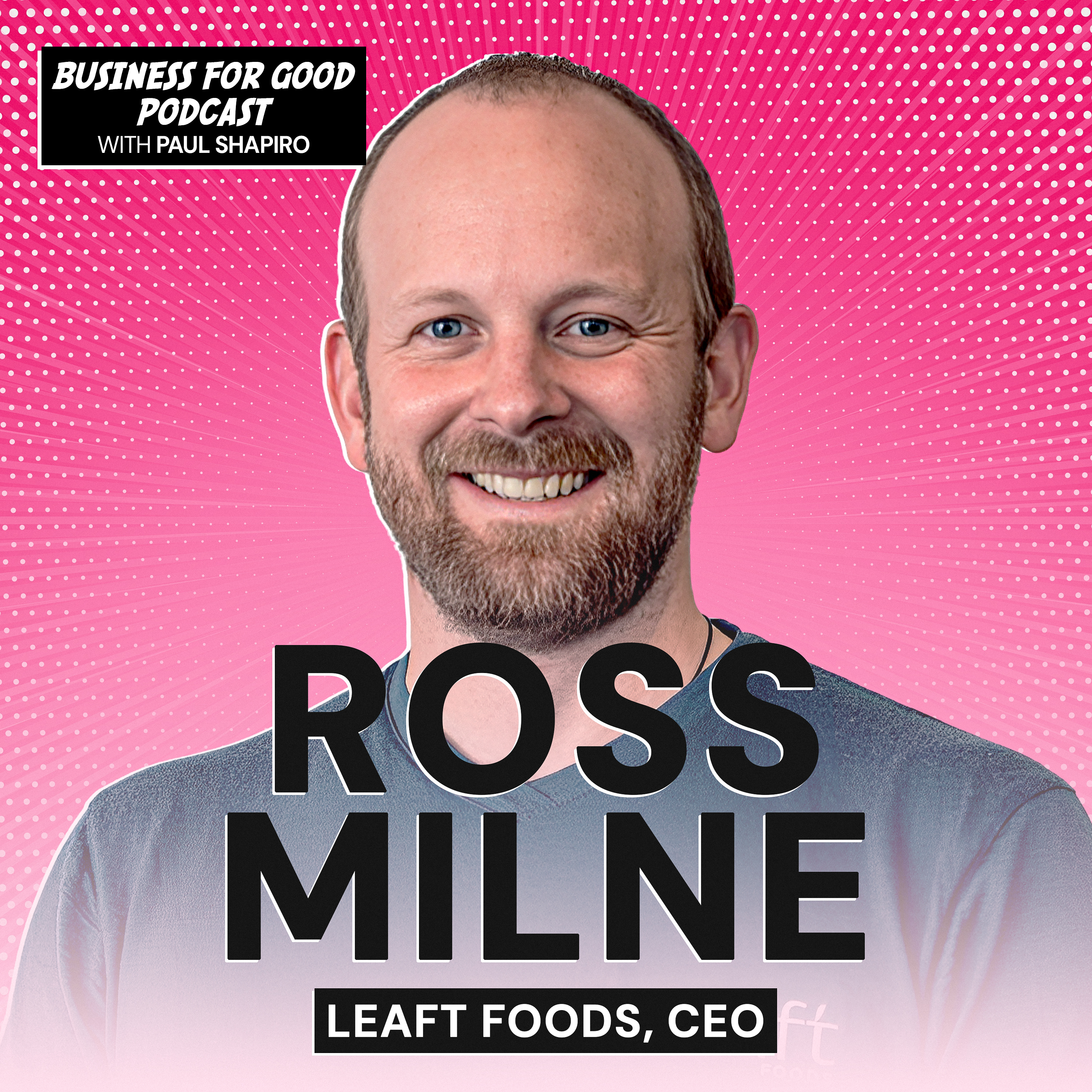
| 3/15/26 | plant-based proteinfood production+4 | Ross Milne | RubiscoAlfalfa+4 | — | high-performing proteingreen leaves+3 | — | 41m 08s | ||
| 3/1/26 | vasectomiesfamily planning+3 | Dr. Douglas Stein | The Vasectomist | — | vasectomyfamily planning+3 | — | 50m 26s | ||
| 2/15/26 | 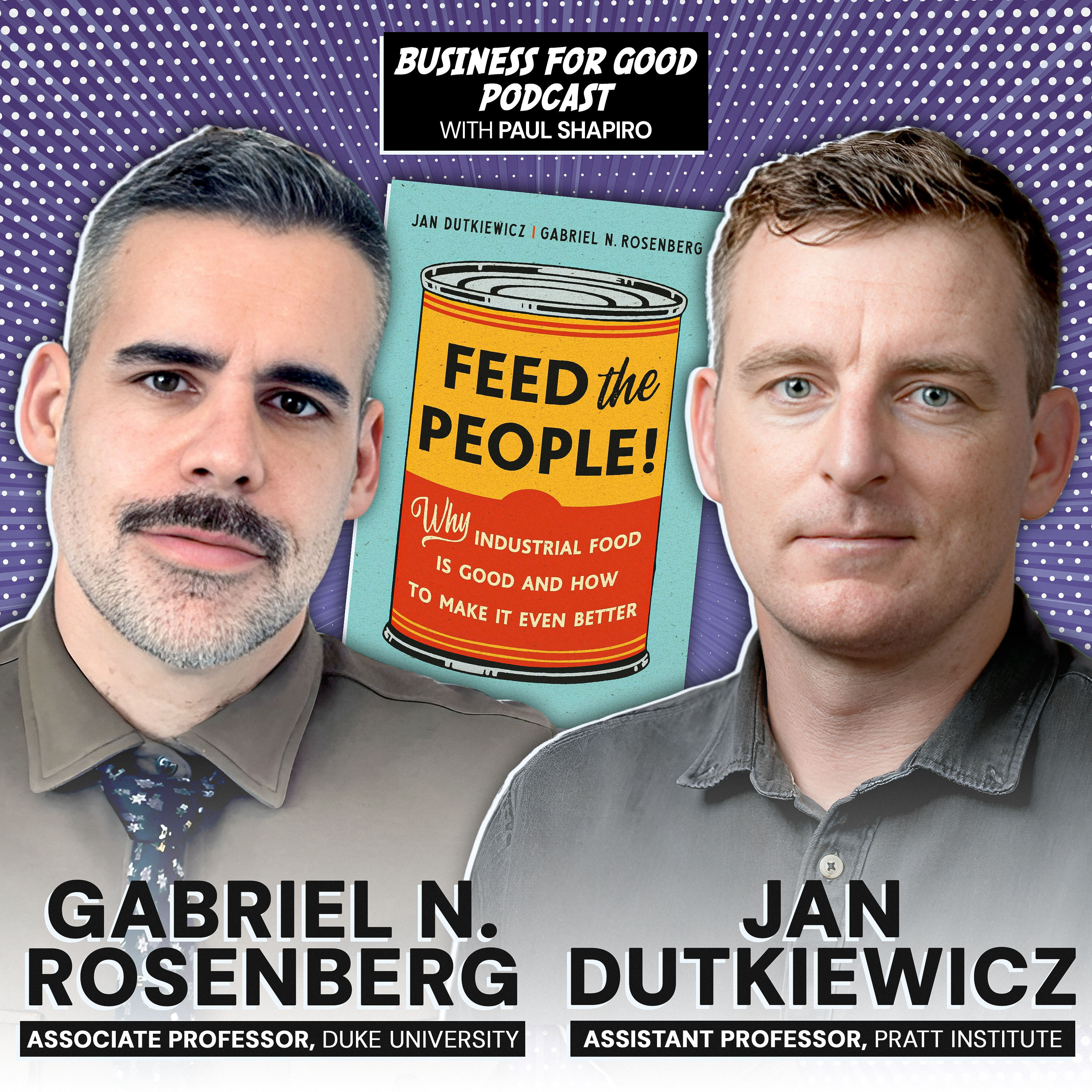 Feed the People Authors on Abundance, Food Policy, and Meat Demand | Episode Summary What if the global food system isn't "broken" in the way sustainability debates usually claim, and treating it that way leads to worse decisions? Paul Shapiro sits down with Jan Dutkiewicz and Gabriel Rosenberg, authors of Feed the People, to unpack how industrial scale and trade created unprecedented food abundance, why "eat local" and small-farm nostalgia collapses at 8 billion people, and what practical policy levers can improve outcomes without fantasy. They explore a clear framework, more food, less feed, no fuel, why animal agriculture remains an inefficient use of land and protein, and how public policy can reshape meat demand by changing incentives instead of accepting forecasts as fate. You'll leave with sharper systems thinking, grounded tradeoffs, and a clearer view of what scalable food system decarbonization can actually look like. Things You Will Learn How to evaluate food system claims using systems logic instead of slogans. Why meat demand rises, and how policy can bend the curve without moralizing. What "more food, less feed, no fuel" implies for land use, emissions, and investment priorities. Tools & Frameworks Covered More food, less feed, no fuel. Prioritizes crops for human food over animal feed and biofuels. Incentives over narratives. Shows how policy choices shape production, prices, and demand. Democratic hedonism. Meets people where they are, then reduces harm at scale. #BusinessForGood #SustainableBusiness #FutureOfFood #AlternativeProtein #FoodSystemDecarbonization | — | ||||||
| 2/1/26 |  Bruce Friedrich (Good Food Institute) on Taste, Price, and What It Takes to Scale Alternative Meat | Alternative meat looks like it is collapsing. Startups are shutting down, funding is drying up, and headlines are calling the category finished, but that reaction may reflect a misunderstanding of how technological revolutions actually unfold. Bruce Friedrich, President of the Good Food Institute and author of Meat: How the Next Agricultural Revolution Will Transform Humanity's Favorite Food and Our Future, explains why most people will not change behavior for values alone, why price and taste are the real adoption gates, and why "only" $3 billion in cultivated meat funding is far smaller than it sounds when spread across years and companies. Paul and Bruce discuss what it will take to reach taste and price parity, why governments increasingly view alternative protein as food security and national security infrastructure, and why today's failures can be a normal feature of early-stage category formation rather than proof the model will not work. You will leave with a clearer, more evidence-driven view of what is happening now and what progress actually looks like. Things You Will Learn: How taste and price parity shape S-curve adoption in food, regardless of ethics or intent Why $3B in cultivated meat investment may be insufficient relative to comparable industrial innovation cycles How food security, geopolitical risk, and economic competitiveness are driving government interest in alternative protein Tools & Frameworks Covered: S-Curve Adoption – helps evaluate whether setbacks are normal in scaling technologies Eliminating the Green Premium – helps frame what it takes for sustainable products to win at mass-market scale B2B Enablement Strategy – helps identify leverage points that unlock category-wide progress #BusinessForGood #SustainableBusiness #FutureOfFood #AlternativeProtein #PrecisionFermentation | — | ||||||
| 1/15/26 |  Modern Mill's Chris Guimond on Upcycling Rice Hulls Into Low Maintenance Building Materials | Episode Summary A rice field does not look like the starting point for a scalable building materials company until you understand the economics behind it. In this episode of Business For Good, Paul Shapiro sits down with Chris Guimond, Founder and CEO of Modern Mill, to explore how discarded rice hulls are being transformed into ACRE, a wood like siding, decking, and trim product designed to replace old growth lumber. Chris explains why deforestation is a supply and demand problem, how Modern Mill cracked the manufacturing and adoption challenges that derail most composites, and what it takes to raise significant capital to build real infrastructure in the United States. The conversation covers circular economy manufacturing, competing with billion dollar incumbents, and why climate solutions scale only when they outperform existing systems on cost, durability, and ease of use. Things You Will Learn Why most sustainable materials fail at adoption and how to avoid that trap How supply chain location determines whether upcycling works economically What it takes to scale a hard tech manufacturing business in a legacy industry Tools and Frameworks Covered Supply chain proximity strategy to control logistics costs and reliability Adoption first product design for builders and contractors Capacity planning to scale manufacturing without breaking trust Episode Timestamps 05:10 – Why rice hulls present a hidden opportunity in building materials 08:56 – Cracking the code on turning agricultural waste into scalable products 13:20 – Why most composites fail to replace wood 25:20 – How logistics and location shape upcycling economics 35:10 – Scaling capacity before demand fully arrives #BusinessForGood #SustainableBusiness #CircularEconomy #ClimateSolutions #FutureOfFood | — | ||||||
| 1/1/26 |  Deep Fission: Using Boreholes to Cut Nuclear Costs and Deliver 24/7 Clean Electricity | What if the fastest path to reliable clean electricity is not a new reactor design, but a new place to put one? In this conversation, Paul Shapiro speaks with Elizabeth Muller, CEO of Deep Fission, about a plan to place a conventional pressurized water reactor roughly a mile underground to use geology, gravity, and groundwater for containment, pressure, and emergency cooling, potentially cutting total nuclear costs by as much as 80%. They unpack how a narrow borehole reactor could serve always-on demand from data centers and industrial users, what "proven tech combined in a new way" really means, how safety and groundwater concerns are handled through regulation and engineering practices, and the practical milestones from pilot to commercial operation so listeners can evaluate what it would take for underground nuclear to scale. Things You Will Learn How putting a conventional reactor in a mile-deep borehole can replace major above-ground systems and cut nuclear cost drivers. How Deep Fission thinks about worst-case scenarios, groundwater protection, and regulatory proof points. What milestones convert LOIs into power purchase agreements, and what timelines look like for early deployment. Tools & Frameworks Covered Geology-as-infrastructure – Uses rock, gravity, and water to replace containment and pressurization systems. Mature-tech recombination – Combines proven reactors, drilling, and geothermal heat transfer to speed time to market. Pilot-to-commercial pathway – Separates "go critical" demonstration from commercial electricity generation milestones. Episode Timestamps04:55 – Why a mile underground could cut nuclear costs by about 80% 08:47 – Borehole size, reactor dimensions, and how the hardware fits 09:31 – Replacement strategy, sealing, and stacking long-term operations 19:45 – Groundwater and safety concerns, what regulators need to see 21:43 – Timeline to power, DOE pilot program, and moving toward commercialization #BusinessForGood #CleanEnergy #NuclearEnergy #EnergyInnovation #ClimateSolutions | — | ||||||
| 12/15/25 |  The Incredible, Edible… Pea? How Meala is Using Biotech to Render Eggs Obsolete | If you've ever checked the ingredients on a baked good, you know how ubiquitous eggs are. They bind, they lift, they emulsify, they hold moisture — they're simply the structural engineers of cookies, cakes, and muffins everywhere. But they're also volatile: prices spike, supply chains break, and for anyone with an egg allergy or who's avoiding eggs for animal welfare or environmental reasons, eggs aren't exactly a welcome ingredient to find on the ingredient deck. Enter Hadar Ekhoiz Razmovich, CEO and co-founder of Meala FoodTech, an Israeli startup that's figured out how to make peas do what eggs and hydrocolloids do, and has consequently raised several million dollars in venture capital so far. Meala's breakthrough lies in taking simple pea protein and using advanced biotechnology to unlock its hidden abilities — creating a single-ingredient powder that they say can whip, bind, and gel just like an egg in baked goods and alternative meat. No multi-ingredient formulations, no methylcellulose, no animal inputs — just plants doing some biochemical magic. In this episode, Hadar shares how her background in R&D led her to tackle one of food science's toughest challenges: replacing eggs and hydrocolloids without sacrificing texture, taste, or cost. We talk about how Meala's technology works, what it takes to convince industrial bakeries to swap eggs for peas, and why she believes clean-label ingredients like this are the future of food. Hadar is not just rethinking what we eat, she and her team are rebuilding the food system from scratch, one cookie, cake, and croissant at a time. Discussed in this episode Meals is backed by The Kitchen Food Tech Hub, DSM's venture arm, Milk & Honey Ventures, Lasenor, and EIT. Our past episode with Milk & Honey Ventures' Beni Nofech. More on Meala's egg replacer, GroundBaker, is here. You can see two pending patent applications of Meala's here and here. Get to know Hadar Ekhoiz Razmovich Hadar Ekhoiz Razmovich brings over 12 years of leadership experience in the global food industry, with a strong focus on driving innovation and R&D across traditional food sectors. Throughout her career, she has led complex, multidisciplinary projects from early concept development to full commercial launch, consistently bridging technological capabilities with real market needs. In 2021, she founded Meala FoodTech with a mission to transform the food industry. Under her leadership, Meala is pioneering clean-label functional protein that deliver superior texture, bite, and mouthfeel—without compromise and without undesirable additives. Her work empowers food manufacturers to create simpler, more natural, and better-tasting products, setting a new benchmark for next-generation of food. Hadar is widely recognized for her strategic vision, deep industry insight, and ability to translate scientific innovation into scalable commercial solutions. | — | ||||||
| 12/1/25 |  From Oil Wells to Oak Trees: Ben Dell's Half-Billion-Dollar Pivot to Carbon Offsetting | What if planting trees could be not just good for the planet, but also a profitable business? In this episode, I'm talking with Ben Dell, the founder and CEO of Chestnut Carbon — a company that's raised nearly $400 million, including $250 million of that in 2025, to turn farmland back into thriving native forests across the United States. And he's already forging major carbon removal deals with the likes of Microsoft and Mercedes F1. Ben's journey is a fascinating one: he began his career in oil and gas private equity, helping fossil-fuel companies optimize their operations. But during the pandemic, he had what you might call a carbon epiphany. Seeing how few trustworthy carbon-removal projects existed, he decided to create his own — one that would make measurable, verifiable, and permanent carbon storage not just possible, but investable. In our conversation, Ben explains why carbon is a commodity, and how to prove you've really stored it. He talks about how Chestnut buys up marginal cattle-grazed land and restores it into biodiverse forests — with already more than 17 million trees planted. And he goes over why he proudly calls Chestnut "conservation for profit" — a business model that needs no subsidies, just land, good science, and a lot of patience. Ben also talks about the challenges of scaling a nature-based startup, the importance of grit over glamour, and why he believes restoring forests can be one of America's most investable climate solutions. So if you've ever wondered how capitalism might actually reverse deforestation — not cause it — this episode will give you a hopeful, grounded look at what that future could look like. Discussed in this episode Ben is a managing partner at Kimmeridge. Business Insider profile and a Wall Street Journal profile on Ben's work. Our past episode with author Mike Grunwald. You can see Chestnut's patent, "Systems and methods for forest surveying," here. Chestnut's offtake partnership with Microsoft and a similar agreement with Mercedes F1. Ben recommends podcasts such as Lex Fridman's and Invest Like the Best. Get to Know Ben Dell Ben Dell is a Managing Partner of Kimmeridge and oversees investment activity across the firm. He is closely involved in the screening of new geological opportunities and in the negotiation and execution of investment strategies. Prior to founding Kimmeridge, Mr. Dell was a Senior Equity Research Analyst for Oil and Gas Exploration and Production (E&P) at Sanford C. Bernstein, where he was ranked first three times in the Institutional Investor Research Survey for coverage of E&Ps. Mr. Dell was also ranked for Natural Gas and for Oil Services and Equipment coverage. Mr. Dell joined Sanford C. Bernstein in 2003. Prior to joining Bernstein, Mr. Dell was employed at British Petroleum (BP) in its M&A and finance group. Before moving into the finance field, Mr. Dell also held positions as an exploration geologist and geophysicist across several of BP's regional business units. Mr. Dell is currently CEO of Chestnut Carbon, a nature-based carbon removal developer and is on the Board of Caturus HoldCo, LLC., a large private natural gas producer in South Texas. He previously held positions as Chairman of the Board and interim CEO of Civitas Resources, Inc. ("Civitas"), a company that formed from the merger of Extraction Oil & Gas, Inc. and Bonanza Creek Energy, Inc. Mr. Dell earned an undergraduate degree and a master's degree in Earth Sciences from St. Peter's College, Oxford. | — | ||||||
| 11/15/25 |  Ready for a Carpet Made of Human Hair? This Entrepreneur Turns Salon Waste into Textiles | What if one solution to fashion's waste problem is literally growing on our own heads? Every day, salons around the world toss out millions of pounds of freshly cut human hair — a clean, protein-rich, renewable resource that mostly ends up in landfills or incinerators. But what if that so-called waste could become the next sustainable textile? My guest on this episode, Zsofia Kollar, is the founder and CEO of Human Material Loop, a Netherlands-based startup turning salon hair waste into a high-performance fibre that behaves like wool — but with 43 times lower CO₂ emissions, 20 times less water use, and none of the animal cruelty or plastics. Their branded fiber, called Adara, is already being spun into things like carpets, curtains, and acoustic panels — and it's made from something we all grow ourselves. In this conversation, Zsofia and I talk about how she got the idea to build an entire materials company out of human hair, how her technology works, why hair is such a strong and versatile material, the "ick" factor of human-derived fibres, and how she's scaling her model so that salons and HML benefit alike. If you think using human hair in textiles sounds strange, stick around — because by the end of this episode, you might just want a carpet made from your own cut-offs. I'll let Zsofia make the case. Discussed in this episode Washington Post coverage of Human Material Loop's work. Vogue and CNN have covered their work, too. Zoroastrians sometimes practice sky burial on a Tower of Silence, in which vultures are allowed to consume a recently deceased human. Our past episode on human composting with Recompose. Get to Know Zsofia Kollar Zsofia Kollar is a forward-thinking entrepreneur passionate about sustainable innovation. Science and design are crucial in the company's development. After her experience running an independent design studio, Zsofia was driven to reimagine waste management, focusing particularly on hair waste. Her goal is to foster collaboration and innovation for a more sustainable future. Human Material Loop demonstrates that sustainability and economic growth can coexist. Zsofia's dedication extends beyond her CEO role—she's also a published author and university lecturer, inspiring others in design and sustainability. Her vision entails holistic sustainability, where science, design, and collaboration reshape waste management and drive innovation. | — | ||||||
| 11/1/25 | 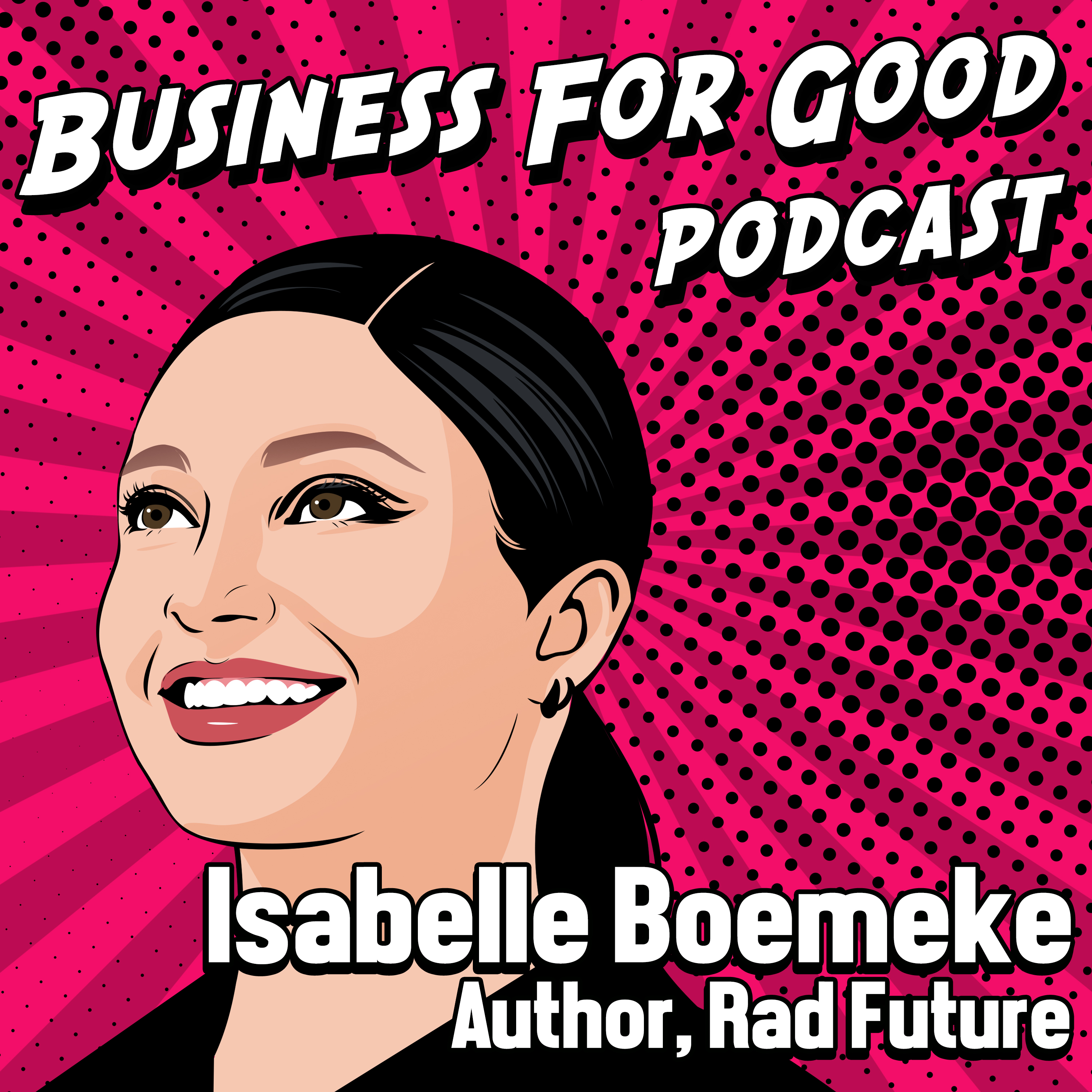 From Fashion Model to Fission Mission: Isabelle Boemeke's Nuclear-Powered Future | When you hear the word nuclear, does your mind flash to mushroom clouds, Chernobyl, or maybe the glowing three-eyed fish from The Simpsons? Well, what if nuclear electricity — far from being an environmental villain — is actually one of the safest, cleanest, and most land-efficient energy sources we have? It turns out that former fashion model Isabelle Boemeke is on a mission to change how we think about nuclear energy. When she and I met a few years ago, in Italy of all places, she was known by many simply as Isodope, her online persona that blends fashion, futurism, and fission to make nuclear cool again. And now, in her new book Rad Future, Isabelle argues that nuclear power isn't just misunderstood — it's essential to solving climate change, land preservation, and numerous other important concerns. In our conversation, Isabelle details: Why fear of nuclear power stems more from cultural trauma than from science, Why nuclear electricity is safer and environmentally-friendlier than not just fossil fuels, but also solar and wind, What's fact vs. fiction when it comes to the world's biggest energy disasters, And why, despite all the excitement about fusion and modular reactors, maybe the smartest thing we can do right now is simply pick a proven fission design — and start building them fast. I always love when it turns out that the thing we thought was the villain is actually a hero, or at least better than what we thought. If you do too, this is the episode for you, as this episode may challenge your assumptions about what's truly "green" and is actually safe. Discussed in this episode The 2019 Amazon Rainforest fires and Australian fires that decimated massive amounts of wildlife habitat helped inspire Isabelle to focus on environmental concerns such as climate change. The 1975 Baquiao dam collapse killed hundreds of thousands of people. Isabelle recommends checking out www.whatisnuclear.com and the Decouple Podcast. Commonwealth Fusion recently raised $863 million. The US military is investing in small, mobile nuclear reactors. Paul recently read a sci-fi book about nuclear-powered wildlife called The Kaiju Preservation Society. Get to Know Isabelle Boemeke With her signature mix of humor, sharp research, and optimistic vision, her debut book, Rad Future, makes the case for nuclear electricity as one of the best tools to solve the climate crisis. Boemeke is also known as Isodope, the irreverent digital persona on a mission to make nuclear cool. She is the Founder and Executive Director of Save Clean Energy and board member of Nature is Nonpartisan and Nuclear Scaling Initiative, where she works at the intersection of policy, culture, and technology to accelerate pragmatic solutions. She delivered a TED Talk that has been viewed nearly 2 million times, led a grassroots campaign that helped delay the closure of California's Diablo Canyon Power Plant, and is a TIME Magazine "Next Generation Leader." | — | ||||||
| 10/15/25 |  Fungi-Filled Diapers: How Plastic-Eating Fungi May Change Child-Rearing | If you've ever changed a diaper, you might've wondered what happens to it after it goes in the trash. The answer, unfortunately, is that it'll sit in a landfill for hundreds of years—certainly longer than the baby who briefly wore it will live. In fact, every diaper you wore when you were a baby is still sitting around, at best in a landfill, or perhaps even in the ocean. And did you know the average American baby goes through 6,000 diapers before learning to use a toilet? But what if fungi could change that? In this episode, I sit down with serial entrepreneur Miki Agrawal, the founder of Thinx (yes, the period underwear company), Tushy (yes, the bidet company), and now HIRO Technologies—a company using plastic-eating fungi to help disposable diapers return to the earth. Miki, who some have dubbed the "Queen of pee, poop, and periods," (I think they should shorten it to the "Queen of Secretions") shares how an opportune moment with her toddler and a children's book about fungi inspired her to launch HIRO. Her company's first product—HIRO Diapers—uses a packet of dormant, culinary-grade fungi that awaken when exposed to moisture and begin breaking down the diaper's plastic components, dramatically reducing its landfill lifespan from centuries to under a year, after which it simply becomes dirt. We talk about everything from the science of fungal degradation to the challenges of biotech entrepreneurship, from raising millions for an unconventional idea to why she believes reconnecting with nature is the ultimate form of innovation. Whether you're a parent, a sustainability enthusiast, or just fascinated by the intersection of biology and business, this conversation will make you rethink what "waste" really means. Discussed in this episode It was the children's book Pacha's Pajamas that implanted the idea in Miki's mind about plastic-eating fungi. You can buy HIRO Diapers here. You can see HIRO's original kickstarter, including video pitch, here. Miki recommends checking out the UN Millenium Goals for ideas of companies to create. Reuters discusses HIRO's launch and technology. Miki also started Thinkx (period underwear) and Tushy (bidets). More about Miki Agrawal Miki Agrawal is the creative force behind acclaimed social enterprises TUSHY (the modern bidet brand), THINX (period-proof underwear), and WILD (NYC's first gluten-free pizza concept), collectively valued at over $250 million. Miki is the author of best-selling books "DO COOL SH*T" and "DISRUPT-HER". Her latest company HIRO is a revolutionary nature-based start-up harnessing ancient technology - fungi - to help solve the global plastic crisis. Their first product is a baby diaper that returns to the earth with the help of friendly fungi. (They chose diapers to launch with because they're the #1 household plastic waste item that takes 400+ years to decompose in a landfill - and each baby uses ~6,000 diapers in their lifetime. Wild, right?) HIRO Diapers starts returning to the earth with the help of fungi - and they're soft, safe, high-performing and ready to change the game. Recognized as one of Fast Company's "Most Creative People," a "Young Global Leader" by the World Economic Forum, and named one of INC's "Most Impressive Women Entrepreneurs," Miki brings a wealth of experience and expertise to the stage as a keynote speaker. Her authentic talks have been validated by audiences at MindValley, EO, and Capitalism.com, who have voted for her as the #1 best speaker among hundreds of speakers. | — | ||||||
| 10/1/25 |  Raising Capital for Alt-Protein in the Midst of the Winter | Recently Alex Shandrovsky had me as a guest on his show, the Investment Climate Podcast to talk about The Better Meat Co.'s recent funding round. When it came out, more than one Business for Good listener heard it and told me they thought it would make a good episode to release to our audience too, so this episode is simply the conversation Alex and I had for his podcast. If you've been following the alternative protein sector (and the broader biotech sector), you've likely seen the wave of challenges that fermentation, cultivated, and plant-based startups have faced over the past few years. As recent AgFunder News reporting confirms, ag and food tech investment is at a decade-long low. One active food tech VC even declared that foodtech investing is "maybe as bad as it's ever been." Some days, building a startup in our sector can feel like being a player in Squid Game—with about the same odds of survival. While layoffs, bankruptcies, shutdowns, and cash-free acquisitions have been rampant in our sector lately, BMC has never conducted layoffs. Instead we've always been very frugal, and we tightened our belt even further in the past year, all while continuing to make important progress toward our aspirations of slashing humanity's footprint on the planet. This has been true in the midst of the three-year litigation we endured, the collapse of our bank and subsequent (temporary) loss of all funds, the painfully wintry investment climate for alt-protein, and other seemingly innumerable challenges. Our ethic of frugality will certainly continue in this new era of scaleup for our company. This financing is hardly the end of our story. Receiving investor dollars isn't our goal; it's solely a means to the end of building a profitable business that will help put a dent in the number of animals raised for food. Raising a round is akin to having someone provide the clothes, tents, and food you'll need to climb Everest…but you still need to actually go climb the mountain—hardly a guaranteed outcome. I've often said these days that we've shifted from what felt like a Sispyphean feat of fundraising to now merely a Herculean feat of scaling. Nearly all startups fail. The vast majority never see their seventh birthday, which BMC recently celebrated. Our company is still far from successful, but we now have a real chance to birth into the world a novel crop that can help feed humanity without frying the planet. We will judiciously use these new funds to work hard to finally let the Rhiza River flow. Alex and I discuss the story of how this funding round came about, and where we may be going from here. | — | ||||||
| 9/15/25 | 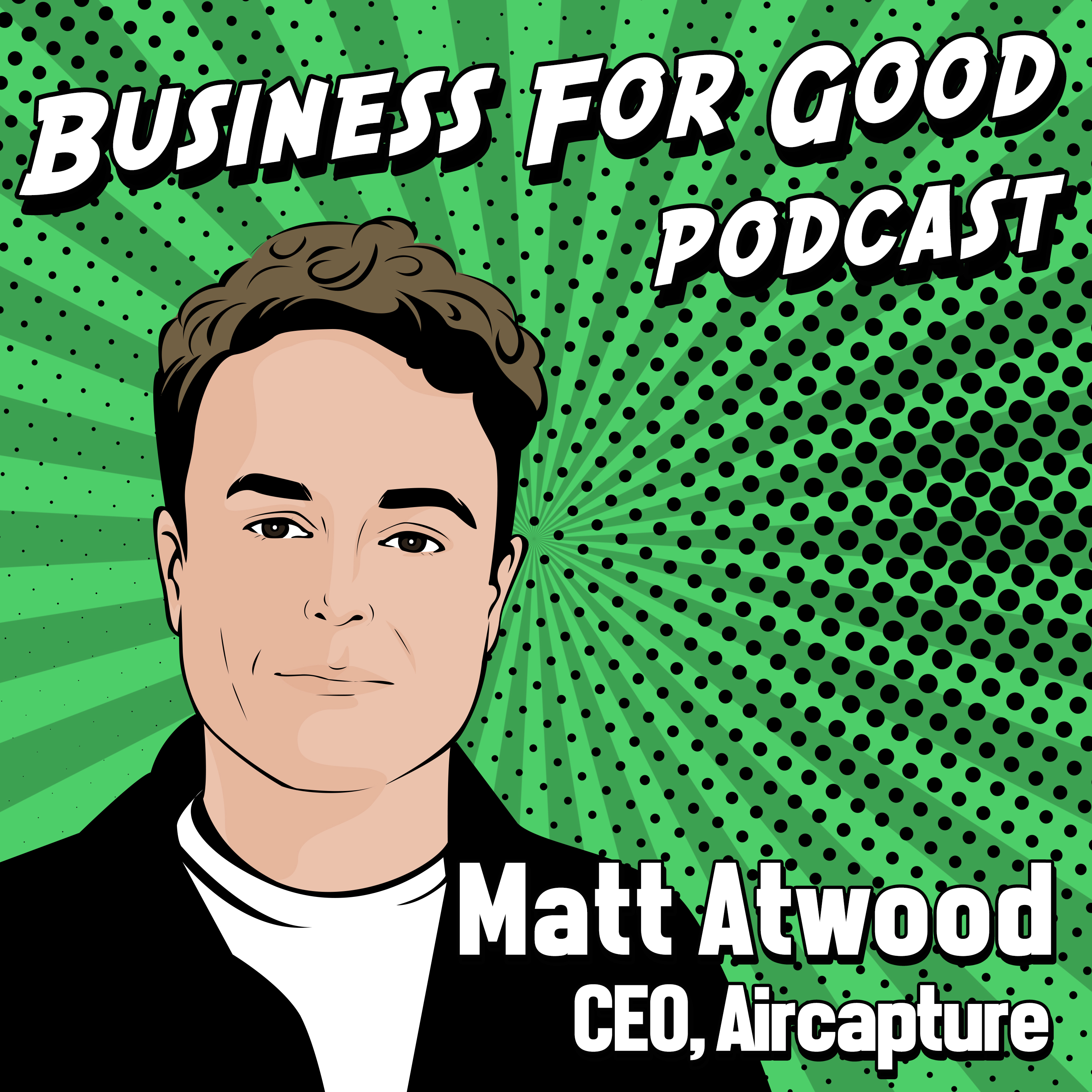 Bottling the Sky: Aircapture's Carbon Capture Breakthrough | When you think about climate change solutions, your mind might go to renewable energy, electric vehicles, or eating less meat. These are all of course important. But even if we stopped all emissions today, we'd still have too much CO2 in the atmosphere and would need to pull a lot of our emissions out of it. That's the bold mission of Aircapture, a California-based company pioneering modular direct air capture technology. On this episode, I speak with Matt Atwood, Aircapture's founder and CEO, about how his company is not only working to reduce atmospheric CO₂, but also profitably supplying it to industries that rely on the gas today—like beverage makers, greenhouses, and more. Instead of relying on fossil fuel byproducts or ethanol fermentation for their CO₂, companies can now get a cleaner, more reliable, and often cheaper supply directly from the air. Matt explains how Aircapture's approach differs from traditional large-scale carbon capture projects by focusing on on-site, modular units that can be shipped in a container and installed within weeks. These systems already commercially operate in the U.S., Europe, the Middle East, and Asia, giving customers local CO₂ while shrinking supply chain emissions. We dig into the economics of direct air capture, the climate math of whether it truly reduces atmospheric carbon, and the criticisms that it could provide a "moral license" to keep burning fossil fuels. Matt also shares how Aircapture recently raised a $50 million Series A—during a tough climate tech funding market—and what gives investors confidence that their model will scale where others have stumbled. If you've ever wondered whether pulling CO₂ out of thin air is realistic—or just hype—this conversation will give you a fascinating inside look. Discussed in this episode Our past episode with Make Sunsets about sulfur dioxide injections into the atmosphere. We've done other episodes on geoengineering, for example on olivine spreading (Vesta and Eion), sulfur dioxide injections (Make Sunsets), direct carbon capture (Global Thermostat). Al Gore's skepticism about direct air capture. Matt recommends reading Ministry for the Future. Paul recommends Dan Carlin's The End is Always Near. Matt reflects on his earlier work with Algae Systems and why he thinks wastewater treatment improvements are so important. Paul suggests tackling wastewater treatment with Neurospora species, as discussed here, here, here, and elsewhere. Get to Know Matt Atwood Matt is a technologist, chemist, entrepreneur and pioneer in the DAC space. He has over 20 years experience in renewable and climate technology development and over a decade of experience with DAC and CO2 utilization technologies. Matt developed the world's first energy-positive wastewater treatment platform as Founder & CEO of Algae Systems. He has built and commercialized technologies in CO2, water, AgTech, waste treatment, and biofuels. | — | ||||||
| 9/1/25 | 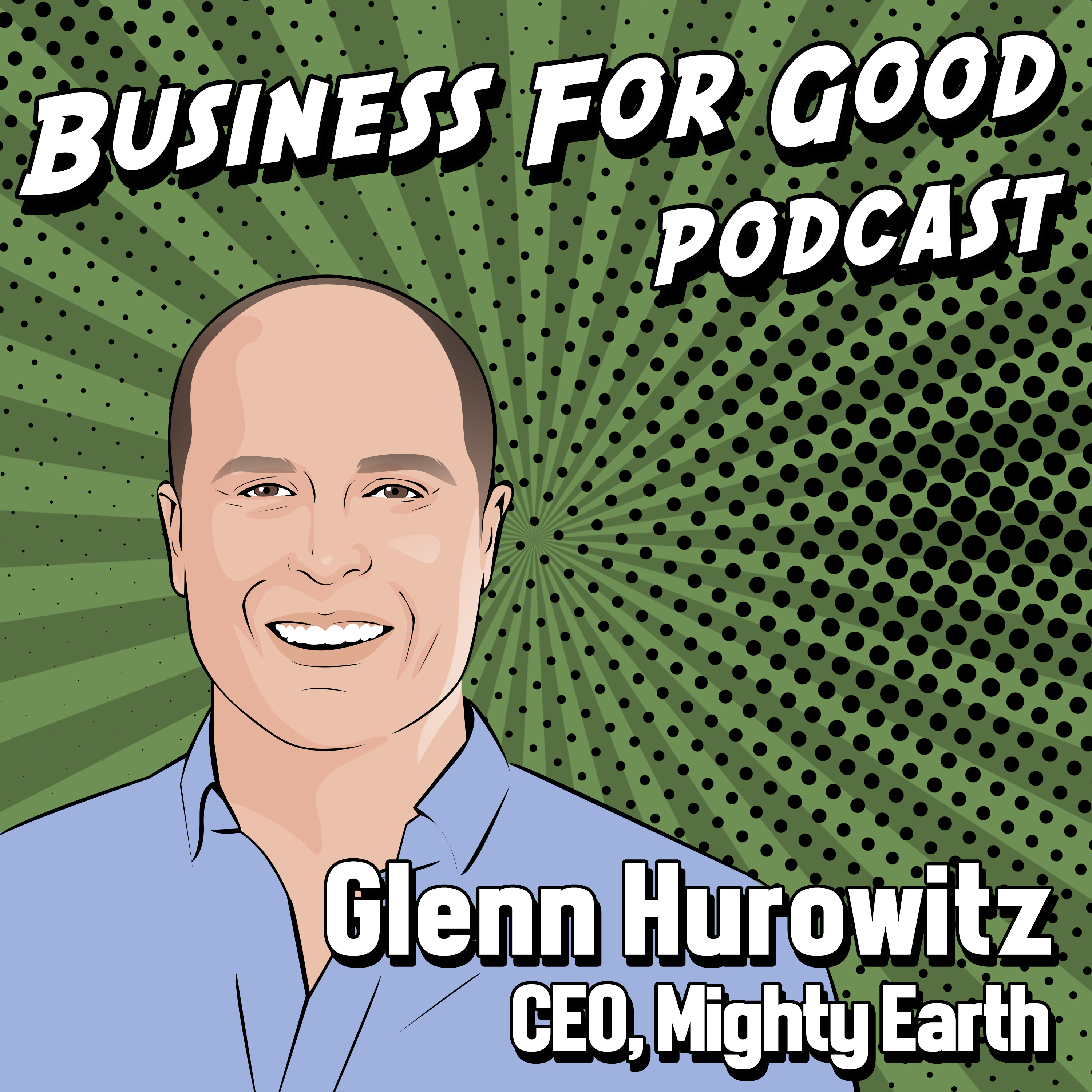 Inside Mighty Earth: Glenn Hurowitz on Transforming the Meat Industry | What if the biggest environmental culprits were hiding in plain sight—right on our dinner plates? While most environmental organizations train their sights on the energy sector, Mighty Earth has taken a bold, and often lonely, stand in confronting the meat industry's massive role in climate change, deforestation, and biodiversity loss. In this episode, I sit down with Glenn Hurowitz, founder and CEO of Mighty Earth, to unpack why the meat industry typically gets ignored by the environmental movement, and what he thinks needs to be done. Glenn has spent decades fighting for the planet, from working on federal public policy in Congress to launching powerful corporate campaigns that aim to guide the world's largest food companies toward more sustainable practices. In our conversation, he explains why mainstream NGOs often shy away from challenging the meat industry, and how Mighty Earth's strategy—focusing on supply chains, corporate accountability, and the expansion of animal-free proteins—aims to fill that void. We also dive into Mighty Earth's campaign to help supermarkets treat plant-based proteins not as niche novelties, but as core offerings. Glenn shares how enhanced meat products (think burgers that are part beef, part mycelium) can be a bigger environmental win than pure plant-based options alone, and why shifting market incentives—not just consumer behavior—is key to making real progress. If you care about climate action, animal welfare, or food innovation, this episode may challenge you to think bigger—and act smarter—about what it really takes to feed humanity sustainably. Discussed in this episode Glenn and Paul recommend the good work of Food Solutions Action. Our past episode with author Mike Grunwald. Quorn mycoprotein patties selling in London KFC at near price parity with chicken. Glenn references the Sierra Club's war on coal. Mighty Earth's campaign to guide supermarkets to do better on meat. Paul mentions that dozens of species go extinct every day, largely due to meat demand JBS's investment in Spanish cultivated meat production. Glenn's 2007 book, Fear and Courage in the Democratic Party. Glenn and Paul both recommend reading Regenesis. The UN report on nature finance Get to Know Glenn Hurowitz Glenn Hurowitz is the Founder and CEO of Mighty Earth, and has led environmental campaigns around the world for many years. He is a globally recognized leader on forests, agriculture, and climate change, and running strategic campaigns. He has played a leading role in transforming several industries, including the 90% reduction in deforestation for palm oil, establishment of new policies and practices for the entire rubber industry, and serious action in meat, steel, and elsewhere. In his previous role as Chair of the Forest Heroes campaign, he and his colleagues won the Benny Award from the Business Ethics Network for their successes in transforming global agriculture. He co-founded Chain Reaction Research, which provides major financial institutions with in-depth risk analysis of companies' sustainability risk. Glenn advises philanthropies, governments and non-profit organizations on strategy. Glenn has also worked extensively in politics. He is the author of the critically-acclaimed book Fear and Courage in the Democratic Party, and his writing has appeared in The New York Times, The Atlantic, The Nation, Politico, The American Prospect. He's appeared on many national media outlets, including CNN, MSNBC, FOX, CBS, and NPR. He is a graduate of the Green Corps fellowship and Yale University, worked previously as Managing Director of Waxman Strategies, among other senior roles in the environmental movement. | — | ||||||
| 8/15/25 | 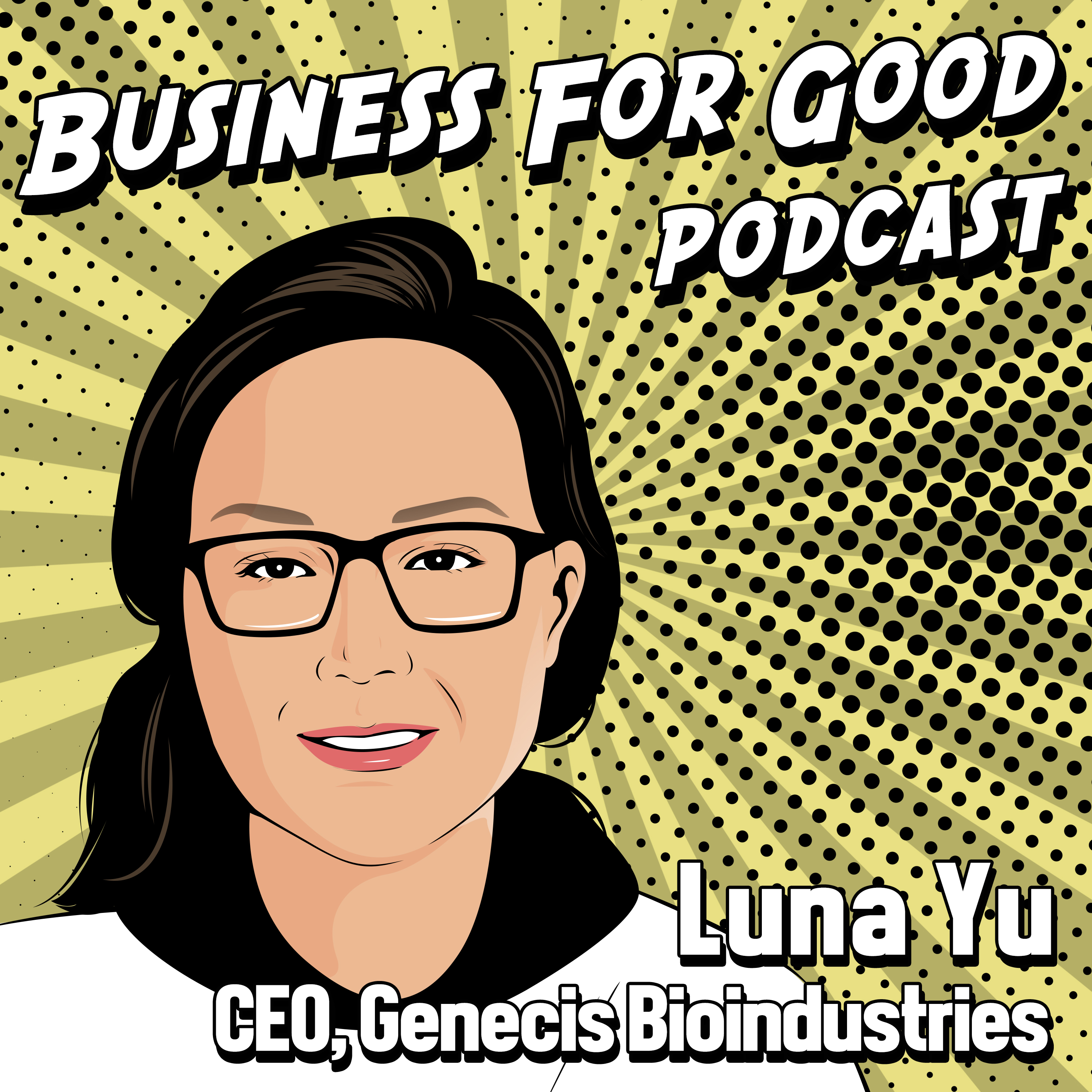 Turning Waste into Bioplastic Gold with Genecis CEO Luna Yu | It's rare that we contemplate where all the plastic we throw out goes, but rest assured that nearly none of it is being recycled. Simply put, it's usually cheaper to make new plastic than to recycle old plastic, even the plastic you put in the recycling bin. Because it takes plastic centuries to break down, this means for each one of us you could build a mountain of plastic from all the packaging we use over the course of our lives. But what if plastic didn't have to take centuries to break down, and could actually biodegrade in a matter of days or weeks? That's exactly the vision Luna Yu is bringing to life as founder and CEO of Genecis Bioindustries, a biotech company using fermentation to transform food waste into high-performance, truly compostable bioplastics. In this episode, Luna joins us—at 1 a.m. her time from a manufacturing run in China—to share the story behind Genecis, from her early days as a teenage entrepreneur in Canada to raising $17 million for her startup in the climate tech world. Luna walks us through how Genecis engineers microbes to turn low-cost industrial waste streams like glycerol into PHA, a biodegradable plastic alternative that's already being used in consumer products like Mad Tea and Mad Coffee. We discuss why Genecis is taking a direct-to-consumer approach, how they're preparing to launch in Sprouts nationwide, and what it will take to make sustainable plastics cost-competitive with petroleum-based ones. We also dive into Luna's big bets on the future—including cell-free biology, the promise of enzyme-only production systems, and her vision for a world where the most convenient option is also the most sustainable. If you're curious about the intersection of synthetic biology, circular economy, and product design—or you just want to hear from someone reshaping the future of plastic—this episode is for you. Discussed in this episode You can learn more about Genecis' technology by reading their patents and patent applications here. Luna is very inspired by Isomorphic Labs. Genecis is backed by Amazon and is a graduate of the Y Combinator accelerator. CJ Biomaterials manufactures PHA via fermentation. Plastic has only been around since the 1950s but we believe it lasts for centuries. How do we know? Researchers simulate environmental exposure in labs by increasing UV radiation, temperature, moisture, and mechanical stress to accelerate plastic breakdown. They analyze how the polymer chains degrade and extrapolate those results to estimate natural-world decay timelines. Get to Know Luna Yu Luna Yu is the CEO of Genecis Bioindustries. She completed her Bachelors and Masters in Environmental Science at the age of 21 at the University of Toronto. During her Undergrad, Luna co-founded, grew and exited from two profitable software startups. The exciting advancements in fields of synthetic biology, bioinformatics, and machine learning led her to infuse her passion and experience together. This created Genecis, where biotechnology enables the conversion of food waste into high value materials. | — | ||||||



Showing 25 of 197
Pitch Fit is a Pro feature
See how bookable this show is for guests, which brands already advertise, the per-episode ad value, and the best-fit guest and sponsor profile. The numbers are blurred on the free plan.
How readily this show books outside guests like you.
How proven this show is for host-read sponsorships.
For Guests
ProFor Advertisers
ProUpgrade to Pro to unlock guest cadence, sponsor categories, fit scores, and per-episode ad value for this show.
Chart history for Business for Good Podcast
Peaked at #87 in IL, currently #87 in IL.
| Market | Genre | Peak | Current | Trend |
|---|---|---|---|---|
| IL | — | #87 | #87 | — |
Chart Positions
1 placement across 1 market.
Chart Positions
1 placement across 1 market.