
Everyday Ambassador
by Foreign Policy
Is this your podcast?On the show
Recent episodes
A president came back to Beijing after fifteen years. They had kept his bicycle.
Sep 10, 2026
25m 39s
How a Playful Approach Helped Pass a Nuclear Arms Treaty
Aug 22, 2026
23m 55s
The Amateurs who Solve What the Experts Can't
Jul 16, 2026
21m 47s
On nuclear fallout and legal leverage
Jun 18, 2026
36m 00s
The US Is Laying Groundwork to Test Nuclear Weapons Again
Jun 6, 2026
1h 00m 06s
Insights from recent episode analysis
Audience Interest
Podcast Focus
Publishing Consistency
Platform Reach
Insights are generated by CastFox AI using publicly available data, episode content, and proprietary models.
Back-catalog monthly reach
No chart positions, follower counts or reviews yet. We will not guess.
Built from
By chart position
- 🇹🇭TH · Society & Culture#40N/A
- Per-Episode Audience
No new episodes in 90+ days
—🎙 Weekly cadence·6 episodes·Last published 1mo ago - Monthly Reach
Unique listeners across all episodes (30 days)
N/A - Active Followers
Loyal subscribers who consistently listen
N/A
Market Insights
Platform Distribution
Reach across major podcast platforms, updated hourly
Total Followers
—
Total Plays
—
Total Reviews
—
* Data sourced directly from platform APIs and aggregated hourly across all major podcast directories.
Social Links & Contact
Official channels & resources
RSS Feed
Login
| Date | Episode | Description | Length | ||||||
|---|---|---|---|---|---|---|---|---|---|
| 9/10/26 | 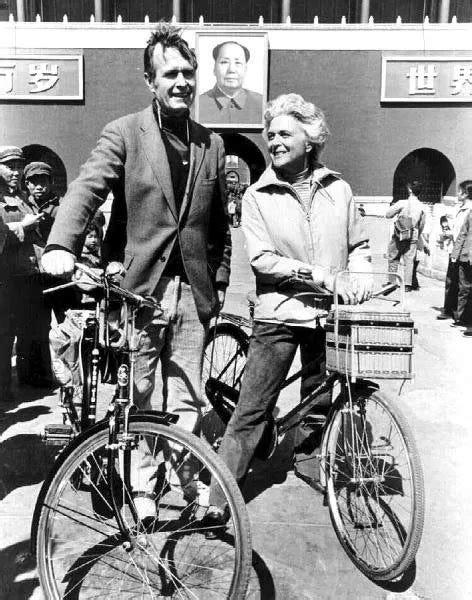 A president came back to Beijing after fifteen years. They had kept his bicycle. | Ryan Hass — director of the John L. Thornton China Center at the Brookings Institution, and former Director for China, Taiwan and Mongolia at the National Security Council — on why gifts and hospitality are instruments of Chinese statecraft rather than courtesies around it.Also in this episode: Peter Selfridge, who served as Chief of Protocol of the United States under President Obama, on the part of the job that made him most nervous, and on what happened when President Obama gave Queen Elizabeth an iPod she already owned. Plus listeners on the gifts that changed their own relationships — a watch, a picture book, a scrapbook, and a poem read over FaceTime.The story at the center: George H. W. Bush rode a Flying Pigeon bicycle around Beijing as American envoy in 1974. When he returned as president fifteen years later, one was waiting for him.This episode first aired in 2023 and is rebroadcast here alongside the September Field Guide on gifts. This is a public episode. If you'd like to discuss this with other subscribers or get access to bonus episodes, visit anneliseriles.substack.com/subscribe | 25m 39s | ||||||
| 8/22/26 |  How a Playful Approach Helped Pass a Nuclear Arms Treaty | On this episode of Everyday Ambassador, host Annelise Riles sits down with Nobel Peace Prize laureate Beatrice Fihn to hear how taking a playful approach to fostering relationships, and building trust, helped pass a nuclear weapons treaty. We also hear how The Police Athletic League of Philadelphia as well as students from Northwestern University use fun to solve problems and work through relationship barriers. This is a public episode. If you'd like to discuss this with other subscribers or get access to bonus episodes, visit anneliseriles.substack.com/subscribe | 23m 55s | ||||||
| 7/16/26 |  The Amateurs who Solve What the Experts Can't | We treat "amateur" as an insult — someone not quite serious, not quite qualified. But the word comes from the Latin amator: lover. An amateur is someone who does a thing for love, not for a credential or a paycheck. In this episode, Annelise Riles explores how amateurs solve problems that stump the experts — and how borrowing an amateur's mindset can help even the pros think again. Open-source investigator Natalia explains how amateur online detectives — "some guy named Bob in Florida" — crack cases that overwhelm even Interpol, from locating trafficked children to keeping people safe while dating. Consultant and philosopher Christian Madsbjerg describes the "amateur mindset" he uses to advise some of the world's largest companies: showing up knowing nothing, observing, and truly listening — what he calls epistemological humility, and the approach that helped move Ford toward electric vehicles. And Northwestern students share how an outsider's perspective creates room not just for innovation, but for kindness.GuestsChristian Madsbjerg — author, consultant, and philosopher; founder of ReD Associates, which advises major global companies using the social sciences rather than standard management-consulting methods. Natalia Antnova — open-source investigator, formerly with the collective Bellingcat; founder of the Safer Dating project. "Your Turn" voices — Northwestern University students, gathered by on-campus producer Mia Perkins.More from Annelise Riles at Everyday Ambassador: anneliseriles.substack.comChapters(00:00) The amateur detectives who crack what the professionals can't(03:44) This episode: the power of the amateur(04:12) Christian Madsbjerg on the amateur mindset(06:15) Why Ford studied people's relationship to nature instead of a spreadsheet(11:02) What "amateur" really means: epistemological humility(12:35) The costs — slow work, and not being taken seriously(14:52) Why insight travels on its own, regardless of credentials(15:47) Curiosity, joy, and the "juicy" question(17:14) Your Turn: students on the outsider's perspective(20:32) Closing reflection: the outsider as a source of kindnessCredits: This episode was produced by FP Studios with support from the Humboldt Foundation. Our on-campus producer was Mia Perkins. This is a public episode. If you'd like to discuss this with other subscribers or get access to bonus episodes, visit anneliseriles.substack.com/subscribe | 21m 47s | ||||||
| 6/18/26 | 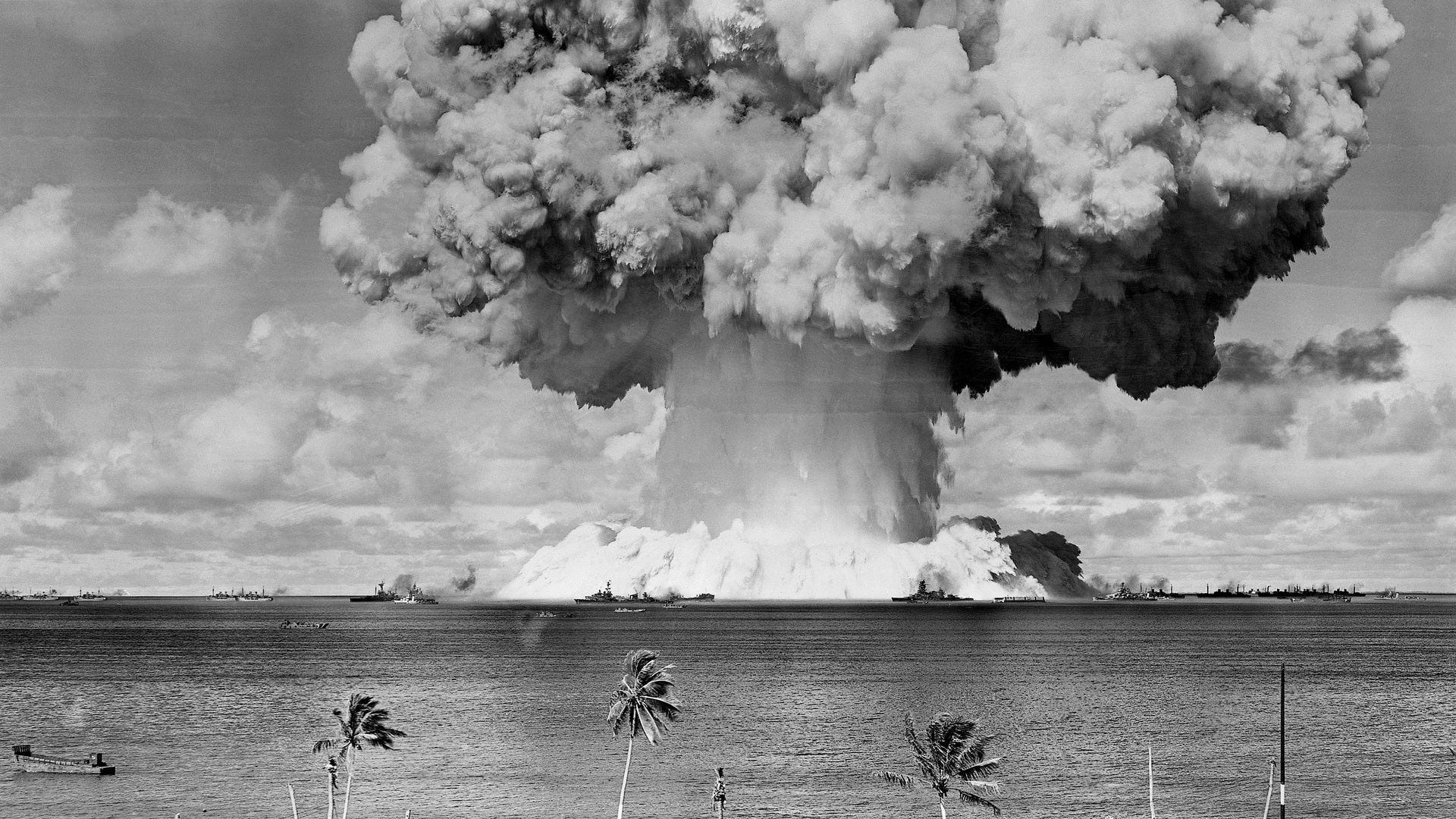 On nuclear fallout and legal leverage | On March 1, 1954, the United States detonated the largest nuclear weapon it ever tested at Bikini Atoll in the Marshall Islands. The fallout poisoned a Japanese fishing crew, irradiated inhabited atolls, and triggered a diplomatic crisis — one the US resolved by paying $2 million and calling it closed, without ever answering the underlying legal questions.Historian and lawyer Mary X. Mitchell joins Annelise to unpack how this works: the legal technologies that make disputes disappear, what it means to "win" a lawsuit you know you'll lose, and how Marshall Islanders used law as leverage against one of the most asymmetrical power relationships in modern history.Mary's new book Unsettling Sovereignty is published by the University of Chicago Press. Her new article appears in Environmental History.Key timestamps:00:00 — Castle Bravo: what happened on March 1, 195401:07 — The bomb and the fallout: what actually came down on Rongelap03:56 — Evacuation and the Marshall Islands petition to the UN06:59 — Why the Marshall Islands? The strategic trusteeship and Pacific colonialism~10:00 — The Lucky Dragon: Japan's fishing fleet and the diplomatic crisis~14:00 — The ex gratia settlement: $150K offer, $6.7M demand, $2M resolution~17:00 — What the settlement left submerged: the unanswered legal questions~19:00 — How to use this: the dishes insight, and reading the real stakes~22:35 — Losing in court and still winning: Marshall Islander lawsuits as leverage~30:00 — Rights as a form of articulation: Patricia Williams and why courts still matter34:38 — Closing: breaking it down as a methodology This is a public episode. If you'd like to discuss this with other subscribers or get access to bonus episodes, visit anneliseriles.substack.com/subscribe | 36m 00s | ||||||
| 6/6/26 |  The US Is Laying Groundwork to Test Nuclear Weapons Again | Seth Shelden is General Counsel and United Nations Liaison for ICAN (the International Campaign to Abolish Nuclear Weapons), the Nobel Peace Prize-winning organization spearheading efforts to abolish nuclear weapons through the Treaty on the Prohibition of Nuclear Weapons (TPNW). This episode is in two parts. The first was recorded live during the NPT Review Conference. The second is a retrospective conversation recorded after the conference ended without agreement for the third consecutive time.What we cover:What ICAN does and how Seth got there What the NPT is, why it matters, and what three consecutive failures mean for the non-proliferation architectureThe final days of the conference: the atmosphere in the hallways, what the TPNW bloc achieved, and what they couldn't holdThe US arguing — in open session — that there is no norm against nuclear testing, and what that signalsWhy AI risk language was deleted from the final documentHow Seth actually spends his days at these conferences — including meetings with the Trump administrationThe TPNW review conference coming in November 2026, and why it mattersA play about nuclear weapons being workshopped across New England (Seth is performing in it)Seth’s honest five-year bet on where this is all heading This is a public episode. If you'd like to discuss this with other subscribers or get access to bonus episodes, visit anneliseriles.substack.com/subscribe | 1h 00m 06s | ||||||
| 5/29/26 |  Listening, NPT, and Life in Japan | This is a free preview of a paid episode. To hear more, visit anneliseriles.substack.comThank you for tuning into my first monthly AMA!We covered the collapse of the NPT Review Conference and what it means for nuclear security— plus my dispatches from Tokyo, an update on the Nagasaki house, and a full clinic on the listening move in peacemaking, and a preview of next month's peace-making move, Slicing.Join my inner c… | 2m 00s | ||||||
| 5/20/26 |  Why Listening is the Peace-Builder's Superpower | This month, we’re exploring listening as a form of peace-building. So I’m re-releasing an episode from the archives that changed how I think about this work.I recorded this before Everyday Ambassadors existed as a Substack, which means a lot of you haven’t heard it. But it might be the most essential conversation I’ve ever had about listening as a superpower.Katharine Hayhoe is a climate scientist who has spent her career talking across political divides about climate change. And when I asked her how she actually reaches people who distrust her, who come in skeptical, who are defensive—her answer was disarmingly simple:She listens.Not as a tactic. Not to be nice. But because listening is how you learn what matters to the person in front of you. It’s how you understand what they care about. It’s how you find common ground that leads to positive change.In this conversation, Katharine shares exactly how she does it. What she listens for. How she stays grounded when someone disagrees with her. How she begins every conversation about climate change by asking people about what they value.Katharine’s approach isn’t complicated. But it requires something we rarely offer each other anymore—genuine curiosity. Real attention. The willingness to listen longer than we talk.It’s a beautiful gift we can give one another, and one of the most important ways we build real peace.If you’re thinking about how to listen—to your family, your community, people who see the world differently—this conversation is for you.So have a listen! Then share it with someone who needs to hear that their listening actually works. This is a public episode. If you'd like to discuss this with other subscribers or get access to bonus episodes, visit anneliseriles.substack.com/subscribe | 28m 16s | ||||||
| 3/12/26 |  Inside the Nuclear Decision | In this episode of Everyday Ambassador, I speak with political scientist Sharon Weiner about one of the most consequential choices in modern governance: the decision to use nuclear weapons. Weiner has worked across the nuclear policy ecosystem—from the White House and Congress to Los Alamos National Laboratory—and has spent decades grappling with a question that first troubled her as a child growing up near U.S. missile fields: why does security rest on the threat of mutual destruction?Weiner’s career has taken her inside the institutions that shape U.S. nuclear strategy. The risks of nuclear weapons, she argues, have always been present; what changes is whether we choose to look at them.That conviction led her to create an unusual research project: a virtual reality simulation called The Nuclear Biscuit. In the experience, participants are sworn in as president and then confronted with an incoming nuclear strike. They have just minutes to decide whether to launch a retaliatory attack before U.S. intercontinental ballistic missiles are destroyed. The simulation is grounded in real-world timelines and force structures. It’s an inspiring example of this month’s theme at Everyday Ambassador: the practical power of imagination in peace-building—and it reveals something striking. Two-thirds of participants choose to launch nuclear weapons, often escalating the conflict, even when warned of uncertainty or potential false alarms. Sharon’s findings challenge the common assumption that nuclear decision-making is purely rational and safeguarded by layers of expertise. In moments of crisis, she explains, people revert to learned language and institutional habits—protecting military assets rather than prioritizing human survival. The problem is not simply technical. It is political, psychological, and democratic. Why, she asks, should one individual possess sole authority to end millions of lives? And why do we treat the current force structure as inevitable when it remains a policy choice?Sharon also shared with me some concrete ideas for how researchers and citizens can make a difference in nuclear security. Nuclear weapons policy is often framed as too complex or too distant for democratic engagement, but Sharon points out that you have a right to have a voice in a set of policies that have such dire possible consequences. * Citizens: Sharon gave us specific questions you can ask your elected representatives, as they make the rounds during campaign season, to question them about their position on the president’s sole authority to launch a strike, or demand oversight of nuclear stockpile modernization costs. * Researchers: Sharon outlined a series of key research questions that remain to be answered, like what shapes public opinion on nuclear policy, or defensive alternatives and international law. Using the power of imagination and virtual reality, Sharon helps us to cut through the bureaucratic abstractions to understand what would really happen in a nuclear crisis. The Nuclear Biscuit project allows people to make up their own minds about the rationality of nuclear policy, and it may lead to changes that make us all a little bit safer.Timestamps00:00 – Growing up near ICBMs and questioning deterrence02:27 – From MIT to Los Alamos: searching for nuclear logic04:25 – The origins of The Nuclear Biscuit VR project08:00 – Becoming president in VR: seven minutes to decide11:37 – Building realism: research, design, and behavioral data14:02 – What participants actually do under pressure18:51 – Alternatives to nuclear deterrence and defensive defense21:19 – Why AI won’t solve the nuclear decision problem23:21 – Fiction, empathy, and the power of simulation25:42 – Sole authority and democratic accountability29:30 – What citizens can ask their representatives32:00 – Research frontiers: social movements, law, and accountability This is a public episode. If you'd like to discuss this with other subscribers or get access to bonus episodes, visit anneliseriles.substack.com/subscribe | 34m 11s | ||||||
| 3/3/26 |  Europe on the Brink: Iran, Nuclear Stakes, & the Fracturing Atlantic Alliance | Thank you Betina Cunado, Beverly Kohler, R Slone, and many others for tuning into my live video with Julien Hoez! We covered a lot of ground! Iran, NATO, the UN, the future of the Transatlantic Alliance, France’s plans for a European nuclear umbrella, and much more. Have any questions? Ask them here and we’ll be sure to get back to you. This is a public episode. If you'd like to discuss this with other subscribers or get access to bonus episodes, visit anneliseriles.substack.com/subscribe | 46m 21s | ||||||
| 2/26/26 |  Bonus: Friendship as an Infrastructure for Peace | Hey Friends,This month, we’re exploring friendship as a tool for rebuilding democracy and peace. So I’m dusting off something from our archives—an episode I recorded before Everyday Ambassador existed as a Substack. A lot of you have never heard it, and honestly? It might be one of the most practical conversations I’ve ever had about what friendship actually requires.In this episode, I sit down with two remarkable people: Richard Haass, the former Special Envoy to Northern Ireland, talks about the Good Friday Agreement—and how personal relationships between former adversaries changed the course of history. He shares the risks people took, the trust they built when it would have been easier to stay apart.Lois Anderson, my longtime friend and Executive Director of Oregon Right to Life, talks about our own friendship—and what we have learned from each other despite having very different political perspectives.The conversation is a masterclass in what it takes and why it matters.If you’re thinking about your own relationships across divides right now, this one’s for you.Listen above. Shout out to Toby Susan Goldbach who has recruited three friends to the Everyday Ambassador community! Thank you so much Toby! I am so grateful for all your support.Did you know you can earn an opportunity to join the Everyday Ambassador Salons at no cost when ten of your friends subscribe? All you have to do is to click on the share button below or forward or restack a post. Substack will credit you for those subscriptions.So if this interview lands for you, share it with your friends. And thank you for all you do! This is a public episode. If you'd like to discuss this with other subscribers or get access to bonus episodes, visit anneliseriles.substack.com/subscribe | 26m 54s | ||||||
Want analysis for the episodes below?Free for Pro Submit a request, we'll have your selected episodes analyzed within an hour. Free, at no cost to you, for Pro users. | |||||||||
| 2/5/26 |  Living With the Bomb | Hibakusha leader and physician Masao Tomonaga joins Everyday Ambassador to share a lifetime shaped by the atomic bombing of Nagasaki. Drawing on decades of medical research, he explains how radiation exposure led to leukemia, cancer, and lasting psychological trauma among survivors. The conversation offers a rare firsthand account of nuclear weapons’ human consequences—and a sober reflection on the limits of deterrence and disarmament today. This is a public episode. If you'd like to discuss this with other subscribers or get access to bonus episodes, visit anneliseriles.substack.com/subscribe | 26m 50s | ||||||
| 1/23/26 | 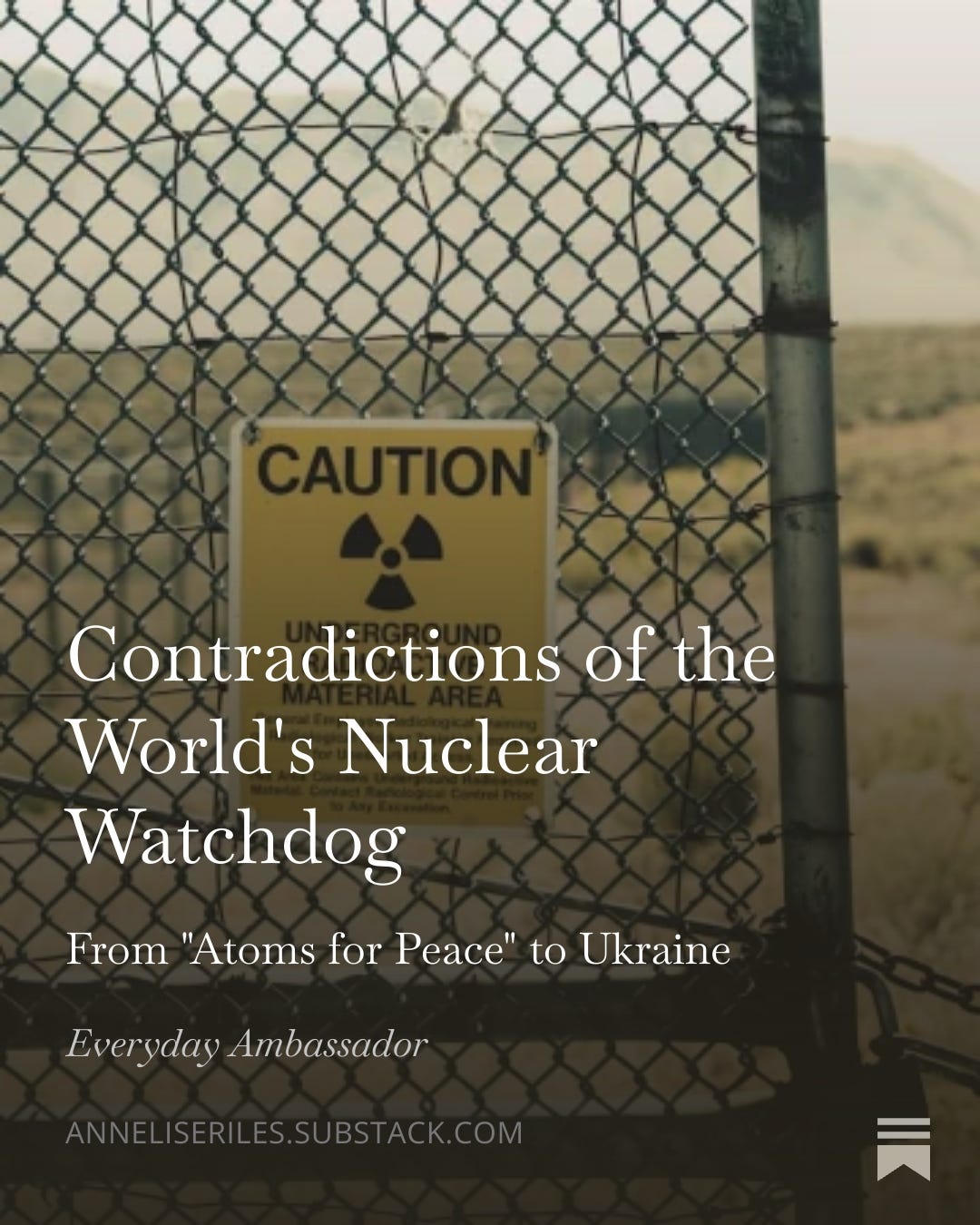 Nuclear Weapons in an Age of Totalitarianism | For the first time in nuclear history, 7 of 9 nuclear-armed states have authoritarian leaders. Meanwhile, Democrats and Republicans agree: we must build more nuclear weapons. A veteran policy insider and an international law professor ask the uncomfortable questions—How did we get here? Why is the nuclear priesthood silent? And what can everyday citizens do when democracy itself is under threat? This is a public episode. If you'd like to discuss this with other subscribers or get access to bonus episodes, visit anneliseriles.substack.com/subscribe | 55m 21s | ||||||
| 1/15/26 |  Race, Nuclear Weapons, and the Long Arc of Disarmament | Historian and activist Vince Intondi joins Everyday Ambassador to explore the deep connections between nuclear weapons, race, and social justice in the United States. Drawing on decades of research, Intondi traces how Black leaders, clergy, artists, and organizers have challenged nuclear violence from Hiroshima to the present day. The conversation examines why disarmament has always been a civil rights issue—and what today’s movements can learn from that history. This is a public episode. If you'd like to discuss this with other subscribers or get access to bonus episodes, visit anneliseriles.substack.com/subscribe | 33m 20s | ||||||
| 12/22/25 |  Rebuilding Science-based Nuclear Policy | In this episode, I sit down with Dr. Frank von Hippel—physicist, diplomat, policy-maker, architect of disarmament treaties, and co-founder of Princeton’s Program on Science and Global Security. One of the most influential voices in the history of nuclear arms control, von Hippel worked hand-in-hand with Soviet scientists to reduce the nuclear arsenals of both countries. He’s sounding the alarm about the state of nuclear diplomacy today. Von Hippel explains what’s at stake when policymaking loses its scientific foundation—and how to rebuild.Von Hippel reflects on a career spent navigating the space between scientific expertise and geopolitical brinkmanship: from citizen-driven movements that helped shift U.S. nuclear posture in the 1980s, to negotiating with Gorbachev, to the ongoing dangers posed by nuclear modernization and renewed great-power rivalry. Von Hippel shows us not only how policy changes happen, but how fragile progress can be.The conversation touches on the great questions of today’s nuclear landscape. What does deterrence theory assume about human behavior? How do weapons labs think about nuclear testing? Why has China altered its long-held posture of nuclear minimalism? And what does it mean to rebuild a knowledge-based policy system in an era of deep political polarization?Von Hippel also discusses the vulnerabilities of civilian nuclear power systems, lessons from Fukushima, and the long, troubled legacy of plutonium reprocessing—an issue that continues to shape global nuclear security debates far beyond the weapons complex.This episode is a reminder that experts, citizens, and institutions all play a role in reducing nuclear dangers. Progress has never been inevitable—but neither is backsliding. As von Hippel notes, periods of cynicism and misinformation have historically been followed by stronger public engagement and reform. The task now is to stay engaged long enough for that next turn.Don’t miss an episode! Subscribe now to get perspectives and analysis on peace, security and disarmament you won’t find elsewhere, plus bonus interviews like the one below. Timestamps00:00 – The return of Cold War–era tensions and the shrinking space for science-based policymaking02:18 – Indiscriminate deregulation and the challenge for the next generation of scientist-advocates05:22 – Star Wars, ballistic missile defense, and how scientists reshaped U.S.–Soviet perceptions of nuclear war09:54 – Behind the scenes: von Hippel’s advisory role with Gorbachev and the push for a nuclear test moratorium13:39 – The road to the Comprehensive Test Ban Treaty and why testing still matters today16:40 – Deterrence theory, risks of accidental war, and whether nuclear weapons are truly necessary for stability20:57 – China’s evolving nuclear posture and the complexities of three-way deterrence25:55 – No-first-use policy debates and how U.S. allies shape American nuclear doctrine27:46 – Civilian nuclear power: Fukushima lessons, regulatory capture, and spent-fuel vulnerabilities33:35 – Plutonium reprocessing, proliferation risks, and the political economy of nuclear wasteBonus Content for All Subscribers: Frank von Hippel on Family Legacy, the Manhattan Project, and Becoming a Citizen-ScientistIn this extended conversation, von Hippel shares a personal account of his grandfather’s role in the Manhattan Project—and how earlier experience with chemical weapons shaped his views on the moral obligations of scientists. He reflects on his own path from particle physics to public policy during the Vietnam War, and the rise of student-driven scientific activism that helped reshape congressional and executive science advising. These stories offer a rare, intimate look at how individual scientists navigate the responsibilities that come with knowledge and influence. This is a public episode. If you'd like to discuss this with other subscribers or get access to bonus episodes, visit anneliseriles.substack.com/subscribe | 39m 44s | ||||||
| 12/8/25 |  Contradictions of the World's Nuclear Watchdog | Annelise Riles speaks with historian Elisabeth Roehrlich about the origins, evolution, and modern challenges of the International Atomic Energy Agency. Together they explore how the IAEA balances its dual mandate to promote civilian nuclear technologies while preventing the spread of nuclear weapons, and why its work remains both technical and deeply political. Roehrlich offers historical insight into today’s debates over inspections, nuclear safety, and the future of the global nonproliferation system. This is a public episode. If you'd like to discuss this with other subscribers or get access to bonus episodes, visit anneliseriles.substack.com/subscribe | 31m 49s | ||||||
| 11/29/25 |  Join us at Everyday Ambassador Salons! | Dear Friends,Are you one of kind? Seeking to connect with brilliant, engaged people around the world for inspiration, new ideas, and a whole-hearted approach to issues like the economy and trade, disarmament and borders, or the impact of AI and digital platforms? Join us at Everyday Ambassador Salons! Every first Friday of the month, we’re building a “cohort that thinks otherwise” and having fun doing it…Off-the-record conversation with thought leaders about the state of the world outside the silos and beyond the usual political divides. It’s an intellectual shot in the arm to keep you going all month.Hope you can join us!AnnelisePS: Bring a friend and get a 20% discount on membership! Use this code: https://anneliseriles.substack.com/3e18d318More info here: This is a public episode. If you'd like to discuss this with other subscribers or get access to bonus episodes, visit anneliseriles.substack.com/subscribe | 1m 59s | ||||||
| 11/24/25 |  New Mexico, Nuclear Weapons, and the Fight for a Safer Future | For most Americans, nuclear weapons live in the abstract: Cold War history, distant threats, geopolitical chess pieces. But for New Mexicans, the legacy of the atomic age is not theoretical, it’s lived, inherited, and ongoing. In this episode of Everyday Ambassador, we speak with Jay Coghlan, executive director of Nuclear Watch New Mexico, about the deep and often invisible impacts that eight decades of nuclear development have had on the state and its people.Coghlan has spent 30 years working on nuclear policy. The conversation moves from the early days of the Manhattan Project to present-day policy debates, from the lived trauma of uranium miners to the moral and strategic contradictions of modern nuclear modernization. Coghlan begins where the modern nuclear era began: Los Alamos and the Trinity Test of 1945. He recounts how New Mexican communities, Indigenous, Hispanic, rural, became unwitting subjects of the world’s first atomic experiment. Downwinders, ranching families, the Mescalero Apache, and displaced homesteaders were all affected, yet ignored for generations. Compensation, where granted at all, came far too late and in far too small a measure. If the Trinity Test was the first wound, uranium mining was the second. Coghlan details the concentration of uranium extraction on Native lands, particularly the Navajo Nation and Laguna Pueblo, and the long-term health consequences for miners who were misinformed, unprotected, and ultimately abandoned.Hundreds of mines remain open and unremediated, continuing to contaminate water, soil, livestock, and communities. This environmental injustice forms the structural backdrop to New Mexico’s status today as what Coghlan bluntly calls “America’s nuclear weapons colony.”Conghlan strongly criticizes President Trump’s recently floated idea of resuming nuclear weapons testing. From a national security standpoint, Coghlan argues, testing is self-defeating: it would help rival nations “catch up” with U.S. capabilities.Coghlan draws a distinction between minimal deterrence, which requires a small arsenal, and counterforce, which requires thousands of weapons designed for war fighting. Despite public rhetoric focused on deterrence, he explains, U.S. policy continues to embrace counterforce planning.As the strategic landscape shifts from a bipolar world to a multipolar one involving Russia, China, and new technologies like hypersonics and AI, Coghlan warns of escalating risks. Coghlan also describes how he forged a partnership with Archbishop John Wester, a leading moral voice on nuclear disarmament. Coghlan tells the story with humor and candor, reflecting on how secular activism and religious leadership can meet in a shared mission: protecting life. Their work together reframes nuclear disarmament as a challenge to ideological boundaries and partisan assumptions.Episode Timestamps00:00 — Introduction: New Mexico at the center of nuclear history01:17 — Displacement and the forced removal of Hispanic homesteaders04:55 — Lawsuits, cleanup, transparency, and the politics of accountability08:03 — The modernization program and the Non-Proliferation Treaty10:12 — Uranium vs. plutonium weapons and how modern bombs work16:51 — The risks of new weapon designs and the push for production22:27 — Should we worry about resumed testing? Short-term vs long-term risks24:19 — Why testing is dangerous: fallout, cancer, global deposition26:49 — Underground tests and venting; why testing still poses risks30:15 — Deterrence, counterforce, and the modern nuclear arms race33:40 — AI, escalation risks, and the importance of human judgment36:52 — Proposals to hand weapons-grade plutonium to private entities41:01 — Nuclear winter and the pro-life framing of disarmament This is a public episode. If you'd like to discuss this with other subscribers or get access to bonus episodes, visit anneliseriles.substack.com/subscribe | 46m 25s | ||||||
| 11/14/25 |  When the Boundaries Between War and Policing Blur | Annelise Riles speaks with Brazilian scholar Fernando Brancoli about the October 2025 police raid in Rio de Janeiro’s favelas—the deadliest in Brazil’s history. Brancoli explains how global arms markets, political dynamics, and historical inequalities have blurred the lines between policing and warfare. They explore how local and global struggles for peace are increasingly intertwined. This is a public episode. If you'd like to discuss this with other subscribers or get access to bonus episodes, visit anneliseriles.substack.com/subscribe | 31m 44s | ||||||
| 10/10/25 |  The Unknown Story Behind MS-13 and Mass Incarceration in El Salvador | Everyday Ambassador welcomes cultural anthropologist Miranda Hallett for a deep dive into El Salvador’s past and present. She explains the legacy of dispossession, U.S. intervention, the rise of MS-13, and President Bukele’s authoritarian turn. Hallett also shares stories of Salvadoran migrants in the U.S. building community and practicing “fugitive citizenship,” finding hope and democracy in the margins. This is a public episode. If you'd like to discuss this with other subscribers or get access to bonus episodes, visit anneliseriles.substack.com/subscribe | 30m 39s | ||||||
| 9/25/25 |  Relating: How Feminist Solidarity Builds Peace Movements | This is a public episode. If you'd like to discuss this with other subscribers or get access to bonus episodes, visit anneliseriles.substack.com/subscribe | 57m 22s | ||||||
| 9/11/25 |  Hosting: The Dinner Party That Changed the World | In this episode of Everyday Ambassador, Annelise Riles speaks with historian Naoko Shimazu about the 1955 Bandung Conference. The gathering of newly independent Asian and African nations marked the rise of the non-aligned movement and showed how informal diplomacy—conversations, relationships, and pageantry—can reshape the world. Their discussion explores what Bandung teaches us about building bridges in a divided world today. This is a public episode. If you'd like to discuss this with other subscribers or get access to bonus episodes, visit anneliseriles.substack.com/subscribe | 25m 23s | ||||||
| 8/8/25 |  Nagasaki Mayor Shiro Suzuki, on Building Peace Through Relationships | On the 80th anniversary of the atomic bombing of Nagasaki, Mayor Shiro Suzuki joins Everyday Ambassador to share his personal story as the son of Hibakusha and his mission to create a world without nuclear weapons. He discusses the work of Mayors for Peace, the power of cultural connection, and why even the smallest steps toward peace matter. This is a public episode. If you'd like to discuss this with other subscribers or get access to bonus episodes, visit anneliseriles.substack.com/subscribe | 13m 11s | ||||||
| 6/15/25 |  Relating: Crossing the DMZ Through Feminist Solidarity | This is a public episode. If you'd like to discuss this with other subscribers or get access to bonus episodes, visit anneliseriles.substack.com/subscribe | 49m 12s | ||||||
| 5/15/25 |  A Lie Travels the World Before Truth Gets Its Boots On | Journalist and NewsGuard Executive Editor Jim Warren joins Everyday Ambassador to explain how misinformation spreads online—and what’s being done to stop it. From fake health cures to AI-generated propaganda, Jim shares what NewsGuard’s team of reporters has uncovered across thousands of websites, podcasts, and social media posts. He also discusses the challenges of media literacy and what schools, journalists, and citizens can do to better evaluate the information they consume.To learn more about how you can access NewsGuard’s browser extension or use it in your classroom, visit newsguardtech.com. You can also check out their Substack newsletter, Reality Check, for weekly updates on the state of online information. This is a public episode. If you'd like to discuss this with other subscribers or get access to bonus episodes, visit anneliseriles.substack.com/subscribe | 30m 45s | ||||||
| 5/8/25 |  Rewiring Democracy With Creative Play | This is a public episode. If you'd like to discuss this with other subscribers or get access to bonus episodes, visit anneliseriles.substack.com/subscribe | 49m 33s | ||||||
Showing 25 of 45
Pitch Fit is a Pro feature
See how bookable this show is for guests, which brands already advertise, the per-episode ad value, and the best-fit guest and sponsor profile. The numbers are blurred on the free plan.
How readily this show books outside guests like you.
How proven this show is for host-read sponsorships.
For Guests
ProFor Advertisers
ProUpgrade to Pro to unlock guest cadence, sponsor categories, fit scores, and per-episode ad value for this show.
Similar Audience Demographics
Podcasts that attract a similar listener profile



Chart history for Everyday Ambassador
Peaked at #40 in TH, currently #40 in TH.
| Market | Genre | Peak | Current | Trend |
|---|---|---|---|---|
| TH | — | #40 | #40 | — |
Chart Positions
1 placement across 1 market.
Chart Positions
1 placement across 1 market.