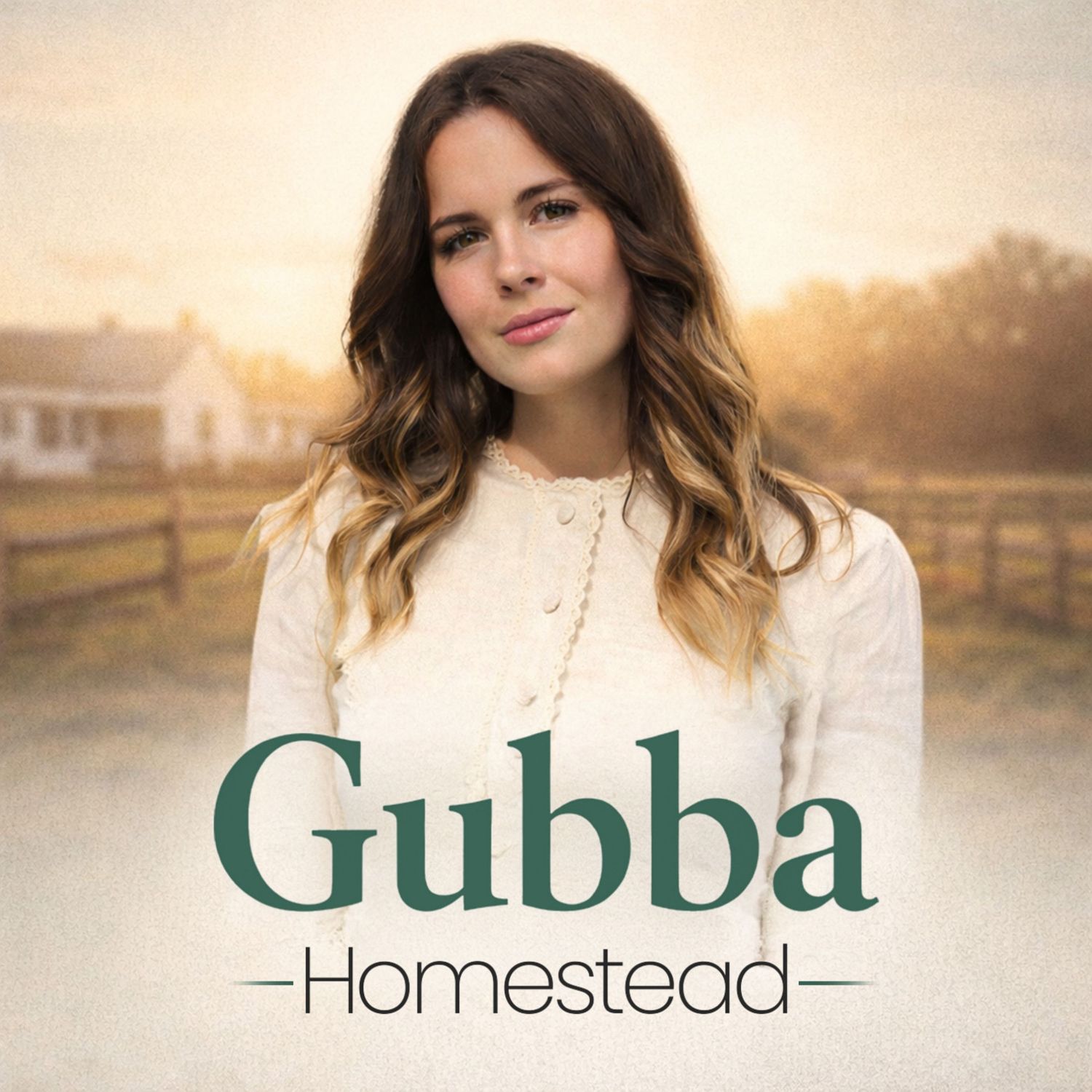
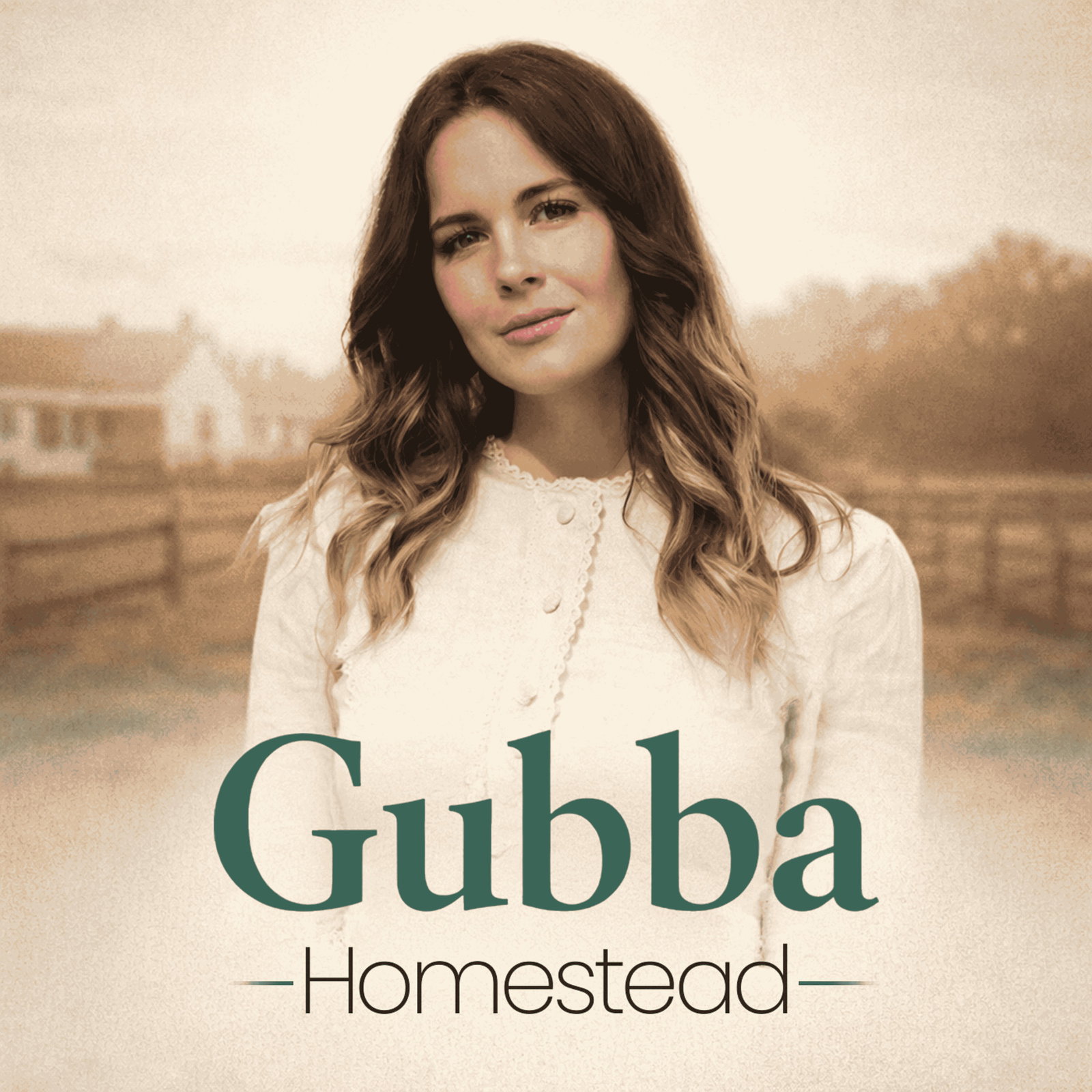
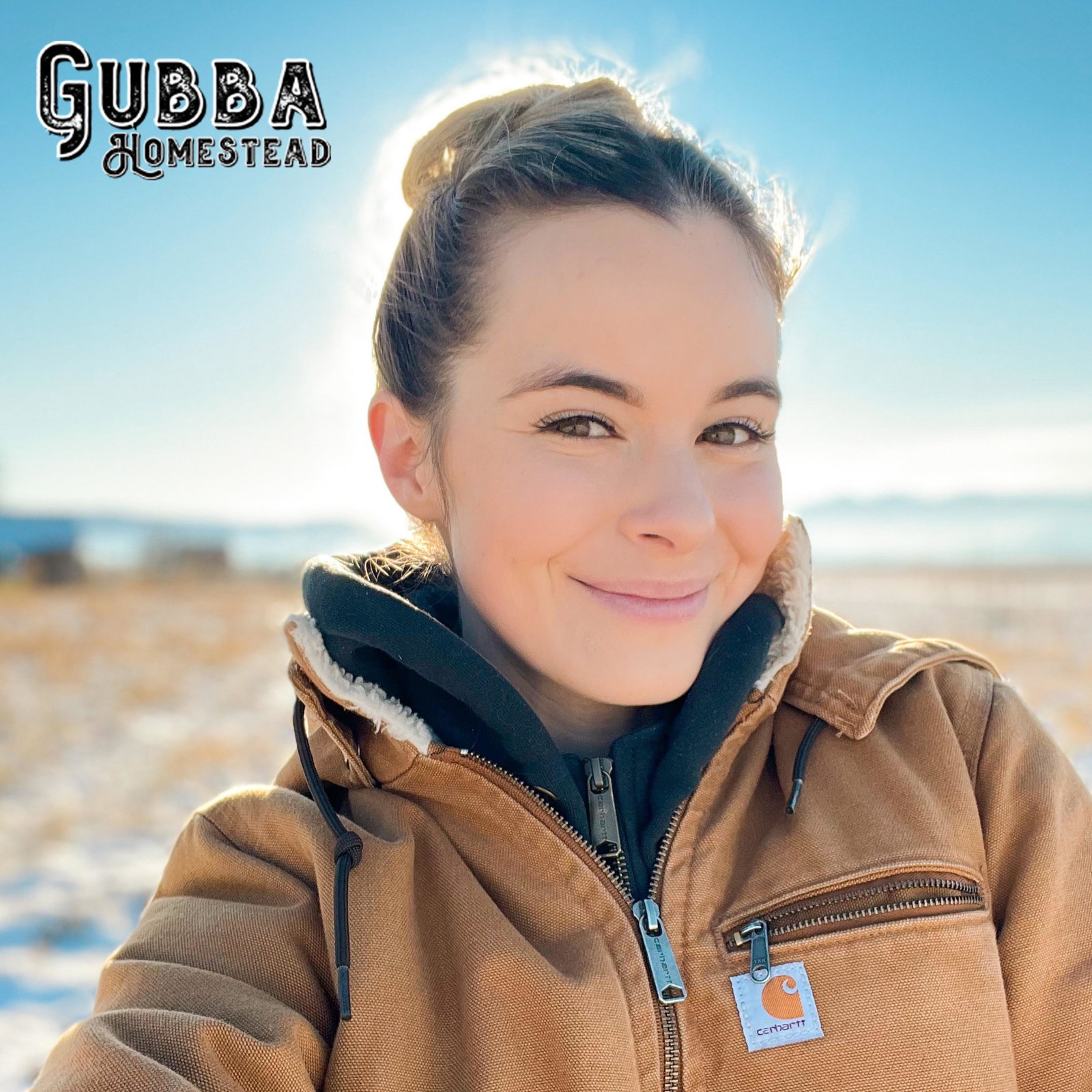
Gubba Homestead Podcast
Would you like to learn how to nurture a garden, raise farm animals, cook recipes from scratch, and preserve food for SHTF? Join me on the Gubba Homestead Podcast, where we share traditional homesteading skills and count...
Insights from recent episode analysis
On the show
- Gubba Homestead Podcast29 eps
Audience Interest
Podcast Focus
Publishing Consistency
Insights are generated by CastFox AI using publicly available data, episode content, and proprietary models.
Most discussed topics
Brands & references
Total monthly reach
Based on 1 signal.
Built from
By chart position
- 🇺🇸United States · How ToHOME#4963K to 331K
- 🇨🇱CL · How To#83.6K to 19K
- 🇨🇴CO · How To#172.0K to 11K
- 🇭🇺HU · How To#91.9K to 10K
- 🇨🇦Canada · How To#691.5K to 7.9K
- Per-Episode Audience
Est. listeners per new episode within ~30 days
76K to 401K🎙 Weekly cadence·85 episodes·Last published yesterday - Monthly Reach
Unique listeners across all episodes (30 days)
152K to 802K🇺🇸83%🇨🇱5%🇨🇴3%+5 more - Active Followers
Loyal subscribers who consistently listen
83K to 441K
Market Insights
Platform Distribution
Reach across major podcast platforms, updated hourly
Total Followers
—
Total Plays
—
Total Reviews
—
* Data sourced directly from platform APIs and aggregated hourly across all major podcast directories.
| Date | Episode | Topics | Guests | Brands | Places | Keywords | Sponsor | Length | |
|---|---|---|---|---|---|---|---|---|---|
| 11/10/26 | 94: Was Your Refrigerator Designed To Make You Dependent? | You can support the show and your skin by shopping my small-batch, all-natural skincare at Arvoti.com. Every purchase helps keep the podcast going while giving you all-natural, thoughtfully made products for your daily routine. Thank you!How did people store food before refrigerators, and why did so much of that knowledge disappear?This episode is about the hidden cost of the refrigerator. Not whether it’s useful, but what disappeared from American kitchens once it arrived.For thousands of years, households fed themselves through winter using root cellars, spring houses, fermentation crocks, salting, smoking, and drying, and eventually home canning. These weren’t hobbies. They were basic skills passed between generations. Within about two generations, much of that knowledge had started to disappear.The spring house at Hopewell Furnace, built around 1806, brings me back to a question I’ve raised before: was there some kind of reset in the early 1800s, and did it change how homes were built?The shift came in stages. Frederic Tudor turned frozen lake water into an international business in the early 1800s. The icebox era. General Electric’s Monitor-Top refrigerator in 1927. The USDA data showing home canning dropped from 44% of households in 1954 to 34% by 1964. Refrigerated railroad cars, then trucks, then an entire industrial food network that has to run continuously or things fall apart. The convenience is real. So is the vulnerability we traded for it. On my own homestead, I use a freeze dryer, a pressure canner, and freezers, and I’ll explain why I still think the old methods matter.You’ll Learn:[0:00] Introduction[2:42] How we traded self-sufficiency for a fragile food system[5:00] Why apples can speed up spoilage in the produce stored beside them[6:43] My theory about a possible reset in the early 1800s[8:50] Wellness products our great-grandparents made in ordinary kitchens[11:10] The Monitor-Top and electric refrigeration going mainstream[13:25] The extraordinary network behind one carton of milk[16:07] Canned food offers something freezer food doesn’t[18:27] Refrigeration pried us out of our local food communities Resources Mentioned:How to Make Milk Kefir | BlogFind more from Gubba:Gubba Homestead | X | Facebook | Instagram | Pinterest | WebsiteGubba Homestead Products | Shop | 21m 33s | ||||||
| 11/3/26 | 93: Why Was The Book of Enoch Erased From The Bible? | You can support the show and your skin by shopping my small-batch, all-natural skincare at Arvoti.com. Every purchase helps keep the podcast going while giving you all-natural, thoughtfully made products for your daily routine. Thank you!There’s an ancient book left out of most Bibles that claims fallen angels fathered a race of giants before Noah’s flood, and most Christians have never read it. I grew up never hearing about Enoch, and once it fell into my lap, I couldn’t stop pulling at the thread. The text claims heavenly beings called the Watchers descended onto Mount Hermon, took human wives, and fathered the giants mentioned in Genesis 6.Those same beings supposedly taught mankind how to forge weapons, use ornaments, precious stones, and cosmetics, read the stars, and practice enchantments. According to Enoch, that knowledge helped corrupt the pre-flood world so badly that God wiped it out.What makes this stranger is where the book ended up. The Ethiopian Orthodox Bible preserved Enoch as scripture, Aramaic fragments turned up in the Dead Sea Scrolls alongside something called the Book of Giants, and the New Testament book of Jude quotes Enoch’s prophecy directly.My 1781 Bible includes the Apocrypha and art depictions, including Daniel and the dragon. One page from another old book I have treats the planets, zodiac, seasons, and even politics as one connected system. It made me wonder how much of our fragmented view of history was shaped on purpose.Giants after the flood, Noah’s unusual birth, and sleeping giants in the mountains also come up.You’ll Learn: [0:00] Introduction[2:55] An old 1781 Bible with the Apocrypha inside[4:54] 200 Watchers and the oath sworn on Mount Hermon[6:46] The Watchers took wives and fathered giants[8:33] Forbidden knowledge as the real corruption of the ancient world[12:17] Why giant-like people appear after the flood[14:25] Noah’s birth was so bright his father feared him[17:37] Why Christian traditions left Enoch out of the canon[22:11] Mountains that might be the bodies of sleeping giantsRelated Gubba Homestead Episodes:What If The Holy Land Described In The Bible Wasn’t In The Middle East At All—But In The American West?Find more from Gubba:Gubba Homestead | X | Facebook | Instagram | Pinterest | WebsiteGubba Homestead Products | Shop | 24m 13s | ||||||
| 10/27/26 | 92: Why Movies Predicted The Future Before It Happened | You can support the show and your skin by shopping my small-batch, all-natural skincare at Arvoti.com. Every purchase helps keep the podcast going while giving you all-natural, thoughtfully made products for your daily routine. Thank you!Predictive programming: Has Hollywood been programming us by showing us “the future”?Enemy of the State (1998) portrayed government surveillance. Fifteen years later, Edward Snowden’s disclosures revealed extensive real-world government surveillance programs.That’s one of several examples I keep coming back to. They Live (1988) showed broadcast signals controlling what people see. The Matrix (1999) put September 11th, 2001 on Neo’s passport. Eyes Wide Shut (1999) portrayed masked rituals among the ultra-wealthy that look a lot like the 1972 Rothschild Surrealist Ball, a party with dismembered baby dolls on its tables. Contagion (2011) walked through quarantines, overwhelmed hospitals, and vaccine development almost a decade before COVID.The theory behind predictive programming is that powerful groups deliberately introduce events, technologies, and agendas through entertainment before they unfold publicly. Some say it’s preparation. Others say it’s a symbolic obligation, revealing the method through fiction so the public can dismiss it as make-believe later.My honest take is that Hollywood would never release something the people in charge genuinely wanted buried. If it made it to theaters, it was allowed to.Taylor Swift released the song Patient Zero while plague headlines were coming out of Russia, and I’ll explain why I now close the app instead of reporting on it. Red pill or blue pill, let me know in the comments.You’ll Learn: [0:00] Introduction[3:35] They Live, and the sunglasses that reveal the truth[5:09] Shape-shifting clips and malfunctioning frequencies on TV[7:15] Why the fight to put on the glasses mirrors waking people up[8:25] The Matrix and why most people take the blue pill[12:01] Kubrick’s death and the theory of missing footage[14:45] Rothschild Surrealist Ball compared to Eyes Wide Shut[16:52] Contagion portraying a pandemic nearly a decade before COVID-19[17:49] Taylor Swift’s Patient Zero and harvesting our energy[18:50] The mere exposure effect and normalizing the unfamiliar[21:54] Far-fetched movie technology that became recognizable years later Find more from Gubba:Gubba Homestead | X | Facebook | Instagram | Pinterest | WebsiteGubba Homestead Products | Shop | 24m 05s | ||||||
| 10/20/26 | 91: Modern Cars Are Becoming Giant Surveillance Devices | You can support the show and your skin by shopping my small-batch, all-natural skincare at Arvoti.com. Every purchase helps keep the podcast going while giving you all-natural, thoughtfully made products for your daily routine. Thank you!Your car will be able to decide when you can drive.Section 24220 of the 2021 Infrastructure Investment and Jobs Act directs the Department of Transportation to develop a safety standard for technology in future passenger vehicles that can passively detect impairment and restrict operation of the vehicle.People call it the kill switch provision. It isn’t a remote government button; it’s technology built into the car that monitors the driver and makes a determination about whether you’re allowed to drive. That distinction matters, and so does the broader question of how much decision-making authority we’re comfortable building into the machines we own.This is why I’ve been looking at older vehicles differently. A new truck can reach a price that would have sounded absurd not that long ago, and that’s before a single sensor fails and a repair balloons into programming, calibration, and dealer-specific equipment.An old truck has an ignition, an engine, a transmission, and a driver. Nothing analyzing your face, no over-the-air updates, no internet connection needed to do its basic job.The privacy side, the repair side, the ownership side, physical buttons, and a real key still win for me. If you’ve been eyeing an old truck lately, you’re not the only one. And yes, I have thoughts on Cash for Clunkers.You’ll Learn:[0:00] Introduction[2:13] Modern vehicles became computers with an engine attached[4:06] Your new car is collecting data and watching you[6:26] The impairment-detection kill switch provision and what it actually says[8:56] The “for our safety” rollout pattern I keep seeing[10:53] When repair was a normal part of owning a vehicle[13:03] The satisfaction of turning an actual key[15:19] Cash for Clunkers and the cars that lacked trackingFind more from Gubba:Gubba Homestead | X | Facebook | Instagram | Pinterest | WebsiteGubba Homestead Products | Shop | 17m 43s | ||||||
| 10/13/26 | 90: Hospitals Were Designed to Heal. Now They Make Us Sick | You can support the show and your skin by shopping my small-batch, all-natural skincare at Arvoti.com. Every purchase helps keep the podcast going while giving you all-natural thoughtfully made products for your daily routine. Thank you!TikTok pulled my video on how American medicine was reshaped, and that reaction alone tells you this piece of history still makes somebody uncomfortable.I'm a first-time homesteader, and the more I dug into old hospital photographs, the harder it was to ignore how much of an older approach to medicine was pushed aside within a generation or two.Hospitals used to be built around sunlight, fresh air, and enormous porches where patients could recover outside. Heliotherapy, hydrotherapy, mustard plasters, copper surfaces, wool blankets, cross-ventilated wards. All of this existed in real hospitals and was used by real doctors, long before sealed windows and artificial lighting became the default.Then in 1910, the Carnegie Foundation published Abraham Flexner's report, which redefined what a respectable medical school was supposed to look like.Between 1913 and 1929, the Rockefeller-funded General Education Board poured tens of millions into a short list of institutions, enough to build the laboratories, hire the faculty, and fund the research programs that many competing schools, including homeopathic, eclectic, osteopathic, and naturopathic ones, could not match.Those institutions trained the doctors. Those doctors became the professors, hospital administrators, journal editors, and licensing officials who decided what counted as legitimate care. If that chain of influence is real, the hospital you walk into today starts to look less like progress and more like a decision somebody made for you.You’ll Learn: [0:00] Introduction[3:59] Old hospitals treated the environment as part of the cure[5:41] Cleanable surfaces believed to aid healing[7:27] Mustard plasters then, antibiotics as the first resort now[8:34] The Flexner Report narrowed a once diverse American medicine[10:34] Rockefeller money funneled into a few selected medical schools[13:14] The self-reinforcing chain from funding to doctors[15:27] Certain forms of medicine did not die in fair competition[17:19] What a building reveals about a system’s priorities[18:58] Progress or the dollar behind the modern hospitalFind more from Gubba:Gubba Homestead | X | Facebook | Instagram | Pinterest | WebsiteGubba Homestead Products | Shop | 20m 01s | ||||||
| 10/6/26 | 89: Why Younger Generations Are Stealing "Grandma Hobbies" | Shop my all-natural skincare products at Arvoti.com.The internet calls them grandma hobbies, but most of them were never hobbies at all.Baking bread, canning, sewing, keeping chickens, making butter, drying herbs. These were everyday skills that stopped being passed down in the span of two generations, and now they're making a comeback at a time when people seem burned out by modern life.I want to talk about why that's happening, and what we can actually learn from it instead of treating it like another passing internet trend.My farmhouse has a meat locker in the basement. Households used to raise and grow much of what they consumed, and their homes reflected that.What matters even more is competence. The first time you make butter, you realize how simple it is. The first time you bake bread, you realize it doesn't have to come from a plastic bag. That knowledge builds confidence.I also caution against turning grandma hobbies into another form of consumerism. You don't need a curated kitchen or matching linens to start. Pick one skill that would actually be useful in your life, and give it a month.You are capable. This is your little push to go and do it.You’ll Learn: [0:00] Introduction[1:58] What people actually mean by grandma hobbies[3:41] Grandmas made clothing from wool instead of recycled plastic[6:32] Tangible results feel different from vanishing screen time[8:02] The competence shift that comes from making something yourself[11:04] Gardening can be as simple as you make it[12:41] Older household items were expected to age, not be replaced[15:09] How communities were dismantled in two generations[17:06] The warning against turning grandma hobbies into consumerism[18:49] Pick one skill and spend a month learning itRelated Gubba Homestead Episodes:Are Modern Homes Designed to Keep You Dependent?Does Electroculture Actually Work? Natural Plant BoosterFind more from Gubba:Gubba Homestead | X | Facebook | Instagram | Pinterest | WebsiteGubba Homestead Products | Shop | 20m 55s | ||||||
| 9/29/26 | 88: Are Modern Homes Designed to Keep You Dependent? | Shop my all-natural skincare products at Arvoti.com.Old farmhouses were built to solve problems that new homes can’t handle… Is it a coincidence?I live in a 75-year-old farmhouse with a root cellar, a giant pantry off the kitchen, and an old walk-in meat locker in the basement with all of its equipment still there. The more I learn about how older homes were designed, the more I realize how much the house itself used to do the work for the people inside.Before central air, deep porches shaded exterior walls before heat ever entered the home. Windows sat opposite each other so air could actually move. Deciduous trees shaded the house in summer and dropped their leaves in winter to let sunlight back in. Sleeping porches caught the evening breeze. Root cellars held food without electricity, and summer kitchens kept cooking heat out of the main house.Modern subdivisions skip most of that. Homes get jammed together for speed and resale, without much thought for the position of the sun or the seasons. Then some owners move into brand-new homes and discover water intrusion, HVAC problems, and finishes failing much earlier than expected.There's also a tangent about millennial gray, personality-free interiors, and why I'm going to paint a mural of my farm in the laundry room regardless of what a future buyer thinks.You’ll Learn: [0:00] Introduction[2:37] What the layout of an old home reveals about its people[5:14] Wraparound porches shielded the house from heat[6:52] Sleeping porches and catching the cooler evening breeze[9:16] The millennial gray pandemic and losing a home's personality[11:39] Modern kitchens with nowhere to store 30 jars of peaches[13:21] Dense materials that moderate temperature through the day[15:59] Whether homes are optimized for longevity or resale[17:52] What happens when a single household system fails[21:25] Relying on grocery stores as the new root cellarFind more from Gubba:Gubba Homestead | X | Facebook | Instagram | Pinterest | WebsiteGubba Homestead Products | Shop | 22m 14s | ||||||
| 9/22/26 | 87: The Cloudbuster Experiment That Turned The Desert Green | Shop my all-natural skincare products at Arvoti.com.A few years after Wilhelm Reich claimed he'd greened part of the Arizona desert, he was dead in a federal prison, and his publications were being destroyed under court order.In late 1954, Wilhelm Reich took his cloudbuster into the Arizona desert to test whether it could reverse drought in the driest conditions he could find. What he claimed happened next is the part of the cloudbuster story that never gets told.After building my own cloudbuster in my garden and watching haze and wildfire smoke clear within twenty minutes of powering it up, I went digging into his journal, CORE, which describes dozens of atmospheric operations: direction, duration, targets, timing. Reich wasn't only trying to make rain. He was trying to break up what he called DOR, deadly orgone energy, a condition he believed made the atmosphere stagnant, dry, and hazy.Then he went to Tucson, where Mount Catalina grew clearer, humidity rose, and clouds began forming in areas he'd recorded as dead sky. January 1955 came in unusually wet for the region. Photographs from the expedition were even cataloged under phrases like 'The Prairie Reborn', as parts of the desert began greening.A few short years later, Reich was in federal prison. His publications were destroyed under court order. By 1957, he was dead. That sequence is worth questioning.You’ll Learn:[0:00] Introduction[3:38] Weather anomalies observed after powering up my garden cloudbuster[5:44] DOR and the idea of a stagnant atmosphere[7:38] Taking the cloudbuster to the Arizona desert[9:21] The Prairie Reborn and greening desert vegetation[11:19] Why the environment is responding is a much larger claim[14:16] How everything around Reich began collapsing[16:17] Operation Sea-Spray and long-hidden atmospheric manipulation[18:06] Trying the backyard science experiment yourselfFind more from Gubba:Gubba Homestead | X | Facebook | Instagram | Pinterest | WebsiteGubba Homestead Products | Shop | 18m 57s | ||||||
| 9/15/26 | 86: Why Grocery Stores Want You To Buy Seedless Fruit | Shop my all-natural skincare products at Arvoti.com.Seedless fruit is a scam, and we made it possible.Seedless grapes, seedless watermelon, seedless citrus... almost every fruit at the grocery store has been bred to remove the one part that actually makes it a plant.I only started noticing this when I went to buy grapevines for my garden and saw "seedless" listed as the top selling point on nearly every variety. Growing up, I would have picked seedless every time. Now I deliberately look for seeded ones, and this episode is about why that changed.Seeds carry the plant's genetics, the nutrients we're told to supplement with, and the option to grow food again next year without buying anything new. Grape seed extract is sold in capsules while the grapes themselves are engineered to remove the same seed those capsules come from. That contradiction runs through the whole food system.Heirloom and traditional varieties don't get banned. They get replaced when shoppers stop buying them, growers stop planting them, and nurseries stop stocking them. A variety can disappear without anyone deciding to remove it.I also raise a bigger pattern in the episode: Fertility is dropping in people, and it’s being bred out of the fruit we eat. Both are worth paying attention to.You’ll Learn:[0:00] Introduction[4:41] Choosing seeded grape varieties over the seedless standard[6:13] How shipping and shelf life influence which varieties survive[8:11] He who controls the food controls the people[10:22] The pattern of stripping whole foods into components[11:55] Seed saving once meant genuine food independence[13:58] Watching the full growth cycle changes how a seed looks[15:38] Traditional food skills fade when nobody needs them[17:50] Preserving diversity as a form of resilience[21:11] What to notice next time seedless is printed on a bagGo Deeper:Want to explore more about why I'm choosing deeded fruit again?Dig deeper into the seedless fruit conversation →Resources Mentioned:The Homestead Prepper's Guide To Canning CourseFind more from Gubba:Gubba Homestead | X | Facebook | Instagram | Pinterest | WebsiteGubba Homestead Products | Shop | 23m 10s | ||||||
| 9/8/26 | smart devicesprivacy+4 | — | AlexaDVD+2 | — | smart homeprivacy concerns+4 | Arvoti.com | 24m 11s | ||
| 9/1/26 | cloudbustersorgone energy+3 | — | all-natural skincare productsFDA | MaineArizona | cloudbustersWilhelm Reich+3 | Arvoti | 22m 01s | ||
| 8/25/26 | fertility crisisendocrine-disrupting chemicals+3 | — | BPAphthalates+2 | — | infertilityendocrine disruptors+6 | Arvoti.com | 26m 54s | ||
| 8/18/26 | dragonsmythology+4 | — | — | — | dragonsmythology+7 | Arvoti.com | 22m 10s | ||
| 8/11/26 | electroculture gardeningcopper in gardening+3 | — | Secrets Hidden in Mainstream History | — | electroculturecopper wire+5 | Arvoti.com | 18m 40s | ||
| 8/4/26 | homesteadingfear+4 | — | — | — | homesteadingfear+6 | Arvoti | 16m 18s | ||
| 7/28/26 | natural fiberssynthetic fibers+3 | — | — | — | natural skincarepolyester+5 | Arvoti.com | 16m 32s | ||
| 7/21/26 | food sovereigntyhomesteading+4 | — | — | — | homesteadinggardening+4 | Arvoti.com | 29m 19s | ||
| 7/14/26 | smart technologyhomesteading+4 | — | iPodCRT television+7 | — | smart technologyhomesteading+7 | Arvoti.com | 22m 52s | ||
| 7/7/26 | butterhealth+3 | — | I Can't Believe It's Not Buttermargarine+1 | — | butterhealth+5 | Arvoti.com | 24m 23s | ||
| 6/30/26 | personal care productsingredient scrutiny+3 | — | shampoobody wash+3 | — | skincaretoxic ingredients+3 | Arvoti.com | 30m 38s | ||
| 6/23/26 | raw milkdairy processing+3 | — | raw milkskim milk+1 | Jerseypasture | raw milkskim milk+5 | Arvoti.com | 26m 27s | ||
| 6/16/26 | sunscreenskin health+4 | — | — | — | sunscreenskin health+5 | Arvoti.com | 26m 08s | ||
| 6/9/26 | homesteadingkitchen skills+3 | — | — | — | homesteadingkitchen scraps+6 | Arvoti.com | 32m 48s | ||
| 6/2/26 | tick population increaseAlpha-gal syndrome+4 | — | Gates FoundationPlum Island Animal Disease Center+1 | — | ticksAlpha-gal syndrome+6 | Arvoti.com | 31m 11s | ||
| 5/26/26 | AI costsdata privacy+4 | — | — | — | artificial intelligencedata centers+5 | Arvoti.com | 28m 26s | ||
| 5/19/26 | GATE Programmind control+4 | — | GATE ProgramMKUltra+1 | — | GATE ProgramMKUltra+6 | Arvoti.com | 27m 33s | ||
| 5/12/26 | garlic benefitshomesteading+3 | — | garlicraw honey+2 | tick season | garlichomesteading+6 | — | 35m 49s | ||
| 5/5/26 | hidden historyorphan trains+4 | — | Book of Jasher | — | orphan trainshistorical secrets+5 | Arvoti.com | 29m 49s | ||
| 4/28/26 | women's healthhealthcare products+4 | — | pap smearsmammograms+7 | — | healthcare transparencywomen's health products+3 | — | 42m 33s | ||
| 4/21/26 | dandelionsnatural medicine+4 | — | Gubba Homestead Podcast | — | dandelionsnatural medicine+5 | Arvoti | 37m 47s | ||
| 4/14/26 | homesteadingself-sufficiency+3 | — | — | — | homesteadingself-reliance+3 | Arvoti | 40m 18s | ||
| 3/16/26 | natural flea preventionnatural tick repellent+3 | — | garlicbrewer’s yeast+4 | — | natural flea prevention for dogsnatural tick repellent for pets+3 | — | 30m 55s | ||
| 3/2/26 | homesteadingtraditional living+4 | — | Gubba Homestead Podcast | — | homesteadingmental health+5 | Arvoti | 32m 22s | ||
| 2/16/26 | root canalswhole-body health+5 | — | Gubba Homestead Podcast | — | root canalschronic illness+5 | — | 20m 00s | ||
| 2/2/26 | regenerative homesteadingself-sustaining food systems+5 | — | Gubba Homestead Podcast | — | regenerative livingself-sufficiency+8 | — | 33m 22s | ||
| 1/19/26 | dragonsdinosaurs+4 | — | Gubba Podcast | EuropeChina+2 | dragonsdinosaurs+5 | — | 26m 00s | ||
| 1/12/26 | traditional remediesnatural medicine+3 | — | Gubba Homestead Podcast | — | traditional remediesnatural health+5 | — | 21m 14s | ||
| 12/22/25 | biblical historygeography+4 | — | Gubba Homestead Podcast | Holy LandAmerica+4 | Holy LandUtah+5 | — | 37m 40s | ||
Showing 38 of 85
Pitch Fit is a Pro feature
See how bookable this show is for guests, which brands already advertise, the per-episode ad value, and the best-fit guest and sponsor profile. The numbers are blurred on the free plan.
How readily this show books outside guests like you.
How proven this show is for host-read sponsorships.
For Guests
ProFor Advertisers
ProUpgrade to Pro to unlock guest cadence, sponsor categories, fit scores, and per-episode ad value for this show.
Similar Audience Demographics
Podcasts that attract a similar listener profile


Chart history for Gubba Homestead Podcast
Peaked at #8 in CL, top 10 in 2 of 19 tracked markets, currently #8 in CL.
| Market | Genre | Peak | Current | Trend |
|---|---|---|---|---|
| CL | — | #8 | #8 | — |
| HU | — | #9 | #9 | — |
| CO | — | #17 | #17 | — |
| United States | — | #49 | #49 | — |
| Canada | — | #69 | #69 | — |
| South Africa | — | #71 | #71 | — |
| AR | — | #74 | #74 | — |
| Ireland | — | #79 | #79 | — |
| Spain | — | #83 | #83 | — |
| Brazil | — | #84 | #84 | — |
| Mexico | — | #93 | #93 | — |
| Netherlands | — | #97 | #97 | — |
| ID | — | #99 | #99 | — |
| CZ | — | #120 | #120 | — |
| CH | — | #126 | #126 | — |
| Norway | — | #126 | #126 | — |
| Denmark | — | #132 | #132 | — |
| SA | — | #172 | #172 | — |
| France | — | #200 | #200 | — |
Chart Positions
19 placements across 19 markets.
Chart Positions
19 placements across 19 markets.