How to Lose the Wait
by Holly Toscanini
Is this your podcast?Insights from recent episode analysis
Audience Interest
Podcast Focus
Publishing Consistency
Platform Reach
Insights are generated by CastFox AI using publicly available data, episode content, and proprietary models.
Most discussed topics
Brands & references
Est. Listeners
Insufficient chart data. Estimates will improve as the show charts.
- Per-Episode Audience
Est. listeners per new episode within ~30 days
N/A🎙 ~2x weekly·110 episodes·Last published 2d ago - Monthly Reach
Unique listeners across all episodes (30 days)
N/A - Active Followers
Loyal subscribers who consistently listen
N/A
Market Insights
Platform Distribution
Reach across major podcast platforms, updated hourly
Total Followers
—
Total Plays
—
Total Reviews
—
* Data sourced directly from platform APIs and aggregated hourly across all major podcast directories.
On the show
From 22 epsHost
Recent guests
Recent episodes
131. The September Reset: One Overdue Decision to Make Before the Year Gets Away From You
Aug 31, 2026
Unknown duration
130. Is the Silent Treatment Abuse? What Every Woman Needs to Know — with Ama K. Karikari
Aug 24, 2026
Unknown duration
129. What to Do When They Get Defensive
Aug 17, 2026
Unknown duration
128. How to Start the Converstation You Keep Avoiding
Aug 10, 2026
Unknown duration
127. What If Someone Is Disappointed by Your Decision
Aug 3, 2026
Unknown duration
Social Links & Contact
Official channels & resources
Official Website
Login
RSS Feed
Login
Resolving iTunes ID\u2026 if this persists, the podcast may not be indexed on Apple Podcasts.
| Date | Episode | Topics | Guests | Brands | Places | Keywords | Sponsor | Length | |
|---|---|---|---|---|---|---|---|---|---|
| 8/31/26 | 131. The September Reset: One Overdue Decision to Make Before the Year Gets Away From You | What decision did you expect to have made by now? Here’s how to use September to name the overdue thing — and take one real move before the year ends.What decision did you expect to have made by now?Not this year specifically — just by now. There’s something you’ve been circling. A direction you thought you’d have committed to. A conversation you’d have had. A change you’d have made. And every time September rolls around, the gap between where you thought you’d be and where you actually are becomes a little harder to ignore.In this episode, Holly Toscanini uses September’s natural transition energy to help you name one overdue decision — not to reinvent your life or start over, but to stop postponing one specific thing that already matters.Register for the free live class — Stop Waiting to Feel Ready — on September 12, 2026 at 10 AM PDT.https://holly-toscanini-f50a.mykajabi.com/stop-waiting-to-feel-ready-workshopoverdue decision, September reset, stop postponing, how to stop waiting, making a decision you keep putting off, women over 40 decisions, September new year, preparation vs avoidance, readiness vs willingness, how to stop procrastinating a decision, decision making women, self-trust women, how to take action, stop waiting for the right time, overdue choicehttps://uppbeat.io/t/mood-maze/trendsetterLicense code: VGZ66UBEGXBP8YK8 | — | ||||||
| 8/24/26 | 130. Is the Silent Treatment Abuse? What Every Woman Needs to Know — with Ama K. Karikari | Ama K. Karikari spent 15 years in a marriage defined by chronic silent treatment before recognizing it as abuse. Here’s what she learned.Sometimes the hardest relationships to leave are the ones that don’t look obviously harmful from the outside. There may not be a single incident you can point to or a piece of evidence that makes everyone around you immediately understand what you’re feeling. Instead, there’s withdrawal, punishment, confusion, and a growing sense that you can’t trust your own interpretation of what’s happening anymore.My guest today, Ama K. Karikari, spent fifteen years experiencing chronic silent treatment in marriage before recognizing it as a form of emotional harm. Today she helps other women and mothers find language for experiences they may have struggled to explain even to themselves.In this conversation, you'll learn:What the silent treatment actually is — and the critical distinctions between it, a cooling off period, and involuntary stonewallingWhy the silent treatment triggers the same neurological pain centers as physical violenceWhy it’s so hard for others — friends, family, even clinicians — to recognize it as abuse when there’s no visible evidenceHow chronic silent treatment erodes self-trust over time and causes women to doubt their own perceptionThe four potential outcomes of staying in a narcissistic relationship, according to researchThe one safest first step for a woman who still feels confused or afraid to trust her own experienceAma’s free resourcesFind both in the links below.Website: https://www.amakkarikari.com/Instagram: https://www.instagram.com/amakkarikari/LinkedIn: https://www.linkedin.com/in/amakarikariyawson/eBook — Silenced to Soaring: Heal from Chronic Silent Treatments, Toxic Relationships and Abuse: https://www.amakkarikari.com/Soaring Sisters Community — guided lessons, practical exercises, community webinars, and optional weekly peer support circles: https://www.skool.com/silenced-to-soaringmoms/aboutthe silent treatment, chronic silent treatment, emotional abuse in marriage, narcissistic abuse recovery, silent treatment in relationships, emotional harm women, how to recognize emotional abuse, self-trust after abuse, toxic relationship recovery, mothers in abusive relationships, Ama K. Karikari, Silenced to Soaring, gaslighting and silence, narcissistic tendencies, rebuilding self-trust after toxic relationshiphttps://uppbeat.io/t/mood-maze/trendsetterLicense code: VGZ66UBEGXBP8YK8 | — | ||||||
| 8/17/26 | 129.
What to Do When They Get Defensive | You finally said it. Then they got defensive and suddenly you’re explaining yourself instead of addressing the problem. Here’s how to stay connected to what you need.You said the thing you’d been avoiding. Before you finished explaining what’s been bothering you, the other person said, “That’s not fair,” or “I didn’t mean it that way,” or “Why are you bringing this up now?”And suddenly you’re no longer talking about the problem. You’re reassuring them that you don’t think they’re a bad person. By the end of the conversation, the concern you worked so hard to raise has almost disappeared.Starting an honest conversation requires courage.Staying connected to what you need after the other person becomes defensive requires self-trust.Those are not always the same skill.In this episode — part three of the honest conversation arc — I'll name what actually happens when defensiveness takes over a conversation and how to remain present and clear without either shutting down or losing the point.In this episode, you’ll learn:Why defensiveness changes the conversation so quickly — and why understanding someone’s reaction doesn’t require you to let it replace your concernWhen the conversation shifts to your delivery: how to acknowledge what’s true without letting your communication style become the entire subjectThe urge to prove you’re reasonable — and why you don’t need identical interpretations before a problem can be addressedA simple structure for staying grounded: acknowledge their response, then return to the issueThe difference between intent and impact — and why one doesn’t cancel the otherWhat to do when someone brings up your grievances to redirect the conversationHow to handle withdrawal and silence without chasing the conversation or giving up the issueWhen to pause a conversation — and what a pause looks like versus avoidancePractice for this week: Think about a conversation you need to have and the defensive response you’re already expecting. Notice what you usually do when that happens. Choose one different response. Write down the central issue in one sentence and the line you’ll use to return to it.Book an Honest Conversation Session — a focused 60-minute session to clarify what you need to say, prepare for the places where you’re most likely to lose your footing, and identify your next step.The Honest Conversation SessionBook your session (five spots available):https://calendly.com/hollytoscanini/honest-conversation?month=2026-07Or send me a message on Instagram @hollytoscanini with the words “honest conversation.”what to do when someone gets defensive, staying grounded in difficult conversations, how to hold your ground in an argument, difficult conversations women, how to stop over-explaining, staying connected to yourself, intent vs impact, how to address a pattern in a relationship, conflict avoidance women, people pleasing in arguments, how to return to the point, defensive partner, honest communication women, self-trust in relationshipshttps://uppbeat.io/t/mood-maze/trendsetterLicense code: VGZ66UBEGXBP8YK8 | — | ||||||
| 8/10/26 | 128. How to Start the Converstation You Keep Avoiding | You’ve rehearsed it 47 times. The other person wasn’t there for any of them. Here’s how to find your first honest sentence and actually begin.You’ve rehearsed this conversation dozens of times. You’ve anticipated the objections, prepared the explanation, and found the words that should help them understand. Then the moment comes and you decide it isn’t the right time.The problem is still there. And now resentment is starting to grow around it.In this episode, I’m naming what’s actually happening in the space before a difficult conversation begins — and why the challenge usually isn’t knowing what to say. It’s trusting yourself to say it without minimizing it, over-explaining it, or changing it the moment the other person becomes uncomfortable.In this episode, we’ll cover:The pre-conversation you’re already having — mentally playing both roles, softening the message until the real issue is hard to hearWhy avoidance doesn’t remove the discomfort, it postpones it while adding resentmentThe question that brings your attention back to what belongs to you: what do I know I want to say before I start managing how they might react?How to find the first honest sentence — and why it only needs to do one job: beginWhat weakens the opening before you’ve even spoken: apologies, preemptive reassurances, and objections the other person hasn’t made yetWhy you can understand someone’s reasons and still need a different arrangementHow to stay connected to your own point once the other person respondsA personal reflection on trying to find language that protects against being misunderstood — and why that’s not your responsibilityPractice for this week: Think of the conversation you keep rehearsing. Write the first sentence you want to say — before you start managing the other person’s reaction. Then notice what you feel compelled to add, and take those parts out of the opening.Book one of five private Honest Conversation Sessions — a focused 60-minute session to clarify what you need to say, find a grounded way to begin, and identify the next step after the conversation.Book your session (five spots available):https://calendly.com/hollytoscanini/honest-conversation?month=2026-07Or send Holly a message on Instagram @hollytoscanini with the words “honest conversation.”how to start a difficult conversation, conversation you keep avoiding, avoiding hard conversations, how to speak up for yourself, fear of conflict women, how to set boundaries in relationships, resentment in relationships, first honest sentence, people pleasing women, difficult conversations women, how to stop avoiding conflict, self-advocacy women over 40, honest communication, setting boundaries women, how to say what you needhttps://uppbeat.io/t/mood-maze/trendsetterLicense code: VGZ66UBEGXBP8YK8 | — | ||||||
| 8/3/26 | 127. What If Someone Is Disappointed by Your Decision | You made the decision. Then they reacted, and suddenly you weren’t sure anymore. Here’s how to stay connected to what you know when someone is disappointed.You’ve spent weeks thinking it through. You’ve paid attention to what keeps coming up, considered the consequences, and finally reached a place where the decision feels clear. Then you share it, and the other person goes quiet — or tells you they’re hurt, worried, or disappointed.Within minutes, your certainty begins to disappear.For many women, making a decision is one form of self-trust. Remaining connected to what you know after someone reacts is another. That second part is often much harder.In this episode, I’m telling you exactly what happens when someone else’s disappointment becomes louder than everything you knew before the conversation began — and how to stay grounded in what you actually know without dismissing the people you love.In this episode, we’ll cover:Why another person’s disappointment can feel so destabilizing — especially when you were raised to be dependable, agreeable, and aware of everyone else’s needsHow decisions get diluted through small adjustments until the original need is almost impossible to recognizeThe critical difference between disappointing someone and harming themHow to tell the difference between new information that deserves attention and someone’s discomfort with the changeThe second decision: whether you’ll remain connected to your choice when someone else reactsA pause before backpedaling — what to ask yourself before revising a decision under pressureSpecific language for staying warm and clear when the other person is visibly upsetWhat it means when a relationship only works while you ignore what you knowA personal reflection on seeking approval as a condition for self-trust — and why that keeps so many women waitingPractice for this week: Think of one decision you’ve made, or almost made, that you keep reopening because someone else may be disappointed. Write down what you knew before anyone reacted. Name what you’re afraid their disappointment will mean about you. Notice where you’re tempted to dilute the decision. Then give yourself 24 hours before making another adjustment.This week, try this sentence completion prompt:“I know I need to __________, but I keep reopening the decision when __________ is disappointed.”Share your answer in the YouTube comments or send Holly a message — names and private details not required.someone disappointed by your decision, how to handle disappointment, self-trust women, people pleasing women, how to stop second-guessing yourself, fear of disappointing others, setting boundaries women over 40, how to stay in a decision, approval seeking women, women who over-explain, self-abandonment, disappointing someone you love, how to hold a boundary, decision making anxiety women, staying connected to yourselfhttps://uppbeat.io/t/mood-maze/trendsetterLicense code: VGZ66UBEGXBP8YK8 | — | ||||||
| 7/27/26 | 126. When Research Becomes Procrastination | Learn how to know when you have enough information to take action—and when more research has become a way to avoid being seen.You want to make a thoughtful decision.So you research.You read the article, listen to the podcast, compare options, ask for advice, save the post, and maybe sign up for another free training.At first, research can be useful. It can help you understand the cost, the timeline, the risks, the next step, and what you need to know before moving forward.But there’s a point where research stops helping you make a grounded decision and starts protecting you from the part where your decision becomes visible.Ready to learn why you're still waiting? Take the free Unwaiting Audithttps://holly-toscanini-f50a.mykajabi.com/the-5-minute-midlife-confidence-quizIn this episode of How to Lose the ‘WAIT,’ Holly Toscanini explores how to know when you have enough information to take action—and when more research has become a way to avoid exposure, judgment, rejection, disappointment, or the vulnerability of being a beginner.This episode is for the woman who keeps telling herself she needs to learn more before she starts, but somewhere inside knows she may already have enough information to take the next honest step.You’ll learn how to tell the difference between clarifying research and avoidant research, why information can create the feeling of progress without the risk of action, and why some answers are only available after you begin.Holly also explains why the goal isn’t reckless action or a dramatic leap. The goal is to identify the smallest honest step that puts your idea, decision, project, or conversation in contact with real life.Because self-trust isn’t built by researching every possible outcome in advance.It’s built when you take a grounded step and stay with yourself through what happens next.The question to consider this weekComplete this sentence:I keep researching __________, but the action I may be avoiding is __________.You can reply to the email that brought you to this episode or send Holly a direct message on Instagram at @hollytoscanini.One honest sentence is enough.Next weekHow to Hear Yourself When Everyone Else Is in Your HeadSometimes the voices influencing your decision belong to people actively giving you advice. Sometimes they’re people whose reactions you’re trying to predict. And sometimes they’re old expectations you’ve carried for so long that they now sound like your own thoughts.Instagram: @hollytoscaninihow to know when you have enough informationhow to stop over researchinghow to stop researching and take actionwhy do I keep researching instead of doingwhen research becomes procrastinationMusic from #Uppbeat (free for Creators!):https://uppbeat.io/t/mood-maze/trendsetterLicense code: VGZ66UBEGXBP8YK8 | — | ||||||
| 7/20/26 | decision makingself-doubt+3 | — | — | — | second guessingdecision+3 | — | 23m 40s | ||
| 7/13/26 | personal growthself-awareness+3 | — | — | — | personal growthself-awareness+5 | — | 14m 31s | ||
| 7/6/26 | behavioral changeself-awareness+3 | — | — | — | behavioral patternsself-awareness+3 | — | 17m 27s | ||
| 6/29/26 | self-trustEvidence Over Emotion+4 | — | — | — | self-trustEvidence Over Emotion+5 | — | 18m 22s | ||
| 6/22/26 | griefpersonal growth+5 | — | — | — | griefwaiting+6 | — | 18m 49s | ||
| 6/15/26 | Micro-PivotConditional Living Loop+3 | — | — | — | Micro-PivotConditional Living Loop+5 | — | 24m 14s | ||
| 6/8/26 | courageconfidence+4 | — | — | — | Courage-Confidence Sequenceself-doubt+3 | — | 15m 45s | ||
| 6/1/26 | perfectionismfear of failure+4 | — | — | — | perfectionismfear of judgment+5 | — | 15m 57s | ||
| 5/25/26 | restguilt+4 | — | — | — | restguilt+5 | — | 14m 57s | ||
| 5/18/26 | intuitionanxiety+3 | — | — | — | intuitionanxiety+3 | — | 15m 40s | ||
| 5/11/26 | just fine traplife satisfaction+3 | — | — | — | life feels emptytolerable vs enough+3 | — | 37m 39s | ||
| 5/4/26 | fearplanning+5 | — | — | — | Fear with a PlannerSomeday Cycle+5 | — | 17m 04s | ||
| 4/27/26 | someday cycleDesire + Condition+4 | — | — | — | someday cycleDesire + Condition+5 | — | 14m 33s | ||
| 4/20/26 | Research Loopinformation hoarding+4 | — | The Research LoopW.A.I.T. Framework+1 | — | why am I not making progresshow to stop overthinking+5 | — | 14m 48s | ||
| 4/13/26 | decision makingmidlife women+4 | — | — | — | outsourcing authoritymidlife reinvention+4 | — | 16m 17s | ||
| 4/6/26 | midlife womenpersonal change+3 | — | How to Lose the Wait | — | unwaiting experimentmidlife women+4 | — | 19m 50s | ||
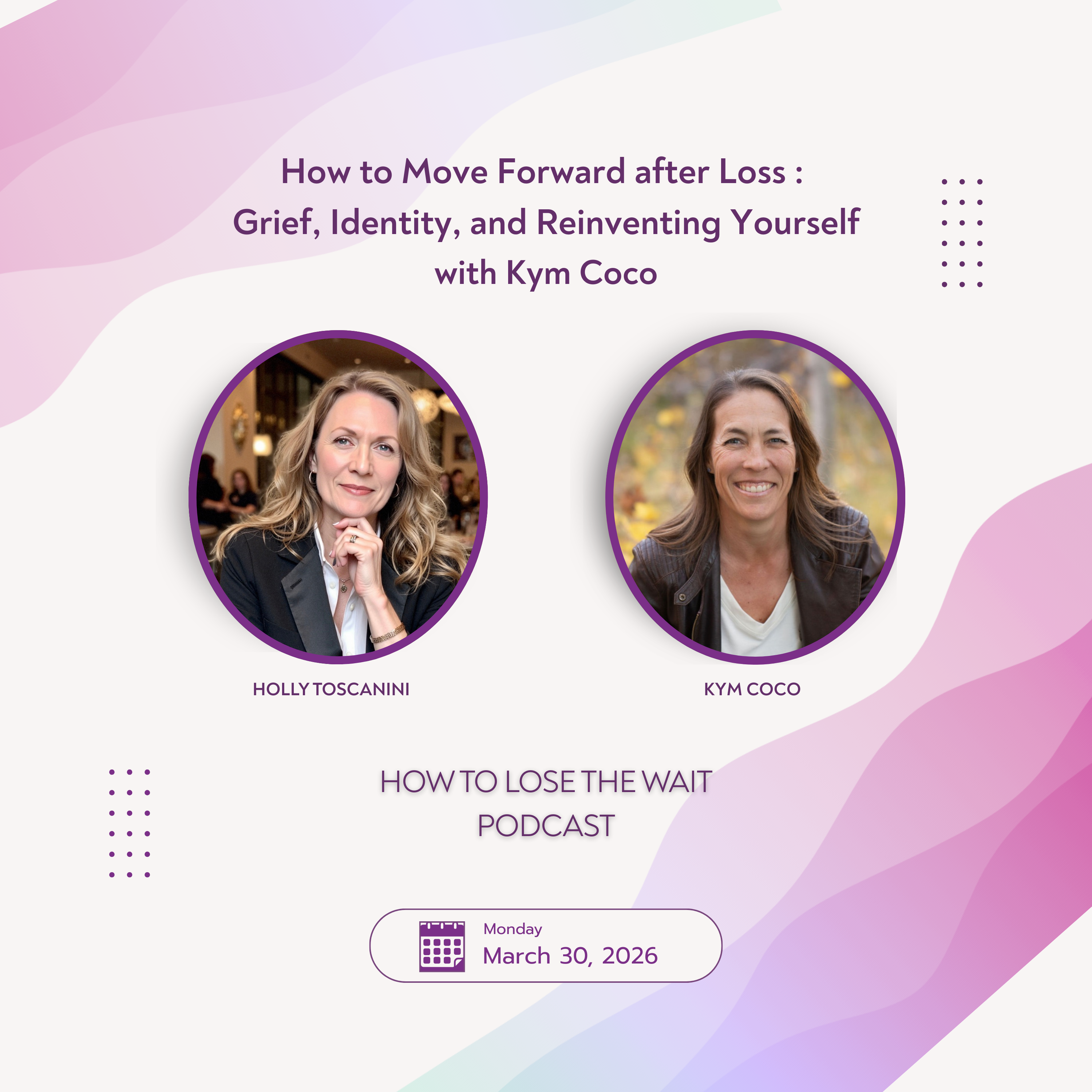
| 3/30/26 | griefidentity+4 | Kym Coco | Swagtail.com | — | griefidentity+6 | — | 47m 11s | ||
| 3/23/26 | good girl conditioningmidlife women+3 | — | — | — | good girl ruleswaiting cycle+3 | — | 17m 51s | ||
| 3/16/26 | midlife fitnessempowerment+5 | Heike Yates | Pursue Your SparkFacebook+4 | — | fitnessself-trust+7 | — | 46m 51s | ||
Showing 25 of 131
Pitch Fit is a Pro feature
See how bookable this show is for guests, which brands already advertise, the per-episode ad value, and the best-fit guest and sponsor profile. The numbers are blurred on the free plan.
How readily this show books outside guests like you.
How proven this show is for host-read sponsorships.
For Guests
ProFor Advertisers
ProUpgrade to Pro to unlock guest cadence, sponsor categories, fit scores, and per-episode ad value for this show.